
Europe recipes
Italian, French and Spanish classics, plus home cooking from Scandinavia and the Balkans.
Åland Islands recipes
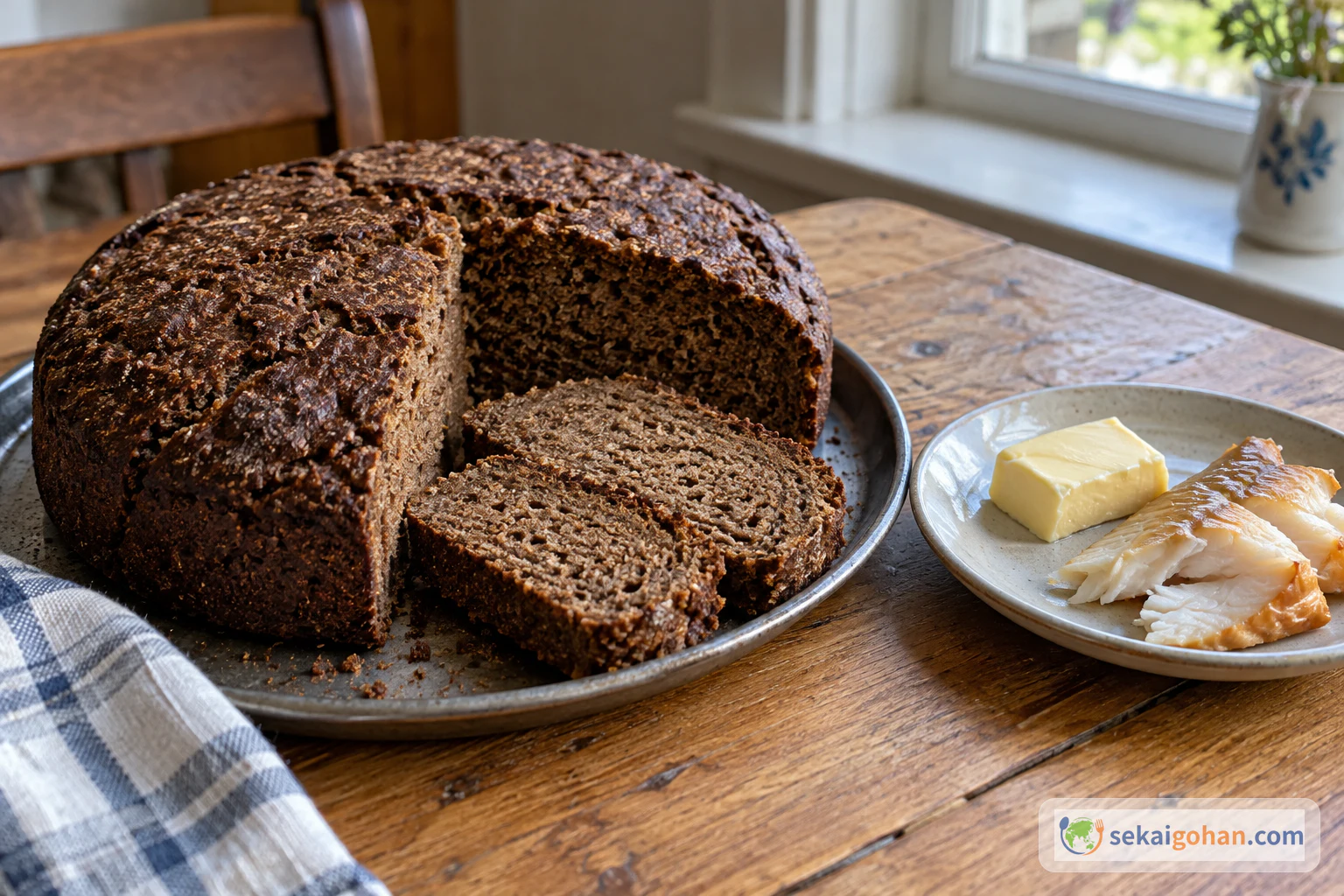
Åland Black Bread: A Sweet, Dense Rye Loaf for the Home Oven (Åländskt svartbröd)
How to bake Åland black bread (Åländskt svartbröd), the compact, sweet rye loaf of the Åland Islands, from one published home recipe made with cultured milk, coarse rye flour, malt and dark syrup. Covers the sticky dough, the one-hour proof, the two-stage bake with a coffee-honey glaze, choosing ingredients outside Scandinavia, and serving it with butter and fish.
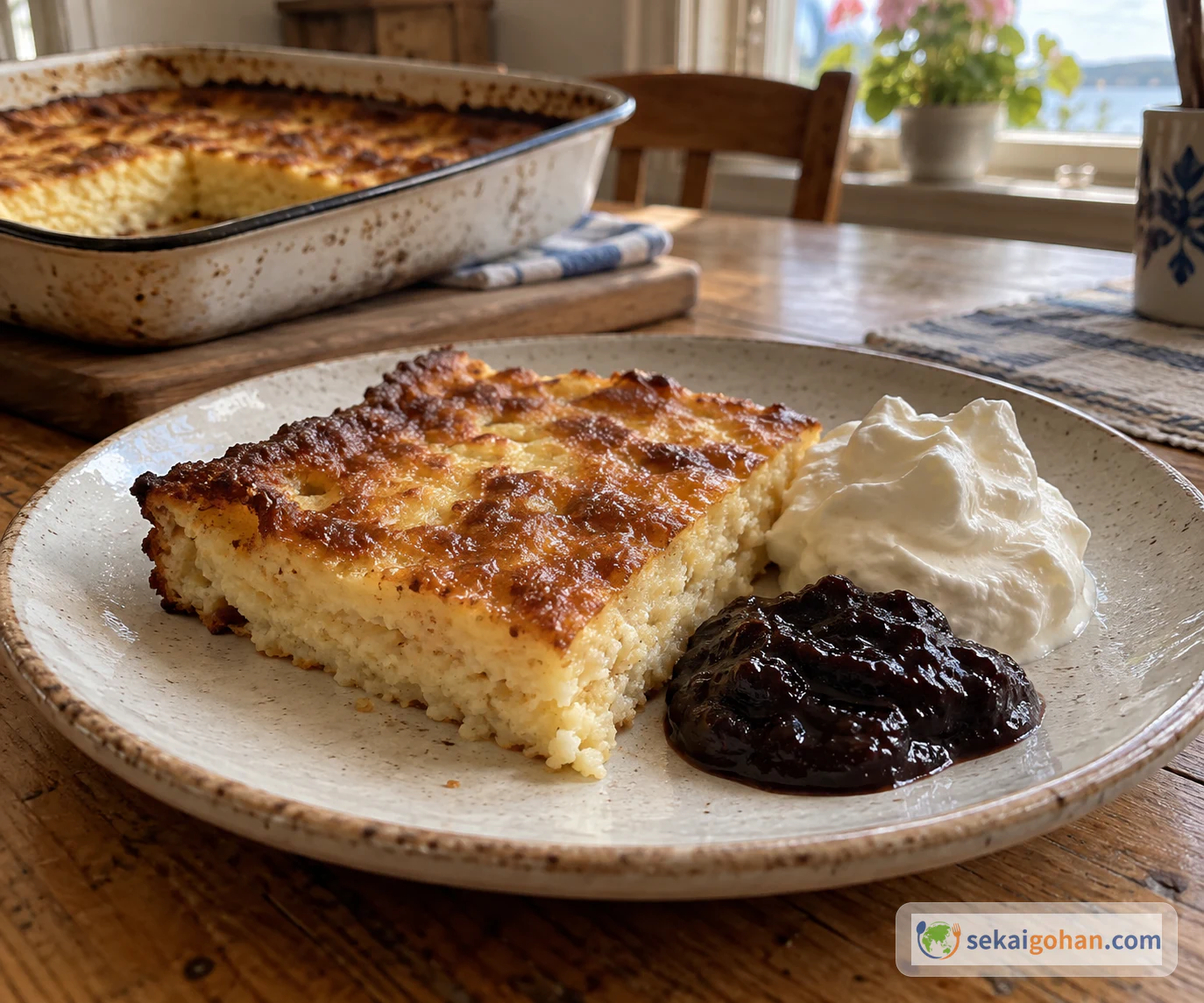
Åland Pancake (Ålandspannkaka): Cardamom Semolina Bake with Prune Cream
How to make Ålandspannkaka, the thick, cardamom-scented baked pancake of the Åland Islands, following Visit Åland's semolina-porridge recipe. Covers the porridge base, baking at 200°C until golden, the traditional prune cream with whipped cream, the rice version, and how to judge doneness by color and a set center.
Andorra recipes
Austria recipes
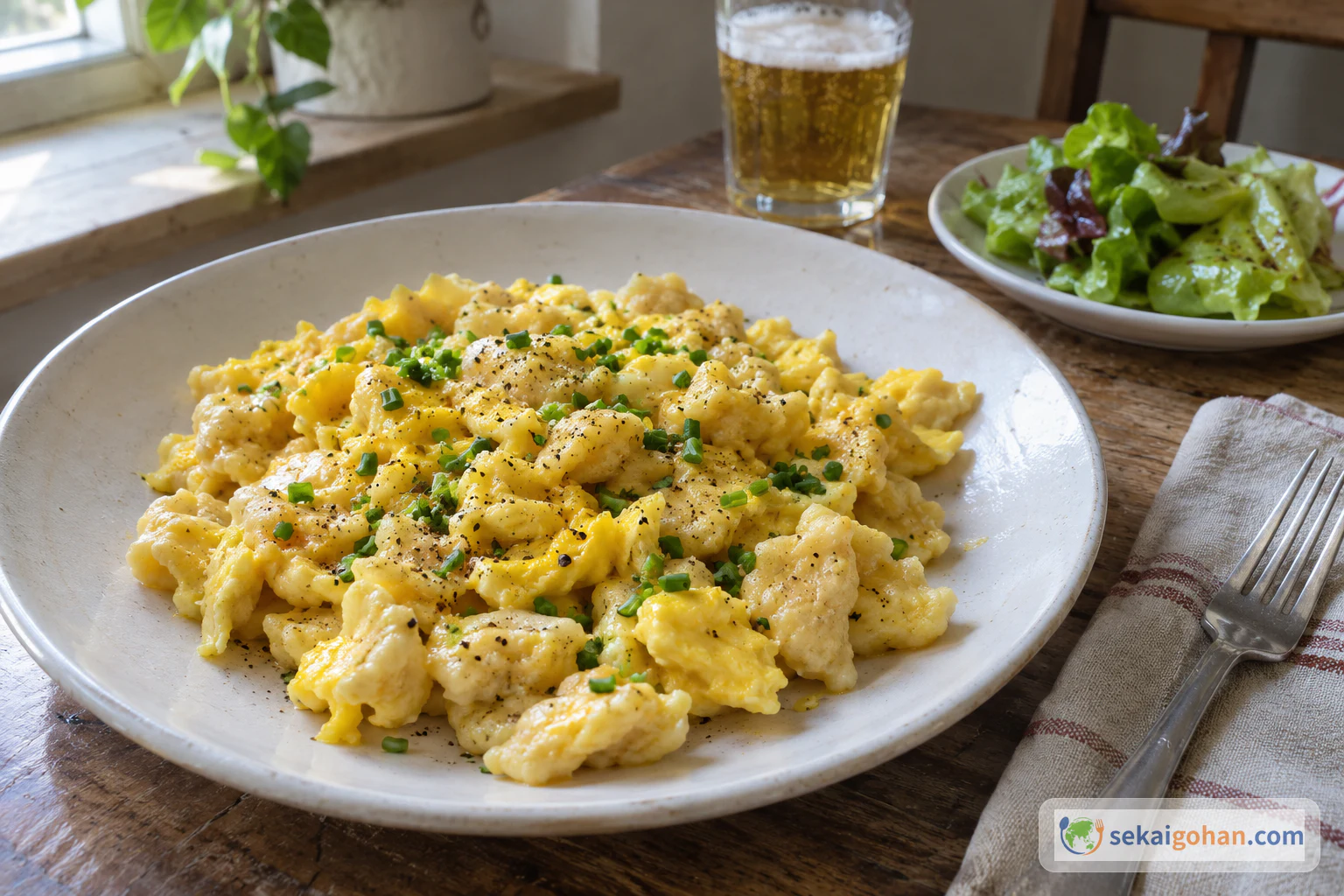
Eiernockerl: Viennese Egg Dumplings Tossed in Butter
Eiernockerl are Vienna's buttered flour dumplings bound with soft egg. Learn the right dough, how to press it without a special tool, and when to stop the egg.
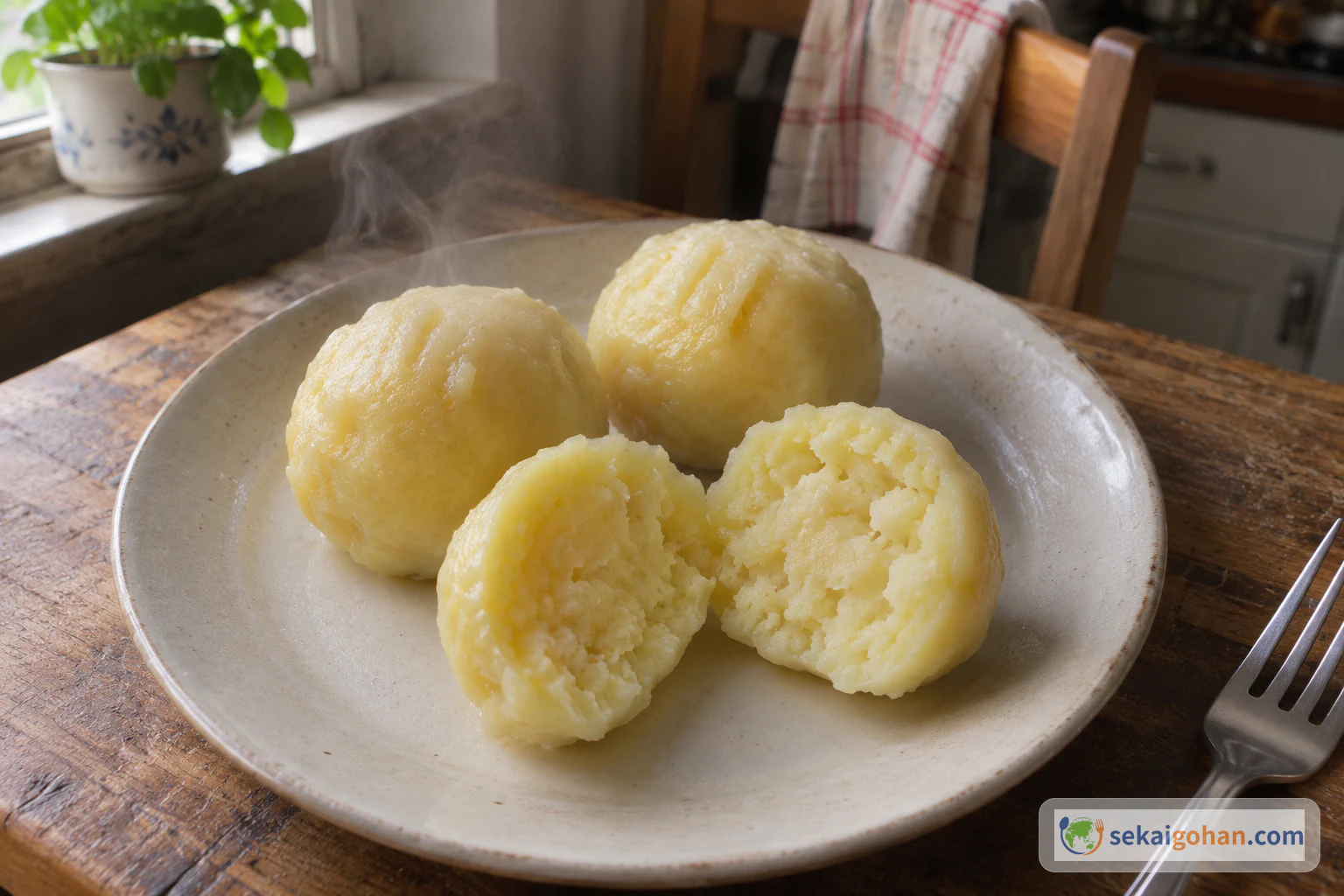
Erdäpfelknödel: Austrian Potato Dumplings with Semolina
Erdäpfelknödel, Austria's potato dumplings, made with floury potatoes, flour and semolina. Learn the ricer method, the gentle simmer and which swaps work.

Ischler Törtchen: Austrian Almond Cookies with Jam and Chocolate
Ischler Törtchen, Austrian almond shortbread sandwiched with apricot jam and dipped in dark chocolate. Learn the thin roll, pale bake and top-only dip.
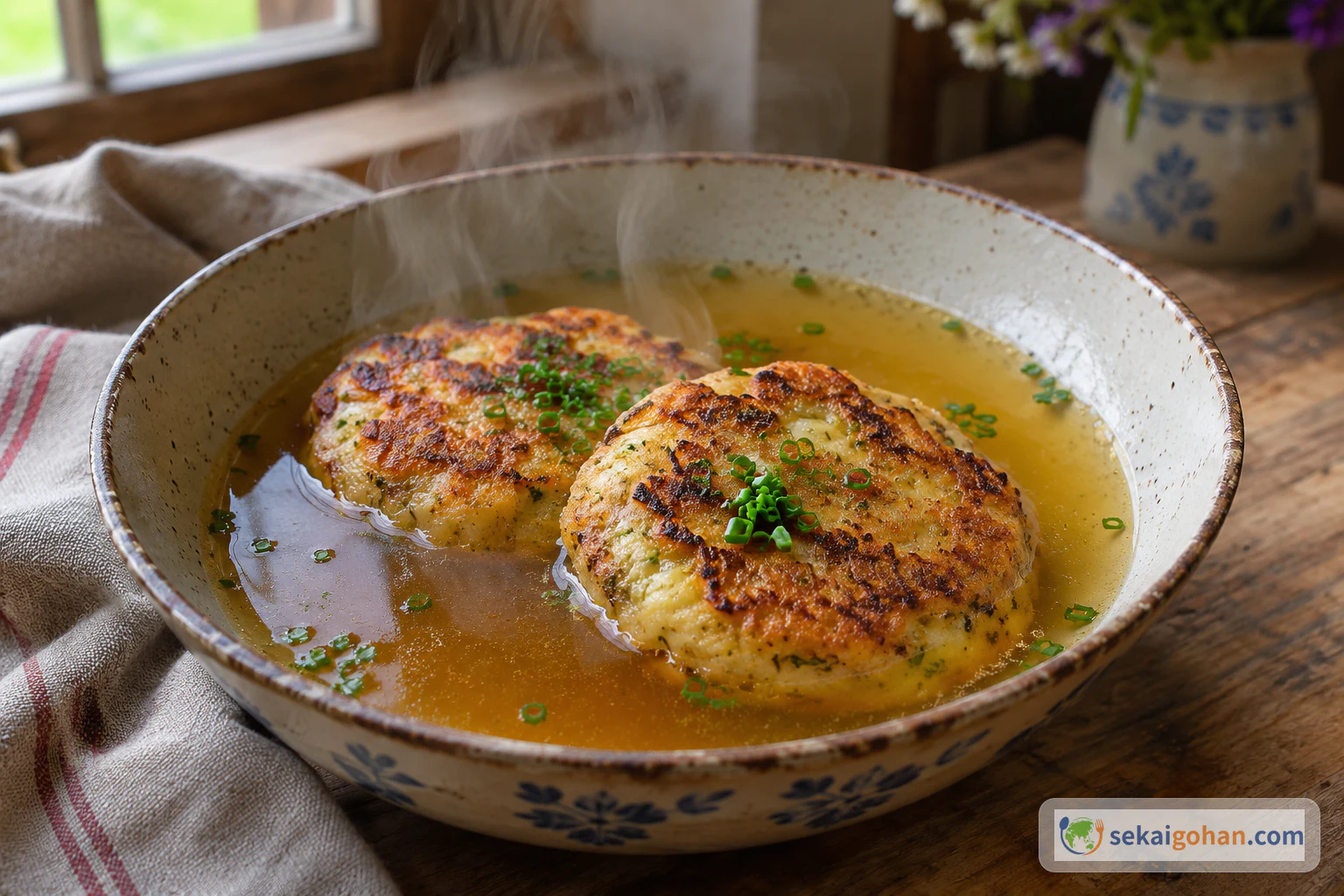
Kaspressknödel: Tyrolean Pan-Fried Cheese and Bread Dumplings
Kaspressknödel are flat Tyrolean cheese dumplings fried in butter. Learn the dry-bread dough, the golden-brown cue and which hard cheeses to buy abroad.
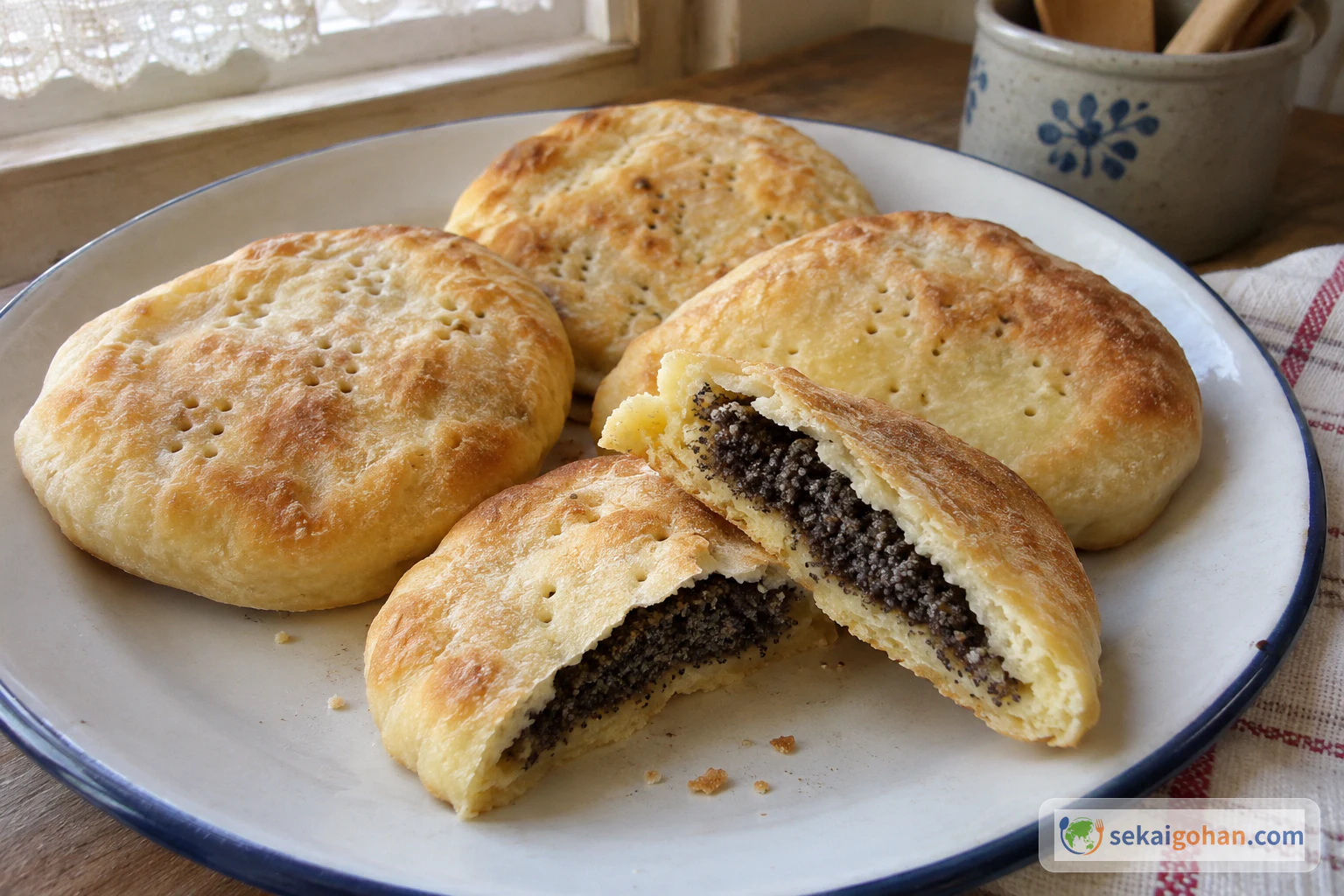
Mohnzelten: Austrian Potato Pastries Filled with Sweet Poppy Seed
Mohnzelten from Austria's Waldviertel: potato dough wrapped around sweet poppy filling, pressed flat, baked on both sides. How to chill, seal and flip them.
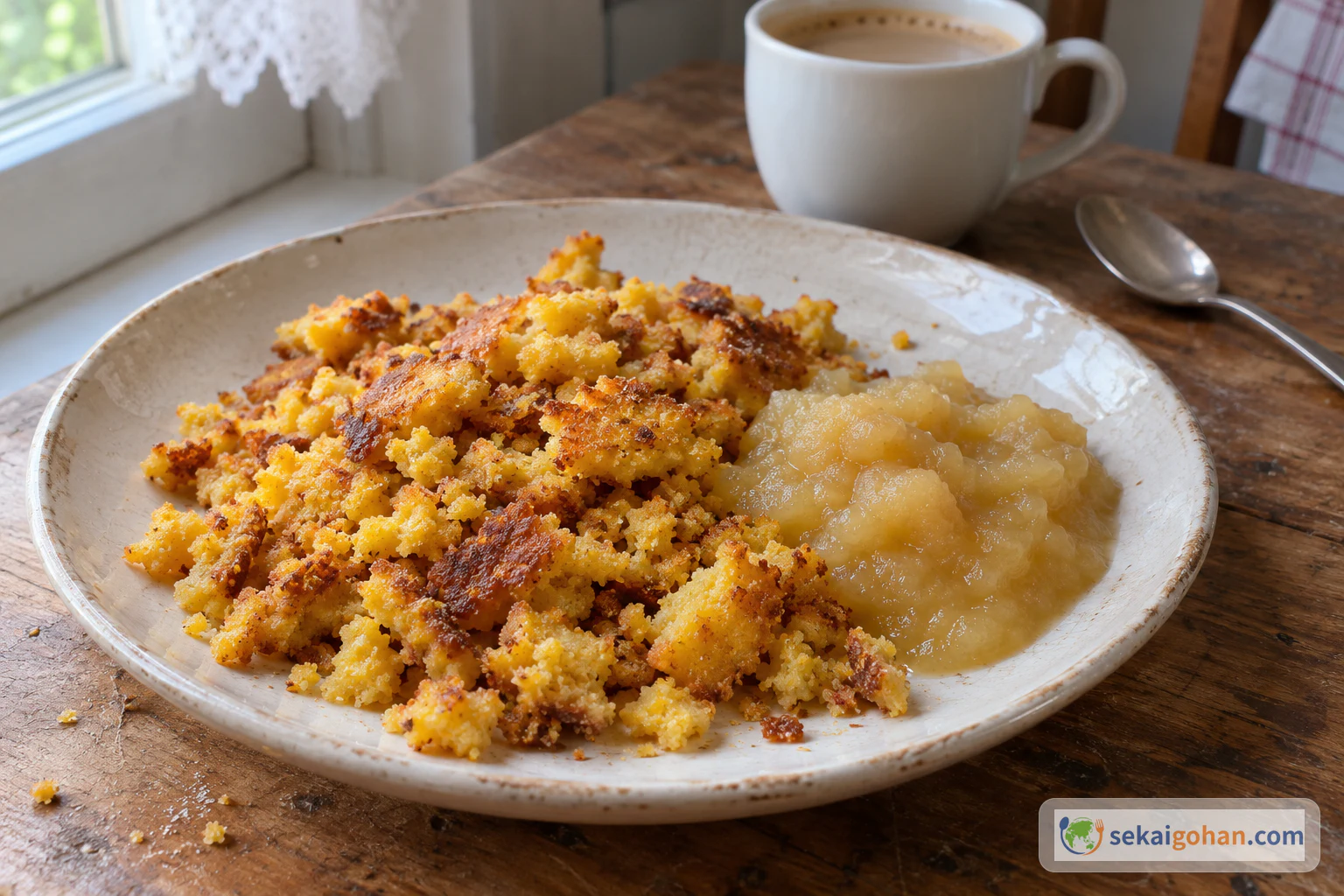
Riebel: Vorarlberg Fried Corn Grits Crumbled in Butter
Riebel from Vorarlberg, Austria: coarse corn grits cooked in milk, chilled and fried into golden crumbs. Learn the crumbling, the heat and safe chilling.
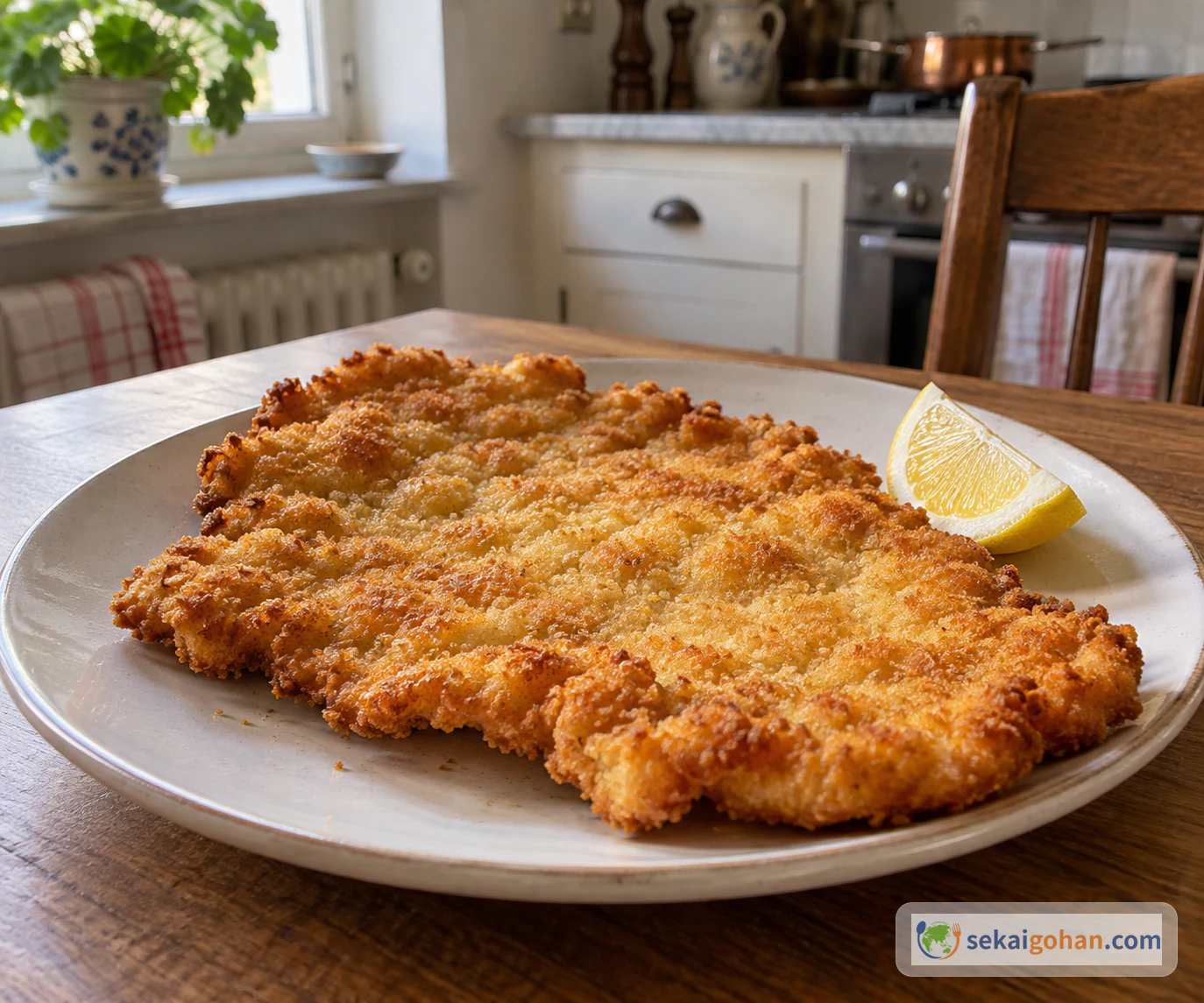
Wiener Schnitzel: Vienna's Thin, Golden Veal Cutlet
How to make Wiener Schnitzel the Viennese way: veal pounded to about 6 mm, coated in flour, egg and fine breadcrumbs, and shallow-fried in 2–3 cm of hot fat, served with lemon. Covers the recipe for 4, the difference from pork 'Wiener Art' versions, the 1798 and 1831 records, the Radetzky legend, and safe-cooking checks.
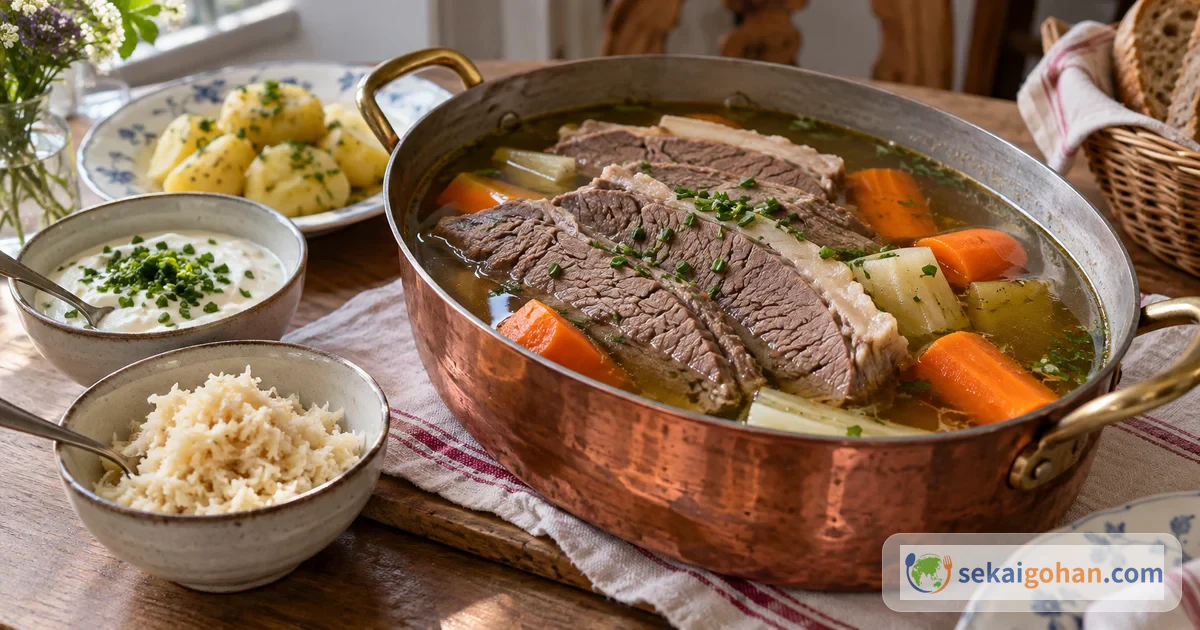
Tafelspitz Recipe: Vienna's Boiled Beef and Broth
A tafelspitz recipe for Vienna's signature beef dish: a single cut of beef simmered gently with aromatics, charred onion and bay leaf. Includes the legend of Emperor Franz Joseph and Sacher, why the broth comes first, apple-horseradish Apfelkren and chive sauce.

How to Make Apfelküchle: Austrian and South German Fried Apple Rings
Apfelküchle, fried apple rings loved in southern Germany and Austria, explained for a home kitchen: ring thickness, a light batter, oil temperature, cinnamon sugar, and vanilla sauce.
Belgium recipes

Waterzooi: Belgian Creamy Chicken and Vegetable Stew from Ghent
How to make waterzooi, the Flemish stew from Ghent: bone-in chicken thighs and root vegetables simmered in chicken stock, then finished with an egg yolk and cream liaison. Includes tempering tips, fish and vegetarian variations, and the dish's history.

Belgian Waffles: Liège-Style and Brussels-Style Recipes
How to make Belgian waffles, sorting out the yeasted Liège dough and the light Brussels batter. Pearl sugar, baking temperature, the waffle iron, overnight prep, storage and freezing, substitutes, what goes wrong, and what to buy, so you can bake with confidence in a home kitchen.

Carbonnade Flamande: Belgian Beef Stew Braised in Beer
Carbonnade flamande is a Belgian beef stew braised for 4 hours in Belgian beer and brown sugar. Served with mustard bread and frites, with beer choices.
Bosnia & Herzegovina recipes
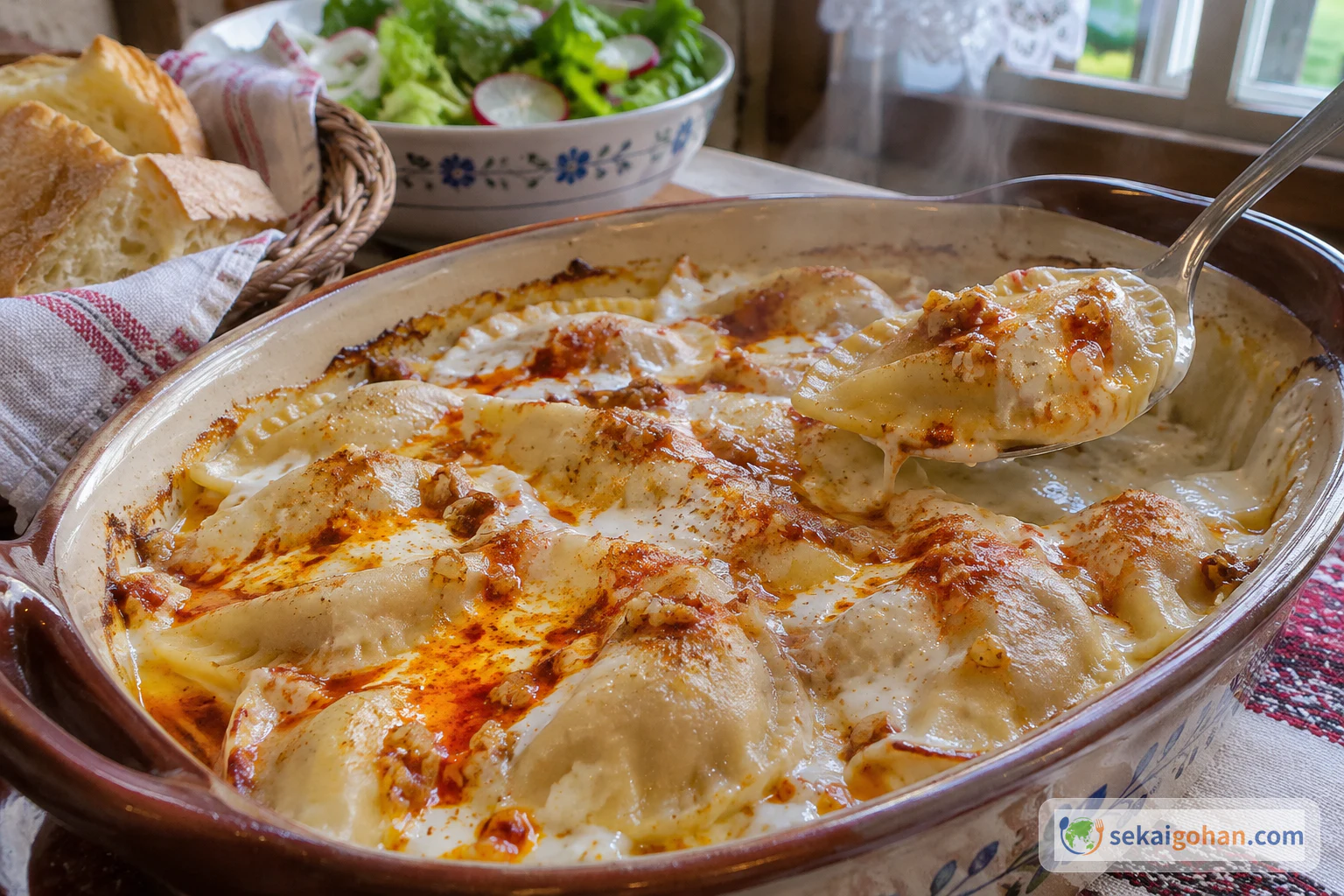
Klepe: Bosnian Beef Dumplings Baked in Sour Cream
Klepe, Bosnian half-moon beef dumplings, boiled then baked under sour cream and garlic paprika butter. Learn the firm dough, the fold and swaps for Vegeta.
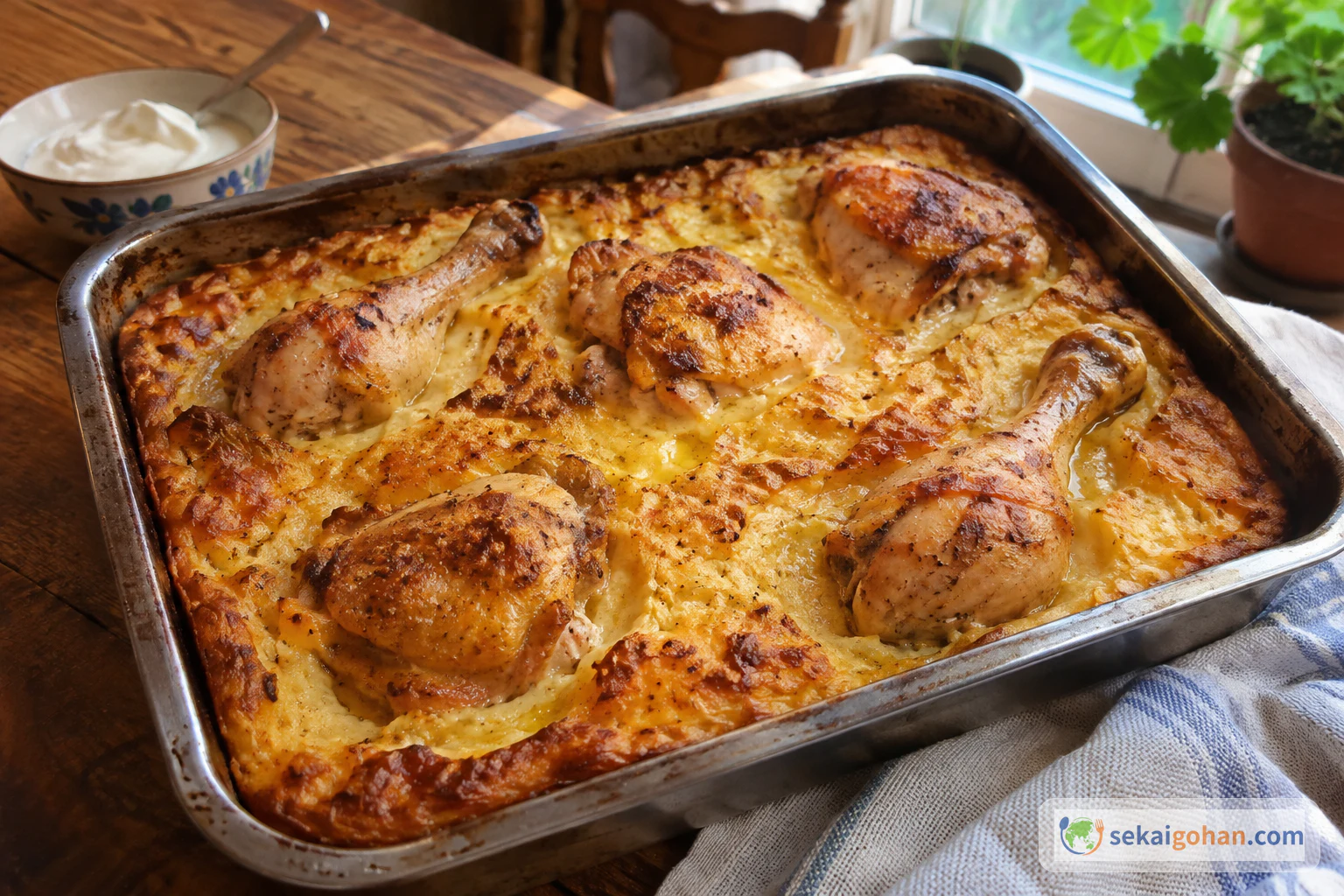
Kvrguša: Bosnian Chicken Legs Baked on Batter
Kvrguša, the Bosnian bake of chicken legs on a thin batter base. Learn the hot oiled pan, the 480°F to 390°F bake, and the butter and cream finish.
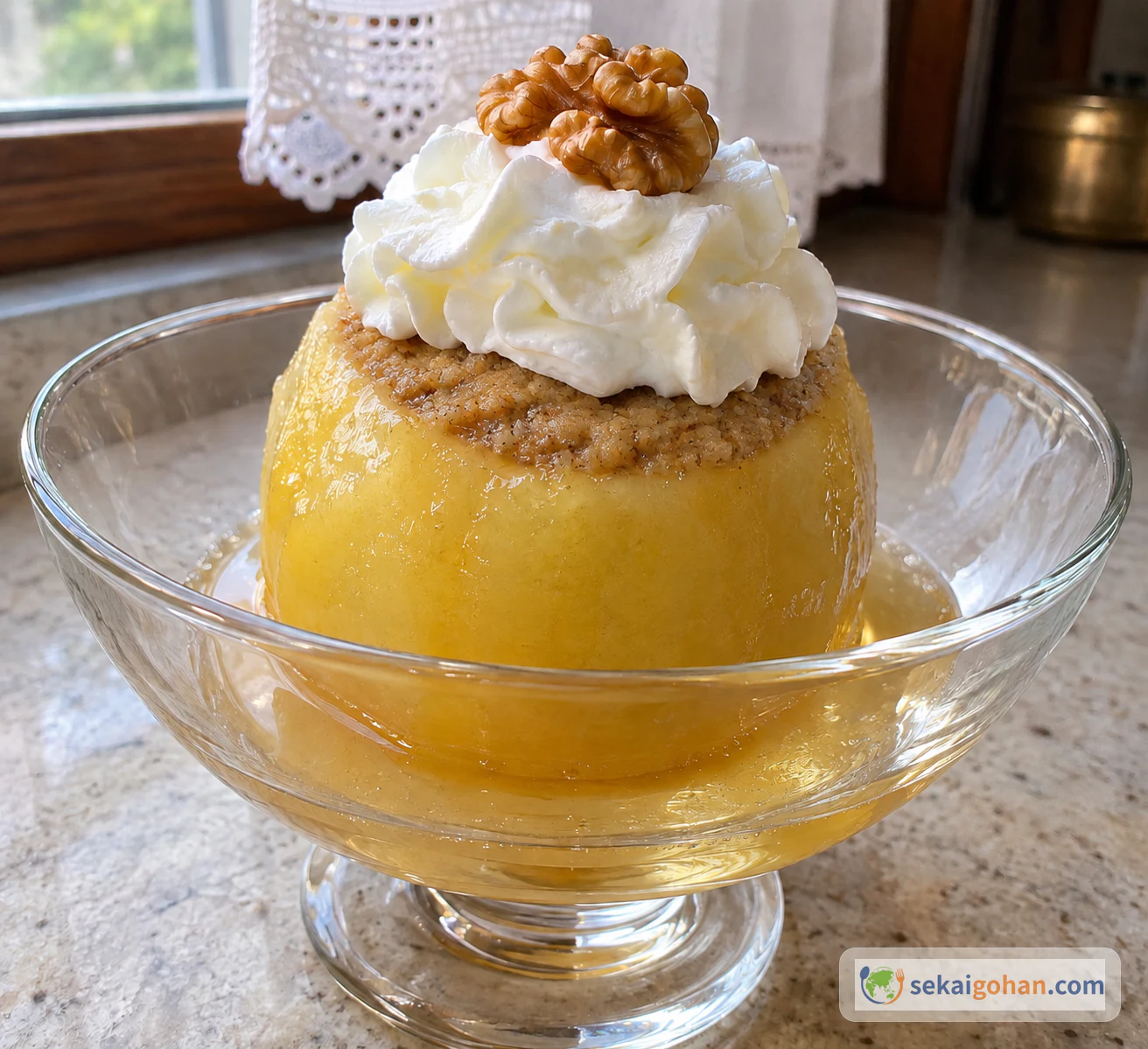
Tufahija: Bosnian Walnut-Stuffed Apples Poached in Syrup
Tufahija, Bosnia's walnut-stuffed apples poached in vanilla syrup. Learn to core with thick walls, poach until a fork slides in, and choose apples that hold.
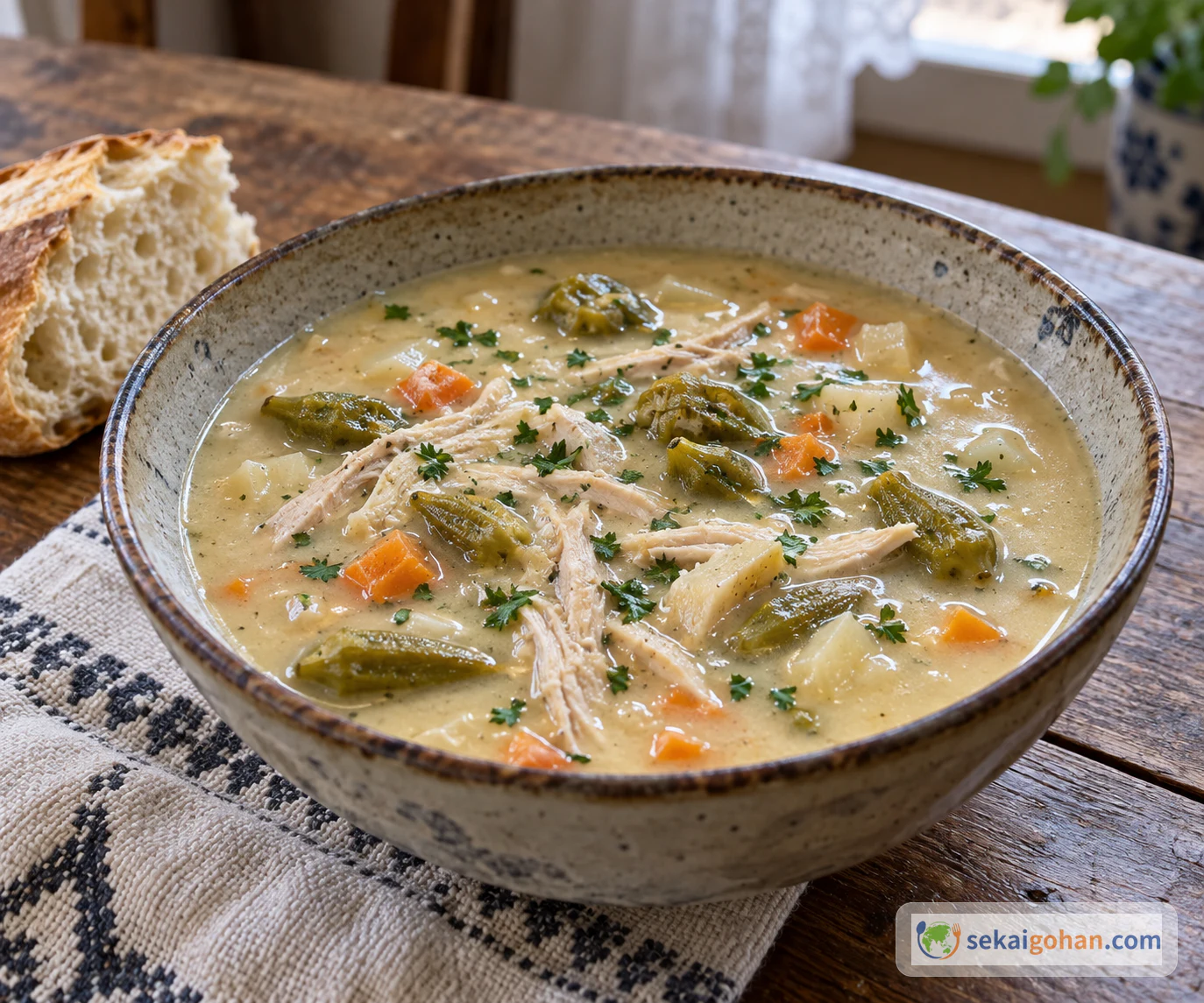
Begova čorba: Bosnian Chicken Soup with Dried Okra (Bey's Soup)
How to make Begova čorba, the Bosnian soup of bone-in chicken, dried okra (bamija) and root vegetables, bound with a pale roux and a tempered sour cream and egg yolk finish. Covers pre-boiling threaded dried okra, building the broth, keeping the cream smooth, safe heating, variations and where the dish appears on Bosnian tables.
Bulgaria recipes
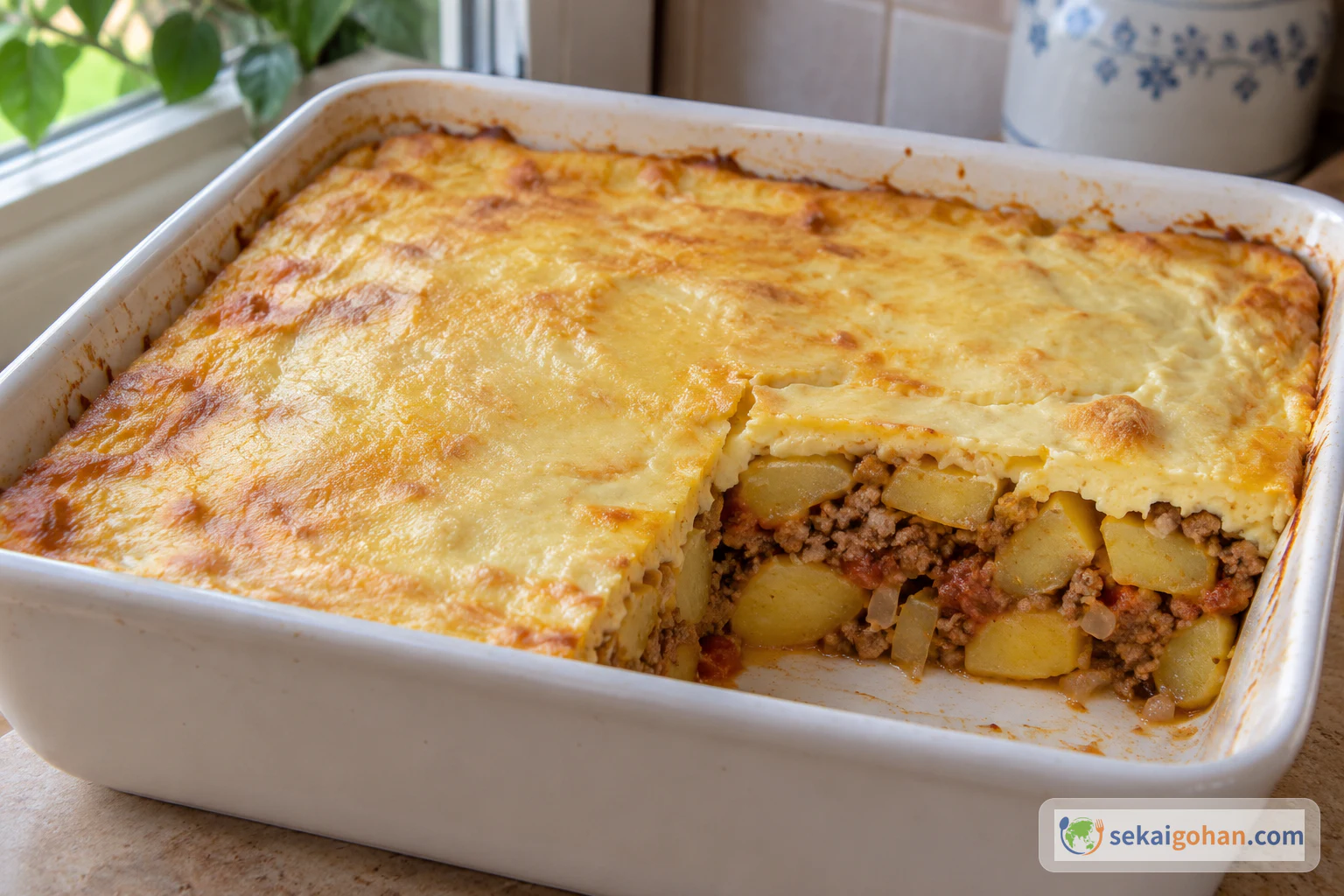
Bulgarian Moussaka: Potato and Minced Meat Bake With Yogurt Topping
Bulgarian moussaka bakes diced potatoes and paprika mince under a tangy yogurt and egg topping. Learn the hot-water bake, the set cue and smart swaps.
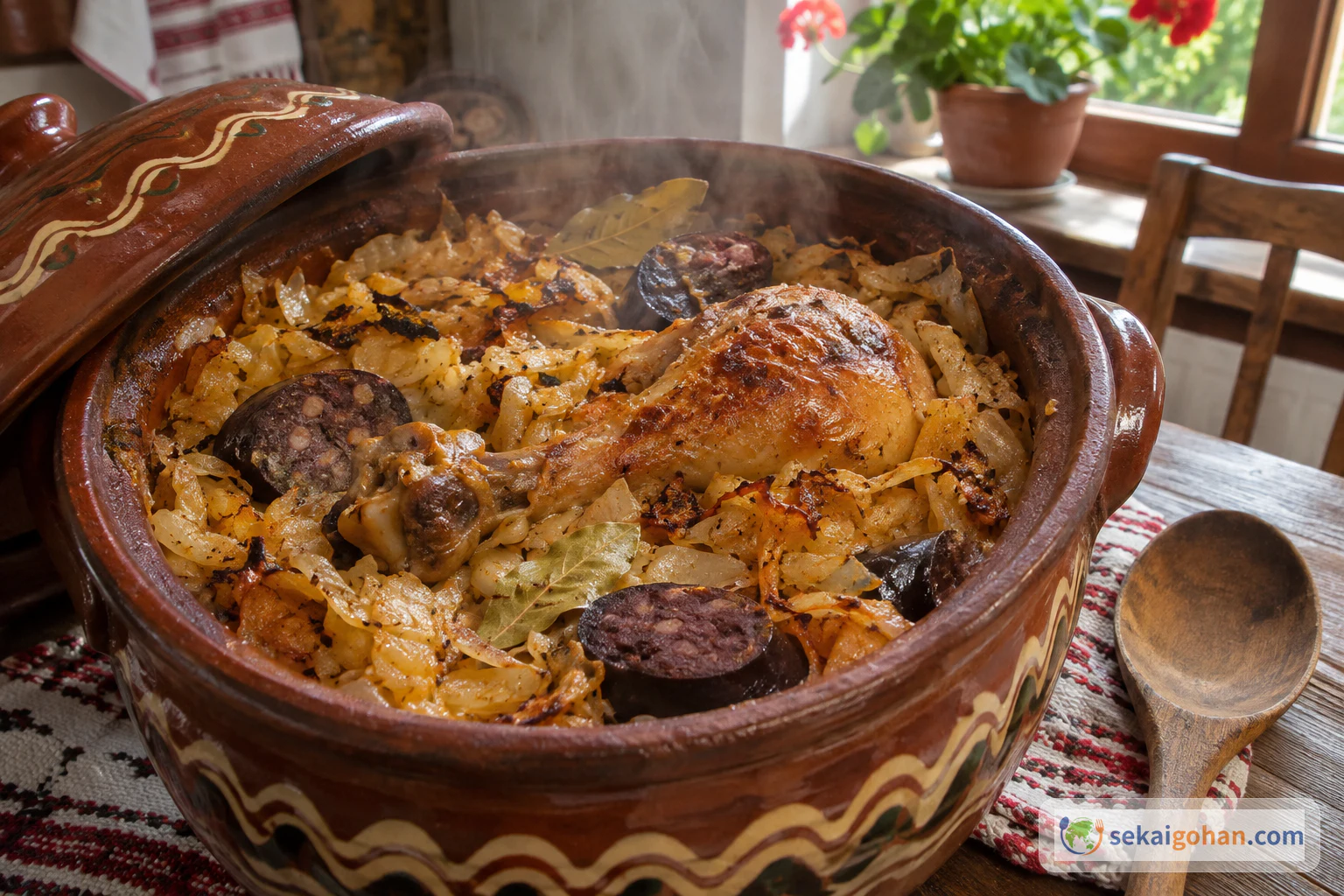
Kapama: Bansko Sauerkraut, Meat and Rice Baked in Clay
Bansko kapama from southwest Bulgaria: sauerkraut, meats, blood sausage and rice layered in a sealed clay pot. The layer order, the seal and the two-stage bake.
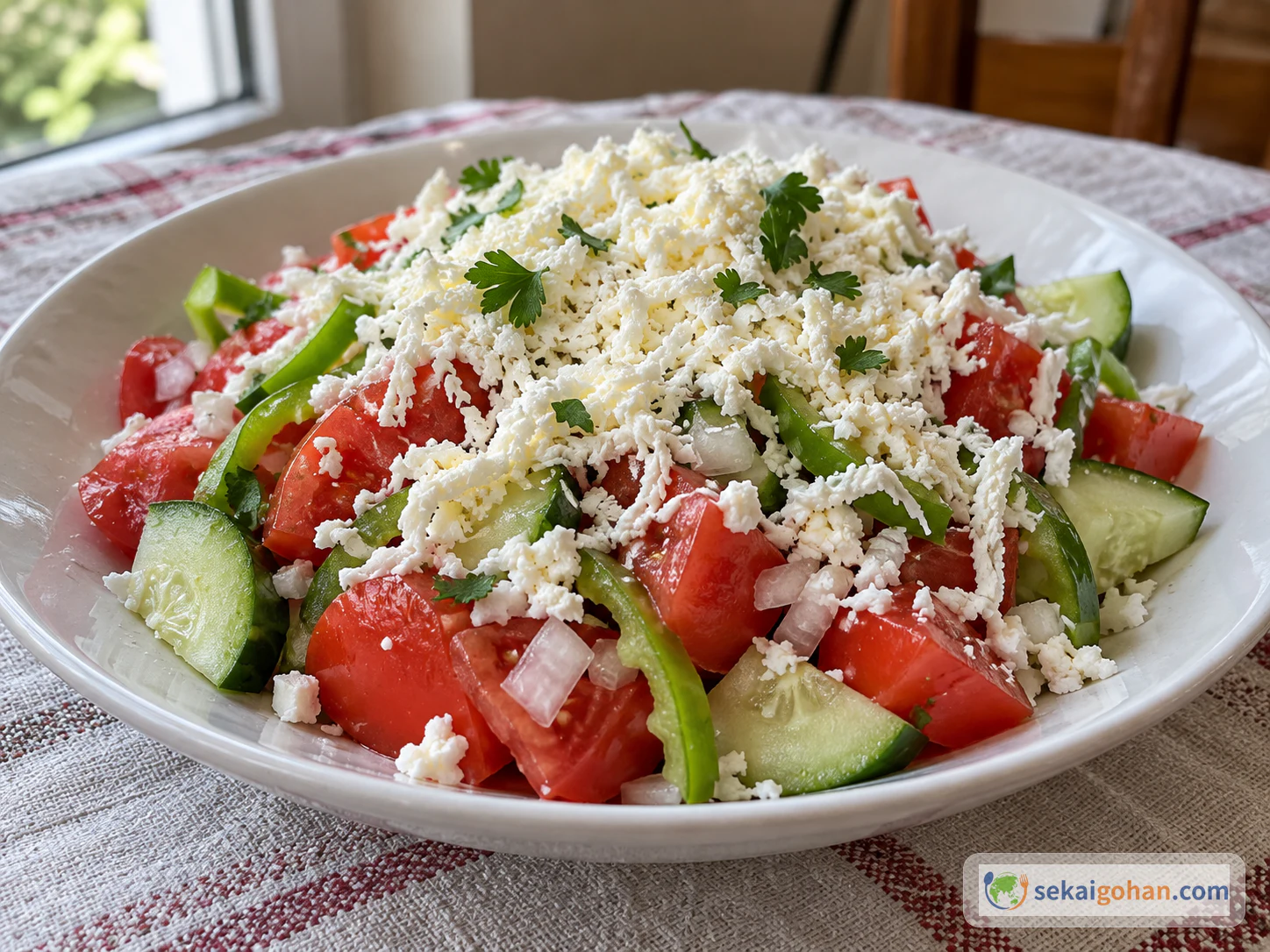
Shopska Salata: Bulgarian Salad Under a Snow of White Cheese (Шопска салата)
How to make shopska salata, the Bulgarian salad of tomatoes, peeled cucumber, raw green pepper and onion finished with grated white cheese. Based on a recipe from Bulgaria's Ministry of Tourism, with notes on choosing sirene or feta, adjusting salt, and the regional differences in peppers and vinegar.
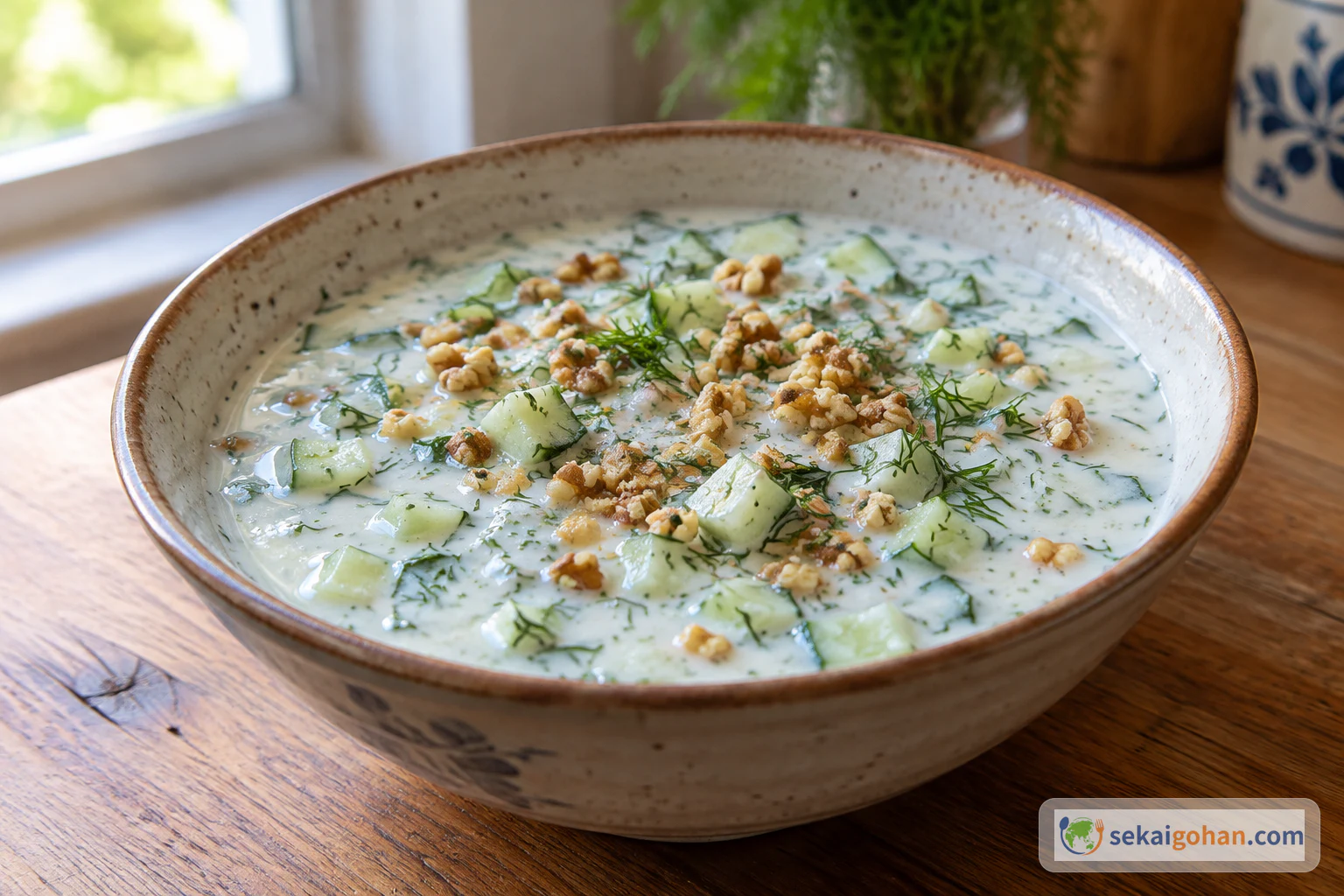
Tarator: Bulgarian Cold Cucumber and Yogurt Soup (Таратор)
How to make tarator, Bulgaria's cold cucumber and yogurt soup with dill, garlic, sunflower oil and walnuts. Covers dicing or grating the cucumber, thinning the yogurt with water to the thickness you like, chilling, and finishing with walnuts, plus how it differs from snezhanka and other yogurt dishes.
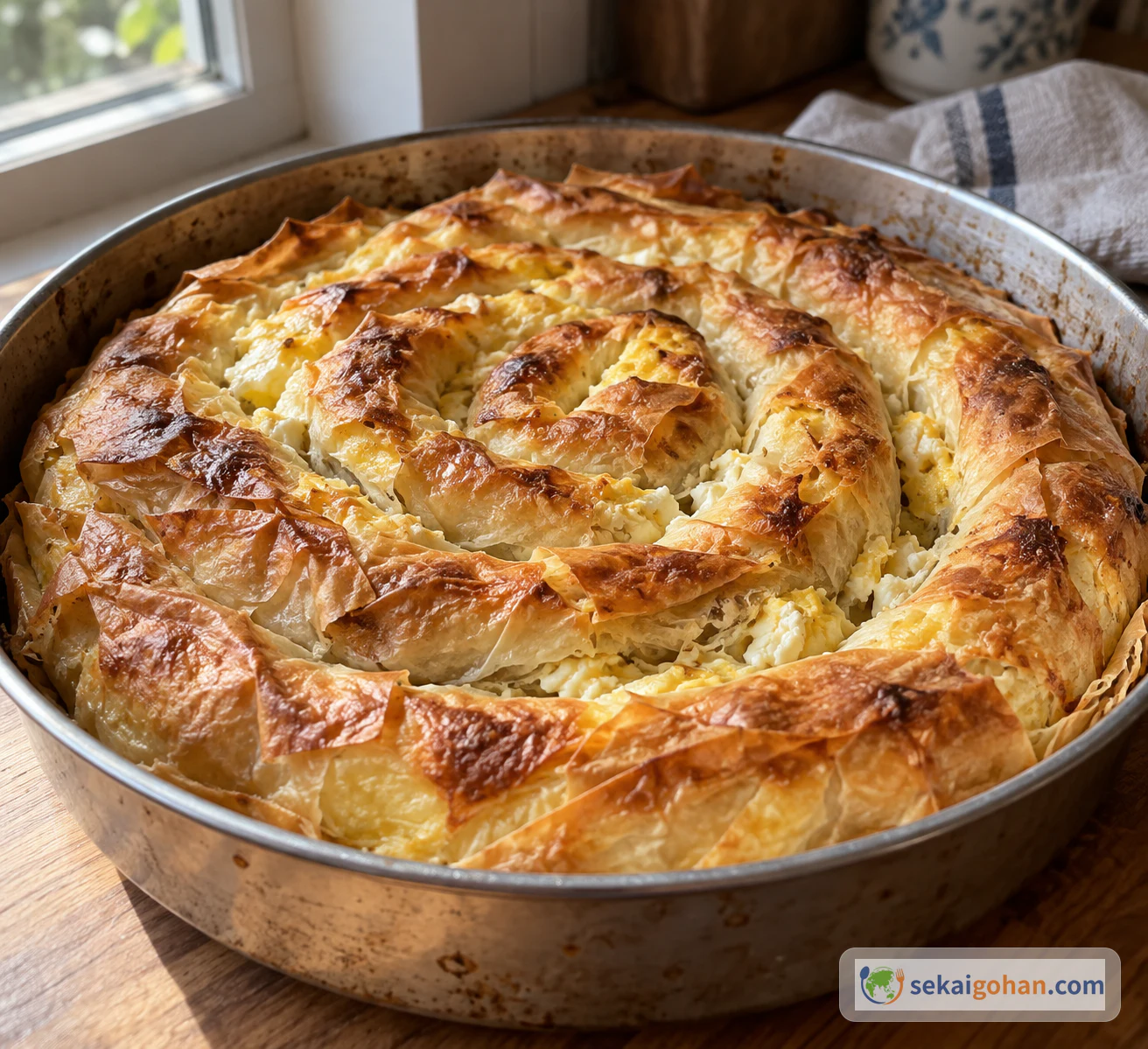
Banitsa: Bulgarian Rolled Phyllo Pie with White Cheese (Баница)
How to make banitsa (баница), Bulgaria's well-known breakfast pastry, as a rolled home version: 400g of thin phyllo, each sheet spread with a yogurt, egg and white-cheese filling, rolled and baked. Covers choosing sirene versus feta, handling phyllo, keeping back filling for the top, checking that the egg filling is fully cooked, and how banitsa fits the Bulgarian breakfast table.
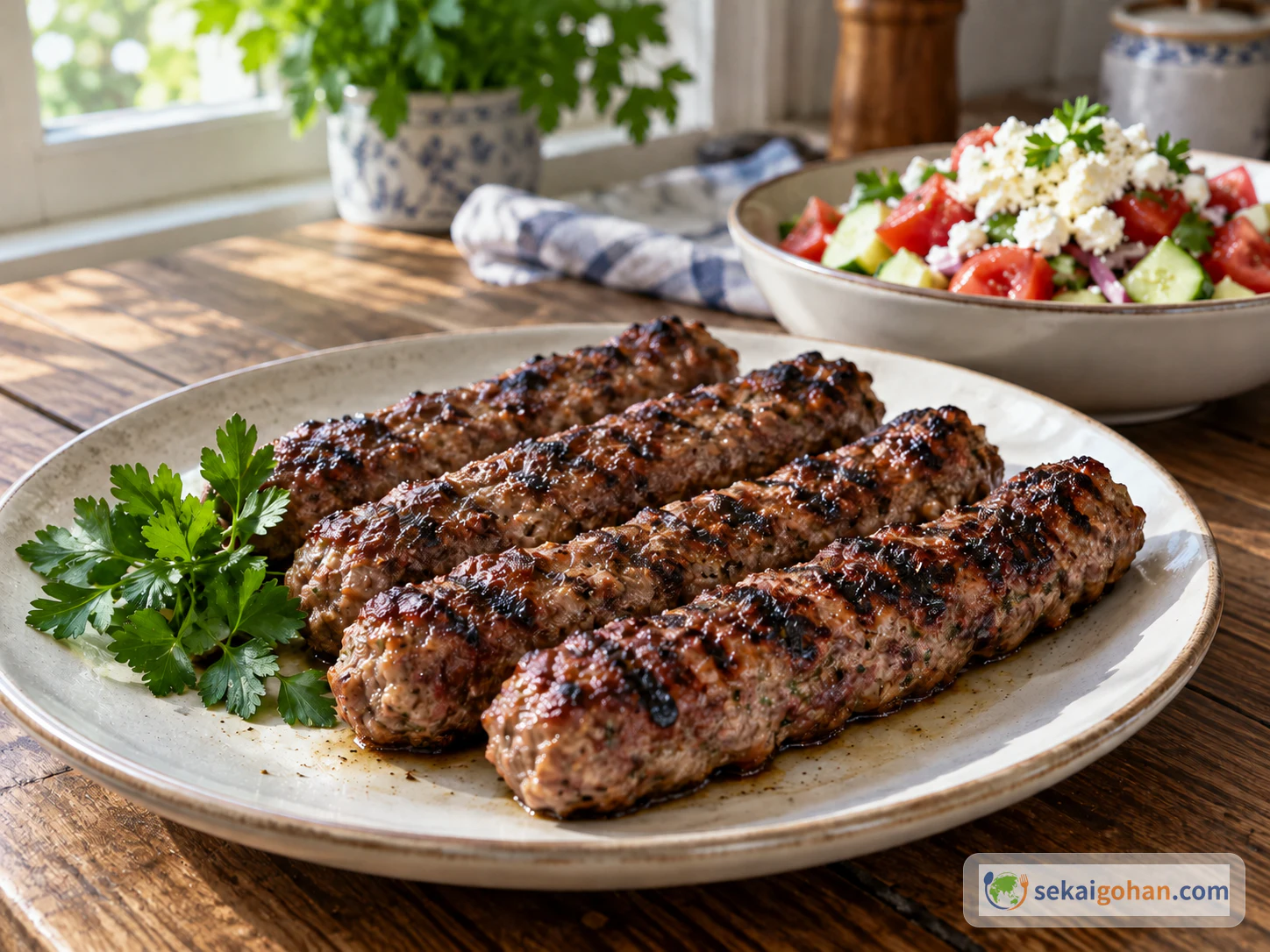
Kebapche: Bulgarian Grilled Minced-Meat Fingers with Cumin (Кебапче)
How to make kebapche (кебапче), the oblong grilled minced-meat dish popular in Bulgaria, following the Bulgarian tourism brochure's recipe: about 500 g of pork and veal mince, a teaspoon of cumin, salt and pepper to taste, a rest of a few hours, and pieces about 15 cm long. Covers shaping, grilling with regular turning, checking the center with a thermometer, substitutions, and serving with parsley and Shopska salad.
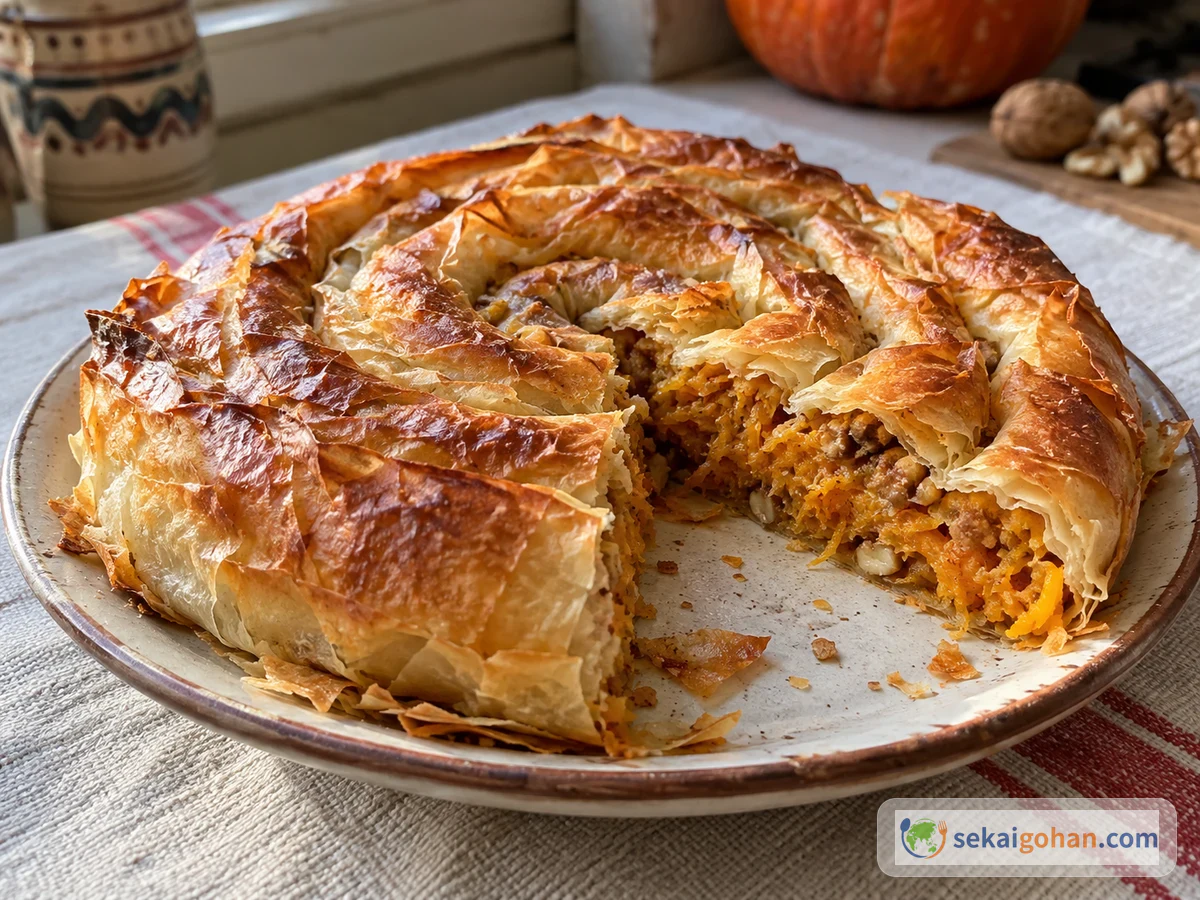
Tikvenik: Bulgarian Pumpkin Phyllo Pastry with Cinnamon
Bulgarian tikvenik: grated pumpkin rolled in thin phyllo and baked into a cinnamon-scented pastry. Its link to Christmas Eve, how it differs from banitsa and Serbian bundevara, choosing pumpkin, rolling a spiral without tearing the dough, and storage.

Snezhanka: Bulgaria's White Yogurt and Cucumber Salad
Snezhanka, Bulgaria's white salad, made with thick yogurt and squeezed cucumber. Covers how it differs from tarator, the roles of dill and walnuts, the order of adding salt, how to rescue it when it goes wrong, storage, and what is worth buying, all for a home kitchen, with cues so even a first-timer can recognize the finished state.
Croatia recipes
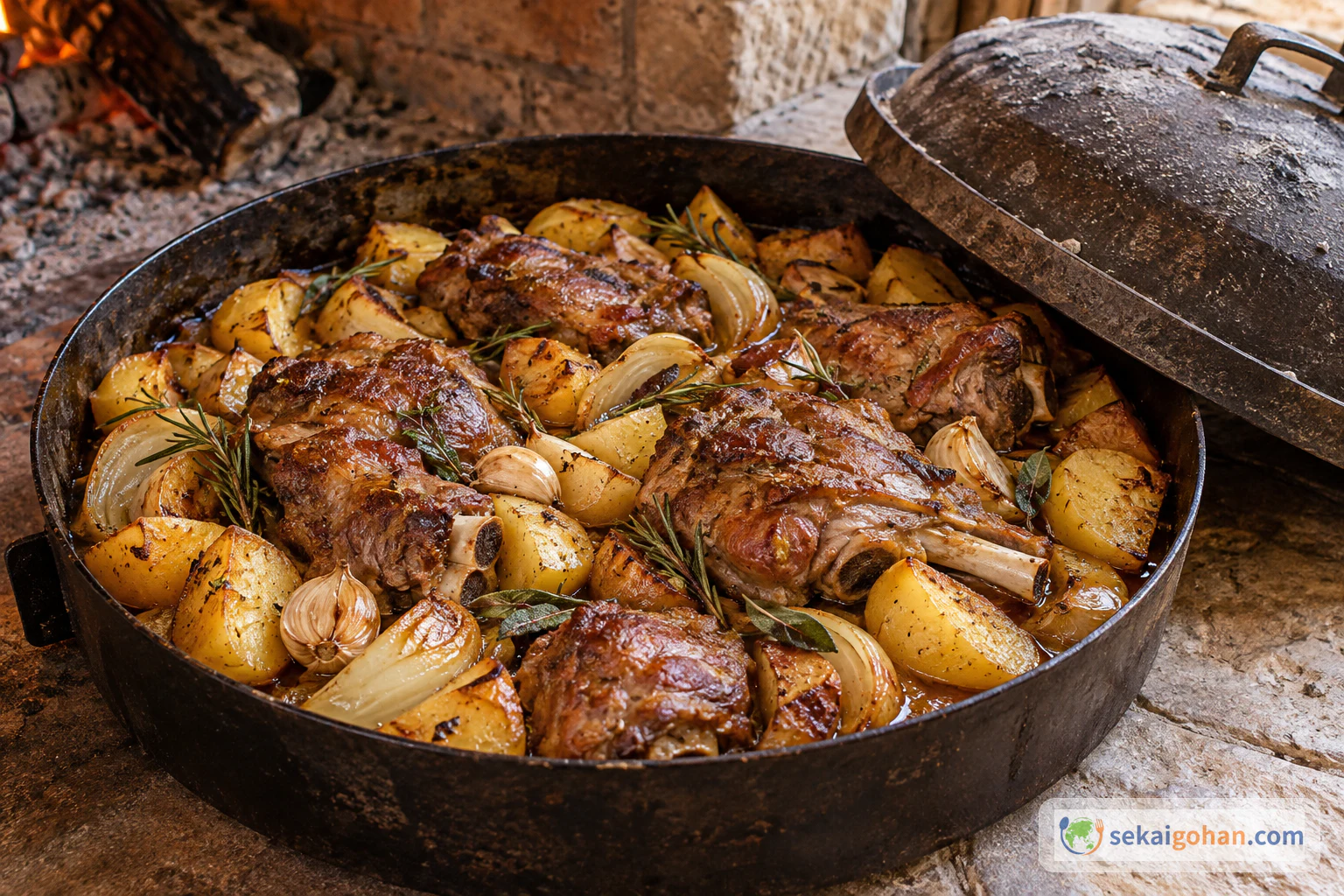
Peka: Croatian Lamb and Potatoes Under the Iron Bell (Janjetina ispod peke)
How to make peka, the Dalmatian dish of bone-in lamb and potatoes roasted under an iron bell buried in embers. Covers a 6–8 person lamb recipe, the hearth method, a home oven version in a lidded cast-iron pot, doneness and food-safety checks, fixes for common problems, and the dish's place on the Dalmatian table.

Pašticada: Croatian Dalmatian Celebration Beef with Prunes and Gnocchi
A full recipe for Pašticada, Dalmatia's celebration dish from Croatia: beef marinated overnight in wine vinegar, then braised for 6 hours with prunes and red wine. From marinade tips to serving with handmade gnocchi, with substitutes that work in any home kitchen.
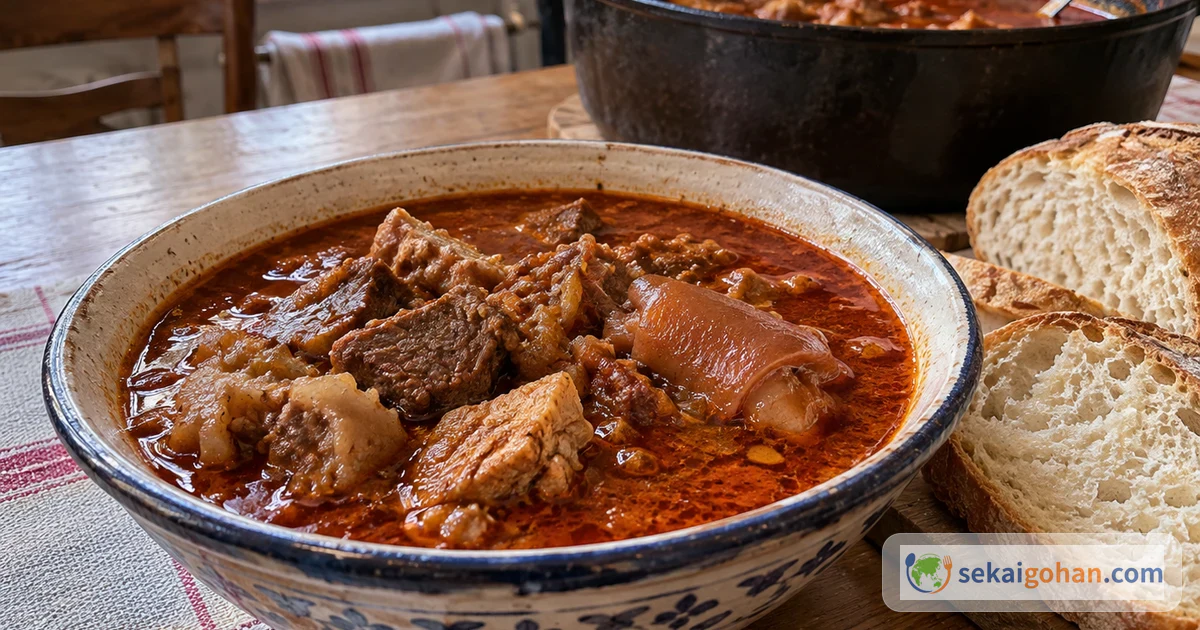
Čobanac: Slavonian Shepherd's Paprika Stew from Croatia
A recipe for čobanac, the stew of Slavonia in eastern Croatia, made with beef, pork, pig's trotters, onions, and sweet and hot paprika. Covers the name that comes from the shepherd's pot, the festival scene of cooking in a big outdoor kettle, why the meats go in at different times, and how to simmer it for 2 and a half hours.

Soparnik: Poljica's Thin Greens Pie from Croatia
Soparnik (Poljički soparnik) is the thin greens pie of Poljica in Dalmatia, Croatia. Covers substitutes for Swiss chard, how to roll the dough thin, the oven temperature for baking, garlic oil, storage, and reheating, all for a home kitchen.

Zagorski Štrukli Recipe: Croatian Baked Cheese Dough Rolls from Zagorje
Zagorski štrukli, the thin-dough cheese rolls of Zagorje in northwest Croatia, with cottage cheese and sour cream: stretching the dough, poaching, baking, storage, and how they are eaten, with step photos.
Cyprus recipes
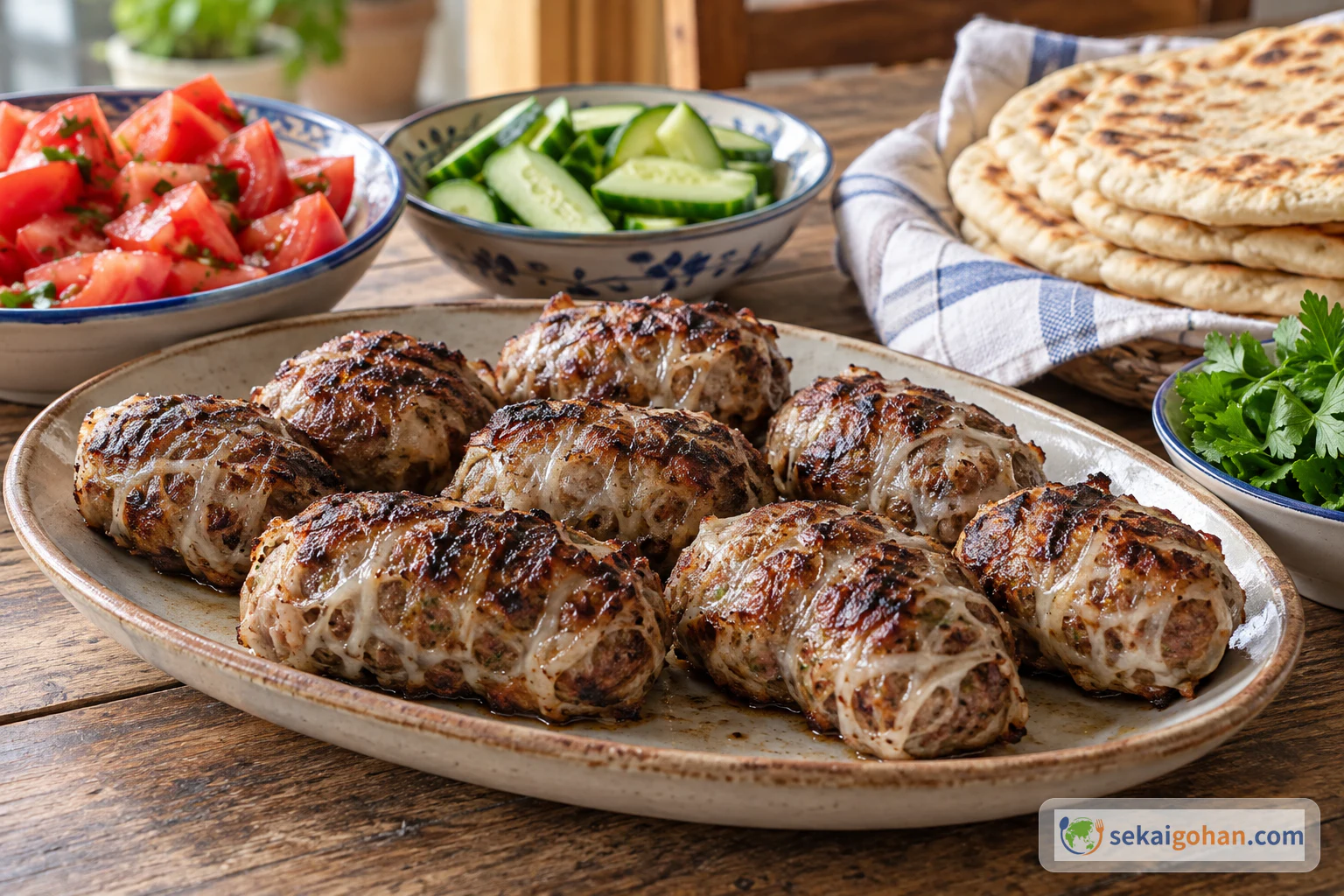
Sheftalia: Cypriot Pork Parcels Wrapped in Caul Fat (Sheftaliés)
How to make sheftalia (Sheftaliés), the Cypriot dish of seasoned minced pork wrapped in lacy caul fat and grilled over charcoal. Covers the ingredients, cutting and wrapping the caul fat, shaping each parcel, grilling until cooked through, serving in pita with souvlaki and salad, and how this version differs from another Cypriot recipe.
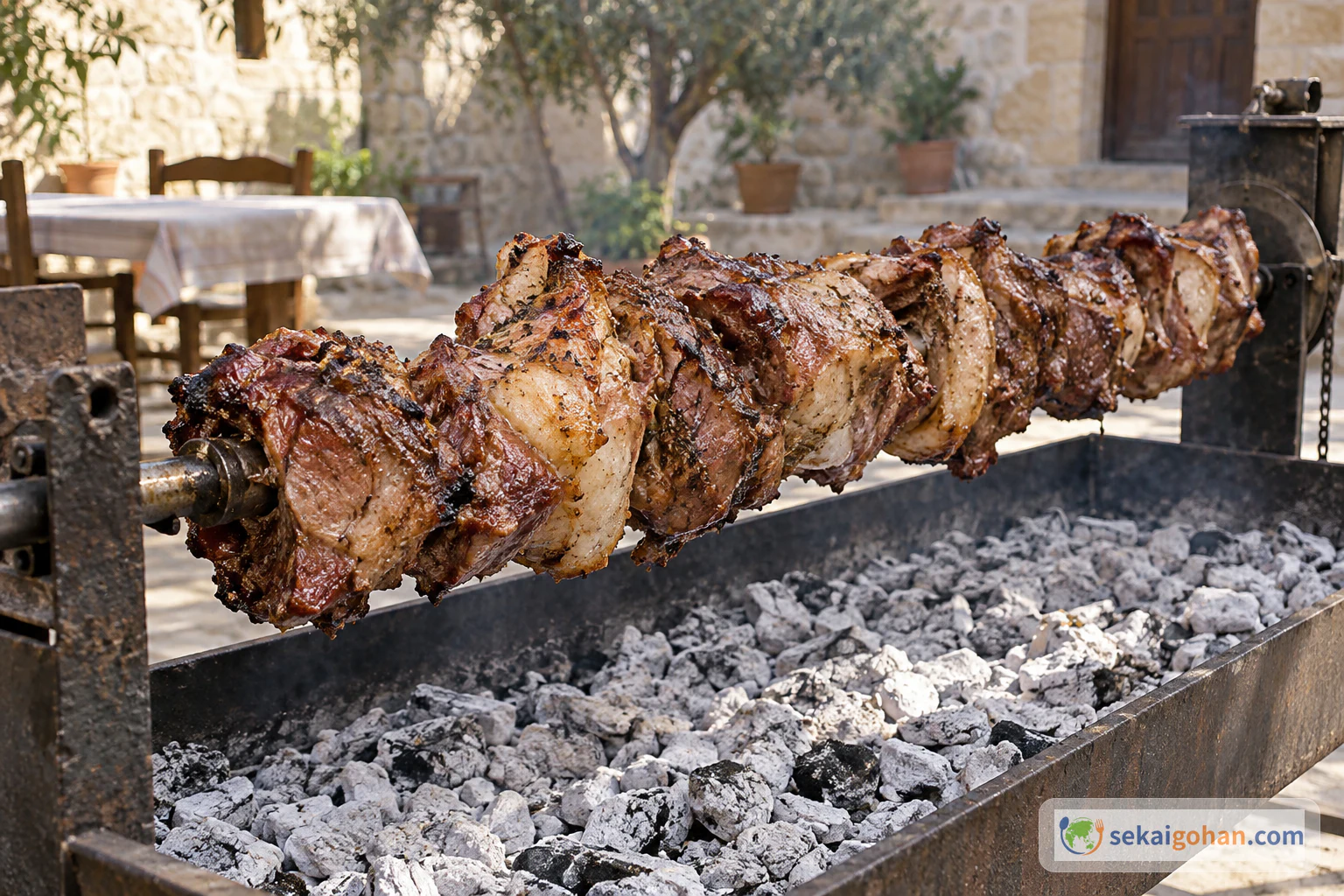
Cypriot Souvla: Large Lamb Pieces Slow-Turned on a Long Spit over Charcoal
How to make Cypriot souvla (σούβλα): fist-sized pieces of lamb neck or shoulder marinated in olive oil, lemon and oregano, threaded onto a long spit and turned slowly over white-ashed charcoal. Covers how souvla differs from souvlaki, how to spread the fat along the spit, the move from high heat to a raised spit, checking the internal temperature, and what changes if you cook without a rotisserie.
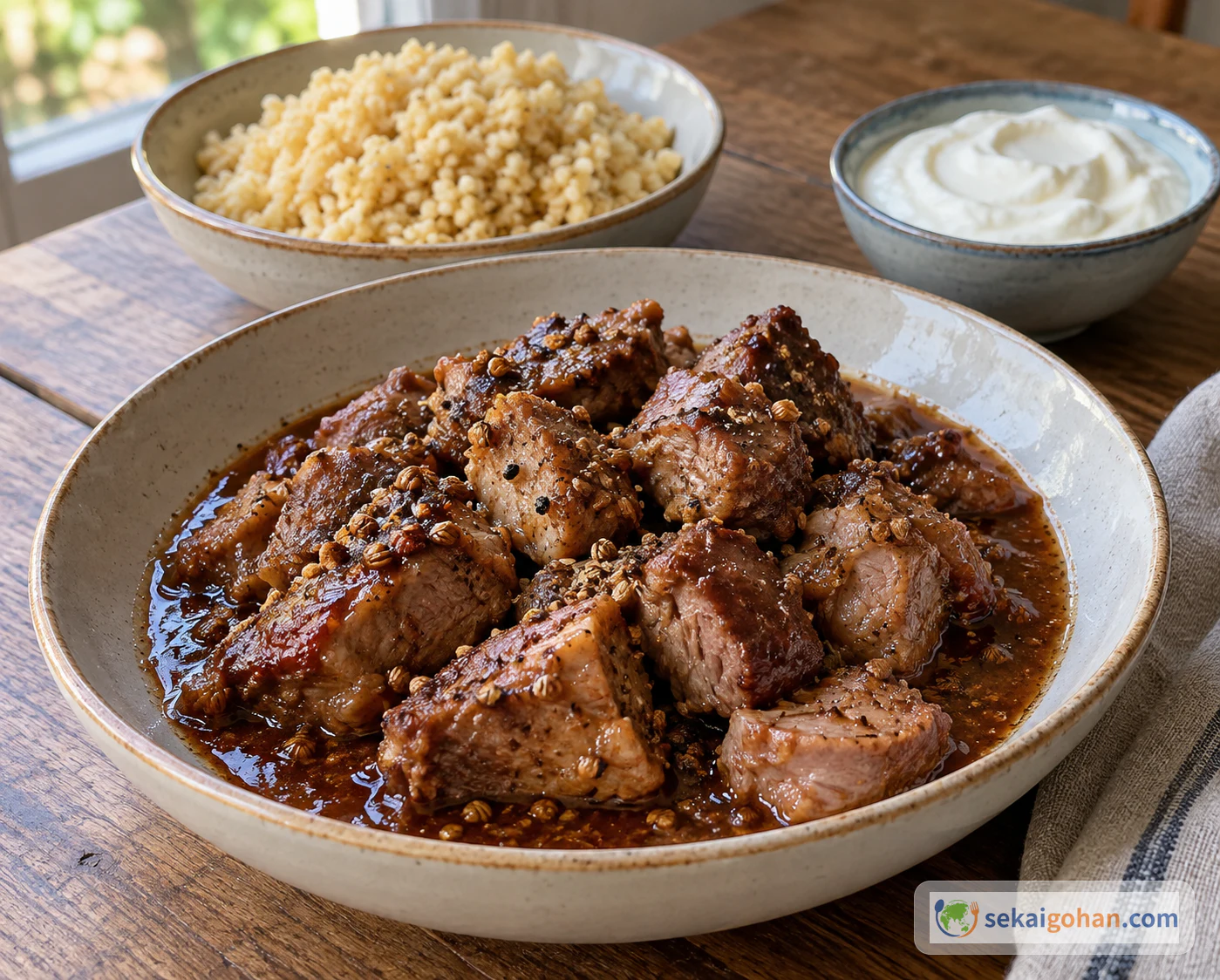
Afelia: Cypriot Pork Braised in Red Wine and Coriander (Αφέλια)
How to make afelia, the Cypriot dish of pork cooked with red wine and coriander, following the 2026 Republic of Cyprus published recipe: an overnight marinade with lightly crushed coriander seeds, gentle browning, and a covered low simmer. Covers ingredients, safe cooking checks, serving with bulgur pilaf and strained yogurt, and the household differences recorded in Cypriot sources.

Flaouna: Cypriot Easter Cheese Bread
Flaouna (flaounes) is the cheese-filled bread baked for Easter in Cyprus. Covers combining cheeses that are easy to find, the aroma of mahlepi and mastiha, fermentation, shaping, browning, storage, rewarming the next morning, substitution lines, causes of failure, and how it is eaten locally, with step photos.

Koupepia: Cypriot Stuffed Vine Leaves
A home recipe for Cypriot koupepia. Covers desalting jarred vine leaves, the pork-and-rice filling, the gentle heat for simmering in tomato and lemon, rolling without tearing, and storing and reheating. Also how to serve it with yogurt and salad, and how the local name differs from dolma.
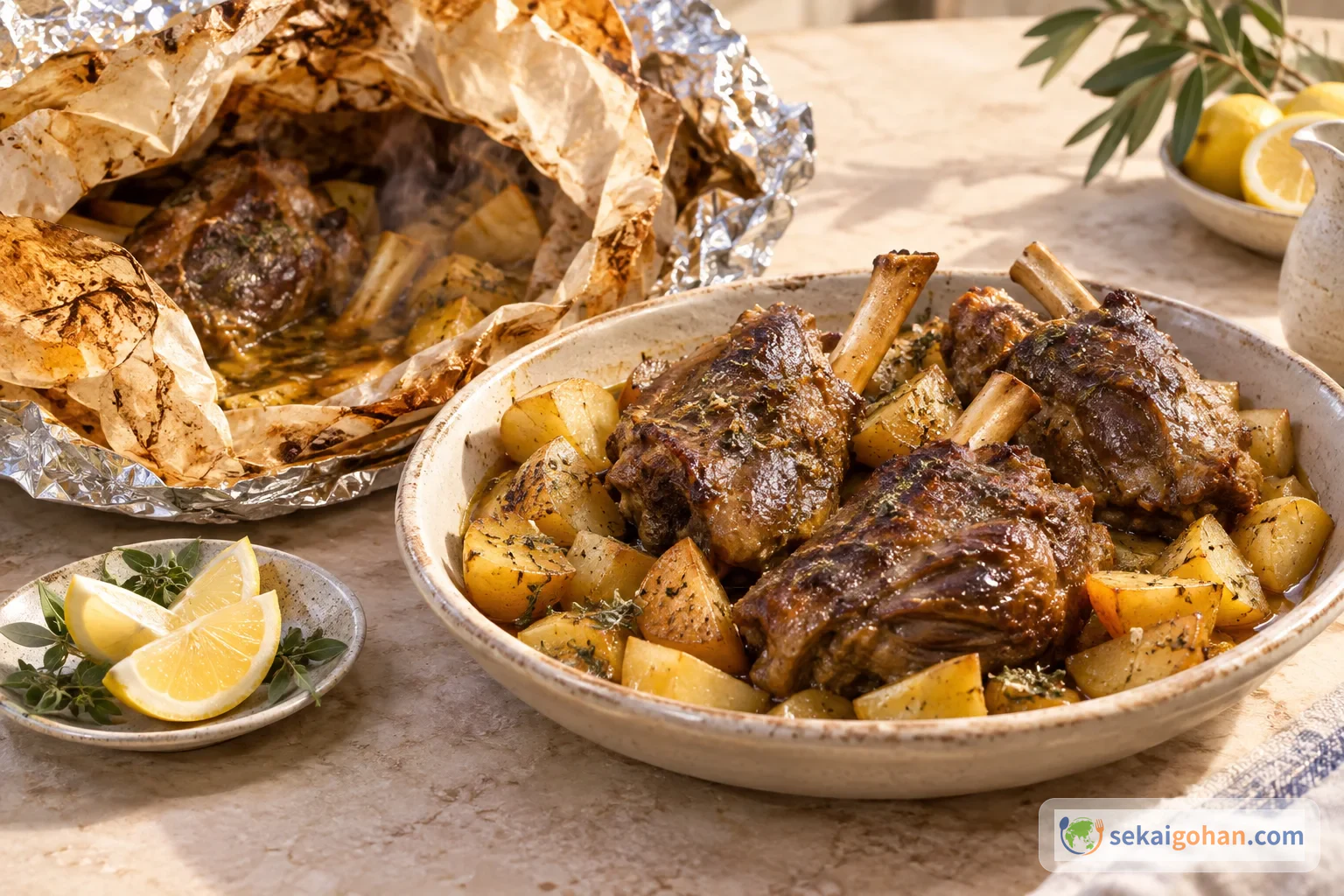
Kleftiko Recipe: Cyprus's Sealed Slow-Roasted Lamb With Potatoes
Kleftiko (ofto kleftiko) is a Cypriot dish of lamb and potatoes wrapped in parchment and foil to lock in the juices and slow-roasted. Covers its place at weddings and family tables, translating the clay oven to a home oven, choosing the cut, regional differences, fixes and storage, in a recipe for 4.
Czechia recipes
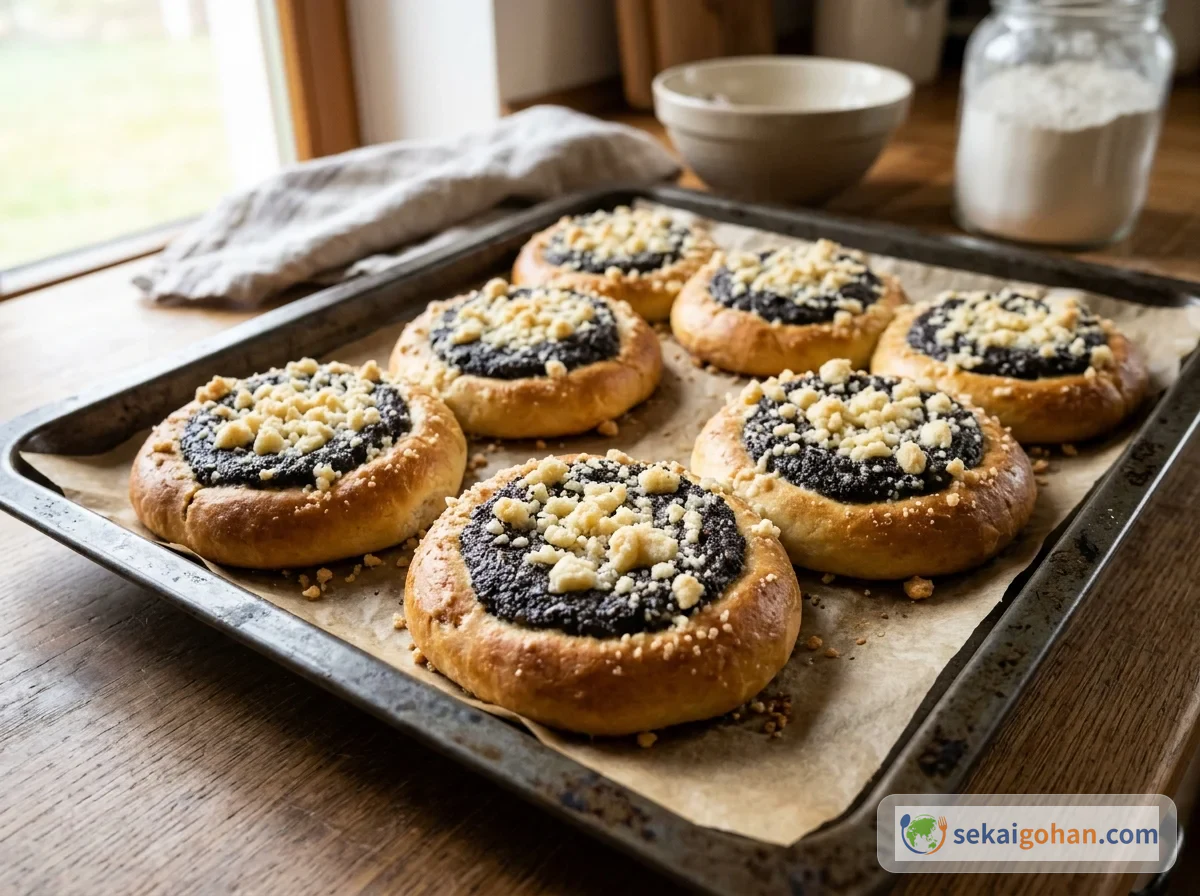
Makové Koláče: Czech Poppy Seed Sweet Rolls
Koláče, the round sweet yeast rolls Czech families bake for Sundays, weddings, and village fairs, filled with ground poppy seeds. Kneading and proofing the dough, pressing the well, grinding and cooking the poppy seeds, the crumb topping (posýpka), and the decorated koláče of Chodsko.

Svíčková Recipe: Czech Beef Sirloin in Root Vegetable Cream Sauce
A full svíčková na smetaně recipe: beef sirloin simmered slowly with root vegetables and finished in a rich cream sauce, with homemade bread dumplings (knedlíky), cranberry sauce, substitutions for hard-to-find ingredients, and the dish's place in Czech food culture.

Vepřo Knedlo Zelo: Czech Roast Pork with Bread Dumplings and Sauerkraut
Vepřo knedlo zelo is the Czech classic of roast pork, bread dumplings and sauerkraut. This guide covers the home-oven method with pork shoulder and jarred sauerkraut, heat control, storage, and how the dish is eaten in the Czech Republic.
Denmark recipes
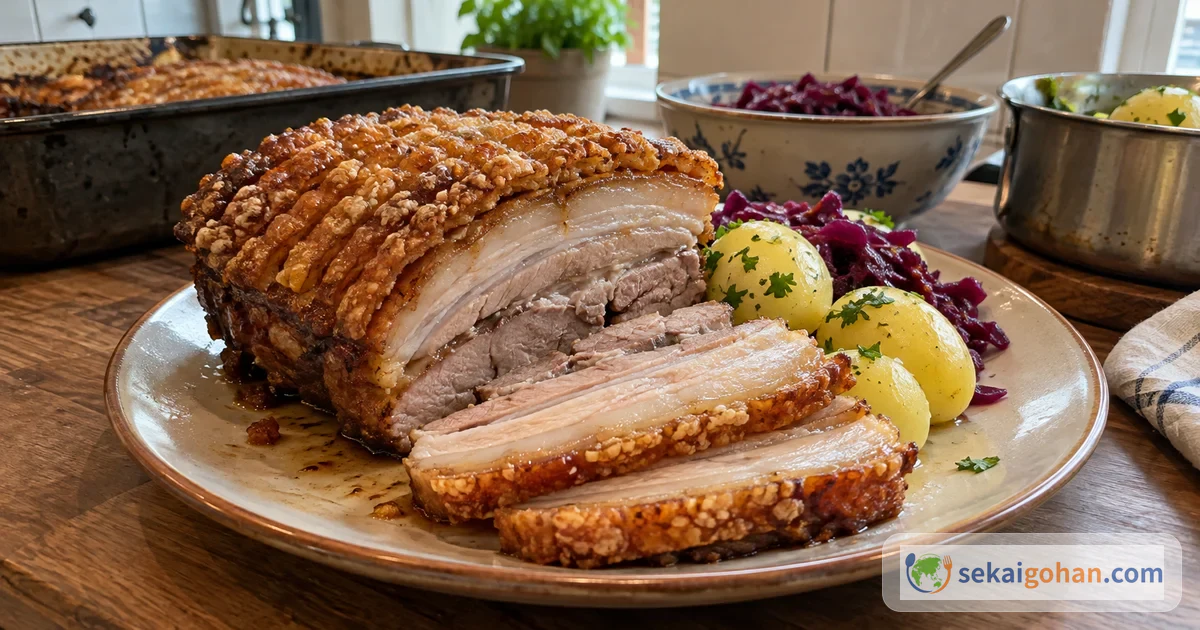
Flæskesteg: Denmark's Crackling Roast Pork for Christmas Eve
A recipe for flæskesteg, the Danish Christmas Eve roast, made with skin-on pork belly, coarse salt, bay leaves, and cloves. Scoring and salting for crackling, why the skin side goes down in hot water first, baking at 200 °C then 230 °C, and checking the internal temperature.

Smørrebrød: How to Make Denmark's Classic Open-Faced Sandwiches
Smørrebrød is Denmark's open-faced sandwich: buttered rye bread with toppings like smoked salmon, herring or roast beef. Includes remoulade and homemade rye.
Estonia recipes
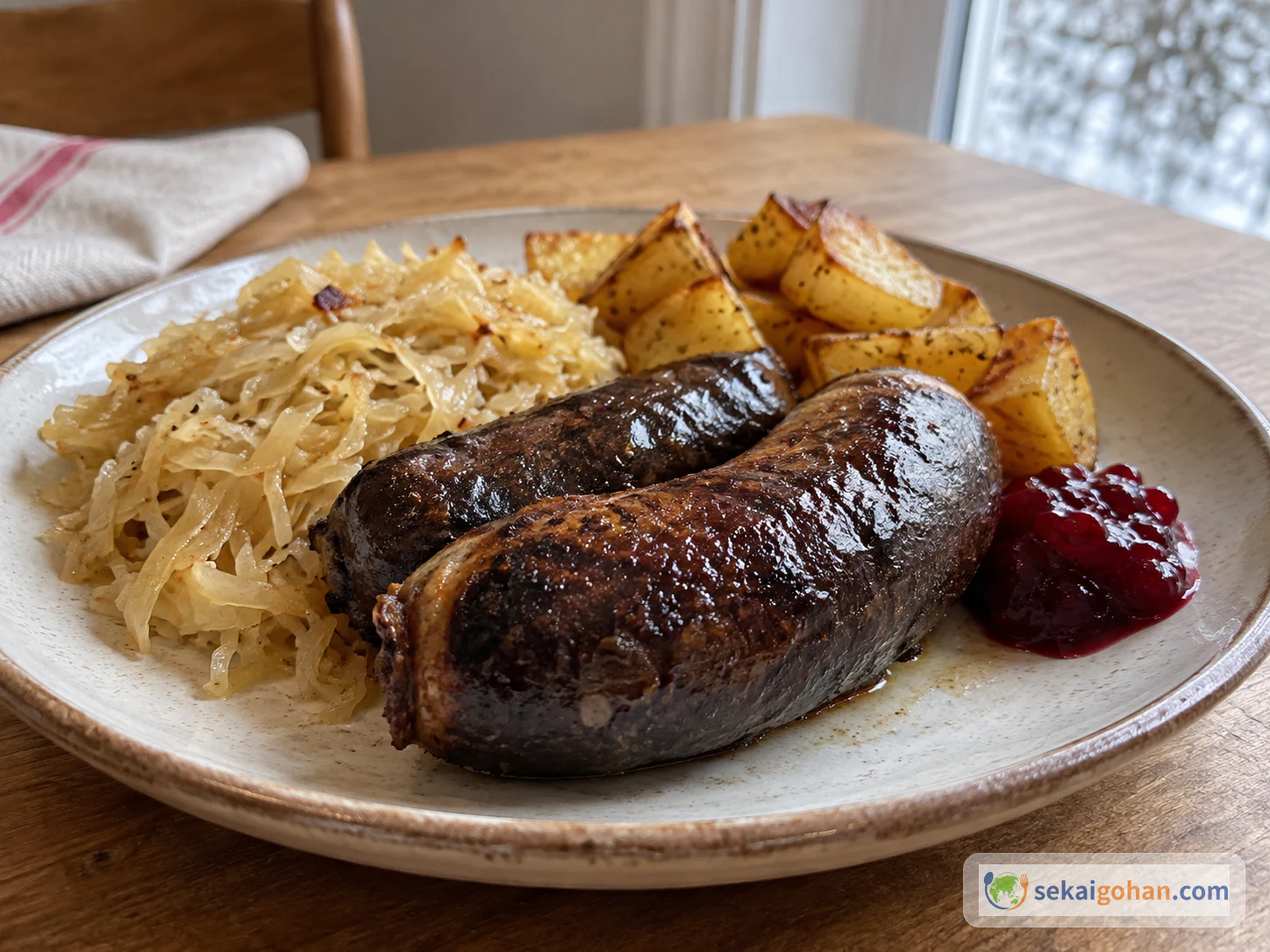
Verivorst: Estonian Blood and Barley Sausage
How to make verivorst, the Estonian sausage of pig blood, barley and pork served at Christmas with sauerkraut and lingonberry jam. Covers finding food-grade blood and casings, gentle poaching, baking, and checking for 75°C at the center, along with how the recipe was built and where Estonian versions differ.
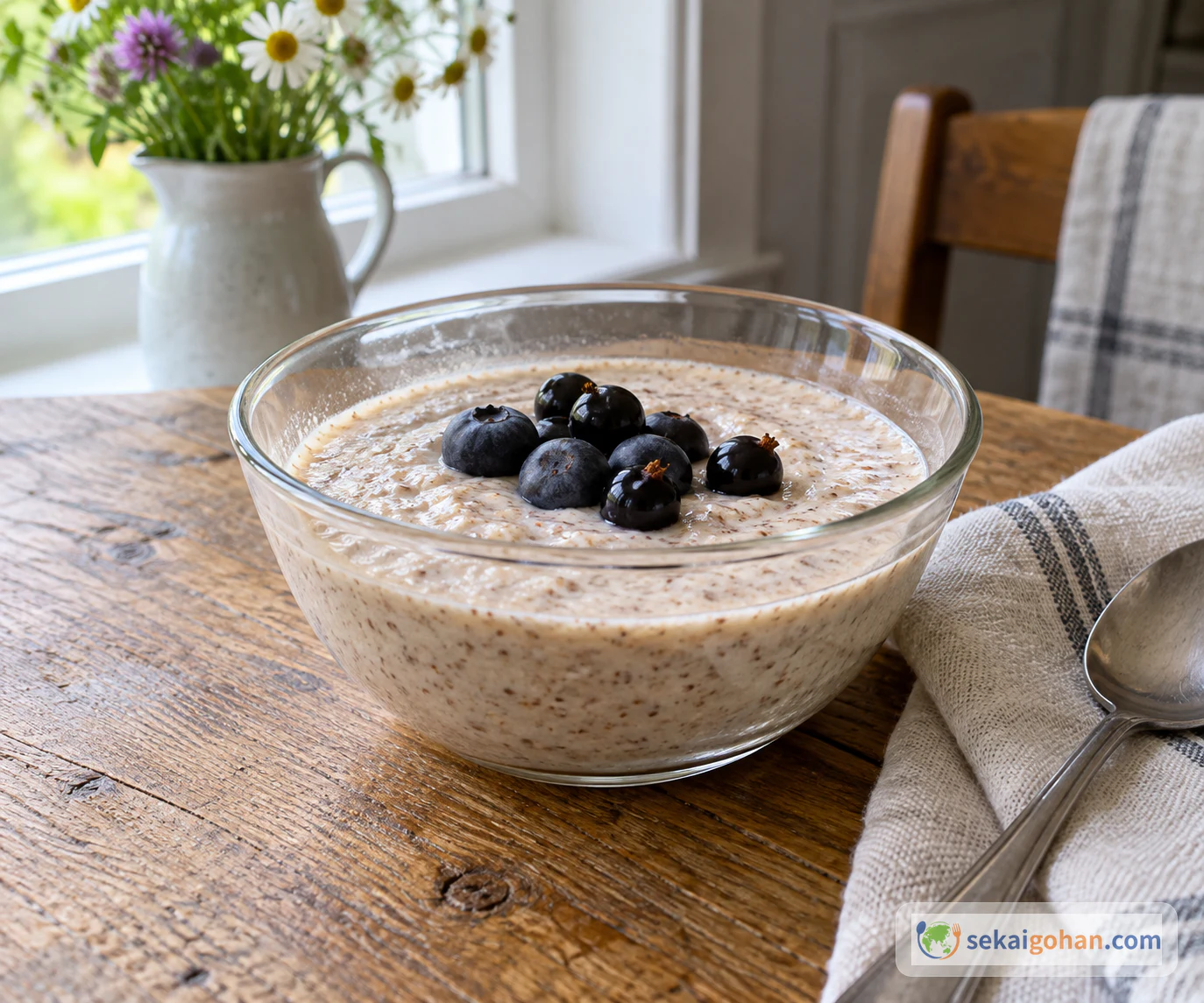
Kama: Estonian Roasted Grain and Legume Flour Stirred into Kefir
How to make Estonian kama, a cold light snack of roasted grain-and-legume flour mixed into curdled milk or kefir. Follows a published Estonian recipe's proportions, with how to choose kama flour, how to add optional berries, how thickness changes with the flour amount, and how blends differ by region and product.

Mulgikapsad: Estonian Sauerkraut, Pork and Barley Stew
Mulgikapsad is an Estonian home dish of sauerkraut, pork and barley layered and stewed. A home-kitchen guide to balancing the sourness, browning the pork, soaking the barley, serving it with potatoes, storage and reheating, and the background of the local name.
Faroe Islands recipes
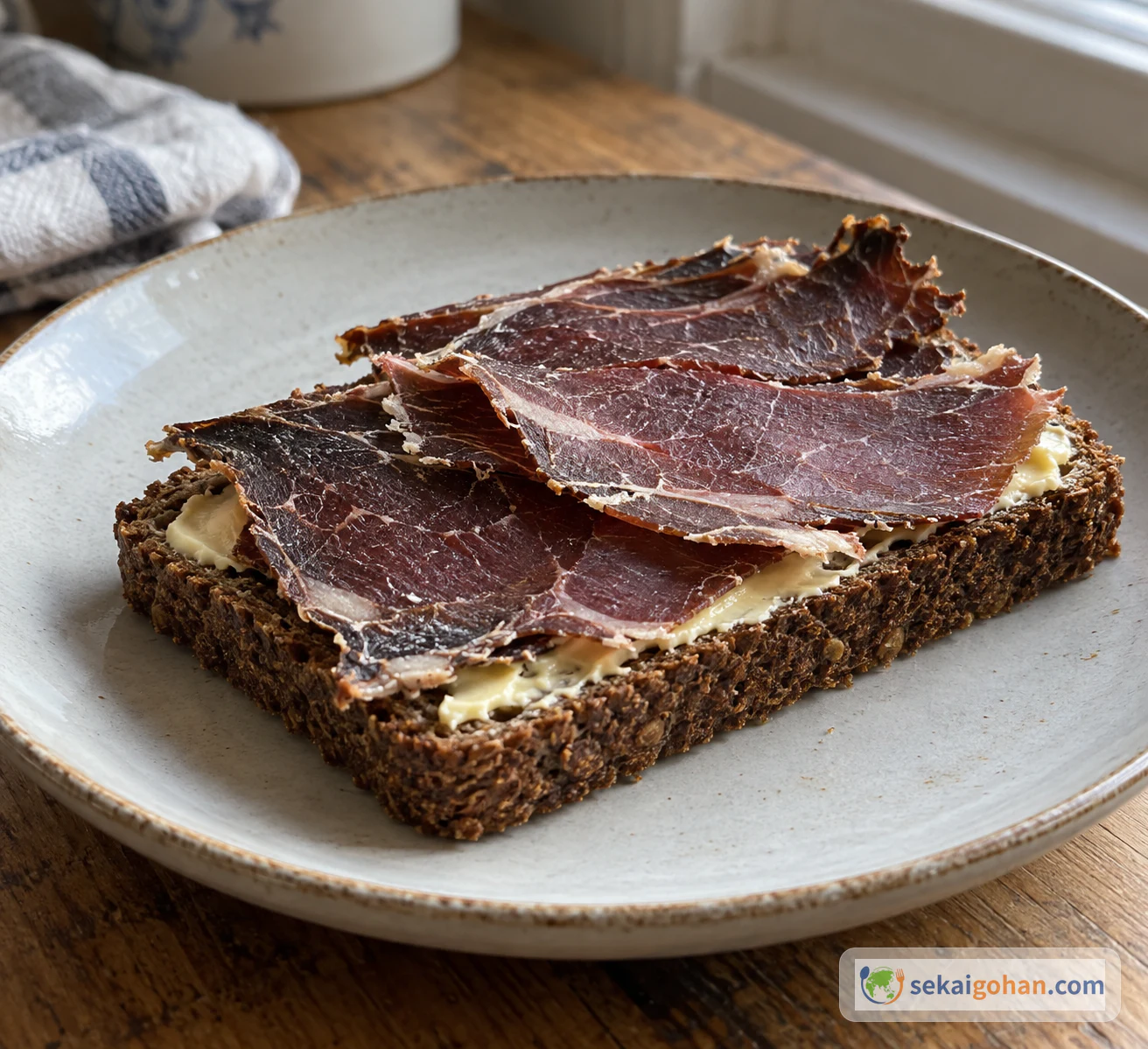
Skerpikjøt: Faroese Wind-Dried Mutton on Buttered Rye
Skerpikjøt is Faroese wind-dried mutton, sliced thin onto buttered rye. Learn how to buy it, slice it across the grain and serve it cold and safely.
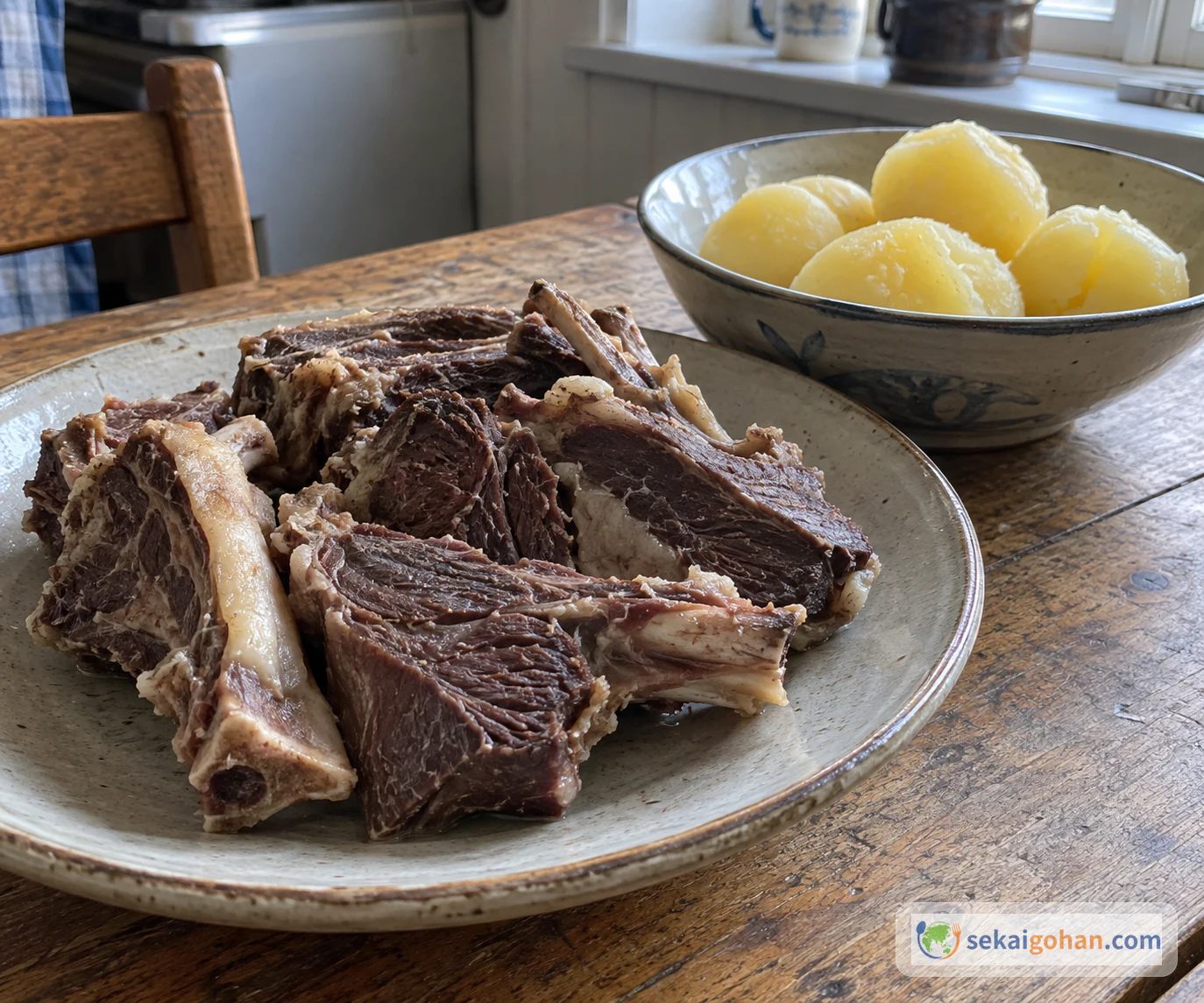
Ræst Kjøt: Faroese Fermented Lamb, Gently Boiled and Served with Potatoes
What ræst kjøt is, how it differs from the drier skerpikjøt, and how to cook commercially prepared ræst kjøt at home: a quiet simmer, plain boiled potatoes, and the røst súpan soup as a separate way to eat it. Covers choosing the meat, why fresh lamb is not a substitute, and why the fermentation itself is not a home project.
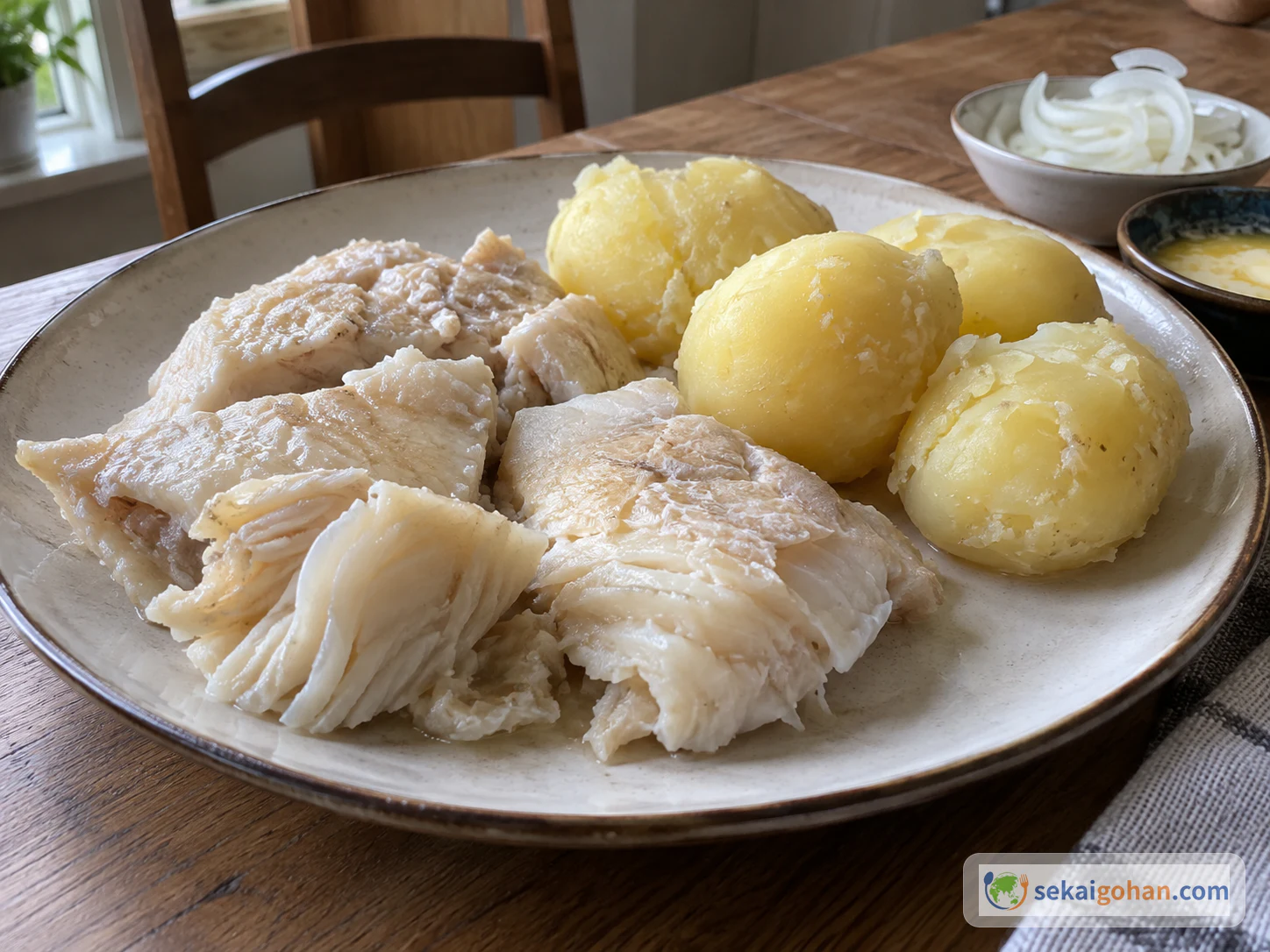
Ræstur Fiskur: Faroese Fermented Fish Simmered with Potatoes
How to cook ræstur fiskur, the wind-dried, fermented fish of the Faroe Islands, the way a Faroese home recipe does it: shop-bought fermented fish simmered gently in the same pot as salted potatoes. Covers what ræst means, how it differs from fully dried turrur, garnatálg or melted butter and onion on the side, safe thawing and cooking, and why ordinary salted or dried fish is not a substitute.
Finland recipes
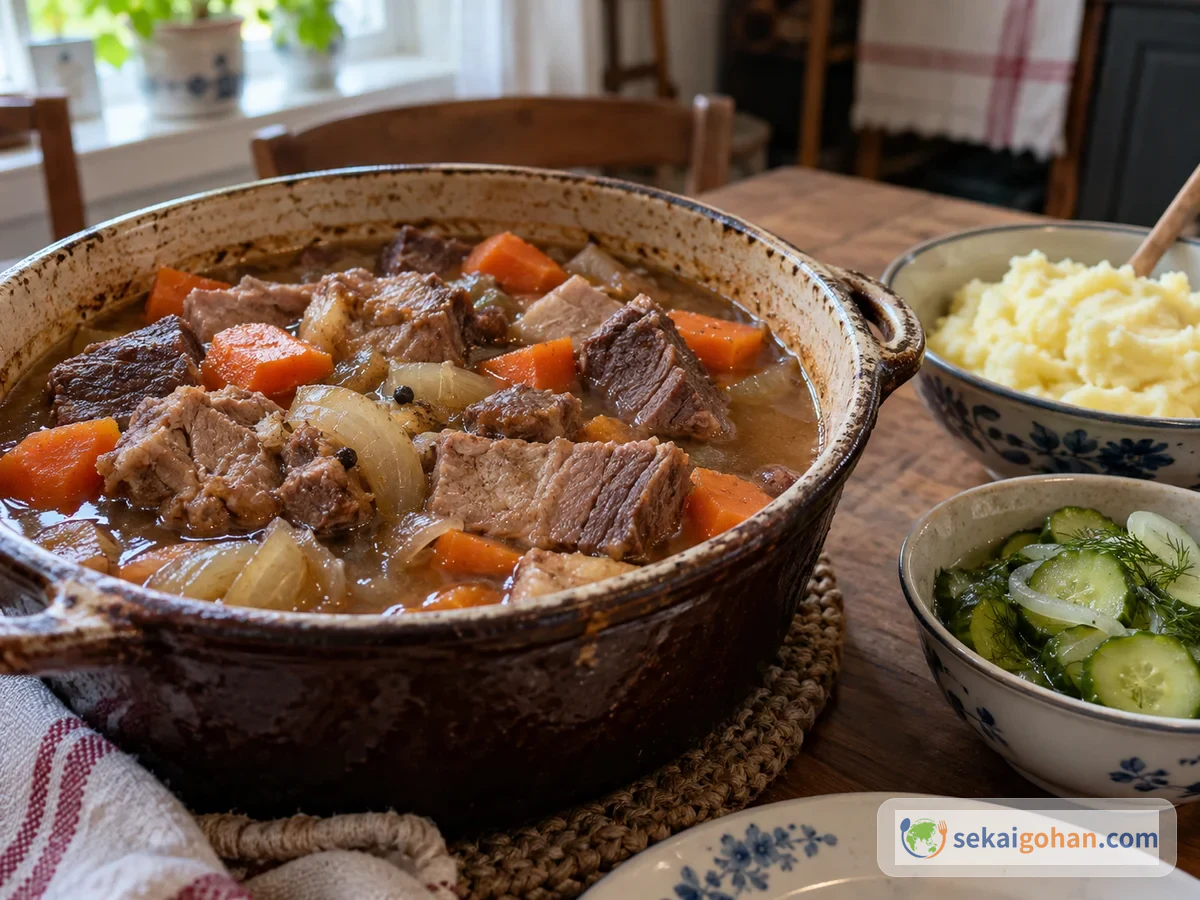
Karjalanpaisti: Karelian Hot Pot of Pork and Beef Slow-Baked with Onions
Karjalanpaisti, the meat stew of Karelia in eastern Finland, made with pork shoulder, beef shank, plenty of onions, allspice and bay leaf: its bread-oven origin, why the onions fry for 40 minutes, 3 hours at 120°C, and checking the pork is cooked.

Karjalanpiirakka: Finnish Karelian Rice Pies with Rye Crust and Egg Butter
Karjalanpiirakka are Finnish Karelian pies: thin rye crusts around creamy milk rice porridge. Learn to shape them, make munavoi egg butter and bake them.

Lohikeitto Recipe: Finnish Creamy Salmon Soup
Lohikeitto is Finland's creamy salmon soup. This guide covers heat control so the salmon stays tender, how to use dill and allspice, easy substitutes for leek and fish stock, plus storage and reheating for a home kitchen.
France recipes

Pain au Chocolat: Laminated French Chocolate Pastry (Chocolatine)
How to make French pain au chocolat at home from a yeasted dough laminated with butter. Covers choosing flour and butter, three letter folds with chilling, judging the final proof by volume and jiggle, and baking to a deep golden brown, with the chocolatine name question, breakfast and goûter culture, and how to fix butter that cracks or leaks.

Quiche Lorraine: Smoked Bacon, Eggs and Crème Fraîche in a Shortcrust Tart
How to make quiche lorraine, the savory tart of Lorraine in northeastern France, from a 4-serving, 26 cm recipe published by Larousse: ready-rolled pâte brisée, smoked lardons, whole eggs and yolks, and crème fraîche, baked at 210°C and then 180°C. Covers why the classic version has no cheese, how to choose substitutes, fixing a runny or soggy quiche, and safe storage and reheating.
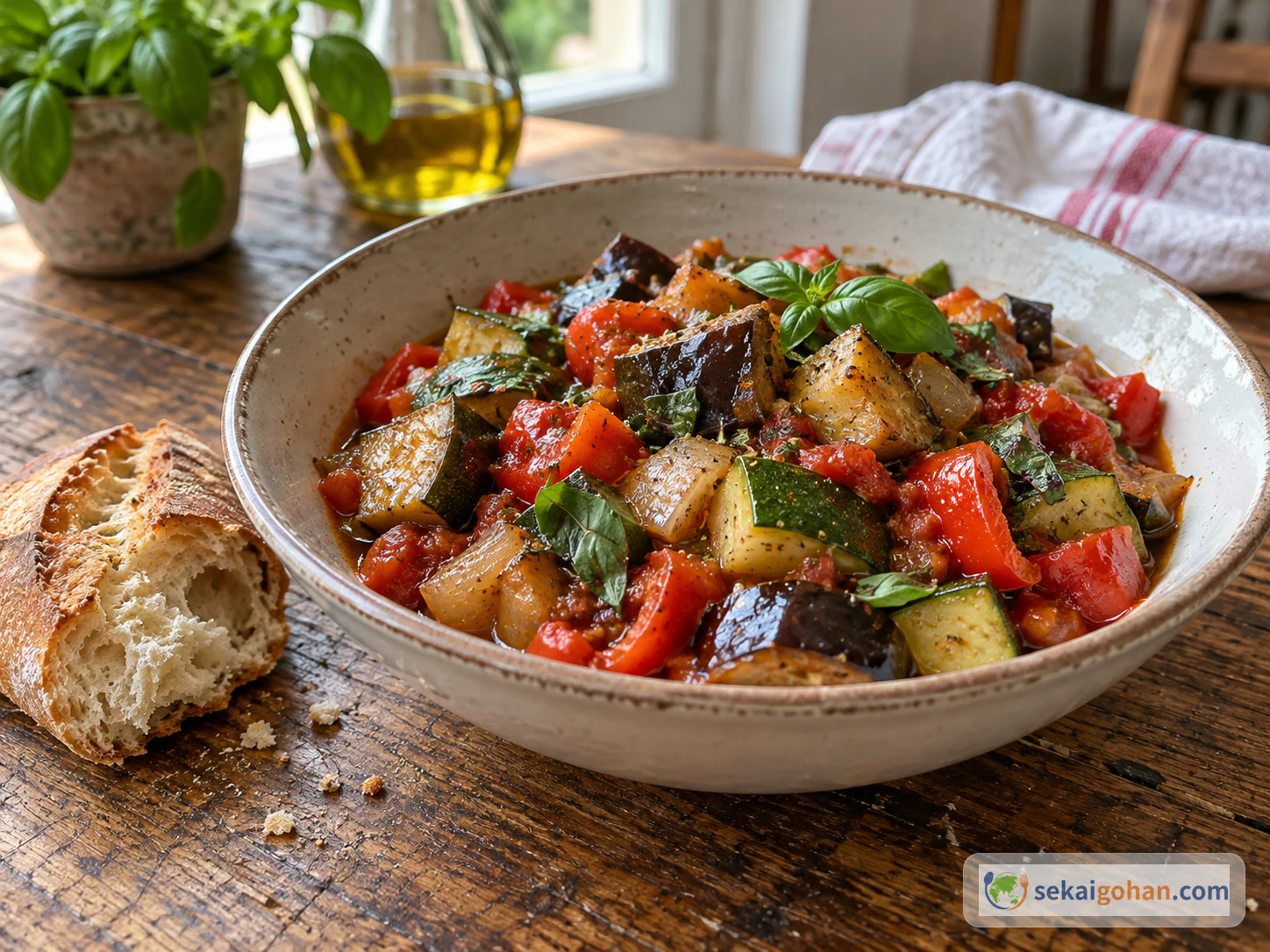
Ratatouille: A Provençal Vegetable Stew Where Every Vegetable Keeps Its Shape
How to make ratatouille, the vegetable stew of Provence and Nice, from the James Beard recipe for 6 servings: cutting eggplant, zucchini, pepper and tomato, cooking garlic and onion without browning, adding the tomatoes last, and judging the finish by texture rather than the clock. Also covers substitutions, the separate-pan method, and how it differs from the thinly sliced confit byaldi.
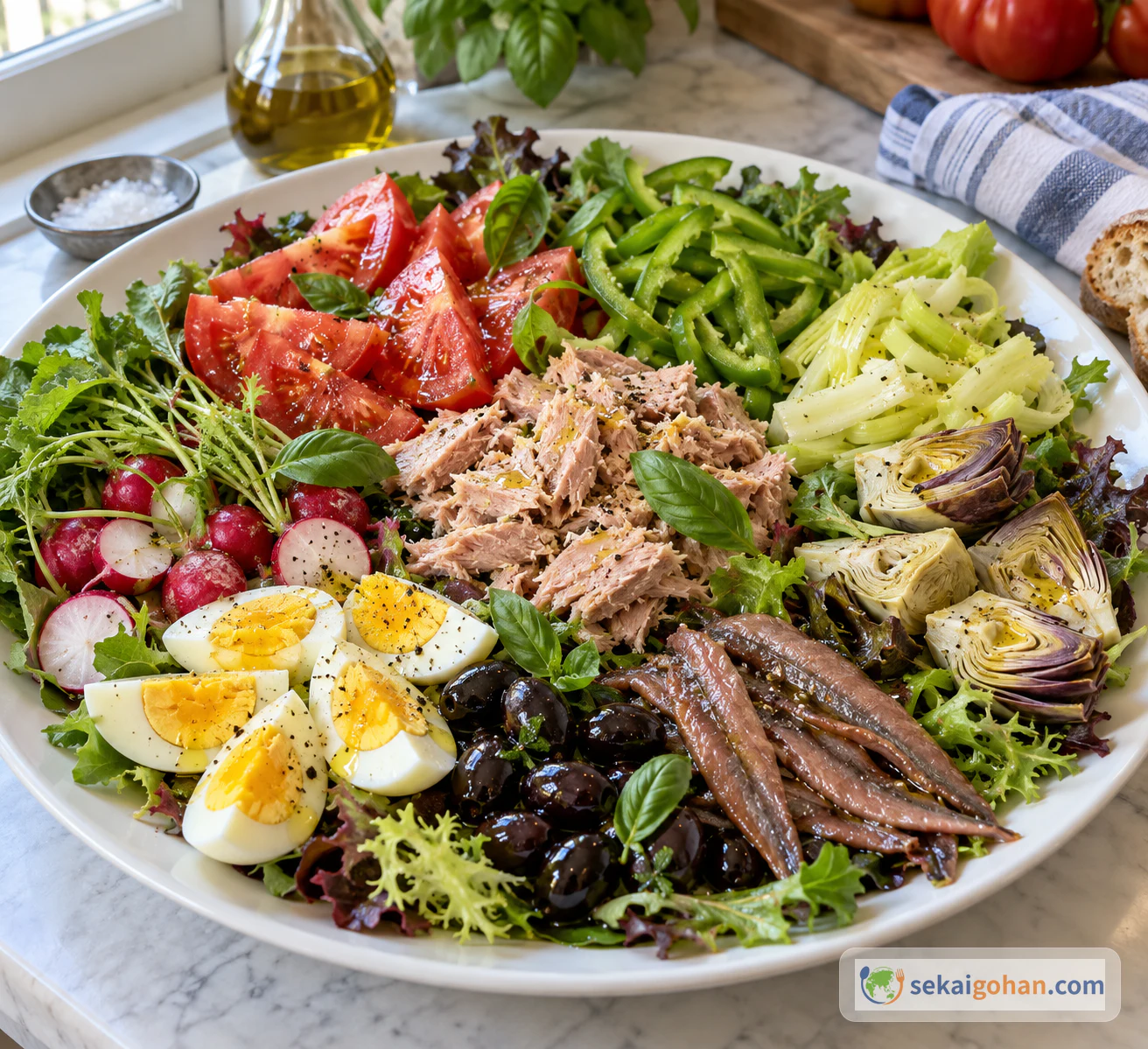
Salade Niçoise: The City of Nice's Composed Summer Salad (La Salada Nissarda)
How to make salade niçoise (La Salada Nissarda) from the City of Nice's official recipe for 8: raw summer vegetables, olive-oil tuna, salted anchovies, black olives and hard-boiled eggs arranged on a garlic-rubbed platter, dressed with olive oil and pepper, and mixed at the table. Covers substitutions, fixing watery or salty results, and how the Nice version differs from the potato-and-green-bean salads served internationally.
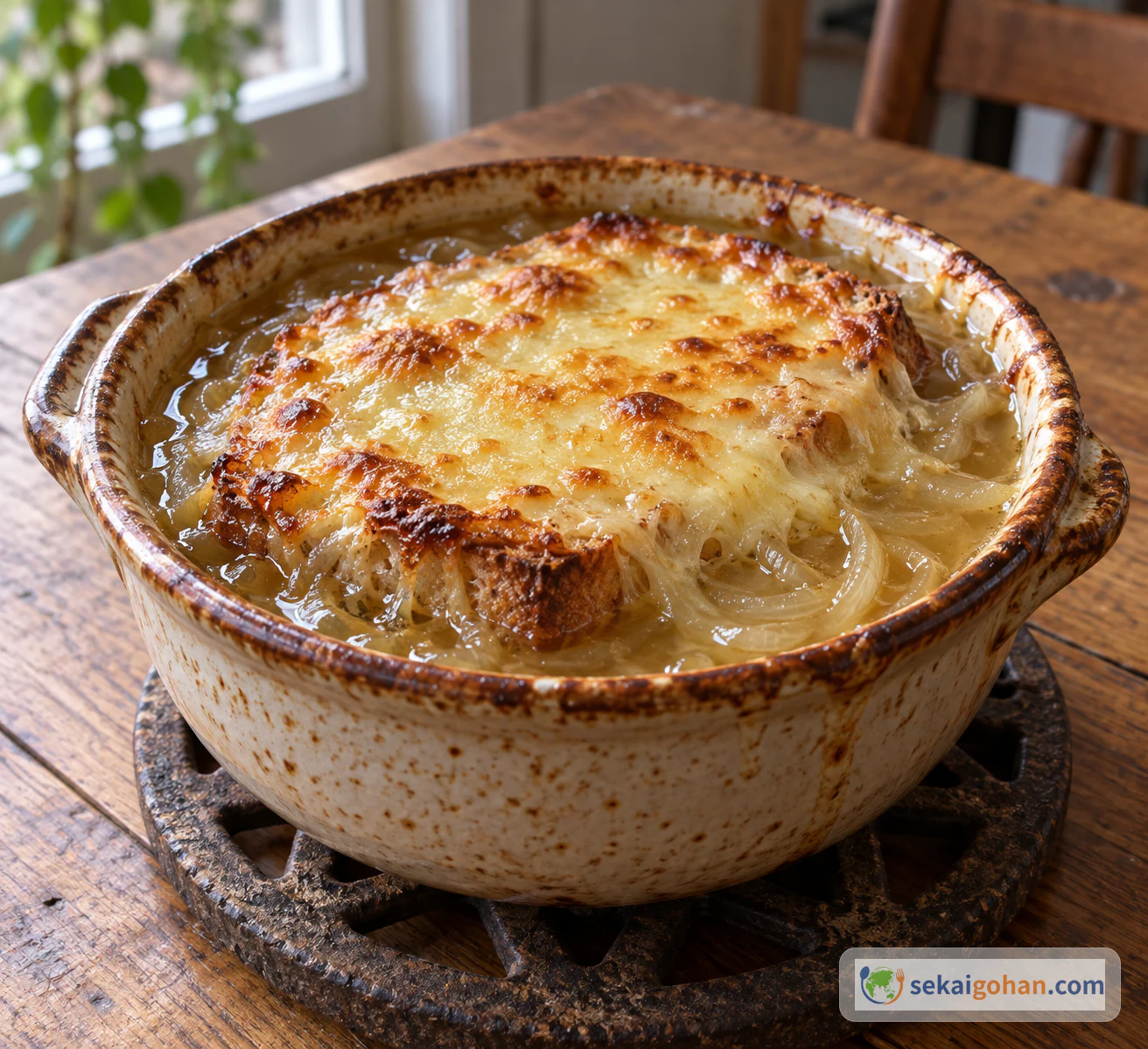
Soupe à l'oignon: Paris Halles-Style Onion Soup Gratinée
How to make soupe à l'oignon gratinée in the style of the Paris Halles: yellow onions gently stewed in butter and water under a lid, a light water-based broth, and a slice of country bread under Comté browned in individual grill-safe bowls. Covers the market history behind the dish, choosing liquid, bread and cheese, keeping the bread from sinking, safe bowls, and fixing common problems, for 4 servings.
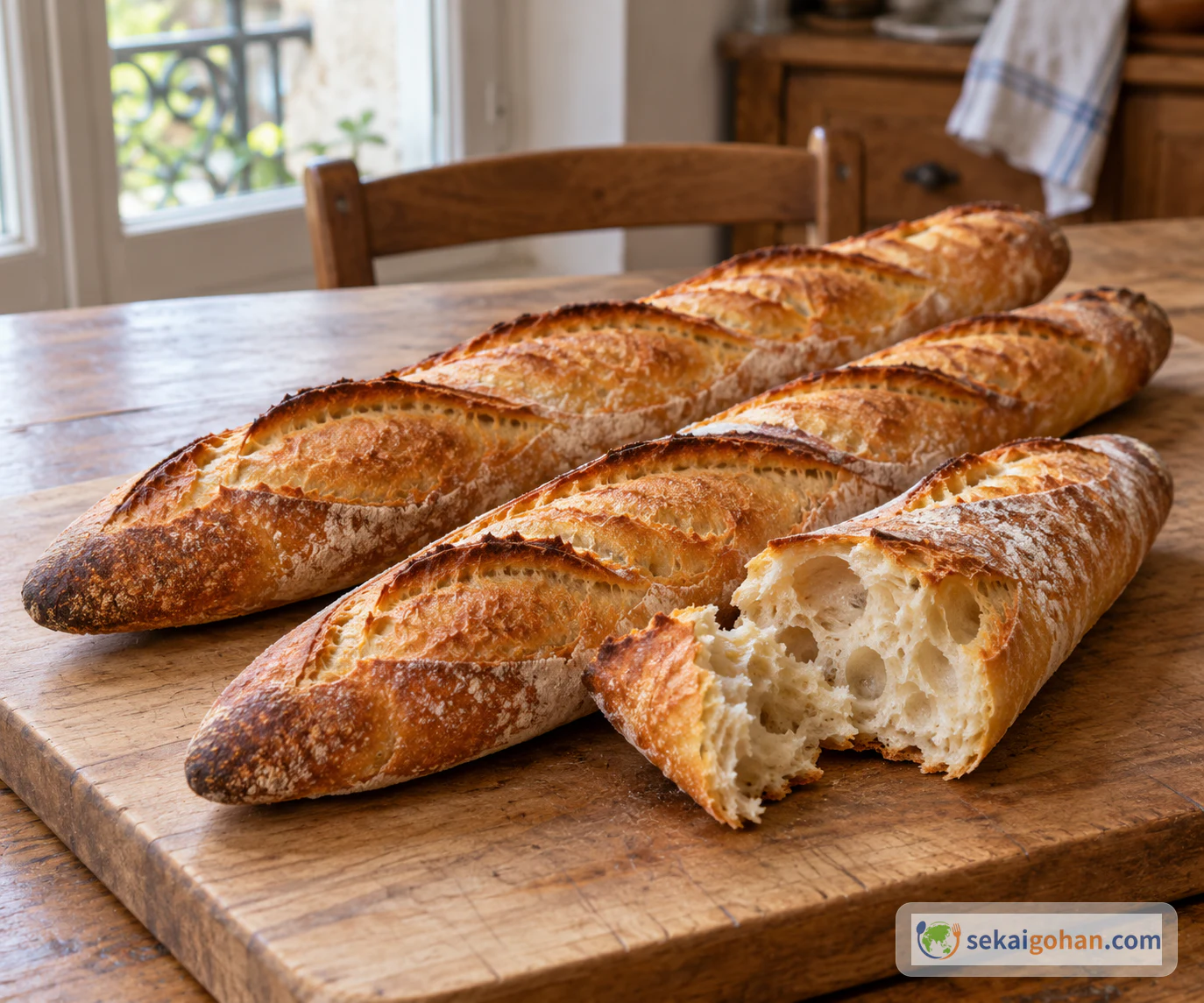
Baguette: Classic French Bread with an Overnight Poolish (3 Loaves)
How to bake three classic baguettes in a home oven using an overnight poolish. Covers ingredients, mixing, the 45-minute rises and fold, shaping, scoring, steam baking, signs that a dough is ready, why flours don't swap one-for-one, troubleshooting, storage, and how the baguette is eaten at the French table.
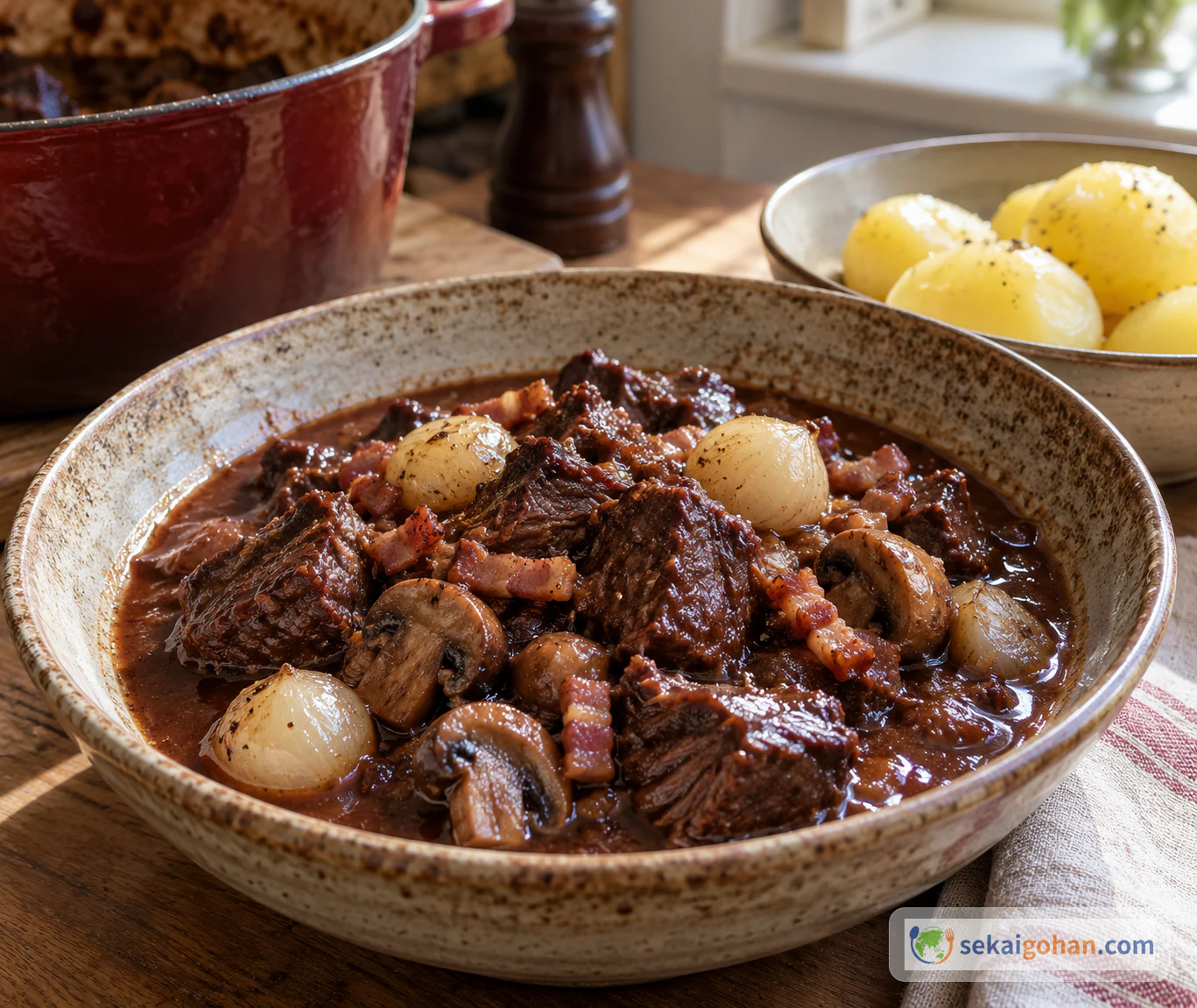
Beef Bourguignon (Bœuf Bourguignon): Beef Slowly Braised in Red Wine
How to make beef bourguignon (bœuf bourguignon) for 4: beef chuck browned and braised in red wine and stock, finished with bacon, mushrooms and pearl onions. Covers Burgundian context, how recipes differ, choosing beef, wine and stock, gentle simmering until the meat pulls apart, fixing the sauce, making it a day ahead, and serving.
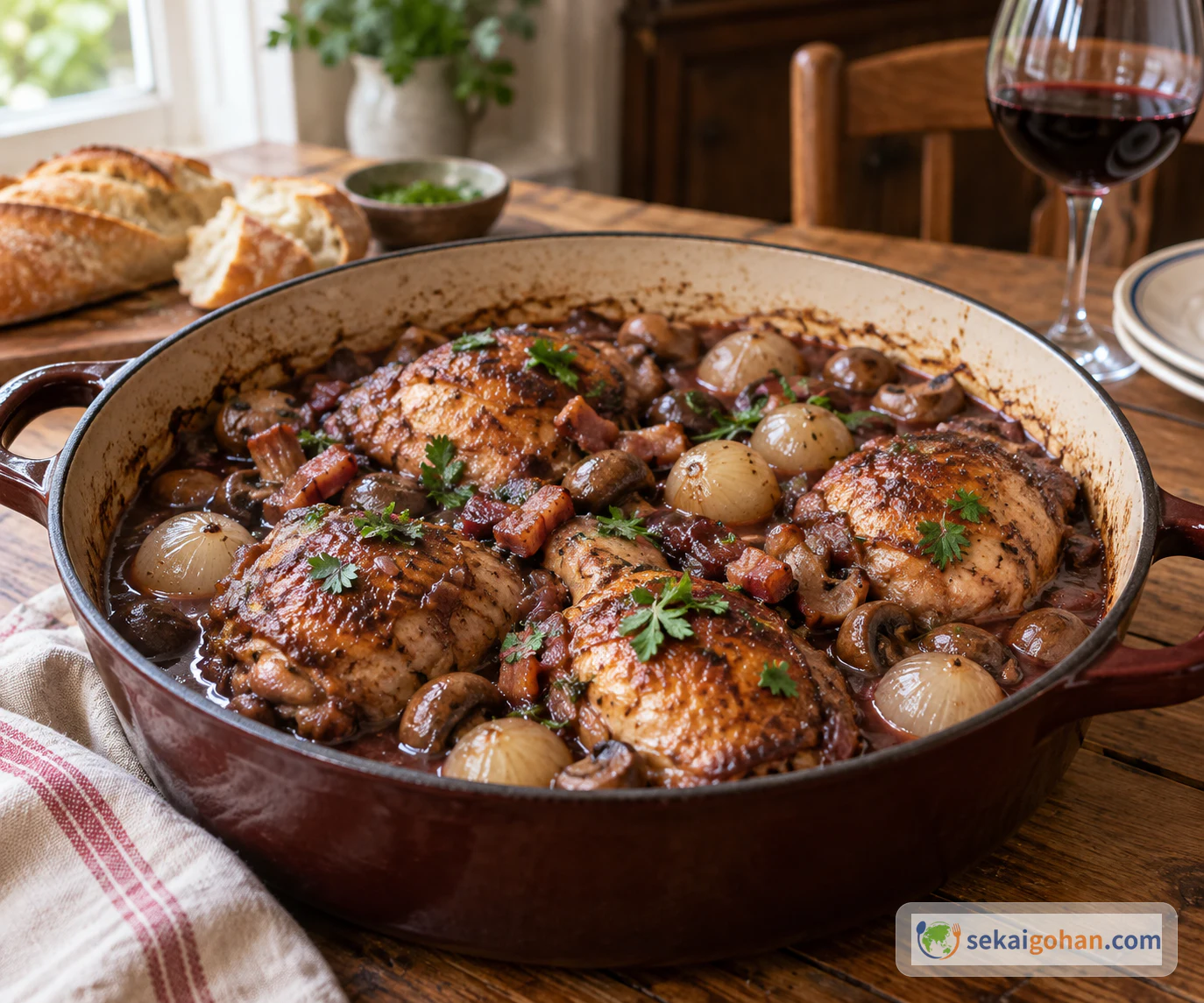
Coq au Vin: Chicken Braised in Red Wine, Burgundy Style
How to make coq au vin at home: chicken browned in bacon fat, braised gently in red wine and stock, then finished with pearl onions and mushrooms cooked separately. Covers what the name means, the history as told by Côte-d'Or Tourism, choosing wine and chicken, an optional day-before marinade, safe doneness checks, fixing a thin sauce, and regional variations.
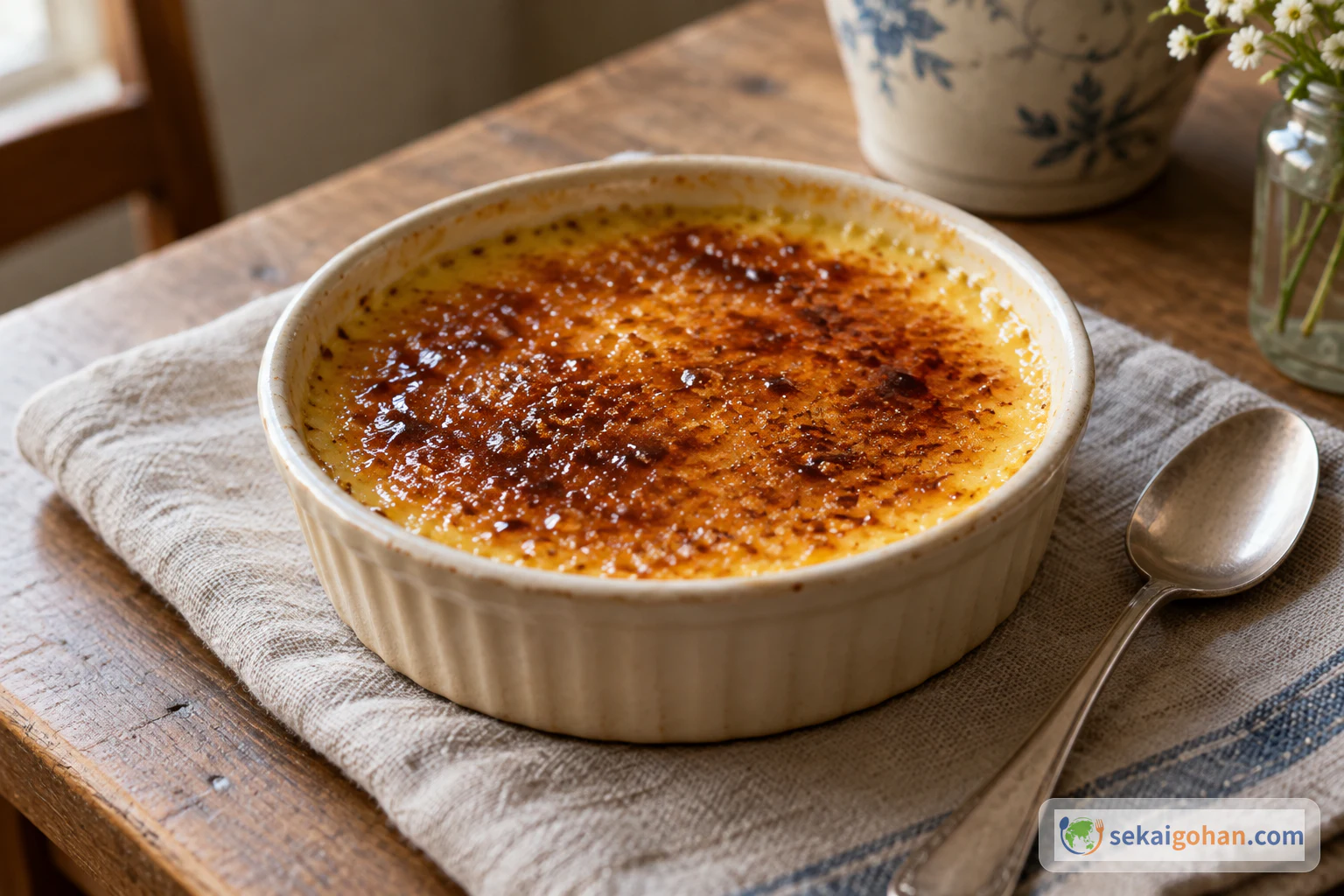
Crème Brûlée: Silky Vanilla Custard Under a Thin Burnt-Sugar Crust
A four-ramekin crème brûlée made with cream, egg yolks, sugar and vanilla extract, baked in a 160°C water bath, chilled for at least 2 hours and caramelized just before serving. Covers judging doneness by the wobble, how dish depth changes baking time, using a torch or the oven grill, fixing grainy or soggy results, and how this recipe differs from other versions.
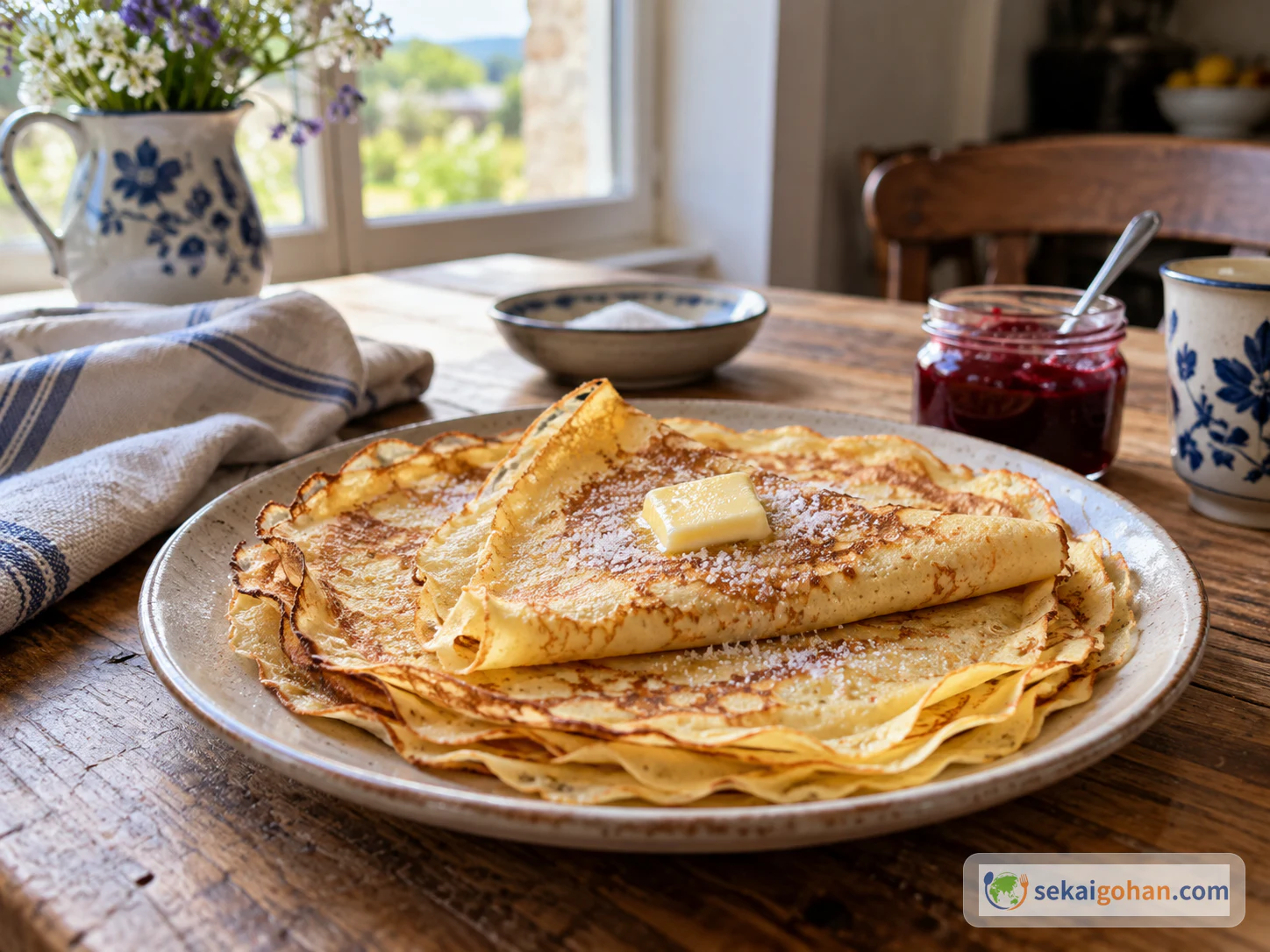
French Crêpes: Thin Wheat Crêpes with Butter and Sugar
How to make thin French wheat crêpes at home with flour, milk, eggs and a little melted butter, from mixing a lump-free batter and resting it in the fridge to spreading it thin and knowing when to turn it. Also covers serving with butter and sugar or jam, how crêpe and galette names vary across Brittany, and the February 2 Chandeleur tradition.

How to Make Croissants: Laminated Butter Dough and Reading the Proof
How to make French croissants at home: 12 pieces from a Le Cordon Bleu formula, with three turns of folded-in butter, rests between folds, shaping, proofing and bake color. Includes how to fix butter that cracks or leaks, honest notes on milk and yield, and the croissant's place in French boulangerie culture and its uncertain origins.
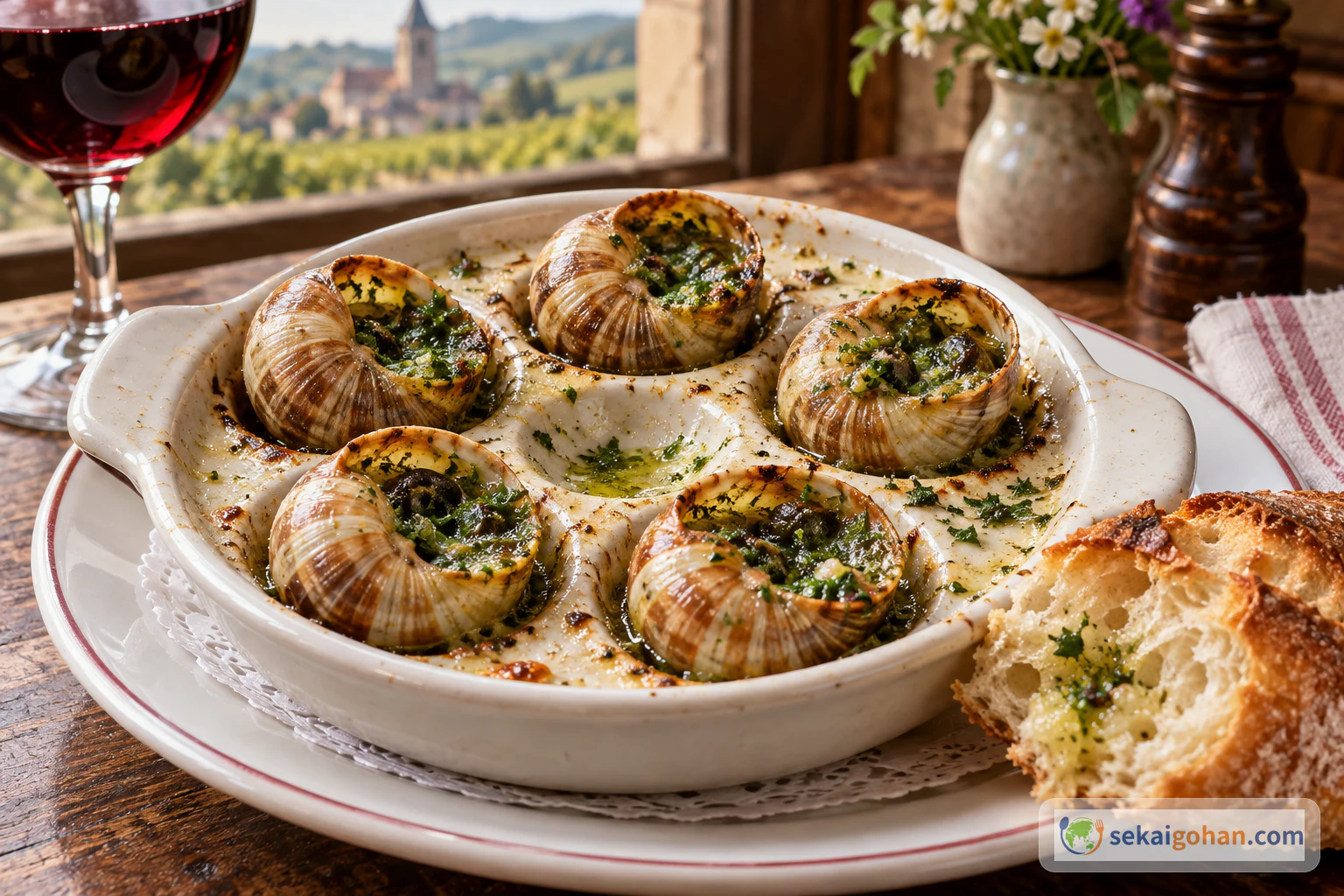
Escargots à la Bourguignonne: Burgundy-Style Snails in Garlic-Parsley Butter
How to make escargots à la bourguignonne (Burgundy-style snails) for 4 people. The recipe uses 48 cooked canned snails and a butter made with shallot, garlic and flat-leaf parsley. It covers filling the shells, the Larousse oven method of preheating to 240°C and then switching the oven off, what to use if you have no shells, how to choose shallots and parsley, and how this dish differs from other snail dishes in France.

French Macarons: Parisian Almond Sandwich Cookies, From Batter Check to Home Oven
How to make Parisian macarons at home from one published formula: 75 g egg whites and 85 g almond flour for about 24 filled macarons. Covers medium-peak meringue, macaronage, drying the skin, baking, filling with French buttercream, troubleshooting, storage, and how the Paris sandwich macaron differs from the single cracked macaron of Nancy.

Pissaladière: Nice's Onion Tart with Anchovies and Olives
Pissaladière, the onion tart of Nice: how to sweeten onions without scorching them, bread dough versus store-bought dough, the salt of anchovies and black olives, substitutions, storage, bringing it to a party, its place among Provençal snacks, and why it goes wrong.

Pot-au-Feu Recipe: French Home-Style Beef and Aromatic Vegetable Stew
Pot-au-feu explained the French home-cooking way: beef shank, aromatics, a cold-water start, low heat, a clear bouillon, storage, uses for leftover meat, and serving with mustard and cornichons, with ingredients easy to find and practical substitutes for a winter dinner.
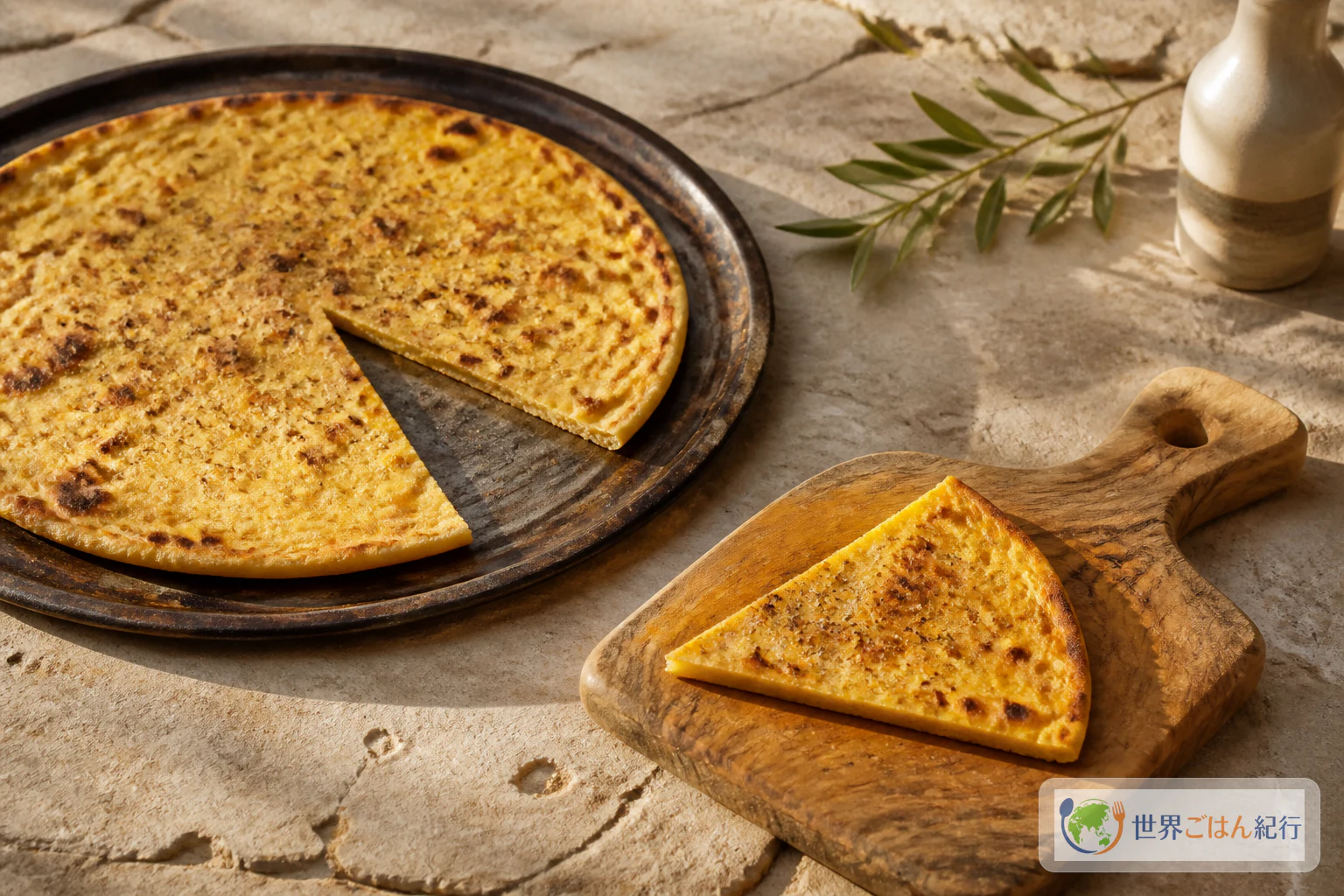
Socca: Nice's Chickpea Flour Flatbread
A home recipe for Nice's famous socca, baked thin with chickpea flour and olive oil. Batter thickness after a 2-hour rest, using a 275°C oven and broiler, differences between Nice and Liguria, substitutes, fixes when it goes wrong, and storage.

How to Make Bouillabaisse: Marseille Fish Soup at Home
A recipe for Marseille bouillabaisse using fish you can find where you live. Soup made from fish frames, the aroma of saffron and fennel, heat that keeps fillets from breaking up, how to eat it with rouille and bread, substitute fish, shopping, storage, and fixing mistakes. Includes what to use when there are no mussels, and how to reheat it.

Frog Legs Recipe: Dombes-Style Frog Legs With Herb Butter
A recipe for frog legs, loved around the Dombes in France, made from frozen legs in a home kitchen: preparation, a light dusting of flour, pan heat, internal temperature, herb butter, sourcing, regional differences, and choosing responsibly.

Pan Bagnat: The Nice-Style Soaked Sandwich
Pan bagnat, the market sandwich of Nice, for a home kitchen. How to choose the round roll, soak it with tomato juice and olive oil, layer tuna, anchovy, egg and vegetables, press and rest it, plus storage and substitutes, with the local name, regional differences and shopping notes.

Crozets de Savoie: Hand-Cut Mountain Pasta, Baked Croziflette-Style
Crozets are small square pasta from France's Savoie region, cut by hand and baked croziflette-style. Covers buckwheat dough, Reblochon substitutes, storage.
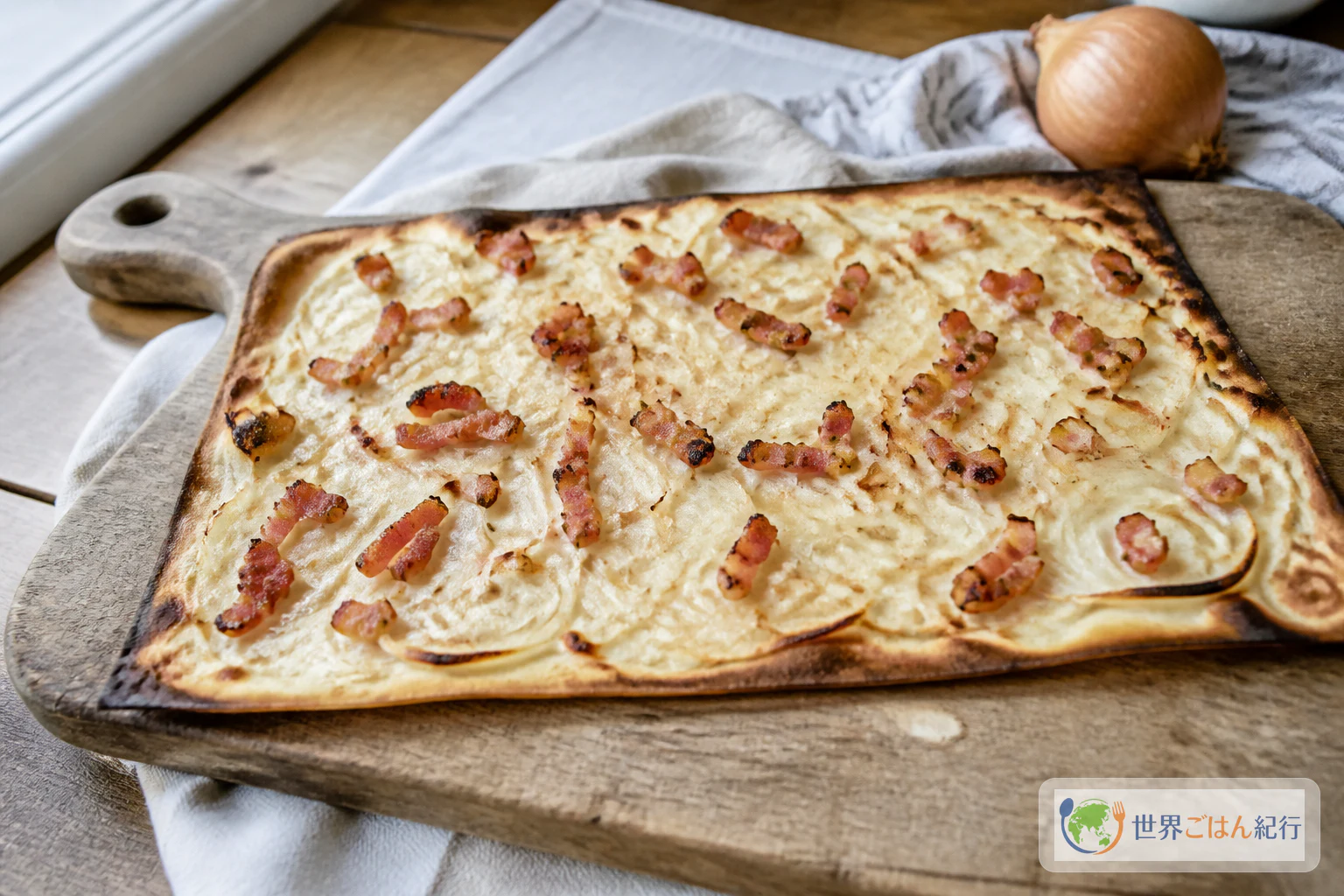
Tarte Flambée Recipe: Alsace's Paper-Thin Flatbread at Home
A home recipe for tarte flambée, the Alsatian flatbread, made with a yeast-free dough rolled 1–2 mm thin and baked in a very hot oven. Covers fromage blanc substitutes, cooking the onion and bacon, regional context, fixes for common problems, storage and sweet variations.
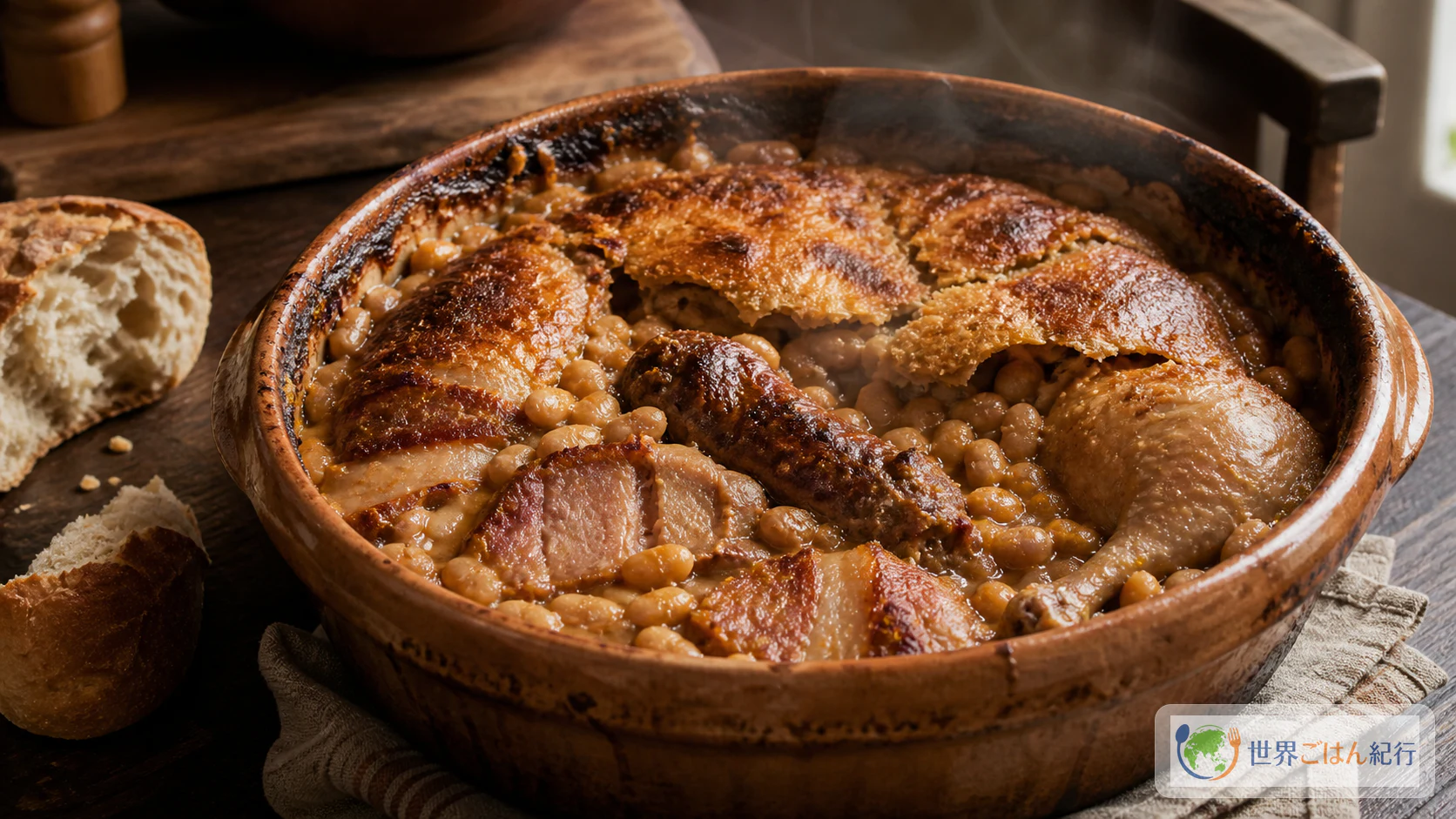
Cassoulet: Southwest French White Bean Stew with Pork and Sausage
Cassoulet from Languedoc in southwest France, made at home: how to cook white beans without breaking them, layer pork and sausage, and build the crust in the oven, plus how Castelnaudary, Toulouse and Carcassonne differ, meat swaps, storage and fixes.

Garbure: Hearty Cabbage and White Bean Soup from Southwest France
How to make garbure, the thick cabbage and white bean soup of southwest France, at home: white beans, cabbage, duck confit or a chicken-and-bacon stand-in, a slow gentle simmer, serving it over bread, storage and fixes for common problems.
Germany recipes

German-Style Pretzels: A Laugenbrezel-Style Knot Baked After a Baking Soda Bath
How to make German-style pretzels at home: a bread-flour dough shaped into knots, chilled, dipped in a boiling baking soda bath and baked at 450°F until deeply browned. Covers kneading, folding, shaping, the difference between a baking soda bath and the lye used for true Laugenbrezel, the Bavarian and Swabian shapes, and eating them warm with butter and chives.
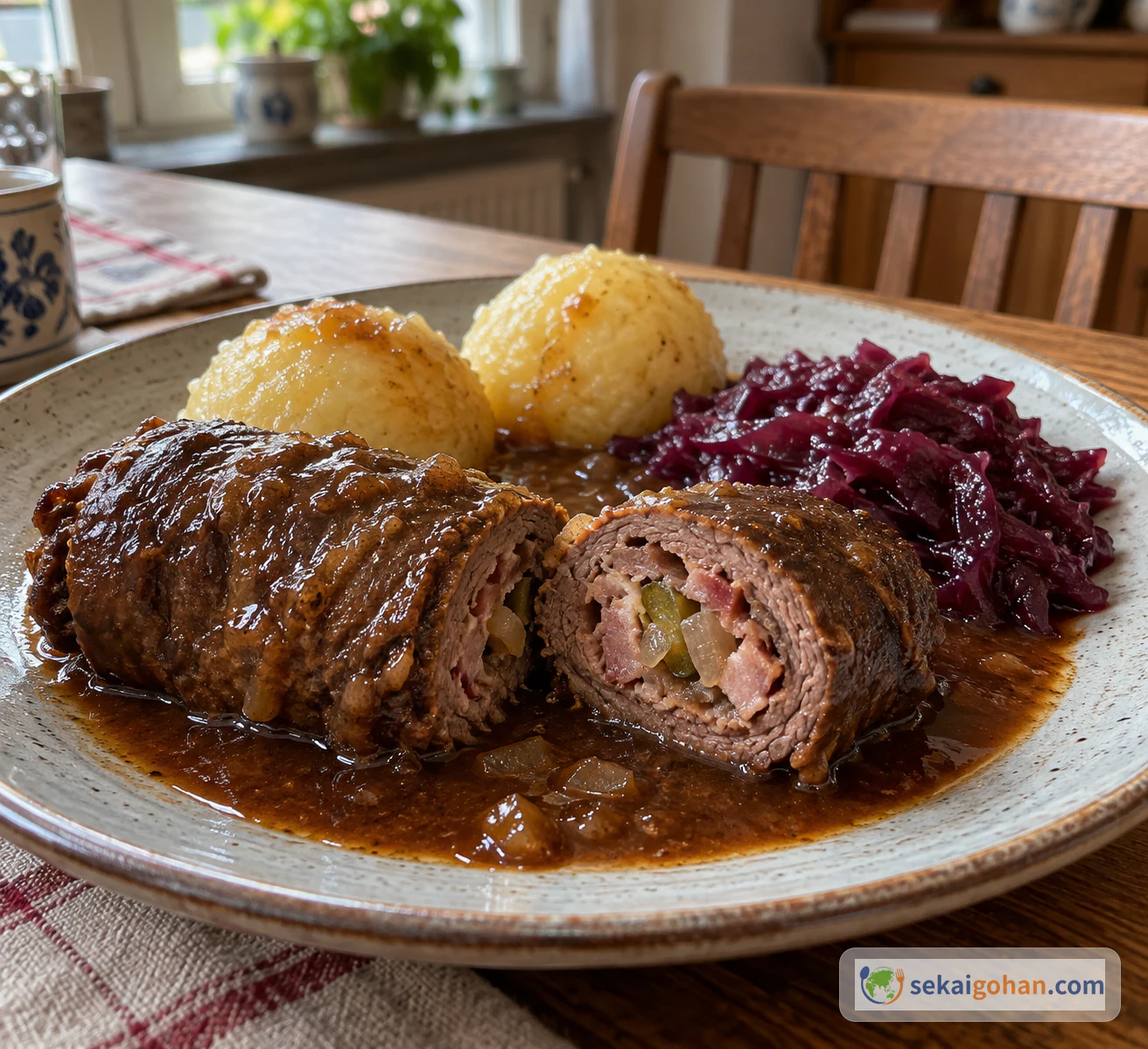
Rinderroulade: German Braised Beef Rolls with Bacon and Pickles (Rinderrouladen)
How to make Rinderroulade, the German beef roll filled with mustard, bacon, onion and cornichons and braised covered in the oven. Includes a 4-serving recipe, choosing the beef cut, rolling and pinning, judging tenderness with a skewer, finishing the sauce, Franconian and Saxon serving examples, substitutions, and storage guidance.
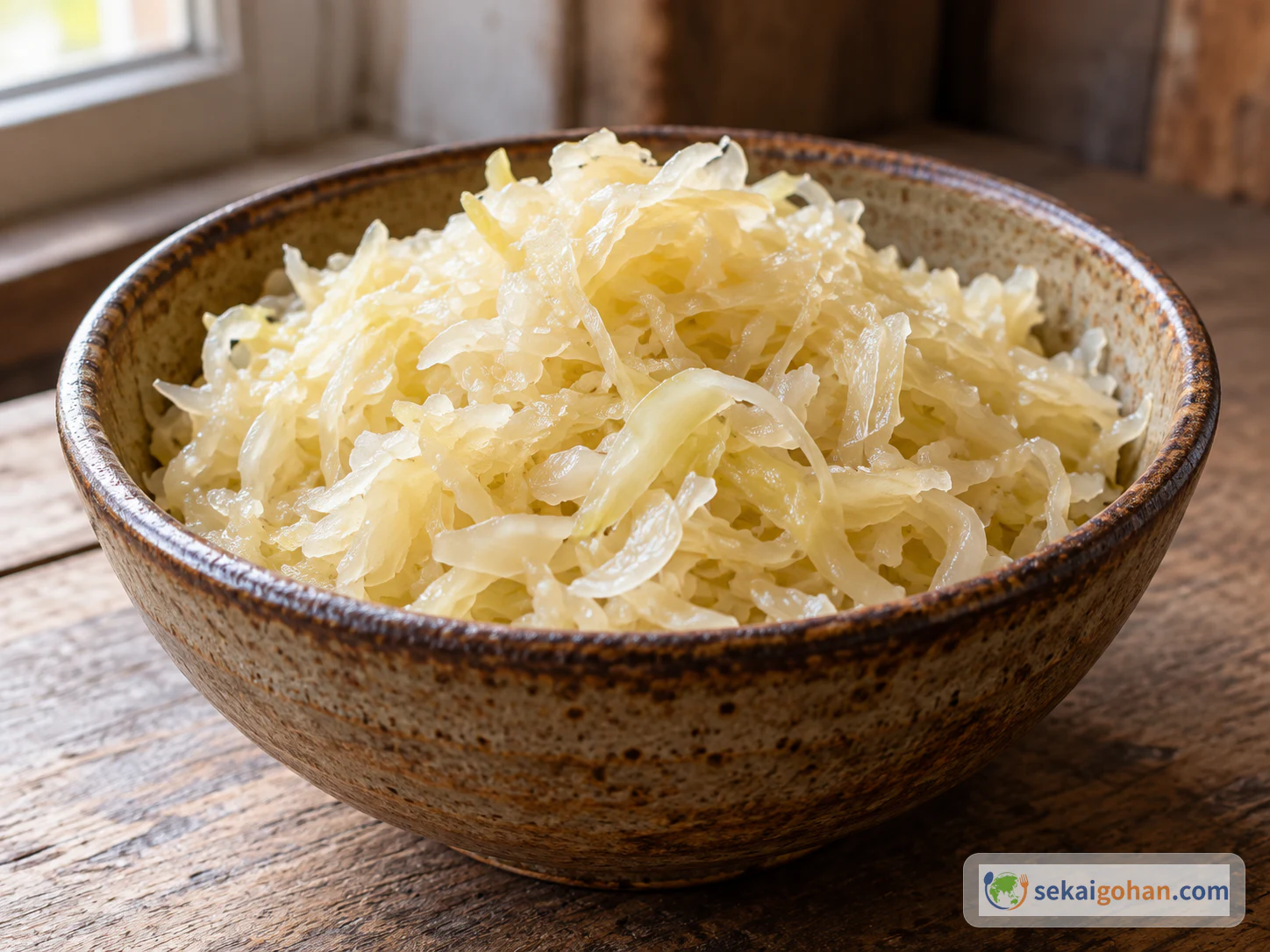
Sauerkraut: Homemade Fermented Cabbage with Just White Cabbage and Salt
How to make sauerkraut, the fermented white cabbage of the German-speaking world, from just cabbage and salt. Learn how to match the salt to the shredded cabbage weight, keep the cabbage under its brine, and read temperature, time, pH and bubbling together without relying on the calendar alone. Also covers storage, serving ideas and the dish's uncertain origins.
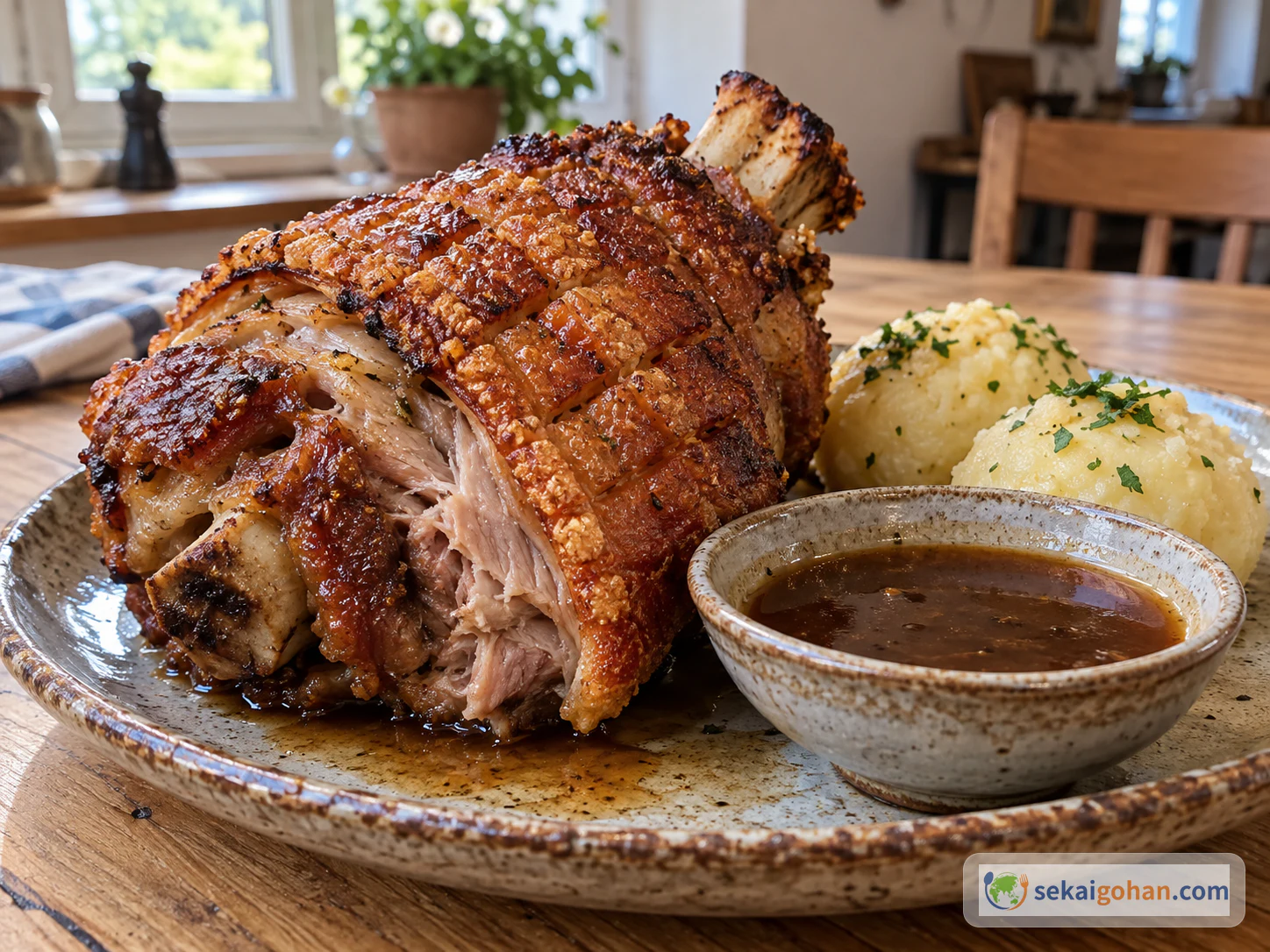
Schweinshaxe: Bavarian Roast Pork Knuckle with Crisp Rind and Dark Beer Sauce
How to make Schweinshaxe, the Bavarian oven-roasted pork knuckle: a slow roast at 150°C, dark lager and water in the pan, a hot 200°C finish for crisp rind, and a blended sauce from the pan juices. Covers finding skin-on, bone-in uncured knuckles, caraway versus cumin, the source's beer measurement mismatch, core-temperature safety, and how Schweinshaxe differs from cured Surhaxe and Franconian Bierhaxe.
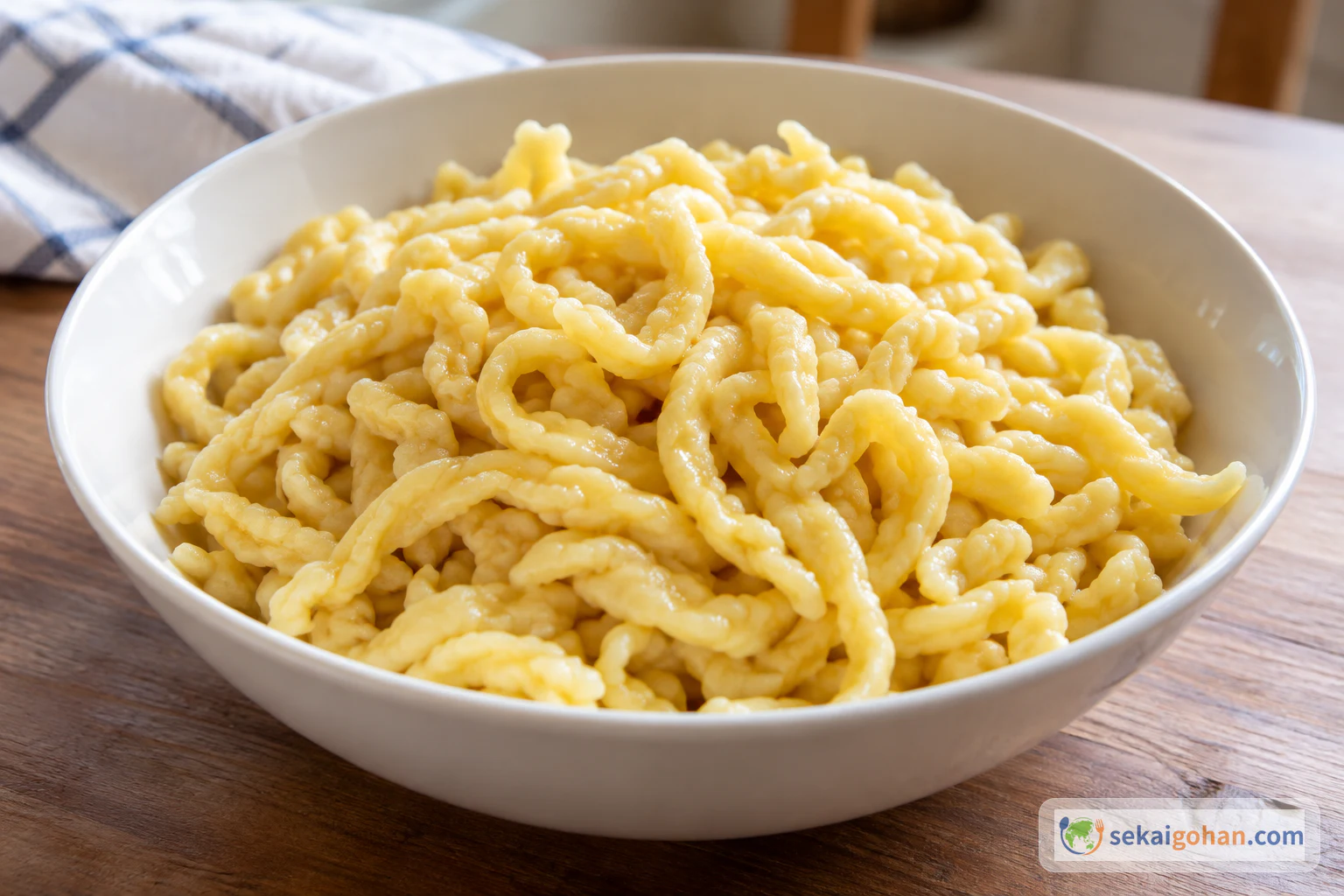
Spätzle: Swabian Egg Noodles Pressed into Boiling Water
How to make spätzle, the Swabian egg noodles of southern Germany, from a four-serving base of flour, eggs, water and a pinch of salt. Covers adding the water in stages, pressing the dough into boiling water, lifting the noodles once they float, finishing with butter, and serving with rich meat sauces or lentils and sausage. Also explains Knöpfle, hand-scraped spätzle, the protected name Schwäbische Spätzle, and safe handling of leftovers.
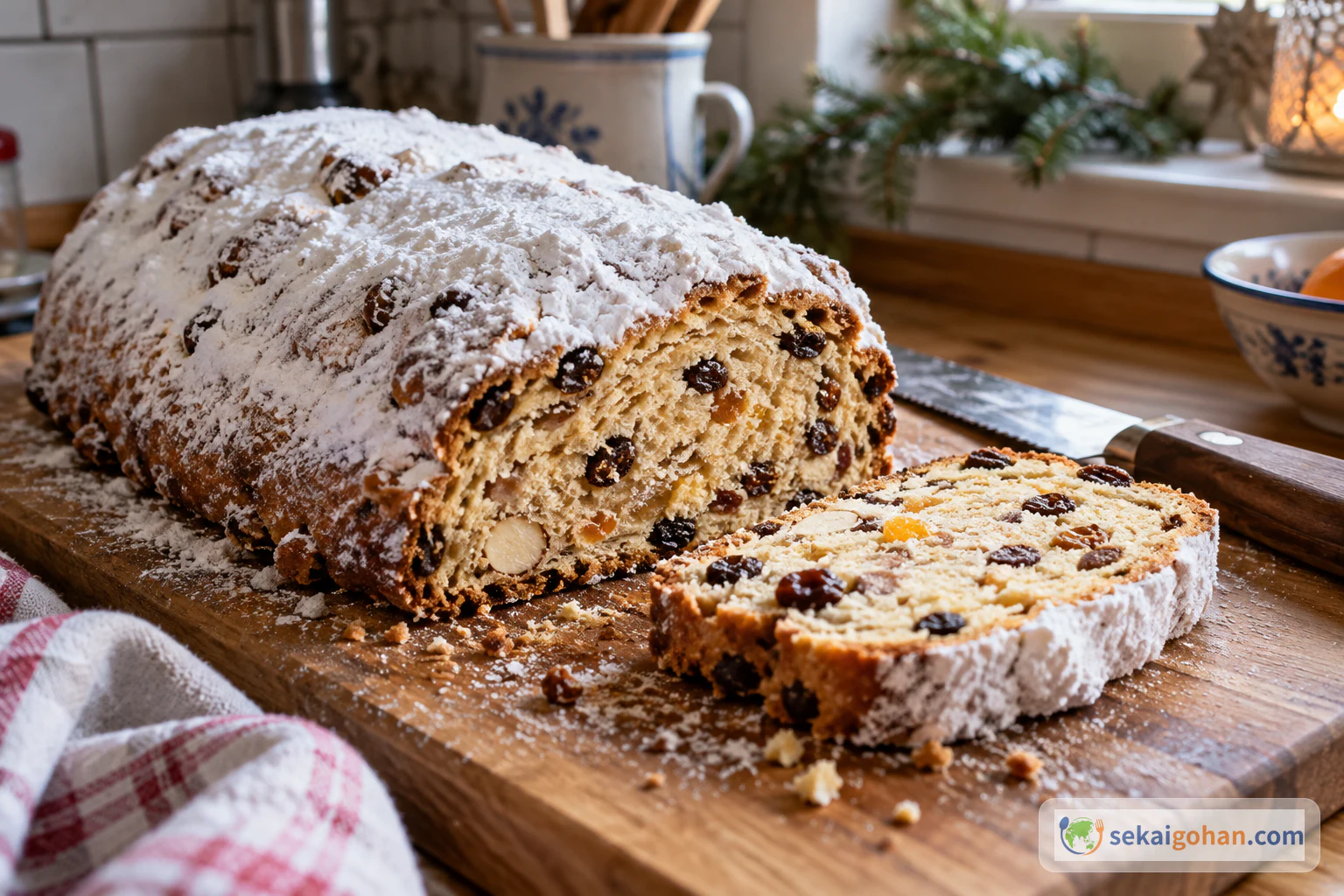
Stollen: German Christmas Yeast Loaf with Rum-Soaked Raisins, Candied Peel and Almonds
How to bake a German-style Stollen at home from a published Dresden-style recipe: rum-soaked raisins, candied citrus peel, almonds and mace in a rich butter dough, baked as one large loaf and finished with butter and two sugars. Covers the protected name Dresdner Christstollen, the history from 1474, ingredient choices, oven cues and the traditional resting period.

Berliner Pfannkuchen: How to Make German Jam-Filled Yeast Doughnuts
In Berlin, ordering a Pfannkuchen gets you a jam-filled fried yeast pastry, not a pancake. This recipe makes 10 Berliner: knead an enriched yeast dough, divide it into ten slightly flattened rounds, fry them in oil at about 170°C, then fill with smooth jam once cooled and dust with powdered sugar. It also covers the regional names, the link to the days before Lent, and what the historical record can and cannot say.
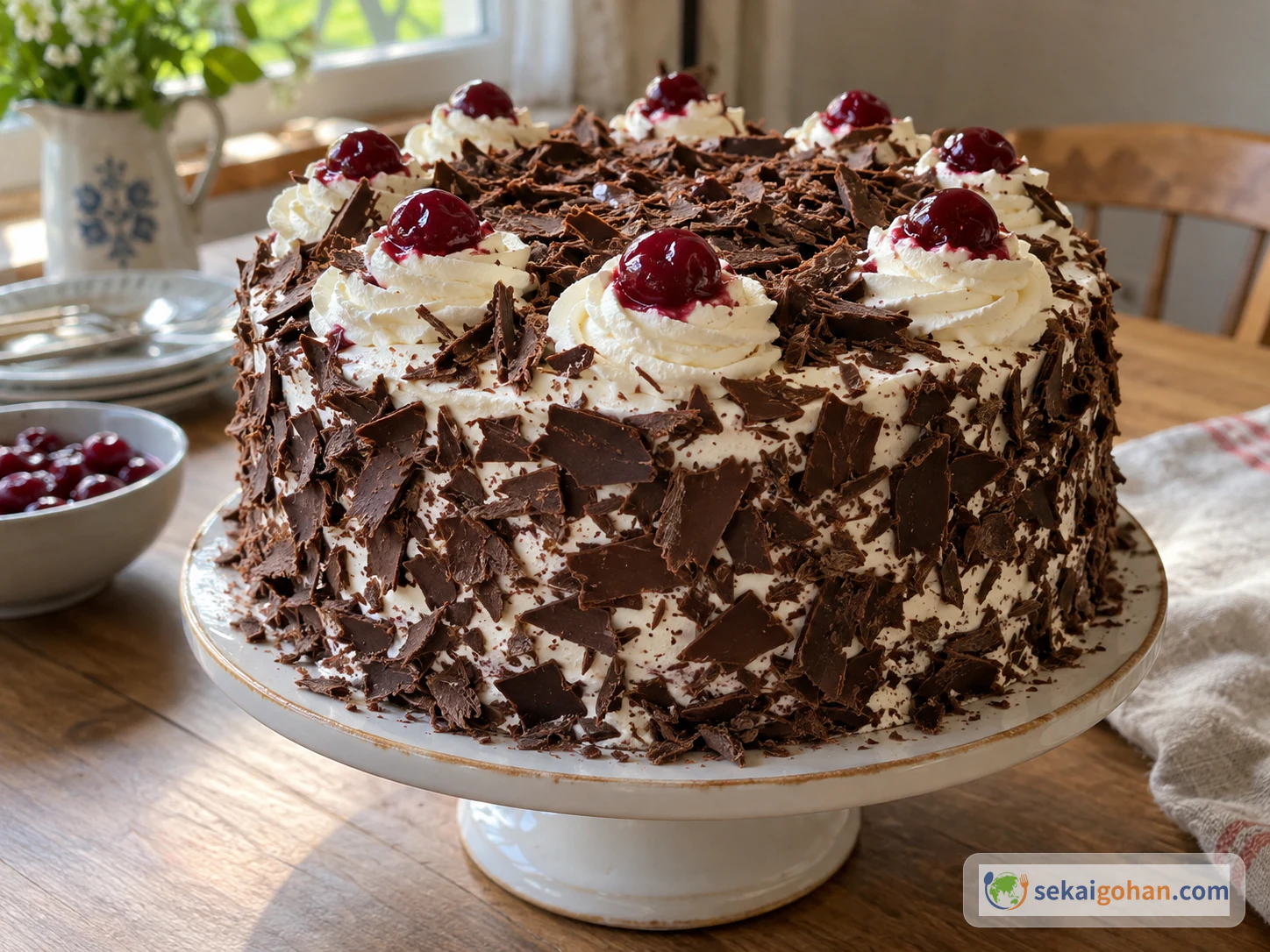
Black Forest Gateau: German Schwarzwälder Kirschtorte with Sour Cherries and Kirschwasser
How to make Black Forest gateau (Schwarzwälder Kirschtorte), the German layered cake of dark cocoa sponge, sweet-sour cherries, whipped cream, Kirschwasser and chocolate shavings. Follows a 26 cm pastry chef's recipe from baking the sponge to the final decoration, with notes on choosing sour cherries and kirsch, regional versions, the competing origin stories, and fixes for common problems.
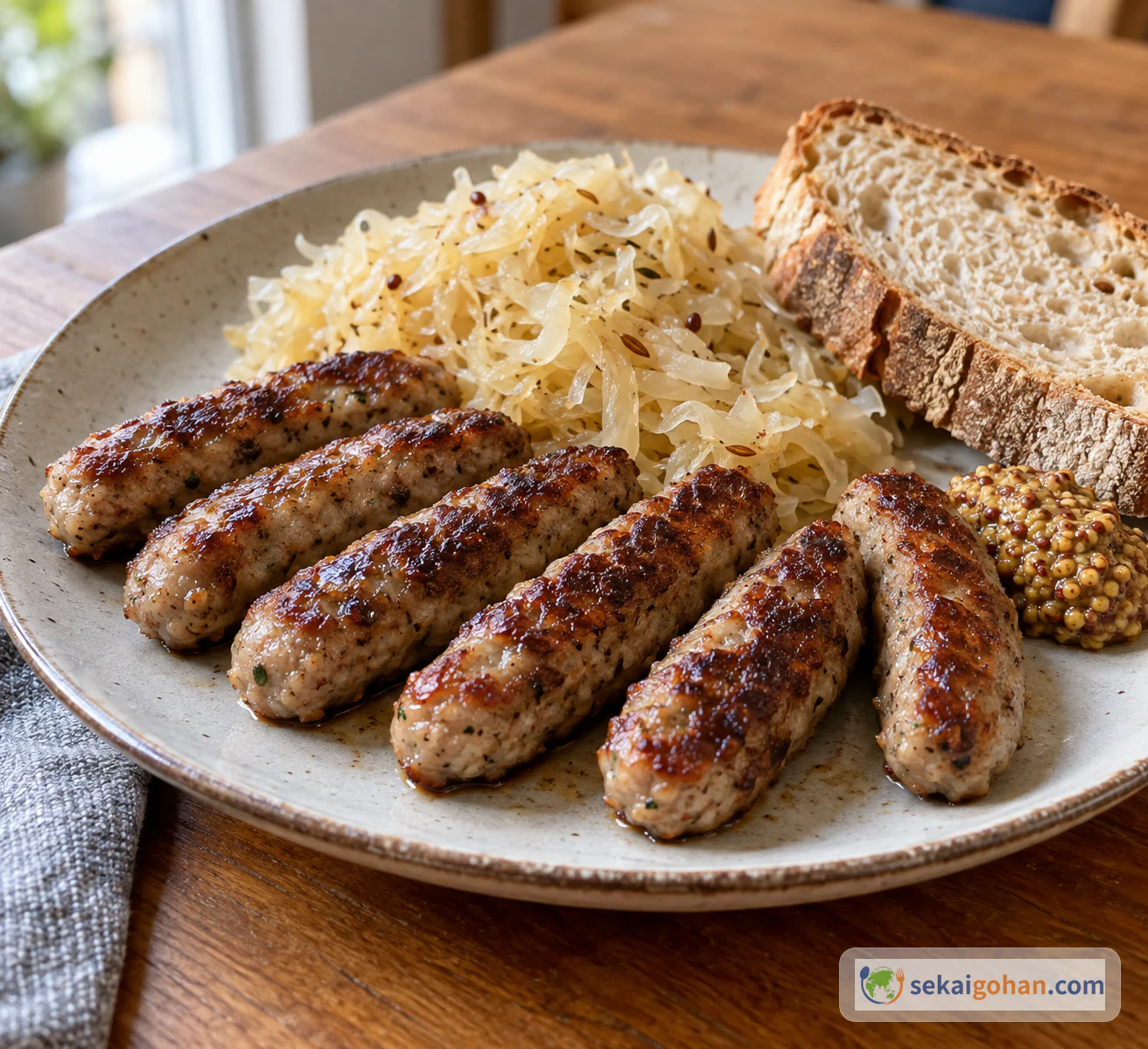
Bratwurst: German Grilled Sausage with Marjoram, Made at Home as Slim Patties
Bratwurst is a family of German grilled sausages. This guide explains how the general term differs from the protected Nürnberger Rostbratwurst. It also gives a home recipe for marjoram-scented pork patties based on a Nuremberg-style blend, with tips for keeping the mince cold and safe cooking guidance for ground pork. Serve them with sauerkraut, mustard and bread.
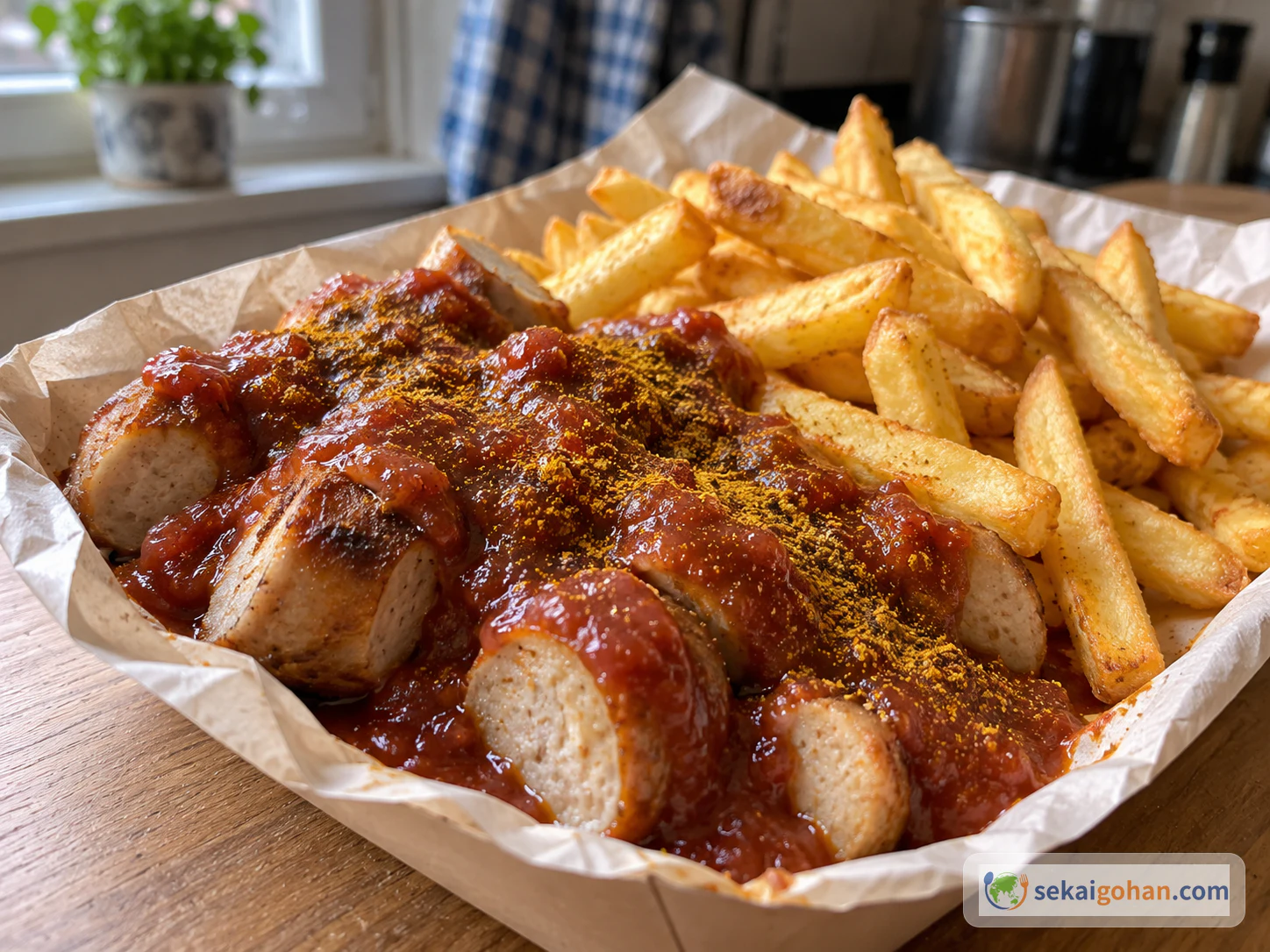
Currywurst: German Sausage with Curry Tomato Sauce
How to make Currywurst at home: browned sausage sliced and covered in a fruity, spicy curry tomato sauce, based on a WDR recipe for about four. Covers the sauce order, adjusting heat, skinless versus skin-on sausage, Berlin's origin story, and serving with fries or bread rolls.
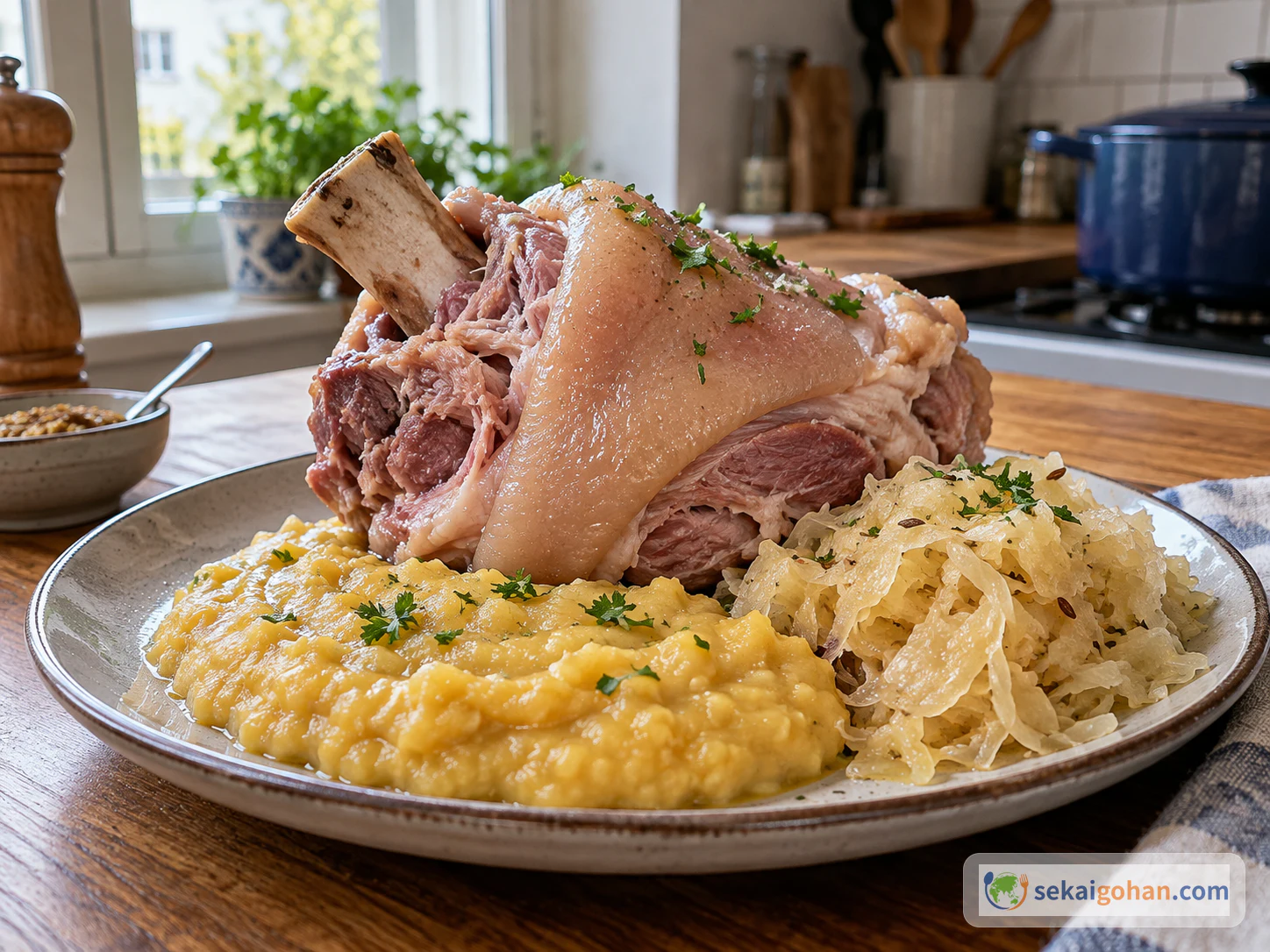
Berliner Eisbein: Simmered Cured Pork Knuckle with Yellow Pea Purée and Sauerkraut
How to make Berliner Eisbein, cured pork knuckle simmered slowly with soup vegetables and spices, served with yellow pea purée and braised sauerkraut. Covers how it differs from roasted Schweinshaxe, choosing cured knuckles, judging salt, checking doneness by the bone and the center temperature, and storing leftovers.
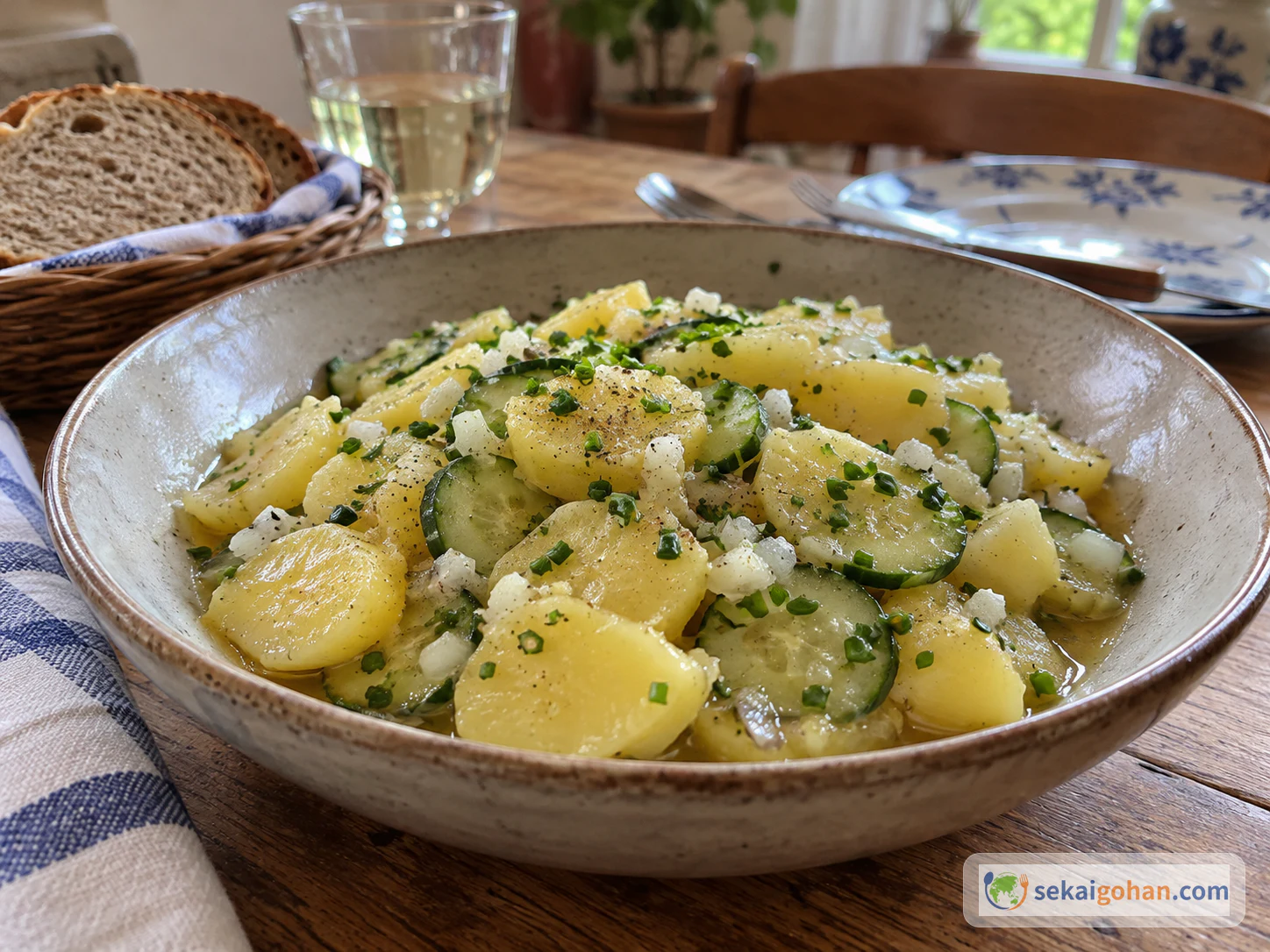
Kartoffelsalat: Southern German Potato Salad Dressed with Warm Broth
How to make a southern German Kartoffelsalat dressed with hot broth, white wine vinegar and oil instead of mayonnaise, following one Bavarian cook's recipe with its original amounts. Covers how it differs from the mayonnaise style, choosing broth, vinegar and potatoes, salting the cucumber, fixing common problems, and regional variations.
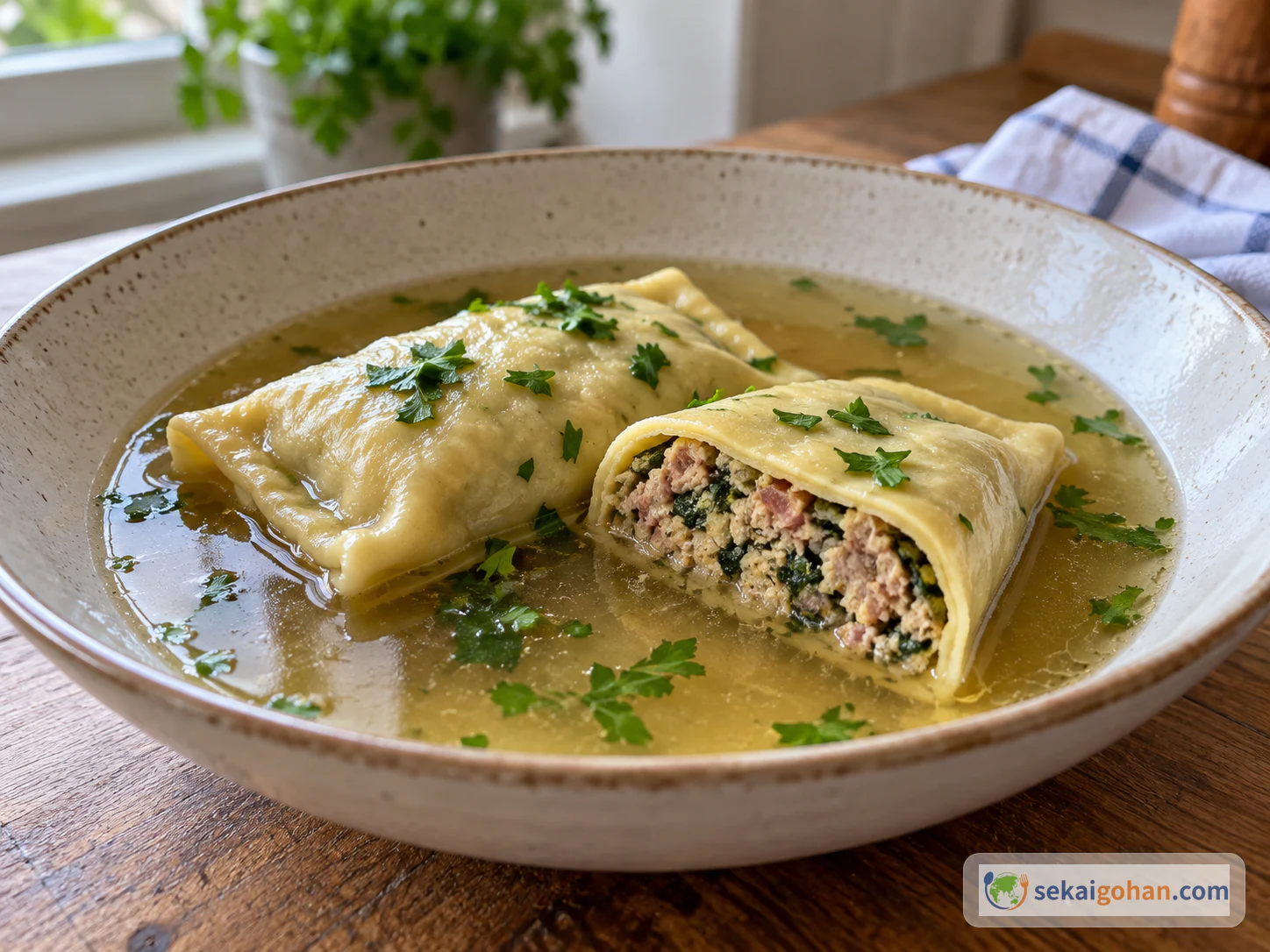
Maultaschen: Swabian Filled Pasta Parcels with Pork, Bacon and Spinach (Schwäbische Maultaschen)
How to make Swabian Maultaschen from a Bavarian state recipe for 4: a firm egg pasta dough cut into roughly 7 cm squares, filled with pork, bacon, spinach and breadcrumbs, folded into rectangles and boiled in salted water for 12 minutes. Covers serving in clear broth, frying with onions, the next-day egg fry, the monastery legend, the EU protected name, troubleshooting and food safety.

Hochzeitssuppe: North German Wedding Soup with Meatballs and White Asparagus
A North German wedding soup, Hochzeitssuppe, for a home kitchen: a clear broth of beef shank and chicken wings, small meatballs, Eierstich egg custard, how to cook white asparagus, regional variations, substitutes and storage.

Bayrisch Kraut: Bavarian Warm Braised Cabbage
A recipe for Bayrisch Kraut, the warm cabbage dish of Bavaria, Germany, made with ordinary white cabbage. How it differs from sauerkraut, how to use caraway, apple, vinegar, and bacon, a forgiving heat, how to serve it with meat dishes, adjusting the acidity, storage, and reheating tips.

Gaisburger Marsch: Stuttgart's Beef Broth with Potatoes and Spätzle
A recipe for Gaisburger Marsch, the Stuttgart classic, made in a home kitchen. A clear beef broth, potatoes, homemade spätzle, and browned onions come together, with substitutions, heat control, storage, common failures, and how it is eaten locally.
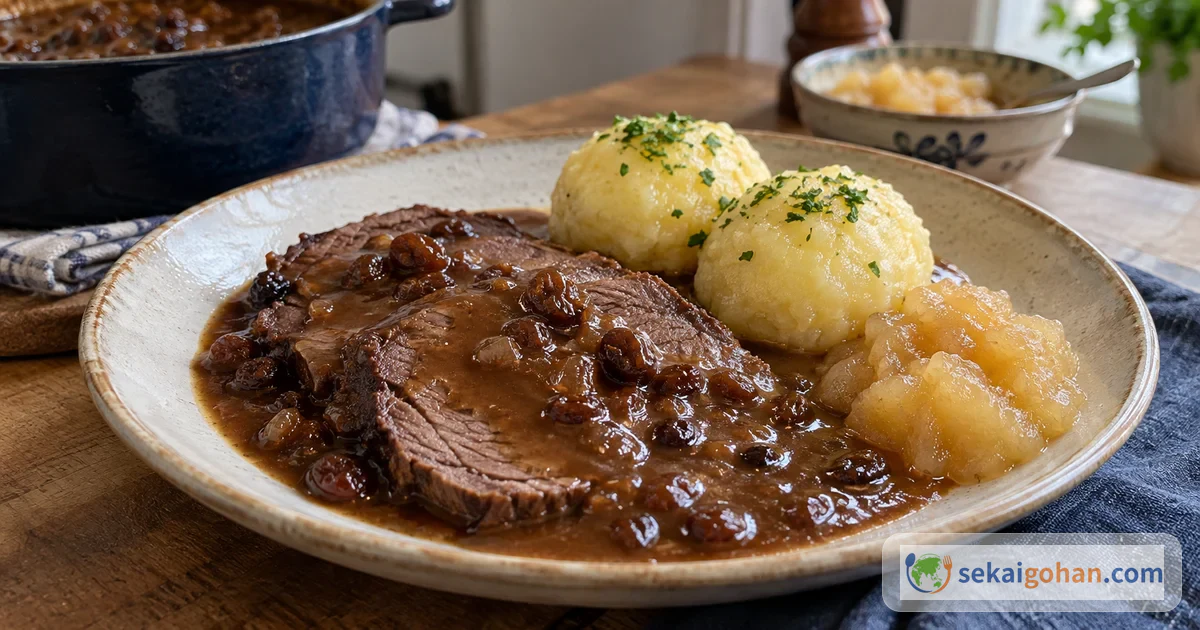
Sauerbraten: Cologne's Sweet-and-Sour Beef, Marinated 3 Days in Vinegar
A recipe for Sauerbraten, the home dish of the Rhineland in Germany (Soorbrode in Cologne), made with 1 kg of beef. The beef sits 3 days in a marinade of red wine vinegar, cloves, and juniper berries, then is finished in a sweet-and-sour sauce with raisins and gingerbread. Covers the horse-meat tradition, regional differences, substitutes, hygiene during marinating, and sides.

Käsespätzle: Southern German Cheese Noodles with Crispy Onions
How to make Käsespätzle, the cheesy egg noodles of Swabia and the Allgäu, in a home kitchen: short homemade spätzle, mountain cheese, browned onions, substitutes, heat control, storage, how it's eaten locally and shaping it without a spätzle maker.
Gibraltar recipes
Greece recipes
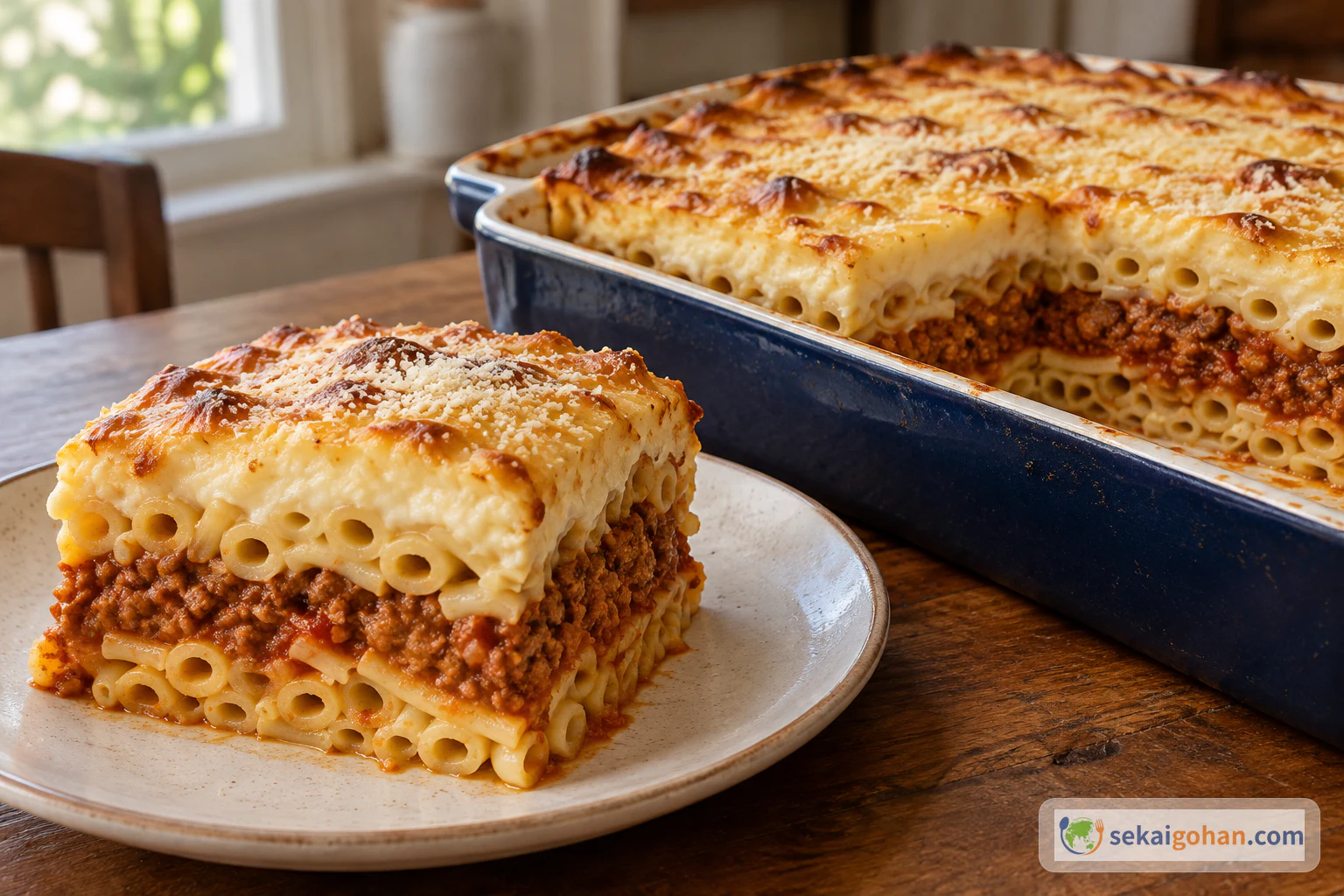
Pastitsio: Greek Baked Pasta with Meat Sauce and Béchamel
How to make pastitsio, the Greek oven-baked dish of thick tubular pasta, a tomato meat sauce with beef and sausage, and an egg-yolk béchamel, following the 10-portion recipe published by the Greek pasta maker MISKO. Covers the order of layering, how to boil the pasta short, what is unclear in the cheese amounts, choosing pasta and cheese outside Greece, and how pastitsio differs from pastitsada.
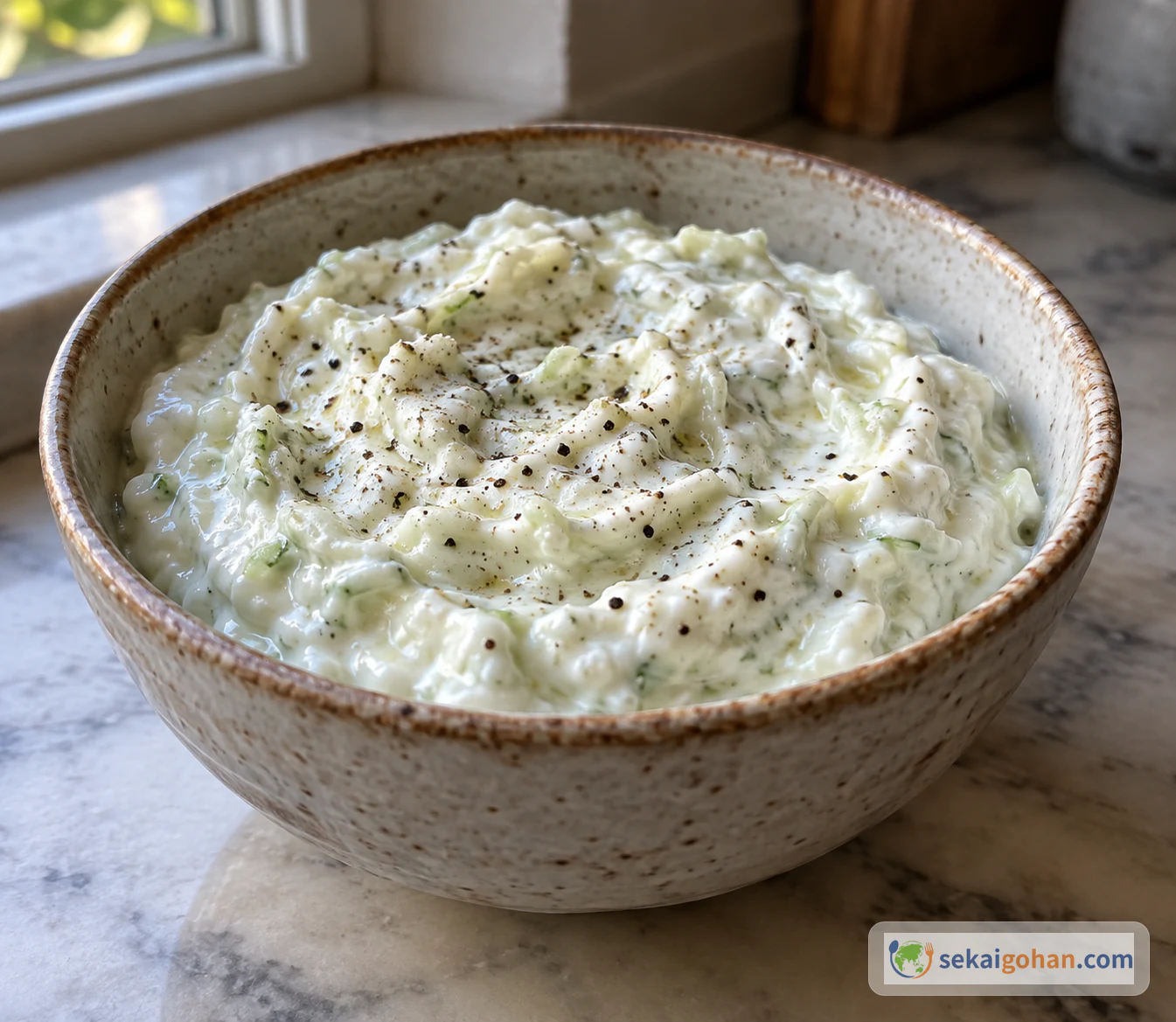
Tzatziki: Greek Yogurt, Cucumber and Garlic Dip (τζατζίκι)
How to make Greek tzatziki (τζατζίκι) with strained Greek yogurt, cucumber, garlic, olive oil and red wine vinegar. Covers why the cucumber is salted and squeezed, how to adjust thickness, garlic and acidity, what to use if you can't find strained yogurt, and how tzatziki sits beside souvlaki on Greek tables.
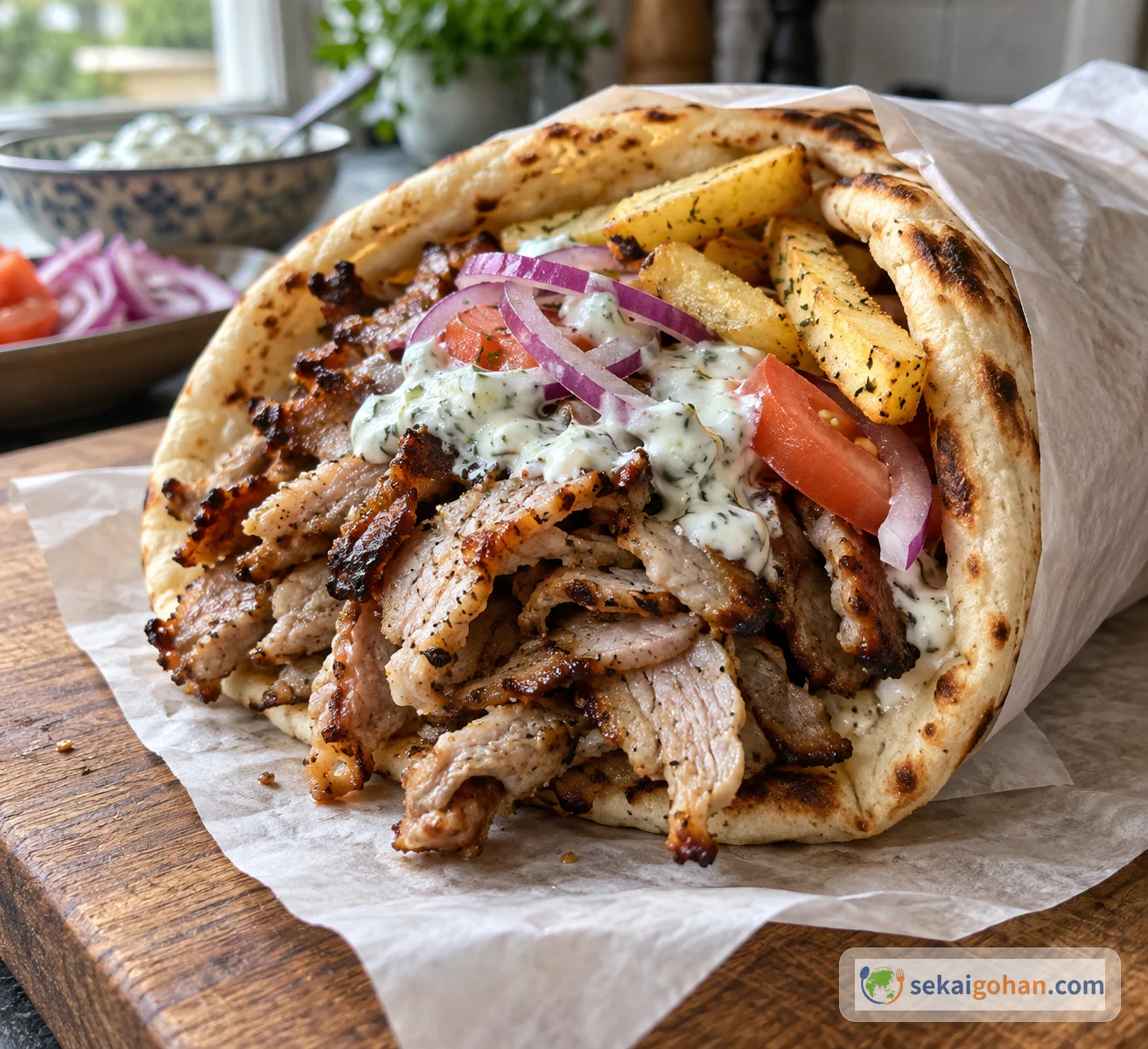
Gyros: Greek Layered Pork, Oven-Roasted at Home and Wrapped in Pita (γύρος)
How to make Greek pork gyros at home: thin slices of pork shoulder and belly marinated in onion juice, vinegar and herbs, packed into a deep tin, roasted at 180°C, then shaved and crisped in a hot dry pan. Covers how gyros differs from souvlaki, how it is eaten on the streets of Athens, safe internal temperatures, and how to wrap it in warm pita with tzatziki, tomato, onion and fries.
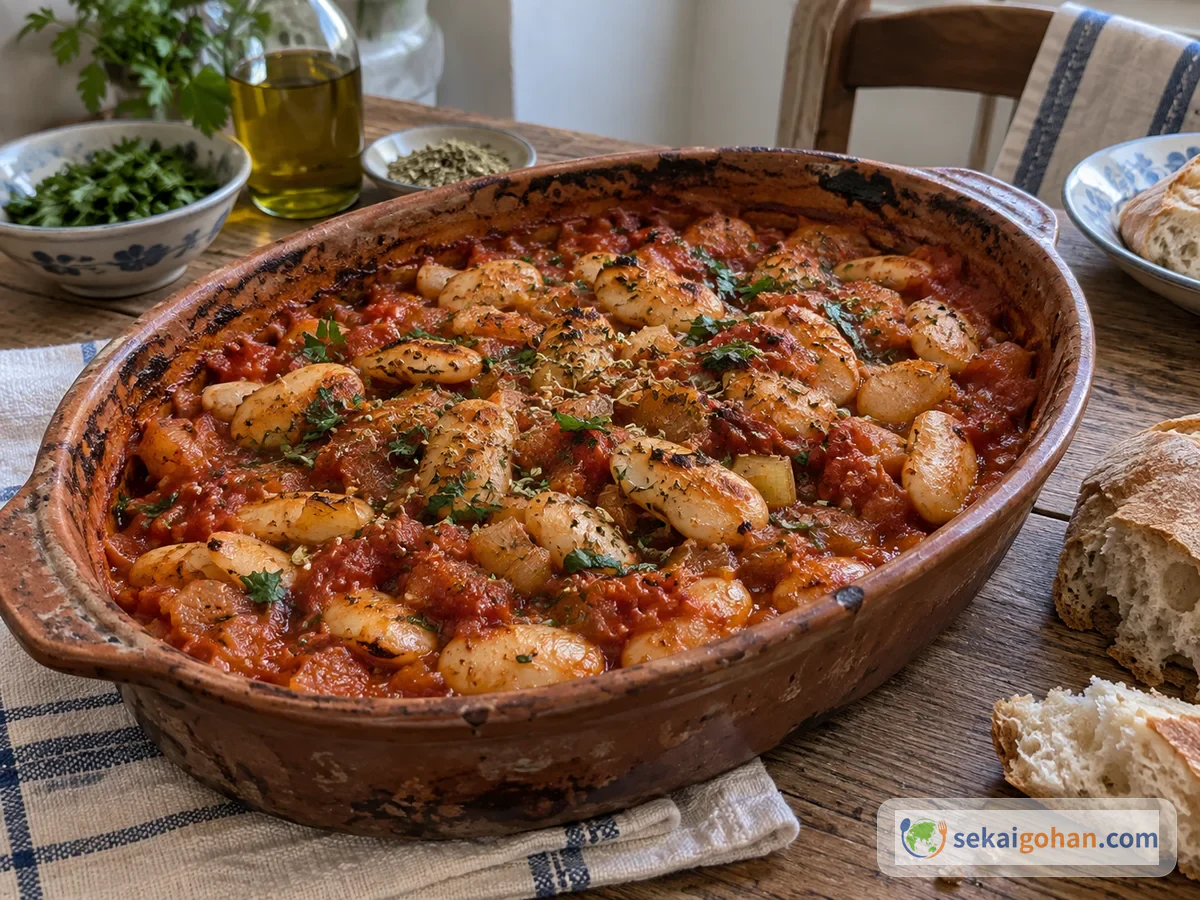
Gigantes Plaki: Greek Baked Giant White Beans in Tomato Sauce
Gigantes plaki, the Greek dish of large white beans baked in tomato and olive oil. Traces the Prespa table and differences in herbs, then covers softening the beans, reducing the sauce, and oven timing, along with a shortcut using canned beans, ingredient substitutes, how to fix problems, and storage.

Dakos: Cretan Rusk Salad with Grated Tomato and Feta
Dakos is a Cretan rusk salad with coarsely grated ripe tomatoes, feta or mizithra, olive oil and oregano. Learn how to soften the paximadi and fix mistakes.
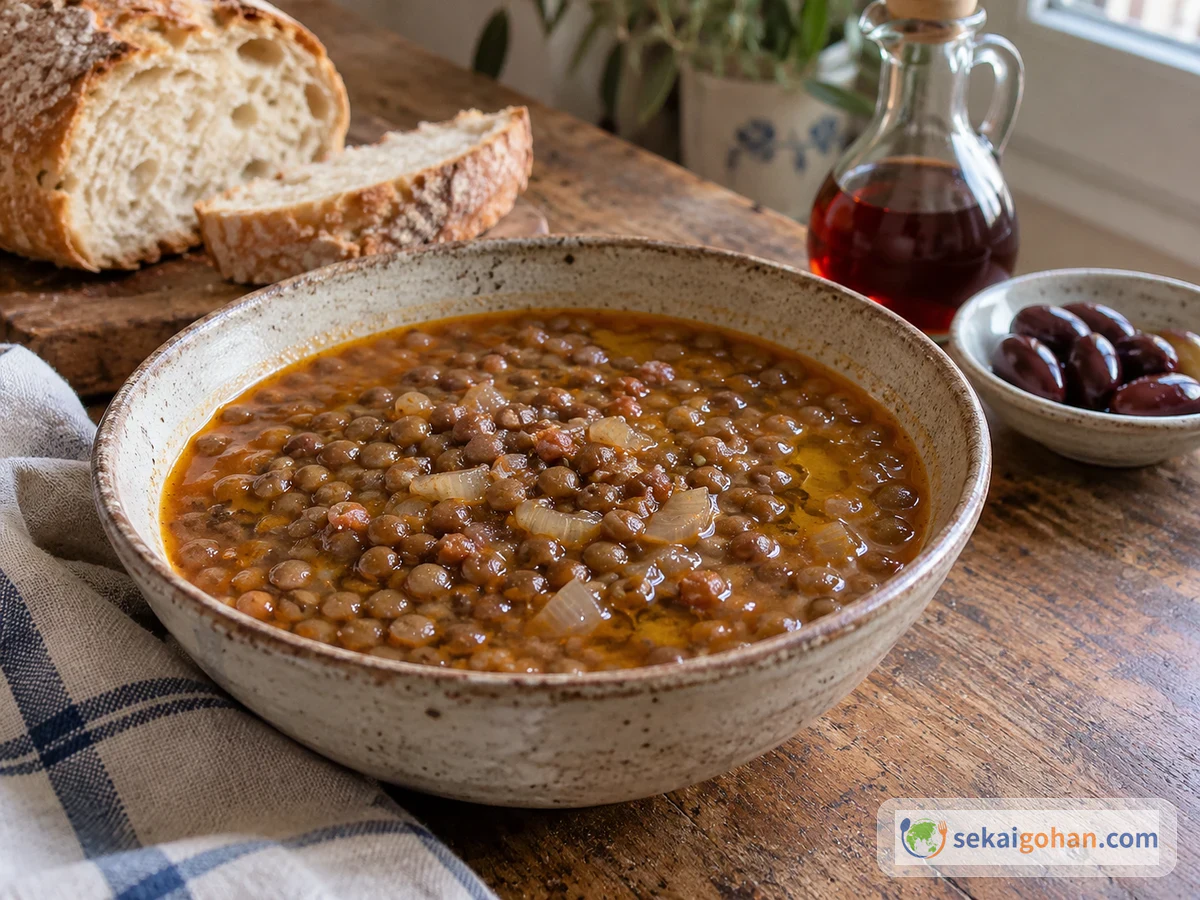
Fakes Soupa Recipe: Greek Lentil Soup Finished with Vinegar
A Greek home-style lentil soup made with brown lentils and olive oil. Learn the heat that keeps the lentils whole yet tender, when to add tomato and vinegar, and how to rescue a pot that has cooked down too far.
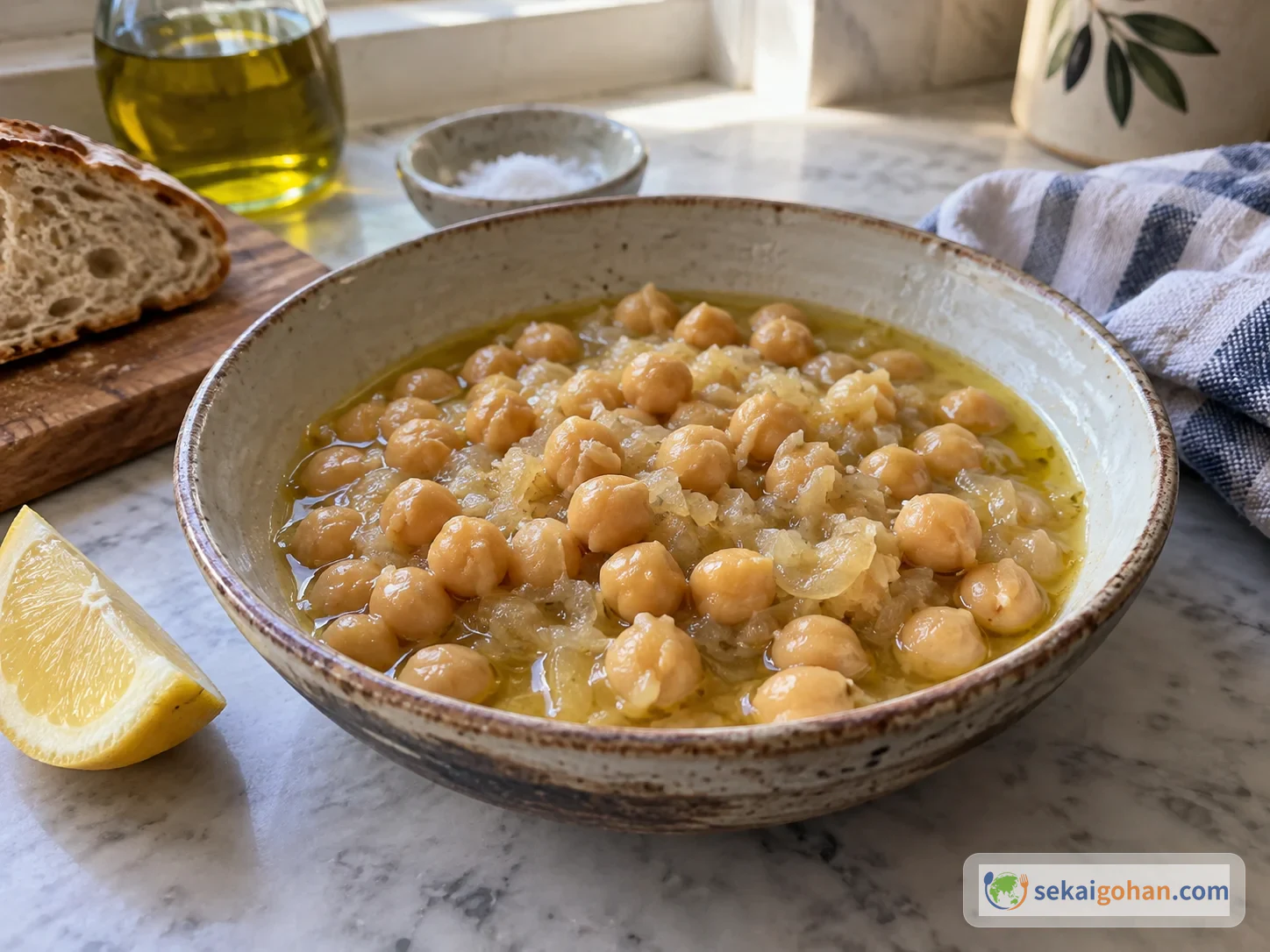
Revithada: Sifnos Chickpeas Slow-Baked in the Oven
Revithada is eaten on Sunday mornings on the Greek island of Sifnos. A home recipe for chickpeas and onions slow-cooked in the oven, covering how to soak dried chickpeas, the water level at 150°C, how to use lemon, and a canned-chickpea shortcut. Also the clay-pot and wood-oven tradition, how Paros differs, and storage and fixes.

Saganaki: Greek Pan-Fried Cheese with Lemon
How to make saganaki, the Greek skillet cheese, in an ordinary frying pan: choosing a firm cheese, the cold-water-and-flour coating, finishing with lemon, using oregano, fixing mistakes, storage, and serving it with bread and a green salad.
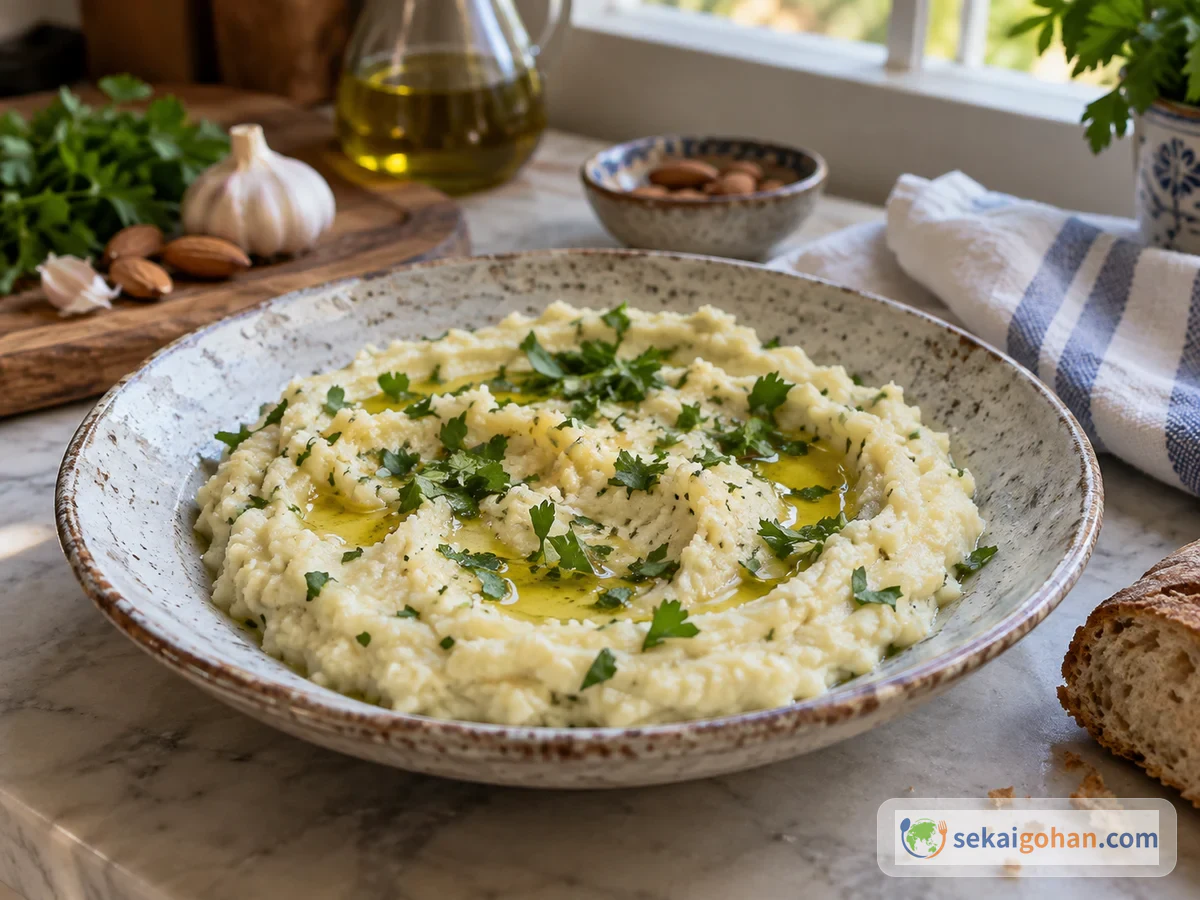
Skordalia: Greek Garlic Dip with Potato and Almonds
Skordalia is a Greek dip built on garlic and olive oil. This version, with potato and almonds, serves 4 and covers the ingredients and steps, the fried-fish table on a feast day, how it differs from the bread-based kind, adjusting the sourness, mashing without making it gluey, and storage cautions.

Fasolada: Greece's White Bean Soup
A full recipe for fasolada, Greece's national dish: a humble white bean soup made with olive oil, tomato and vegetables, eaten through the Orthodox fasting seasons. Includes variations, the background of ladera cooking, FAQ and nutrition.

Greek Salad (Horiatiki): Greece's Summer Village Salad
How to make Greek salad (horiatiki): how to cut and stack tomato, cucumber, red onion, feta and olives without breaking them down, choosing oregano and olive oil, substitutes, storage, and the habit of mopping up the juices at the bottom of the plate with bread, brought close to a Greek table.

Moussaka: Authentic Greek Eggplant Casserole with Cinnamon Meat and Béchamel
A complete moussaka recipe using ordinary supermarket ingredients: preparing the eggplant, the spices for the meat sauce, the ratio for béchamel, and how to build the layers, with the history of the dish and its variations.

Souvlaki: Greek Street-Food Pork Skewers with Lemon and Oregano
How to make Greek street-style souvlaki: pork shoulder in a lemon-oregano marinade, threading the skewers, cooking on a grill pan, broiler or skillet, wrapping Athens-style in pita with tzatziki, plus storage and fixes for common mistakes.
Guernsey recipes
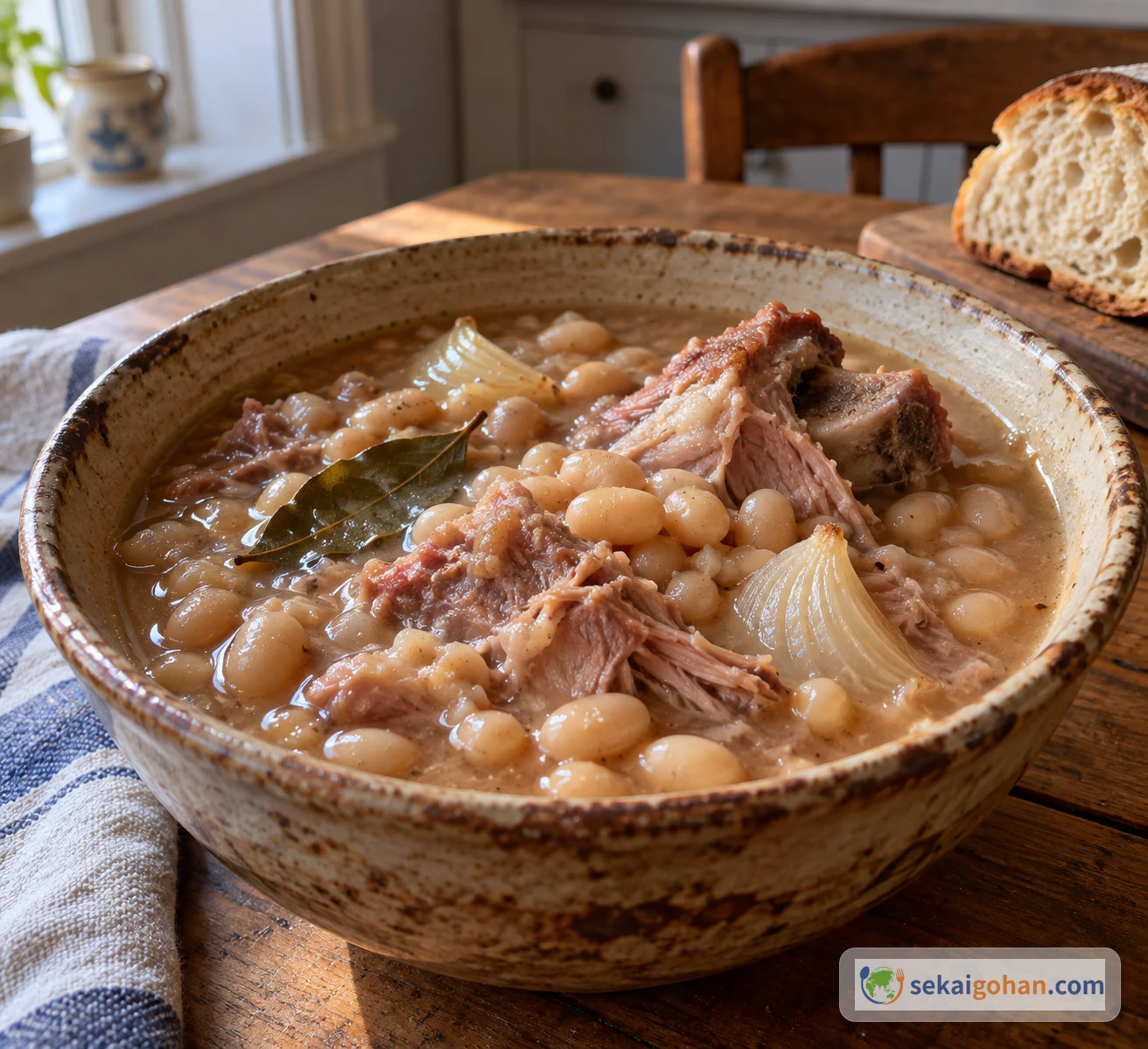
Guernsey Bean Jar: White Beans and Bone-In Pork, Cooked Low and Slow
How to make Guernsey bean jar from a historical island recipe with haricot beans, bone-in pork, onions and bay. Covers the overnight soak, the safety boil, the long oven time, what varies between households, and the dish's place in Guernsey food culture.
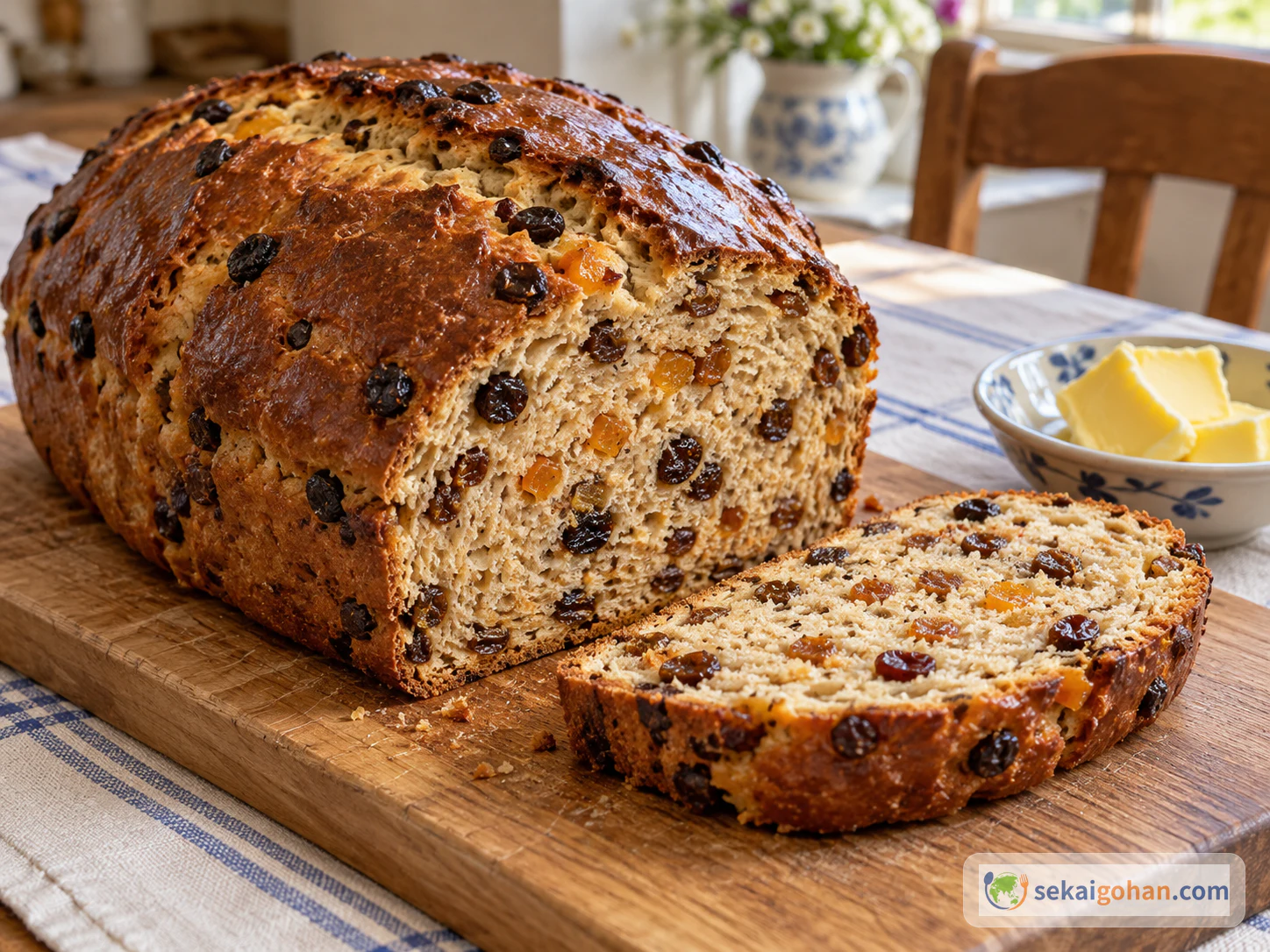
Guernsey Gâche: The Channel Island Fruit Loaf with Sultanas and Mixed Peel
How to make Guernsey gâche, a yeasted fruit loaf rich with butter, sultanas and mixed peel, using BBC Guernsey's traditional formula. Covers the rise, the two-stage bake, the recipe's tin-size problem, serving it toasted with butter, and how it differs from the apple-based gâche mêlaïe.
Hungary recipes
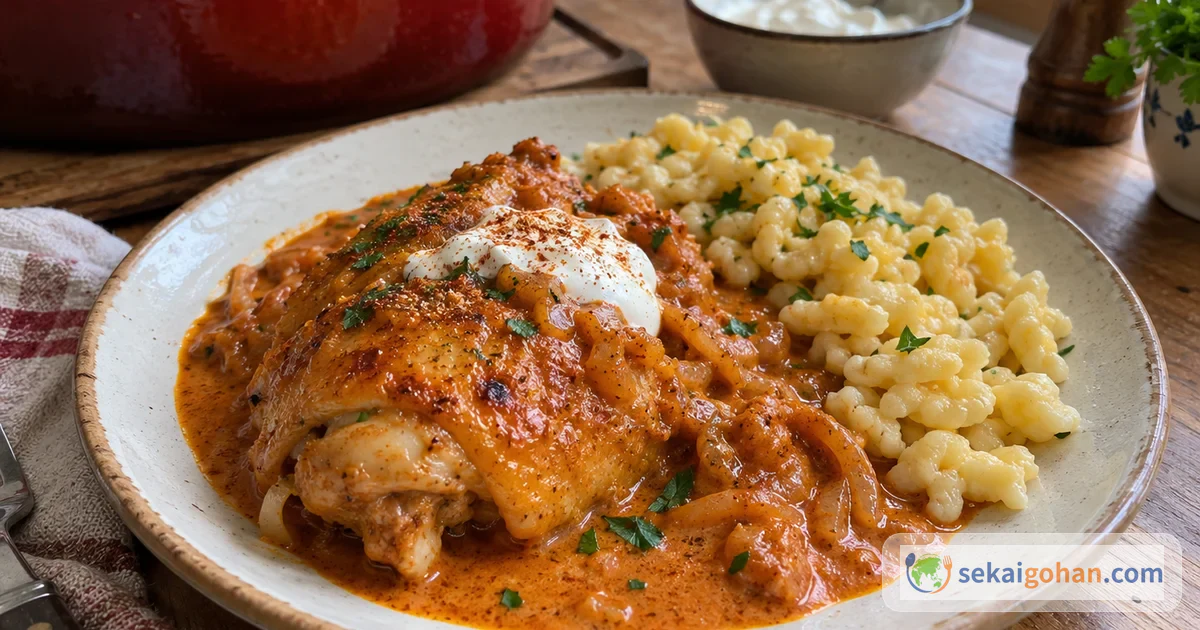
Csirke Paprikás: Hungarian Paprika Chicken with Sour Cream
A recipe for Hungarian csirke paprikás (paprikás csirke) made with bone-in chicken, onions, sweet paprika, and sour cream. It covers keeping the paprika from scorching, finishing the cream without splitting it, making the nokedli dumplings, and checking that the chicken is cooked through.

Rakott Krumpli: Hungarian Layered Potato Bake
Rakott krumpli is a Hungarian home dish of potatoes, hard-boiled eggs, smoked sausage, and sour cream layered and baked. Covers substitutes for kolbász, the moisture in sour cream, the depth of the baking dish, how to avoid a watery result, serving with pickles, and making ahead and rewarming.

Goulash (Gulyás): Hungary's Paprika and Beef Soup
A complete recipe for gulyás, Hungary's national dish. How to use paprika, the heat trick that keeps it from scorching, how to cook the onions down, and how to make csipetke dumplings, all with ingredients you can find in an ordinary grocery store.
Iceland recipes
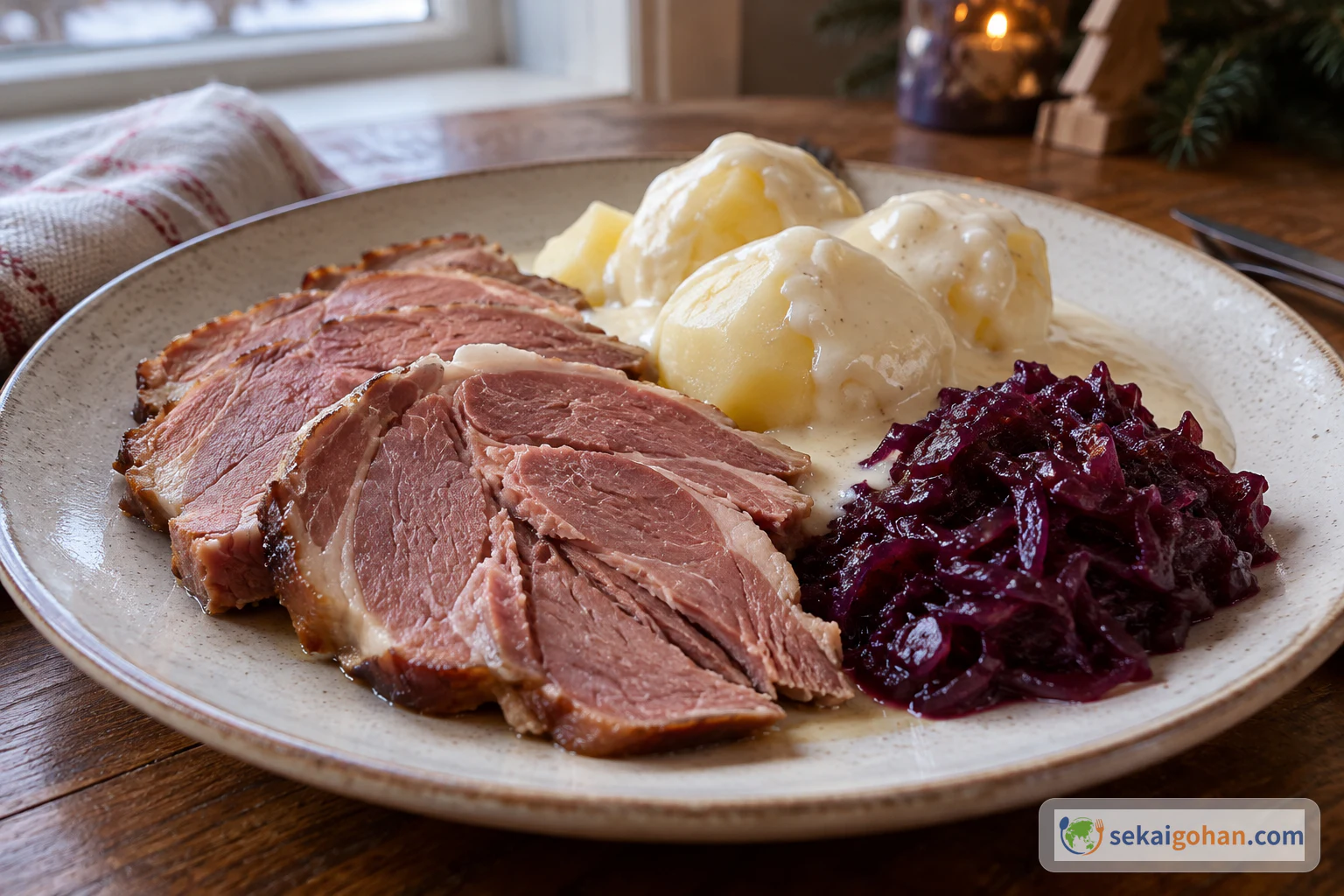
Hangikjöt: Icelandic Smoked Lamb with Creamed Potatoes and Red Cabbage
How to cook hangikjöt, Iceland's salt-cured, smoked lamb, from a ready-made roll. Covers cooking time by weight, cooling the meat in its broth, uppstúfur (a white sauce with potatoes), sweet-sour red cabbage, how to look for the meat abroad, and the Christmas history behind the dish.
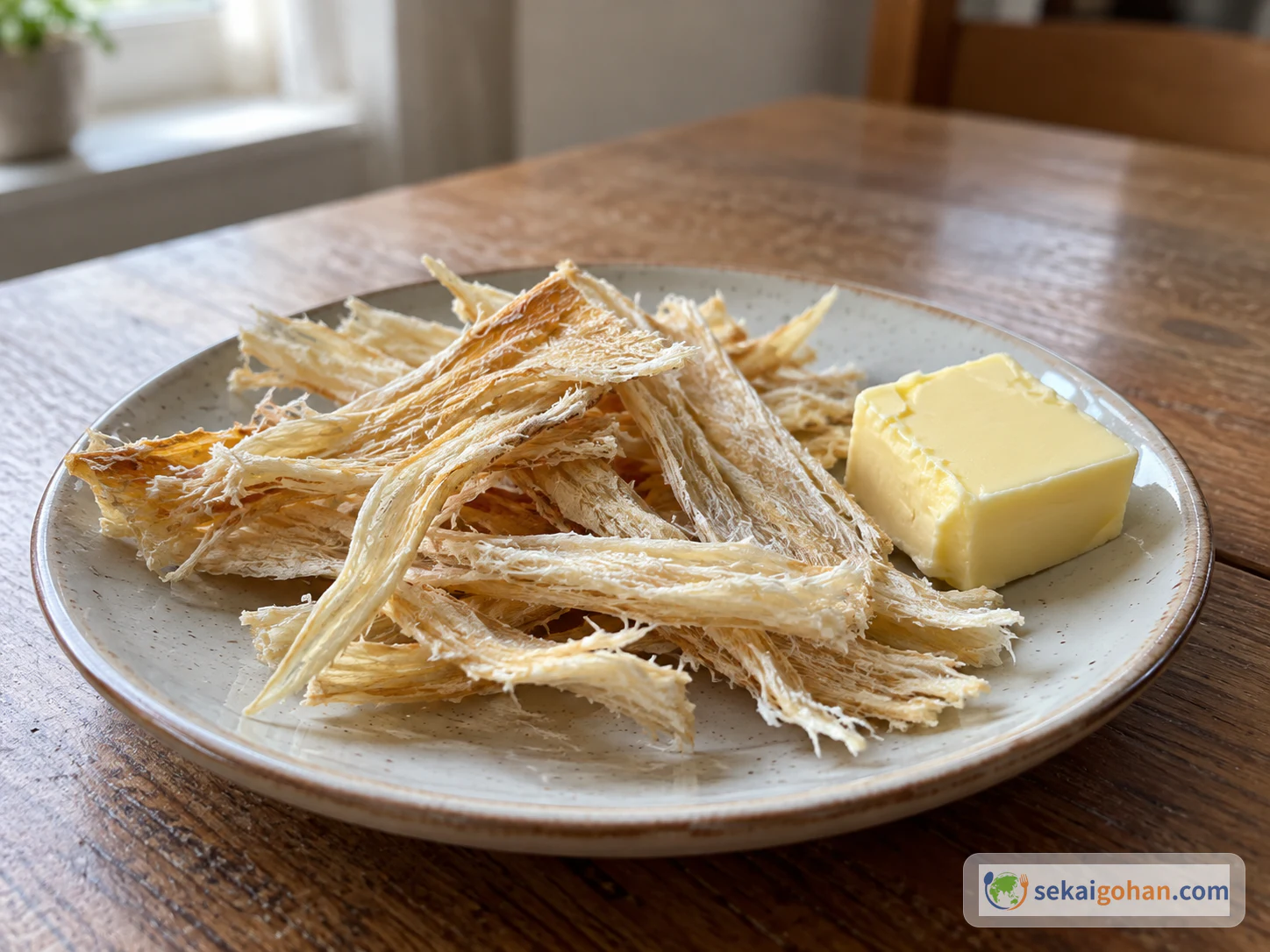
Harðfiskur: How to Eat Icelandic Dried Fish with Butter
How to serve harðfiskur, Iceland's dried fish, the way it is commonly eaten: torn into pieces with a little butter alongside. Covers the fish species and salt differences between products, what to check on the label, how to tear hard or softened pieces, and the background of a preserved food that is now a snack, travel food and part of the Þorri table.
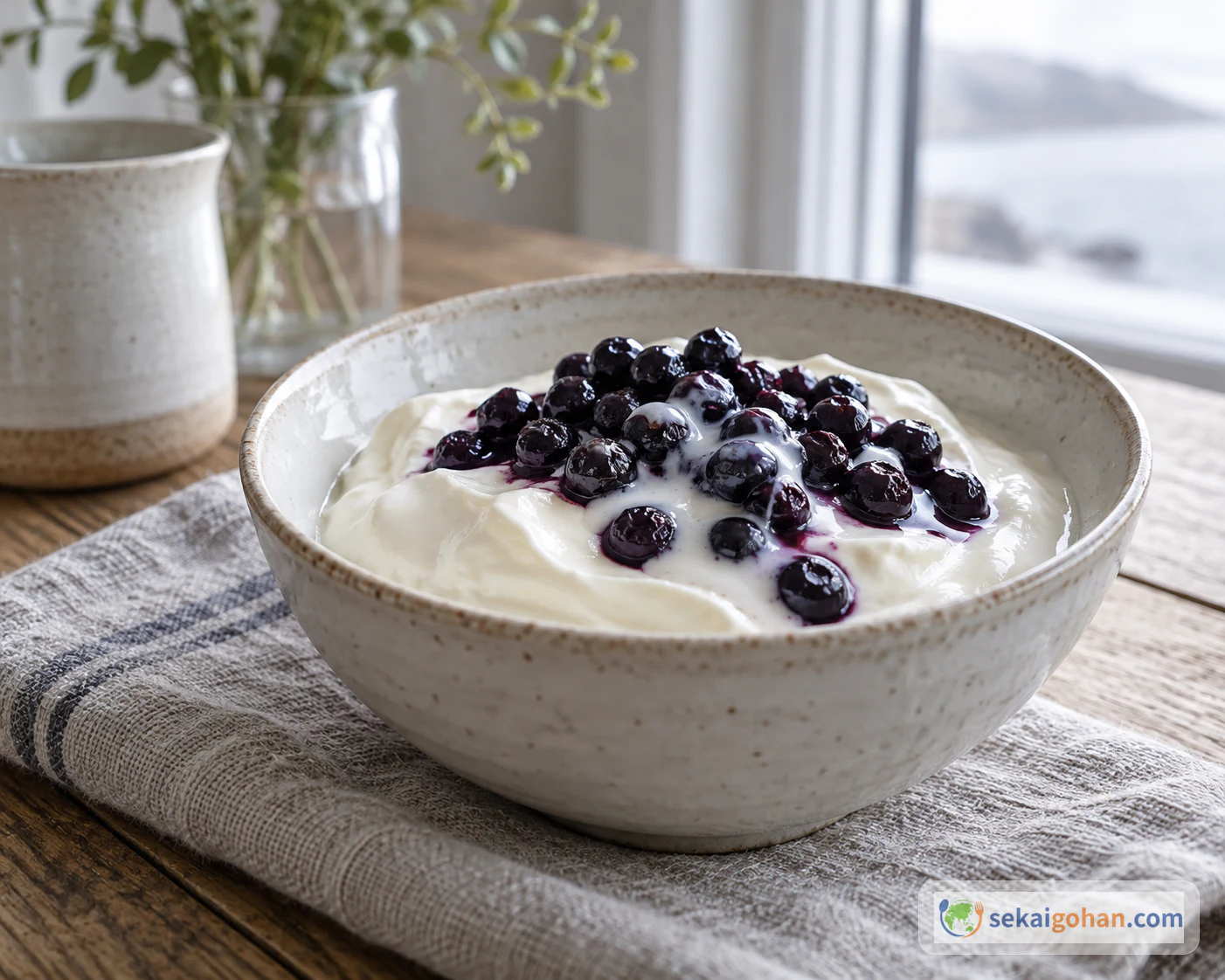
Skyr: Iceland's Strained Fresh Dairy and How to Make It at Home
What skyr is, how it differs from yogurt, and how it is eaten in Iceland, plus a home recipe using skimmed milk, a spoonful of skyr and rennet. Covers heating to 86–90°C, cooling to 39°C, the knife test for the curd, and slow straining in the refrigerator.
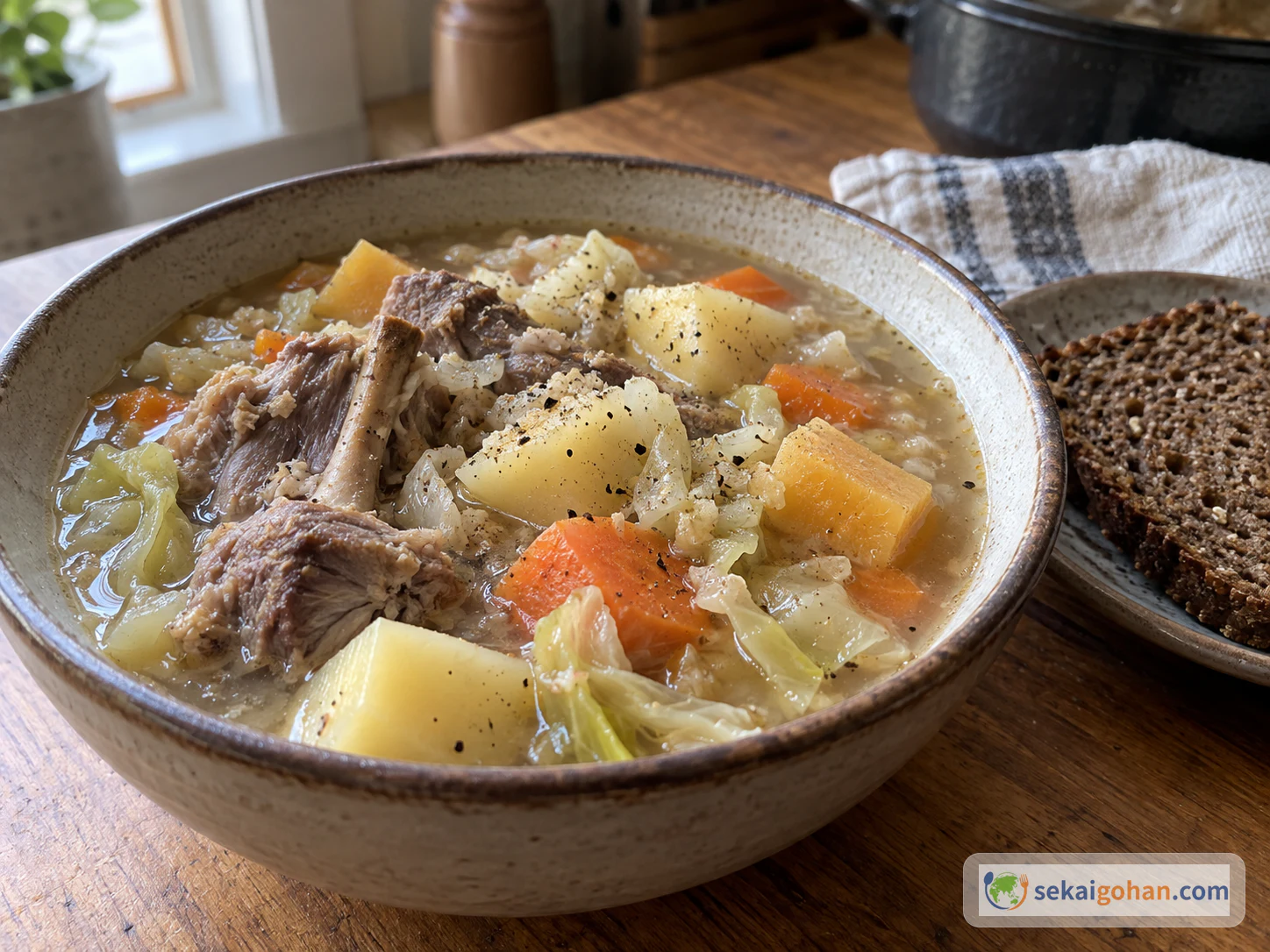
Kjötsúpa: Icelandic Lamb Soup with Root Vegetables and Oats
How to make kjötsúpa, the Icelandic lamb soup, at home: bone-in lamb simmered with onion and herbs, then rutabaga, potatoes, carrots, oats and cabbage added in stages. Covers ingredient substitutes such as turnip and Herbes de Provence, how to judge each stage, and the dish's place in Icelandic food culture.

Kleinur: Iceland's Twisted Fried Doughnuts
A recipe for kleinur, the twisted fried pastry sold almost daily in Icelandic bakeries and supermarkets, made with sour cream, buttermilk, and nutmeg. Covers dough thickness and cutting, the shaping that pulls one end through a slit in the middle, controlling the oil at 190°C, and the old custom of frying in mutton fat.

Plokkfiskur: Iceland's Comforting Cod and Potato Fish Stew
Plokkfiskur is an Icelandic fish stew of boiled cod and potatoes broken up with onion, butter and milk. Includes dried cod, the Cod Wars and sweet rye bread.
Ireland recipes
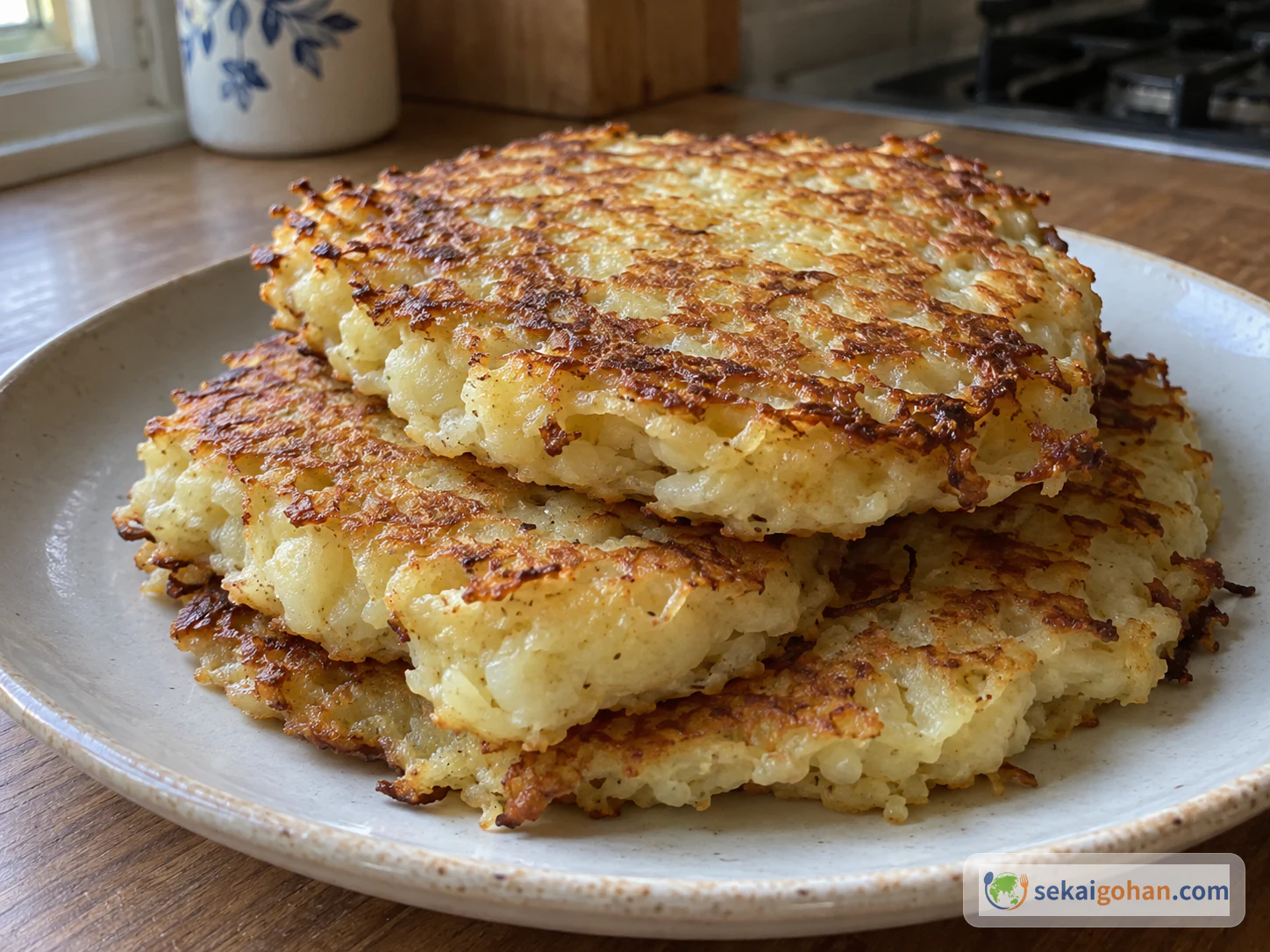
Boxty: Irish Potato Pancakes Made with Grated Raw and Mashed Potato
How to make pan boxty, the Irish potato cake that brings grated, squeezed raw potato and boiled, mashed potato together with flour, baking soda and buttermilk. Covers the source recipe's amounts, how firm the mixture should be, judging color and doneness in the pan, the regions boxty is tied to, and why its origins remain open.
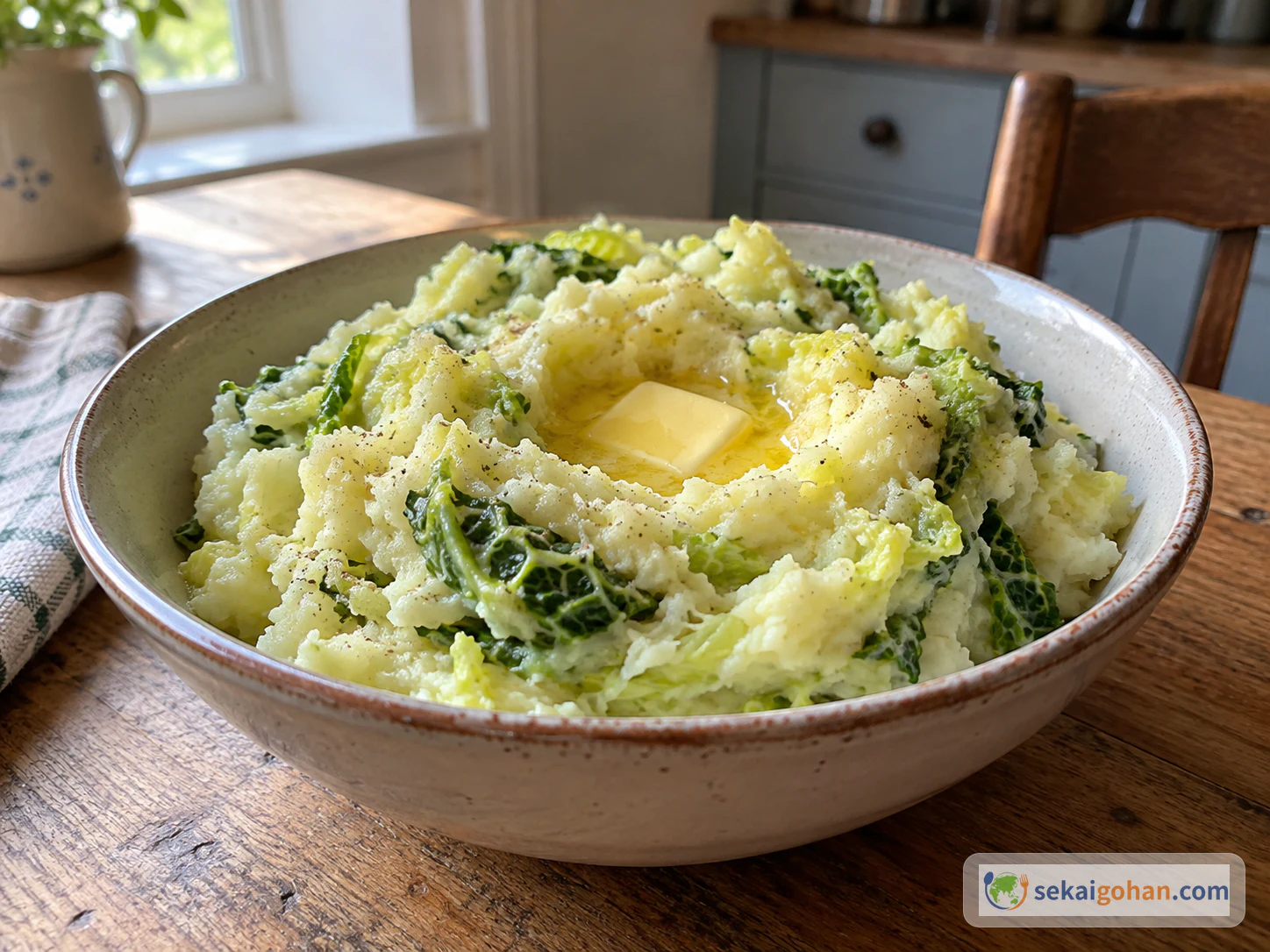
Colcannon: Irish Mashed Potatoes with Savoy Cabbage
How to make colcannon, the Irish dish of mashed potatoes and savoy cabbage, from a four-serving heritage recipe. Covers when to pour off the potato water, how to add hot milk and salted butter, regional variations from kale to leeks, and Halloween records from County Wexford and County Galway.
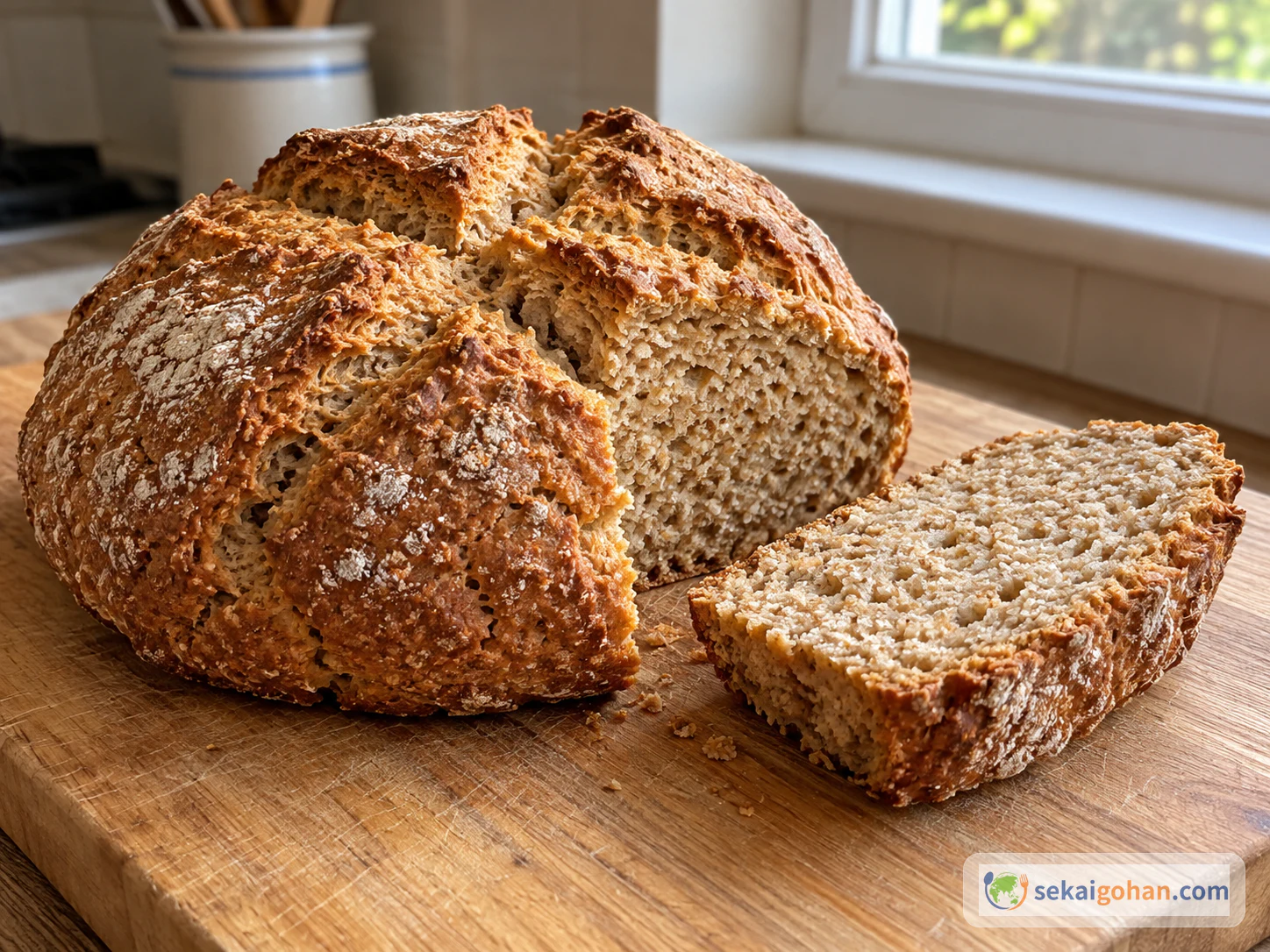
Irish Soda Bread: Brown Soda Bread with Wholemeal Flour and Buttermilk
How to make Irish brown soda bread from equal parts wholemeal and plain white flour, salt, bicarbonate of soda and buttermilk, following the National Dairy Council Ireland recipe. Covers adding buttermilk only until the dough comes together, why the dough is not kneaded, cutting the cross without separating the loaf, judging the bake by colour and a hollow sound, and how soda bread is eaten at Irish tables.
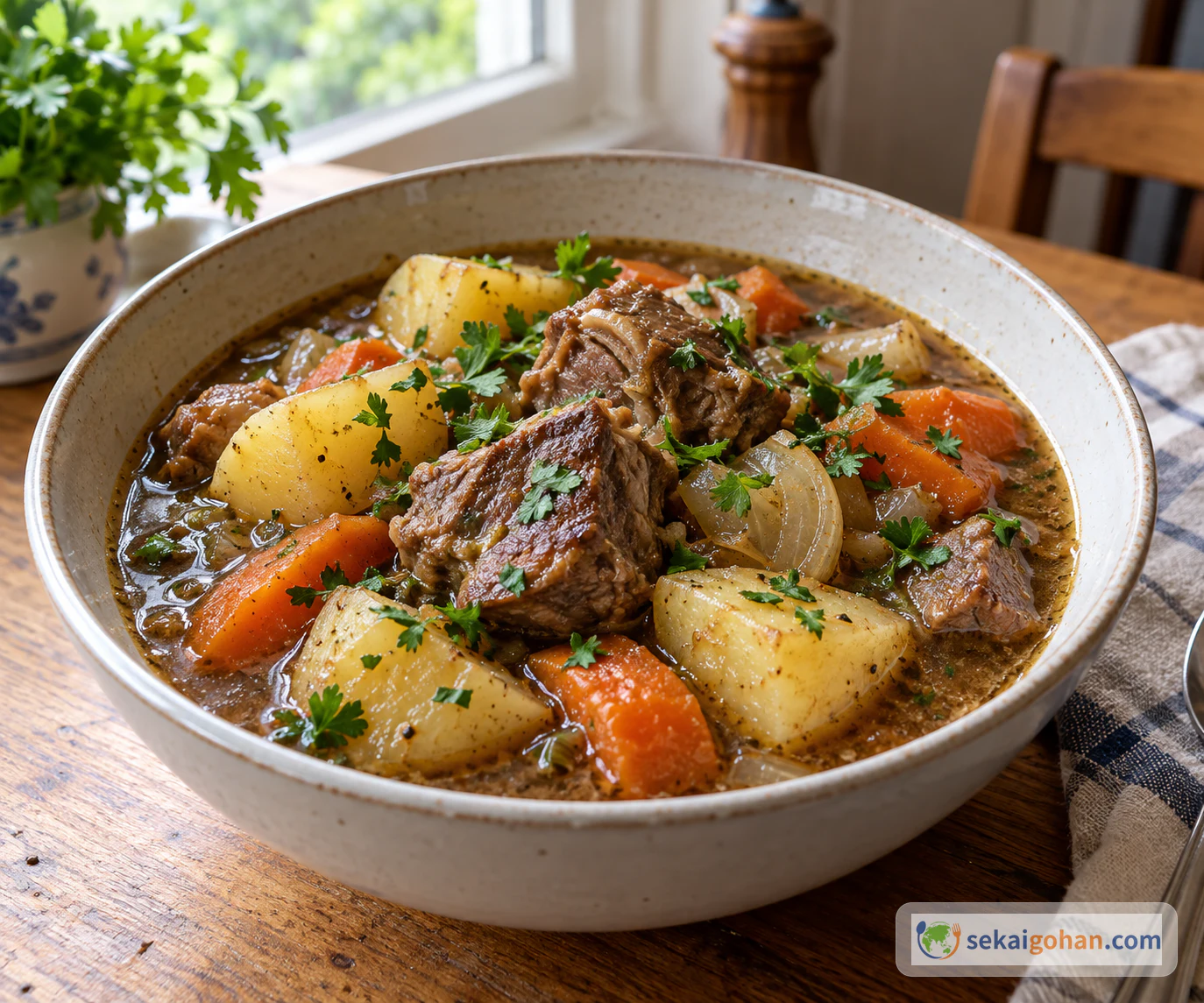
Irish Stew: Oven-Braised Lamb, Potatoes and Carrots (Stobhach)
How to make Irish stew (Stobhach) for 4, based on a County Mayo recipe: boneless lamb browned in two batches, layered with potatoes, onion and carrots, then braised under a lid in a 180°C oven in beef stock. Covers choosing lamb and potatoes, keeping the ingredients covered with liquid, judging doneness by tenderness and core temperature rather than the clock, fixing common problems, and how other Irish stews differ.
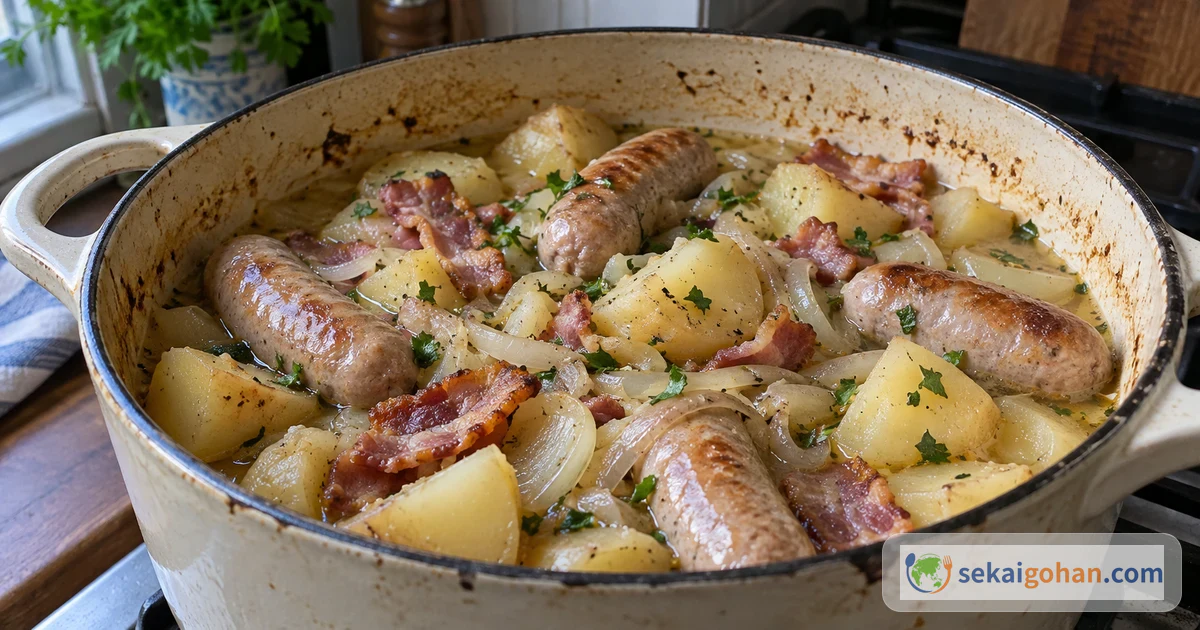
Dublin Coddle: Irish Sausage and Potato Stew
A recipe for Dublin coddle, the Irish home dish made with pork sausages, bacon, potatoes, and onion, for a home kitchen. Covers the origin of this layered, gently simmered one-pot dish, ingredient substitutes, heat control to keep it from falling apart, checking that the sausage is cooked through, and what to do with leftovers.
Isle of Man recipes
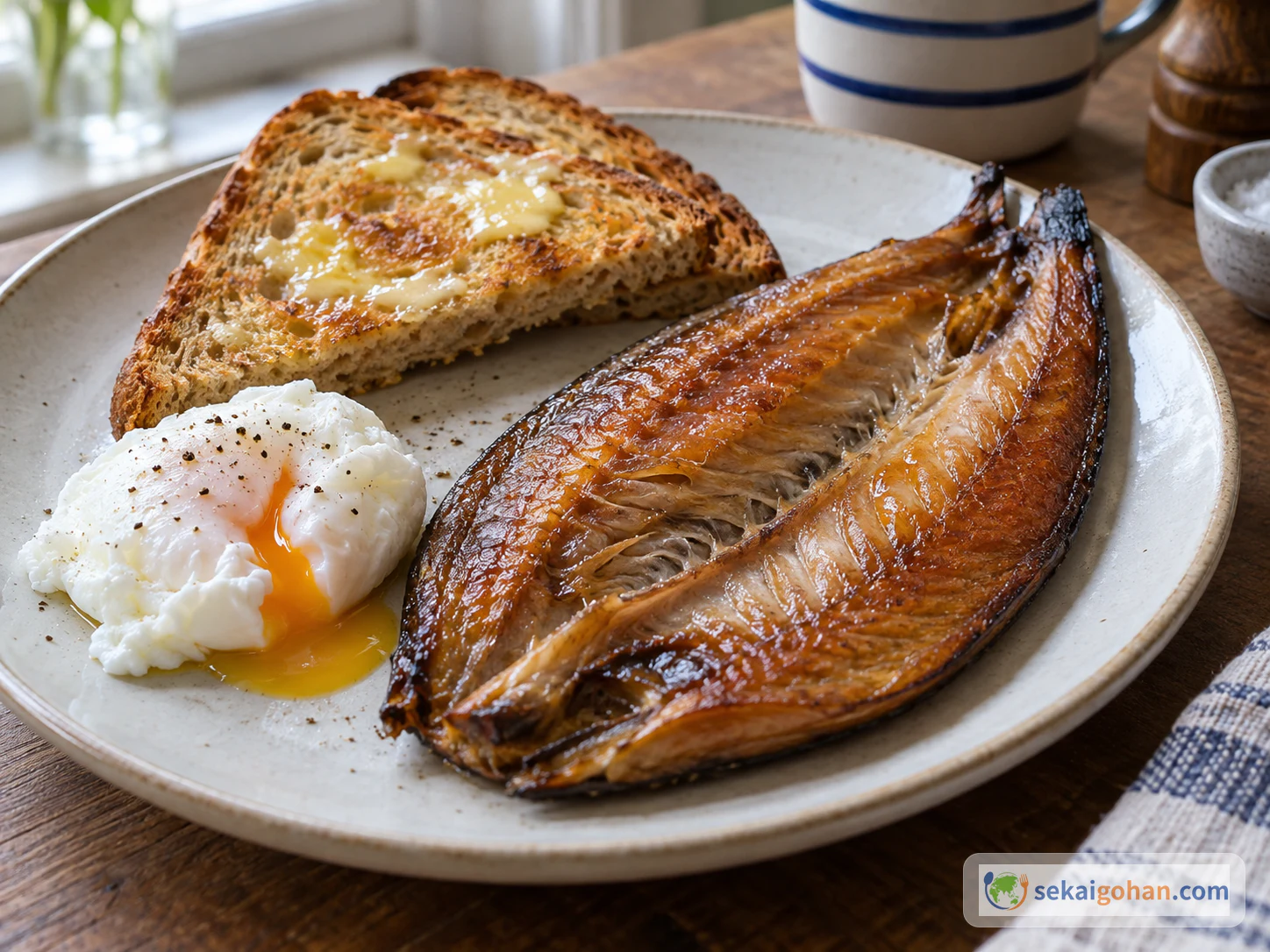
Manx Kippers: Warming Isle of Man Smoked Herring for Breakfast
Manx kippers are herring that are split, brined and smoked on the Isle of Man. Learn to warm ready-smoked fillets in the bag, in the microwave or under the grill, and serve them on buttered toast with an optional poached egg, plus the island's herring culture and how kippers differ from priddhas and herring.
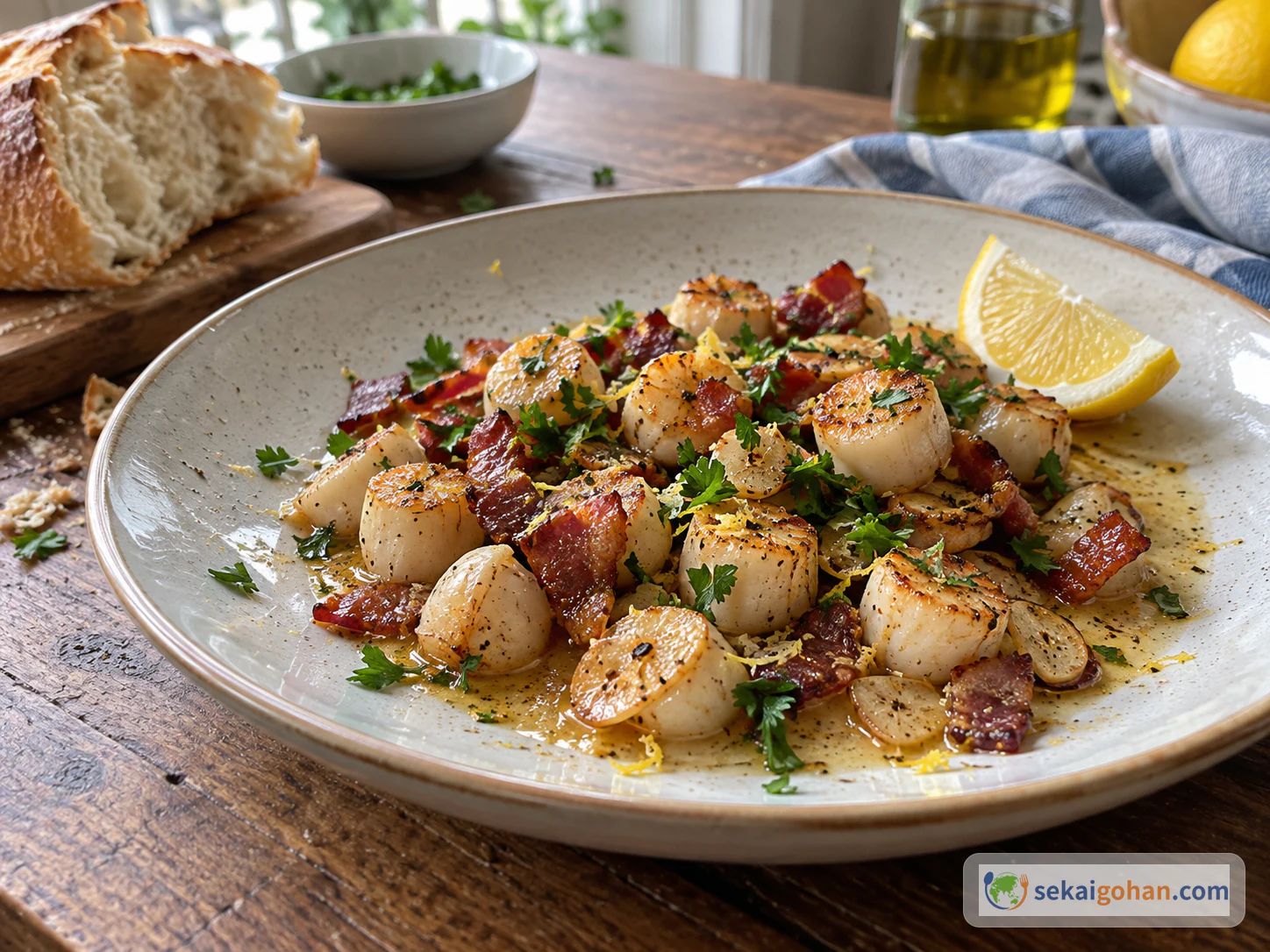
Manx Queenies with Garlic and Bacon: Isle of Man Queen Scallops
How to make queenies with garlic and bacon, a quick home dish built on the small queen scallops of the Isle of Man. Covers the full ingredient amounts and seven steps, how to tell when the scallops are just opaque, what to do if your pan is small, honest substitutions with ordinary scallops, and the background from the island's fishery to its 2018 national dish vote.
Italy recipes
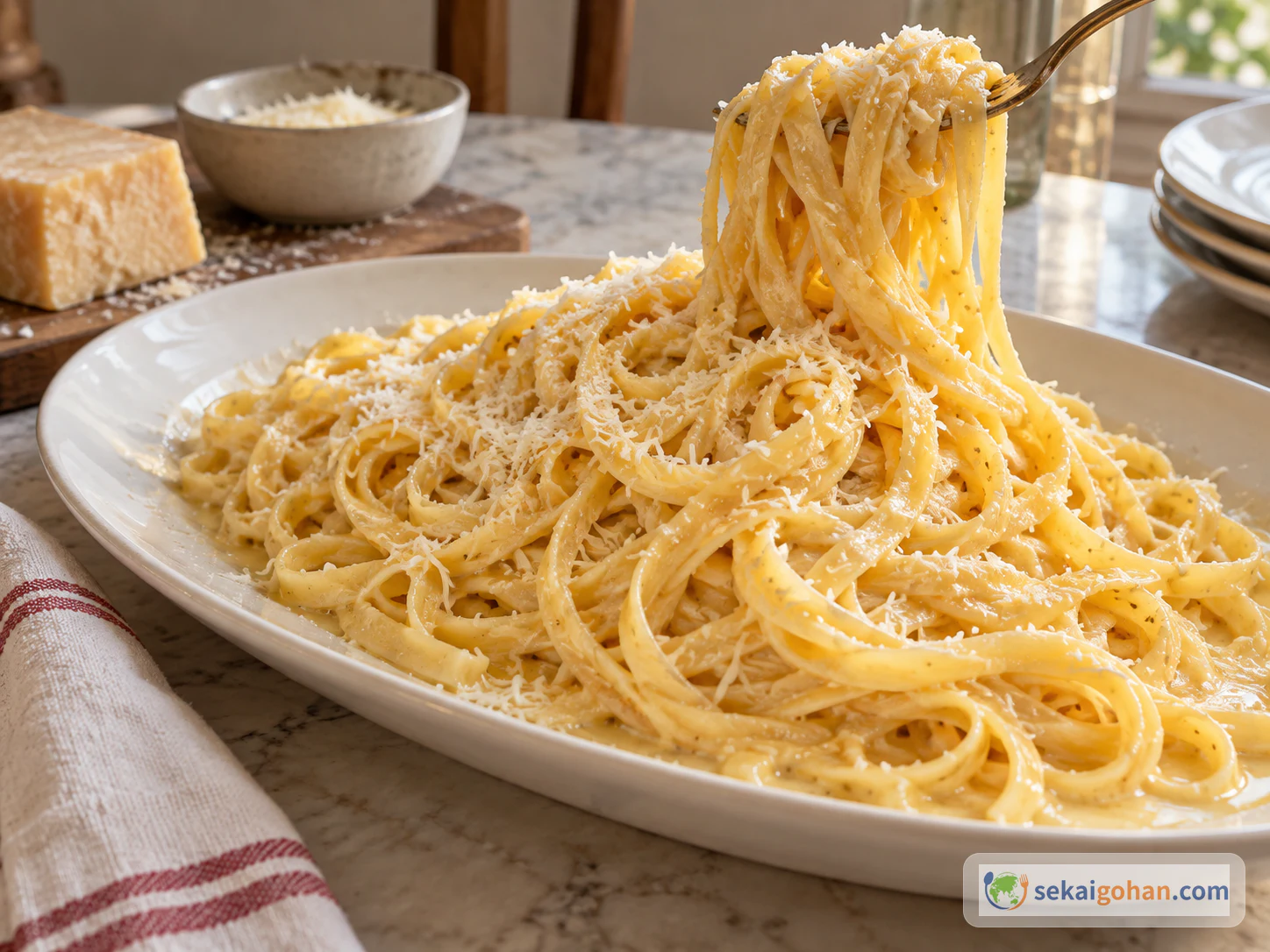
Fettuccine Alfredo: Rome's Butter and Parmigiano Pasta Without Cream
How to make fettuccine Alfredo as published by the City of Rome's tourism site: 400g of very thin fresh egg fettuccine, unsalted butter, 24-month Parmigiano Reggiano and pasta water, brought together on the plate in front of the diner. Covers choosing the pasta and cheese, avoiding clumps, the story Rome tells about the dish, and how it differs from the cream-based Alfredo that spread in North America.
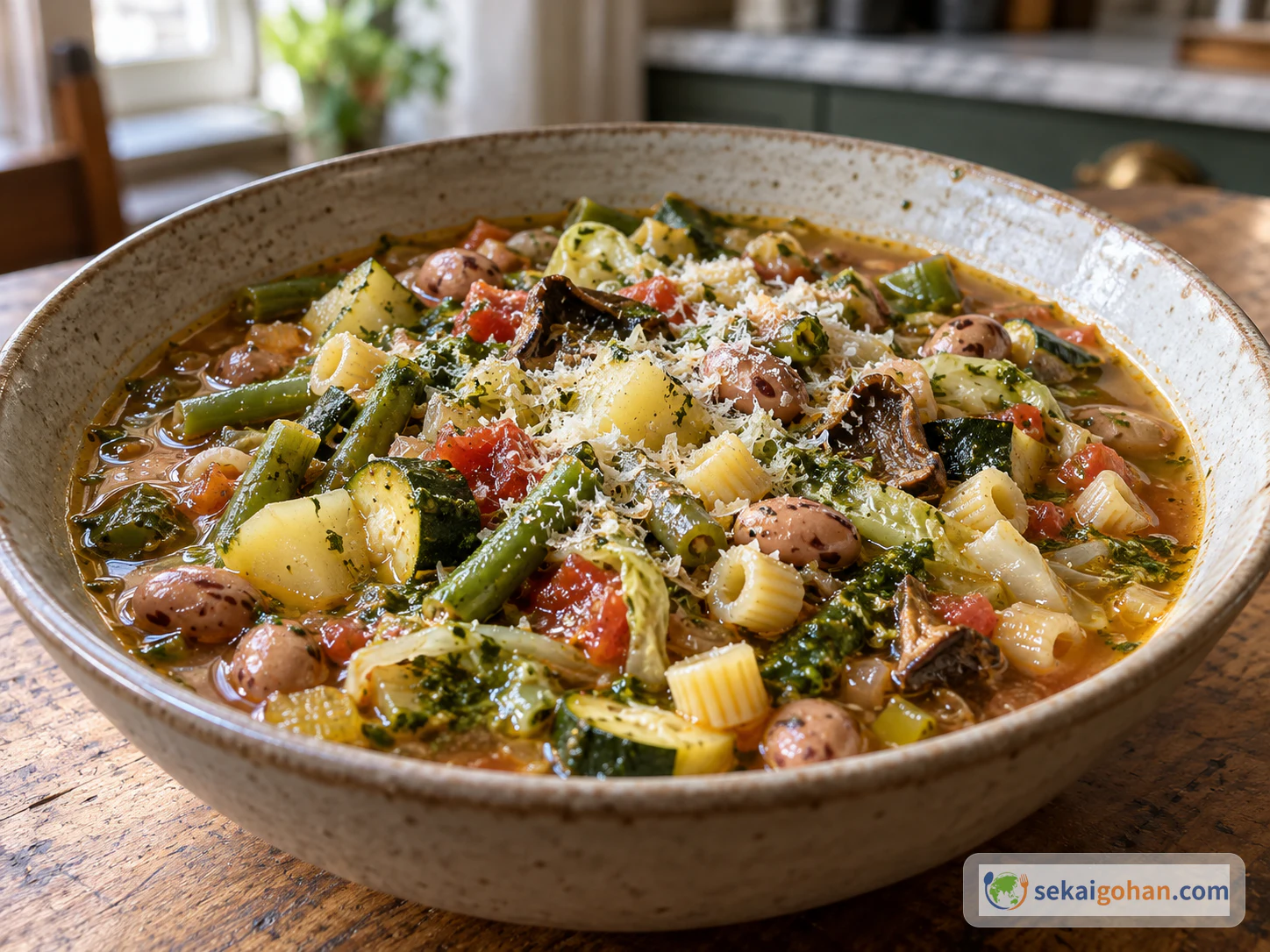
Minestrone alla Genovese: Genoese Vegetable and Bean Soup Finished with Pesto
How to make Genoese minestrone for 4: vegetables, fresh borlotti, dried mushrooms and ditalini simmered gently, with pesto stirred in off the heat. Covers substitutions, regional differences, storage and safe reheating.
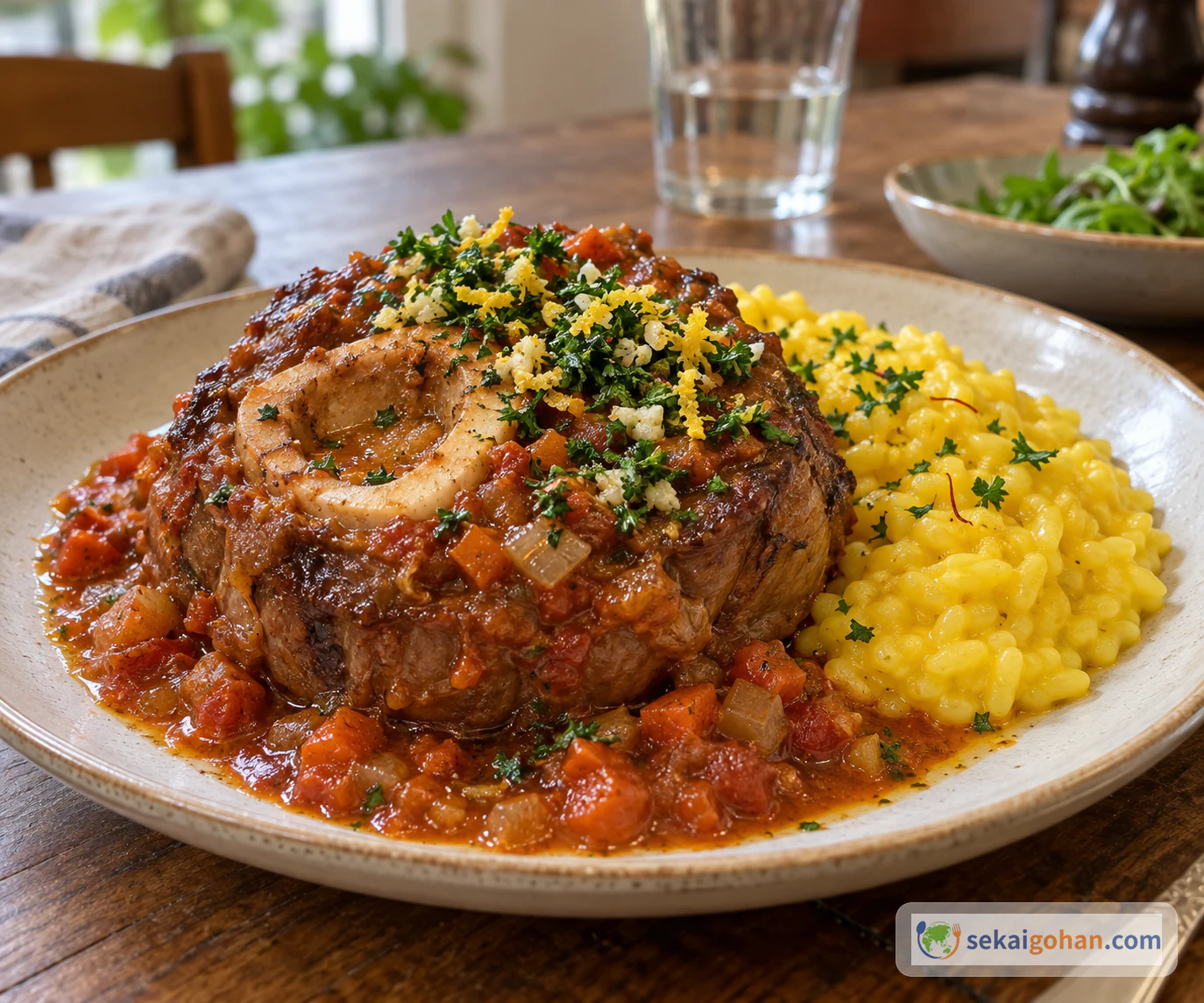
Ossobuco alla Milanese: Braised Veal Shank with Gremolata
How to make ossobuco alla milanese, the Milanese braise of cross-cut veal shank with its marrow bone, for 4 servings. Covers choosing the shank, the order of browning, deglazing and braising, a gentle simmer, gremolata of parsley, garlic and lemon zest, serving with saffron risotto, the history of the dish with and without tomato, and what changes if you use beef shank.
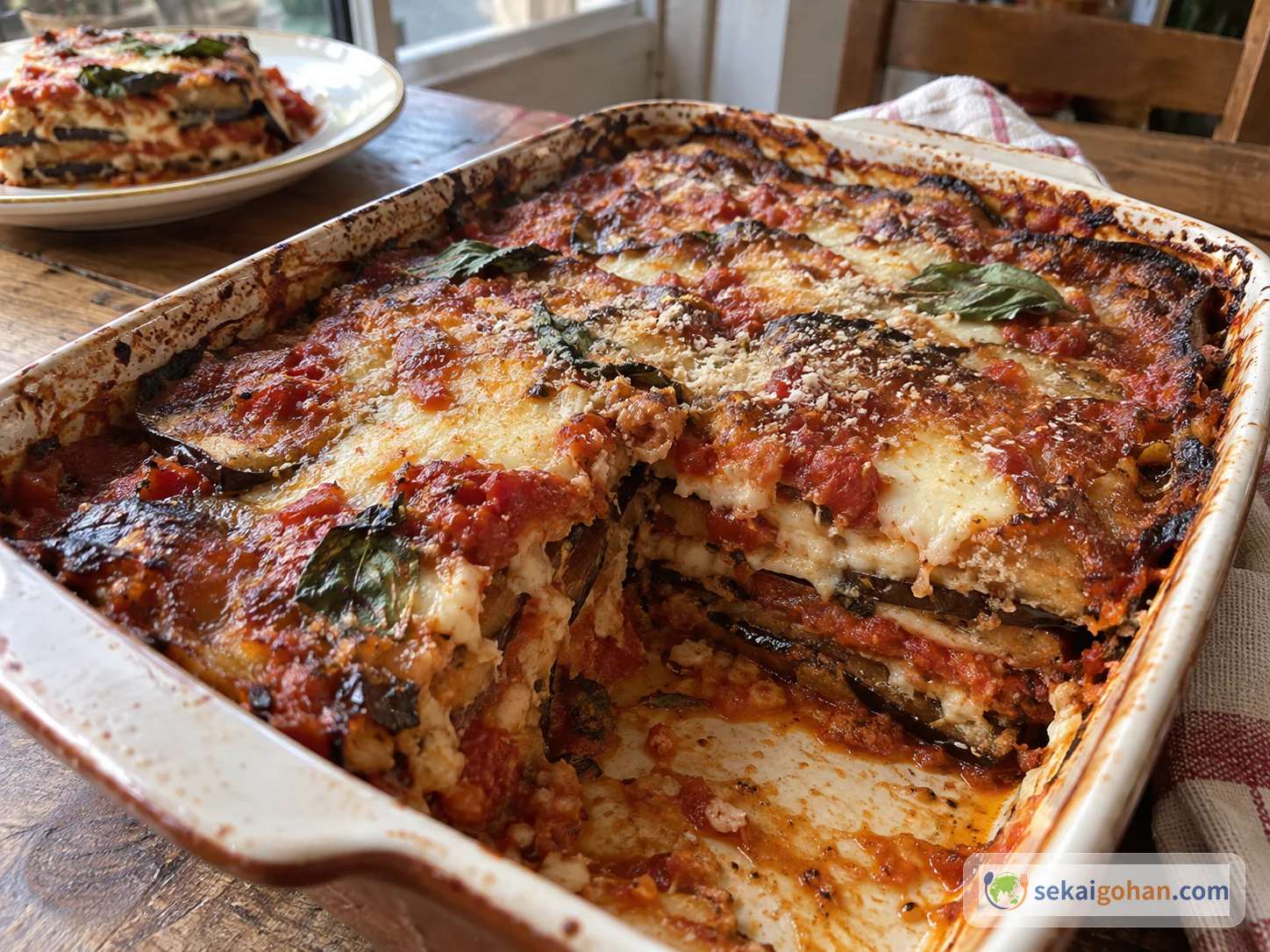
Parmigiana di Melanzane: Southern Italian Layered Fried Eggplant with Tomato and Cheese
How to make parmigiana di melanzane, the southern Italian bake of fried eggplant, tomato passata, mozzarella and Parmigiano Reggiano, following one home cook's published recipe. Covers salting, frying, layering, baking at 200°C, resting before slicing, regional variations from Campania, and how to choose ingredients outside Italy.
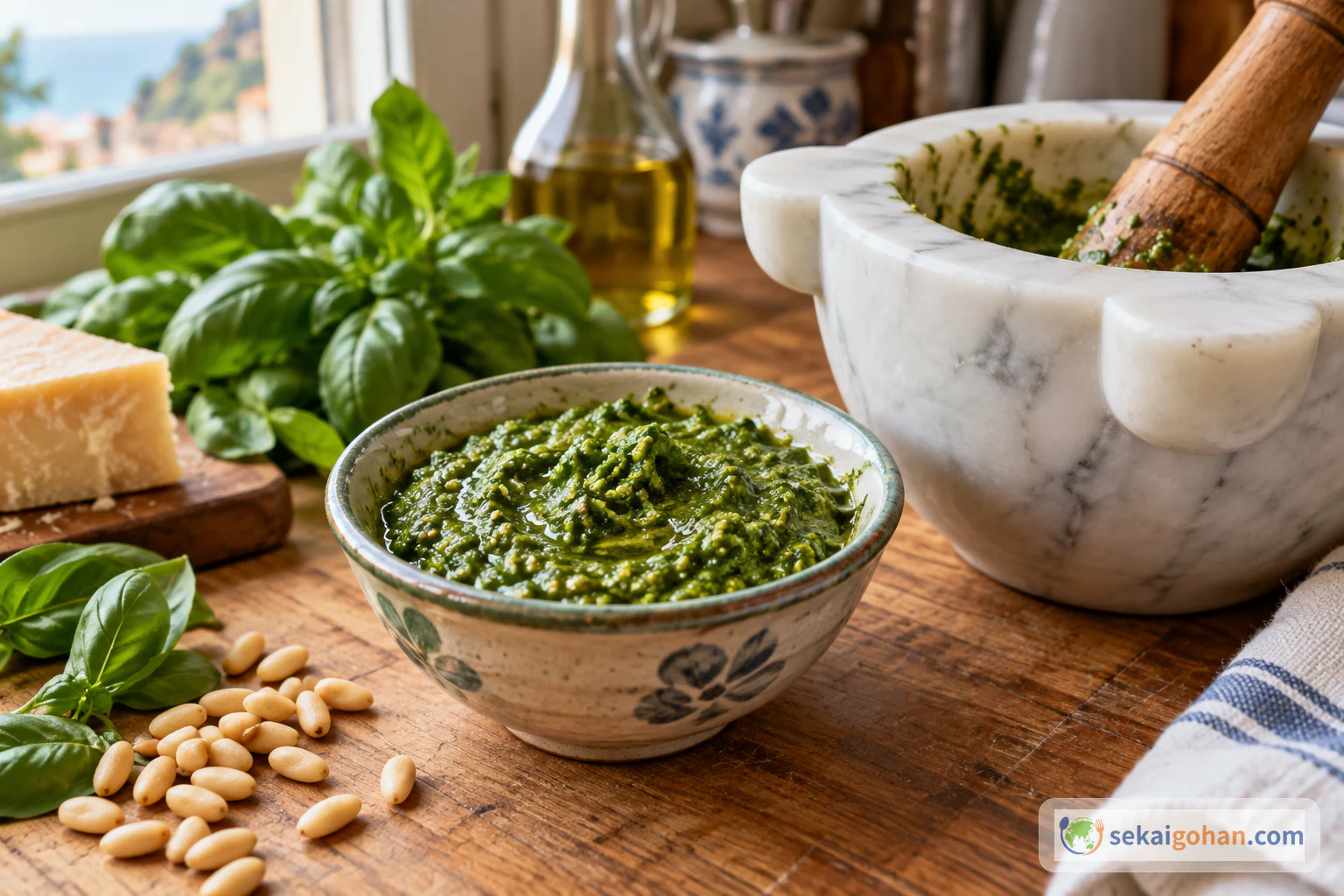
Pesto Genovese: Genoa's Basil Sauce Made in a Marble Mortar
How to make Pesto Genovese, Genoa's basil sauce, with the Consorzio del Pesto Genovese's seven-ingredient recipe based on 50 g of basil. Covers how to choose basil, pine nuts and the two cheeses, how to grind the leaves without crushing their aroma, how a mortar differs from a blender, and how the sauce is served in Liguria with trofie and other pasta. Also covers honest substitutions and hygiene, without changing the source recipe.
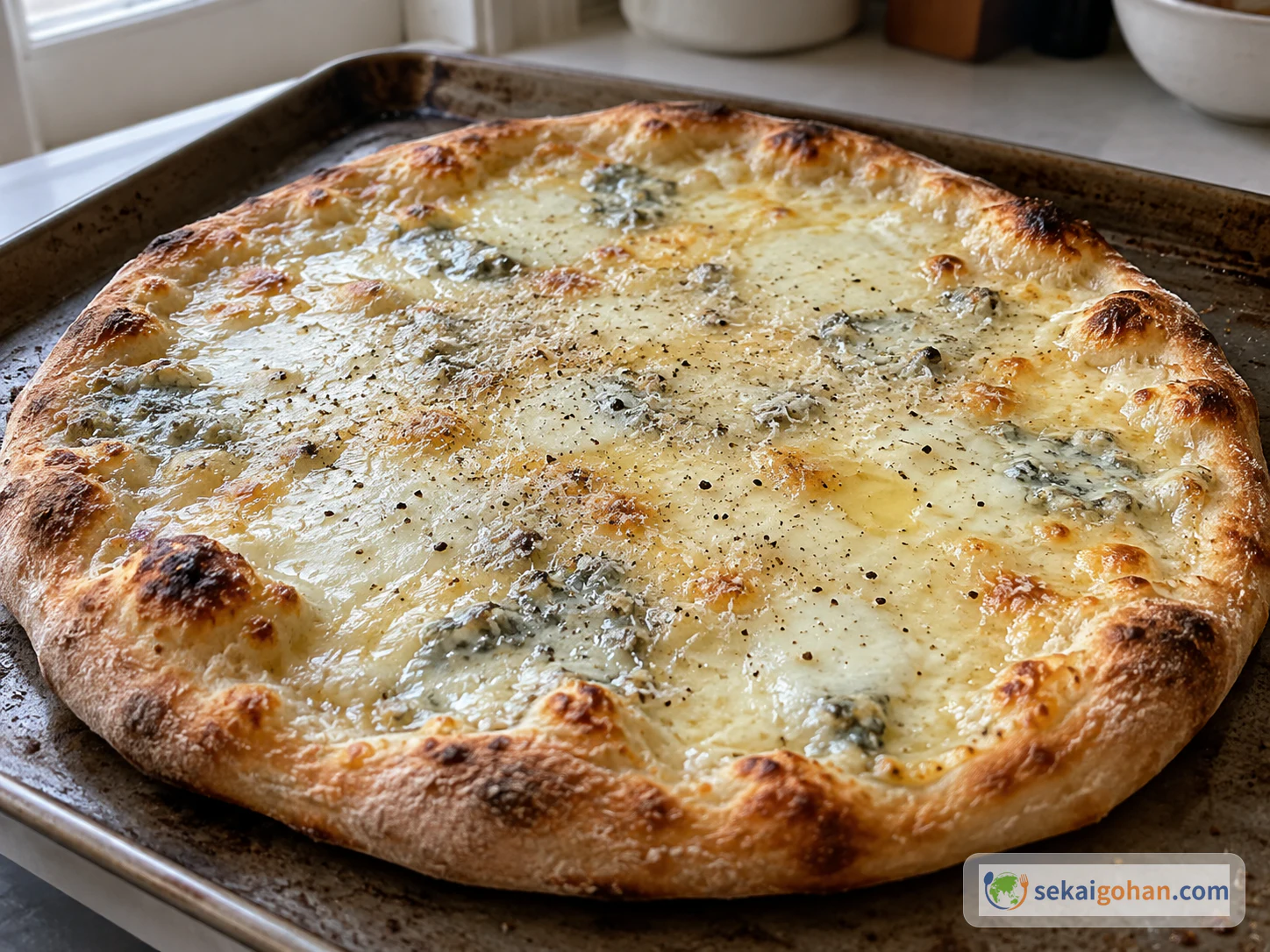
Pizza Quattro Formaggi: Italian White Pizza with Four Cheeses (Pizza ai Quattro Formaggi)
How to make pizza quattro formaggi, the Italian pizza named for its four cheeses, as a white pizza with no tomato. Built on a one-pizza recipe using 50g each of mozzarella, gorgonzola, fontina and Grana Padano, with what each cheese does, how to choose and substitute them, and how to judge doneness in a home oven by the rim and the underside.
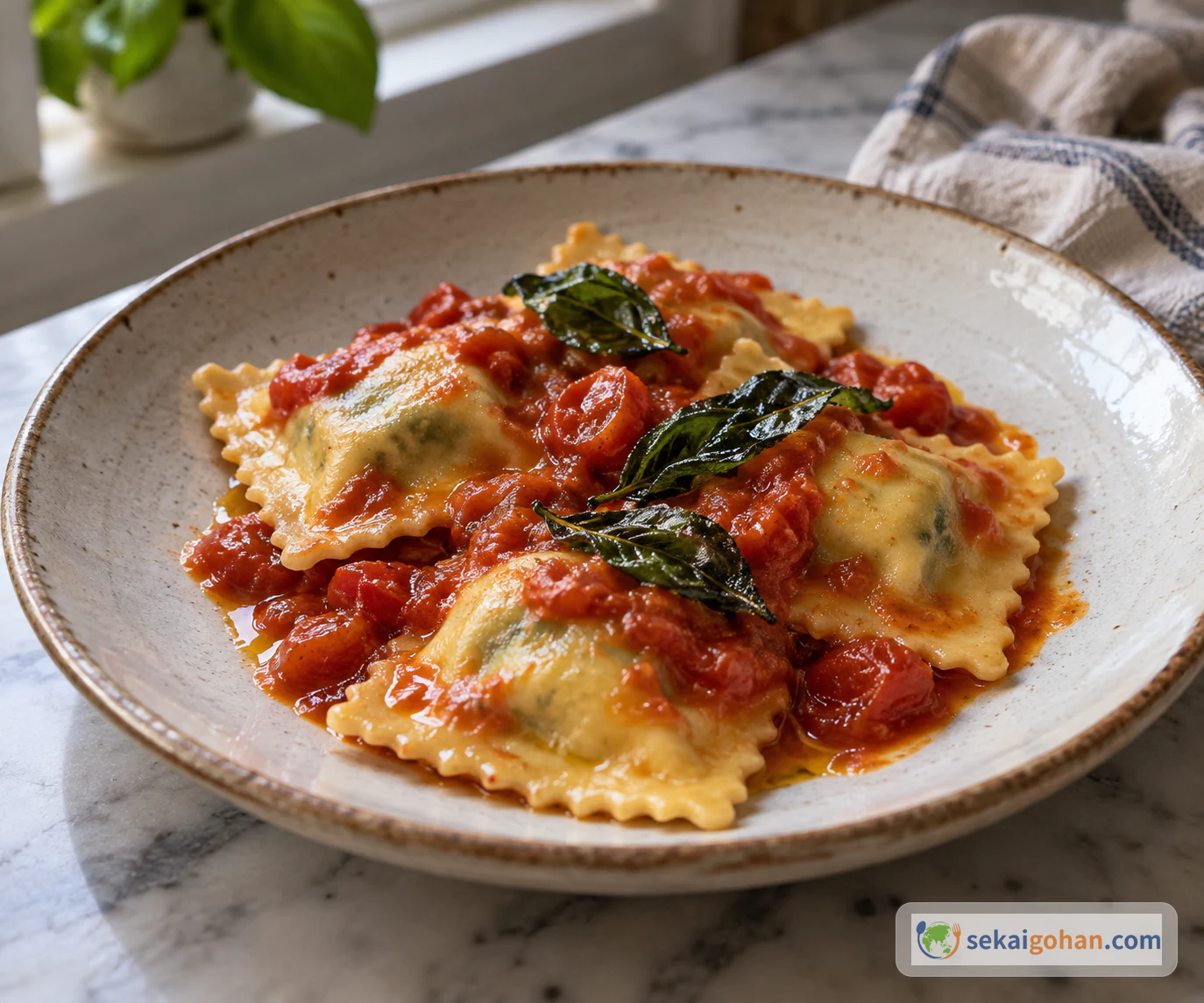
Ricotta and Spinach Ravioli: Square Egg-Dough Pasta with Roasted Datterini Tomato Sauce (Ravioli di ricotta e spinaci)
How to make ricotta and spinach ravioli at home from one Italian recipe: an egg dough of re-milled durum semolina and 00 flour, a filling of baked and fresh ricotta with spinach and Parmigiano, and a sauce of datterini tomatoes roasted at 100°C. Covers the 2-hour rest, cutting 8×12cm rectangles, sealing the edges, test-boiling, how ravioli differ across Italian regions, and how to judge substitutions.
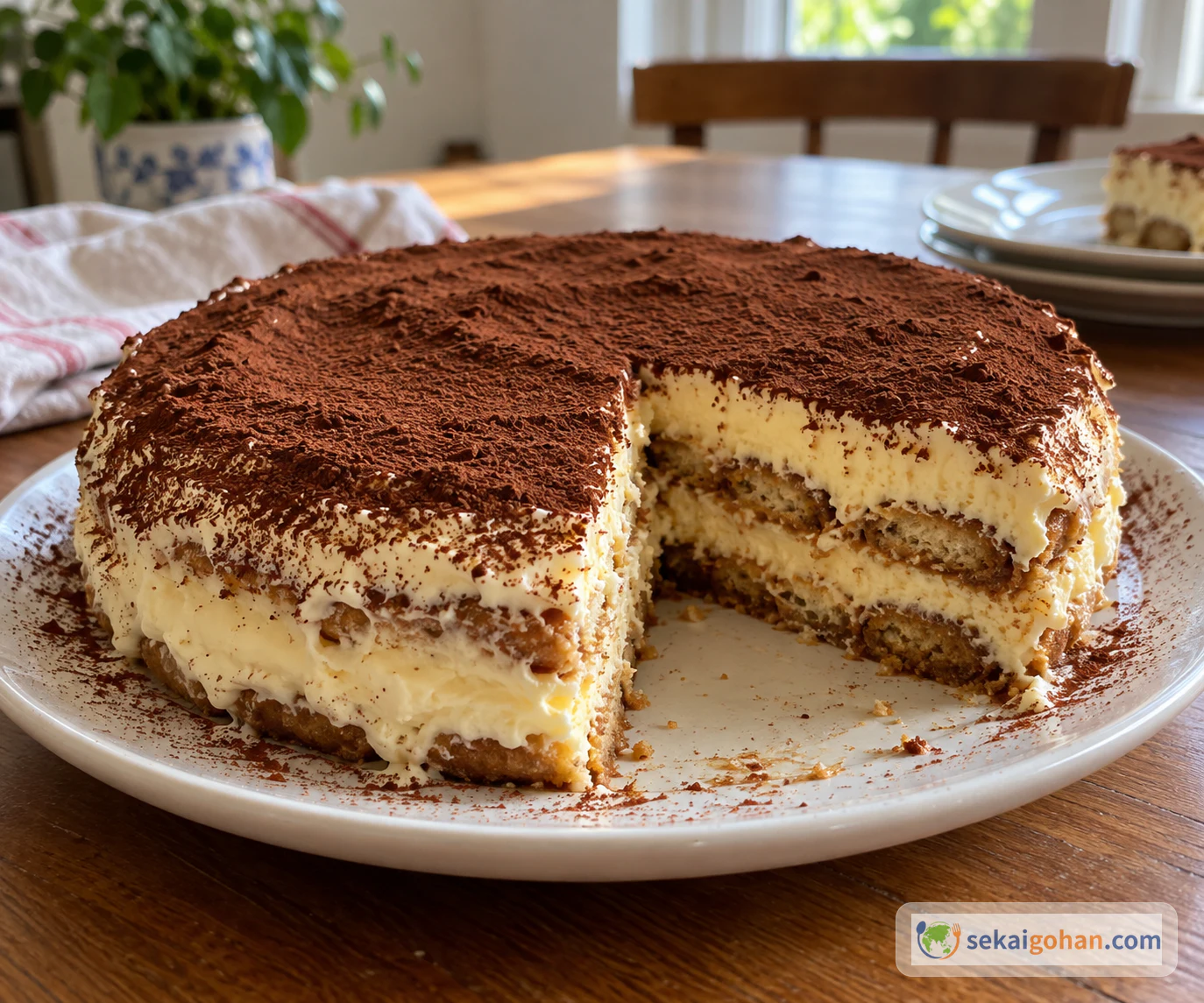
Tiramisu: Treviso-Style Layers of Savoiardi, Mascarpone and Coffee (Tiramisù)
How to make tiramisu from the six-ingredient recipe published by Le Beccherie in Treviso, halved for a home kitchen: egg yolk and sugar whipped with mascarpone, savoiardi briefly dipped in cooled coffee, two layers and a dusting of unsweetened cocoa. Covers choosing a pasteurized yolk product, dipping without collapse, keeping it covered at 4°C or below, how versions differ, and the restaurant's account of the dish.
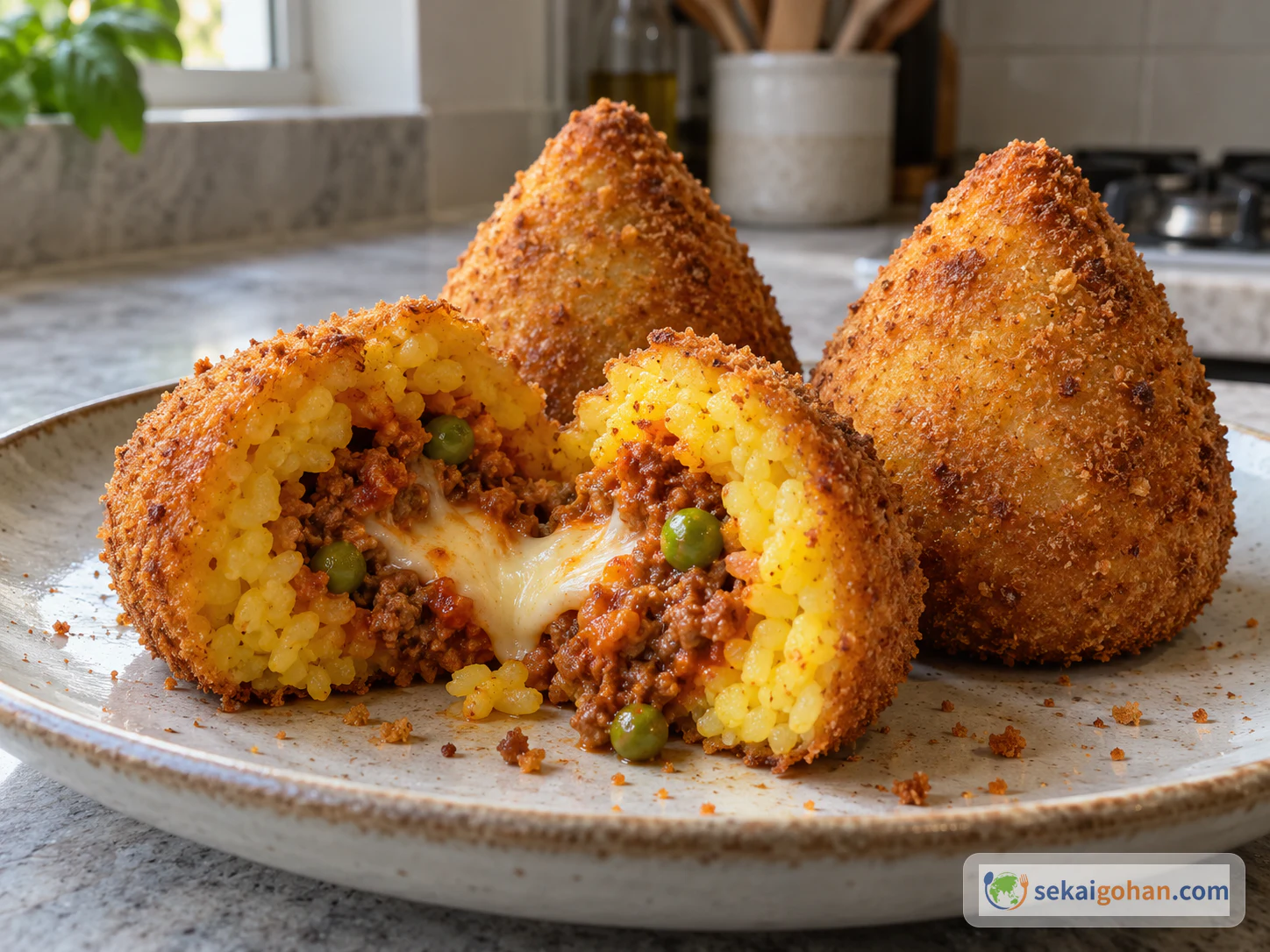
Sicilian Arancini: Saffron Rice Croquettes with Beef Ragù
How to make eastern-Sicilian arancini from scratch: saffron rice cooked by absorption and wrapped around a thick beef ragù with peas and cheese, then coated in flour, egg and breadcrumbs and fried. Covers ingredient substitutions, safe cooling of cooked rice, shaping a cone that holds, frying temperature, fixing bursts, and the round-versus-cone story of Palermo and Catania.
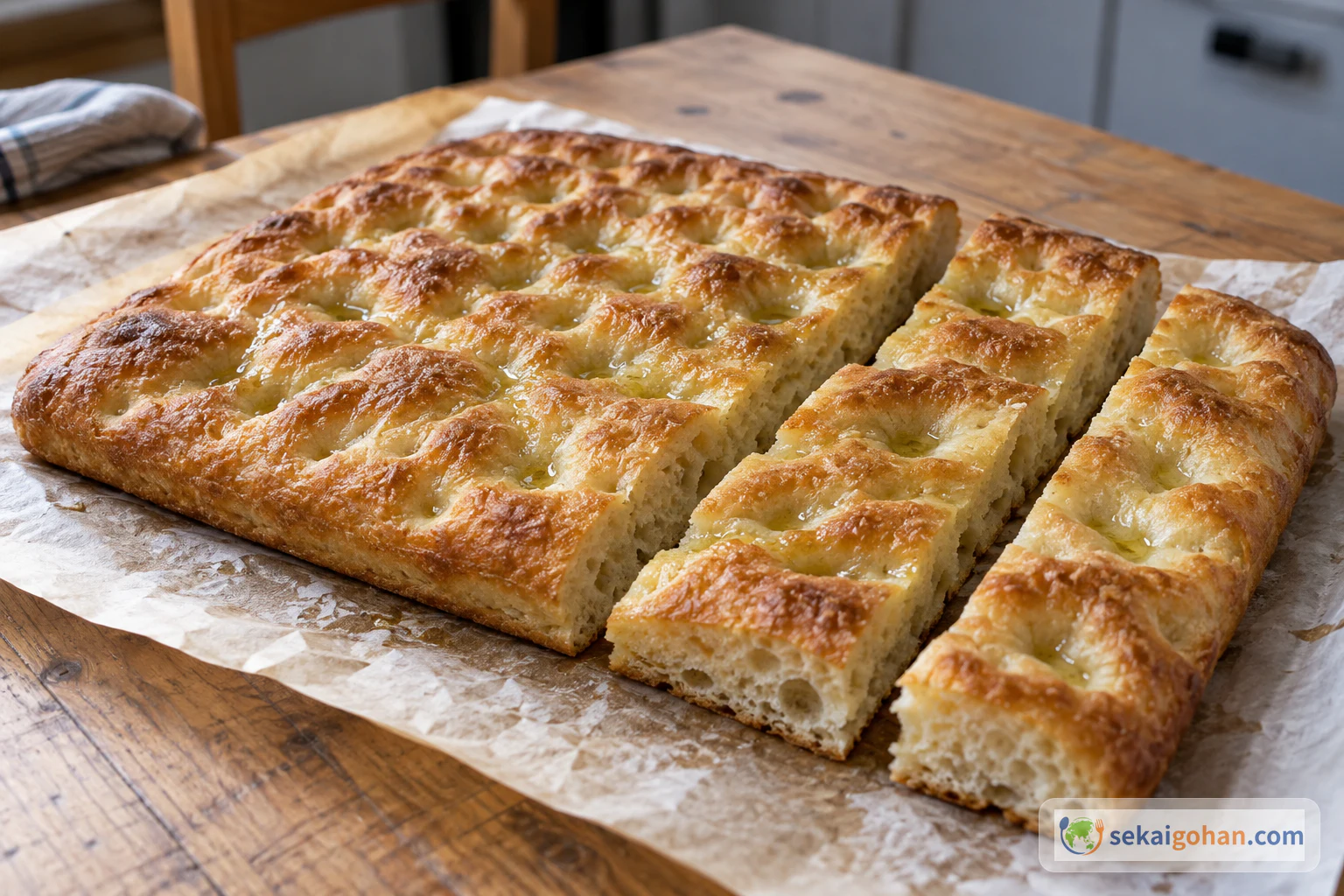
Focaccia Genovese: Genoa-Style Flatbread with Brine and Olive Oil in the Dimples (Fügassa)
How to make Genoa-style focaccia (fügassa) in two 30 × 40 cm trays, following one published Genoese formula with tipo 00 and Manitoba flour, malt and fresh yeast. Covers three-finger dimples, why brine and olive oil go on top, how to read each rise, flour substitutions, troubleshooting, and how the bread is eaten in Genoa.

Italian Gelato at Home: A Basic Egg-Yolk Crema Recipe
Make Italian crema gelato at home from a gelateria's published 1 kg recipe: milk, egg yolks, dextrose and skimmed milk powder, heating to 85°C with a thermometer hold check, quick cooling, at least 4 hours of chilling, and churning in an ice cream maker. Also covers the history of iced desserts in Italy, styles of gelato, and substitutions.
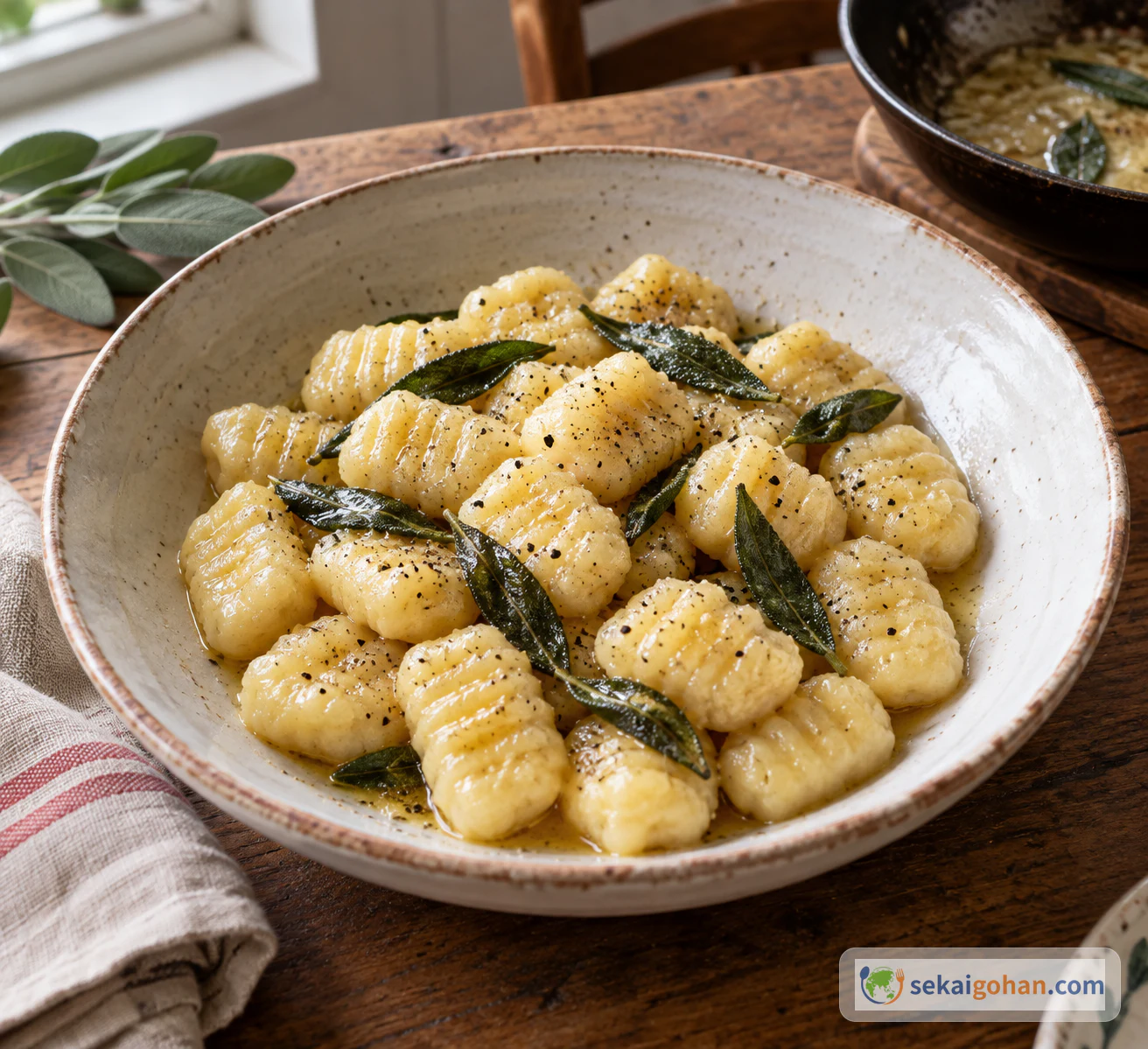
Potato Gnocchi: Italian Gnocchi di Patate with a Light Dough and Fork Ridges
How to make Italian potato gnocchi (gnocchi di patate) at home from a five-ingredient, egg-included formula: boiling potatoes in their skins, ricing them hot onto the flour, mixing briefly so the dough stays tender, shaping ridges with a fork, lifting the gnocchi as they float, and freezing them loose. Also covers fixing hard or crumbling dough, serving ideas such as butter and sage, and how potato gnocchi fit into Italy's wider family of gnocchi.
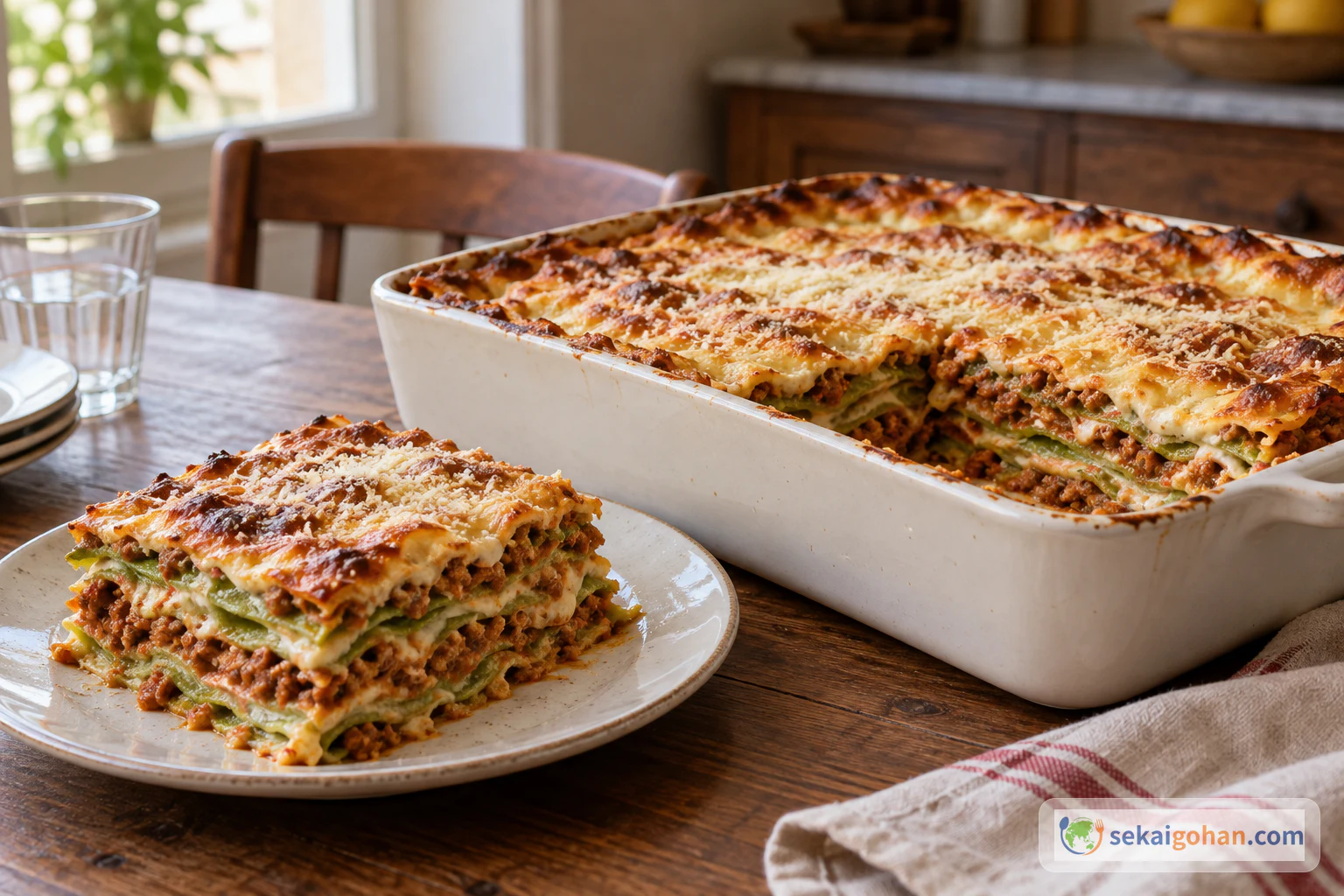
Lasagne Verdi alla Bolognese: Bologna-Style Green Lasagna with Spinach Egg Pasta
How to make lasagne verdi alla bolognese, the Bologna-style green lasagna that layers hand-rolled spinach egg pasta with ragù, béchamel and Parmigiano-Reggiano. Based on the registered recipe published by Bologna's official tourist site, it covers the ingredients for 8 servings, the ragù, the béchamel, boiling and layering the sheets, baking at about 180°C, resting before cutting, and how to judge substitutions outside Italy.
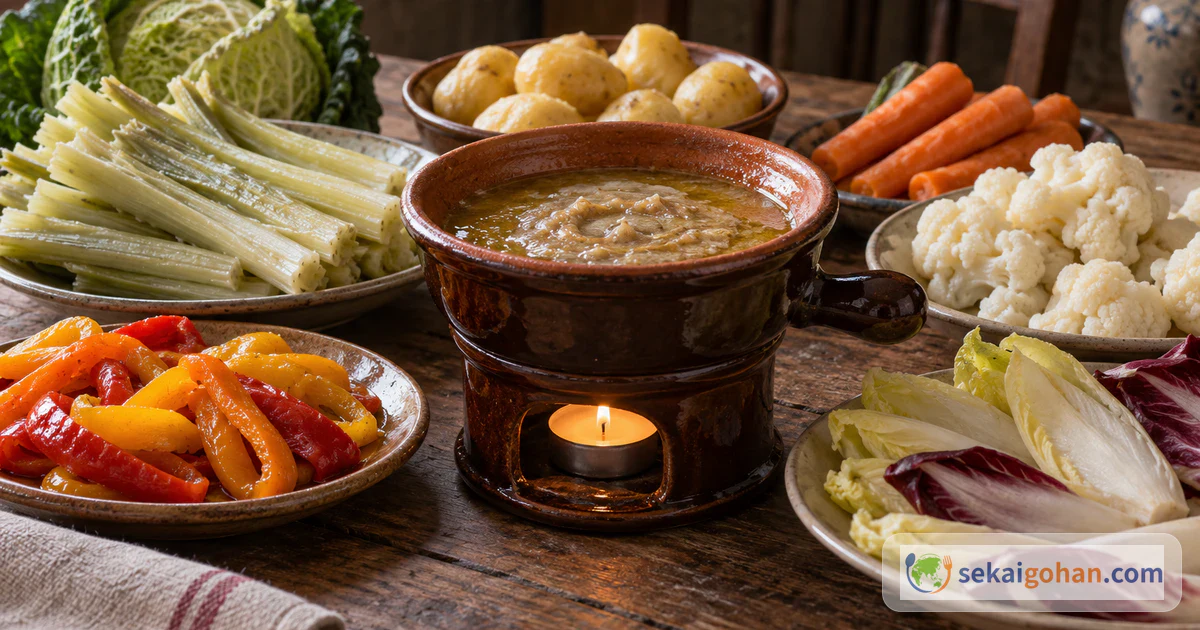
Bagna Cauda: Piedmont's Warm Anchovy-Garlic Dip for Winter Vegetables
A bagna cauda recipe from Piedmont's winter table, made without scorching the anchovy and garlic. Covers combining raw and cooked vegetables, substitutes for cardoon and Jerusalem artichoke, keeping the sauce warm without a fujot, storing leftovers, and where to draw the line when making it at home.
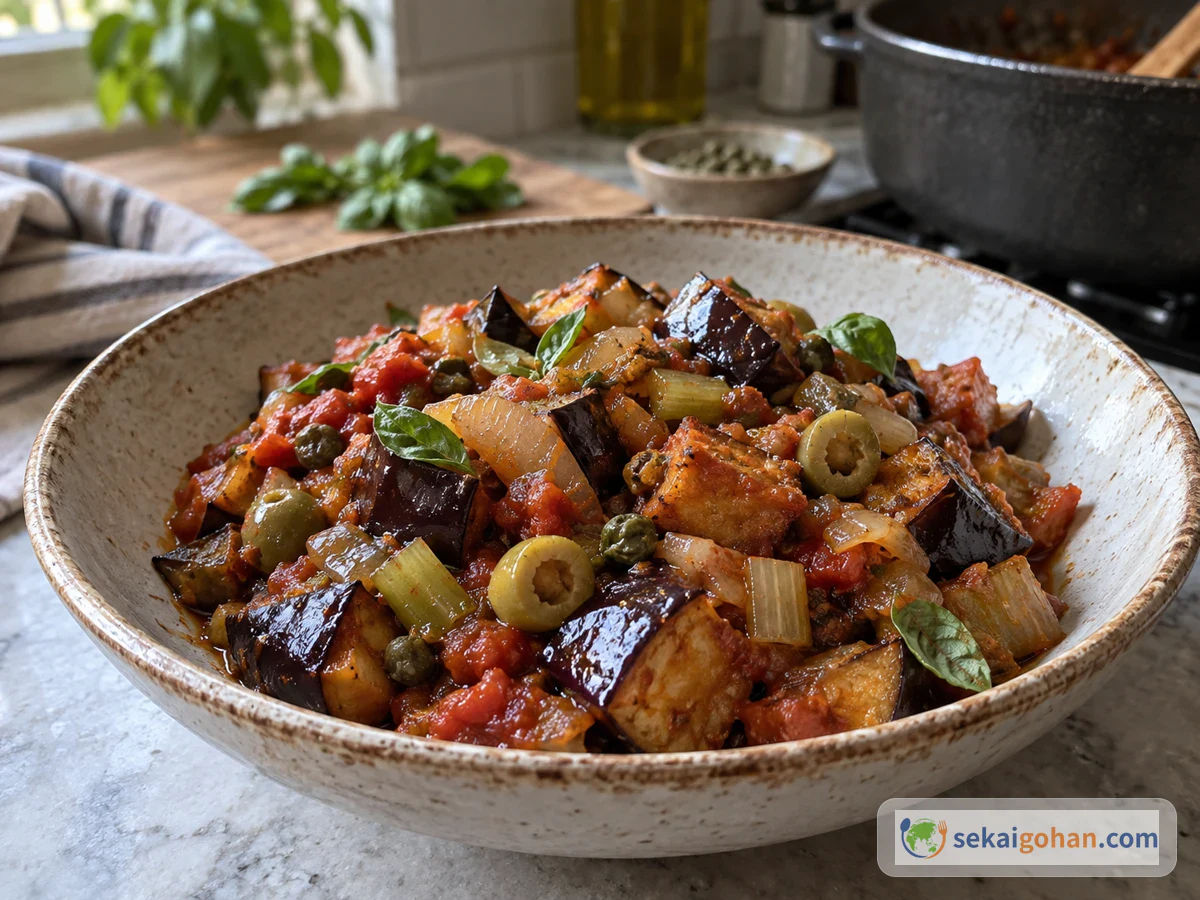
Caponata: Sicilian Sweet-and-Sour Eggplant with Fried Eggplant and Agrodolce
A Sicilian caponata for 4, made with separately fried eggplant and a sweet-and-sour finish. Covers the roles of celery, olives, and capers, regional differences in vegetables and nuts, the several theories behind the name, how to get the result with ordinary eggplant and vinegar, fixes for greasiness and sharpness, refrigerated storage, and serving with bread, with step photos.

Mpanatigghi: Modica's Chocolate Pastry Filled with Beef
A recipe for Sicilian mpanatigghi from Modica, made in a home kitchen. Covers the background of this meat-filled chocolate pastry, cooking the beef, closing the thin dough, substitutes for Modica chocolate, the almond and spice mix, preventing open seams, storage, and serving with espresso.

'Nzuddi: Messina's Sicilian Almond Cookies
How to make 'nzuddi, the almond cookies of Messina and Catania in eastern Sicily, in a home kitchen. Covers the origin of the local name, ingredient substitutes, how coarsely to grind the almonds, the spices, the color to bake to, storage, and how to serve them.

Panzanella: Tuscany's Summer Bread Salad Made with Stale Bread
Panzanella is a Tuscan salad of stale bread rehydrated in water and tossed with summer vegetables. Covers the culture of unsalted bread, how herbs differ in Umbria, how to rehydrate baguette, keeping the tomato juice, and balancing vinegar and salt, with ingredients for 4, step photos, fixes for a watery bowl, serving ideas, and storage cautions.

How to Make Risotto: The Basic Method for Al Dente Rice
A basic risotto from the ground up: choosing rice, adding broth, al dente, mantecare, storage, cheese substitutes, mushroom and Milanese variations, how it differs from paella, and how to rewarm leftovers, with heat levels and steps that work in a home kitchen.
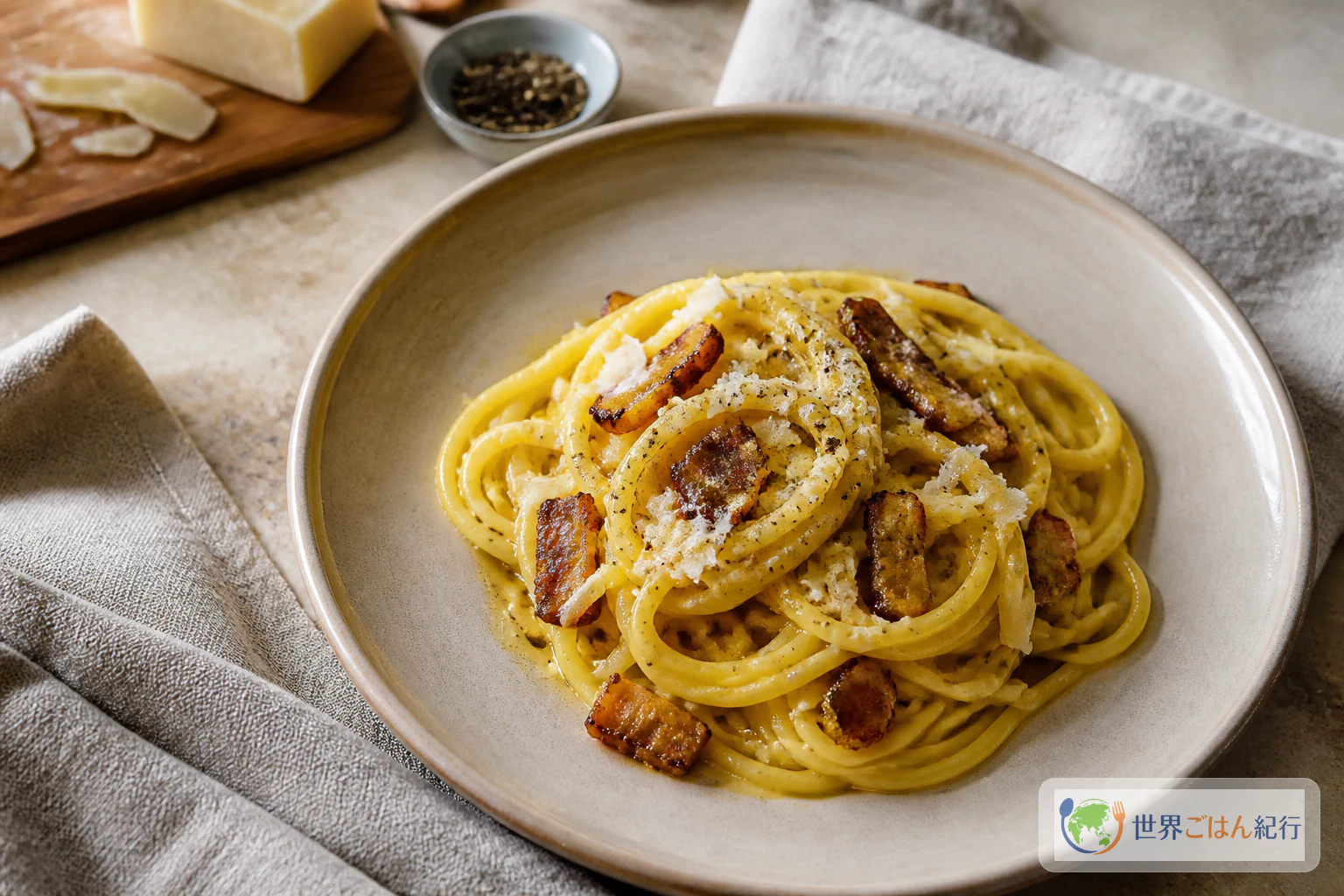
Spaghetti Carbonara: The Roman Way with Egg Yolks and Pecorino
Roman carbonara made with egg yolks, Pecorino Romano, pork fat and black pepper, no cream. How to keep the eggs from scrambling, swapping in pancetta, regional pasta shapes, rescuing a broken sauce, and storage and food safety.
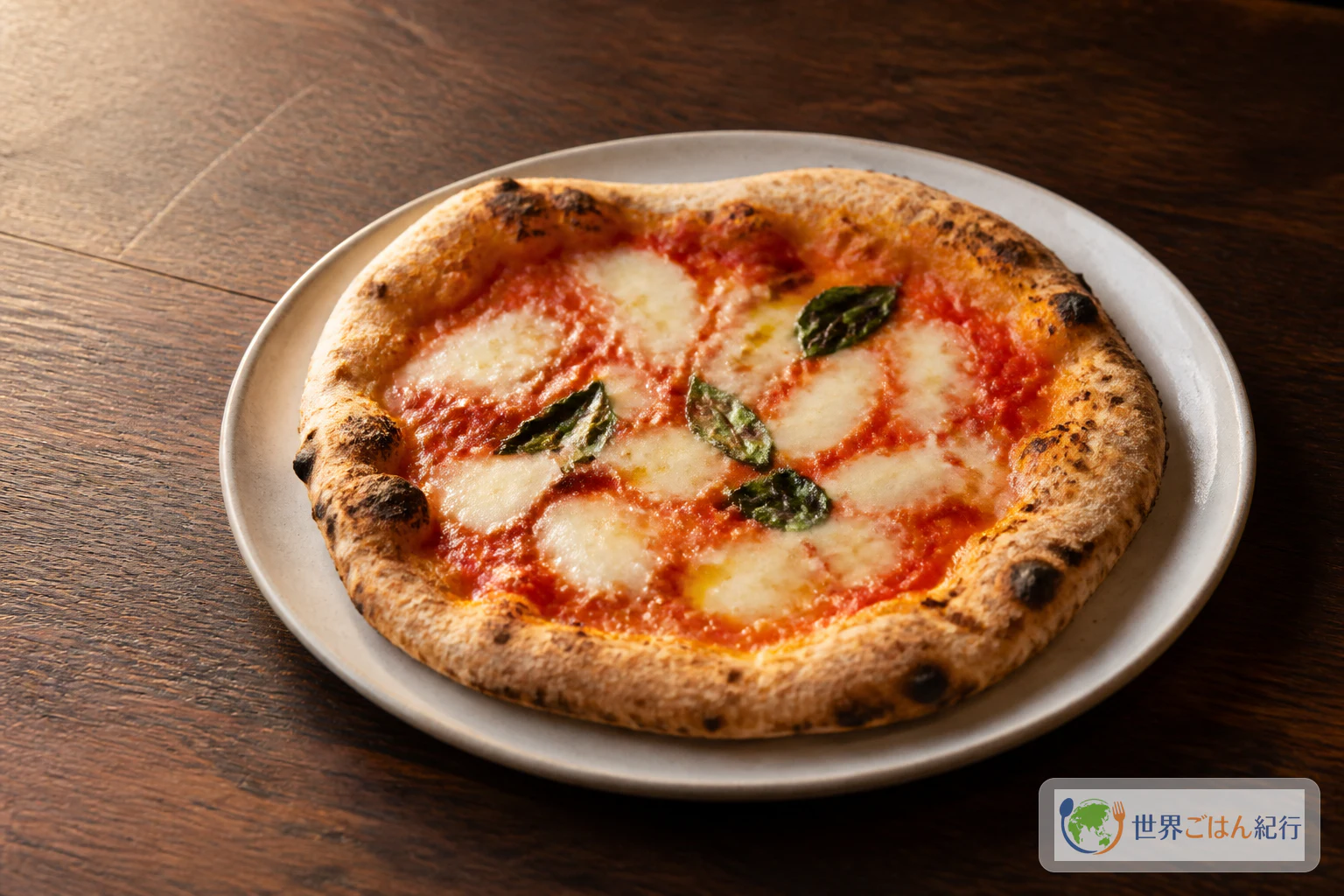
Neapolitan Pizza at Home: Dough and Baking in a Home Oven
Make Neapolitan Margherita and Marinara with 00 or bread flour, a hand-shaped rim, crushed tomatoes and a home-oven baking plan. The 485°C, 60–90 second wood-oven standard, judging fermentation, fixes for problems and storage.

Tortellini in Brodo: Bologna's Little Filled Pasta
How to make tortellini, the tiny filled pasta of Bologna: a thin egg dough, a pork, prosciutto and mortadella filling, why they're served in broth, how to fold them, heat control, storage, common failures and mortadella substitutes.
Jersey recipes
Latvia recipes
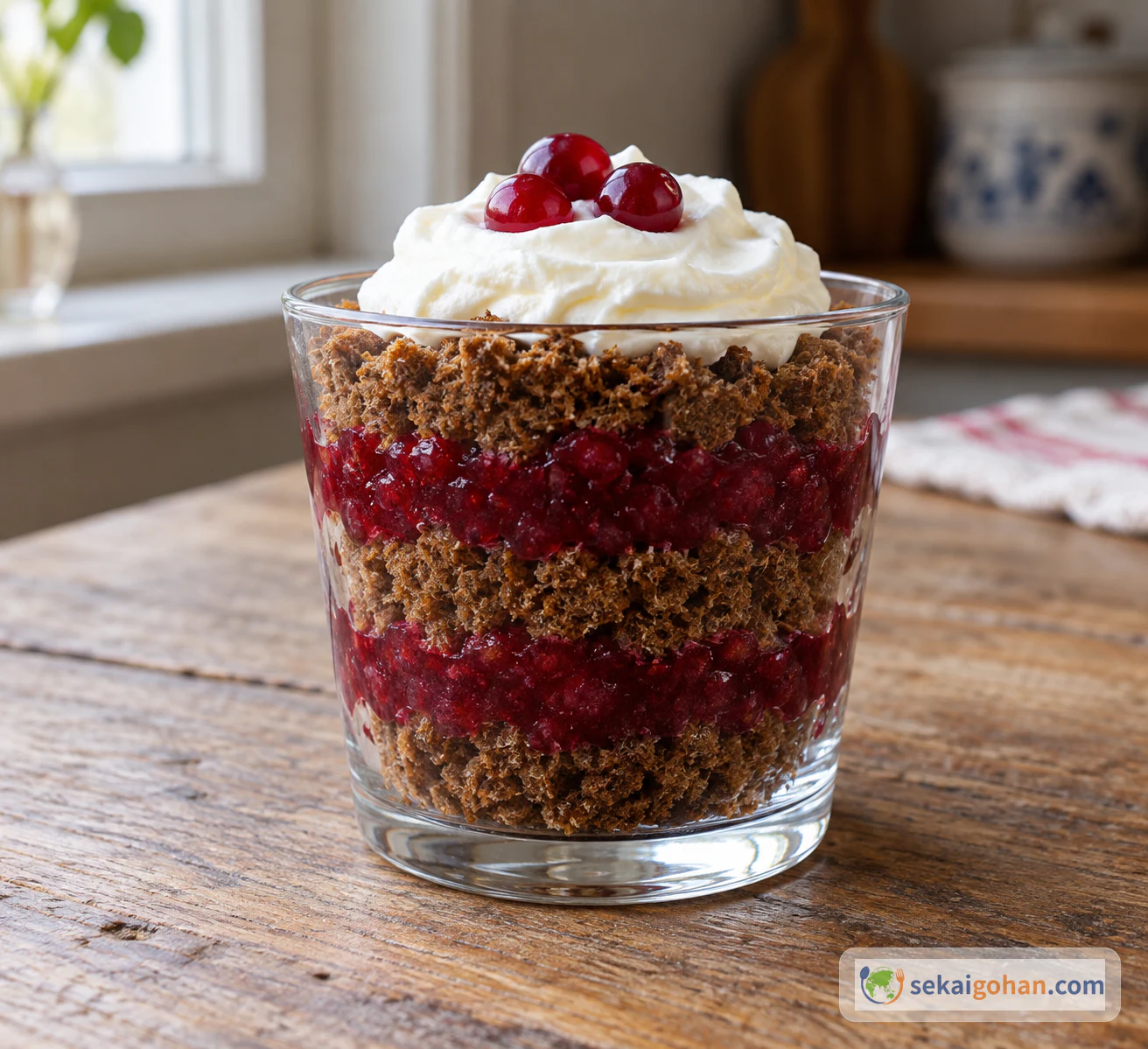
Rupjmaizes Kārtojums: Latvian Layered Rye Bread Dessert
How to make rupjmaizes kārtojums, the Latvian dessert of grated rye bread, tart berries and whipped cream. Covers the 2:1:1 measure, choosing bread and berries, safe handling of an uncooked berry layer, the 2-hour chill, and how Latvian recipes differ.
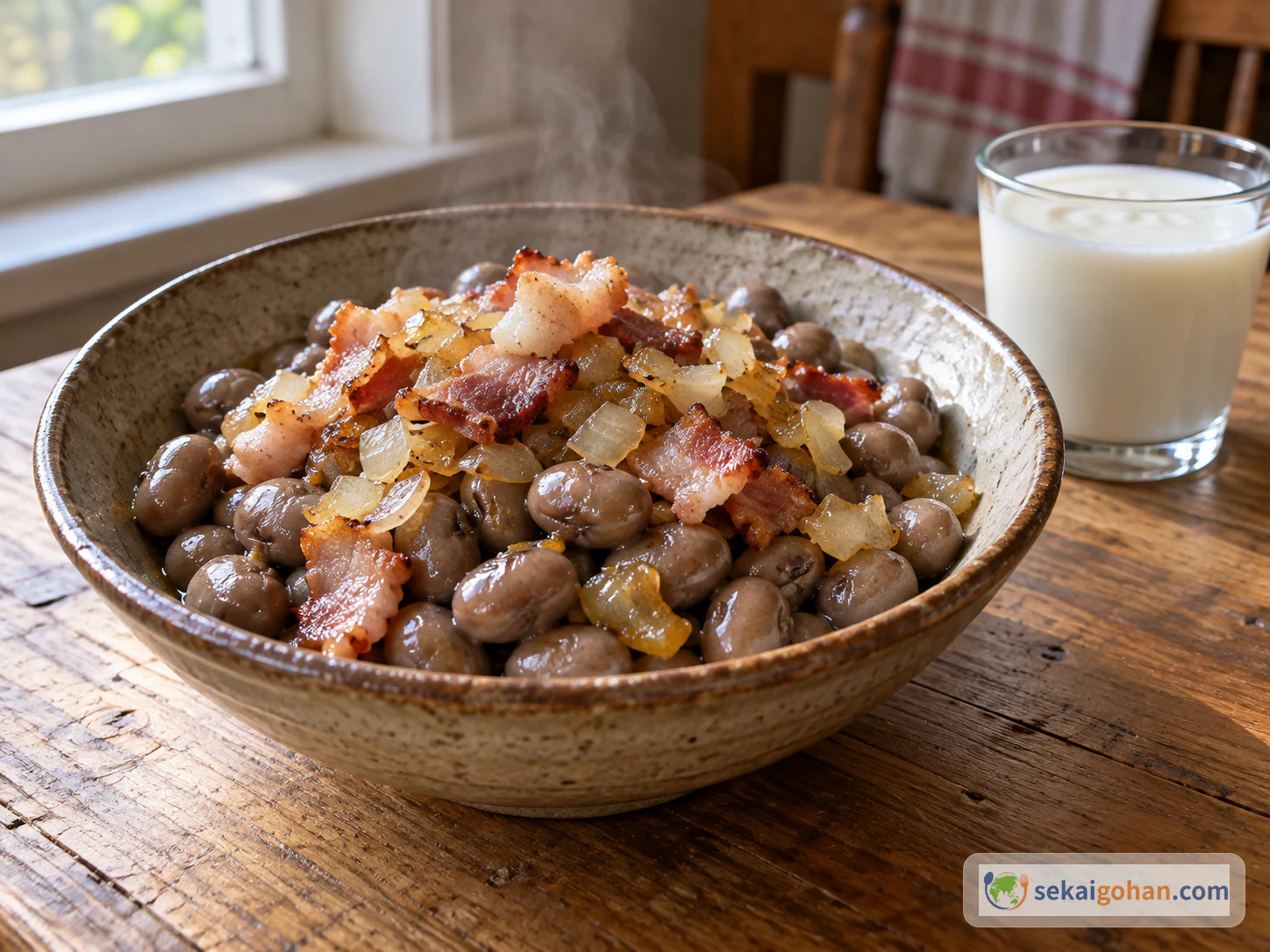
Pelēkie Zirņi ar Speķi: Latvian Grey Peas with Bacon and Onion
How to make Pelēkie zirņi ar speķi, Latvian grey peas with bacon: a family recipe of 1 kg dried grey peas soaked overnight and simmered until soft, topped with fatty bacon and onion fried in their own fat, with kefir on the side. Covers the dish's place at the Latvian Christmas table, what makes the protected Latvian grey pea different, how to choose peas and bacon, fixing common problems, and household variations.
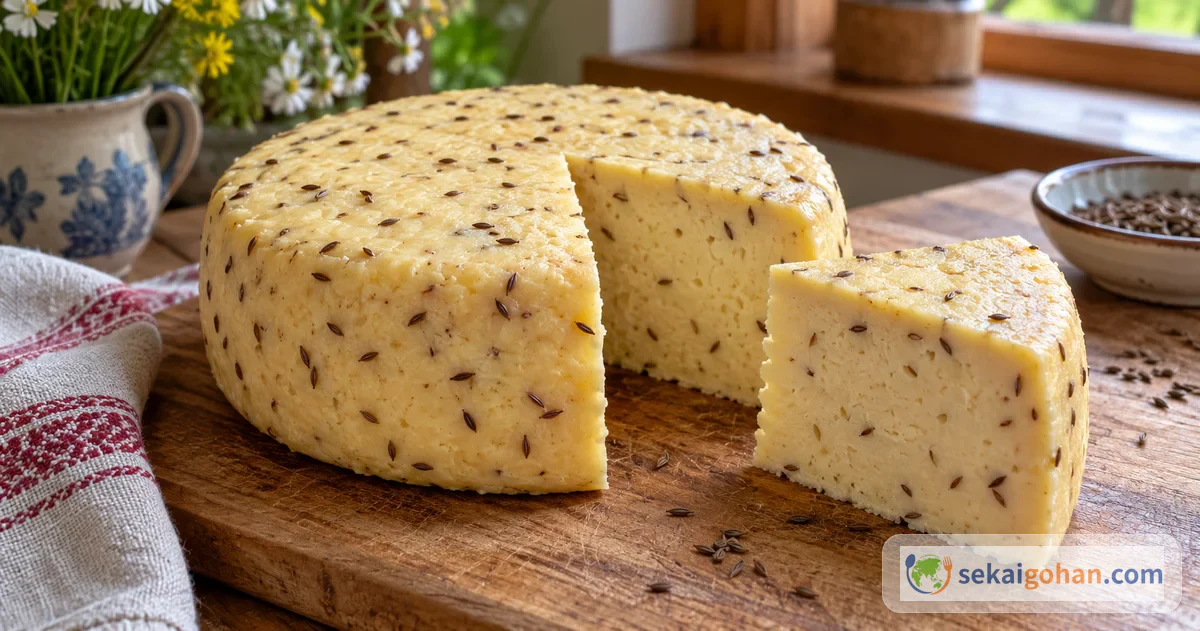
Jāņu Siers: Latvian Midsummer Caraway Cheese
How to make Jāņu siers, the round caraway cheese of Latvia's Jāņi midsummer festival, at home from milk, cottage cheese, egg, and butter. Covers the temperatures from the EU TSG specification, separating the whey, shaping in cloth, and the sun symbolism behind it.
Lithuania recipes
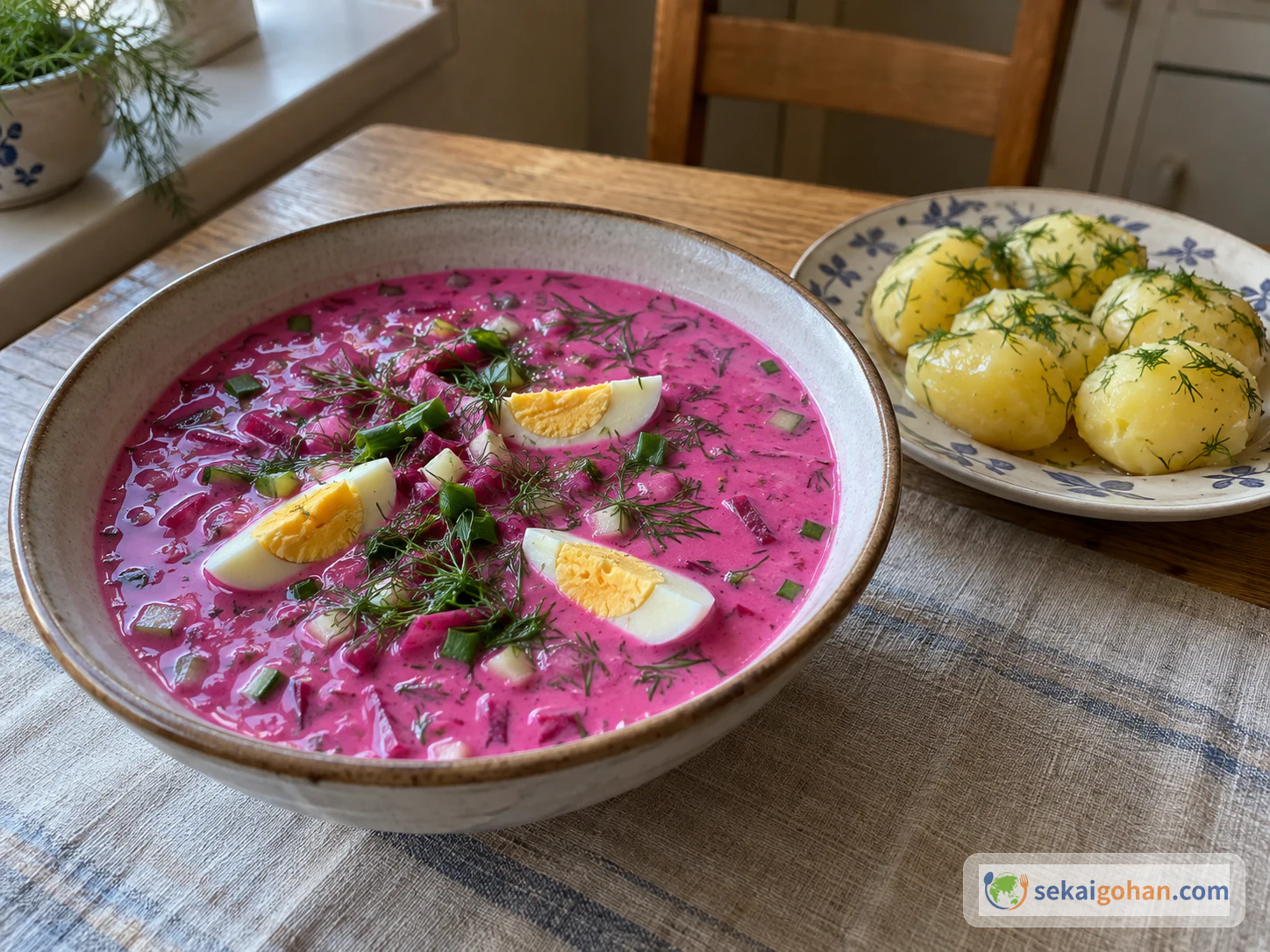
Šaltibarščiai: Lithuanian Cold Beet Soup with Kefir (Cold Borscht)
How to make šaltibarščiai, Lithuania's chilled pink soup of kefir, beetroot and cucumber, topped with hard-boiled egg and spring onion and served with warm buttered dill potatoes on the side. Covers choosing kefir and cooked beetroot, the order of work, fixing the flavor, variations and food-safety basics.

Cepelinai: Lithuania's Giant Potato Dumplings with Meat and Sour Cream Sauce
Cepelinai are Lithuania's national dish: giant airship-shaped dumplings of raw and boiled potato around meat. Covers dough, shaping and the sour cream sauce.

Kūčiukai: Lithuanian Christmas Eve Poppy Seed Biscuits
Kūčiukai are little poppy seed pastries eaten on Lithuanian Christmas Eve. Covers proofing temperature, baking color, poppy seed milk and storage.
Luxembourg recipes
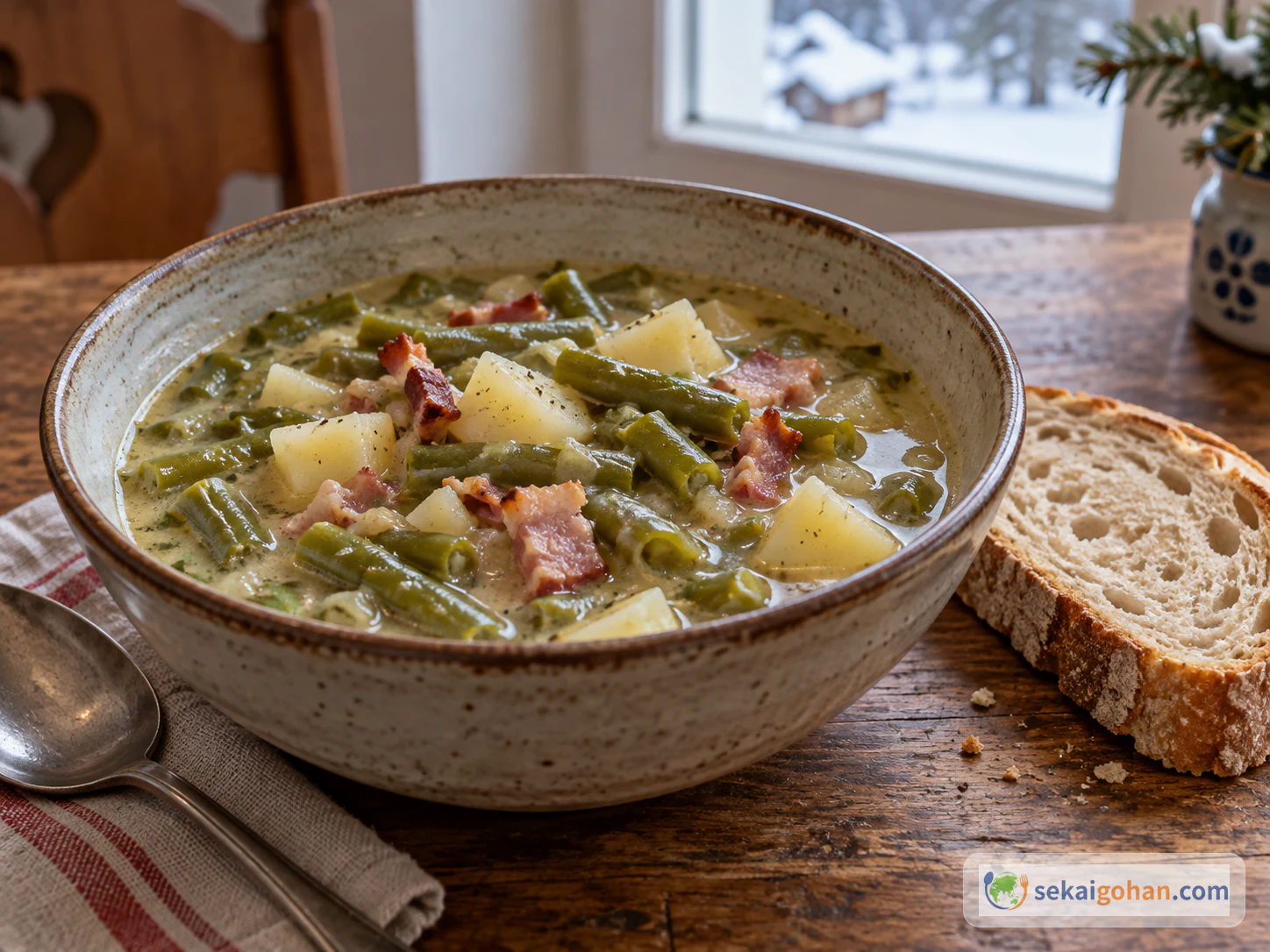
Bouneschlupp: Luxembourg Green Bean Soup with Smoked Bacon, Potatoes and Cream
How to make Bouneschlupp, the traditional Luxembourgish green bean soup, following a recipe published by the Luxembourg City Tourist Office. Covers smoked bacon, floury potatoes and cream, when to add frozen versus fresh green beans, how to season around salty bacon and stock, and how household versions with Mettwurscht and savory differ.
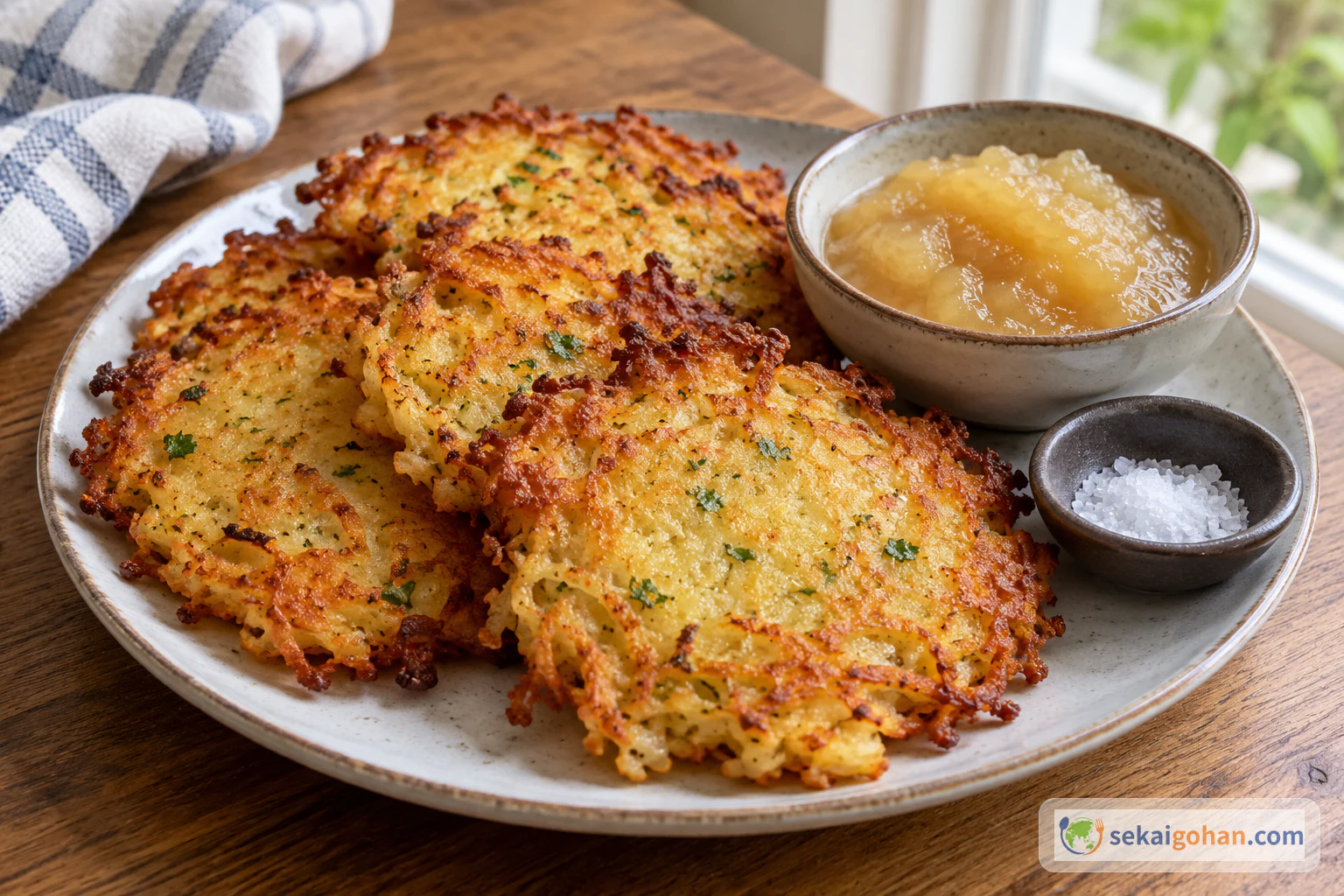
Gromperekichelcher: Luxembourg's Golden Pan-Fried Potato Patties
How to make Gromperekichelcher, the grated potato patties of Luxembourg's fairs and markets, following the recipe published on the Luxembourg government portal. Covers potatoes, onions, parsley and eggs, how to judge the golden color on each side, what to do with a wet mixture, and the traditional way of eating them hot with salt and applesauce.
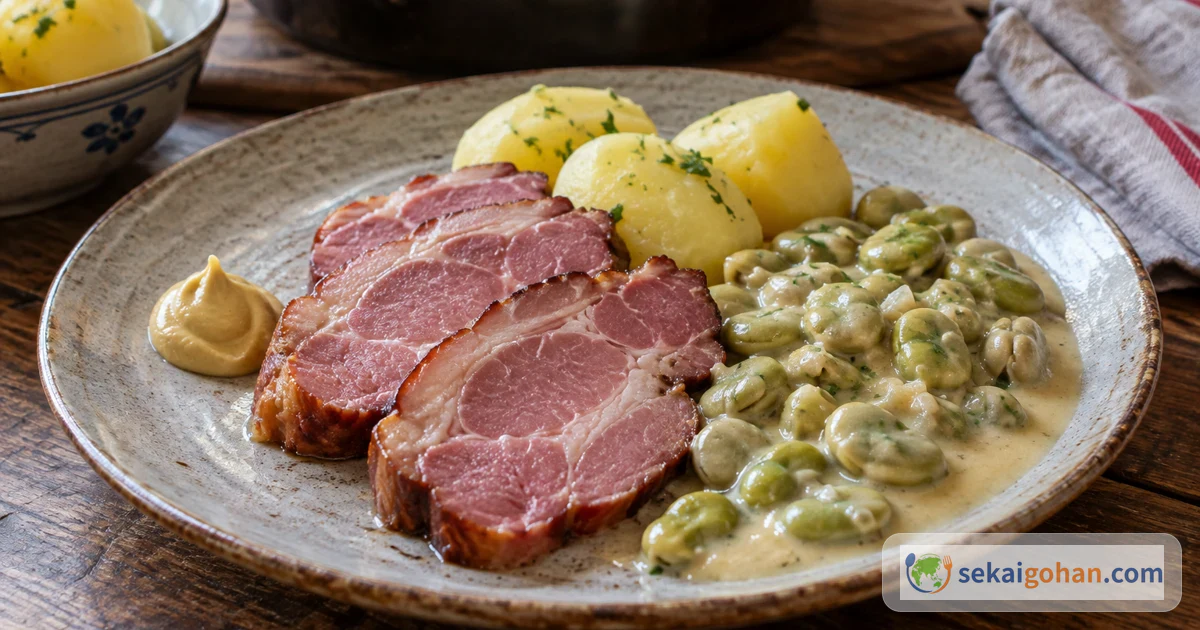
Judd mat Gaardebounen: Luxembourg's Smoked Pork with Broad Beans in Cream Sauce
A recipe for Luxembourg's national dish Judd mat Gaardebounen, with smoked pork shoulder, broad beans and a cream sauce of white wine and savory. Covers the broad bean village of Gostingen, the Spanish-origin theory of the name, the blanching to remove salt and the 2-hour simmer, and the sauce built on a brown roux.
Malta recipes
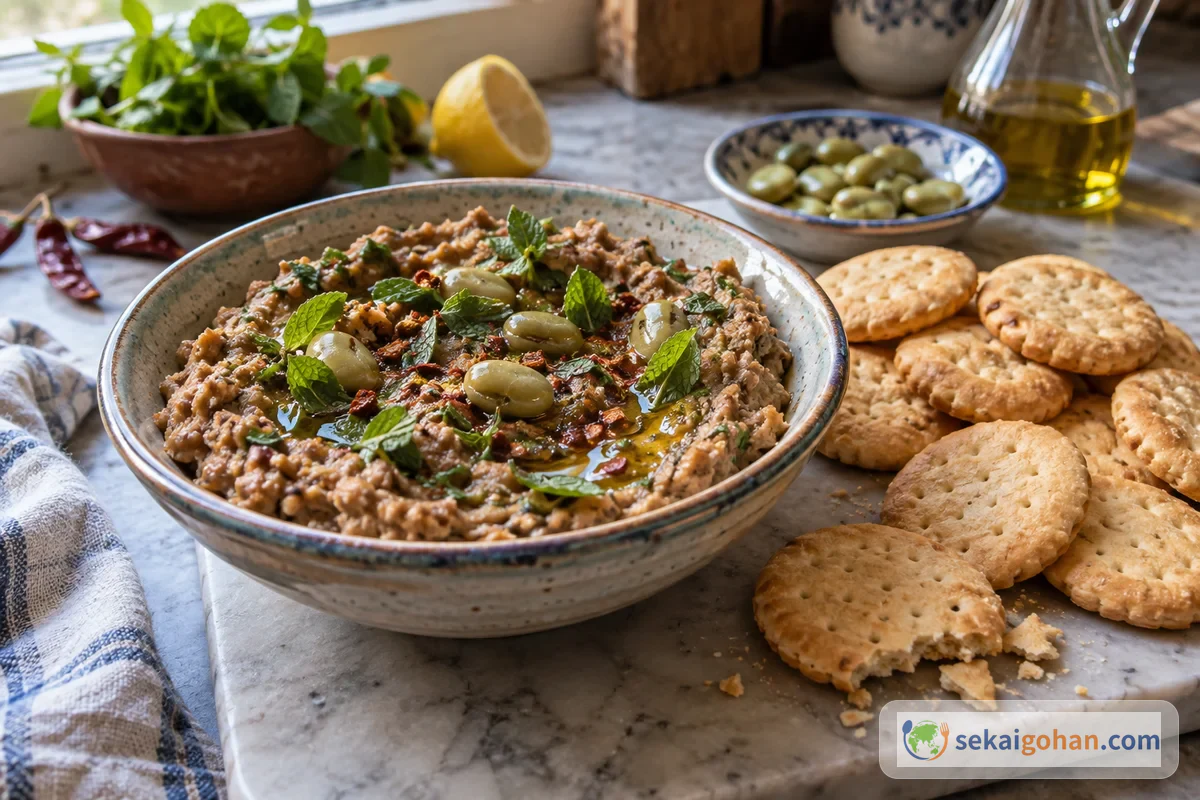
Bigilla: Maltese Broad Bean and Garlic Dip
A recipe for bigilla, the Maltese snack of dried broad beans, garlic, red chile, parsley, mint, marjoram and olive oil. Covers the small beans called ġirba, how to soak the beans and tell when they are done, mashing to leave some texture, the Maltese habit of eating it with galletti and bread, and a caution for people who must avoid broad beans.
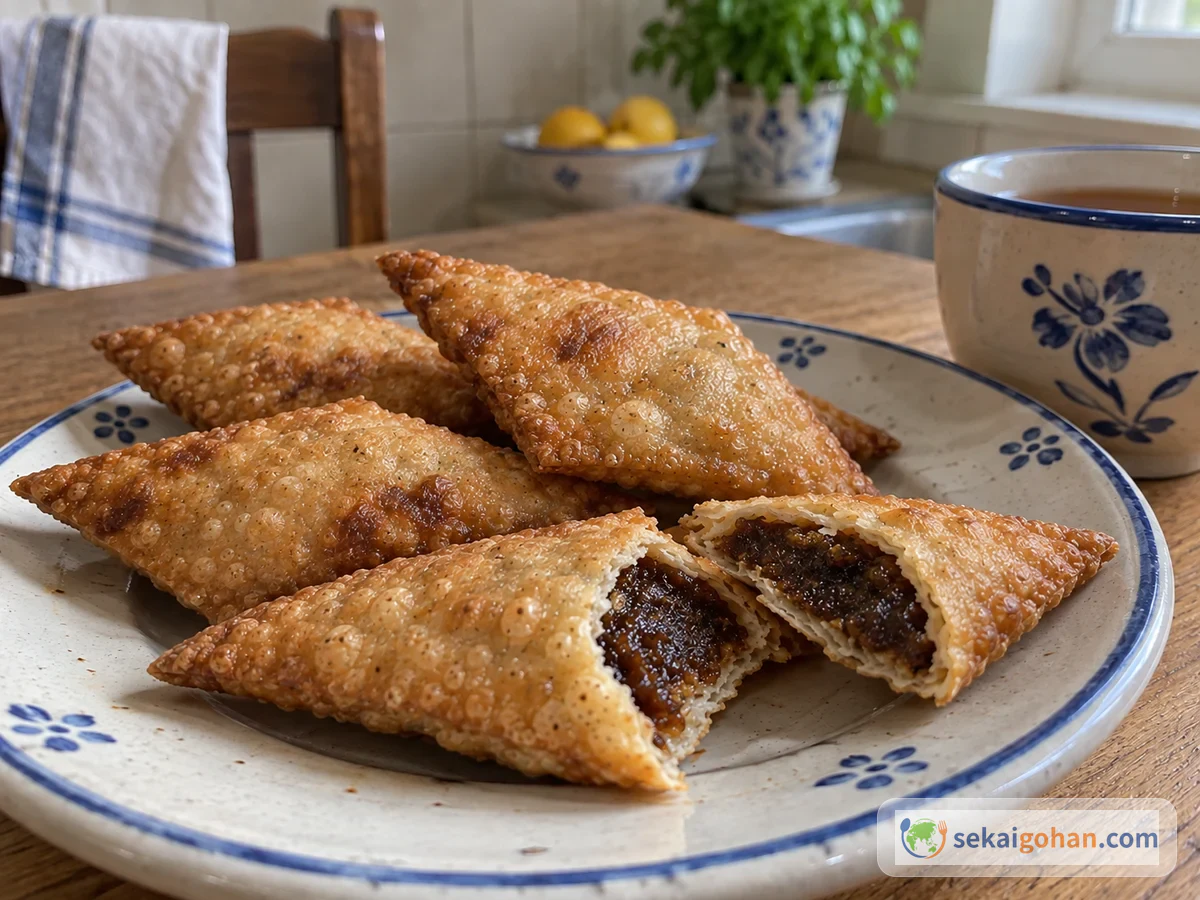
Imqaret: Maltese Fried Date Pastries
Imqaret, the Maltese street-stall sweet, made with a date filling and thin dough. Covers cutting and frying the diamonds, choosing orange flower water and spices, draining and wrapping the filling, festival and Arab-culture connections, baking temperature, fixing failures and storage, as guidelines for a home kitchen.

Stuffat tal-Fenek: Maltese Rabbit Stew with Red Wine and Tomato
Stuffat tal-Fenek, the Maltese rabbit stew, adapted for a home kitchen. Covers the heat for simmering in red wine and tomato, bone-in chicken as a substitute when rabbit is unavailable, the local habit of tossing the sauce with pasta, what to buy, how not to over-reduce, storage and reheating, and an FAQ.
Monaco recipes

Montenegro recipes
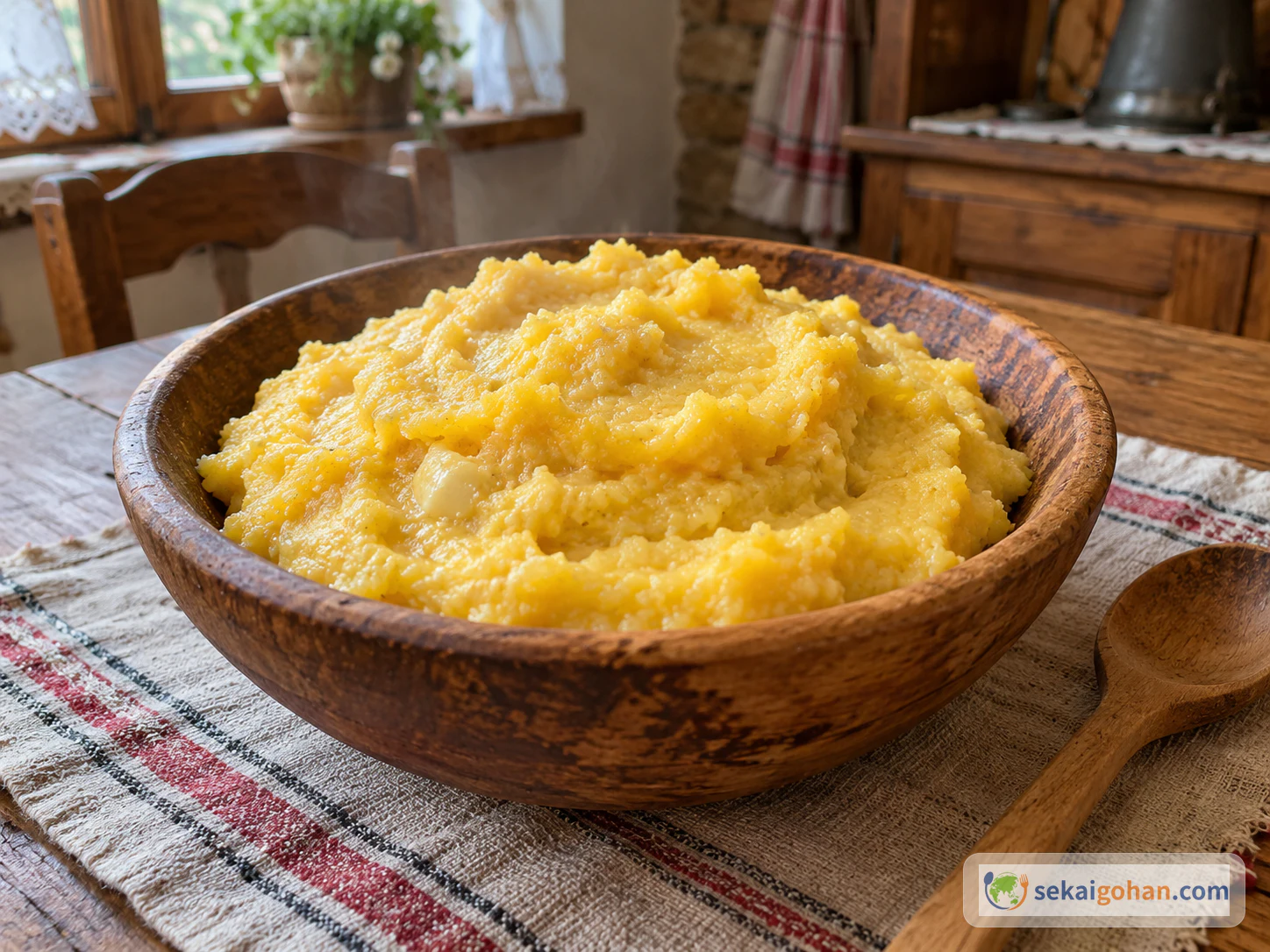
Kačamak: Montenegrin Potatoes and Corn Flour Pounded with Cheese and Kajmak
How to make Montenegrin kačamak, a dish of potatoes and corn flour cooked and pounded together, then mixed with melted fresh cheese and aged kajmak. Covers why the flour is steamed before stirring, how to pound the mass with a wooden spoon, how to choose corn flour, cheese and kajmak substitutes, and how this potato version differs from other dishes called kačamak.
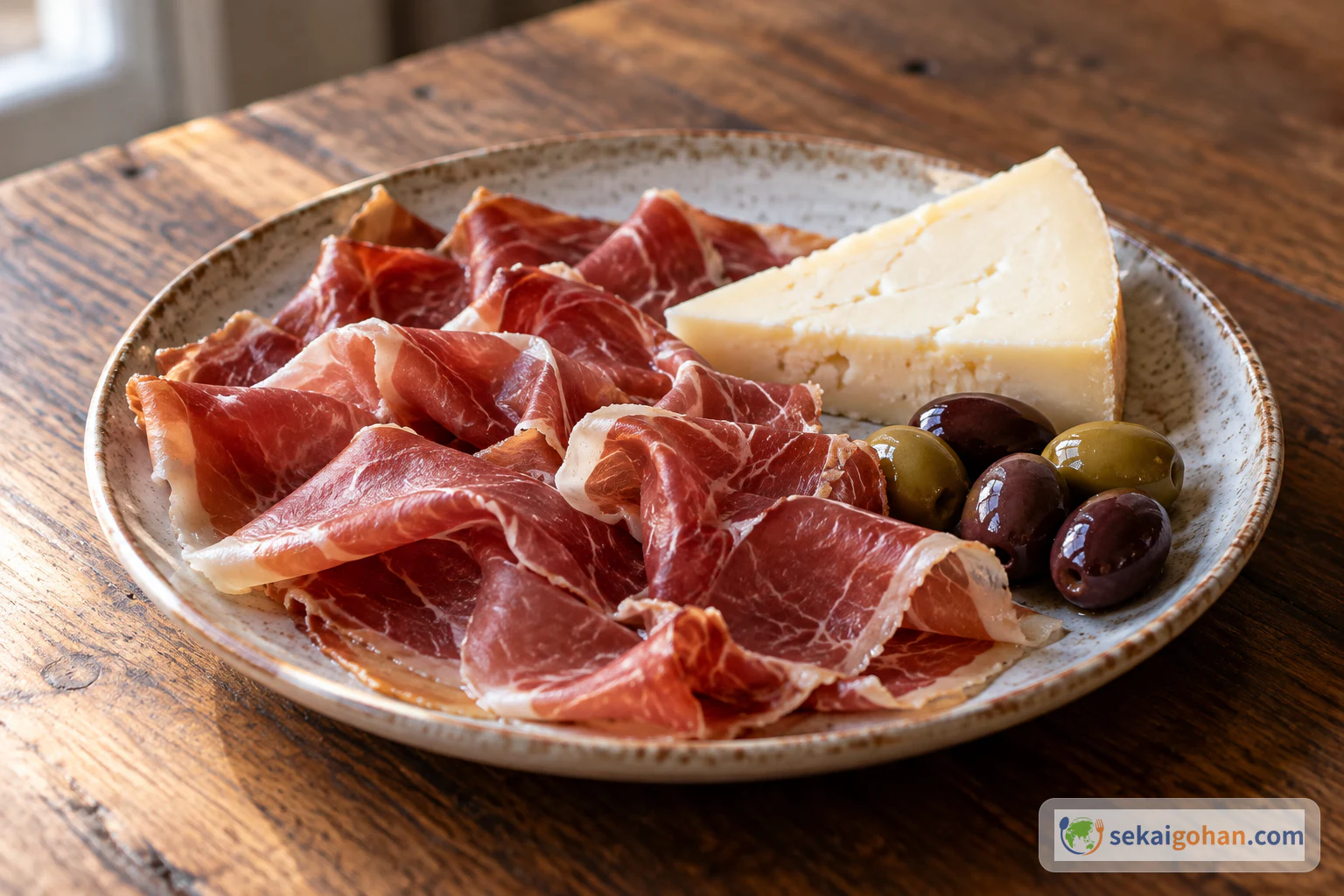
Njeguški Pršut: Montenegro's Smoked Ham from Njeguši, Served with Local Cheese
What Njeguški pršut is: the protected smoked, air-dried ham from the Njeguši villages on the slopes of Lovćen in Montenegro. Learn what its protected name requires, how it differs from Crnogorski pršut, how legend and documented history differ, how it is eaten with Njeguški sir, and how to put together a simple two-person appetizer plate from a ready-to-eat product. Includes label checks, substitution judgments, and why this is not a home-curing recipe.
Netherlands recipes
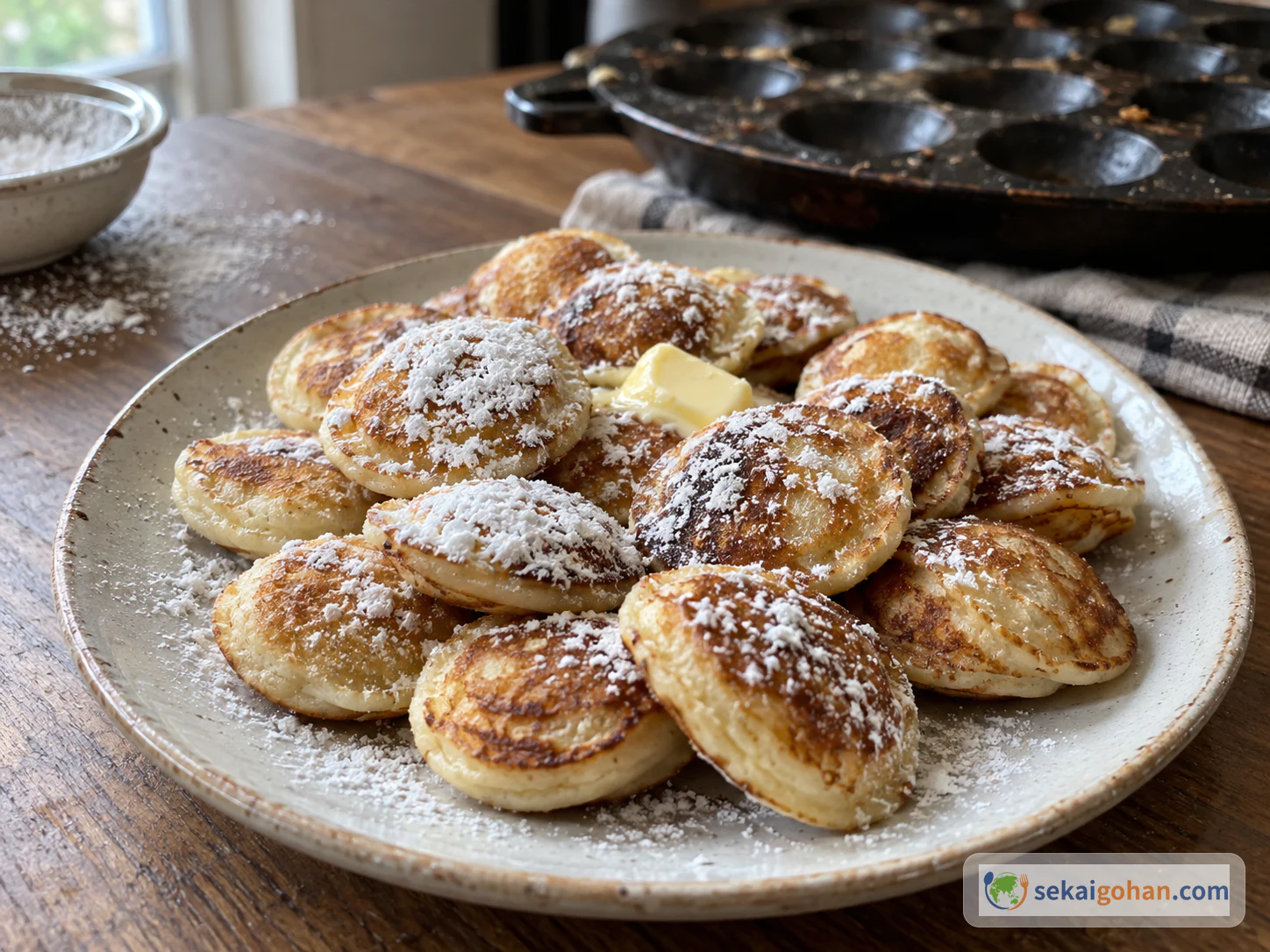
Poffertjes: Little Dutch Yeasted Pancakes from the Dimpled Pan
How to make poffertjes, the small Dutch pancakes made from a yeasted batter and cooked in a dimpled pan, then eaten warm with butter and powdered sugar. Covers the batter, how to read the rise, a frying-pan option if you have no poffertjes pan, toppings, and where the dish sits in Dutch food culture, from market stalls to a local tradition in Breukelen.
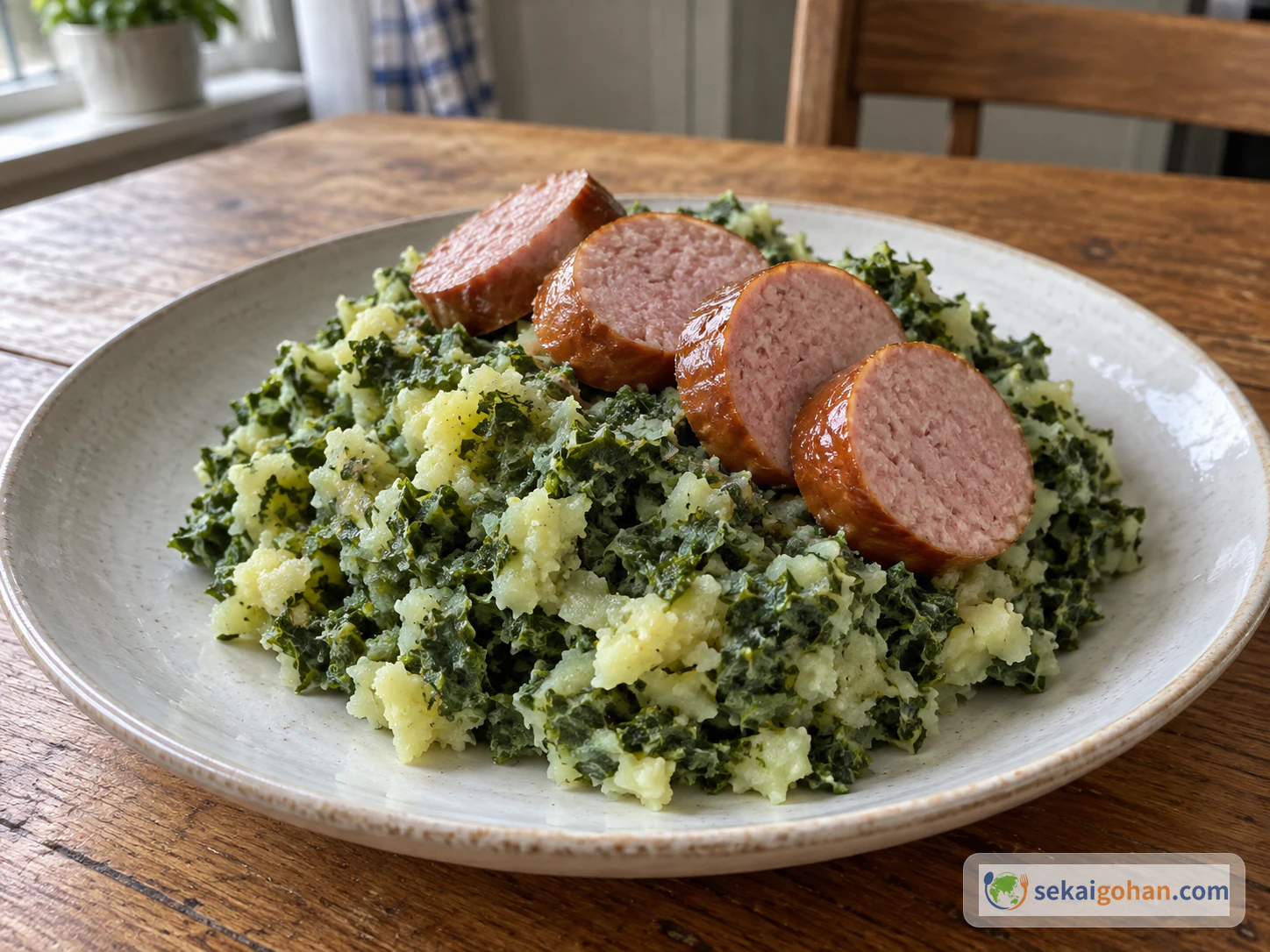
Stamppot: Dutch Mashed Potatoes and Kale with Smoked Sausage (Boerenkoolstamppot)
How to make boerenkoolstamppot, the Dutch winter dish of floury potatoes mashed with curly kale and topped with sliced rookworst. Includes the full ingredient list for 4, step-by-step method, how to choose potatoes, kale and sausage, troubleshooting, and how it differs from hutspot and other stamppot.
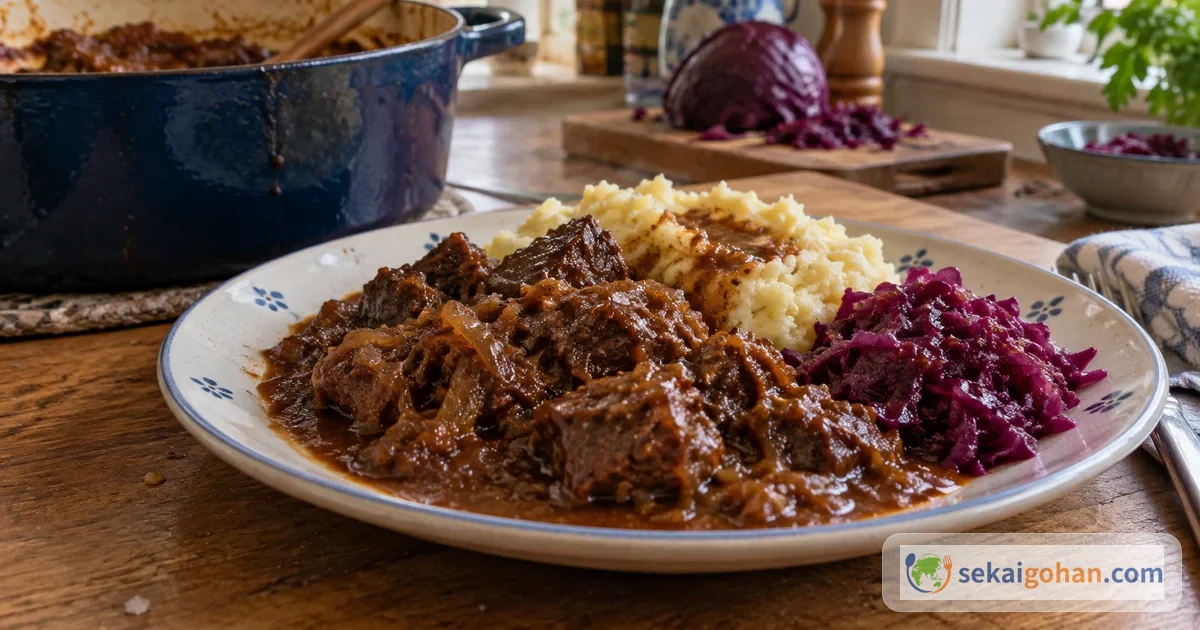
Hachee: Dutch Beef and Onion Stew with Vinegar and Spices
A recipe for hachee, the Dutch winter home-cooking stew of beef, plenty of onion, wine vinegar, cloves, bay leaf, cardamom and spice cake. Covers why vinegar tenderizes the meat, how to thicken the sauce, serving with mashed potatoes and red cabbage, and a method from a 19th-century cookbook.

Frikandel: The Netherlands' Skinless Fried Meat Snack
Frikandel is a Dutch skinless fried meat snack made from ground beef-pork and chicken. Covers chilling and finely processing the meat, plus speciaal sauces.
Norway recipes

Portugal recipes
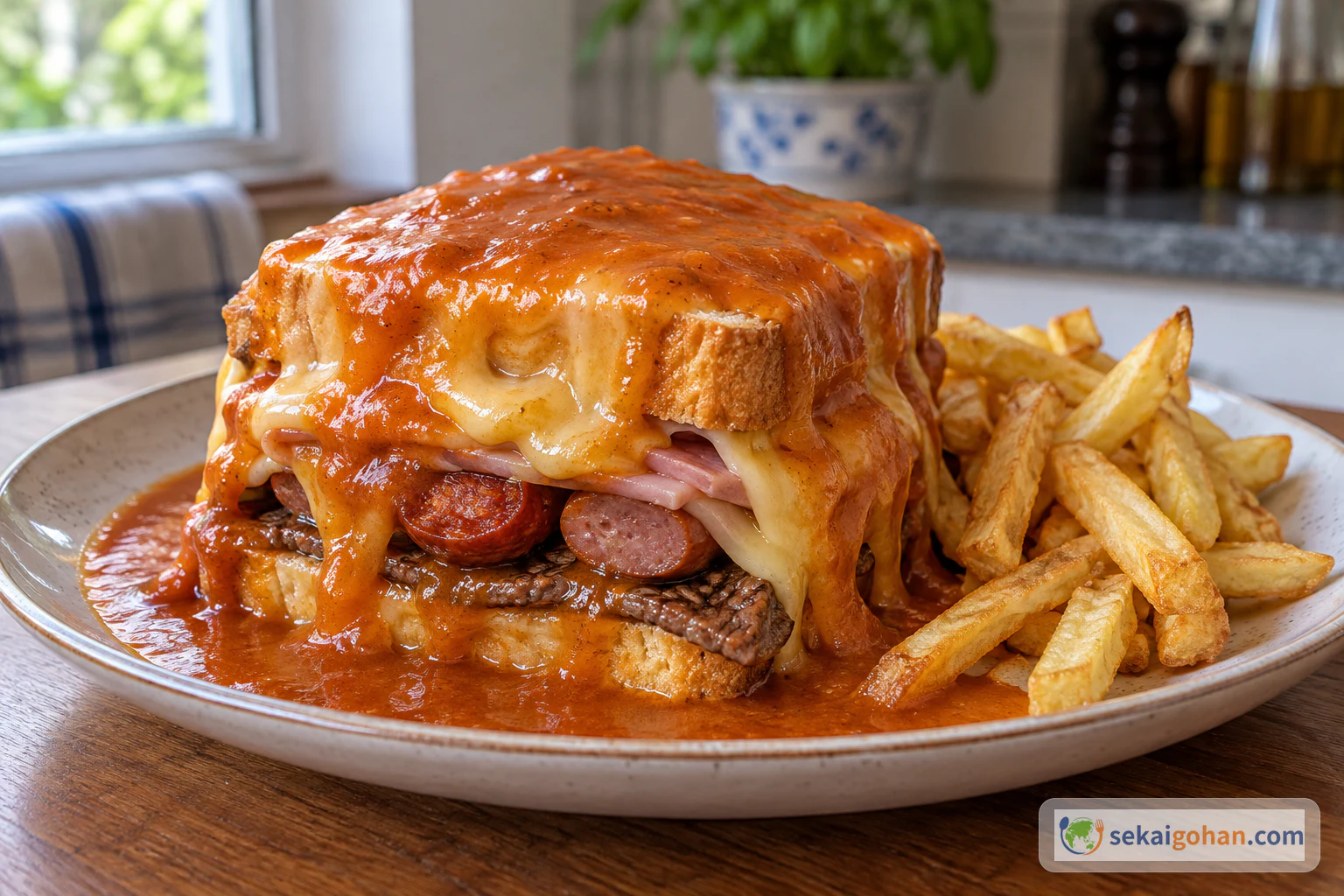
Francesinha: Porto's Hot Meat Sandwich with Tomato, Beer and Port Sauce
How to make a one-serving Porto-style francesinha: a from-scratch sauce of tomato, beef stock, beer and Ruby Port, poured over layered beef, two sausages, fiambre and melting cheese. Includes choosing ingredients, fixing common problems, how versions differ, and the disputed origin story.
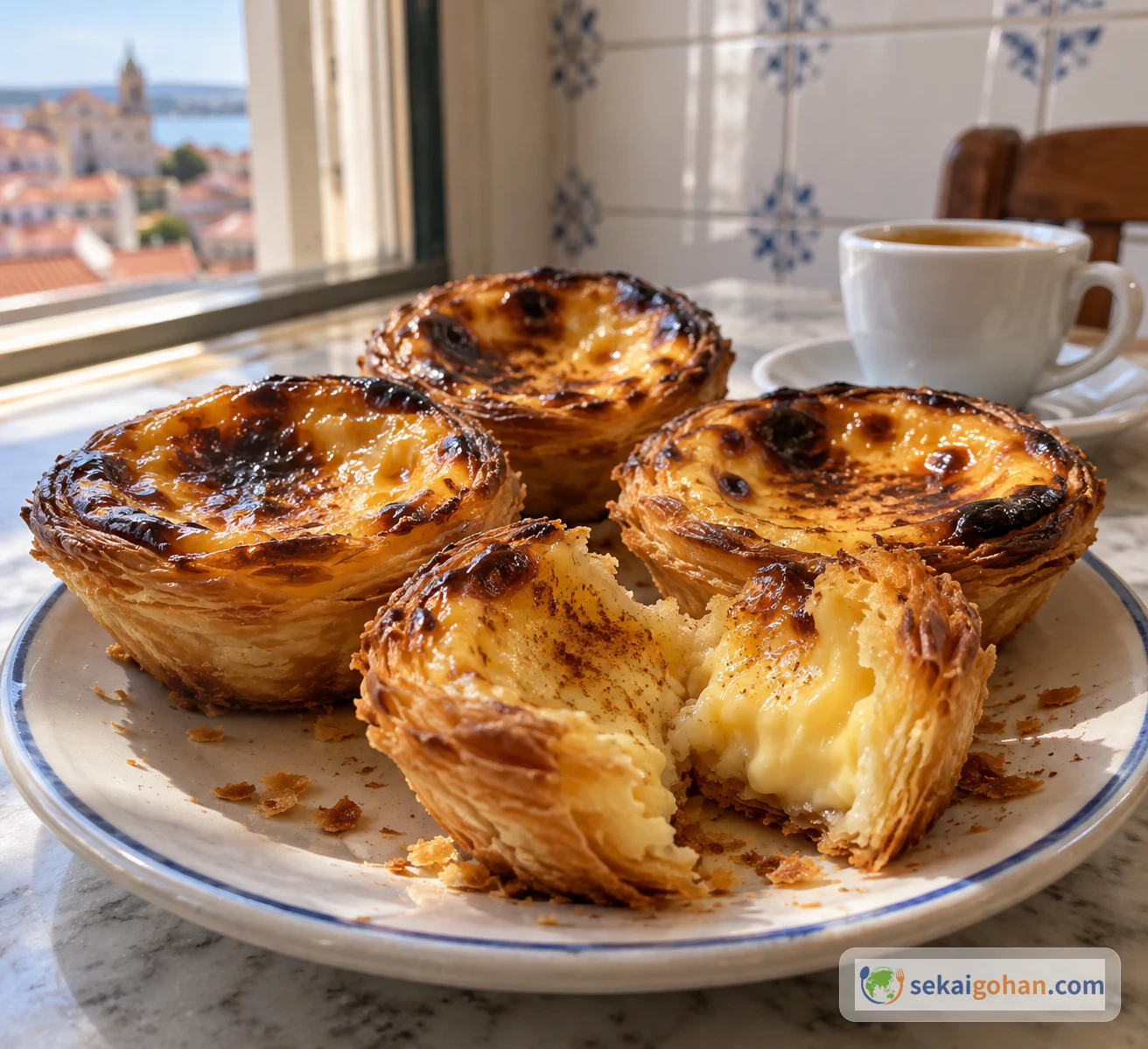
Pastel de Nata: Portuguese Custard Tarts Baked Hot (Pastéis de Nata)
How to make twelve Portuguese pastéis de nata with store-bought puff pastry: a lemon and cinnamon sugar syrup, a smooth egg-yolk custard, spiral pastry pressed thin into small tins, and a very hot oven for crisp layers and dark scorched spots. Includes visual cues for each stage, fixes for lumps and soggy bases, and the tart's place in Portugal's sweet traditions.
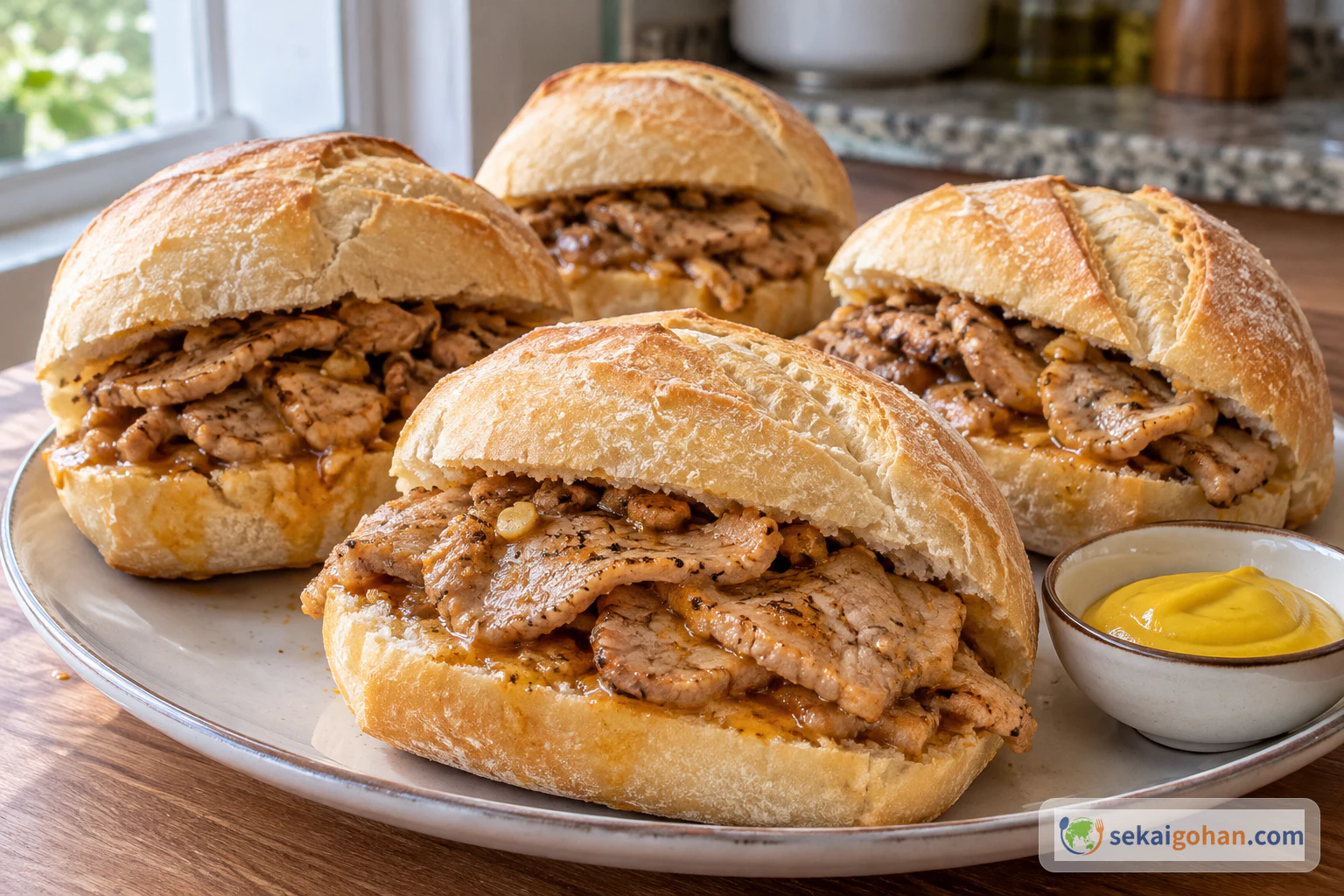
Bifana: Portuguese Pork Sandwich in White Wine and Beer Sauce
How to make bifana, the Portuguese pork sandwich, as a Lisbon-style home version with garlic, bay, white wine and beer. Covers searing thin pork loin, spooning the pan sauce into small white rolls, how Vendas Novas and Porto styles differ, safe pork cooking with a thermometer, and honest substitutions.

Caldo Verde Recipe: Portugal's Green Soup of Potato, Kale and Chouriço
A proper caldo verde, Portugal's best-loved soup: a smooth potato base topped with paper-thin shredded kale and slices of chouriço. Learn the cuts, the timing for bright green kale, substitutions and the soup's cultural background.

Amêijoas à Bulhão Pato: Portuguese Clams with Garlic and Coriander
A Portuguese clam classic, Amêijoas à Bulhão Pato, made with ordinary supermarket clams: purging sand, choosing good shells, gentle heat for the garlic and coriander, a no-wine substitute, serving with bread, and storage.

Bacalhau à Brás: Portugal's Golden Salt Cod with Eggs and Potato
Bacalhau à Brás is a Portuguese home dish that gently combines desalted salt cod, matchstick potatoes, onion and egg. Covers where to find the ingredients, how long to desalt, how to keep the eggs from setting hard, substitutes such as lightly salted cod, the black olive finish, storage, reheating, menus and tips for recreating it.
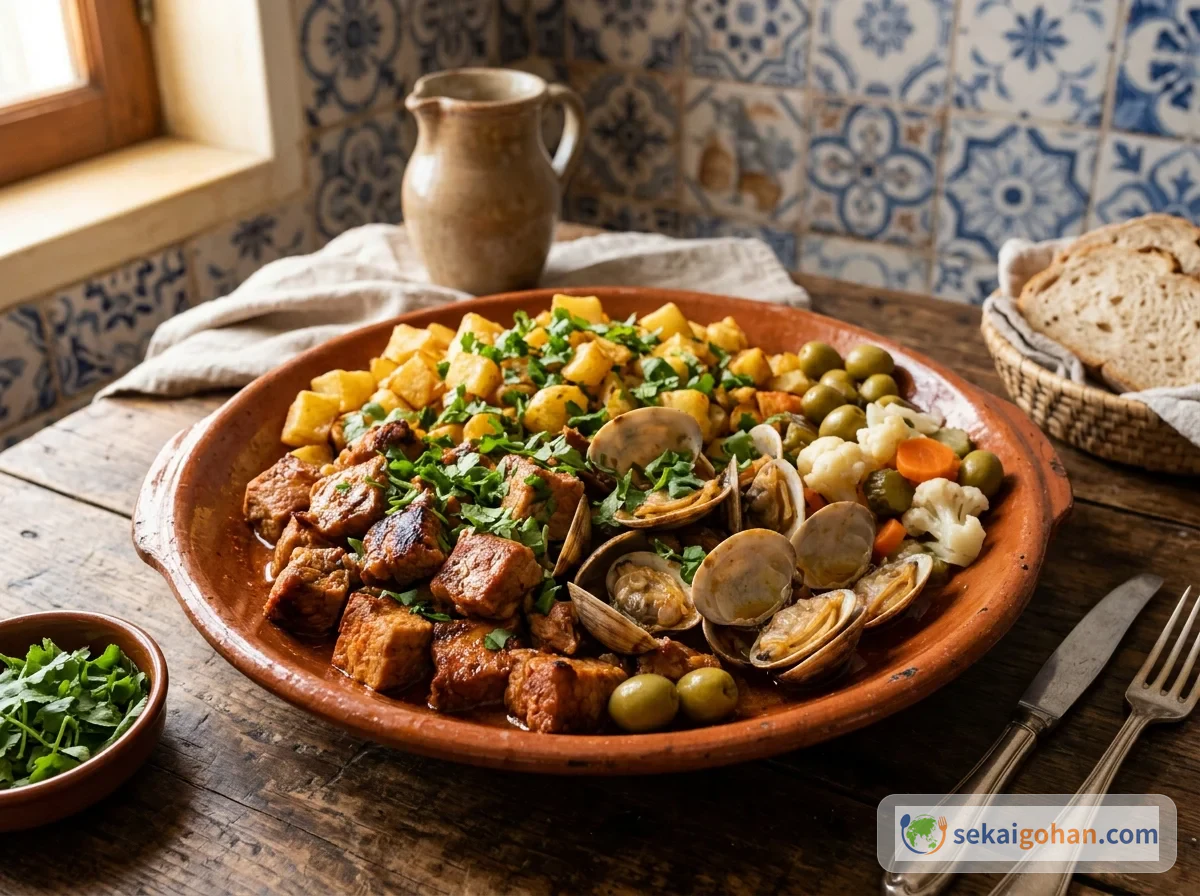
Carne de Porco à Alentejana: Portugal's Pork and Clams
A recipe for carne de porco à alentejana, a Portuguese staple, made with pork shoulder, clams, white wine, garlic, red pepper paste, fried potatoes and coriander. Covers marinating time, purging the clams, checking that the pork is cooked through, and the several theories about the name and origin.

Piri-Piri Chicken: Portuguese Chile-Lemon Roast Chicken
How to make piri-piri chicken rooted in Portuguese and Mozambican food culture: a red chile, lemon and garlic marinade, oven roasting with a final char, adjusting the heat, safe internal temperature, storage and next-day leftovers.

Açorda: Portuguese Garlic and Cilantro Bread Soup
Portuguese açorda revives stale bread with a garlic-cilantro paste and hot broth. This guide covers the Alentejo-style mortar paste, poaching salt cod and soft eggs, substitutes, keeping the salt in check, storage and how to serve it.
San Marino recipes
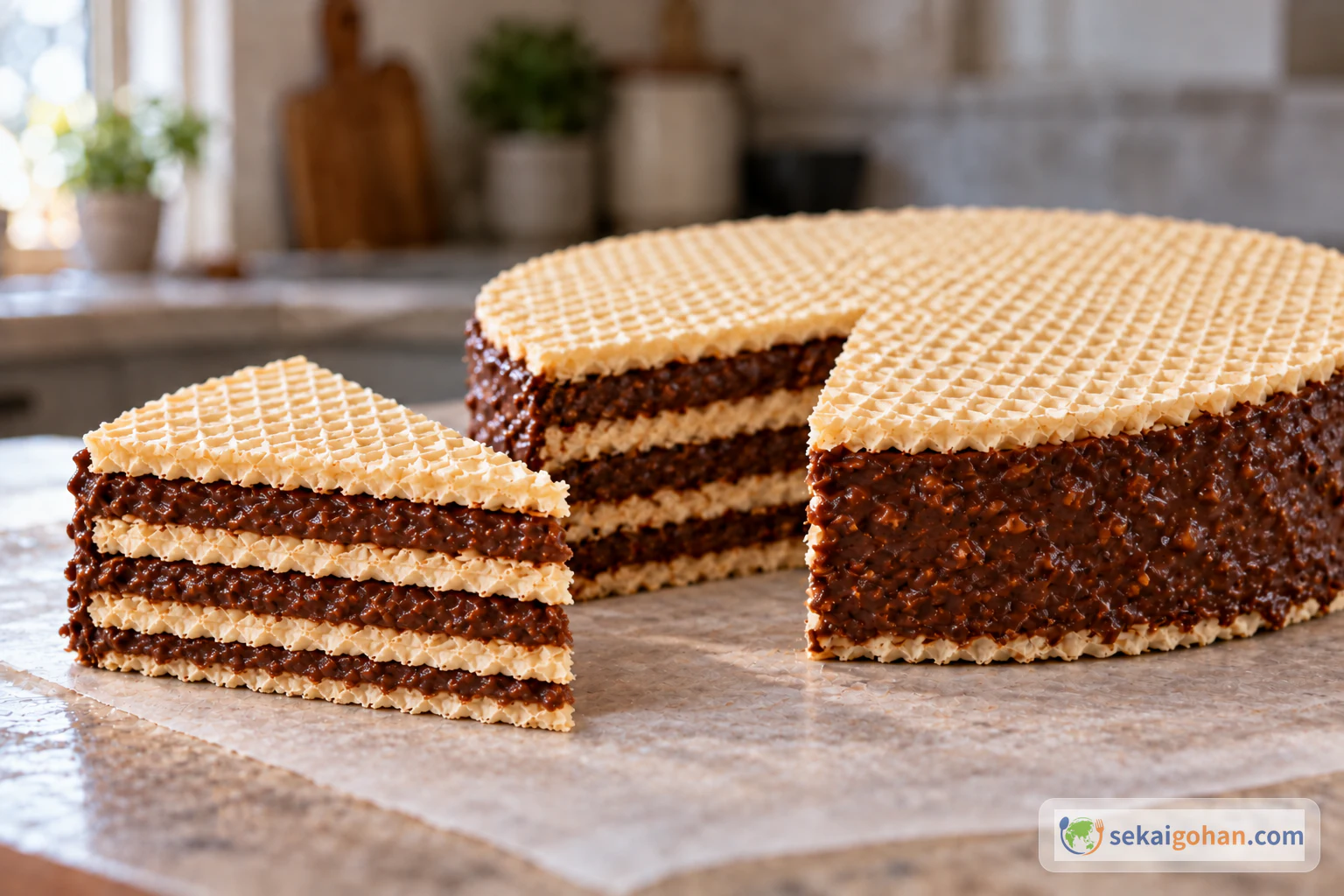
Slovakia recipes

Bryndzové Halušky: Slovak Potato Dumplings with Sheep's Milk Cheese
Bryndzové halušky, Slovakia's national dish of tiny grated-potato dumplings tossed with sheep's milk cheese. Covers substitutes when you can't find bryndza, dough moisture, doneness, crisp bacon, how it is eaten locally, storage and reheating, written for the home kitchen.
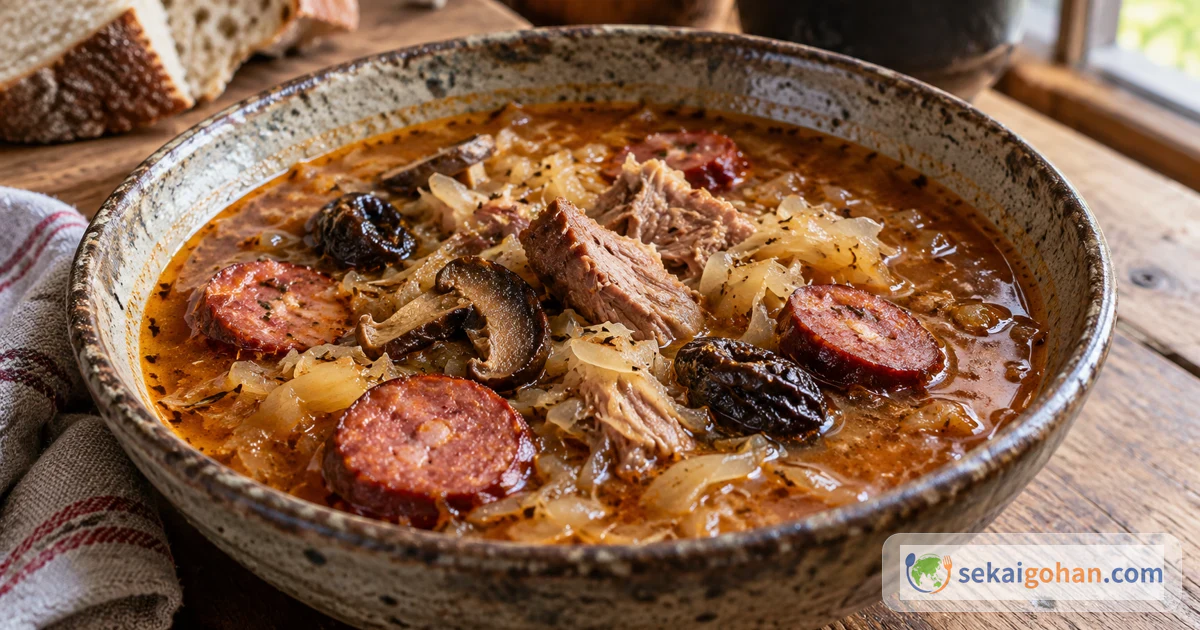
Kapustnica: Slovakia's Christmas Sauerkraut Soup
A recipe for kapustnica, the sauerkraut soup that is essential to Christmas and New Year in Slovakia, made with pork spare ribs, smoked sausage, dried porcini, prunes and paprika. Covers layering sourness, smoke and a faint sweetness, checking that the pork is cooked through, and regional differences.

Lokša Recipe: Slovak Thin Potato Flatbread, Dry-Cooked in a Skillet
Lokša is a Slovak thin flatbread made from boiled potatoes, flour, and salt. How to roll it to 2 mm and dry-cook it without oil, regional differences from the goose-feast lokše to the eastern thick lokša, sweet versions with plum jam and poppy seeds, fixes for common failures, and storage.
Slovenia recipes
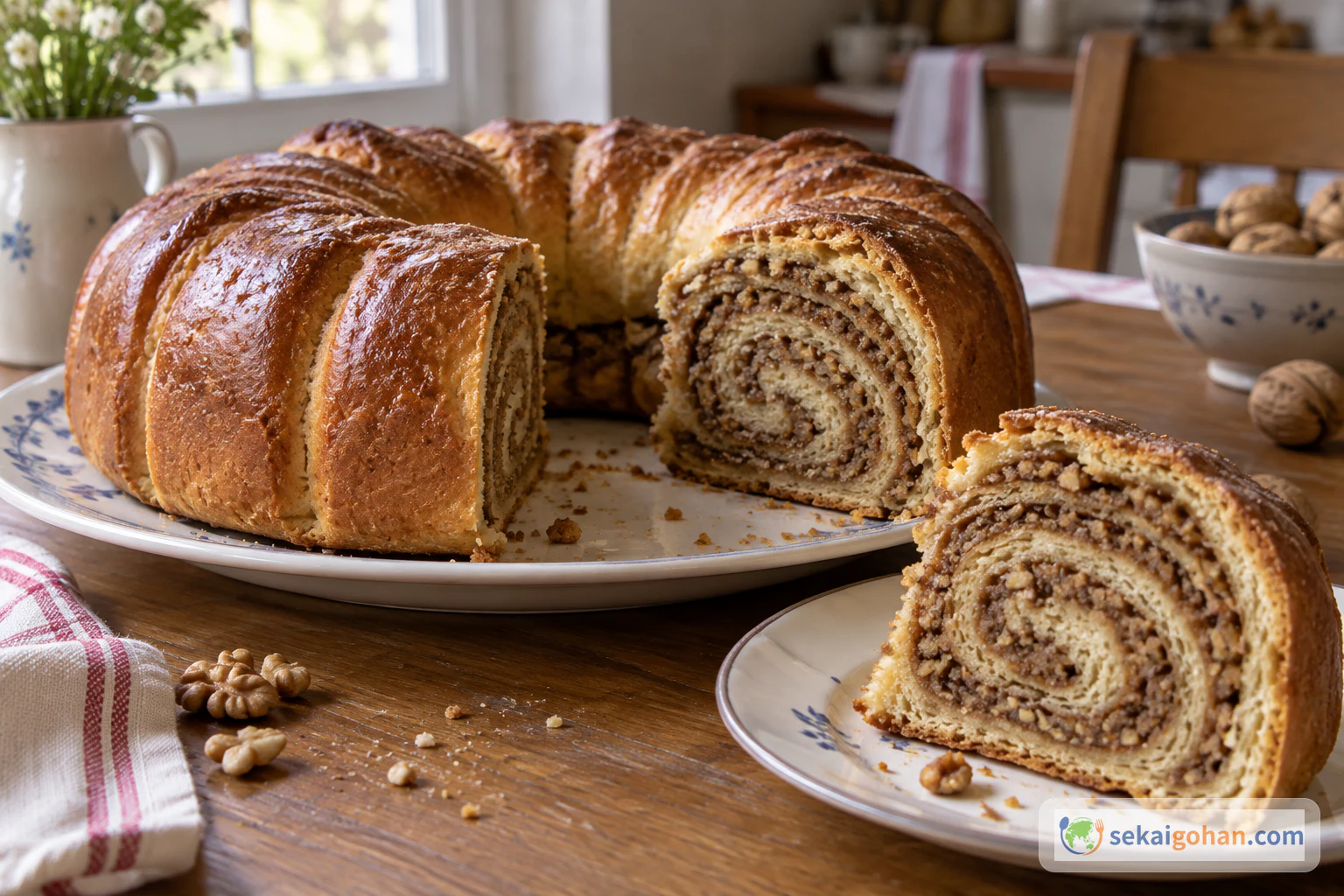
Potica: Slovenian Walnut Roll for the Holidays (Orehova Potica)
How to make potica, the Slovenian festive pastry of rolled yeast dough, in a classic walnut version. Covers the dough, walnut filling, tight rolling, the round mold and two-stage baking, plus what the recipe leaves open and how recipes differ from family to family.
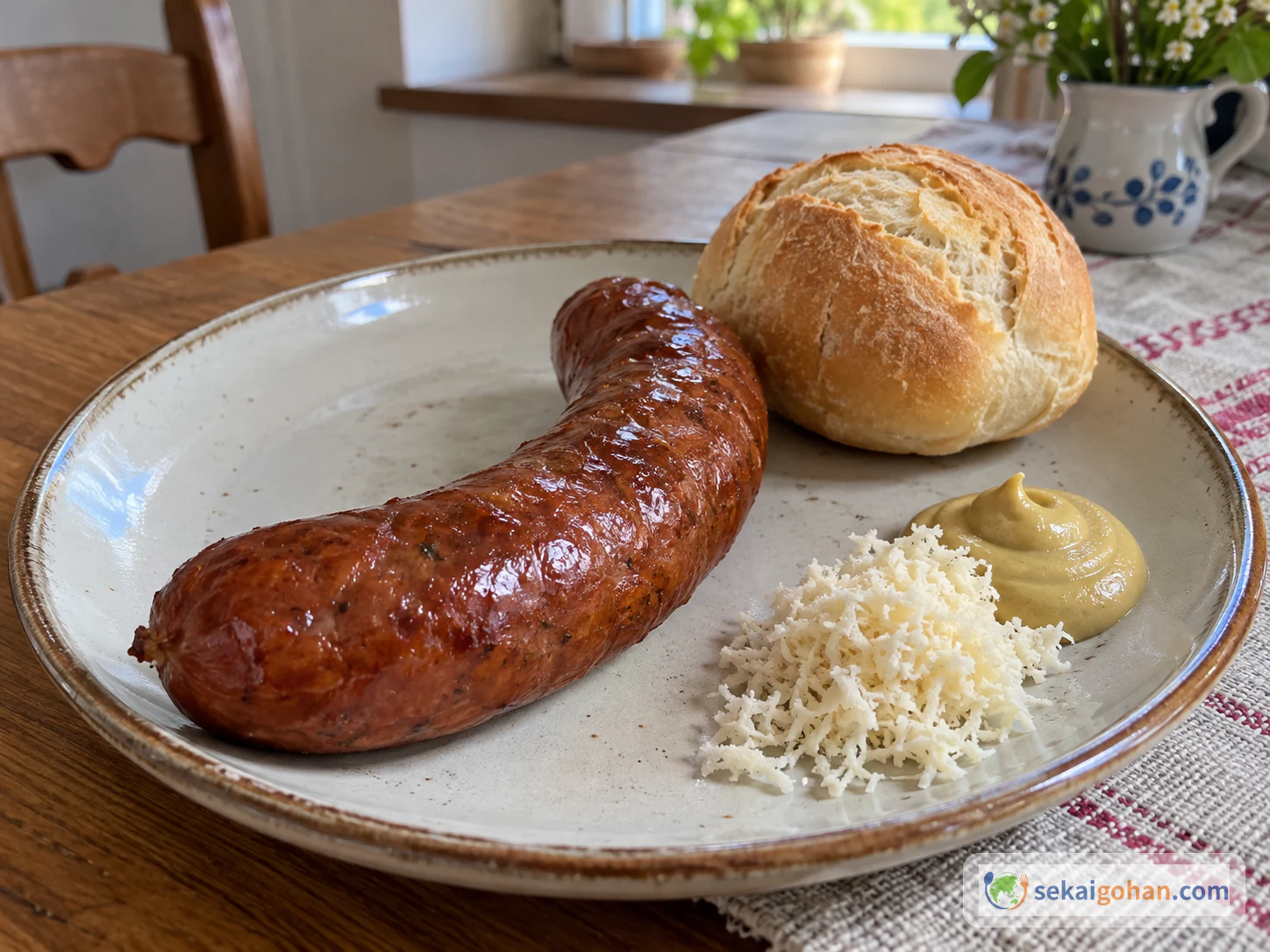
Kranjska Klobasa: How to Heat and Serve Slovenia's Carniolan Sausage
How to heat Kranjska klobasa, Slovenia's protected smoked pork sausage, in boiling water and serve it with bread, mustard and grated horseradish, or with sauerkraut. Covers what makes the product distinct, how to recognize it when shopping, and how the 1896 recipe differs from the modern sausage.
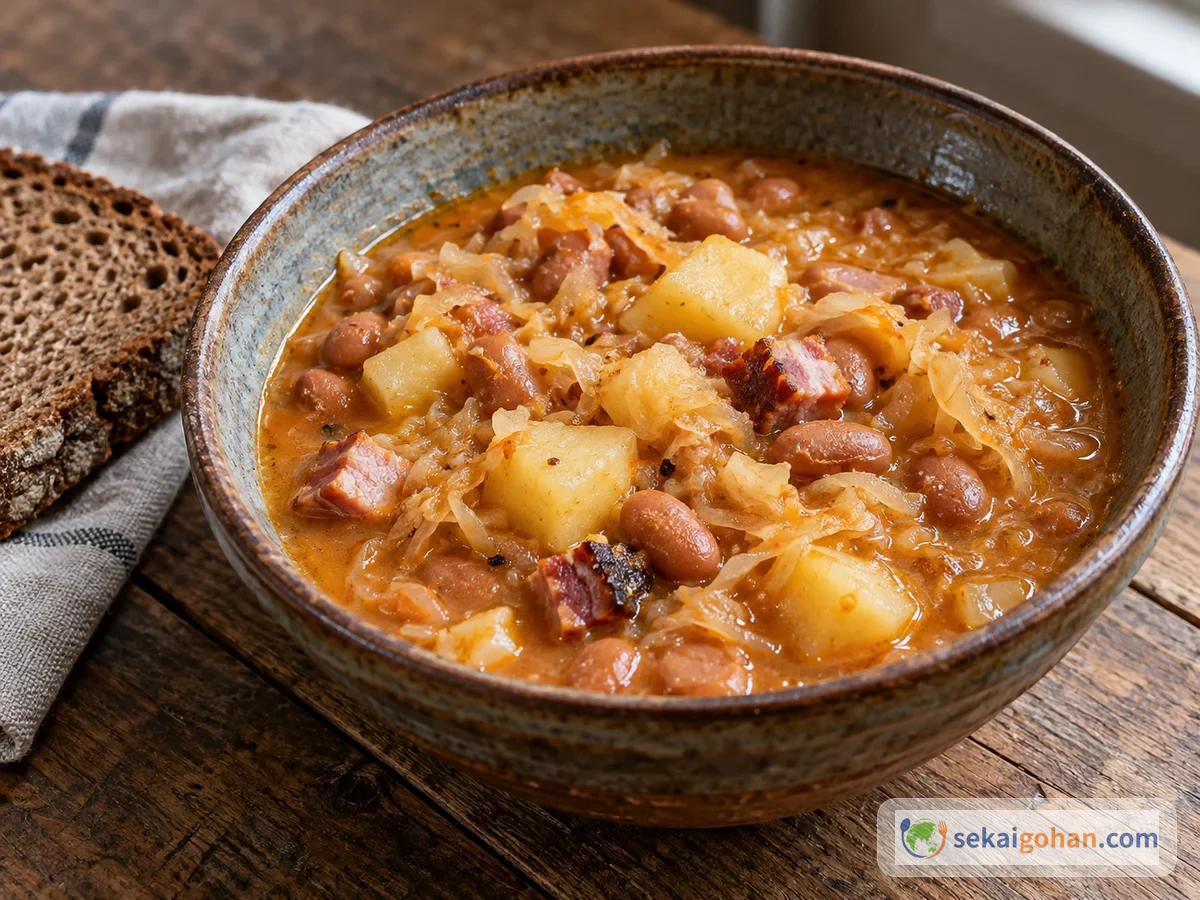
Jota: Slovenian Karst Bean and Sauerkraut Soup
Kraška jota, the winter soup of Slovenia's western Karst region, made with borlotti beans, sauerkraut, potatoes and smoked bacon. How it differs from Istrian and Vipava versions, parboiling the beans, thickening with flour, a canned-bean shortcut, and storage tips.

Zlevanka: Slovenia's Thin Baked Cornmeal Cake from Prekmurje
Zlevanka is a thin baked flour sweet from Prekmurje in northeastern Slovenia. Fine cornmeal is whisked with milk and egg and poured into a hot pan. This guide makes the local proportions concrete for a home oven: flour differences, the cue for lowering the temperature, the sweet version and the salty buckwheat version, storage, and how to rescue failures.
Spain recipes
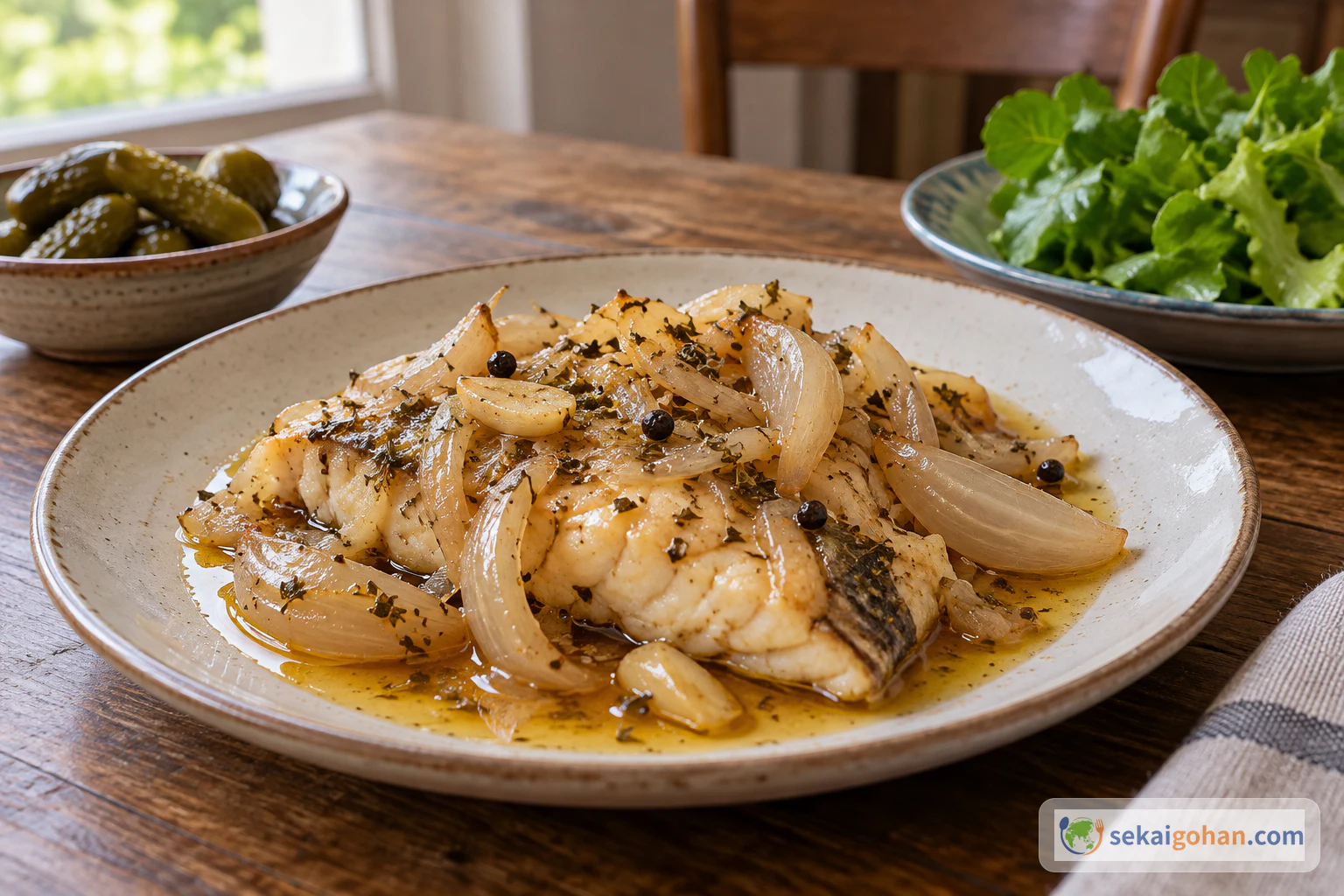
Spanish Fish Escabeche: Castilian-Style Fish in Olive Oil and Wine Vinegar
A Castilla y León-style fish escabeche for four, gently simmered with onion, garlic, herbs, olive oil and wine vinegar. Covers choosing fish, checking doneness, safe cooling and refrigeration, and how this version differs from other Spanish escabeches.
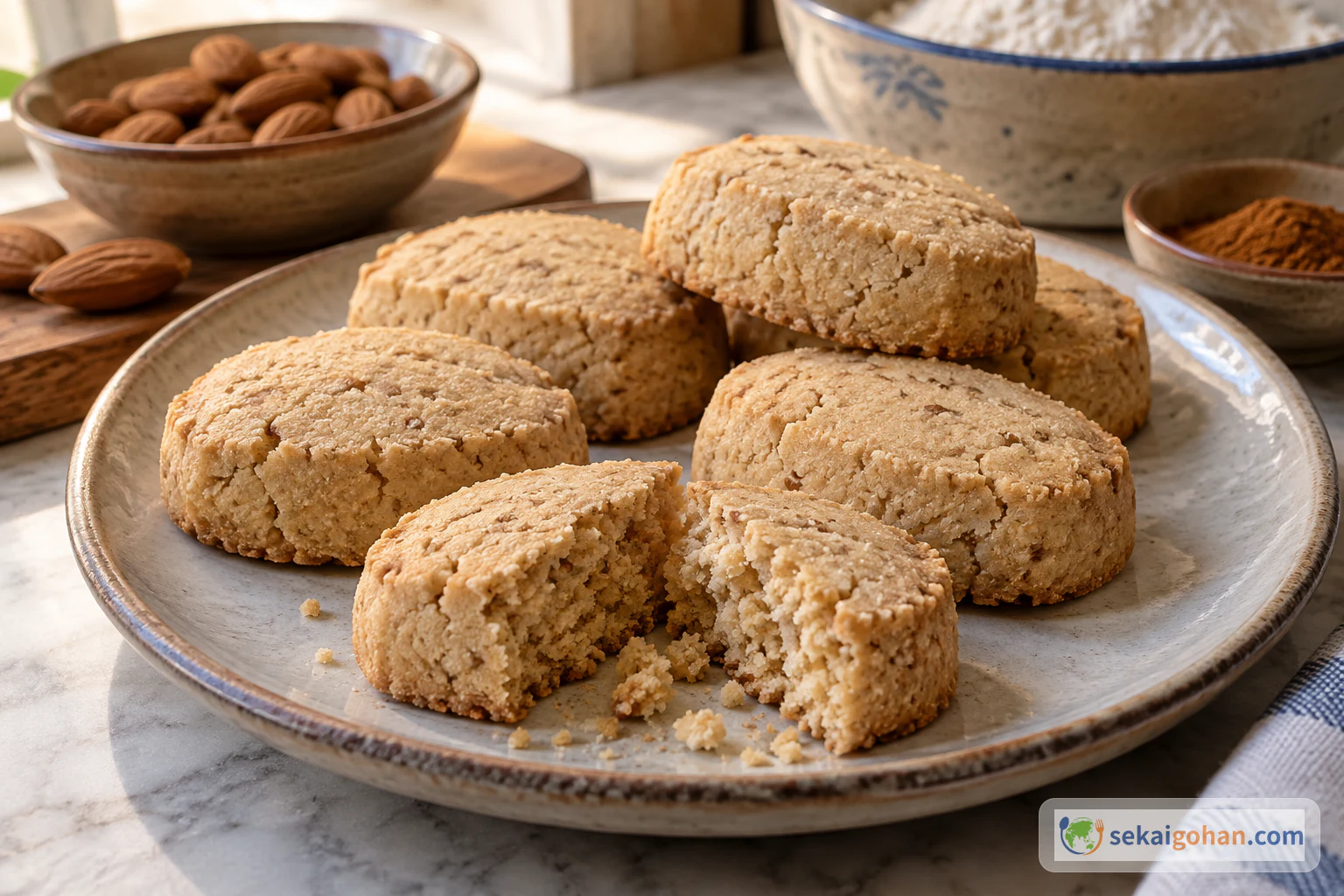
Polvorones: Spanish Crumbly Sweets Made with Toasted Flour (Polvorón)
How to make Andalusian-style polvorones with toasted flour, lard, toasted almonds, powdered sugar and cinnamon. Covers handling the fragile dough, cooling the sweets safely on the tray, how they relate to mantecados, ingredient choices, and the story told in Estepa, Spain.
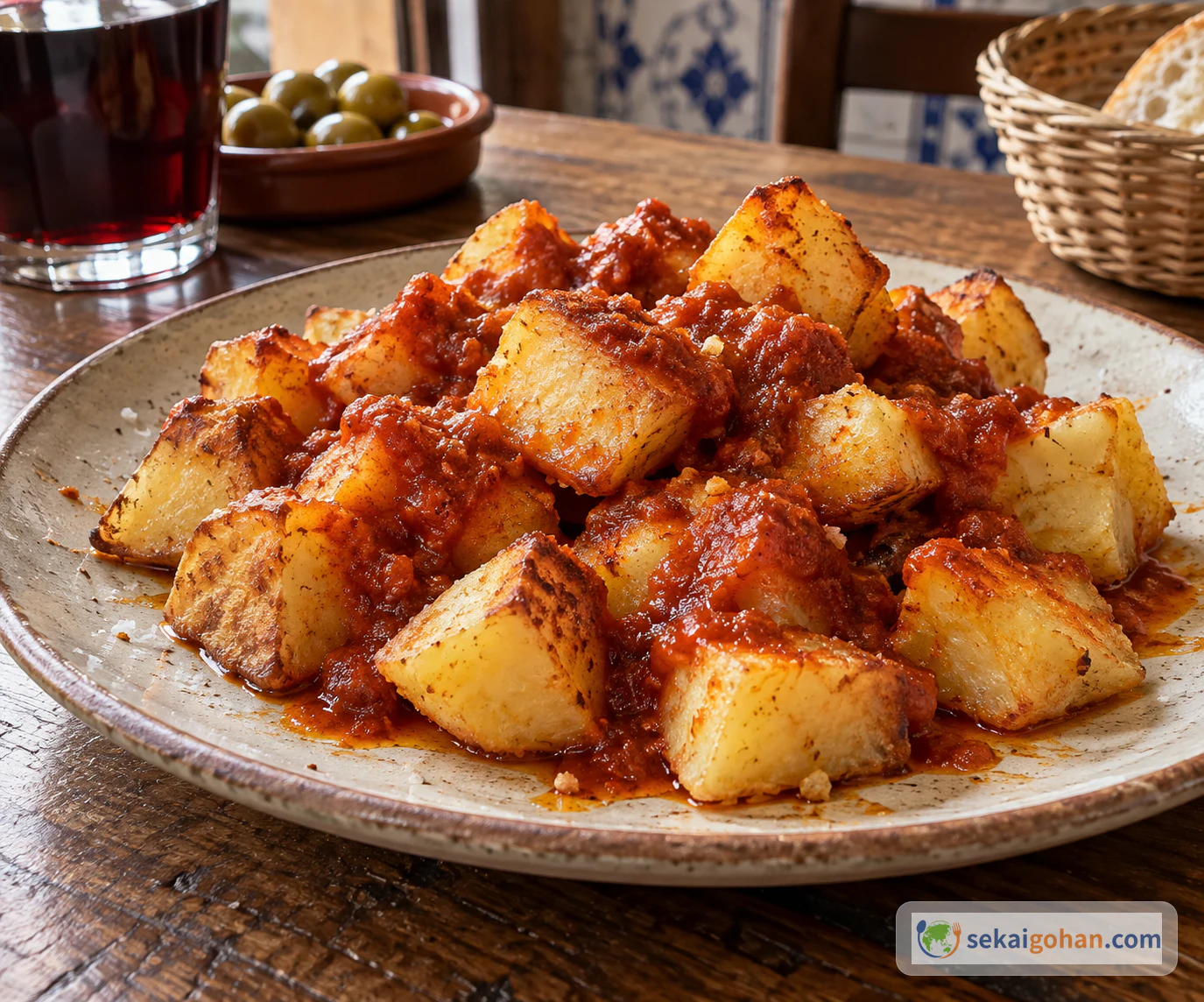
Patatas Bravas: Spanish Tapas Potatoes, Slow-Cooked Then Browned, with a Spicy Bravas Sauce
How to make patatas bravas, the Spanish tapa of fried potatoes with a spicy sauce. This version is built on onion, sweet and hot pimentón, ground almonds and choricero pepper paste. The potatoes cook gently in olive oil, then brown over higher heat in the same pan. Covers choosing ingredients, adjusting the heat, fixing common mistakes, and how the sauce varies by region and bar.
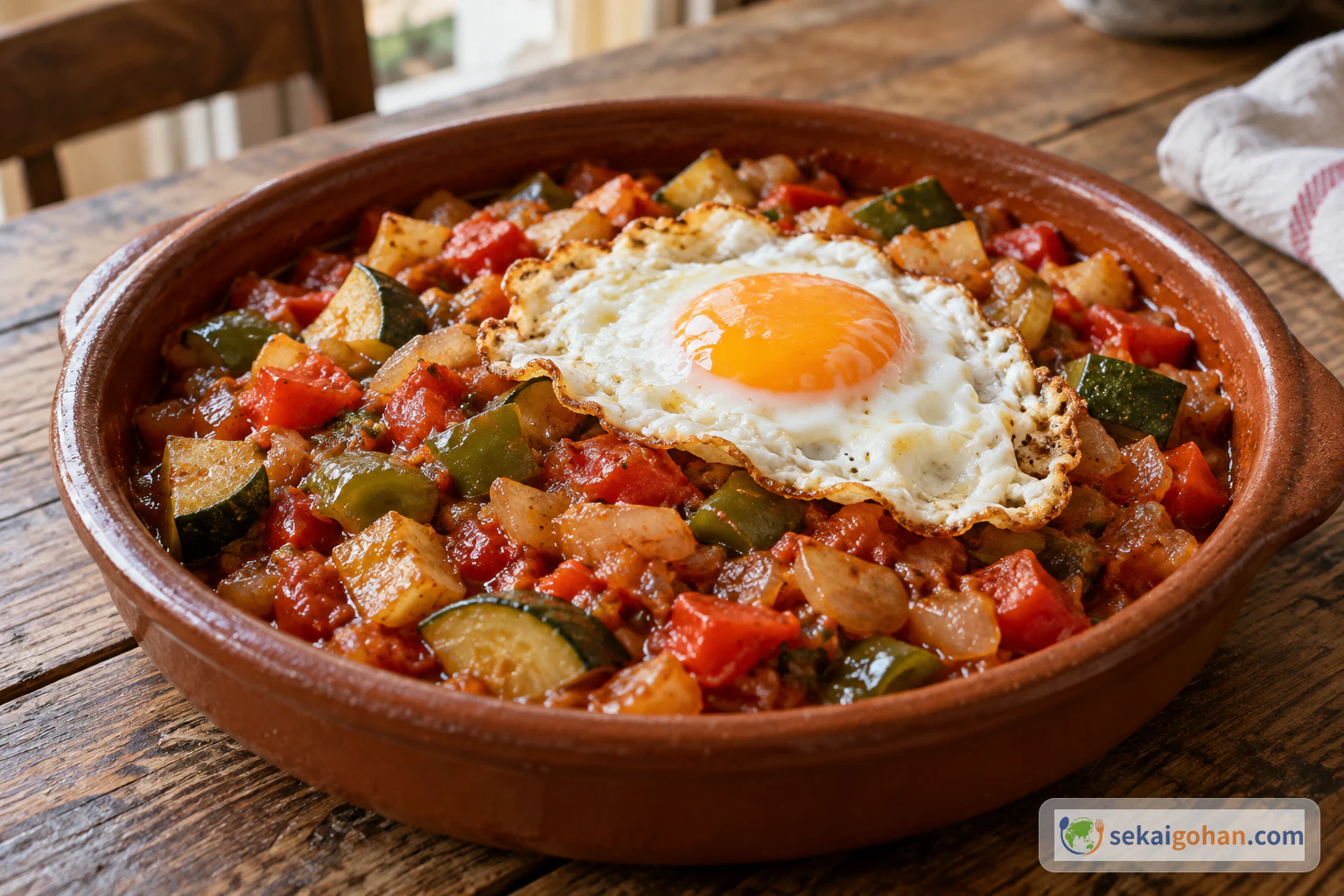
Pisto Manchego: Slow-Cooked La Mancha Vegetables with Fried Eggs
How to make pisto manchego, the vegetable dish of Castilla-La Mancha: onion and peppers first, then zucchini, then tomato on low heat, finished with fried eggs to share. Covers cutting, heat control, optional serrano ham, regional versions with garlic or eggplant, and safe handling of eggs and leftovers.
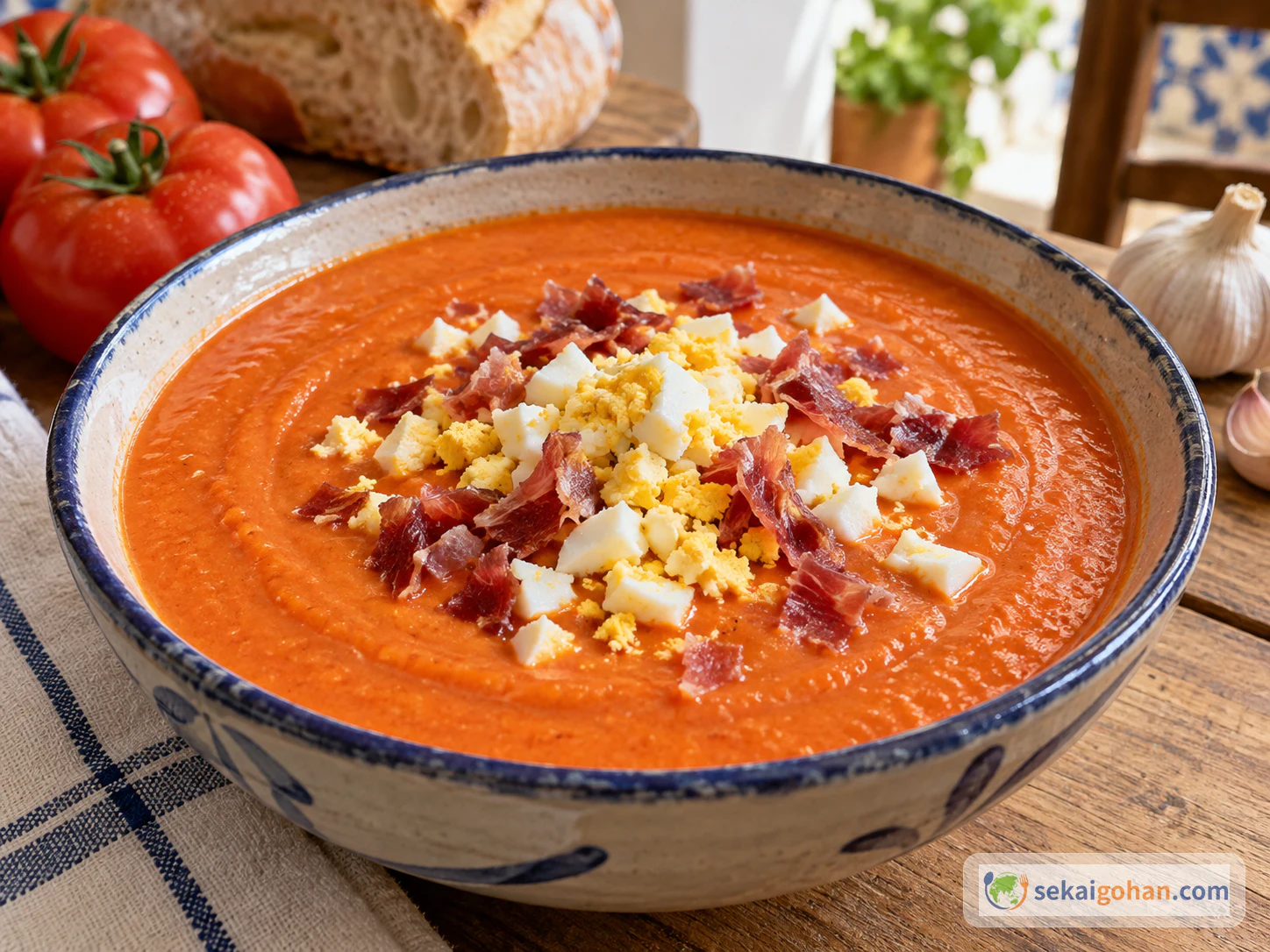
Salmorejo: Córdoba's Thick Cold Tomato and Bread Soup (Salmorejo Cordobés)
How to make Cordoban salmorejo (salmorejo cordobés) from the published Cofradía recipe of tomatoes, telera bread, extra-virgin olive oil, garlic and salt. Covers how it differs from gazpacho, choosing bread and tomatoes outside Córdoba, straining and blending, chilling safely, the classic hard-boiled egg and jamón serrano garnish, regional versions, and fixes for a grainy or loose texture.
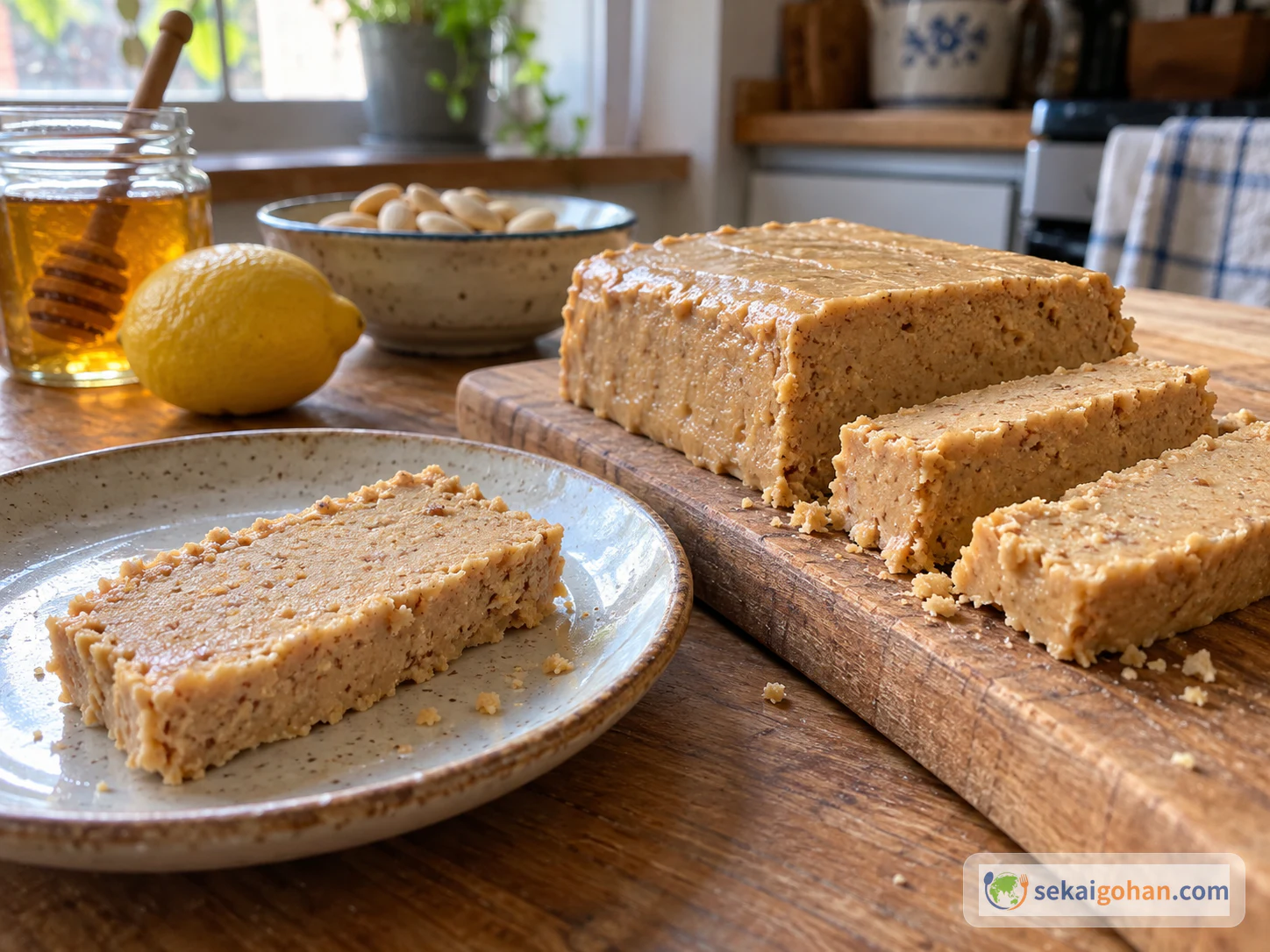
Turrón de Jijona: Soft Spanish Almond and Honey Turrón
How to make soft turrón de Jijona at home, based on a home recipe shared by the Valencian Community's tourism board: almonds, honey, sugar and egg white, ground until the almond oil binds everything. Covers how Jijona differs from hard Alicante turrón, how to choose almonds and egg white safely, the honey warning for babies, and what the source recipe does and does not specify.
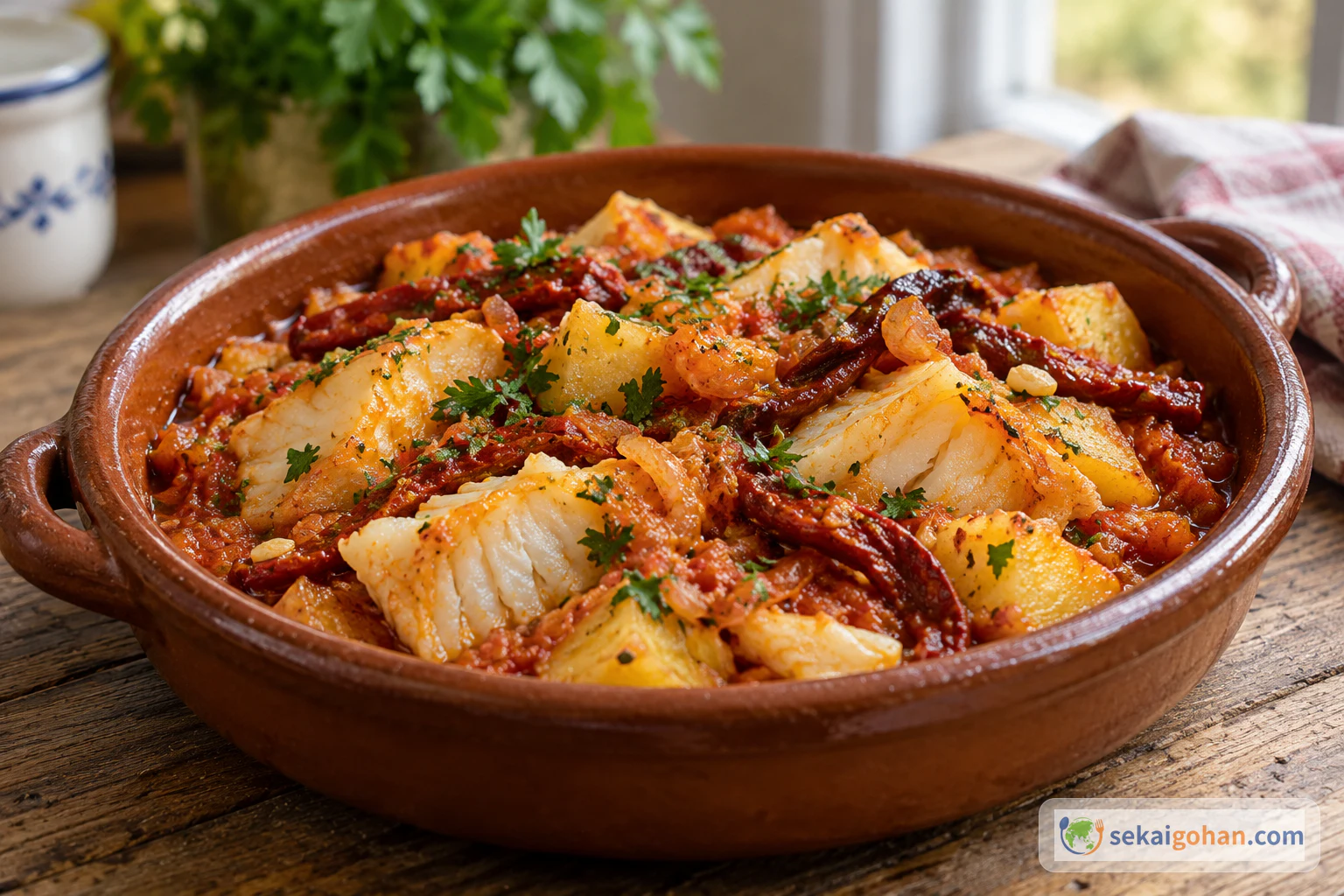
Bacalao al Ajoarriero: Navarra Salt Cod with Tomato and Choricero Peppers
How to make bacalao al ajoarriero the Navarra way, starting from refrigerated desalting of salt cod. A 4-serving recipe that brings together flaked cod, garlic, homemade-style tomato sauce, dried choricero peppers and potato in an earthenware pot, with tips for choosing ingredients outside Spain and how other versions of the dish differ.
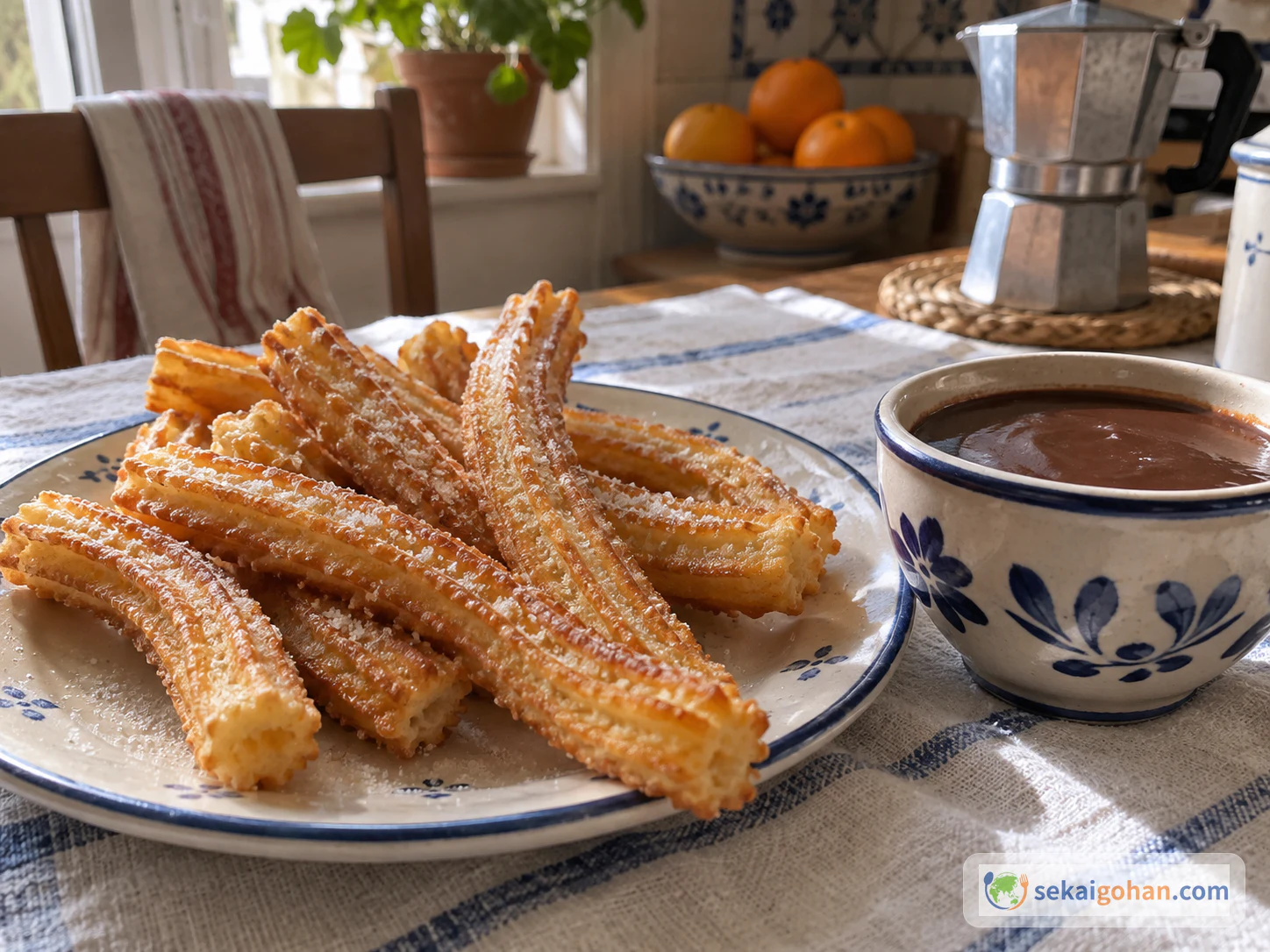
Spanish Churros: Madrid-Style Fried Dough from Flour, Water and Salt
How to make Spanish churros in the Madrid style from a simple dough of flour, water and salt, shaped with a manual churrera away from the oil and fried until evenly golden. Covers the published ingredient amounts, safe handling of the hot dough, judging doneness by color and the center, the difference between churros and porras, and dipping in hot chocolate.
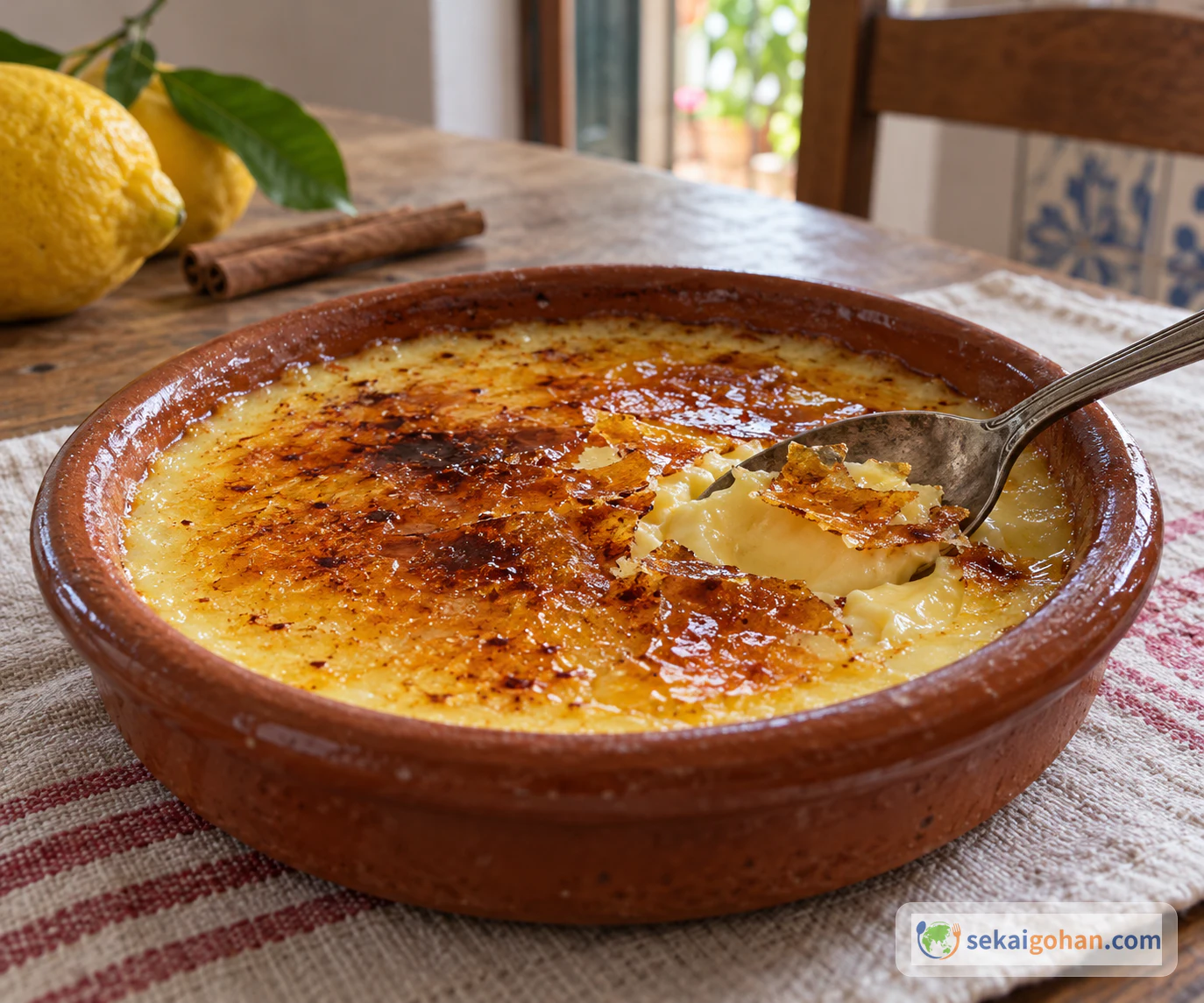
Crema Catalana: Lemon-and-Cinnamon Custard with a Burnt-Sugar Crust
How to make crema catalana, the Catalan custard also called crema cremada and crema de Sant Josep, at home. Milk is infused with lemon peel and cinnamon, thickened on the stove with egg yolks and cornstarch, chilled, and finished with a thin layer of sugar burnt just before serving. Covers ingredient choices, how to judge thickness without a thermometer, fixing grainy or soft custard, and how it relates to the spring feast of Saint Joseph.

Croquetas de Jamón: Spanish Ham Croquettes with a Creamy Béchamel Center
How to make croquetas de jamón, the Spanish tapa of cured ham folded into a thick béchamel, chilled, breaded and fried. Covers the order of roux, milk and ham stock, and ham, how thick to cook the béchamel, the long refrigerated rest, coating, frying in small batches, salt control, choosing between jamón ibérico de bellota and jamón serrano, fixing croquettes that burst, and their place among Spanish tapas.

Paella Recipe: The Valencian Way to Control the Heat
How to make paella the Valencian way: chicken, rabbit, flat green beans, garrofón beans, saffron, the water ratio for the rice, socarrat, a home skillet substitute, storage, heat control that does not fail, differences from seafood paella and saffron substitutes.

Calçotada: Catalonia's Charred Spring Onion Feast with Salvitxada
Calçotada is a winter-to-spring Catalan meal of long onions charred black and eaten with a salvitxada-style sauce. How much to char them, how to peel them, a romesco-style sauce, what to look for when shopping, and storage, with concrete cues for cooking under a broiler or on a griddle when you have no outdoor charcoal.

Catànies: Penedès Almond Confections Dusted in Cocoa
How to make catànies, the almond sweets of Penedès in Catalonia, in a home kitchen: choosing and substituting ingredients, dry-toasting the almonds, caramel temperature, a thin white chocolate layer, dusting with cocoa, causes of failure, humidity, storage, and serving after a meal.

Esqueixada Recipe: Catalan Cold Salt Cod Salad
How to make esqueixada, the cold Catalan salt cod salad: soaking dried salt cod versus choosing pre-soaked or lightly salted cod, flaking by hand, draining the tomatoes, how much oil, adjusting acidity, storage, fixing mistakes, how it is eaten locally, and what is worth buying or skipping.

Fabada Asturiana: Asturias' White Bean Stew with Chorizo and Morcilla
How to make fabada asturiana, the white bean stew of Asturias in northern Spain: soaking the beans, a gentle low simmer, substitutes for chorizo and morcilla, saffron, storage and reheating, with practical home-kitchen guidance.

Fideuà: Valencia's Noodle Paella of the Sea
Fideuà as a noodle dish of the Valencian coast: the thinking behind the official Gandia recipe, substitutes for fideo noodles, seafood stock, saffron, heat control in a home skillet, how to return the seafood to the pan, aioli, and storage.

Gazpacho Andaluz: Andalusia's Cold Tomato Soup
How to make Andalusian gazpacho: the balance of tomato, cucumber, pepper, bread, sherry vinegar and olive oil, how to chill it, storage, substitutions, blender choice, food-safety notes, and how to serve it as a paella starter.

Migas: Spain's Hard-Bread Dish with Paprika, Chorizo and Grapes
How to make Spanish migas from stale bread in a home kitchen. Dampening the bread the night before, the aroma of paprika oil, the heat that loosens bread into crumbs, pairing with chorizo and grapes, regional differences, substitutes, storage, fixes, and sweet migas canas.
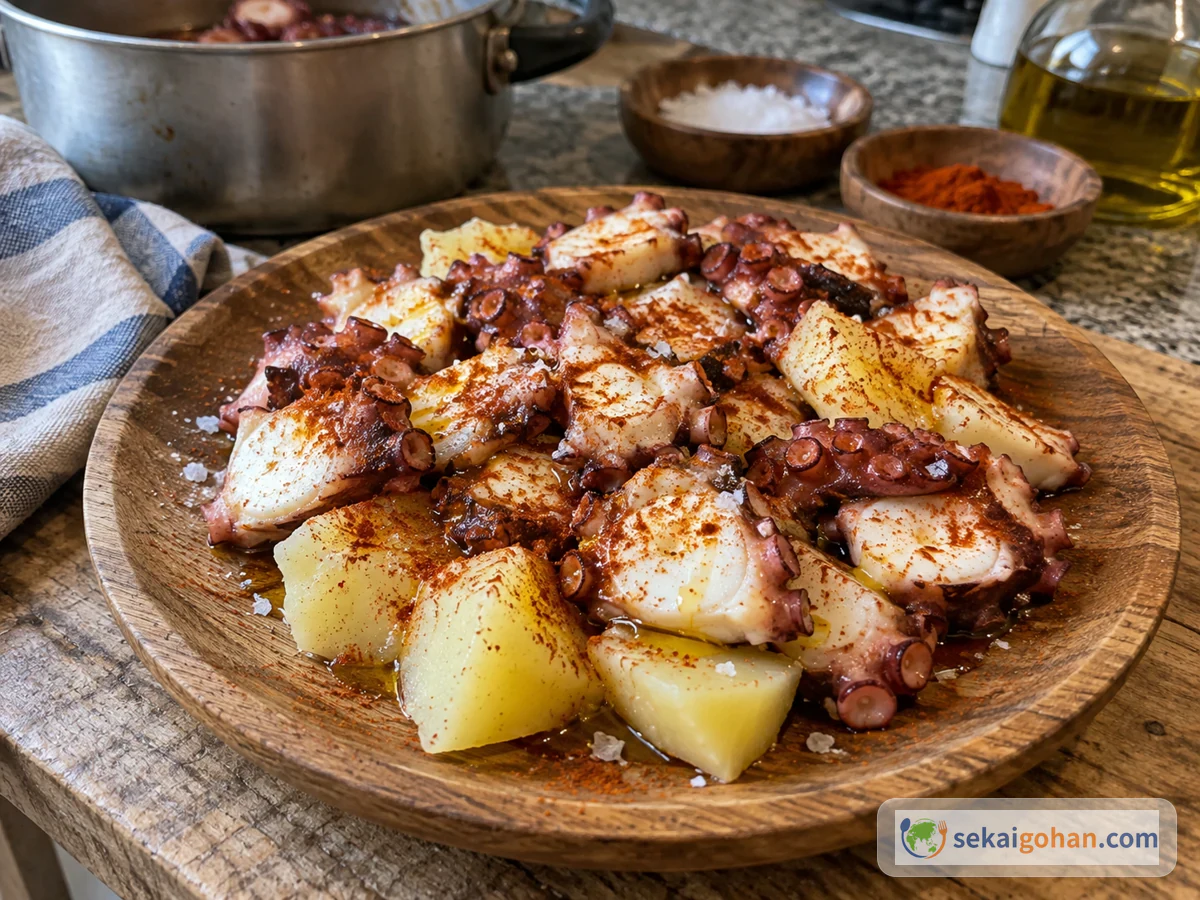
Pulpo a la Gallega (Pulpo a Feira): Galicia's Market-Day Boiled Octopus
Pulpo a la gallega (polbo á feira) is Galician boiled octopus with potatoes. Covers three dips in boiling water, a 30-minute simmer and the paprika finish.
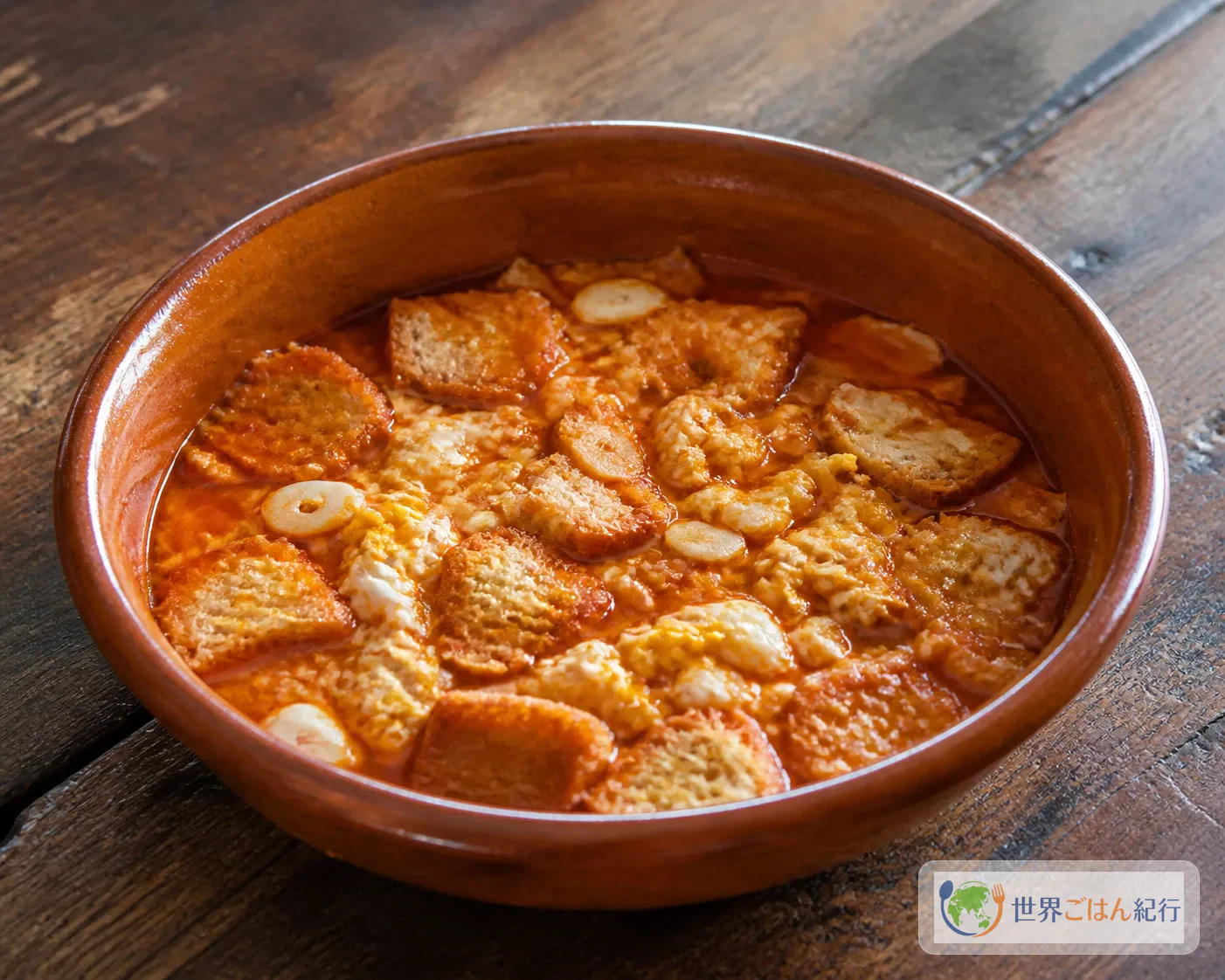
Sopa de Ajo: Spanish Garlic and Paprika Bread Soup
Spanish sopa de ajo, which brings hard bread back in a red garlic and paprika broth. The Madrid and Castilian basics, simmering without letting the bread collapse, when to set the egg, sweet versus smoked paprika, the Holy Week table in Zamora, substitutions and storage.

Tortilla Española: Spanish Potato Omelet
A Spanish-style tortilla española. The balance of 5 eggs, potatoes, onion and olive oil, how to flip it, runny centers and food safety, storage, lunchbox use, substitutions, pan choice, with or without onion, what to do with leftover oil, and menus with gazpacho and paella.

Cocido Madrileño: Madrid's Chickpea and Meat Stew, Served in Three Courses
Cocido madrileño is Madrid's traditional stew of chickpeas and several meats, simmered slowly and eaten as broth, vegetables and meat. Includes substitutes.

Carcamusas: Toledo's Pork, Chorizo and Pea Stew
Carcamusas is a Toledo bar tapa of pork, chorizo, jamón and green peas in a tomato sauce cooked down until it clings to bread. Ready in about an hour.
Svalbard & Jan Mayen recipes
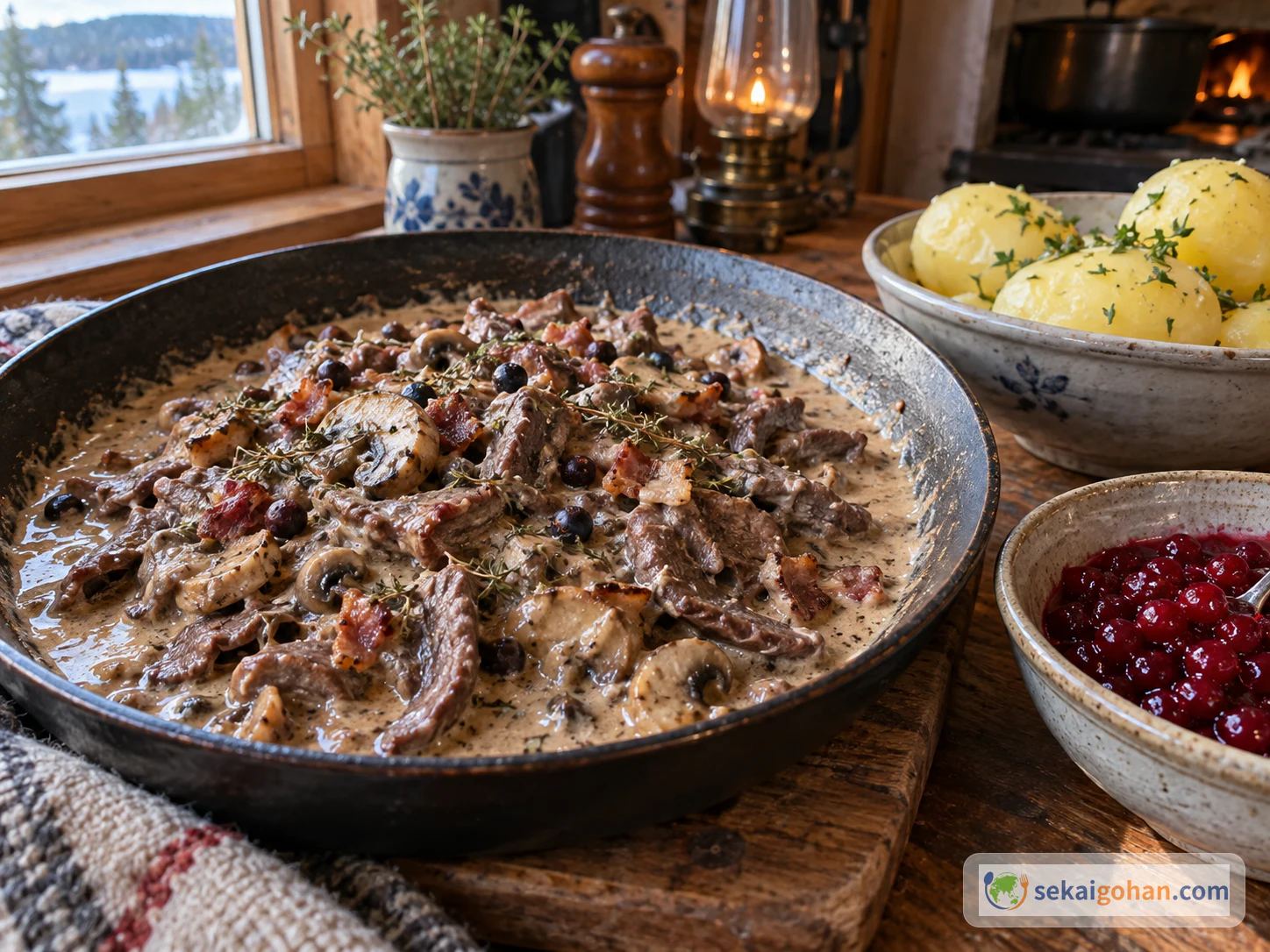
Sweden recipes

Tjälknöl: Swedish Slow-Roasted Frozen Beef, Brined and Served Cold
Tjälknöl from northern Sweden: lean beef roasted from frozen at a low 80°C, brined for 5 hours in a spiced brine and sliced thin. Covers a beef stand-in, core temperature, salt control, serving with lingonberries, prep-ahead scheduling and storage.

Köttbullar: Swedish Meatballs with Cream Gravy, Mashed Potatoes and Lingonberry Jam
A proper recipe for Sweden's national dish, köttbullar. Allspice and nutmeg in a beef-and-pork mix, a creamy gravy, buttery mashed potatoes and lingonberry jam, with the history from Charles XII to the Christmas julbord.
Switzerland recipes
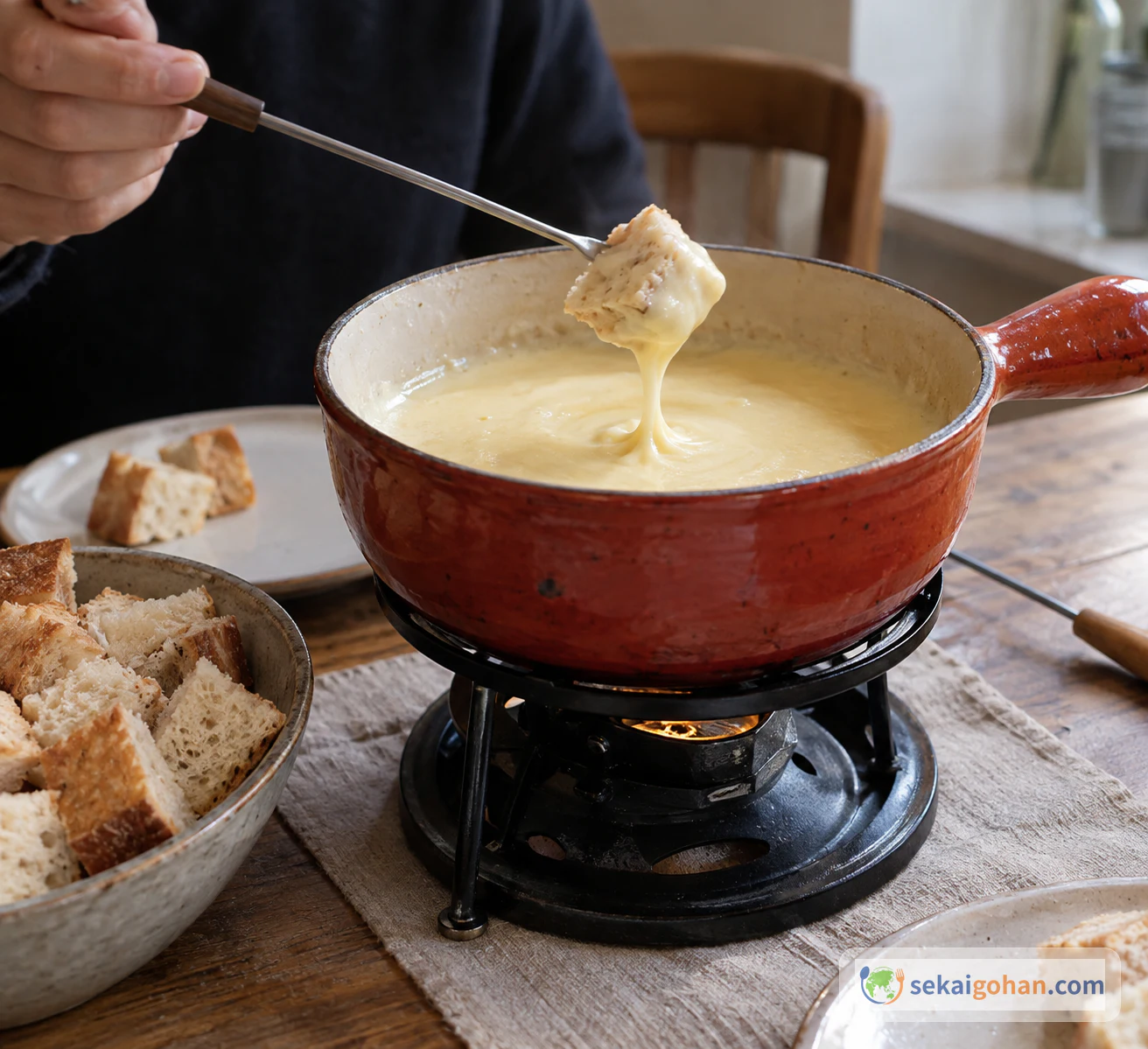
Swiss Cheese Fondue (Käsefondue): The Classic Caquelon Recipe for Four
How to make classic Swiss cheese fondue (Käsefondue, fondue au fromage) from Swissmilk's Fondue klassisch: a grated fondue cheese mix, cornstarch, white wine, lemon juice and kirsch, heated while stirring and kept at a gentle simmer at the table for dipping bread. Covers how it differs from Fribourg's moitié-moitié, choosing cheese and bread, the alcohol-free option the recipe gives for children, how to eat it, and handling leftovers.

Basler Läckerli: Basel's Honey and Spice Cookies from Switzerland
Basler Läckerli are traditional honey, nut, candied citrus peel and spice cookies from Basel, Switzerland. A home guide covering ingredients, avoiding over-baking, glazing while warm, cutting, aging, and a kirsch-free substitute.

Raclette: Swiss Melted Cheese with Potatoes and Pickles
A full guide to Swiss winter classic raclette: melting the cut face of a half wheel at a heat source and scraping it over boiled potatoes, plus how to use a tabletop raclette grill, how to pair cornichons, and how to recreate it with ingredients and tools you can get.

Risotto alla Ticinese: Mushroom and Saffron Risotto from Southern Switzerland
Risotto alla ticinese from Ticino in southern Switzerland, made with porcini, mushrooms, saffron and hot broth. Covers the big festival pots, Merlot culture, serving with luganighe, choosing rice and wine, al dente and the all'onda wave, storage and rescue.
Türkiye recipes
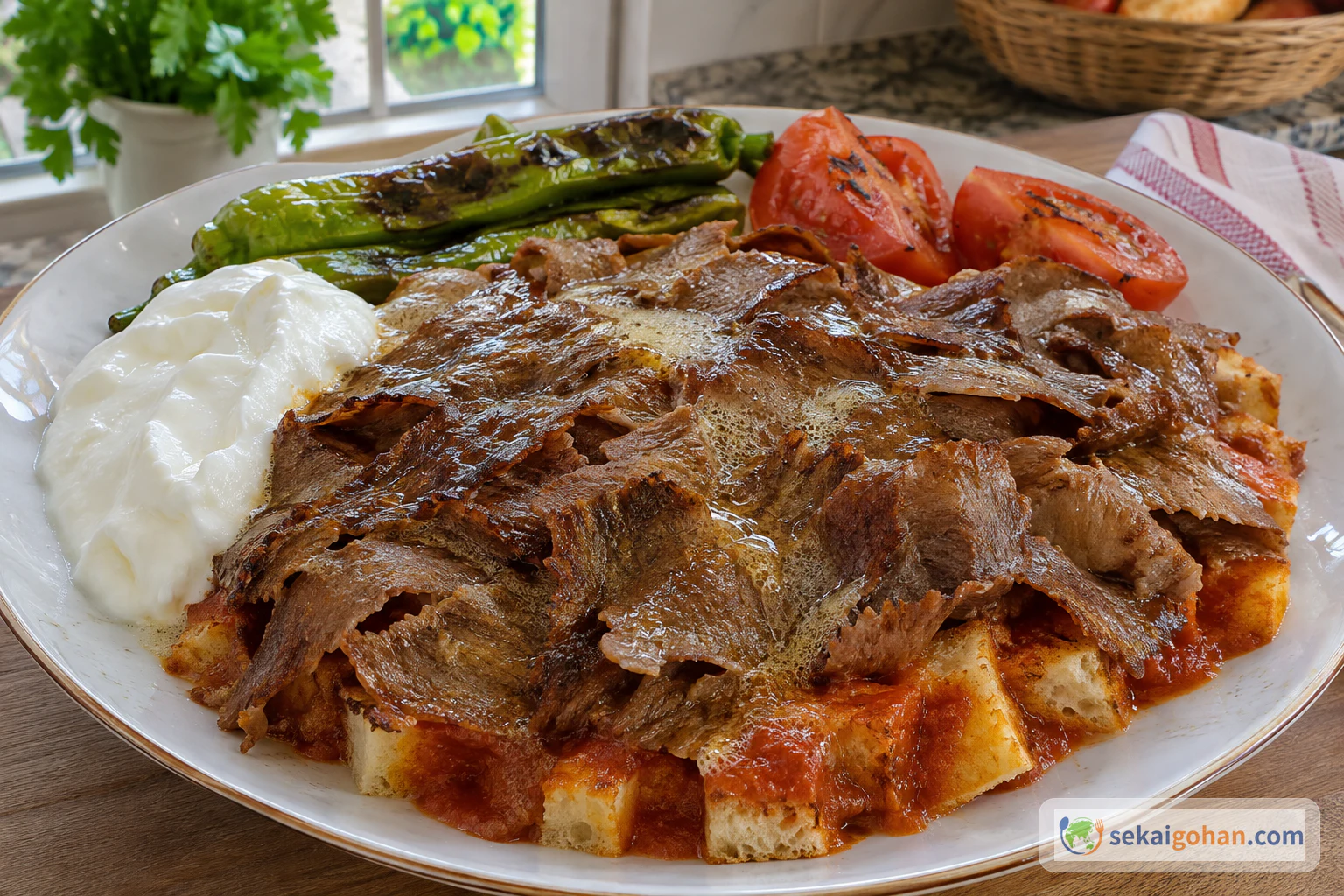
İskender Kebap: Thin-Sliced Beef, Pide, Tomato Sauce and Melted Butter
A six-serving home version of İskender kebap, the Bursa plate also known as Bursa kebabı. Layer beef fillet and ground beef, chill and slice thinly, pan-fry, then build the plate with warm pide, tomato sauce, thick yogurt, grilled vegetables and melted butter. Includes cold-handling and heating guidance, the plate's history, and clear notes on what this version changes.
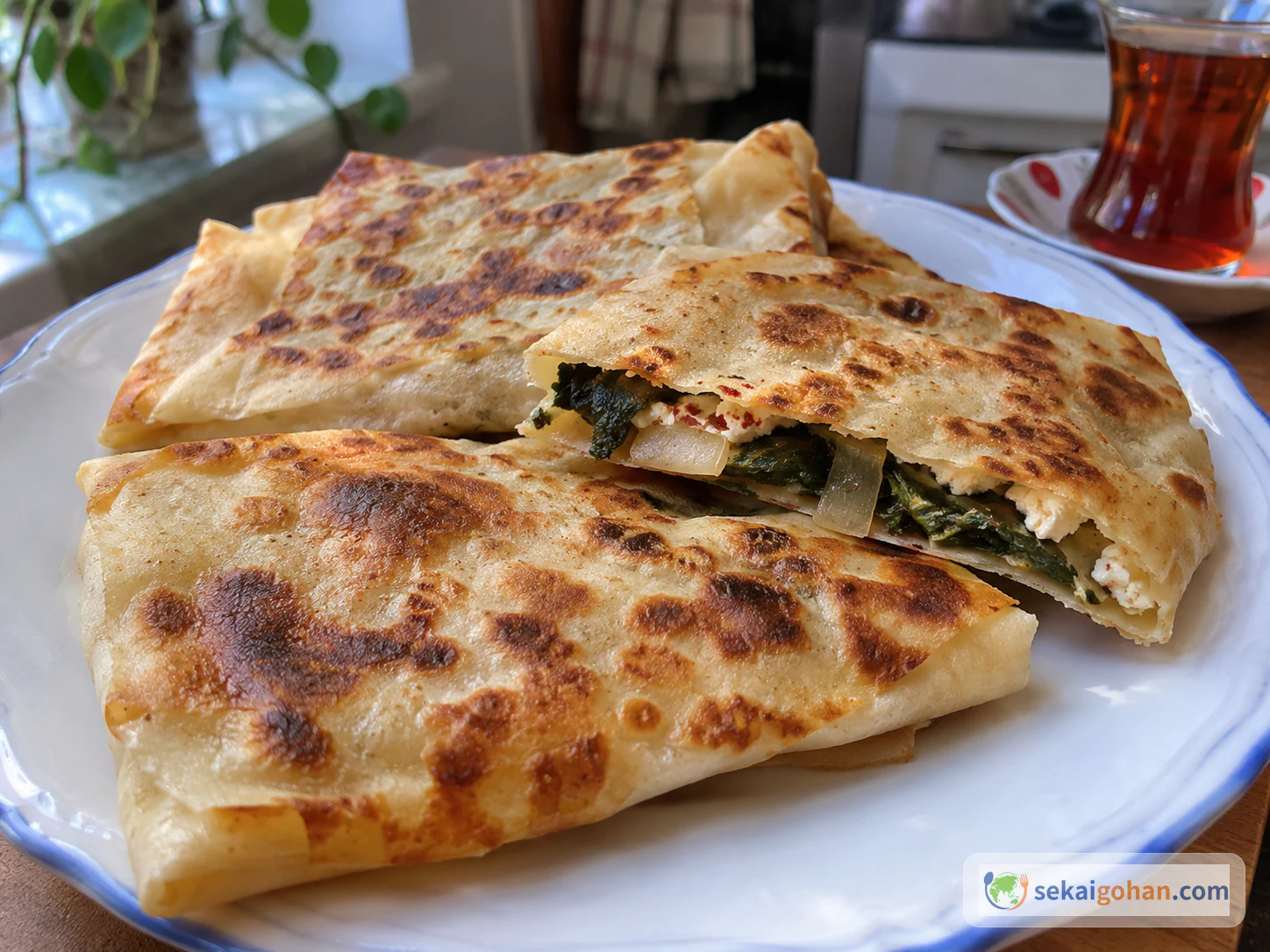
Gözleme: Turkish Folded Flatbread with Spinach, Onion and Feta
How to make gözleme, Turkish stuffed flatbread: a soft yeast dough rolled thin, folded around raw spinach, onion and feta, and browned on both sides in a hot pan. Covers the dough, the hand-massaged filling, the fold, pan cooking, regional variations and common questions.
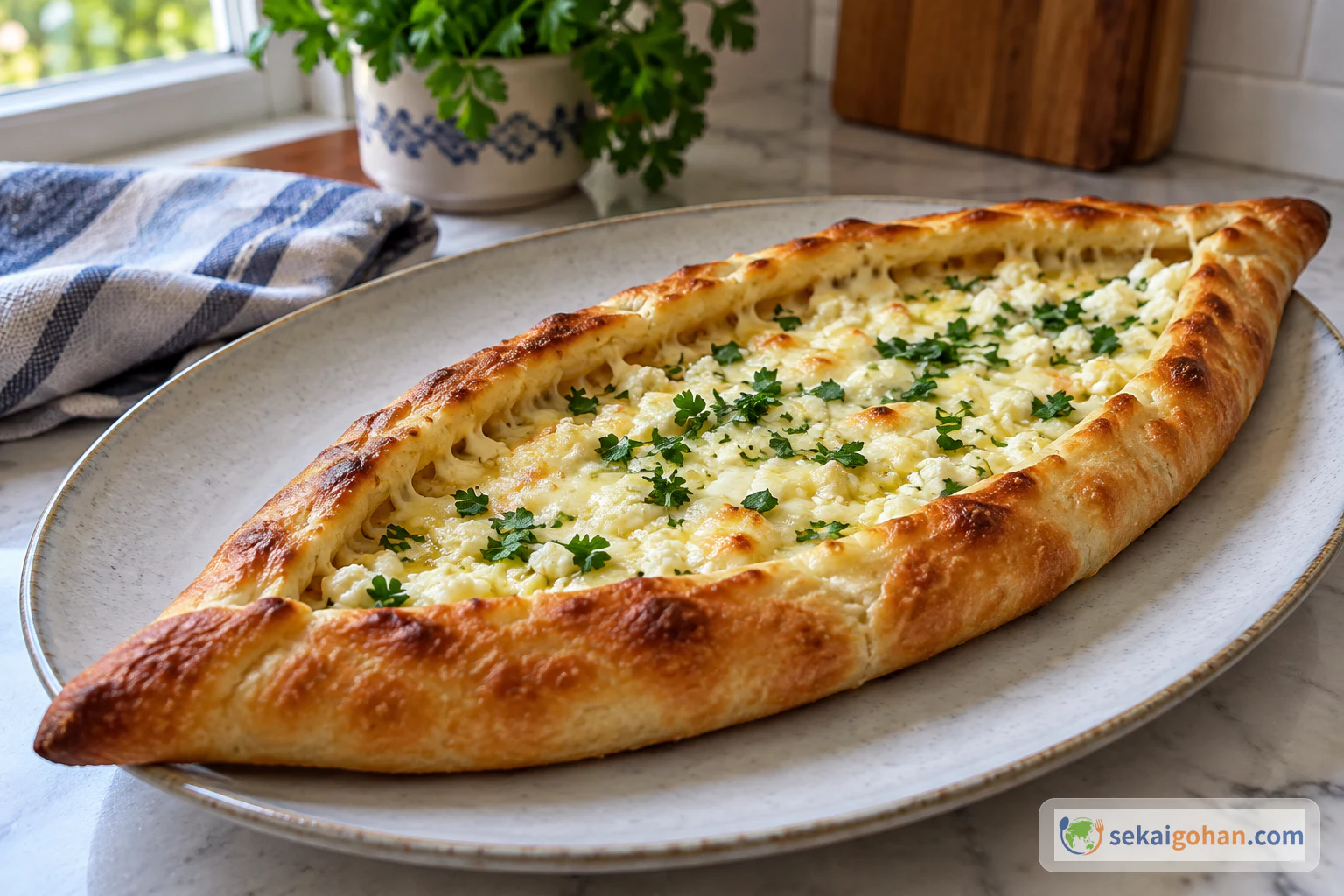
Pide: Turkish Cheese-Filled Boat Bread (Peynirli Pide)
What Turkish pide is, how its shape and fillings vary by region, and how to make peynirli pide (cheese pide) from the recipe published by Türkiye's Ministry of Culture and Tourism. Covers the yogurt dough, rising, shaping open boat-shaped ovals, baking in batches, judging doneness, and choosing cheese outside Türkiye.
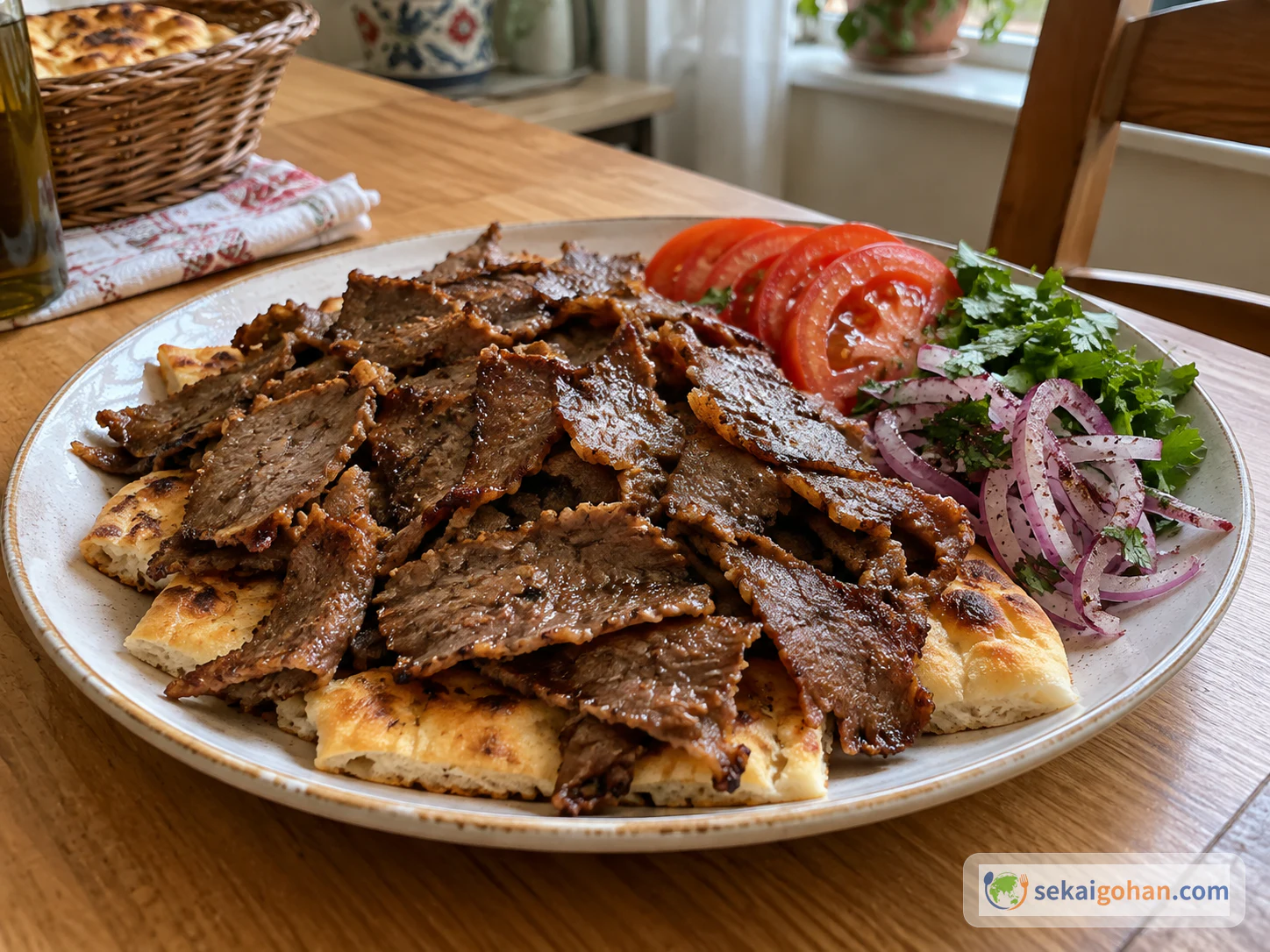
Döner Kebab at Home: Turkish Thin-Sliced Meat, Stacked, Chilled and Pan-Seared
A home method for Turkish döner kebab: beef or lamb marinated with onion and yogurt, stacked into a roll, frozen, thawed in the fridge and sliced thin for the skillet. Covers choosing the meat, cooking to 75°C, serving in pide, the İskender plate, and Ankara's regional style.
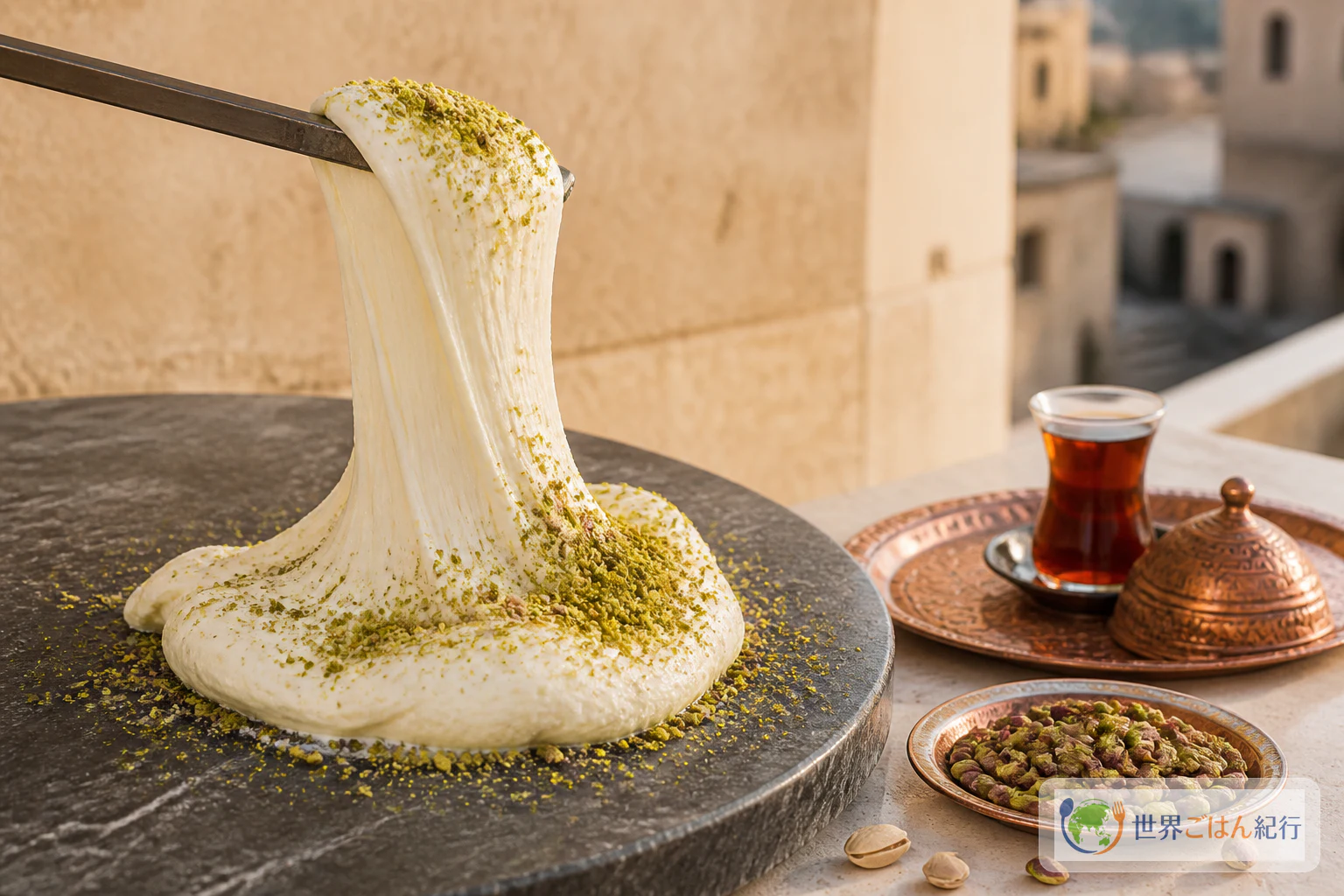
Dondurma: How to Make Turkey's Stretchy Ice Cream at Home
Turkish ice cream (dondurma) is made at home with a salep-based mix and mastic, stretched in the pot and churned in the freezer. With swaps and storage.
United Kingdom recipes

British Scones: Plain Buttermilk Scones for Teatime
How to make plain British scones with buttermilk and cold butter, following a recipe selected by Royal Chef Mark Flanagan. Covers the ingredients, rolling to 2 cm and cutting with a 5 cm cutter, glazing only the tops, baking at 220°C, and serving with strawberry jam and clotted cream the Cornish way.
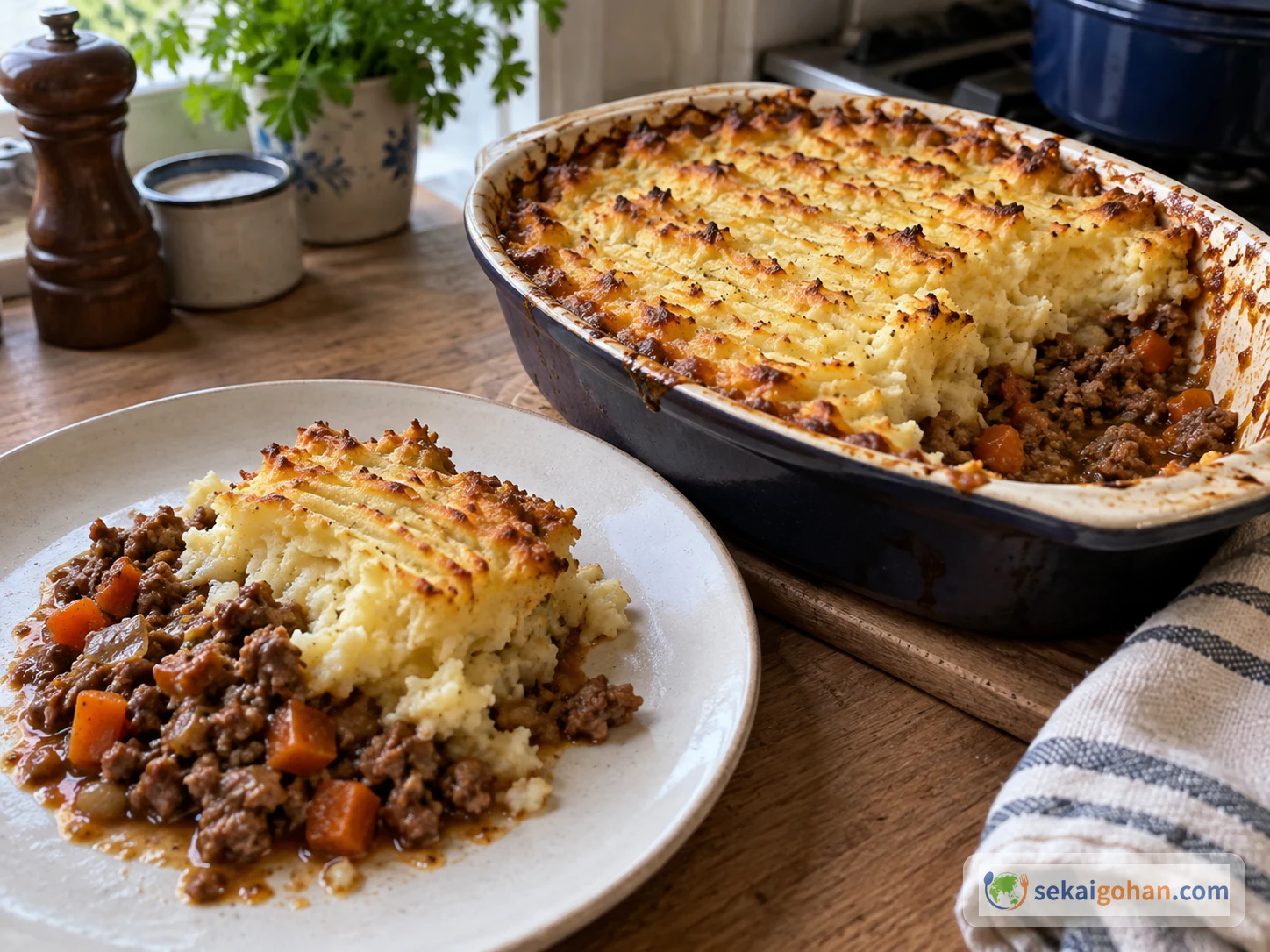
Shepherd's Pie: British Lamb Mince Baked Under Mashed Potato
How to make shepherd's pie, the British dish of lamb mince simmered with onion, carrot and beef stock, then covered in buttery mashed potato and baked until golden. Covers the 4-serving recipe step by step, keeping the filling from turning watery, getting a browned top, choosing lamb and Worcestershire sauce, how it differs from cottage pie, the uncertain history of the name, and safe cooling and reheating.
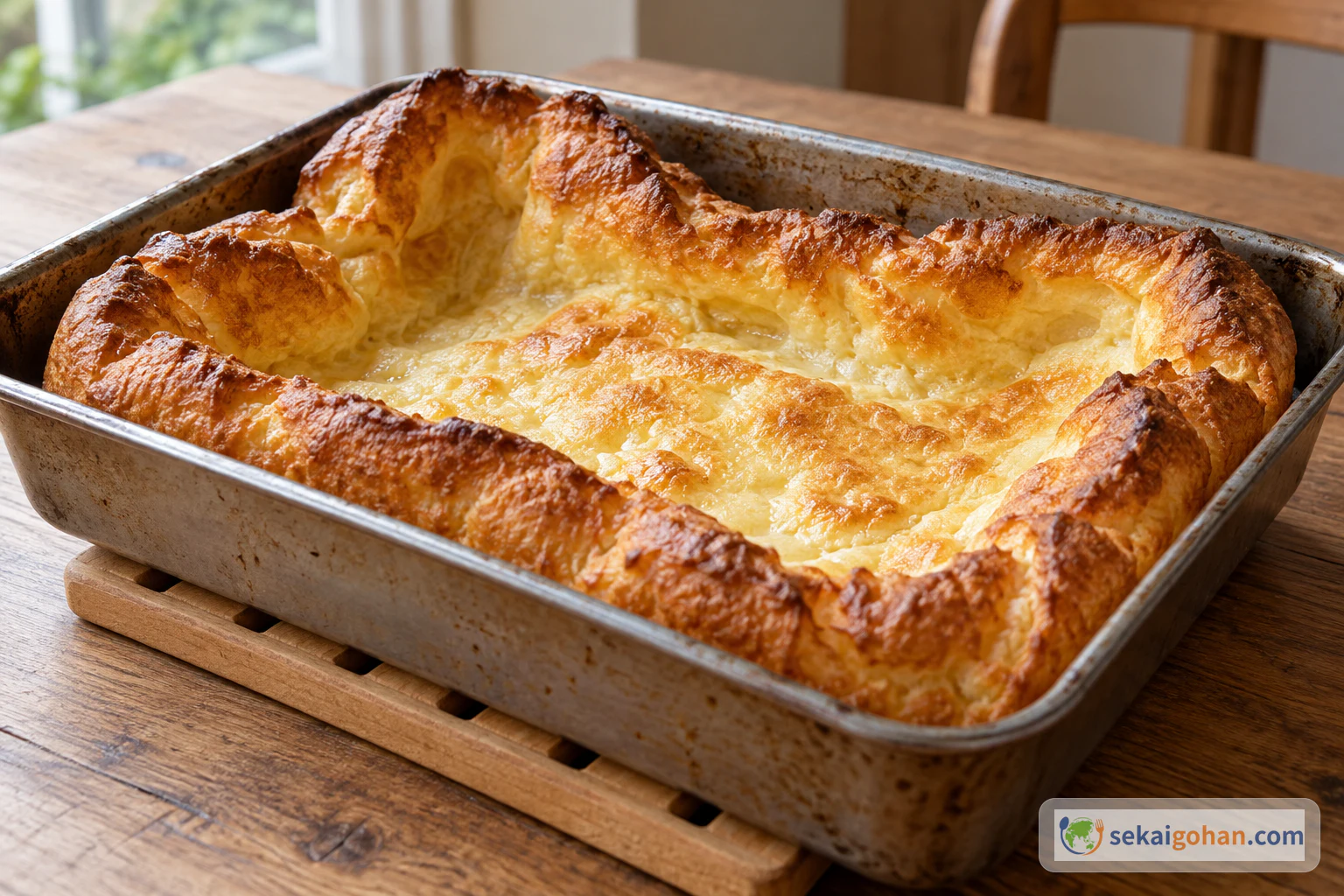
Yorkshire Pudding: The British Roast-Dinner Batter Baked in Hot Fat
How to make a classic Yorkshire pudding from a published British recipe: a simple batter of flour, egg, milk and water poured into smoking-hot fat in a single 28 x 18 cm tray and baked at 220°C until puffed and crisp. Covers handling the hot tray, judging when it is done, beef dripping versus vegetable oil, why it might not rise, and how it fits the Sunday roast, with what is and isn't known about its history.
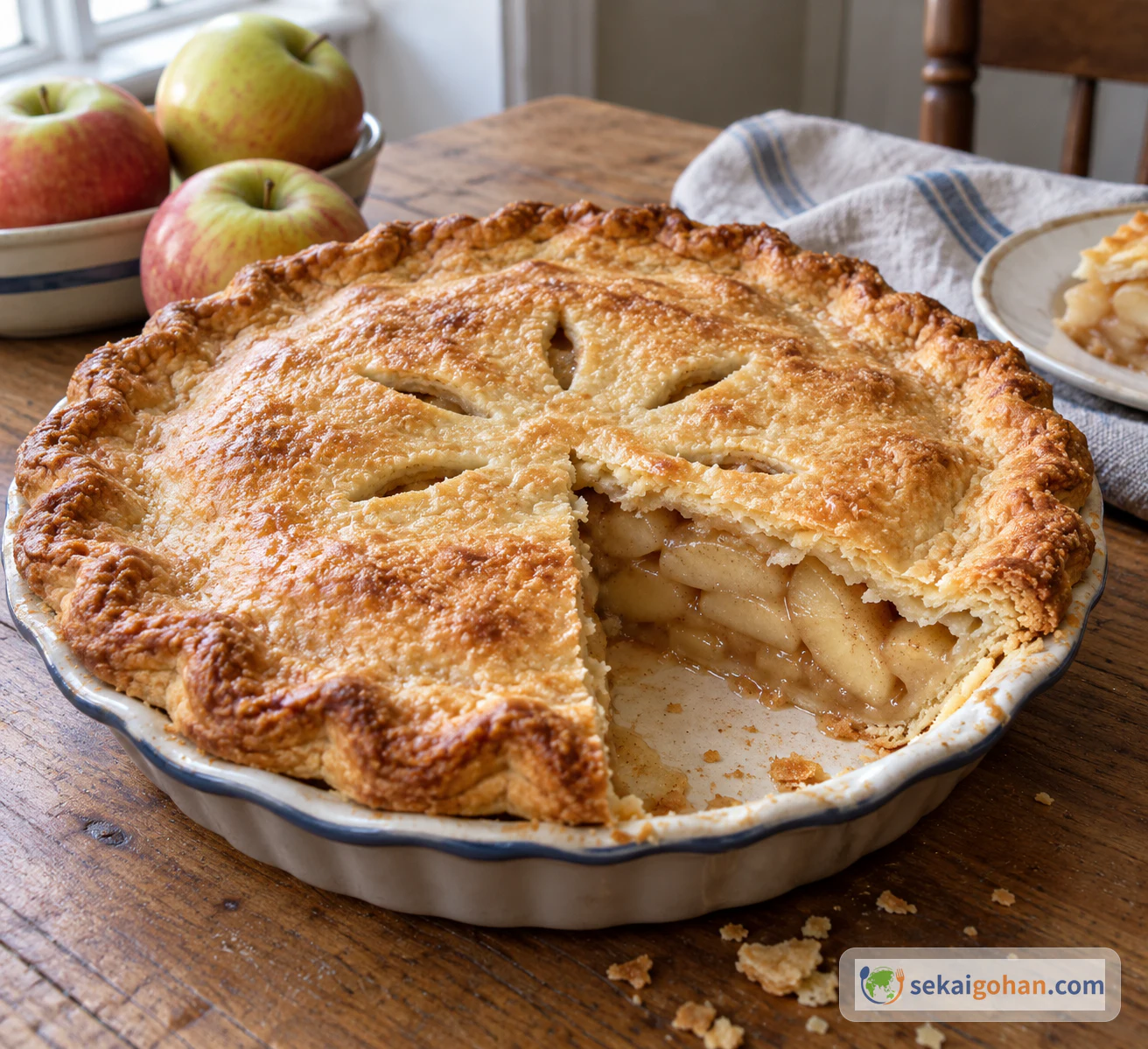
British Apple Pie: Bramley Apples in an Egg Shortcrust
A British double-crust apple pie made with tart Bramley cooking apples and an egg-enriched shortcrust, serving 8. Covers drying the apple slices, chilling and lidding the pastry, baking at 190°C (fan 170°C), apple substitutions, the Bramley's history, the medieval Tartys in Applis, and handling leftovers.
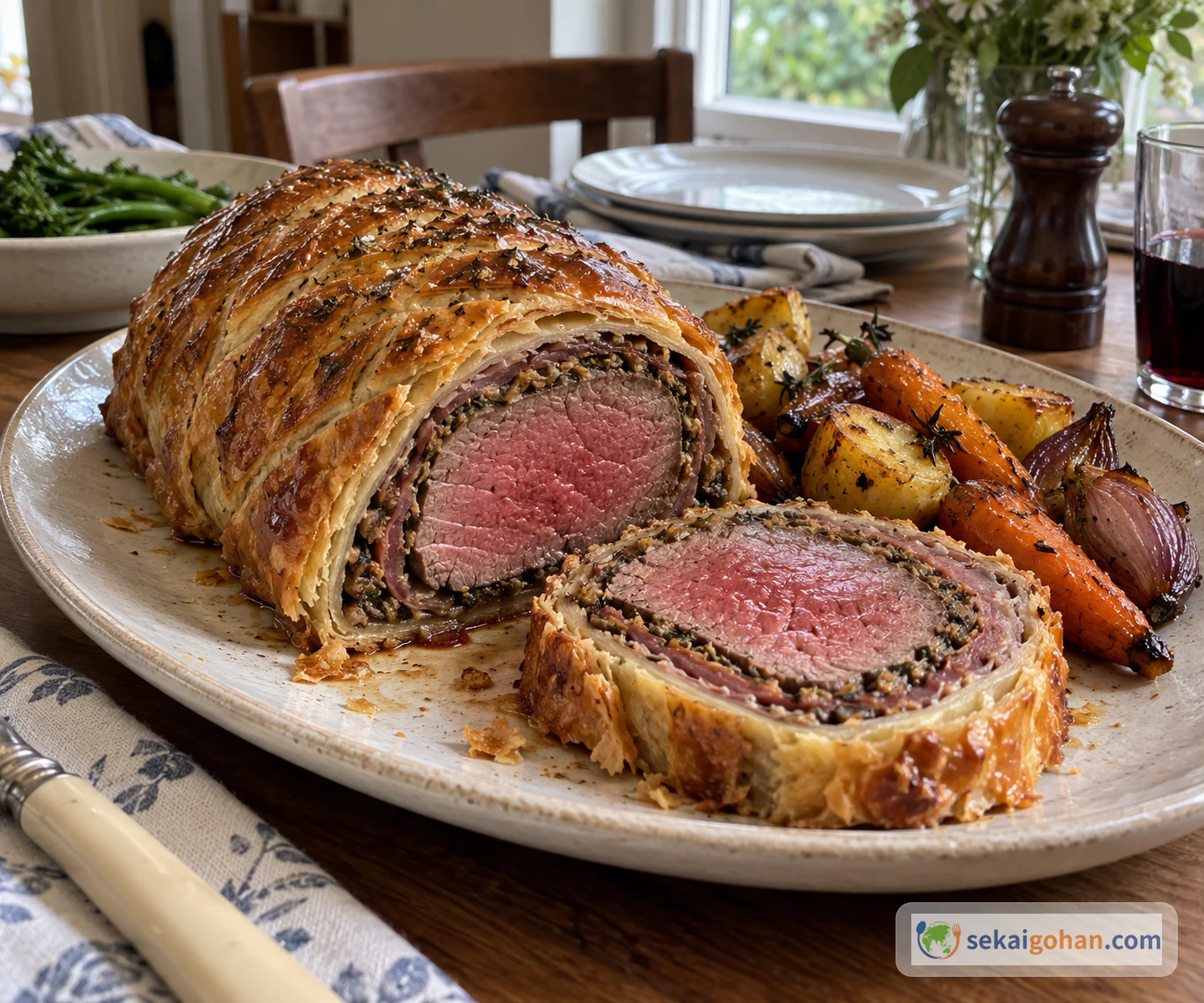
Beef Wellington: Beef Fillet Wrapped in Mushroom Duxelles, Prosciutto and Puff Pastry
How to make Beef Wellington for six: a beef fillet roasted first, cooled, wrapped in dry mushroom duxelles and prosciutto, then baked in puff pastry. Covers choosing the beef and mushrooms, keeping the pastry base from going soggy, reading colour and a thermometer instead of the clock, the difference between a pink finish and official safe temperatures, fixing common problems, and why the Duke of Wellington story stays unproven.
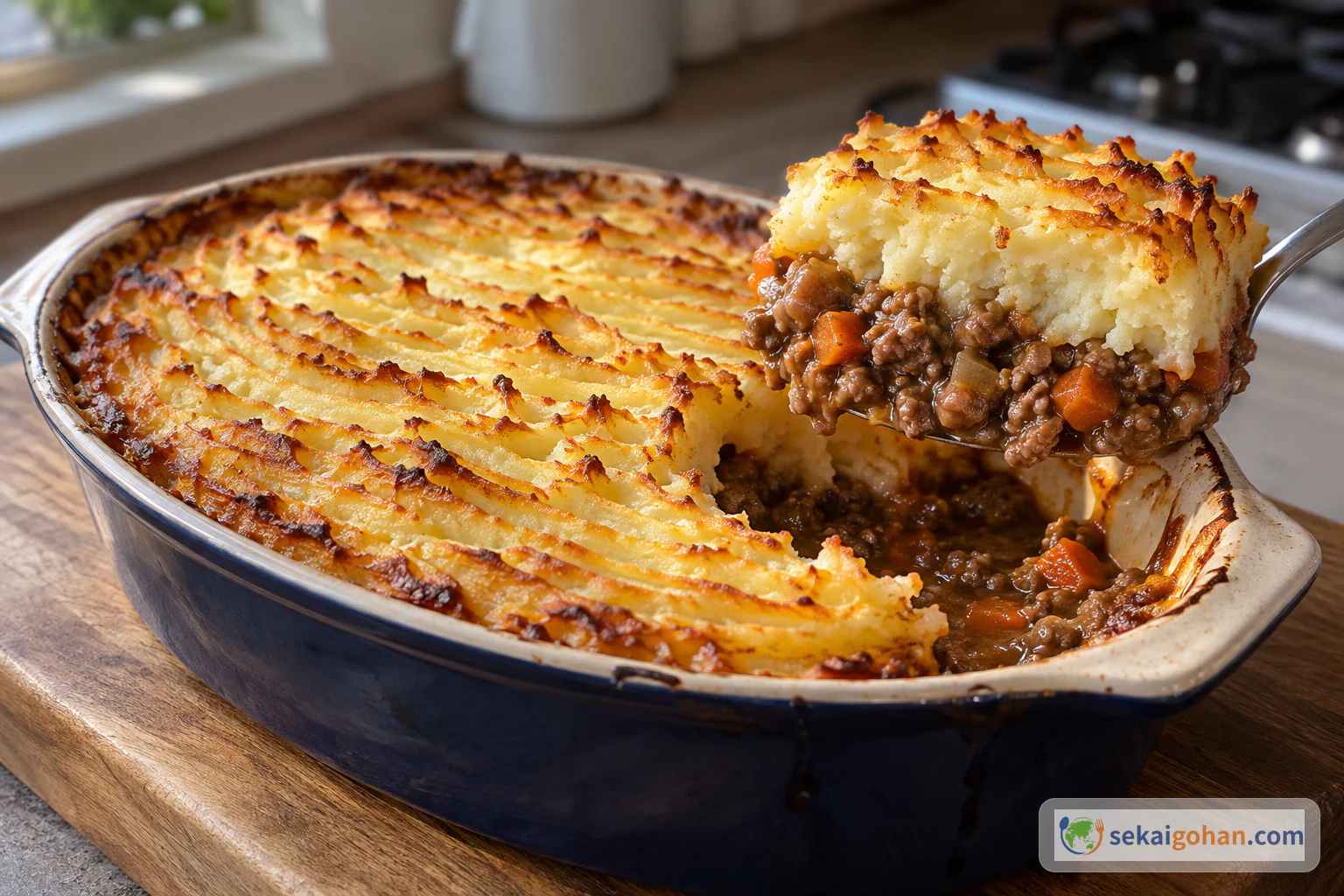
Cottage Pie: British Beef Mince Under Golden Mashed Potato
How to make cottage pie, the British home dish of beef mince topped with mashed potato. Covers how it differs from shepherd's pie, how to reduce the filling so it isn't watery, a mash that holds its ridges, food-safe cooling and reheating, and honest substitutions for ingredients outside the UK.
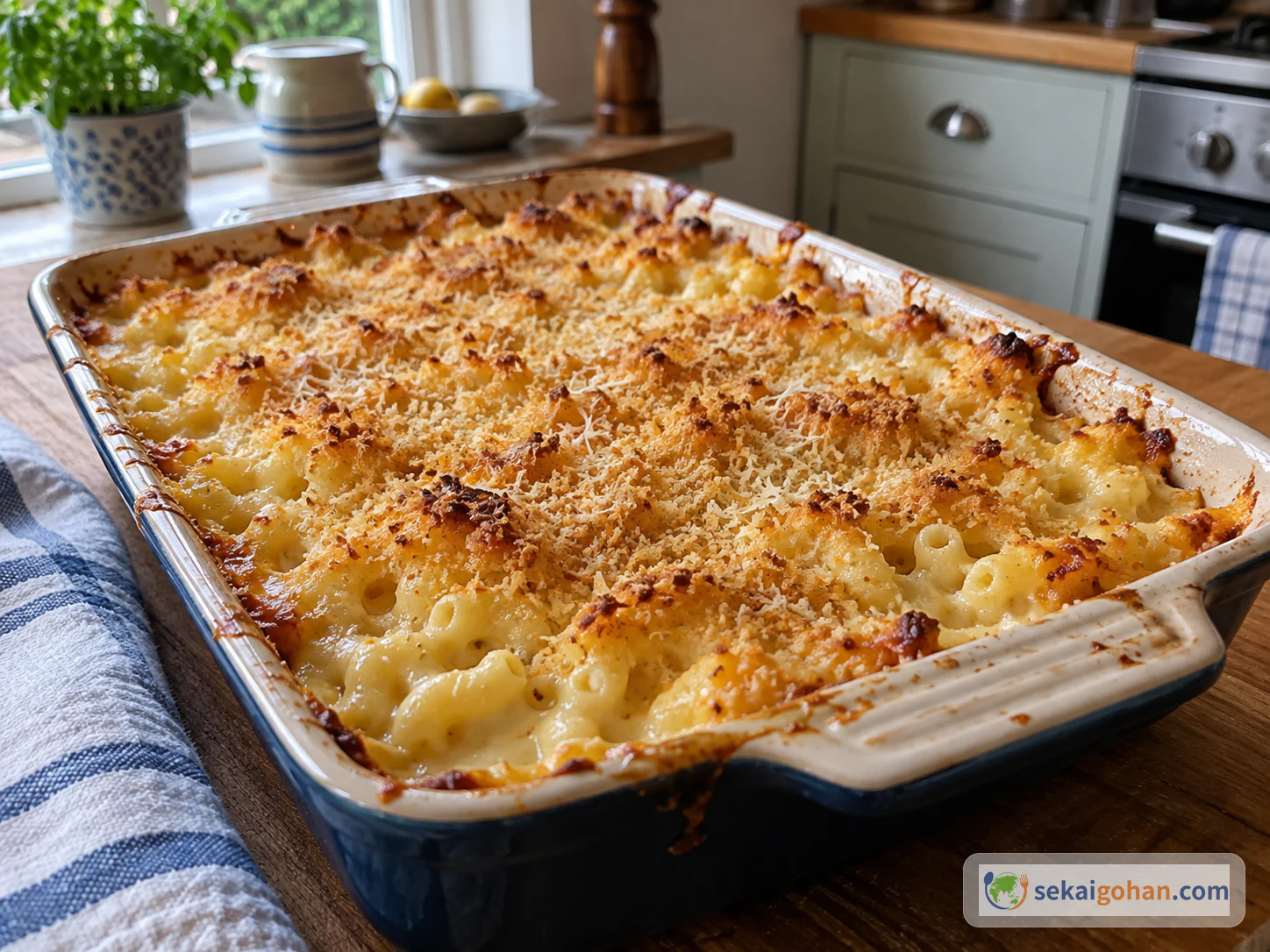
Macaroni Cheese: British Baked Macaroni and Cheese with Infused Milk and a Crisp Crumb Top
How to make a British-style baked macaroni cheese for 4: milk infused with onion, garlic and bay, a cheddar and mustard sauce, and a Parmesan and breadcrumb top baked at 190°C (fan 170°C). Covers choosing ingredients and substitutes, judging the sauce and bake by sight, fixing common mistakes, and where the dish sits among early records of pasta and cheese in Italy and Britain and Scotland's macaroni pie.
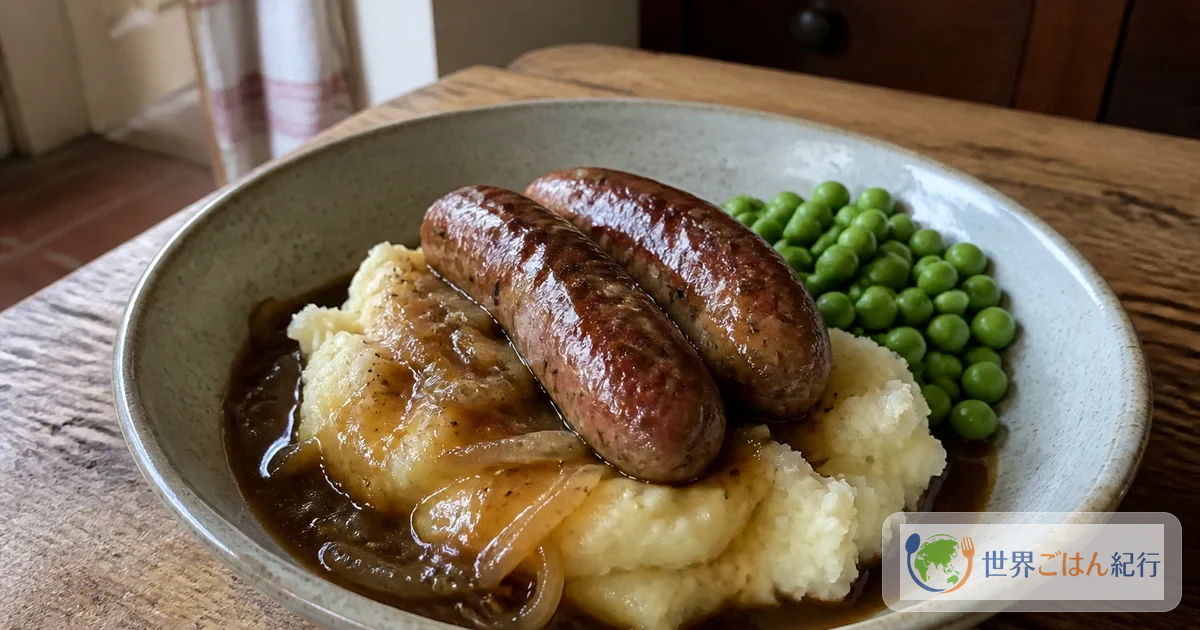
Bangers and Mash: British Sausages with Mashed Potato and Onion Gravy
A recipe for classic British bangers and mash with coarse pork sausages, onion gravy and floury potatoes. Covers Cumberland's regional character, cooking sausages without splitting the skins, mash that isn't overworked, rescuing mistakes, storage and regional variations.
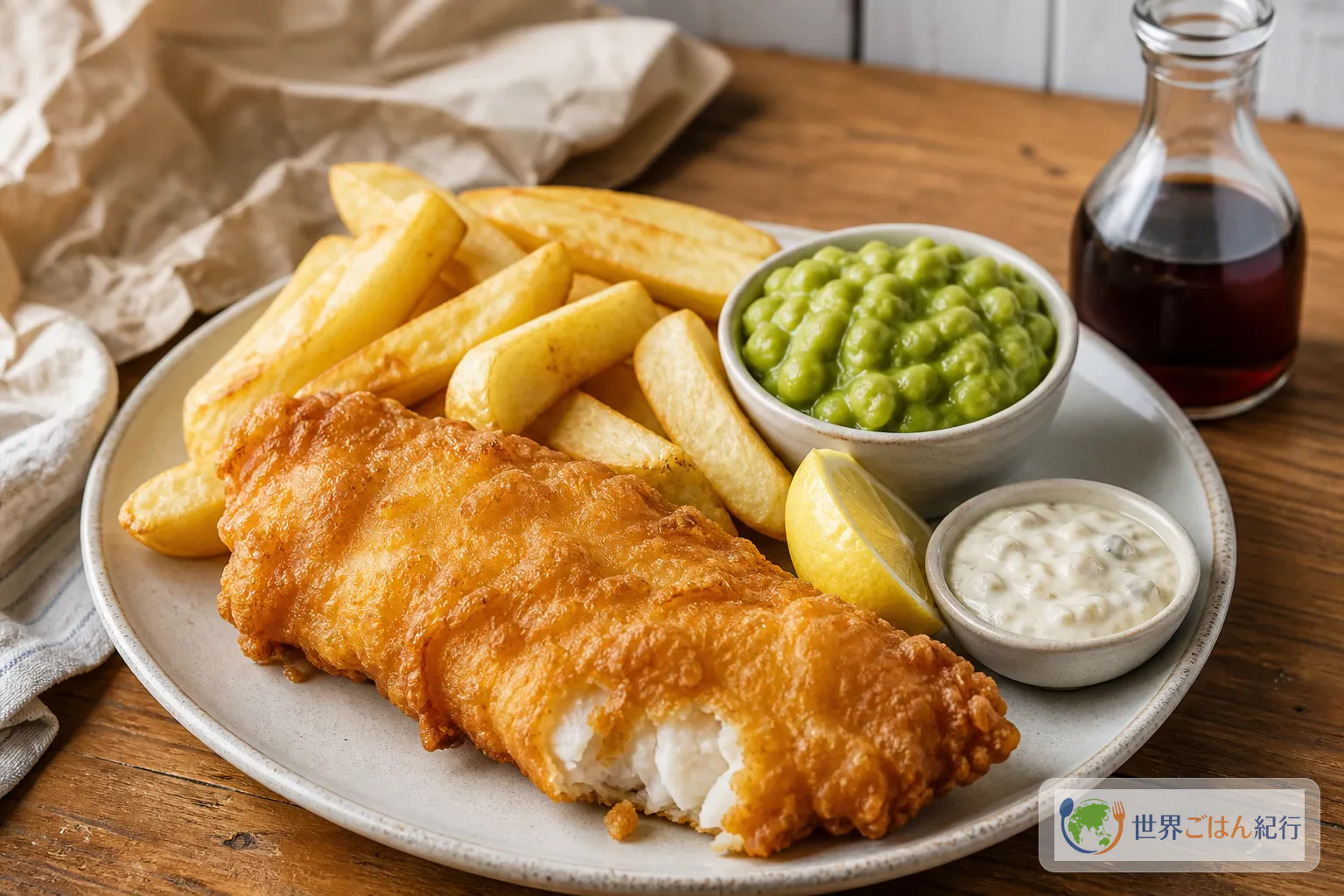
Fish and Chips Recipe: Light Batter and Double-Fried Chips for a British Table
Fish and chips for home cooks: choosing white fish, the double-fry temperatures, a sparkling-water batter, and malt vinegar substitutes. Covers cod versus haddock by region, chip thickness, storage, and re-crisping, with steps for keeping the batter light.