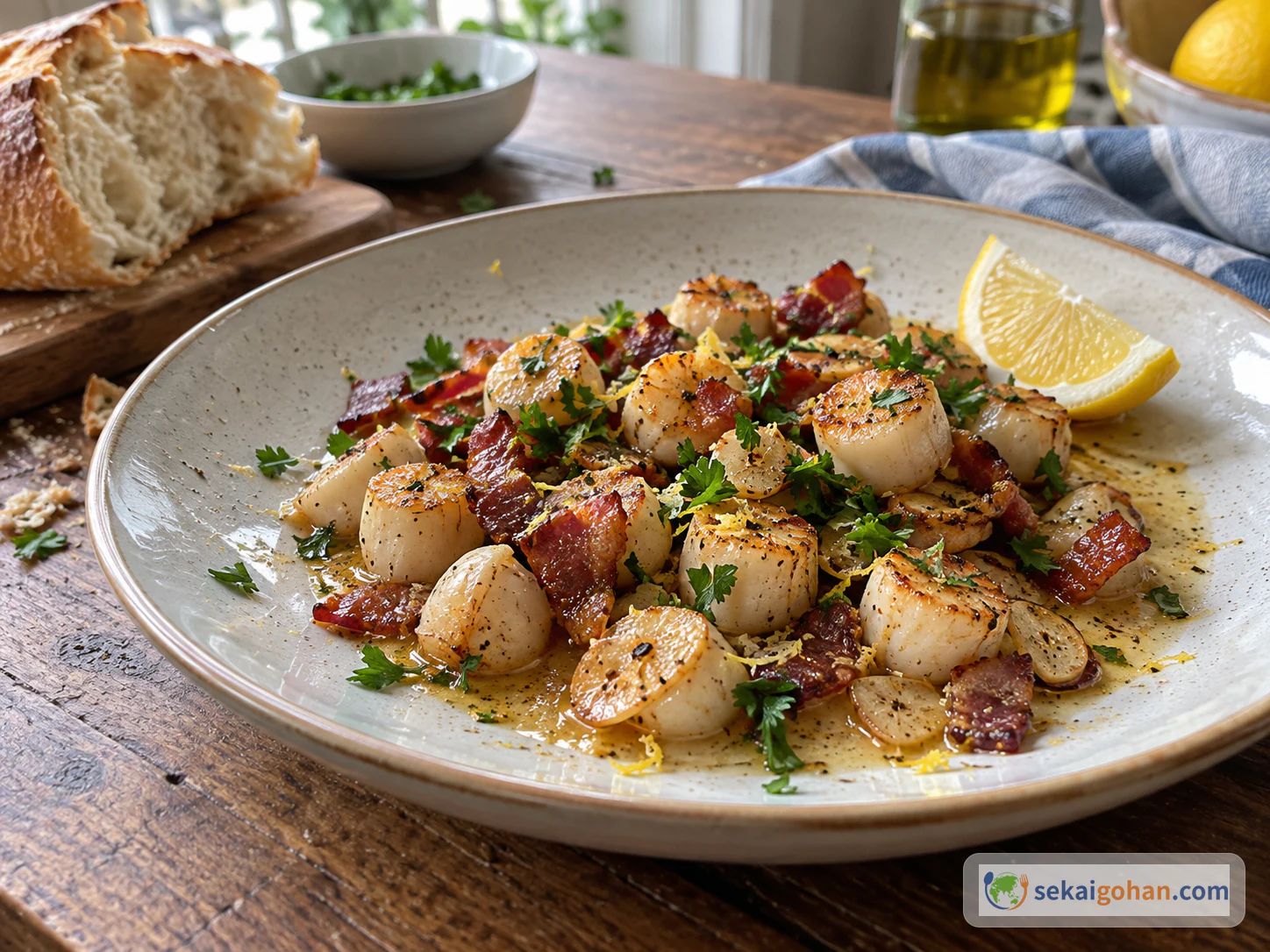
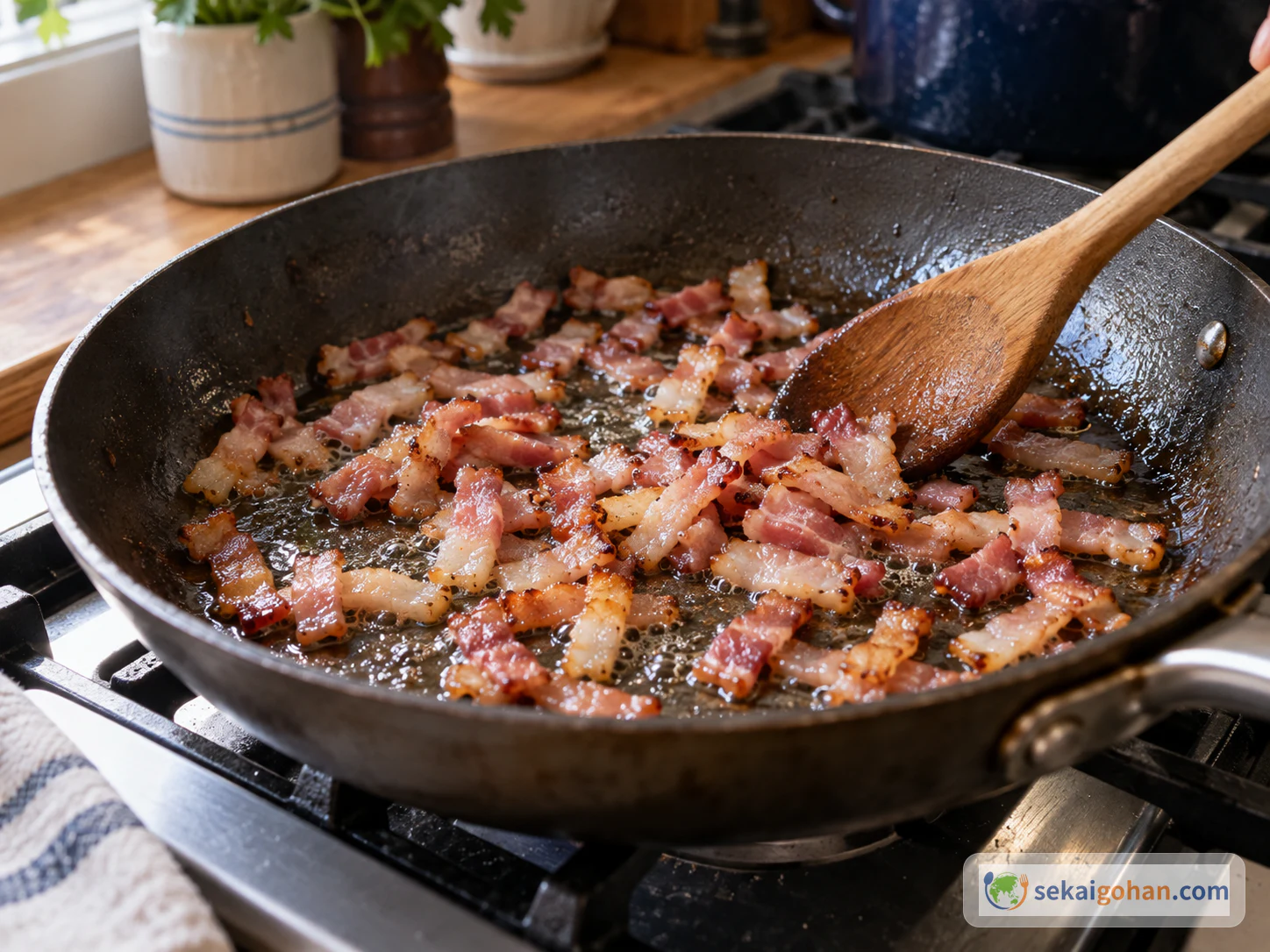
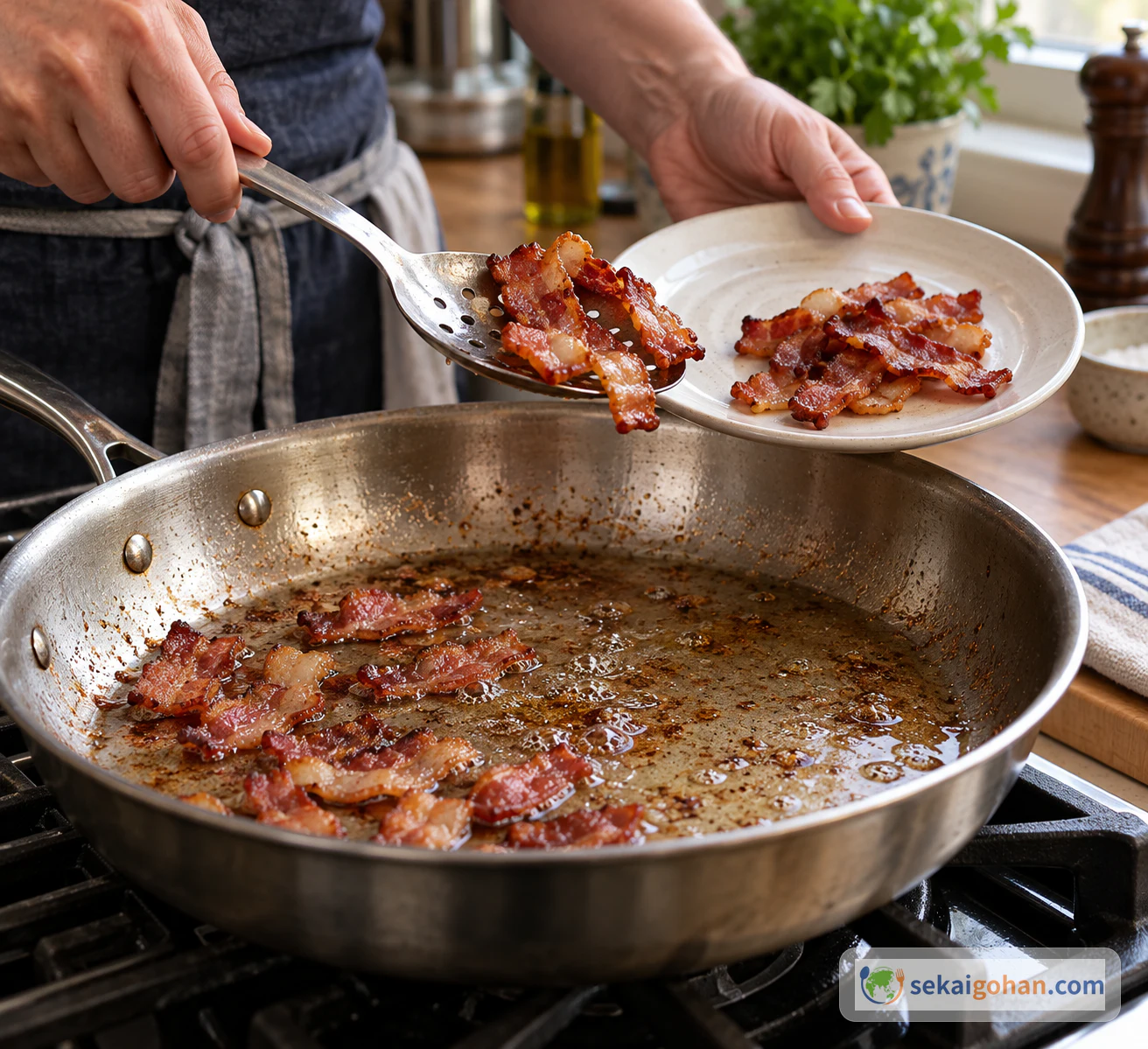
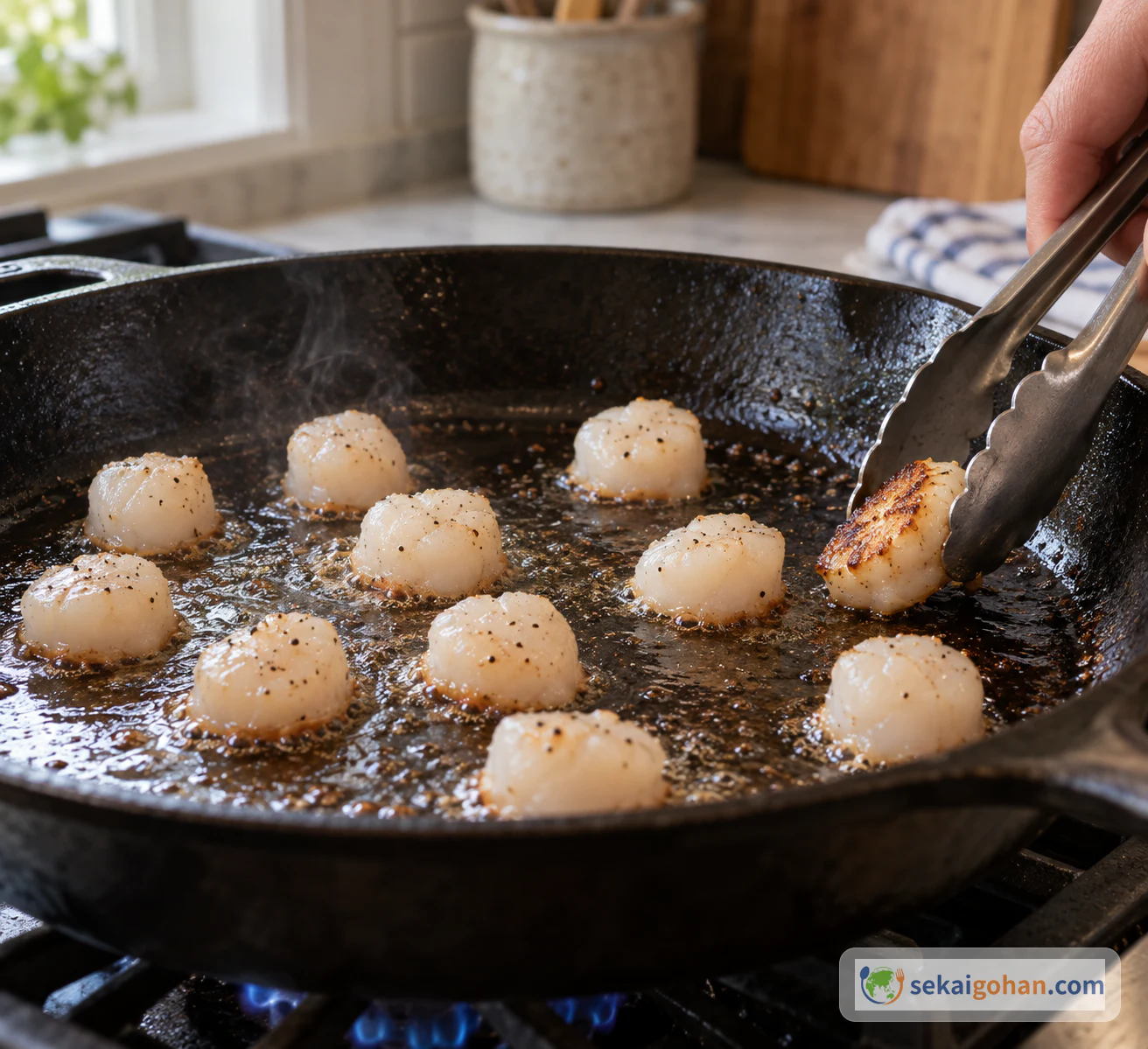
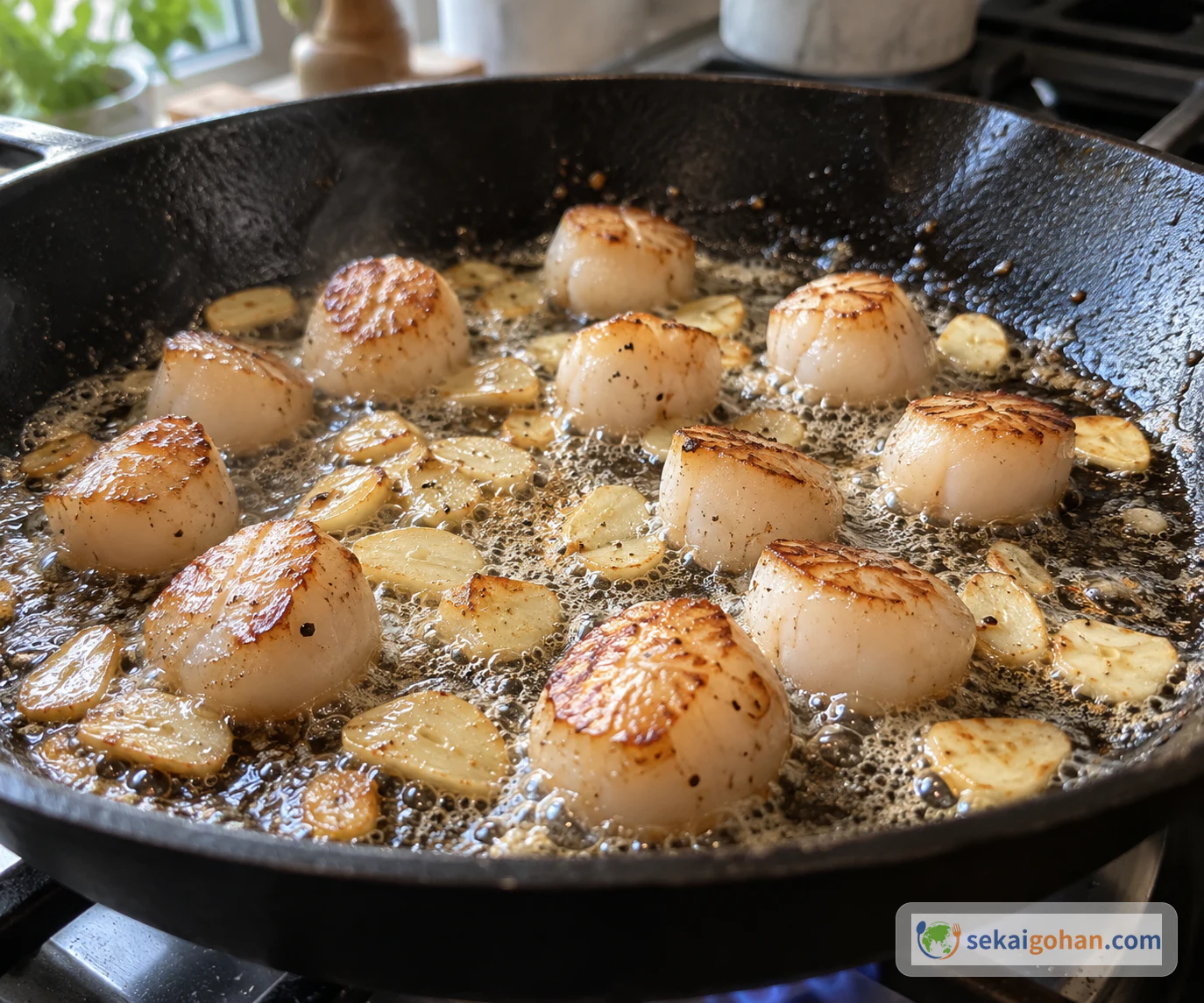
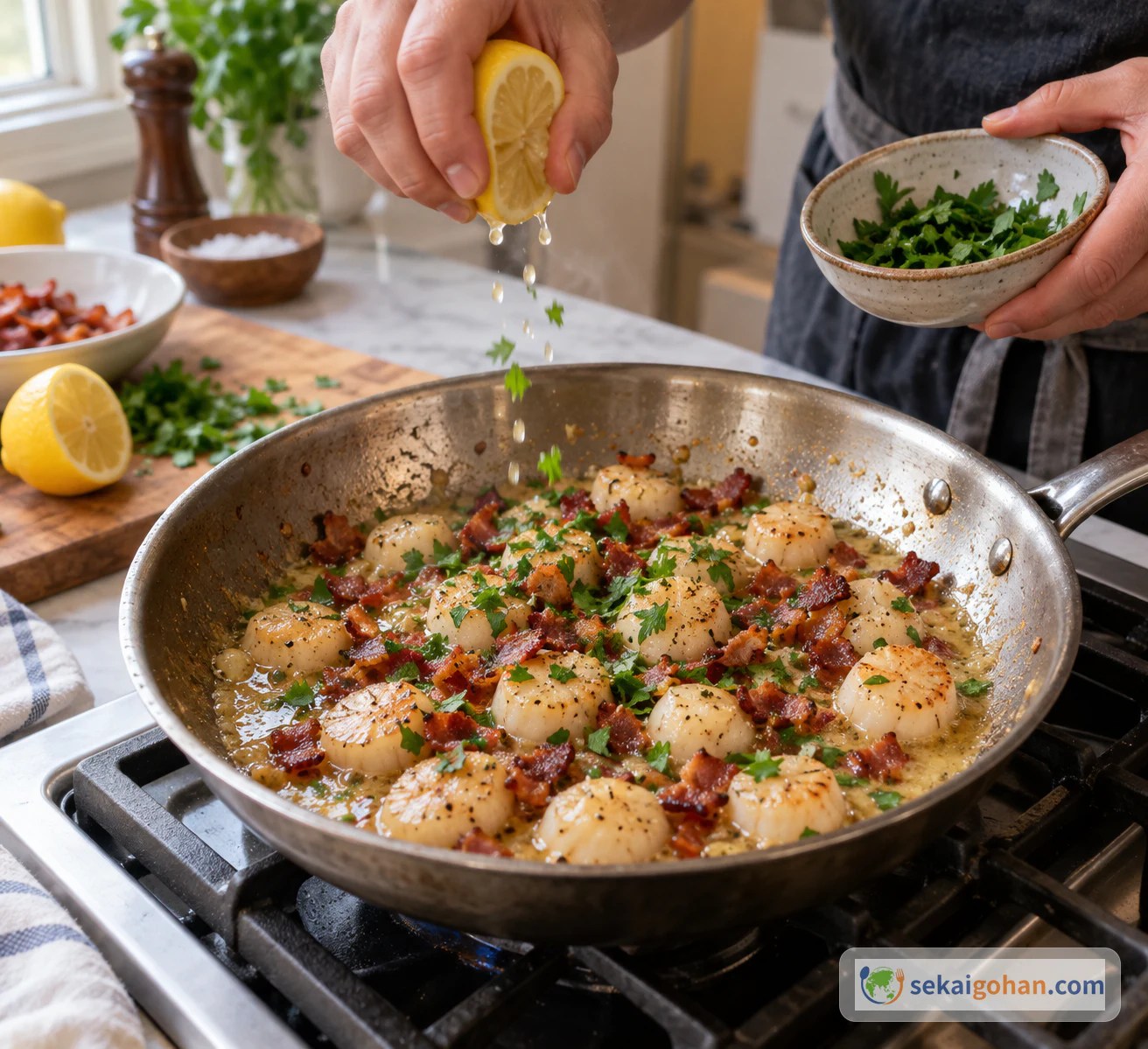
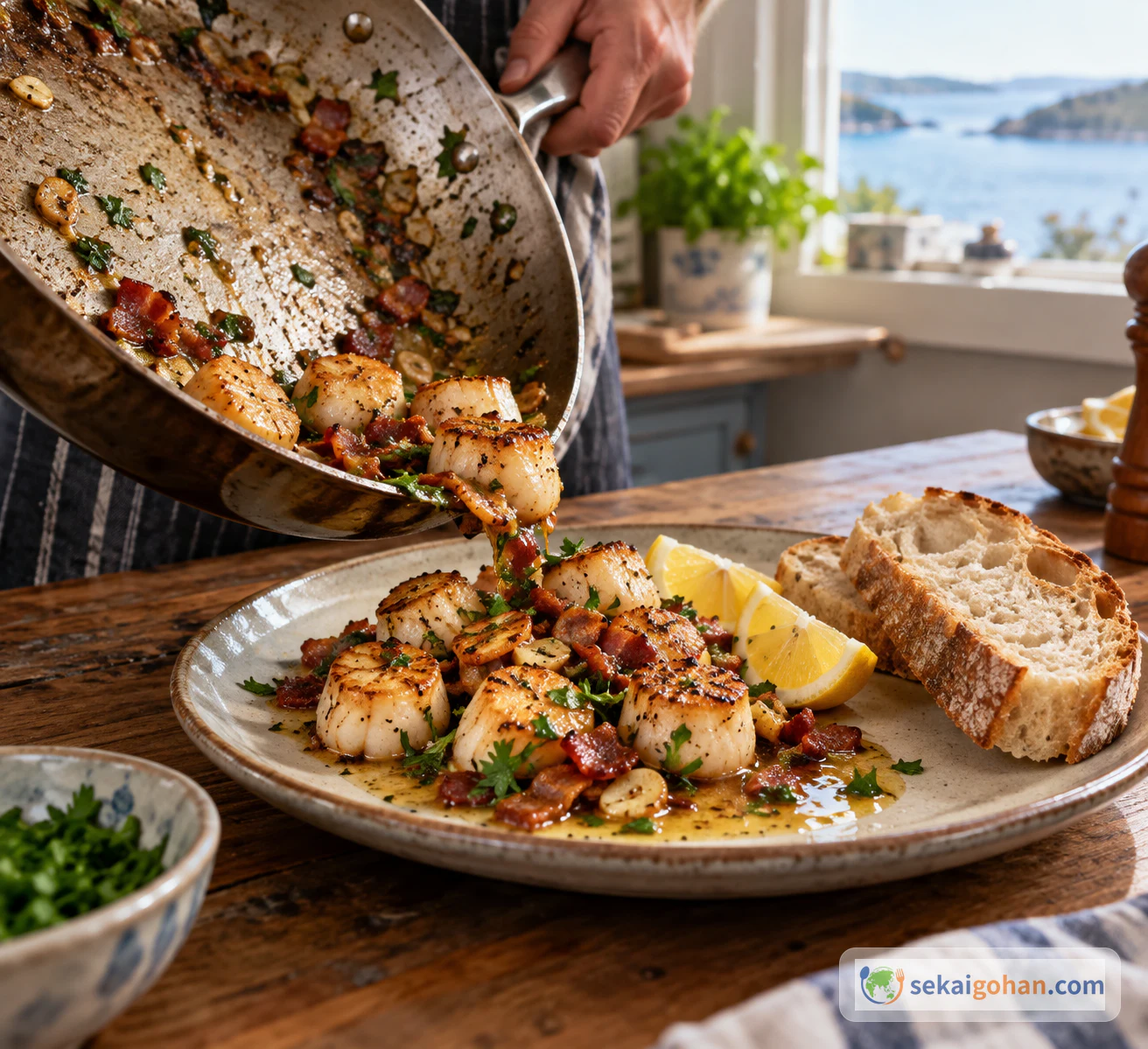
Smoked streaky bacon renders slowly in a wide pan until its edges turn golden and crisp, then comes out so small, pale queen scallops can sear in its fat in a single layer. The heat comes down, butter foams around thin slices of garlic, and the scallops turn opaque almost as you watch. Back goes the bacon with parsley and a squeeze of lemon, one quick toss, and the plate goes to the table with crusty bread to wipe up every drop.
These are queenies, the queen scallops of the Isle of Man, the island in the Irish Sea that voted them its national dish in 2018. Garlic and bacon is the pairing that became linked to that vote: smoke and salt from the bacon, butter and garlic, and a little lemon to finish.
Manx Queenies and Their Story
A Protected Name
"Isle of Man Queenies" is a protected food name for queen scallops caught in Isle of Man waters. The queen scallop's meat is considerably smaller than the king scallop's, and it can be sold with the roe on or removed. You'll also find it as dry, unsoaked meat, individually quick frozen (IQF) meat or on the half shell.
The name belongs to the place. Cooked with small scallops bought elsewhere, or larger ones from an ordinary fishmonger, this becomes a home version of the method rather than the island's own product and flavor.
From Cod Bait to National Dish
Queenies were first used as bait for cod longlines in the mid-19th century, and the name "queen scallop" has been in wide use since at least the late 19th century. Fishing changed in the 1960s, and commercial landings began at Peel in 1969, the year the queen scallop industry began.
The modern turn came in 2018, when more than 2,500 people voted and Manx Queenies were named the island's new national dish. After the announcement, a chef cooked queenies with garlic and bacon at the event and handed the dish out to those attending. It's one way among several: islanders also eat queenies in a white or cream sauce.
Today queenies sit alongside Manx Loaghtan Lamb, hot smoked salmon and smoked kippers among the island's seafood and Manx delicacies, and they're worth seeking out at local restaurants. For other cooking from around the same waters, try fish and chips from the United Kingdom and Dublin coddle from Ireland.
Ingredients: 2 Mains or 4 Starters
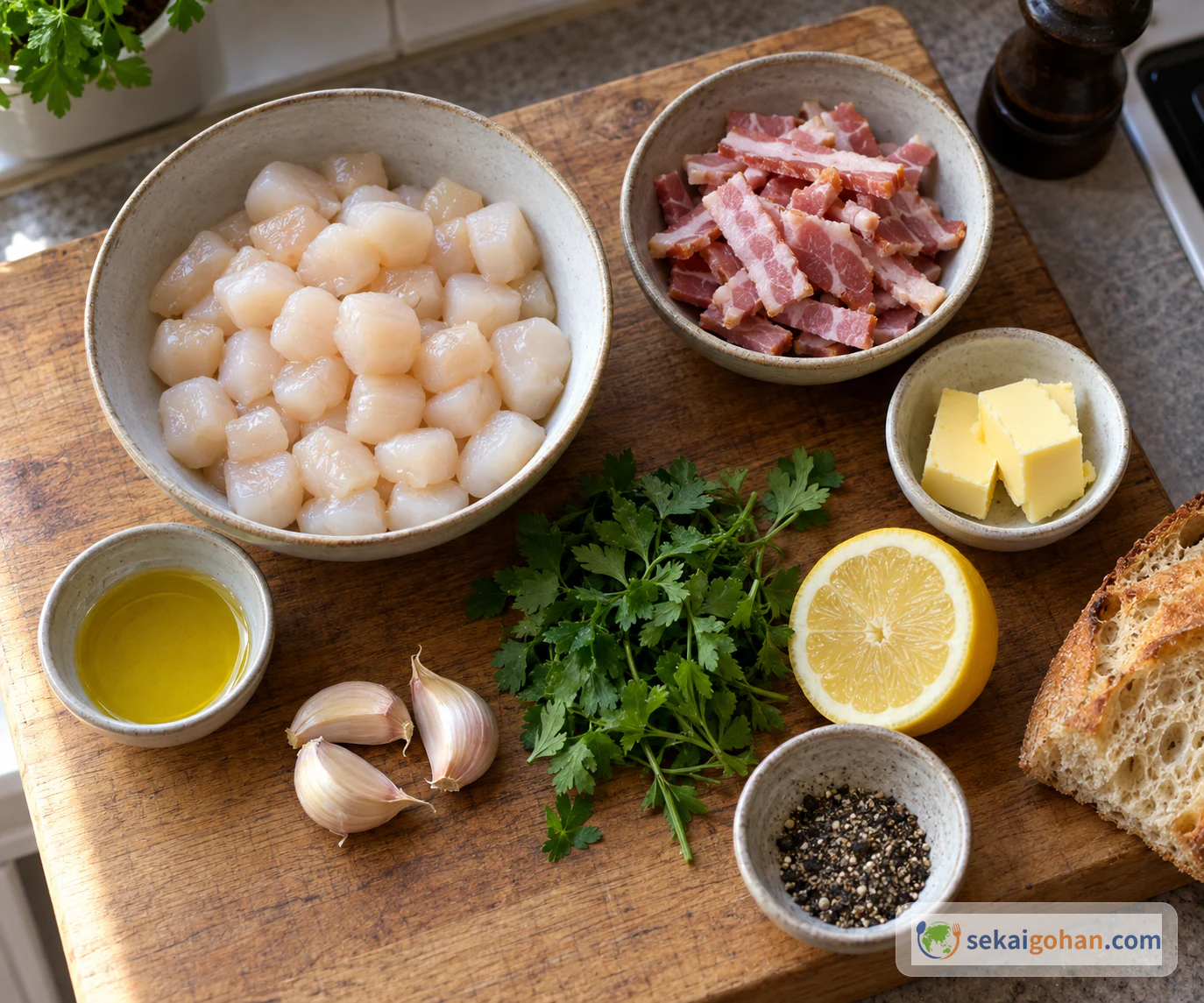
There is no salt in the list. The bacon brings salt, so taste before adding any. No egg, cream or white wine goes into this dish.
This dish contains shellfish (molluscs) and milk (butter). The bread served alongside contains wheat (gluten). Check the label on your bacon as well.
Equipment
- A large frying pan
- A slotted spoon
- Kitchen paper
- A plate for the cooked bacon (and for the first batch of scallops, if you cook in two batches)
Choosing Scallops and Bacon for Queenies
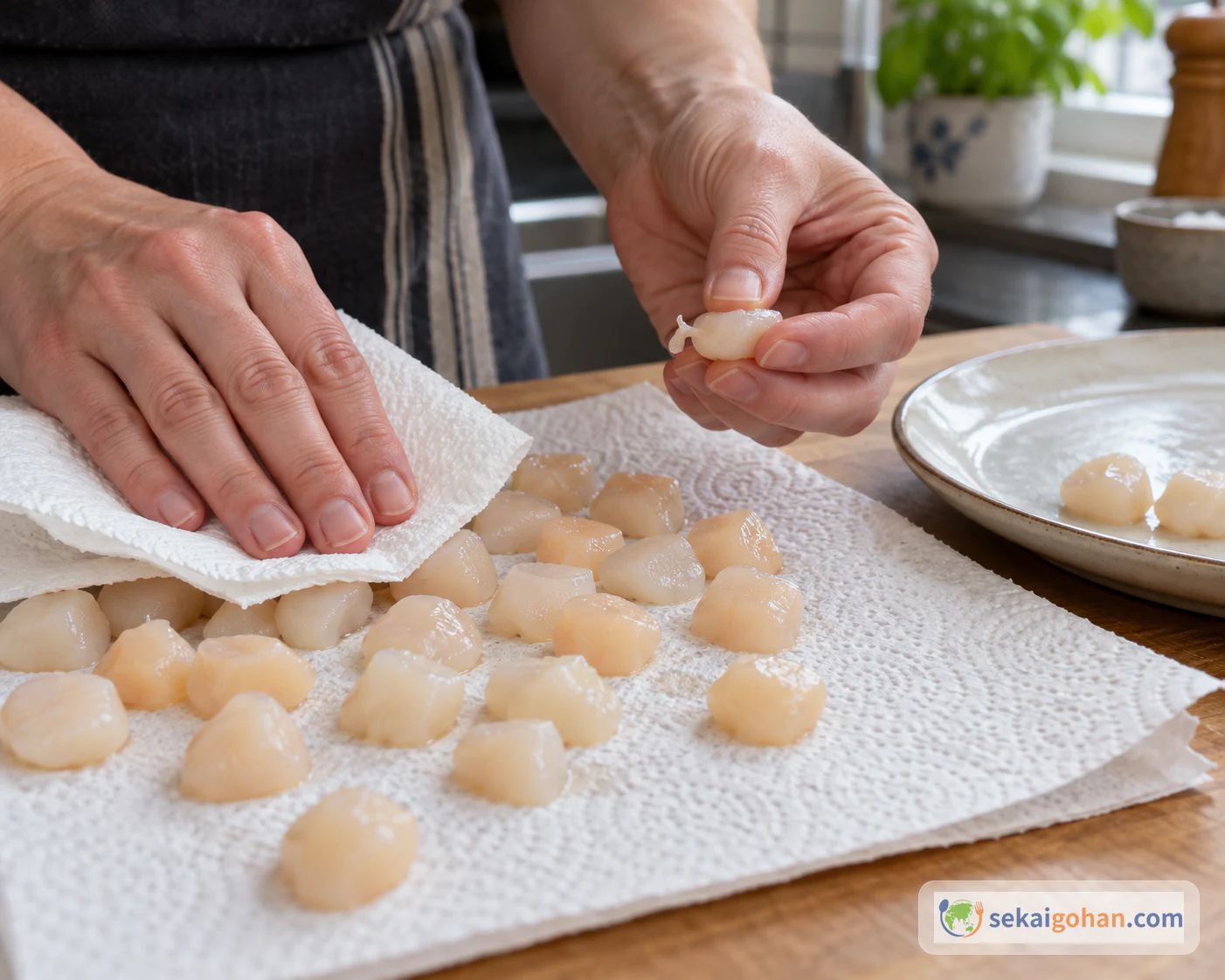
Queenies themselves: Dry, unsoaked meat browns more easily. Soaked scallops release water in the pan and color differently.
Frozen queenies: Thaw them in the refrigerator overnight, then pat them thoroughly dry before cooking. Once thawed, don't refreeze them.
Other scallops as a home substitute: If you can't get Isle of Man Queenies, use 14 oz (400g) of scallop meat from your fishmonger or supermarket, ideally sold for cooking. Ordinary scallops are often larger and thicker than queenies, so they won't cook in the same short time; check the size of each piece and judge doneness by how they look, not by the "about 1 minute per side" alone.
Bacon: The dish relies on smoked streaky bacon with a good amount of fat, both for the fat left in the pan and for its smoke. Other fatty smoked bacon can stand in, but check its saltiness and smokiness, and taste before seasoning.
Oil: Stay with rapeseed or sunflower oil, a neutral oil that simply gets the bacon started.
Method: Seven Steps, One Pan
Have everything sliced, chopped and ready before the pan goes on. Once the scallops go in, the rest moves quickly, and if you cook the scallops in two batches the whole process takes a little longer.
Fixing Wet, Tough or Bitter Queenies
Treat the times as guides and let the look of the scallops make the final call. When something goes wrong, it's usually one of these.
| What happened | Likely cause | What to do |
|---|---|---|
| The scallops released water and would not brown | Surface moisture, or soaked scallops | Pat them dry thoroughly and sear in a single layer; dry, unsoaked scallops brown more easily |
| The scallops turned white and looked stewed | Too many in the pan at once, so the temperature dropped | Cook in two batches next time. Searing for longer won't fix it |
| The scallops are tough | Too much heat carried over | Finish as soon as they are just opaque throughout and get them to the table right away |
| The garlic tastes bitter | It went in over high heat | Lower the heat to medium before adding the butter and garlic, and cook only briefly |
| It tastes too salty | Bacon saltiness | Taste before adding salt, and serve lemon at the table for brightness instead |
Serving and Storing Queenies
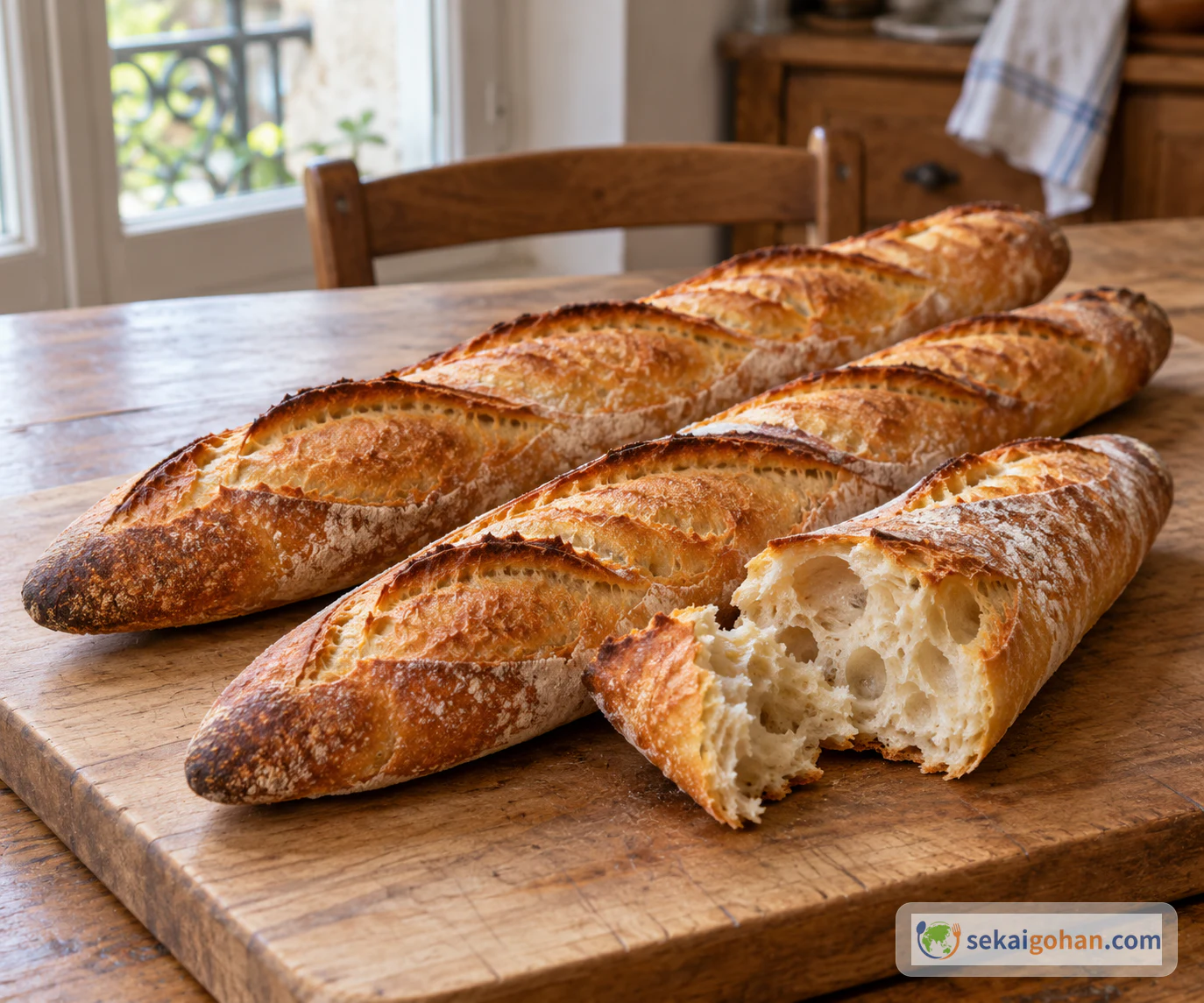
Queenies are at their best the moment they leave the pan, with crusty bread for the buttery juices left on the plate. For a starter for four, keep the same amounts and divide the pan among four smaller plates.
Keep fresh or frozen scallops refrigerated as the seller's label directs, and do not leave them out at room temperature. Do not refreeze scallops that have been thawed. Cook them until they are opaque all the way through; this dish is not meant to be eaten raw. Do not serve raw or undercooked shellfish to pregnant people, young children, older people or anyone with a weakened immune system.
Frequently Asked Questions
Should I buy queenies with the roe on or off?
Either works. Roe on adds color and a different texture alongside the white meat; roe off gives a plate of only the white meat.
Can I keep leftovers?
The scallops keep cooking in their own heat as they sit, so the dish is meant to go straight from pan to plate. Cook only what you'll eat right away.