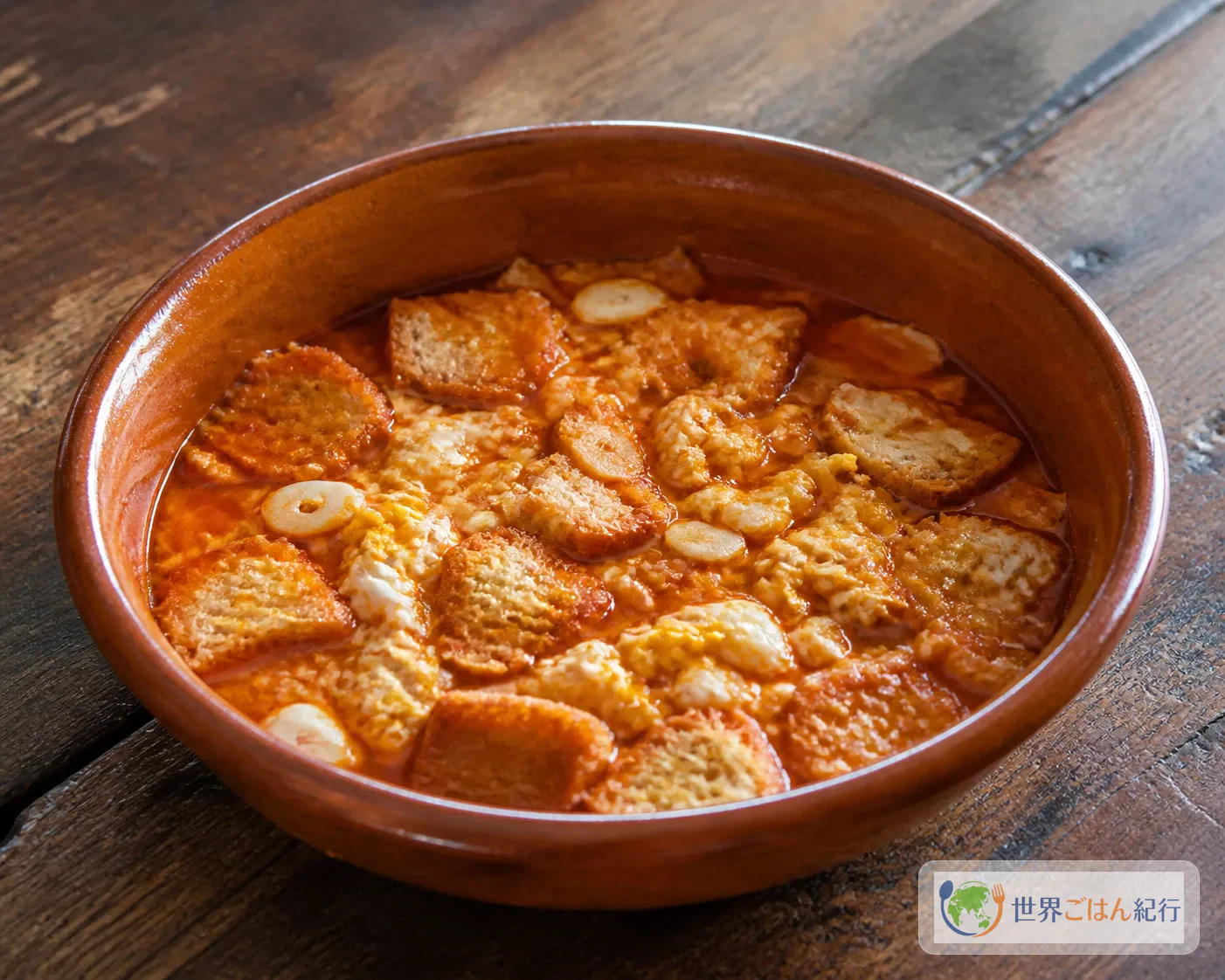
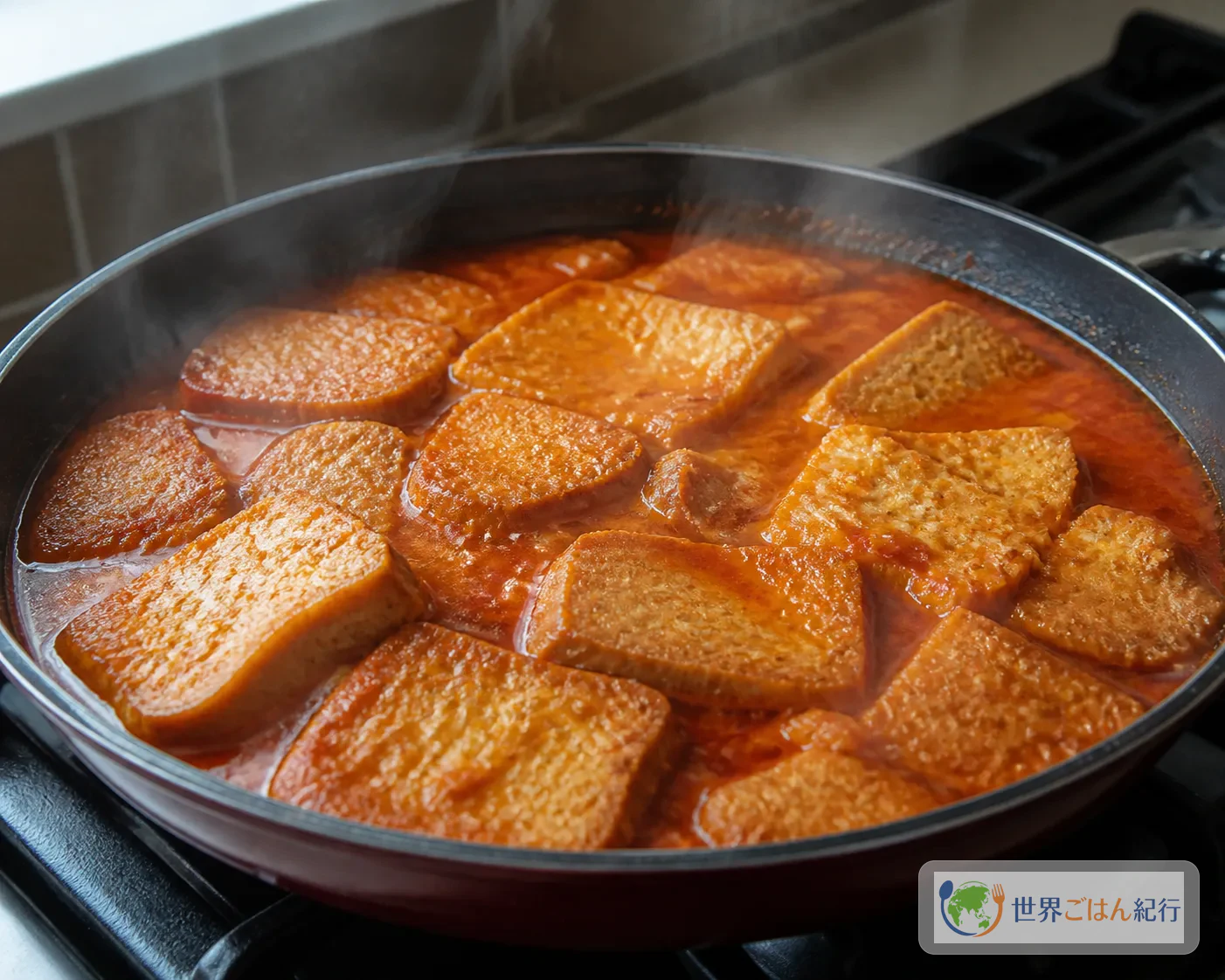
In the pot, hardened bread soaks up a red broth. Garlic cooks in oil, paprika melts into it, hot water goes in, and a slice that was only a leftover becomes an ingredient again, still keeping some of its swell. Sopa de ajo, Spanish for "garlic soup," is a home dish of bread, garlic and the red aroma of paprika. Handling the bread is the real skill here, more than the seasoning. Toast it too much and it won't soak up the broth; simmer it too long and it falls apart in the bowl.
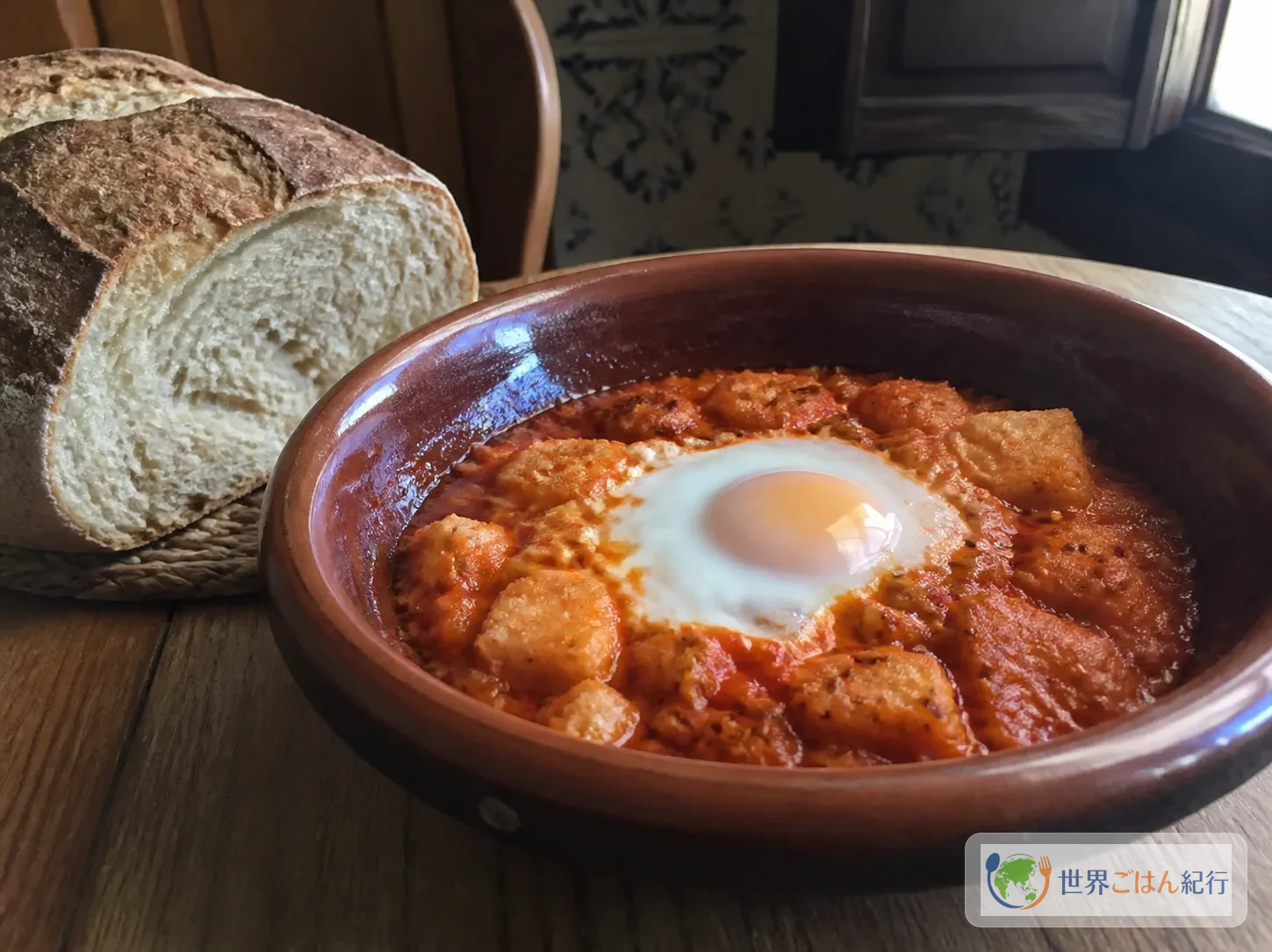
Sopa de ajo from Madrid to Zamora
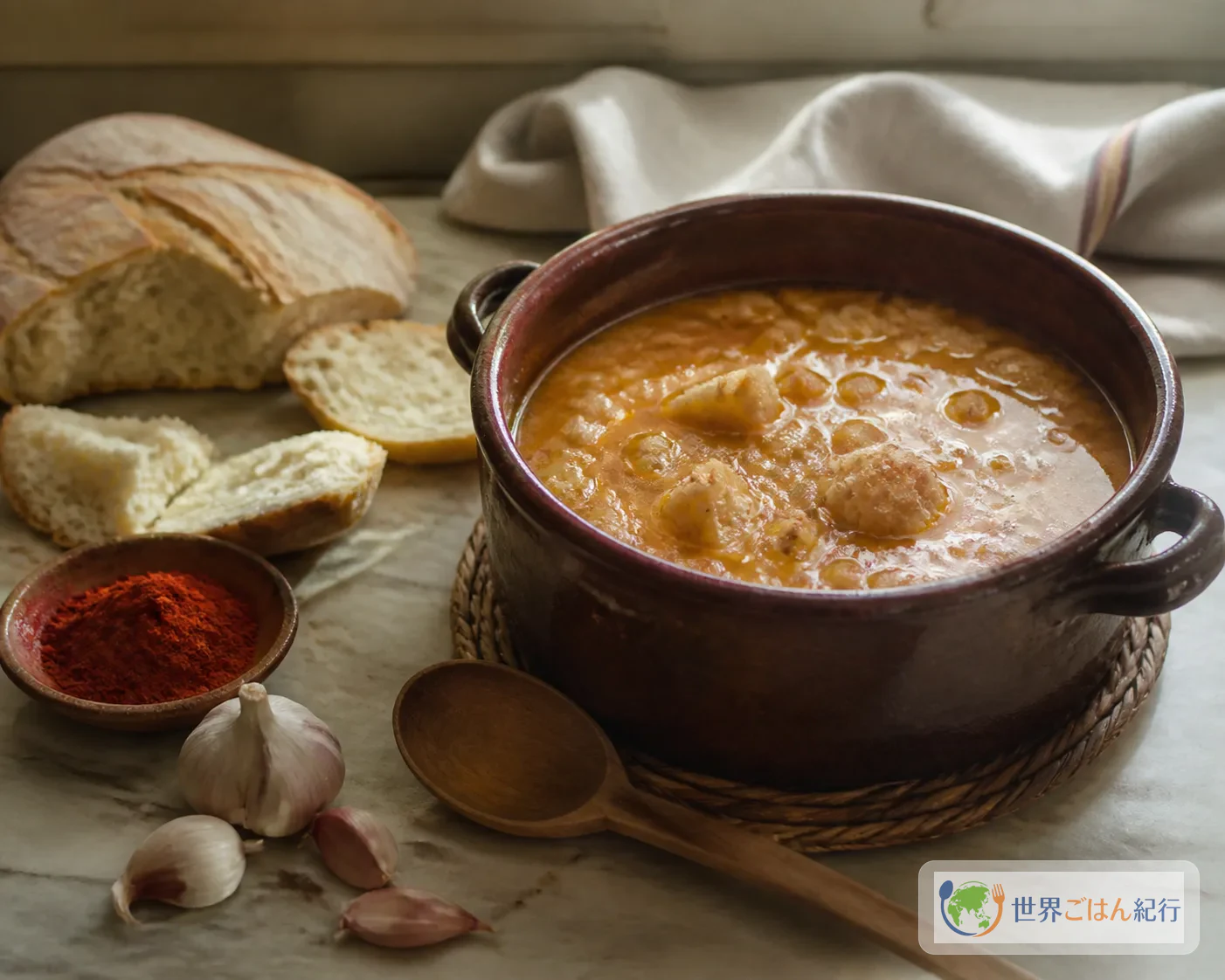
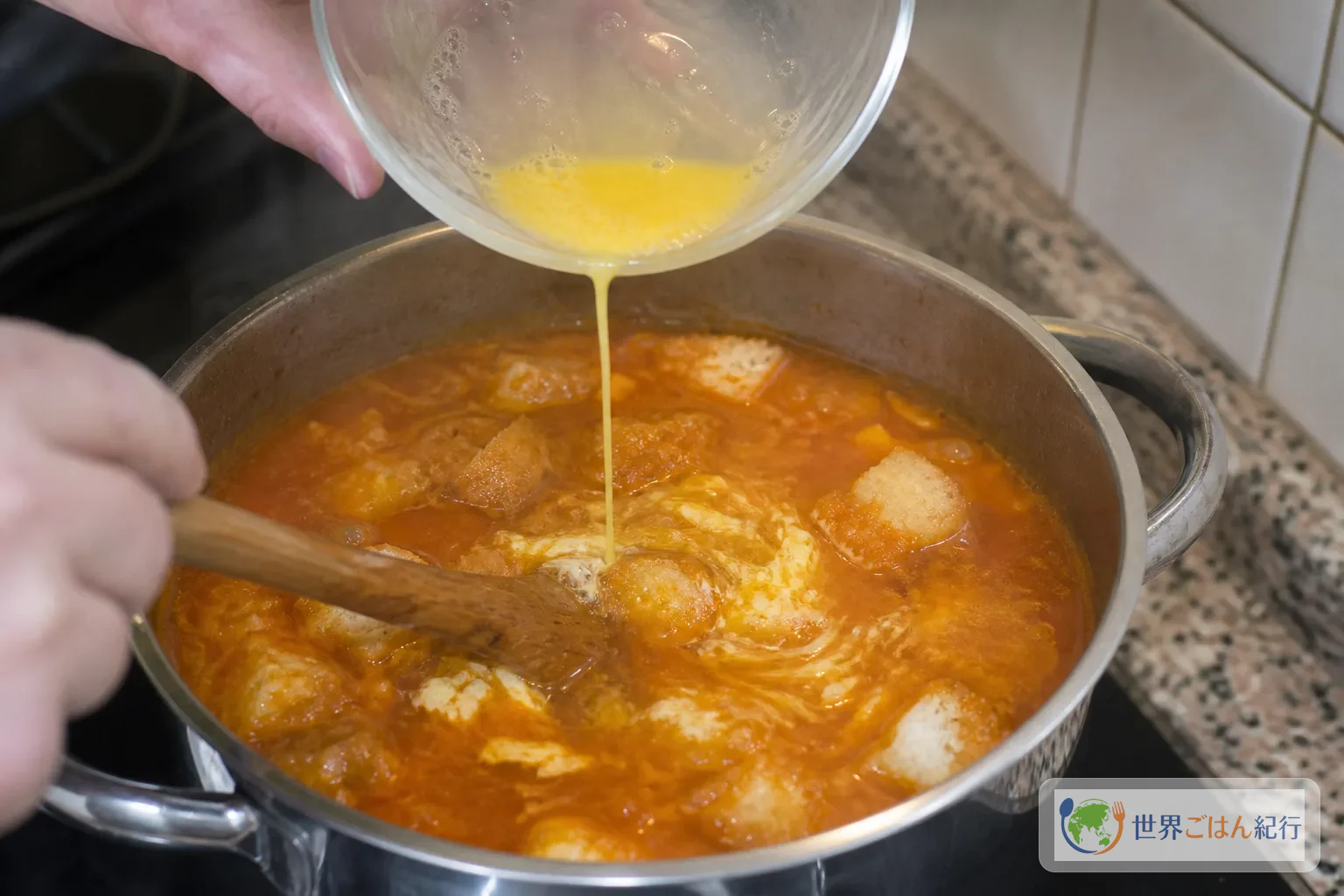
The classic Madrid version uses garlic, bread, paprika, hot water and eggs, finished with a pour of beaten egg. You can also drop one egg per person into the pot instead, or beat the eggs and pour them in for thin strands. In Castile the same dish is sometimes called sopa castellana. The name changes, but the core stays the same: hard bread eaten again in a broth with garlic and the red aroma of paprika.
Garlic soup belongs to Castile and León, and versions there run from light to ones with many ingredients. In Zamora it is eaten during Holy Week, when hot soup served in bowls fits easily into the season's observances. With everyone gathered around one pot, old bread and strong garlic stop being flaws. They're what make the meal work.
It's a frugal soup at heart. Hard bread, garlic, oil, paprika and water or stock all go into one hot pot, no old bread is wasted, and a few ingredients turn into something hearty. A dry loaf is exactly what you want, because that's what soaks up the broth.
To compare bread revived in broth with bread loosened into crumbs with oil, try migas (in Japanese). For another Spanish egg dish, the potato-based tortilla española shows how the same egg cooks differently.
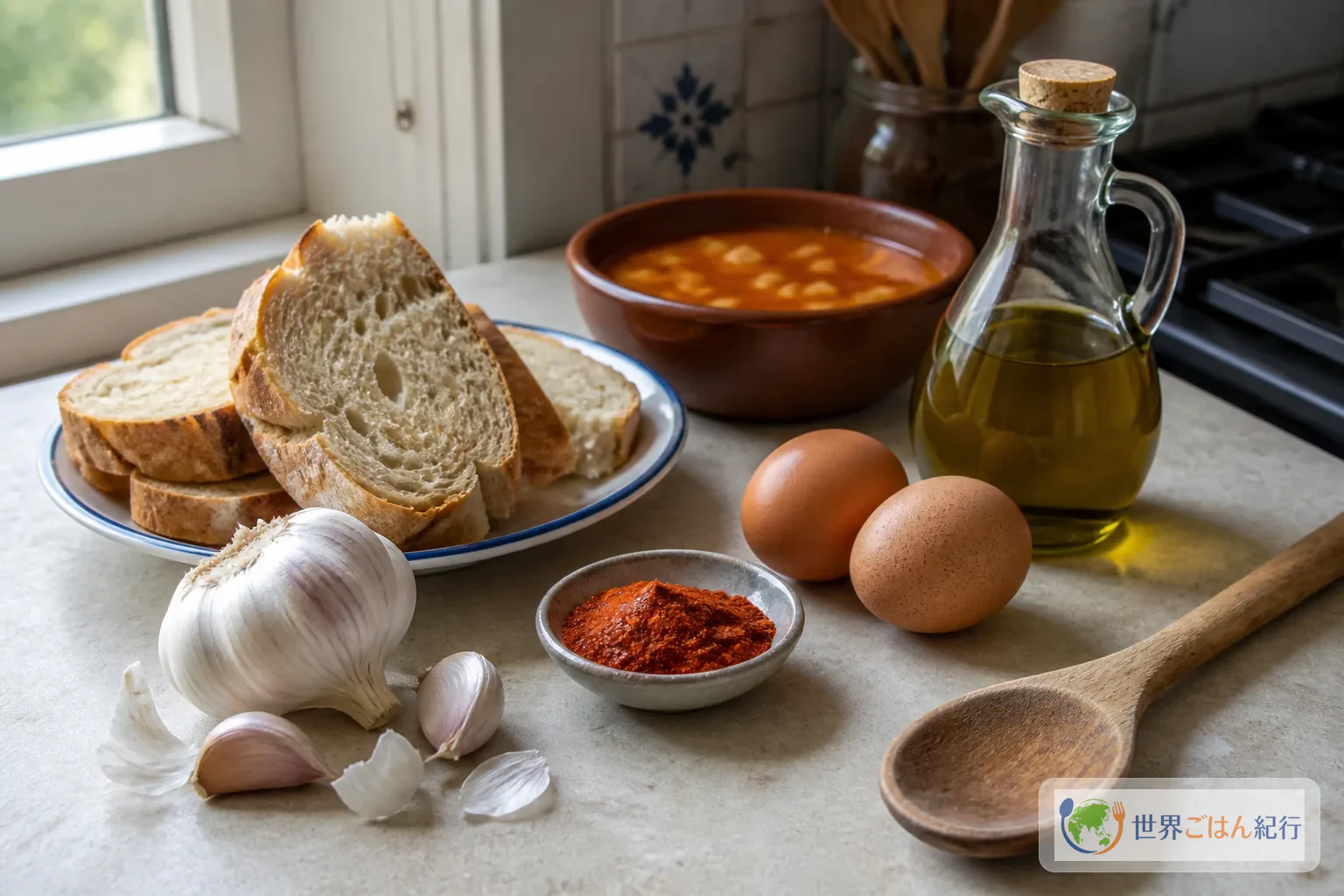
Ingredients (serves 4): decide the bread's hardness and the red powder first
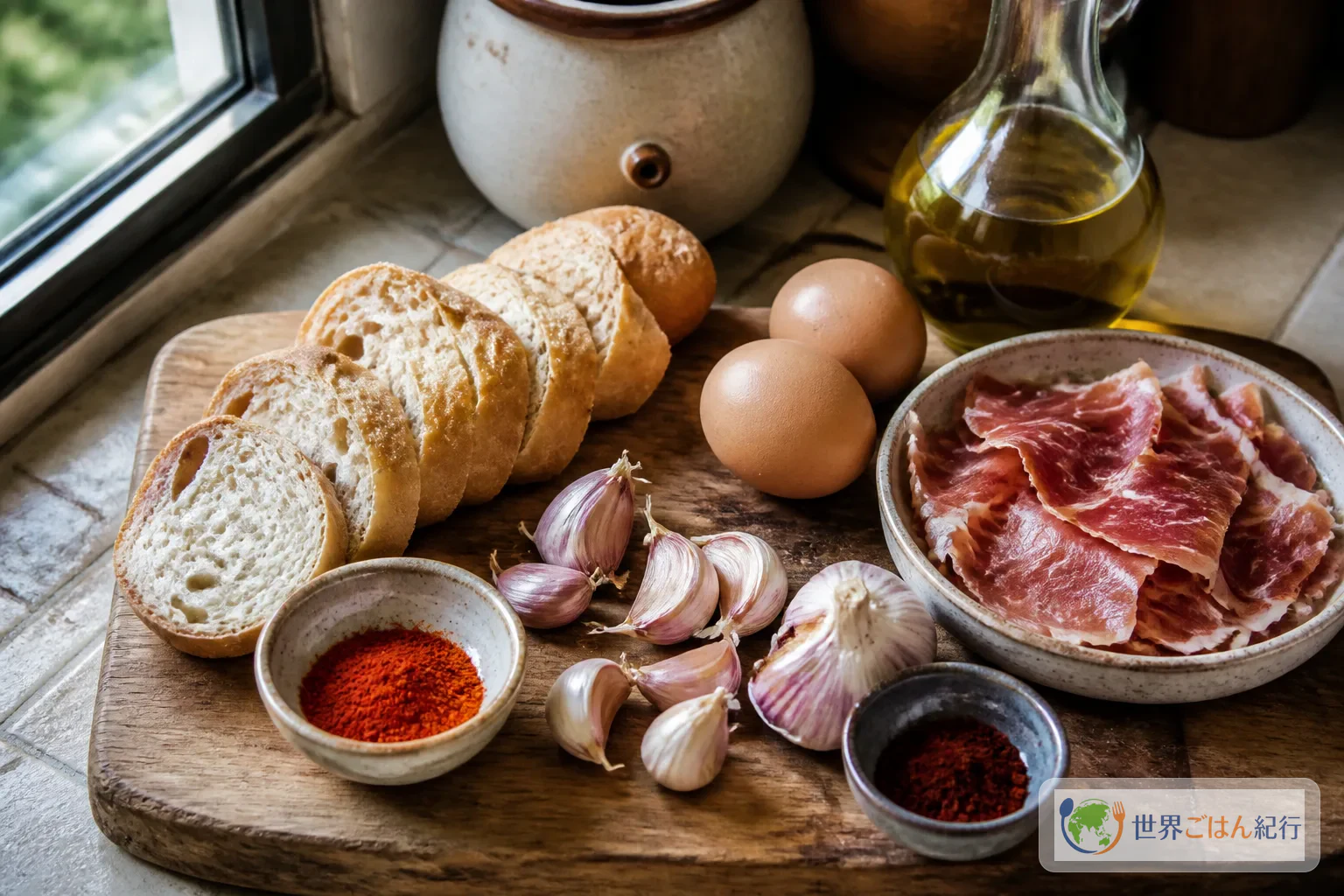
These amounts keep the soup the star while leaving some of the bread's shape in the bowl.
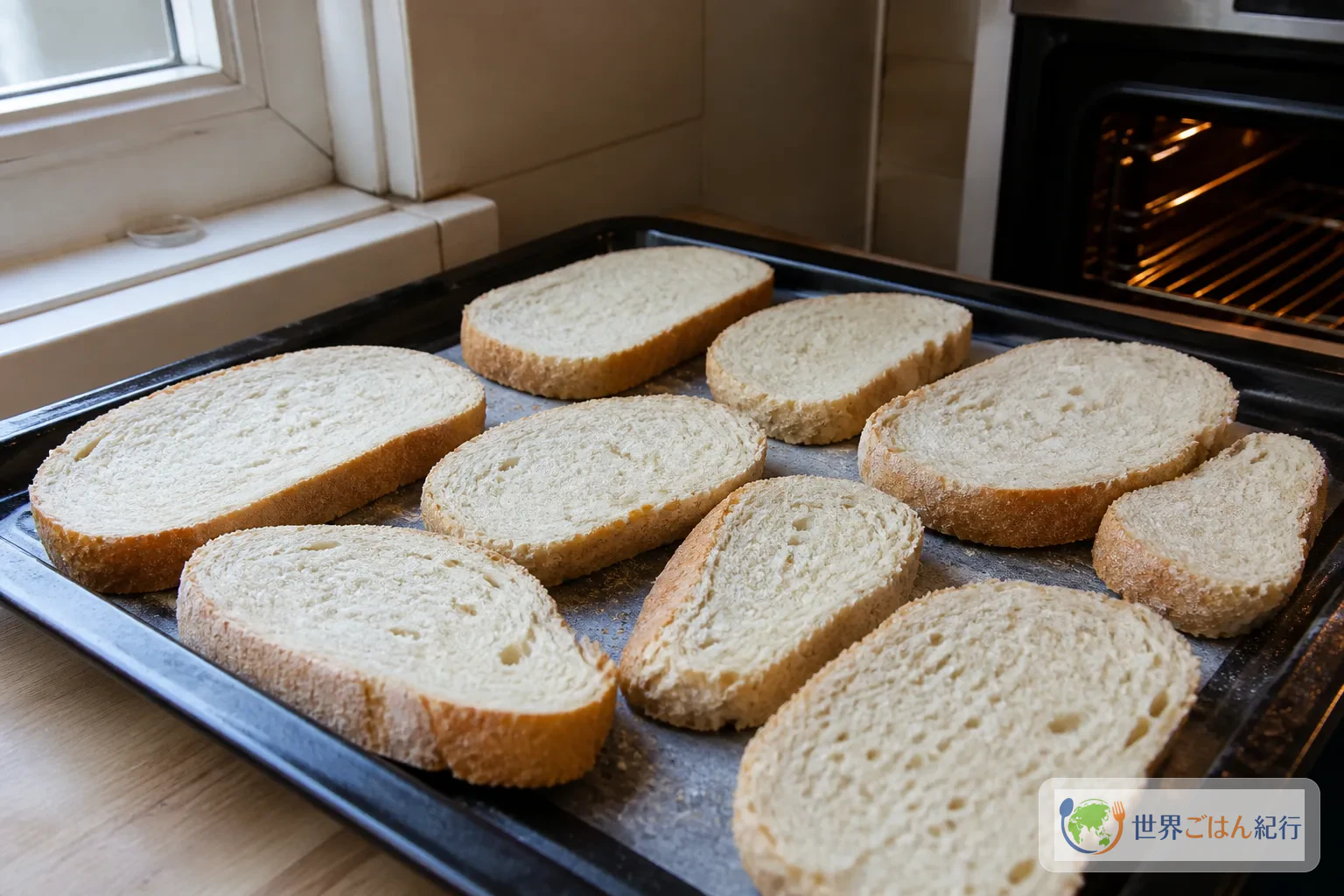
Use bread that is dry all the way through when cut, not just hard on the outside.
If you only have bread that is still soft, cut it 0.5 inches (1 cm) thick and dry it in a 300°F (150°C) oven for 8–10 minutes.
The aim is not browning, so take it out before it turns golden.
This dish uses eggs and wheat.
Ham is pork. If you add it, check the labels for allergies or dietary restrictions, and make a meatless version separately.
Choosing paprika and bread for sopa de ajo
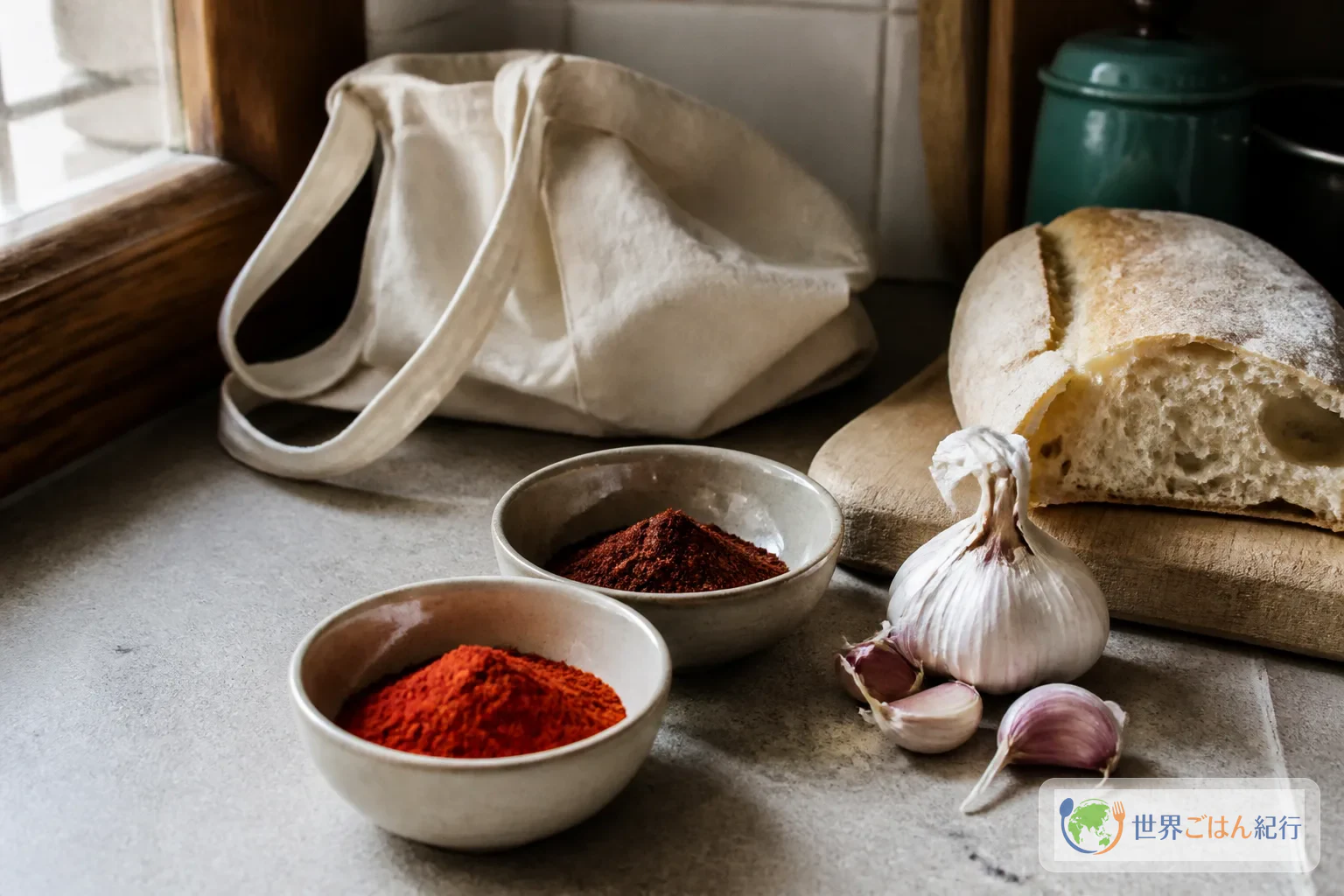
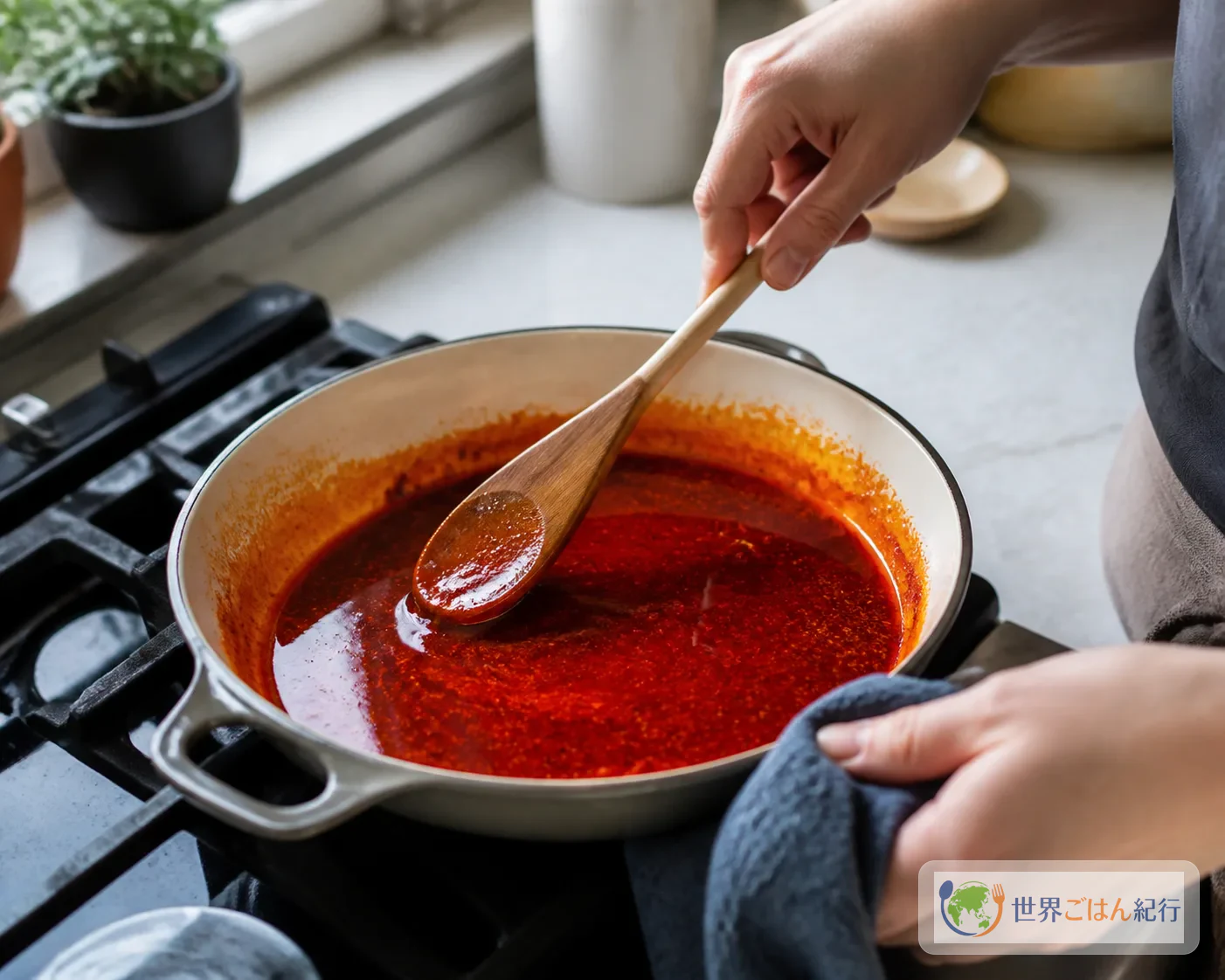
The red comes from paprika, not tomato. Sweet paprika alone is enough for the basic version, giving a gentle red color. For more Spanish aroma, make sweet paprika the star and add smoked only in small amounts, so the pot won't get too smoky.
Pimentón de la Vera is a protected-designation-of-origin product from a designated area of Cáceres province, where the peppers are harvested and dried in smoke. That aroma adds a wood-smoke note to the plain sweetness of the bread. It can wait for a later batch, though. If you have non-hot paprika at home, learn the pot with that powder first, and you'll have fewer failures.
If you do buy, check that the label says "paprika powder" and "sweet," and check the net weight. Anyone who cooks stews and egg dishes with non-hot paprika will use it up easily. If you already have sweet paprika, or only hot chili powder, skip the shopping and build the base with what's in the cupboard.
At home, what matters most is how dry the bread is and whether you scorch the paprika. Ham or chorizo can go in if you like, but the soup works without meat.
Method: turn off the heat for the paprika only, and don't let the bread collapse
Use a shallow pot about 9.5 inches (24 cm) across.
If the bread overlaps too much in the broth, only the surface gets soft. The center won't cook evenly.
The eggs can go in straight from the refrigerator, but wash the shells before cracking them, and don't use any that are cracked.
Fixing common sopa de ajo problems
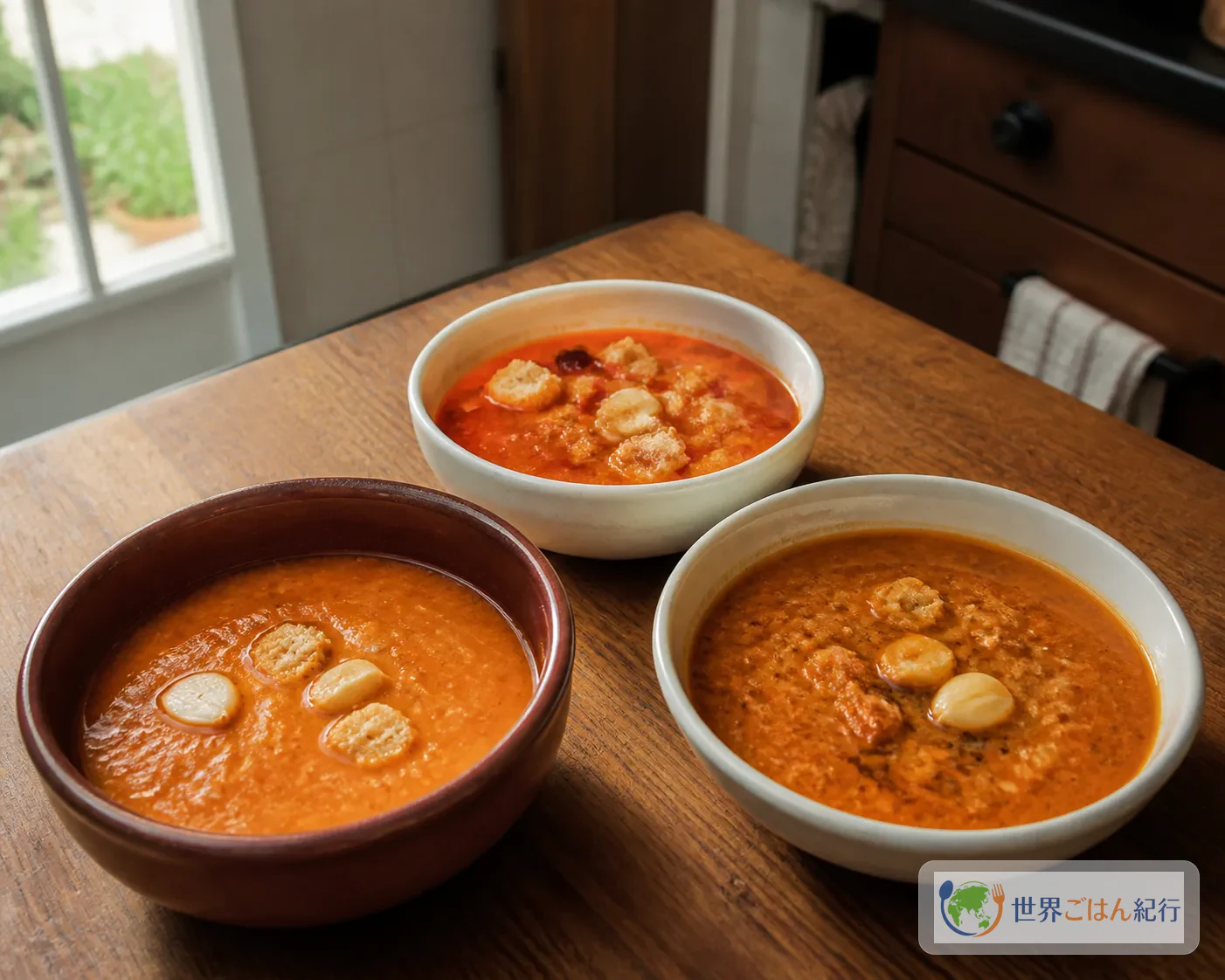
Judge the pot by the state of the bread and the broth, not by how red it looks.
Bread that stays hard
Different breads absorb different amounts of liquid. If hard parts remain, add just 3.5 tbsp (50 ml) boiling water and wait 3 minutes over low heat. Giving the bread time to take in water to the center, rather than simmering longer right away, keeps its shape.
Broth that turns heavy
Too much bread turns the pot into a soft bread dish rather than a soup. Instead of cutting the bread from the start, add 3.5 tbsp (50 ml) to ½ cup (100 ml) boiling water and adjust the salt last. A pale broth is fine as long as the oil still smells of paprika; the flavor is still there.
Bitter garlic
Garlic scorched black won't recover, and sugar only covers it up. If the bitterness is slight, move the unscorched soup to another pot and dilute it with a little more bread. If black specks have spread, let that pot go, and next time stop the garlic at pale gold.
A pot that's too small
When bread overlaps in the pot, some parts cook and others don't. With only a small pot, make two servings at a time, dividing the water and paprika oil in half. One pot is still better than combining separate batches at the end, because the egg sets more evenly.
Sopa de ajo variations
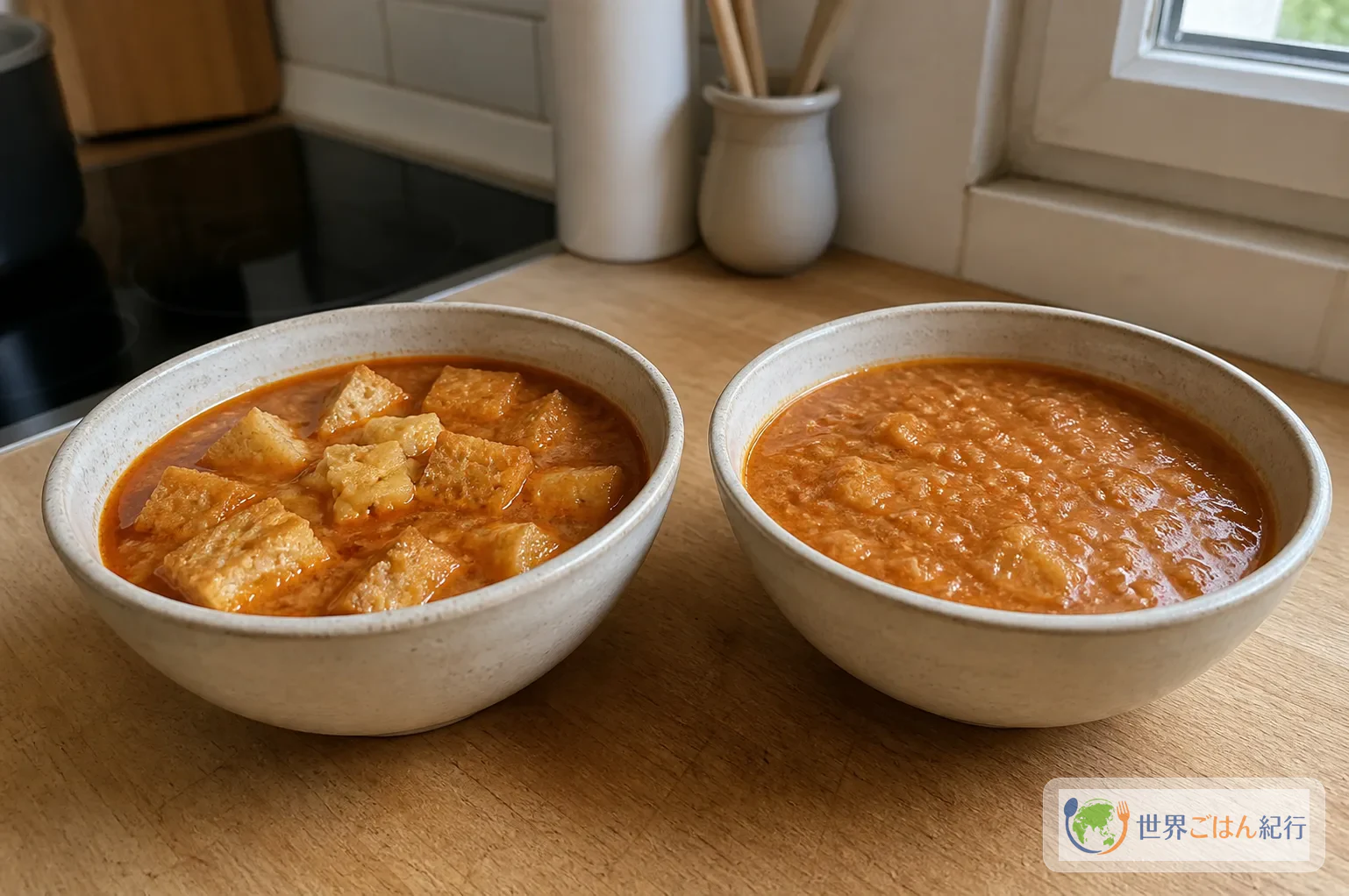
Madrid style with sweet paprika and egg
For the Madrid style, make it with sweet paprika, bread, garlic and egg, leaving out the smoked paprika and ham. You can also replace the boiling water with water. If it tastes light, add one more clove of garlic before reaching for more powder; it keeps the outline of the soup better.
Heartier Castilian style with ham
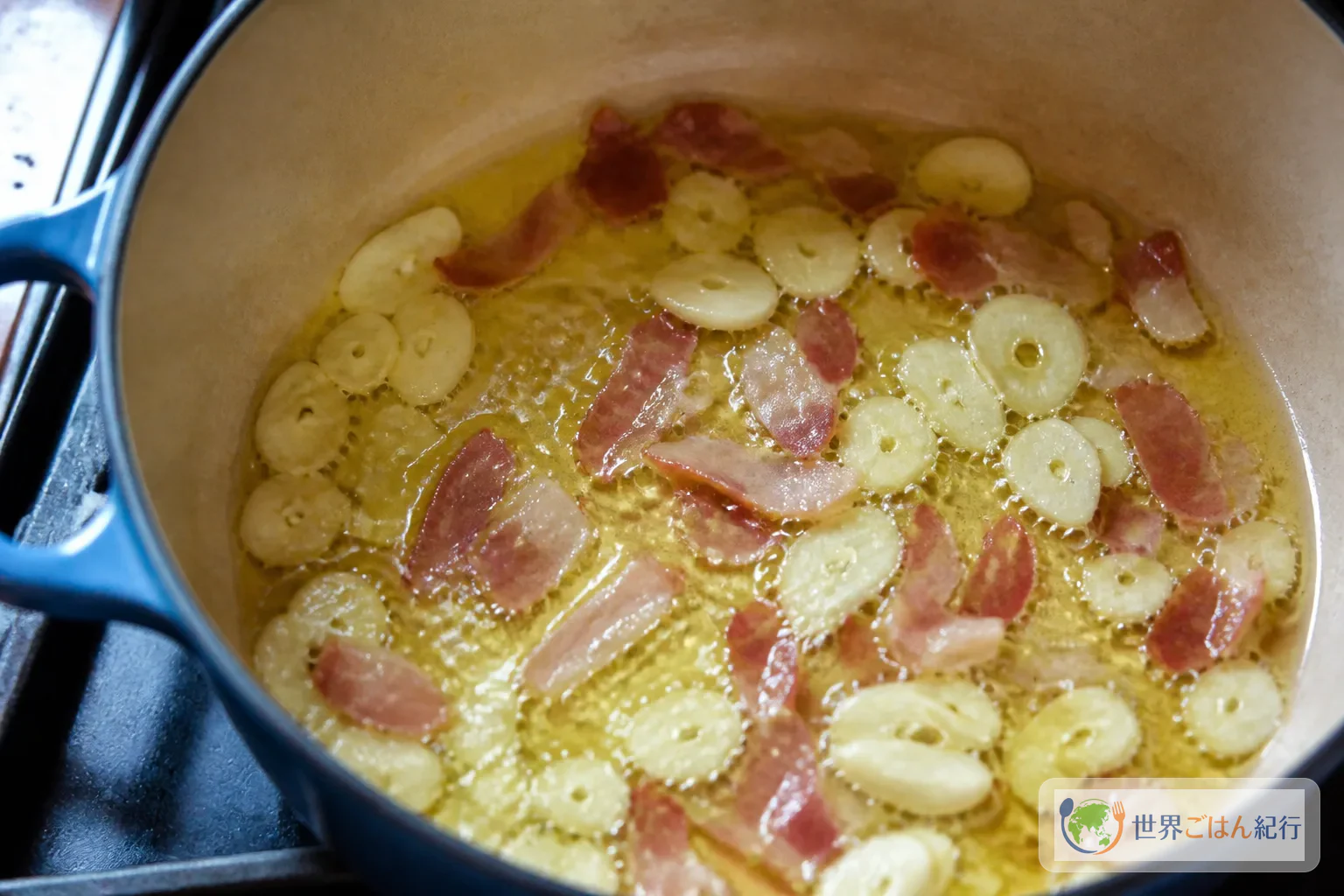
One version adds jamón serrano. Rather than sautéing the ham with the garlic, add it to the oil for just 1 minute once the garlic's aroma comes out. The ham sets the salt early, so use unsalted stock and taste at the end.
Zamora style with tomato and a little heat
Zamora has a variation with ripe tomato and hot chili. For four servings, coarsely chop 1 ripe tomato and sauté it 2 minutes before pouring in the boiling water. Use only a few slices of hot chili and add them to each plate, so everyone can adjust the heat.
Meatless version
Without ham, use the same 3 tbsp (45 ml) olive oil and adjust the salt last. If you add mushrooms or roasted peppers, drive off their moisture in a separate pan and serve them beside the bowl. Added to the pot from the start, they increase the broth the bread takes up and the finish gets heavy.
One whole egg per person
Instead of beaten egg, at the end of step 4 bring the soup to a weak simmer and crack in one egg per person. Cover and simmer 2–3 minutes until the white sets, leaving the yolk in the center of the bowl. For a soft yolk, check the egg's label and storage first so it is safe to eat that way, and cook the egg to suit your family's needs.
Serving and storing sopa de ajo
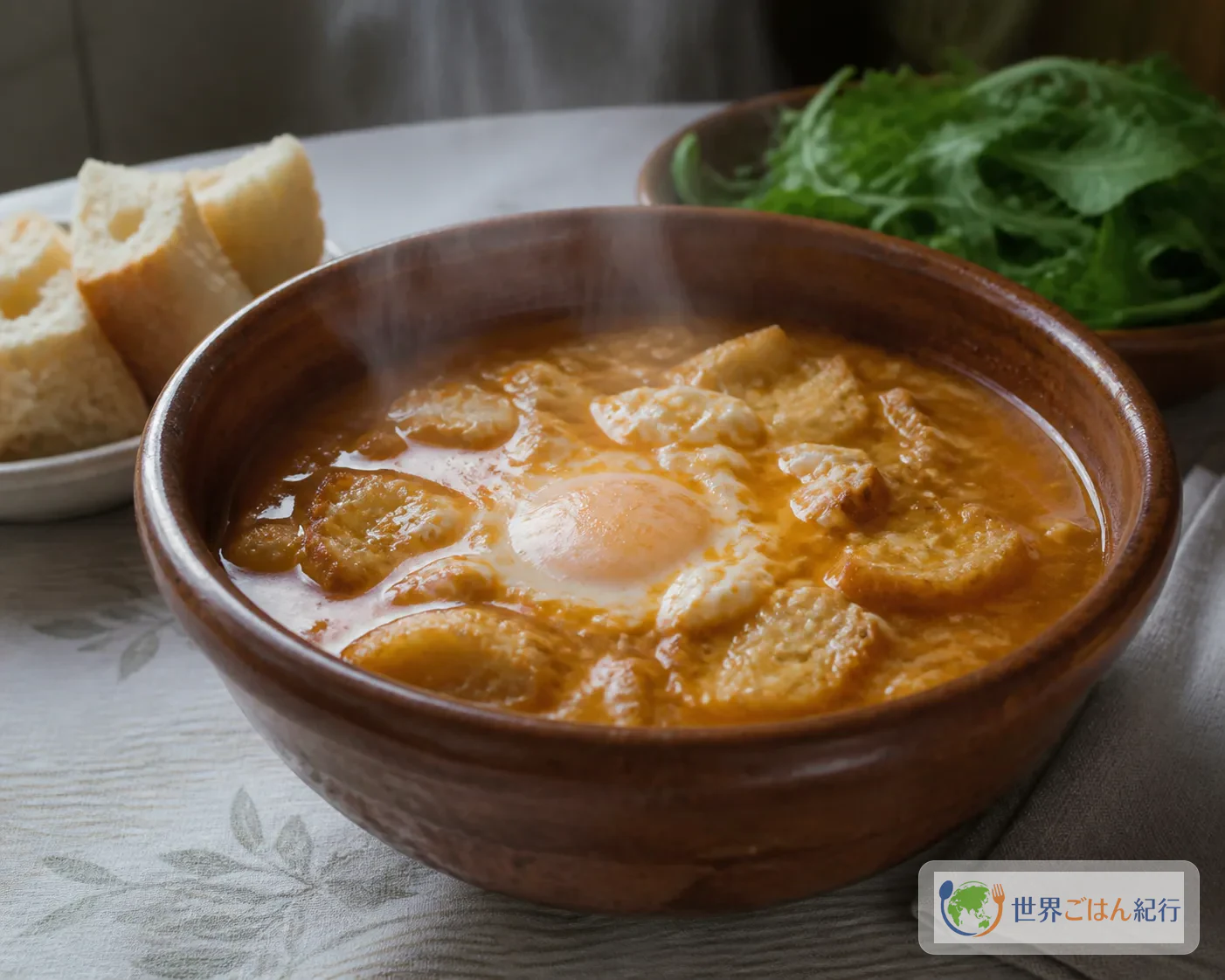
The soup keeps changing once it leaves the pot. In a hot bowl, the surface of the bread keeps taking up broth while the center holds its shape; in a cold bowl, the temperature drops before you start eating and the bread softens all at once. Serve right before eating, with just a little parsley and olive oil on top.
On the side, pick unsalted thin bread, a tart leafy vegetable, or sweet grapes. They keep the red broth from feeling scattered.
Sopa de ajo stores safely, but the bread's texture suffers. For the best texture the next day, set aside what you won't eat just before the bread goes into the broth, or at least before adding the egg, and cool the broth and bread separately. If the egg is already in, move the soup to a shallow storage container and don't leave it at room temperature.
Refrigerate leftovers within about 2 hours, keep the refrigerator at 39°F (4°C) or below, and use leftover soups and stews within 3–4 days. When reheating, heat to 165°F (74°C) at the center.
FAQ: sorting out the names and the handling of the pot
Are sopa de ajo and sopa castellana the same?
They're names for the same family of dishes rather than one fixed recipe. Across Spain the core is bread, garlic, paprika and hot water or stock, while the egg, the ham and how the egg goes in vary. Names shift from one restaurant to another, so search both to find regional differences.
Can I make it with fresh bread?
You can, but dry it first at 300°F (150°C) for 8–10 minutes. Browning makes it toasty, but burnt bread adds to the paprika's bitterness, so keep it pale; it's easier to handle.
Can I make it with only smoked paprika?
You can, but all smoked gives a strong aroma. Build on sweet paprika and replace only part, such as 6 g sweet and 2 g smoked, so the flavor of the bread and egg still comes through. If smoked is all you have, try starting from 1/2 tsp for four servings.
Is it an authentic dish without ham?
Yes, garlic soup without ham holds together well. You do lose some saltiness and savor, so before strengthening the stock, sauté the garlic without scorching it and decide the salt last.
Can I leave the egg soft?
You can leave the yolk soft, but for the basic home version, cook until the white and yolk are firm. Cook egg dishes to 160°F (71°C), until the white and yolk are set. If you want a soft egg, take care it isn't undercooked, and consider the egg's storage and your family's health and ages.
How is it different from migas?
Both use hard bread. For migas, you sauté moistened bread and loosen it into crumbs; sopa de ajo simmers the bread in paprika broth and is eaten as a soup. Even with the same ingredients, keeping the liquid in the pot or driving it off at the end makes a different dish.
Because this is a dish whose ingredients and names change by region, the skeleton is based on information from public tourism bodies, Spain's Ministry of Agriculture, Fisheries and Food, and FoodSafety.gov, adjusted to amounts that are easy to handle in a home pot. We did not simply copy the amounts of the official recipes, but added steps for judging the state of the bread and a home-oriented choice based on sweet paprika.