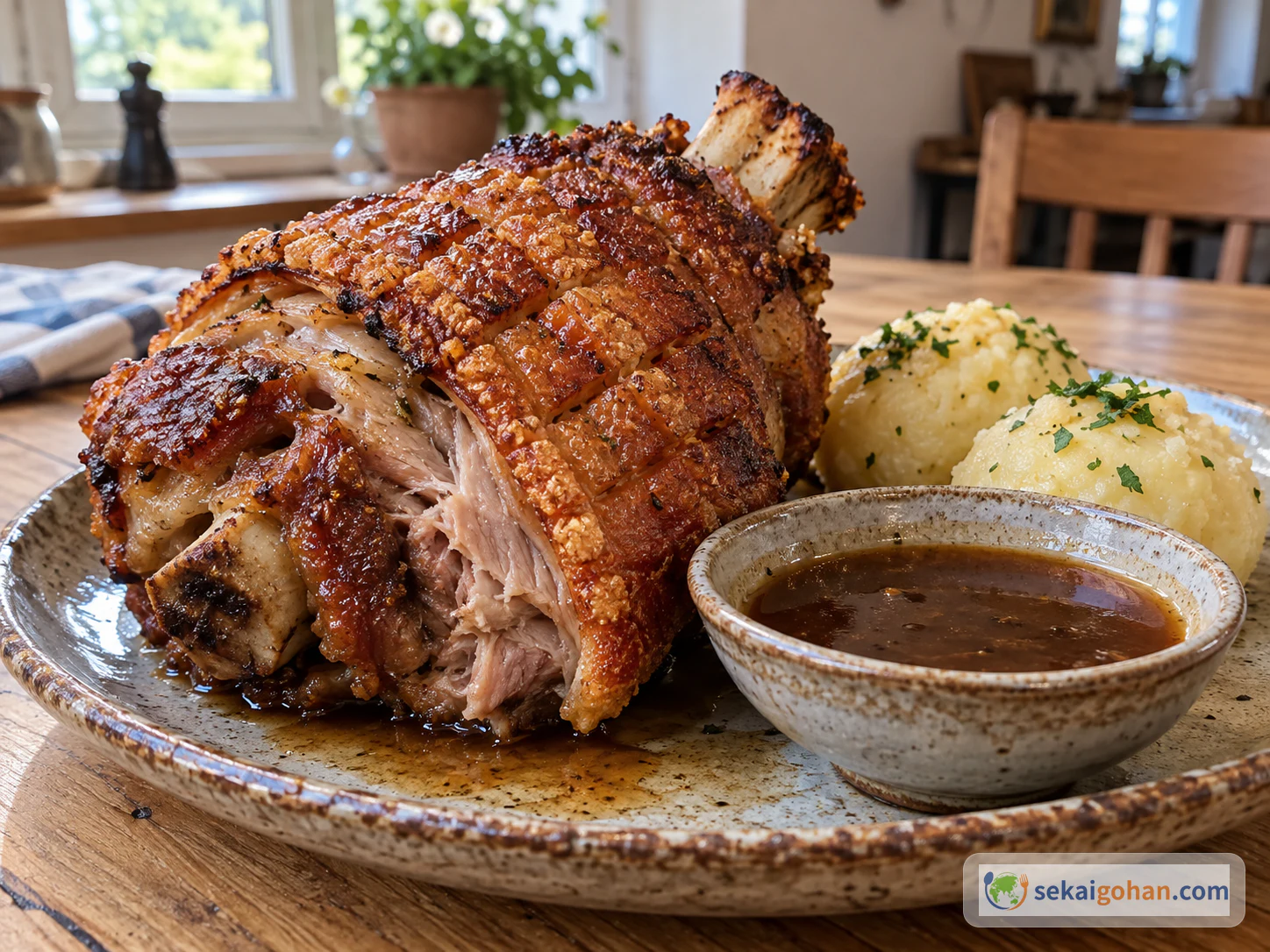
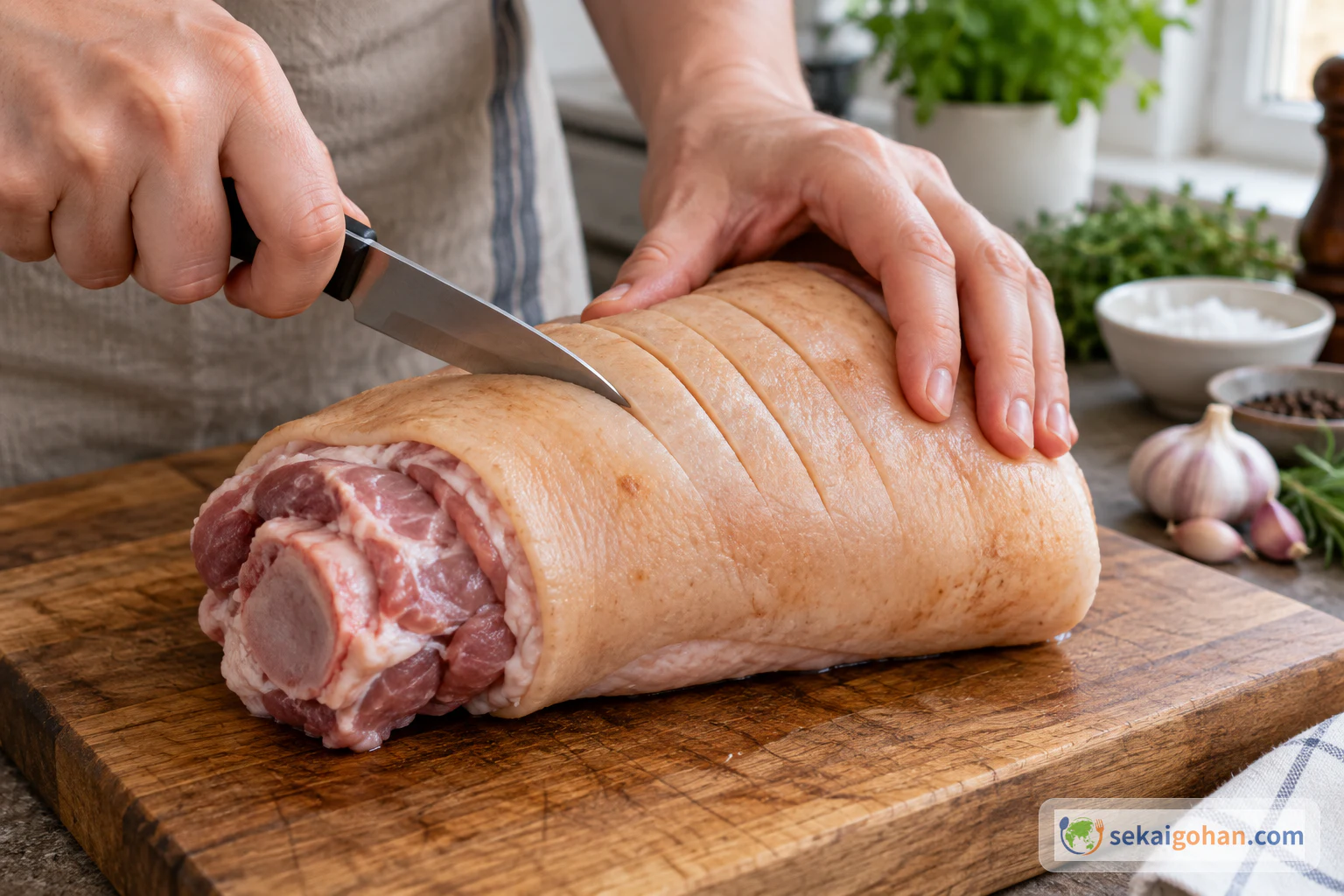
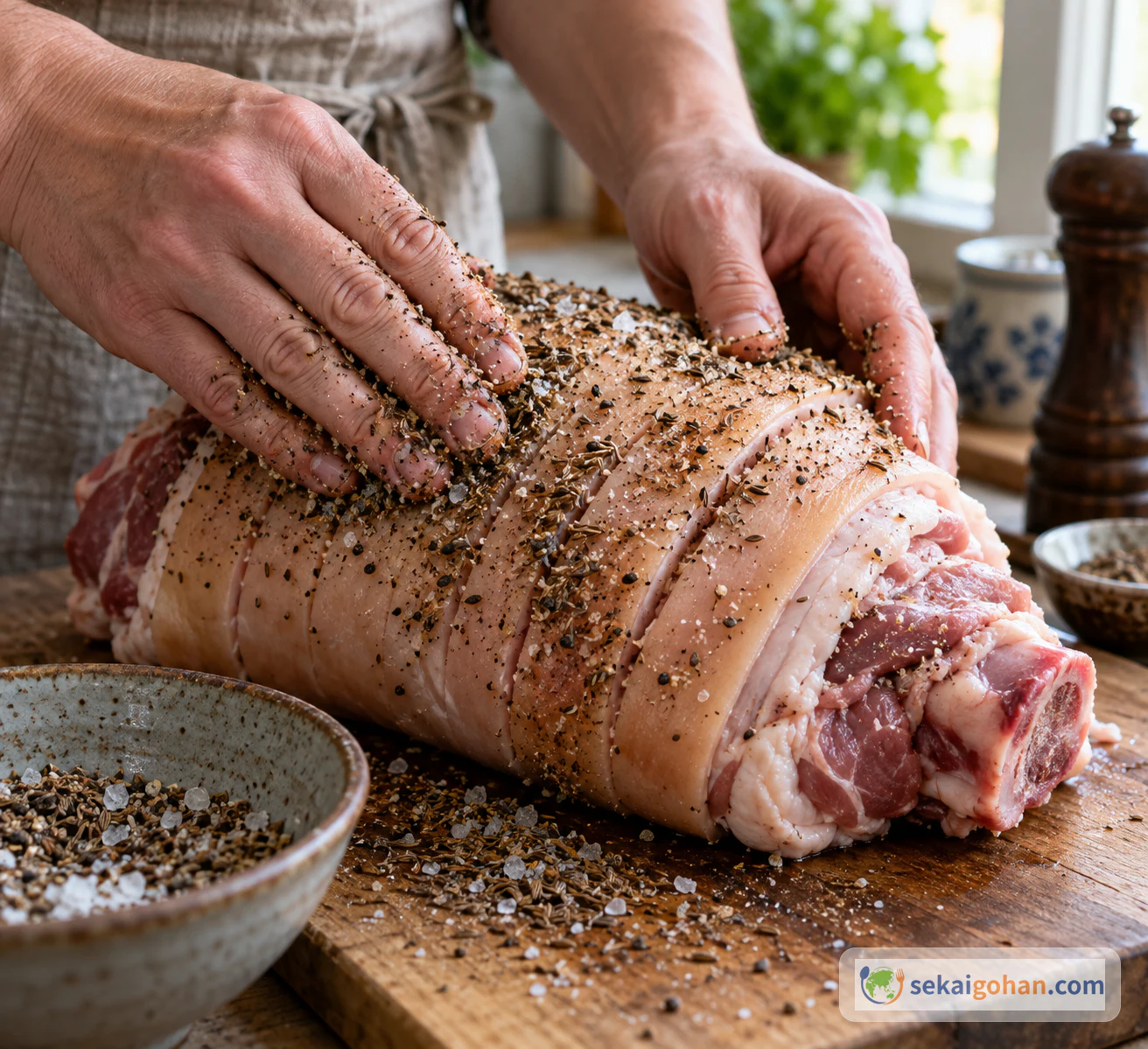
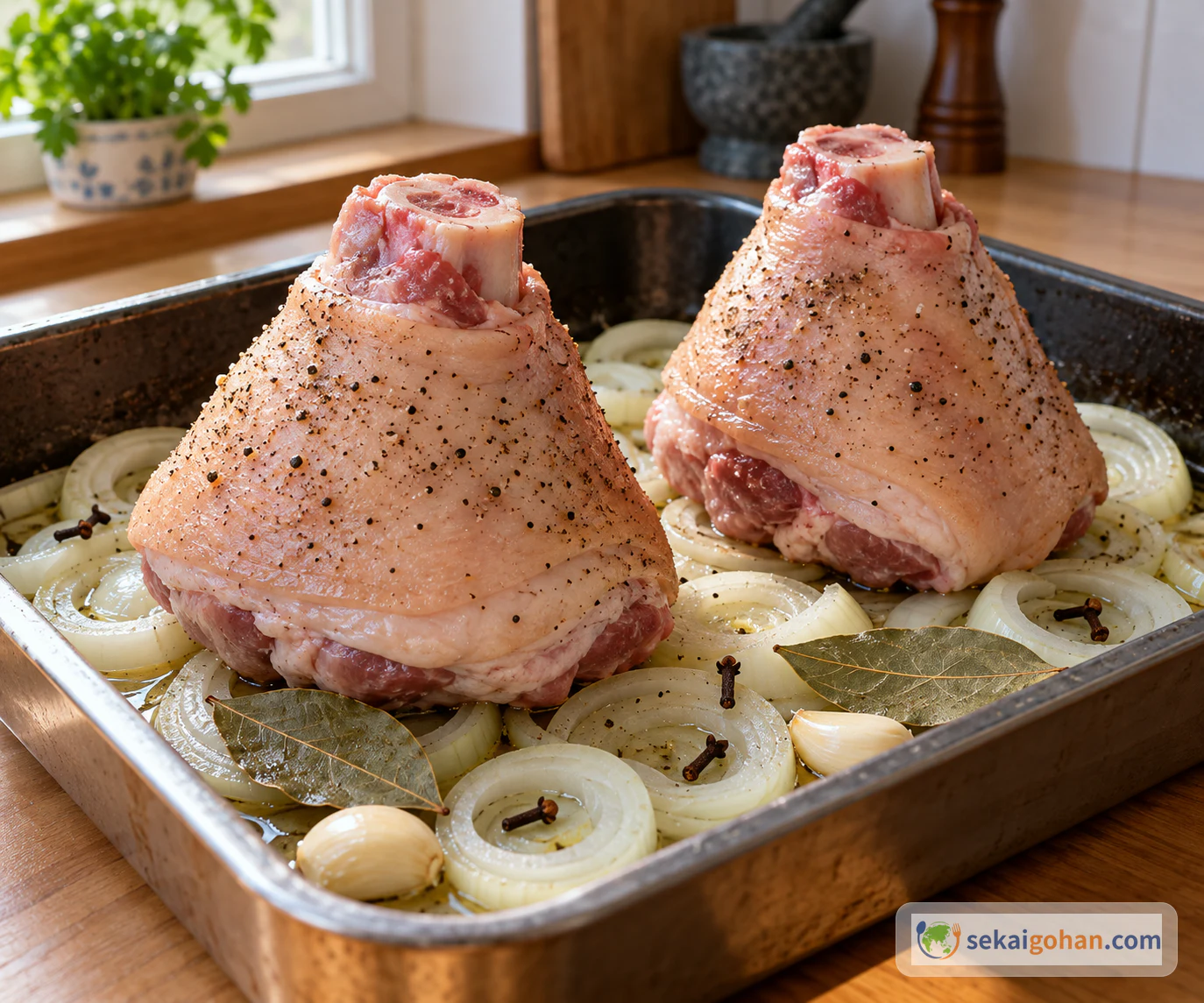
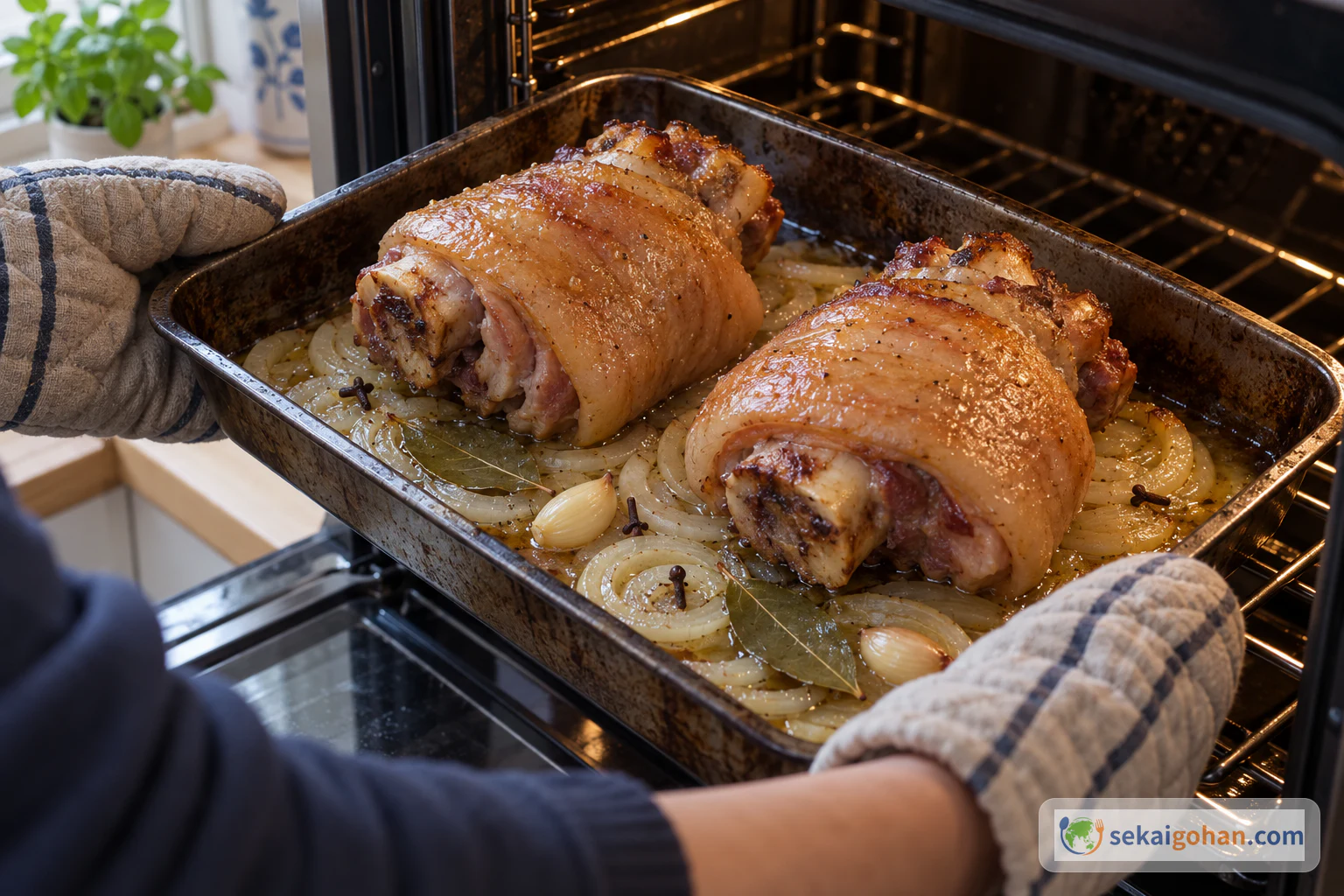
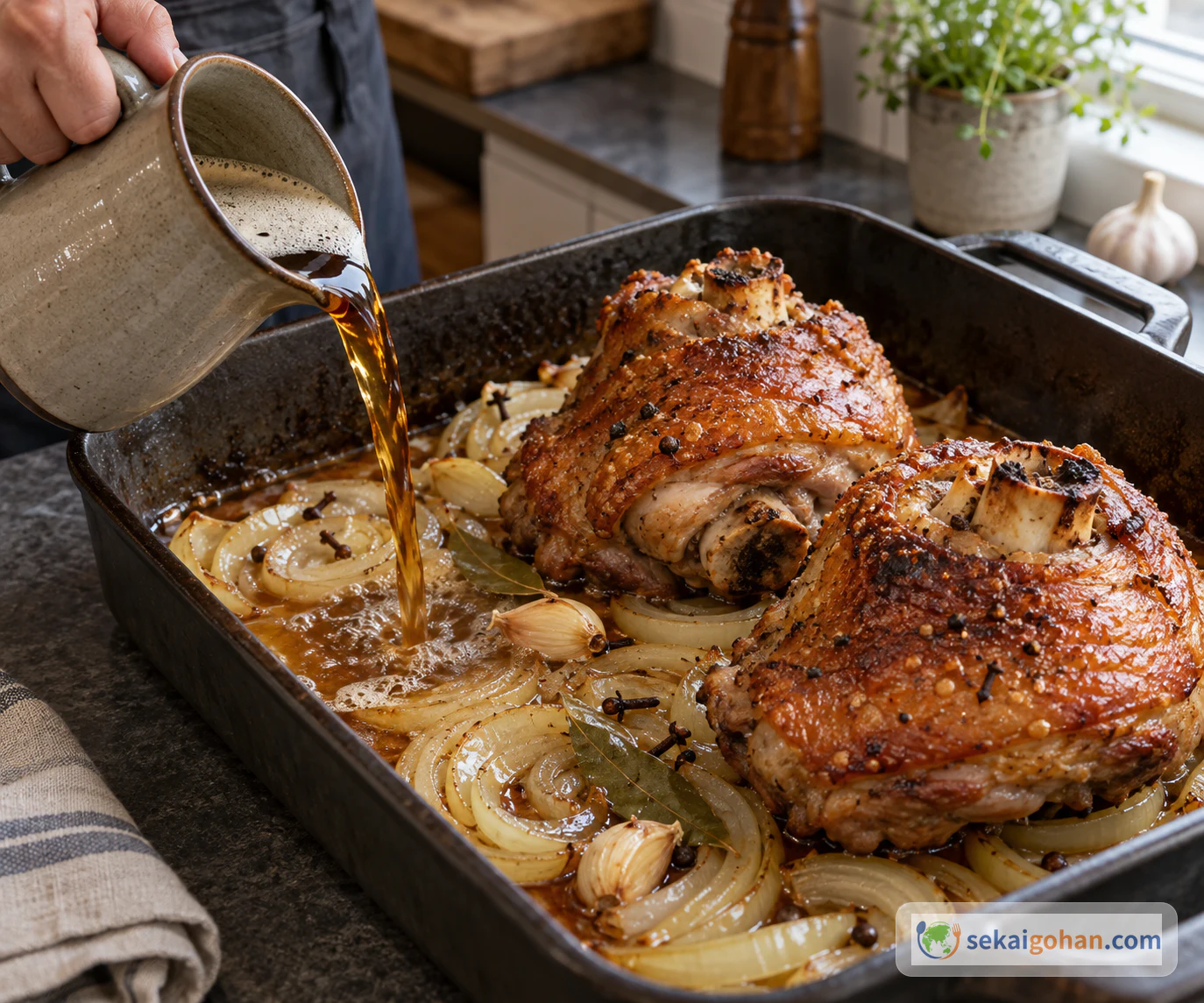
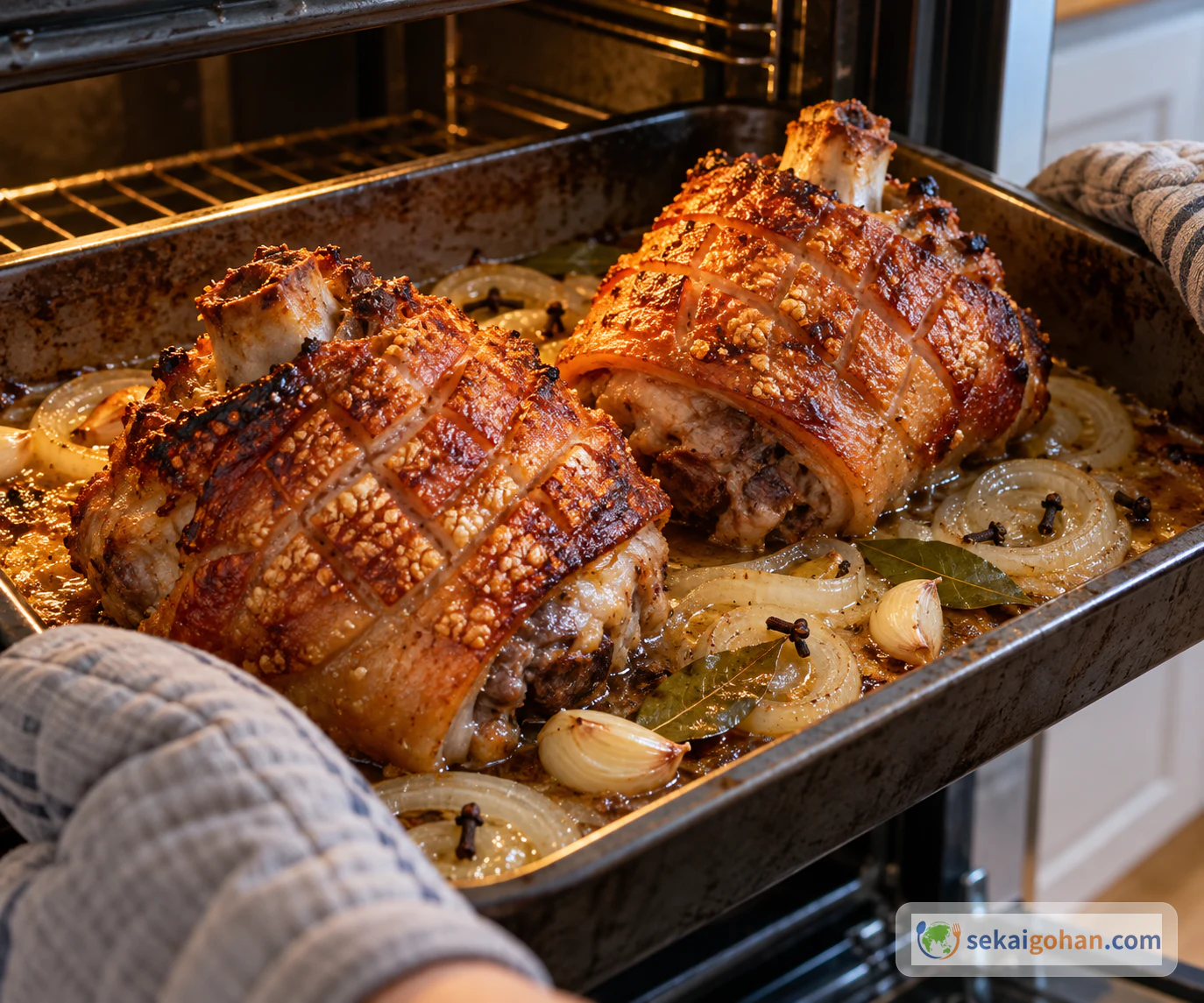
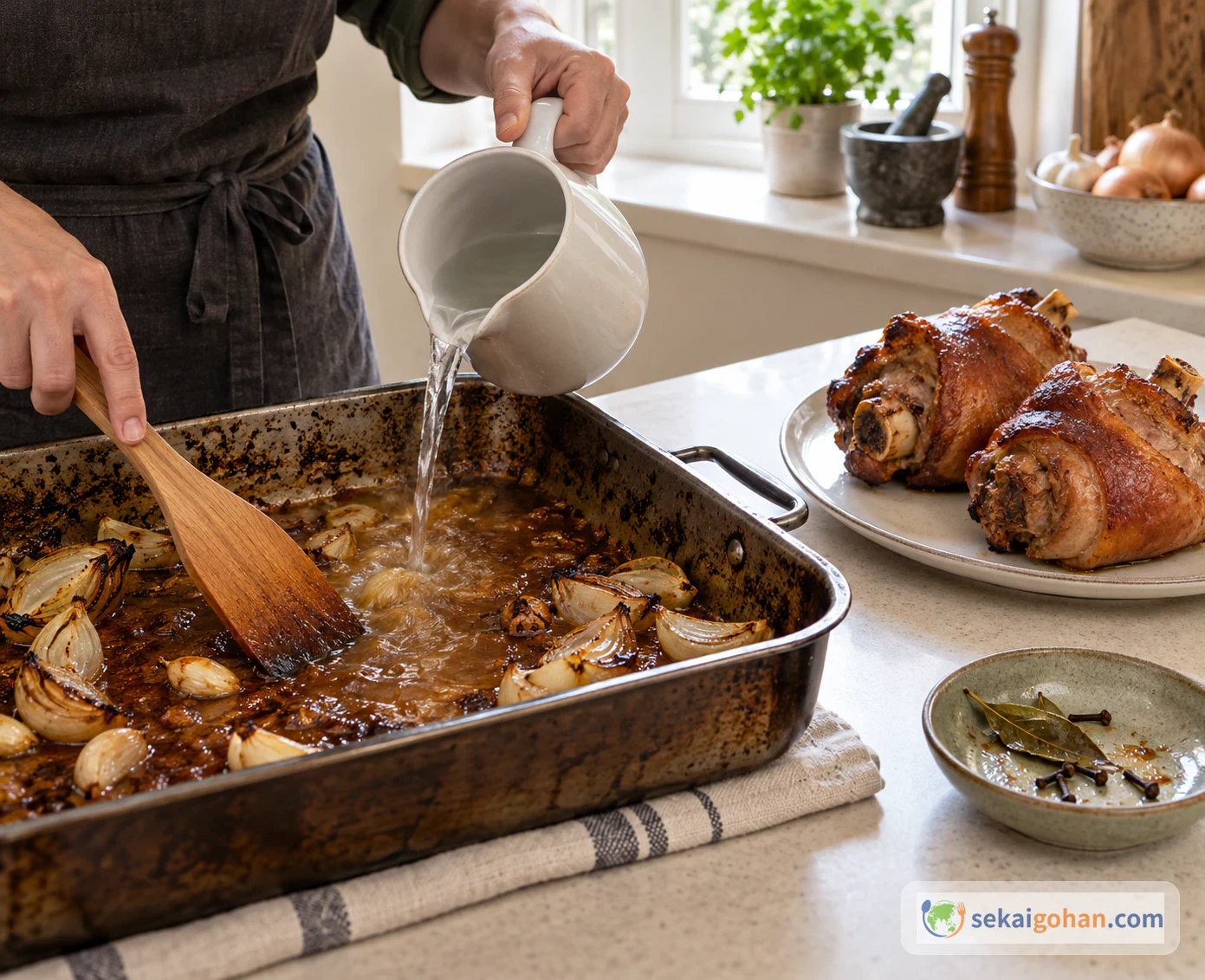
A whole pork knuckle, skin on and bone in, comes out of the oven with its rind browned and crackling. It goes to the table with potato dumplings, sauerkraut and a dark sauce made from the pan juices. This is Schweinshaxe, one of Bavaria's best-known meat dishes: tender meat pulled from around the bone, a crisp shell of rind, and a malty, slightly bitter gravy to bring it together.
About Schweinshaxe
Schweinshaxe is the part of the pig's leg between the knee or elbow joint and the tarsal bones. Don't confuse it with Surhaxe, which is cured in brine. This recipe is the roasted kind. Two uncured, unsmoked knuckles are rubbed with caraway, salt and pepper, roasted over onions, then finished with dark lager.
Home-raised pigs were once a main source of meat, and the animal was used right down to the feet. Schweinshaxe served with Knödel became a recognized regional dish from the late 19th century. One theory links the word Haxe to the older form hahsina.
The method is simple: roast low, add liquid, roast high. The real work is buying the right cut, filling in the few amounts the recipe leaves open, and checking doneness with a thermometer instead of trusting the clock.
Ingredients: Two Uncured, Skin-On Pork Knuckles
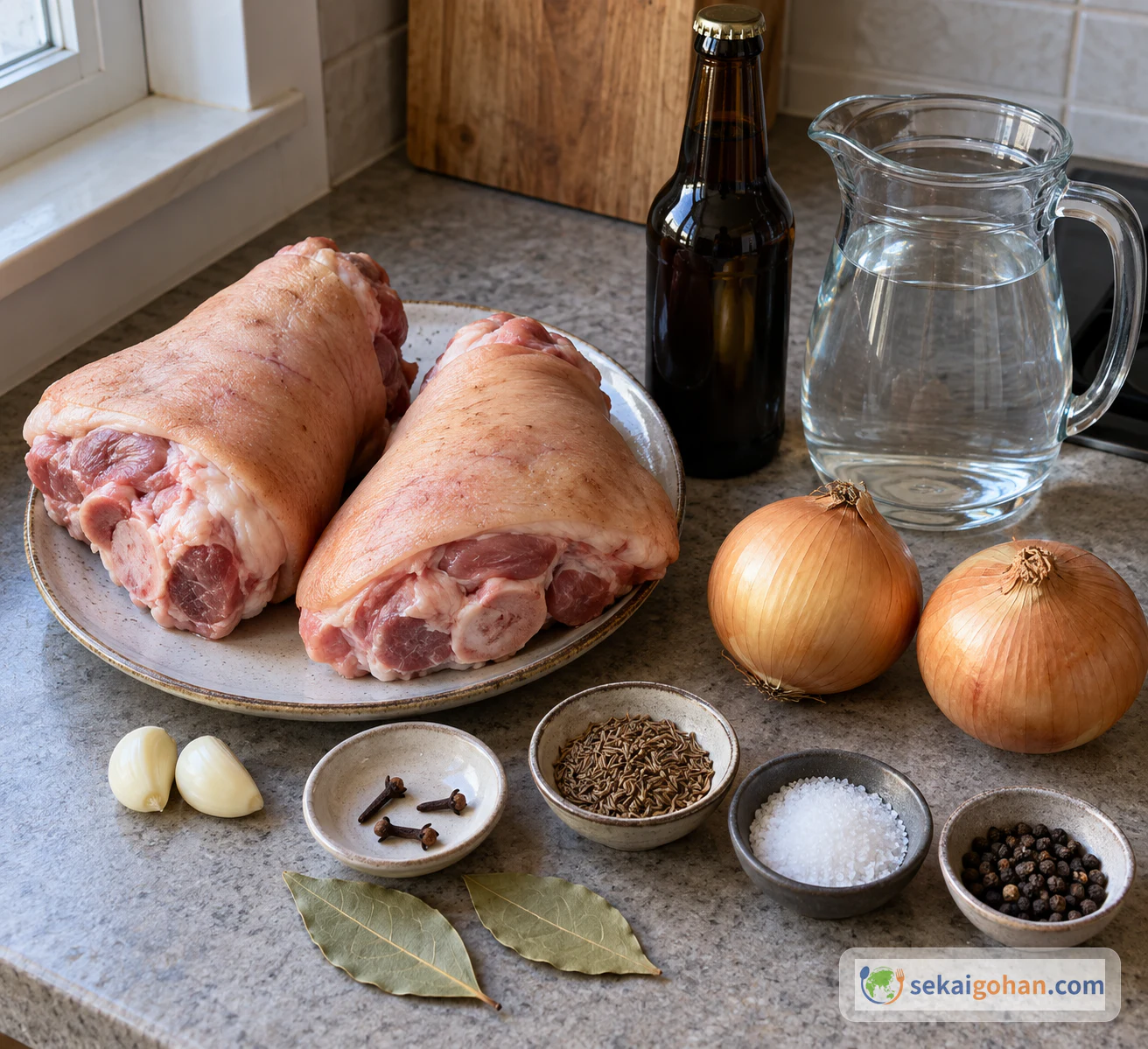
These amounts are for two knuckles. How much meat each knuckle yields depends on its weight and how much of it is bone.
Where a range is possible, the Role column notes it. Use a 15 mL tablespoon, a 5 mL teaspoon and a 240 mL cup. Measure the salt by volume, since salts differ in grain size and saltiness.
The lager is 1¾ cups (400 ml). Don't measure it as 12 US fluid ounces, which is only about 1½ cups (355 ml).
This dish contains pork. The beer is brewed from barley, so it contains gluten. Cooking reduces the alcohol but doesn't remove all of it. Raw pork juices can contaminate other food. Keep them away from anything that won't be cooked, and wash knives, boards and hands after handling the raw meat.
Equipment
- A deep, ovenproof roasting pan that holds both knuckles with room to spare
- A small, sharp knife and a sturdy cutting board, for scoring the rind
- A mortar and pestle or spice grinder, for the caraway
- A probe thermometer that reaches the center of the meat
- Oven mitts
- A wooden spatula, for scraping the pan
- A deep, heatproof container, for cooling the pan juices before blending
- A blender, plus a saucepan for bringing the sauce back to a boil
- Measuring spoons and a measuring cup
- A clean plate for the cooked meat, kept separate from anything that touched raw pork
Choosing Meat and Substitutes for Schweinshaxe
Meat around the bone made tender by a long, low roast, and a rind that turns crisp at the end. Everything in this recipe serves those two textures, so the cut you buy matters more than anything else.
The meat is the one thing you cannot swap. Ask a butcher for pork knuckle (or shank) that is skin-on, bone-in, uncured and unsmoked; front or hind leg is fine. Many supermarkets sell shank without the skin or bone, and many shop "pork knuckles" are cured or smoked. A cured knuckle leads toward Surhaxe, and a skinless cut, or another roasting cut such as shoulder, can't give you a crisp rind. Ordering ahead is the most reliable route.
Caraway is not cumin. The German word Kümmel means caraway. Cumin has a different aroma, so if you can't find caraway, leave it out and accept that the roast will smell a little different.
Spice cloves versus garlic cloves. Gewürznelken are the dried flower buds sold as whole cloves; Knoblauchzehen are cloves of garlic. The recipe uses both, so check that you have each.
Beer. A German dark lager is ideal, but another dark lager or dark beer will work, with a somewhat different malt aroma and bitterness. To avoid alcohol, use water or a non-alcoholic alternative. The sauce will lose much of its malty, slightly bitter character, so think of this as a change to the dish.
Thickener. Cornstarch is used here. Potato starch also thickens, though the sauce won't have quite the same body or clarity.
Method: Roast Low, Add Liquid, Finish High
Times are given for the first two stages and none for the finish. Oven size, the weight and shape of the knuckles, and the oven itself all change how long they take. Use the times as a guide, and use a thermometer to confirm the pork is cooked through.
This recipe uses conventional top-and-bottom heat throughout.
Schweinshaxe Troubleshooting
| Problem | Likely cause | What to do |
|---|---|---|
| The rind isn't crisping | The skin was removed, or the high-heat finish hasn't gone long enough | With skin-on meat, keep the 400°F (200°C) finish going and watch the rind. With skinless meat, a crisp rind isn't possible |
| The rind is darkening too fast | High heat on a thin or uneven rind | Watch closely and take the meat out once it is crisp and has reached a safe core temperature |
| The pan is drying out or scorching | Too little water, or liquid evaporated | Add a little water to the pan and check again later in the roast |
| The meat hasn't reached 167°F (75°C) at the center | Larger knuckles, or an oven that runs differently | Keep cooking and measure again |
| The sauce is thin | Plenty of liquid left in the pan | Bring it to a boil and stir in 1 tbsp cornstarch dissolved in 1 tbsp cold water |
| The sauce tastes of whole spices | Bay leaves or cloves were blended in | Next time, remove them before blending |
Serving Schweinshaxe and Regional Versions
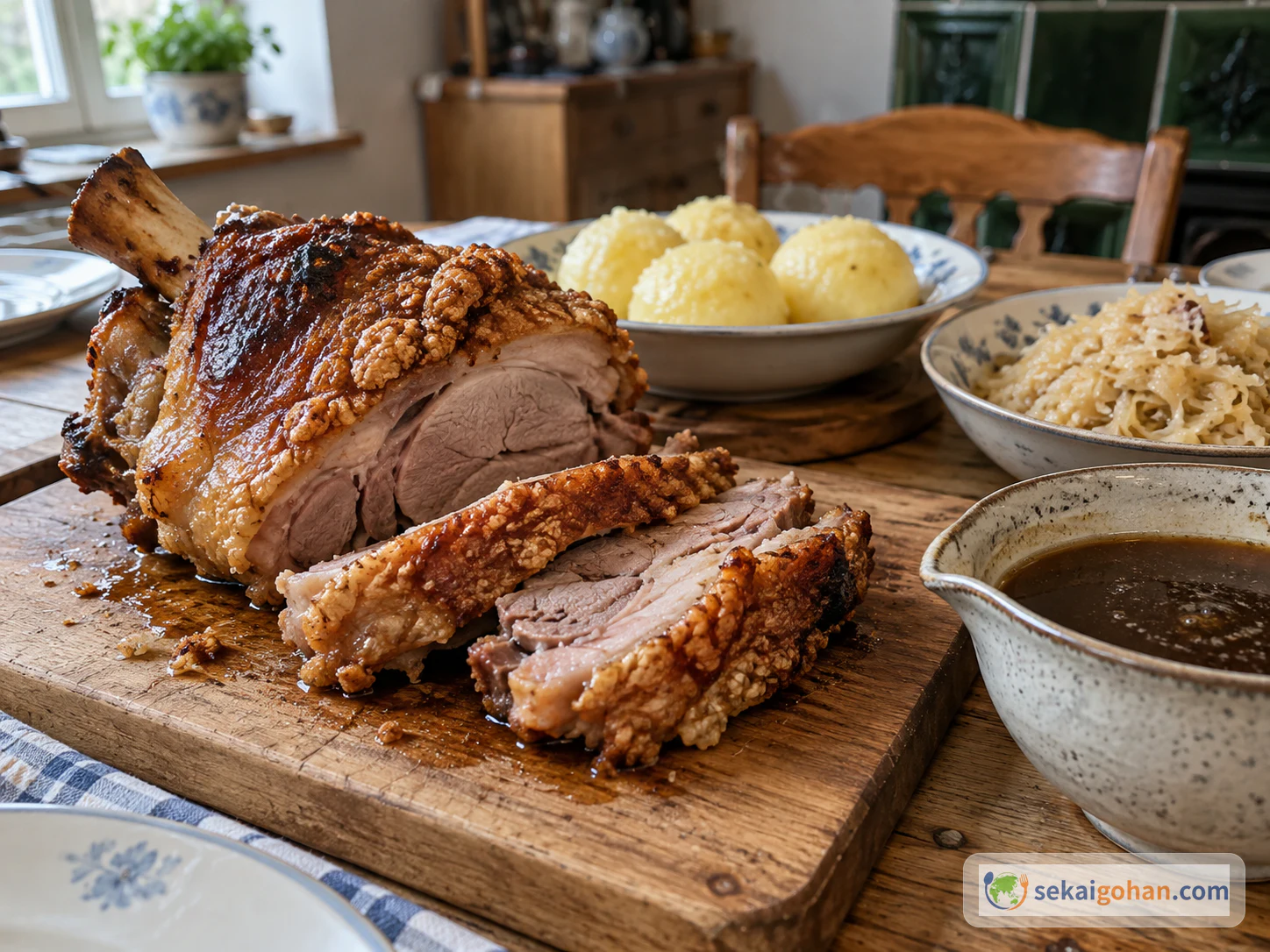
Bring the knuckles to the table with dumplings (Knödel), sauerkraut and the dark beer sauce. Potato dumplings (Kartoffelknödel) or boiled potatoes (Salzkartoffeln) with sauerkraut work just as well. A beer or a glass of wine alongside is a nice touch, if you like.
There's no single standard seasoning. The typical Bavarian mix is salt, pepper and garlic, while this recipe adds caraway, onion, bay, cloves and dark lager. Other kitchens take their own routes, and each is a recipe of its own:
| Version | How it differs | Source |
|---|---|---|
| This recipe (Bavaria) | Uncured knuckle, caraway rub, 300°F (150°C) roast, then beer and water, then a 400°F (200°C) finish | |
| Simmered-first version | Simmered in salted water first, then the rind is scored and roasted at 180–200°C for 30–45 minutes; uses vegetable cooking liquid and malt beer (Malzbier) | |
| Franconian Bierhaxe | Beer and stock with juniper, marjoram and thyme; scored and roasted at about 400°F (200°C) for 1.5–2 hours, with the pan juices made into sauce | |
| Surhaxe | Cured in brine, so a different dish from the roasted Schweinshaxe |
For more dishes from the same country, see German recipes.
Frequently Asked Questions
Are Schweinshaxe, Surhaxe and Eisbein the same thing?
They overlap in the cut of meat but not in the preparation. Roasted, uncured Schweinshaxe is different from Surhaxe, which is cured in brine. For this recipe, buy meat that hasn't been cured or smoked.
Can I tell it's done from the roasting time alone?
No. Knuckle size and ovens vary, and the final crisping stage has no set time. Use a thermometer and check that the thickest part reaches 167°F (75°C) at the center for at least 1 minute.