
Germany recipes
Recipes from Germany: home cooking with cultural background, ingredient substitutes and step-by-step instructions.

German-Style Pretzels: A Laugenbrezel-Style Knot Baked After a Baking Soda Bath
How to make German-style pretzels at home: a bread-flour dough shaped into knots, chilled, dipped in a boiling baking soda bath and baked at 450°F until deeply browned. Covers kneading, folding, shaping, the difference between a baking soda bath and the lye used for true Laugenbrezel, the Bavarian and Swabian shapes, and eating them warm with butter and chives.
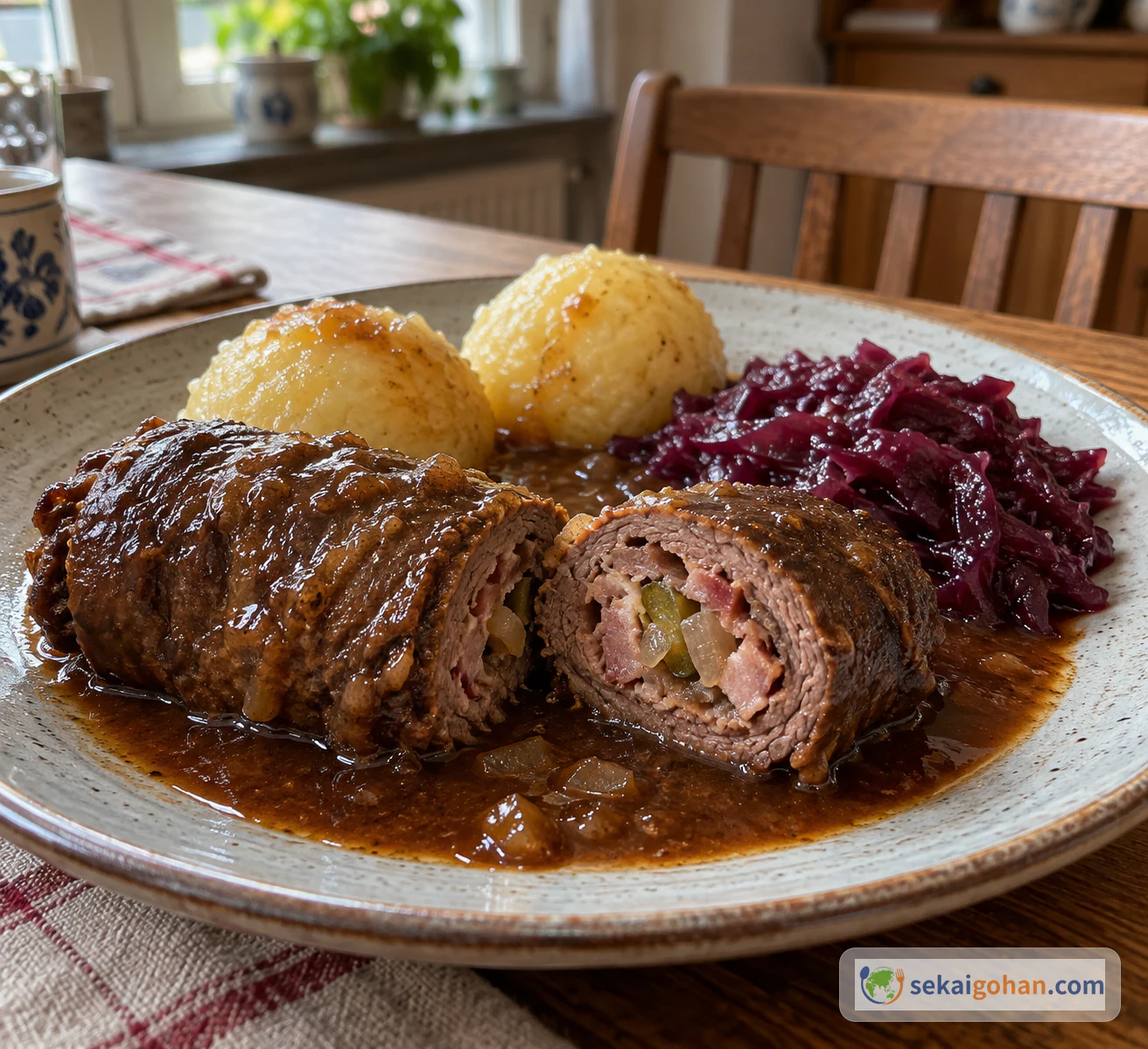
Rinderroulade: German Braised Beef Rolls with Bacon and Pickles (Rinderrouladen)
How to make Rinderroulade, the German beef roll filled with mustard, bacon, onion and cornichons and braised covered in the oven. Includes a 4-serving recipe, choosing the beef cut, rolling and pinning, judging tenderness with a skewer, finishing the sauce, Franconian and Saxon serving examples, substitutions, and storage guidance.
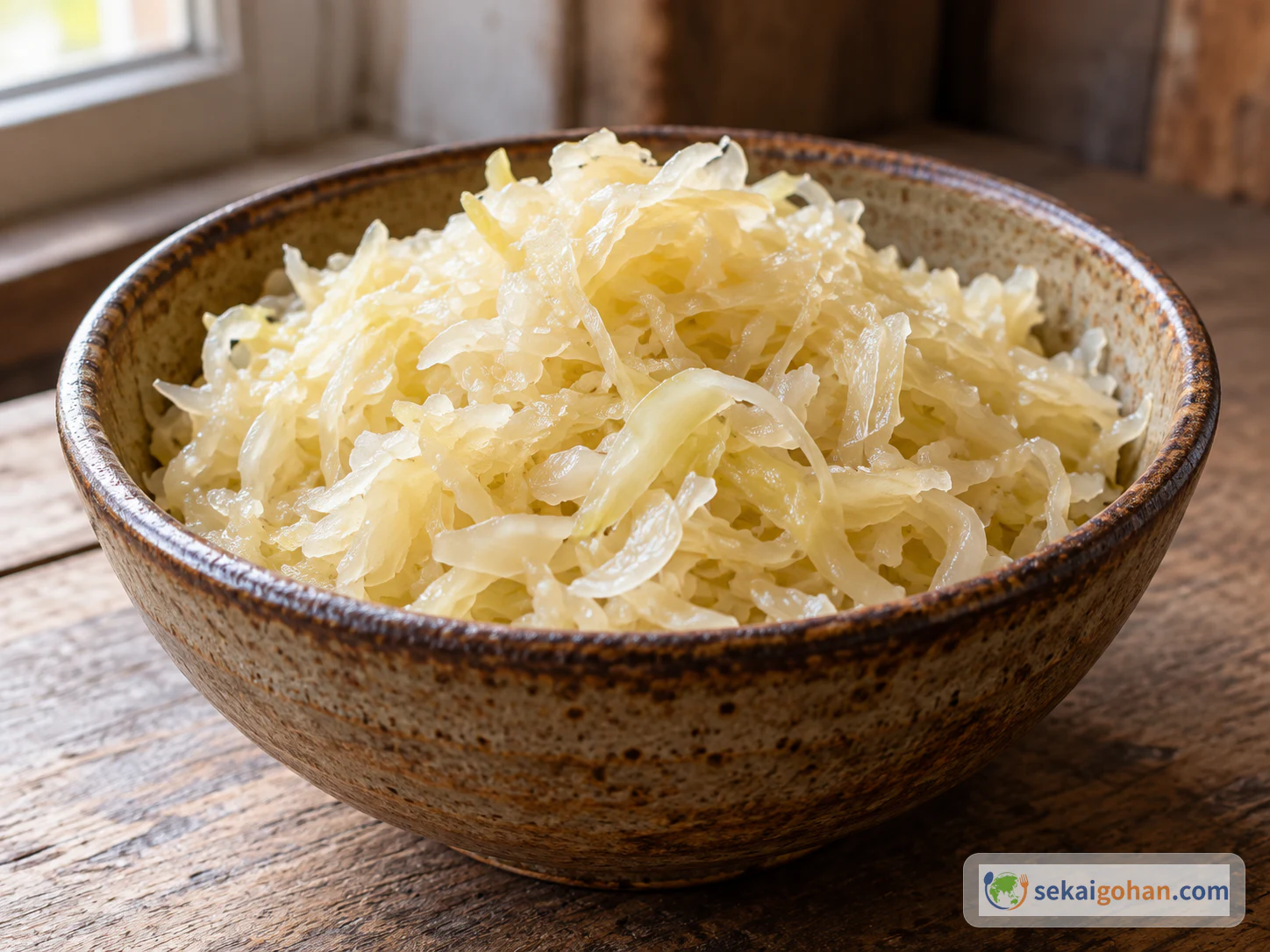
Sauerkraut: Homemade Fermented Cabbage with Just White Cabbage and Salt
How to make sauerkraut, the fermented white cabbage of the German-speaking world, from just cabbage and salt. Learn how to match the salt to the shredded cabbage weight, keep the cabbage under its brine, and read temperature, time, pH and bubbling together without relying on the calendar alone. Also covers storage, serving ideas and the dish's uncertain origins.
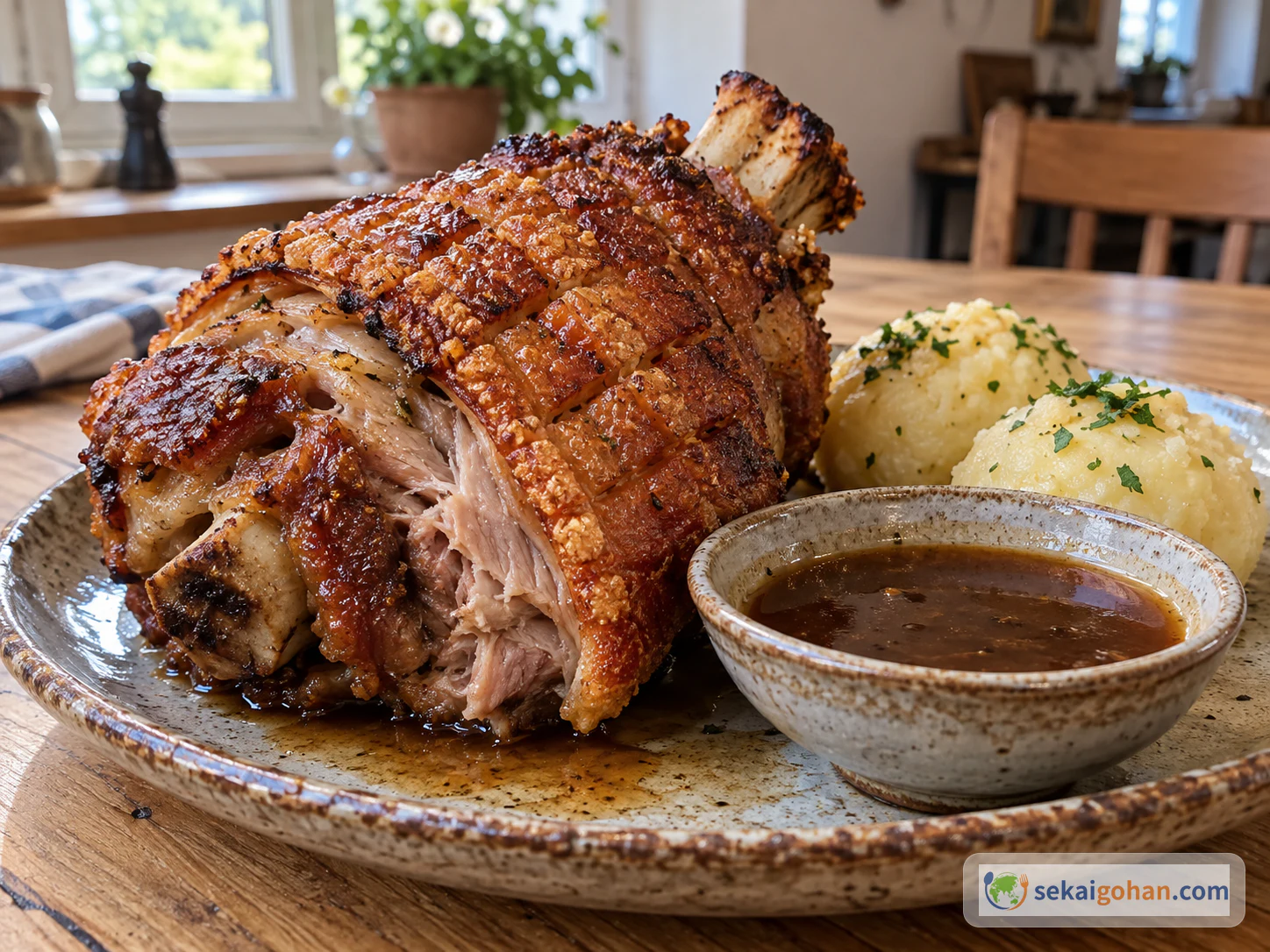
Schweinshaxe: Bavarian Roast Pork Knuckle with Crisp Rind and Dark Beer Sauce
How to make Schweinshaxe, the Bavarian oven-roasted pork knuckle: a slow roast at 150°C, dark lager and water in the pan, a hot 200°C finish for crisp rind, and a blended sauce from the pan juices. Covers finding skin-on, bone-in uncured knuckles, caraway versus cumin, the source's beer measurement mismatch, core-temperature safety, and how Schweinshaxe differs from cured Surhaxe and Franconian Bierhaxe.
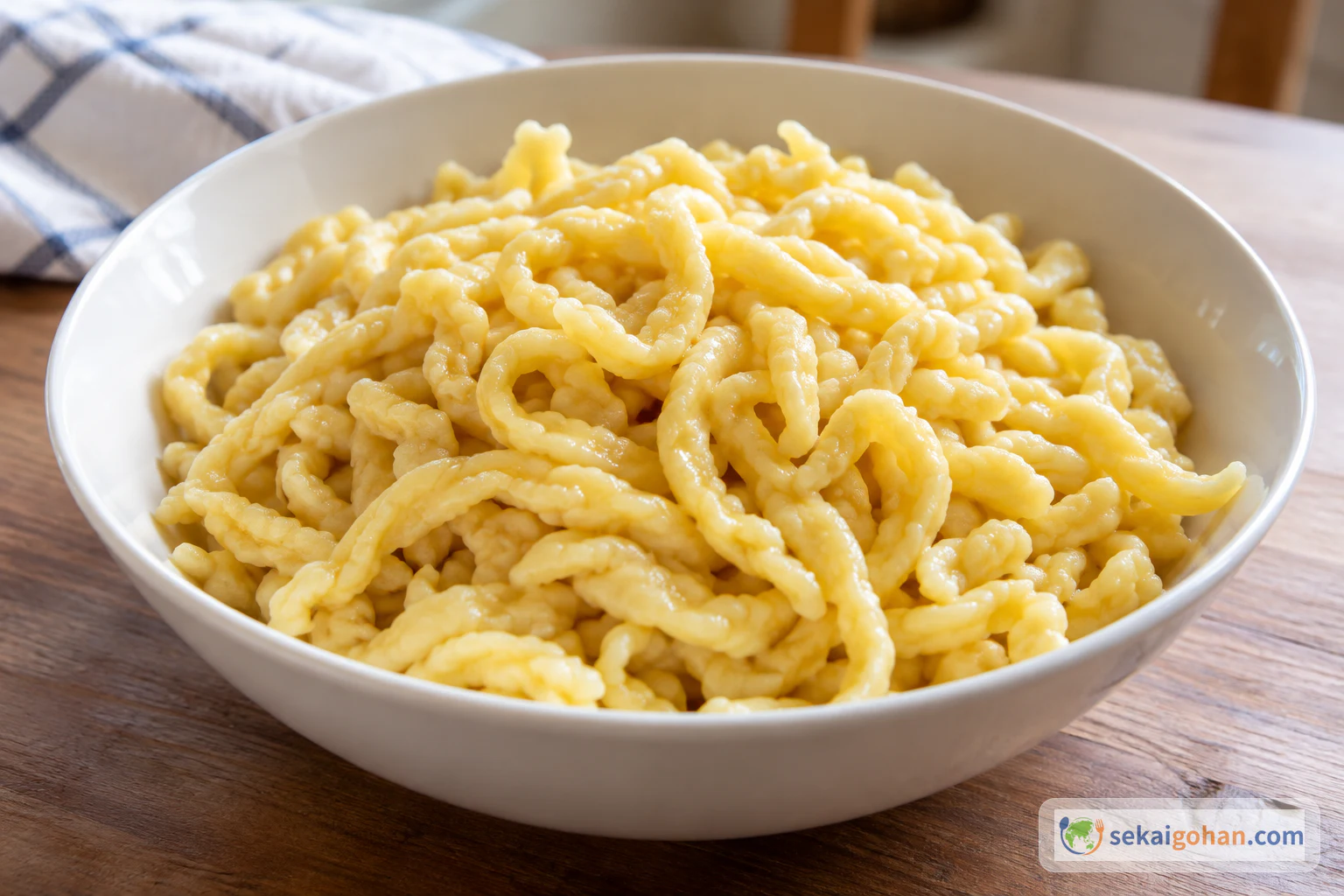
Spätzle: Swabian Egg Noodles Pressed into Boiling Water
How to make spätzle, the Swabian egg noodles of southern Germany, from a four-serving base of flour, eggs, water and a pinch of salt. Covers adding the water in stages, pressing the dough into boiling water, lifting the noodles once they float, finishing with butter, and serving with rich meat sauces or lentils and sausage. Also explains Knöpfle, hand-scraped spätzle, the protected name Schwäbische Spätzle, and safe handling of leftovers.
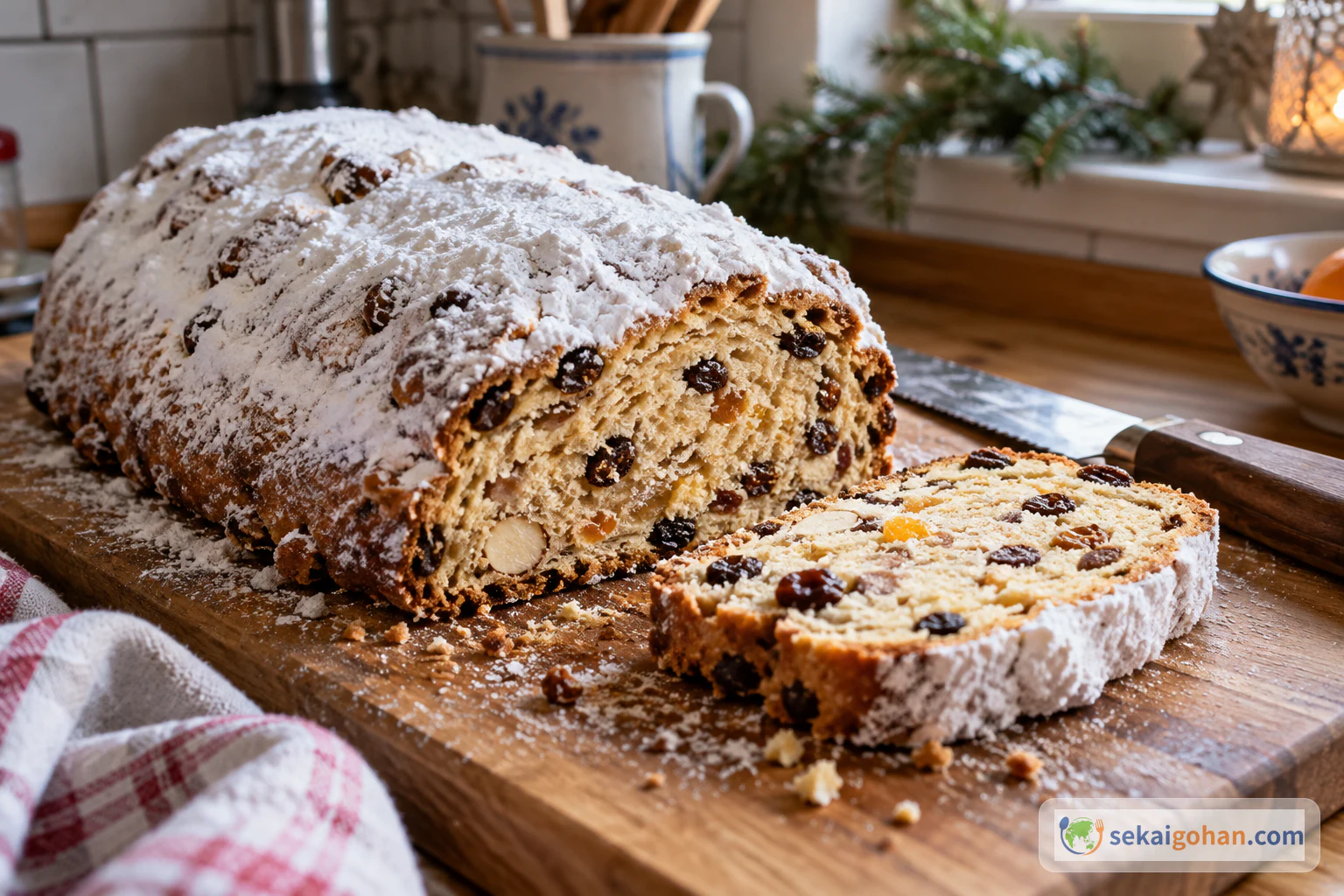
Stollen: German Christmas Yeast Loaf with Rum-Soaked Raisins, Candied Peel and Almonds
How to bake a German-style Stollen at home from a published Dresden-style recipe: rum-soaked raisins, candied citrus peel, almonds and mace in a rich butter dough, baked as one large loaf and finished with butter and two sugars. Covers the protected name Dresdner Christstollen, the history from 1474, ingredient choices, oven cues and the traditional resting period.

Berliner Pfannkuchen: How to Make German Jam-Filled Yeast Doughnuts
In Berlin, ordering a Pfannkuchen gets you a jam-filled fried yeast pastry, not a pancake. This recipe makes 10 Berliner: knead an enriched yeast dough, divide it into ten slightly flattened rounds, fry them in oil at about 170°C, then fill with smooth jam once cooled and dust with powdered sugar. It also covers the regional names, the link to the days before Lent, and what the historical record can and cannot say.
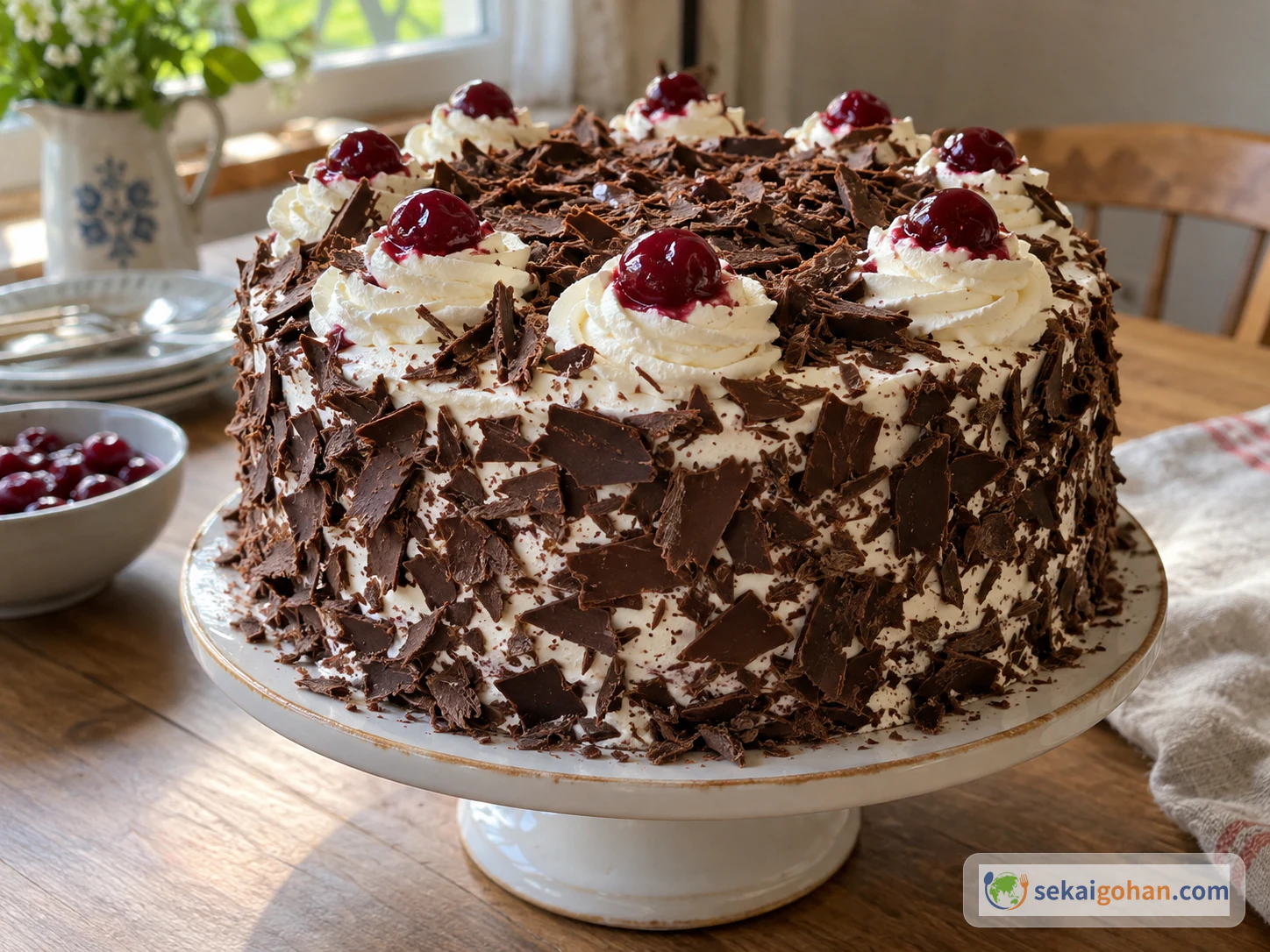
Black Forest Gateau: German Schwarzwälder Kirschtorte with Sour Cherries and Kirschwasser
How to make Black Forest gateau (Schwarzwälder Kirschtorte), the German layered cake of dark cocoa sponge, sweet-sour cherries, whipped cream, Kirschwasser and chocolate shavings. Follows a 26 cm pastry chef's recipe from baking the sponge to the final decoration, with notes on choosing sour cherries and kirsch, regional versions, the competing origin stories, and fixes for common problems.
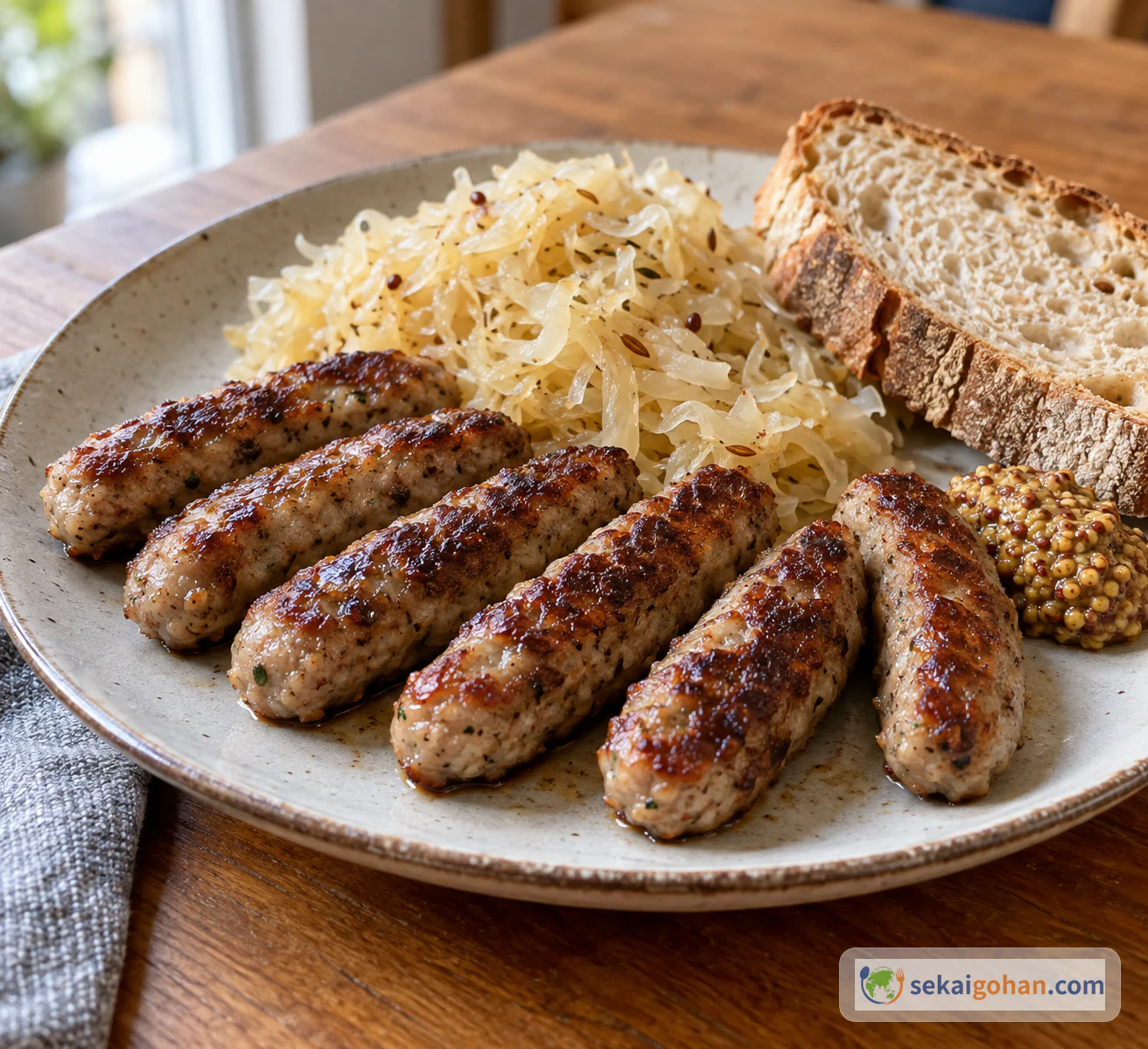
Bratwurst: German Grilled Sausage with Marjoram, Made at Home as Slim Patties
Bratwurst is a family of German grilled sausages. This guide explains how the general term differs from the protected Nürnberger Rostbratwurst. It also gives a home recipe for marjoram-scented pork patties based on a Nuremberg-style blend, with tips for keeping the mince cold and safe cooking guidance for ground pork. Serve them with sauerkraut, mustard and bread.
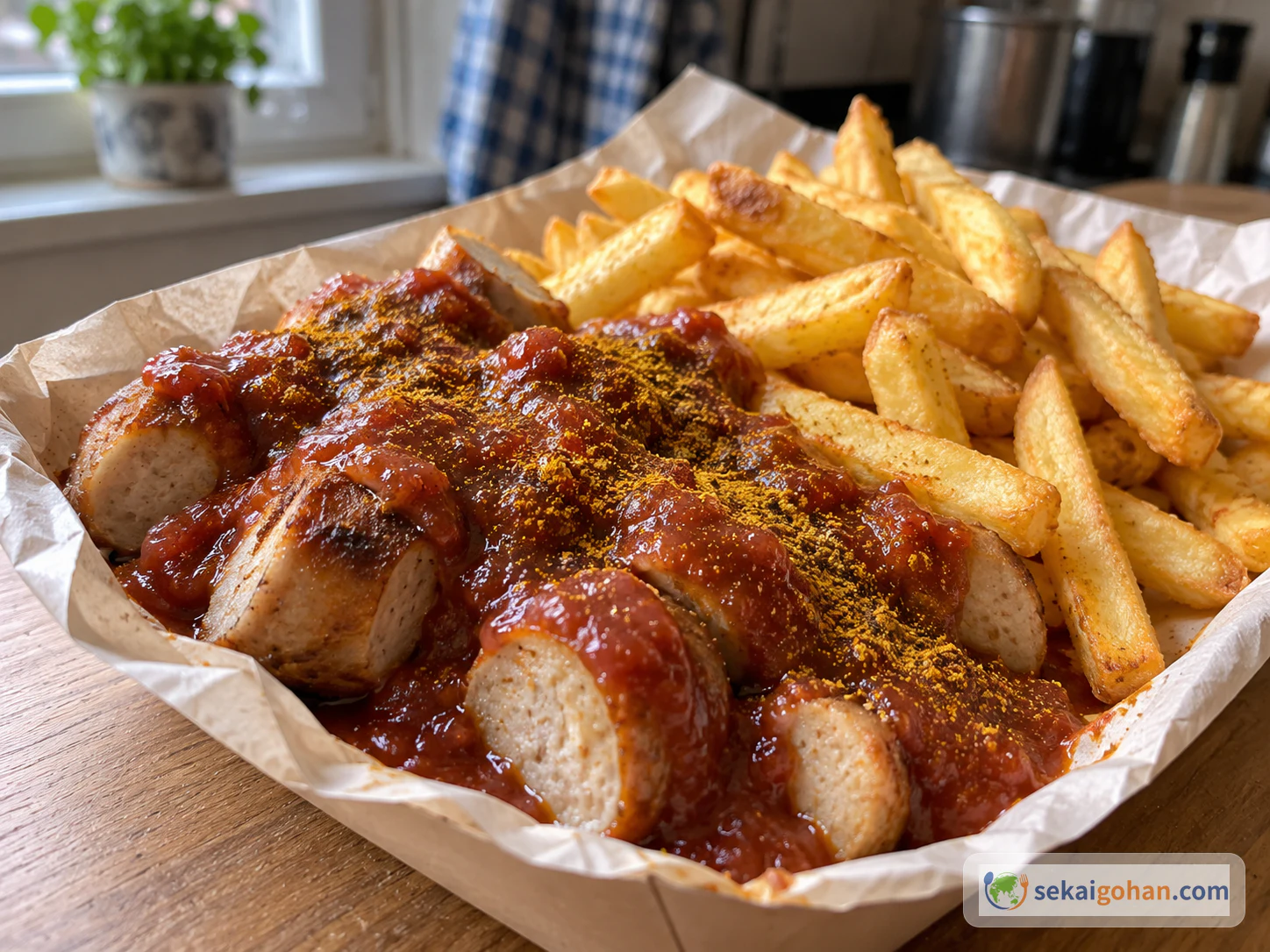
Currywurst: German Sausage with Curry Tomato Sauce
How to make Currywurst at home: browned sausage sliced and covered in a fruity, spicy curry tomato sauce, based on a WDR recipe for about four. Covers the sauce order, adjusting heat, skinless versus skin-on sausage, Berlin's origin story, and serving with fries or bread rolls.
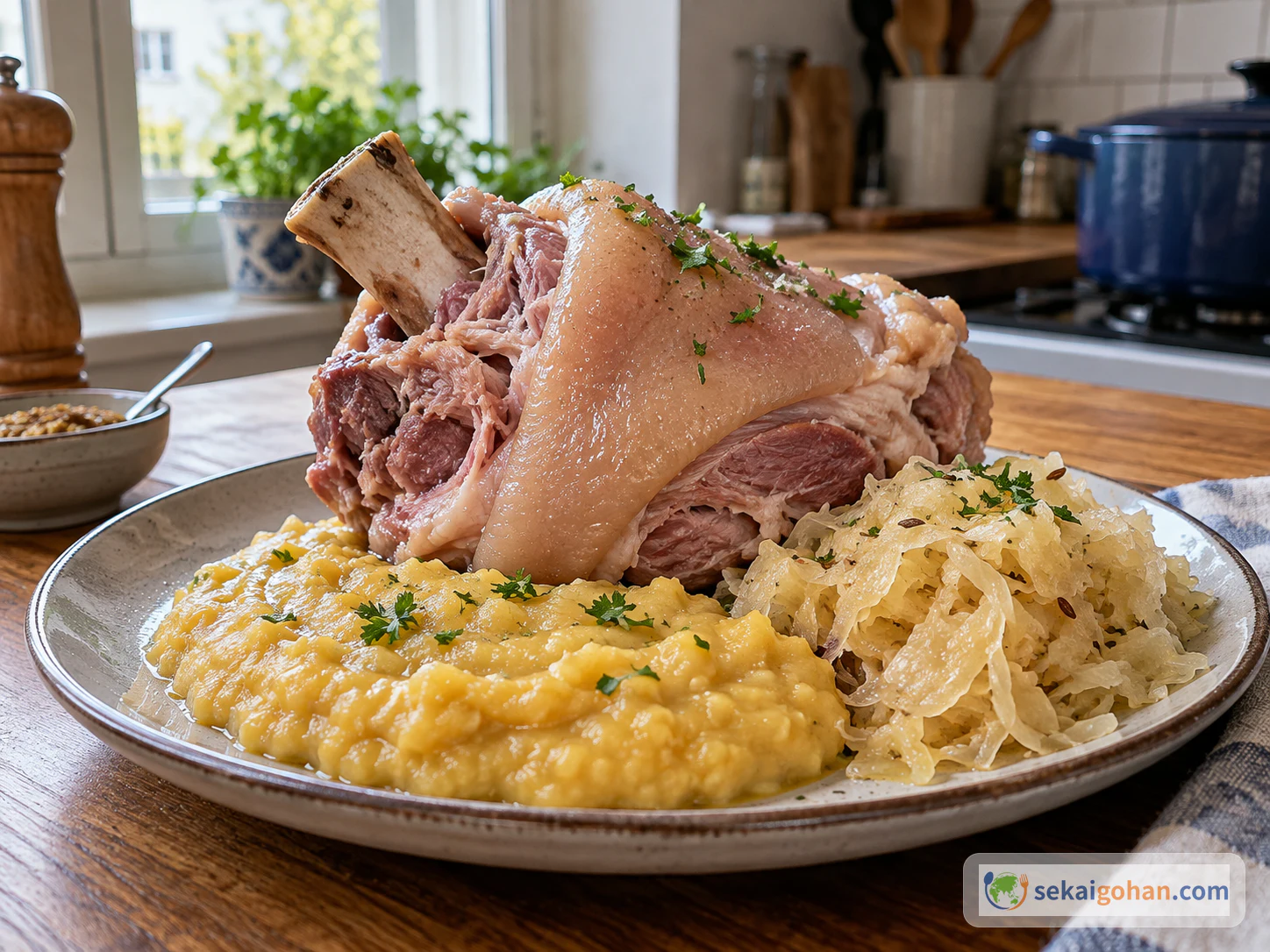
Berliner Eisbein: Simmered Cured Pork Knuckle with Yellow Pea Purée and Sauerkraut
How to make Berliner Eisbein, cured pork knuckle simmered slowly with soup vegetables and spices, served with yellow pea purée and braised sauerkraut. Covers how it differs from roasted Schweinshaxe, choosing cured knuckles, judging salt, checking doneness by the bone and the center temperature, and storing leftovers.
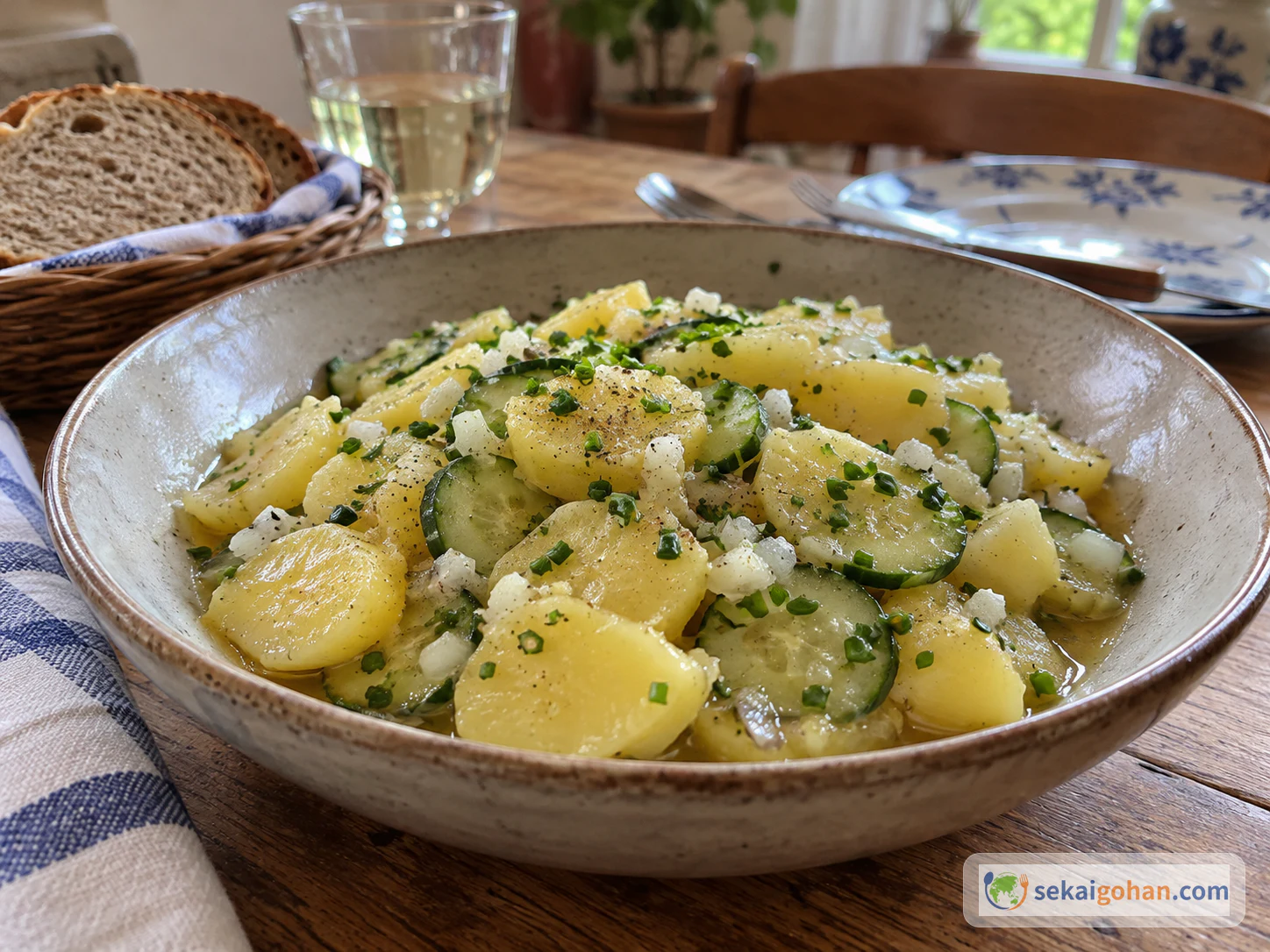
Kartoffelsalat: Southern German Potato Salad Dressed with Warm Broth
How to make a southern German Kartoffelsalat dressed with hot broth, white wine vinegar and oil instead of mayonnaise, following one Bavarian cook's recipe with its original amounts. Covers how it differs from the mayonnaise style, choosing broth, vinegar and potatoes, salting the cucumber, fixing common problems, and regional variations.
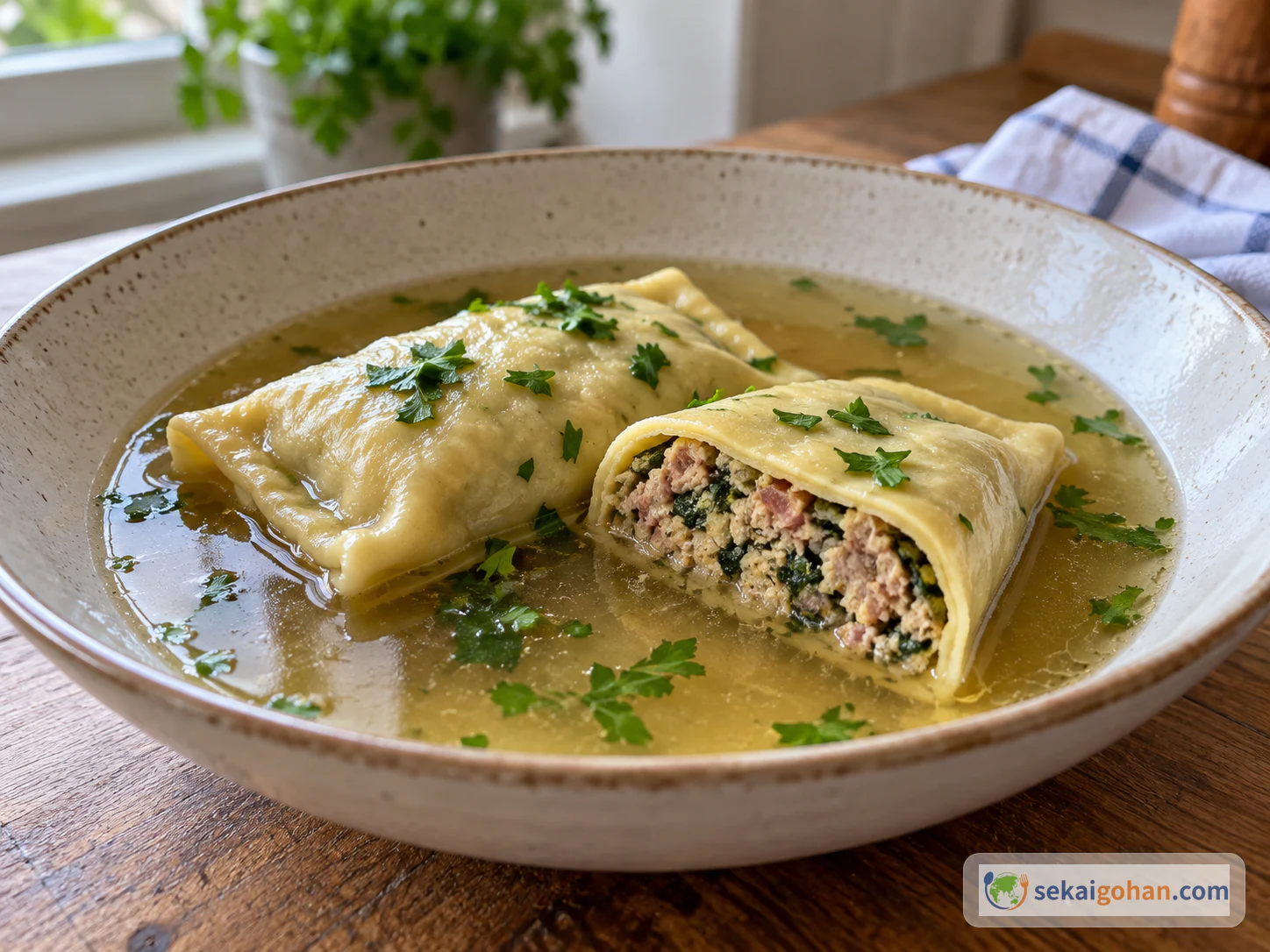
Maultaschen: Swabian Filled Pasta Parcels with Pork, Bacon and Spinach (Schwäbische Maultaschen)
How to make Swabian Maultaschen from a Bavarian state recipe for 4: a firm egg pasta dough cut into roughly 7 cm squares, filled with pork, bacon, spinach and breadcrumbs, folded into rectangles and boiled in salted water for 12 minutes. Covers serving in clear broth, frying with onions, the next-day egg fry, the monastery legend, the EU protected name, troubleshooting and food safety.

Hochzeitssuppe: North German Wedding Soup with Meatballs and White Asparagus
A North German wedding soup, Hochzeitssuppe, for a home kitchen: a clear broth of beef shank and chicken wings, small meatballs, Eierstich egg custard, how to cook white asparagus, regional variations, substitutes and storage.

Bayrisch Kraut: Bavarian Warm Braised Cabbage
A recipe for Bayrisch Kraut, the warm cabbage dish of Bavaria, Germany, made with ordinary white cabbage. How it differs from sauerkraut, how to use caraway, apple, vinegar, and bacon, a forgiving heat, how to serve it with meat dishes, adjusting the acidity, storage, and reheating tips.

Gaisburger Marsch: Stuttgart's Beef Broth with Potatoes and Spätzle
A recipe for Gaisburger Marsch, the Stuttgart classic, made in a home kitchen. A clear beef broth, potatoes, homemade spätzle, and browned onions come together, with substitutions, heat control, storage, common failures, and how it is eaten locally.
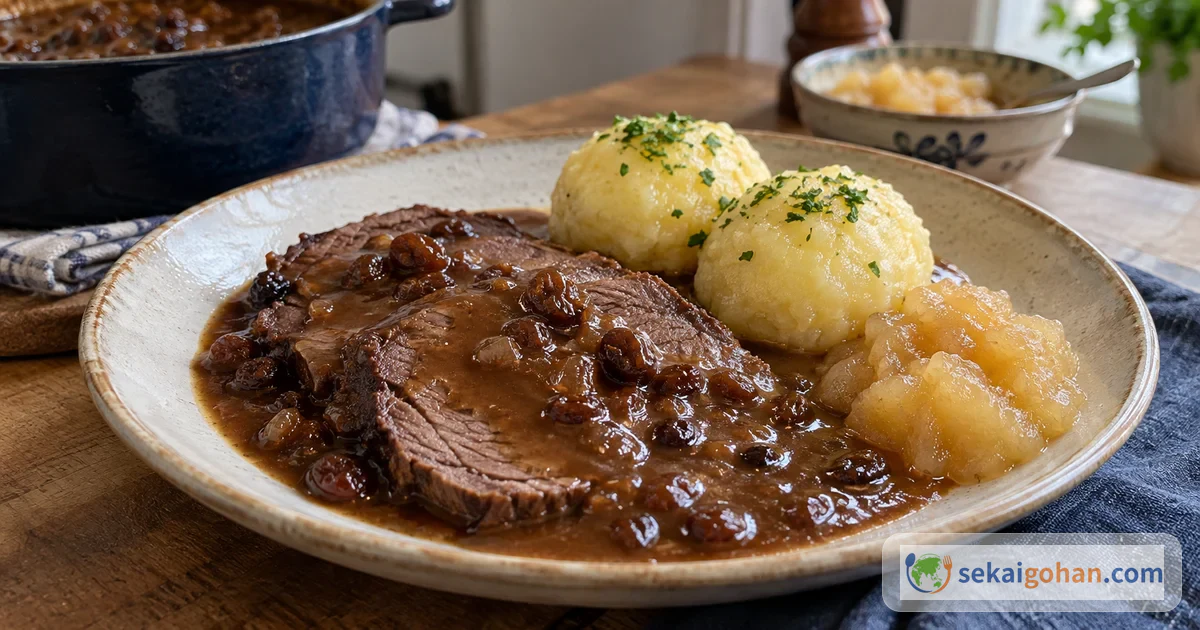
Sauerbraten: Cologne's Sweet-and-Sour Beef, Marinated 3 Days in Vinegar
A recipe for Sauerbraten, the home dish of the Rhineland in Germany (Soorbrode in Cologne), made with 1 kg of beef. The beef sits 3 days in a marinade of red wine vinegar, cloves, and juniper berries, then is finished in a sweet-and-sour sauce with raisins and gingerbread. Covers the horse-meat tradition, regional differences, substitutes, hygiene during marinating, and sides.

Käsespätzle: Southern German Cheese Noodles with Crispy Onions
How to make Käsespätzle, the cheesy egg noodles of Swabia and the Allgäu, in a home kitchen: short homemade spätzle, mountain cheese, browned onions, substitutes, heat control, storage, how it's eaten locally and shaping it without a spätzle maker.