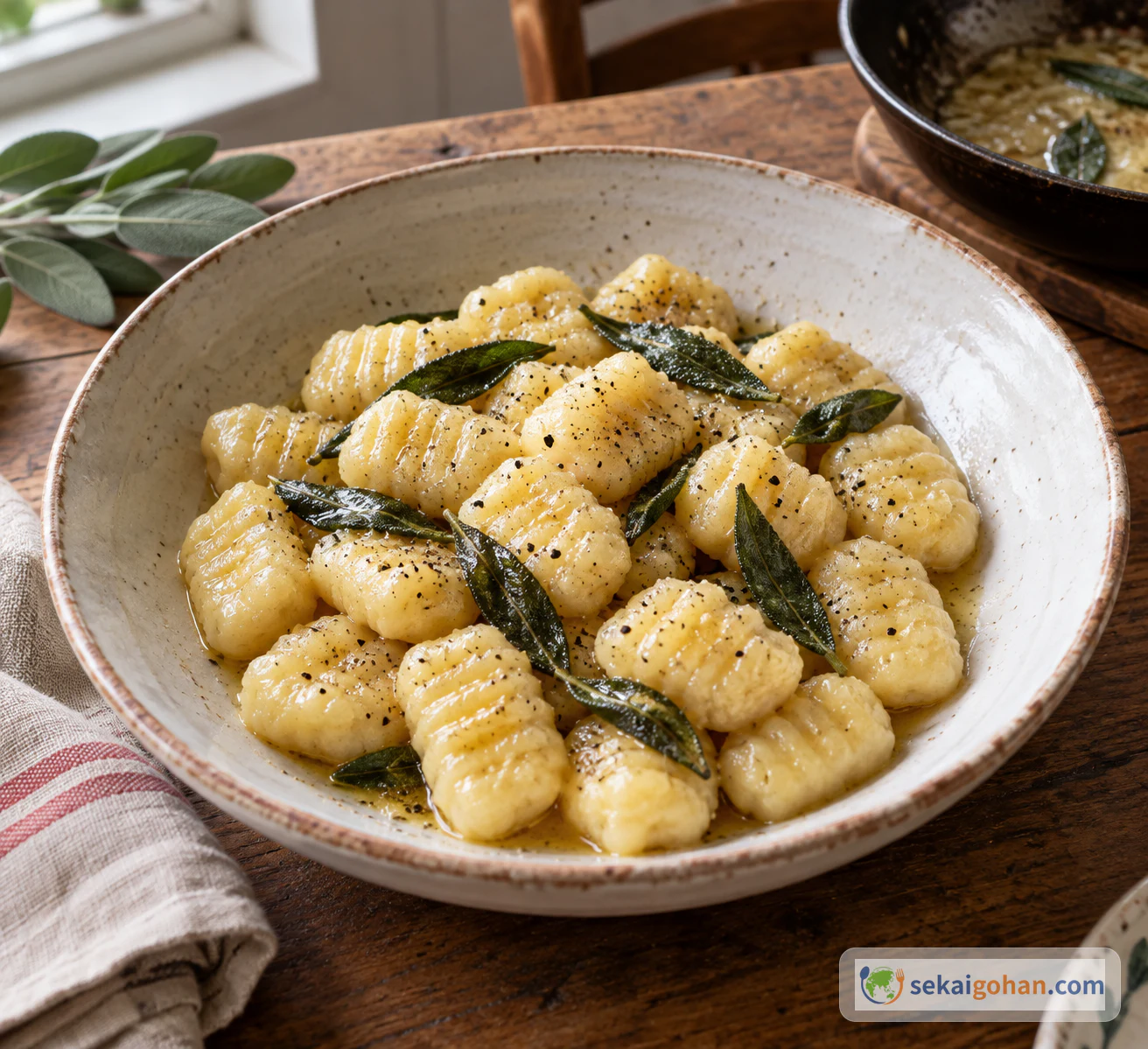
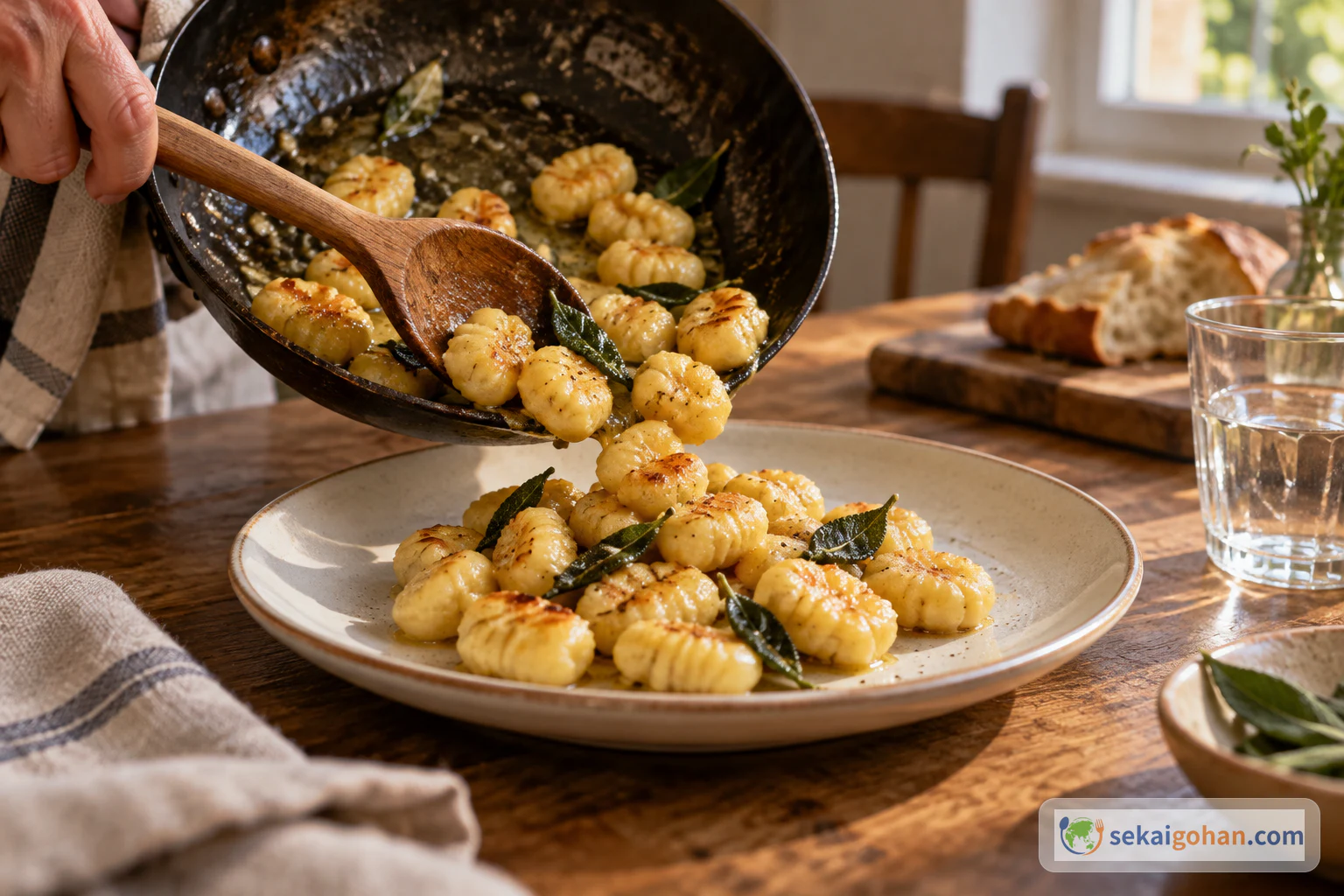
Homemade potato gnocchi coated in butter and sage, the sauce catching in the ridges made with a fork
Serves4 servings
CuisineItalian

Potato Gnocchi: Italian Gnocchi di Patate with a Light Dough and Fork Ridges

How to make Italian potato gnocchi (gnocchi di patate) at home from a five-ingredient, egg-included formula: boiling potatoes in their skins, ricing them hot onto the flour, mixing briefly so the dough stays tender, shaping ridges with a fork, lifting the gnocchi as they float, and freezing them loose. Also covers fixing hard or crumbling dough, serving ideas such as butter and sage, and how potato gnocchi fit into Italy's wider family of gnocchi.

Cooking flow

Cooking steps

STEP 11 / 7

Boil the potatoes in their skins from cold water

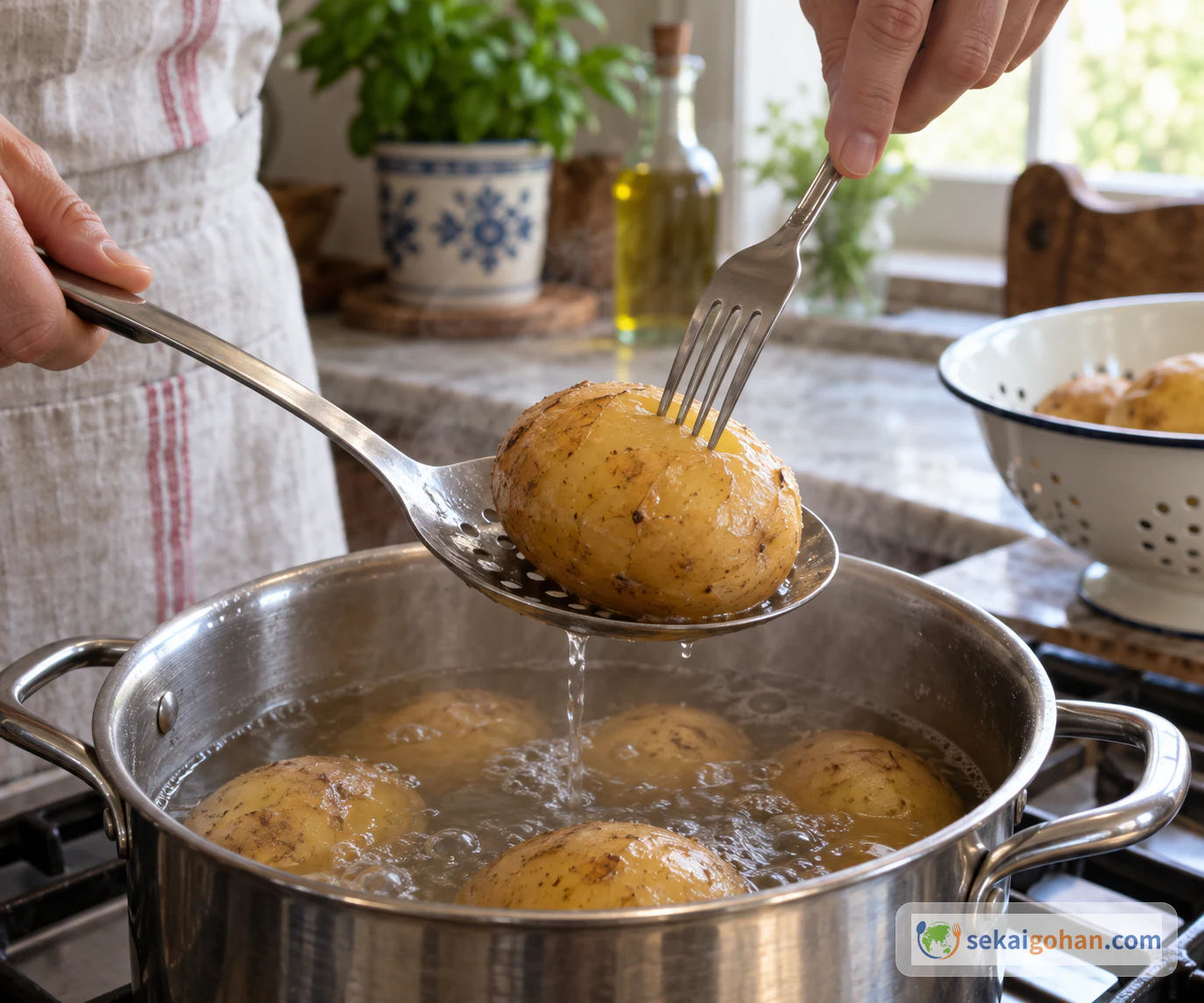
Potatoes boiled in their skins, tested with a fork to see that it reaches the center
Check the potatoes with a fork rather than relying only on the time

Put the potatoes, skins on, in a large pot and cover them generously with cold water. Bring to a boil. Allow about 30–40 minutes after the water boils, but size changes the time, so check with a fork: it should go into the center without resistance.

STEP 22 / 7

Rice the hot potatoes onto the flour

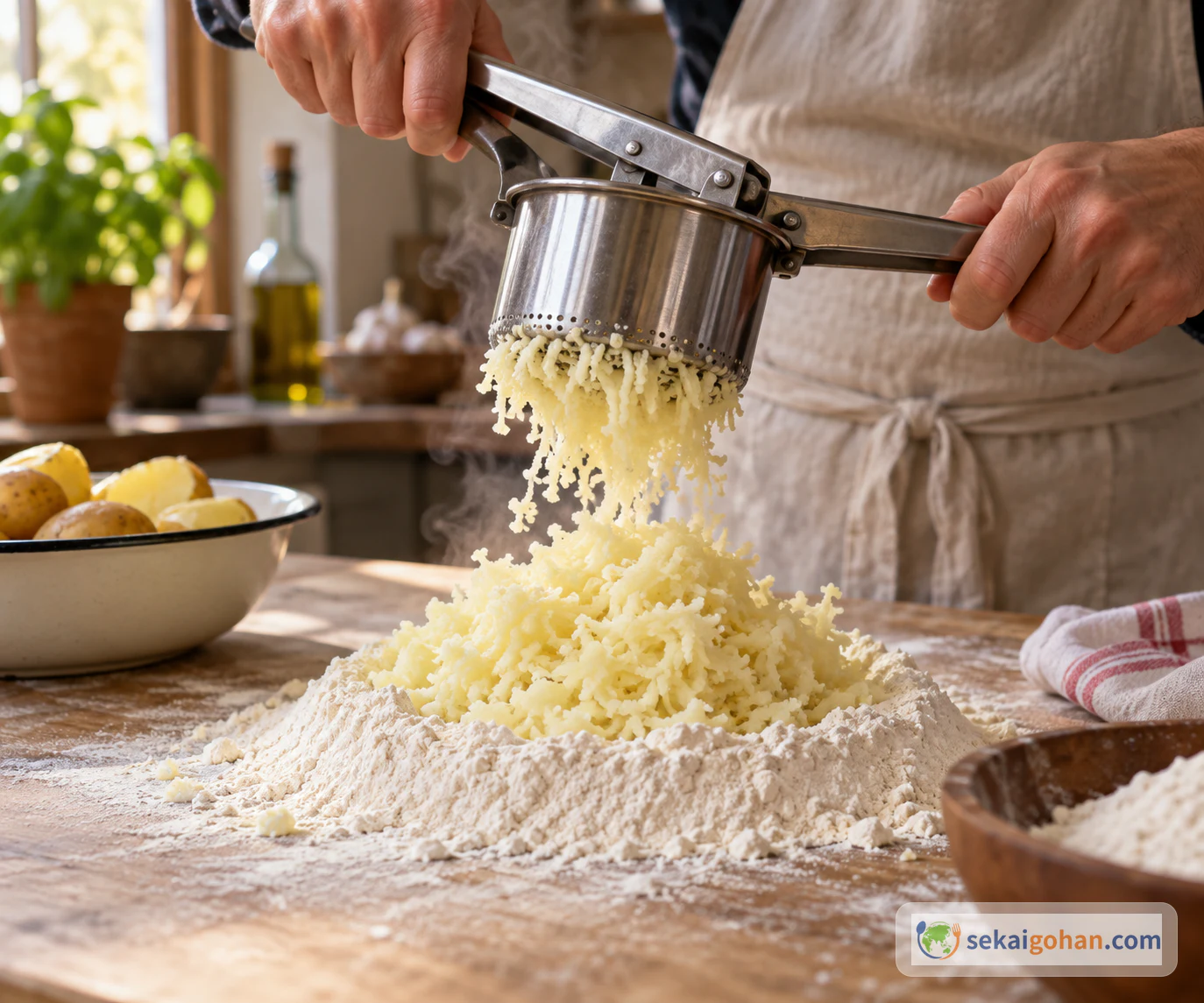
Hot boiled potatoes pressed through a ricer, falling onto the flour
Rice the potatoes while hot, straight onto the flour already on the worktop

Before draining, pour the 10.5 oz (300 g) of flour into a mound on a clean worktop. Drain the potatoes and, while they are still hot, press them through a potato ricer directly onto the flour. The skins stay behind in the ricer, so you don't need to peel them first. The potatoes are scalding: hold them with a cloth or a heat-resistant glove, not your bare hands.

STEP 33 / 7

Add the egg and salt, and combine briefly

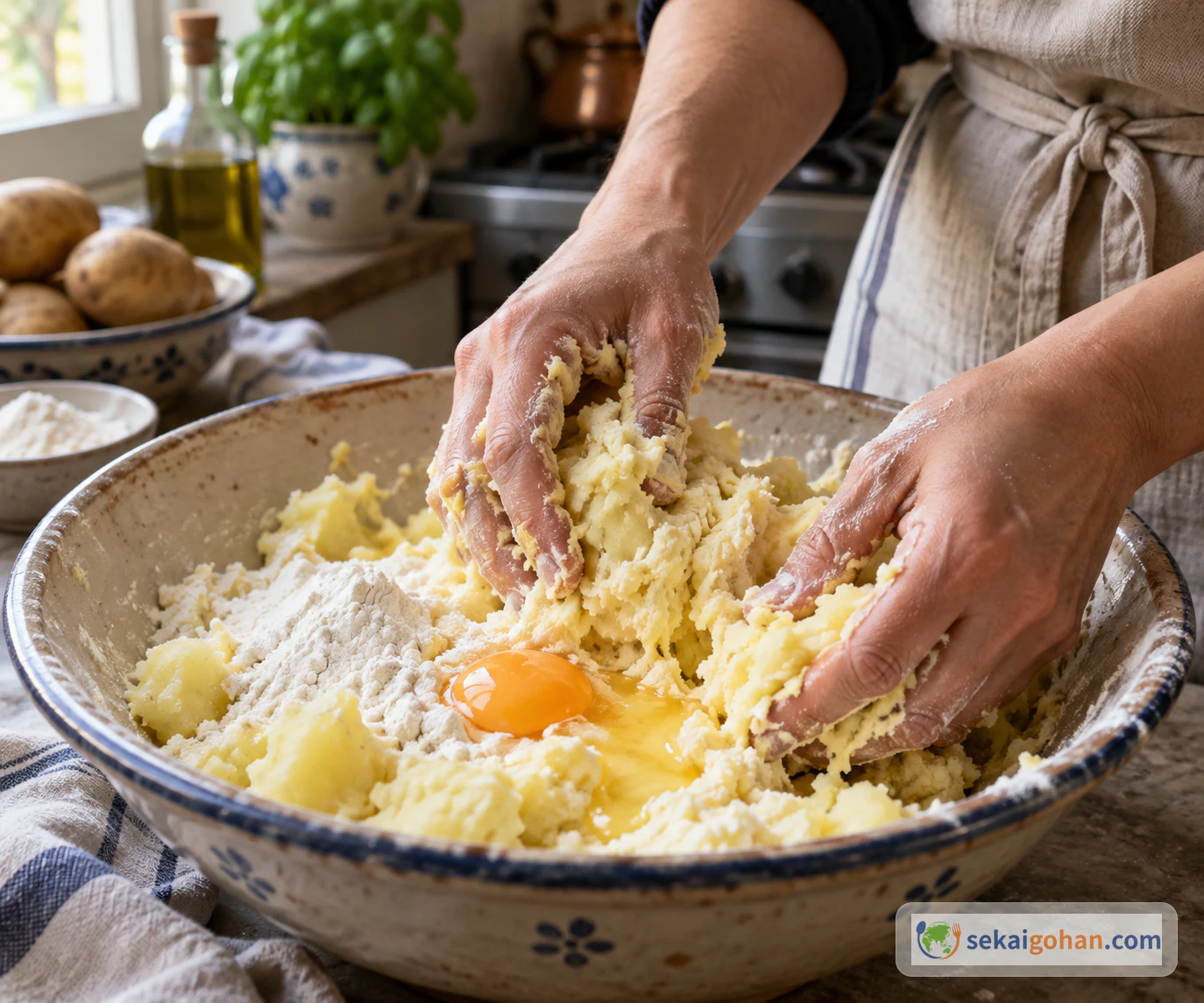
Mashed potato, flour and egg being gathered into a dough without overkneading
Bring the dough together only until it is soft and smooth

Add the lightly beaten egg and salt to taste over the potato and flour. Bring everything together quickly until you have a soft, even dough. Stop there: working the dough longer than necessary makes the gnocchi hard. Don't treat adding more flour as an automatic fix. If the dough feels sticky, handle it with a light dusting of semolina on the worktop rather than kneading flour in.

STEP 44 / 7

Shape ropes about 1 inches (2 cm) thick and cut

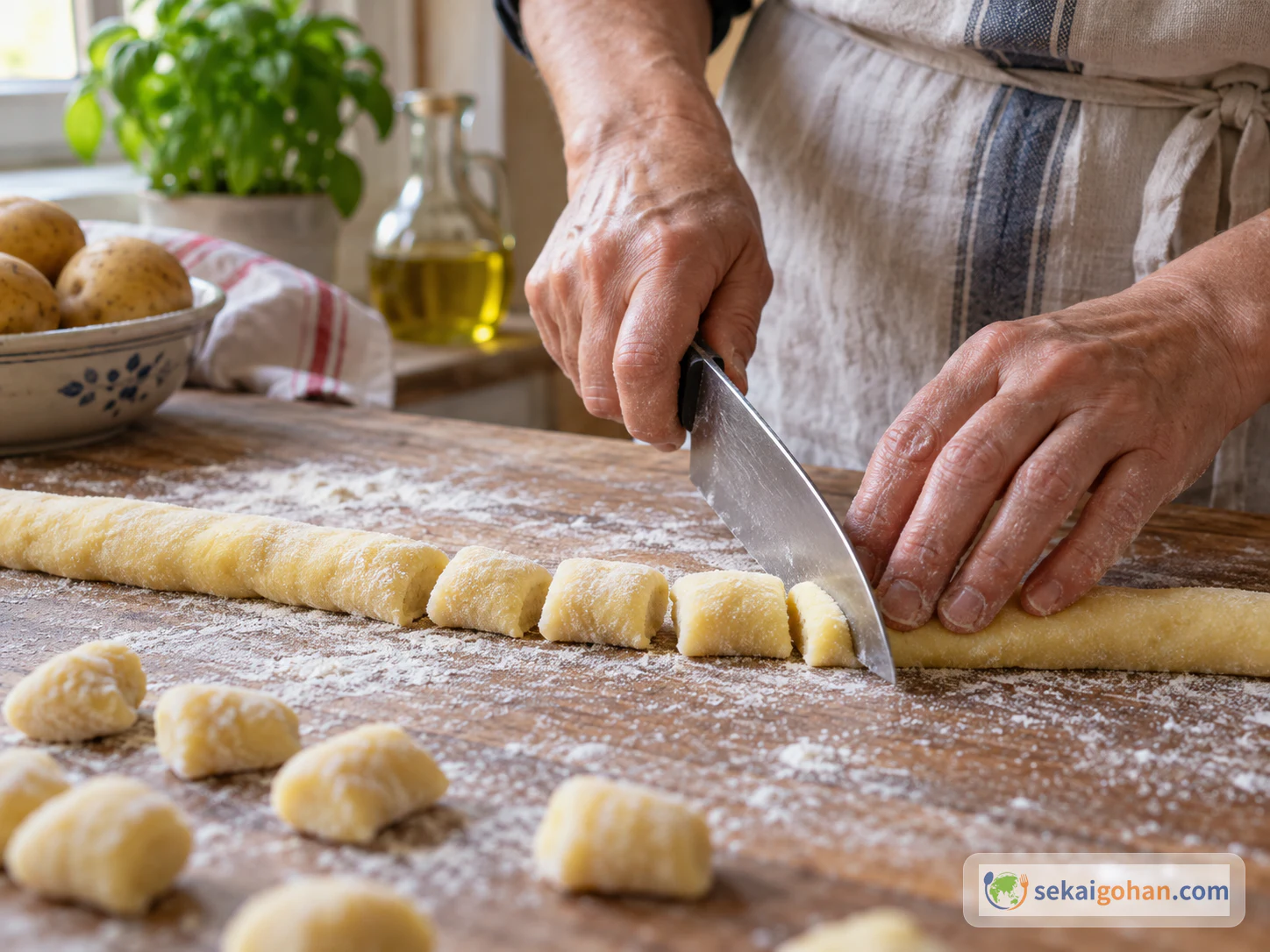
Dough rolled into a rope about 2 cm thick and cut into bite-size pieces
Roll the dough into ropes about 2 cm thick and cut into bite-size pieces

Divide the dough into portions. Keep the portions you are not working on covered with a cloth so they don't dry out. Using your fingertips, roll one portion on the lightly dusted worktop into a rope about 1 inches (2 cm) in diameter, then cut it into bite-size pieces with a knife.

STEP 55 / 7

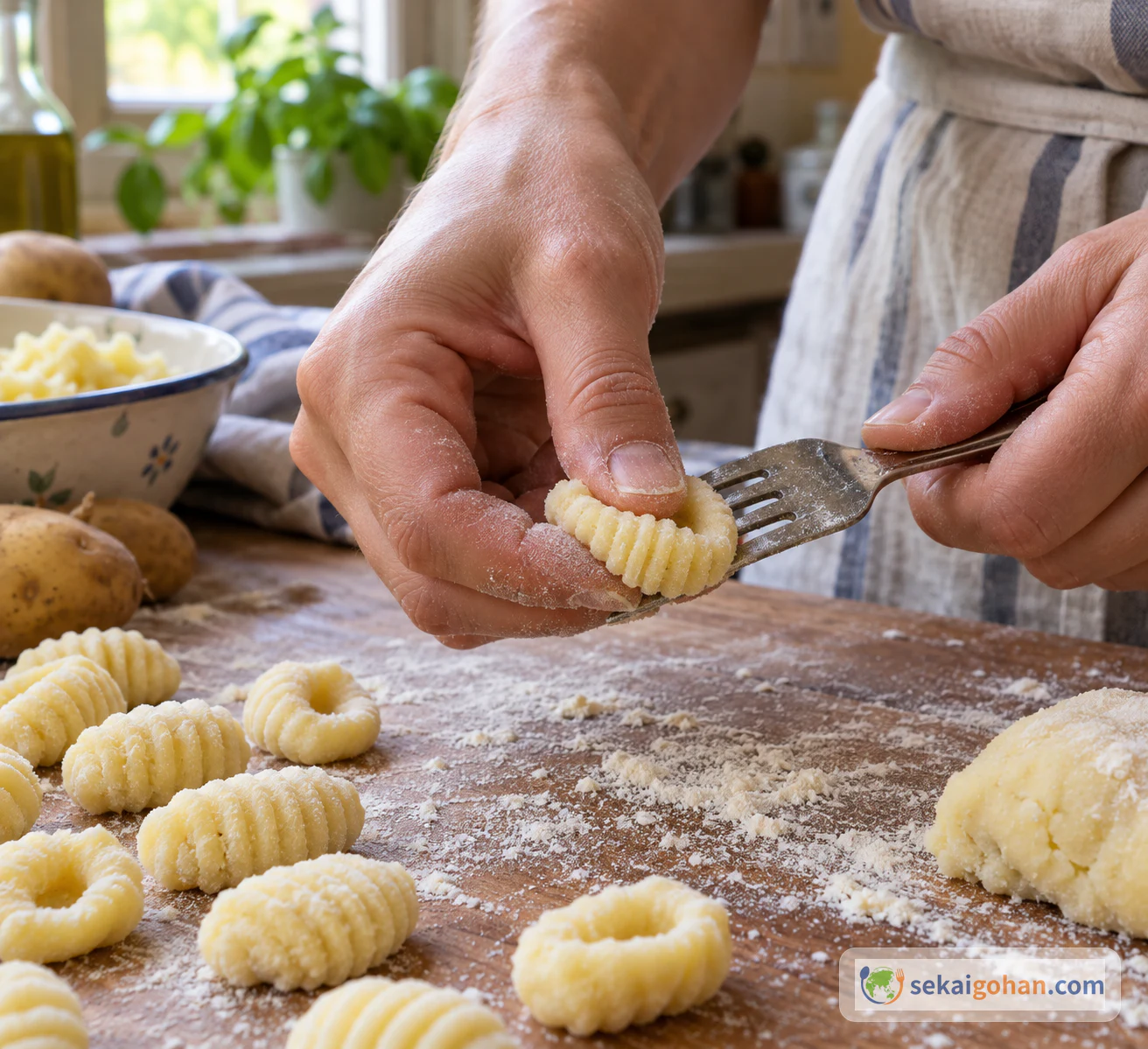
Make ridges with a fork, then set the gnocchi apart

Gnocchi pressed and rolled along a fork to make ridges that catch the sauce
Press lightly with the thumb along the fork to make ridges and a hollow

Press each piece lightly with your thumb against the back of a fork, or a gnocchi board if you have one, and roll it off to form ridges on the outside and a small hollow on the inside. The ridges are not only decoration: they give the sauce somewhere to cling. A fork works perfectly well. Place the finished gnocchi on a tray or cloth lightly dusted with semolina, spaced apart so they don't stick together.

STEP 66 / 7

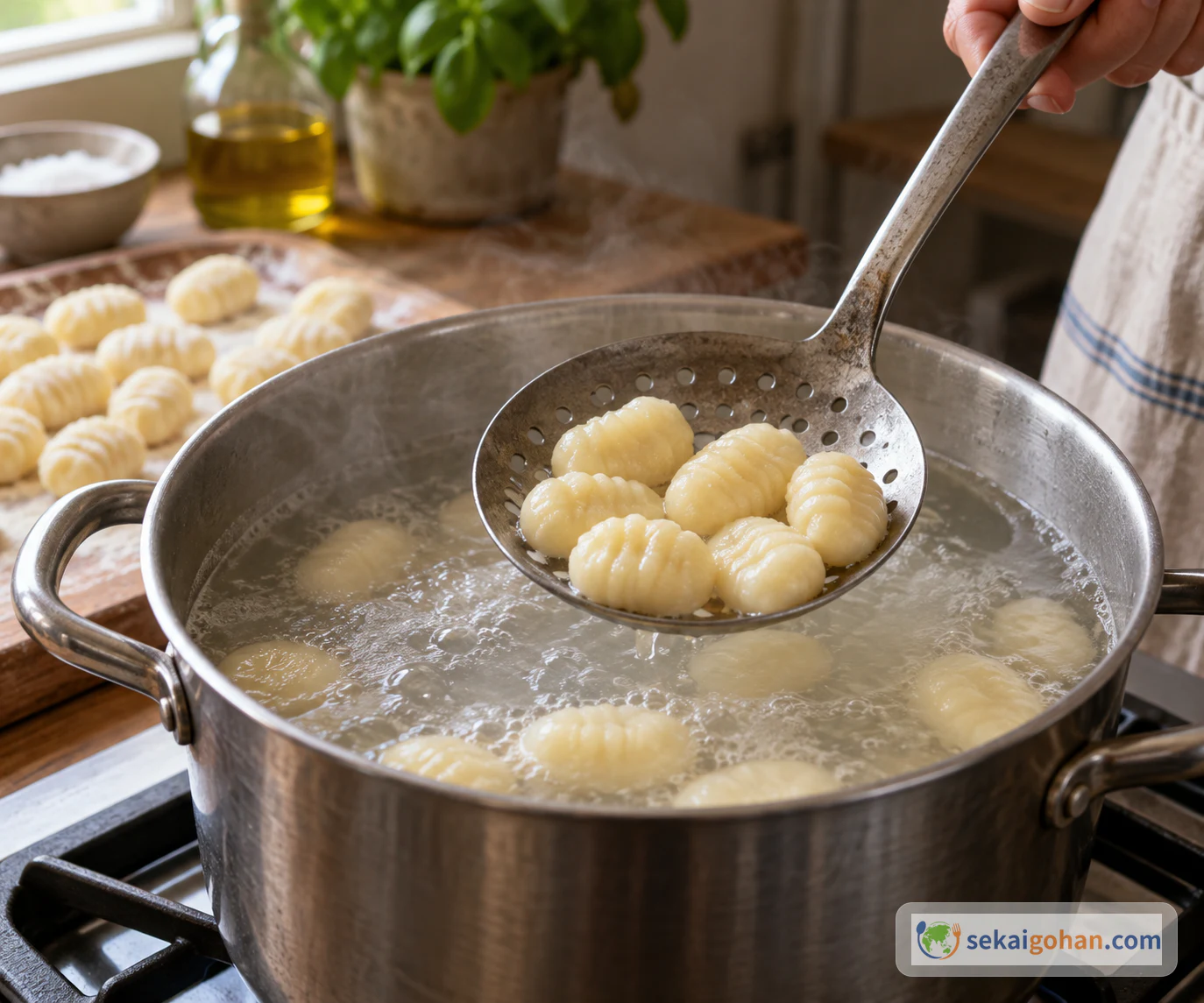
Boil in salted water in small batches and lift them as they float

Gnocchi boiled in small batches in salted water, lifted out as they float
Cook a few at a time and scoop them out as they rise to the surface

Bring a large pot of water to a boil and salt it. Add the gnocchi a few at a time; dropping in too many at once cools the water. As each gnocchi rises to the surface, lift it out with a slotted spoon. Use floating as your signal rather than a fixed number of minutes.

STEP 77 / 7

Toss with the sauce while warm

Gnocchi tossed in butter and sage, the sauce left in the ridges, served warm
One serving option: cooked gnocchi tossed in butter and sage

Move the gnocchi straight into the sauce you have chosen and toss gently while they are warm. For the optional butter and sage serving, melt butter in a pan with a few sage leaves and turn the cooked gnocchi through it; the pieces will pick up a little color in the pan. The amounts of butter and sage are up to you. Keep the sauce light enough that it sits in the ridges instead of burying the dough.

0 / 0
Ingredients

Ingredients

1 / 3

Gnocchi dough

Ingredient Amount Role and how to choose
Red potatoes (floury) 2.25 lb (1 kg) The body of the dough. Choose floury, drier potatoes. New potatoes hold more water and need more flour
All-purpose flour 10.5 oz (300 g) Binds the potato. Too much makes the gnocchi hard; too little and they fall apart
Medium egg 1 Lightly beaten before it goes in
Fine salt to taste For the dough
Remilled durum wheat semolina as needed For dusting the worktop and tray. Not mixed into the dough
2 / 3

For cooking

Ingredient Amount Role
Salt for the cooking water as needed Salt the boiling water separately from the dough
3 / 3

Optional serving: butter and sage

Ingredient Amount Role
Butter as needed One serving option. Not part of the dough
Fresh sage a few leaves, as needed Fragrance for the butter
0 / 0

Steam rises from potatoes just out of the pot. They go through a ricer straight onto a mound of flour, and the soft dough is gathered in a few quick movements, rolled into ropes, cut, and each little piece is pressed against a fork for its ridges. Potato gnocchi are this kind of handwork at the kitchen counter: small Italian dumplings of potato, flour and egg, soft and light when they're made with a gentle hand. For more dishes from the same country, see Italian recipes on Sekai Gohan.

Potato Gnocchi and the Gnocchi Family

Gnocchi is a broad name for a family of Italian dumplings made from different bases: semolina versions such as gnocchi alla romana, bread-based dumplings such as canederli, and flour-and-water doughs. Older gnocchi lineages existed before potatoes were used, and later versions were made from flour, water and egg. The potato version spread later still. The word is linked to Venetian gnòco, though its origin is still open.

Even potato gnocchi vary from place to place. In the Piacenza, Modena and Forlì-Cesena areas of Emilia-Romagna, gnocchi (gnocc) are made from boiled potatoes riced and mixed with flour and a little Parmigiano. They're rolled into ropes about 0.5 inches (1 cm) thick, cut into pieces about 0.5 inches (1 cm) long, marked with a fork, and cooked in salted water until they float. Italian cooking shifts by region, city and family, and the formula here is one home recipe within that range.

Ingredients: Five Items, One Formula
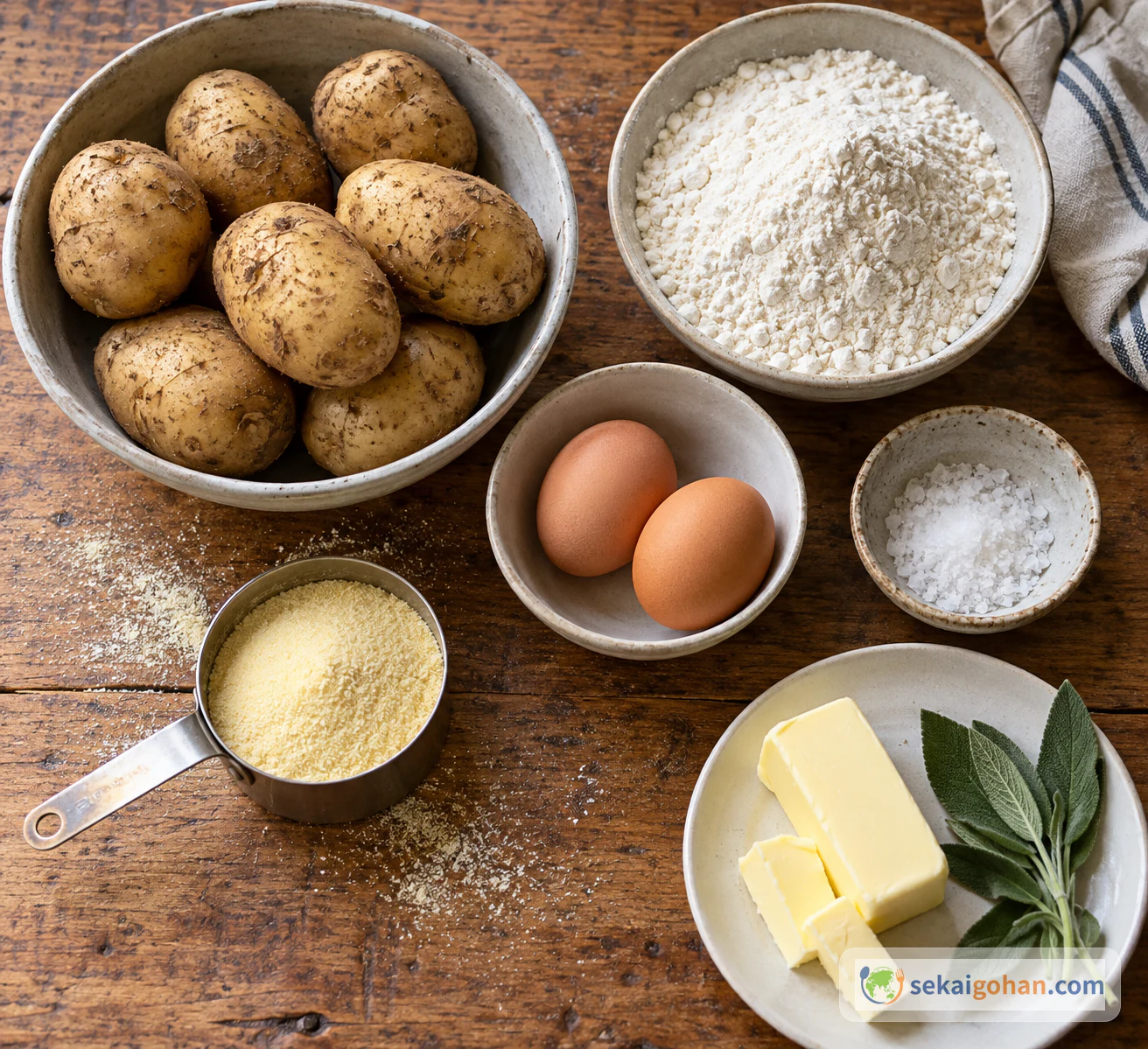
Ingredients for potato gnocchi: potatoes, flour, egg, salt and semolina for dusting
Potatoes, flour, egg, salt and durum semolina, with butter and sage set apart for serving

The amounts below serve about 4. Salt and dusting semolina are used to taste and as needed. The dough contains no added water.

Potatoes. Choose by texture rather than by name: floury, mature potatoes are the better fit, and new or waxy potatoes bring extra moisture. If you can't find red potatoes, use another floury variety. Different potatoes absorb flour differently, so the dough will feel softer or firmer; judge by touch rather than inventing a new ratio.

Flour. Use all-purpose flour. A different flour, such as a soft cake-style flour, changes absorption and texture.

Semolina. Remilled durum wheat semolina is for dusting only. Don't swap in bread flour, potato starch or cornstarch: they are not the same thing.

Allergens

The dough contains wheat and egg. The dusting semolina is also wheat. If you serve the gnocchi with butter, that adds milk. Check product labels for allergens and shared-facility statements.

Equipment

  • A large pot for the potatoes and a second large pot (or the same one, refilled) for the gnocchi
  • A potato ricer, which presses hot potatoes evenly and leaves the skins behind
  • A fork for testing the potatoes and for making ridges; a gnocchi board is optional
  • A knife for cutting the dough
  • A clean cloth to cover the dough, and a tray or cloth lightly dusted with semolina
  • A slotted spoon
  • A clean cloth or heat-resistant glove for holding the hot potatoes

Method: From Hot Potatoes to Floating Gnocchi

Watch the state, not the clock

The potato cooking time is a guide; the real signal is a fork sliding into the center. For the gnocchi themselves, the signal is that they rise to the surface.

Potato Gnocchi Problems and Fixes

Too much flour makes gnocchi hard; too little makes them fall apart. Most problems trace back to the potatoes, the flour or the handling.

Problem Likely cause What to check
Gnocchi are hard or heavy Too much flour; dough worked too long Mix only until the dough comes together. Keep dusting flour and semolina out of the dough
Gnocchi fall apart in the water Watery or new potatoes; too little flour; too many in the pot at once Choose floury potatoes, boil them in their skins, and cook in small batches
Dough dries out on the surface Unused dough left uncovered Keep the portions you aren't shaping under a cloth
Gnocchi stick together on the tray Pieces touching; not enough dusting Space them apart on a lightly semolina-dusted tray or cloth

There's no reliable rescue ratio for a dough that has gone wrong, so the real fixes happen before mixing. Use the right potatoes, rice them while they're still hot, and bring the dough together quickly, stopping before it turns firm. Soft, light gnocchi come from that restraint, not from extra flour.

Serving and Storing Potato Gnocchi

Sauces

Keep the sauce light

Whichever sauce you choose, a modest amount that settles into the ridges lets the softness of the gnocchi come through.

  • Butter and sage: Fragrant and light.
  • Tomato sauce: Adds acidity against the mild potato dough.
  • A rich cheese sauce such as gorgonzola: Use a restrained amount so the texture of the gnocchi isn't buried.

Storage

Uncooked gnocchi can sit on a cloth for a few hours at most, so cooking them the same day is the simplest plan. To freeze them, spread the uncooked gnocchi on a tray so they don't touch and freeze for about 20 minutes, until the pieces stay separate when you move them. Then transfer them to a freezer bag. Cook them straight from frozen, without thawing, adding them to boiling salted water a few at a time.

Cooked gnocchi

Eat cooked gnocchi fresh. If you want to keep them for later, freeze the uncooked gnocchi as above.

Frequently Asked Questions

Do I need a gnocchi board?

No. A fork makes the ridges just as well as a gnocchi board.

Can I make them without egg?

There's a separate egg-free formula with its own flour and salt amounts. Follow that one as written, rather than leaving the egg out of this recipe or mixing the two.

How many minutes do gnocchi need to boil?

Watch for floating instead of timing them: lift each gnocchi out as it rises to the surface.
Sources