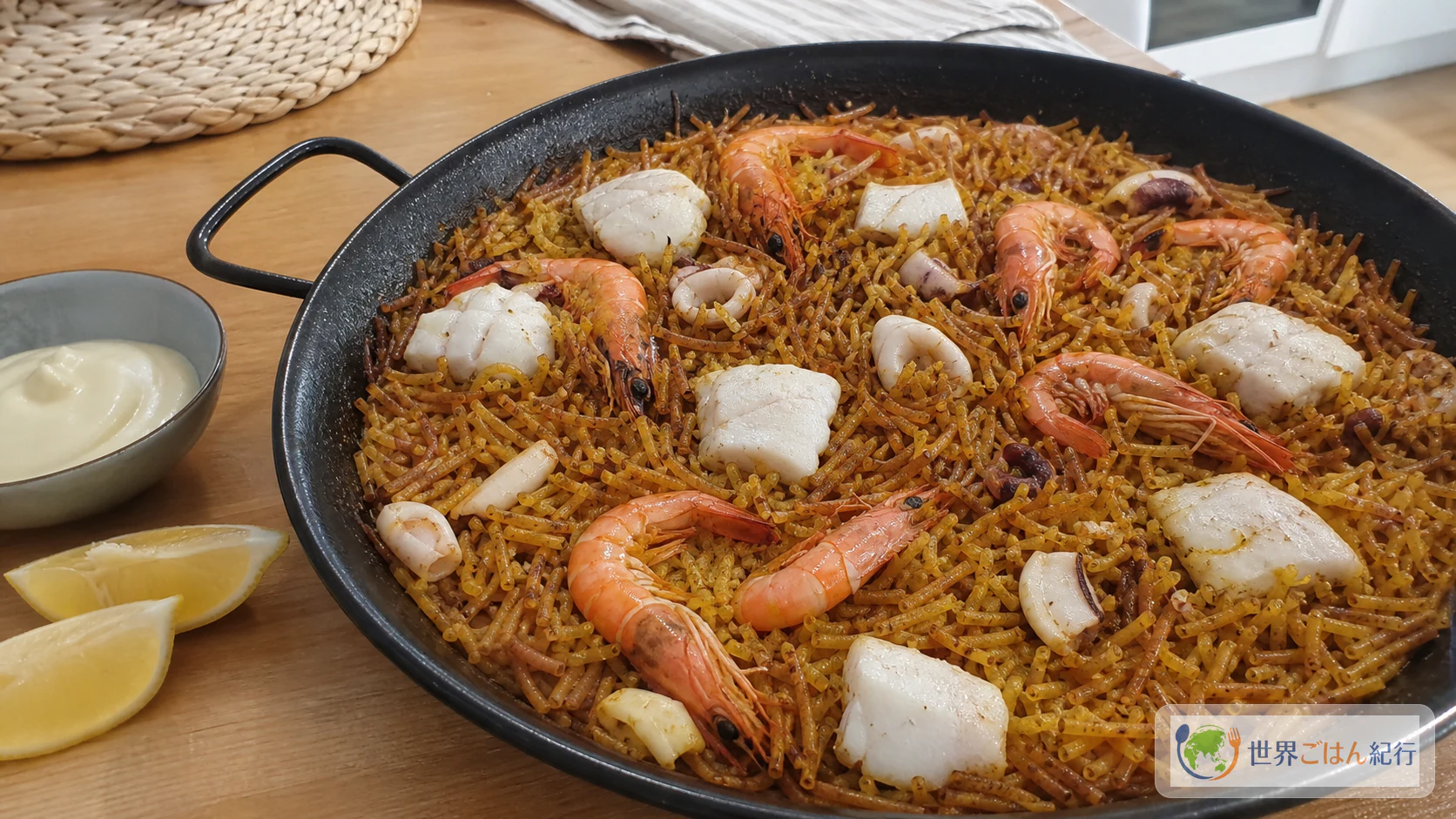
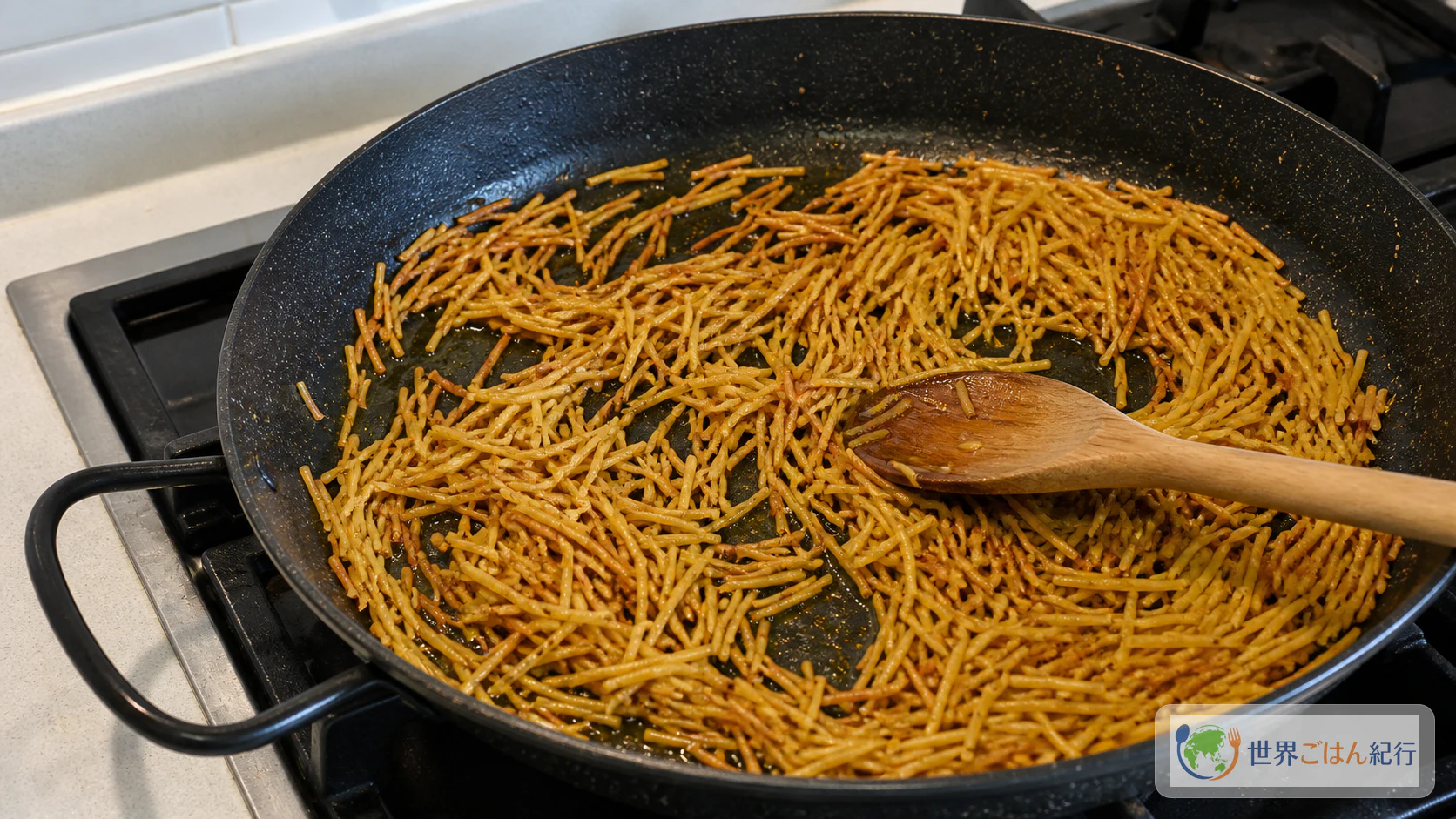
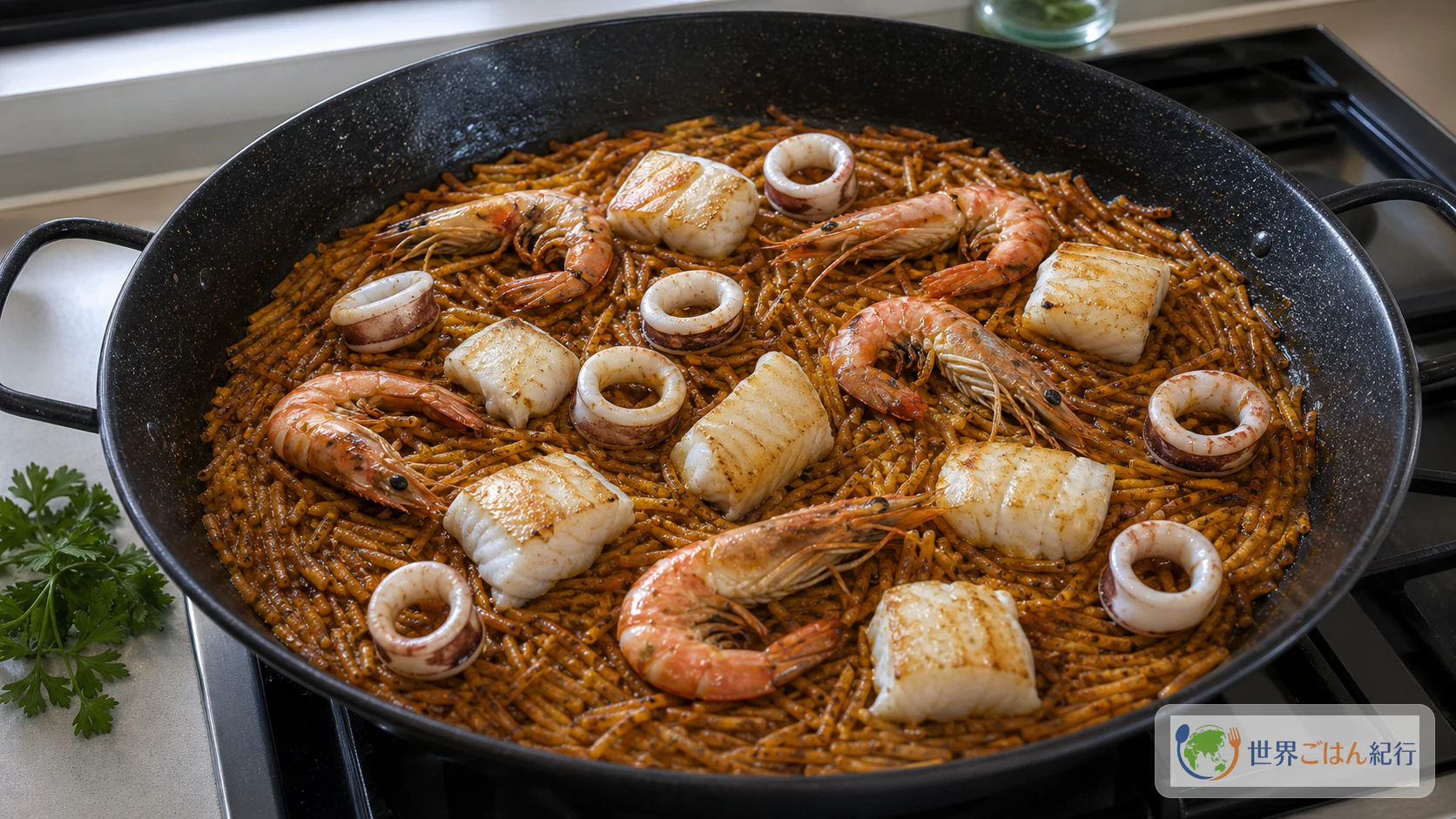
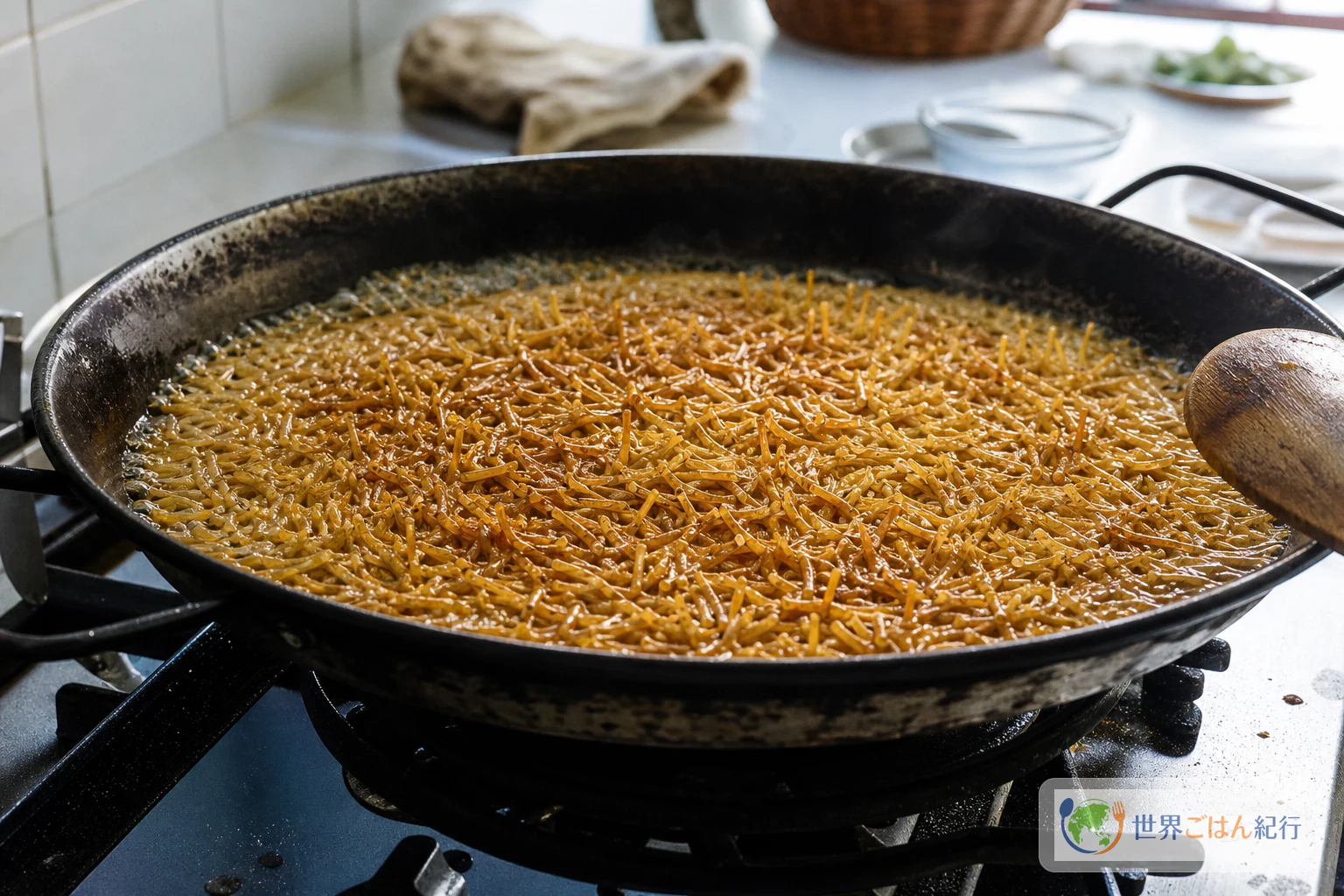
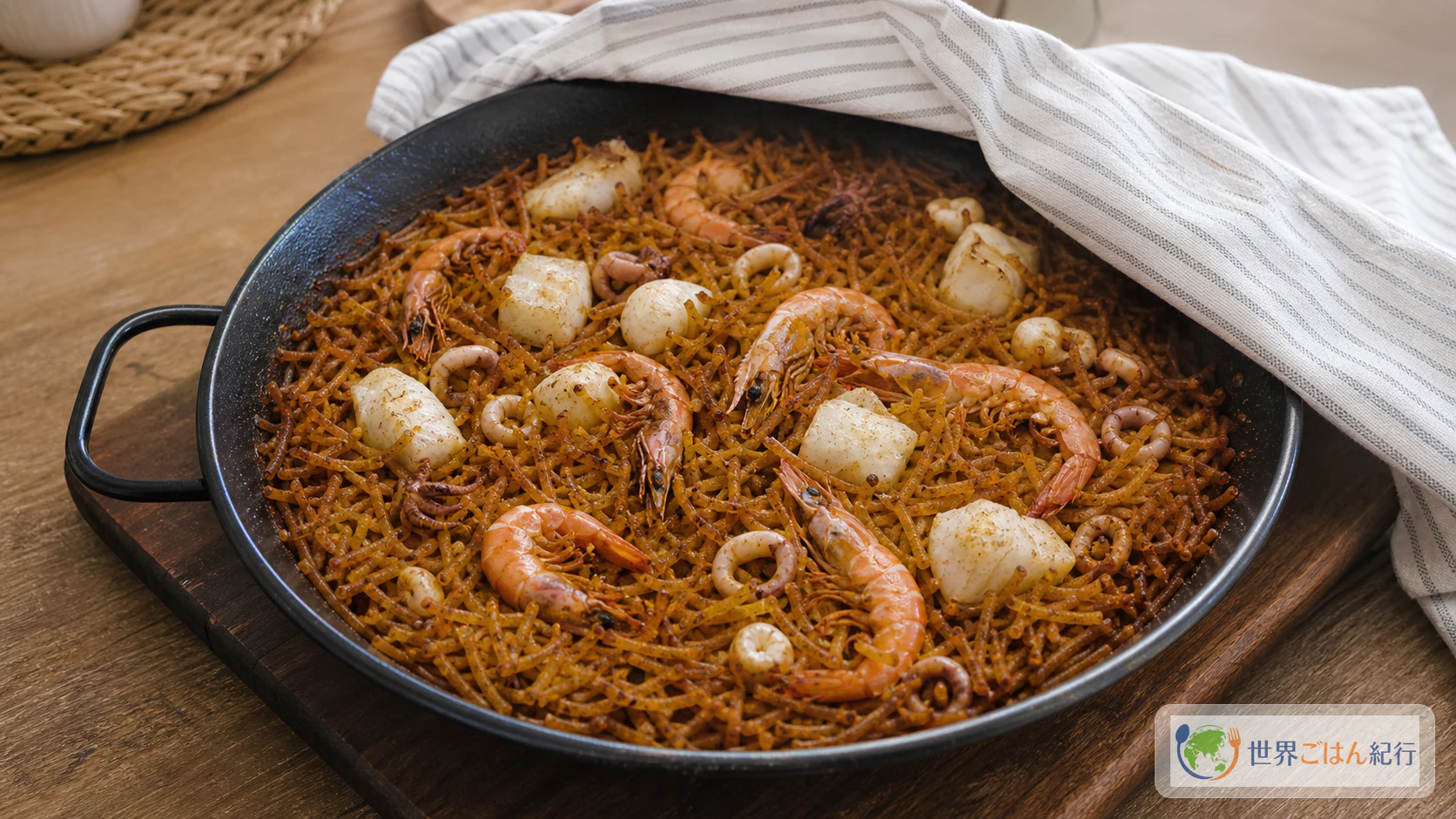
Toast short noodles in a skillet on a weekend afternoon, turning them with a wooden spatula until the scent of dry wheat rises, and the kitchen already smells like the coast, even before any seafood or stock goes in. Fideuà comes from the Valencian coast of eastern Spain, especially around Gandia. It looks a lot like Paella Valenciana, but the star is short dried noodles called fideo instead of rice. Seafood, tomato, saffron and seafood stock come together in a shallow pan, and at the end the liquid cooks off to leave a fragrant crust on the bottom. It's a holiday dish, and with that seafood aroma and toasted noodle crust, it belongs in the center of the table.
Fideuà, Gandia's noodle pan
Origin in the port of Gandia
Trace fideuà back and you arrive at Gandia in the Valencian Community, especially the port district of Grau. The common story is that fishing crews used noodles instead of rice in their boat meals. Whatever the exact history, shipboard stock, seafood and a shallow pan point to a crew meal rather than a lavish restaurant dish.
Fideuà with the grave accent is the Valencian spelling; in Spanish it is sometimes written Fideuá (or called Fideuada). In Gandia the dish is the face of the town, and an international contest is held there. Judges look at the texture of the noodles, the overall harmony of flavor and the color. That's useful at home too: rather than piling on ingredients, check whether the noodles have absorbed the stock, whether the bottom of the pan is fragrant and whether the color stays clear rather than muddy brown.
The formal recipe and home versions
Fideuà de Gandia has a clear ingredient list: fideo No. 4, langoustines, shrimp, monkfish, garlic, tomato, paprika, grated onion, saffron, olive oil and seafood stock. Under the contest rules, adding other fish, or squid or cuttlefish, takes the dish outside the formal recipe. That's worth knowing, since fideuà is often described as a dish where "any seafood is fine."
What people eat in local homes and restaurants is broader. On June 8, 2026, Gandia cooks were testing salt levels, the aroma of the shellfish and when to add the stock before the contest. Households differ on squid, cuttlefish, shrimp, and thin or thick noodles, so each home pan adds its own adjustments to a formal backbone.
Fideuà and paella
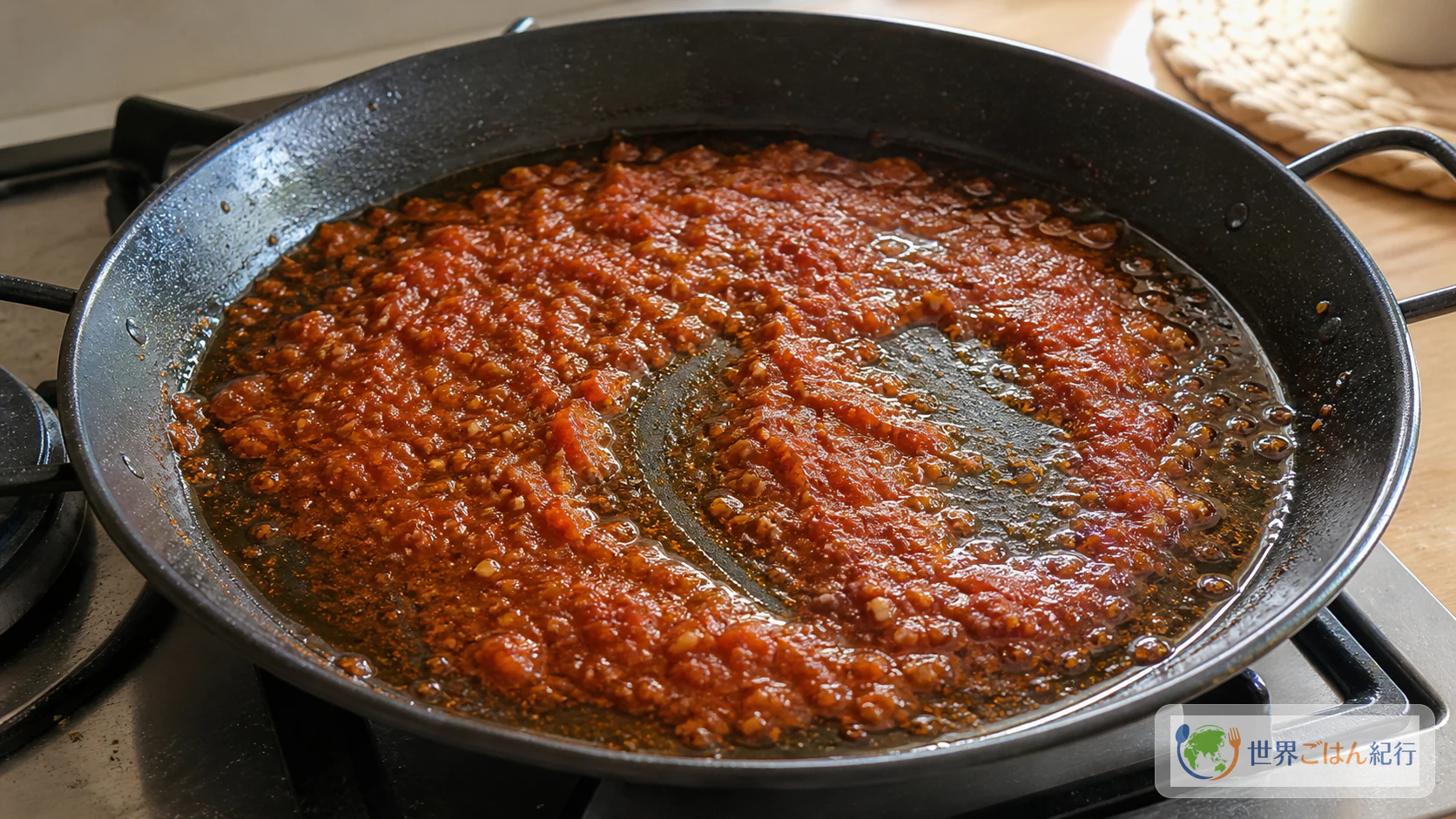
People sometimes call it "noodle paella," but it is a dry pan dish, with no soup left at the end. A few steps make it fideuà: toast the short dried noodles in oil, pour in warm seafood stock, make a rich sofrito without scorching it, and dry the bottom at the end for aroma. Once the stock is in, barely move the noodles, and keep the seafood from overcooking. Follow that order and even broken capellini in a home skillet gets you close to a Gandia table. Cold stock, frequent stirring and liquid left at the end give you seafood pasta that only looks similar.
Ingredients (serves 4)
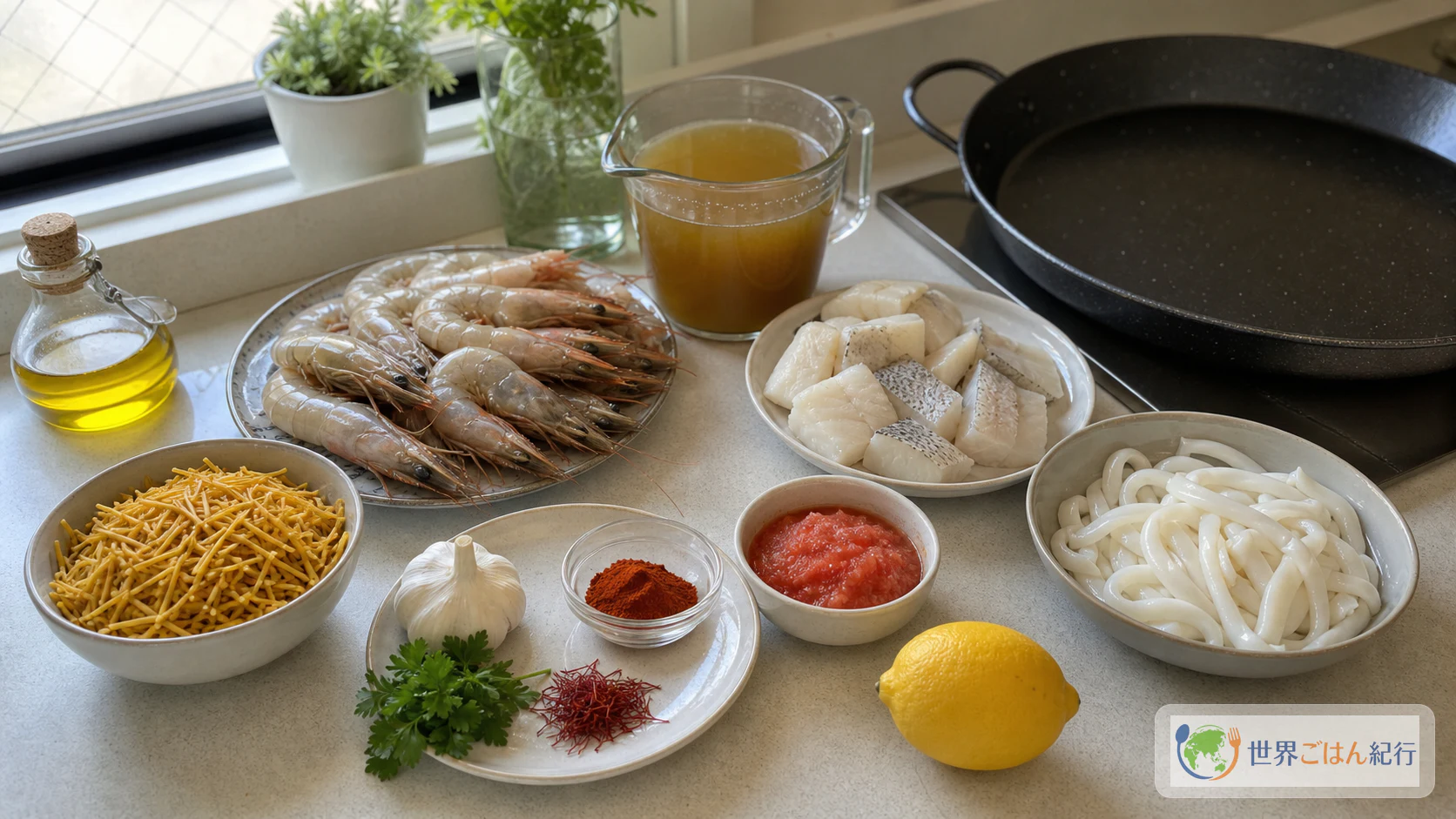
Fideuà becomes lavish when you add a lot of seafood, but when you are cooking it for the first time, shrimp, squid and white fish are enough. This is a home version built around easy shopping. For the Gandia style, leave out the squid and choose white fish that does not fall apart easily, such as monkfish, cod or sea bass. Adding mussels or clams improves the look, but they add salt and moisture and make the doneness of the noodles harder to judge. Use a shallow skillet or paella pan 12 inches (28–30 cm) across for 10.5 oz (300 g) of noodles.
| What to decide | Gandia style | Home version |
|---|---|---|
| Seafood | Built around langoustines, shrimp and monkfish | Head-on shrimp, white fish, and a little squid for aroma |
| Noodles | Use fideo No. 4 | Break capellini or thin spaghetti |
| Stock | Use a fumet made from small fish and shellfish | A quick stock from shrimp shells, or diluted store-bought seafood broth |
| Finish | Focus on noodle texture, color and overall balance | Leave no liquid, do not scorch, and dry the bottom until fragrant |
This recipe uses wheat, shrimp, squid, fish, and mayonnaise containing egg. Cook fish to an internal temperature of 145°F (about 63°C). Cook shrimp and squid until the flesh turns opaque and is thoroughly cooked. If you add shellfish, do not eat any that do not open after cooking.
The noodles are what people most often wonder about. In the Gandia style, fideo No. 4 is the standard, but not every shop outside Spain stocks it. If substituting, break thin spaghetti or capellini into 1 inch (2–3 cm) pieces. Thick spaghetti tends to leave a hard center, and udon or yakisoba noodles are designed to absorb liquid differently, so they are not suitable. If you use thick dedicated fideo, add about 3.5 tbsp (50 ml) more stock and allow 1–2 more minutes in step 5.
If the seafood stock is too strong the noodles turn salty, and if it is too weak the flavor blurs at the end. If using store-bought broth, taste it once when warmed, bring it to just slightly weaker than you would drink, and then add salt. Once the noodles are in, it is hard to correct the salt, so settling it at the stock stage is important.
For a more authentic aroma, seek out saffron and smoked paprika. Use only a little of each. The yellow aroma, the smoky sweetness and the red oil of the tomato make it taste different from ordinary seafood pasta.
If you will make this several times, the pan matters. A deep pot lets less moisture escape and the noodles soften easily, so choose a paella pan or a wide skillet to improve your odds.
Choosing ingredients for fideuà
If you can't find fideo, break thin spaghetti or capellini into 1 inch (2–3 cm) pieces. Thick spaghetti tends to leave a hard center, and short pasta changes the surface area and how much water the noodles absorb.
Squid is easy to buy and adds to the aroma of the stock. For the Gandia style, leave it out and make monkfish-type white fish (or another fish that doesn't fall apart easily) and shrimp the stars.
How to make it: toast the noodles, then let them absorb the stock
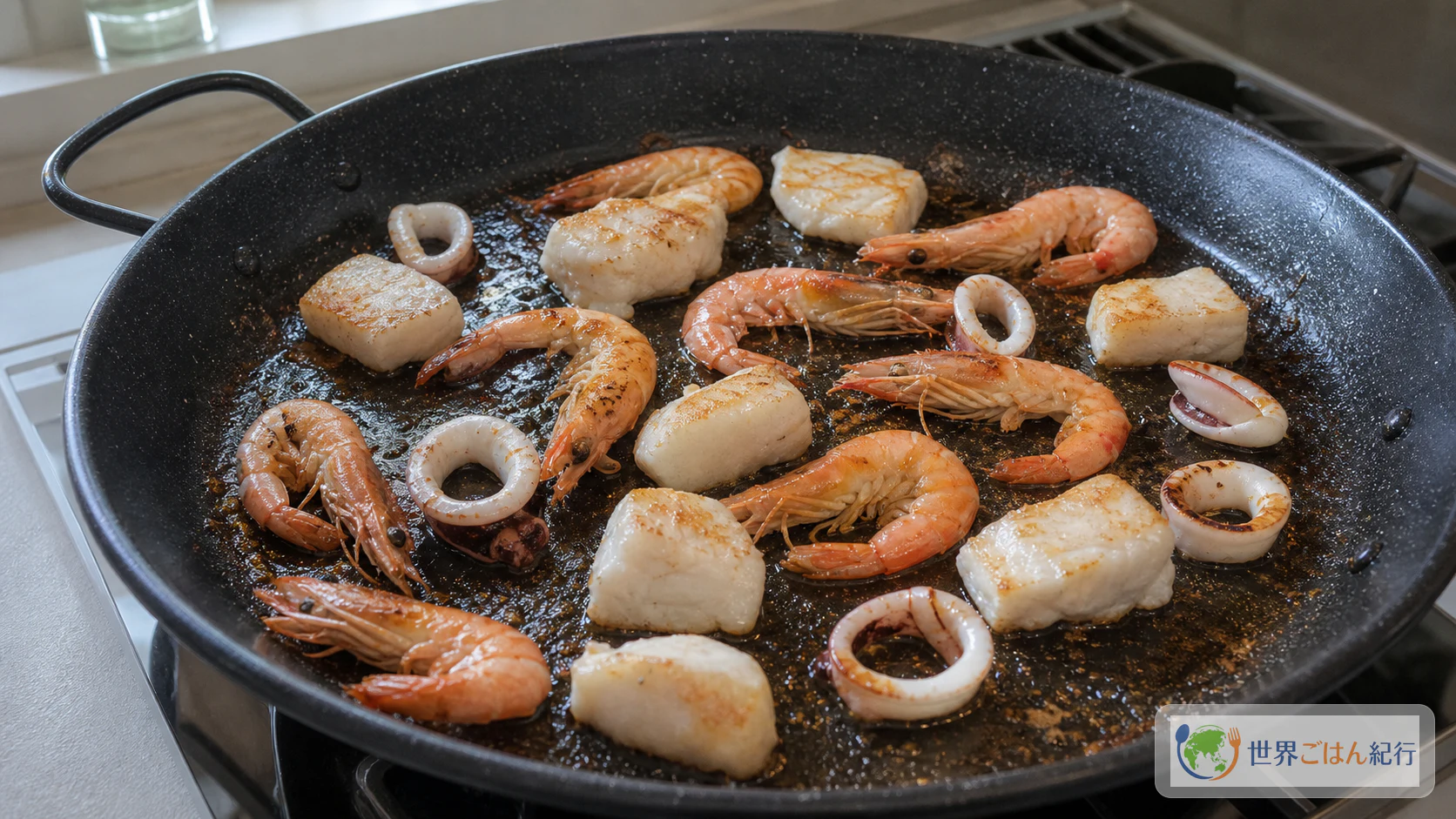
If you stir fideuà repeatedly after adding the stock, the surface of the noodles breaks down and turns sticky. Separate the order of toasting, searing, simmering and drying, and take the seafood out once and return it at the end. This way the shrimp and white fish are less likely to toughen, and you can concentrate on the heat for the noodles alone.
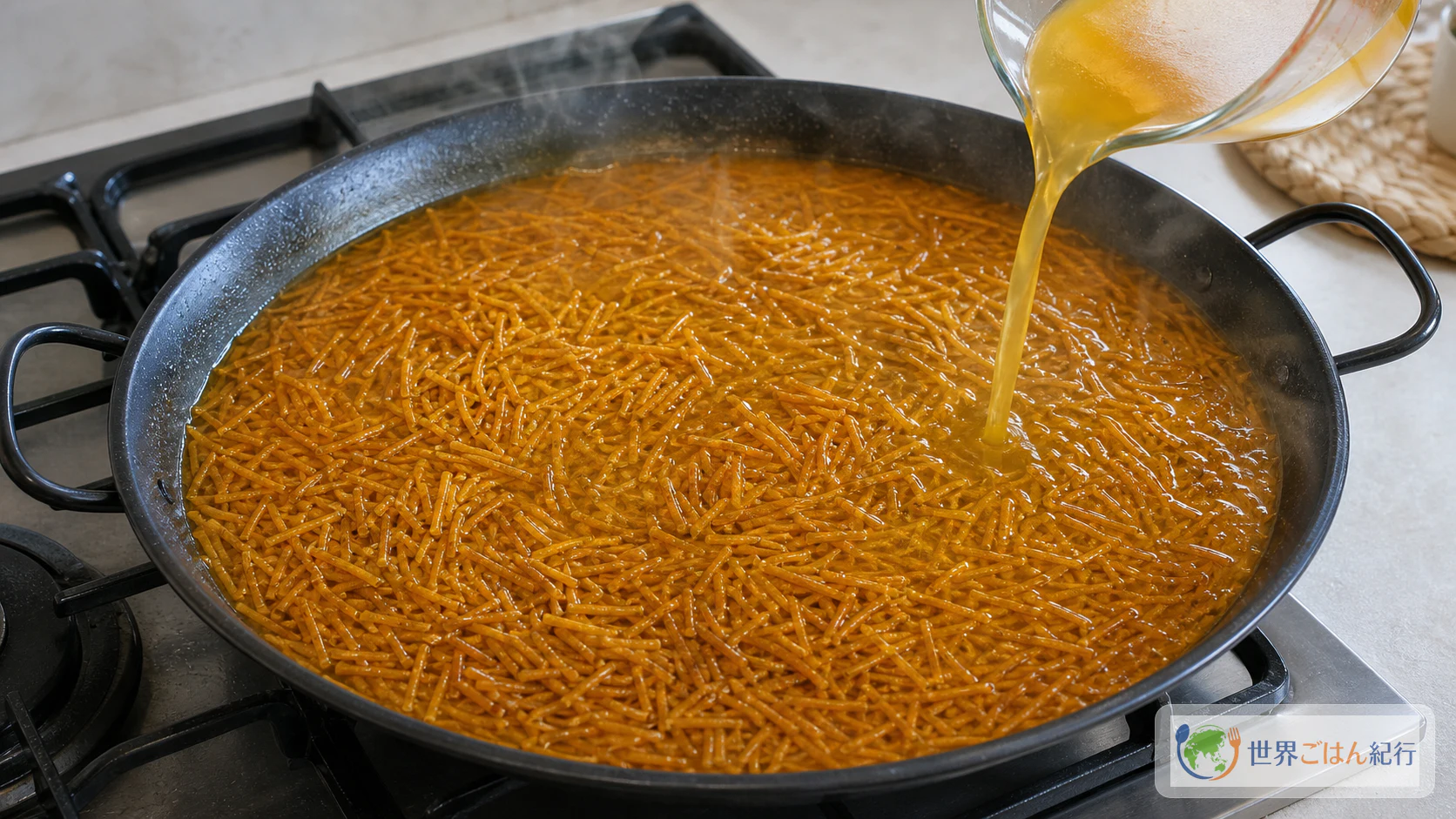
The Gandia cooking tips also emphasize hot, strained stock, a rich sofrito that is not scorched, and moving the noodles lightly only at the start and then touching them as little as possible. A home skillet has less heat than a restaurant's, so before pouring in the stock, warm the seafood stock to 176°F (70–80°C), spread the noodles flat, and adjust by turning only the pan. Read the heat and the liquid and wait; don't fix it by stirring with a spatula. That cuts down on failures.
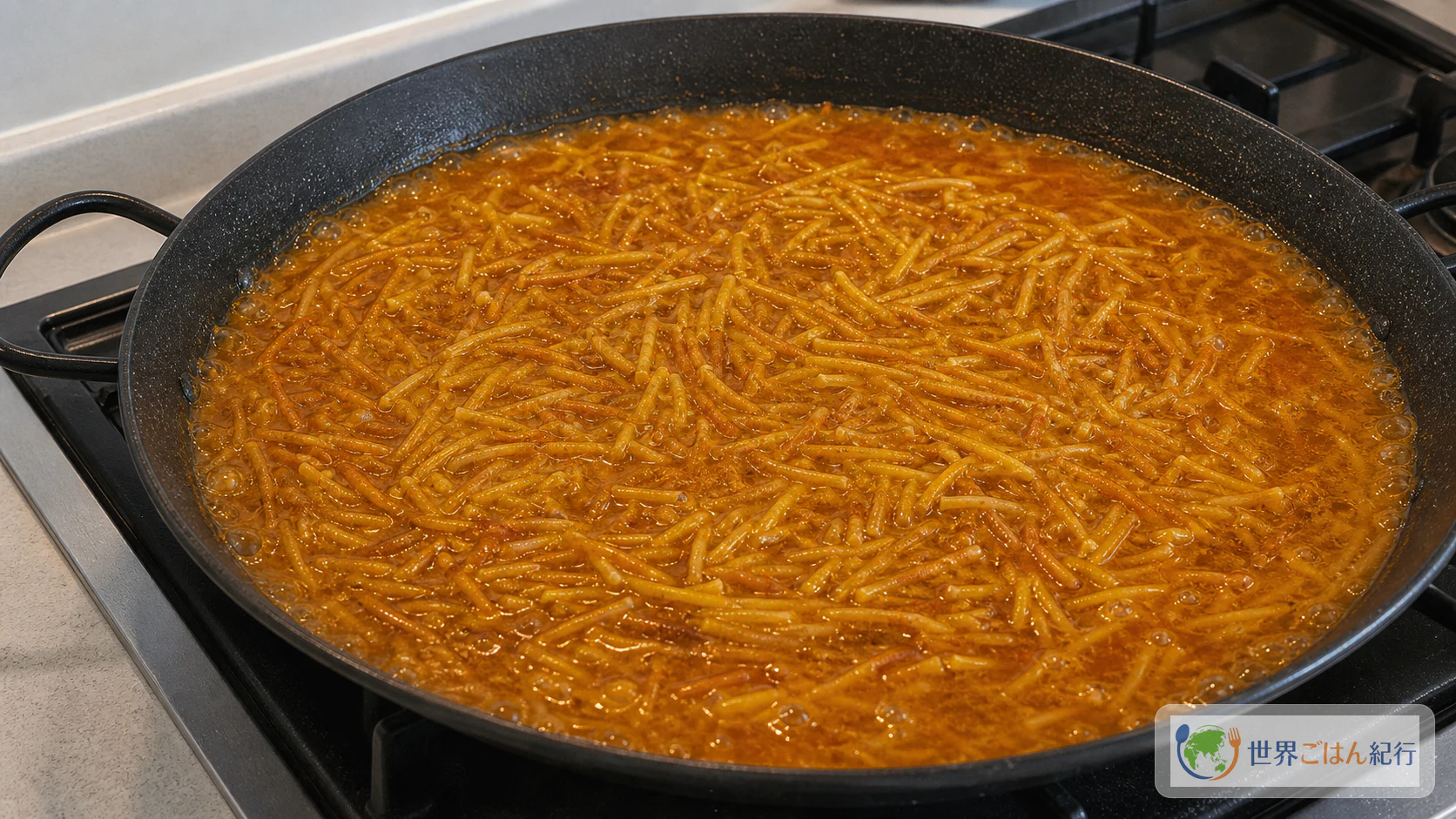
A home guide is 4 minutes toasting the noodles, 5 minutes searing the seafood, 6 minutes reducing the sofrito, 8 minutes absorbing the stock, 6 minutes with the seafood returned, 2 minutes of final toasting, and 5 minutes resting. It changes with the thickness of the pan and the noodles, so watch the bubbles, the aroma and how much liquid remains, not just the time.
Common fideuà failures and fixes
Most fideuà failures come down to liquid and heat. Noodles change state faster than paella rice, and 1–2 minutes can make the pan "soupy," "hard" or "scorched." Knowing the usual problems ahead of time keeps you from panicking at the stove.
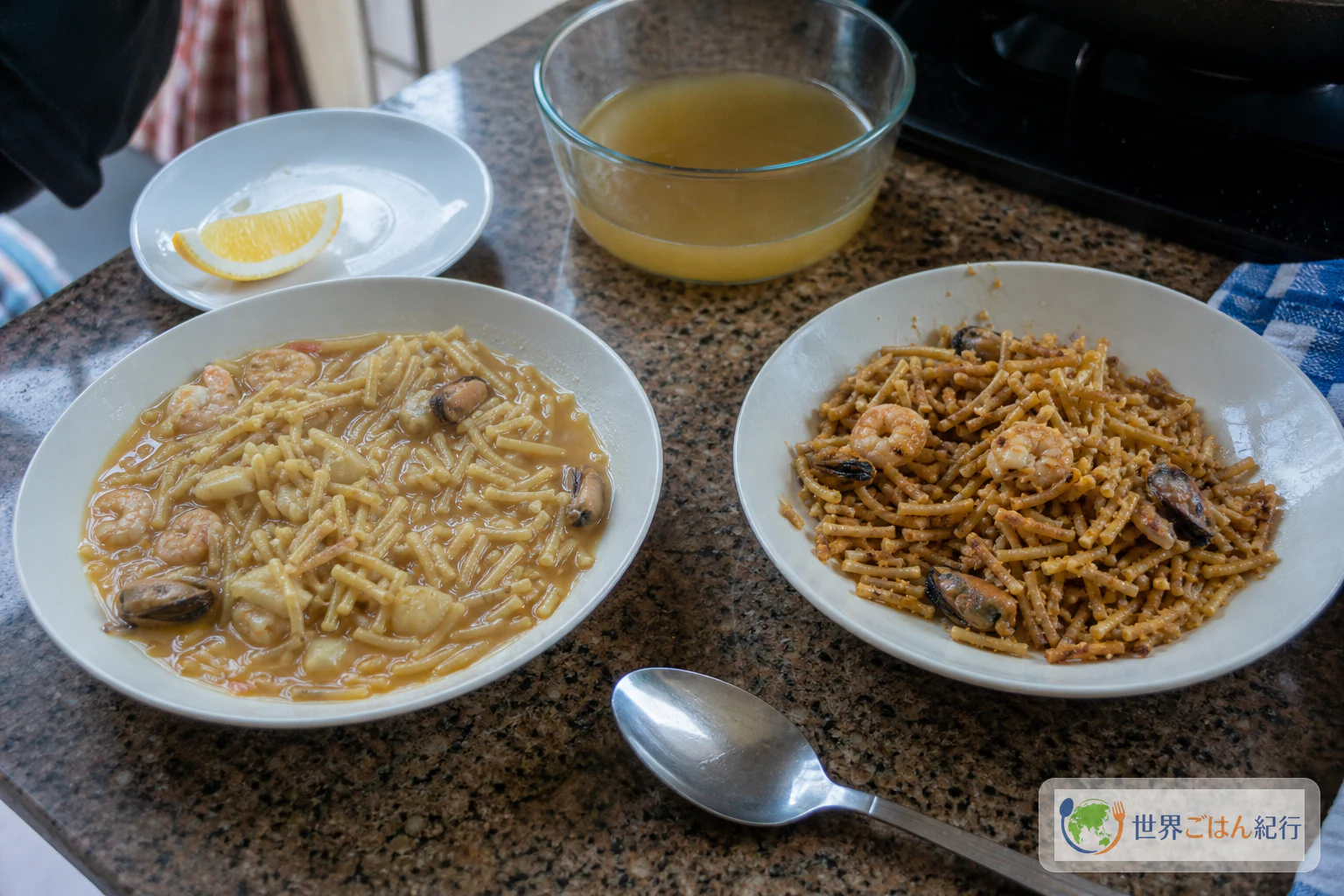
| State | Cause | How to fix it on the spot |
|---|---|---|
| Liquid remains | Heat too low, pan too deep, too much stock | Move the seafood aside and cook off moisture over medium-high heat, 1 minute at a time. Rotate the pan without stirring |
| Noodles are hard | Stock evaporated too early, noodles too thick | Add 2–3 tbsp warm stock or hot water and simmer over medium-low heat for 2 minutes |
| Bottom is burnt black | Final toasting too long, thin pan bottom | Don't scrape the burnt part; serve only the top. Next time begin with 1 minute at the end |
| Seafood is tough | Seared too long at first, returned too early | Next time sear only the surface at first and finish in the last 6 minutes |
| Flavor is weak | Stock was low in salt, or adjusted after adding the noodles | Serve with lemon and aioli at the table. Next time season the stock a bit stronger |
You'll want to stir the noodles to drive off liquid, but resist. Stirring breaks up the short noodles and destroys the fragrant layer on the bottom of the pan. Think "add, evaporate, wait": raise the heat when there's too much liquid, and add a little warm stock when the noodles are hard.
Serving, menus and storing fideuà
How fideuà is served
At tables in Gandia and along the Valencian coast, fideuà usually comes to the table in the pan, with a little aioli on the side. Set the pan in the center and serve from the edge, so everyone gets the dry noodles, the moist center and the toasty bottom layer. Taste the seafood stock and the noodles first before squeezing on much lemon. Then stir a little aioli into your own portion for the roundness of garlic. Mixed into the whole pan from the start, aioli tends to make it heavy.
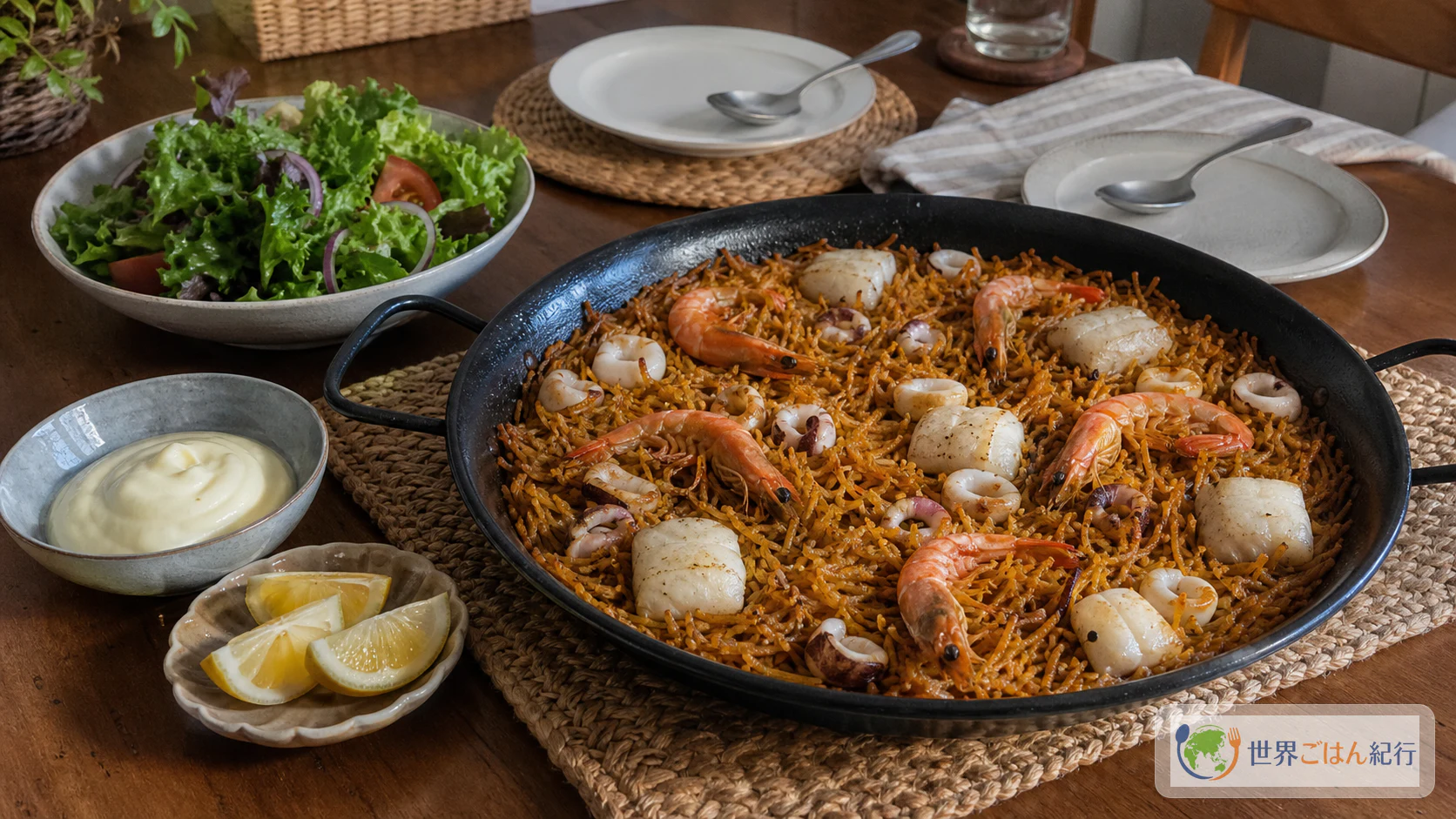
A Spanish menu around fideuà
The pan is rich, so a cold, acidic starter suits it: a Gazpacho that needs no stove, or a salad of olives, tomato and leafy greens. Vegetables and acidity will tire you less than a meat stew. On a cold day, a big pot of Cocido Madrileño shows another side of Spanish cooking, and a little Penedès almond sweet, Catànies, makes a light finish that won't crowd the lingering seafood.
For a Sunday lunch, make the stock in the morning and toast the noodles just before eating, and the kitchen stays much calmer. If you cook paella the same week, a meat-and-bean rice paella next to a seafood-and-noodle fideuà makes the difference clear. Both share a shallow pan, heat without stirring and a toasty bottom at the end.
Storage and reheating
Fideuà is best the day it is made. Seafood spoils quickly at room temperature, so refrigerate leftovers promptly in a clean container and finish them the next day.
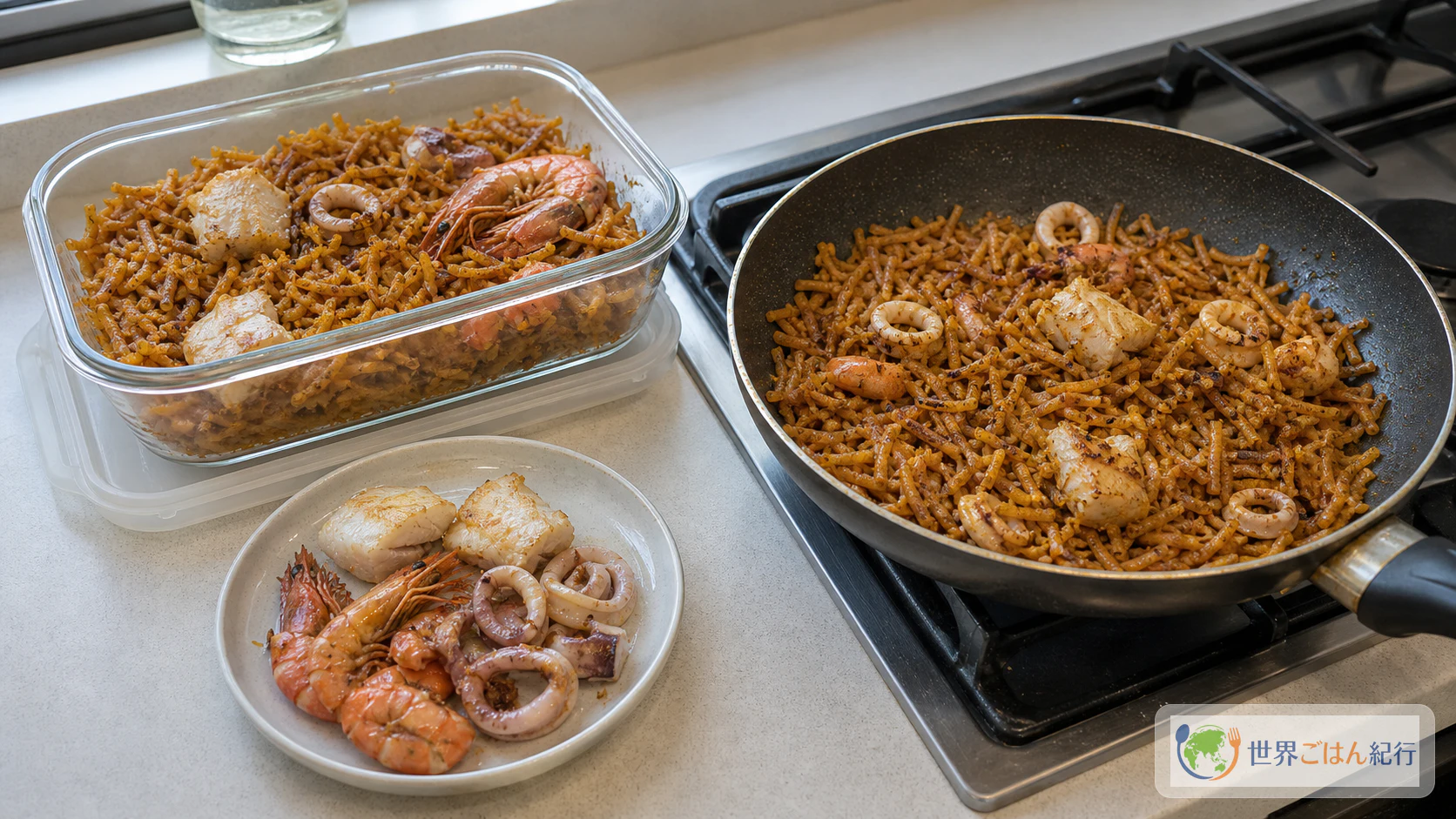
A microwave alone softens some of the noodles and toughens the seafood. Instead, spread the fideuà thinly in a small skillet, sprinkle with 1–2 tbsp water or seafood stock, and warm over low heat for 3 minutes. When steam rises, cook off moisture over medium heat for 1 minute and stop when the aroma returns. Serve the aioli cold alongside, never heated.
Fideuà doesn't freeze well: the noodles break, the seafood releases water when thawed, and everything turns sticky. To get ahead, make the seafood stock, cut the seafood and break the dried noodles separately, then start from the toasting on the day you eat.
Frequently asked questions
Can I make it with store-bought seafood stock?
Yes. If the product is salty, dilute it a little with water, and taste it warm before adding salt. If you have shrimp shells, simmering 3¾ cups (900 ml) water, the shells and 2 tbsp white wine for 10 minutes and straining is enough. A weak stock blurs the whole dish, so reduce the tomato to make up the aroma.
Can't I make it without a paella pan?
You can, with a shallow skillet 12 inches (28–30 cm) across. A deep pot lets less moisture escape, and the noodles go soft like stewed pasta. Induction heats evenly but makes the final toasty bottom harder to get, so check at 1-minute intervals over medium-high heat.
Is aioli essential?
It's optional, but it adds garlic's roundness to the stock-soaked noodles, which is closer to how fideuà is eaten locally. Traditional aioli uses raw egg; the mayonnaise version is easier to handle at home. Too much garlic hides the seafood, so start with 1/4 clove for four servings.
Can I substitute turmeric for saffron?
The color gets close, but the aroma is different. Turmeric is earthy, and too much leans toward curry. If you substitute, limit it to about 1/8 tsp and think of it as color only. For a true fideuà aroma, saffron is worth using even in a small amount.
Can I add shellfish?
Clams or mussels taste good here. Shellfish release salt and liquid, though, so reduce the salt in the stock a little and place them on top in the second half. Do not eat any that do not open after cooking. The first time, stick to shrimp, squid and white fish to learn the liquid amount, then add more seafood.