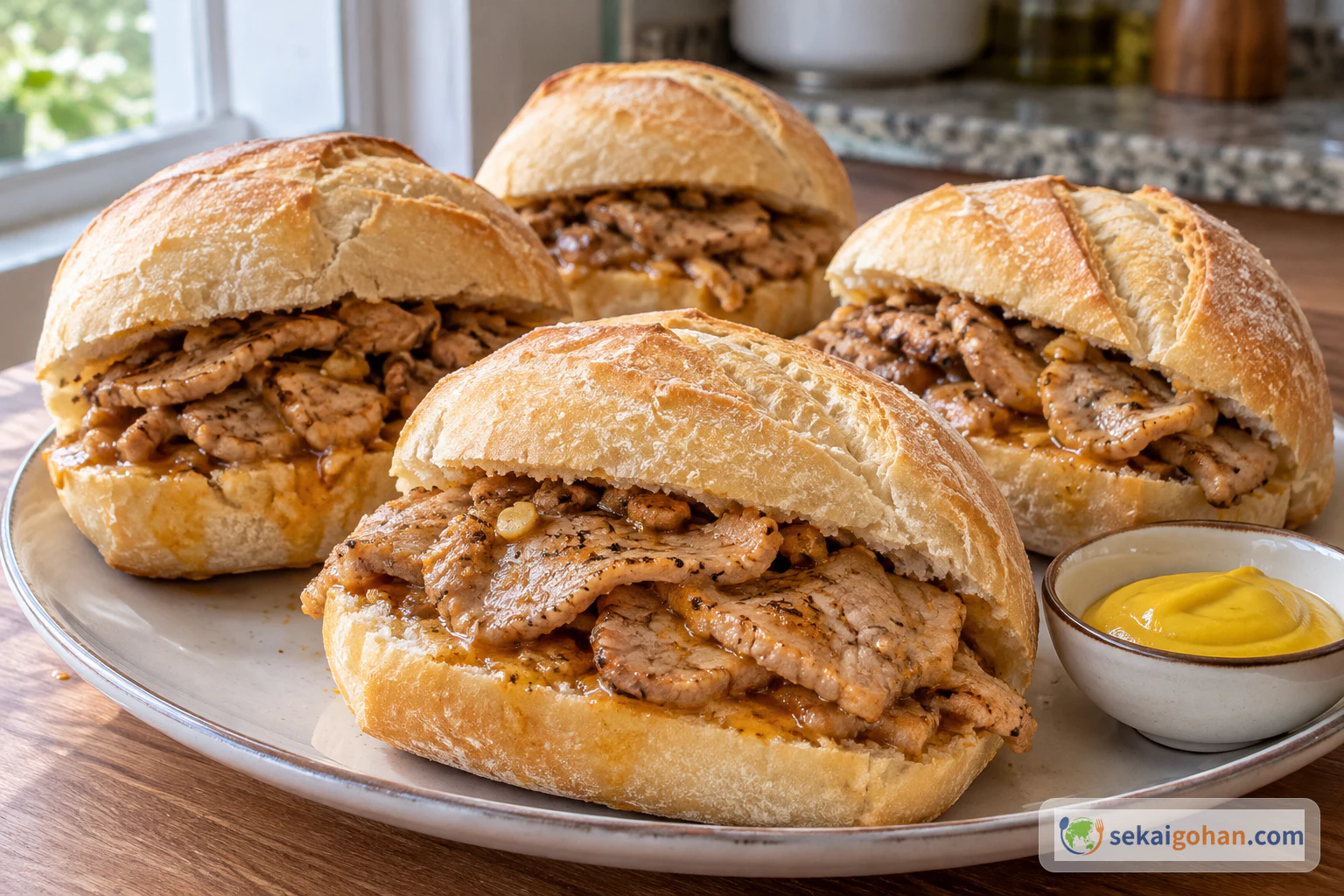
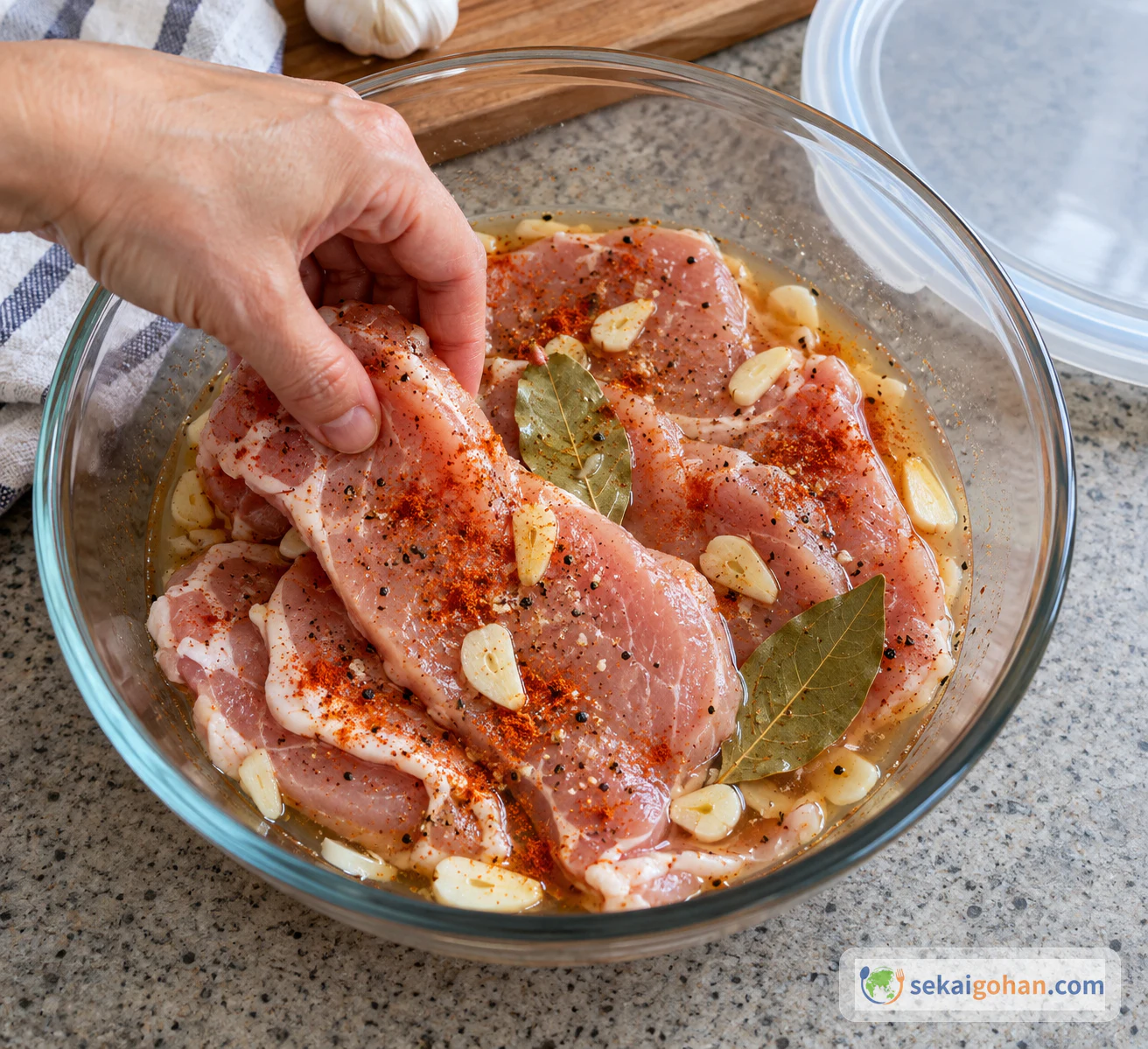
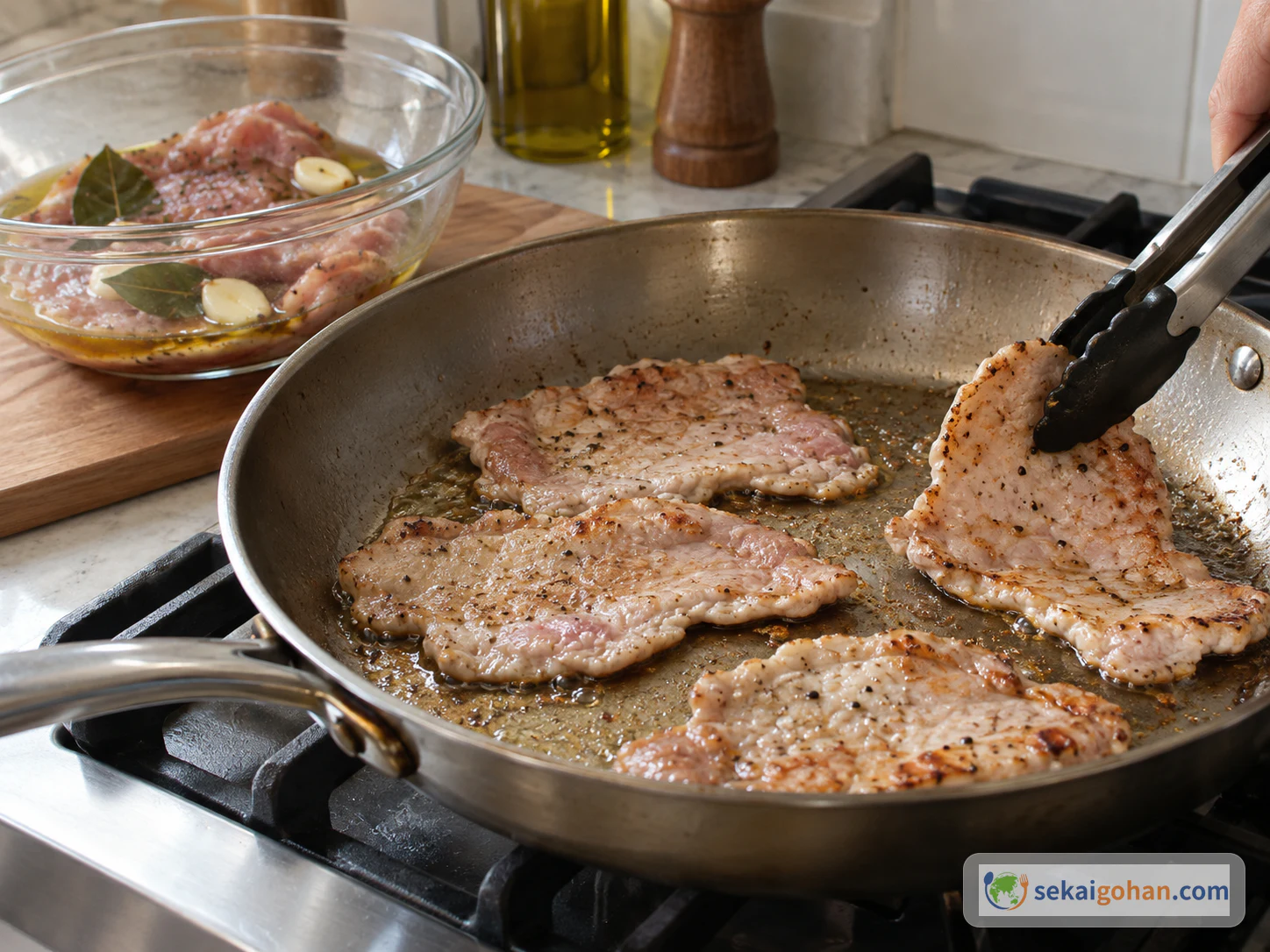
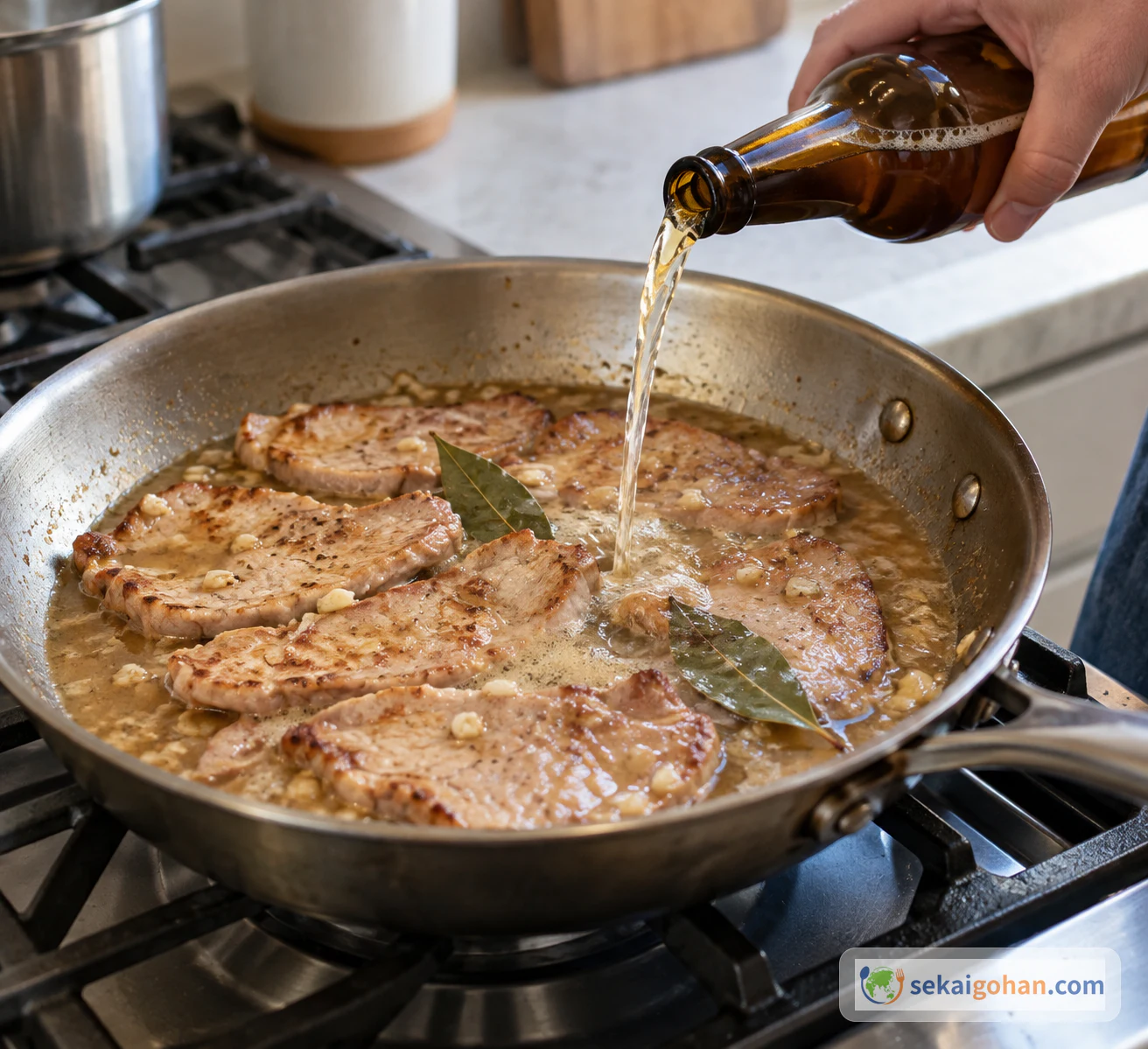
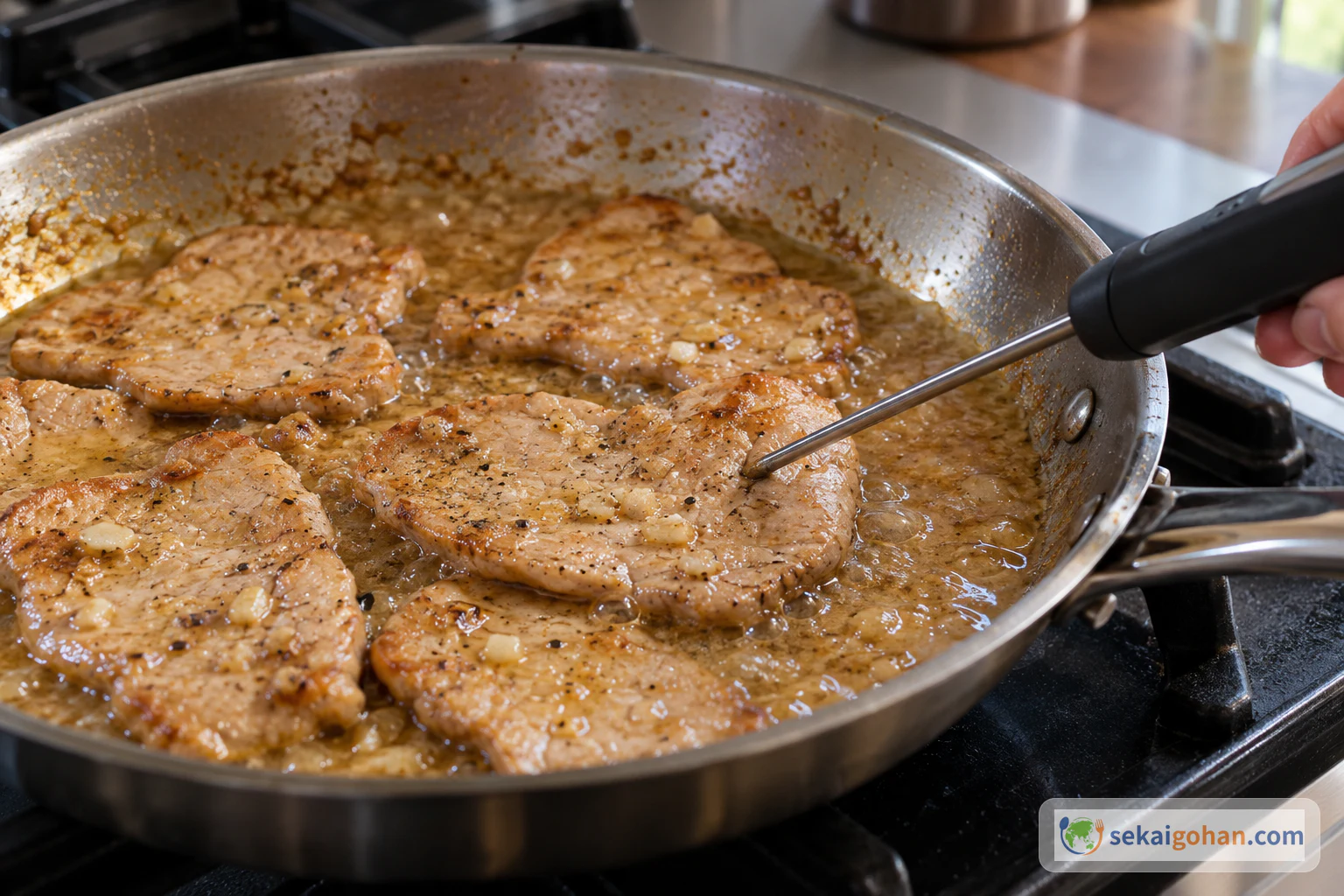
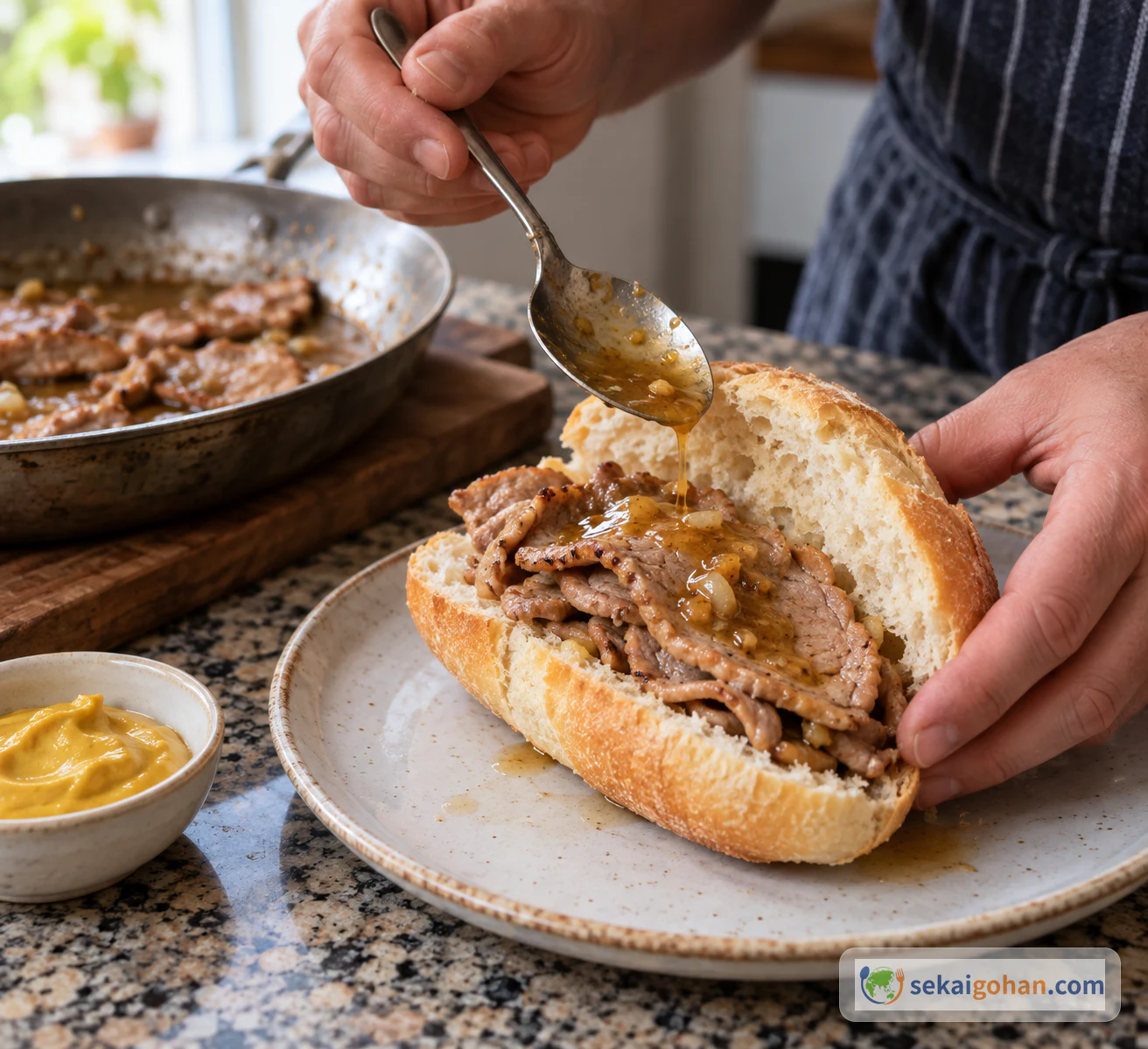
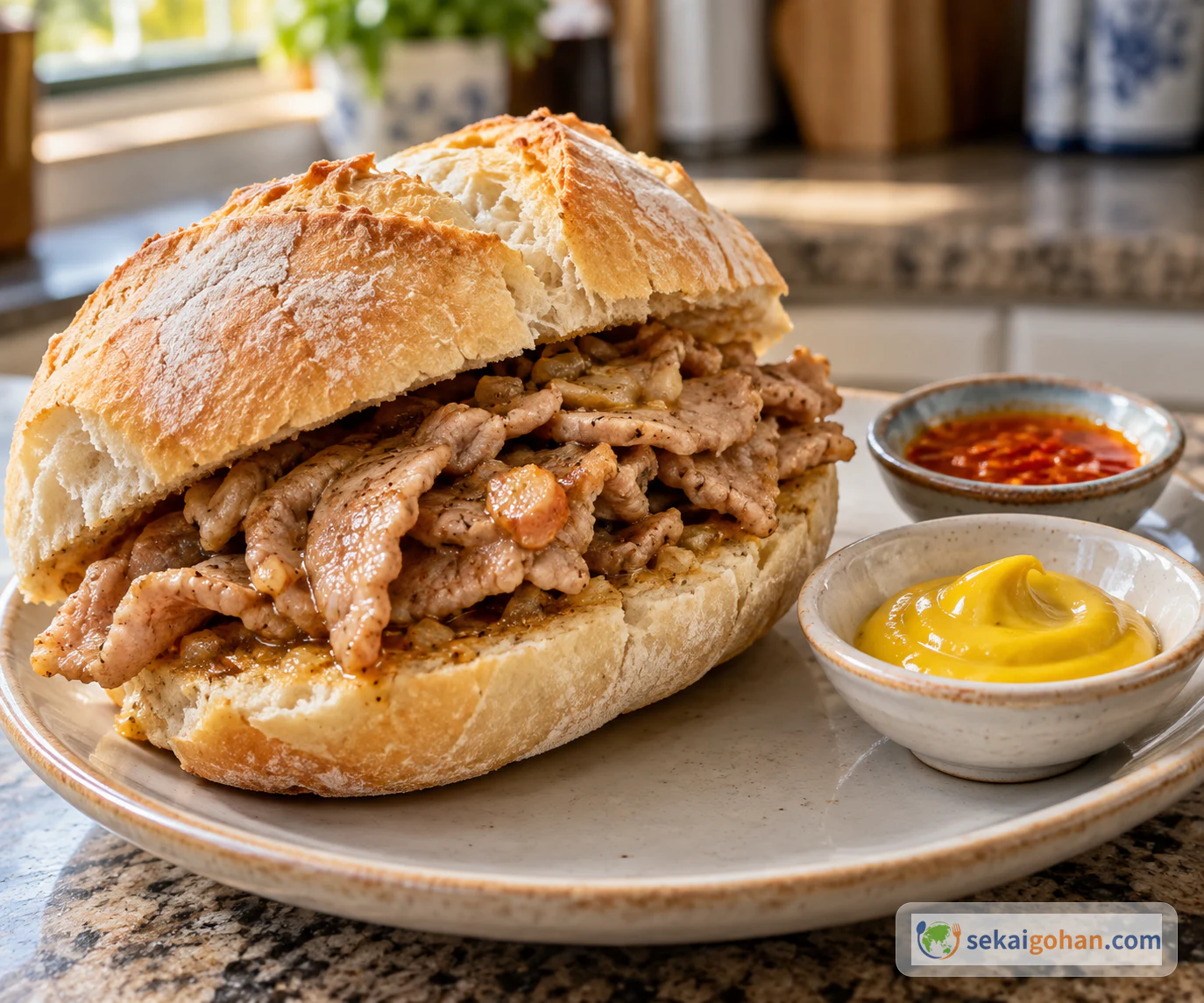
In Lisbon's cafés and tascas, thin slices of pork come straight out of a pan of garlicky, wine-scented juices and go into a small crusty roll. A spoonful of sauce goes over the meat and seeps into the soft crumb, and mustard waits on the counter for anyone who wants it. That's a bifana, Portugal's quick pork sandwich, usually eaten standing up. This home version follows the Lisbon style: thin pork loin marinated in white wine with garlic and bay, seared briefly, then simmered with beer. You get just enough sauce to moisten the bread without drowning it.
The Bifana in Portugal
The word bifana can mean the thin slice of pork itself, or the sandwich made with it. Served in bread it is bifana no pão; served on a plate it is bifana no prato. It's everyday fast food. You'll find it at café and tasca counters, at roadside eateries, and at stands during popular festivals and social gatherings. In Lisbon it comes in a small papo-seco roll, the crumb soaked in sauce and mustard, and every place makes it a little differently.
Lisbon, Vendas Novas and Porto
The ingredients are only pork and bread, so the differences come from how the meat is cut and cooked and from the sauce. Those vary by region and by shop. Vendas Novas, in the Alentejo, is known for a single pounded pork loin steak fried in fat and tucked into a papo-seco. There the seared meat is the focus, not the sauce. Lisbon-style bifanas use thin pork, cooked briefly with garlic, bay and white wine or the pan juices.
Porto-style bifanas go the other way, with very thin slices cooked longer in plenty of spicy sauce. Festivals also have versions grilled over heat. The origin is often linked to Vendas Novas and the Alentejo, but that is popular history. No exact birthplace, date or founding shop is confirmed.
Ingredients for 4 Bifanas
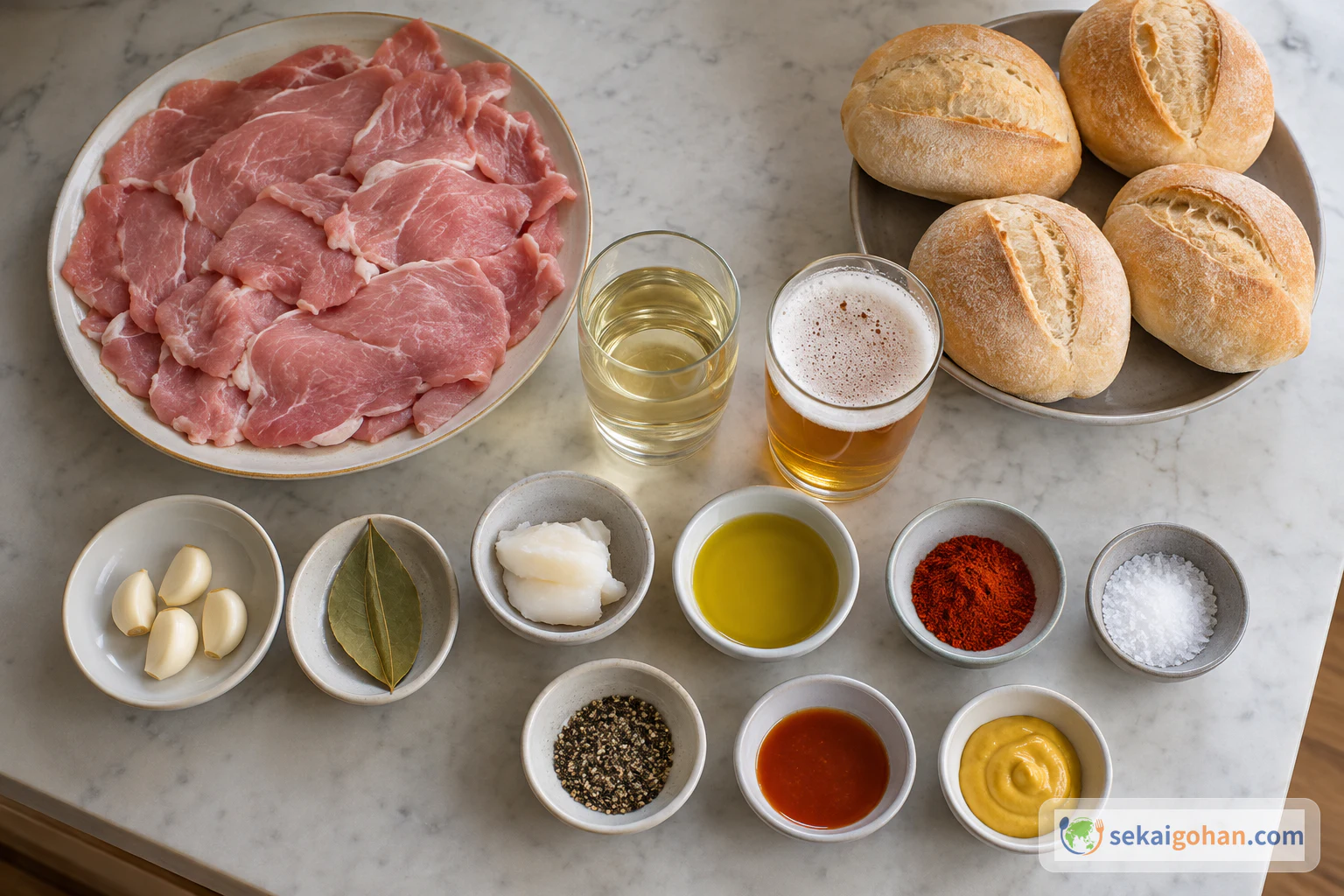
These amounts come from the Taste of Lisboa home recipe for four, used unchanged. The recipe gives no thickness for the pork, no weight for the bread and no exact amount of salt and pepper, so those are left as described.
This dish contains pork, and the bread contains wheat. Check the product labels on the beer, bread and any sauces you use, including piri-piri and mustard. The wine and beer simmer with the meat, but the amount of alcohol left in the sauce is not measured, so don't assume it is all cooked off. Lard is a pork product.
Equipment
- A bowl with a cover (or a covered container) for marinating
- A wide skillet
- A cooking thermometer (probe type)
- A meat mallet or rolling pin, and two sheets of paper, only if the pork is thick
- Two sets of tongs and plates: one for raw meat, one for cooked meat and serving
- A spoon for the sauce
Choosing Pork, Bread and Other Bifana Ingredients
Pork. Thinly sliced pork loin is easiest. If your slices are thick or uneven, pound them to an even thinness. Shoulder or other cuts can work, but they change the fat and texture, so expect a different sandwich.
Bread. Look for small crusty white rolls close to a Portuguese papo-seco or carcaça. Soft sandwich bread or a large baguette changes the texture and how the bread holds the sauce.
Wine and beer. Any dry white wine will do, whatever the grape, and so will most beers. Just avoid very bitter or strongly aromatic ones. A non-alcoholic malt drink can replace the beer, though the flavor will be different.
Fats. The recipe uses lard and olive oil together. With no lard, use the same amount of olive oil. It works, but the rich pork-fat depth will be weaker.
Paprika and heat. Use sweet paprika, because hot or smoked paprika pulls the flavor toward another dish. Piri-piri sauce is optional. Other chili sauces can stand in, though their heat and acidity will differ.
How to Make Bifanas
Keep everything that touches raw pork (board, mallet, bowl, tongs, plate) apart from what you use for cooked meat and serving. The marinade liquid has touched raw meat: it goes back into the pan and simmers with the pork, and is never poured raw onto bread or cooked meat.
Marinate for about 30 minutes and simmer for about 12–15 minutes. For safety, rely on the thermometer check in step 5, not the clock.
Bifana Tips and Fixes
| Problem | Likely cause | What to do |
|---|---|---|
| The pork won't brown | Too many slices in the pan; the meat released water | Sear in batches, in a single layer |
| The bread falls apart | Too much sauce at once | Spoon on a little at a time when assembling, and keep the rest in the pan for anyone who wants more |
| The meat is tough | Uneven thickness, heat too high, or too little liquid | Pound to an even thinness next time, keep the simmer gentle, and don't let the pan run dry. Use the thermometer for safety, not the clock |
| The pan is drying out | Liquid reducing too fast | Lower the heat and add a little extra beer or dry white wine |
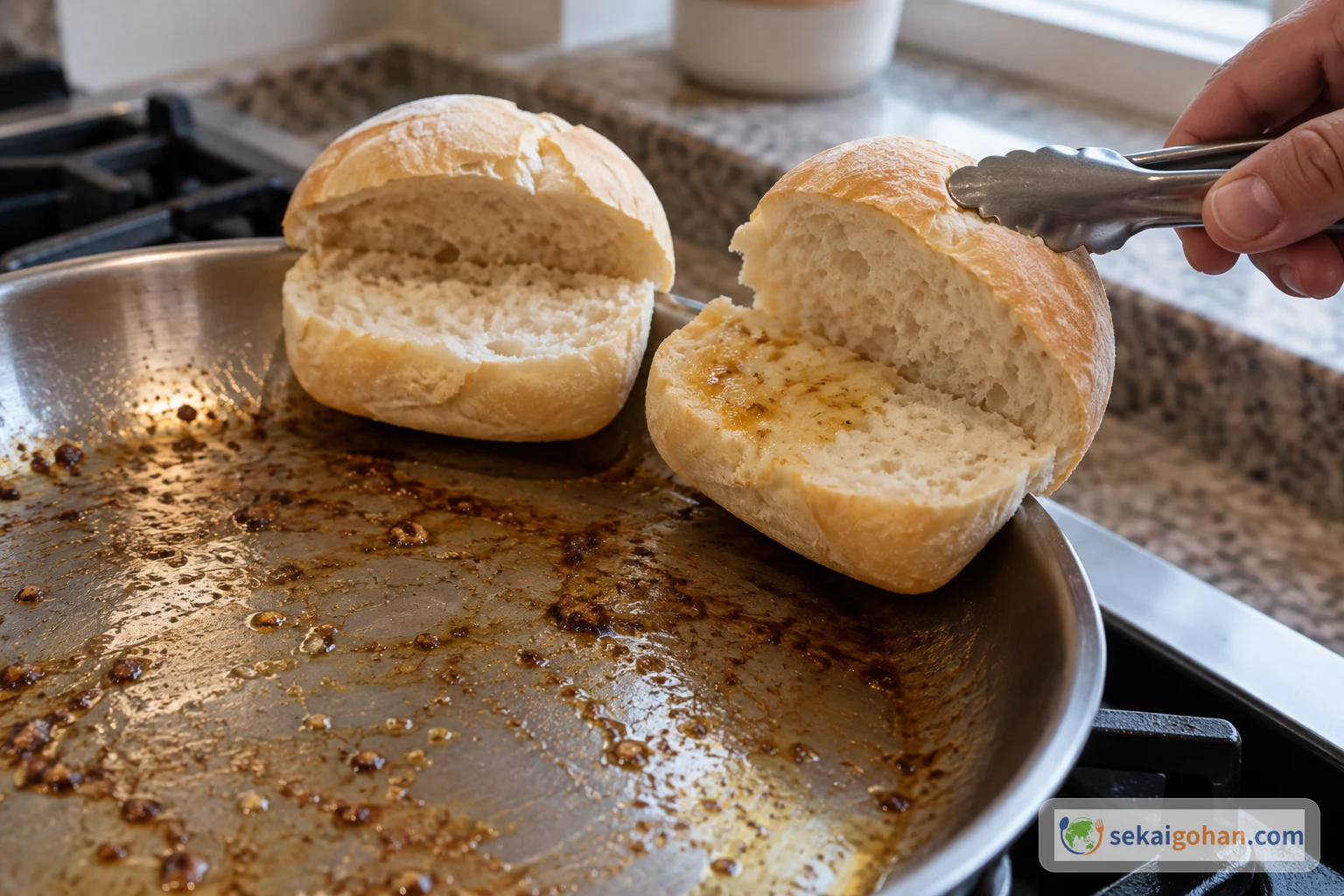
| The bread tastes dry | Cold rolls don't take the sauce well | Warm the cut faces in the pan before filling, then add the sauce |
Serving, Variations and Storage
Serve bifanas with yellow mustard on the side and piri-piri at the table. That keeps the pan mild and lets each person choose their heat. If you'd rather make the whole batch spicy, add piri-piri to the pan with the marinade and beer in step 4. The sauce on the bread will then be hot too.
You can also tune the sandwich to your taste. Warming the cut faces of the bread a little longer or shorter changes how much sauce they absorb. Swapping some of the lard for more olive oil gives a lighter result with less pork-fat richness.
Bifanas are best assembled and eaten right away. For leftover cooked pork and sauce, divide them into shallow, clean containers, cool them quickly and refrigerate. Reheat until thoroughly hot, to 167°F (75°C) or above, and keep the bread separate until serving. For more dishes from the same country, see the Portugal recipe collection.
Frequently Asked Questions
Is the beer necessary?
It's part of the sauce and goes in at the simmer. Leaving it out or using a non-alcoholic malt drink gives a sandwich with a different flavor.
Why does the marinade have to be cooked?
It has been in contact with raw pork, so it simmers with the meat in step 4. Never spoon raw marinade onto the bread or the cooked pork.