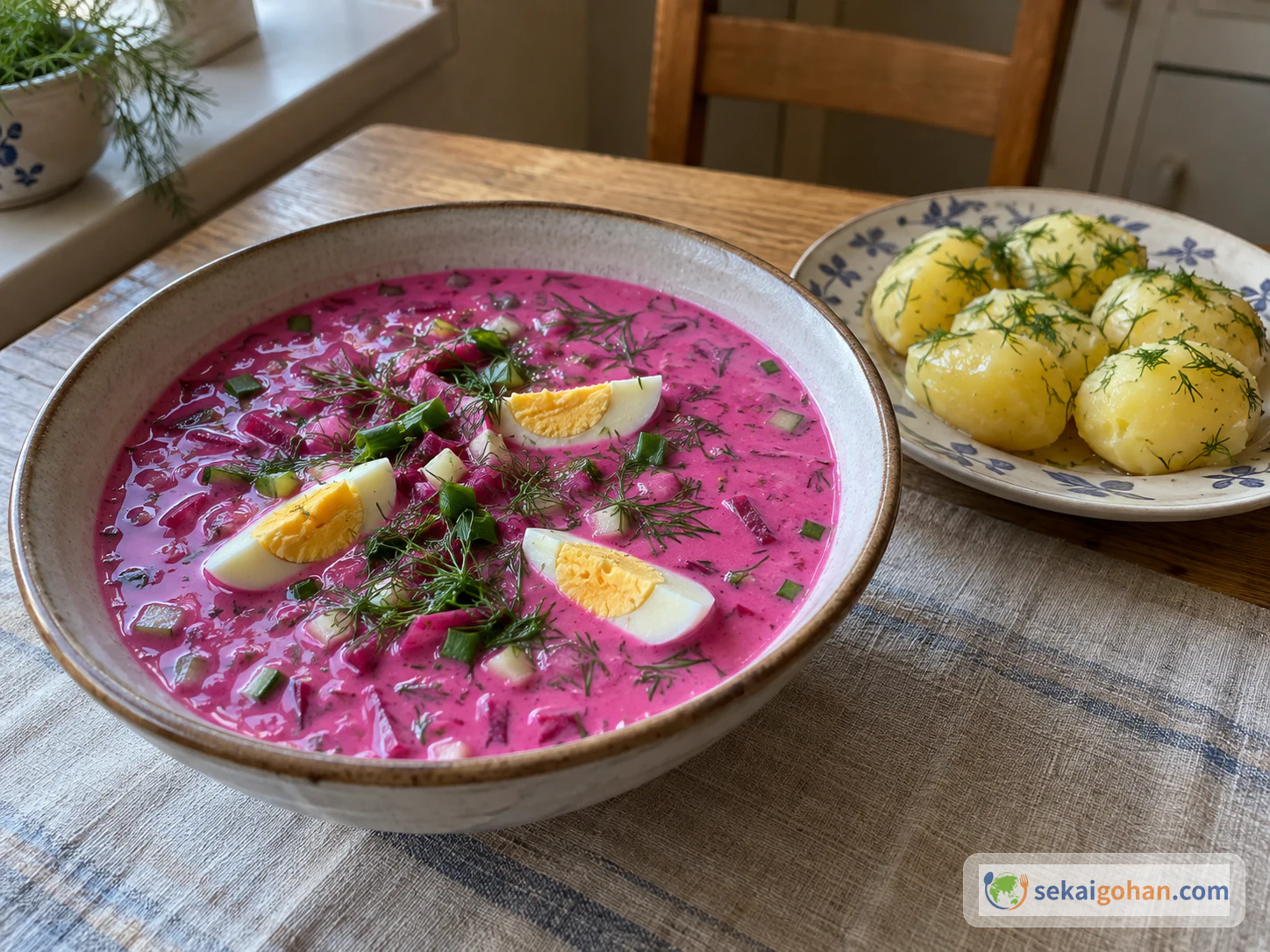
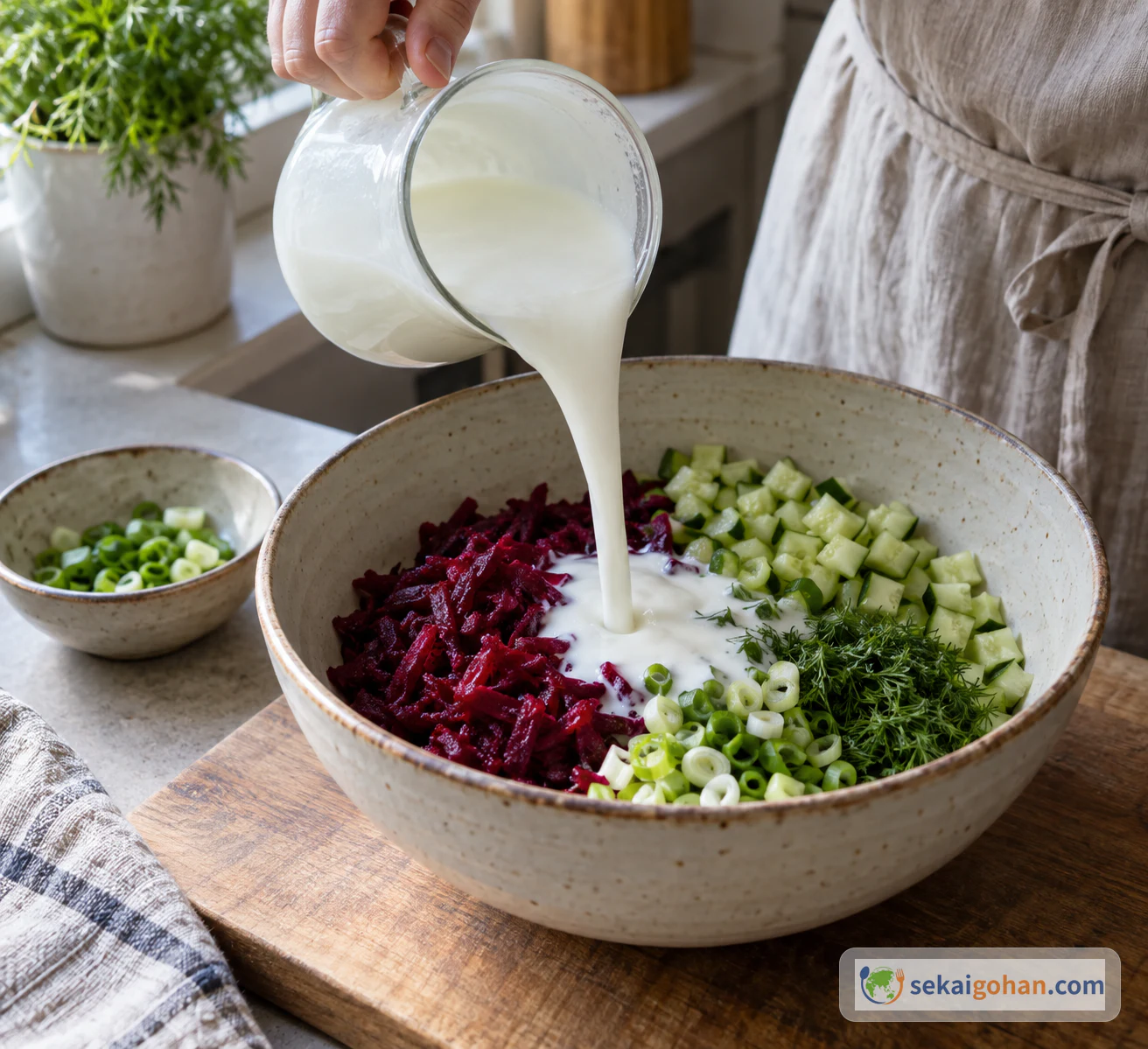
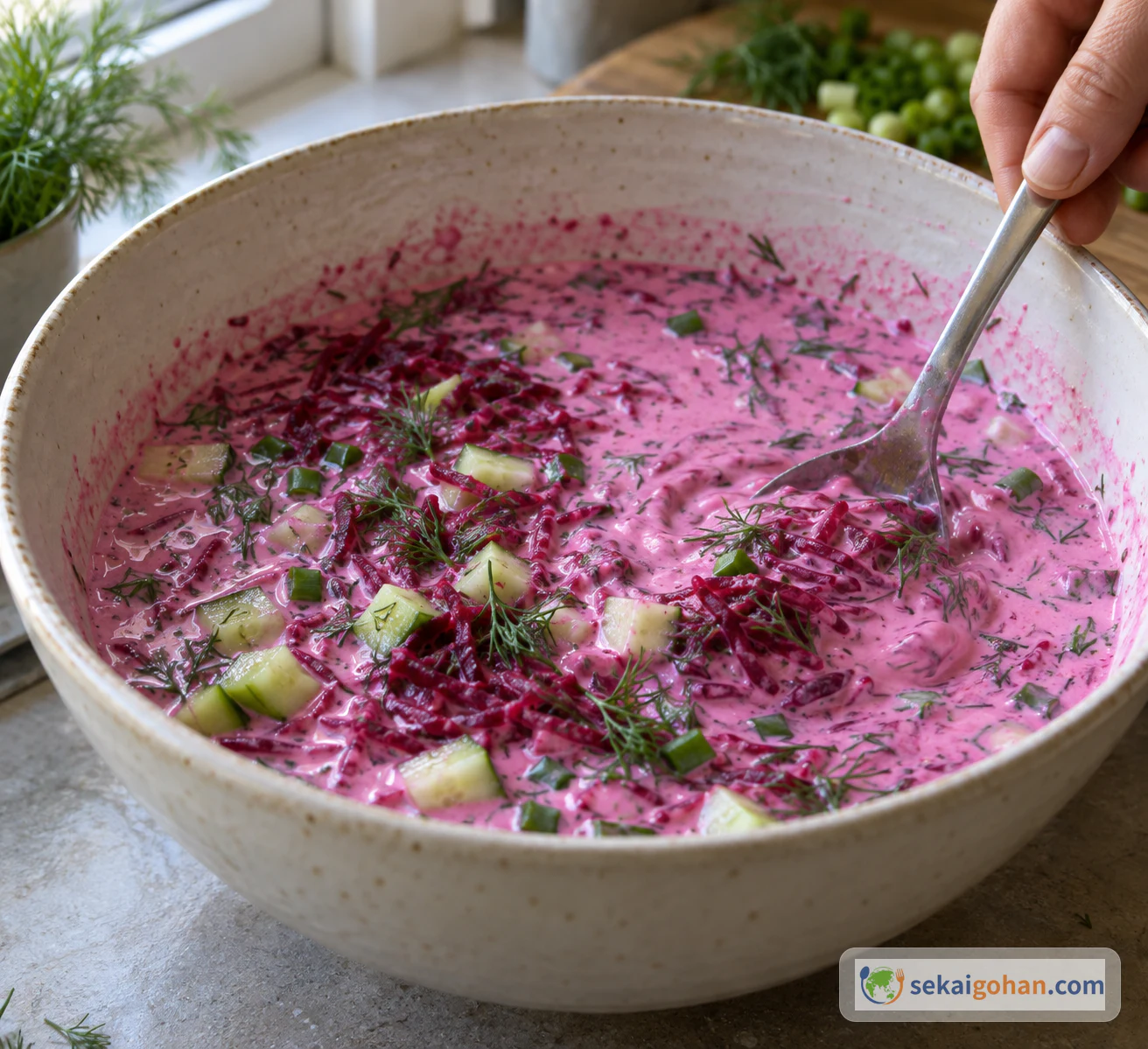
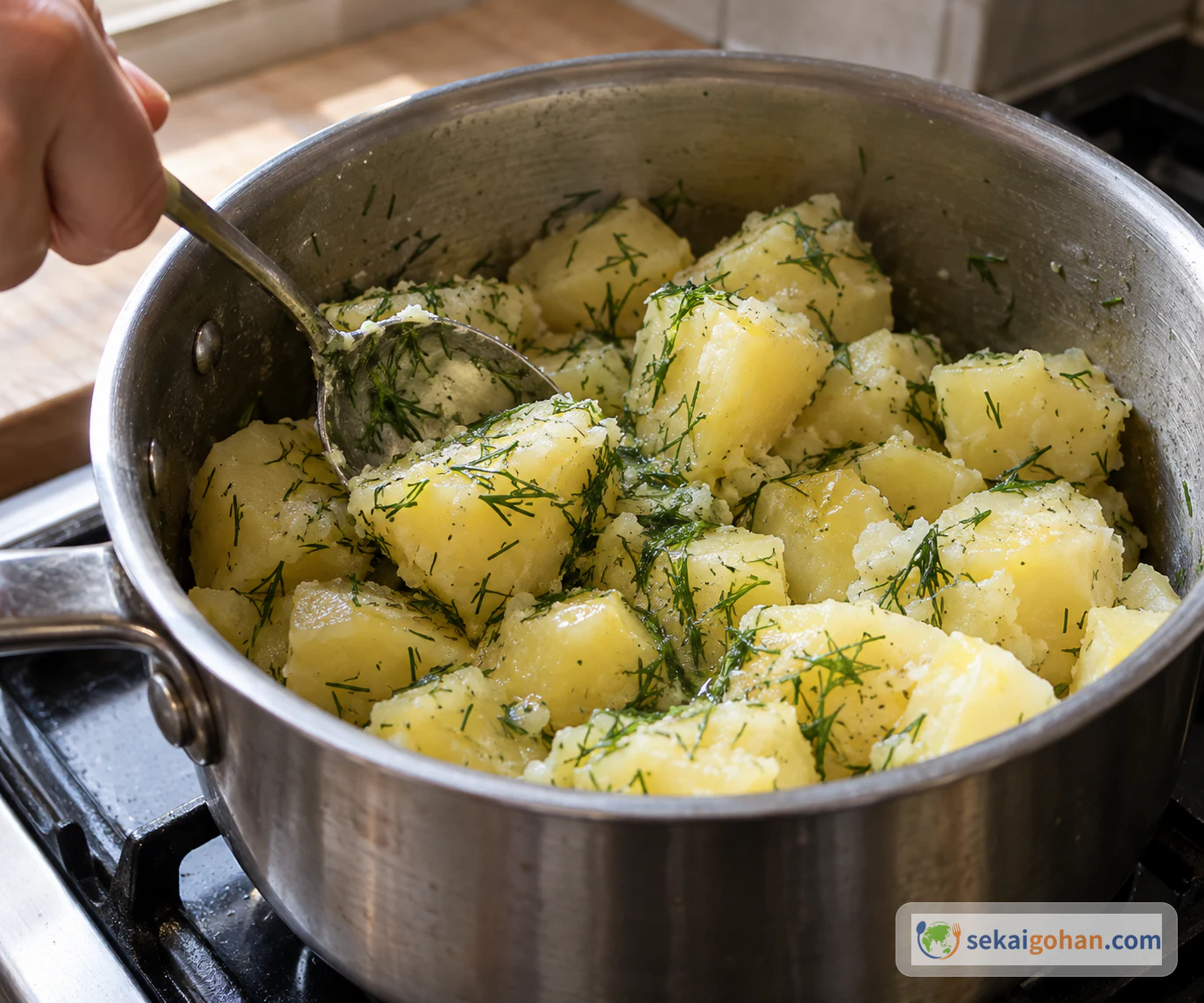
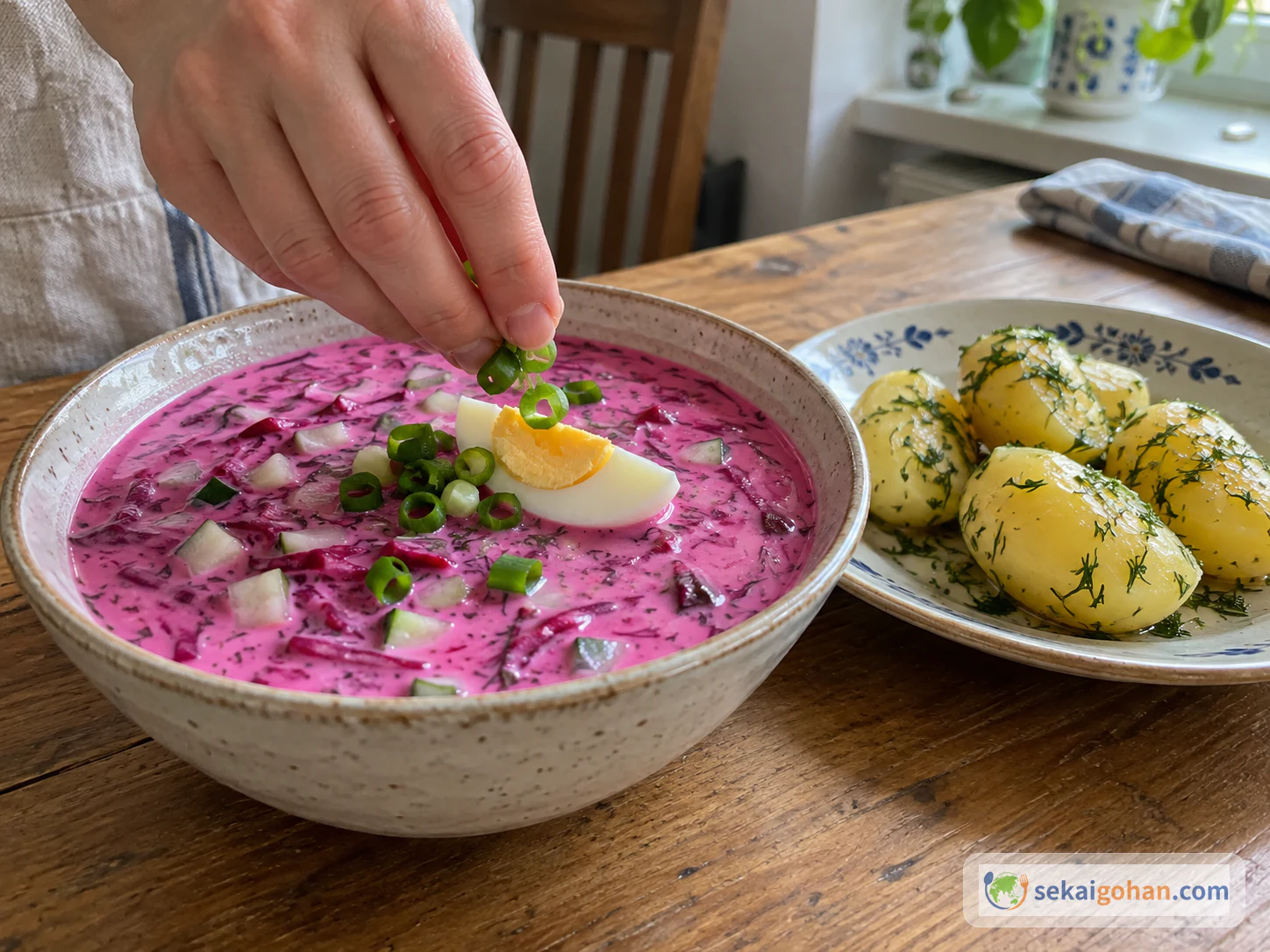
On a summer table, a bowl of bright pink soup sits beside a small plate of potatoes still giving off steam. The soup is cold kefir tinted by beetroot, with crisp cucumber, wedges of hard-boiled egg and the fresh green of dill and spring onion. The potatoes, glossy with butter and dill, stay on their own plate. That contrast between cold and warm is what makes šaltibarščiai, Lithuania's chilled beetroot soup, so good on a hot day. It tastes cool, gently tangy and fresh, seasoned with nothing more than salt and black pepper.
Šaltibarščiai and Lithuanian Summer Food
Lithuanian cooking relies on seasonal, local ingredients and long-standing traditions, and šaltibarščiai is one of the dishes to try there. The soup even has its own festival, the Vilnius Pink Soup Fest, which shows how closely this bright bowl is tied to the image of Lithuanian food today. For more dishes from the same country, see our Lithuania page.
In English it is often called "cold borscht" or simply "pink soup." The name can mislead, though, because it is a different dish from a hot, long-simmered beet soup such as Ukrainian borscht. The base is kefir rather than broth, nothing in the bowl is simmered, it is eaten cold, and the potatoes are served on the side rather than cooked in the soup.
Ingredients: The Soup, the Topping and the Warm Side
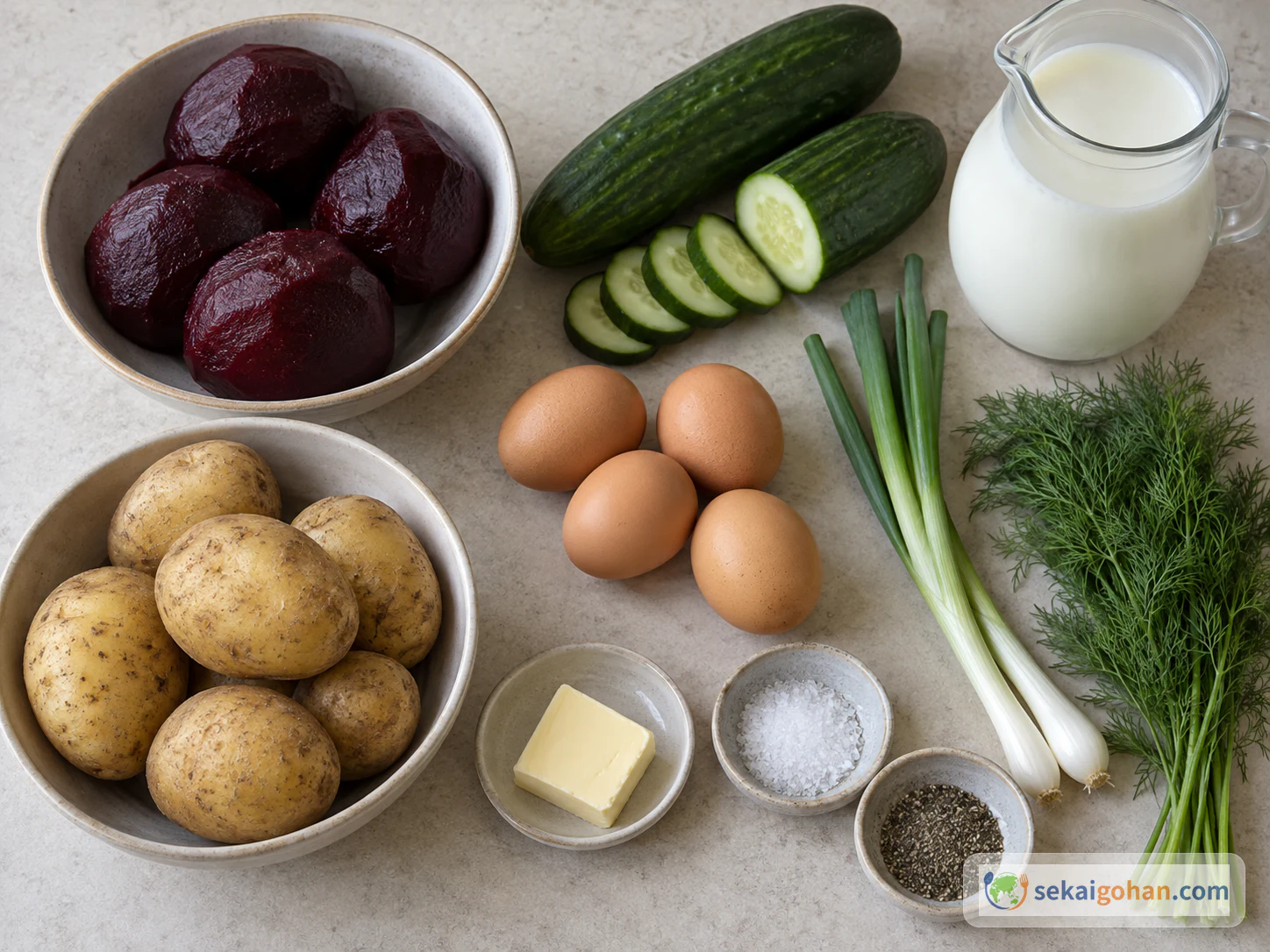
The amounts make 4 portions. There are two separate portions of dill: one goes into the soup and one goes on the potatoes, so measure them separately. 1 tbsp is 15 mL.
Equipment
- A saucepan for the potatoes
- A saucepan for the eggs
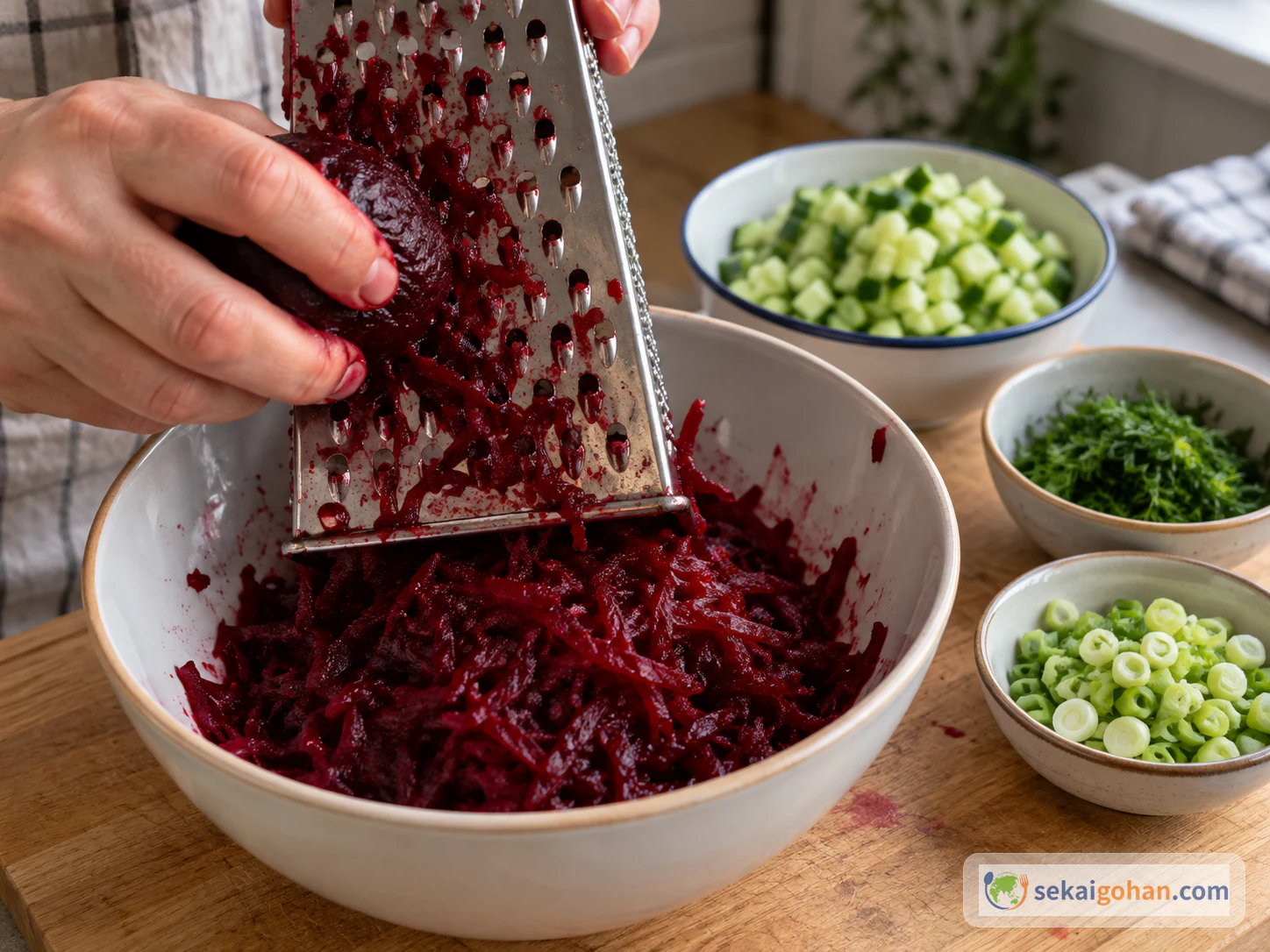
- A grater with coarse holes
- A knife and cutting board
- A large mixing bowl
- Soup bowls and a separate plate for the potatoes
Choosing Kefir, Beetroot and Potatoes for Šaltibarščiai
Beetroot. Choose cooked beetroot without seasoning or vinegar, or cook your own, and let it cool before grating. Drain it well. Versions made with jarred beetroot and its pickling liquid taste saltier and sourer, so pick one form or the other and never combine them.
Kefir. Use plain, unsweetened kefir. Yogurt and buttermilk behave differently, so stick with kefir, and store it as the package directs.
Cucumber. Use fresh cucumber rather than pickles. If the skin is tough, peel it.
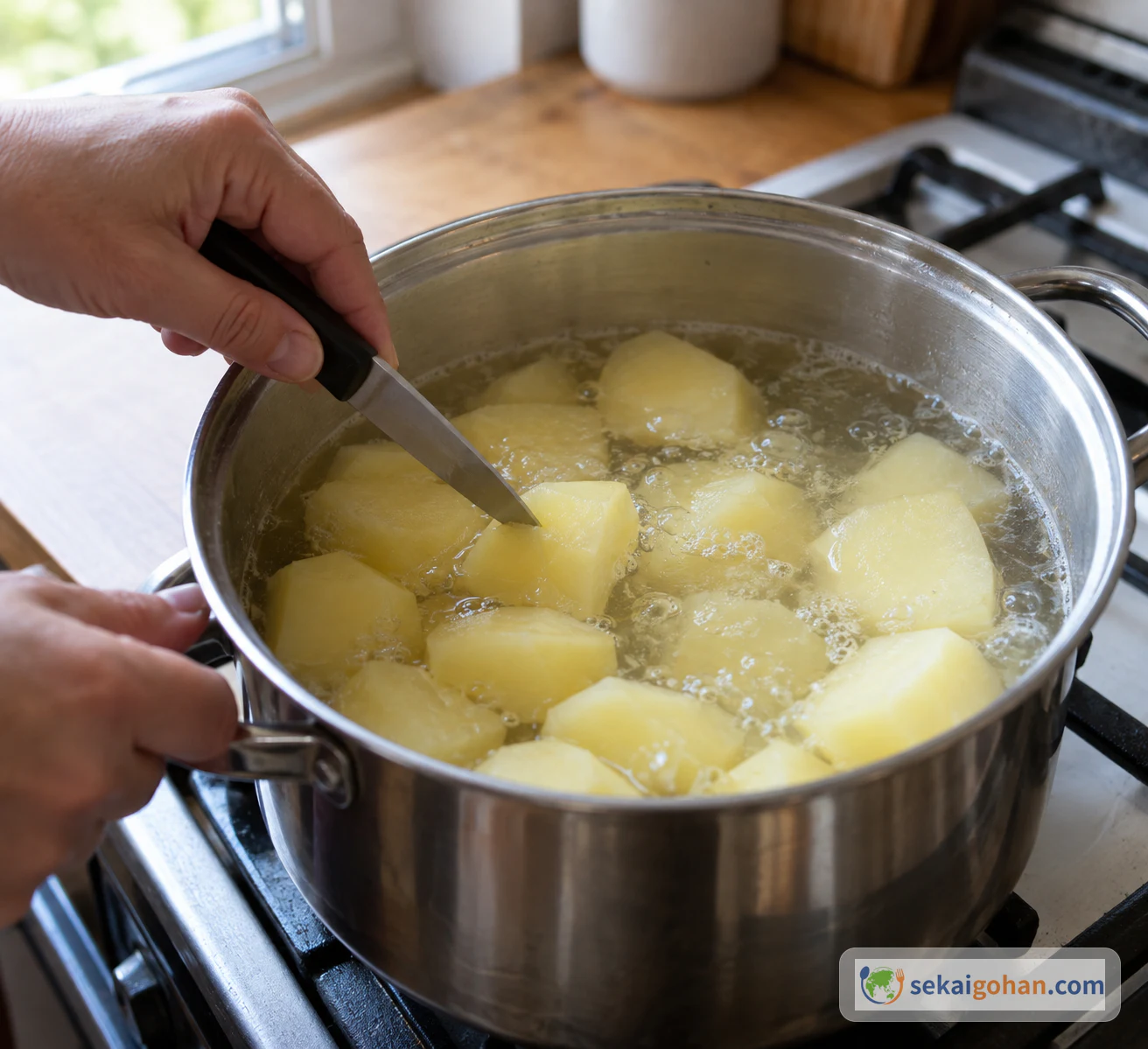
Potatoes. Here the potatoes are peeled and cut into bite-size pieces. New potatoes with their thin skins left on make a different preparation.
This dish contains milk (kefir, butter) and eggs. Cool the eggs before cutting them, and use clean tools. Don't use a board or knife that has touched raw meat for the cold soup. Don't leave cooked food out at room temperature for long.
Method: Cook the Warm Parts, Then Mix the Cold Bowl
Allow 10 minutes of prep, 20 minutes of cooking and 30 minutes in total, with about 12 minutes for the eggs in boiling water. Those figures assume beetroot that is already cooked. If you start from raw beetroot, the cooking and cooling take extra time, so plan for that. The potatoes and eggs can cook while you prepare the vegetables, but finish the warm potato side last.
Fixing Šaltibarščiai Flavor and Texture
| Condition | What to check | What to do |
|---|---|---|
| The soup tastes flat | Whether it has enough salt | Add salt and black pepper a little at a time, tasting as you go |
| It is more or less tangy than expected | The kefir you used and the form of beetroot | Sourness comes from the kefir and the beetroot, so leave out vinegar, lemon and beet liquid. For a sharper style, see the variations below |
| The texture feels mushy | Whether the beetroot was grated fine or the cucumber cut very small | Next time, use the coarse side of the grater and dice the cucumber into small, distinct pieces |
| The soup is no longer cold | Whether it waited out of the refrigerator | Keep the soup refrigerated until serving, and keep the warm potatoes on their own plate |
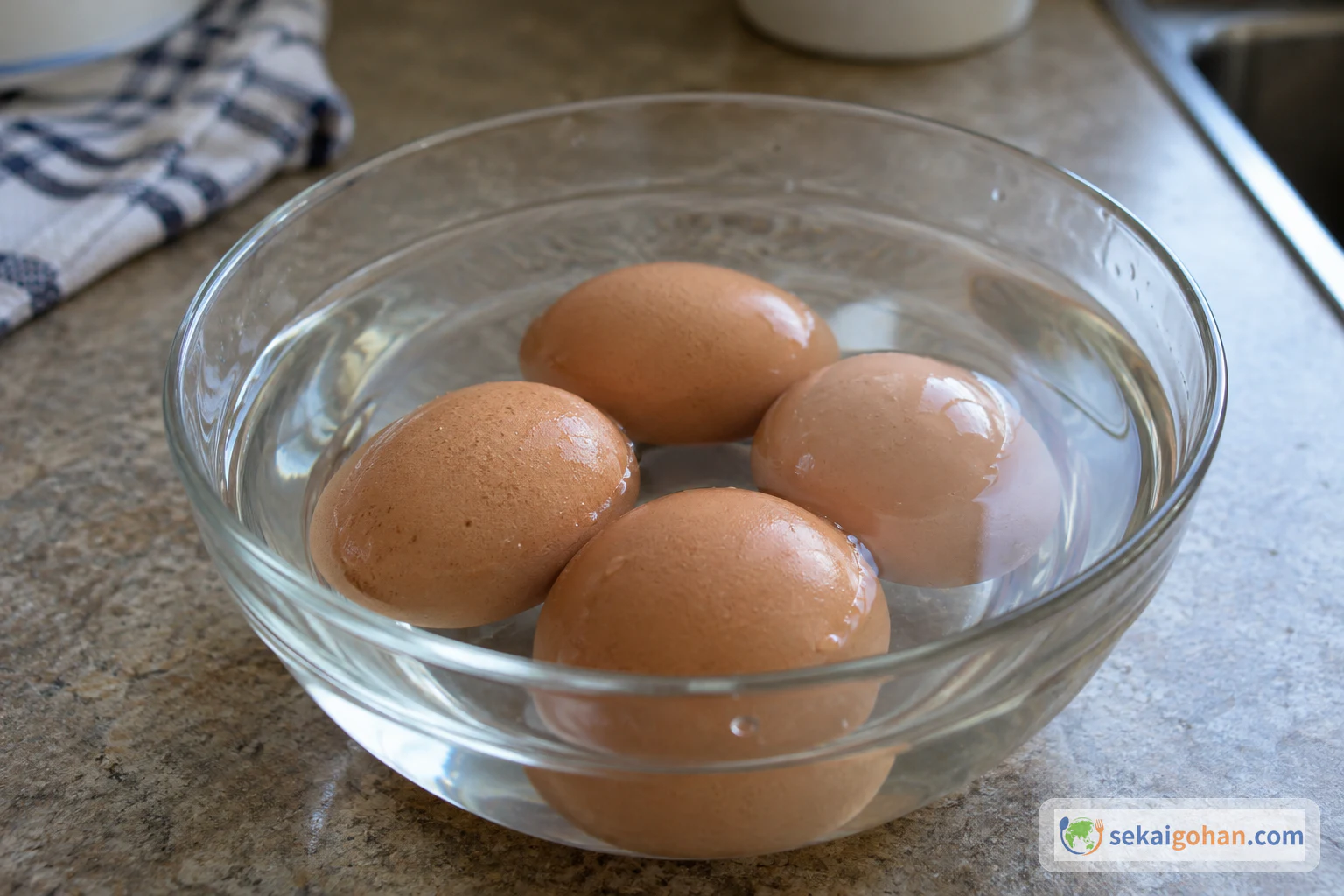
| The egg wedges crumble | Whether the eggs were cut while warm | Cool the eggs fully under cold running water before peeling and cutting |
Serving, Storing and Varying Šaltibarščiai
Cold Spoonfuls, Warm Bites
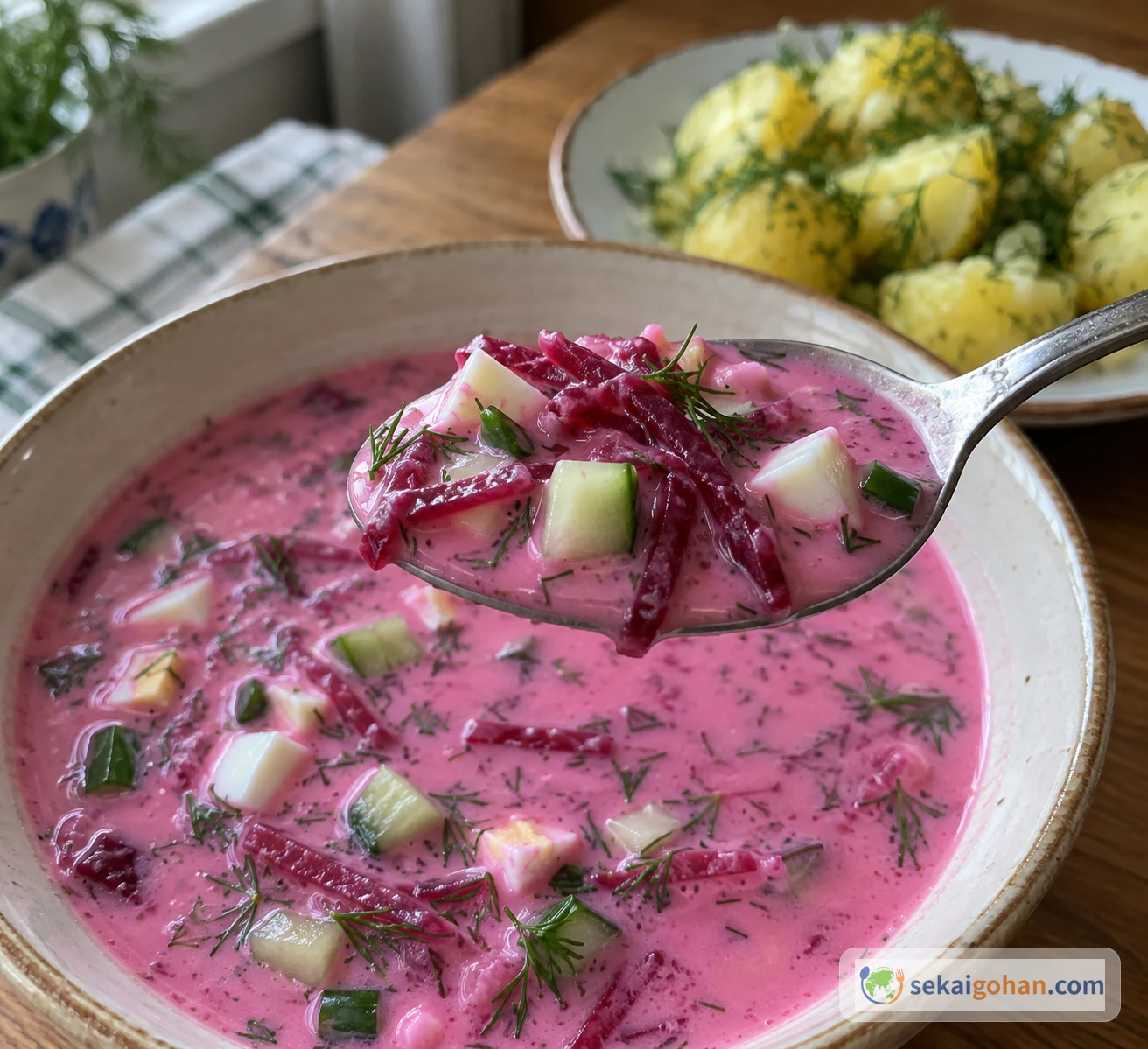
Serve the potatoes on the side and alternate: a spoonful of cold soup, then a bite of warm potato. Some cooks drop the potatoes into the soup one bite at a time, which keeps the bowl cold. Tipping the whole pot of hot potatoes in would warm everything up.
Storage
Keep the soup in the refrigerator until you serve it, and store the kefir according to its package label. Don't leave the cooked eggs, potatoes or soup at room temperature for long, and don't judge whether it is safe to eat by taste or smell alone.
Variations
Each of these is its own version of the soup, so make one at a time rather than layering them onto the amounts above.
- Jarred beetroot with its liquid. Use jarred beetroot and its liquid in place of the plain drained beetroot, never both together.
- Different cucumber cuts. Cucumber can be diced, sliced or grated; this recipe dices it.
- A buttermilk or vinegar version. This is a separate recipe, made with kefir or buttermilk, with vinegar, 3 eggs and its own potato amount. Follow it as written rather than swapping buttermilk into the 1 quart (1 L) of kefir here.
- Starting from raw beetroot. Cook raw beetroot for 30–60 minutes, depending on size, and cool it before grating.
Frequently Asked Questions
Is it the same without kefir?
No. Kefir is the base of this recipe. A buttermilk version is a different recipe with its own proportions, so there is no equivalent substitute here.
When do the eggs go in?
At the table. Hard-boil, cool, peel and cut the eggs into wedges, then place them on top of each bowl when serving, together with the remaining half of the spring onion.
How long does the soup need to chill?
Chill it until you serve it. Starting with cooled beetroot and kefir straight from the refrigerator helps keep the bowl cold.