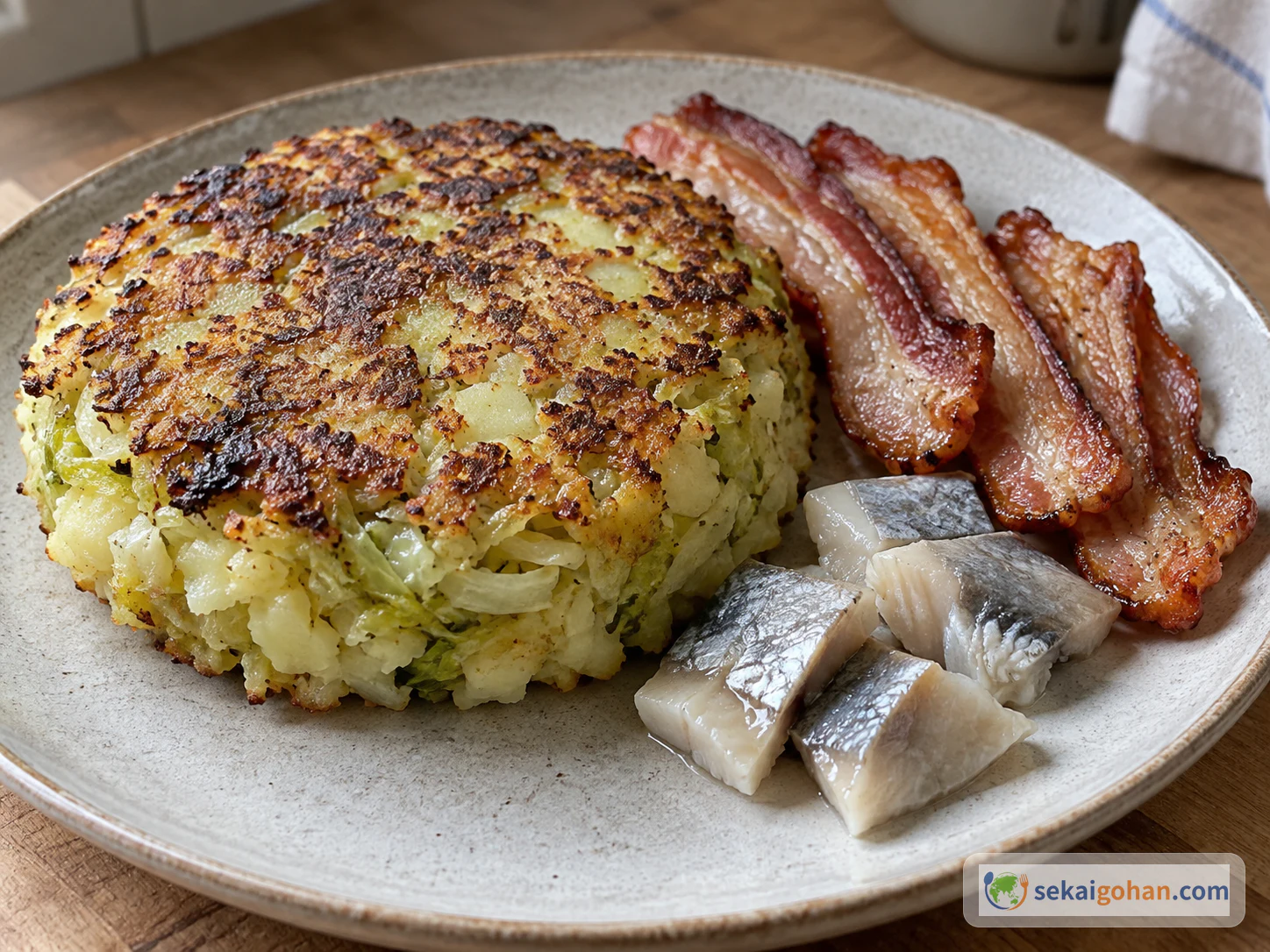
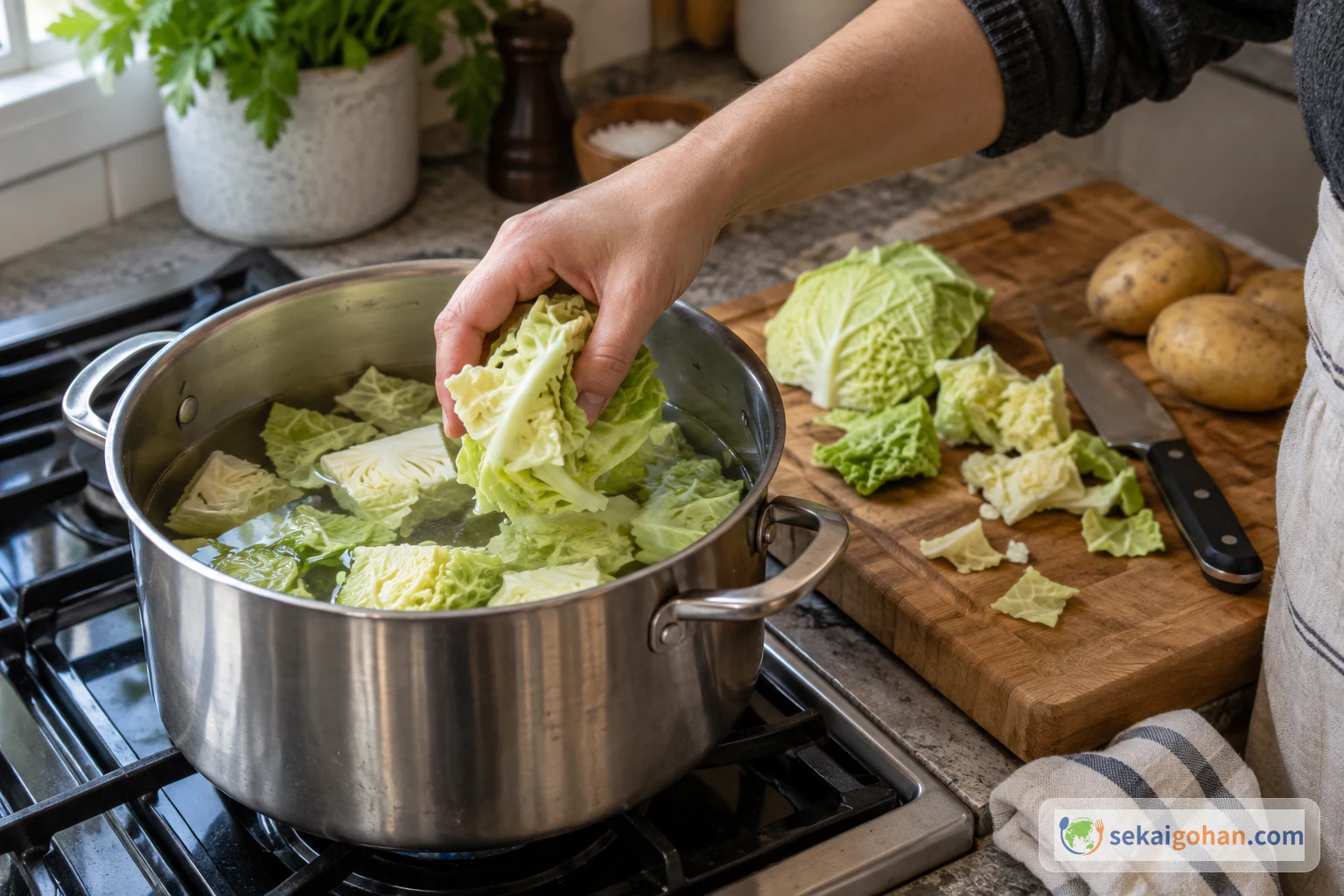
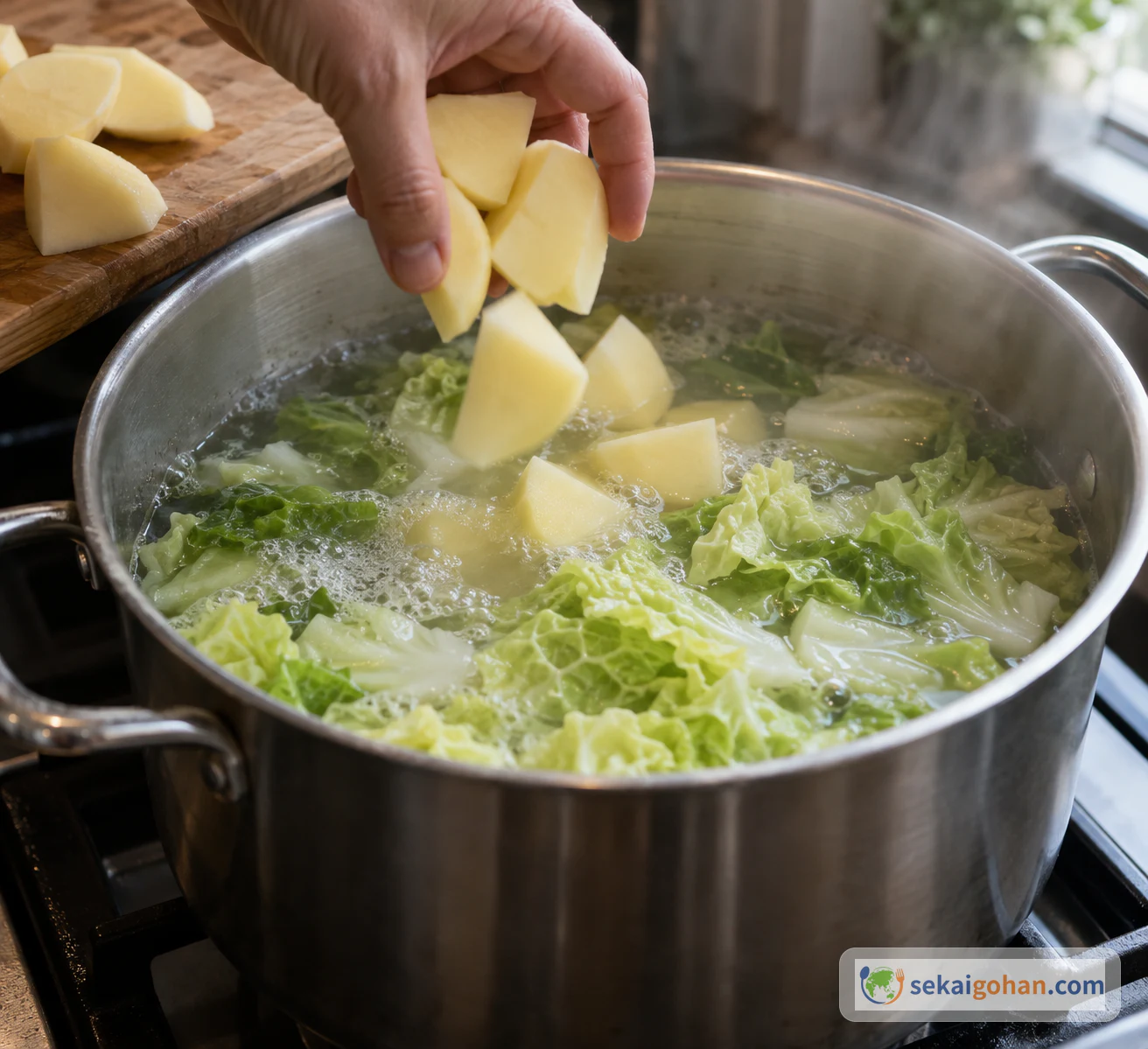

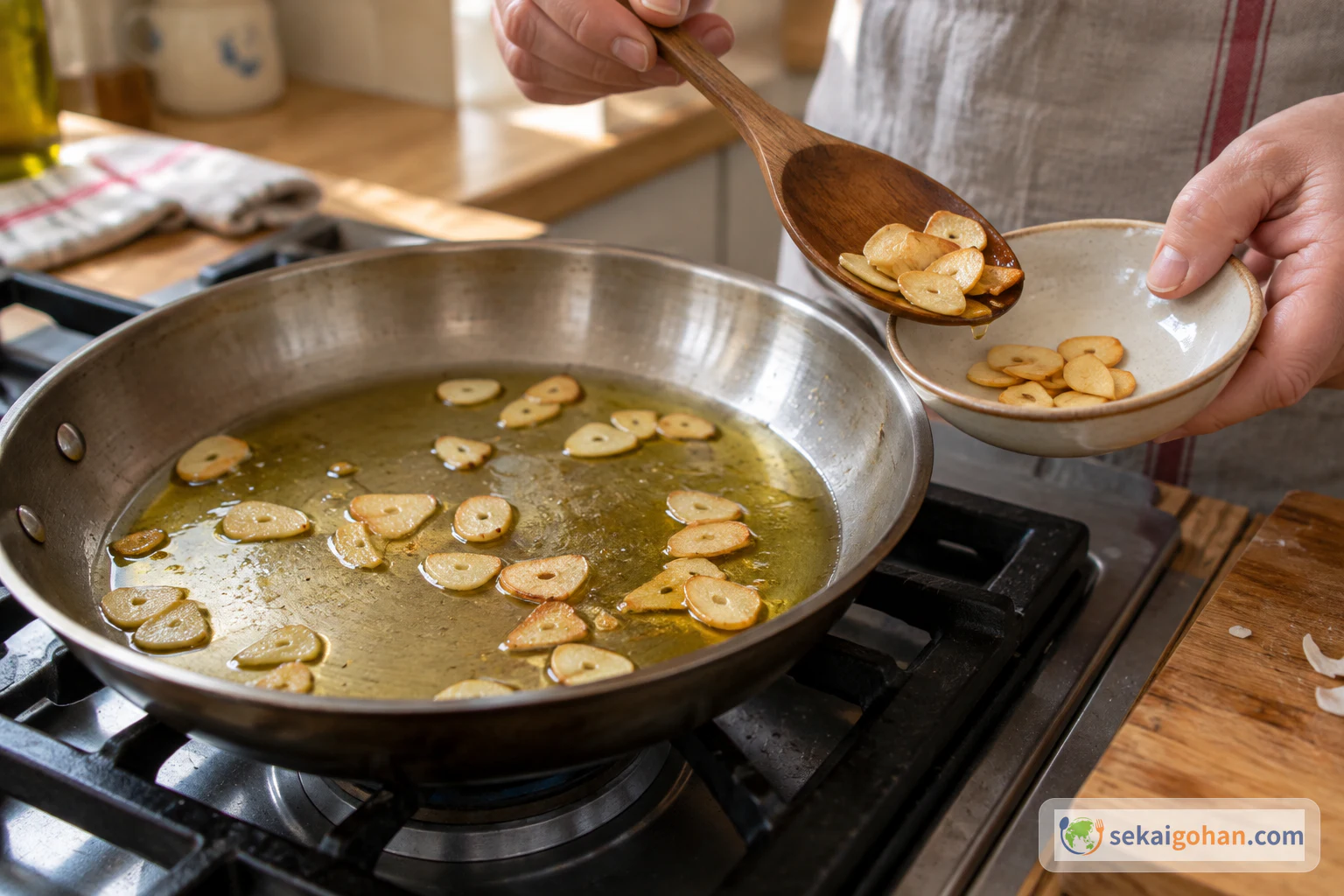
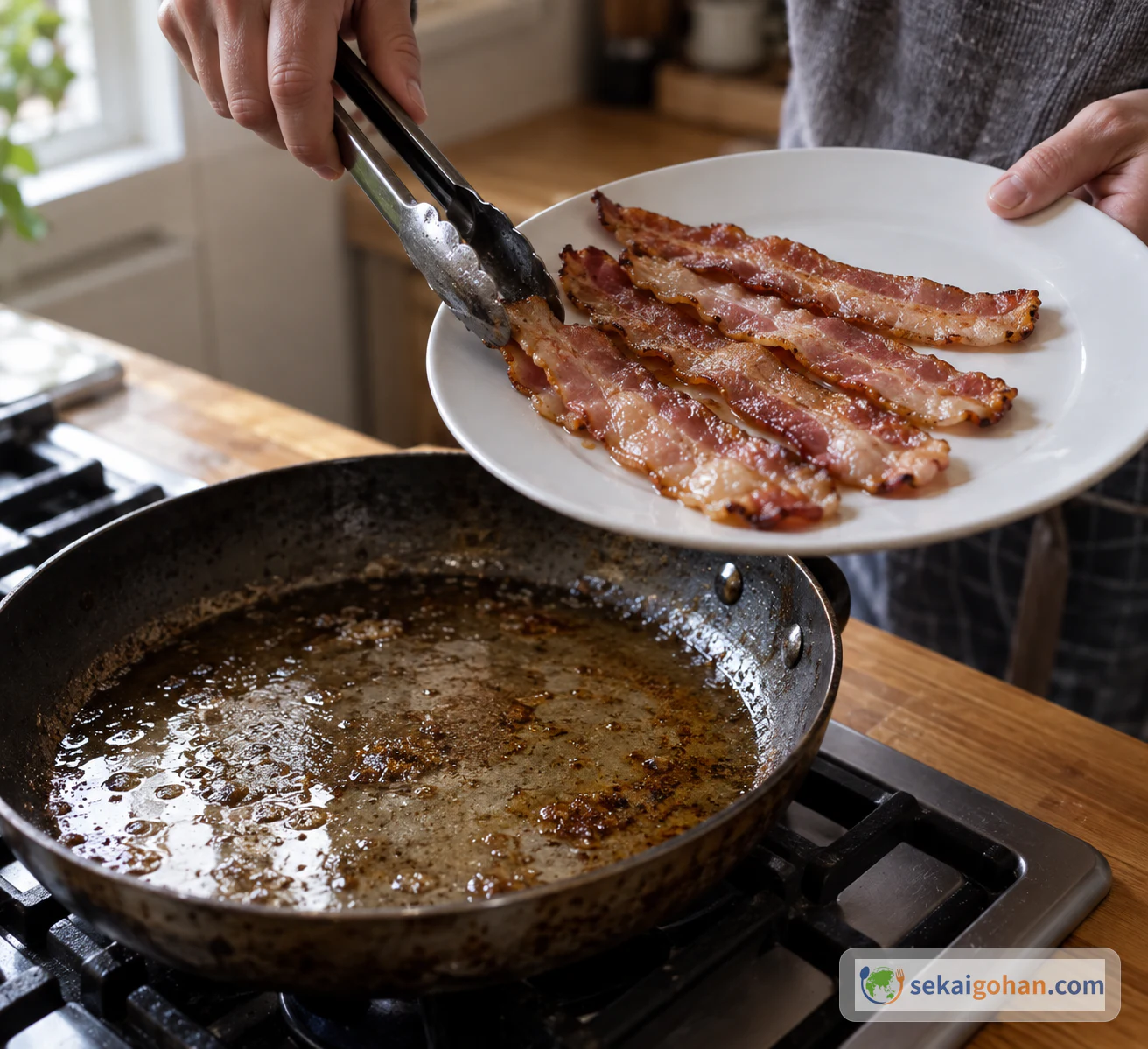
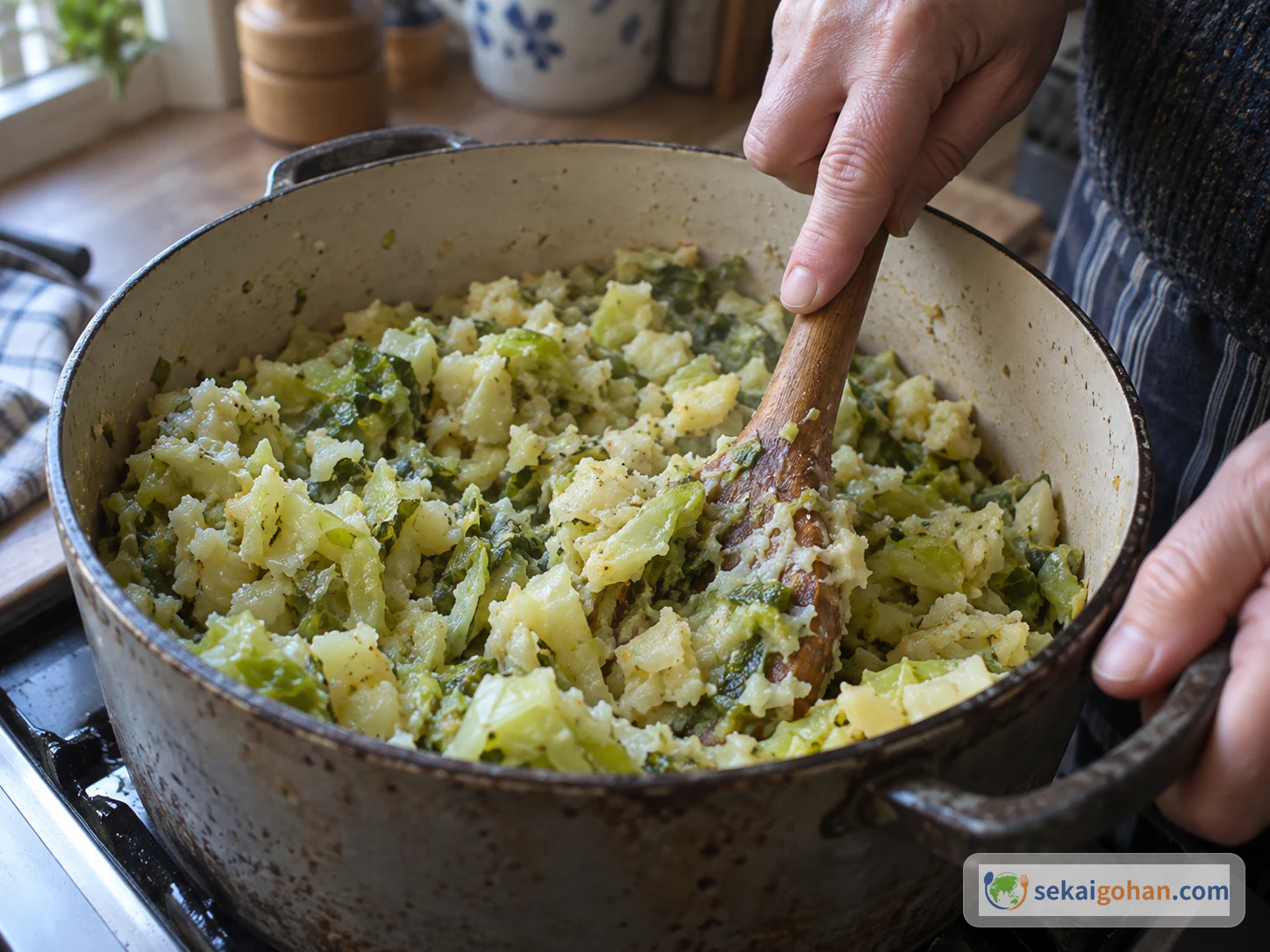
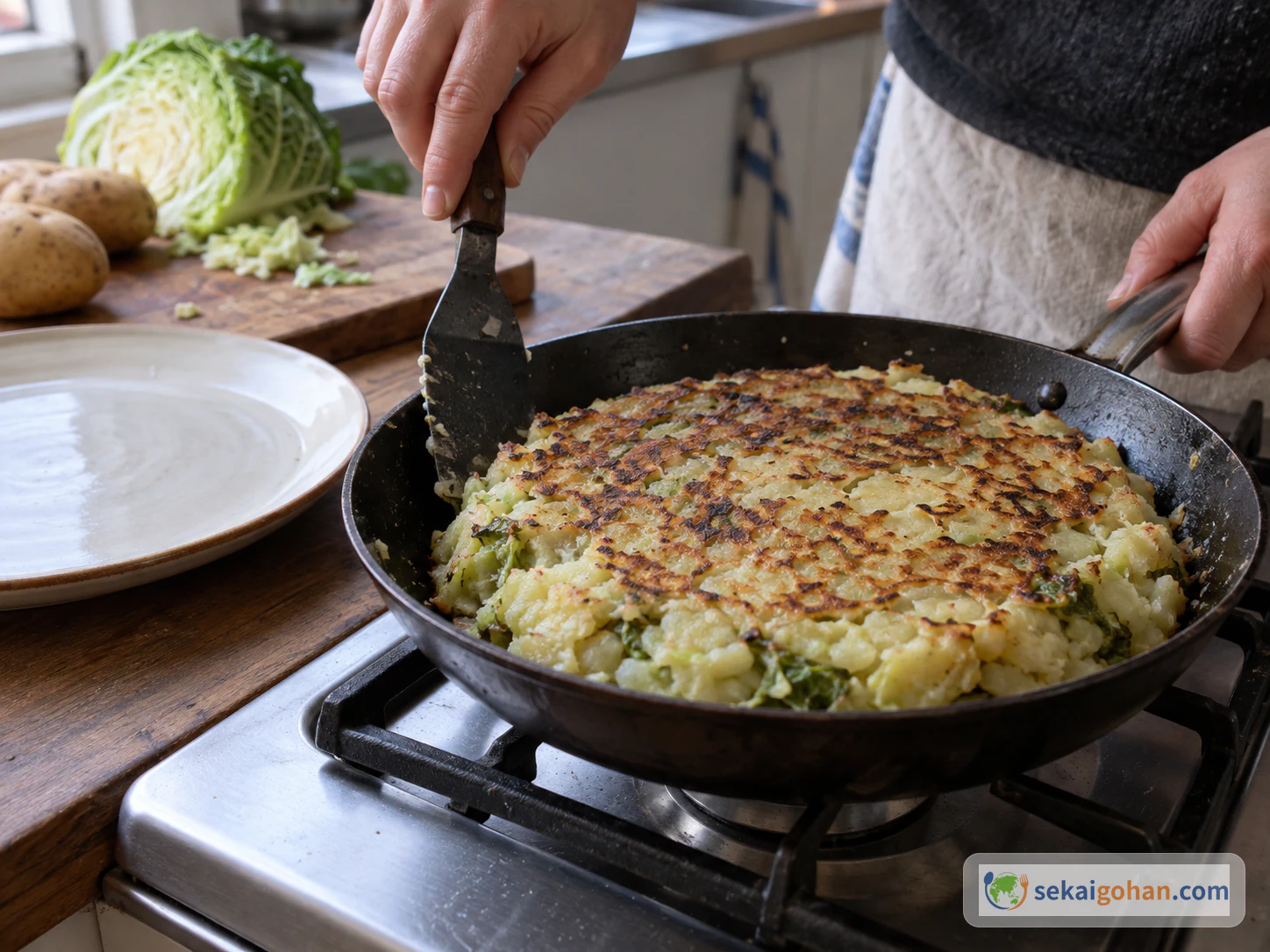
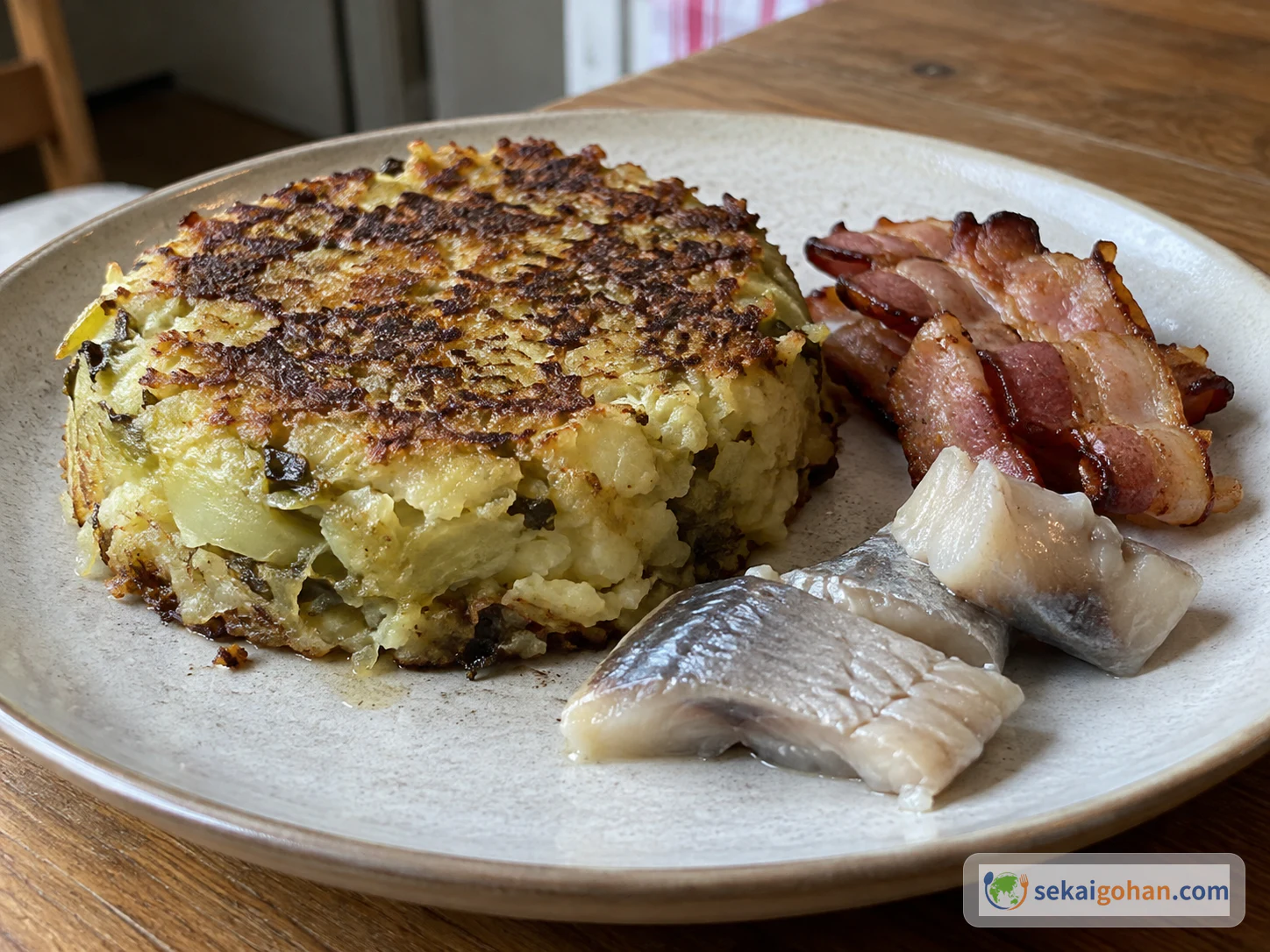
Steam rises off a pot of salted water as a big winter cabbage goes in, then chunks of potato, and both cook until the potatoes start to fall apart. Everything is drained and crushed right in the pot, bound with the oil left from frying sliced garlic and streaky bacon, then pressed into a flat round in a shallow pan and browned on both sides. This is trinxat, also called Trinxat amb rosta, a winter dish from Andorra. It comes to the table with the bacon and a few small pieces of desalted pickled herring alongside, a salty, sharp counterpoint to the soft, golden cake. Locals say the best cabbage for it is one touched by frost in the field.
Trinxat in Andorra and the Pyrenees
In Andorra, trinxat amb rosta is eaten as a starter: a browned cake with bacon and herring on the plate. It was traditionally a winter dish and is now served all year round. No single place or date of origin is known, and where the name comes from is still unsettled.
Trinxat is also made across the Pyrenees and in Catalan-speaking areas. Just over the border in Cerdanya, it is built on winter cabbage, potatoes and bacon. Herring appears there only as a variation, alongside black sausage and garlic, and browning the mixture into a round is one option rather than the rule.
If you like potato dishes shaped in a frying pan, the Spanish tortilla española is a close cousin in technique, though it relies on eggs rather than a cabbage-and-potato mash.
Ingredients: Andorran Recipe for 4
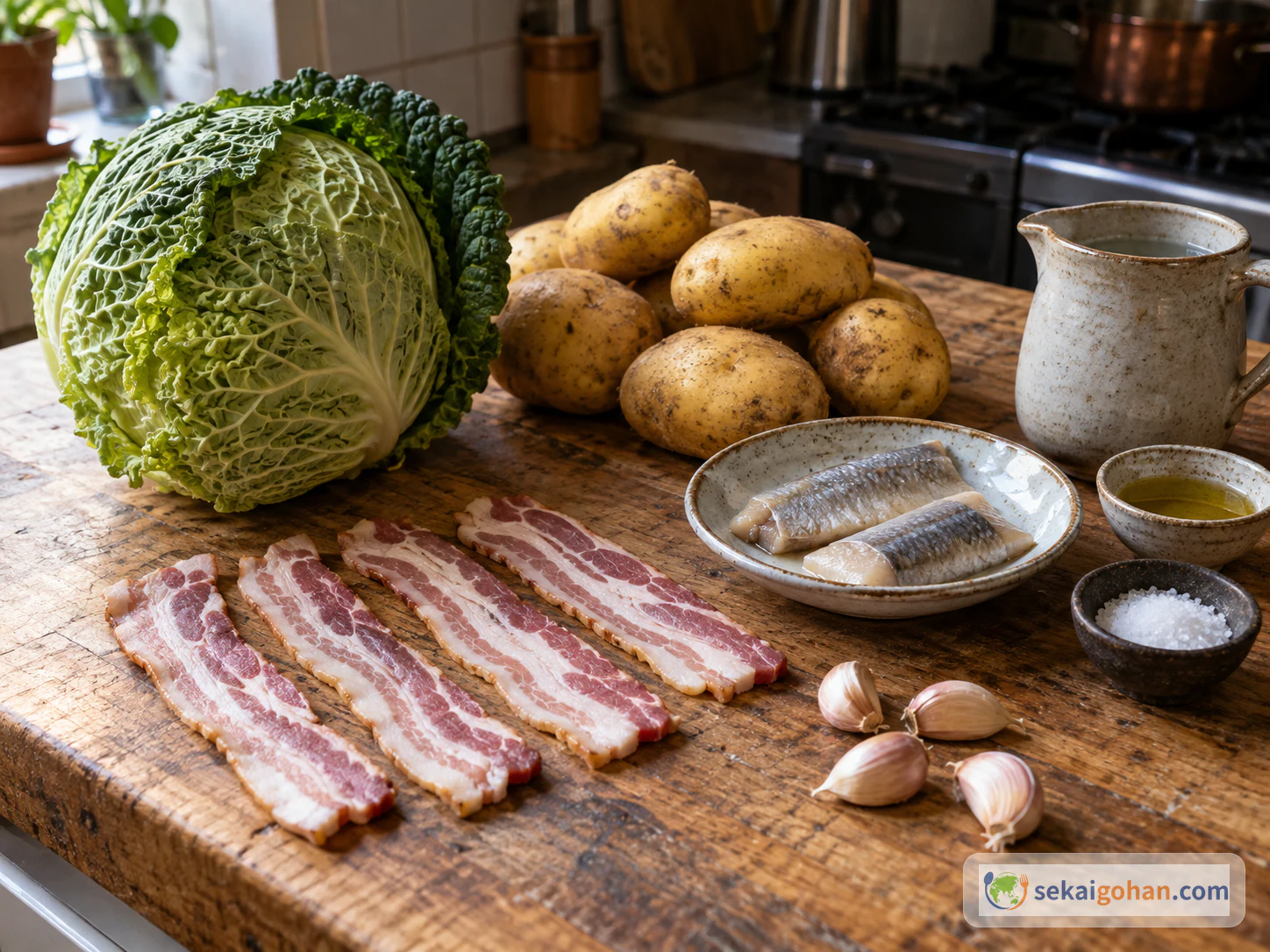
The cabbage and bacon have no weight, and the oil, water and salt have no measured amounts.
The ingredient list names water but not oil, though the method uses oil. In practice, you need enough water to boil the vegetables and enough oil to fry the garlic and bacon and then brown the cake.
The 45 minutes is the total time for the whole dish, not for any single step.
Equipment
- A large pot for boiling the cabbage and potatoes
- A perforated ladle or skimmer for crushing the vegetables in the pot
- A potato masher or wooden spoon (optional; handy for a large amount of vegetables, but not required)
- A shallow frying pan for the garlic, bacon and the cake
- A small dish and a plate for holding the garlic and bacon
- A large flat plate for turning the cake
Choosing Cabbage, Bacon and Herring for Trinxat
Cabbage. Use a large winter cabbage. A dense one from your market works well; no exact weight is needed.
Bacon. Use streaky bacon rashers with a good layer of fat. Ordinary streaky or belly bacon is a practical choice, since the rendered fat is what helps bind the vegetables.
Herring. Use pickled herring that has already been desalted. If you buy pickled or cured herring, check the label to see whether it is ready to eat or still needs desalting. Marinated mackerel and other cured or vinegared fish taste different, so skip them as stand-ins. Leaving the herring out gives you a bacon-centered trinxat, closer to the Cerdanya style.
Salt. Salt the boiling water lightly. The herring brings plenty of its own.
This recipe contains fish (herring) and pork (bacon). Check the labels on pickled or cured fish and on bacon for allergens, including cross-contact and shared-facility statements.
Method: Boil, Crush, Bind, Brown
No time, temperature, cake thickness or pan size is given for any step. Go by the state of the food described in each step.
Trinxat Troubleshooting: Draining, Binding and Turning
Drain the boiled vegetables well, and let the garlic and bacon oil carry the flavor into the mash. A cake that holds together and browns on both sides comes from these two steps, not from extra ingredients.
The cake is held together only by mash and fat, so most problems come back to water, oil or patience at the pan.
| Problem | Likely cause | What to do |
|---|---|---|
| The cake won't hold its shape | Too much water left in the vegetables | Drain thoroughly in step 3 before crushing; crush finer with the oil in step 6 |
| It breaks when you turn it | The round is too large or too loose for the pan | Turn it with a plate, and divide the mixture into smaller batches if needed |
| Not enough flavor in the mash | The garlic and bacon oil was not kept | Fry the garlic and bacon in the same oil and leave it in the pan for the vegetables |
| The garlic tastes bitter | Fried too long | Lift it out once it colors lightly at the edges |
| The plate is too salty | Salty water plus salty herring | Salt the boiling water lightly and check how salty your herring is |
| Pale surface | Not enough time against the pan, or not enough oil | Let each side brown before turning; judge by color |
Serving, Storing and Varying Trinxat
Serve trinxat as a starter, with the bacon and herring beside the browned cake, and adjust the salt by taste with the herring in mind. It can be made a few hours ahead or the day before and left to rest. Don't leave the cooked dish out at room temperature.
Households and regions change it in a few ways:
- Bacon-centered, without herring. This is the Cerdanya base of winter cabbage, potatoes and bacon.
- With black sausage. Cerdanya cooks list it as an addition.
- Garlic through the vegetables. Another Cerdanya variation: scatter the garlic into the mash rather than only on top.
- Left as a crush. Since browning into a round is optional in Cerdanya, you can serve it simply as a mash.
- Without pork, with pine nuts. One Catalan recipe for 4–5 people uses cabbage, 2.25 lb (1 kg) potatoes and garlic, with bacon or pine nuts as an option. Another Catalan version uses the same cabbage, 2.25 lb (1 kg) potatoes and garlic, with bacon.
Frequently Asked Questions
Where is trinxat from?
This recipe is the Andorran version, known as Trinxat amb rosta. The dish is also made widely in the Pyrenees and Catalan-speaking areas, including Cerdanya. No single place of origin is known.
Is the herring essential?
In Andorra, desalted pickled herring is part of the plate. In Cerdanya it is a variation. Without it you get a bacon-centered trinxat that lacks the herring's salty contrast.
Can I eat it without browning it into a round?
Yes. In Cerdanya, browning is one option, so serving it as a crushed mash is another way to finish the dish. The Andorran version shapes and browns it.