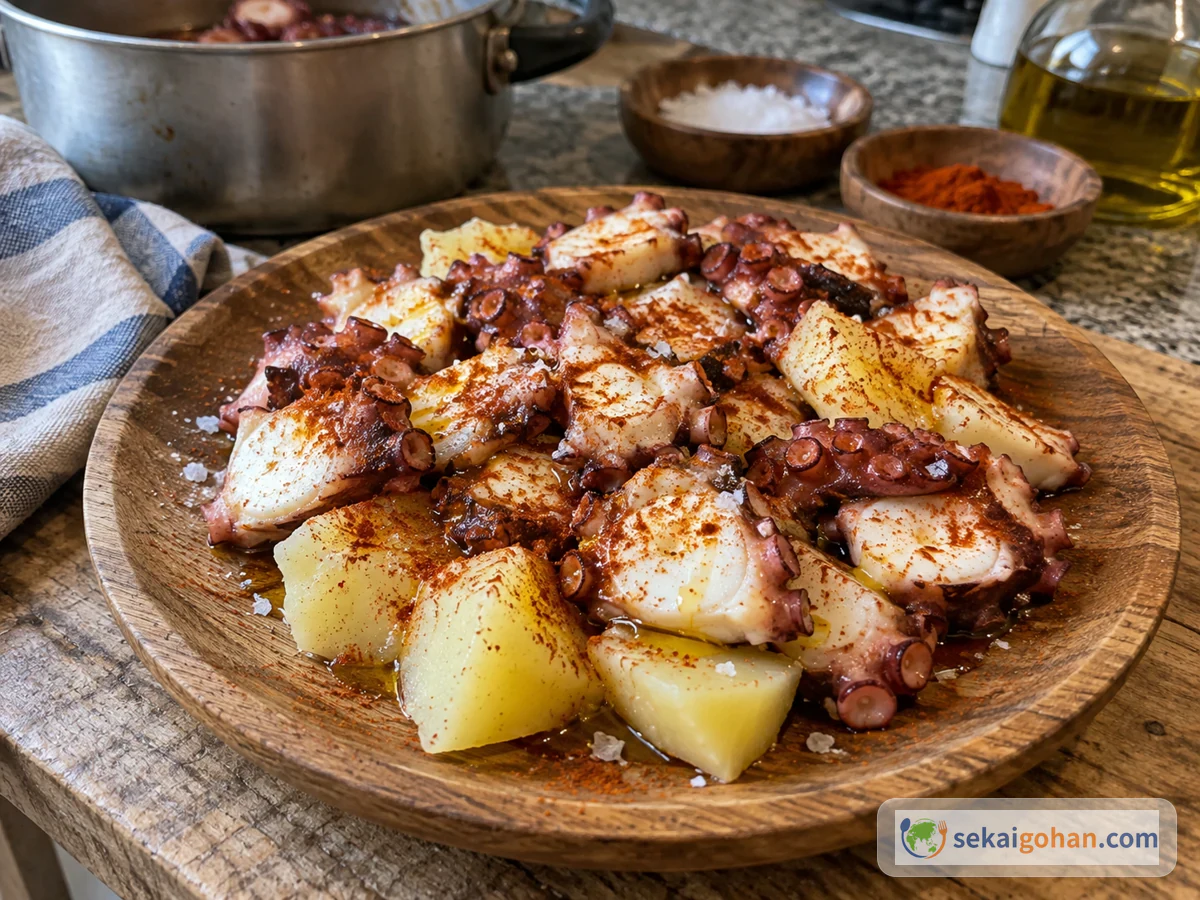
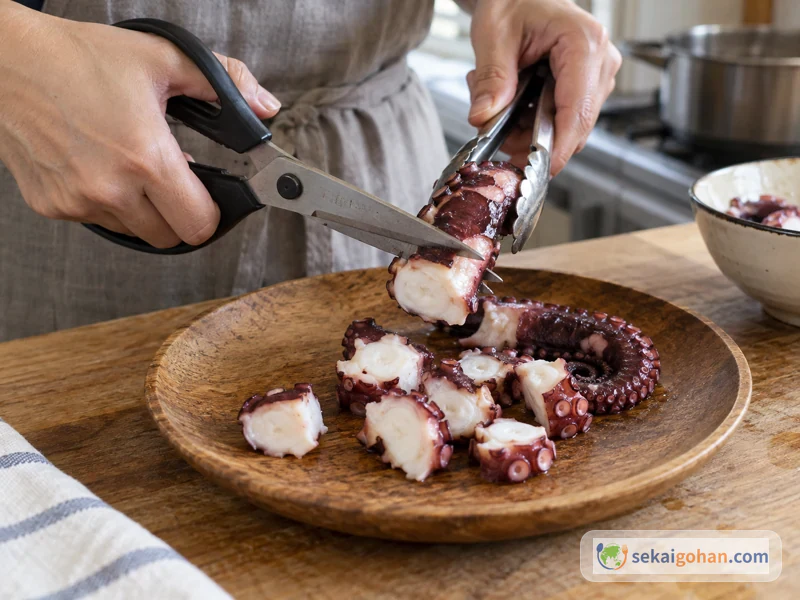
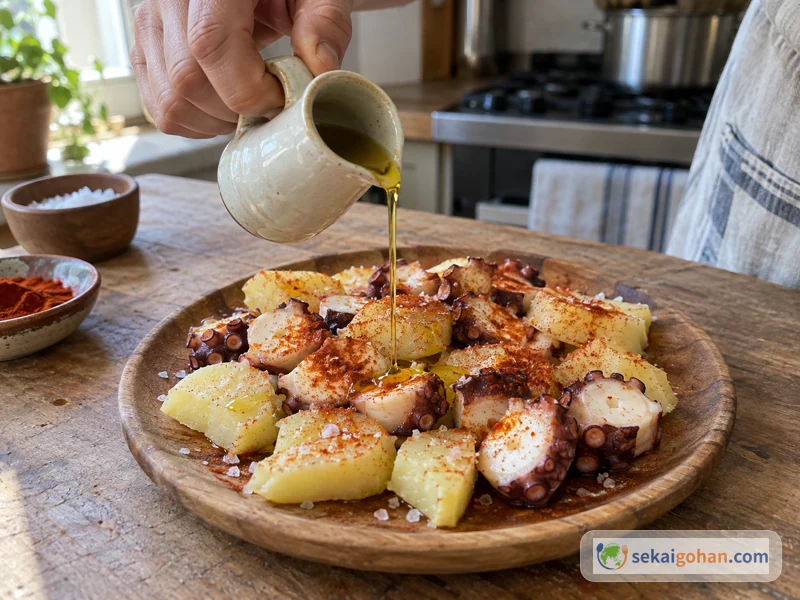
Steam rises from a large copper pot as the cook lifts out a whole octopus, then snips a tentacle into rounds with scissors and lets them fall onto a wooden plate. A pinch of coarse salt, a dusting of red paprika, a swirl of olive oil, and it is done. This is pulpo a feira, a fixture of the markets (feiras) and festivals of Galicia, in northwestern Spain. In Galician it is polbo á feira; elsewhere in Spain it also goes by pulpo a la gallega ("Galician-style octopus").
Pulpo a feira and the Galician market
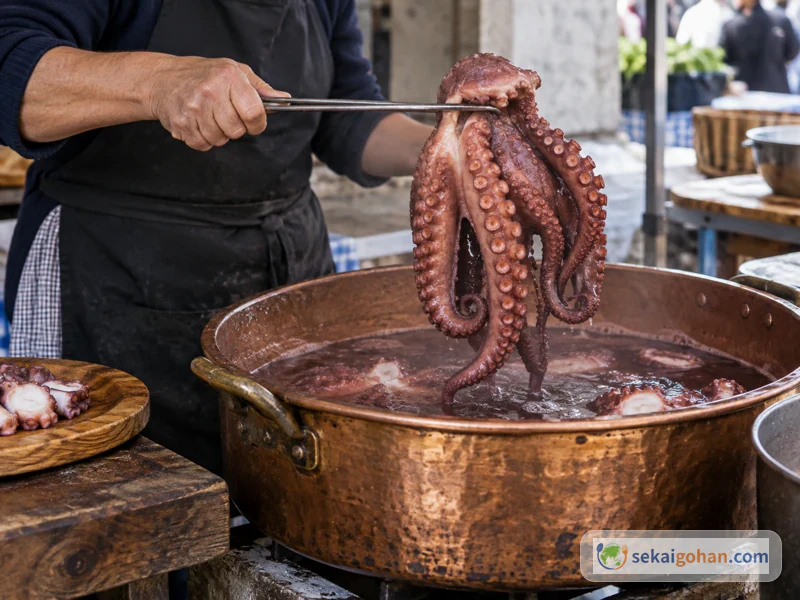
The person who makes it is called a pulpeira in Galician, or a pulpeiro if he is a man. One pulpeiro from O Carballiño in Ourense province comes from a family now in its fourth generation, and started out traveling from market to market. Octopus sounds like harbor-town food, but the heart of this dish is inland, in Ourense.
The story goes back to the early 16th century, when O Carballiño held a large livestock fair. Monks from the nearby Oseira monastery (Mosteiro de Oseira) boiled dried, preserved octopus until it softened, cut it up, and served it to fairgoers with salt and oil. That was the first "market octopus," a feira, though paprika was not yet part of it. Take the tale as folklore.
Every August, O Carballiño holds its Octopus Festival (Festa do Polbo). In 2025, the festival was the 63rd edition, held on August 10. The festival is designated a Festival of International Tourist Interest (Interese Turístico Internacional).
Ingredients (serves 4)
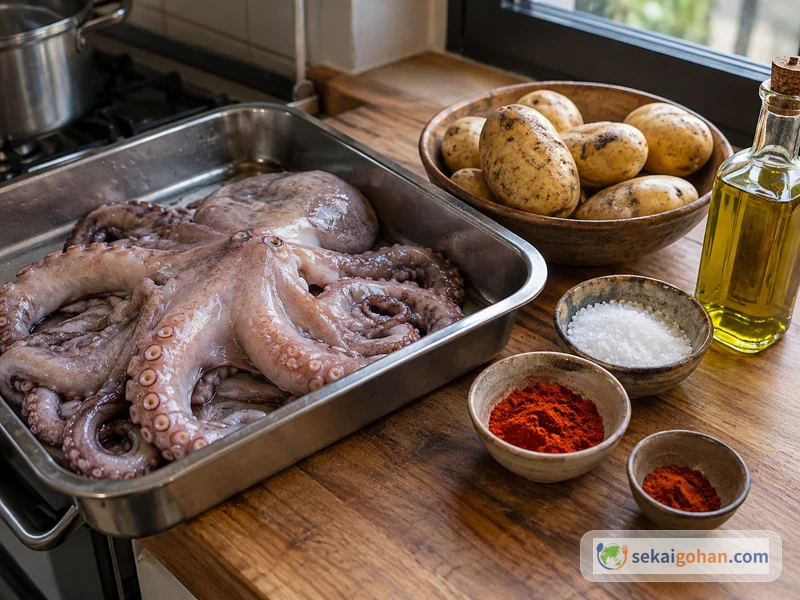
The amounts serve 4, with 4.5 lb (2 kg) octopus and 2.25 lb (1 kg) potatoes. The salt, paprika and olive oil amounts are rough home-cooking quantities.
Spanish pimentón comes in sweet (dulce) and hot (picante) types. Use pimentón from La Vera in Extremadura (powdered smoked chili peppers). Mixing mostly sweet paprika with a little hot gives both the red color and a gentle kick. Many supermarket paprika powders are not smoked, so if you can find smoked paprika, it brings you closer to the aroma of Galicia.
You can make this with ready-cooked octopus too. Just dip it in hot water for a few seconds to warm it, not boil it again for minutes. Boil the potatoes first, warm the octopus briefly, and go on to step 7.
This is a simple dish of octopus, salt, paprika and olive oil, but octopus is a mollusk. If you have a shellfish or seafood allergy, check with your doctor before eating it.
Choosing octopus for pulpo a feira
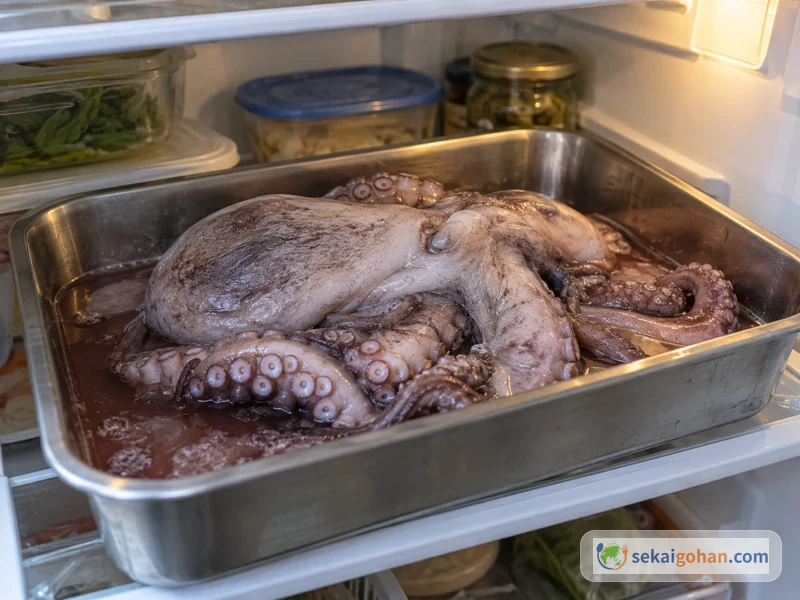
Most of the octopus eaten in Spain comes from Morocco or Mauritania: buy Moroccan (Dakhla) octopus in winter and Mauritanian in summer. Cooks once tenderized the flesh by beating it against stones. Today, freezing it and then thawing it slowly in the refrigerator does the same job.
Fresh octopus works, but the flesh tends to be tougher, so if you buy it fresh, freeze it once before cooking. Frozen raw octopus is sold in many places, which means you can follow this method at home exactly as written.
How to make pulpo a feira
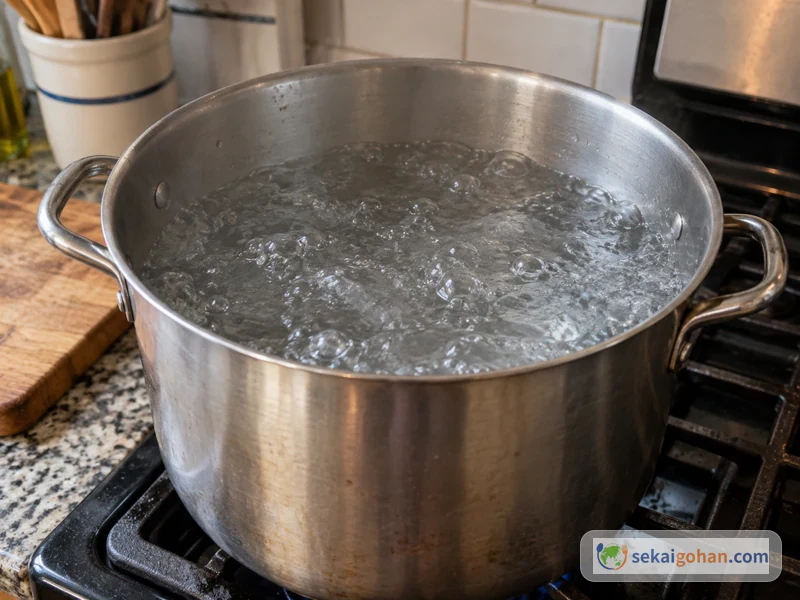
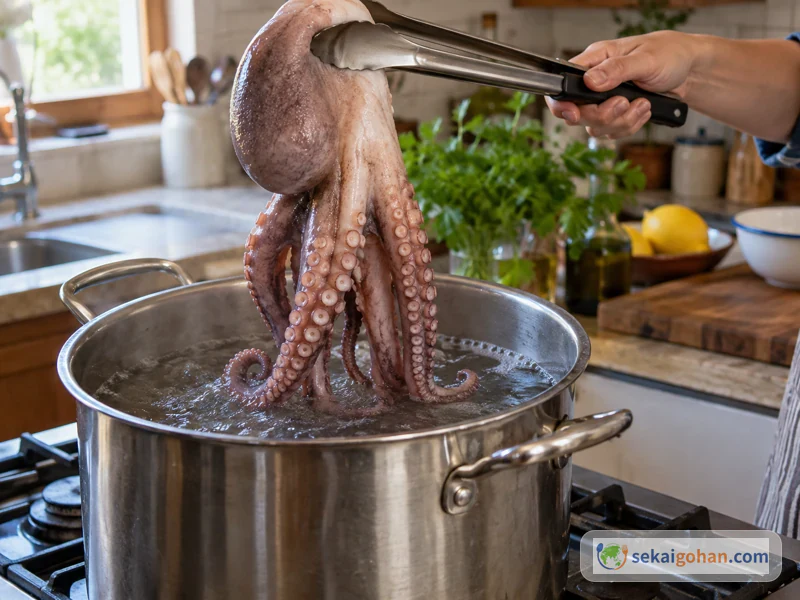
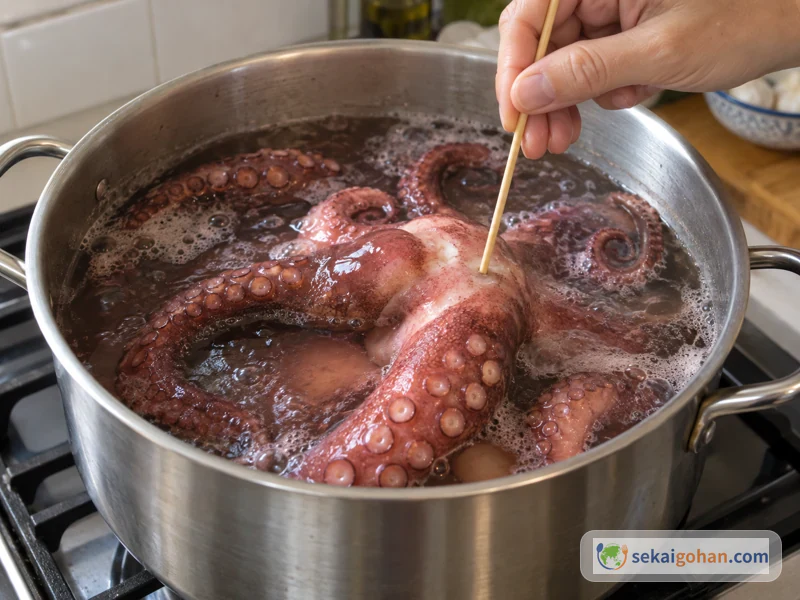
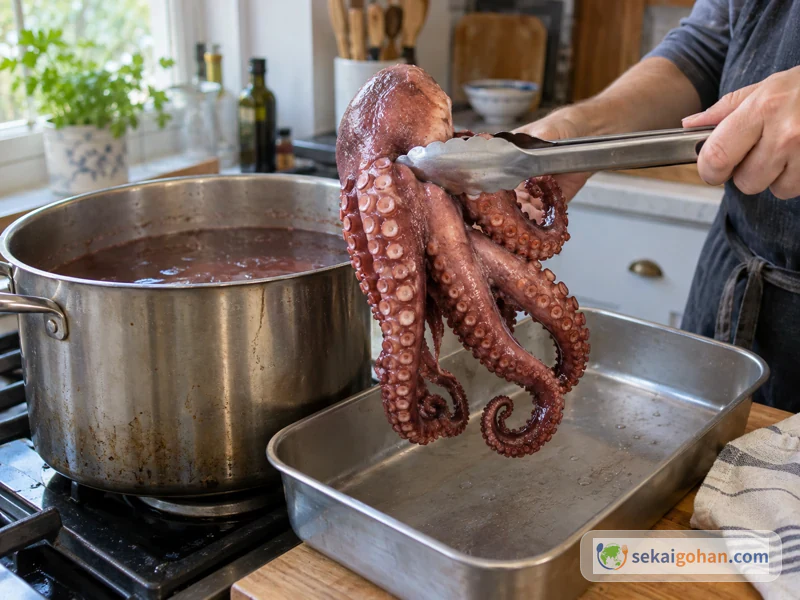
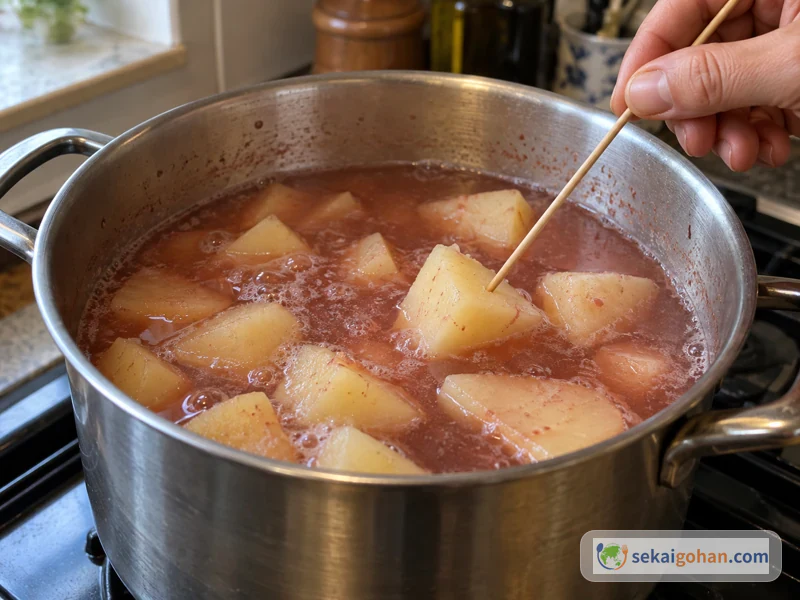
Thawing frozen octopus in the refrigerator takes overnight (about 12 hours). Preparation takes about 15 minutes, and cooking and finishing take about 1 hour 16 minutes (20 minutes to bring the water to a boil, 1 minute for the three dips, 30 minutes to cook the octopus, 5 minutes to rest it in the water, 15 minutes for the potatoes, and 5 minutes to cut and plate), about 13 hours 31 minutes in total.
Moisten the wooden plate with the cooking water. The octopus does not stick to the plate, and the cooking liquid that drops onto it mixes with the olive oil to make a sauce you will want to mop up with bread. If you have no wooden plate, a warmed ceramic platter will do.
Paprika scorches easily, and it turns bitter if combined with oil that is too hot. Do not heat the oil. Pour it on at the end at room temperature.
Keeping pulpo a feira tender
In Japanese cooking, octopus is usually rubbed with salt to remove the slime, boiled, cooled, and served in vinegared dishes or as sashimi. Pulpo a feira is the opposite: the whole point is to cut it while warm and eat it right away. As it cools, the flesh firms up and gets chewier, so the biggest tip is to go from pot to plate without a pause.
Serving pulpo a feira at home
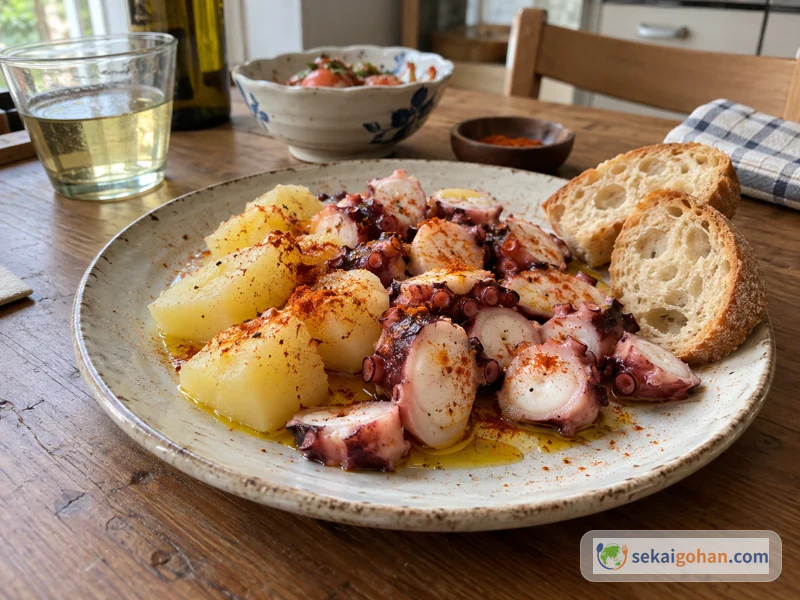
Store-bought cooked octopus works too: dip the tentacles in boiling water for a few seconds to warm them. The flesh won't be quite as plump as with raw octopus, but you get the same aroma of paprika and olive oil. In Galicia, bread is a standard partner alongside the cachelos, and a simple baguette lets you mop up every bit of the red oil left on the plate.
Frequently asked questions
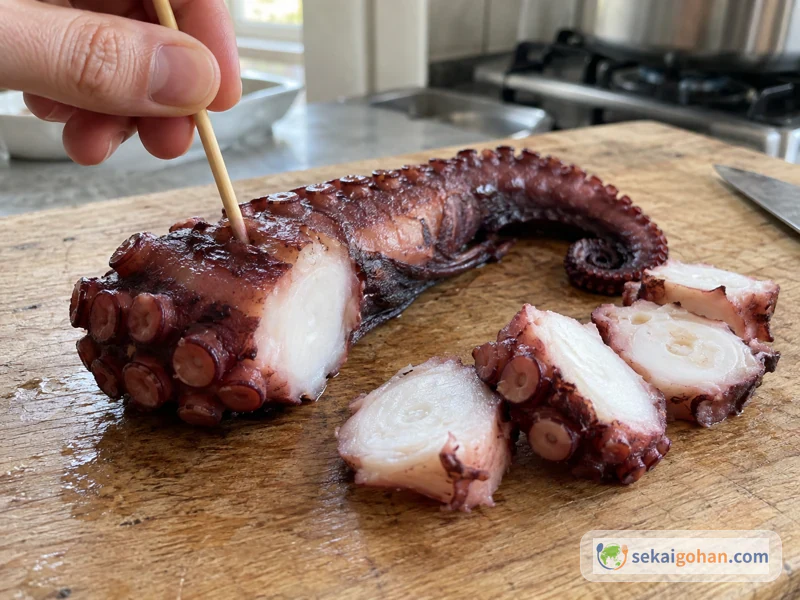
How long should I cook an octopus of only 2.25 lb (1 kg)?
About 30 minutes is the guide for 4.5 lb (2 kg), so a smaller octopus takes less time. Go by feel rather than the clock: from around 20 minutes, push a bamboo skewer into a thick tentacle and turn off the heat when it feels like a boiled potato.
Can I use paprika powder that is not smoked?
Yes. Unsmoked paprika has a mild aroma and lets the flavor of the octopus come forward. Smoked paprika adds a savory note closer to Spanish pimentón.
What should I do with leftovers?
Refrigerate the cooked octopus and finish it soon. To serve, dip it in boiling water for a few seconds to rewarm it, then dress it again with salt, paprika and olive oil to bring it close to freshly made.