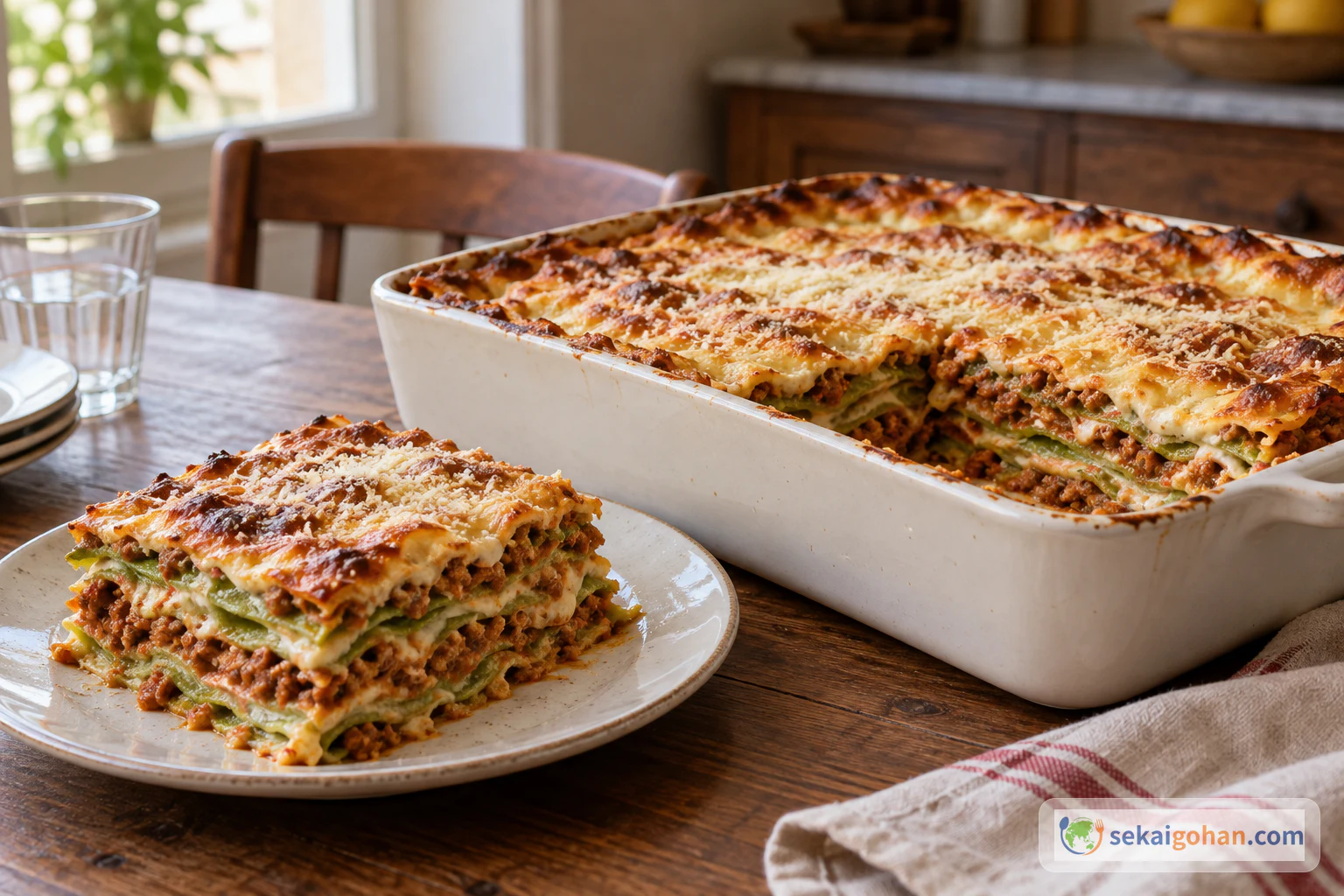
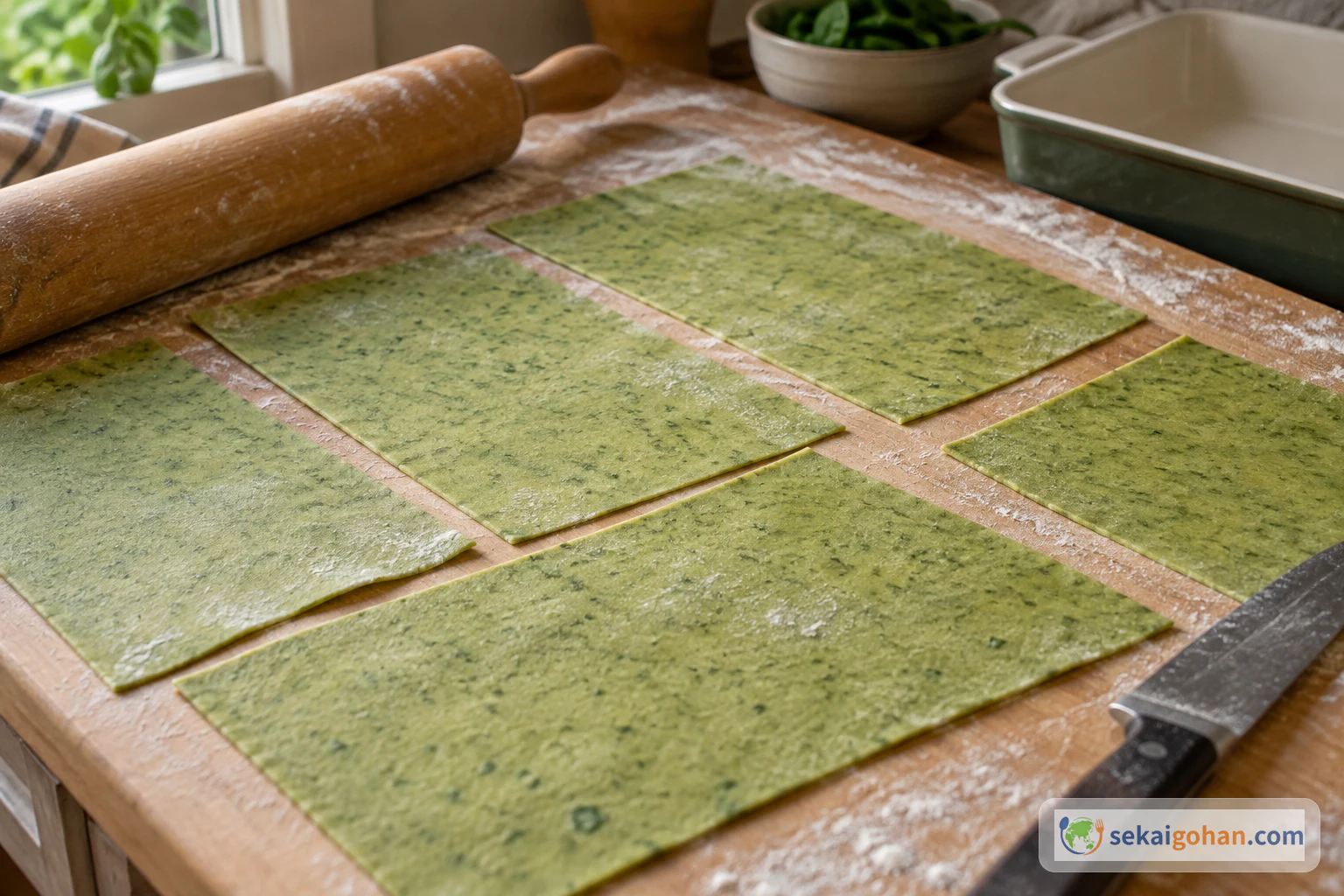
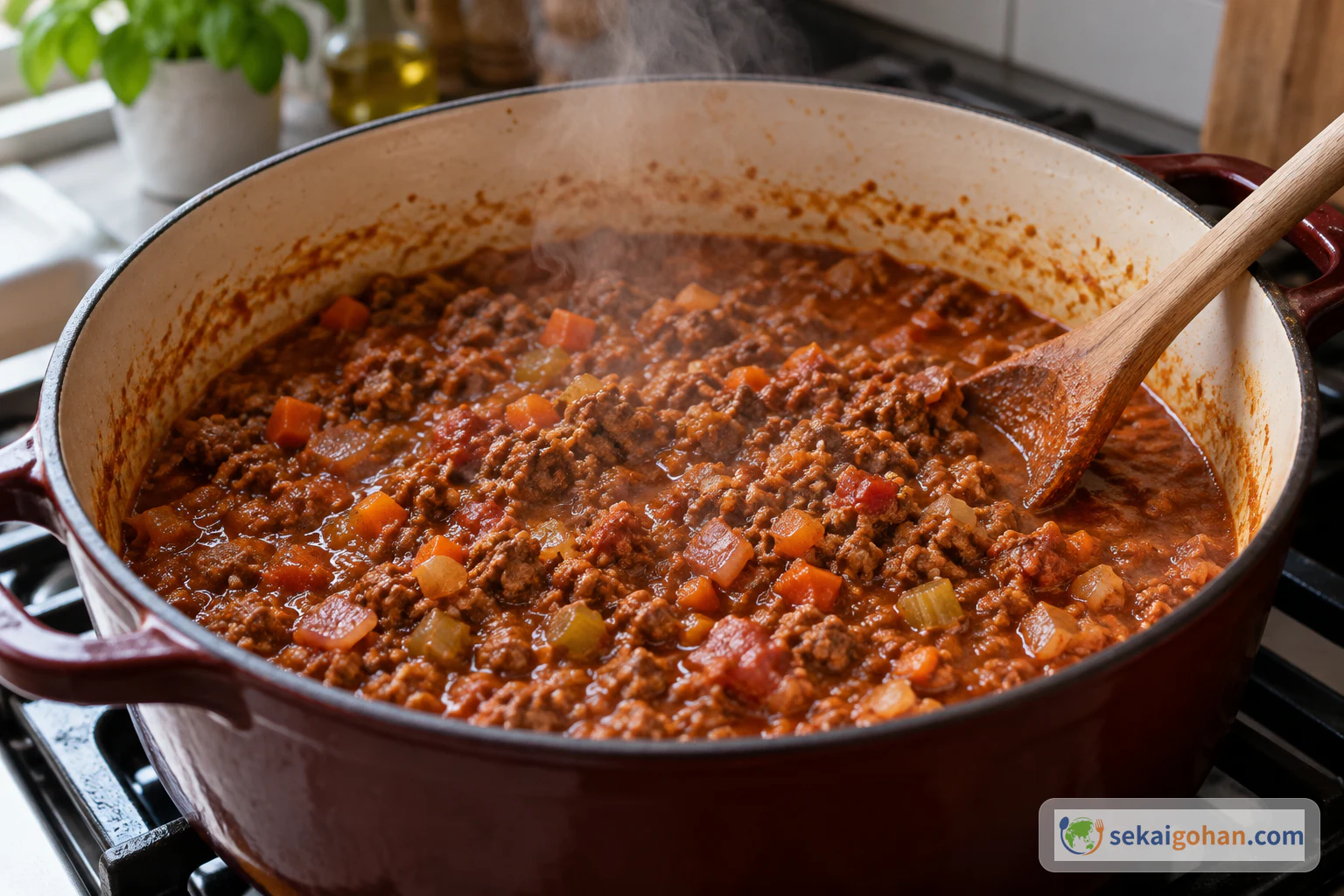
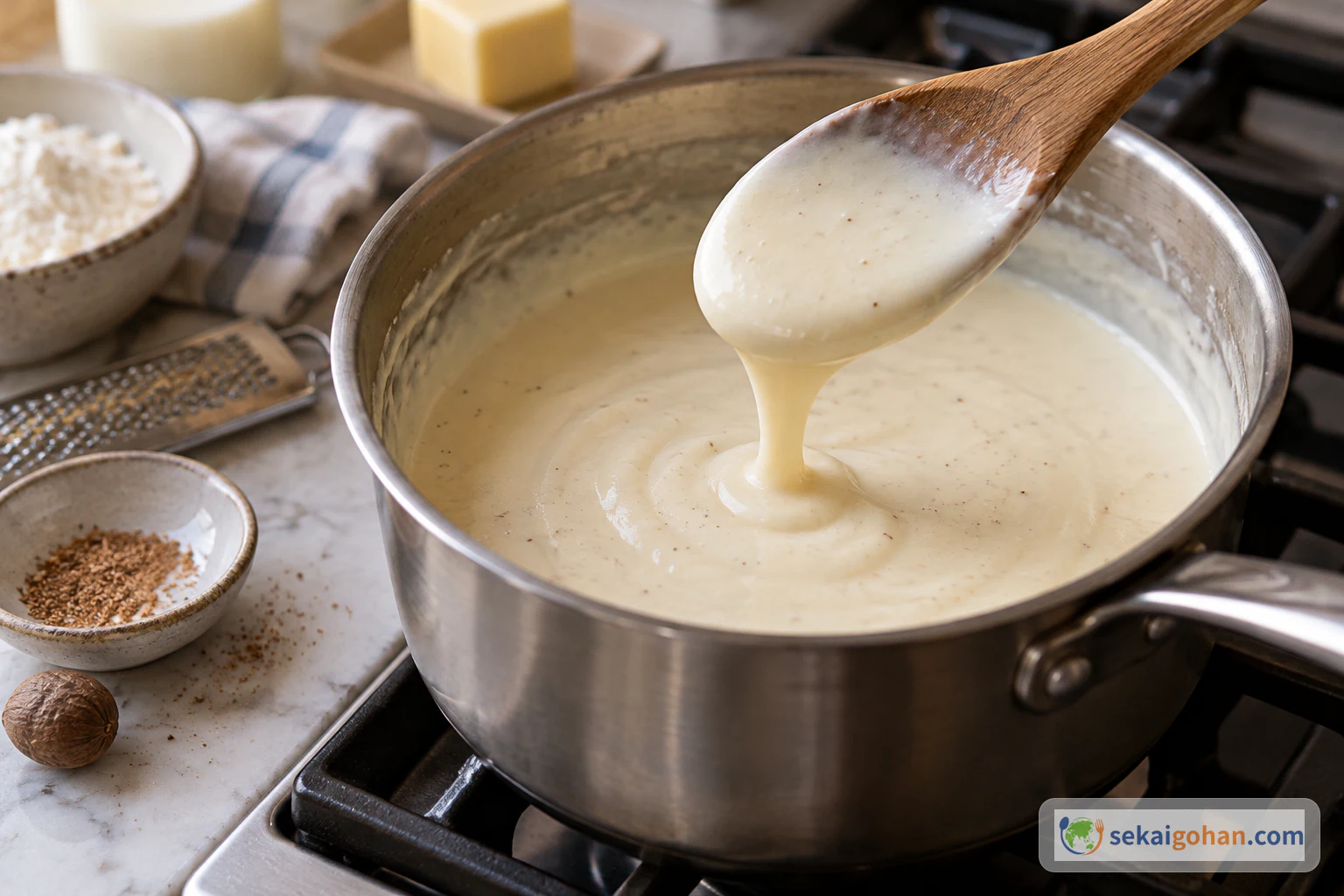
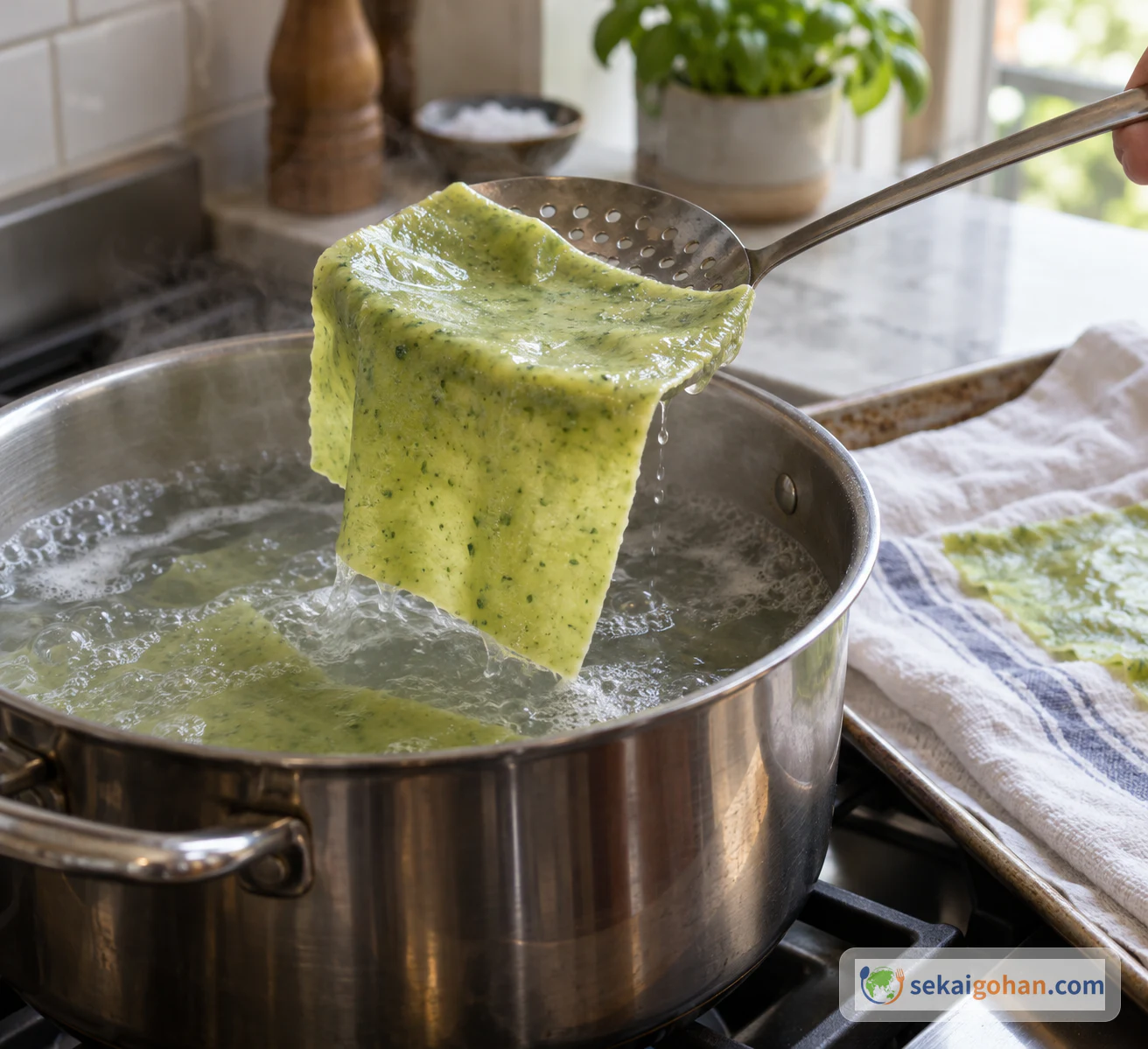
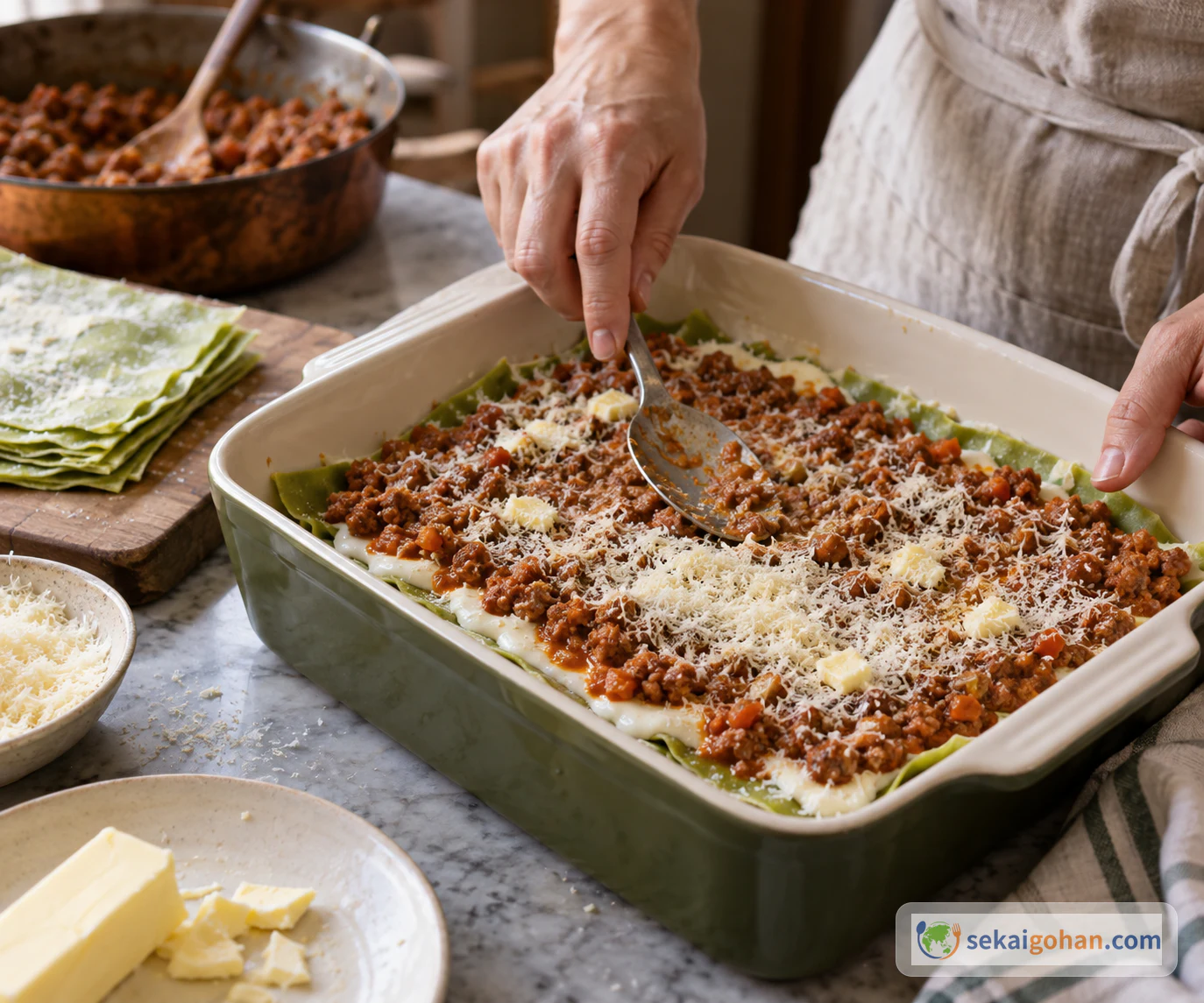
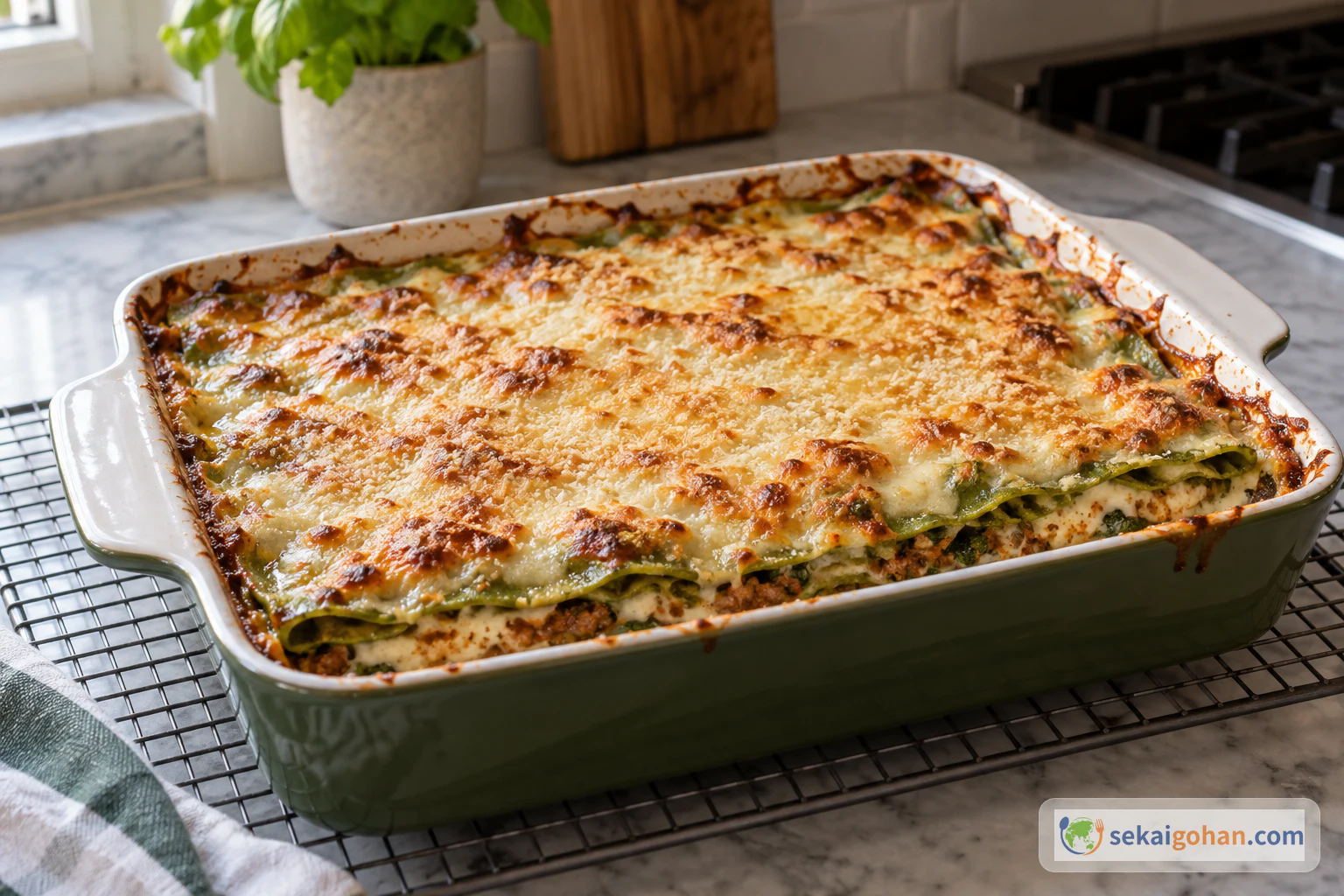
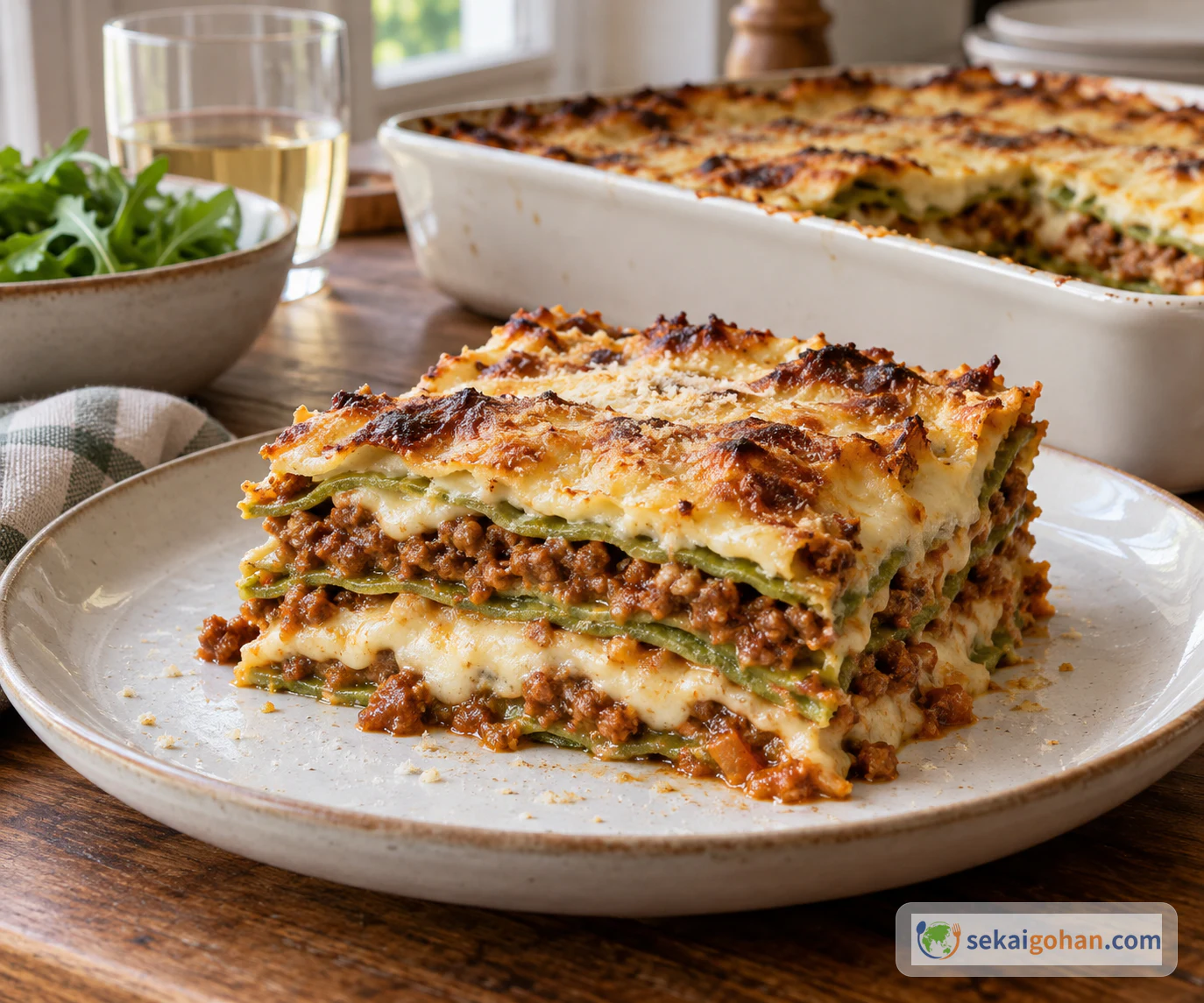
The rectangular dish comes out of the oven with a browned top of Parmigiano, and then it rests. After 5 minutes you cut the first square and lift it onto a plate, and the layers stand: green pasta, ragù, béchamel and cheese, one on top of the other. This is lasagne verdi alla bolognese, the green lasagna of Bologna, Italy, made with fresh spinach egg pasta, Bolognese ragù, béchamel and Parmigiano-Reggiano. Save it for a day when you have time in the kitchen, because the dough is made and rolled by hand and the ragù simmers for about two hours.
About Lasagne Verdi alla Bolognese
"Lasagna" on its own can mean many different baked dishes. The Bologna style is defined by its four components: fresh green egg pasta, ragù, béchamel and Parmigiano-Reggiano. The festive lasagna of southern Italy is a separate tradition. Greek moussaka, which layers aubergine, meat and béchamel, is a different dish, and so is Georgian achma, a layered pie of boiled dough, cheese and butter that is sometimes called "Georgian lasagna" in English.
The recipe was registered in 2003 and deposited on 4 July 2003. The deposited recipe dates to the 1930s and includes béchamel. Words related to "lasagne" are much older, though today's baked, layered dish didn't necessarily exist in the same form back then.
The green pasta belongs to a wider tradition, since handmade egg pasta is a defining part of the region's food; tortellini are another example. In the deposited lasagna, the green dough contains spinach as well as flour and eggs. The ragù is closely tied to the city too. Its classic formula was deposited in 1982 and has since been updated.
Ingredients: Serves 8, in a 25 cm × 14 inches (35 cm on the long side) Dish at Least 2.5 inches (6 cm) Deep
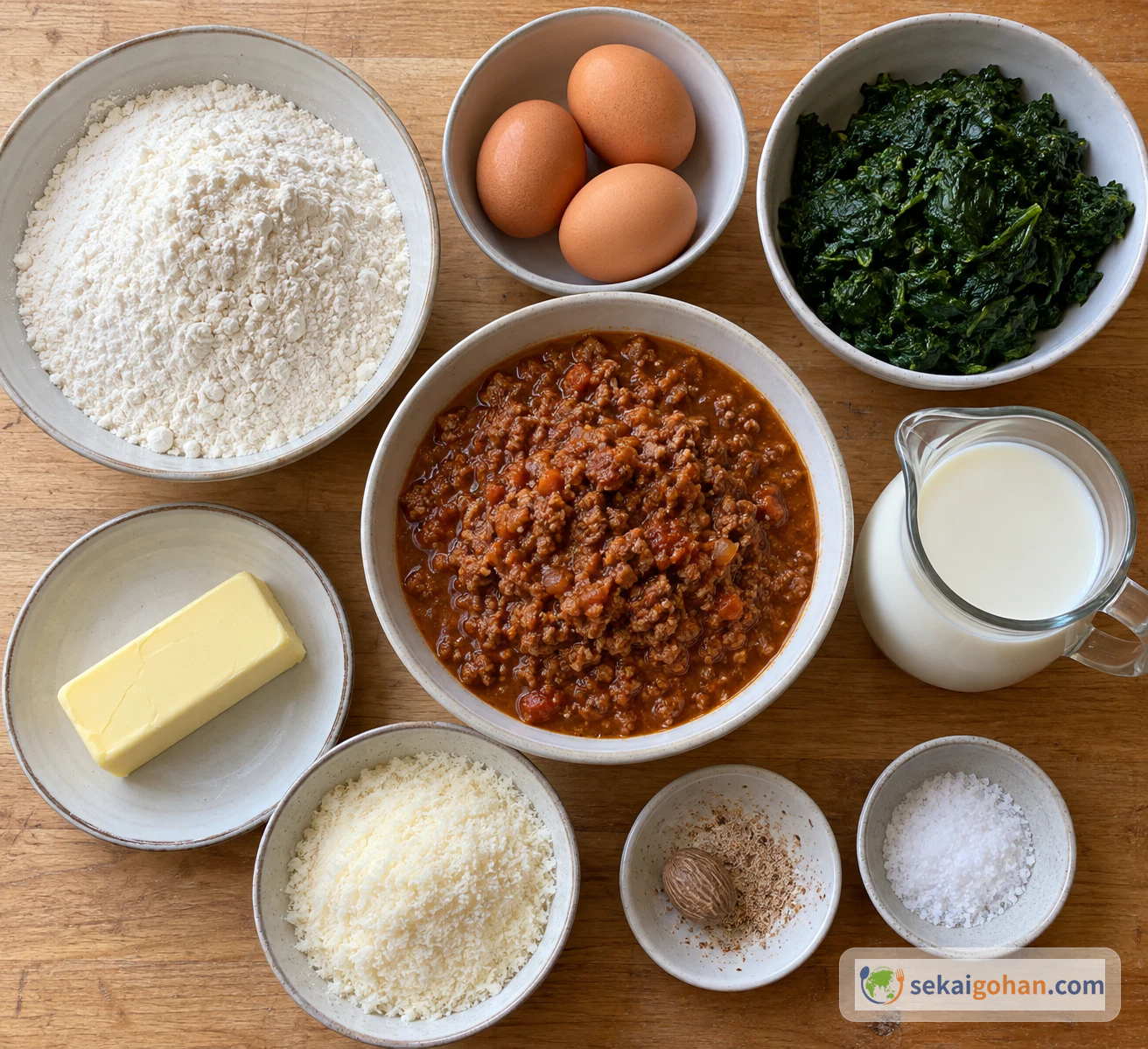
These amounts follow the registered recipe on Bologna Welcome for 8 servings in a 25 × 35 cm (14 inches on the long side) baking dish at least 2.5 inches (6 cm) deep. The recipe calls for 2.25 lb (1 kg) of finished ragù. For the ragù itself, this article uses Bologna Welcome's separate ragù recipe with every ingredient doubled, then weighs out 2.25 lb (1 kg) once it is cooked.
Set aside anything beyond 2.25 lb (1 kg) separately. If the batch comes up short, make more with the same proportions rather than adding water or milk to reach the weight.
This dish contains wheat (gluten), egg and milk (whole milk, butter and aged cheese). None of the substitutions below makes it safe for people with allergies; they only change flavour and texture. Check labels on store-bought products.
Equipment
- Baking dish, 25 cm × 14 inches (35 cm on the long side) and at least 2.5 inches (6 cm) deep
- Large deep pot for boiling the sheets
- Heavy pot large enough to sauté and simmer the doubled ragù (a pot of roughly 8 inches (20 cm) is only right for a single batch)
- Small saucepan for the béchamel
- Rolling pin or pasta machine
- Knife
- Wooden spoon
- Skimmer or slotted spoon
- Clean cotton or linen cloths
- Toothpick
- Kitchen scale
- Oven
Choosing Ingredients for Lasagne Verdi
00 flour. All-purpose flour works if you can't find 00, but it differs in elasticity and in how much moisture the dough takes up, so treat it as an approximation rather than a one-to-one swap. Skip home blends of bread flour and cake flour meant to imitate it.
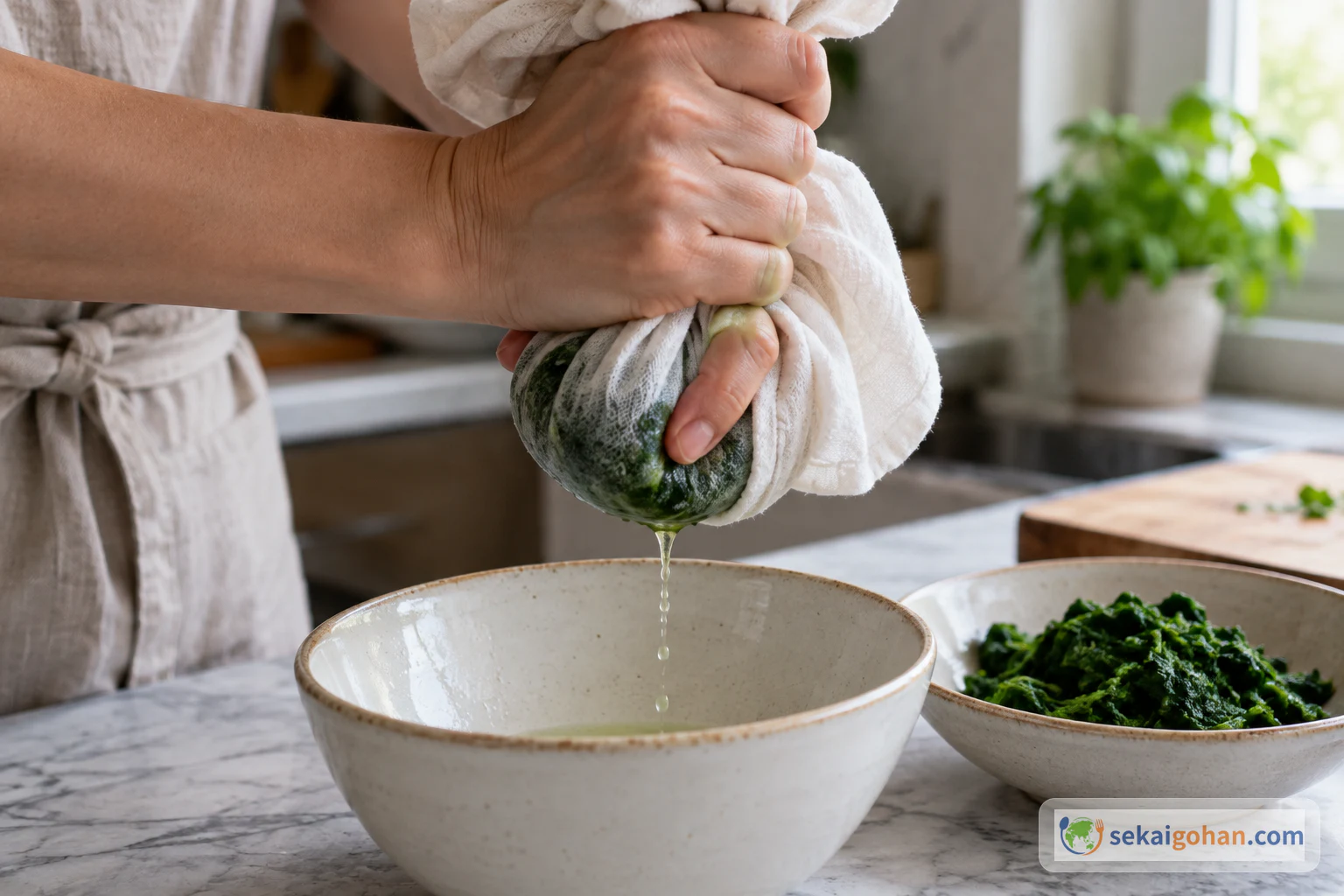
Spinach. Fresh spinach should be boiled, squeezed hard and weighed out at 12.5 oz (350 g) after draining. Thaw frozen spinach and squeeze it well. Either way, you want it cooked, squeezed and chopped.
Parmigiano-Reggiano. Grate it from the block just before assembling; pre-grated "parmesan-style" cheese is a different product. If Parmigiano-Reggiano is hard to find, another hard aged cheese can stand in, though the flavour will change.
Pancetta and beef. Pork belly is a good choice for pancetta di maiale; cured products and local bacon are different ingredients. For the beef, use cuts such as cartella, pancia, fesone di spalla and fusello, coarsely ground. Ordinary coarsely ground beef also works, though its fat ratio differs from those cuts.
Wine and dairy. You can leave out the wine to avoid alcohol, but the ragù will taste different. A dairy-free version changes both the flavour and the thickness of the béchamel, and becomes a different dish.
Method: From Spinach to the First Cut Square
The ragù (step 4) simmers gently for about two hours in the original single-batch recipe; the cooking time for the doubled batch has not been measured. You can start the ragù first and make the pasta dough and béchamel while it simmers. The recipe does not give a total time for the dough, béchamel, assembly and baking.
Fixing Common Lasagne Verdi Problems
| Problem | Likely cause | What to do |
|---|---|---|
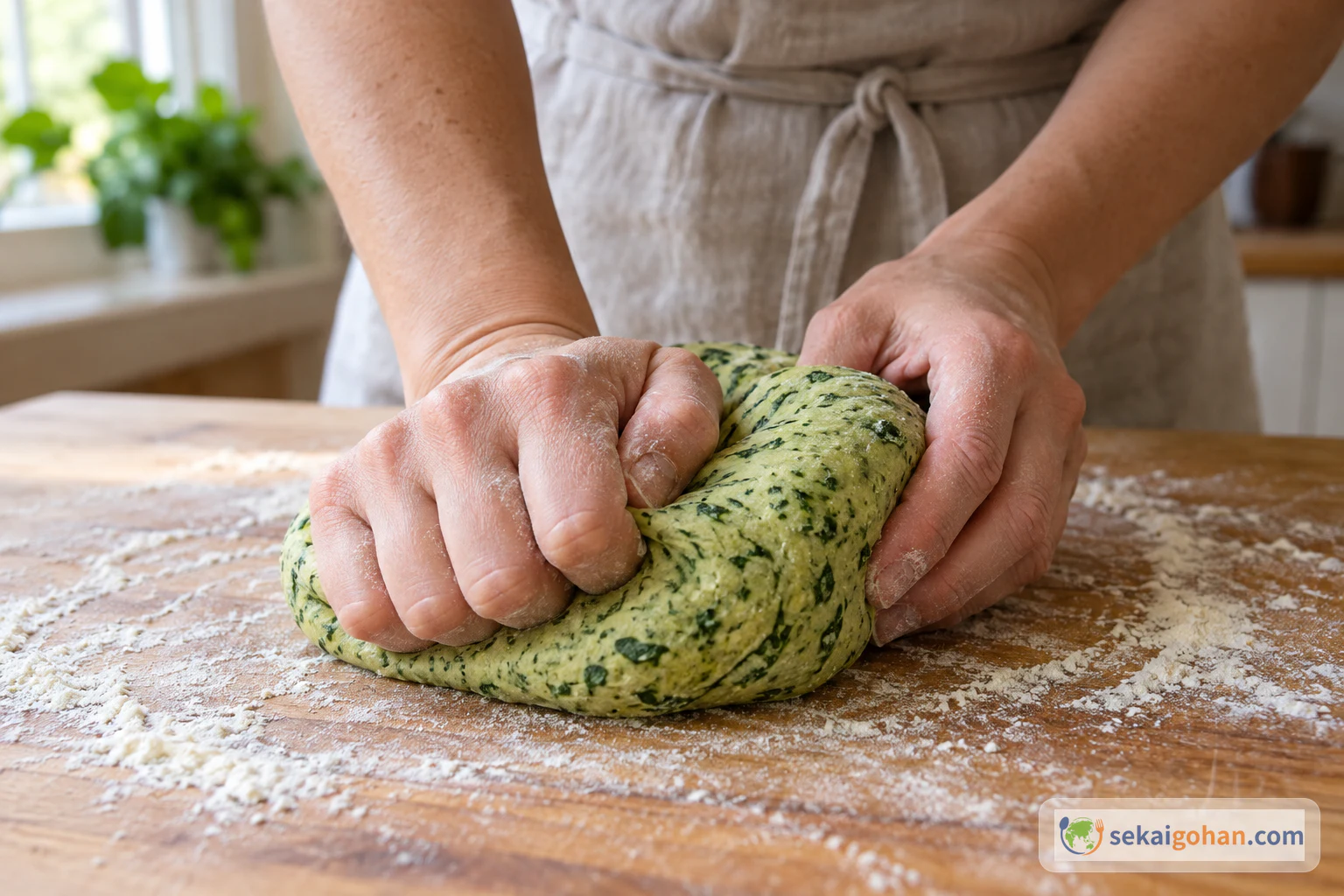
| The dough is too wet | The spinach still held water | Squeeze the boiled spinach thoroughly before chopping. Check the dough's moisture before adding any flour, and add only the minimum |
| Sheets tear or stick in the pot | Too many sheets at once, or left in too long | Boil a few at a time, lift each out as soon as it floats, and dry them on a cloth without stacking |
| Gaps form between layers | Uneven sauce, trapped air | Spread the ragù and béchamel thinly and evenly, press out air, and prick the sheets with a toothpick in 3–4 places |
| The lasagna tastes heavy | Too much ragù or too thick a béchamel | Keep the ragù generous but not excessive, and the béchamel a thin creamy layer |
| Slices fall apart when cut | Cut straight from the oven | Let it rest for 5 minutes before cutting |
Timing and Rolling Lasagne Verdi
Start with the ragù. Once the long simmer is underway, you can make the pasta and béchamel in the same cooking session. No pasta machine? Roll the dough by hand with a rolling pin, thin but not so thin that the sheets tear.
Frequently Asked Questions
Can I use dried lasagna sheets?
You can, and plain yellow fresh pasta works too, but the aroma and texture of hand-made green sfoglia will be different. Cook dried sheets according to the package rather than the "boil until they float" step.
Why weigh the ragù instead of using the whole batch?
The lasagna needs 2.25 lb (1 kg) of finished ragù, and the ragù recipe does not give a yield. Double the ragù and weigh out 2.25 lb (1 kg) after cooking to keep the lasagna's proportions. If you come up short, make more ragù with the same proportions rather than adding water.