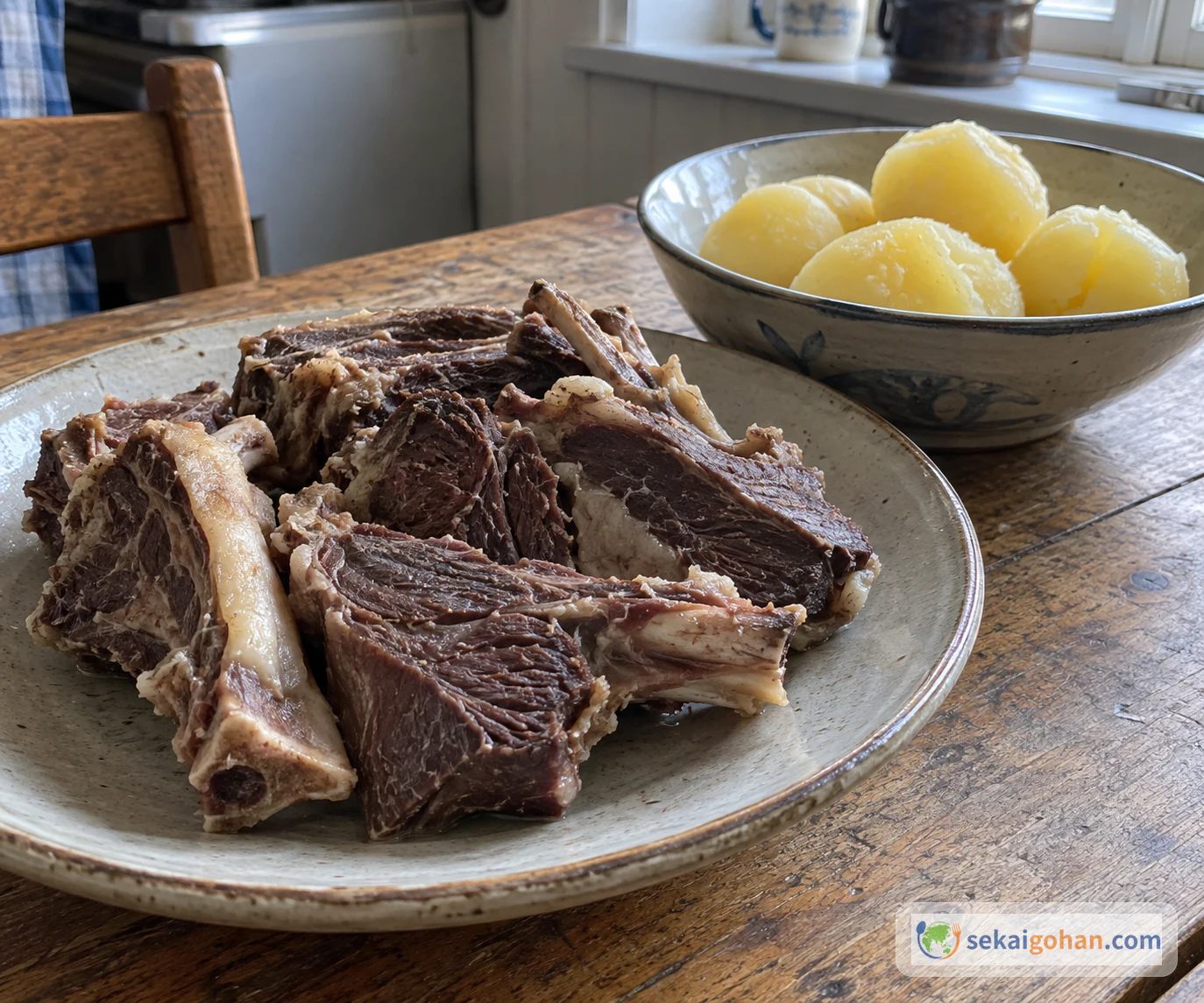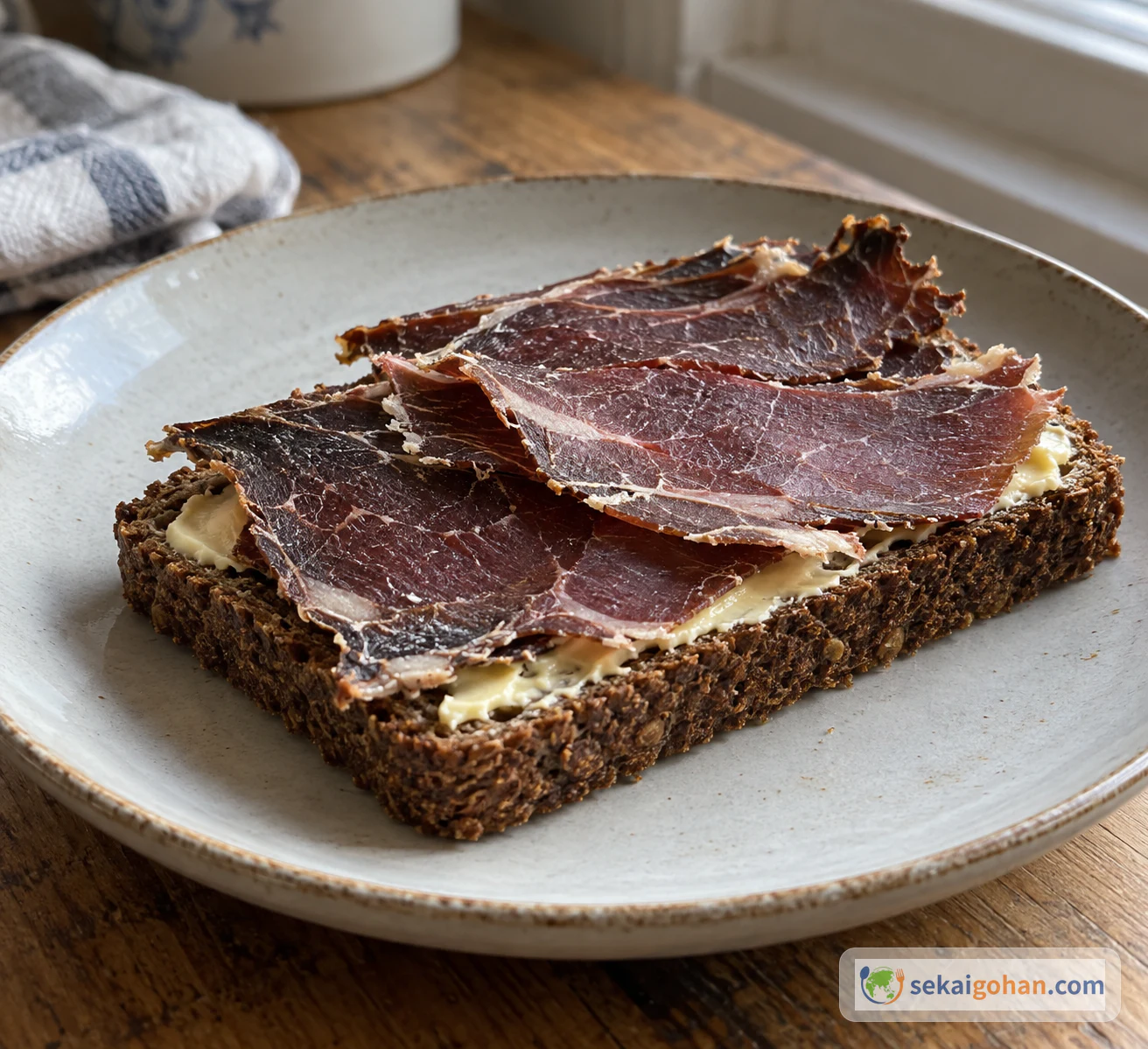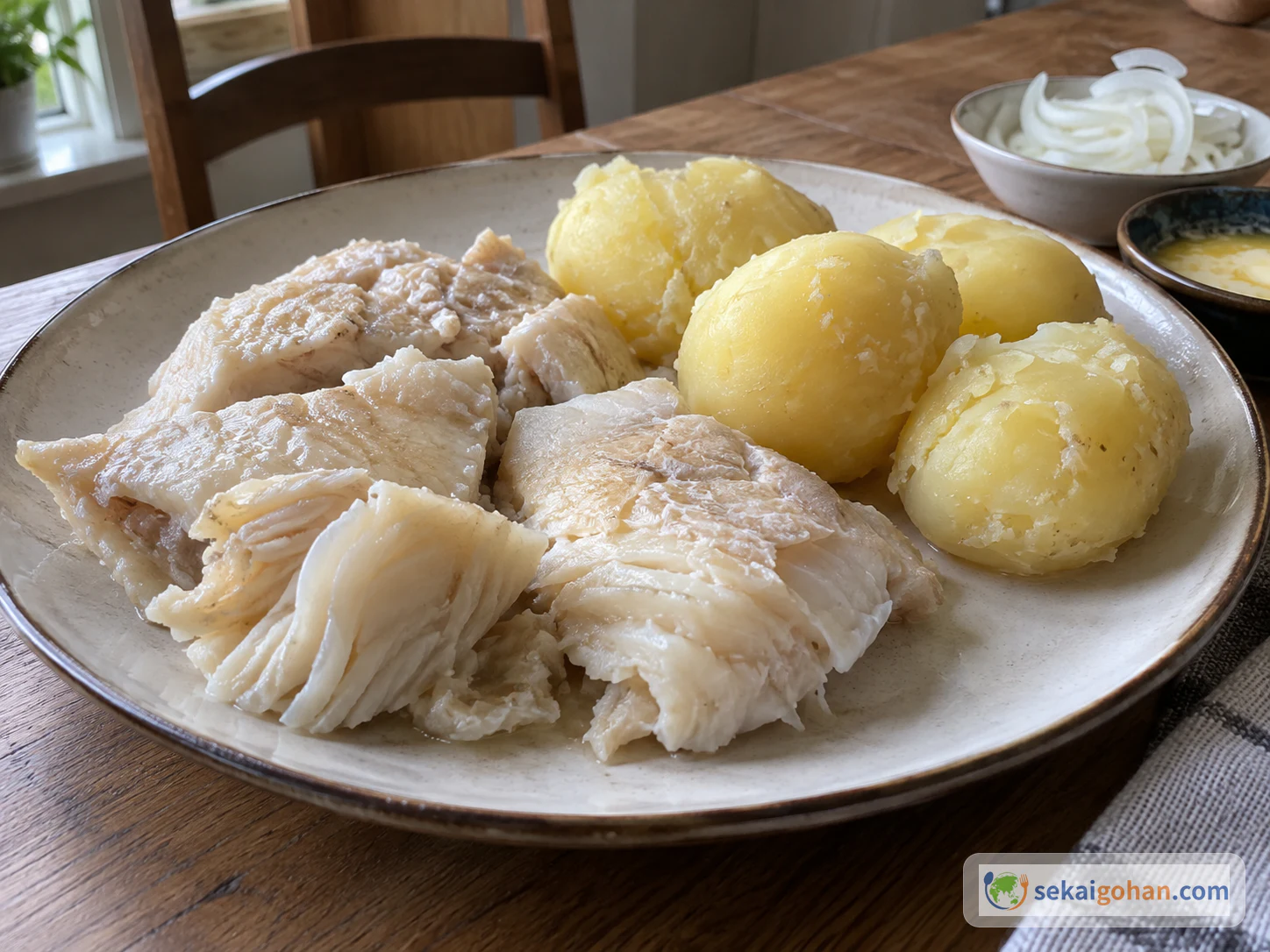
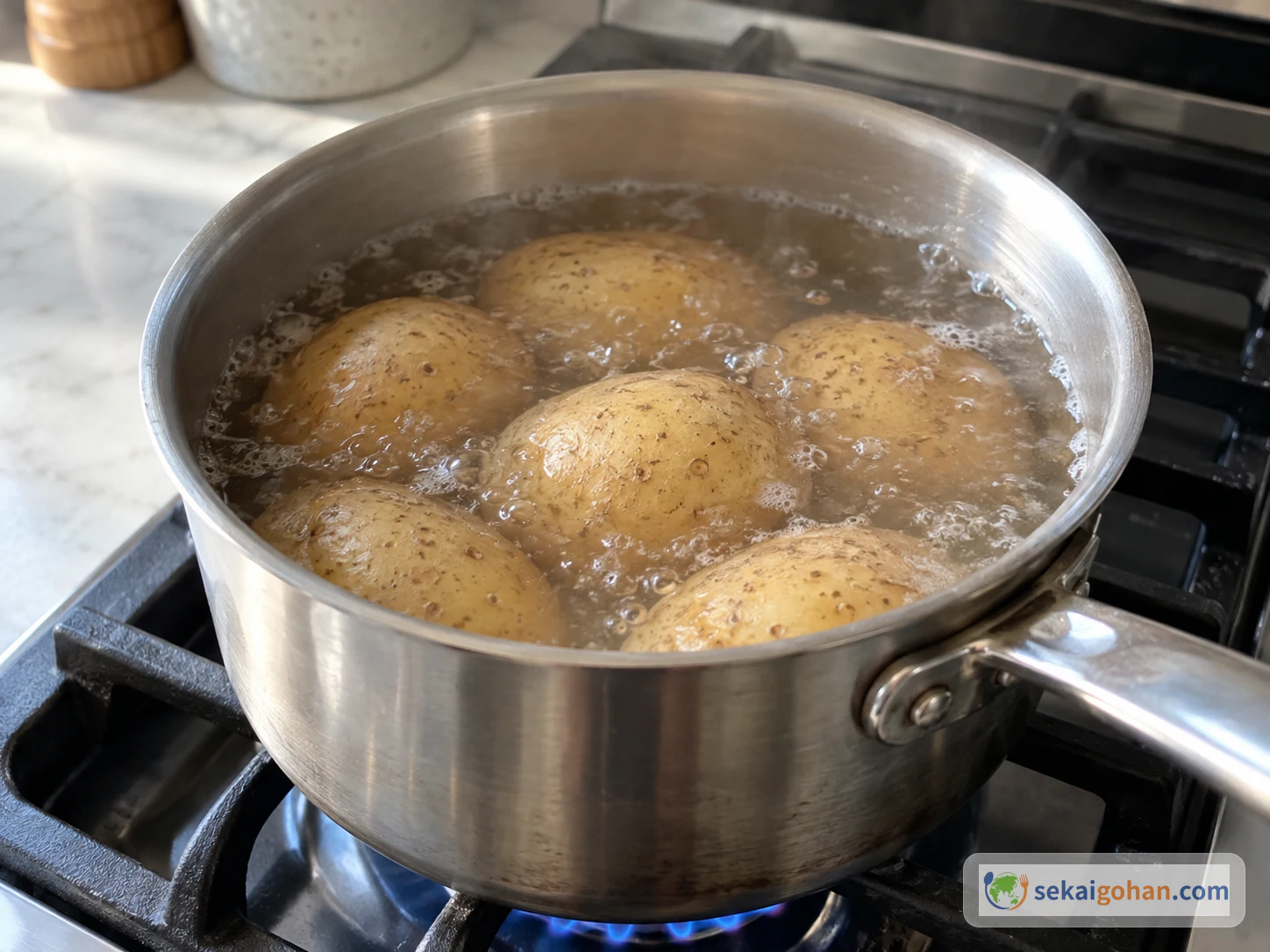
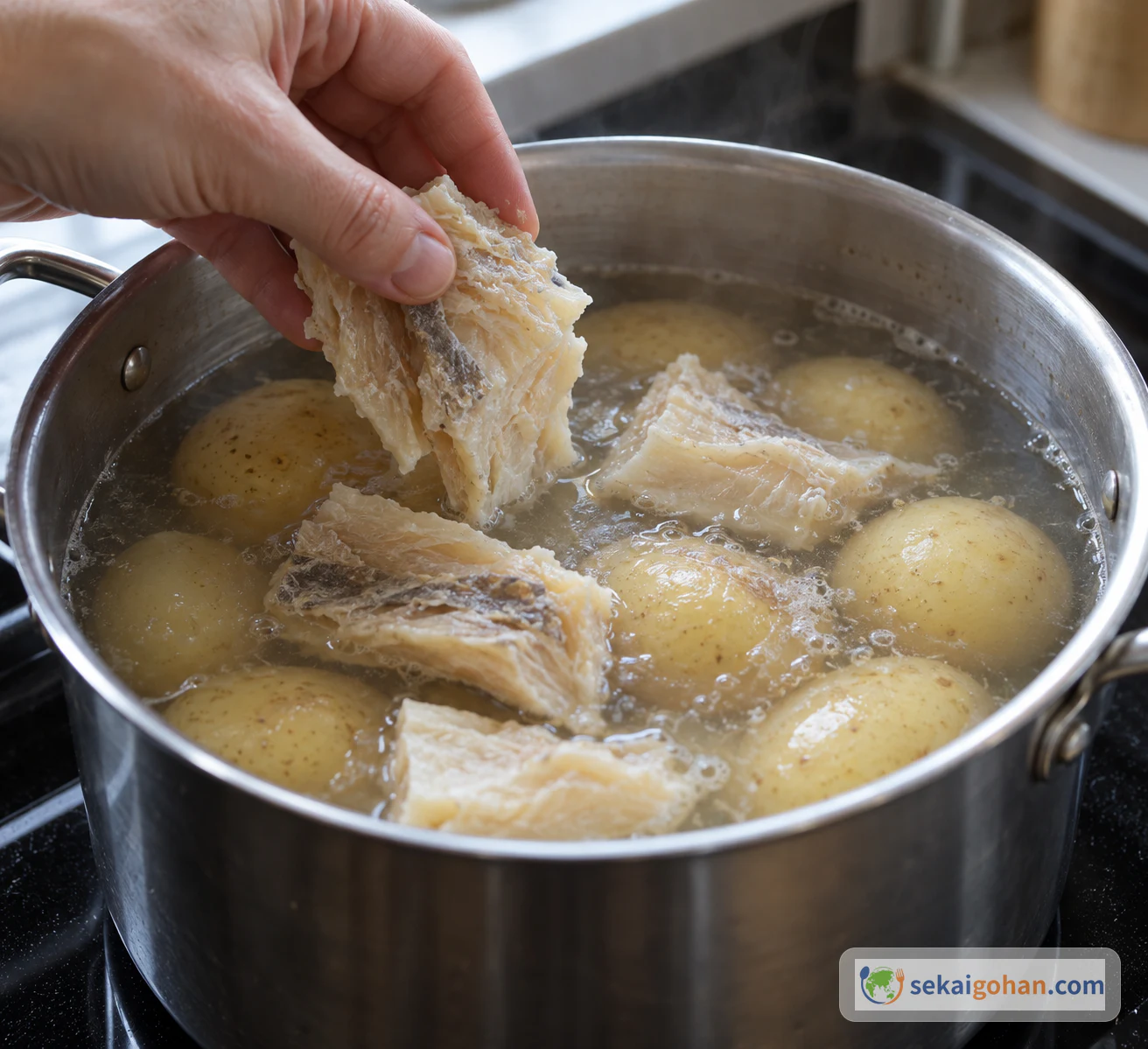
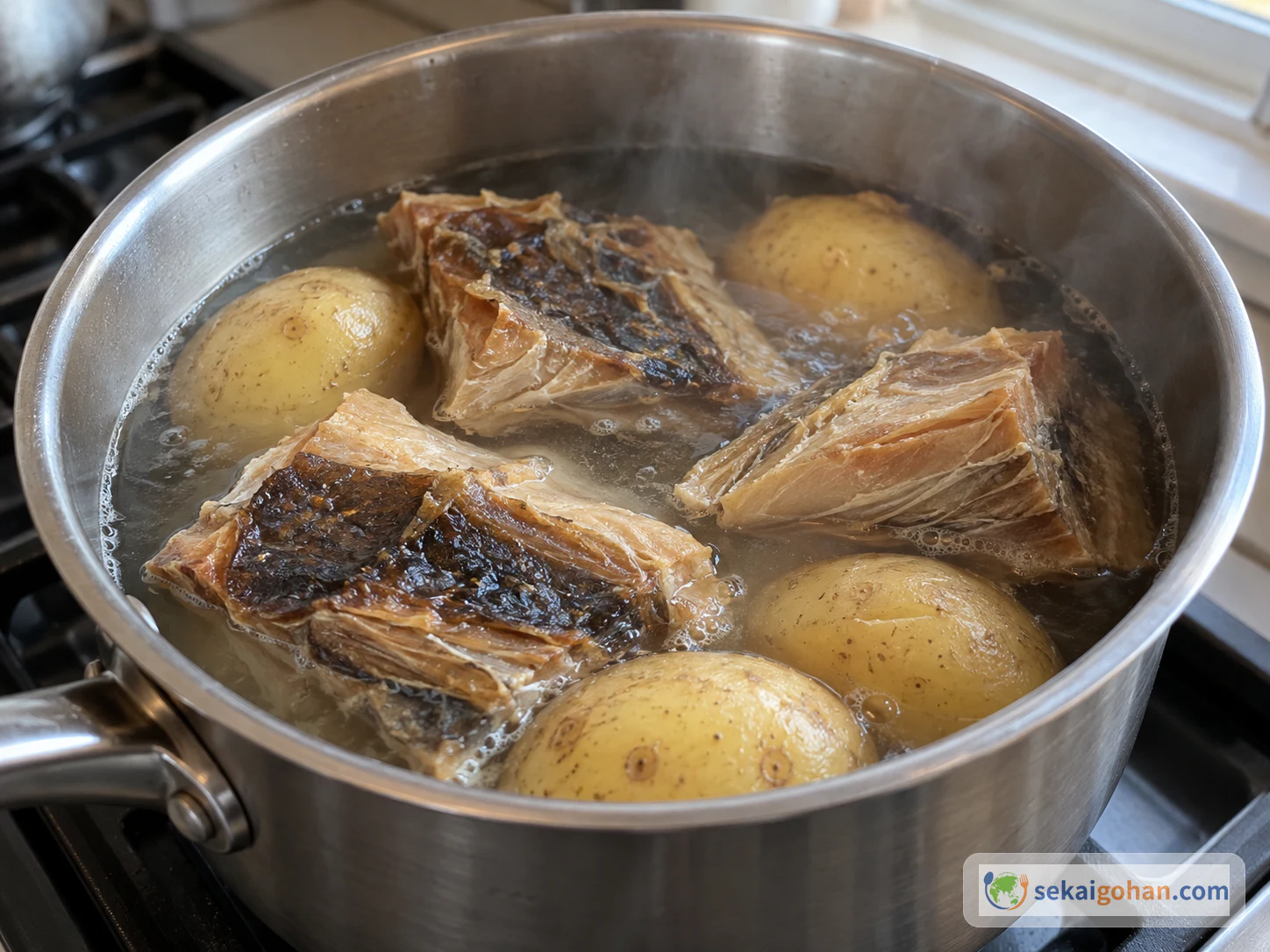
A pot of potatoes boils in salted water. Shortly before they are done, pieces of fermented fish go in, the heat drops to a quiet simmer, and from then on the potatoes take on the flavor of the fish. One Faroese cook remembers liking those potatoes as a child, with garnatálg, more than the adults did. Ræstur fiskur is a home dish of the Faroe Islands: fish, mainly cod or saithe, hung in the wind until it partly dries and ferments. Its aroma is strong, and that strength belongs to the dish rather than being something to cover up. It is also why nothing else quite replaces it.
Ræstur Fiskur in the Faroe Islands
The Ræst Stage
Ræstur fiskur is neither ordinary dried fish nor simply "rotten fish." Ræst is the stage at which fish or meat, exposed to the wind, has partly dried and matured. Turrur is fish that has dried further; the two are different states of the fish, not different names for the same thing. The same fish can be eaten at any point along the path from fresh to fully dry, and wind, temperature, season and household know-how all shape the result.
Hung in the Wind

The traditional method ties fish of similar size together in pairs, called greipa, and hangs them in a hjallur (a ventilated drying shed) or near a boathouse for about three weeks. Each household decides how far to let the fish dry and mature.
Making it safely at home depends on exact control of temperature, salt, humidity and hygiene, and the microbiology of the process is poorly understood. That is why this recipe starts from fermented fish produced for sale.
Everyday Food on the Islands
The Faroe Islands sit in the North Atlantic, where life has long depended on the sea and the weather. Before freezers became common, wind-dried and fermented fish was an important stored source of protein, and Faroese food as a whole is built around preservation methods and local ingredients.
Today ræstur fiskur is everyday weekday home food rather than only a feast dish, and eating it at Christmas is less common than it once was. How dry the fish is, whether the skin stays on, and which fat goes alongside all change from house to house.
How It Is Eaten
The fish is cooked and eaten with warm potatoes. Traditionally it comes with garnatálg, a matured fat made from sheep's mesenteric fat; melted butter with thinly sliced onion is another way to serve it. Iceland's plokkfiskur shares the ingredients but is a different dish, made in a different way. For another Nordic home dish built on local ingredients and preservation, try Norway's fårikål.
Ræstur fiskur is the Faroese name. You will also see it written "raestur fiskur" where the letter æ is not available, and Danish sellers may call it "fermenteret fisk". Searching with the Faroese name makes it easier to find the fish itself.
Ingredients: Fermented Fish, Potatoes and Salt for 4
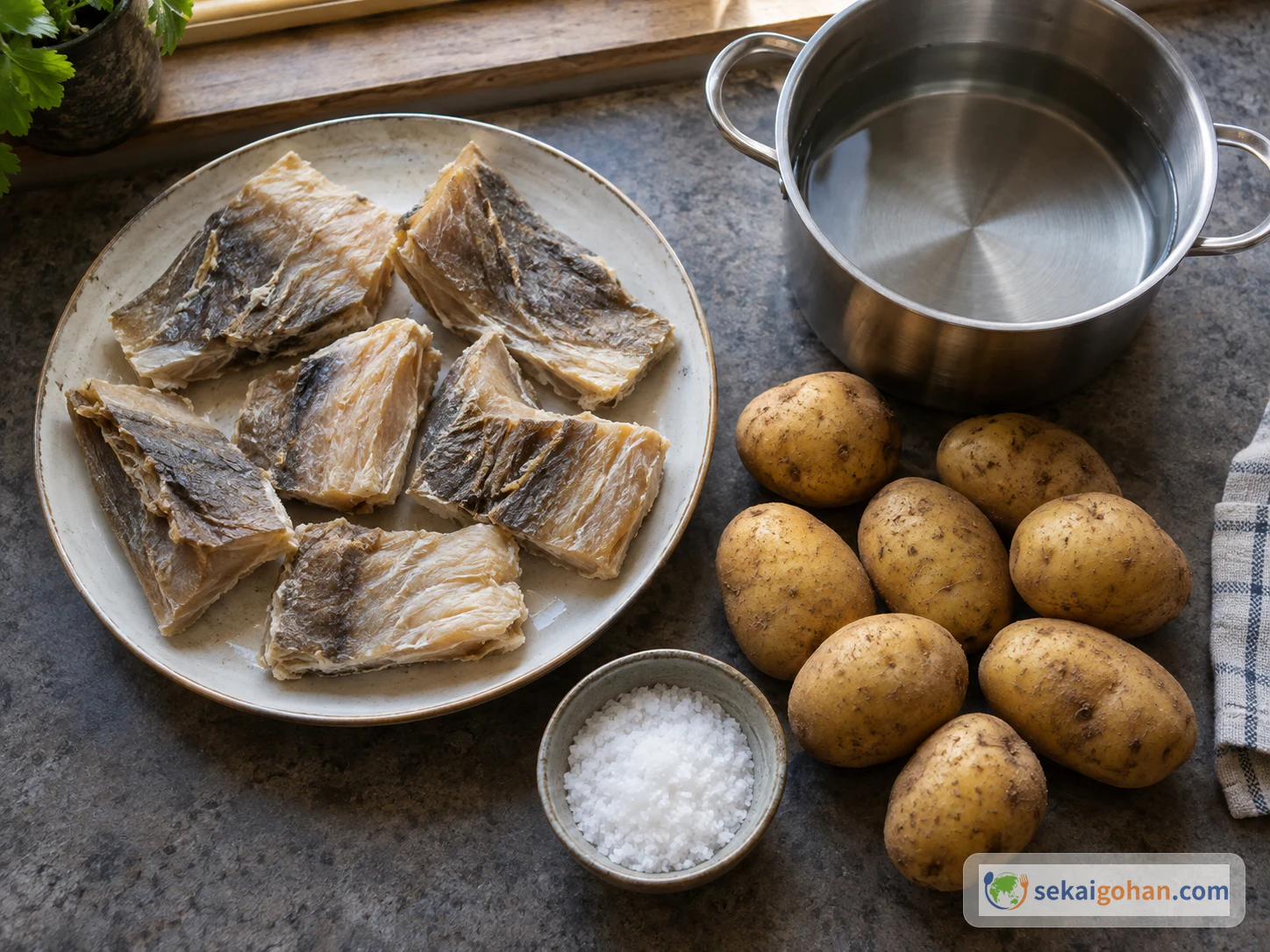
This is a one-pot recipe for 4 servings. Check the label of the fish you buy for its form, salt content and whether it has bones or skin, and follow the label for thawing and handling.
Equipment
- A pot large enough for the potatoes and fish together
- A skewer for testing the potatoes
- A clean board and knife kept for raw fish
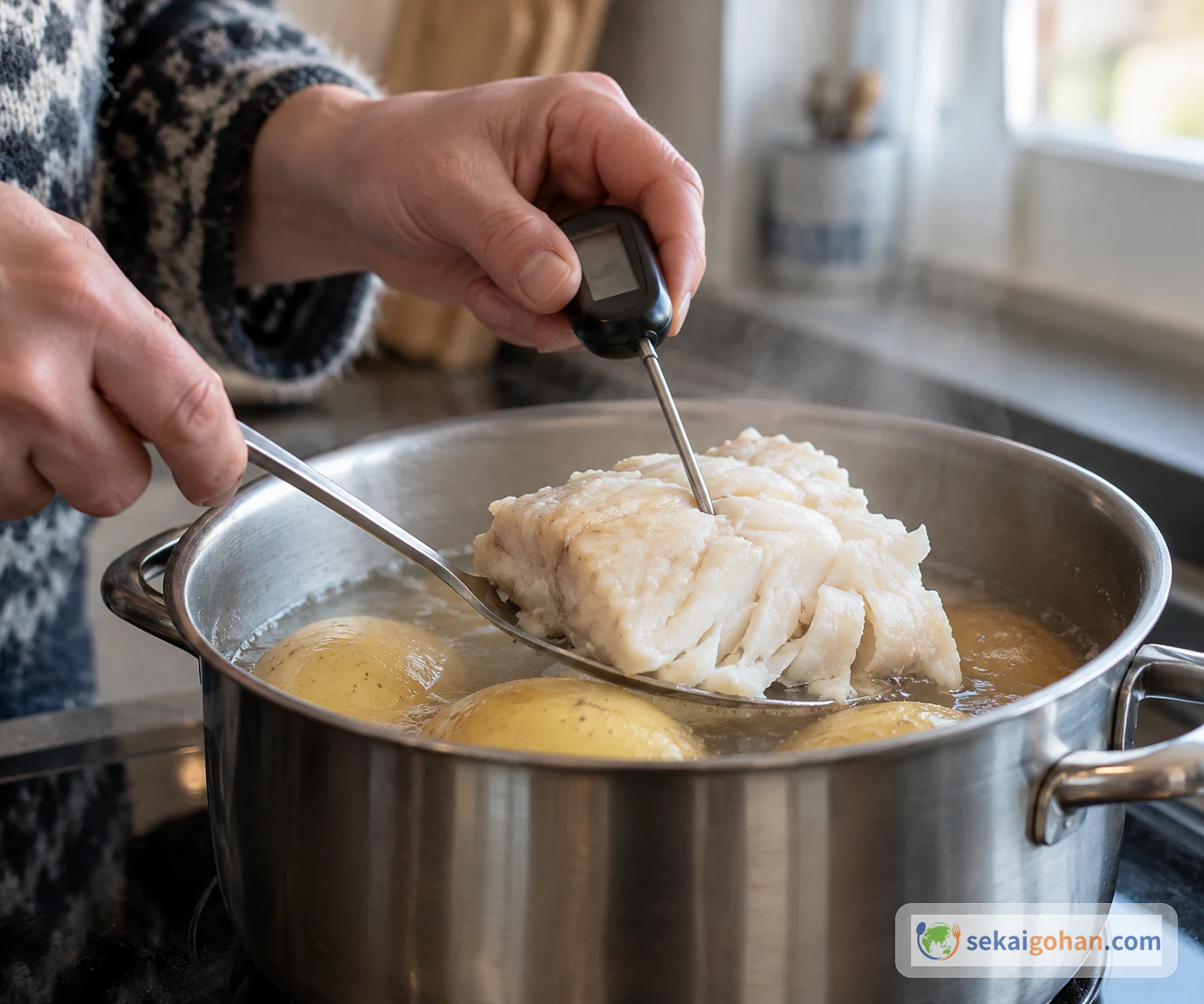
- A food thermometer (optional, for checking the center of the fish)
Choosing the Fish, Fat and Potatoes
There is no everyday substitute for ræstur fiskur. Ordinary salt fish, dried fish and other fermented fish products are different foods, and cooking them this way makes a different dish, one that deserves its own name. Without ræstur fiskur, this dish can't be fully reproduced.
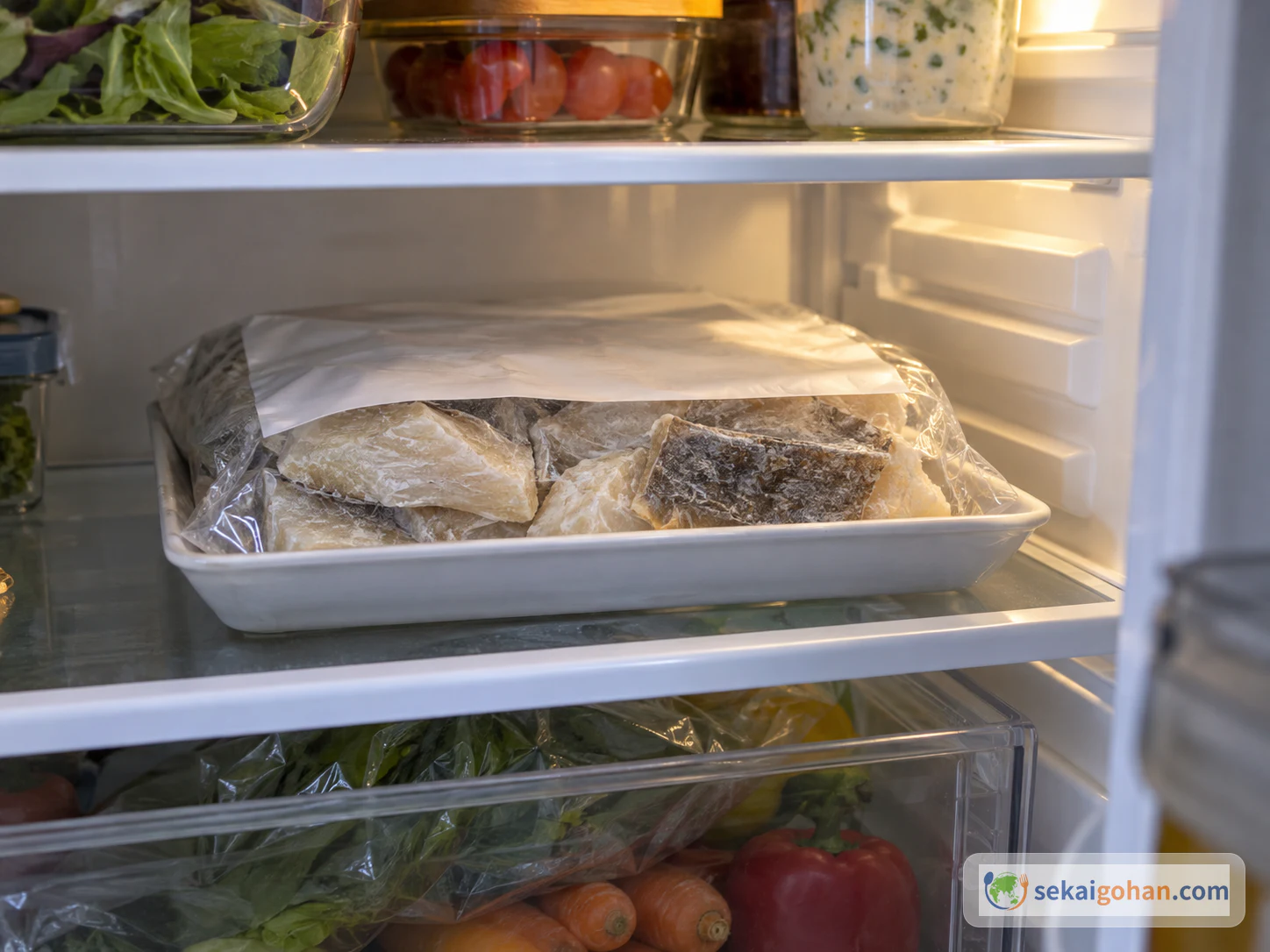
Look for Faroese fermented fish sold frozen, through specialist shops or online sellers, and check the label for species, size and form. Follow the storage and thawing instructions that come with it.
For potatoes, choose a variety that holds its shape when boiled. Garnatálg is traditional but optional, and ordinary lard is a different food. Melted butter with thinly sliced onion works too; whichever fat you choose, it goes beside the plate, not in the pot.
This dish contains fish. Keep boards, knives and hands that touch the raw fish separate from cooked food, and wash them well. Do not eat the fish raw or undercooked. If the fish looks, smells or behaves differently from what its label describes, do not eat it, and ask the seller.
Method: One Pot, Gentle Heat
The potatoes are boiled in your usual way, and the fish goes in near the end. Times here are guides; the fish is done when its center is opaque and flakes, not when a timer rings.
Take the center to 75°C and hold it there for at least 1 minute. Fish is also commonly cooked to 63°C (145°F) at the center, or until the flesh is opaque and separates easily with a fork. The 15 minutes is only a guide, so never rely on the clock alone.
Common Problems with Ræstur Fiskur
| Condition | Likely cause | What to do |
|---|---|---|
| The fish breaks apart | The water boiled too hard, or it was stirred | Lower the heat to the barest simmer and leave the pot alone. Lift pieces out gently |
| The center of the fish is still translucent | Thick pieces, or not enough time | Keep simmering gently and check again. Do not serve it until it is opaque and flakes |
| The potatoes are soft before the fish is done | The fish went in too late | Lift the potatoes out and keep the fish simmering until it is cooked through |
| The dish tastes too salty | The fish itself is salty | Next time, use 1 tsp salt in the water and do not go over 2 tsp |
| The aroma is very strong | A strong aroma is characteristic of the dish | This alone is not a sign that something is wrong. If anything differs from the label, do not eat it and ask the seller |
Serving, Leftovers and Variations
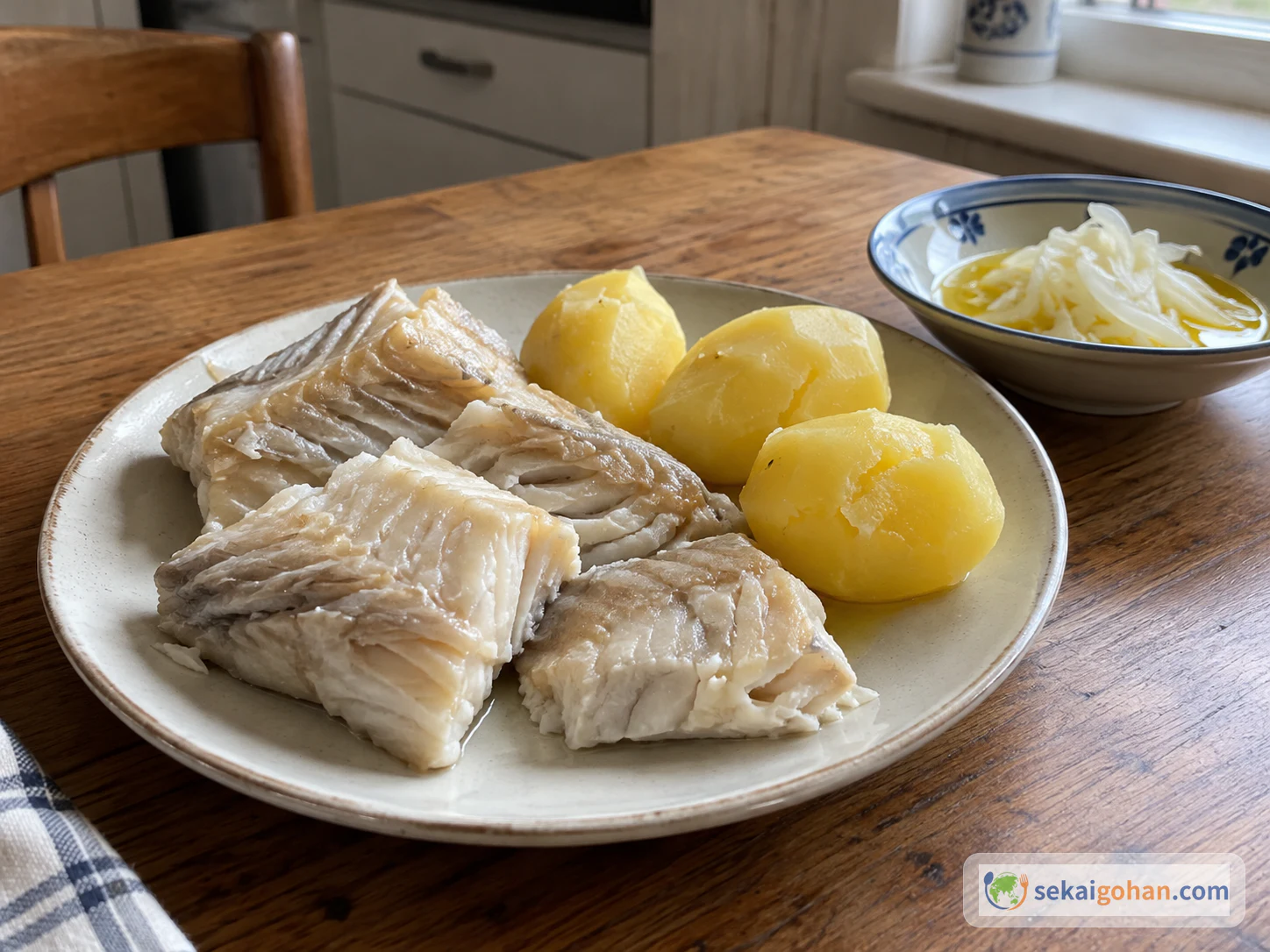
Put the fish and potatoes on the plate while they are warm, with garnatálg on the side if you can find it, or melted butter with thinly sliced onion. The salt of the fish, the depth of its aroma and the rich fat beside it are what the plate is built around. Do try a piece of potato that cooked with the fish.
Move any leftovers promptly into shallow containers and refrigerate them. Reheat thoroughly and eat them soon.
| Variation | What changes | What to keep in mind |
|---|---|---|
| Fish boiled in water in its own pot | Boil the fish in water in its own pot for about 20 minutes | A different method from the one-pot recipe. Do not mix the two timings |
| Skin on or off | Keep or remove the skin as you like | Decide by the fish you bought and who is eating |
| Potatoes boiled separately | Less of the fish's flavor moves into the potatoes | An option for those who find the aroma strong; not the same as the one-pot version |
Frequently Asked Questions
How should I follow product storage instructions?
Keep the frozen fish at −64°F (−18°C). After thawing, keep it at 41°F (+5°C) or below and do not refreeze it. Follow the label on the fish you buy.
Is the smell strong?
Yes, a strong aroma is a recognized feature of the dish. If it is more than you want, serve the fish with melted butter and onion, or boil the potatoes separately.