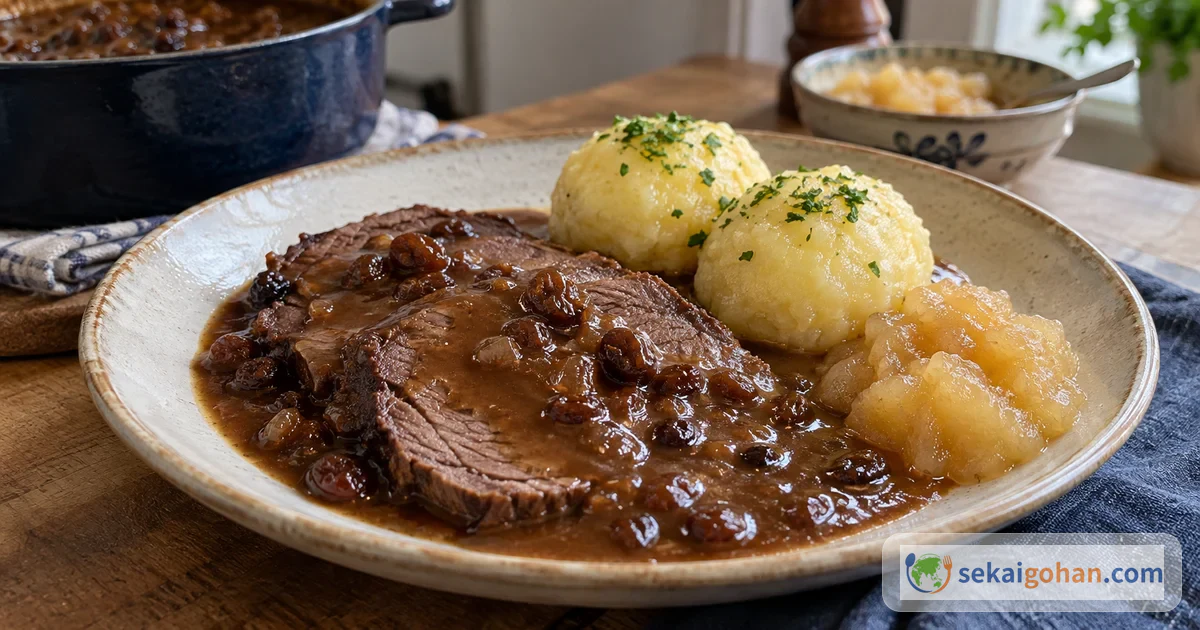
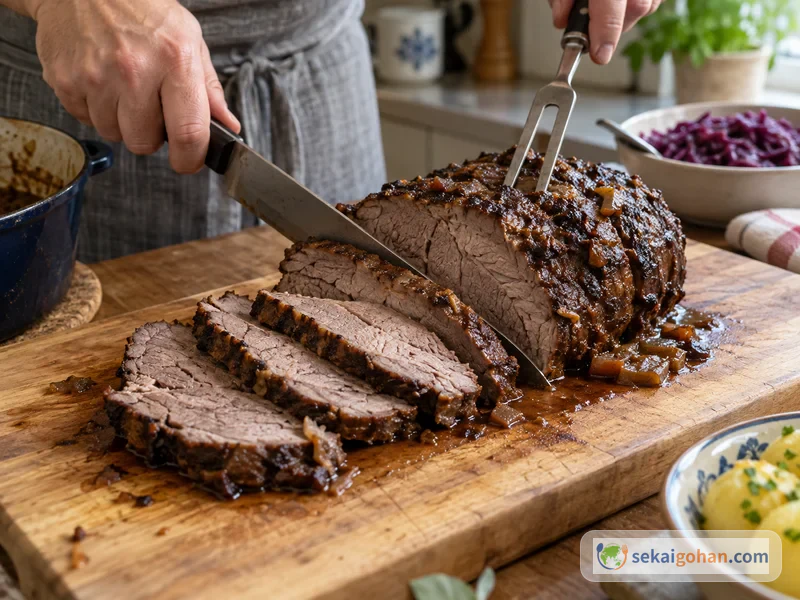
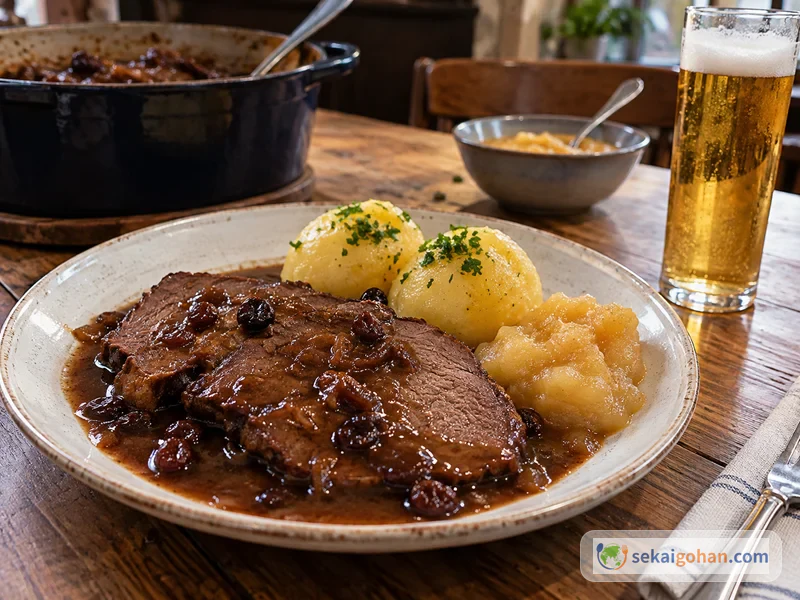
In Cologne's old town, a short walk from the cathedral, brewhouses (Brauhäuser) line the streets and pour Kölsch into slender glasses. The plate that keeps arriving at their wooden tables is thinly sliced beef under a dark brown sauce. This is Sauerbraten, or Soorbrode in the Cologne dialect. The name means "sour roast," and the meat is left in a vinegar marinade for days before it ever sees the pot. In the Rhineland, the sauce comes out sour and sweet at the same time.
Rhineland Sauerbraten and where it comes from
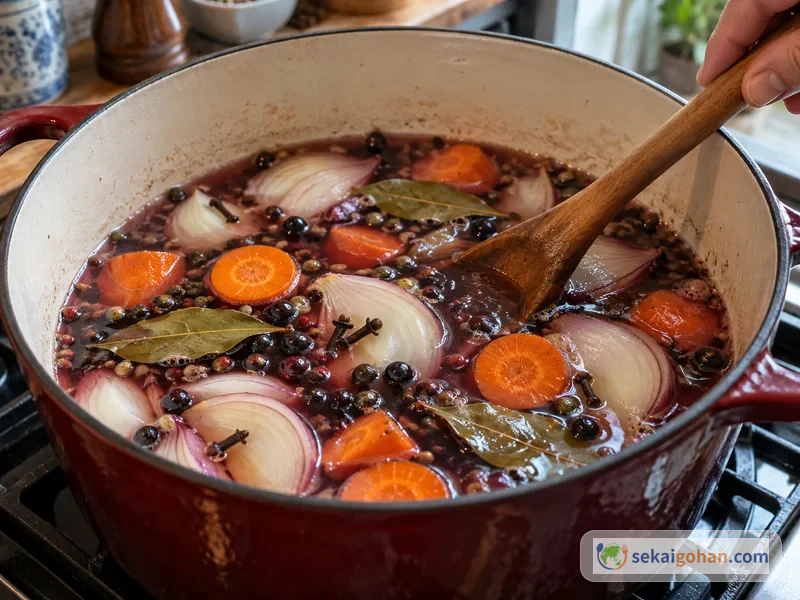
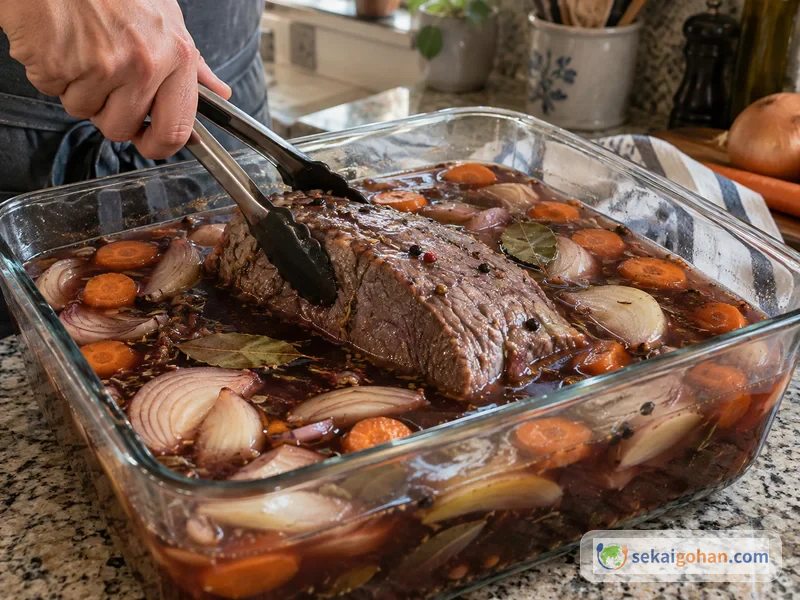
Sauerbraten is made all over Germany and is often called the country's national dish. Raw meat goes into a marinade of vinegar or wine with pepper, juniper berries, cloves and other spices, and is then braised. The cuts are tough ones, because that is the whole point: a long soak, tenderizing tough meat with acid.
The sweet Rhineland style
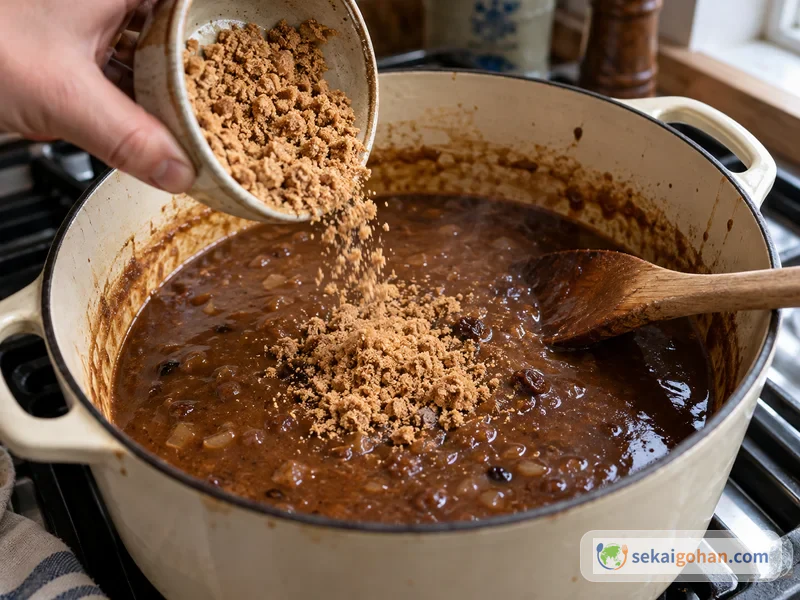
The finish changes from region to region, and the Rhineland version is clearly sweet. Cooks add raisins and a syrup boiled down from apples or sugar beets (Apfelkraut, Rübenkraut), then crush hard spice cookies from Aachen called Printen and melt them into the sauce to thicken it. A sauce where sour and sweet arrive at the same time is what sets Rhineland Sauerbraten apart.
Germany even has ingredients named Sauerbraten-Printen (Printen for Sauerbraten) and Saucenlebkuchen (gingerbread for sauces). Melting a sweet into a stew sounds odd, but a hard baked treat with honey and spices thickens the sauce and adds sweet aroma at once.
Horse meat and beef
Horse meat was traditionally part of Rhineland Sauerbraten, and some Rhineland restaurants still use it. Cologne brewhouses usually serve beef, though, since many guests avoid horse meat, and beef is the mainstream in homes and restaurants today.
Origin stories
One story says Charlemagne devised the dish to use up leftover roast; another says Julius Caesar had wine-marinated beef sent to Cologne. Most of these tales lack supporting evidence. It makes more sense to see Sauerbraten as a kitchen method from before refrigerators, when vinegar both kept the meat and made tough cuts easier to eat.
Ingredients (serves 4)
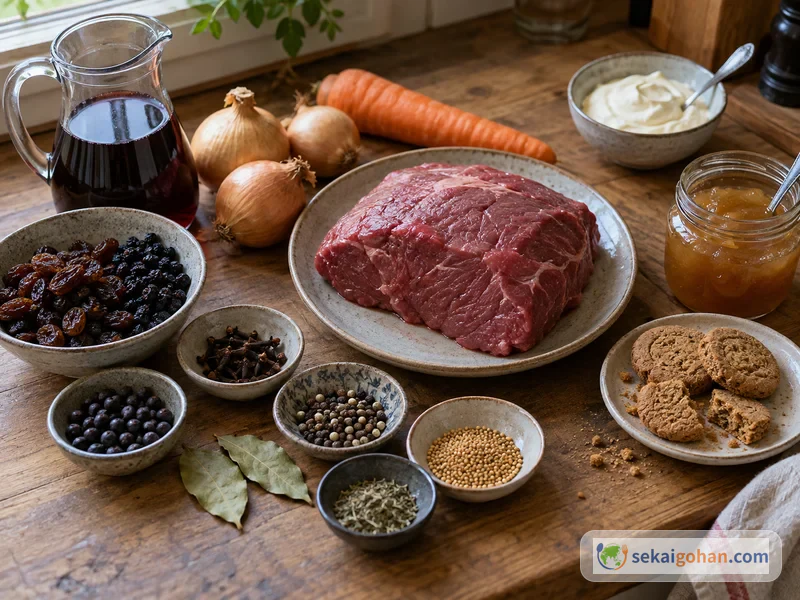
This is a home version for 2.25 lb (1 kg) of beef, with some ingredients swapped so they are easier to find.
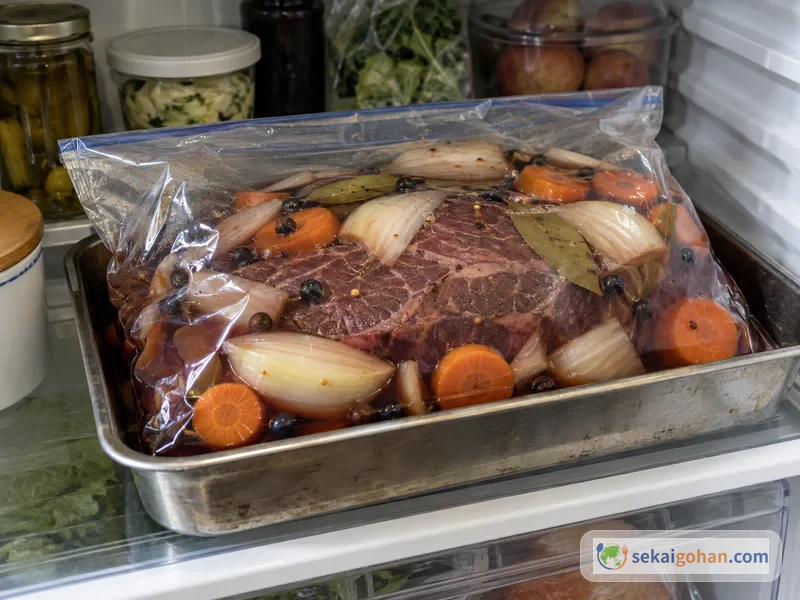
The marinade has a lot of vinegar, so do the soaking in an acid-resistant container, such as glass, enamel, or a heavy storage bag. Avoid aluminum or iron containers. Juniper berries are the conifer berries used to flavor gin, and they bring a resinous, pine-like aroma to the marinade. Printen are hard to find outside Germany, so use a firm cookie spiced with cinnamon and ginger. A sweet butter cookie lacks both the spice aroma and the thickening.
Most of the spices (cloves, juniper berries, peppercorns) are used whole, so the liquid does not turn cloudy after straining. If you substitute powders you have at home, halve the amount and use a fine-mesh sieve when you strain the marinade.
Some gingerbread cookies and Lebkuchen contain wheat, egg, dairy, and nuts. Sour cream is a dairy product. If you have an allergy, check the ingredient label before choosing.
Choosing beef, spices and thickeners for Sauerbraten
Pick a lean piece suited to braising, such as shoulder or round; rump is often used too. Fatty cuts tend to make the sauce heavy over the long braise.
Juniper berries are worth tracking down. You can make the dish without them, but their conifer-like aroma disappears and the flavor leans toward cloves and pepper. Even a small amount brings the taste much closer to the real thing.
If you can't find Printen, you have options. Across Germany there is no single thickener: gingerbread, Lebkuchen, ginger snaps, flour, sour cream, brown sugar and roux all turn up. Some recipes finish the sauce with pumpernickel (dark rye bread) and raisins in place of Printen.
One marinade is made with 1 liter of red wine and red wine vinegar, with allspice added. Another is based mostly on water and red wine vinegar. Even within the same Rhineland style, the base of the marinade differs from house to house.
How to make sauerbraten
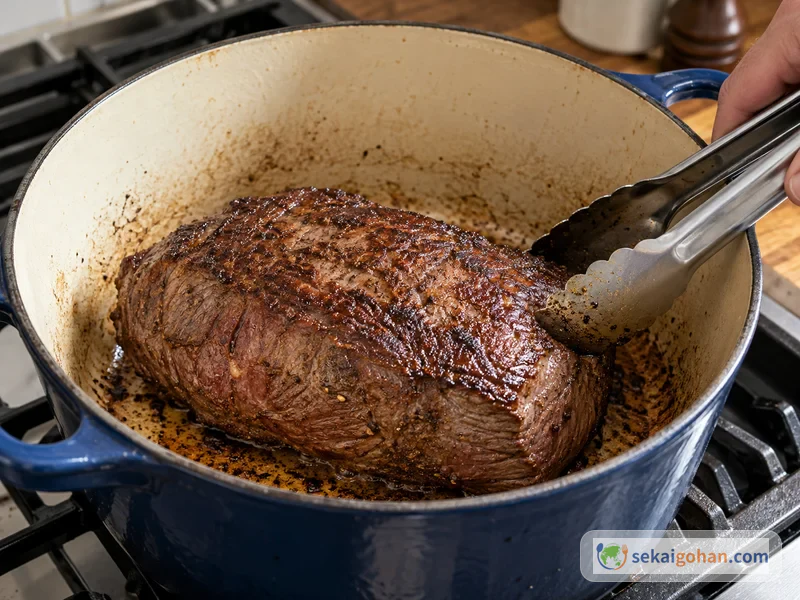
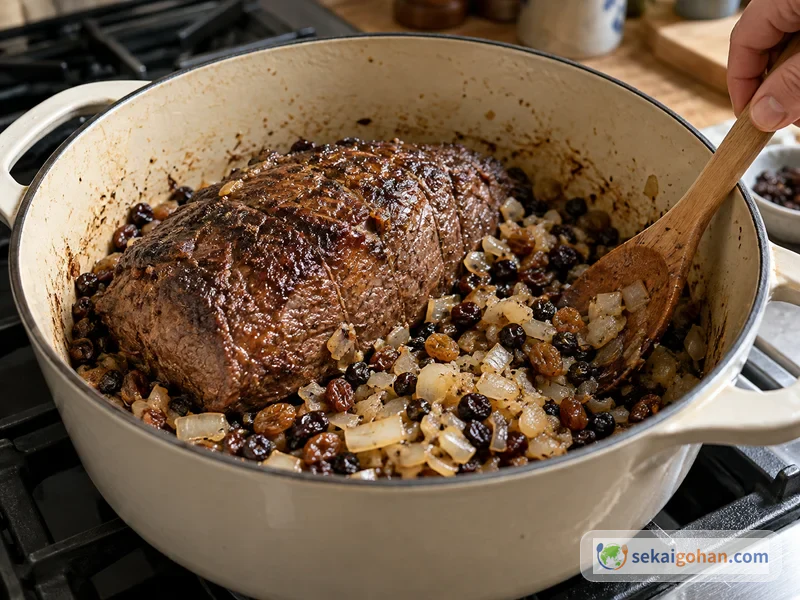
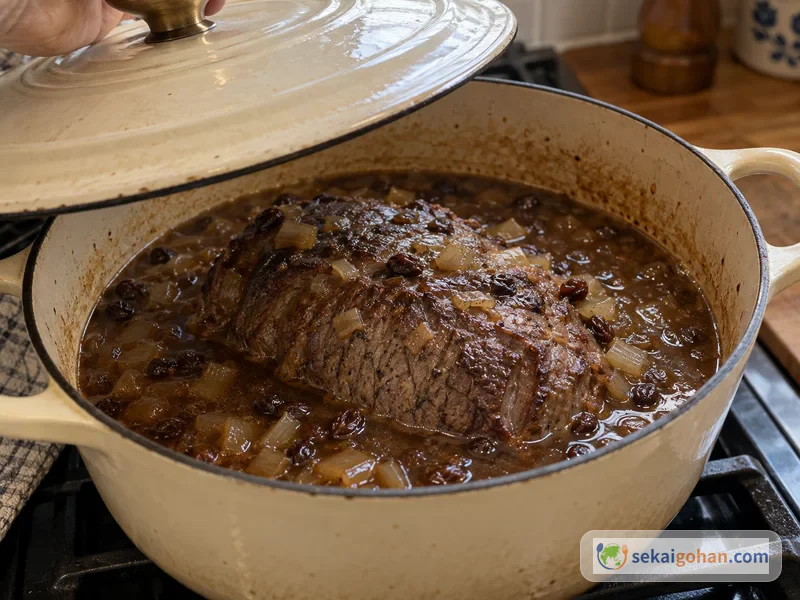
Marinating takes 3 days (72 hours), so work backward from the day you plan to eat. Prep takes about 20 minutes, cooling the marinade about 1 hour, marinating 72 hours, and cooking about 3 hours 10 minutes (5 minutes to boil the marinade, 10 to brown, 15 to simmer the raisins and onions, 2 hours 30 minutes to braise, 10 to finish the sauce). In total, it is about 76 hours 30 minutes.
Always marinate raw meat in the refrigerator, not at room temperature. Boil any marinade that has touched raw meat or poultry before reusing it. That is why the marinade is brought to a full boil in step 5.
If you find the sourness too strong, add apple jam 1 tsp at a time. If it is too sweet, set aside some of the strained marinade, boil it, and add it 1 tbsp at a time. Always taste the sauce at the end and decide the balance of sweet and sour.
Meat is much easier to slice after cooling overnight. It is also a good method to do everything through step 5 the day before and chill the meat in the liquid, then slice it thin on the day and rewarm it in the sauce.
Serving Sauerbraten the Cologne way
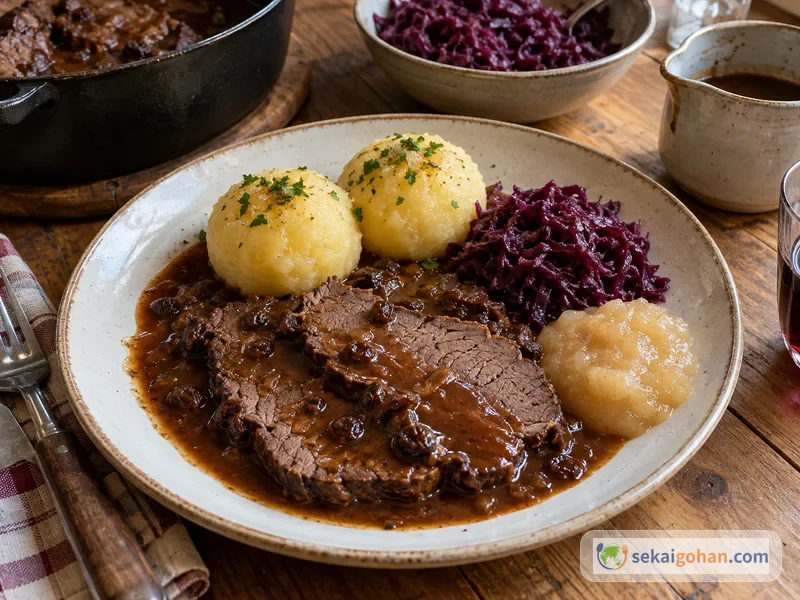
In the Rhineland, Sauerbraten comes with potato dumplings (Kartoffelklöße) or Reibekuchen, grated-potato pancakes, and Apfelmus (applesauce) is always on the side. Boiled potatoes sometimes appear too, and braised red cabbage (Rotkohl) suits it well.
At home, mashed or boiled potatoes plus store-bought applesauce or stewed apples make a convincing plate. Let the potatoes soak up the sweet-and-sour sauce as you eat.
Frequently asked questions
Can I marinate for less than 3 days?
Some recipes marinate for 2 days in the refrigerator, while Cologne recipes call for at least 3. The shorter the time, the more restrained the sourness and the tenderness.
Can I eat it with children?
The recipe contains no alcohol, but the vinegar's sourness is quite pronounced. A little more apple jam in the sauce finish and a spoonful of sour cream will round it out. Watch for allergens in the cookies and sour cream.