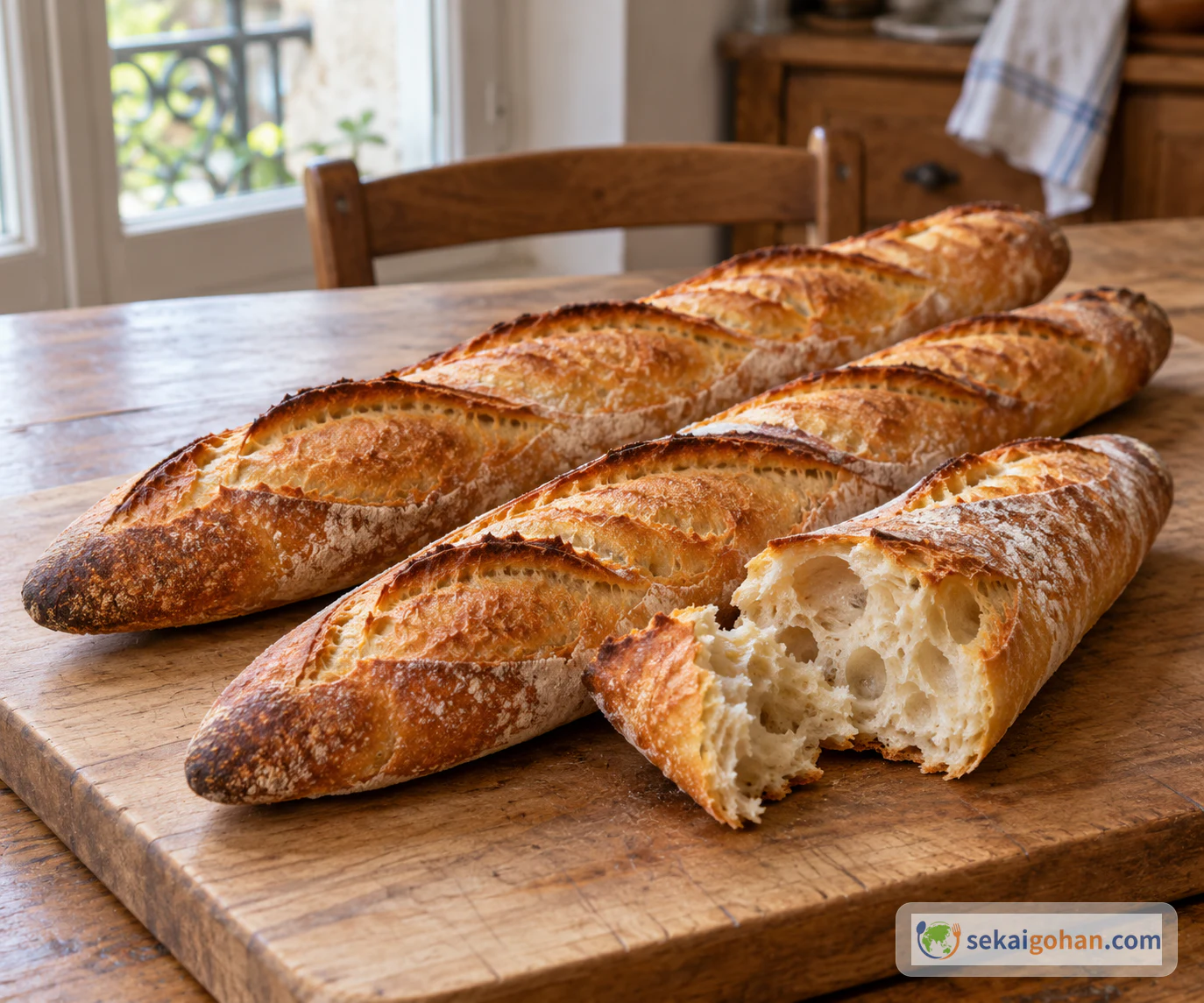
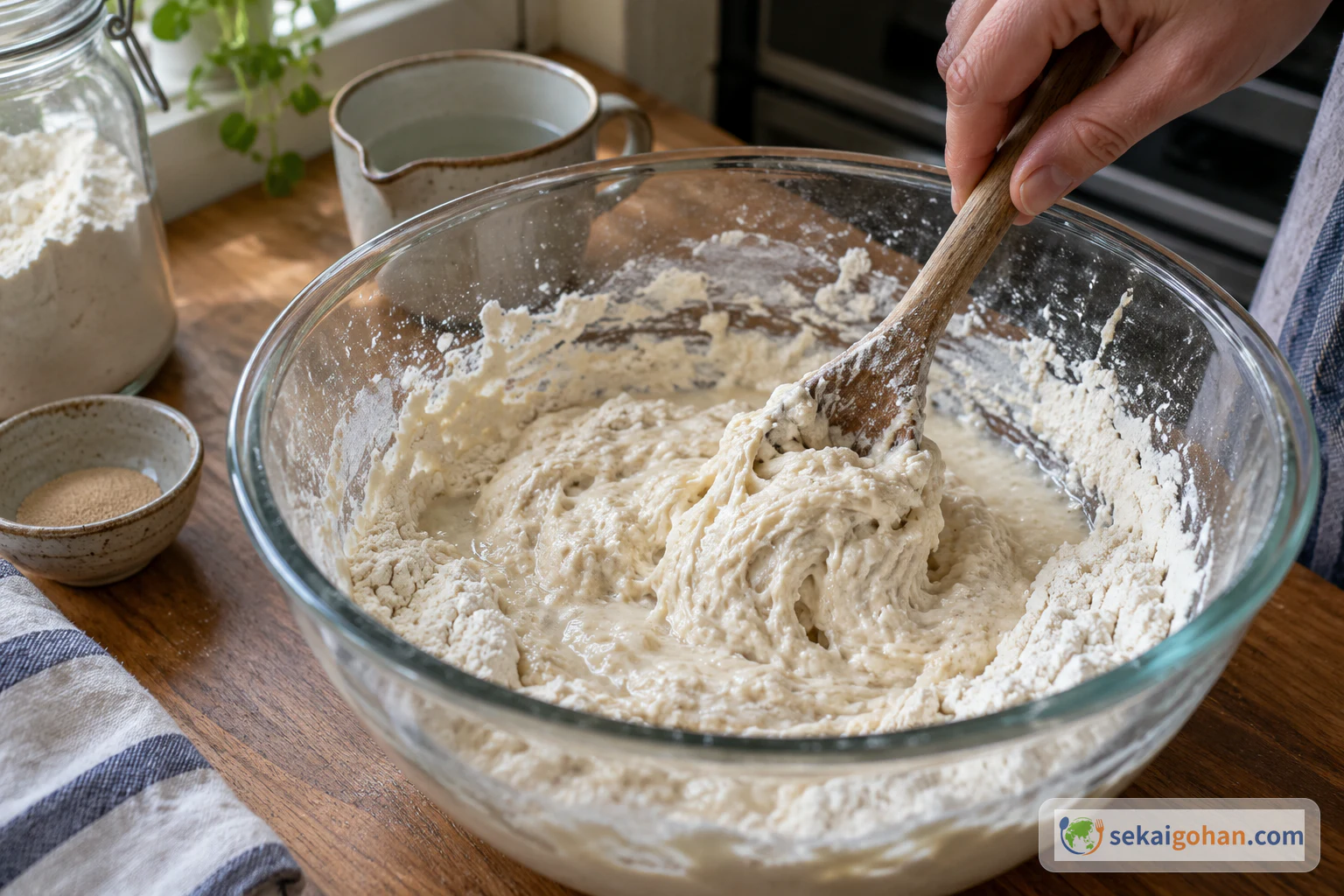
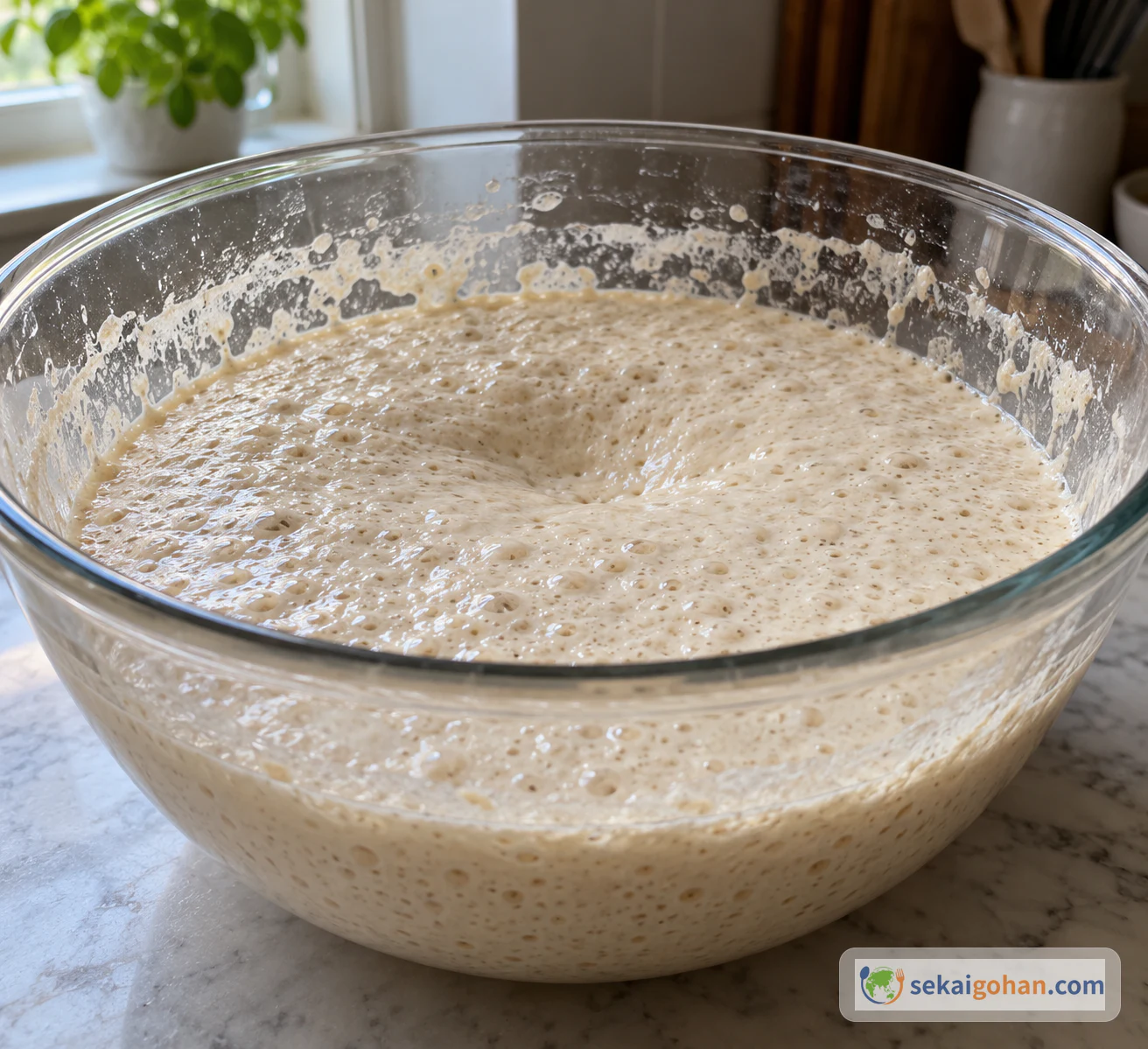
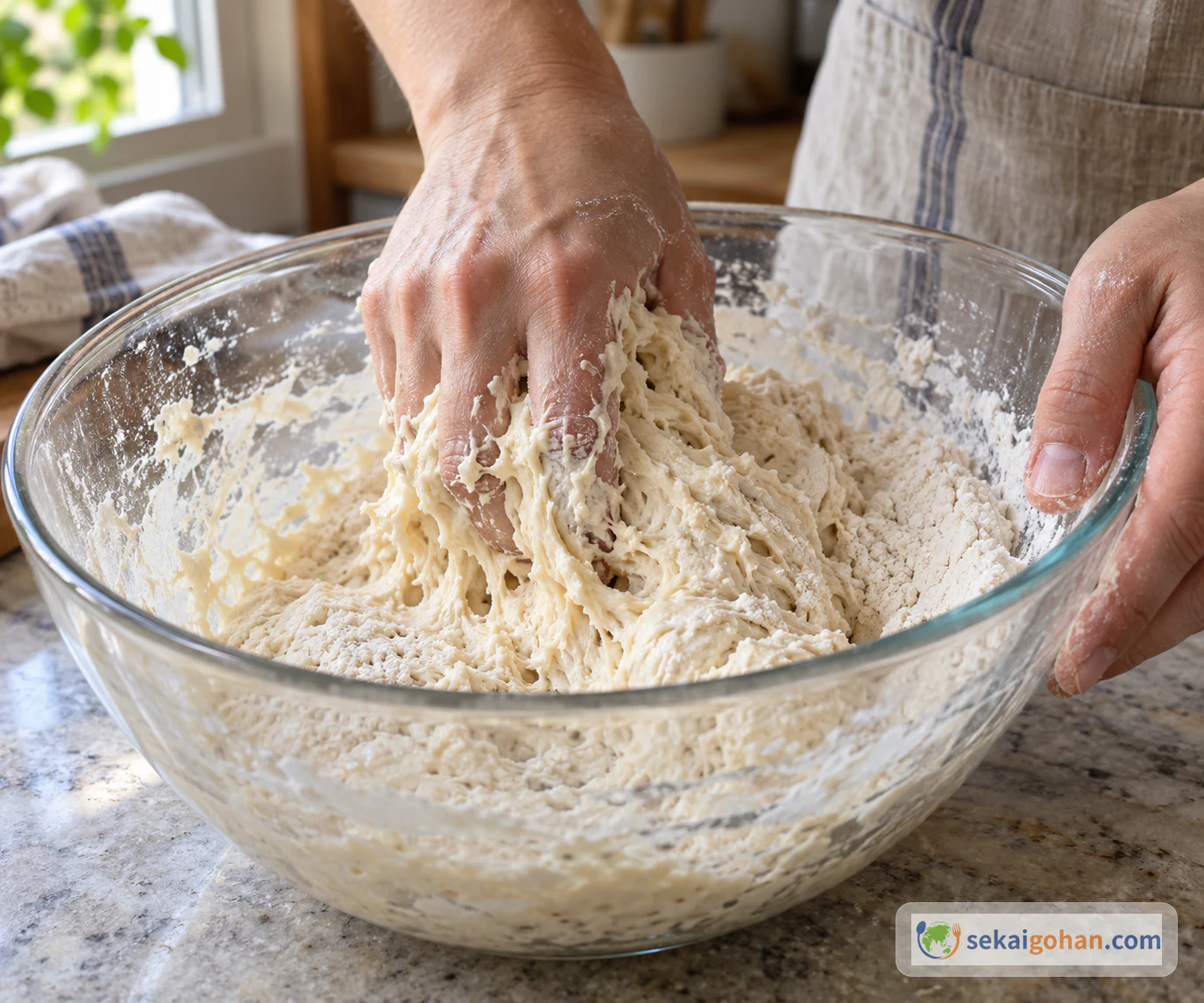
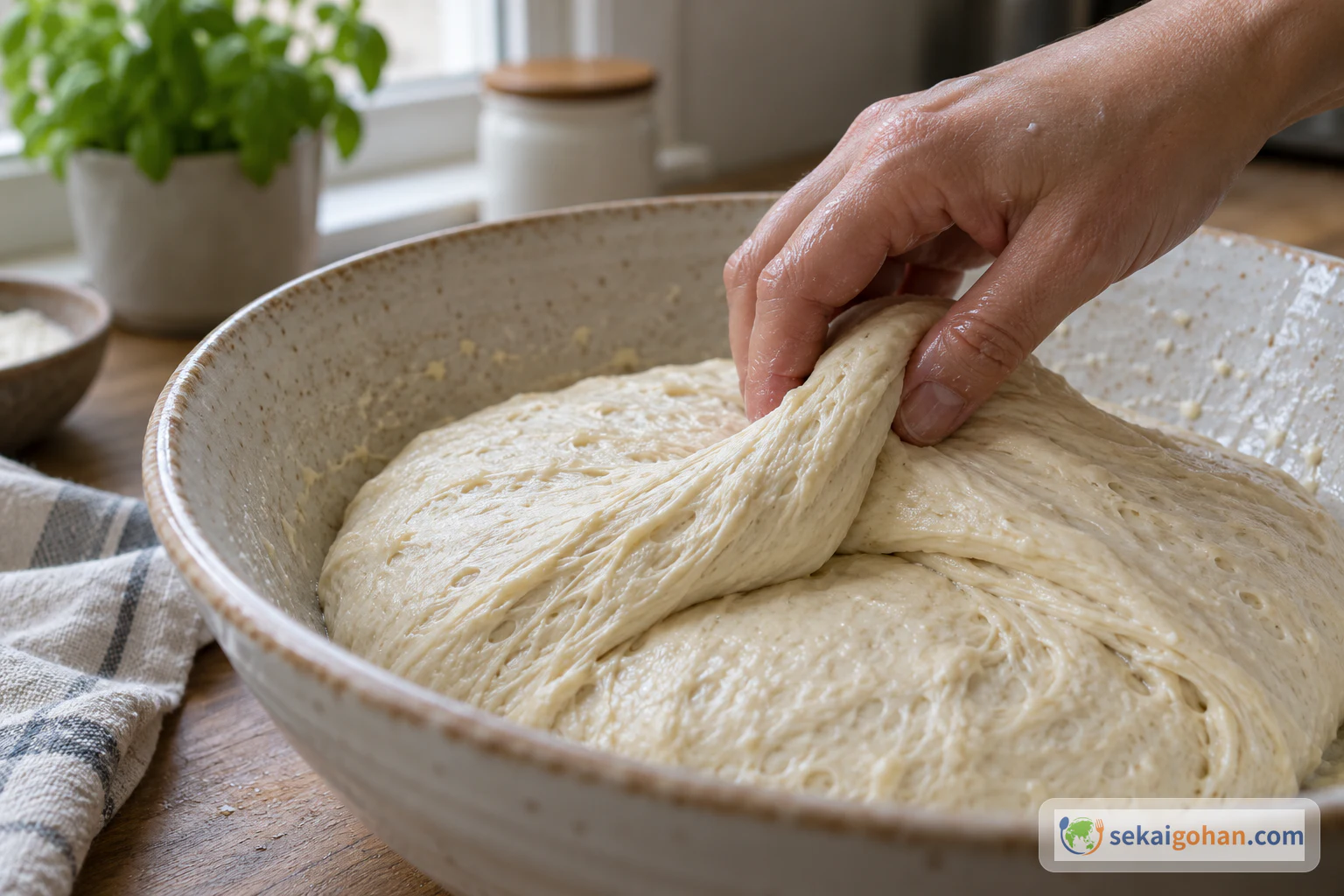
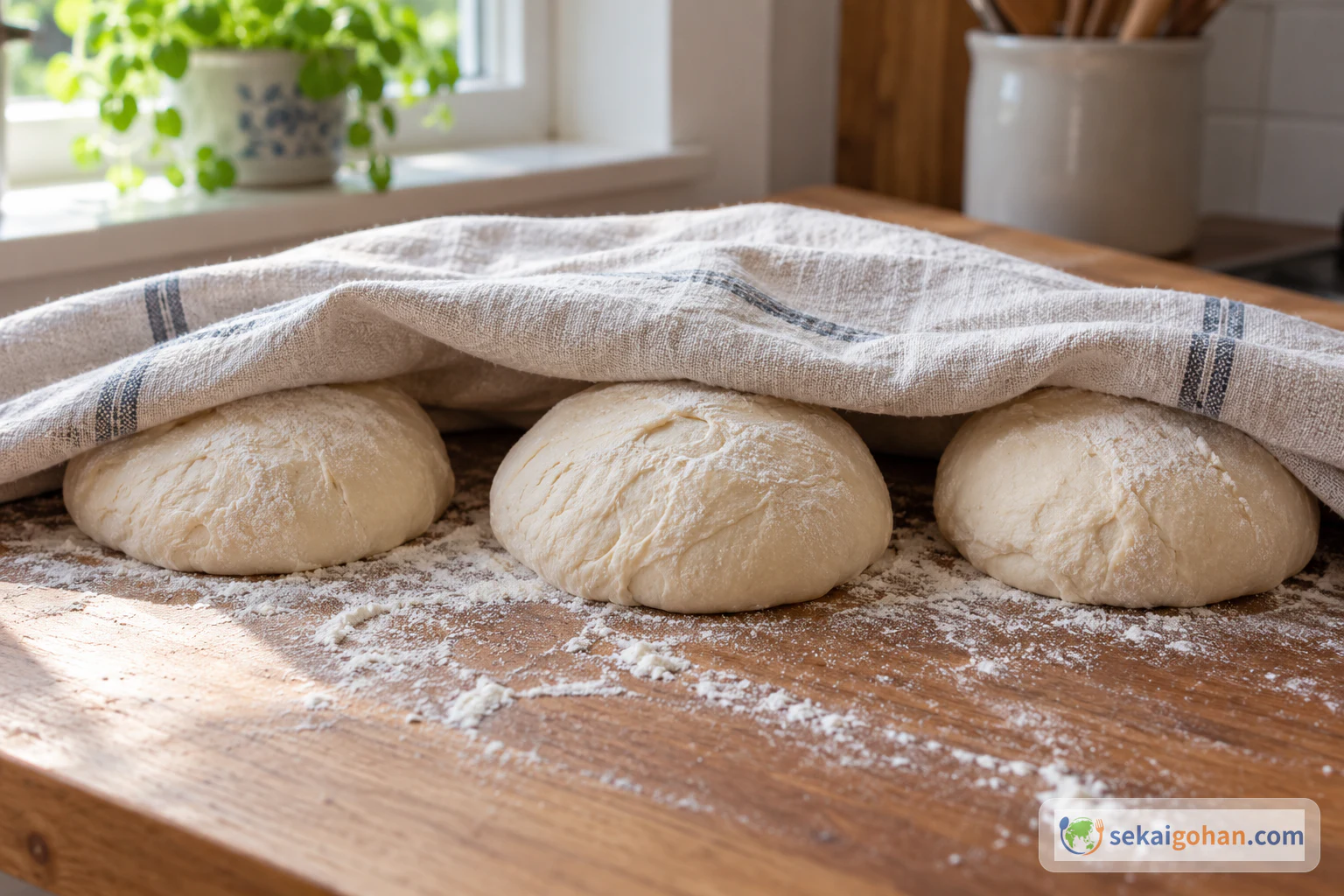
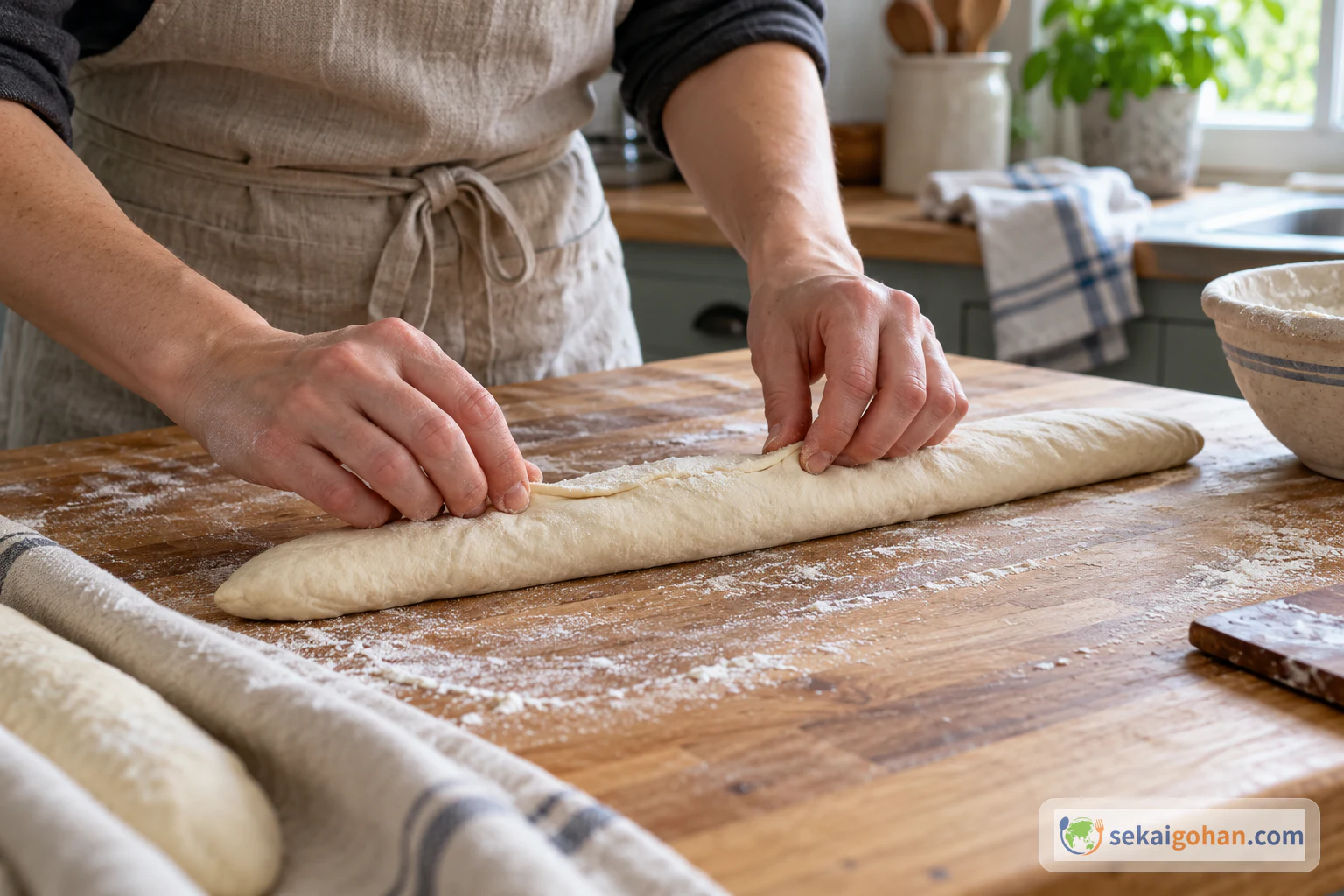
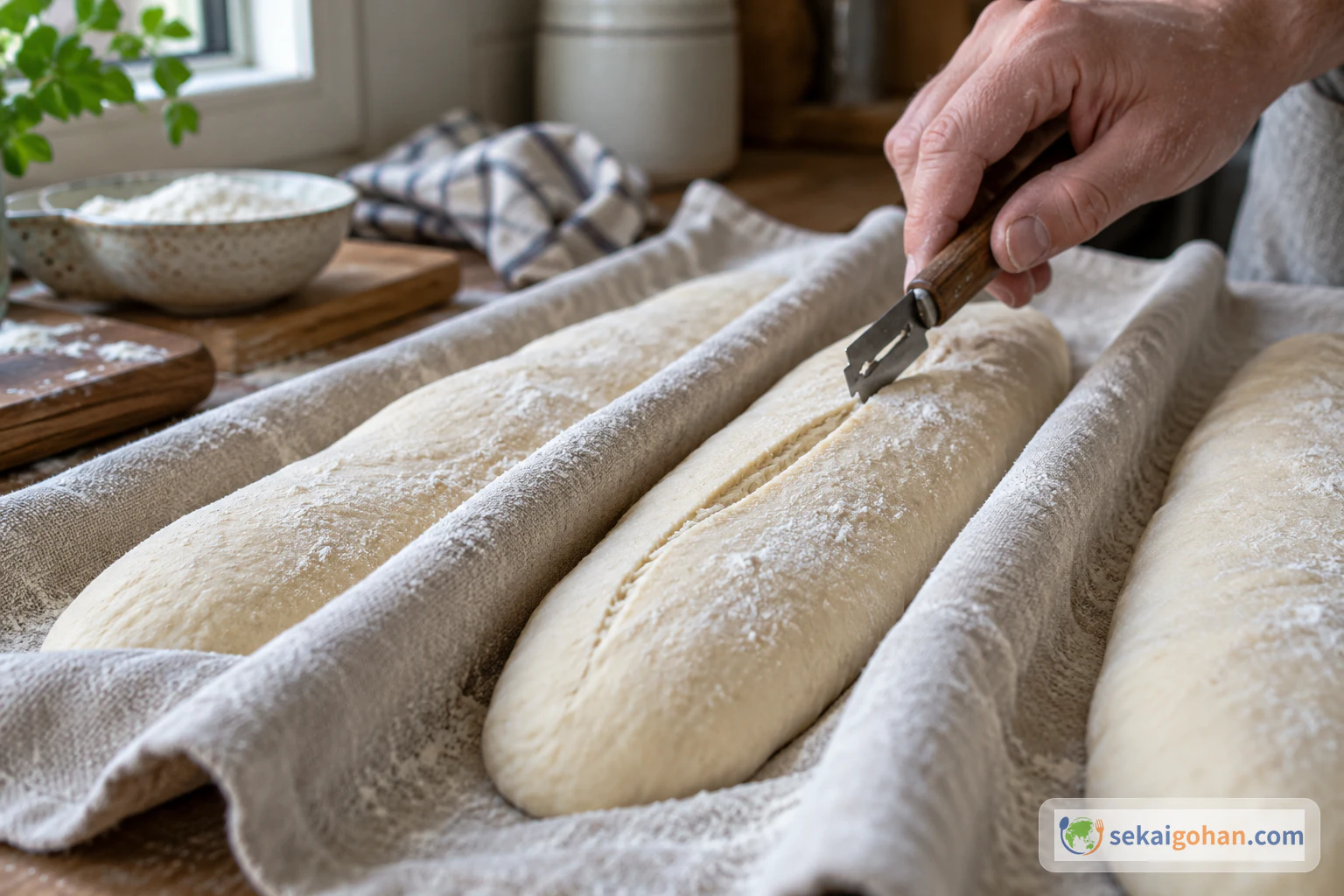
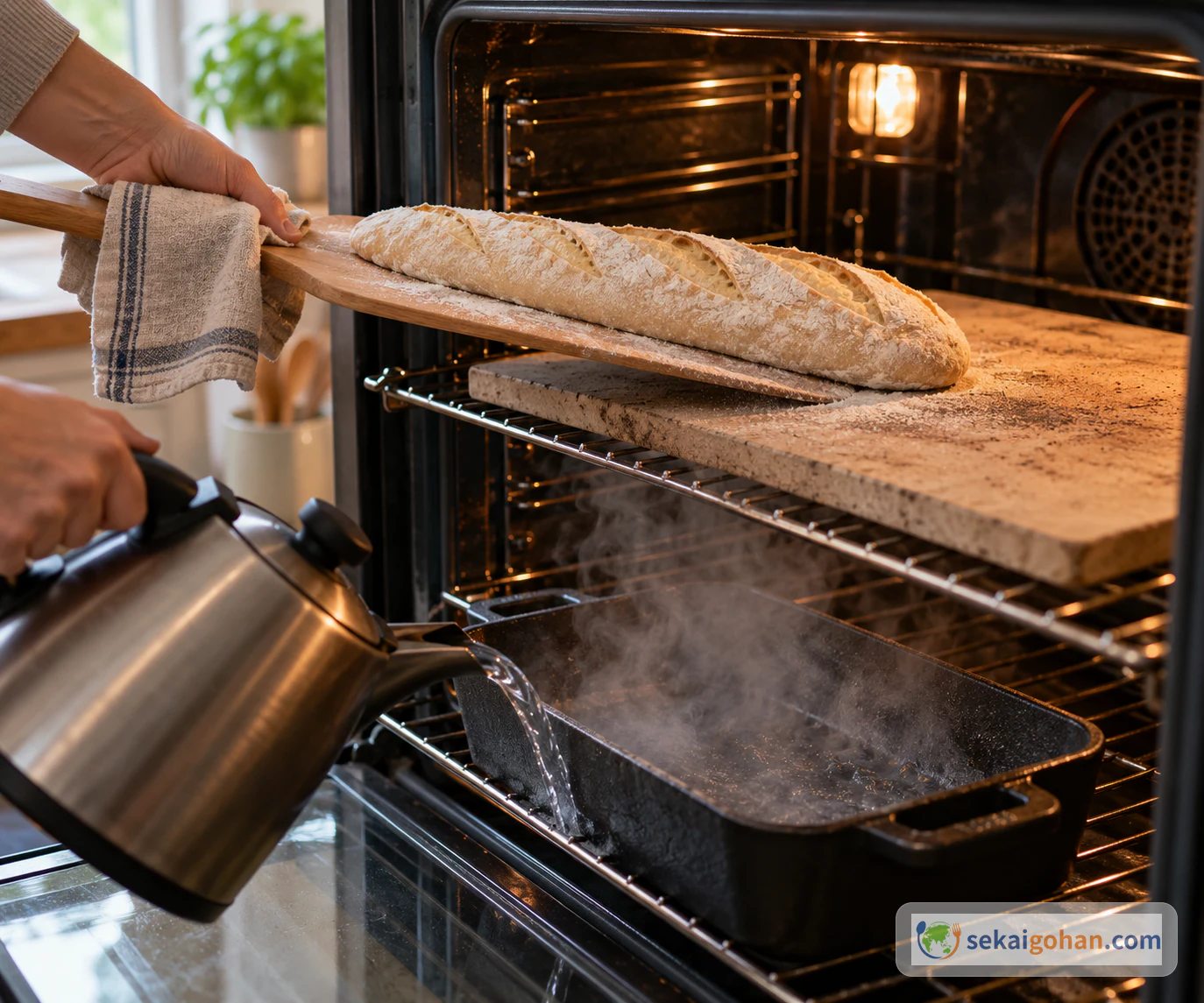
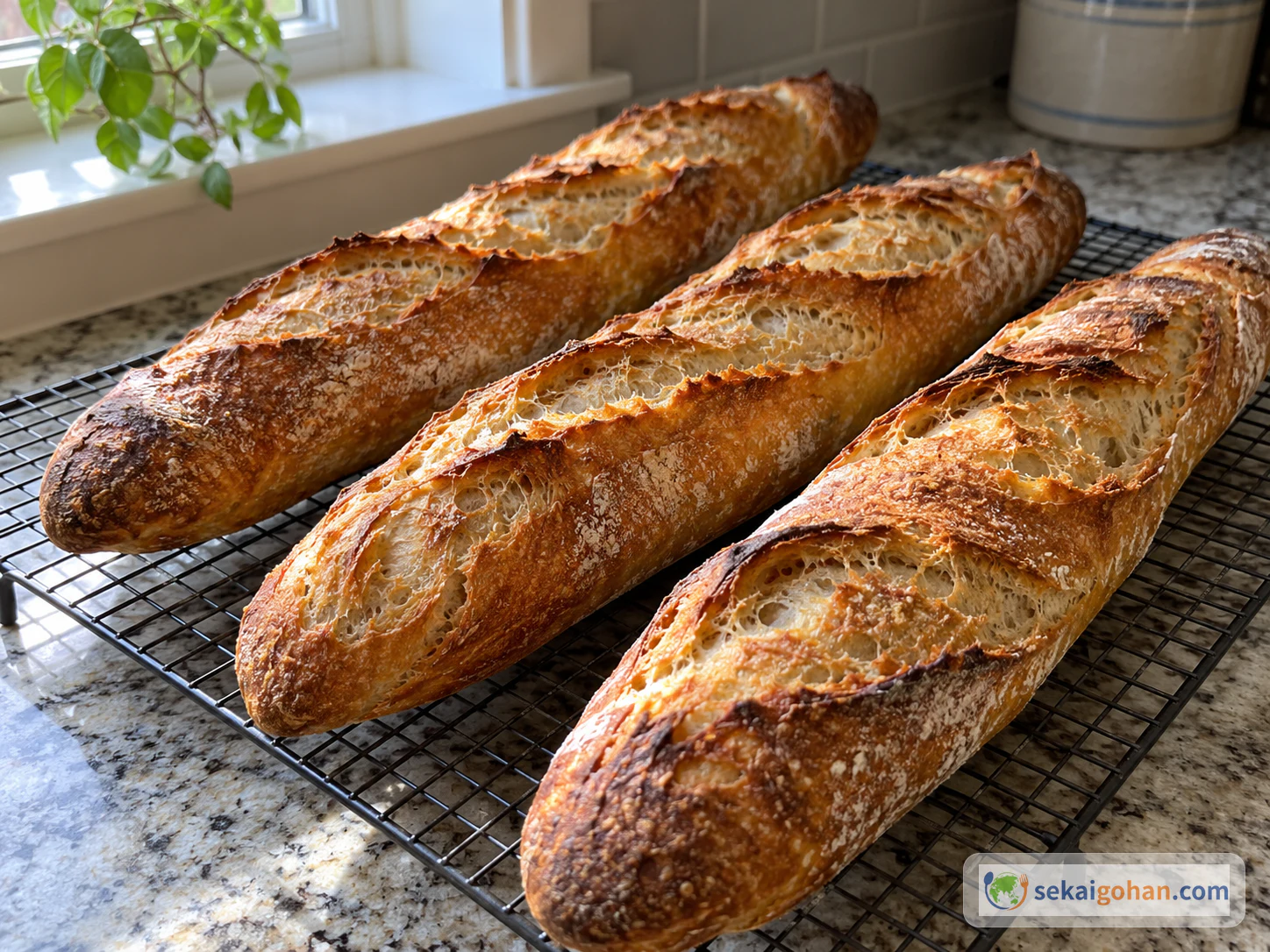
A crackling crust, a chewy crumb, and a long loaf cut and shared at the table. In France, people buy bread like this every day, often from the bakery down the street, and the trip to fetch it is part of how neighbors meet and talk. This recipe brings that bread into a home kitchen and makes three loaves with a poolish: a loose starter of flour, water and a tiny pinch of yeast that ferments for about 14 hours before the main dough is mixed. Most of that time is simply waiting, and the hands-on work is spread across the next day.
A home baguette succeeds or fails in three places: fermentation, shaping and steam. Let the poolish take its time overnight, shape gently without forcing the dough, and bake with steam until the crust is a deep golden brown. Room temperatures and home ovens vary, so the steps tell you what to look for in the bowl, under your hands and in the oven, as well as how long to wait.
The Baguette in France
The baguette belongs to the whole of France, not to one region. It is a long, thin wheat bread found across the country, recognized by its shape and texture. Customers even have their own preferences about how dark the crust should be, and buying the loaf is a small daily moment of sharing and connection.
Earlier long breads, such as the flûte, came before the modern name spread, and the baguette has no single inventor or origin story. Differences between bakeries come from flour, fermentation, shaping and how dark the bake is taken, rather than from fixed regional recipes. At home, you build the same qualities through fermentation and baking.
In 2022, the artisanal know-how and culture of baguette bread were inscribed on the Representative List of the Intangible Cultural Heritage of Humanity. The basic ingredients are flour, water, yeast and/or levain, and salt.
Ingredients: 3 Baguettes, Poolish and Final Dough
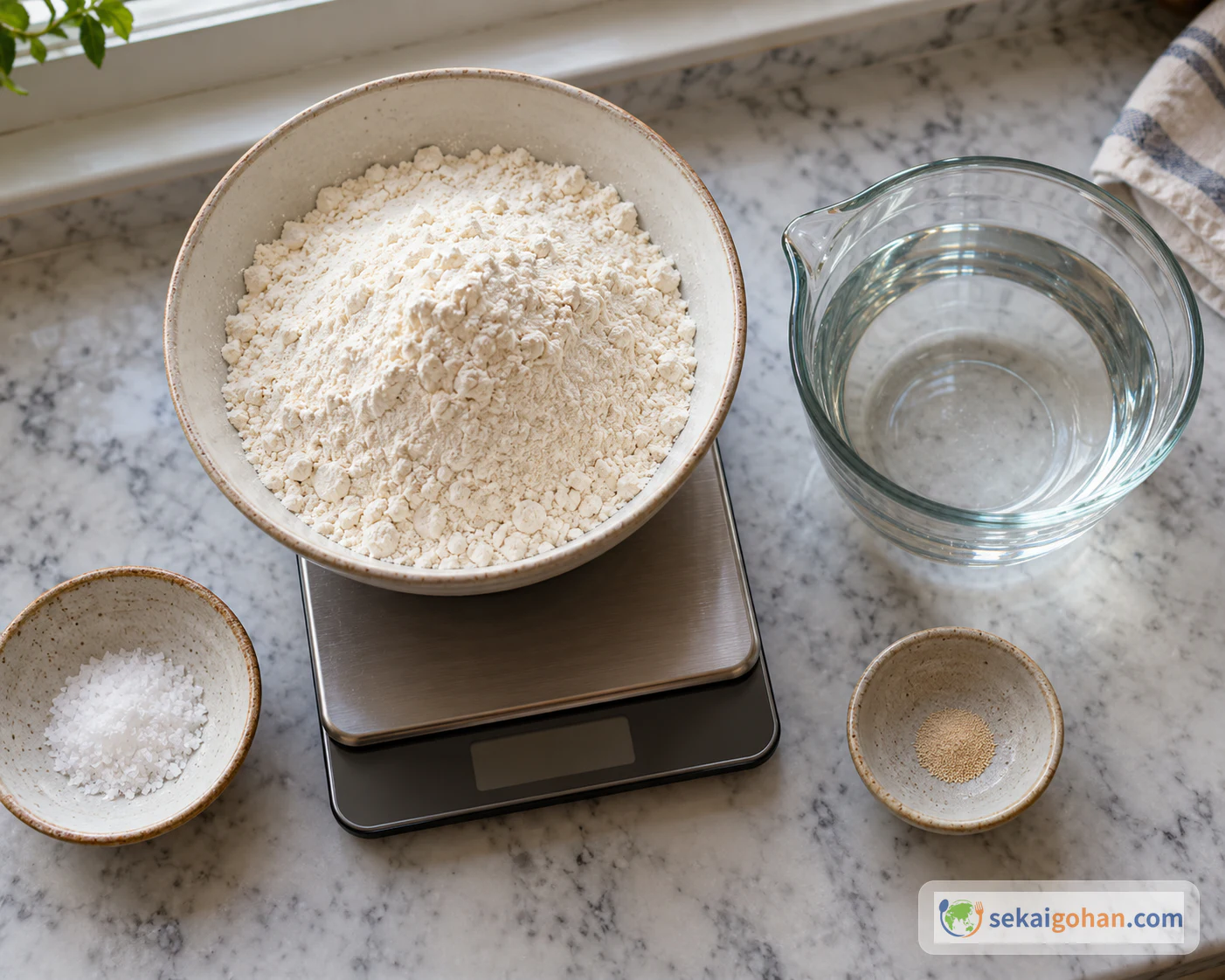
A digital scale makes this recipe far easier to repeat. The yeast amounts are in teaspoons. The salt is given by weight only, because the volume of salt changes with how fine it is.
Flours are not interchangeable one-for-one. US all-purpose flour, French T55 and the bread or "strong" flours sold elsewhere are different products, so don't assume they behave the same way. If you use bread flour, expect the dough to feel firmer. That is not a reason to pour in extra water straight away; first get to know how your flour feels.
This bread contains wheat (gluten) and yeast.
Method: From an Overnight Poolish to Three Loaves
Your kitchen's temperature and your oven will move the times here, so each step also tells you what "ready" looks like.
Common Baguette Problems and Fixes
Most baguette problems trace back to one earlier stage. Rather than fixing the symptom, go back to the step where it started.
| Problem | What to check | What to do |
|---|---|---|
| The poolish has few bubbles | Room temperature and the condition of your yeast | Give it more time until it looks bubbly and risen; judge by its look, not the clock |
| The dough feels stiff | Which flour you used | Bread flour can make a firmer dough. Hold off on adding a large amount of water right away |
| The dough springs back when shaping | Whether it rested long enough | Let it rest before lengthening it further rather than stretching it by force |
| The cuts don't open | Blade angle and depth, and how far the loaves proofed | Keep the blade at a low angle and check for the marshmallow-like spring before scoring |
| The crust stays pale | Preheating and your oven's actual temperature | Preheat fully and bake to a deep golden color rather than stopping at the minimum time |
Serving, Storing and Varying Your Baguettes
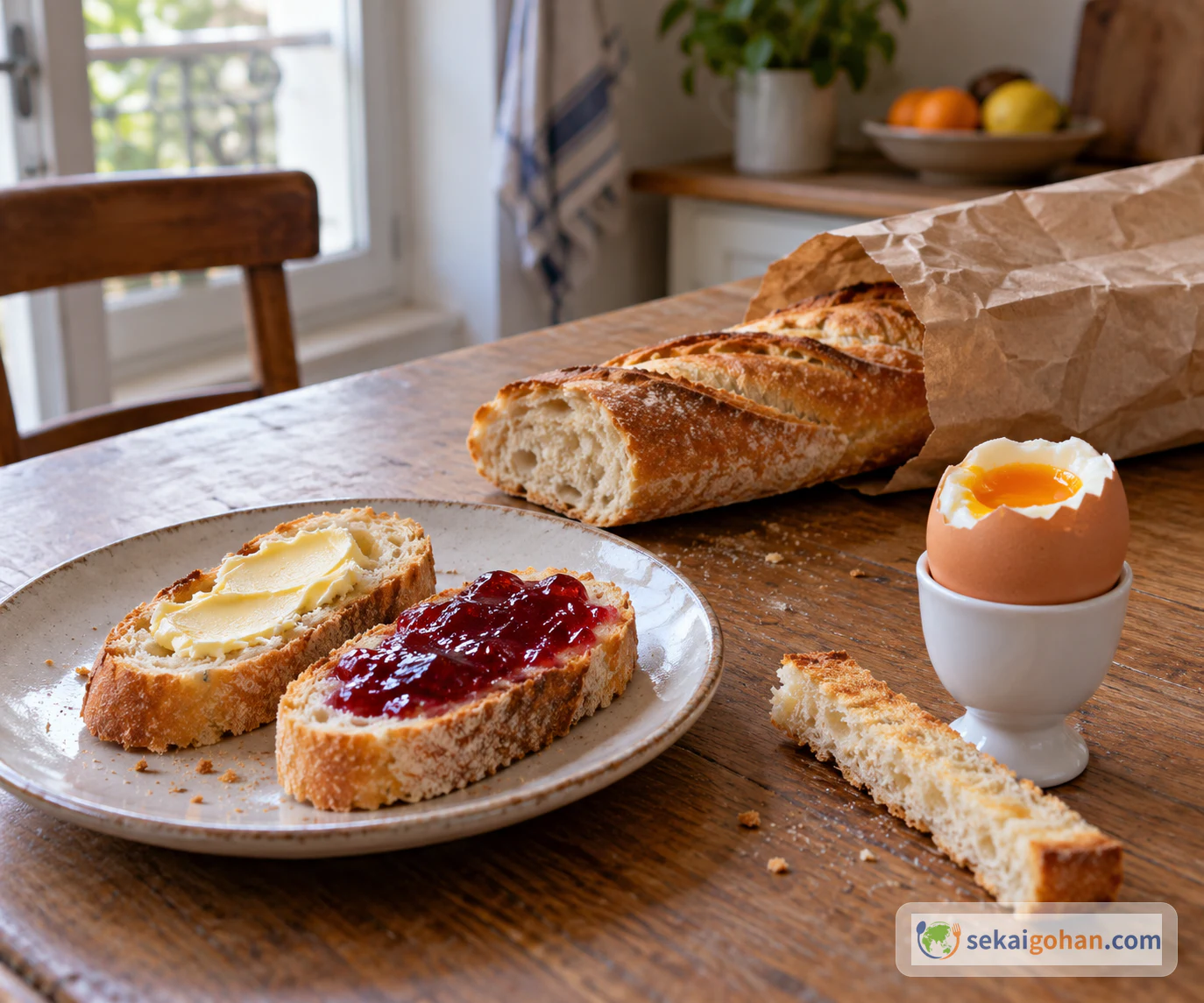
The French ways of eating a baguette are simple, and they work just as well with a home-baked loaf:
- Tartine: a length of baguette spread with butter and jam, for breakfast or at the café.
- Mouillettes: thin strips for dipping into a soft-boiled egg.
- Jambon-beurre: baguette split and filled with ham and butter, eaten as a casse-croûte.
- At the table: cut the loaf and share it through the meal.
- Croûtons: thin slices of baguette also make good croûtons.
Keep the baguettes in a paper bag overnight. For longer storage, freeze them, then rewarm after thawing.
Baguette variations
| Variation | How it changes the bake |
|---|---|
| Demi-baguettes | Shape shorter loaves, 7 to 8 inches (about 18 to 20 cm) |
| A slower, lower-yeast rise | Reduce the yeast to 1 tsp and rise for about 3 hours at room temperature. Treat this as its own method, separate from the poolish steps above. |
Baguette formulas differ widely, and each works as a whole. A French home recipe uses 13 oz (375g) T55 flour, 7.5 oz (215g) water, 7g salt and 5g dry yeast for three loaves, baked at 475°F (240°C) for 25 minutes. A professional recipe uses a long, cold fermentation (at least 16 hours at 37°F (3°C), then 90 minutes at 68°F (20°C)) and a short bake at 475°F (250°C) with light steam for 18 minutes, with its own specialist levain and yeast. They show how much the craft varies, but mixing their numbers into this recipe won't give you a better loaf.
Frequently Asked Questions
Can I skip the poolish?
Not in this recipe. The poolish is its backbone, and the amounts and times are built around it.
Can I use bread flour instead of all-purpose?
You can, but the dough will be stiffer. Bread flour, US all-purpose flour and French T55 are different products, so expect some difference in the result. Feel the dough before making any large change to the water.
Do I really need steam?
Yes. Bake with steam from boiling water poured into a preheated cast-iron pan. Use oven mitts and keep your face and hands clear of the steam.
What is a "baguette de tradition"?
You may see the word tradition on baguettes in France. Its legal conditions are set out in the official French regulations, while the ordinary baguette has no legal definition.
For more dishes from the same country, see recipes from France.