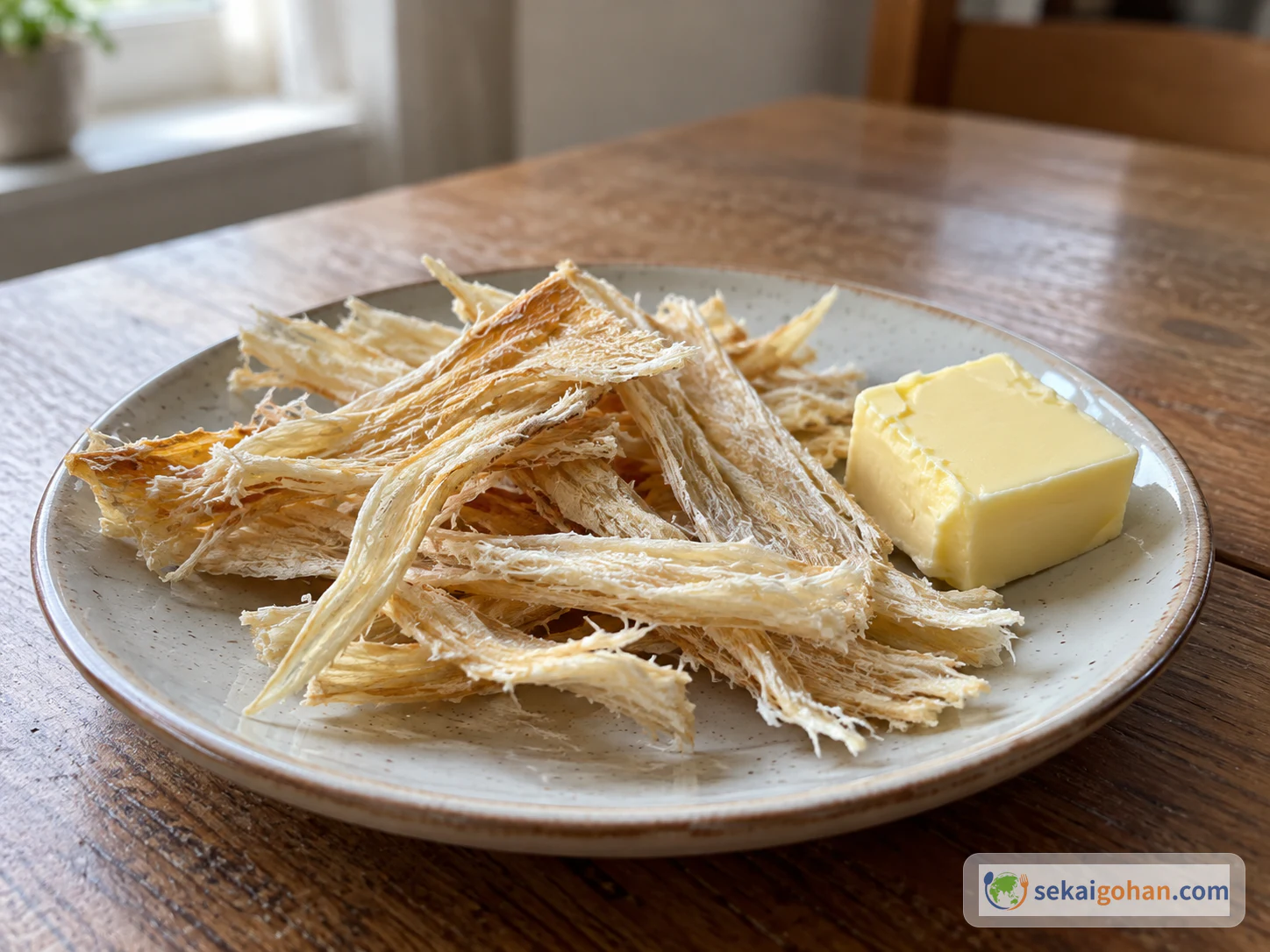
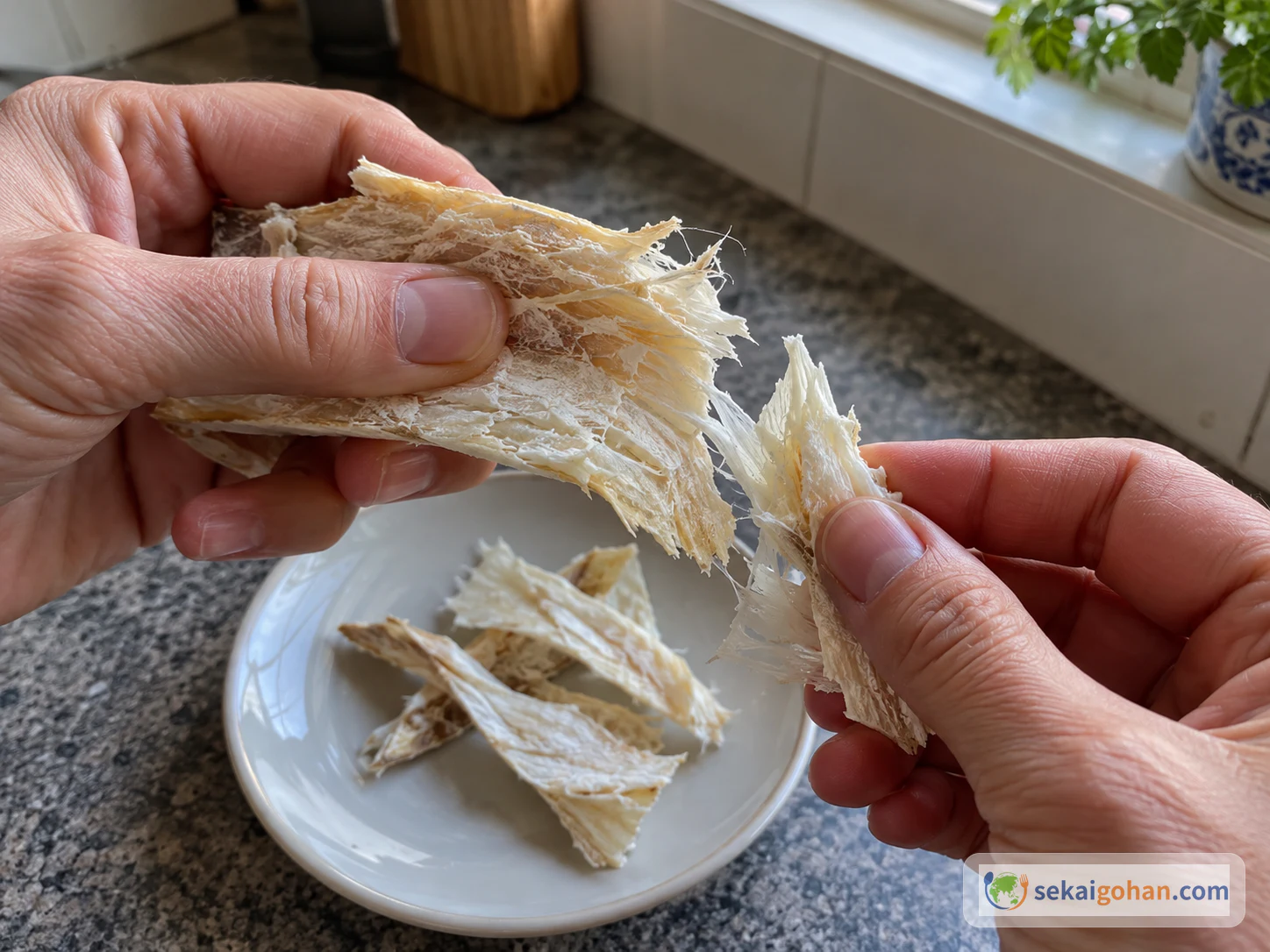
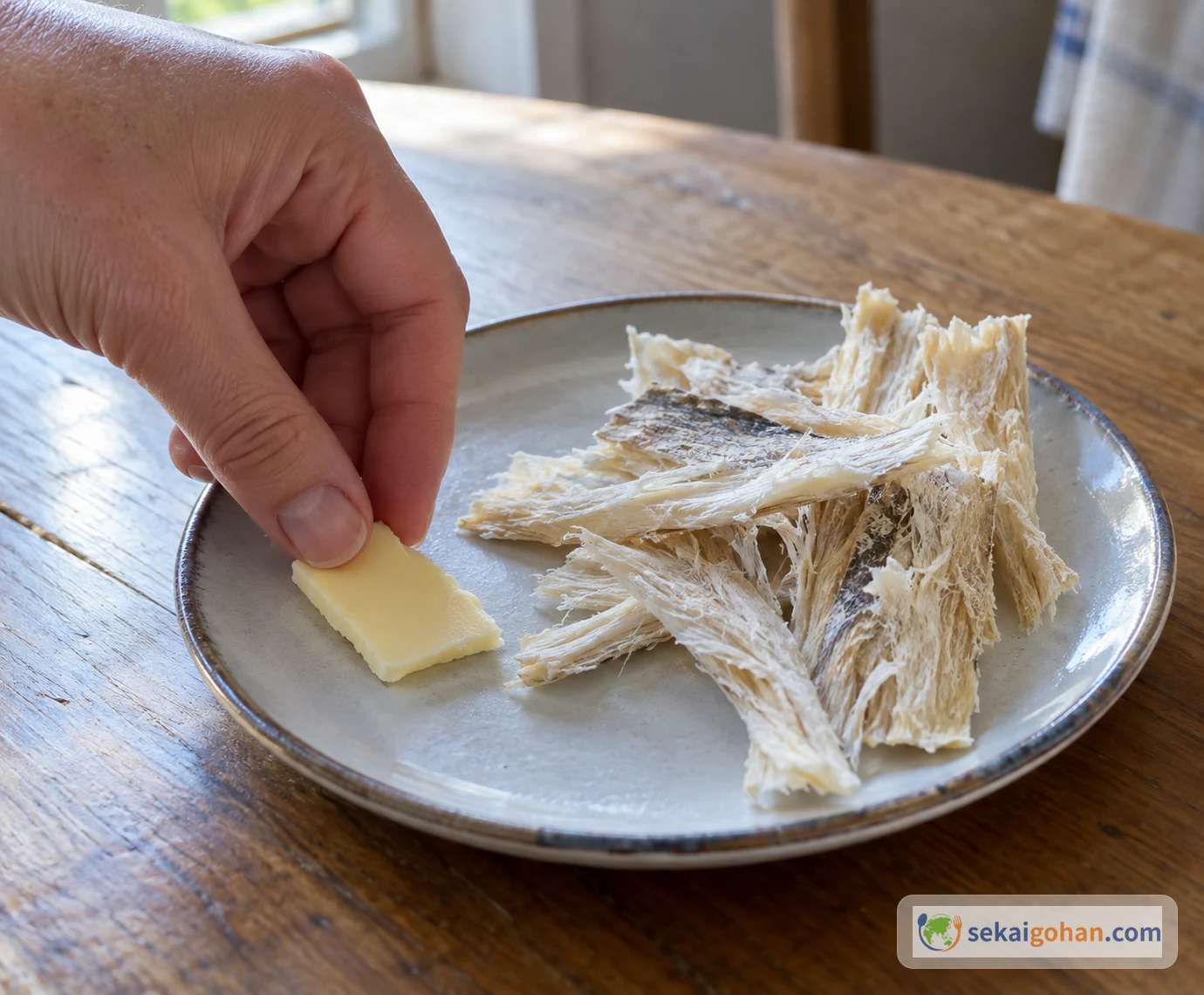
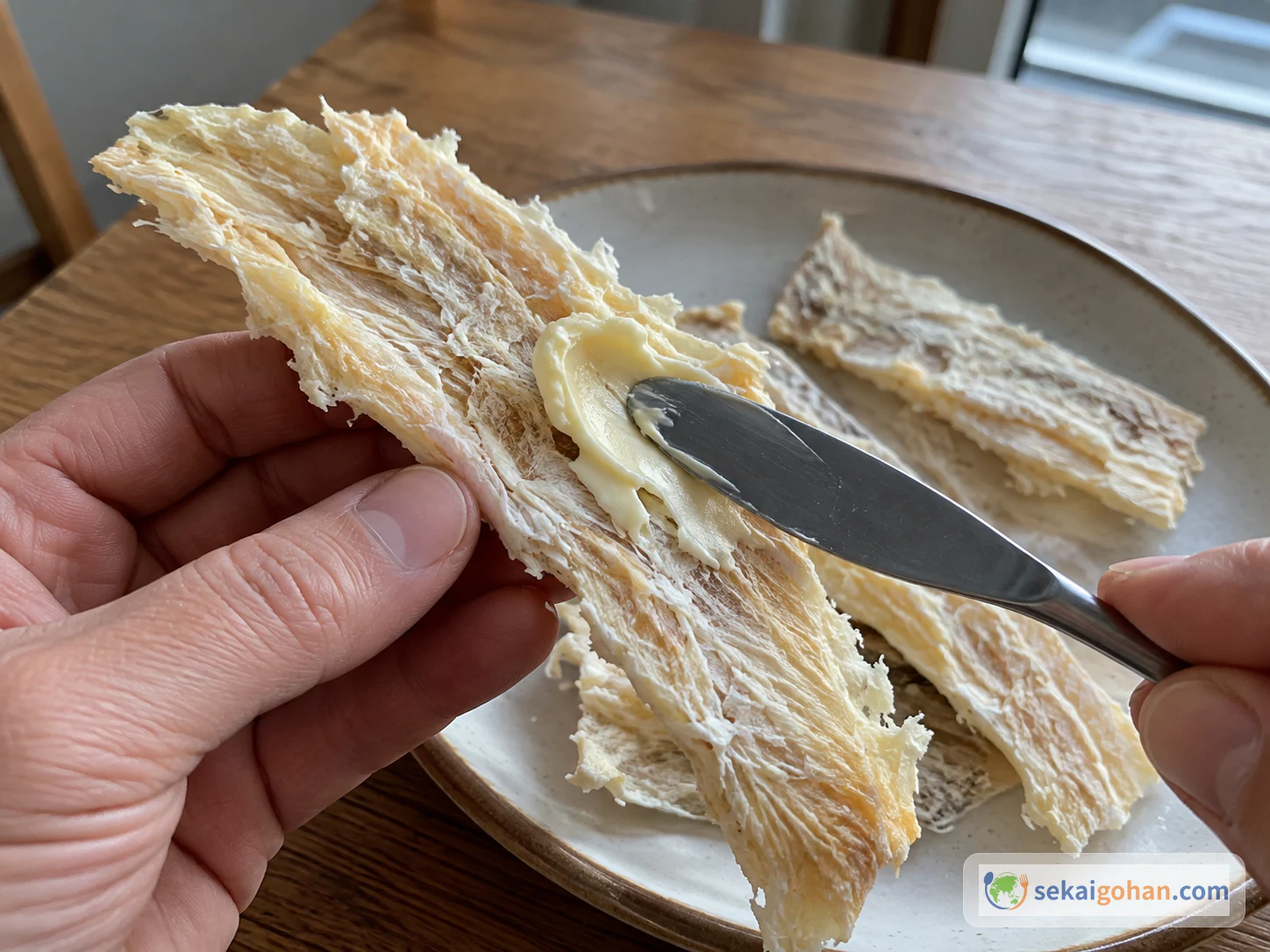
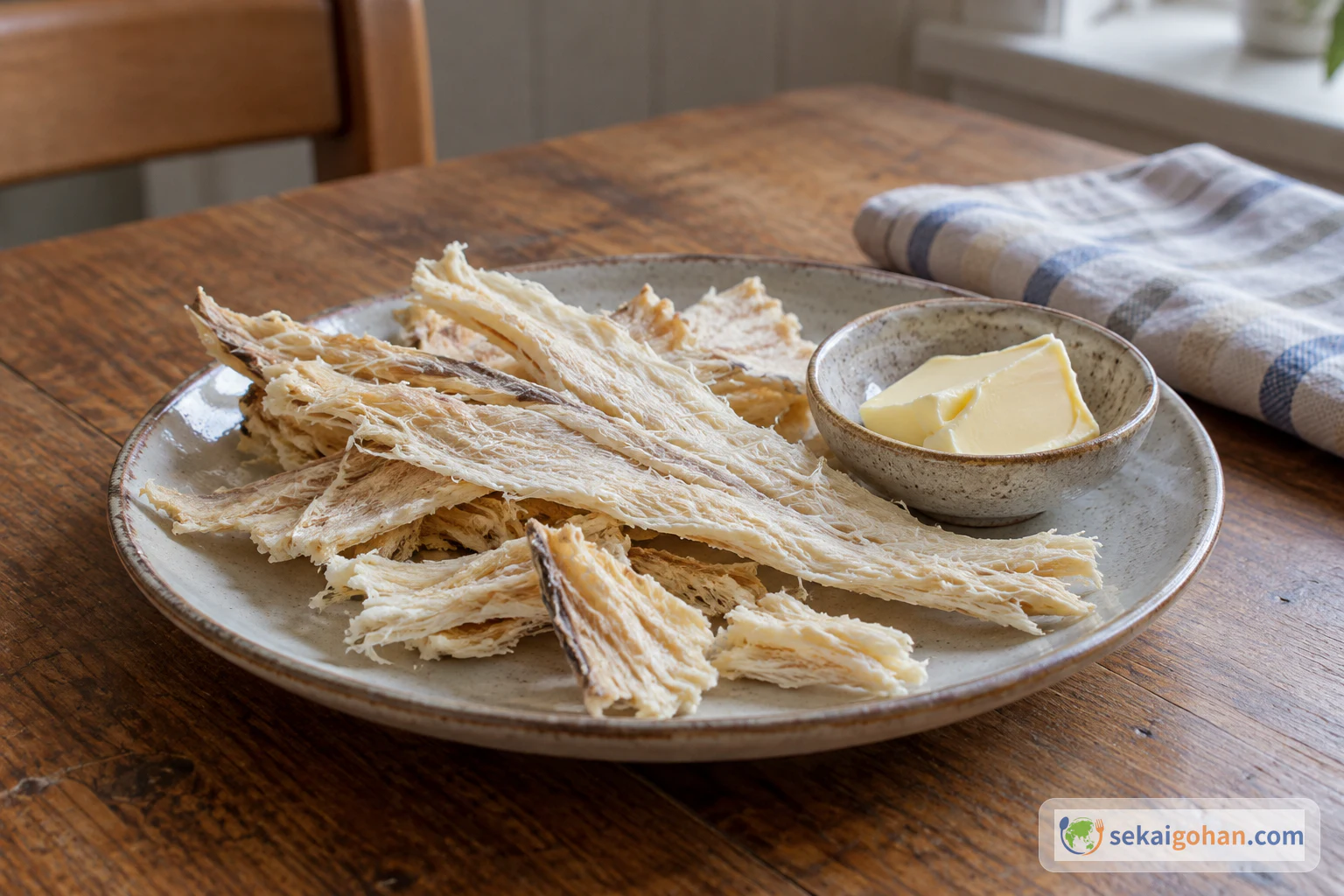
A small plate of pale, fibrous dried fish, torn along the grain, with a modest pat of butter on the side: that's harðfiskur as it's commonly eaten in Iceland. It's a traditional snack, the kind people pack for a hike. There's nothing to cook. You tear the fish into pieces, set the butter beside it, and let each bite find its own balance of salty, dry fish and soft fat.
Harðfiskur in Iceland
What Harðfiskur Is
The name doesn't point to a single fish. Harðfiskur is the Icelandic word for dried fish as a food, and it's made mainly from fillets of cod, haddock or wolffish. Other species turn up too, in several forms such as fillets and pieces. Some products use salt and some don't, so read the package of whatever you buy rather than expecting one standard product.
Today it's eaten as a snack, while traveling, at the midwinter Þorri feast and in restaurants, and it's around all year, not only at Þorri. Butter is the usual companion, though plenty of people eat it plain. For more from the same kitchen, see more dishes from Iceland.
Drying and Pounding: The Background

Wind-drying fish was closely tied to life where other ways of preserving were limited, especially where salt and fuel for smoking were scarce. The fish was washed, the head and guts removed, and the body opened out with the tail left on. It then hung on drying racks for weeks, and the hard, dried result was softened with a wooden mallet. This is traditional know-how, not a home project; don't try drying fish this way yourself.
In the past, the pounded fish was eaten with butter or other fats, including tallow, as part of everyday meals. It's more of a snack now, and some modern products are softened by machine, but the fish is still dried outdoors or indoors and still eaten uncooked.
No one knows when harðfiskur was first eaten in Iceland. The fourteenth-century trade in dried fish for European markets was a separate matter from how Icelanders ate it at home, and drying and maturing methods, along with the fish used, varied by region and period.
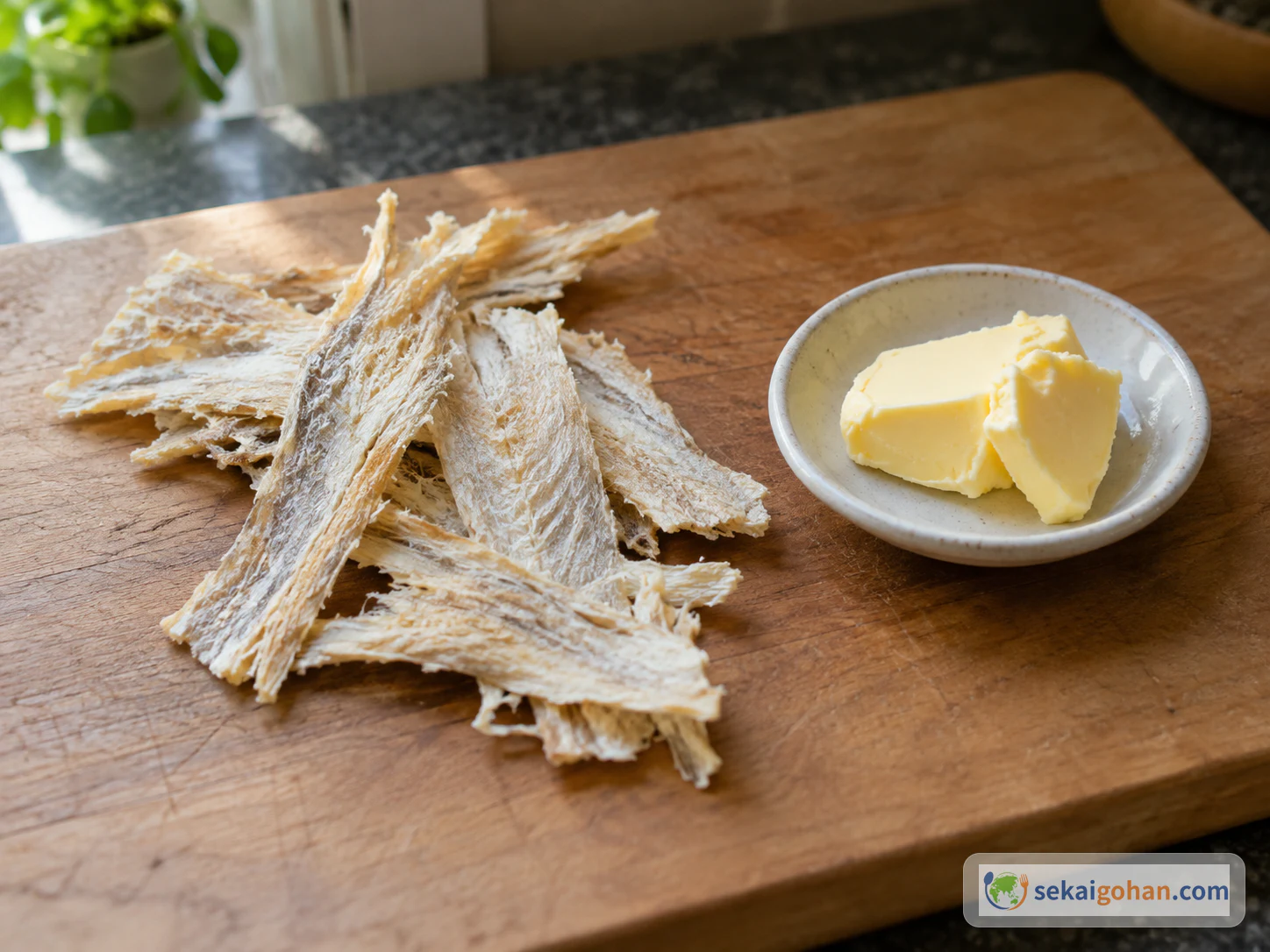
Ingredients for Two as a Snack
Equipment
- Small plates for serving
- A small dish for the butter
- A small kitchen scale (only if you want to weigh the portion)
Choosing the Fish and Butter
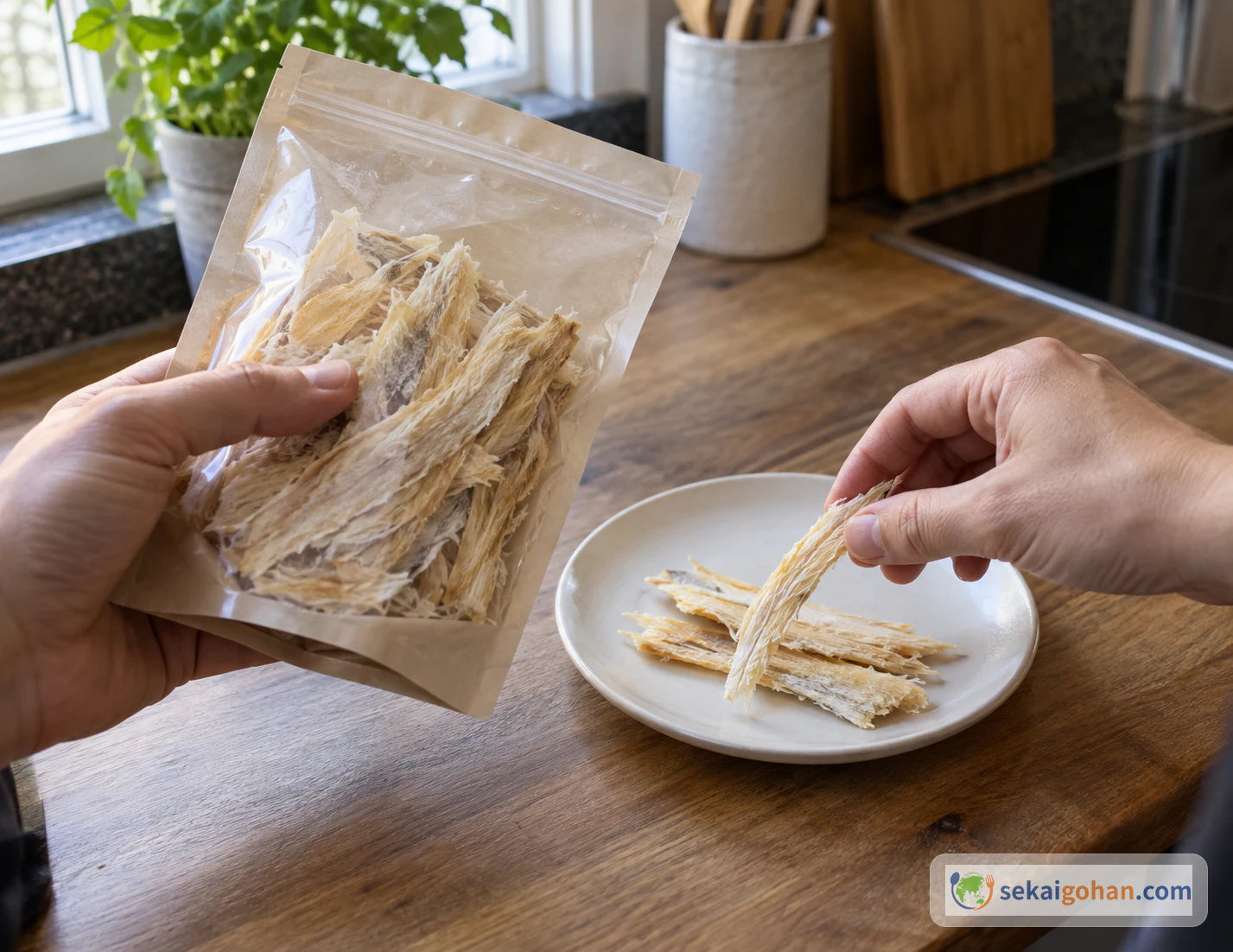
The fish. Look for a finished product labeled as Icelandic harðfiskur or dried fish, and check the country of origin, fish species, ingredients and storage instructions before buying. Specialty and imported-food shops are your best bet. If you can't find an Icelandic product, choose an imported dried fish whose ingredients and origin you've confirmed. Snack-style dried fish from other cuisines is a different food and won't stand in for harðfiskur.
The butter. Unsalted butter comes closest to the plain butter served alongside. Salted butter adds to whatever salt is already in the fish, so if you use it, check the label and go easy.
This dish contains fish and milk. Check each product's label for allergens, including any cross-contact statements. Follow the product label for how to store the fish both before and after opening, including any use-by guidance once opened. Do not assume every harðfiskur can be kept at room temperature.
Serving Ready-Made Dried Fish: Check, Tear, Butter
Every step uses a finished, purchased product. Making dried fish at home from raw fish is not part of this recipe.
Fixing Hard or Salty Harðfiskur
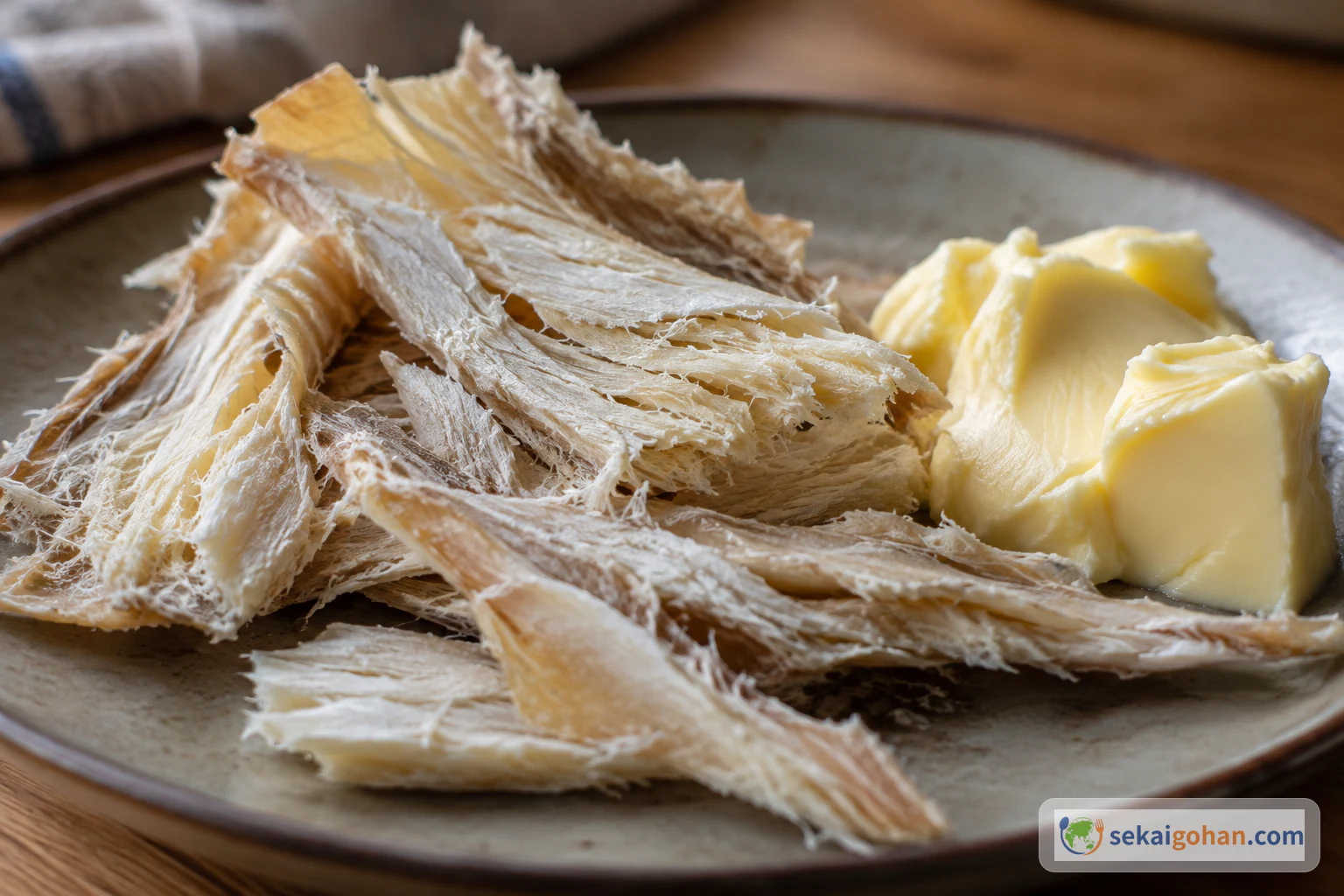
The pleasure of harðfiskur is the contrast between dry, fibrous fish and creamy butter. When something's off, it's usually the product rather than your technique.
| Condition | Likely reason | What to do |
|---|---|---|
| Hard to chew | Products are processed to different degrees of softness | Tear it into smaller pieces and check how easy it is to chew |
| Too salty | Some products use salt; salted butter adds more | Check the ingredients and nutrition label, and keep the butter, especially salted butter, to a small amount |
| Butter overwhelms the fish | Too much spread at once | Go back to a thin layer per bite, or eat some pieces plain |
Serving Variations
- Plain, without butter. Harðfiskur is also eaten just as it is; butter is the classic pairing, not a requirement.
- More or less butter. Spread more on drier pieces and less on salty ones. The 20g is a starting point.
- Softened or whole pieces. Machine-softened products tear easily into flakes, while harder pieces just need smaller tearing. Pick whichever texture you like.
Frequently Asked Questions
Can I make it at home from raw fish?
Without reliable figures for safe temperatures, salt levels and drying times, drying raw fish at home isn't safe. Stick with a finished, purchased product.
Is it only eaten during Þorri?
No. It appears at the midwinter Þorri feast, but it's eaten throughout the year as a snack and while traveling.