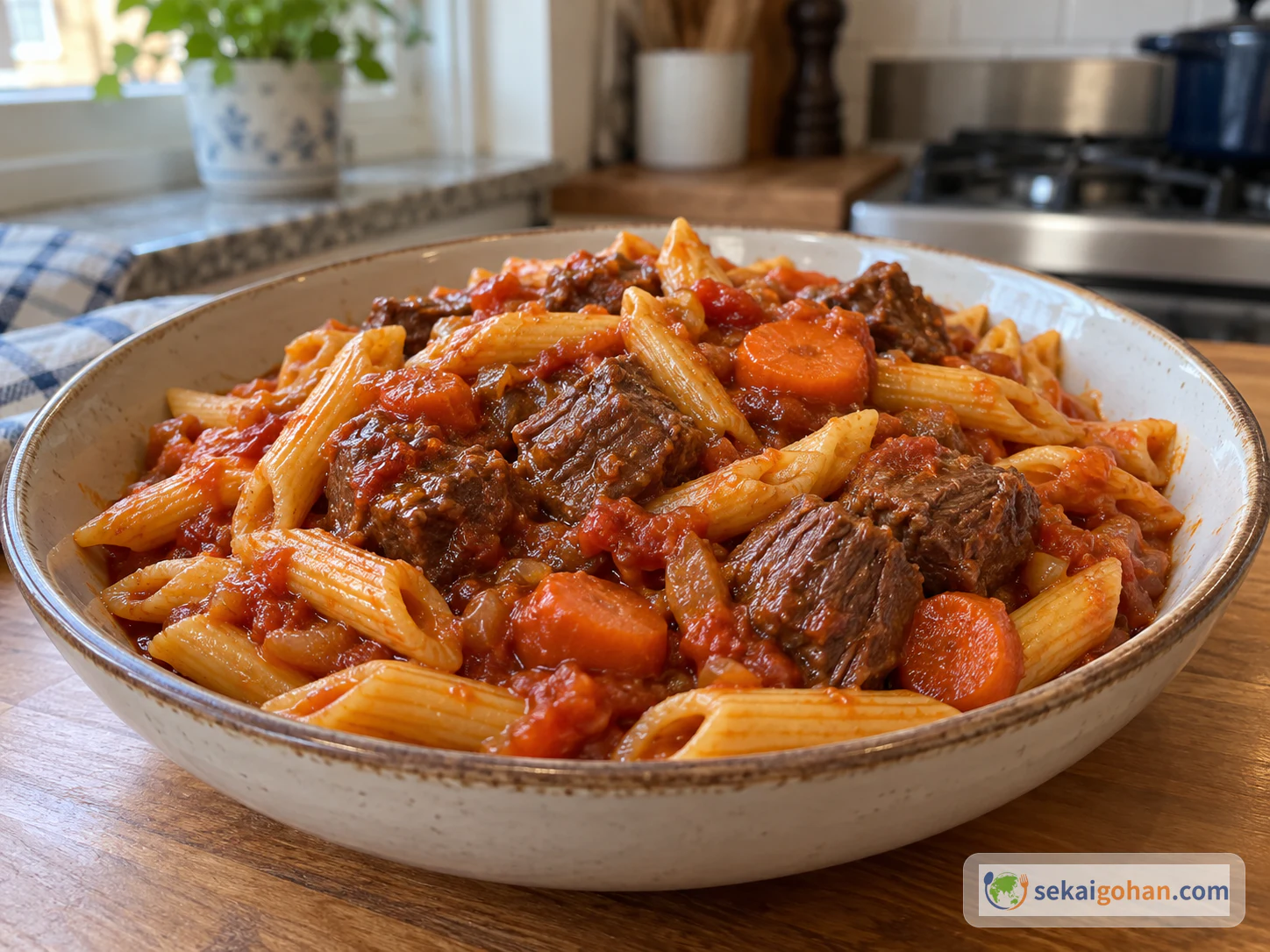
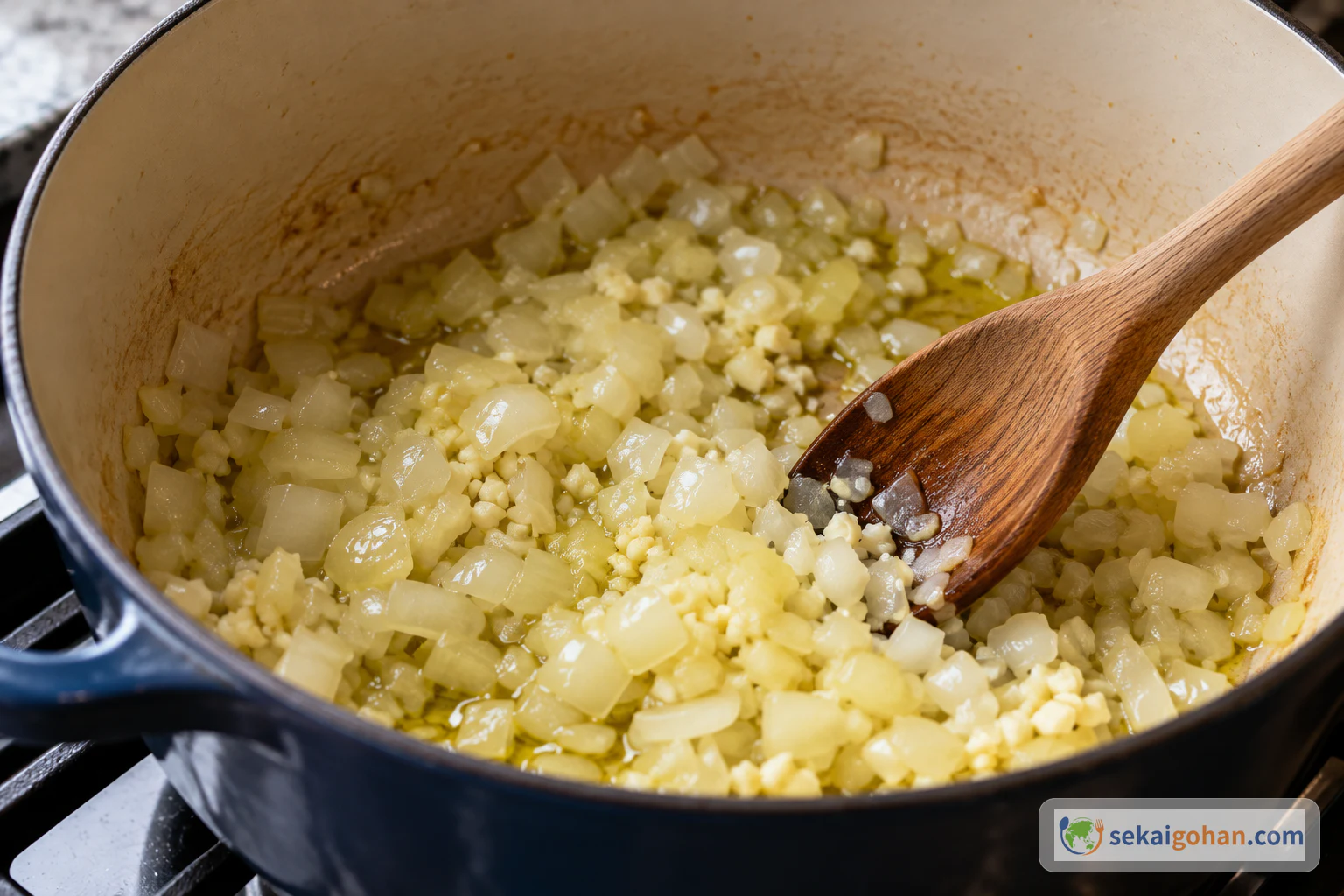
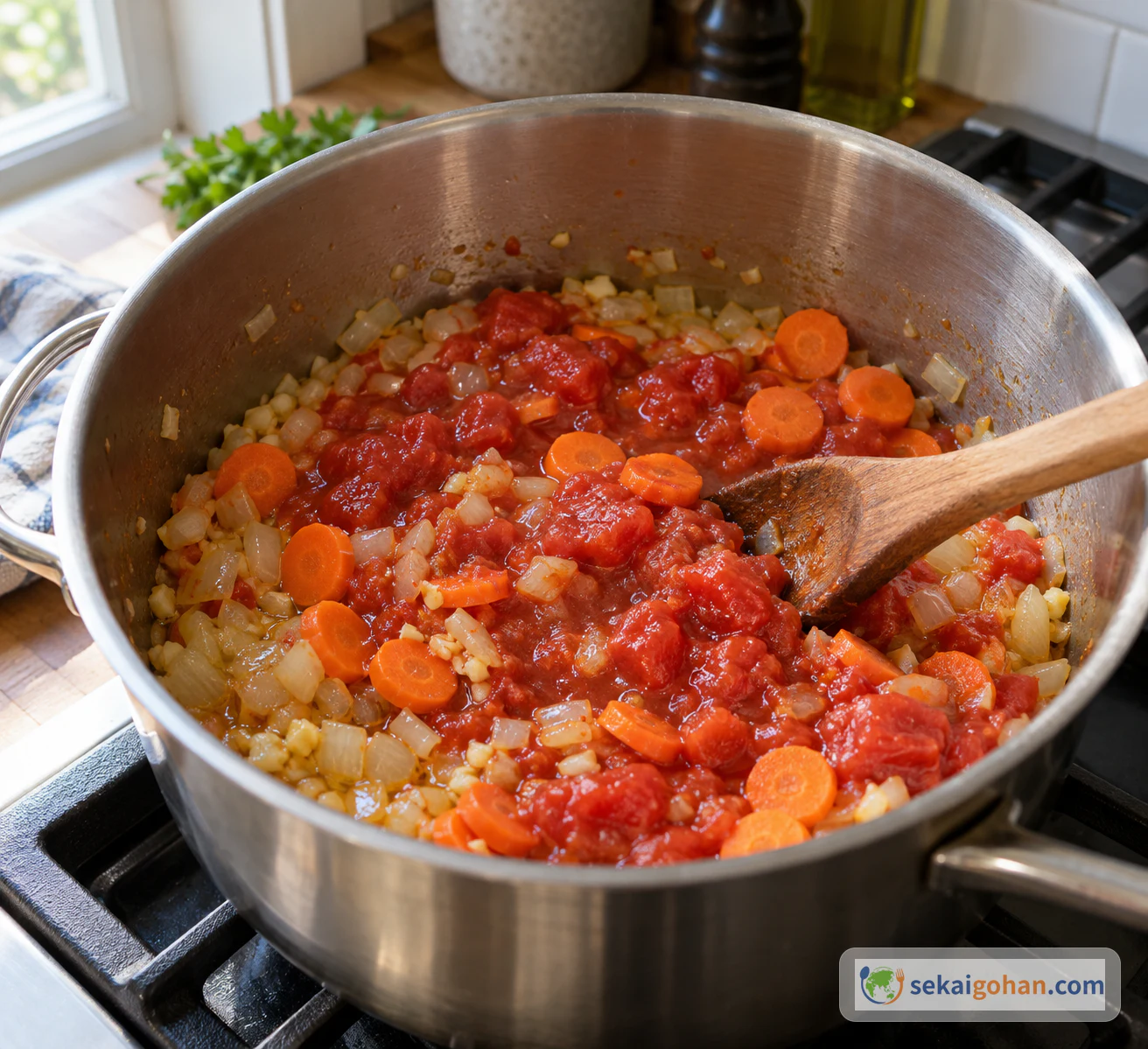
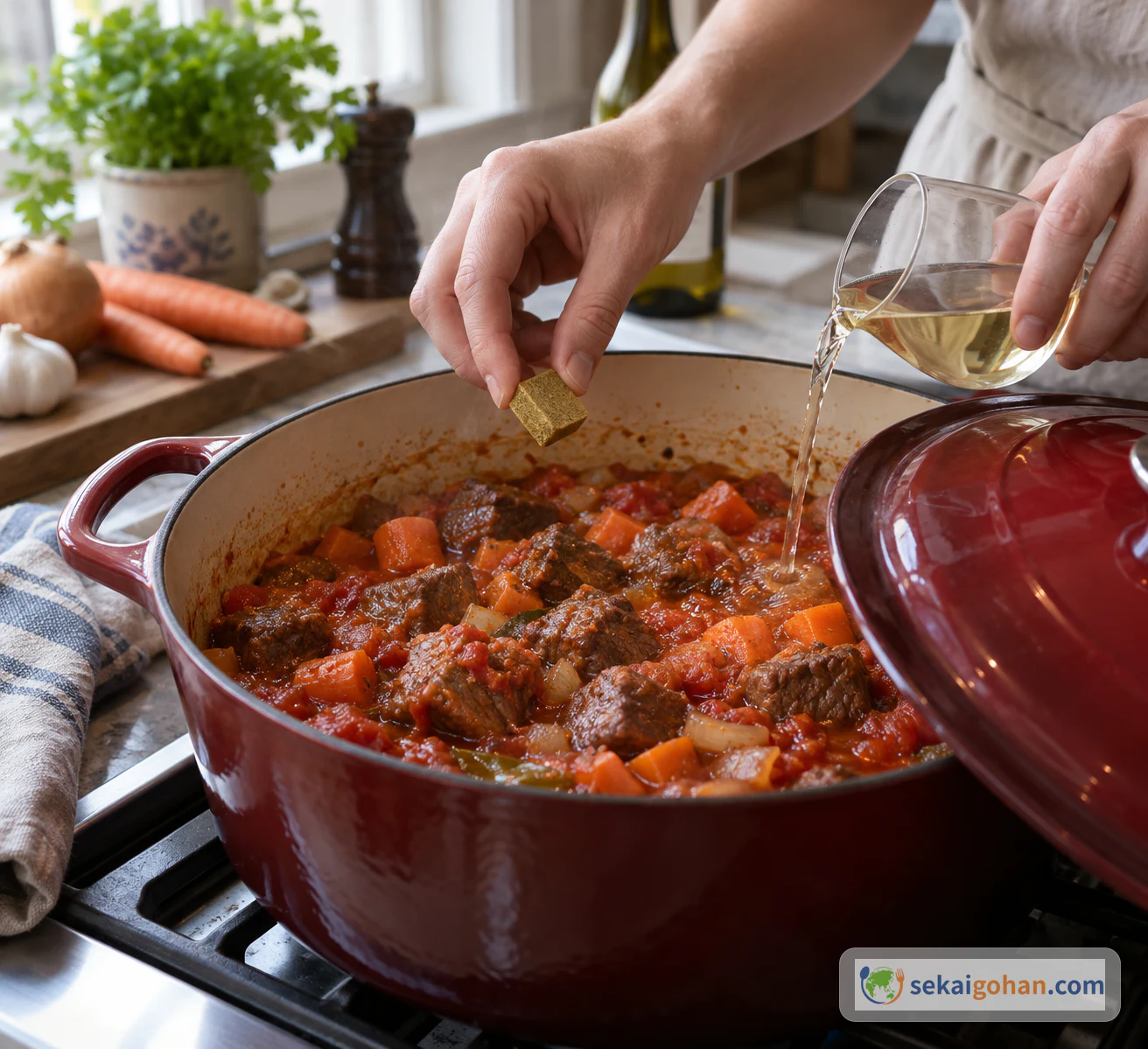
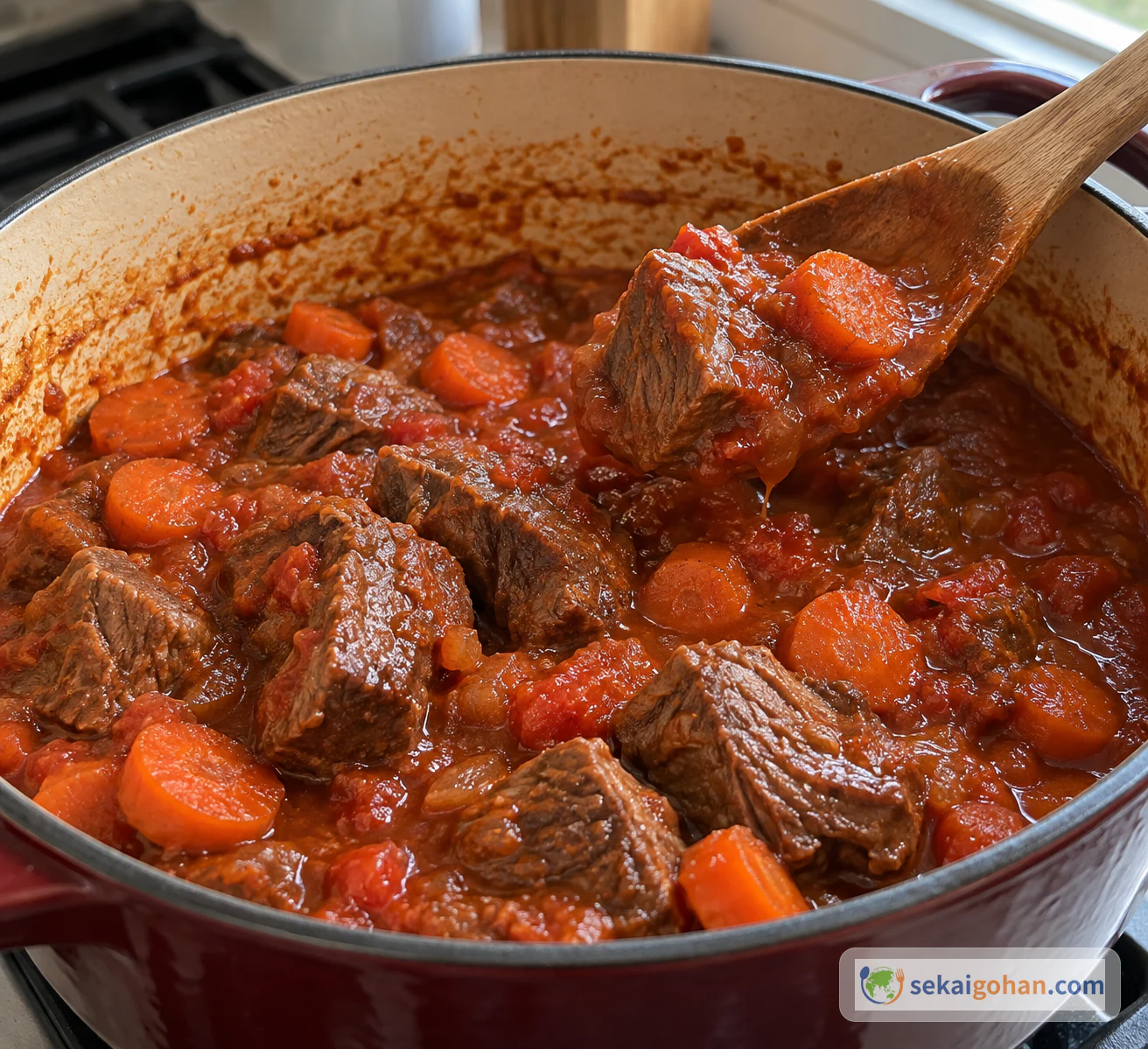
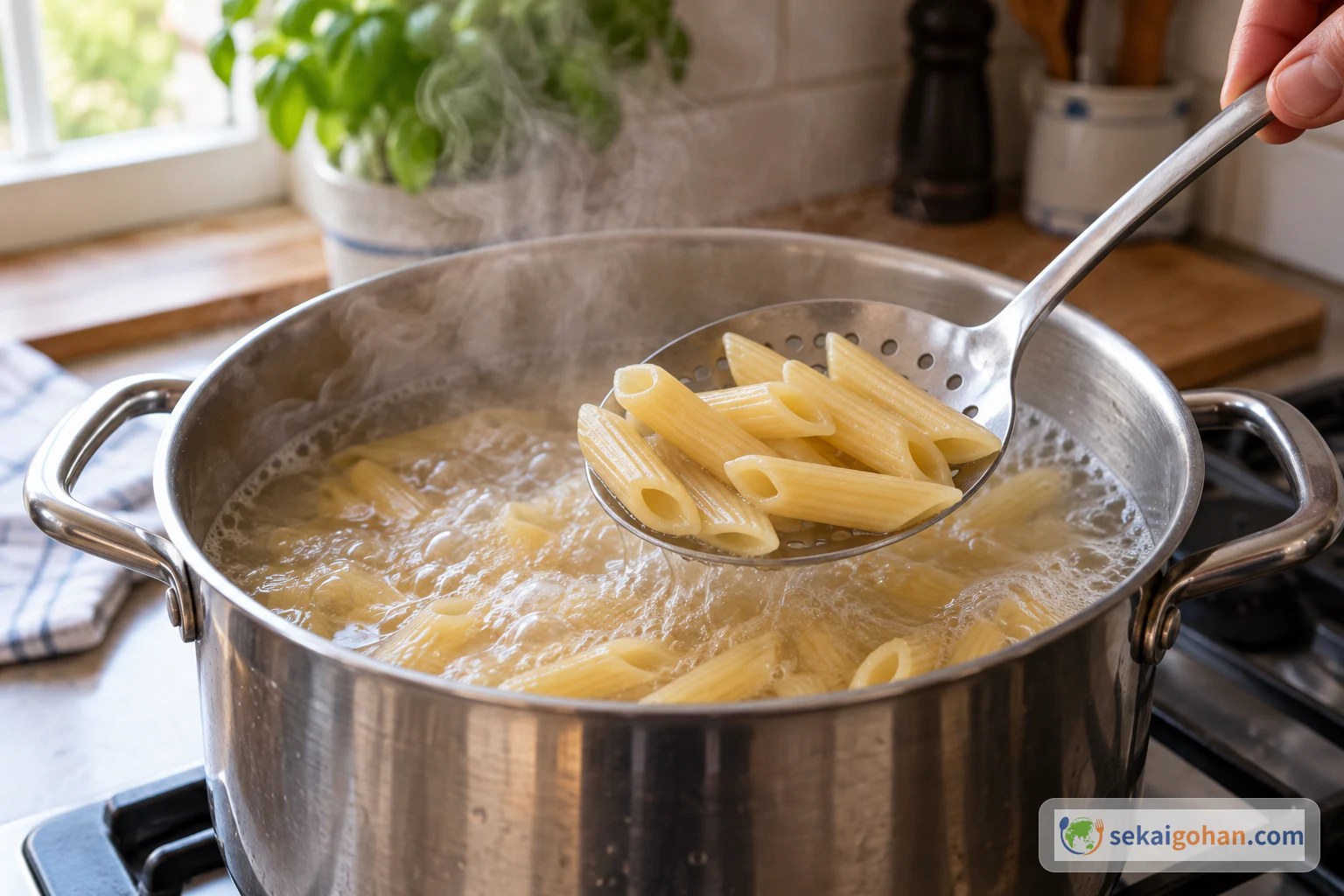
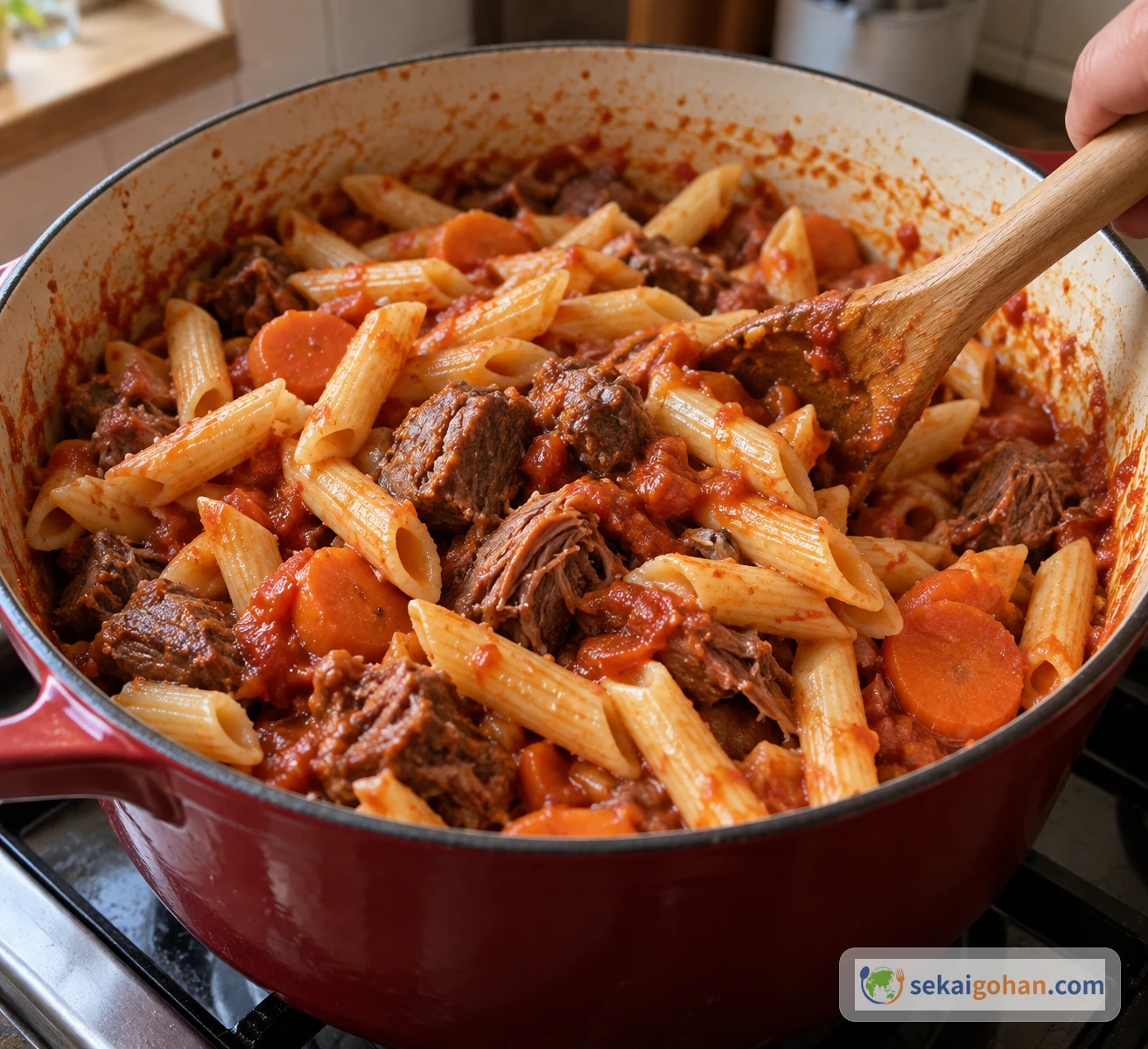
Ask a Gibraltarian family about rosto and you'll hear about Sunday lunches and a recipe learned in someone's kitchen. Every household makes it a little differently. This version is a family-style one: cubed braising beef simmered slowly with tinned tomatoes, carrots, onion, garlic and a splash of white wine. Short pasta cooks in its own pot and gets folded in at the end.
Rosto in Gibraltar's Kitchens
Rosto belongs to Gibraltar's shared food heritage, passed on in family kitchens rather than written down. Gibraltarian cuisine draws on many influences, among them Spain, Italy, Malta, Britain and Morocco, along with the adaptations each family makes. Nobody is quite sure where rosto came from, or where its name comes from.
The dish also changes across the border, in the Campo de Gibraltar. The Gibraltar version uses less tomato relative to the meat and has a more complex vegetable sauce than the La Línea version. These traditions keep evolving.
Within Gibraltar itself, a rosto can be beef or pork, made with tinned tomatoes or purée, finished with Edam or left plain. One family's version, passed down by word of mouth, uses pork and tomato purée and comes to the table with grated Edam. The beef-and-penne pot here is one family-style version among several.
Where the source gives no amount, the table says so; no number has been filled in. The source also gives no yield, braising time or total cooking time, so this article does not give them either.
Ingredients
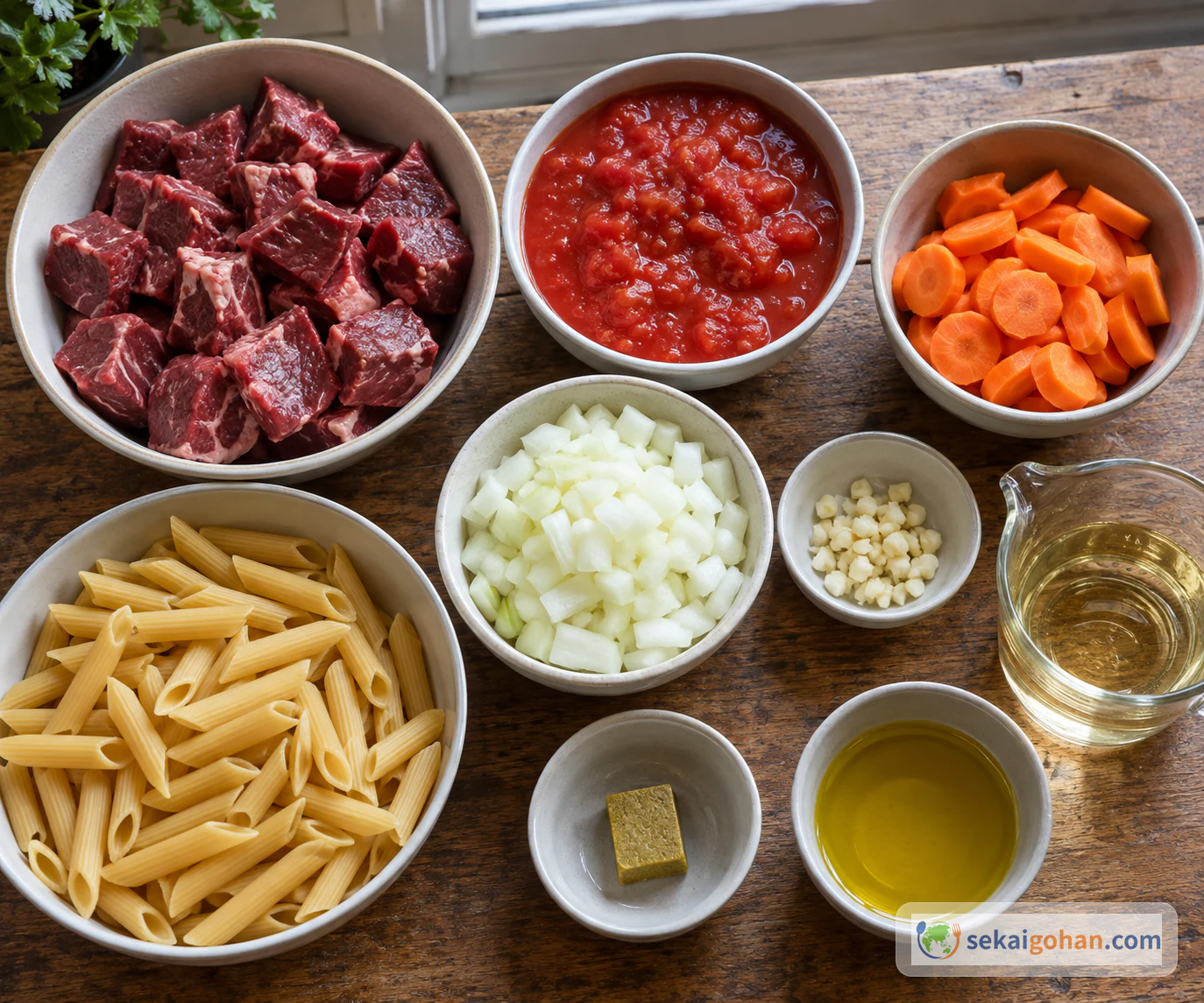
This version uses beef and penne (chicken or macaroni also work), with 3.5 oz (100 g) of pasta to 1 lb (500 g) of meat.
Mushrooms are optional; they are left out of this version.
Equipment
- A heavy saucepan or pot with a lid, for the braise
- A separate pot for boiling the pasta
- A colander or strainer
- A wooden spoon
- A knife and cutting board
Choosing the Beef, Pasta and Stock Cube for Rosto
Beef. Choose a cut sold for braising or stewing, such as beef shin or stewing beef. These cuts suit a long, gentle, covered simmer.
Pasta. Penne is used here. Macaroni works just as well; boil it for the time on its package.
Stock cube. Stock cubes vary widely in saltiness and in ingredients, including possible allergens, so read the label before you buy.
Wine. Use half a glass of dry white wine. Some alcohol can remain even after a long braise. If you leave the wine out for children, pregnancy or any other reason, expect the flavor to change.
The pasta contains wheat. Stock cubes and any cheese you serve alongside vary by product, so check the labeling of each.
Method: A Slow Covered Braise, Then Pasta at the End
Judge the braise by how tender the meat is, not by the clock, and only start the pasta once you can see the beef is nearly there.
Fixing Common Rosto Problems
Braise the beef gently under a lid until it is tender. Boil the pasta separately to al dente, then let the two come together for only a short final simmer.
| Problem | Likely cause | What to do |
|---|---|---|
| The tomato tastes too sharp | The acidity of the tinned tomatoes | Add a little sugar. Start with a small pinch and taste as you go |
| The beef is still tough | The braise has not gone on long enough for the cut | Keep it covered on low and keep checking. Don't add the pasta until the beef is tender |
| The pasta has gone too soft | It was boiled past al dente, or went into the braise too early | Boil it separately only to al dente, and add it only for the final 5 minutes |
| The pasta is breaking up | Stirring hard or simmering too strongly at the end | Fold gently and keep the heat low during the final simmer |
Rosto Variations
Other families take the dish in their own directions, and each of these is best treated as its own version rather than mixed into the recipe above.
- Mushrooms. Some cooks add them; they're optional.
- A pork family version. This rosto uses pork, tomato purée, carrots, onion, garlic and oregano with macaroni or penne, served with grated queso de bola (Edam). It comes without quantities or times, so think of it as a separate dish rather than an adjustment to this one.
Frequently Asked Questions
Can I make it with something other than beef?
Chicken works too, though its cooking time differs from beef's and the amounts here are for the beef version, so you'll need to judge doneness yourself. Pork belongs to another family's version, which is a different recipe.
Do I need cheese on top?
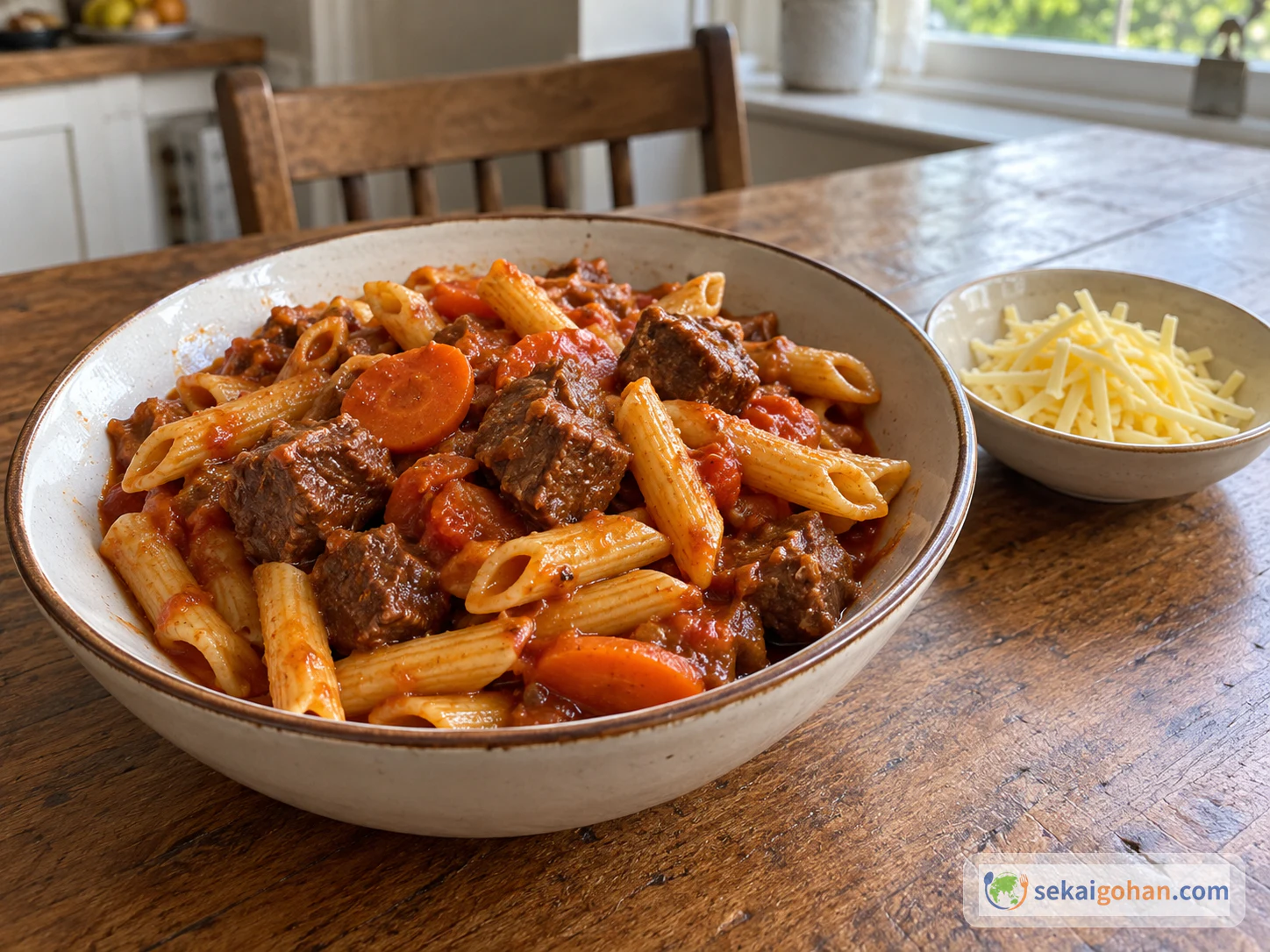
Not for this version. Grated Edam (queso de bola) is the finish for the pork family version, and you can add it if you like.
How long does the beef need to braise?
Keep the pot covered on low heat and judge by tenderness, since the time depends on your cut and your pot.