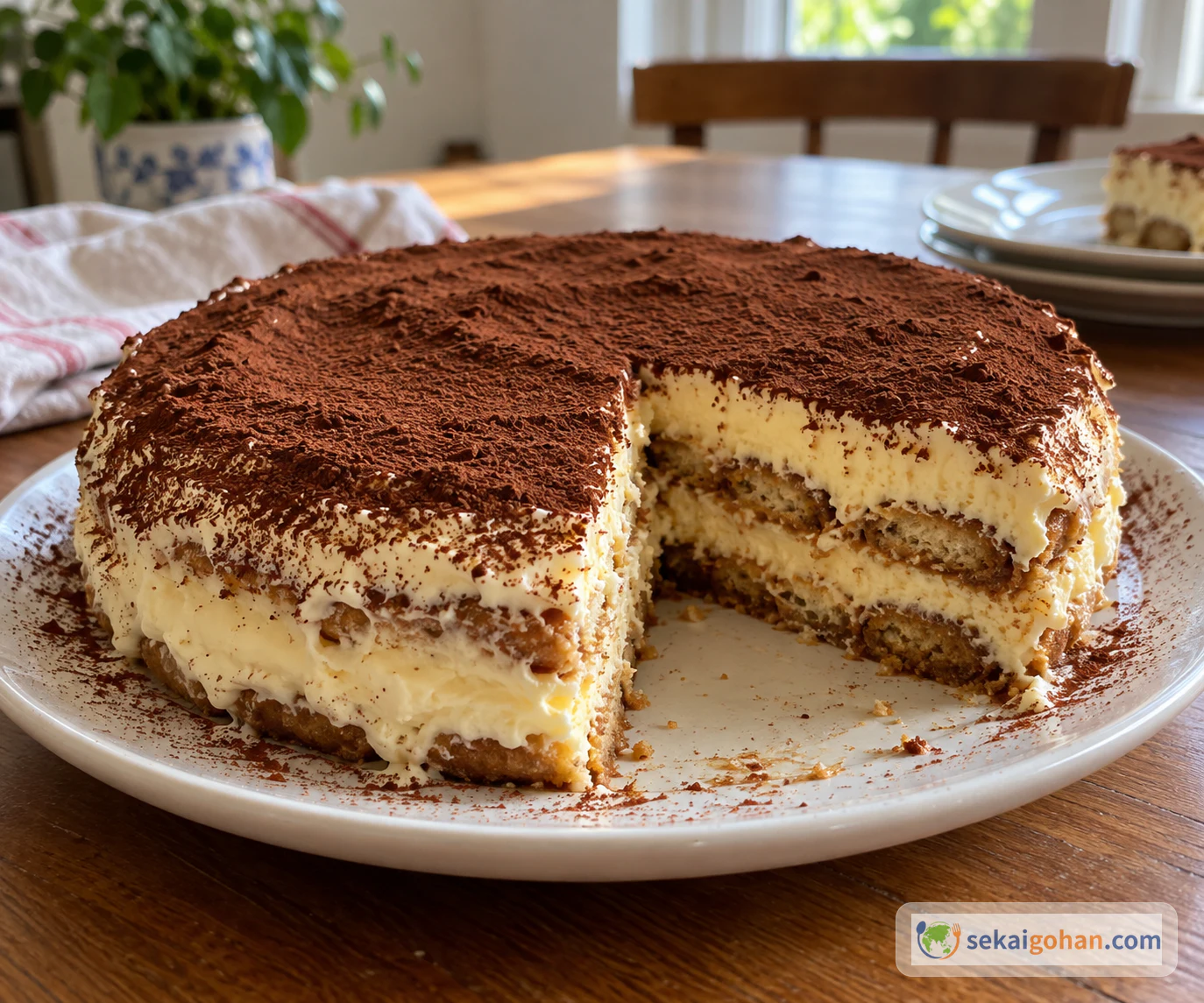
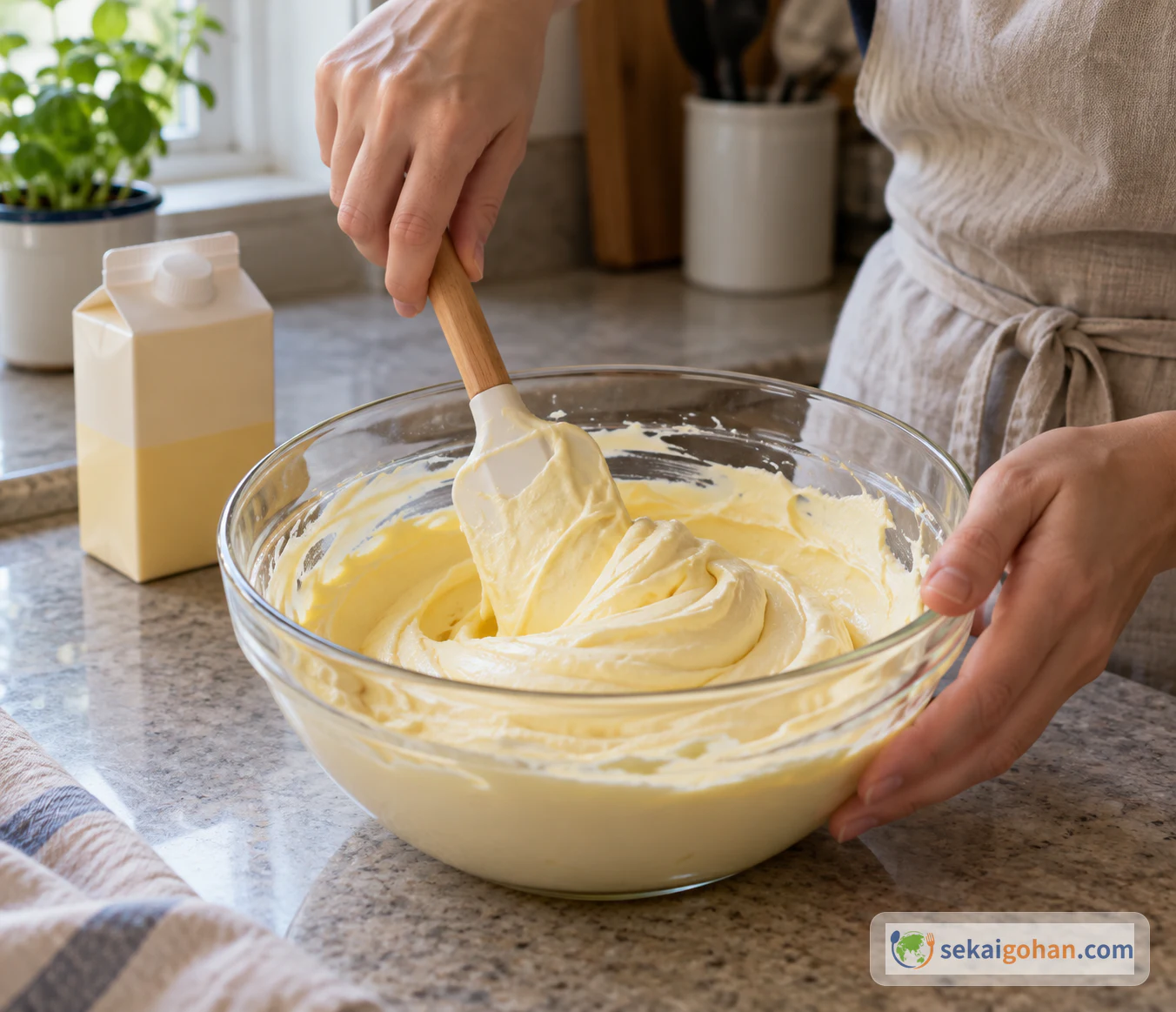
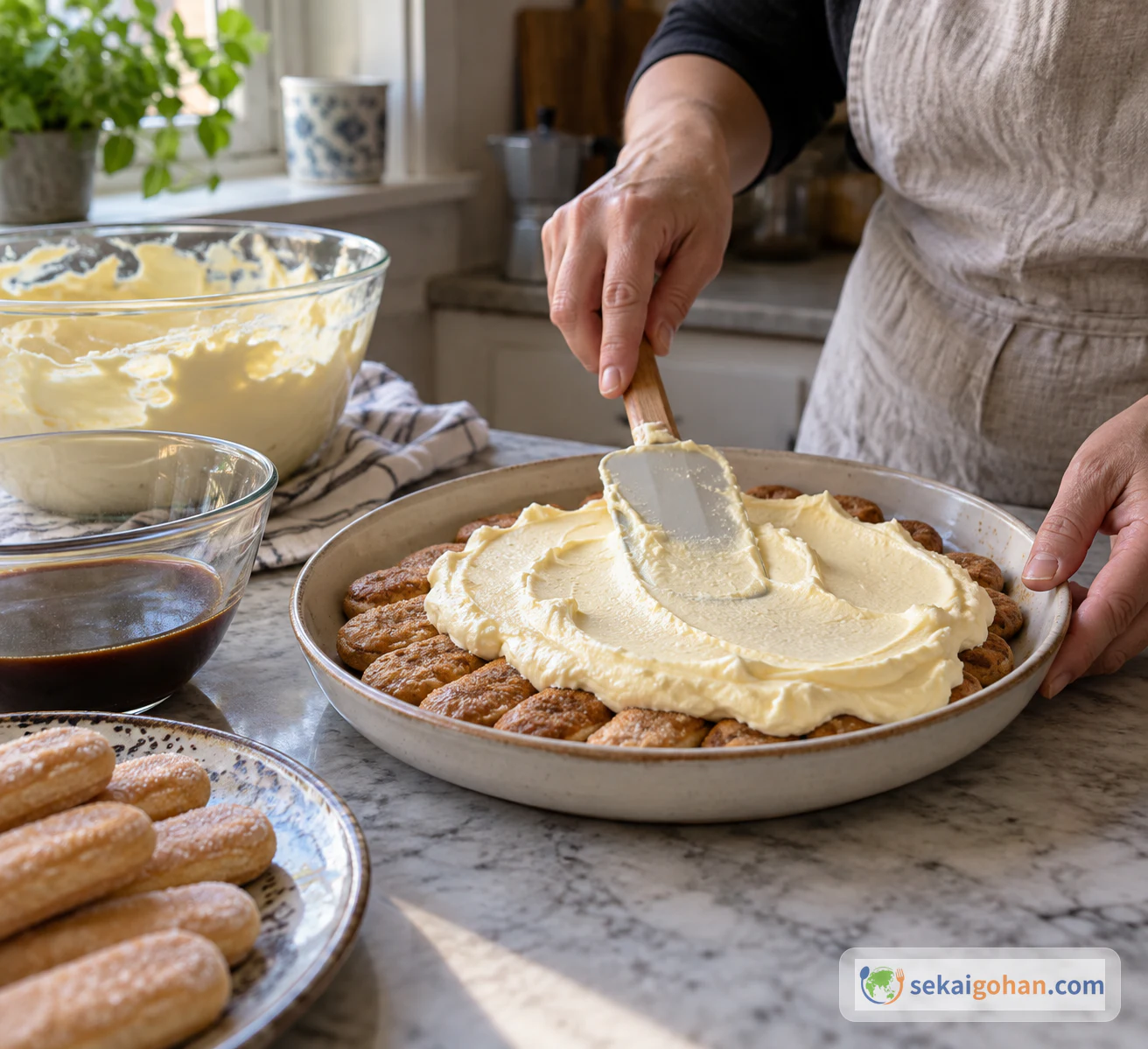
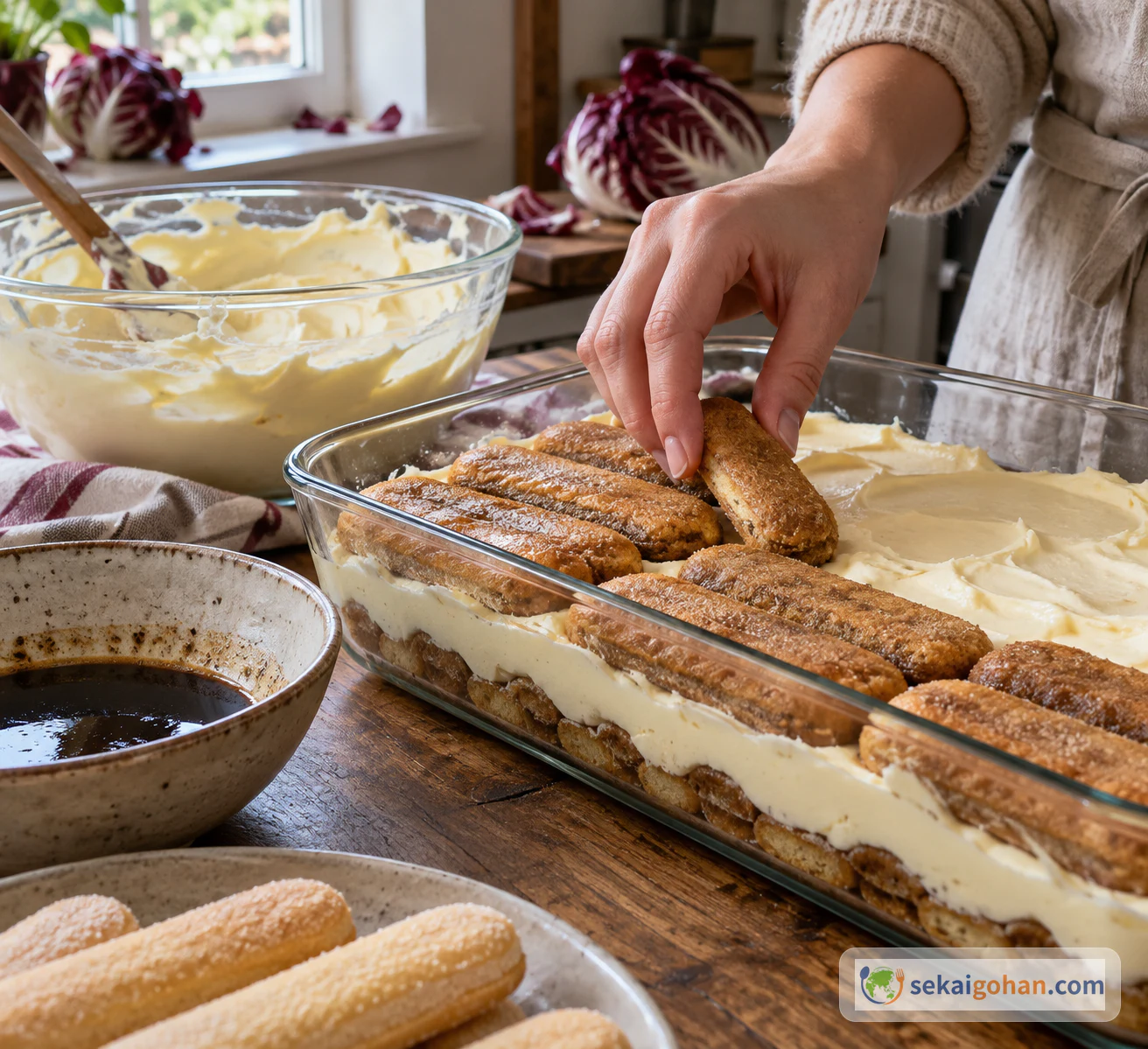
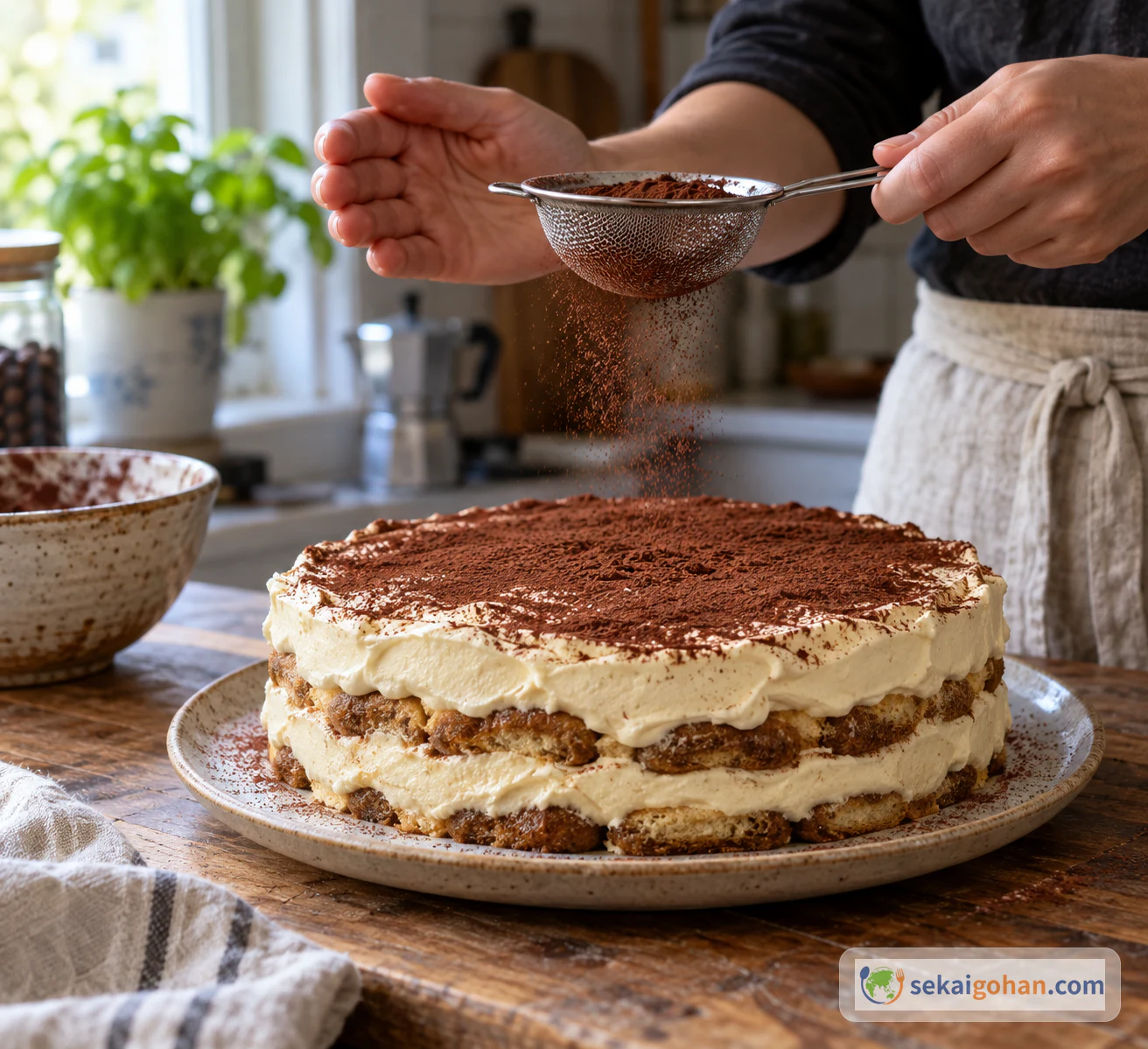
A spoon goes down through a dusting of bitter cocoa, through pale cream, into a biscuit soaked with coffee, then through a second layer of the same. The first taste is bitterness from the coffee and cocoa. Then comes the richness of mascarpone, yolk and sugar. This is tiramisu as it is made in Treviso, in the Veneto, and it is built from exactly six things: egg yolk, sugar, mascarpone, savoiardi, coffee and unsweetened cocoa.
Tiramisu in Treviso
The name is written both as Tiramisù and in the Treviso dialect form Tiramesù, which is linked to the dialect phrase "tireme sù." Where tiramisu was first made is still debated, with claims from different parts of the Veneto and from Friuli. In Treviso, the restaurant Le Beccherie set its Tiramesù down as a recipe around 1971–72 and put it on the menu in 1972. It is credited with codifying the dish and helping it spread in the early 1970s, and in 2010 it registered its recipe with the Accademia Italiana della Cucina in Treviso.
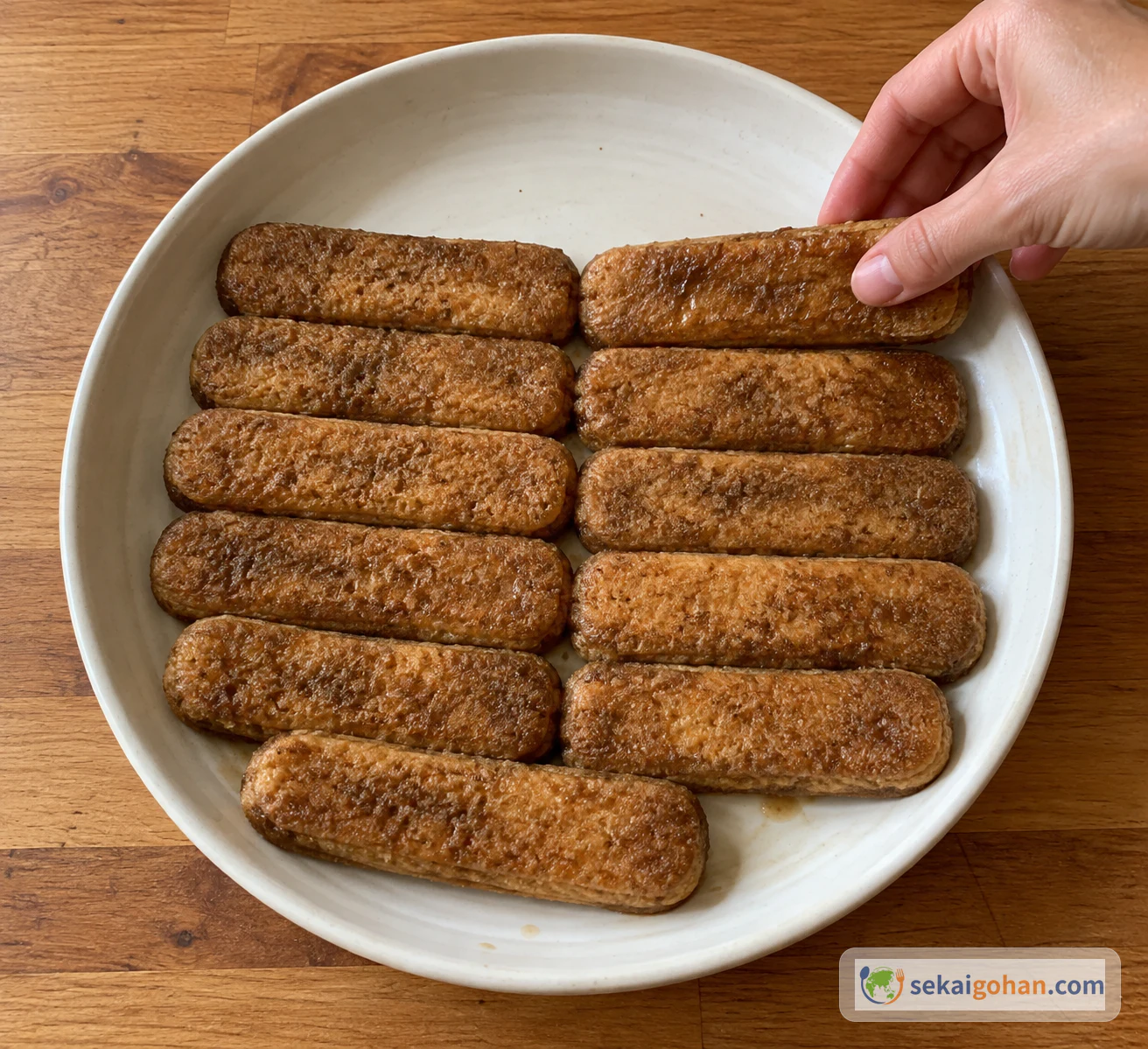
What you're after is biscuits that are damp but still hold their shape, and a soft cream that spreads rather than sets. The dessert is assembled in a round and cut into wedges, with an emblem marked in cocoa on each slice. For more dishes from the same country, see the Italy page.
Ingredients: The Six Elements, Halved
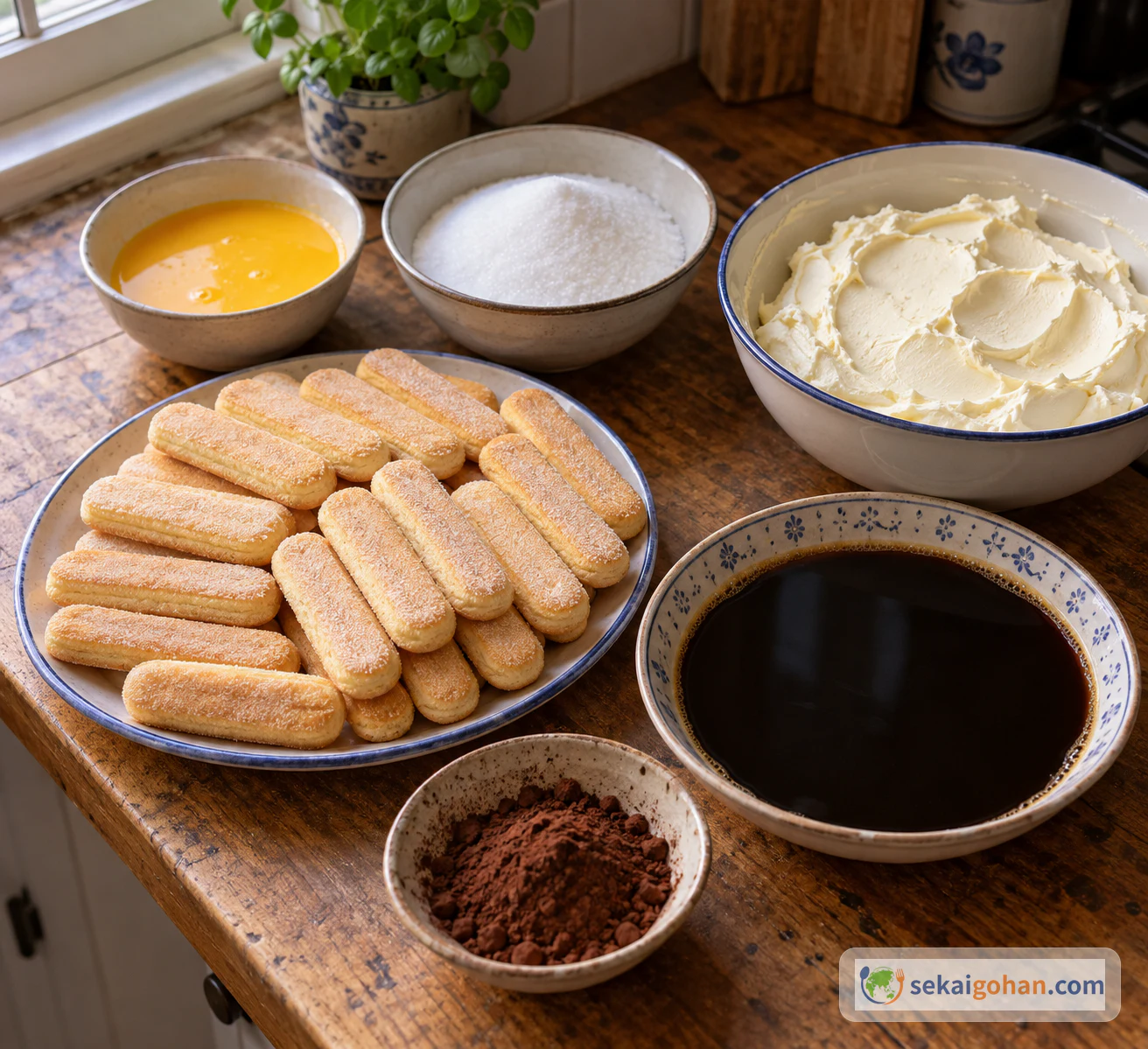
The full batch uses 12 egg yolks, 1 lb (500 g) sugar, 2.25 lb (1 kg) mascarpone and 60 savoiardi, with coffee and cocoa as needed. This recipe halves every measured ingredient.
For home use, this recipe swaps raw yolks for an unsweetened pasteurized egg yolk product made for no-cook desserts. Use the amount the manufacturer states as equal to one yolk, six times over. Weights per yolk differ between products, so check the label rather than a gram figure.
No egg whites, cream, liqueur or vanilla go into this dessert. Coffee and cocoa are "as needed", so keep extra coffee aside. Don't pour it into the dish.
Equipment
- A way to brew coffee, such as a moka pot
- A wide, shallow bowl for cooling the coffee and dipping
- A mixing bowl
- A hand mixer or whisk
- A spatula
- A round serving plate (a square dish also works; see Variations)
- A tea strainer or fine sieve for the cocoa
- Plastic wrap or a cover for the finished dish
Choosing Ingredients for Tiramisu
Pasteurized yolk product. Look for one that is unsweetened, yolk only, and labeled for desserts that are not cooked. Whole-egg or sweetened products won't work here, and neither will whole eggs or whites. Once it's open, follow the manufacturer's storage and use-by instructions.
Mascarpone. This is where most of the flavor comes from. Cream cheese has a different acidity, saltiness and firmness, so it makes a different dessert.
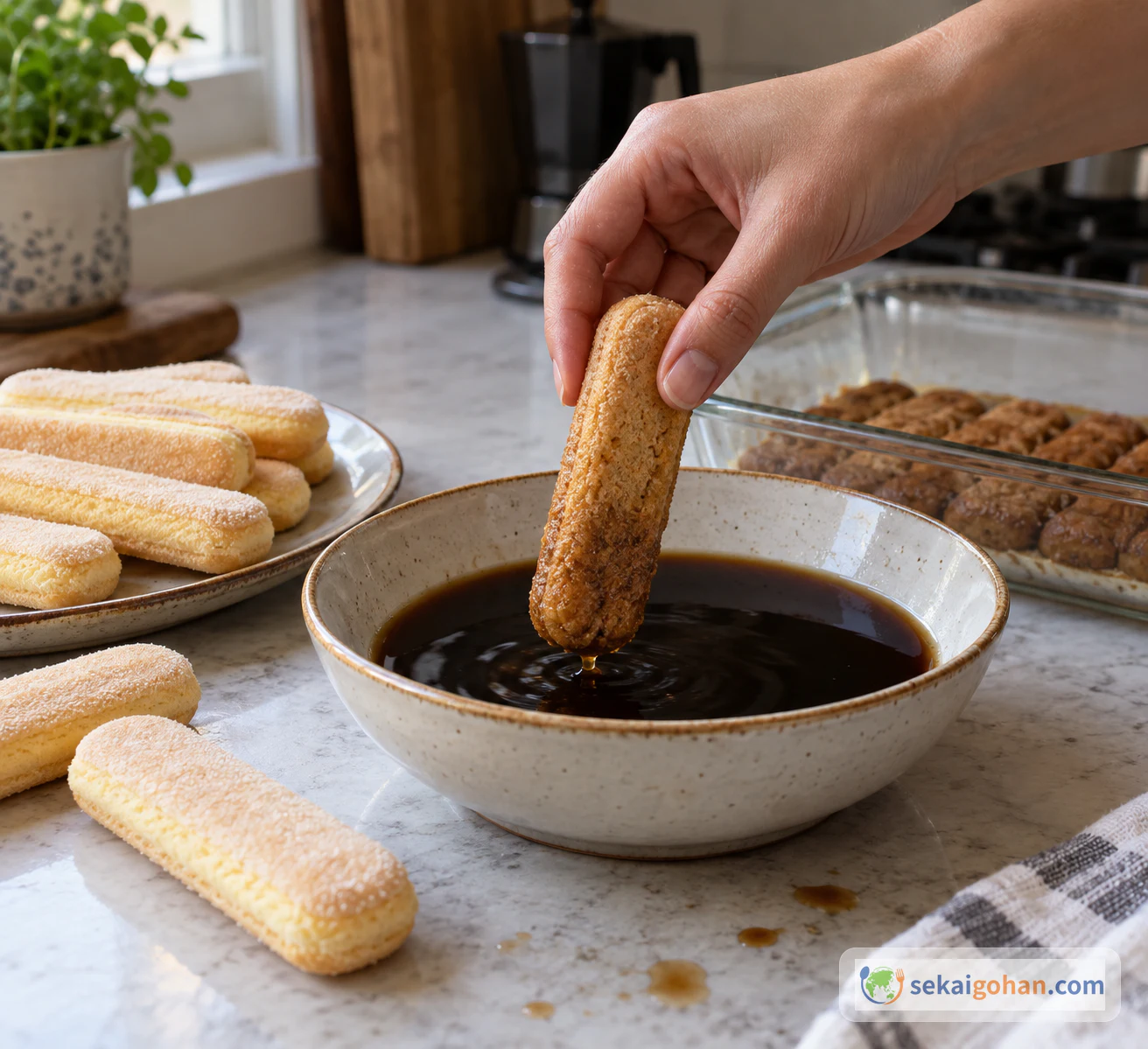
Savoiardi. These dry biscuits hold their shape after taking up coffee, which is what keeps the layers distinct. Other finger biscuits vary in thickness and in how fast they absorb liquid, so judge the dipping by how the biscuit looks and feels rather than by the clock. Sponge cake in their place changes the texture.
Sugar. Use ordinary granulated sugar; powdered sugar can't be swapped in at the same amount.
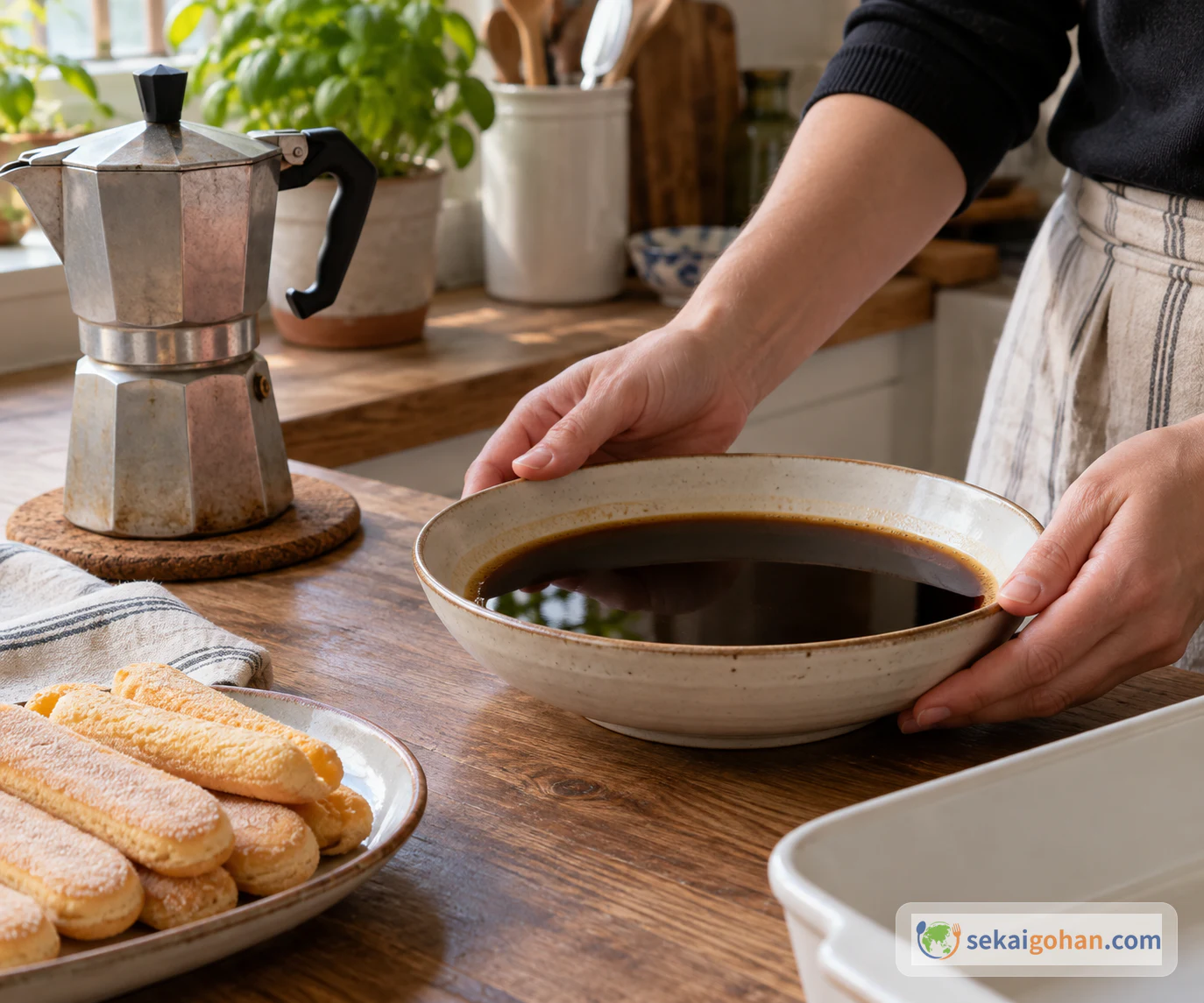
Coffee and cocoa. Brew the coffee fairly strong, keep it unsweetened and free of alcohol, and let it cool. The cocoa should be pure and unsweetened. Sweetened cocoa changes both the sweetness and the finish.
Keep eggs refrigerated, use them promptly once cracked, cook them thoroughly, and avoid serving raw eggs. Freshness alone does not make raw eggs safe. This recipe therefore uses only a pasteurized yolk product made for no-cook use. Never add raw shell eggs to it, and never top up an opened product with a new one. Pasteurized yolk does not remove every risk, so keep equipment clean, handle everything carefully and store it cold. Be careful about serving it to anyone at higher risk of foodborne illness.
This dessert contains egg and milk, and savoiardi usually contain wheat. Check the labels of the biscuits and yolk product.
Method: Cool the Coffee, Whip the Cream, Build Two Layers
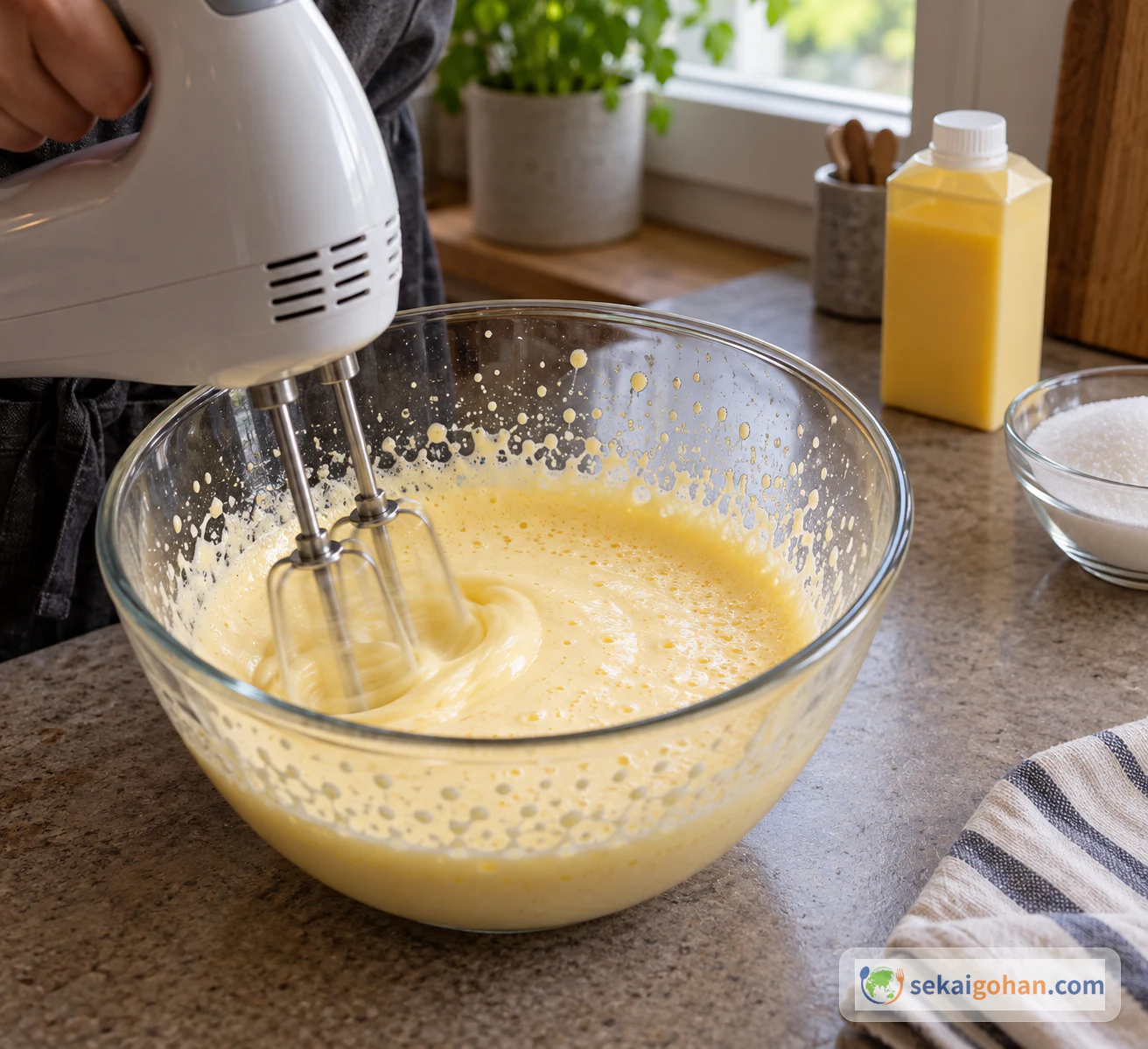
Have the coffee brewed and cooling first. Then make the cream, and dip each biscuit only just before it goes onto the plate.
Don't pour leftover coffee from the dipping bowl onto the dish, and don't serve it as a drink. If you want coffee with dessert, make it fresh.
Tiramisu Troubleshooting
| Problem | Likely cause | What to do |
|---|---|---|
| Biscuits fall apart | Dipped too long, or the coffee was still hot | Cool the coffee fully, dip only briefly, and dip each biscuit just before placing it |
| Cream is loose or separating | Mixed too long after adding the mascarpone | Stop mixing as soon as the cream is even. Chilling helps it settle |
| Tastes heavy | Coffee too weak, or cocoa too sparse | Bitter coffee and unsweetened cocoa cut the sweet cream; check that both are unsweetened |
| The top looks wet | Cocoa absorbs moisture from the cream as it sits | Dust the cocoa at the table, just before serving |
Serving, Storing and Varying Tiramisu
Serving
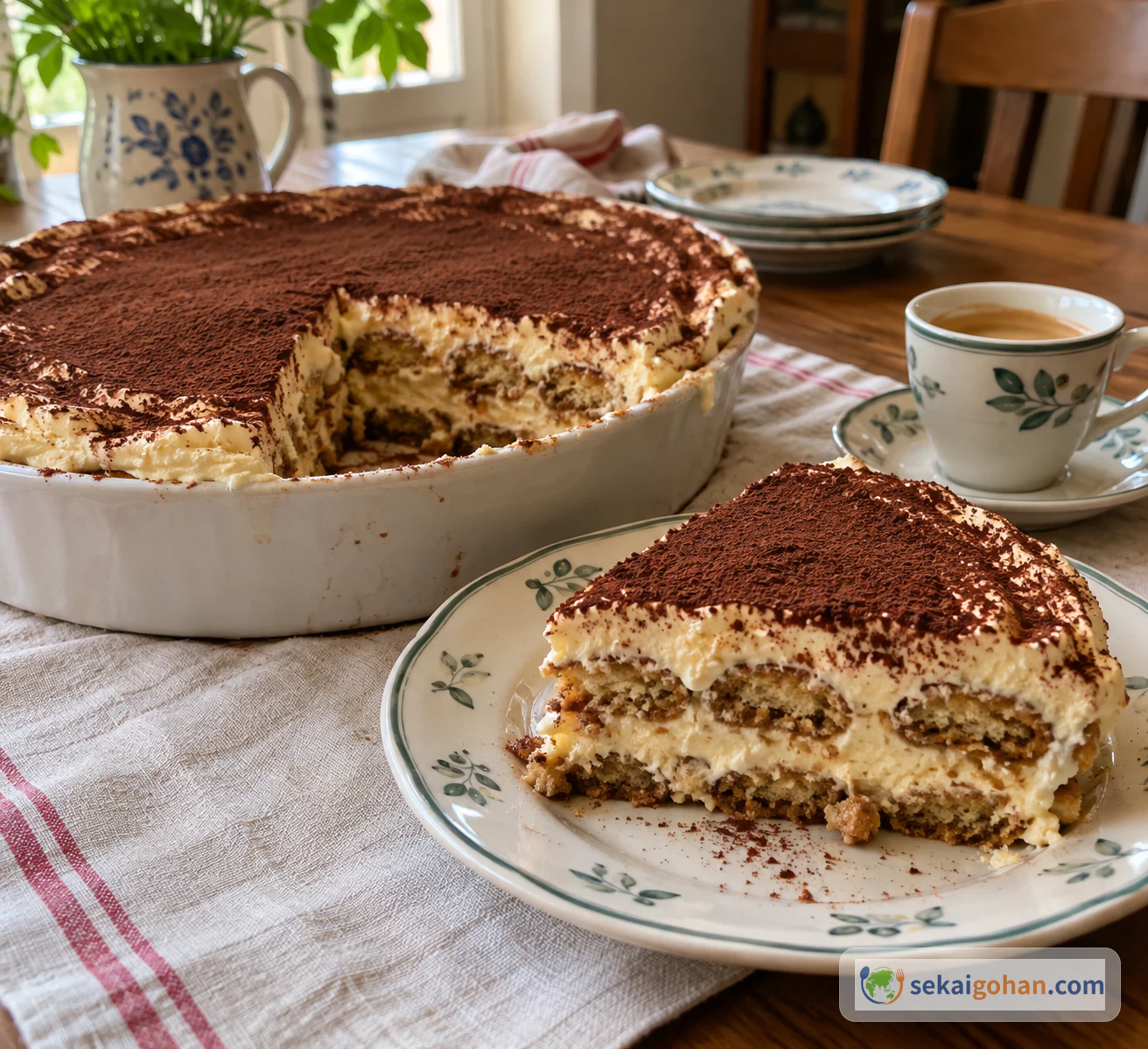
A round plate lets you serve it the Treviso way at home, cut into wedges, each one showing the two damp biscuit layers and the pale cream between them. The bitterness of the coffee and cocoa keeps the cream from tasting too sweet, so a small cup of freshly made coffee alongside suits it well.
Storage
Clean your bowls and tools before you start. As soon as the dish is assembled, cover it and keep it in the refrigerator at 39°F (4°C) or below until serving, and plan to eat it soon rather than keeping it for days. Take out only what you will eat and return the rest to the refrigerator right away. Tiramisu is never reheated.
Variations
- Individual glasses. Same ingredients and layer order, served in small glasses instead of a round.
- A square dish. Easier to divide into even pieces at home, though you lose the round shape and the wedge with its cocoa emblem.
- Lighter dipping. Pass the biscuits through the coffee even more quickly to keep their shape firmer, without adding extra coffee to make up for it.
Frequently Asked Questions
Does it use cream, egg whites or alcohol?
No. Many home versions add egg whites, cream or liqueur, but this one is made from egg yolk, sugar, mascarpone, savoiardi, coffee and cocoa alone. Liqueur in particular changes the flavor and aroma.
Can I use fresh raw yolks?
Freshness alone does not make raw yolks safe. This recipe uses an unsweetened pasteurized yolk product made for no-cook use, with no raw eggs mixed in.