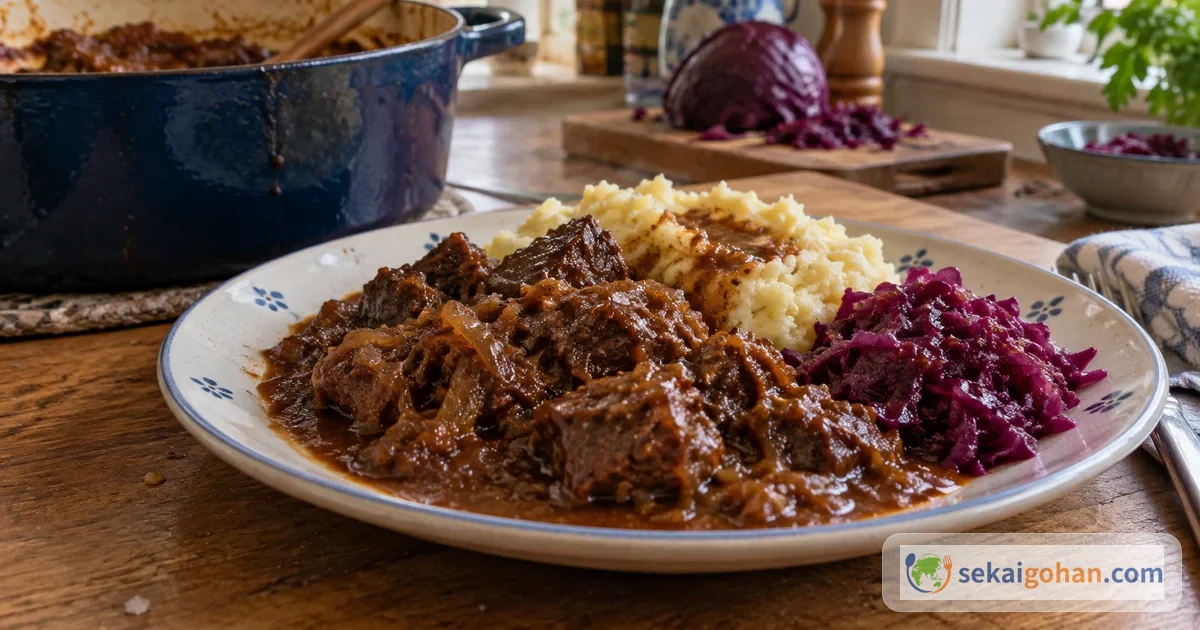
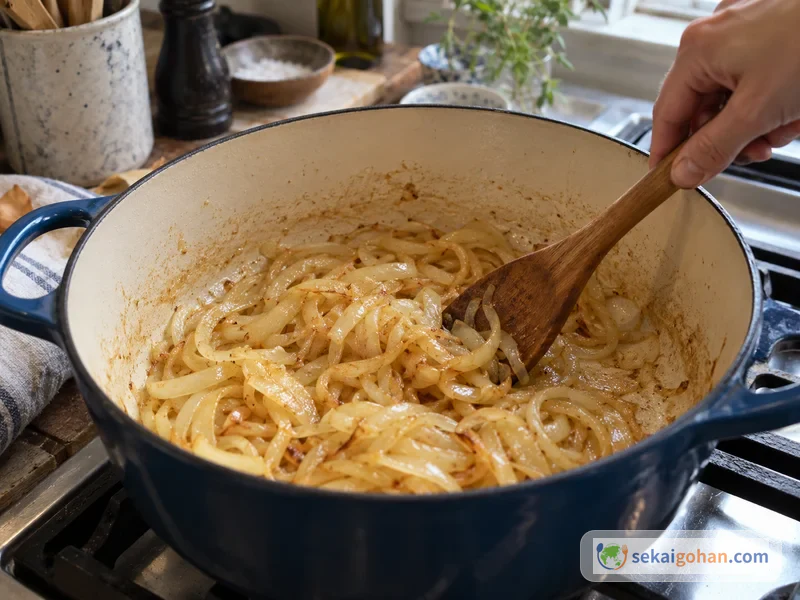
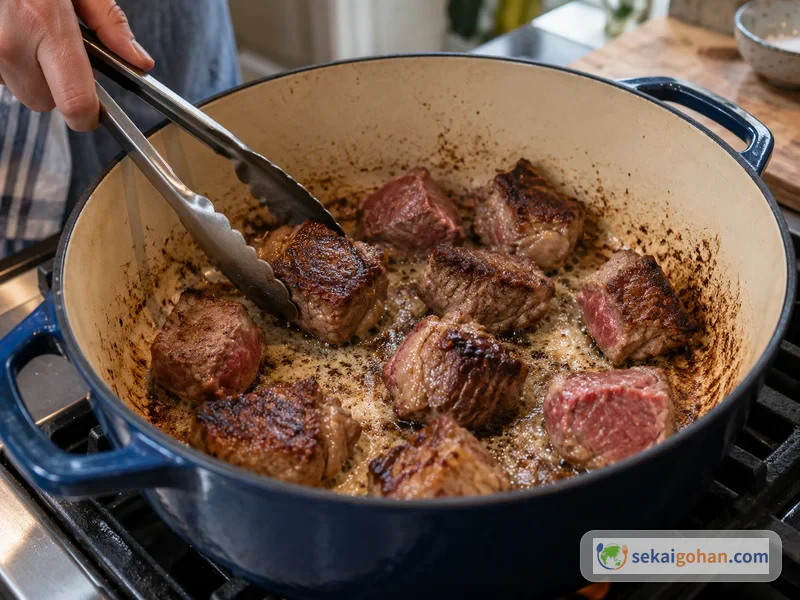
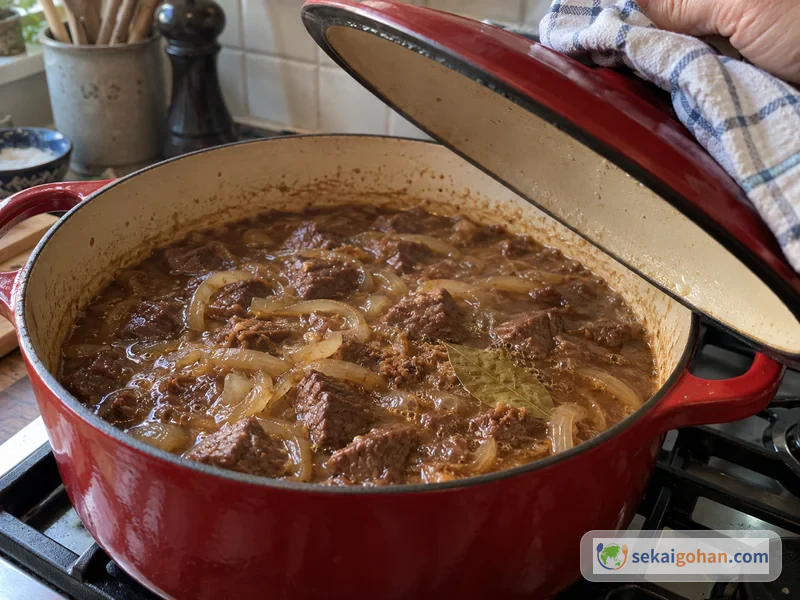
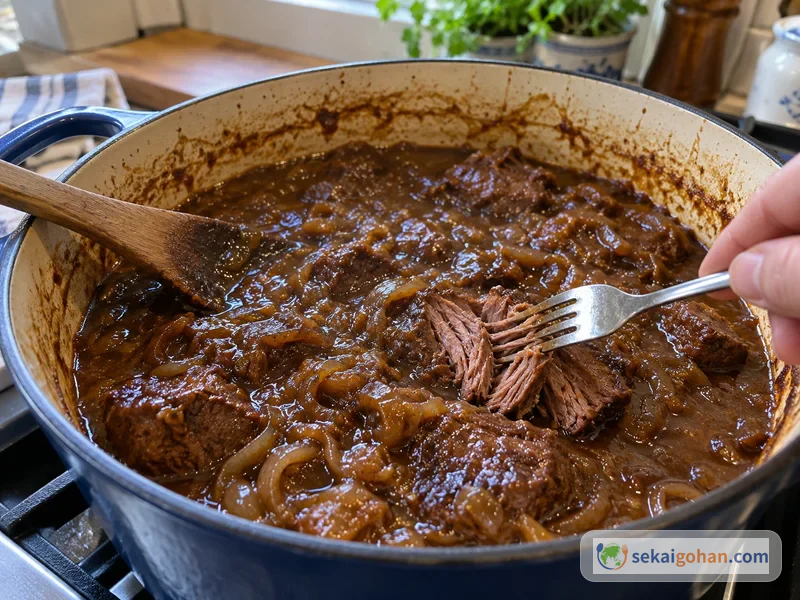
The onions slowly color in the butter, the beef sizzles, and the moment you pour in the wine vinegar a sharp, sour steam rises through the kitchen. Then the pot goes on low heat, covered, for two hours, sometimes three, while the edge of the sourness fades and the onions melt into the sauce. What comes out is hachee, a dark brown Dutch winter stew scented with clove and bay leaf. Its character comes from simmering in vinegar to tenderize the meat, and it is served with mashed potatoes and red cabbage, a plate that, for Dutch people, brings to mind a dinner on a cold day.
Hachee, from leftover meat to winter staple
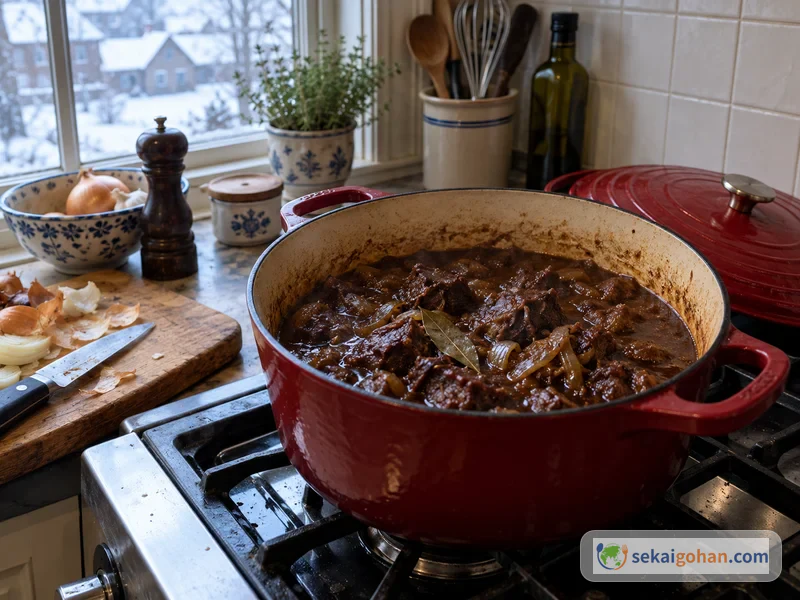
The name comes from hachée, the past participle of the French verb hacher (to chop, to make fine). Hachee began as a way to use up leftover boiled meat: it was chopped again and simmered with whatever vegetables were at hand, with wine or vinegar added to soften meat that had gone tough. The name also appears among medieval banquet dishes, though how those were made is not recorded.
One of the oldest recipes comes from a Dutch housekeeping book published in the mid-19th century. Its first edition of 1850 and second edition of about 1851 call for dicing cold cooked beef and simmering it for about 3 hours with onion, brown sugar, pepper, ground clove, salt, potato starch, and either vinegar or red wine. It was plainly a thrifty dish built around leftovers.
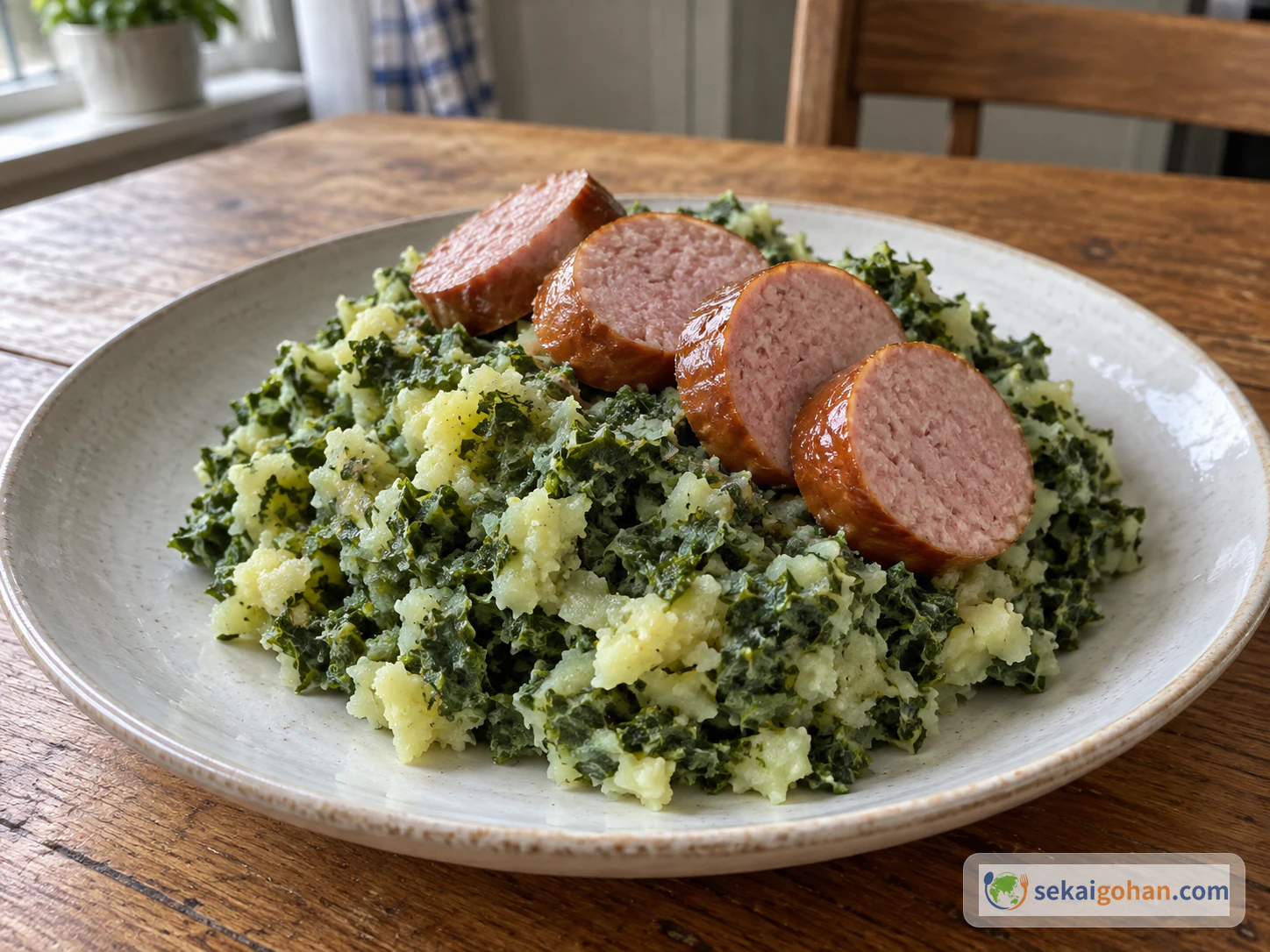
Today's hachee is usually made with raw stewing beef, but the basic form hasn't changed: beef and onion, simmered for a long time with vinegar and spices. It shares the cold season with stamppot, mashed potatoes with vegetables mixed in, another Dutch winter staple. Set it beside the Belgian carbonnade, which stews beef with onions in beer, and the difference between the bittersweet beer and the sourness of vinegar shows clearly, even though both are stews from the Low Countries.
Ingredients (serves 4)
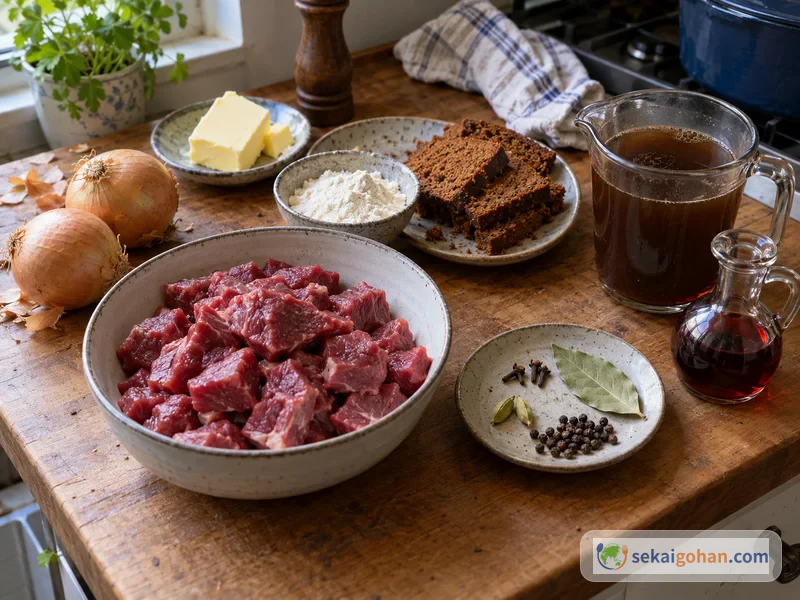
These amounts suit a home kitchen, using ingredients that are easy to buy.
The hardest ingredient to find is the Dutch spice cake. It is a dense cake baked with rye flour, honey and spices such as cinnamon and clove, and in the Netherlands people butter it for breakfast. Import food shops sometimes carry French pain d'épices, and this is the closest substitute. If you cannot find that, use rye bread and brown sugar to make up at least the thickening and the faint sweetness, and the sauce comes much closer. Cloves, cardamom and bay leaf are all available in the spice aisle of a supermarket or online.
Cloves are strong in aroma even in tiny amounts. Use more than 3 and the sauce turns medicinal. Add them whole so you can take them out before eating, which makes it easy to control the aroma and keeps you from biting into them.
Ingredients for hachee
Everything here, beef, onion, vinegar and spices, is in nearly every kitchen. The balance matters more than the shopping: sourness, sweetness and spice all need to be present before it tastes like hachee, so don't leave out any one of them.
In the Netherlands, many cooks crumble the rye spice cake eaten at breakfast (ontbijtkoek, peperkoek) into the hachee sauce. The cake melts into the sauce to thicken it and adds a faint sweetness and spice aroma. Some versions also add apple syrup (appelstroop).
How to make hachee
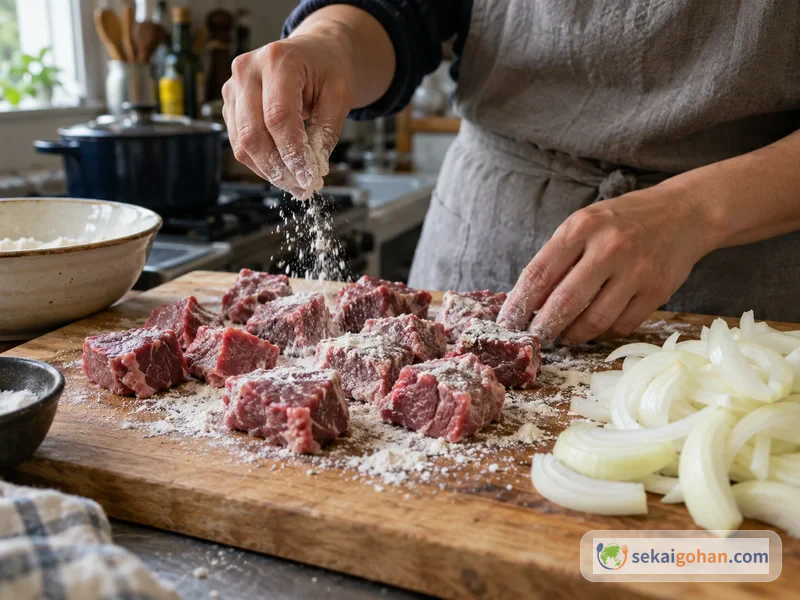
Prep takes about 15 minutes and the simmer is at least 1 hour, but 2.5 to 3 hours gives meat soft enough to fall apart. While it simmers you can leave the pot almost alone, so use that time to prepare the side dishes.
Oil and steam spatter when you sear the beef and during the first heating after adding the vinegar. Vinegar steam stings the eyes easily, so do not bring your face too close to the pot. Also, because spice cake or bread is used, people with a wheat allergy should take care.
Right after you add the vinegar it tastes very sour, but the edge softens as it simmers. Taste only after it has simmered for more than an hour, and if it is still sour, add brown sugar 1 tsp at a time.
Serving hachee with mashed potatoes and red cabbage
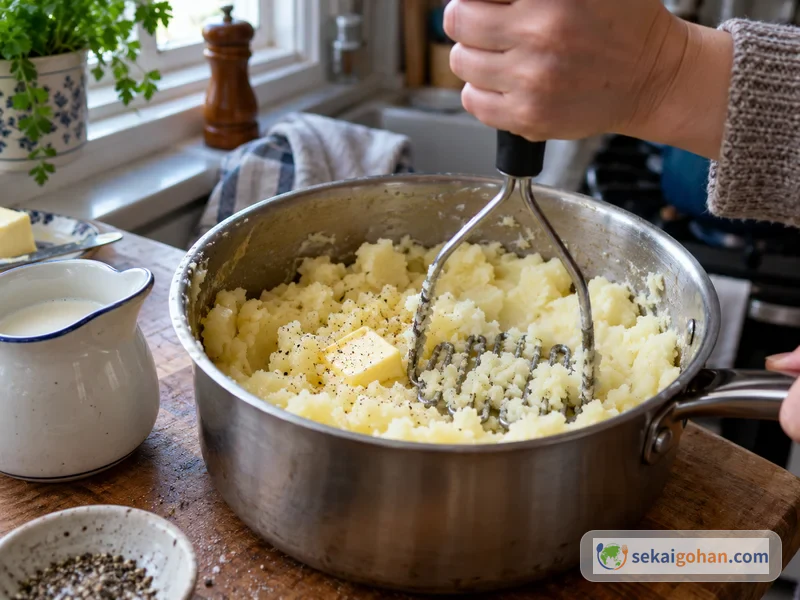
Mashed potatoes come first. Peel 2.25 lb (1 kg) of potatoes, cut them to the same size and start them in salted water. When a fork goes in easily after 15–20 minutes, drain, saving a little of the cooking water, then mash while hot, working in 1 tbsp butter and warmed milk or cooking water a little at a time until smooth. Season with pepper and nutmeg. Mashed potatoes stiffen as they cool, so mash them to match the time the hachee finishes.
In the Netherlands, red cabbage is classically simmered sweet and sour with apple. Jarred pickled red cabbage (German rotkohl) is sold at import food shops and only needs warming. The dark brown sauce, the white potatoes and the purple cabbage make a real contrast of color on the plate, the look of a Dutch winter table.
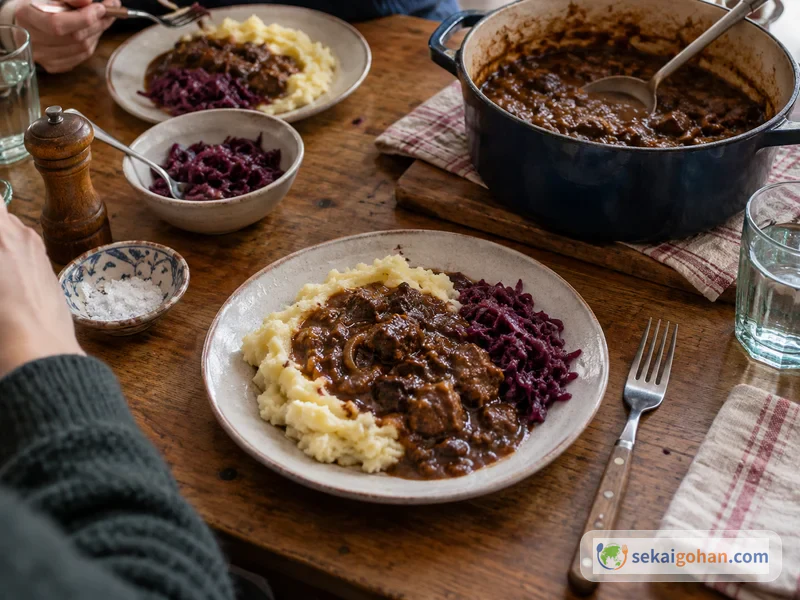
To serve, pile mashed potatoes on the plate, make a well in the middle with the back of a spoon, and pour in plenty of hachee with its sauce, with the red cabbage alongside. As you eat, mix sauce and potatoes bit by bit with your fork. The potatoes soak up the rich sauce, sharp with vinegar and spices, and soften it to just the right balance.
You can also bake it as an oven dish: layer red cabbage, hachee and mashed potatoes in that order in a baking dish, top with breadcrumbs and butter and bake for more than 30 minutes at 350°F (180°C). It's a good way to turn leftover stew into a different dish.
Frequently asked questions
Can I make it without spice cake?
Yes. The spice cake adds thickness, sweetness and spice aroma, but hachee works without it. If the sauce is thin, reduce it longer at the end. Rye bread with brown sugar, or pain d'épices, brings it closer to the original flavor.
Can I use plain grain vinegar?
You can, but its acidity is sharper than wine vinegar and the aroma moves away from the original. Cut the amount to 2 tbsp, then taste after simmering and add more if needed.
The meat is not getting tender.
Depending on the cut, it can take more than 3 hours. Keep it covered and keep simmering on the lowest heat. Raising the heat tightens the meat and makes it tough, and the sauce scorches easily.
Can I make it in a pressure cooker?
Yes. After browning the onions and meat, follow the pressure cooker's instructions for the pressure time. A pressure cooker doesn't reduce the liquid, so cut the stock to 1¼ cups (300 ml), and after pressure cooking open the lid and reduce to thicken.
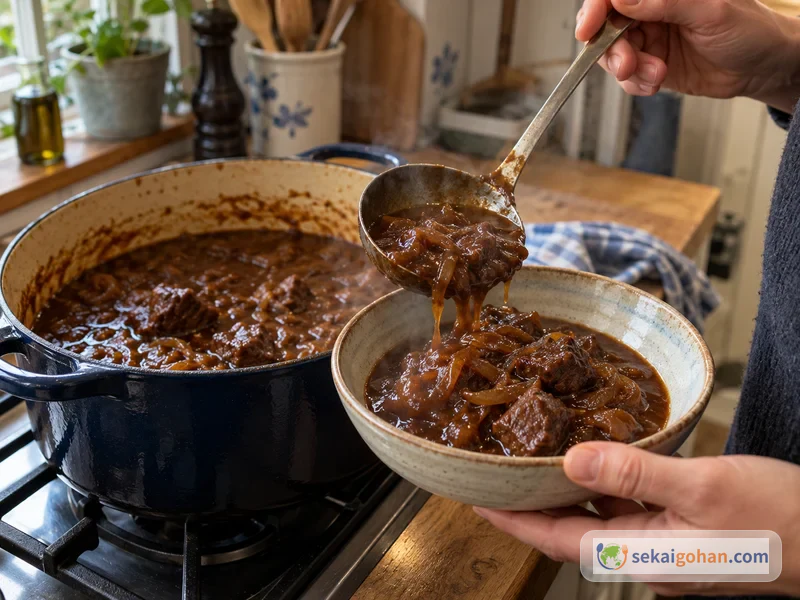
Can I make it ahead?
Yes, it reheats well. Cool it before putting it in the refrigerator, and when reheating, stir from the bottom and heat it thoroughly all the way through.