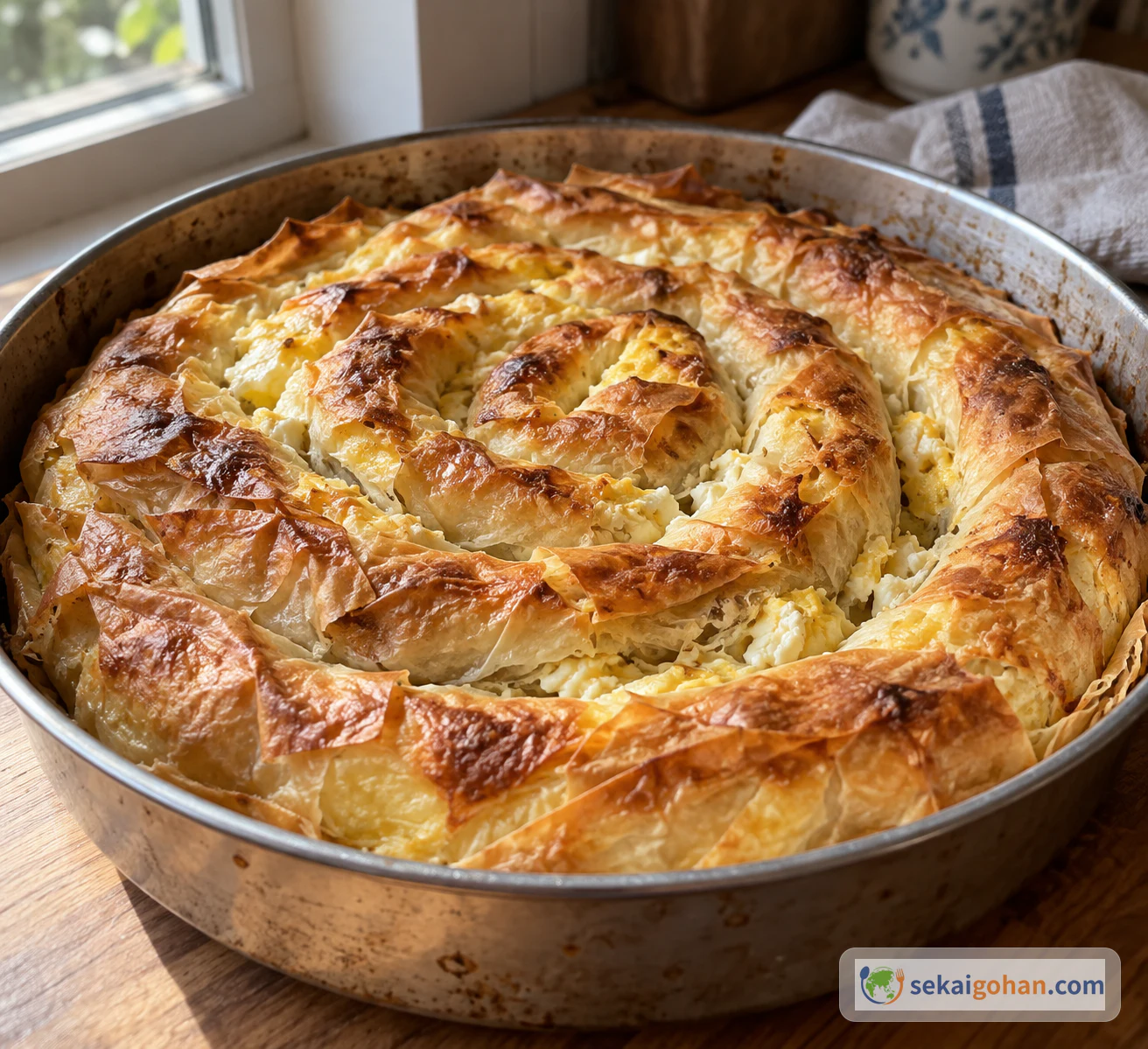
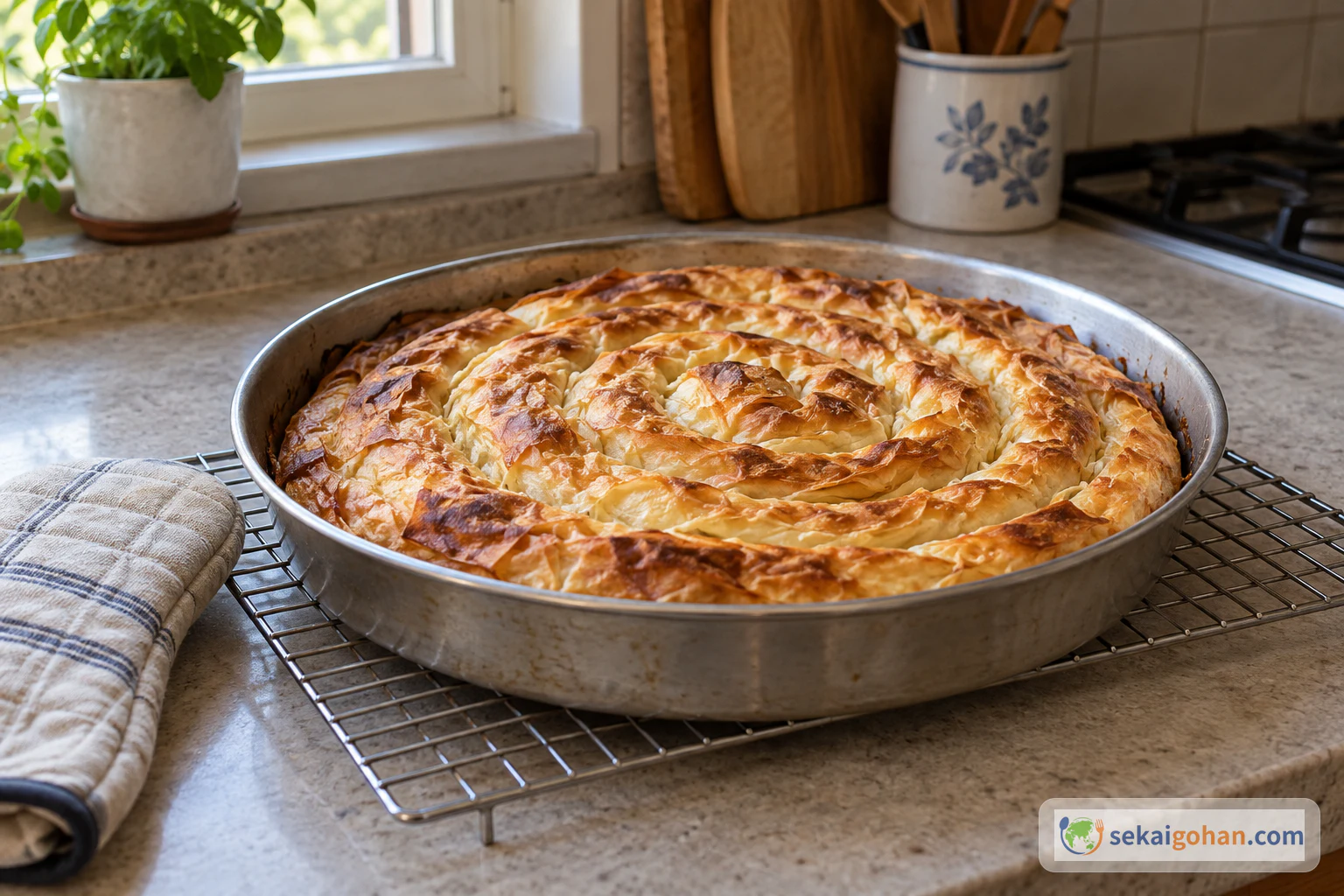
Paper-thin sheets of phyllo, each brushed with a little yogurt, egg and white cheese, rolled up and packed into a pan: that's banitsa (баница), and in Bulgaria it's what many people eat for breakfast. The cheese does the seasoning. Its saltiness, along with the tang of yogurt, carries the whole pastry, so there's no extra salt, butter, milk or sugar here. It's one of the country's best-known dishes, and a good way into a cuisine where yogurt and white brined cheese turn up at nearly every meal.
About Banitsa
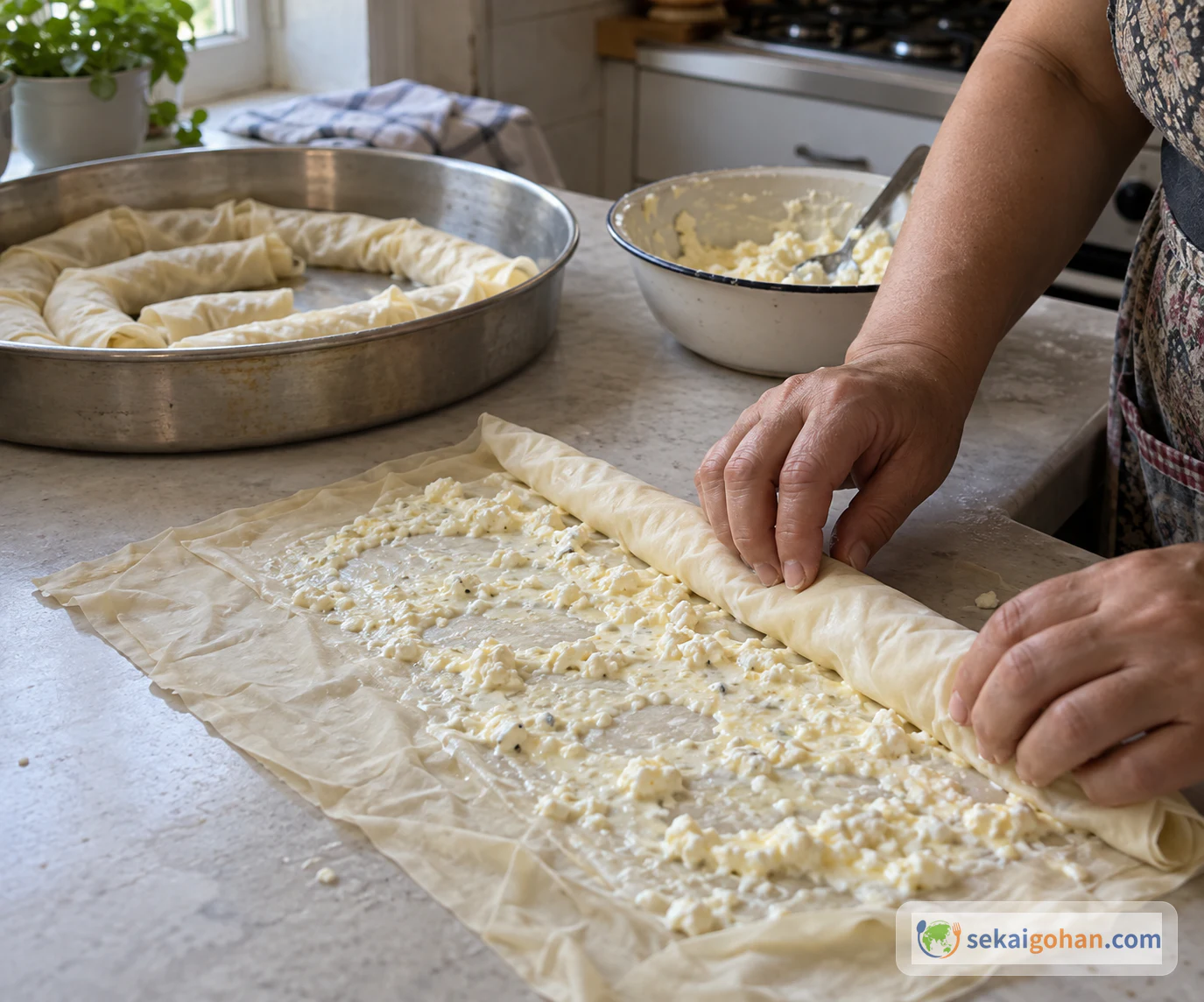
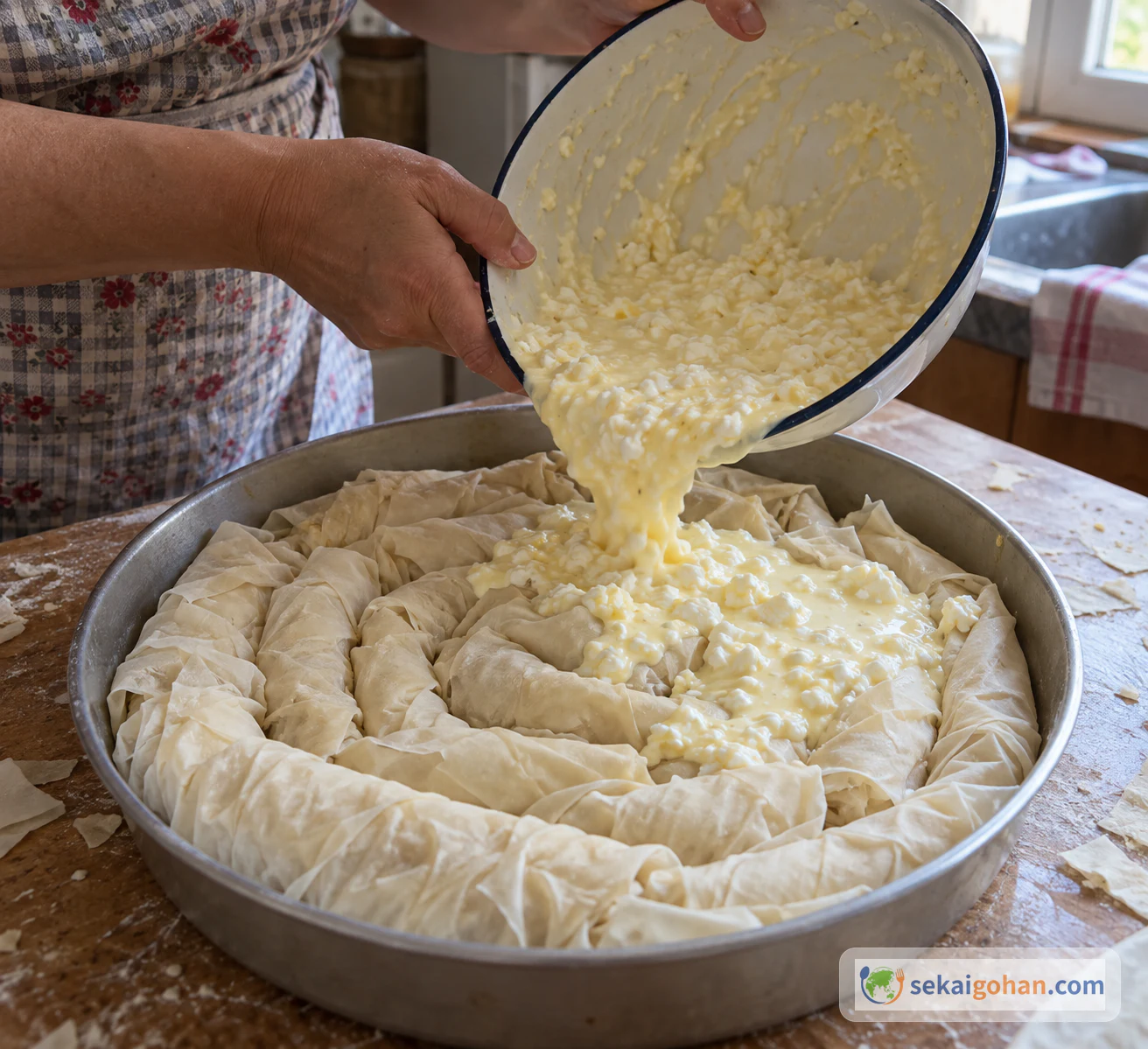
There isn't just one banitsa. Fillings range from cheese to spinach, rice and meat, and some versions stack the sheets flat while others roll them. This one is a rolled cheese banitsa. Each sheet gets a thin coat of filling made from yogurt, egg and cow's-milk sirene, then it's rolled and laid in the pan, and the filling you've held back is poured over the top before baking.
At Christmas and New Year, it's customary to tuck kismets, small tokens of good fortune, into the banitsa. For more dishes from the same table, see the Bulgaria country page.
In Bulgarian the dish is written баница, and in English usually banitsa (banitza is also seen).
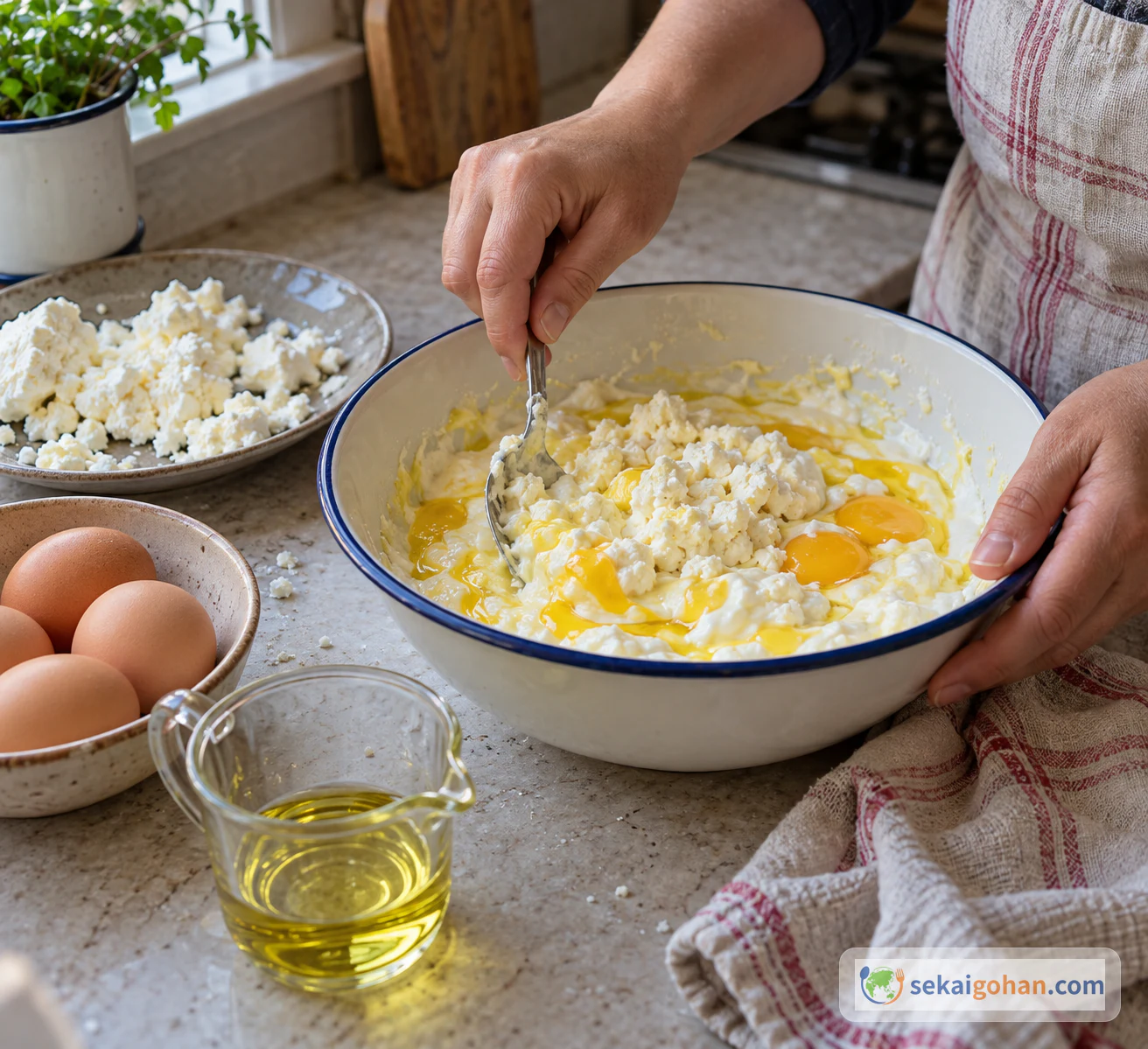
Ingredients: 14 oz (400g) Phyllo, Yogurt, Sirene and Eggs
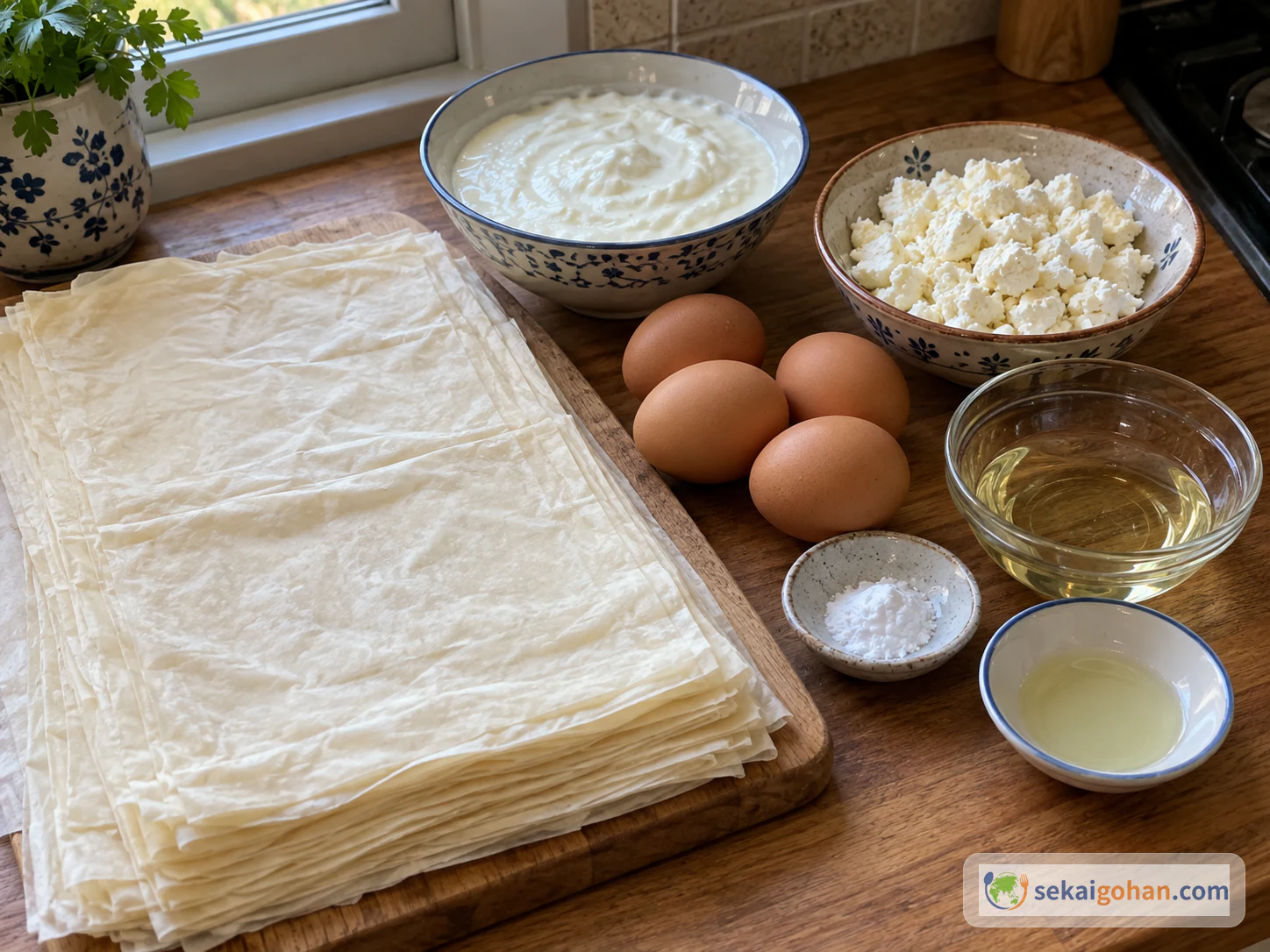
Use 7–10.5 oz (200–300g) of cheese. The photos and steps here use 9 oz (250g). The recipe makes 12 portions.
This recipe contains egg, milk (yogurt and cheese) and wheat (in the phyllo). Check the labels on the phyllo and cheese for other allergens as well. The filling contains raw egg, so do not taste it before baking.
Equipment
- Oven
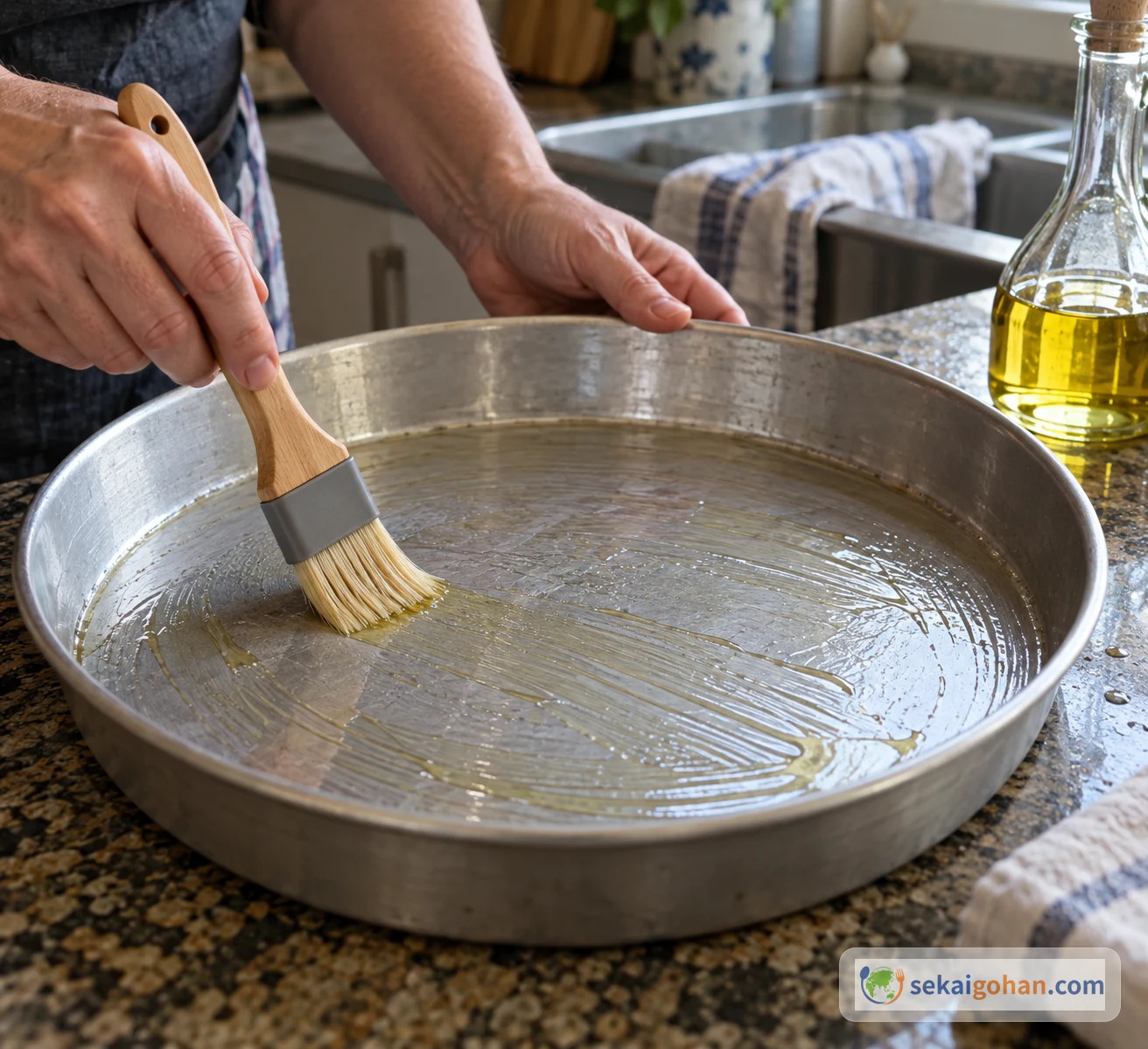
- Shallow baking pan. The photos show a shallow round metal pan of about 12 inches (30 cm), as one example.
- Mixing bowl and spoon or whisk
- Pastry brush for oiling the pan
- Cooling rack
- Knife for cutting
Choosing Sirene, Feta and Phyllo for Banitsa
Sirene is the Bulgarian white brined cheese, and this recipe uses the cow's-milk kind. Because its saltiness seasons everything, it matters which one you buy. Brined cheeses vary from product to product, so handle the brine and draining the way the label directs.
Feta works as a substitute, though it's a different cheese and the flavor will shift with it. Taste it for salt before you start.
Phyllo should be the thin sheets sold for banitsa or as filo; spring roll wrappers are a different product and won't work. How many sheets you get in 14 oz (400g) depends on the brand. Thaw the phyllo as the package directs, and keep the sheets you aren't using covered so they don't dry out and crack.
Method: Spread, Roll, Pour, Bake
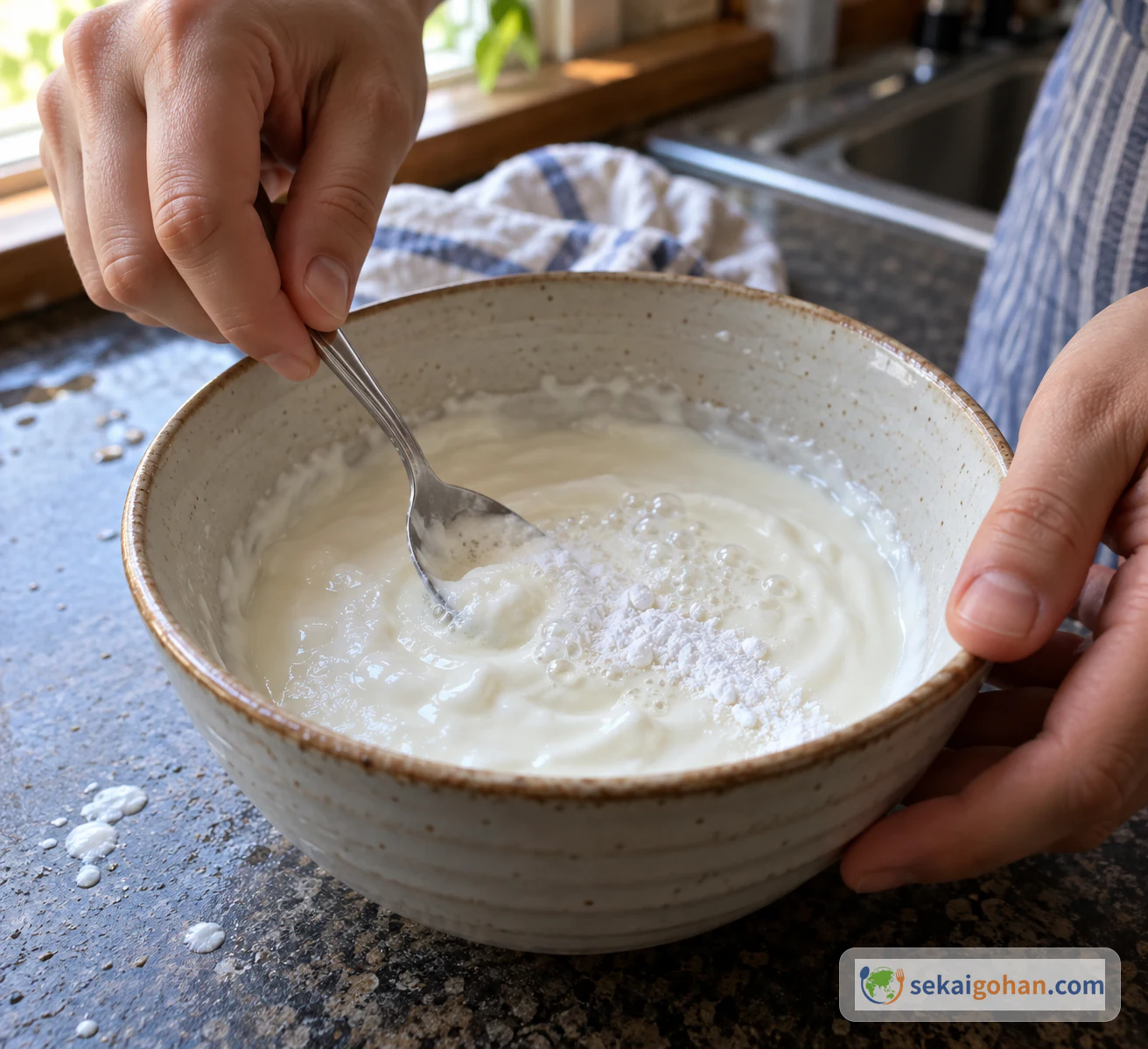
Steps 1–2 make one batch of filling. You will spread most of it on the sheets in step 4. Keep a share back in the bowl to pour over the rolls in step 5, so plan to have some left when the last sheet is rolled.
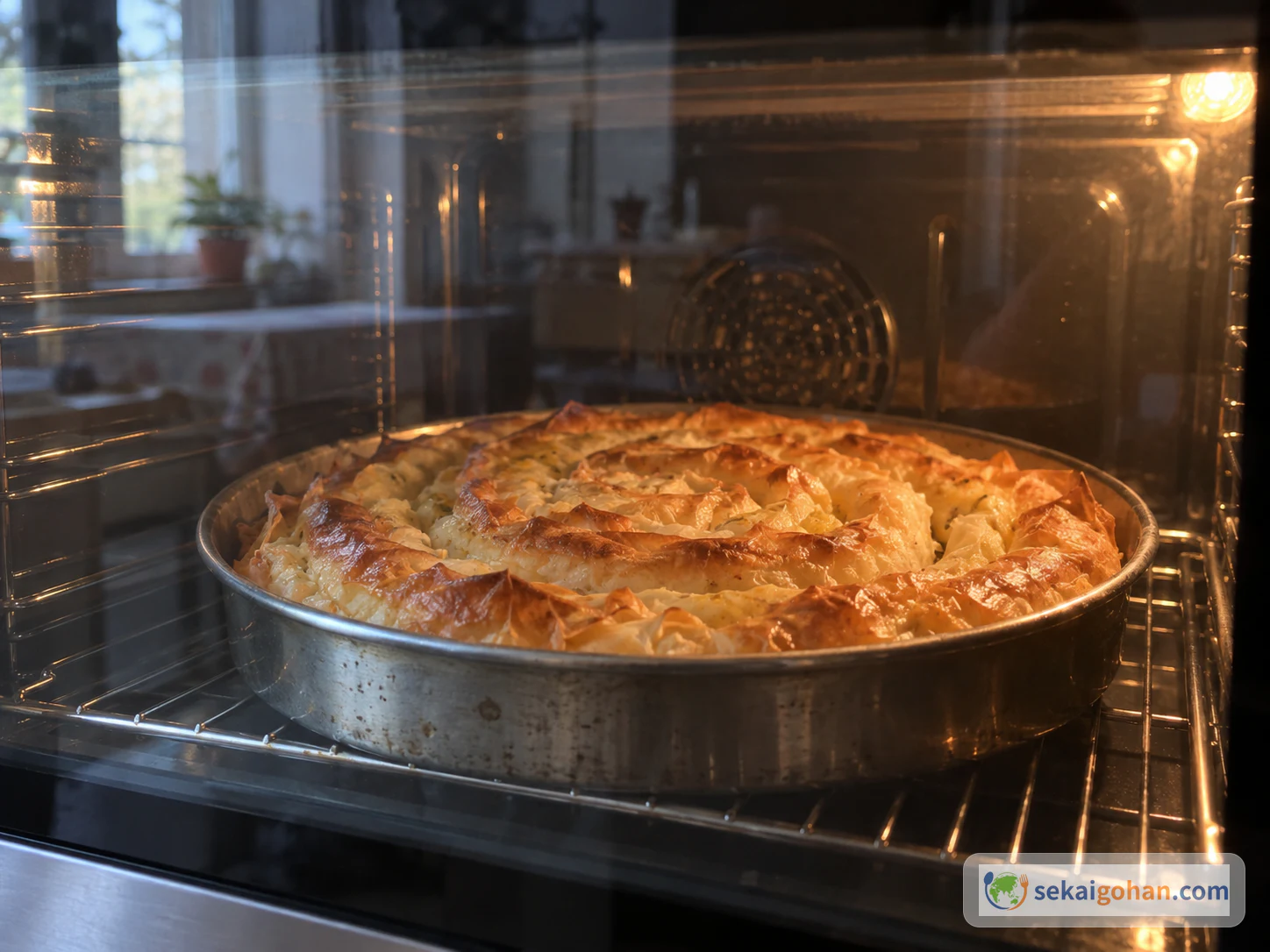
Plan on 40 minutes: 30–40 minutes of baking plus 10 minutes of cooling. Mixing, rolling and preheating come on top.
Banitsa Troubleshooting
| Condition | Likely cause | What to do |
|---|---|---|
| Sheets tear while rolling | Too much filling on each sheet | Spread it thinner. A thin coat is enough. |
| Sheets crack before you can roll them | The phyllo dried out | Keep unused sheets covered and work one sheet at a time. |
| No filling left for the top | All of it went on the sheets | Next time, set a share aside before you start rolling. |
| Top is golden but the center is underdone | Color forms faster than the middle cooks | Check that the egg filling is cooked through to the center (see step 6). |
| Too salty or not salty enough | Saltiness varies between cheeses | Adjust through your choice of cheese and how you drain it. |
Serving and Variations
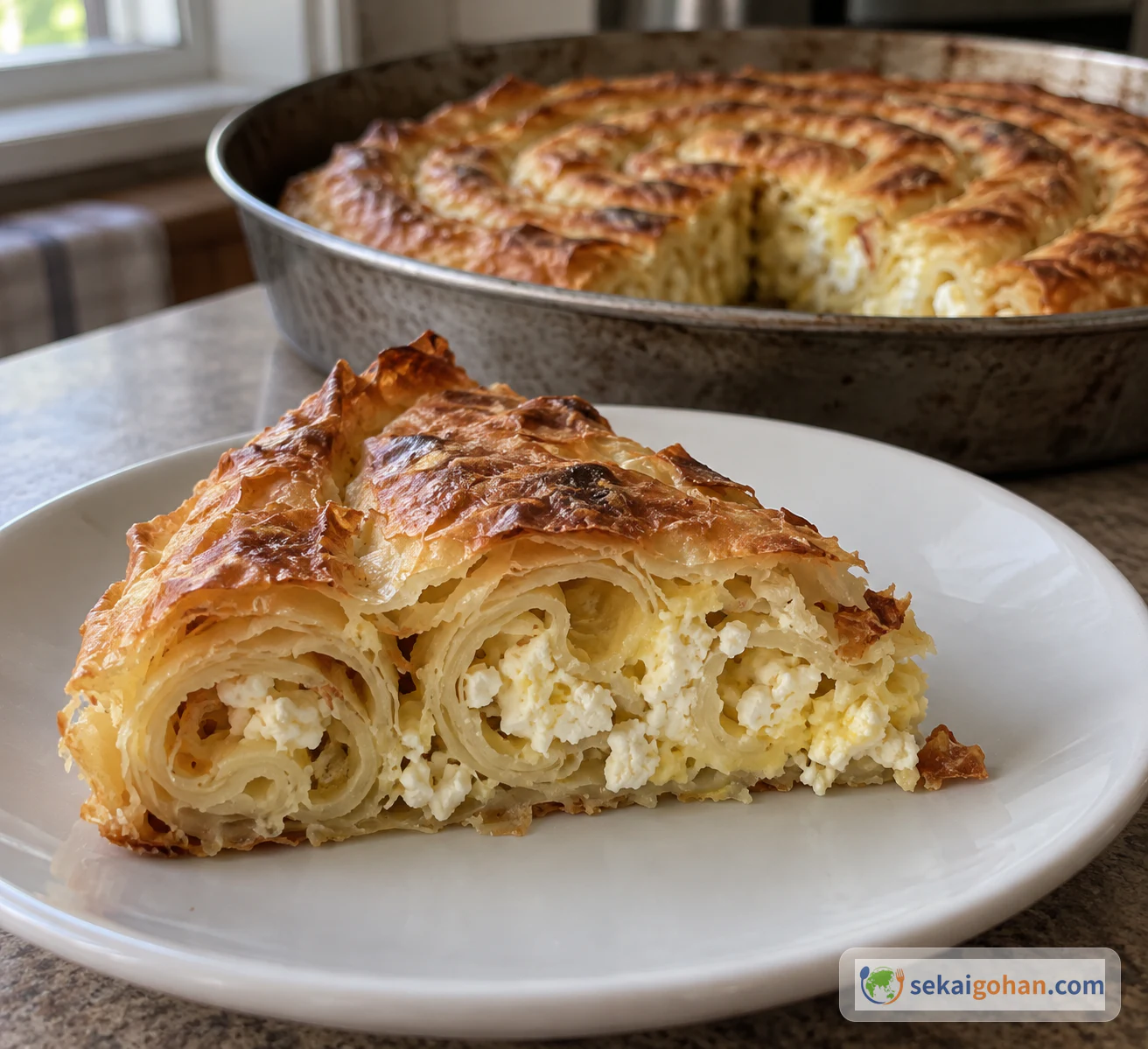
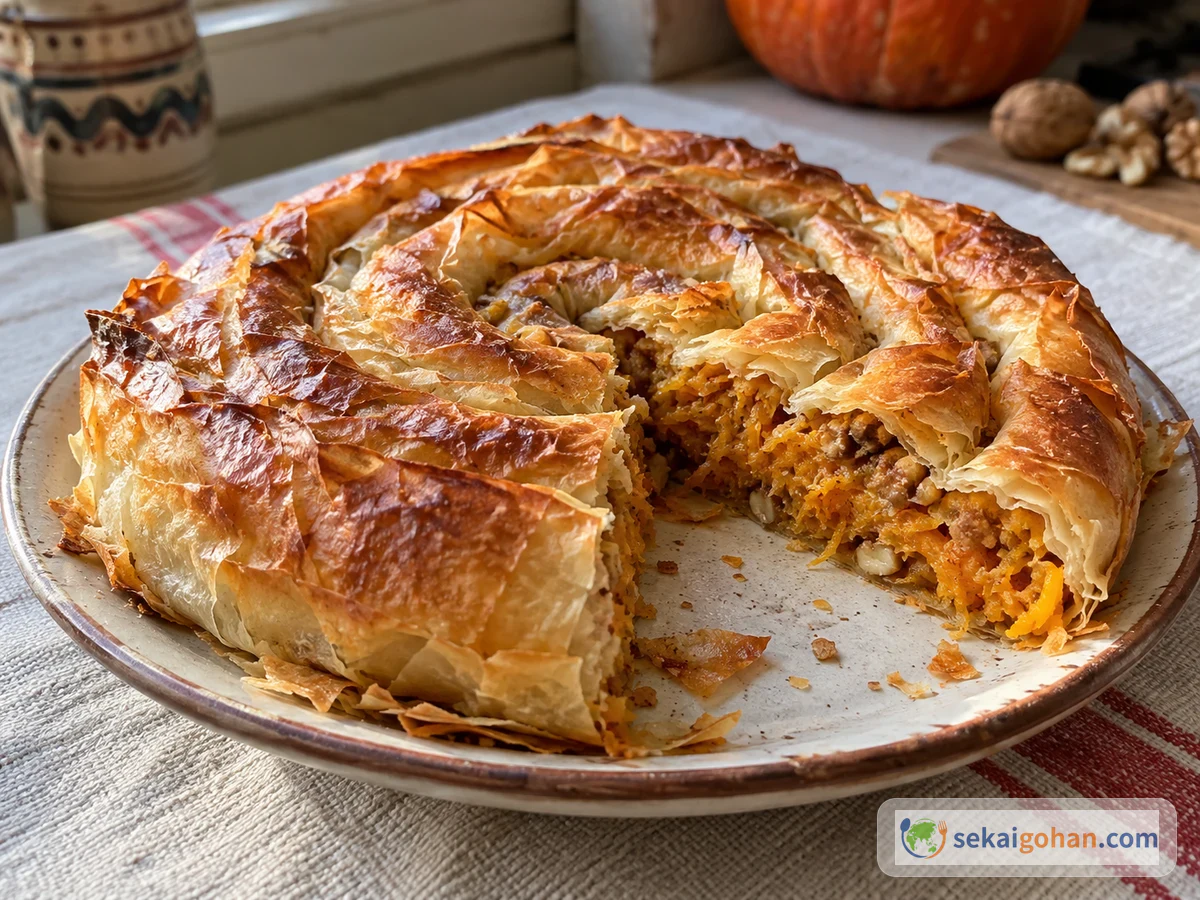
In Bulgaria, banitsa comes to the breakfast table with a glass of ayran (a yogurt drink) or boza (a fermented grain drink). Cut into it and you'll see the spiral of rolled sheets in cross-section.
The cheese amount is yours to tune between 7–10.5 oz (200–300g) of sirene. Toward 10.5 oz (300g), the filling leans saltier and cheesier; toward 7 oz (200g), the yogurt comes forward. Beyond cheese, spinach, rice and meat all make good fillings, and tikvenik is a pumpkin variation.
Frequently Asked Questions
What is the difference between rolled and layered banitsa?
In this rolled version, every sheet gets a thin coat of filling and is rolled up, the rolls are packed into the pan, and the reserved filling goes over the top. In a layered banitsa, the sheets are stacked flat with cheese and egg between the layers. The ingredients and amounts differ, so follow one recipe all the way through rather than mixing the two.
How should I store leftovers?
Divide leftovers into shallow containers, cool them quickly and refrigerate them. When reheating, heat thoroughly to 167°F (75°C) or above.