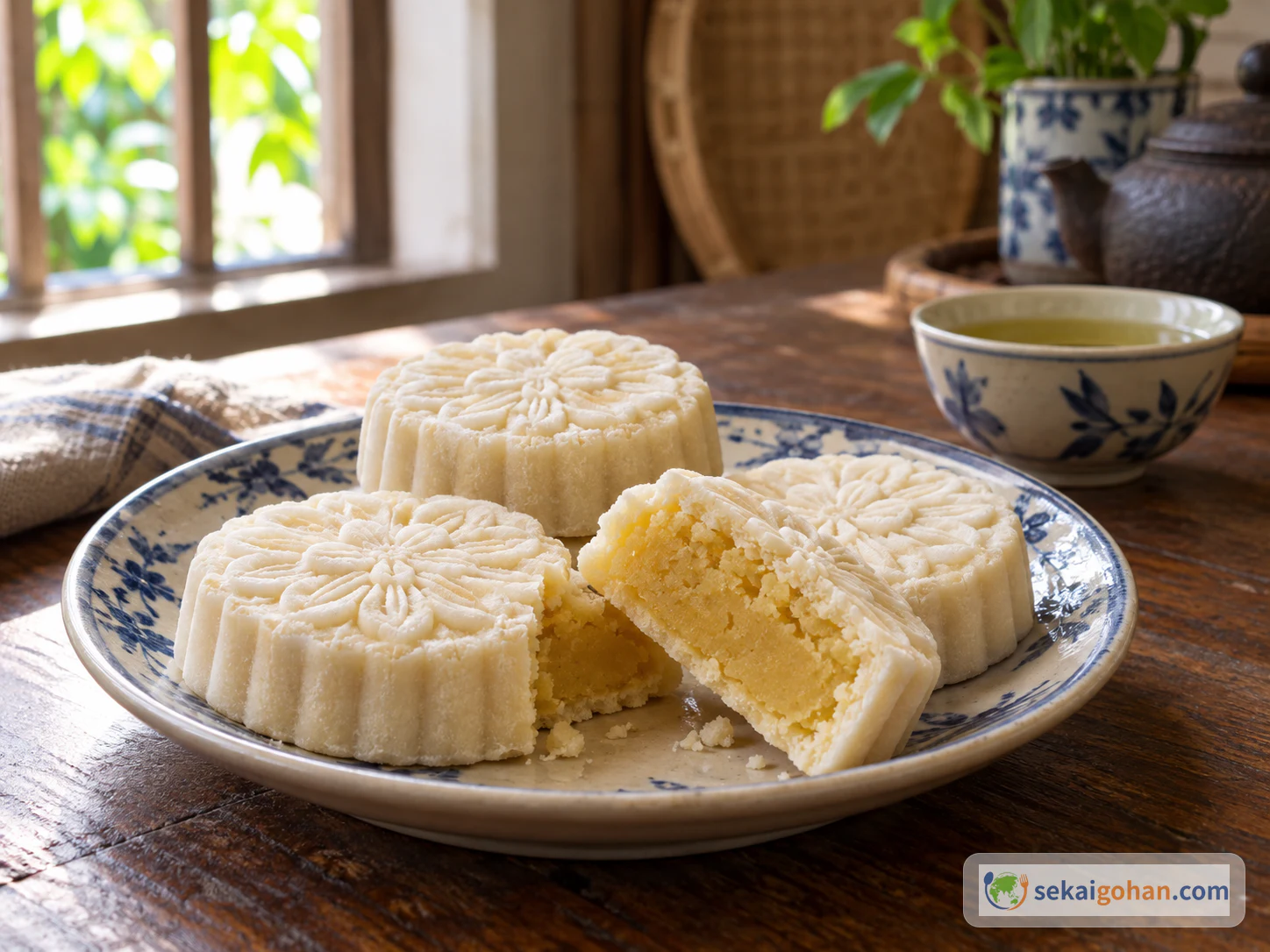
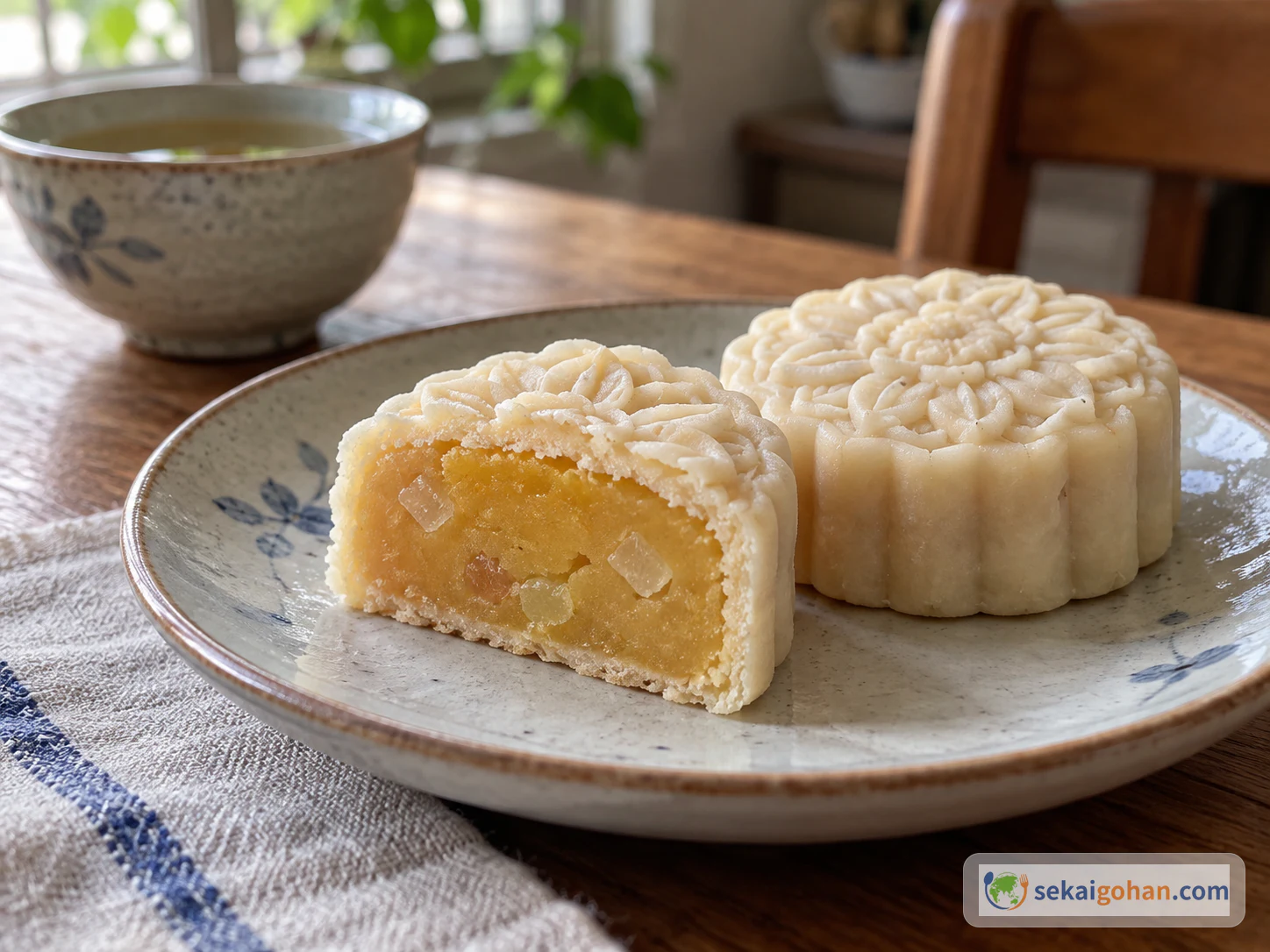
White bánh in with a pressed pattern, broken open to show its yellow mung bean filling
CuisineVietnamese

Bánh in: Vietnamese Pressed Rice-Flour Cakes with Mung Bean Filling (Bánh in nhân đậu xanh)

How to make filled bánh in (bánh in nhân đậu xanh), a Vietnamese molded sweet linked to Huế, with cooked glutinous rice flour and a smooth mung bean filling. Covers making the syrup, judging the damp crumb, pressing and unmolding, resting, its place at Tết and Nguyên tiêu, and which details remain unconfirmed.

Level: Intermediate

Cooking flow

Cooking steps

STEP 11 / 7

Soak and rinse the mung beans

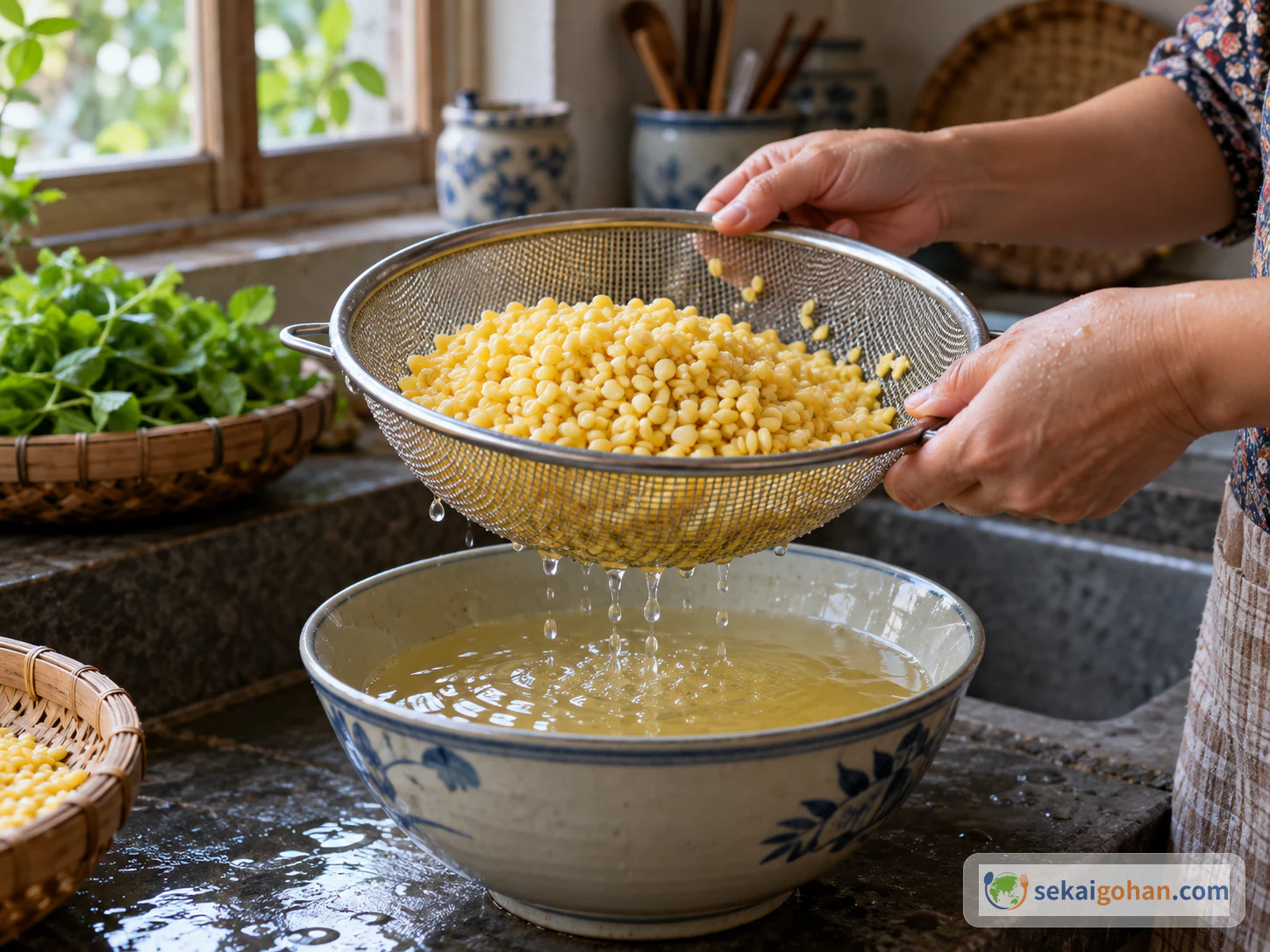
Peeled mung beans, soaked and drained
Soak the beans for 3–4 hours, then drain and rinse

Soak the 3.5 oz (100g) peeled mung beans in water for 3–4 hours. Drain and rinse them.

STEP 22 / 7

Cook the beans, dissolve the sugar and blend

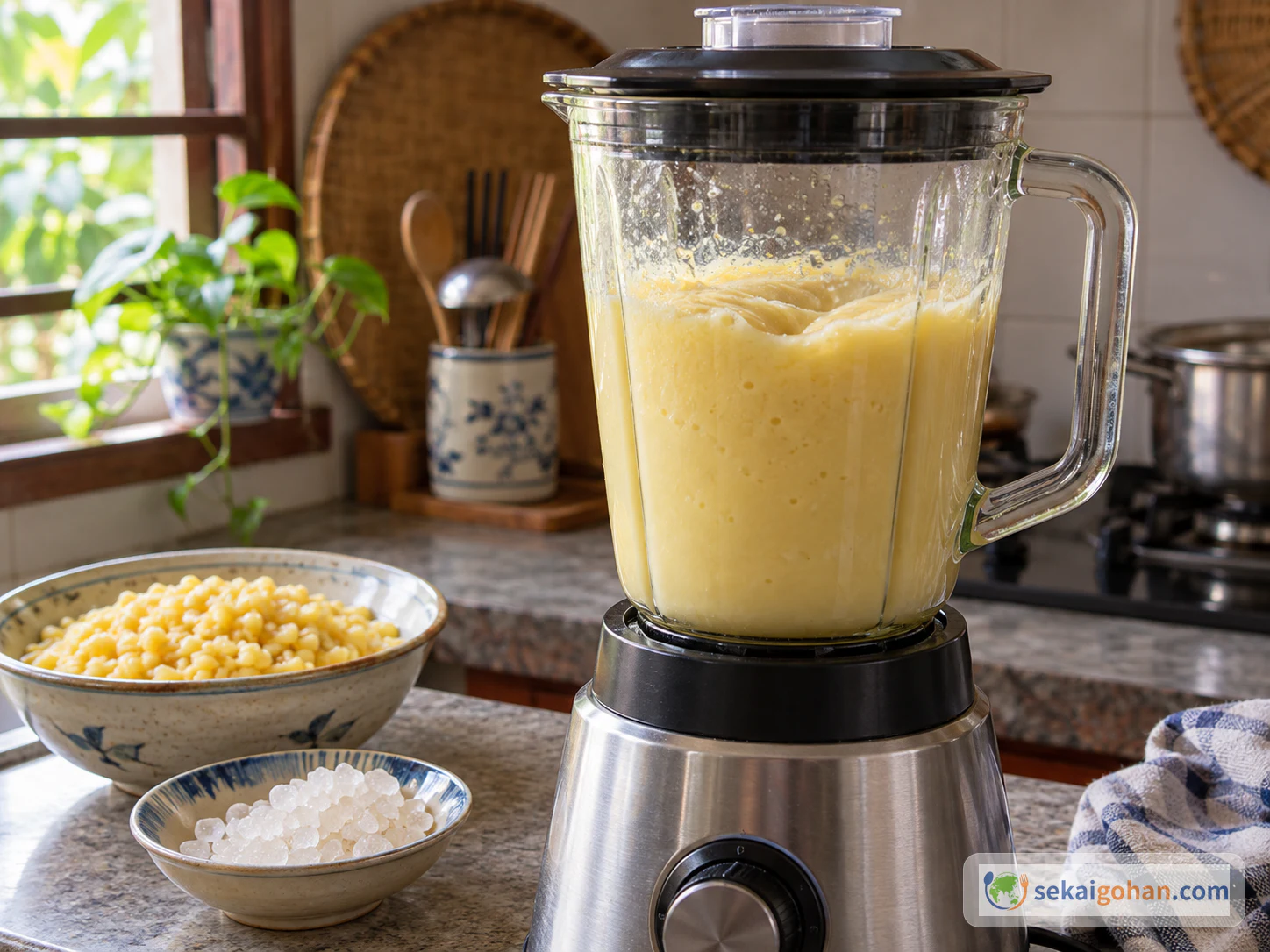
Mung beans with the rock sugar dissolved and the heat turned off, blended into a smooth paste
Blend after the rock sugar has dissolved and the heat is off

Put the beans in a pot and add water to up to 0.5 inches (1–1.5 cm) above them. Cook until the beans are very soft and almost all the water is gone.

Add the 3.25 oz (90g) crushed rock sugar and let it dissolve, then turn off the heat. Blend until smooth. Only if the mixture is too thick to blend, add a very small amount of water.

STEP 33 / 7

Stir the filling in oil and divide it

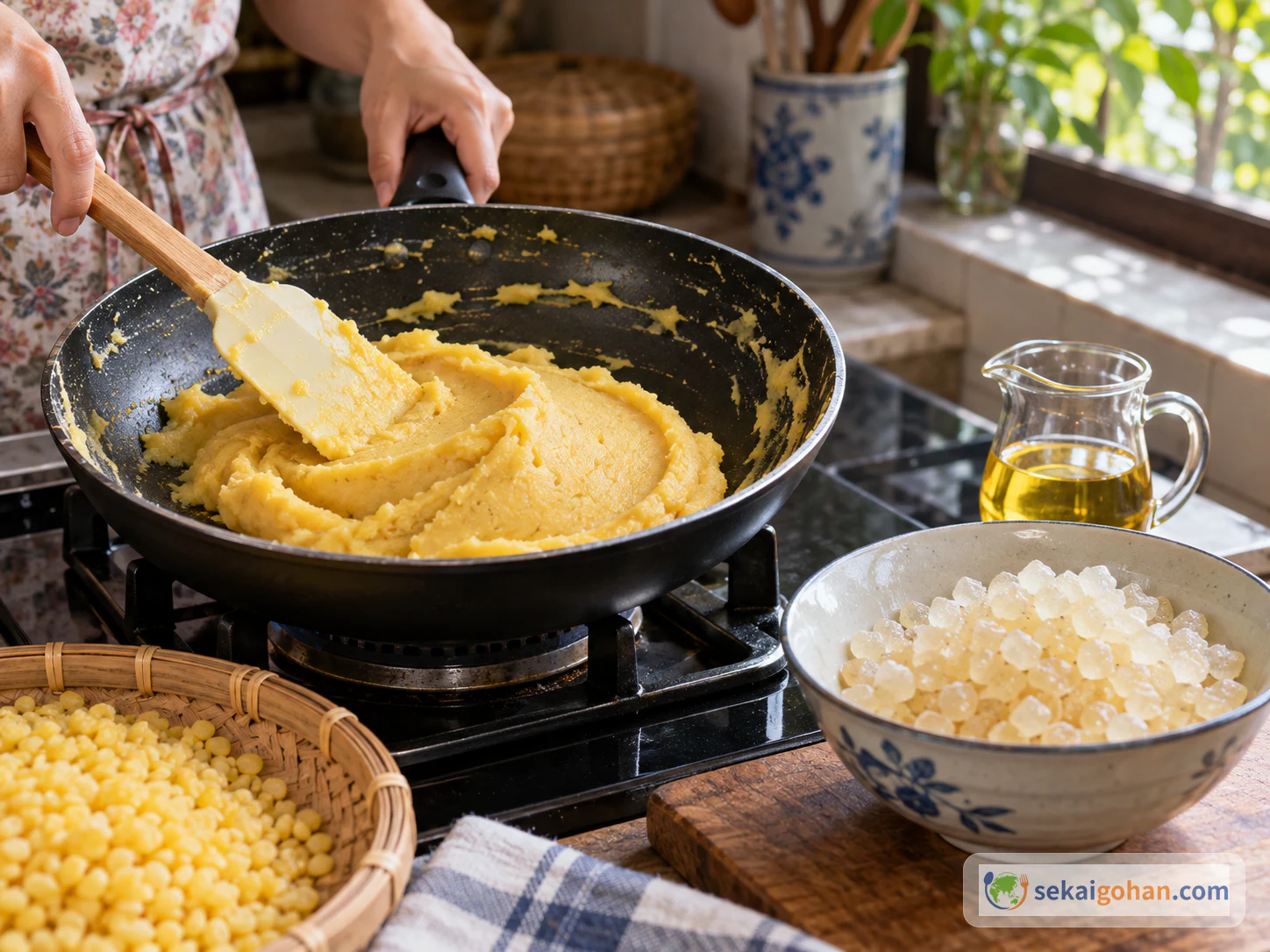
Mung bean paste stirred with oil until firm enough to roll
Keep the candied winter melon aside until the paste has cooled slightly

Move the paste to a nonstick skillet and add the 1 tbsp (15ml) oil. Stir until it gathers into a mass firm enough to roll into a ball, then turn off the heat.

Let the filling cool slightly. If using candied winter melon, chop the 1.75 oz (50g) and mix it in now. Divide the filling into even portions and cover them so they don't dry out.

STEP 44 / 7

Make the syrup

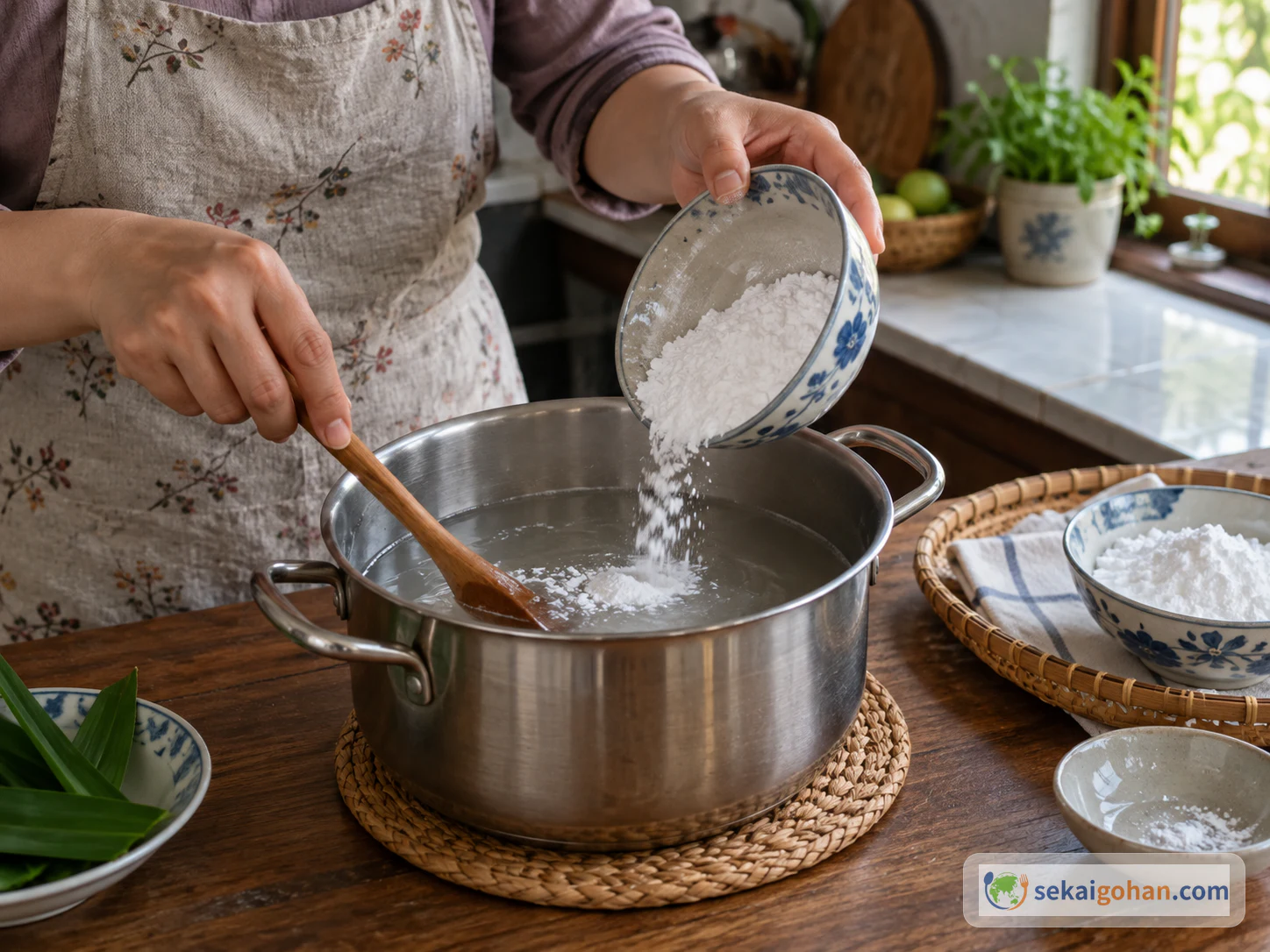
Powdered sugar being dissolved in water cooled to 60–70°C
Add the powdered sugar gradually and stir until fully dissolved

Bring the ½ cup (150ml) drinking water to a boil, then let it cool to about 60–70°C (up to 158°F). Stir in the 7 oz (200g) powdered sugar a little at a time until it has fully dissolved into a thick syrup. If using pomelo blossom water, add it now.

STEP 55 / 7

Rub the syrup into the flour

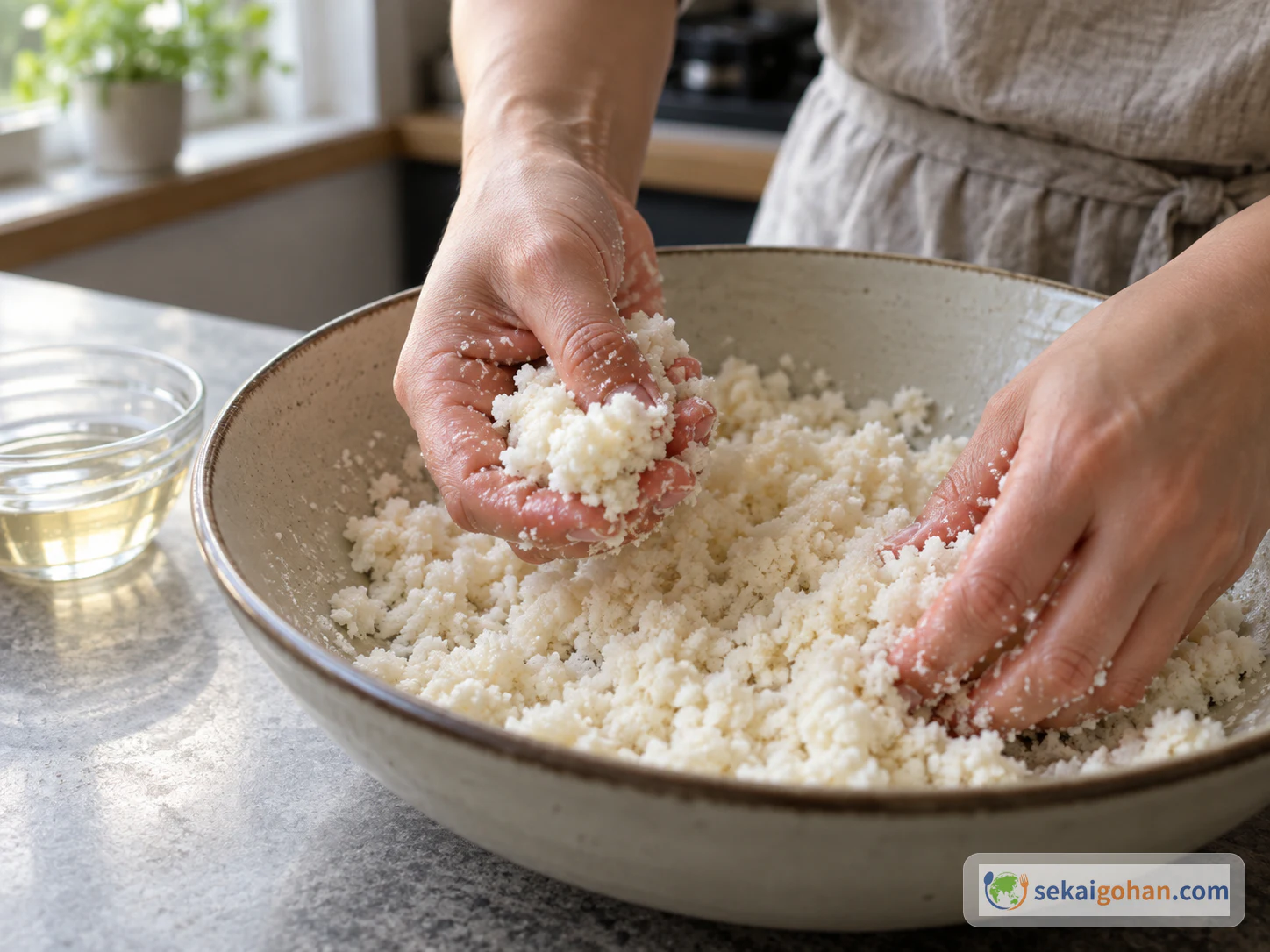
Syrup rubbed little by little into cooked glutinous rice flour, making a shell mixture that holds when squeezed
Fine, damp crumbs that hold together when squeezed

Put the 14 oz (400g) cooked glutinous rice flour in a wide bowl. Add the syrup a little at a time, rubbing it in with your hands. You want small, damp crumbs that hold their shape when squeezed, not a sticky lump. Go by this texture rather than by using up the syrup.

STEP 66 / 7

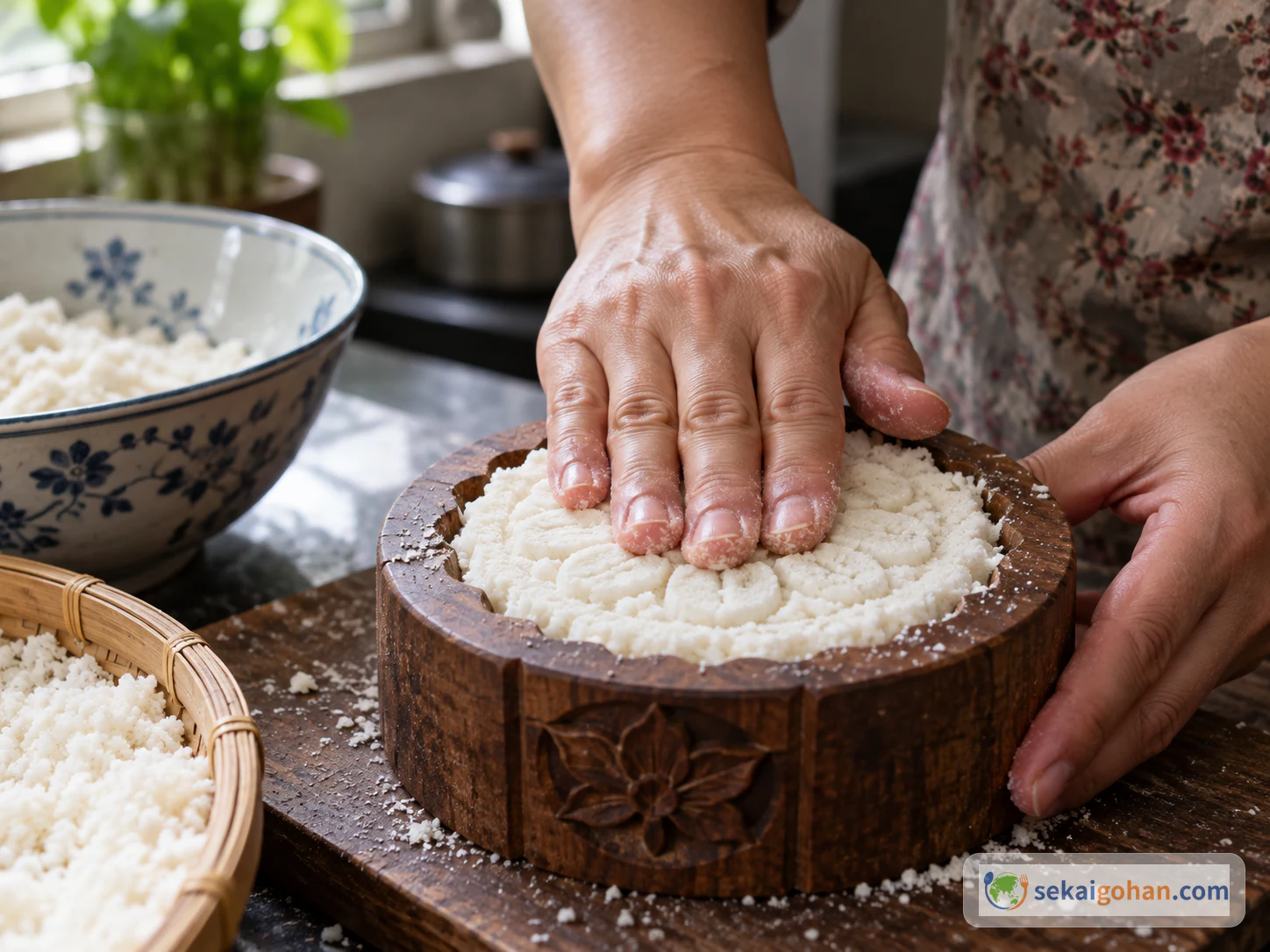
Press in the mold and unmold

Shell mixture, mung bean filling and more shell mixture packed into a mold in that order
Press the top layer firmly so it seals in the filling

Fill the mold about one-third full with shell mixture and press firmly. Add a portion of filling and flatten it. Cover with more shell mixture and press firmly again.

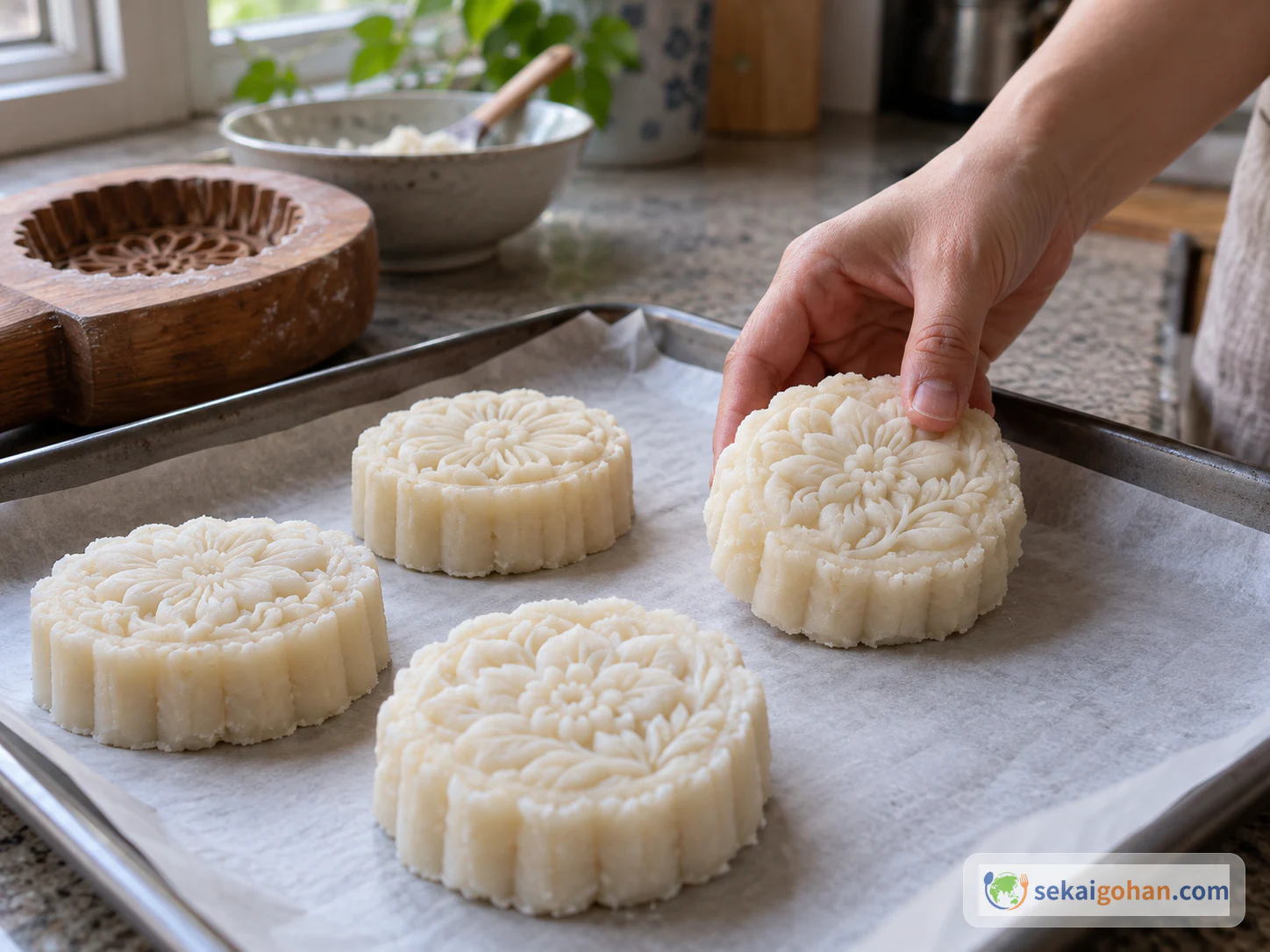
Turn the mold over and gently release the cake. Repeat with the remaining shell mixture and filling.

A patterned bánh in released from the mold and set down to rest
Set each cake down gently; there is no steaming or baking
STEP 77 / 7

Rest, then serve

A rested bánh in cut to show its mung bean filling, with unsweetened tea
Cutting a cake shows the filling inside the pale shell

The cakes break easily right after unmolding, so don't move them. Let them rest for at least 1 hour. If you plan to wrap them, wait until their shape has fully settled.

Serve a whole cake or cut it into small pieces to show the filling, with a cup of unsweetened tea alongside.

0 / 0
Ingredients

Ingredients

1 / 1

Ingredients

Ingredient Amount Role
Cooked glutinous rice flour (bột nếp chín) 14 oz (400g) Shell; already cooked, so the cakes need no baking or steaming
Drinking water (nước lọc) ½ cup (150ml) Shell syrup
Powdered sugar (đường bột) 7 oz (200g) Shell syrup
Pomelo blossom water (nước hoa bưởi) To taste, optional Floral scent for the syrup
Peeled mung beans (đậu xanh sạch vỏ) 3.5 oz (100g) Body of the filling
Water for soaking the beans As needed Softens the beans before cooking
Water for cooking the beans As needed Comes 1–1.5 cm (up to 0.5 inches) above the beans
Rock sugar (đường phèn) 3.25 oz (90g) Sweetens the filling; crush before using
Salt (muối trắng) 1g Seasoning
Cooking oil (dầu ăn) 1 tbsp (15ml) For stirring the filling in the pan
Candied winter melon (mứt bí) 1.75 oz (50g), optional Chopped and mixed into the filling
0 / 0

Bánh in are small sweets pressed in a carved mold, and each one comes out with the mold's pattern on top. They come from Huế, where they are offered at Tết and set out for guests. This version, bánh in nhân đậu xanh, wraps a smooth filling of peeled mung beans in a shell of cooked glutinous rice flour. Nothing goes in the oven or the steamer. Once you've pressed the cakes, you leave them alone until they firm up.

Bánh in in Huế and at Tết

Bánh in are tied to Tết and also to Nguyên tiêu, the 15th day of the first lunar month. The name simply means a sweet pressed in a mold. Some molds carry "thọ," the character for longevity, and others have floral designs. A freshly unmolded cake is fragile, so it has to rest before its shape sets.

What these cakes should keep

Aim for a shell of fine, damp crumbs pressed firmly around a smooth mung bean filling. Nothing is baked or steamed after molding. The final step is simply to leave the cakes undisturbed.

Huế-style bánh in comes both with and without filling, and other filled, molded versions use different proportions. A few Vietnamese sweets look or sound similar but are different dishes:

Sweet How it differs
Bánh da lợn A steamed layered sweet
Bánh đậu xanh nướng A baked mung bean cake
Bánh đậu xanh from Hải Dương A pressed sweet from northern Vietnam, a separate confection

For more of the country's cooking, see our Vietnam recipes.

Ingredients for Filled Bánh in
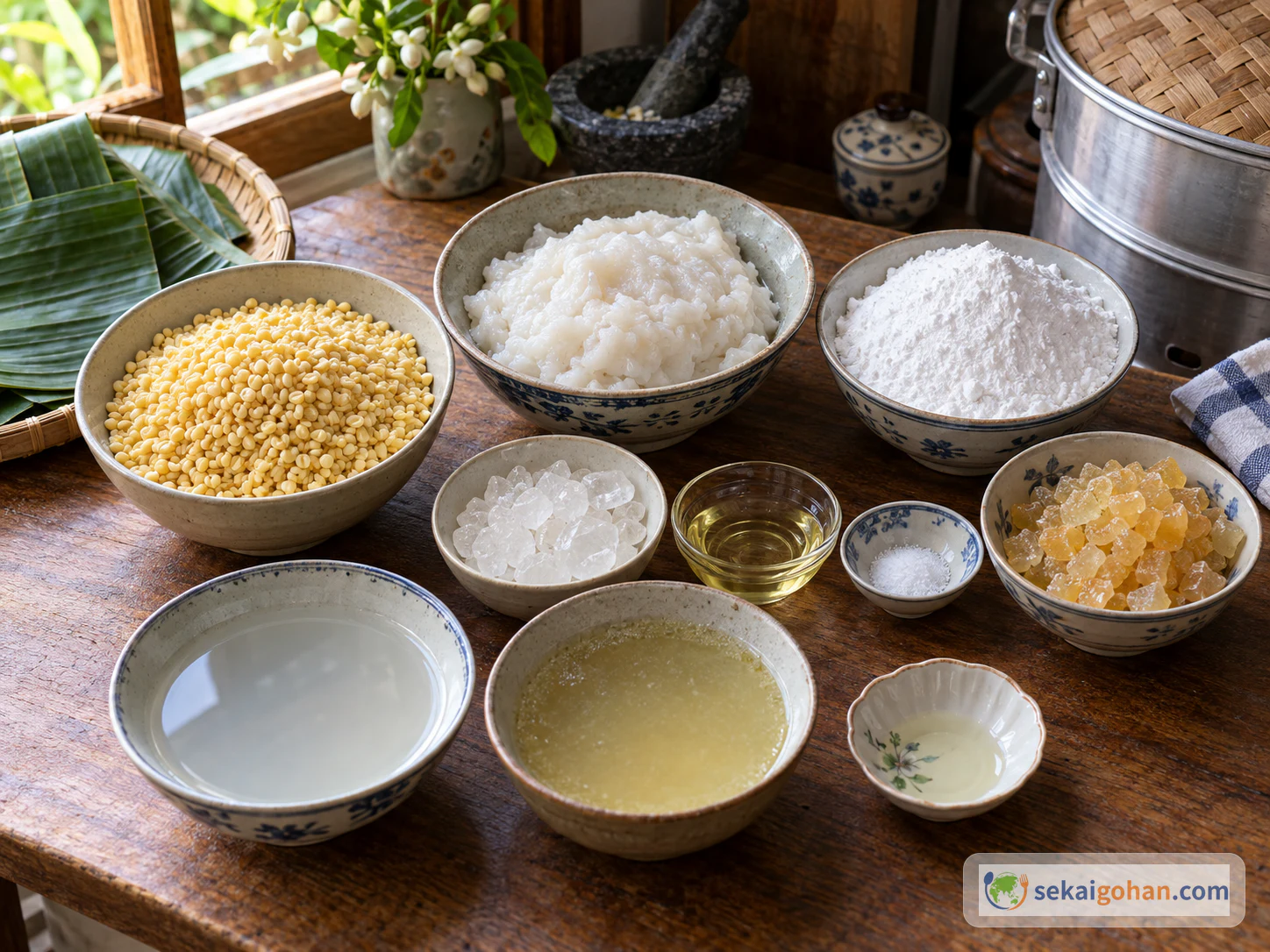
Peeled mung beans, cooked glutinous rice flour, powdered sugar, rock sugar and the other ingredients for bánh in
The optional blossom water is kept apart from the main ingredients

The two sugars have separate jobs. Powdered sugar goes into the shell syrup, and rock sugar goes into the filling. The ½ cup (150ml) of drinking water is for the syrup only, so measure it separately from the water used for the beans.

Equipment

  • Bowl and strainer for soaking and rinsing the beans
  • Pot
  • Blender
  • Nonstick skillet
  • Wide mixing bowl
  • Mooncake mold or similar sweet mold

Choosing Ingredients for Bánh in

Cooked glutinous rice flour is the ingredient to track down. In Vietnamese it's bột nếp chín, the same flour used for bánh dẻo. The shell never gets cooked again, so the flour has to be cooked already. Mochiko, shiratamako and raw glutinous rice flour haven't been tested as swaps, so read the label before you buy.

The rest is easy. You can make powdered sugar yourself in a dry blender. The candied winter melon and the pomelo blossom water are both optional. If you don't have a bánh in mold, a mooncake mold works, and the size of the cakes will depend on the mold you use.

Troubleshooting Bánh in

Trust the textures

Go by the textures described in the steps as your main guide.

Most problems show up in the filling or in the crumb. Look at the texture in front of you and adjust as you go.

What you see What to do
The beans are too thick to blend Add a very small amount of water, only as much as the blender needs
The filling won't roll into a ball Keep stirring it in the skillet until it gathers into a firm mass
The powdered sugar isn't dissolving Add it more gradually and keep stirring until the syrup is fully dissolved
The crumbs fall apart when squeezed Rub in a little more syrup, then squeeze again
The mixture is turning into a sticky lump Stop adding syrup. Add it more slowly next time
A cake is fragile after unmolding This is expected. Leave it where it is for at least 1 hour before moving it

Serving, Storing and Variations

Serve bánh in with any unsweetened tea, which goes nicely with the sweet cakes. Wait until the cakes have fully set before you wrap them.

The recipe is easy to adjust. Leave out the candied winter melon for a filling of mung beans alone, or skip the pomelo blossom water if you'd rather not have the floral scent. Any mold pattern works, whether flowers or characters, since the design is purely decorative.

Frequently Asked Questions

Do the cakes need baking or steaming?

No. The flour is already cooked and the mung bean filling is cooked on the stove, so the cakes only need to be pressed, unmolded and rested for at least 1 hour.

Do I have to use all the syrup?

Not necessarily. Add it gradually and stop when the crumbs are fine and damp and hold together when squeezed.

How many cakes does this make?

That depends on your mold and on how you portion the shell and filling. You may end up with a little of either left over.
Sources