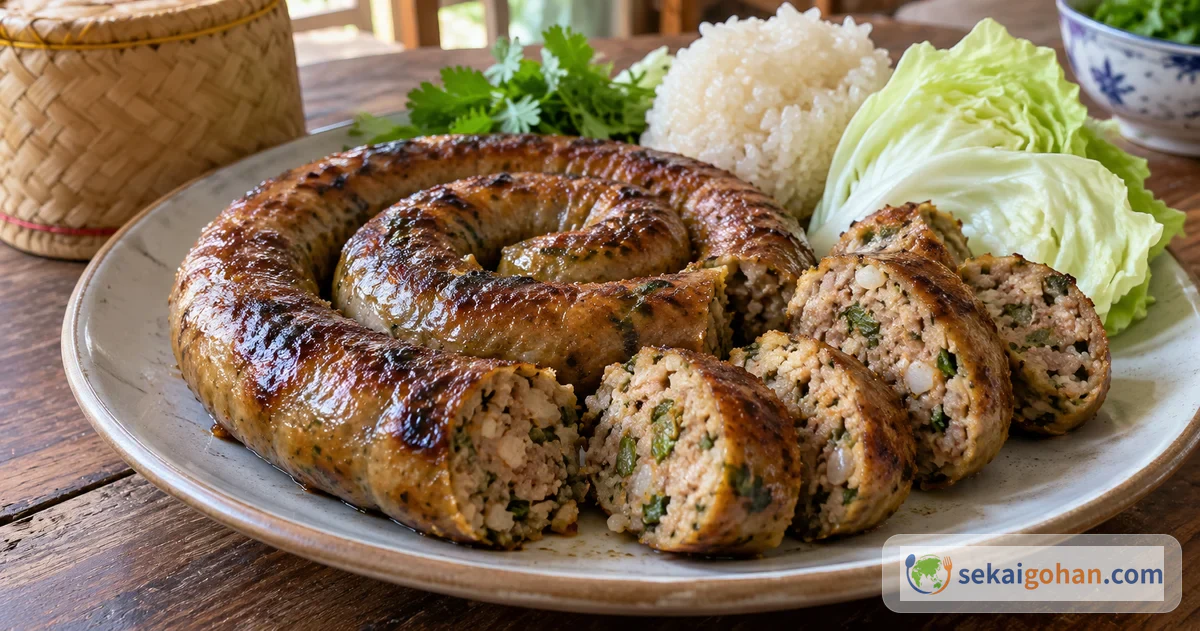
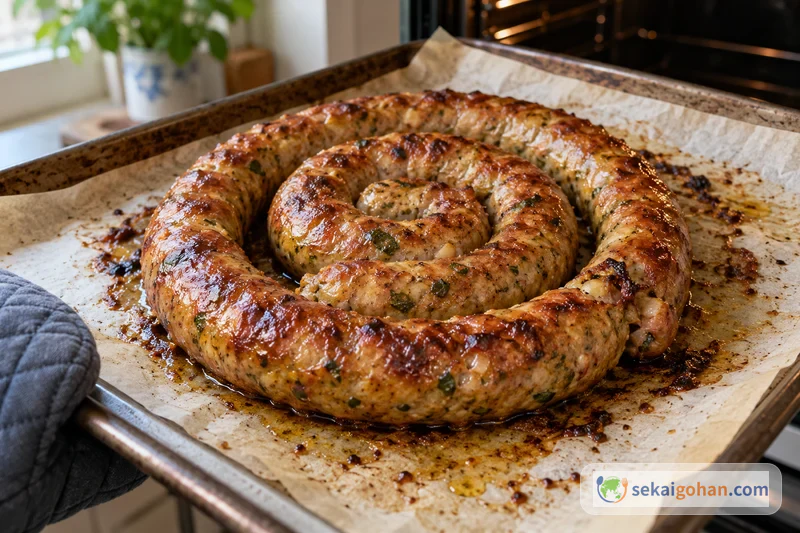
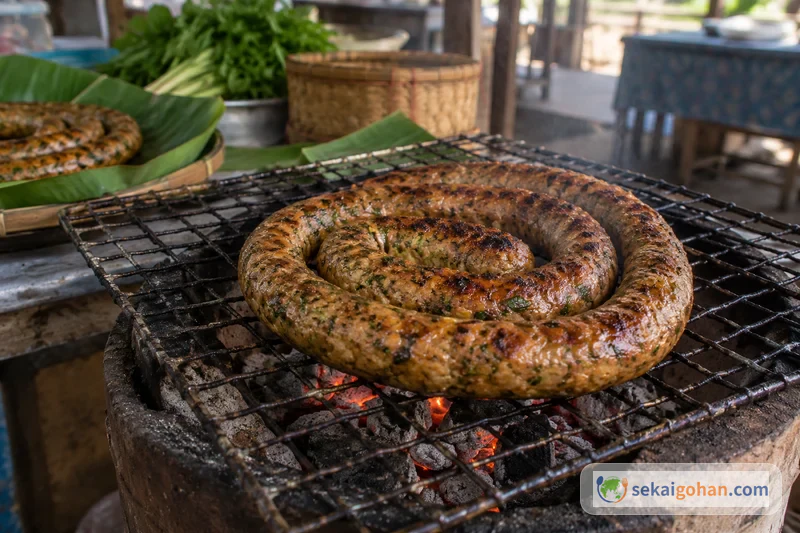
Over a charcoal fire, a thick spiral of sausage sizzles. The skin tightens and splits in places, fat drips onto the coals, and the green scent of lemongrass and makrut lime leaves rises with the smoke. At Lao markets, the vendor snips the grilled coil into pieces and wraps them up with sticky rice from a bamboo basket. This is sai oua, a pork sausage kneaded with herbs, and in it the herbs matter as much as the meat.
Sai oua, the herb sausage of Luang Prabang
In Lao script it is written ໄສ້ອັ່ວ. "Sai" means intestine and "oua" means stuffed, so the name is literally "stuffed intestine." The sausage was born in Luang Prabang, the capital of the former Lan Xang kingdom and the cradle of Lao culture and cooking. It is made across a wide mountain region, from northern Laos across the Mekong into northern Thailand (the Lanna region) and Myanmar's Shan State. In Thailand it is called Chiang Mai sausage, in Shan State sailong pick, and the blend shifts a little from place to place.
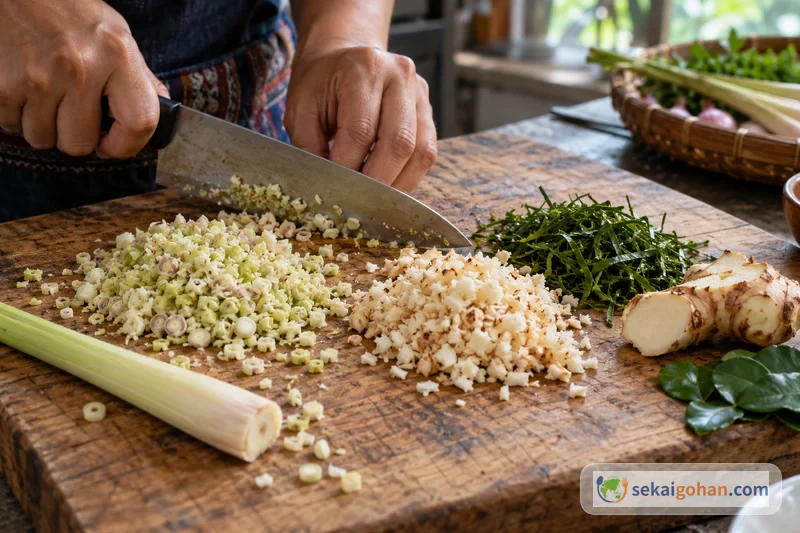
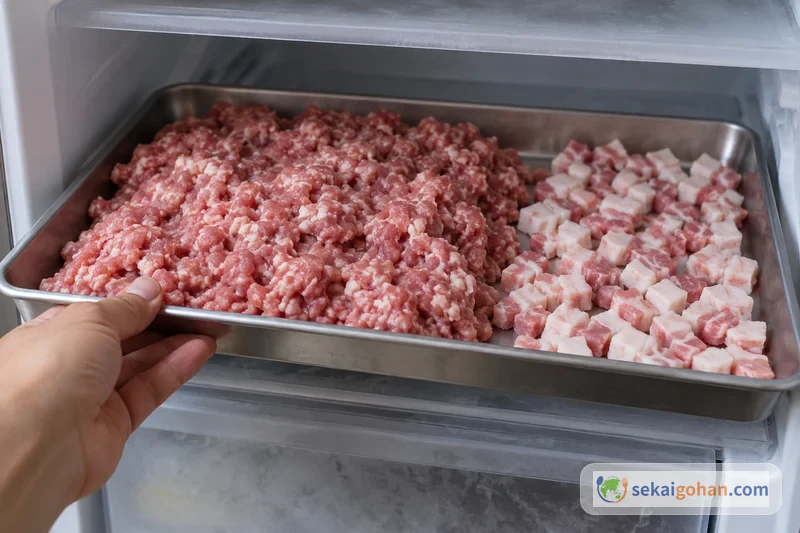
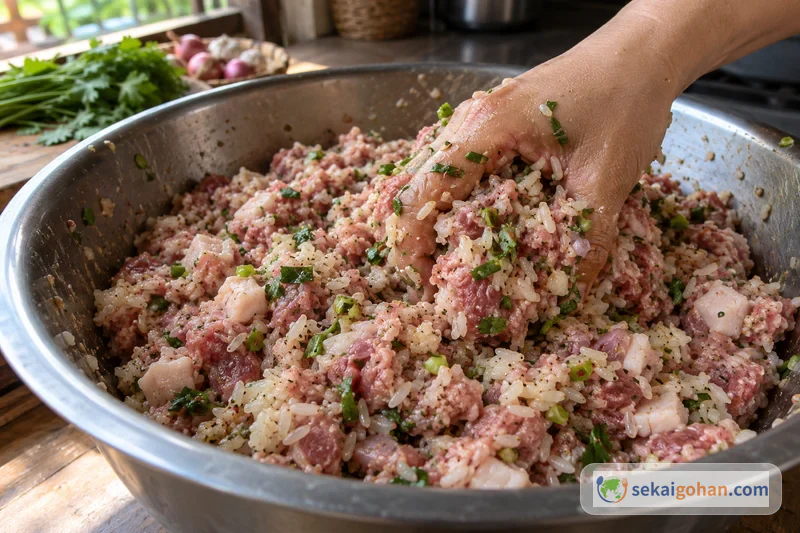
The biggest difference from Japanese-style sausage is that the aroma of herbs comes before the meat. The filling is generously packed with lemongrass, galangal, makrut lime leaves, shallots, cilantro, chili and garlic, and sticky rice binds it together. Traditionally the fattier cuts of pork are chopped coarsely rather than ground fine. On the grill the fat melts out, and the coarse pieces of meat and the herb fibers fall apart in your mouth.
Sai oua is eaten in several ways: grilled, dried then grilled, or fermented. Lao street stalls line up many kinds of sausage, including ones made with beef or blood and ones fermented for sourness. A similar sausage from northeastern Thailand (Isan) is sai krok, but it is milder on herbs and known as a sour fermented sausage.
It used to be made at home; now most people buy it from a shop. For Lao people living in the United States, it is a taste of home, and for many others it is an entry point to Lao cuisine. The classic accompaniments are sticky rice, the chili and tomato dip jeow mak len, raw cabbage, thin slices of garlic and ginger, fresh chilies and roasted peanuts.
Ingredients (serves 4, about 1.5 lb (675 g))
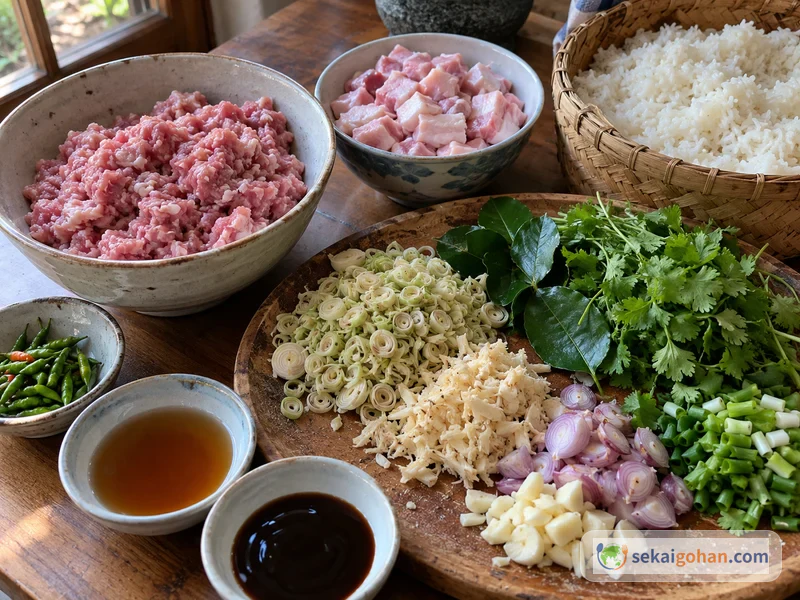
The amounts are scaled to be easier to make at home.
This dish contains soy and wheat (oyster sauce) and fish (fish sauce, padaek). Oyster sauce also contains oyster extract. Don't rub your eyes with hands that have chopped fresh chilies, and wash your hands well afterward.
Choosing ingredients for sai oua
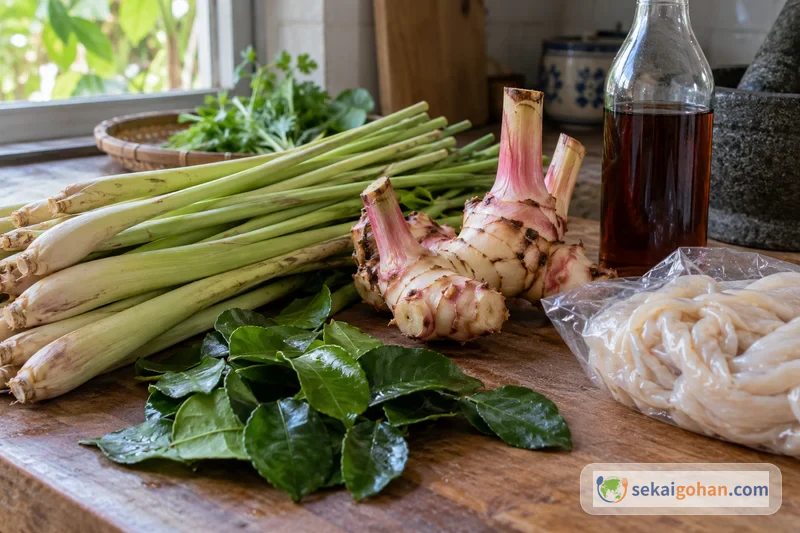
The aroma comes from lemongrass, galangal and makrut lime leaves, and using fresh lemongrass and galangal makes the taste completely different. All three can be found fresh or frozen at Thai grocers and online, and whatever you don't use up can be chopped and frozen. Galangal, also called Thai ginger, is harder than ginger and has a sharp, pine-resin aroma. Ginger can stand in, but it pushes the heat forward and gives a different taste; frozen galangal or galangal paste keeps well and is worth getting if you can.
Padaek (a Lao fermented fish condiment, used unstrained) is practically impossible to find in Japan. Leave it out and use fish sauce in its place, and the sausage still turns out plenty delicious. Ordinary supermarket oyster sauce is fine.
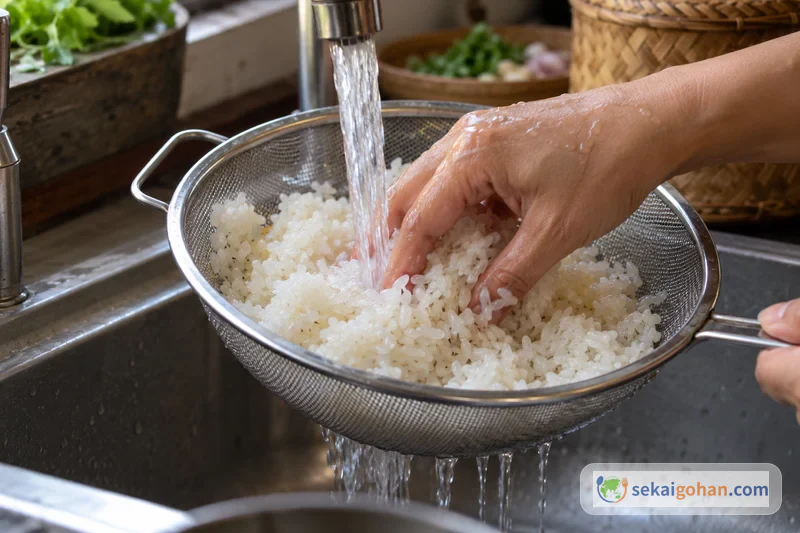
Rinse the cooked sticky rice in water to separate the grains before mixing it in. Used straight from the cooker, its stickiness makes it clump into balls inside the filling. Ordinary rice binds more weakly, and the sausage tends to crumble when cooked.
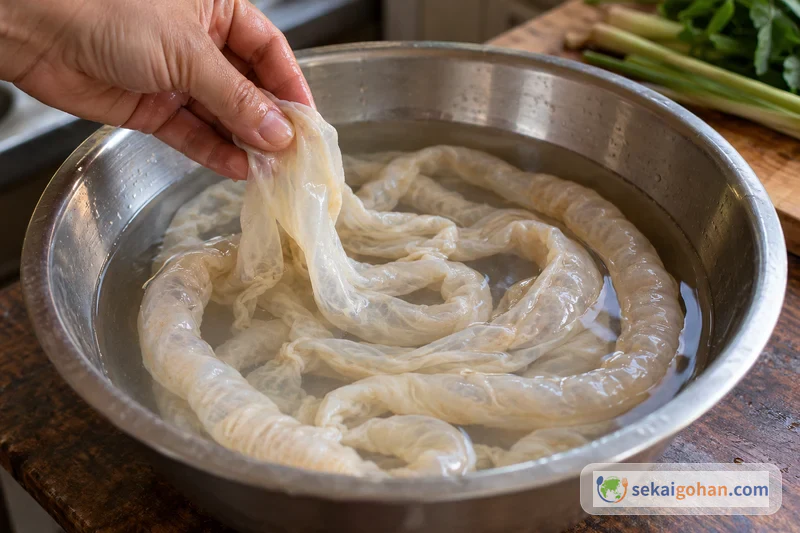
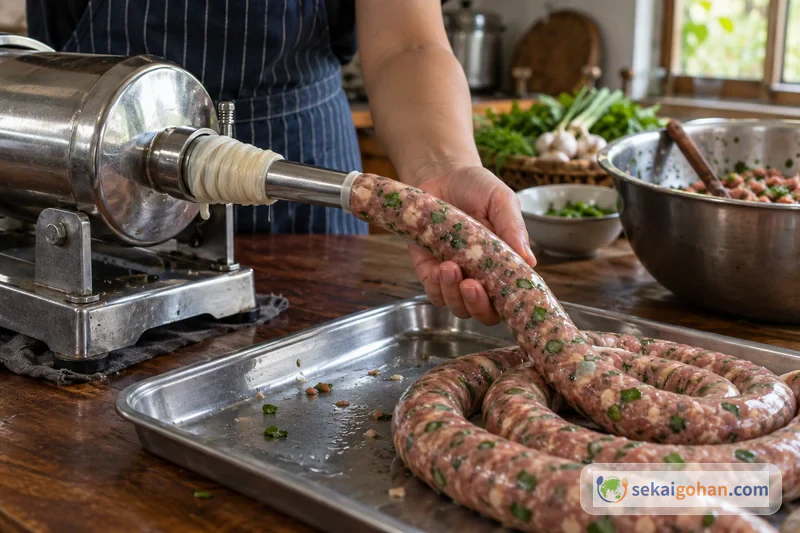
For the casing, use hog casing, which is wider than sheep casing. Salted, portioned packs are sold at baking-supply shops and online. A sausage filler (a hand-cranked or pushing-type stuffer) makes stuffing easy, but a piping bag with the tip removed works too if you push the filling out little by little. It can be made without casings, too; see the variations below.
How to make sai oua
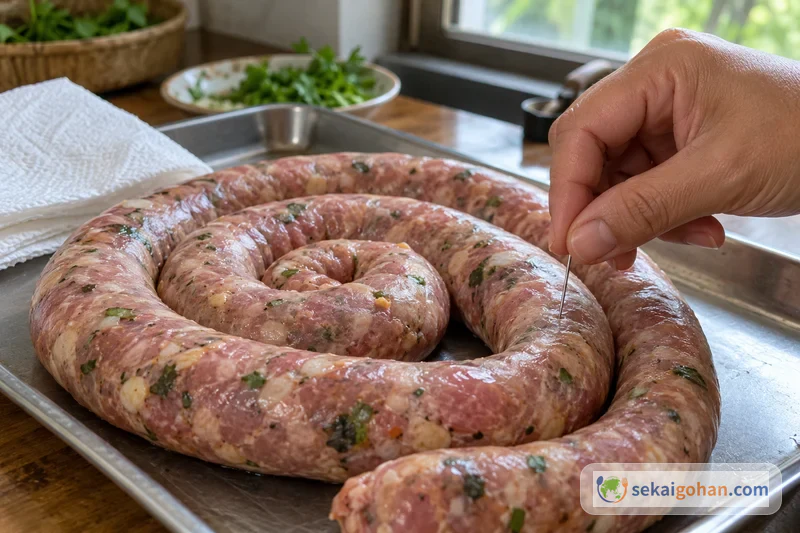
Plan about 2 hours for preparation, including time to soften the casing, and about 30 minutes of baking. While the casing soaks, chop the herbs and finish the filling, and the work goes faster.
Pork cannot be eaten raw. Cook it until the color of the center changes and heat the center to 167°F (75°C) for at least 1 minute. With a sausage made from ground meat, doneness is hard to tell by looks alone, so measure the center with a thermometer or check the cut surface to be sure no red remains.
Cut the baked sai oua into 0.5 inches (1 cm) slices and sear them again in a skillet for 1 to 2 minutes, and the cut surfaces turn crisp and the toasty flavor deepens. Cutting and then searing also adds texture.
Serving sai oua and variations
Eating it with sticky rice and raw vegetables
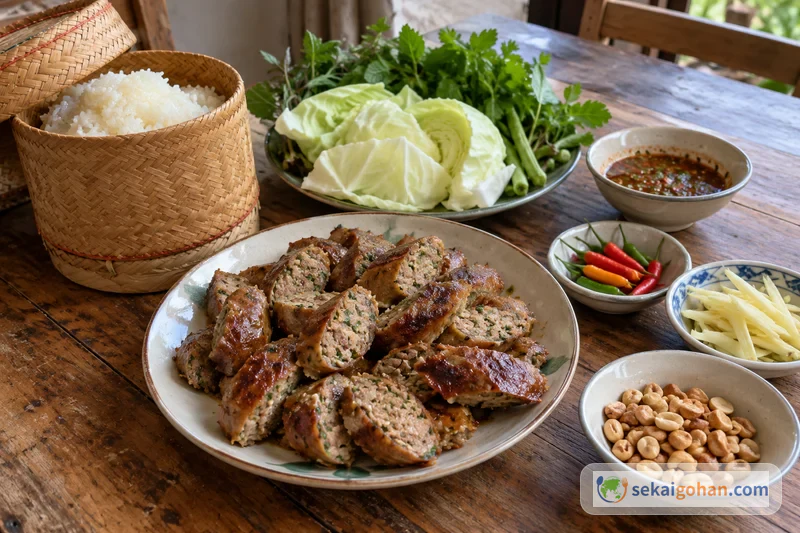
In Laos, sai oua can be a main dish or a drinking snack. Cut it into diagonal slices about 0.5 inches (1 cm) thick and serve with steamed sticky rice. The Lao way is to pinch off a mouthful of rice, roll it into a ball and eat it with a piece of sausage, taking bites of raw cabbage, thin slices of garlic and ginger, and fresh chilies in between. Roasted peanuts add a toasty note that suits the herbs, and biting into raw vegetables after the fat makes the next slice taste good all over again.
In Laos sticky rice is called "khao niao" and brought to the table in a bamboo-woven basket. You roll it with your fingers and scoop up the food with it, so the strongly sticky rice also does the job of a spoon or chopsticks.
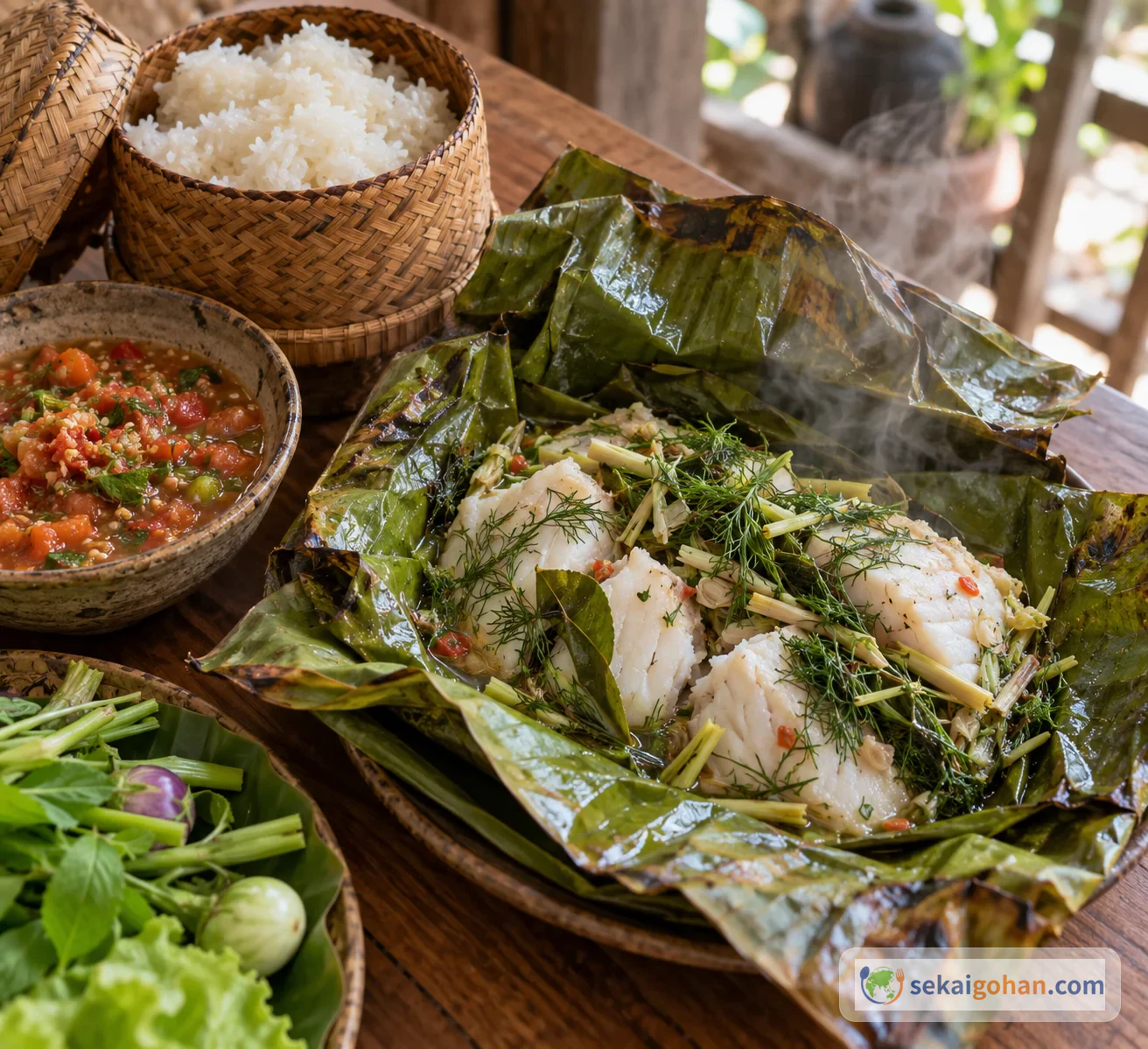
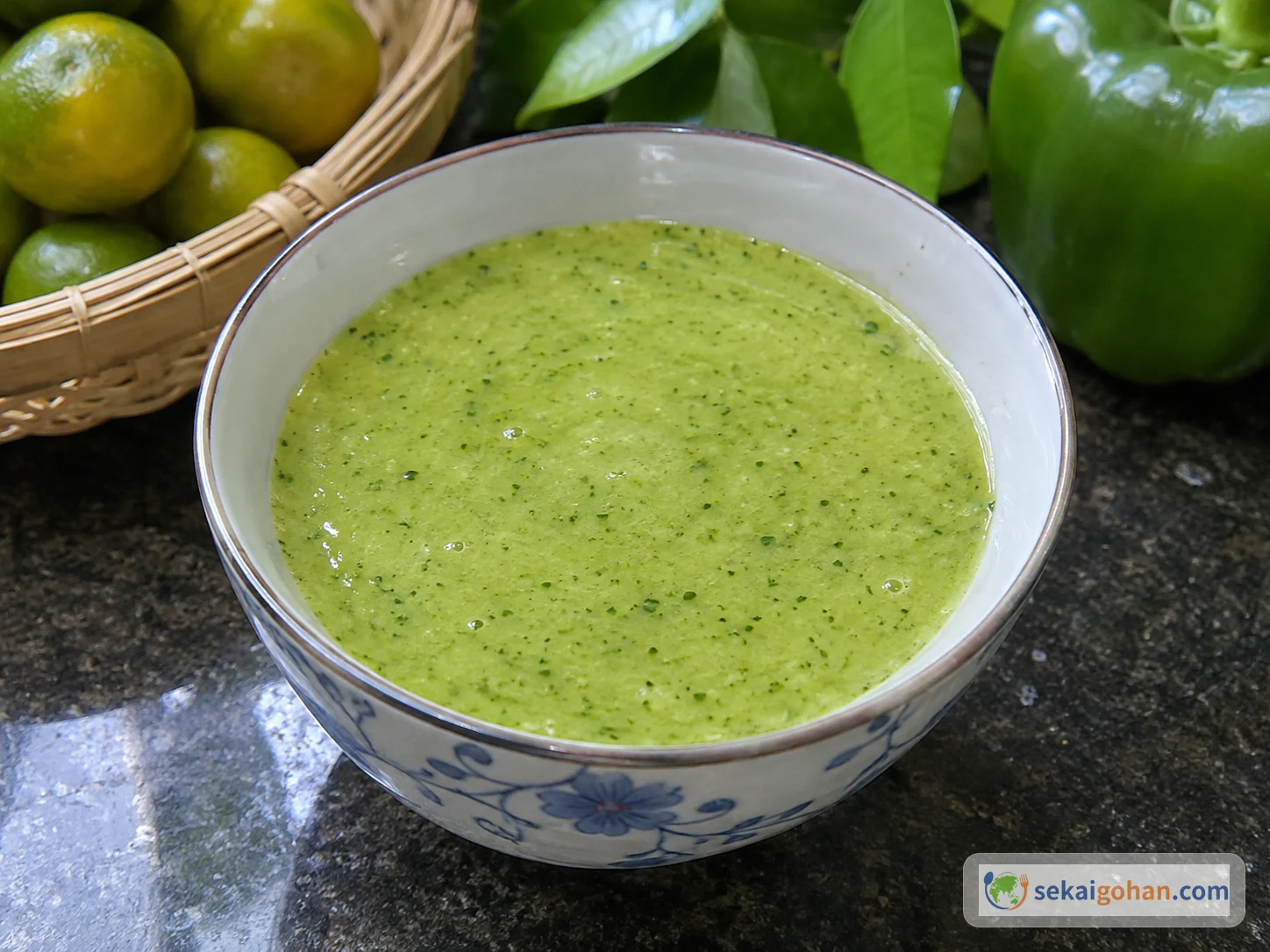
Jeow mak len is a Lao dip of crushed grilled tomatoes and chilies. For something easier, store-bought sweet chili sauce works, or fish sauce with lime juice and chopped chili. If you want one more Lao dish on the table, laab, herbs tossed with ground meat, and mok pa, fish steamed in banana leaf, both go well with sticky rice.
Variations
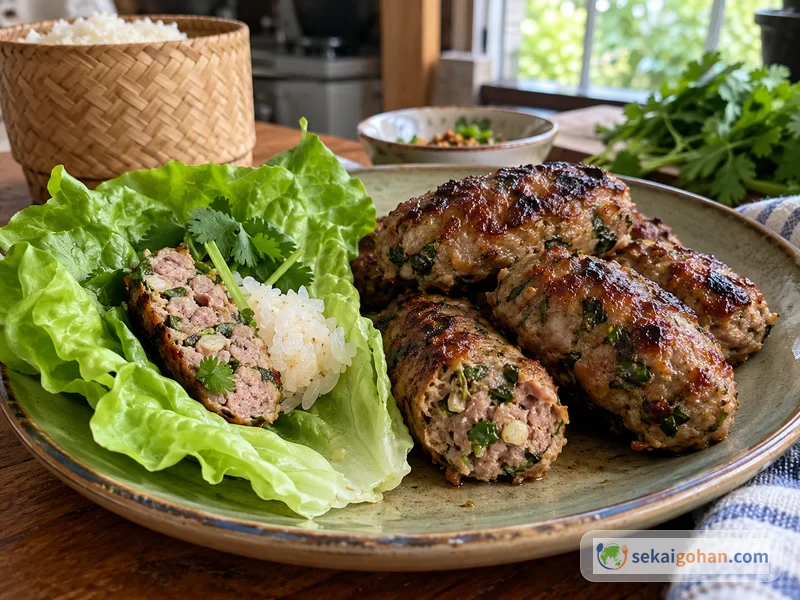
No casings? Shape the filling into a log about 1 inch (3 cm) in diameter on plastic wrap, roll it up, twist both ends and chill for 1 hour to firm. Unwrap it, lightly oil a skillet and cook over medium heat for 12 to 15 minutes, rolling until browned all over. You won't get a crisp skin, but the aroma is the same. You can also shape the filling into flat rounds about 2 inches (5 cm) across and cook them like hamburger patties.
Baked sai oua is also good wrapped in a lettuce leaf with cilantro, mint and sticky rice. If you like heat, doubling the fresh chilies in the filling brings it close to northern Thailand's Chiang Mai sausage. The strength of the aroma is decided by the amount of galangal, so from your second batch on, adjust it to taste.
Frequently asked questions
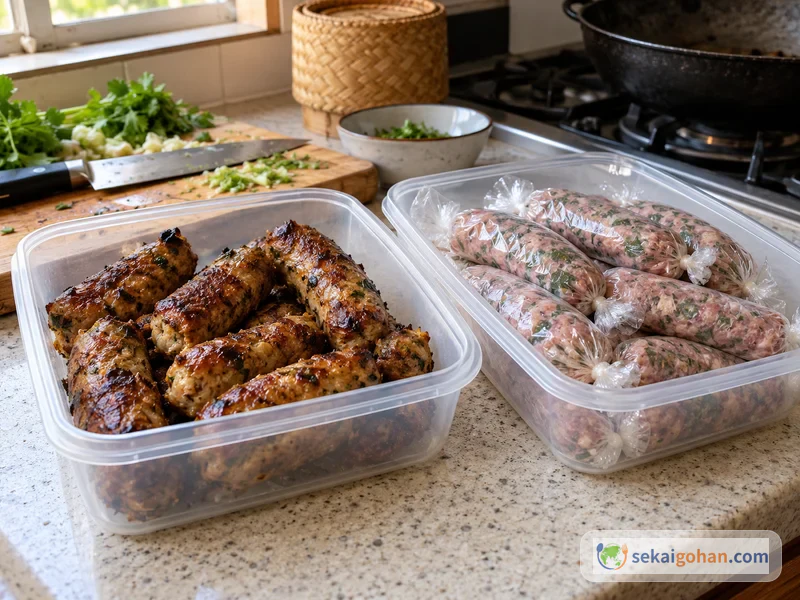
Can I store the raw sausage?
Keep stuffed raw sai oua in the refrigerator and bake it by the next day. If you won't bake it that soon, wrap each one in plastic wrap and freeze. Thaw in the refrigerator before baking and cook thoroughly to the center.
How long does it keep after baking?
Cool baked sai oua, refrigerate it and eat it by the next day. To reheat, bake again in a skillet or toaster oven until hot throughout.
Can I cook it in a skillet?
Yes. Put the stuffed sai oua in a skillet with a little water, cover and steam-fry over medium-low heat for about 8 minutes, then remove the lid to cook off the water and brown it all over. Starting on high heat tends to split the skin before the inside is cooked.