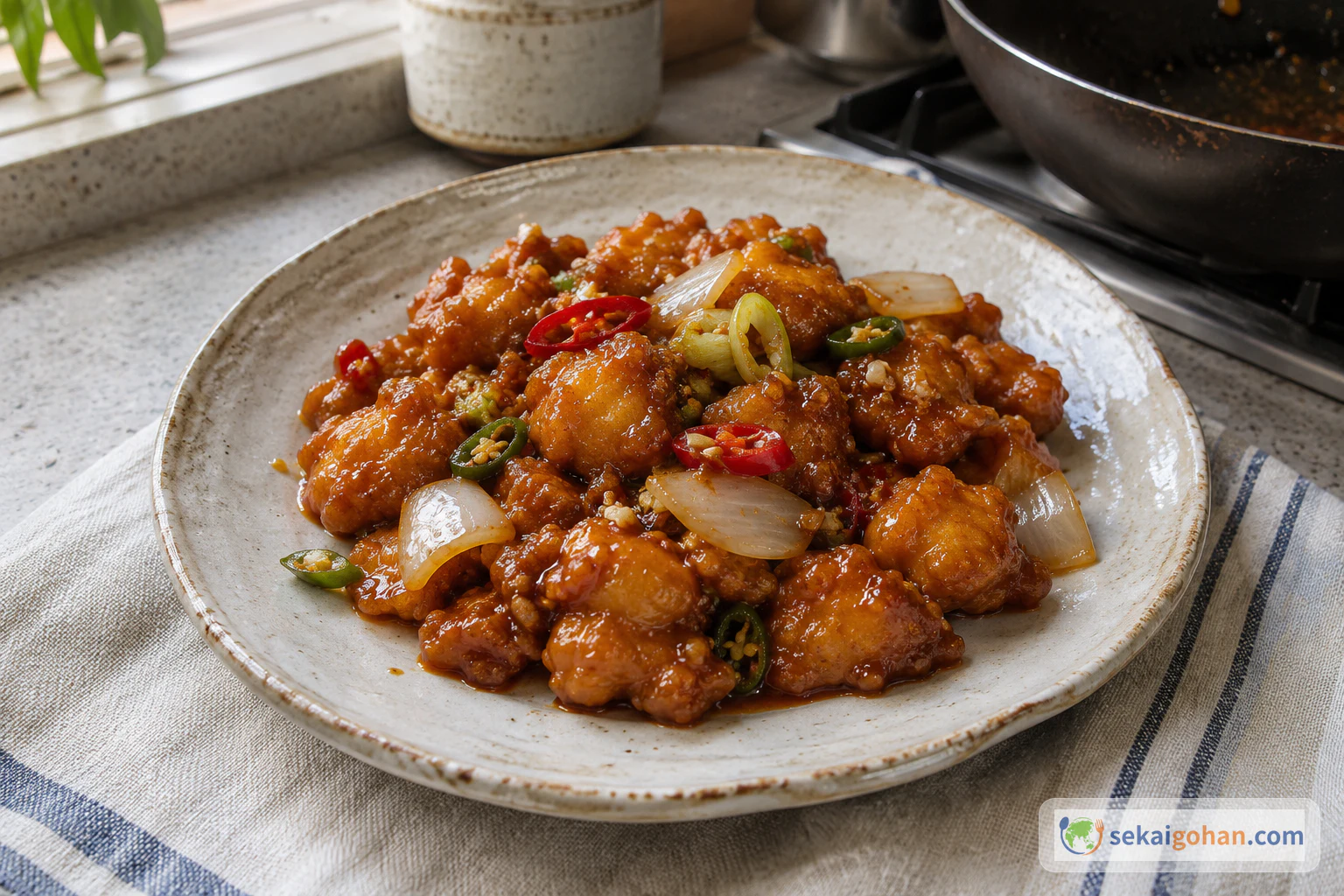
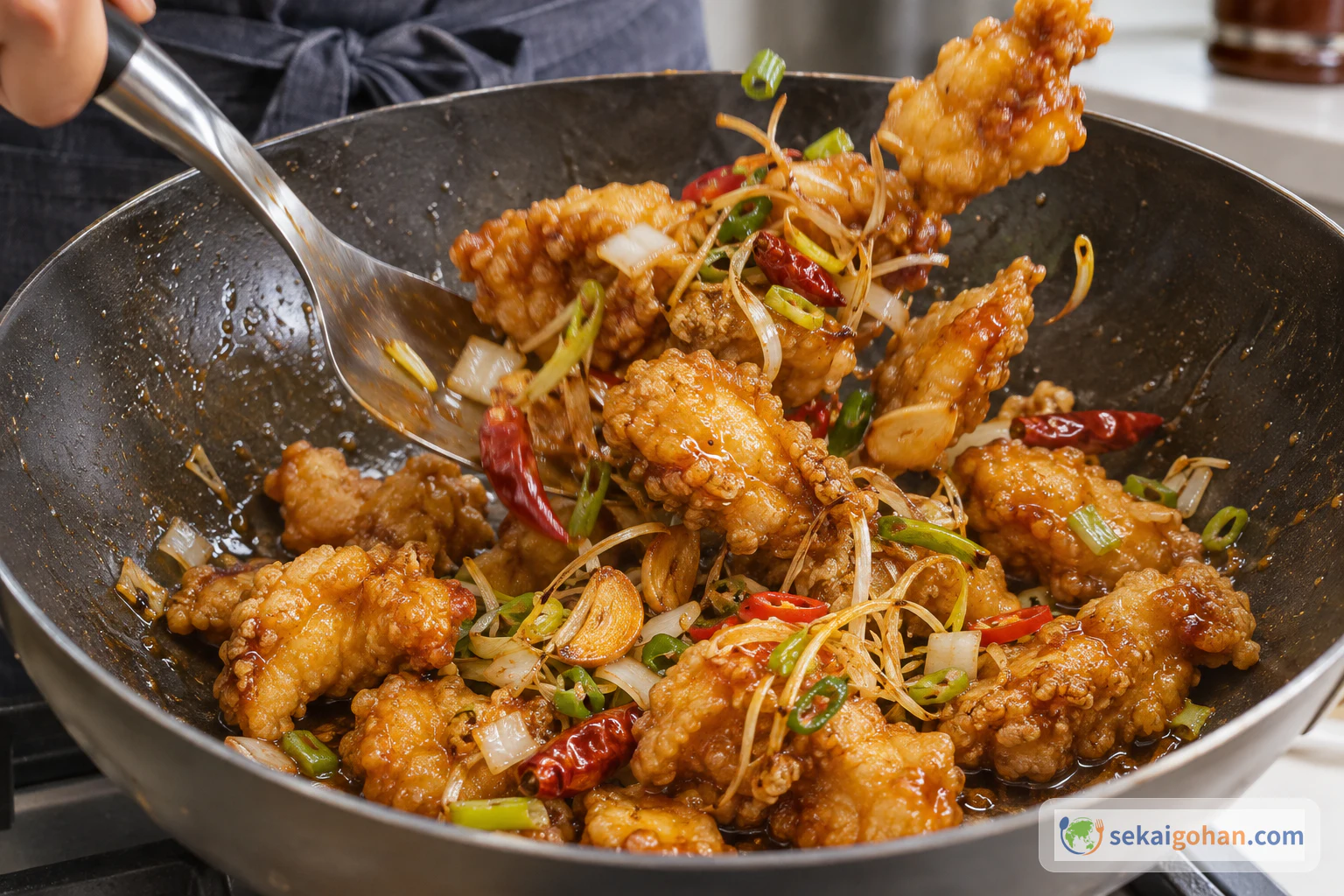
Kkanpunggi on a plate: twice-fried chicken coated in a sweet, sour and spicy sauce
Serves2–3 servings
CuisineKorean-Chinese

Kkanpunggi: Korean-Chinese Spicy Garlic Fried Chicken (깐풍기)

How to make kkanpunggi (깐풍기), Korean-Chinese twice-fried chicken breast tossed with a garlic-and-leek chili oil and a sweet, sour and spicy rice-syrup sauce. Based on Maangchi's written recipe for 2–3 servings, with a refrigerated marinade, separate raw and cooked tools, and a final thermometer check of the thickest piece before serving.

Cooking flow

Cooking steps

STEP 11 / 13

Mix the sauce

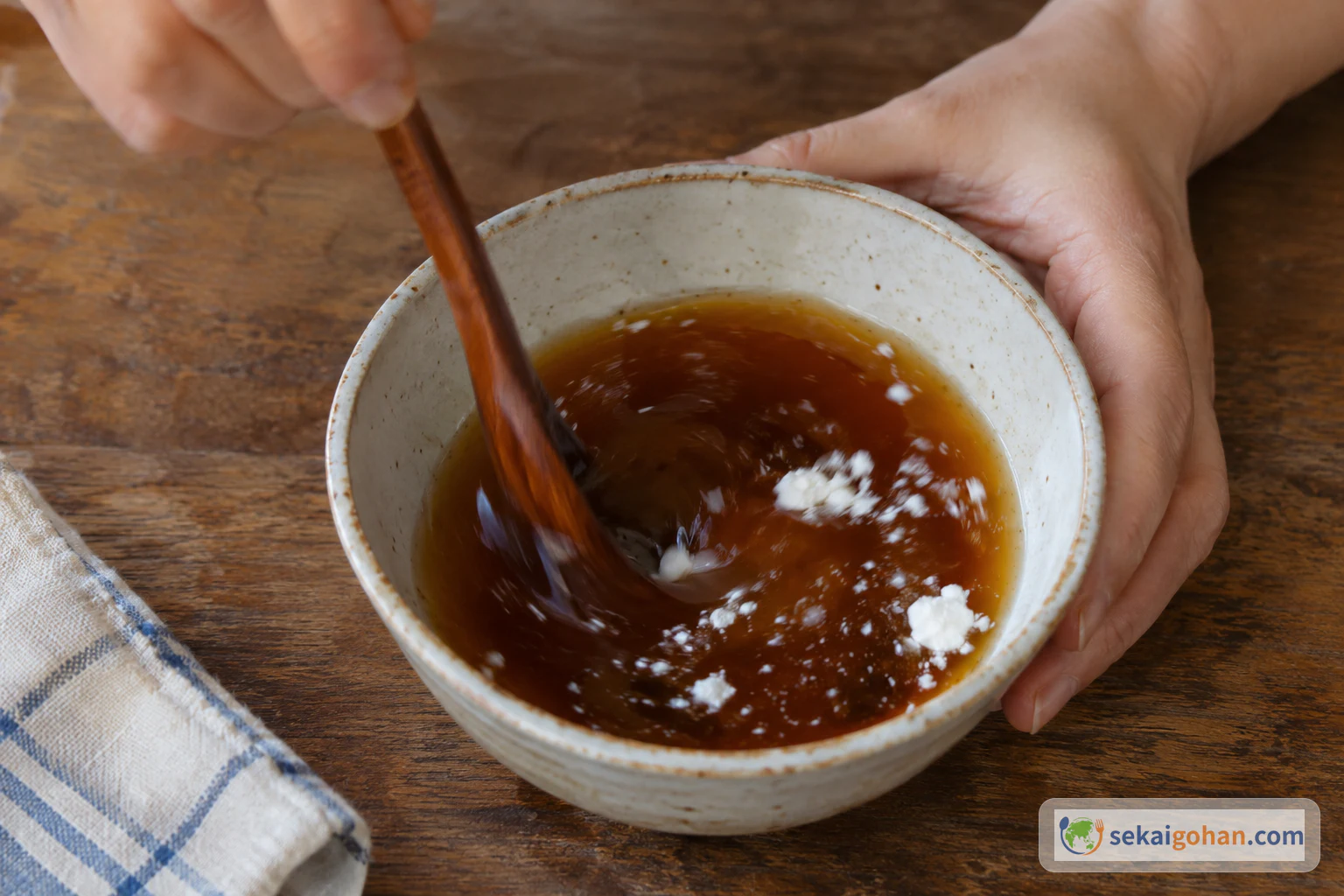
Mixing soy sauce, water, rice syrup, white vinegar and potato starch in a small bowl

In a small bowl, stir together 1 tbsp soy sauce, 2 tbsp water, 2 tbsp rice syrup, 1 tbsp white vinegar and 1 tsp potato starch. Set it aside.

STEP 22 / 13

Cut the chicken and mince the ginger

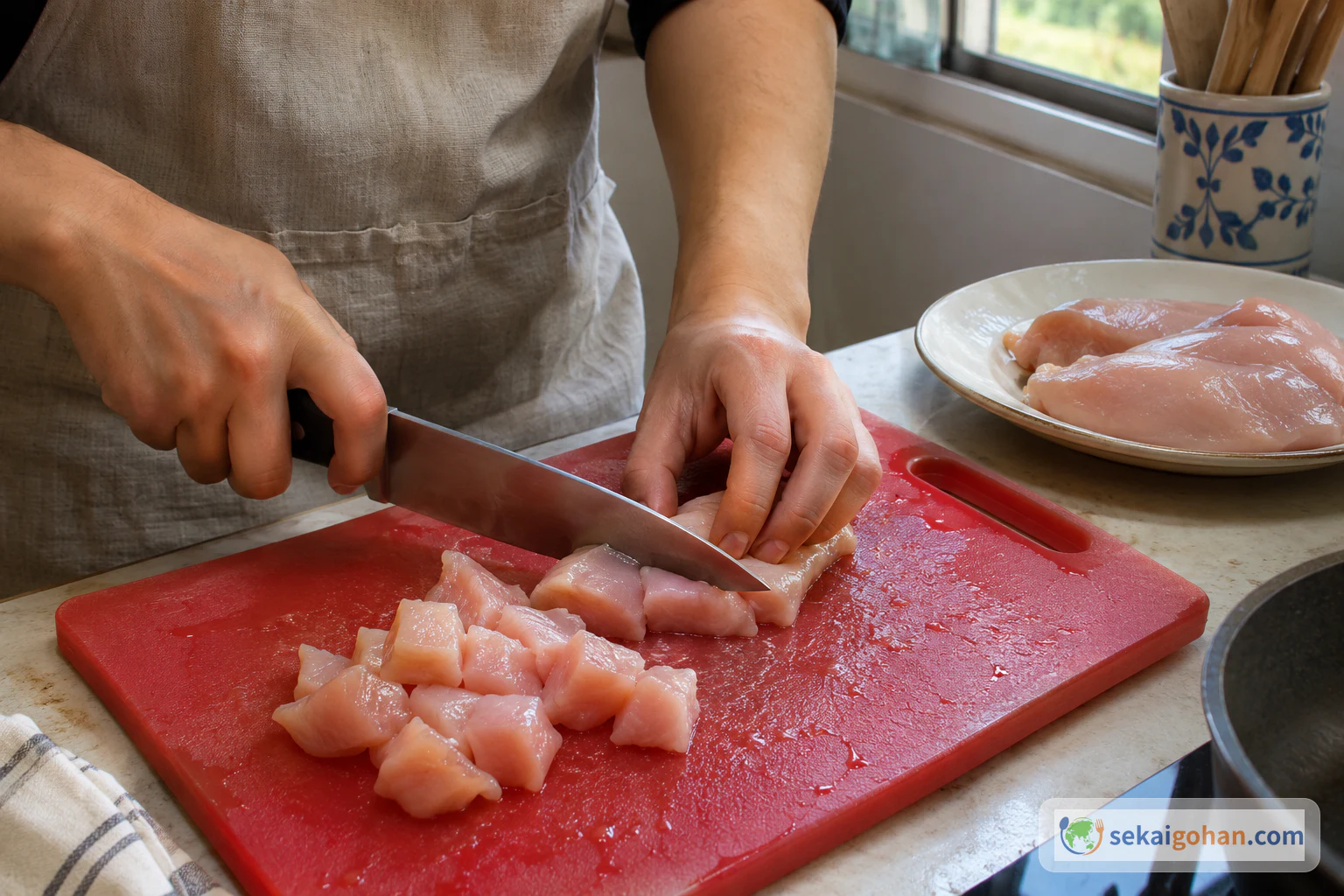
Cutting raw chicken breast into small bite-size pieces

On a board kept for raw chicken, cut the chicken breast into small bite-size pieces. Do not rinse the raw chicken. On a separate board, finely mince the ginger. You should have small, even bite-size pieces of chicken and a pile of fine ginger.

STEP 33 / 13

Prepare the leek and garlic

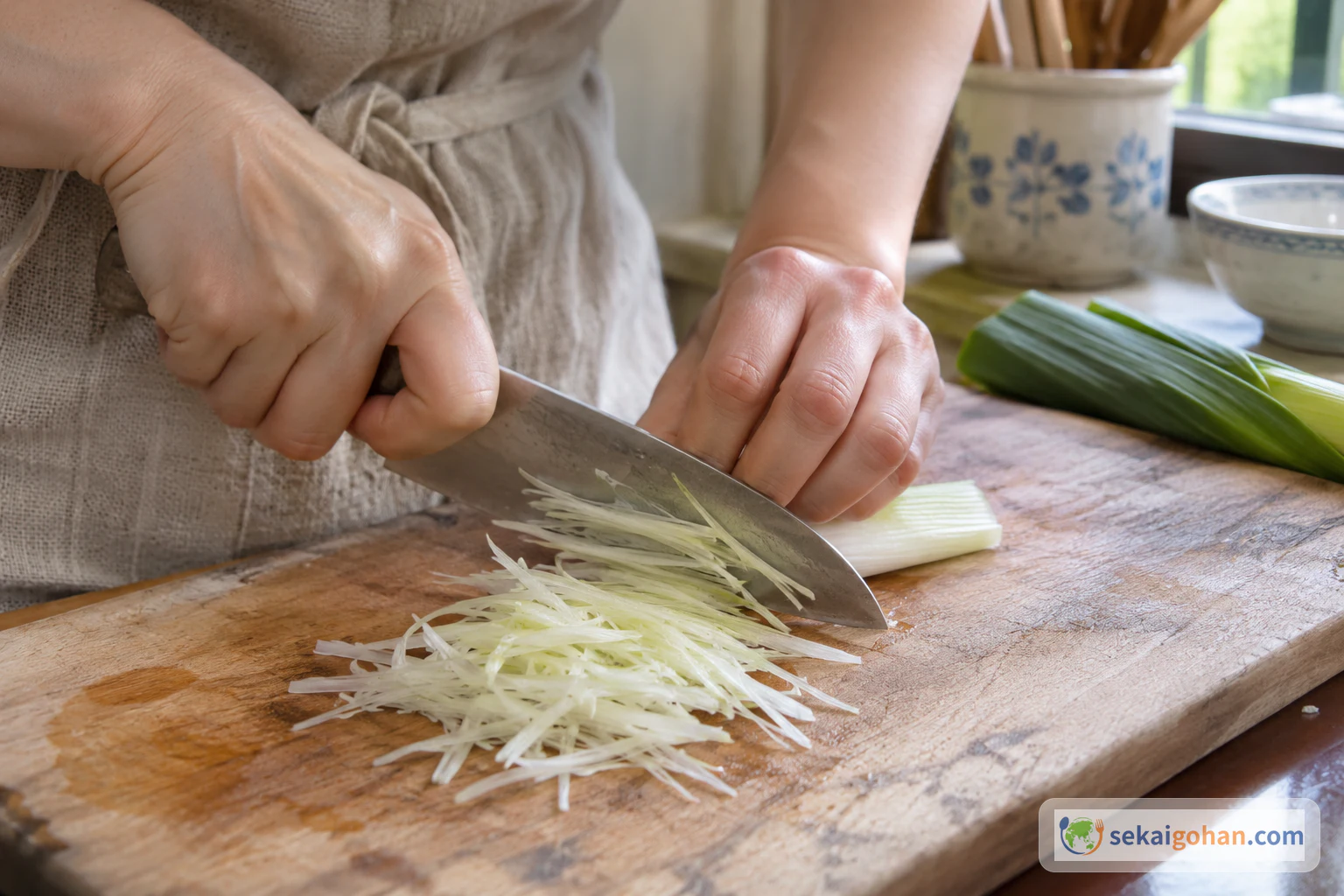
Cutting leek into thin shreds

Cut the leek into thin shreds for the aroma oil. Cut the 4 peeled garlic cloves in half lengthwise. Keep both ready next to the stove.

STEP 44 / 13

Prepare the chilies and onions

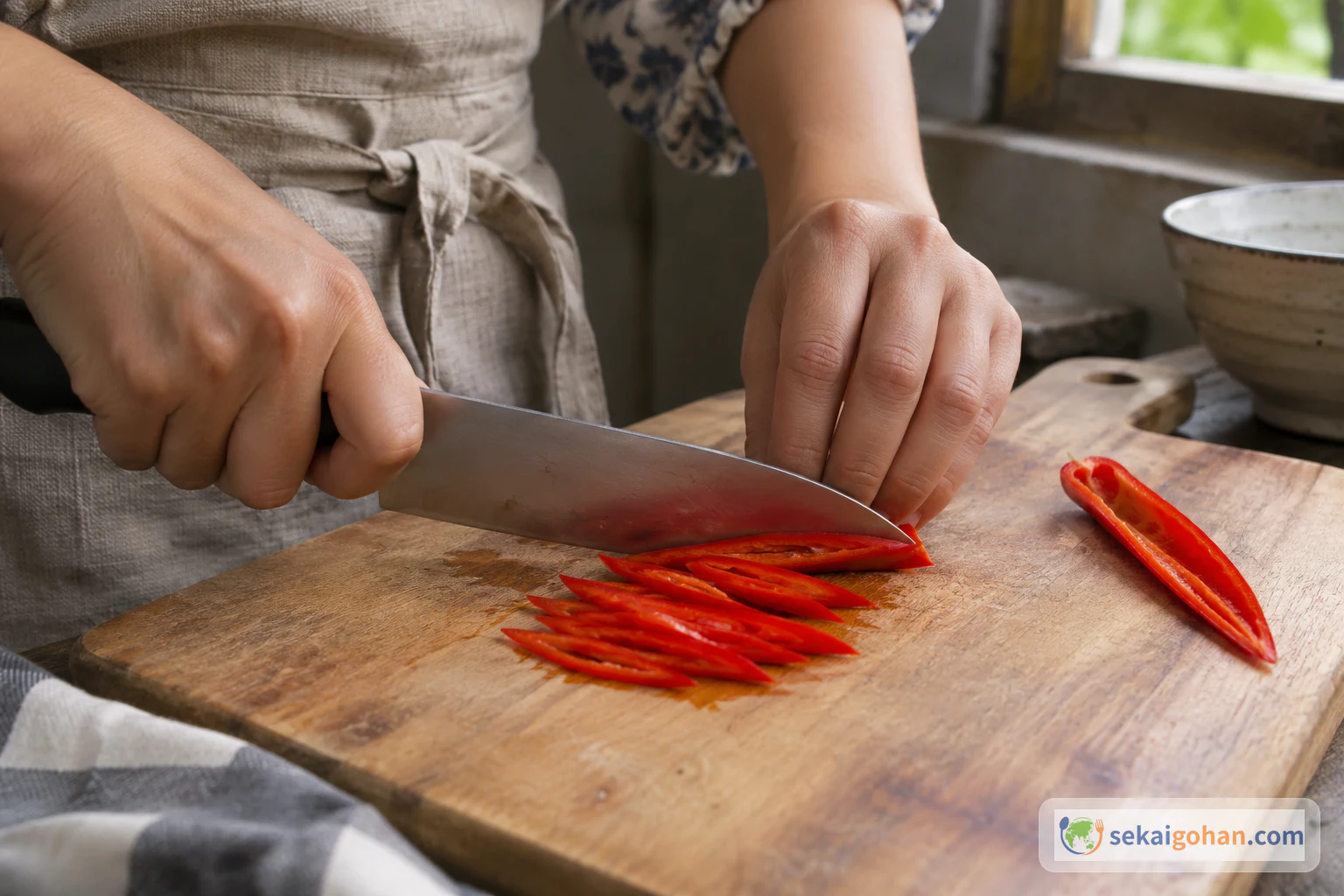
Thinly slicing the deseeded fresh red chili

Split the green chili lengthwise, remove the seeds and slice it thinly. Do the same with the fresh red chili. Chop the green onion and the half onion. Everything for the vegetable stir-fry should now be cut and within reach.

STEP 55 / 13

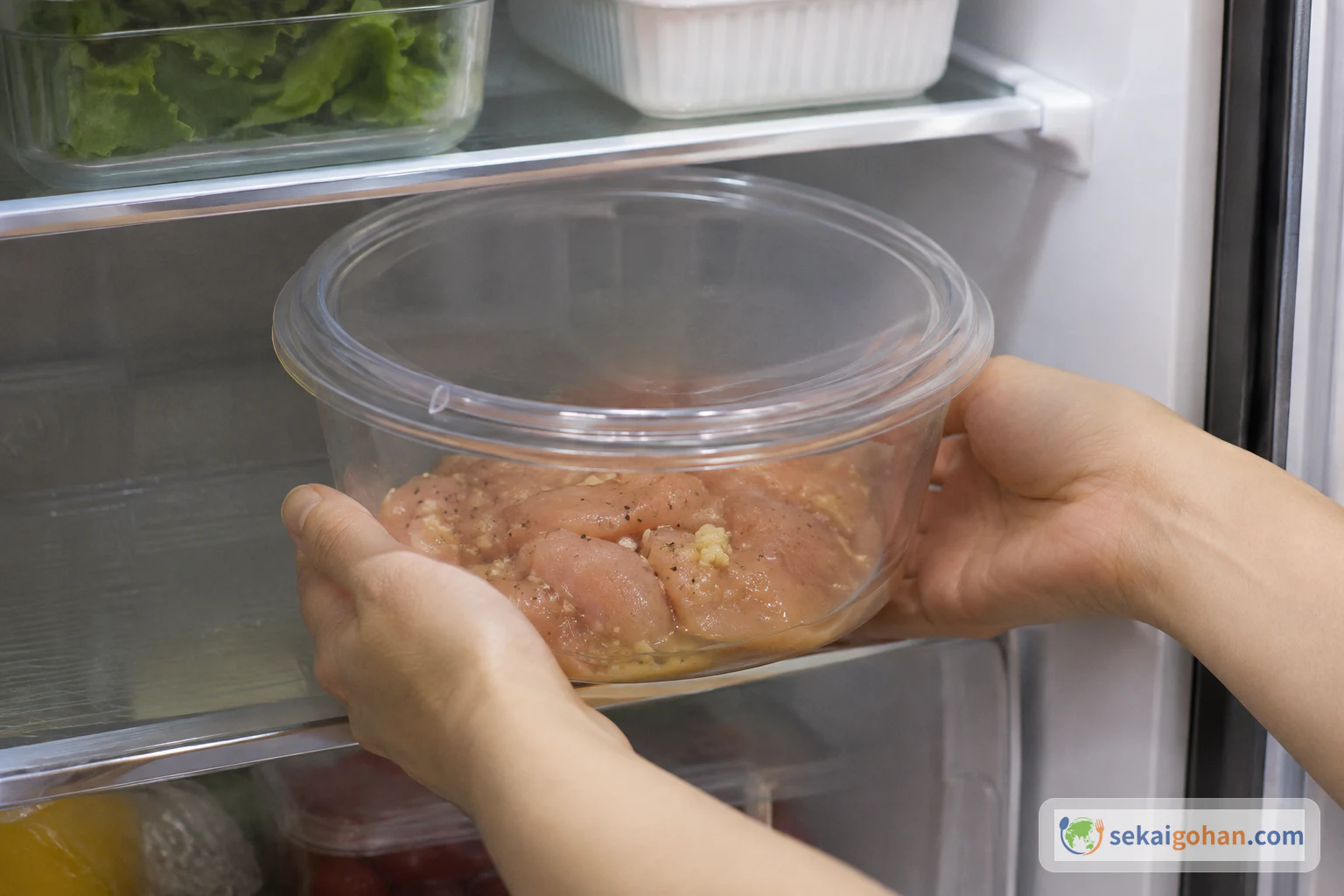
Marinate the chicken in the refrigerator

Covering the seasoned chicken and placing it in the refrigerator to marinate

In a bowl, mix the chicken with 1/2 tsp minced ginger, 1 tsp soy sauce and 1/4 tsp ground black pepper. Cover the bowl and refrigerate for 10–20 minutes. Do not leave it to marinate on the counter.

STEP 66 / 13

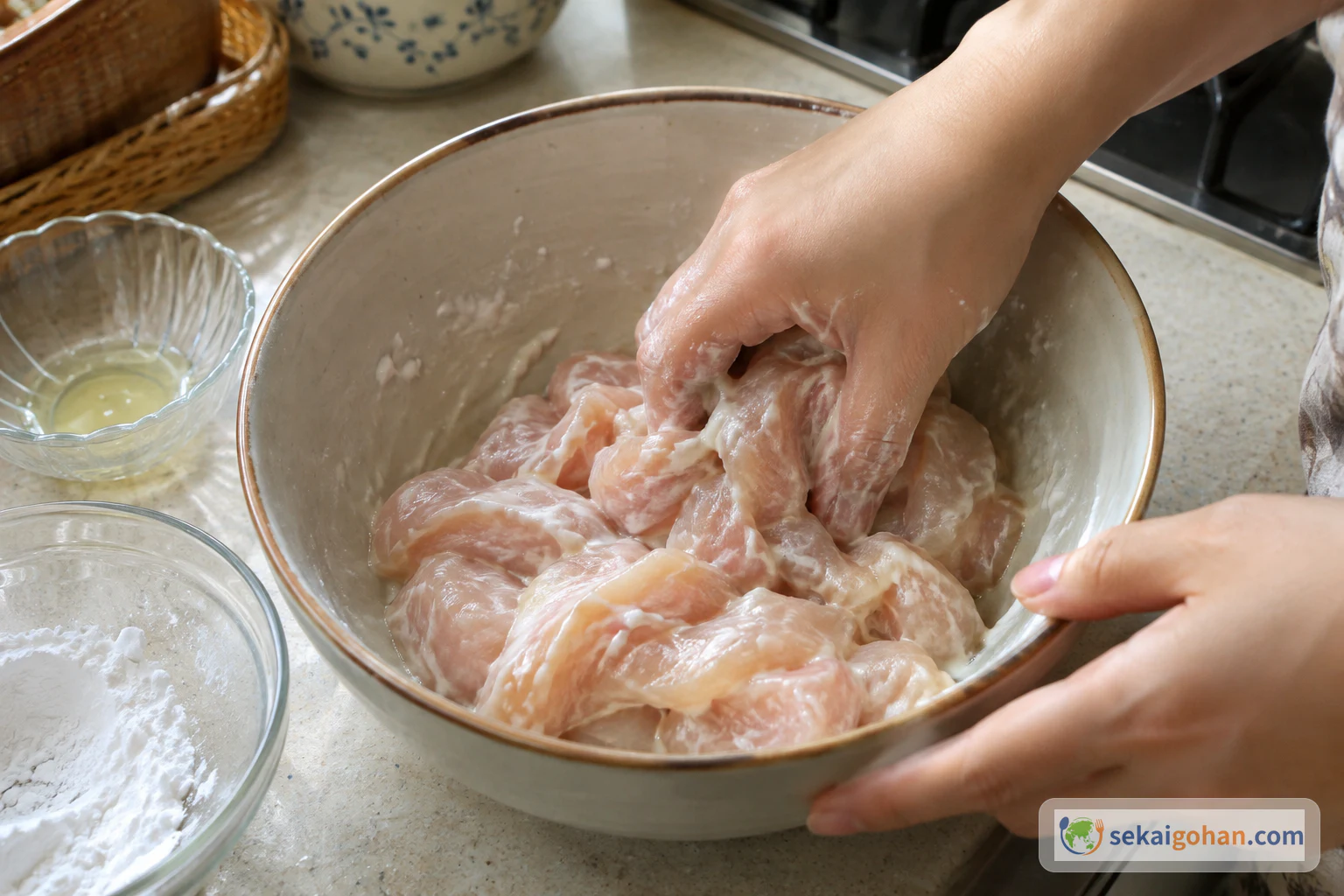
Coat the chicken

Mixing the chicken, egg white and potato starch by hand to coat

Take the chicken out of the refrigerator and add the white of 1 egg and the 1/2 cup potato starch. Mix with your hand until every piece is coated. Wash your hands, and any tools that touched the raw chicken, before moving on.

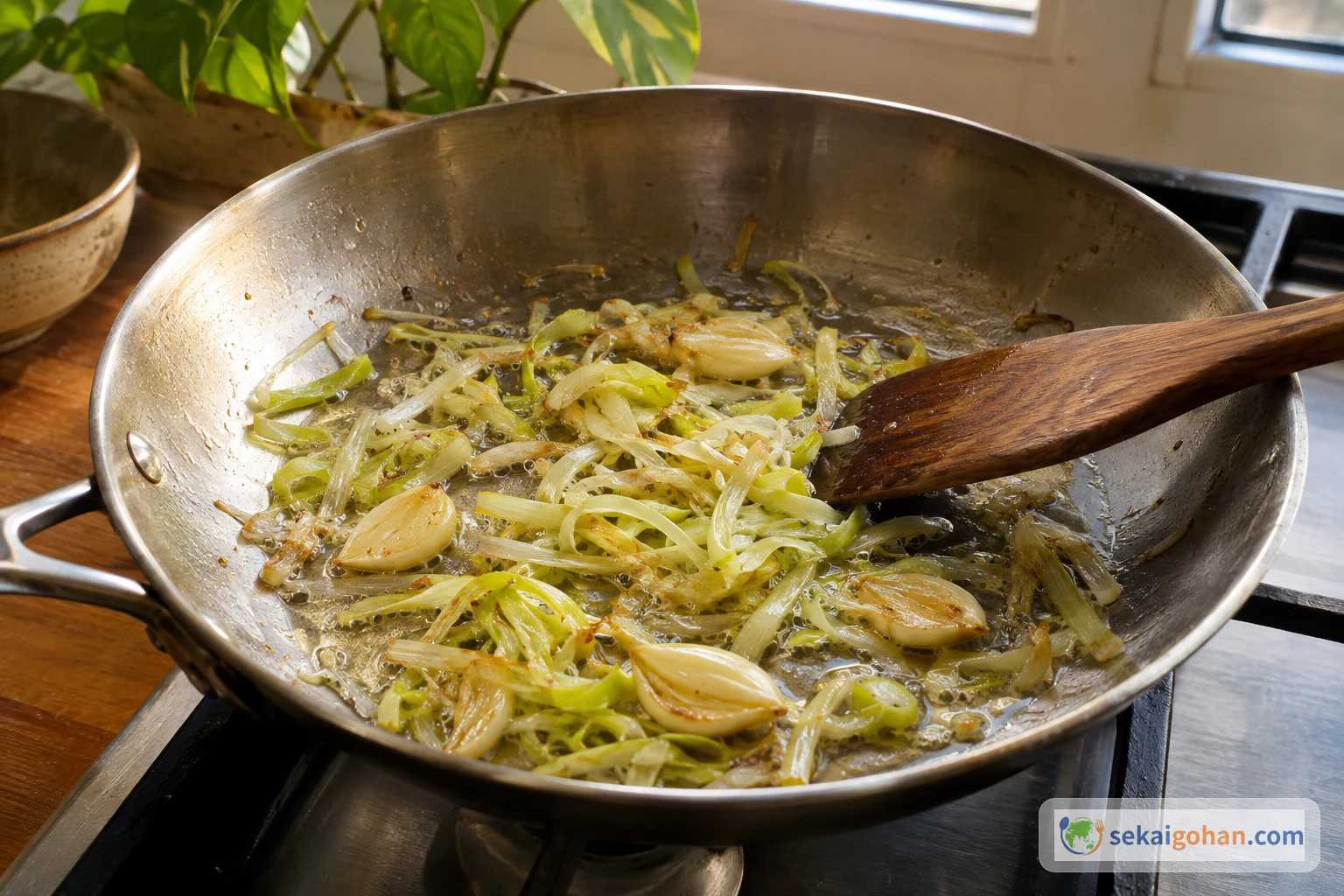
STEP 77 / 13

Fry the garlic and leek in oil

Frying halved garlic and shredded leek in oil over medium heat

Warm 1/4 cup vegetable or corn oil in a small saucepan, then turn the heat to medium. Add the halved garlic and shredded leek and fry until light golden. Lift them out onto a small plate and set them aside for the finish. The oil stays in the saucepan.

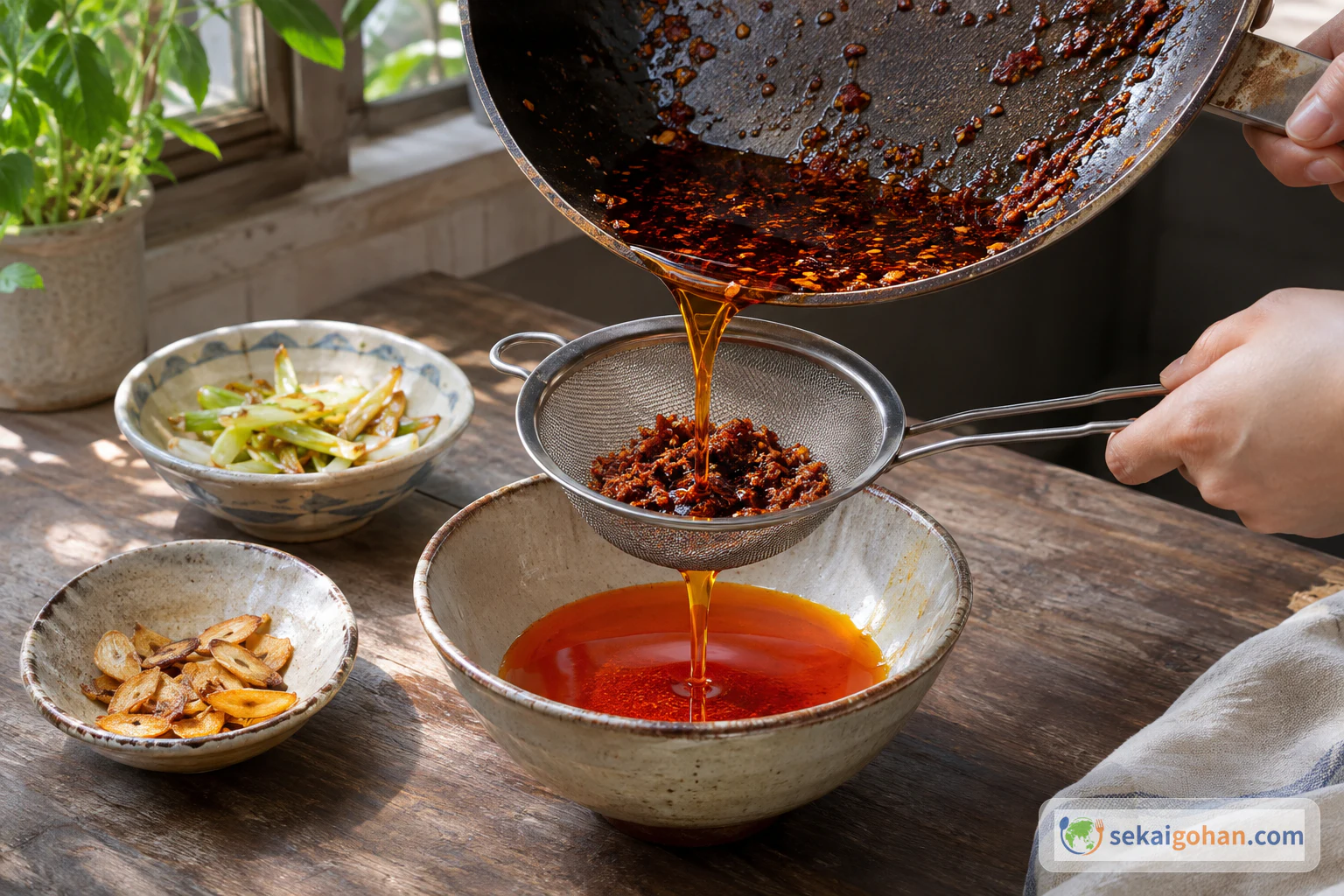
STEP 88 / 13

Make the chili aroma oil

Straining the cooled aroma oil through a fine strainer

Turn off the heat under the saucepan. With the heat off, add 1 tbsp coarse red chili flakes to the hot oil and stir them in. Leave the chili oil to cool for a few minutes. Pour the cooled oil through a fine strainer into a clean bowl; the chili flakes stay in the strainer and the strained oil is what you keep.

STEP 99 / 13

Heat the frying oil

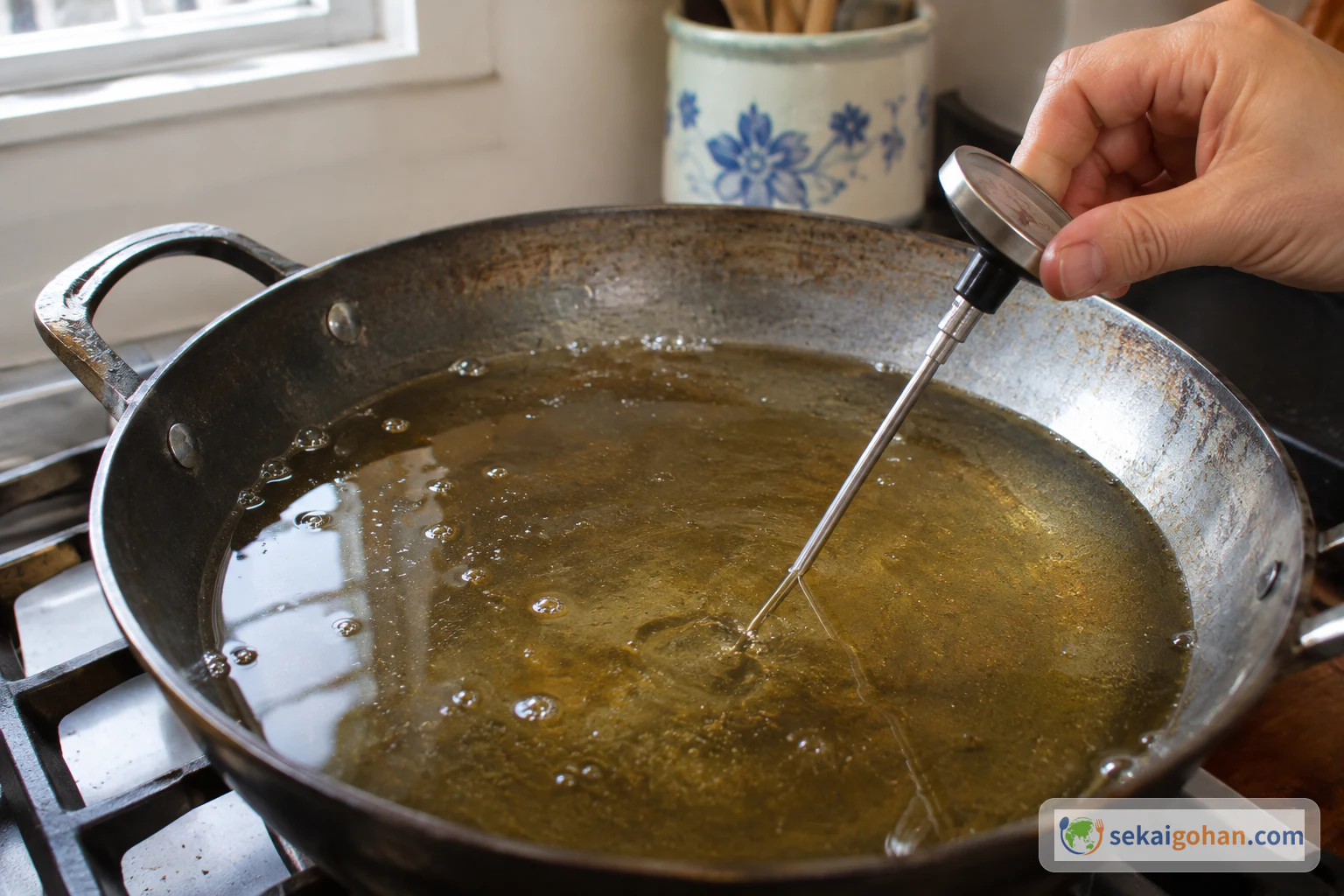
Checking the frying oil temperature with a thermometer

Heat 1 cup cooking oil in a wide pan over medium-high heat. Check the oil with a frying thermometer. It is ready at 335–350°F (168–177°C).

STEP 1010 / 13

Fry the chicken the first time

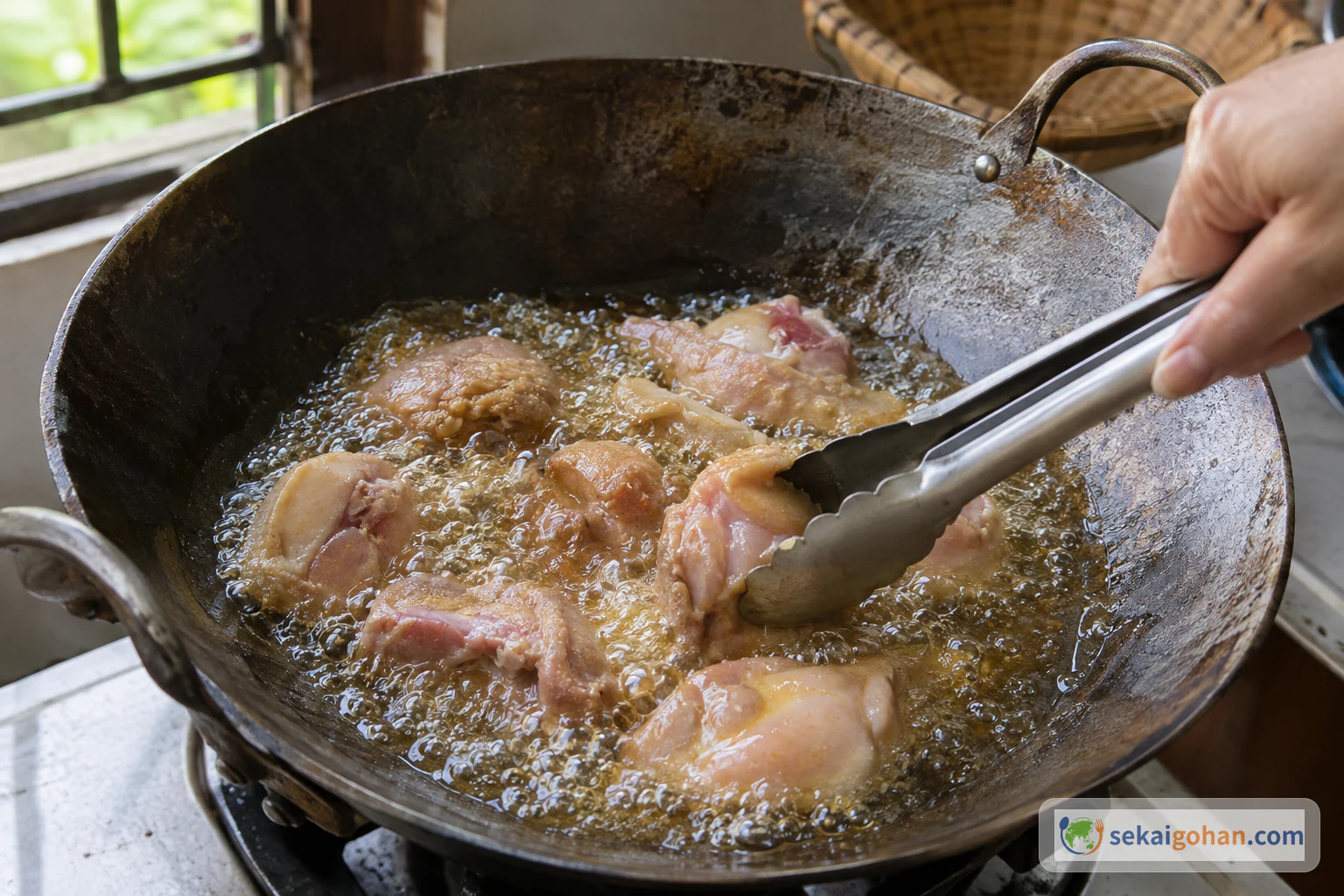
Turning the chicken during the first fry over medium-high heat

Carefully lower the coated chicken pieces into the hot oil with tongs. Fry for about 5 minutes, turning the pieces so they cook evenly. Lift the chicken onto a wire rack to drain. Turn off the heat under the frying oil and keep the oil in the pan for the second fry.

STEP 1111 / 13

Stir-fry the vegetables and add the sauce

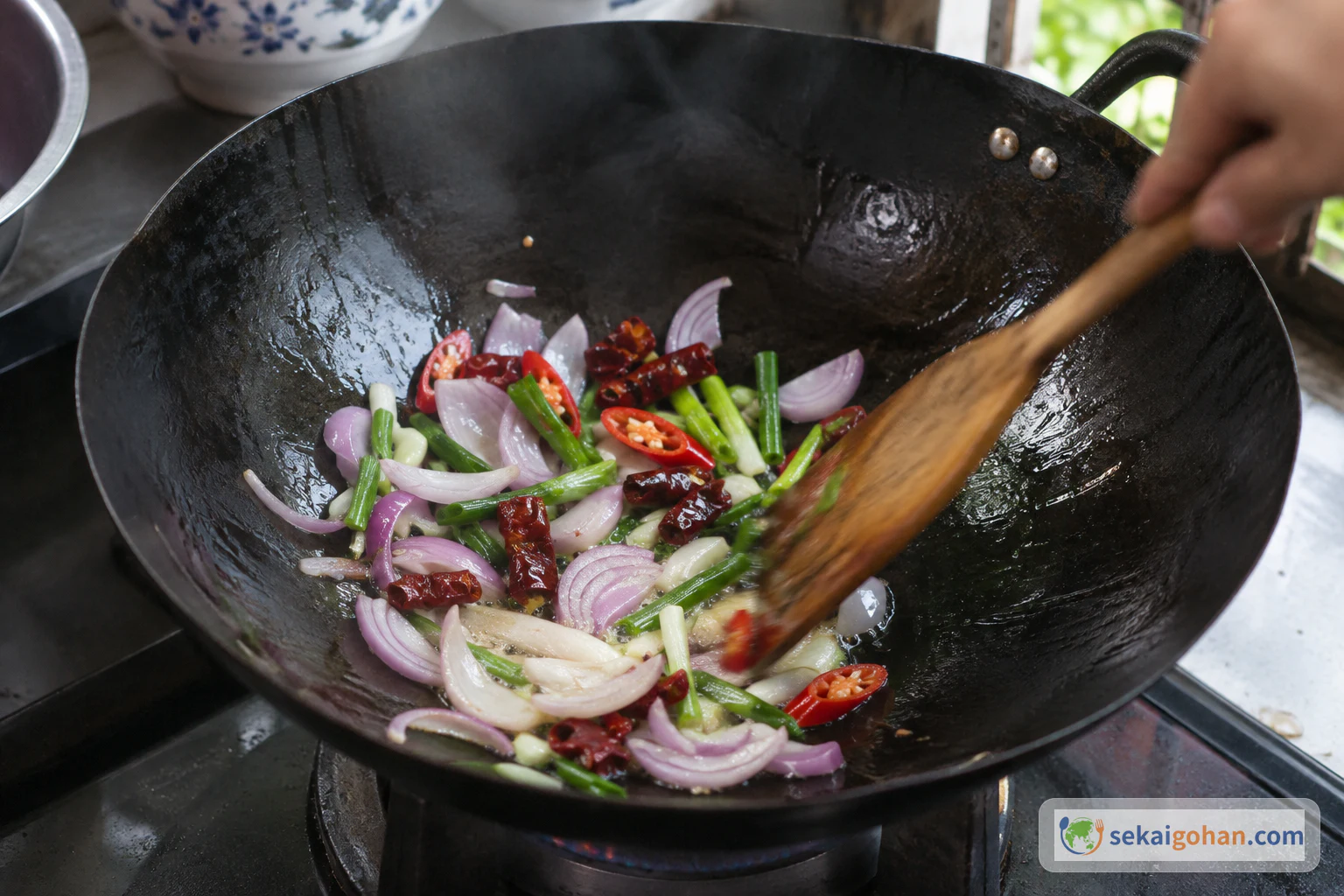
Stir-frying the vegetables in the aroma oil over medium-high heat

Set a large, clean, dry frying pan over the heat and pour in the strained chili aroma oil. Let the oil heat, then add the onion, green onion, sliced green and red chilies and the 3–4 dried red chilies. Stir-fry over medium-high heat for 2–3 minutes. Pour the mixed sauce over the vegetables and stir for 20–30 seconds. Turn off the heat and leave the sauce in the pan.

STEP 1212 / 13

Fry the chicken the second time and check it

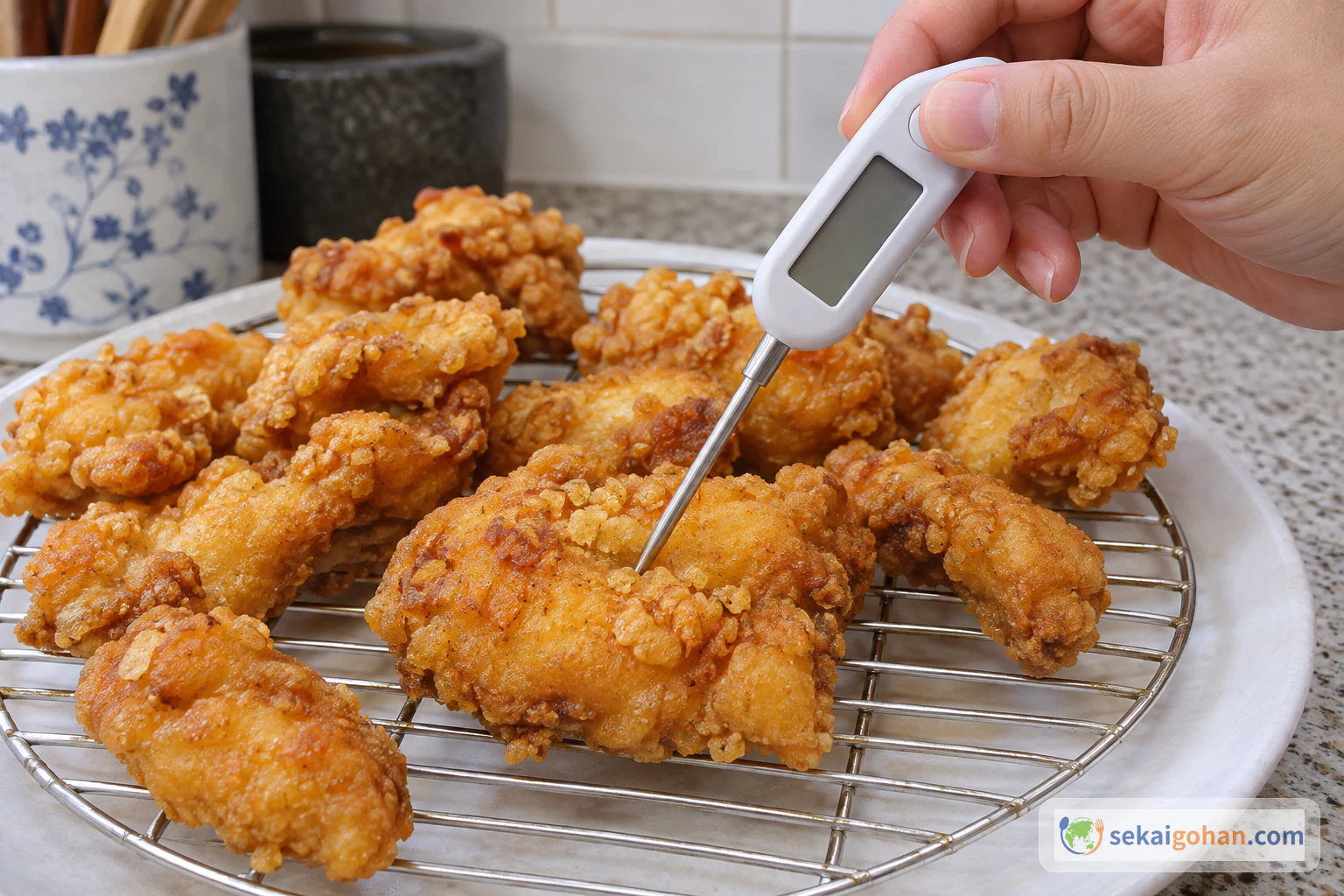
Inserting a thermometer into the center of the thickest piece of chicken

Turn the heat back on under the frying oil and reheat it. Lower the once-fried chicken back into the hot oil and fry for about 3–5 minutes, turning the pieces. With clean tongs, not the ones that handled raw chicken, lift the chicken onto a clean wire rack to drain. Insert a clean food thermometer into the center of the thickest piece; it should read 165°F (74°C) before serving. If it doesn't, fry longer and check again. Do not rely on color or time alone.

STEP 1313 / 13

Toss and serve

Tossing the chicken, vegetables, fried aromatics and sesame oil in the sauce

Heat the vegetable sauce again until it sizzles. Add the twice-fried chicken, the reserved fried garlic and leek, and 1 tsp toasted sesame oil. Toss until the chicken, vegetables and fried garlic and leek are coated in the sauce. Transfer to a plate and serve immediately while hot.

0 / 0
Ingredients

Ingredients

1 / 1

Ingredients

Ingredient Amount Role
Boneless chicken breast 1/2 lb (about 230 g) The main ingredient; cut into small bite-size pieces
Ginger, minced 1/2 tsp Marinade
Soy sauce (for the marinade) 1 tsp Marinade
Ground black pepper 1/4 tsp Marinade
Egg white 1 egg's worth Coating; white only, no yolk
Potato starch (for the coating) 1/2 cup Coating; add all of it
Vegetable or corn oil (for the aroma oil) 1/4 cup Base of the garlic, leek and chili oil
Leek, thinly shredded 1/2 cup Fried in the aroma oil, then reserved for the finish
Garlic, halved 4 cloves Fried in the aroma oil, then reserved for the finish
Coarse red chili flakes 1 tbsp Stirred into the oil off the heat, then strained out
Green chili pepper, deseeded and thinly sliced 1 Vegetables cooked in the sauce
Fresh red chili pepper, deseeded and thinly sliced 1 Vegetables cooked in the sauce
Green onion, chopped 1 Vegetables cooked in the sauce
Medium onion, chopped 1/2 Vegetables cooked in the sauce
Small dried red chili peppers 3–4 Vegetables cooked in the sauce
Soy sauce (for the sauce) 1 tbsp Sauce
Water 2 tbsp Sauce
Rice syrup (or sugar) 2 tbsp Sauce; sweetness and gloss
White vinegar 1 tbsp Sauce; sourness
Potato starch (for the sauce) 1 tsp Sauce; light thickening
Cooking oil for frying (grapeseed, vegetable or corn oil) 1 cup Frying the chicken twice
Toasted sesame oil 1 tsp Finishing aroma
0 / 0

The last moments decide this dish. Twice-fried chicken, still crackling, goes into a pan of glossy sauce that is sweet, sour and hot all at once, picks up the fried garlic and leek, and heads straight to the table. Kkanpunggi is a Korean-Chinese favorite, and for many people it brings back childhood memories of Korean-Chinese restaurants. This version uses boneless chicken breast with an egg white and potato starch coating and a rice-syrup sauce, and it serves 2–3.

Check with a thermometer

Judge the chicken with a food thermometer, not by color or by the clock.

About Kkanpunggi

Kkanpunggi is fried chicken stir-fried with vegetables in a sweet, sour and spicy sauce. Its name splits into three syllables: kkan, pung and gi. The same name also covers recipes built quite differently. One popular style uses chicken thigh, a whole egg, mirin, cornflour and peanuts. If you want to explore more of the country's cooking, see our page on Korea.

How Kkanpunggi Comes Together

The work happens in three pans. In a small saucepan, halved garlic and shredded leek fry in oil until light golden, then come out and wait on the side. Coarse chili flakes go into the hot oil only once the heat is off. In a wide pan, the starch-coated chicken fries once, rests on a rack, then goes back in for a second fry. In a large frying pan, the strained chili oil cooks onion, green onion and chilies, and a sauce of soy sauce, rice syrup and white vinegar thickens around them in seconds. Finally, the chicken, the reserved garlic and leek, and a little sesame oil are tossed in the reheated sauce.

Ingredients (2–3 Servings)
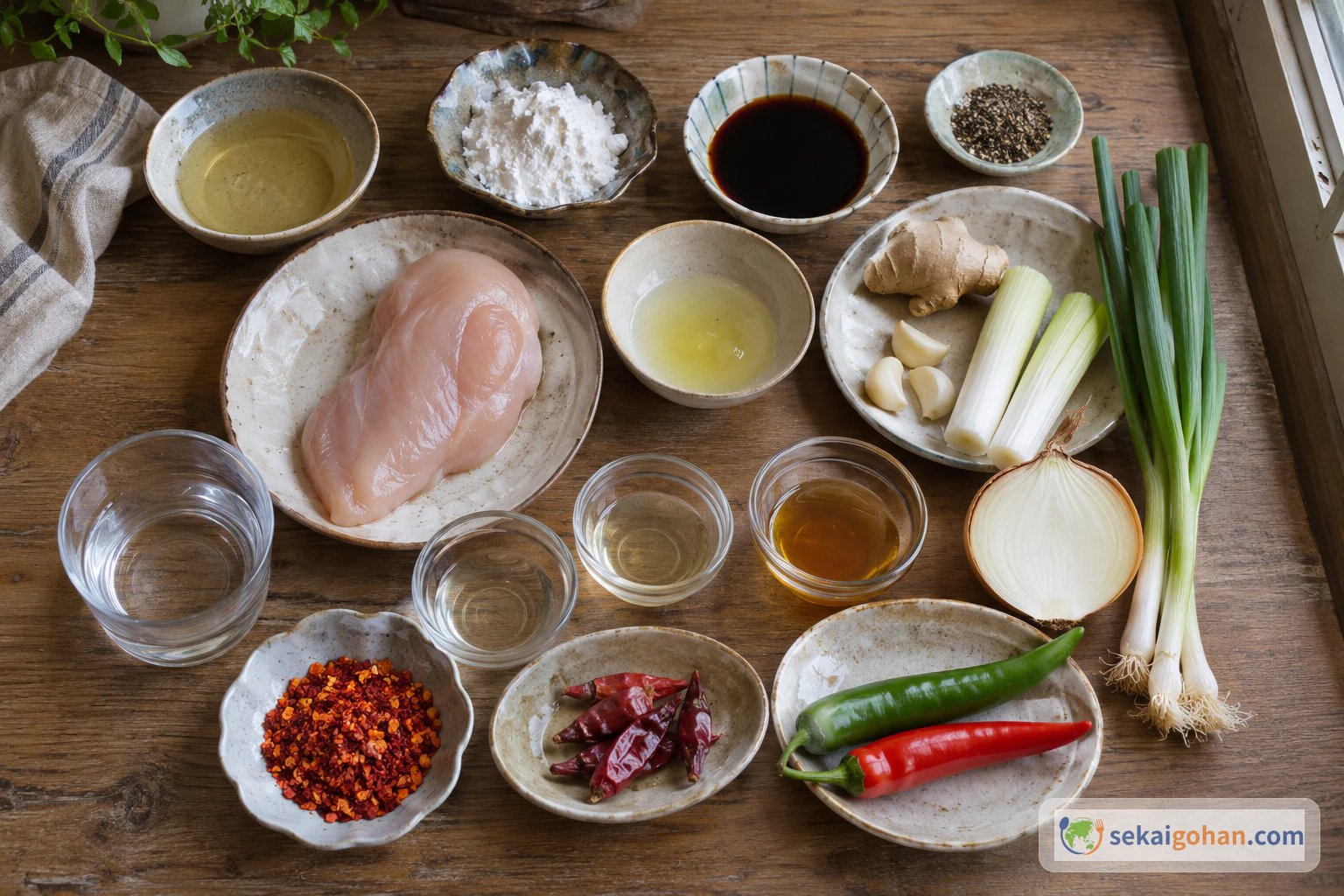
The ingredients for this version laid out separately: raw chicken breast and uncooked seasonings and aromatics

The garlic and leek do two jobs: they flavor the aroma oil, then return to the pan at the very end as crisp pieces. The chili flakes stay only in the oil and are strained out. The potato starch appears twice, as 1/2 cup for the coating and 1 tsp for the sauce; keep them separate.

Equipment

  • Knife and a cutting board kept for raw chicken
  • A separate cutting board for vegetables
  • Small bowl for the sauce
  • Mixing bowl with a cover (lid or wrap) for the chicken
  • Small saucepan for the aroma oil
  • Fine strainer and a clean bowl for the strained oil
  • Small plate for the fried garlic and leek
  • Wide pan for frying the chicken
  • Frying (oil) thermometer
  • Large frying pan for the vegetables and sauce
  • Tongs or a wire skimmer, plus a clean set for cooked chicken
  • Wire rack over a plate for draining
  • Clean food thermometer for checking the chicken
  • Measuring cups and spoons
  • Serving plate

Choosing Ingredients for Kkanpunggi

  • Potato starch: Use it for both the coating and the sauce. Japanese katakuriko is potato starch.
  • Egg white: Use only the white of one egg.
  • Rice syrup or sugar: Either works in the sauce. Rice-based Japanese mizuame can stand in for rice syrup.
  • Leek: Japanese long onion (naganegi) can stand in, though the aroma will be different.
  • White vinegar: Rice vinegar works too, with a slightly different flavor.
  • Oil: Use a plain, neutral oil (vegetable or corn) for the aroma oil, and grapeseed, vegetable or corn oil for frying. The 1 cup of frying oil is the amount to prepare, not the amount the chicken absorbs.
  • Chilies: The fresh green and red chilies are deseeded and thinly sliced. Pick them by the kind of chili pepper rather than by color alone.

Method: Aroma Oil, a First Fry, the Sauce, a Second Fry, and a Fast Finish

About the vegetable step

The onion, green onion, fresh chilies and dried chilies all go into the pan at the same stage.

Prepare everything before you light the stove: the sauce mixed, the vegetables cut, the chicken coated. Once the frying starts, the steps follow each other quickly.

Kkanpunggi Safety, Checkpoints and Fixes

Refrigerate, separate, and check with a thermometer

Marinate the chicken for 10–20 minutes, covered, in the refrigerator, not on the counter. Do not wash raw chicken. Wash your hands, utensils and surfaces after they touch raw chicken, and keep the board, bowls and tongs used for raw chicken separate from those used for cooked food. Before serving, insert a clean food thermometer into the center of the thickest piece of chicken. 165°F (74°C) is the minimum safe internal temperature for poultry.

The oil temperature and frying times are guides. Burners and pans differ, so treat "about 5 minutes" and "about 3–5 minutes" as starting points. The real test is the thermometer reading after the second fry, before the chicken is sauced.

Keep the stations apart

Finish the aroma oil before the frying starts, and have the sauce ready in its bowl before the vegetables go in.

What you notice What to check What to do
The garlic and leek are darkening fast Heat level under the small saucepan Keep it at medium and lift them out as soon as they are light golden; they still go back in at the end
You are about to add the chili flakes with the burner on The order in steps 21–23 Lift out the garlic and leek, turn off the heat, then add the flakes
The chicken looks golden after the second fry The thermometer, not the color Check the center of the thickest piece. If it is below 165°F (74°C), keep frying and check again before saucing
The sauce has cooled while the chicken fried Whether it is sizzling Reheat it until it sizzles before the chicken goes in
You're unsure which tongs to use for the drained chicken Which tools touched raw chicken Use a clean set of tongs and a clean rack for the twice-fried chicken

Serving Kkanpunggi and a Milder Version

Kkanpunggi is a dish to eat straight from the pan, so toss it and serve it right away; there's no make-ahead or reheating step. For a version without the heat, leave out the chilies and chili oil. The dish then leans toward a sweet, sour garlic chicken, a noticeably different result.

Frequently Asked Questions

Do I really add the whole 1/2 cup of potato starch?

Yes. It looks like a lot, but add all of it and mix by hand until every piece is coated.

Can I use a whole egg instead of the egg white?

Stick with the white here. The whole-egg coating belongs to the thigh-based style of kkanpunggi, so if that's what you're after, follow that recipe as a whole rather than swapping ingredients into this one.

Why marinate in the refrigerator?

The refrigerator is the safest place to marinate poultry. Keep the chicken covered there for 10–20 minutes, never on the counter.
Sources