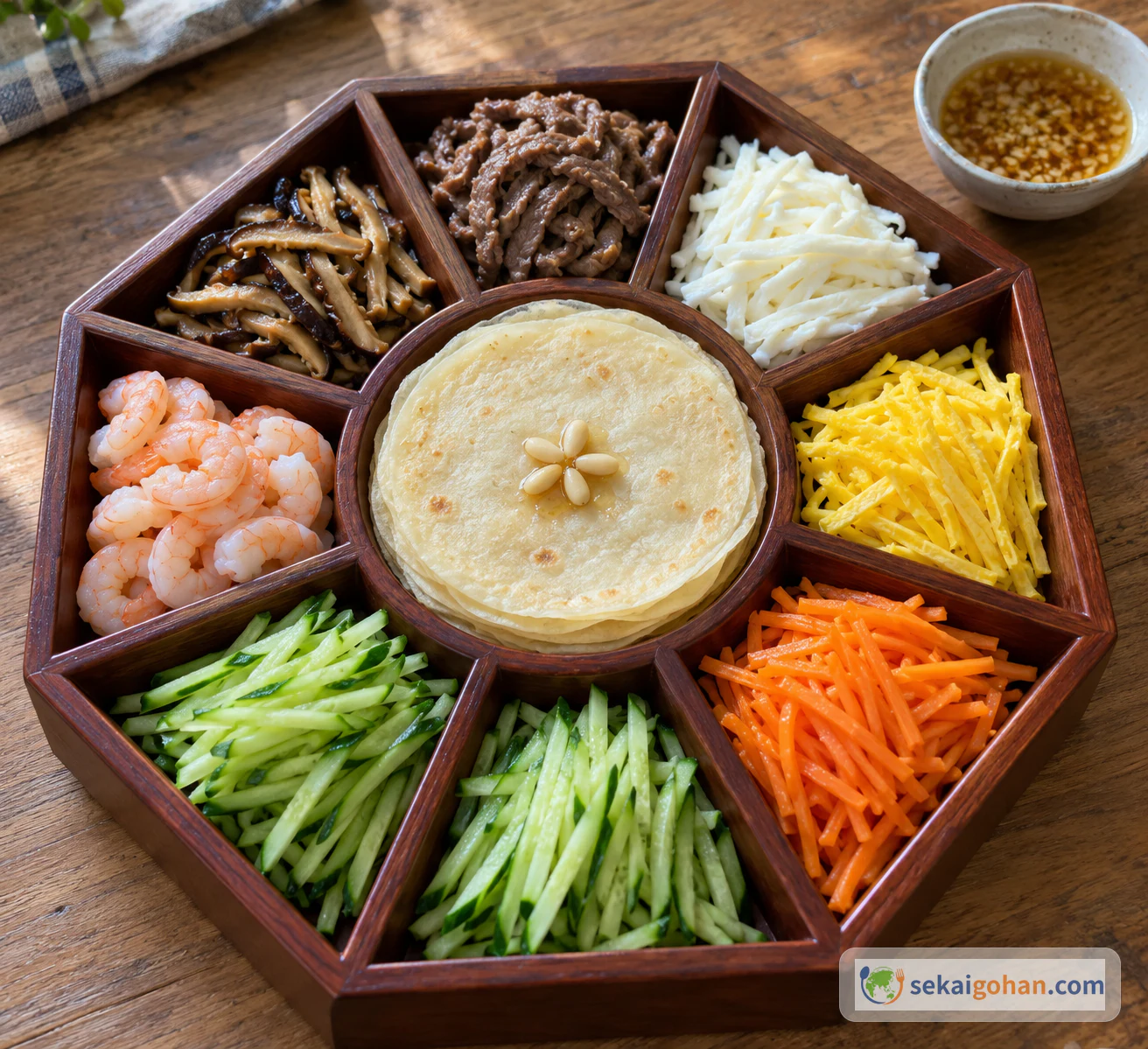
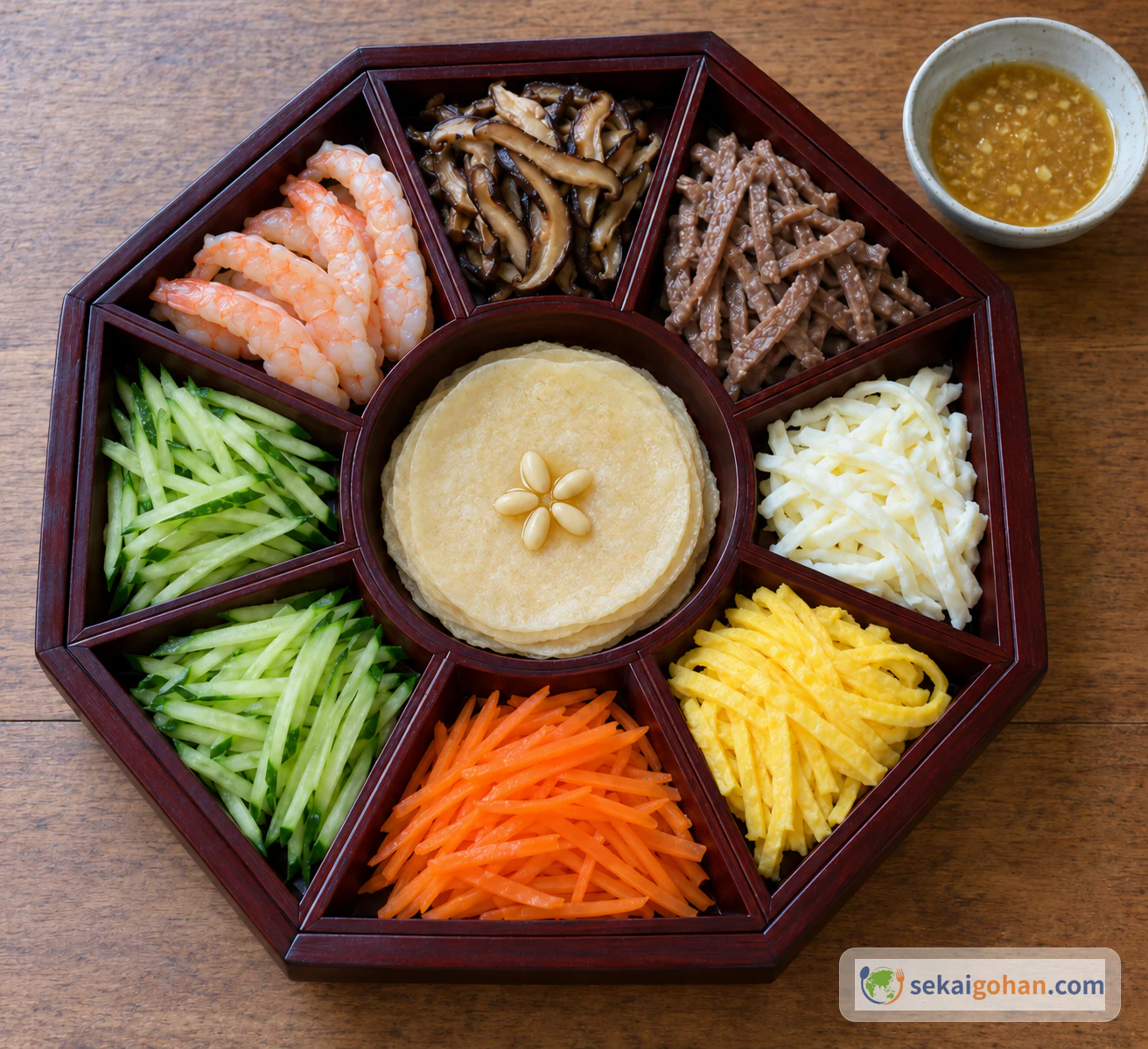
Gujeolpan with beef, shiitake, egg, vegetables, shrimp and thin crepes arranged in nine sections
Serves4 servings
CuisineKorean

Gujeolpan: Korean Platter of Nine Delicacies (구절판)

How to make gujeolpan (구절판), the Korean platter of eight colorful fillings around a stack of thin wheat crepes, served with a mustard-garlic sauce. Covers the separate seasoning for each filling, white and yolk egg sheets, small strained crepes, how to arrange the nine sections, and how to plate it without a special nine-section dish.

Level: Intermediate

Cooking flow

Cooking steps

STEP 11 / 9

Make the mustard-garlic sauce

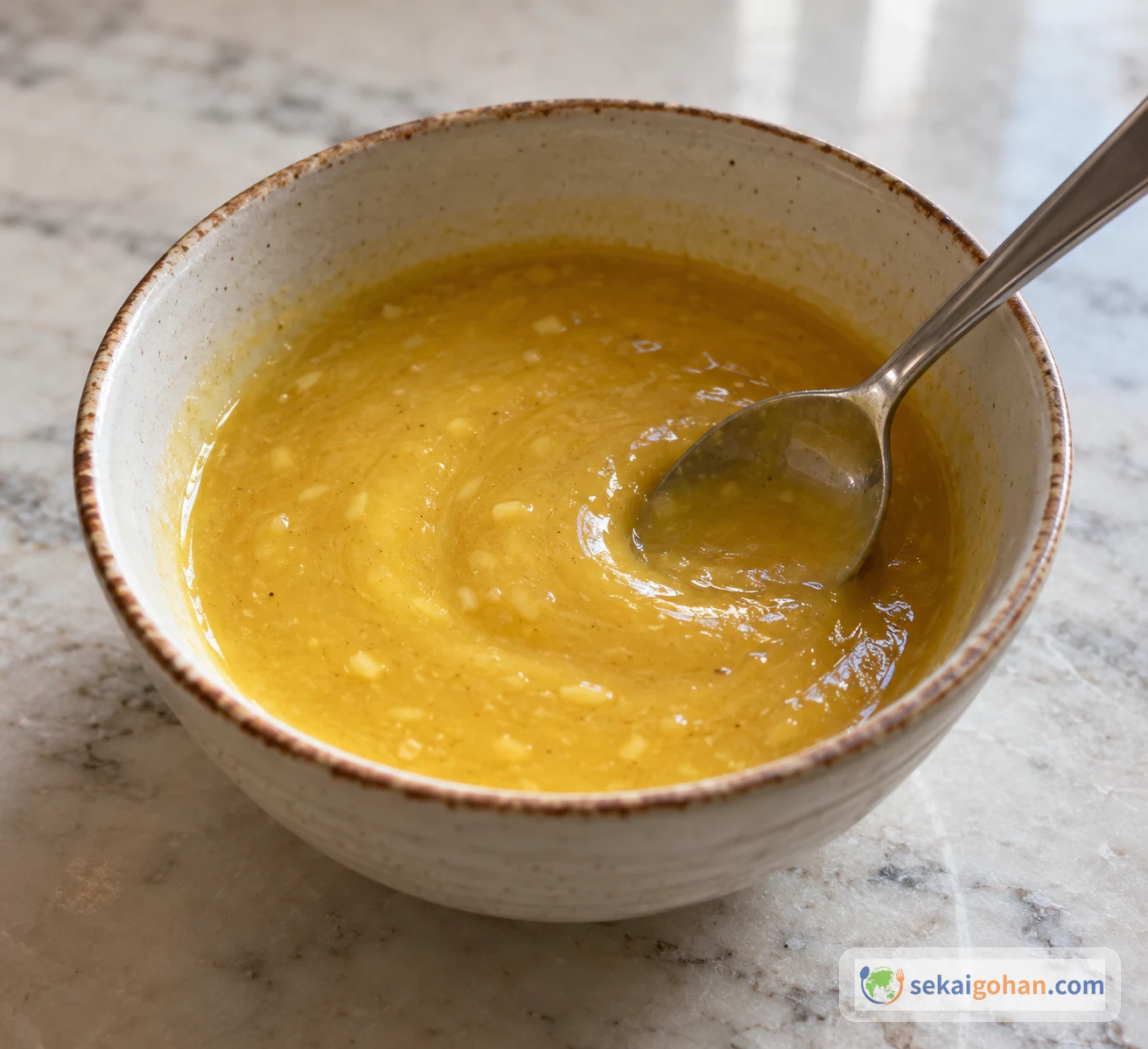
Sauce of Korean mustard powder, garlic, vinegar and honey being stirred
Let the mustard powder and warm water sit before adding everything else.

Mix 1 tablespoon Korean mustard powder with 1 tablespoon warm water and let it sit for 5 to 10 minutes. Stir in 1 tablespoon minced garlic, 1 tablespoon kosher salt, 3 tablespoons white vinegar, 2 tablespoons honey, 1/2 teaspoon soy sauce and 1 teaspoon toasted sesame oil. Refrigerate until serving.

STEP 22 / 9

Prepare and season the mushrooms and beef

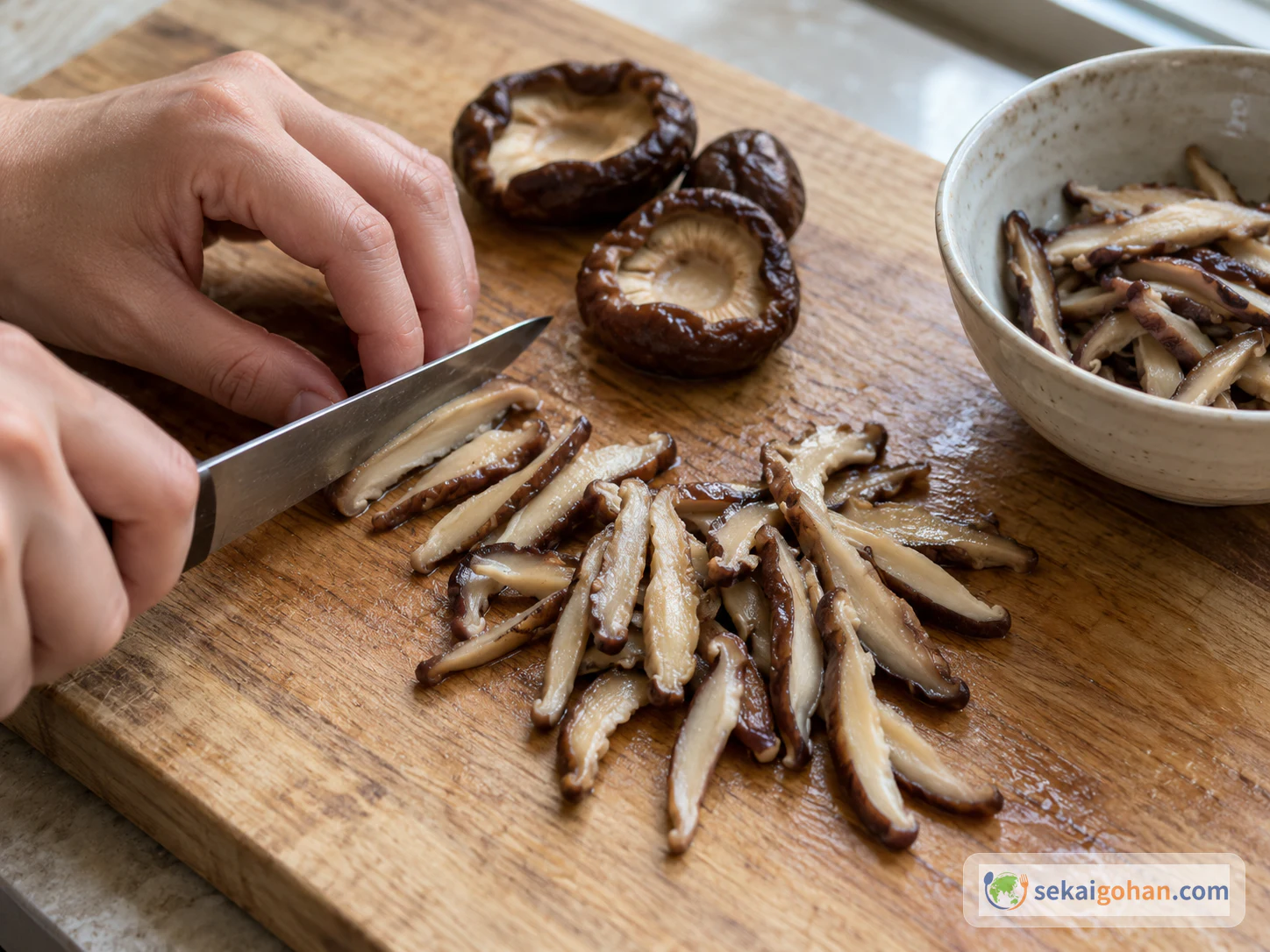
Softened shiitake with stems removed being sliced into thin strips
Remove the shiitake stems and slice the caps thinly.

Soak the 4 ounces of rock ear or dried shiitake in warm water until softened. For rock ear: drain, rub both sides with kosher salt to loosen the sand, rinse in cold water, then stack, roll up and slice thinly. For shiitake: drain, remove the stems and slice thinly.

In a bowl, mix the mushrooms with 1 teaspoon soy sauce, 1 teaspoon sugar, 1/2 teaspoon toasted sesame oil and a pinch of black pepper. Cover and set aside.

Cut 4 ounces beef brisket into thin strips 2½ inches long. In a separate bowl, mix it with 1 minced garlic clove, 2 teaspoons soy sauce, 2 teaspoons honey (or 2 teaspoons sugar), 1 teaspoon toasted sesame oil and a pinch of black pepper. Cover and set aside, keeping the mushroom and beef seasonings apart.

STEP 33 / 9

Cook the white and yolk egg sheets

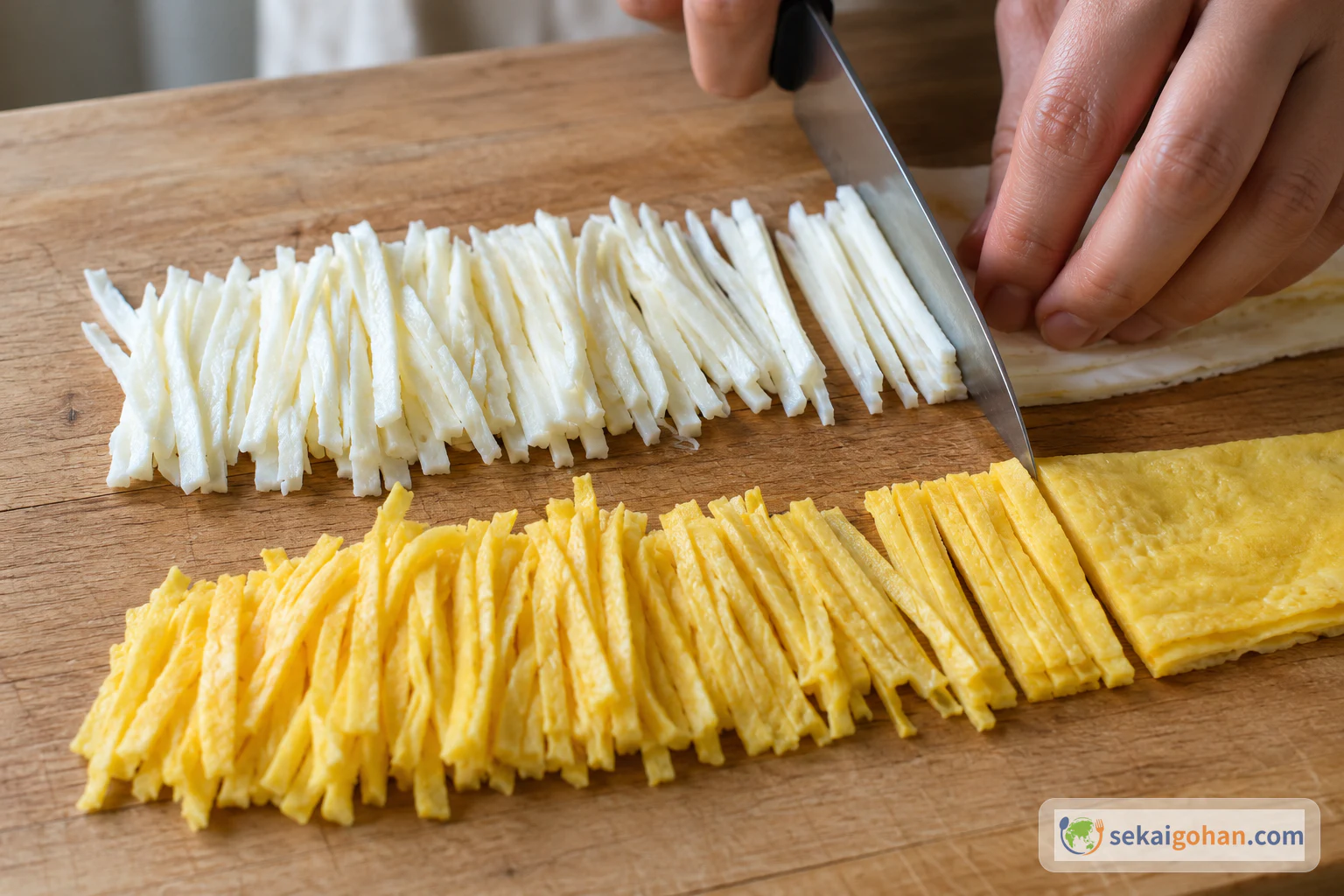
Thin white and yolk egg sheets, cooked separately, being cut into strips
Keep the white and yellow strips in separate rows.

Separate the 3 eggs into whites and yolks in two bowls, and keep them apart. Use only the one pinch of kosher salt for the eggs, not a pinch in each bowl.

Heat a non-stick skillet, spread a few drops of vegetable oil over it, turn off the heat and wipe off the excess oil. Pour in the egg whites and spread them thin. Let them sit until set, lift the edge, flip, and cook until both sides are set. If the egg is still not cooked through, turn the heat on to very low.

Cook the yolks the same way, separately. Let both egg sheets cool, then cut them into thin strips 2½ inches long. Keep the white and yellow strips apart.

STEP 44 / 9

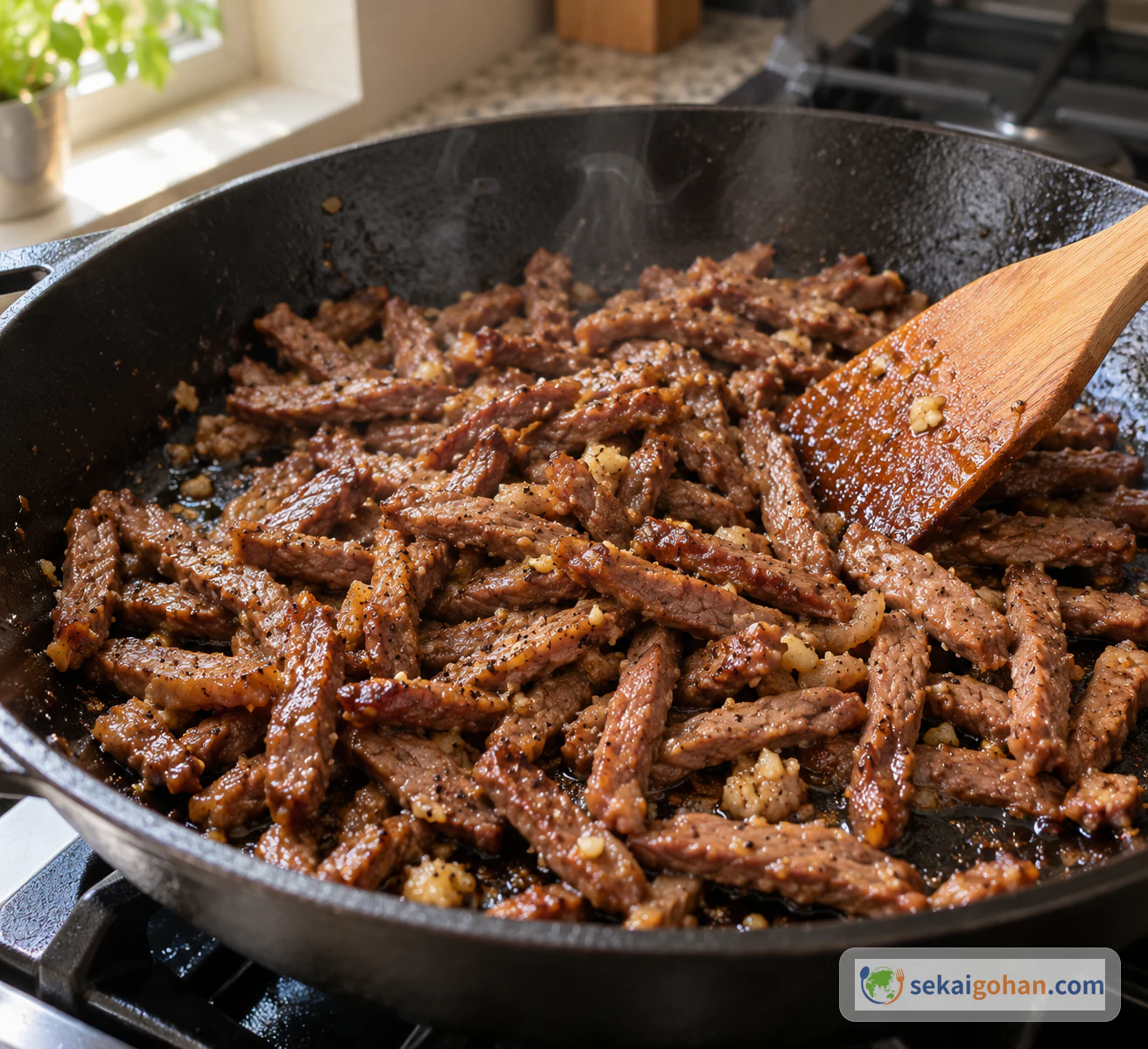
Stir-fry the mushrooms and beef

Seasoned beef brisket strips stir-frying in a skillet
Stir-fry until most of the liquid is gone and the beef is cooked through.

Add 1 teaspoon vegetable oil to the skillet and stir-fry the seasoned mushrooms for a few minutes until tender. Transfer to a plate.

Add the seasoned beef to the skillet and stir-fry for 3 to 4 minutes, until most of the liquid has evaporated and the beef is cooked through.

STEP 55 / 9

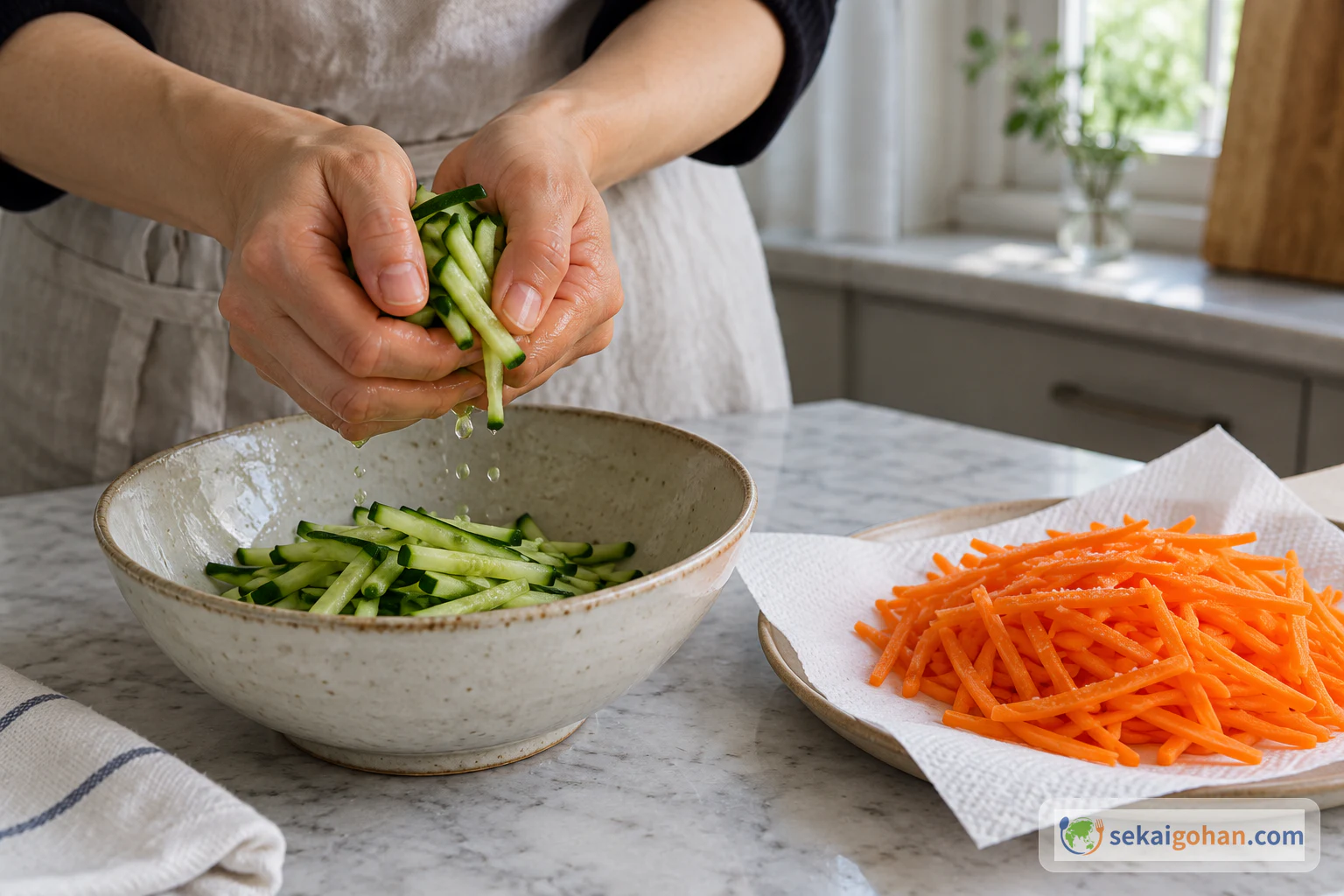
Salt and stir-fry the cucumber and carrot

Salted cucumber being squeezed and carrot drying on a paper towel
Squeeze the cucumber gently; blot the carrot with a paper towel.

Cut the cucumber into 2½-inch matchsticks, sprinkle with 1/4 teaspoon kosher salt and let sit for 5 minutes. Gently squeeze out the excess water. Peel the carrot and cut it into 2½-inch matchsticks. Sprinkle with a pinch of kosher salt and let sit for 5 minutes, then pat dry with a paper towel.

Stir-fry the cucumber in 1/2 teaspoon vegetable oil for 30 seconds. Divide it into two equal portions for two sections of the platter. Stir-fry the carrot in 1/2 teaspoon vegetable oil for 1 minute.

STEP 66 / 9

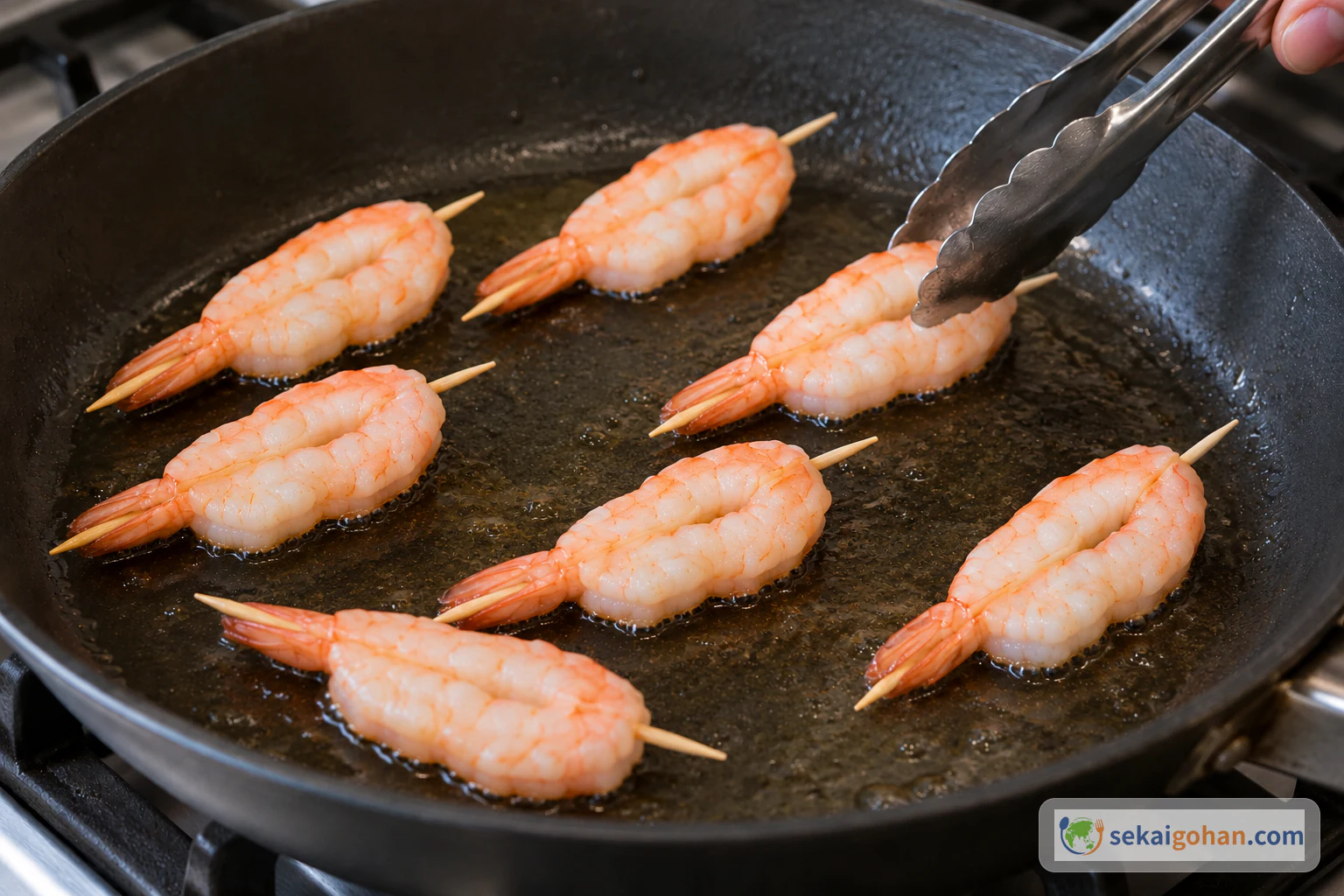
Skewer and cook the shrimp

Skewered shrimp cooking in an oiled skillet
Pink on both sides and cooked through, not browned.

Shell the 4 to 8 ounces of headless large shrimp, split them open along the back and wash them. Thread each shrimp onto its own small wooden skewer so it doesn't curl while cooking. Just before cooking, toss with 1 teaspoon toasted sesame oil and a pinch of black pepper.

Heat a skillet over medium-high heat with 2 teaspoons vegetable oil. Add the shrimp and cook for about 1 minute, until the underside turns pink. Turn and cook 1 more minute. Lower the heat to low and cook about 1 minute more, without browning, until cooked through.

STEP 77 / 9

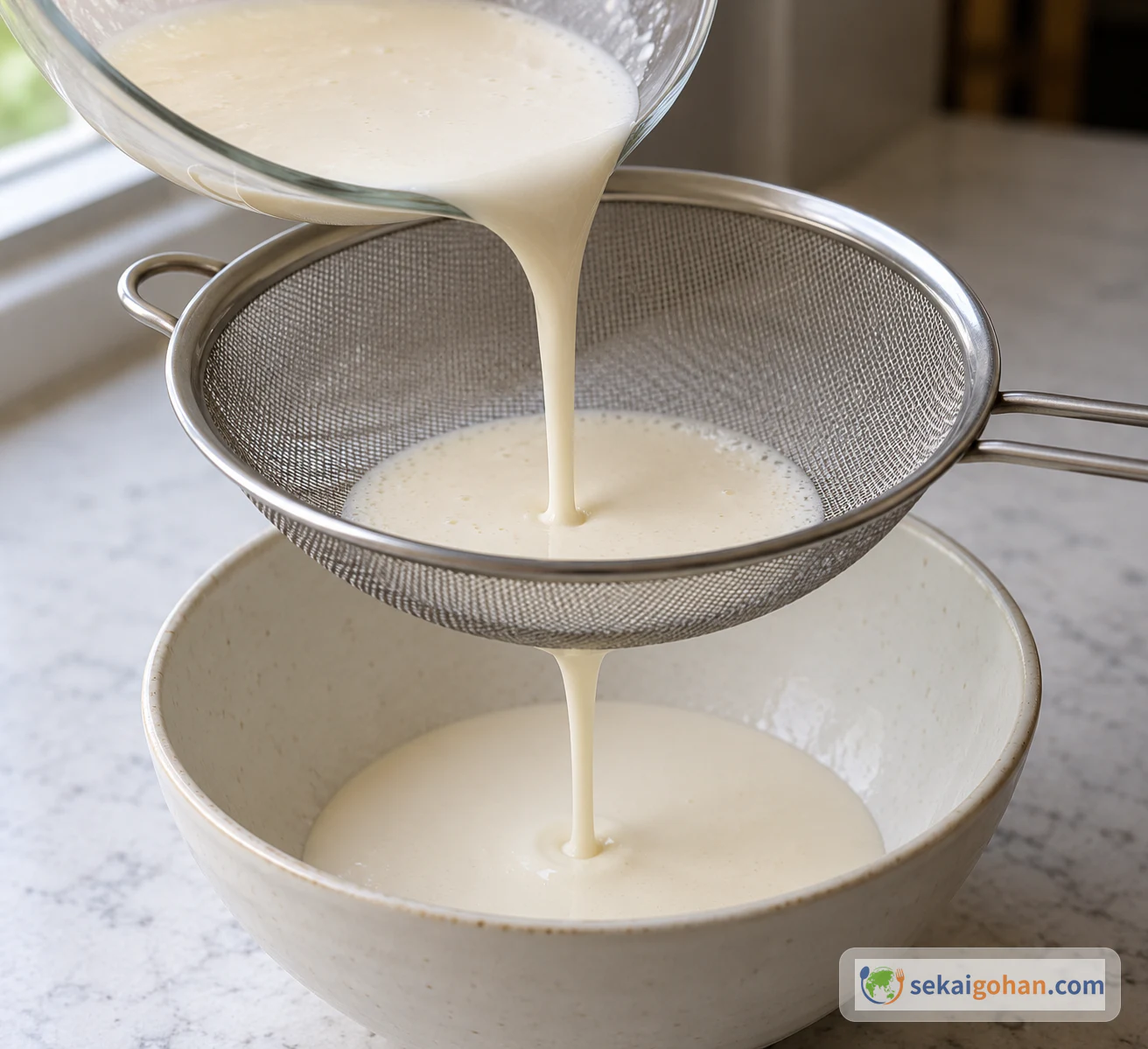
Make the crepe batter

Crepe batter of flour, water and salt strained until smooth
Straining gives a smooth batter for thin crepes.

Mix 1/2 cup all-purpose flour, 1/4 teaspoon kosher salt and 3/4 cup water. Strain through a fine sieve into another bowl, pressing any lumps through with the back of a spoon, and mix again until smooth.

STEP 88 / 9

Cook the small crepes

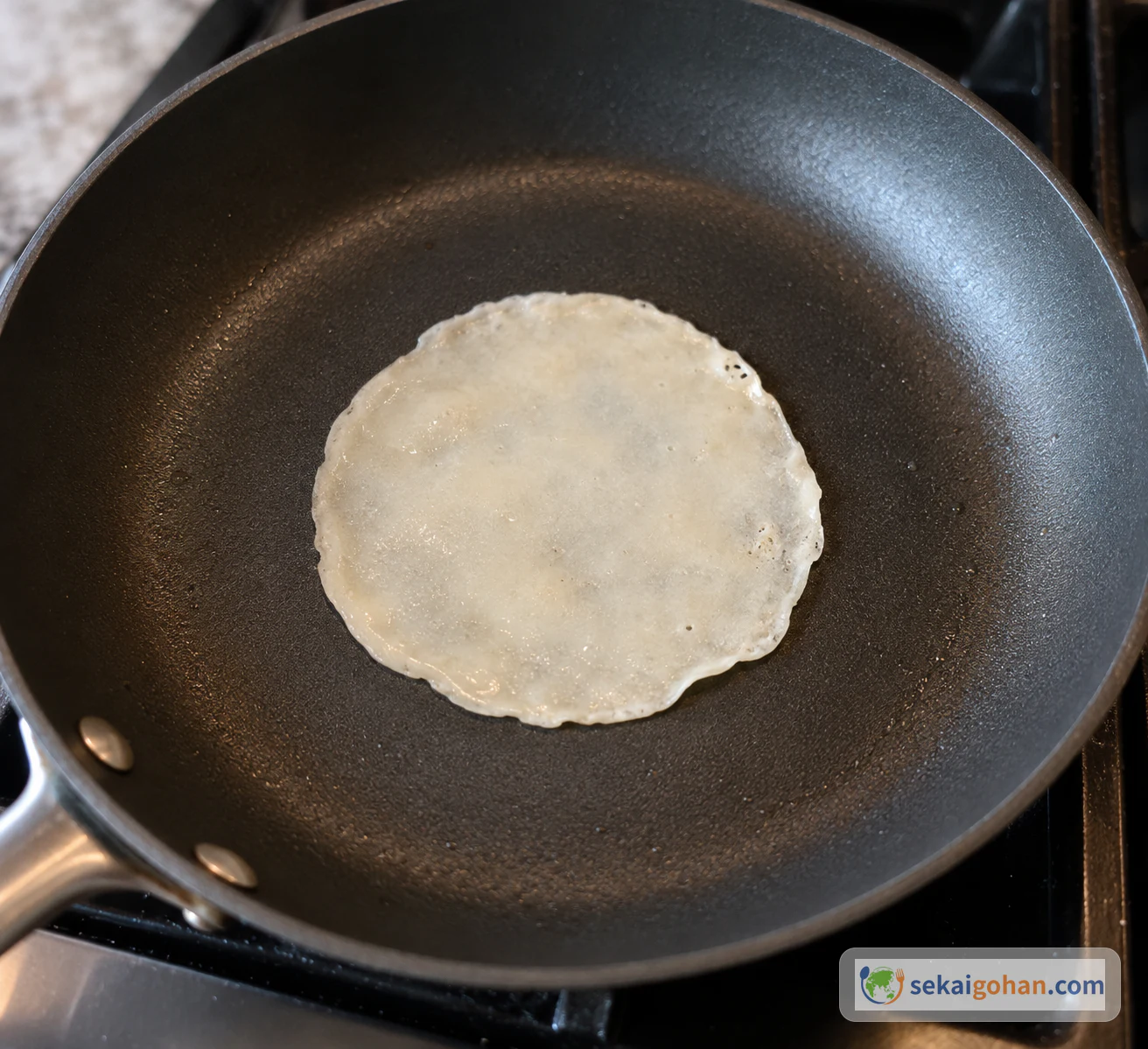
One tablespoon of batter spread into a small thin circle in the skillet
Flip when the crepe looks slightly translucent and the edges are a little dry.

Heat a non-stick skillet over medium-high heat, spread a few drops of vegetable oil, lower the heat to low and wipe off the excess oil. Spoon in 1 tablespoon of batter and spread it into a circle about 2½ inches across. Cook for 1 to 2 minutes, until slightly translucent and the edges are a little dry, then flip and cook 1 more minute. Cook the rest of the batter the same way; you'll get about 30 crepes.

STEP 99 / 9

Assemble the platter and serve

Eight fillings arranged around the center crepes, colors kept apart
Eight fillings outside, crepes in the center, sauce on the side.

Stack the crepes in the center of the platter, sprinkling a little of the chopped pine nuts between the layers. Put 1 drop of honey on the center of the top crepe and arrange the 5 whole pine nuts on it in a flower.

Around the crepes, place the mushrooms, beef, egg white strips, egg yolk strips, carrot, the two cucumber portions and the shrimp in the eight outer sections, spreading the colors around the platter. Serve the mustard-garlic sauce in a separate bowl.

Each person takes one crepe, adds a little of the fillings they like, drizzles on some sauce, and wraps it up. If you don't have a nine-section platter, a regular platter works.

0 / 0
Ingredients

Ingredients

1 / 1

Ingredients

Ingredient Amount Role
Korean mustard powder (gyeoja-garu, 겨자가루) 1 tablespoon Mustard-garlic sauce: The sharp base of the sauce
Warm water 1 tablespoon Mustard-garlic sauce: Mixed with the mustard powder
Minced garlic 1 tablespoon Mustard-garlic sauce: For the sauce only, separate from the beef garlic
Kosher salt 1 tablespoon Mustard-garlic sauce: For the sauce
White vinegar 3 tablespoons Mustard-garlic sauce: Acidity
Honey 2 tablespoons Mustard-garlic sauce: Sweetness for the sauce
Soy sauce 1/2 teaspoon Mustard-garlic sauce: For the sauce
Toasted sesame oil 1 teaspoon Mustard-garlic sauce: For the sauce
Rock ear mushrooms or dried shiitake mushrooms 4 ounces Mushrooms: One outer section. Soak in warm water until softened; choose one kind
Kosher salt as needed Mushrooms: Rock ear only, for rubbing off sand
Soy sauce 1 teaspoon Mushrooms: Mushroom seasoning
Sugar 1 teaspoon Mushrooms: Mushroom seasoning
Toasted sesame oil 1/2 teaspoon Mushrooms: Mushroom seasoning
Ground black pepper a pinch Mushrooms: Mushroom seasoning
Vegetable oil 1 teaspoon Mushrooms: For stir-frying the mushrooms
Beef brisket 4 ounces Beef: One outer section. Cut into thin strips 2½ inches long
Garlic 1 clove, minced Beef: Beef seasoning
Soy sauce 2 teaspoons Beef: Beef seasoning
Honey (or sugar) 2 teaspoons Beef: Beef sweetener; use one or the other
Toasted sesame oil 1 teaspoon Beef: Beef seasoning
Ground black pepper a pinch Beef: Beef seasoning
Eggs 3 Egg sheets: Separated into whites and yolks for two outer sections
Kosher salt a pinch Egg sheets: For the eggs; one pinch only
Vegetable oil a few drops Egg sheets: For greasing the skillet
Carrot 1 medium Vegetables: One outer section. Peel and cut into 2½-inch matchsticks
Kosher salt a pinch Vegetables: For salting the carrot
Vegetable oil 1/2 teaspoon Vegetables: For stir-frying the carrot
English cucumber 1 large Vegetables: Two matching outer sections. Cut into 2½-inch matchsticks
Kosher salt 1/4 teaspoon Vegetables: For salting the cucumber
Vegetable oil 1/2 teaspoon Vegetables: For stir-frying the cucumber
Large shrimp, headless 4 to 8 ounces Shrimp: One outer section. Shelled, split along the back, washed
Toasted sesame oil 1 teaspoon Shrimp: Shrimp seasoning
Ground black pepper a pinch Shrimp: Shrimp seasoning
Vegetable oil 2 teaspoons Shrimp: For pan-cooking the shrimp
All-purpose flour 1/2 cup Crepes (miljeonbyeong) and topping: Crepe batter
Water 3/4 cup Crepes (miljeonbyeong) and topping: Crepe batter
Kosher salt 1/4 teaspoon Crepes (miljeonbyeong) and topping: Crepe batter
Vegetable oil a few drops Crepes (miljeonbyeong) and topping: For greasing the skillet
Pine nuts, chopped 1 tablespoon Crepes (miljeonbyeong) and topping: A little between the crepe layers
Pine nuts, whole 5 Crepes (miljeonbyeong) and topping: Flower on the top crepe
Honey 1 drop Crepes (miljeonbyeong) and topping: On the top crepe, under the pine-nut flower
0 / 0

At first glance gujeolpan (구절판) looks like a display piece: a tray split into nine sections, with brown mushrooms, dark beef, white and yellow egg strips, orange carrot, green cucumber and pink shrimp around a small stack of pale crepes. Eating it is simpler and more playful than it looks. Each person lifts one thin crepe, picks a little of whichever fillings they like, spoons on some mustard-garlic sauce, and folds it into a bite. Every filling is cooked and seasoned on its own, so each wrap tastes a little different from the last.

About Gujeolpan, the Platter of Nine Delicacies

The name gujeolpan originally referred to the nine-sectioned serving vessel itself, and it now means the dish served in it too. The dish is eight ingredients wrapped in wheat pancakes and eaten with mustard sauce or vinegar soy sauce, with the fillings placed so their colors complement each other. It began as court cuisine, served at meals for important guests, at wine tables, and on outings.

In this version, the eight outer sections hold mushrooms, beef, egg white, egg yolk, carrot, shrimp, and cucumber, with the crepes in the center. The cucumber fills two matching sections: it's one ingredient split into two equal portions.

The fillings aren't fixed, and recipes differ noticeably. Gujeolpan is listed as a traditional local food of Gyeonggido, where the fillings include beef, shiitake, cucumber, carrot, lecanora (seogi), bamboo shoot and egg, wrapped in flour wraps with mustard or vinegared chili paste. That label marks one regional style; it doesn't make Gyeonggido the dish's only home.

A regular platter works fine if you don't own the nine-section dish. Keep the eight fillings in their own groups around the crepes and serve the sauce in a separate bowl. For more from the same kitchen, see more South Korean dishes.

Ingredients (Serves 4): Every Filling Gets Its Own Seasoning
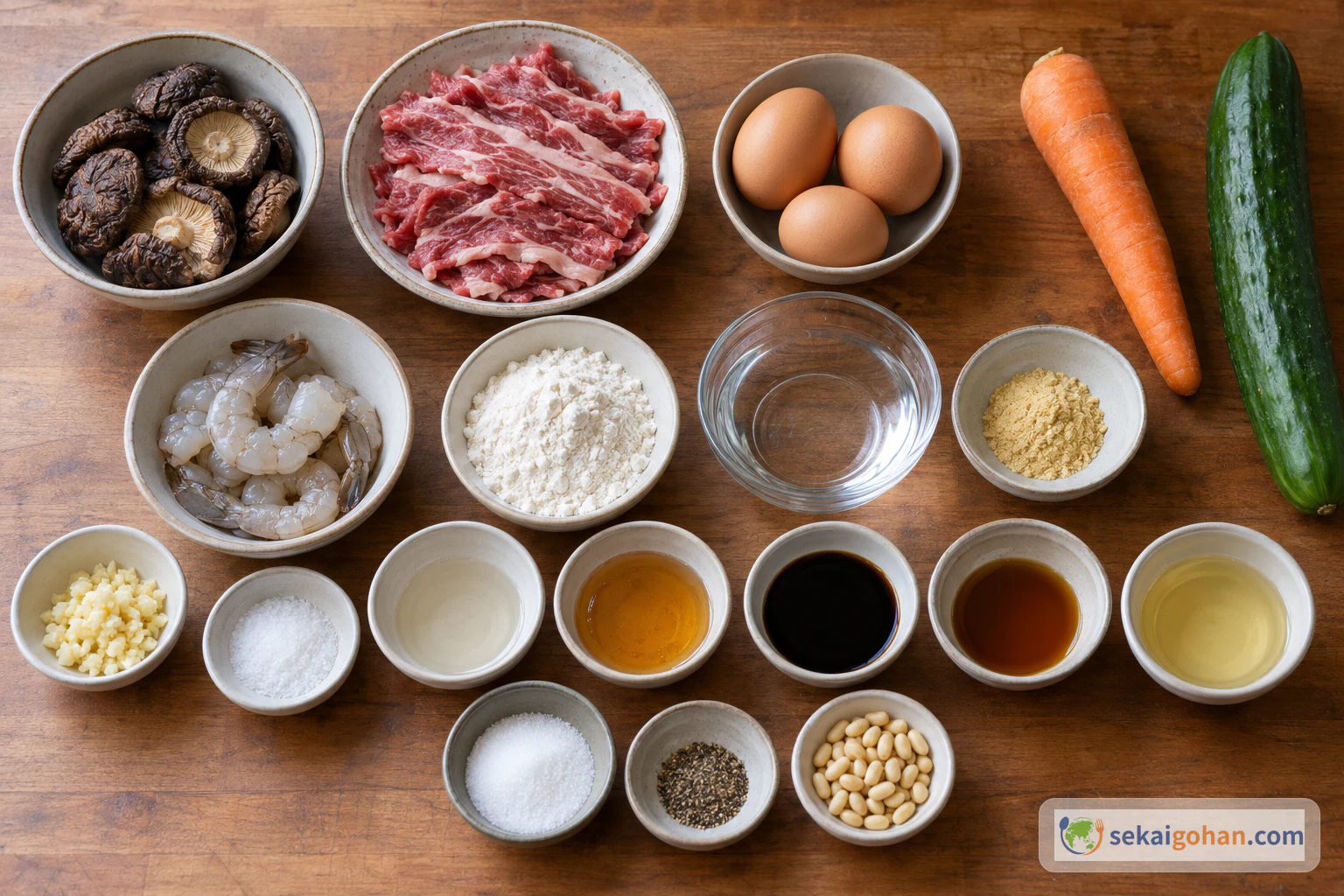
Ingredients for gujeolpan: beef, shiitake, eggs, vegetables, shrimp, crepe batter and mustard sauce
Every seasoning belongs to one component. Keep them in separate small bowls.

Soy sauce, sesame oil, salt, honey and black pepper appear several times below, but each amount belongs to one component only. Measure each group into its own bowl so nothing gets added twice.

Equipment

  • Non-stick skillet (for the egg sheets and the crepes)
  • Fine sieve (for straining the batter)
  • Small wooden skewers (to keep the shrimp from curling)
  • Cutting board and a sharp knife (for even matchsticks)
  • Several small bowls for the separate seasonings
  • Paper towels
  • Nine-section gujeolpan platter, or a regular platter
  • Small bowl for the sauce

Choosing Ingredients for Gujeolpan

Mushrooms. Use either rock ear mushrooms or dried shiitake, not both; the photos here show shiitake. Shiitake only needs its stems removed. Rock ear takes an extra step: rub it with salt to remove sand, rinse, then roll and slice it thinly.

Beef sweetener. Honey or sugar, 2 teaspoons either way. Pick one.

Shrimp. Anywhere from 4 to 8 ounces of headless large shrimp works, so buy what fits your table.

Mustard powder. Korean mustard powder (gyeoja-garu) is the base of the sauce, and it's where all the dish's heat comes from.

Crepes and eggs. The crepe batter is only flour, water and salt, with no egg white or starch. The eggs go entirely into the egg sheets.

Allergens

This dish contains wheat (flour), egg, shrimp, soy (soy sauce), sesame (sesame oil) and pine nuts. If anyone at the table has allergies, check the labels on each product you buy, including the mushrooms you choose.

Method: Season Separately, Cook Separately, Wrap at the Table

Order of work

Make the sauce first, season the mushrooms and beef so they can sit, then cook the egg sheets and each filling one at a time. The crepes come last, and everything meets on the platter.

Troubleshooting Gujeolpan

Problem Likely cause What to do
Crepes are thick or lumpy Batter not strained, or too much batter per crepe Strain the batter and press lumps through. Use 1 tablespoon per crepe and spread to about 2½ inches
Crepes stick or look oily Too much oil in the pan Spread only a few drops and wipe off the excess before adding batter
Crepes tear when flipped Turned too early Wait until the surface is slightly translucent and the edges look a little dry
Egg strips look pale yellow or patchy Whites and yolks mixed Separate cleanly and cook the two egg sheets one at a time
Egg strips break Cut while warm Let the egg sheets cool before slicing
Cucumber is watery on the platter Not squeezed after salting Let it sit 5 minutes with the salt, squeeze gently, then cook just 30 seconds
Mushrooms taste like the beef Seasonings shared or cooked together Use separate bowls and cook the mushrooms and beef in separate batches
Shrimp curl or brown No skewers, or heat left high Skewer each shrimp, and lower the heat to low for the final minute

Serving and Making Gujeolpan Ahead

Bring the platter to the table with the fillings kept apart, each color in its own section or group, and let everyone build their own wraps. Nothing is mixed in advance; the fun is in deciding what goes into each crepe.

The mustard-garlic sauce and the egg sheets can be made first and kept in the refrigerator while you cook the other components.

Frequently Asked Questions

Is the 4 ounces of mushrooms dry or soaked weight?

The recipe calls for 4 ounces of rock ear or dried shiitake, soaked in warm water until softened. It doesn't say whether that's the dry or soaked weight.

Where does the pinch of salt for the eggs go?

The ingredient list gives one pinch of kosher salt for the eggs without saying whether it goes into the whites, the yolks, or both. Use a single pinch in total.

Is gujeolpan spicy?

The fillings are mild: meat, vegetables, mushrooms, egg and shrimp. The kick comes from the mustard-garlic sauce, a sharp, nose-tingling mustard heat rather than chili heat.
Sources

  • Maangchi, "Gujeolpan, Platter of 9 Delicacies (구절판)," Maangchi.com. Adapted from Maangchi's cookbook; posted 2017-10-18, updated 2023-06-25. Supports the four-serving recipe, all ingredient amounts and steps, the yield of about 30 crepes, the eight outer sections plus center crepes, the option of a regular platter, the wrap-at-the-table way of eating, and the make-ahead note for the sauce and egg sheets. https://www.maangchi.com/recipe/gujeolpan
  • Yun So-jeong (Korea.net), "한국요리 조리법: 구절판 / Korean recipes: Gujeolpan," Korean Culture portal. Supports the origin of the name in a nine-sectioned vessel, the description as court cuisine, color-coordinated arrangement, serving occasions (important guests, wine tables, outings), and a separate recipe version for comparison. https://www.korean-culture.org/koreanet/view.do?seq=6384
  • KBS WORLD, "Gujeolpan (구절판)," recipe credited to Kim Su-jin. Supports a different published version with summer squash, pine-nut sauce and an egg-white-and-starch batter. https://world.kbs.co.kr/service/contents_view.htm?board_code=&board_seq=336911&id=&lang=e&menu_cate=lifestyle&page=5
  • Korean Traditional Knowledge Portal, "Gujeolpan (Platter of Nine Delicacies)," local foods entry with data from the Rural Development Administration of Korea. Supports the Gyeonggido local-food listing and a distinct regional recipe including lecanora (seogi) and bamboo shoot. https://koreantk.com/ktkp2014/food/food-view.view?foodCd=TF10003635