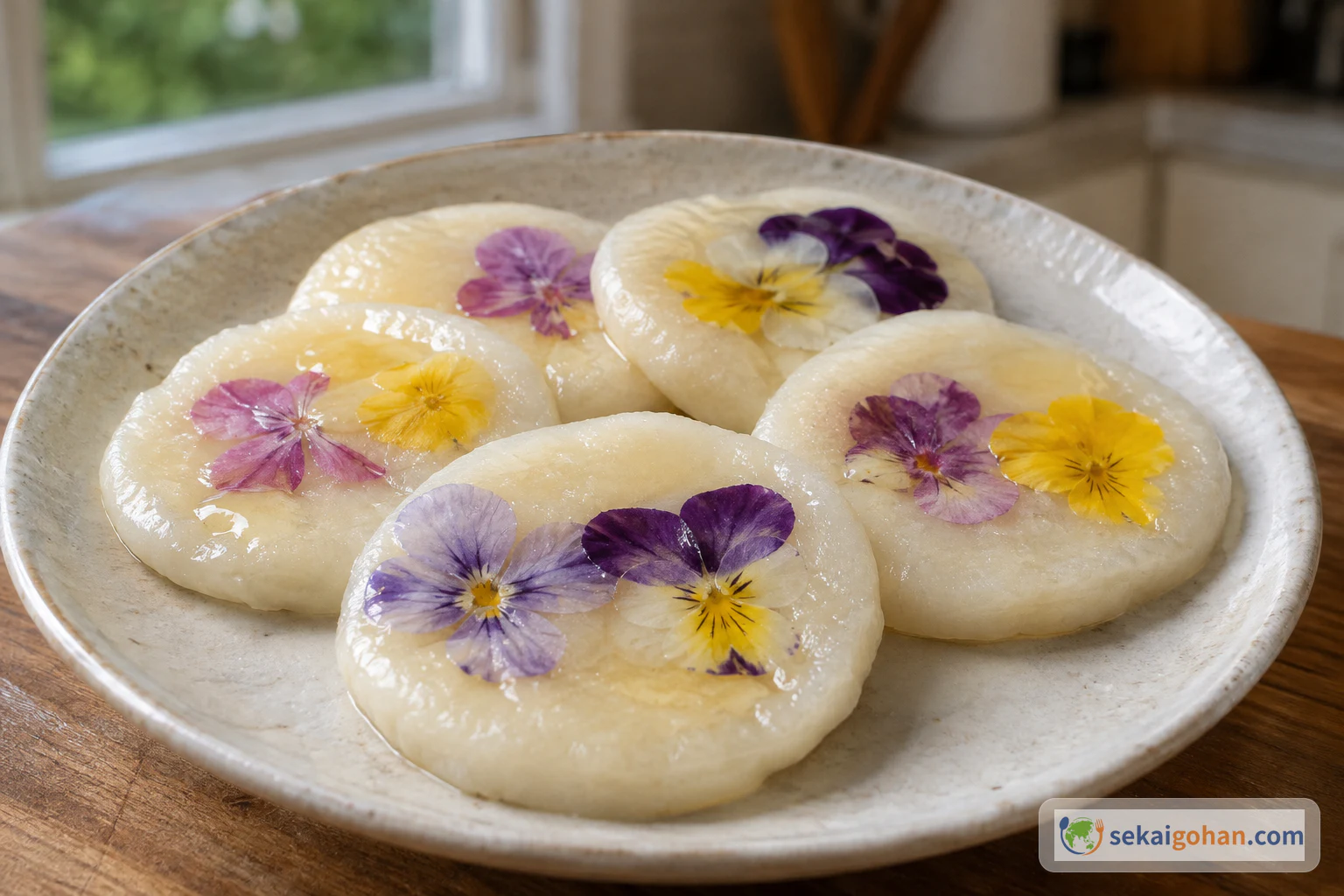
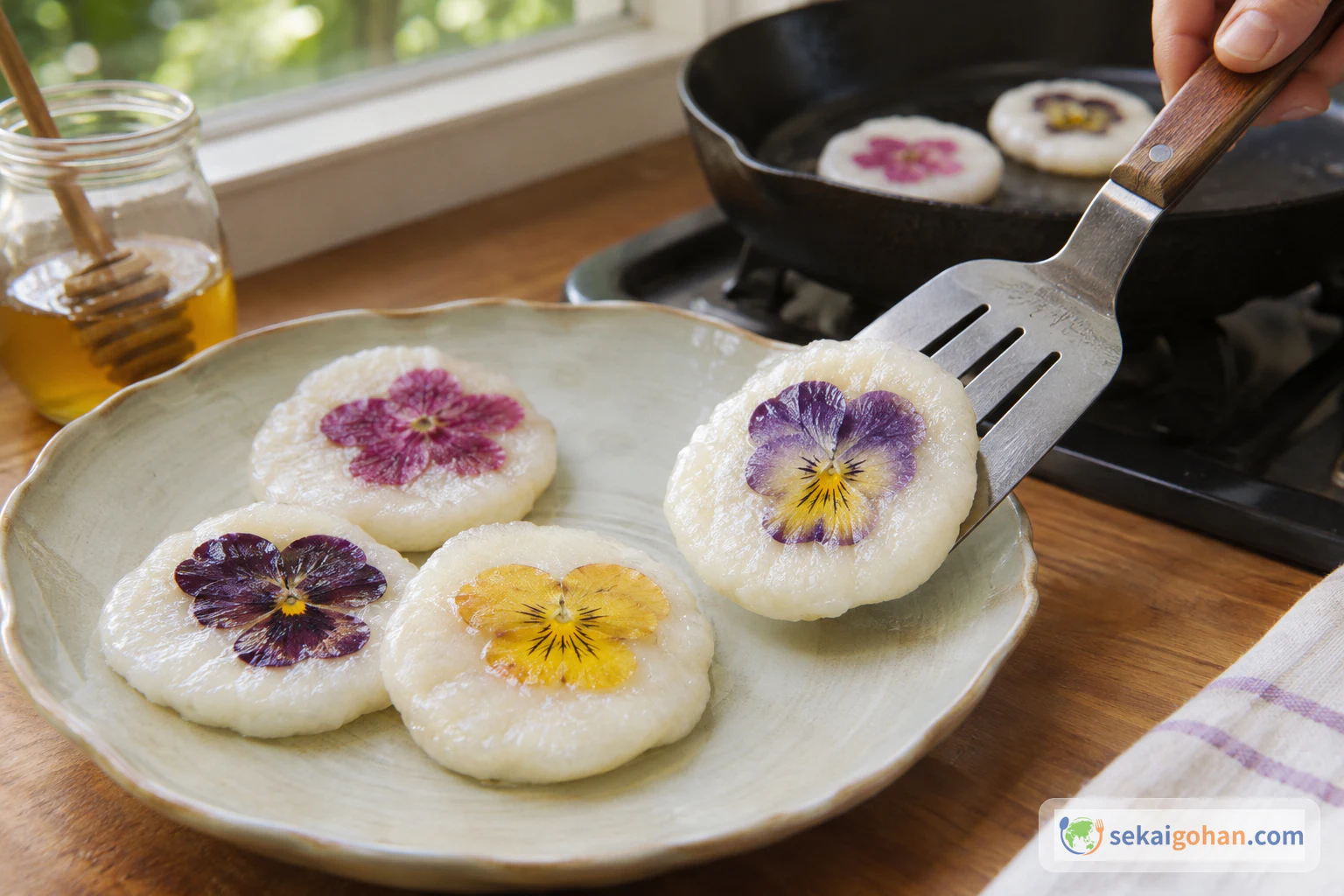
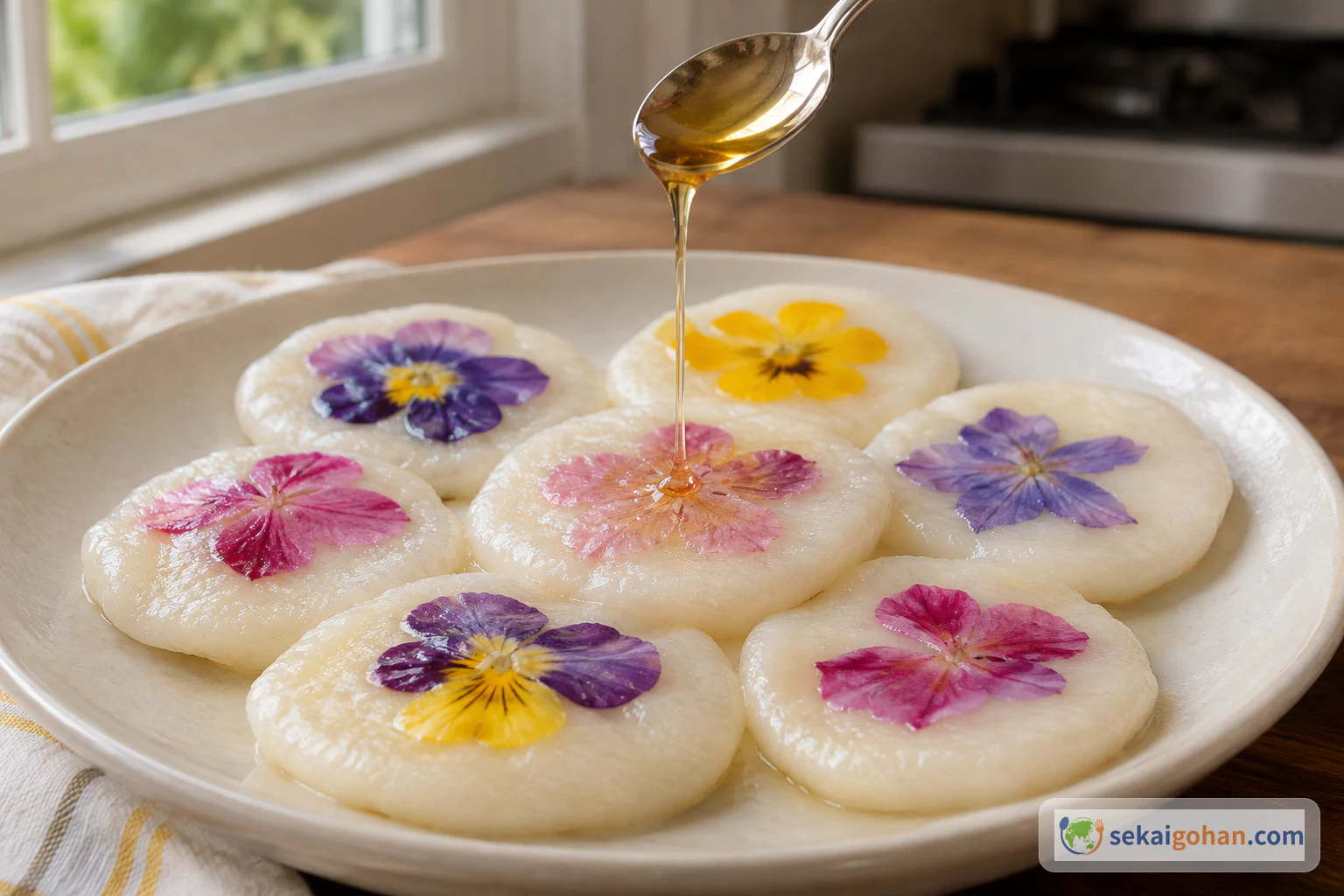
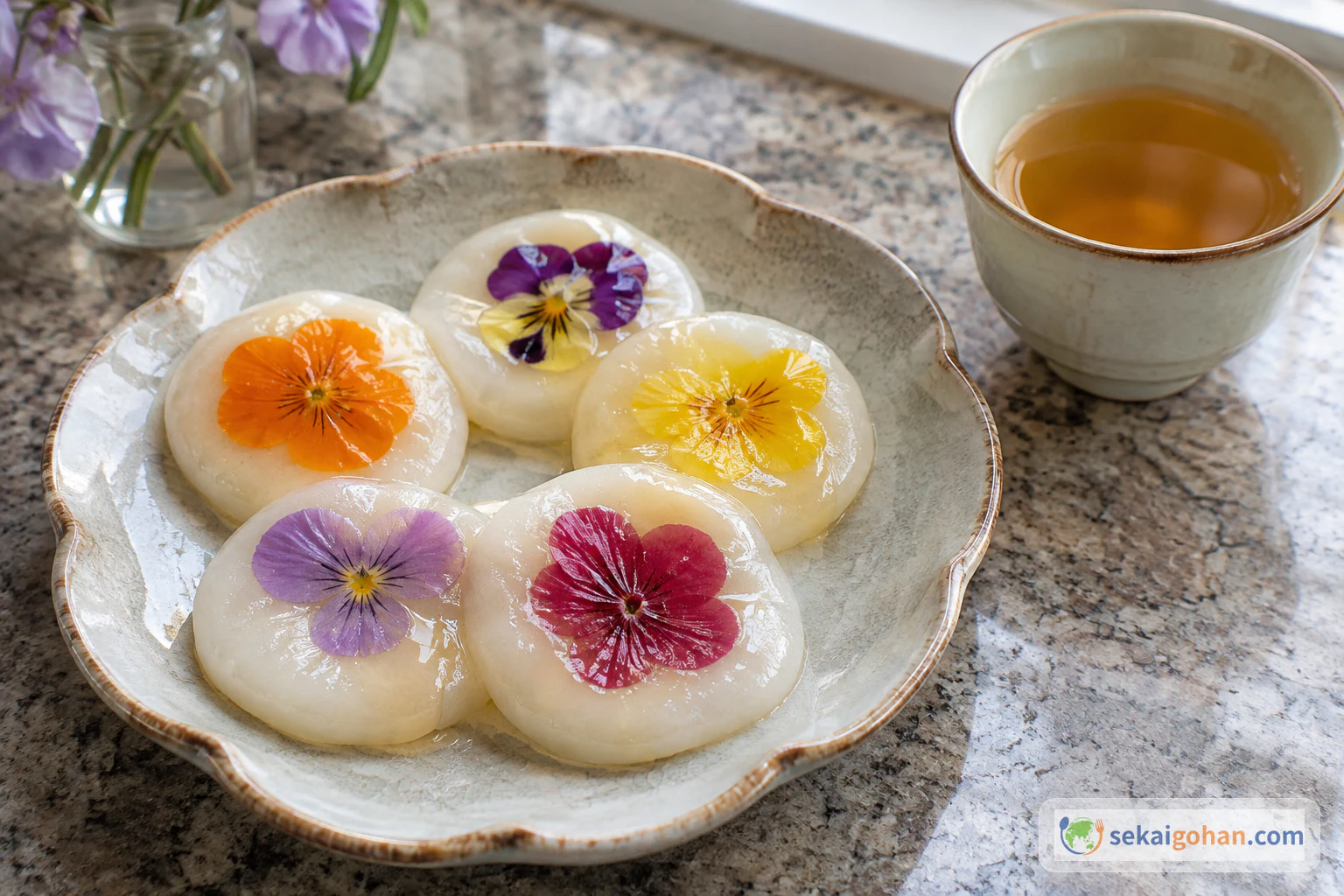
White hwajeon topped with edible flowers and finished with honey
Serves10 pieces
CuisineKorean

Hwajeon: Korean Pan-Fried Sweet Rice Cakes with Edible Flowers (화전)

How to make hwajeon (화전), small Korean pan-fried glutinous rice cakes topped with edible flowers. Ten white discs cooked over low heat, flowers pressed on for one second, finished with honey. Covers choosing food-grade flowers, the spring flower custom behind the dish, regional styles, and a honey safety note for babies.

Cooking flow

Cooking steps

STEP 11 / 8

Mix the rice flour and salt

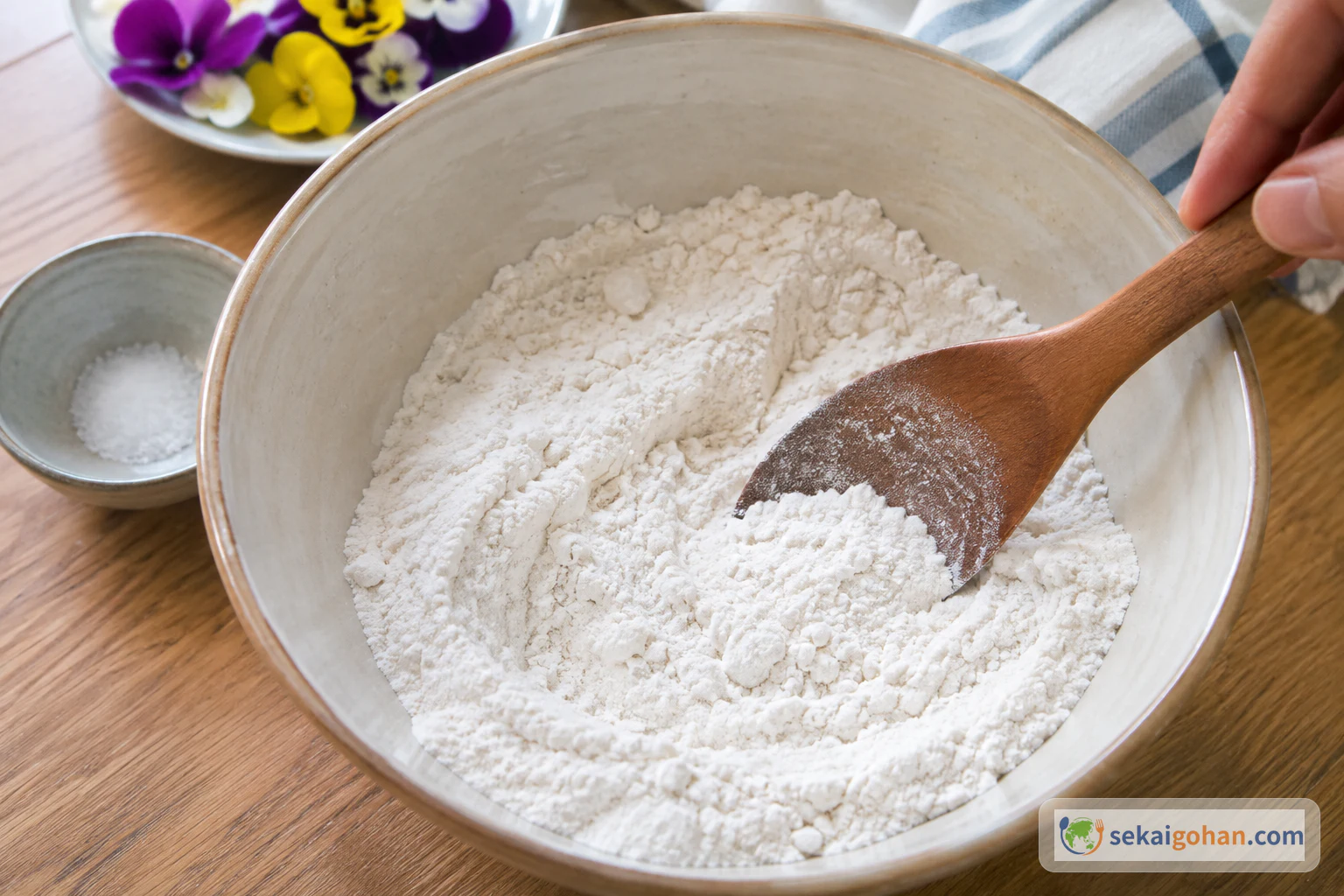
A wooden spoon mixing dry glutinous rice flour and salt in a bowl
Mix the flour and salt while dry, before any water goes in

Put 1 cup glutinous rice flour and 1/4 tsp kosher salt in a bowl and stir them together with a wooden spoon.

STEP 22 / 8

Add the boiling water little by little, then let the dough cool

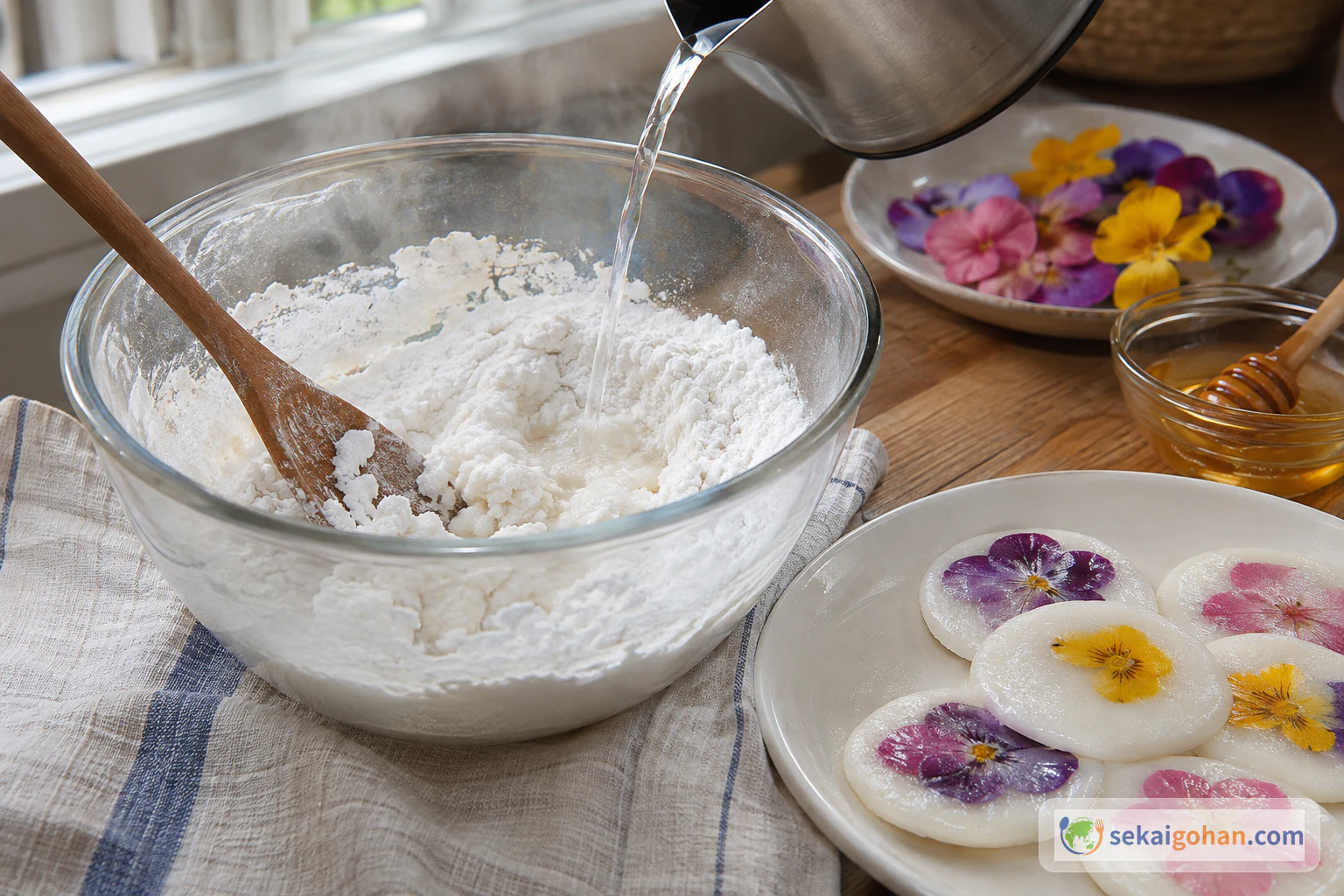
Hot water poured in a thin stream into the flour bowl while a wooden spoon mixes
Stir with the spoon, not your hands, while the water is hot

Add 1/2 cup hot boiling water a little at a time, stirring with the wooden spoon as you go. Do not pour it all in at once. Do not touch the dough with your hands yet, because it is hot enough to burn.

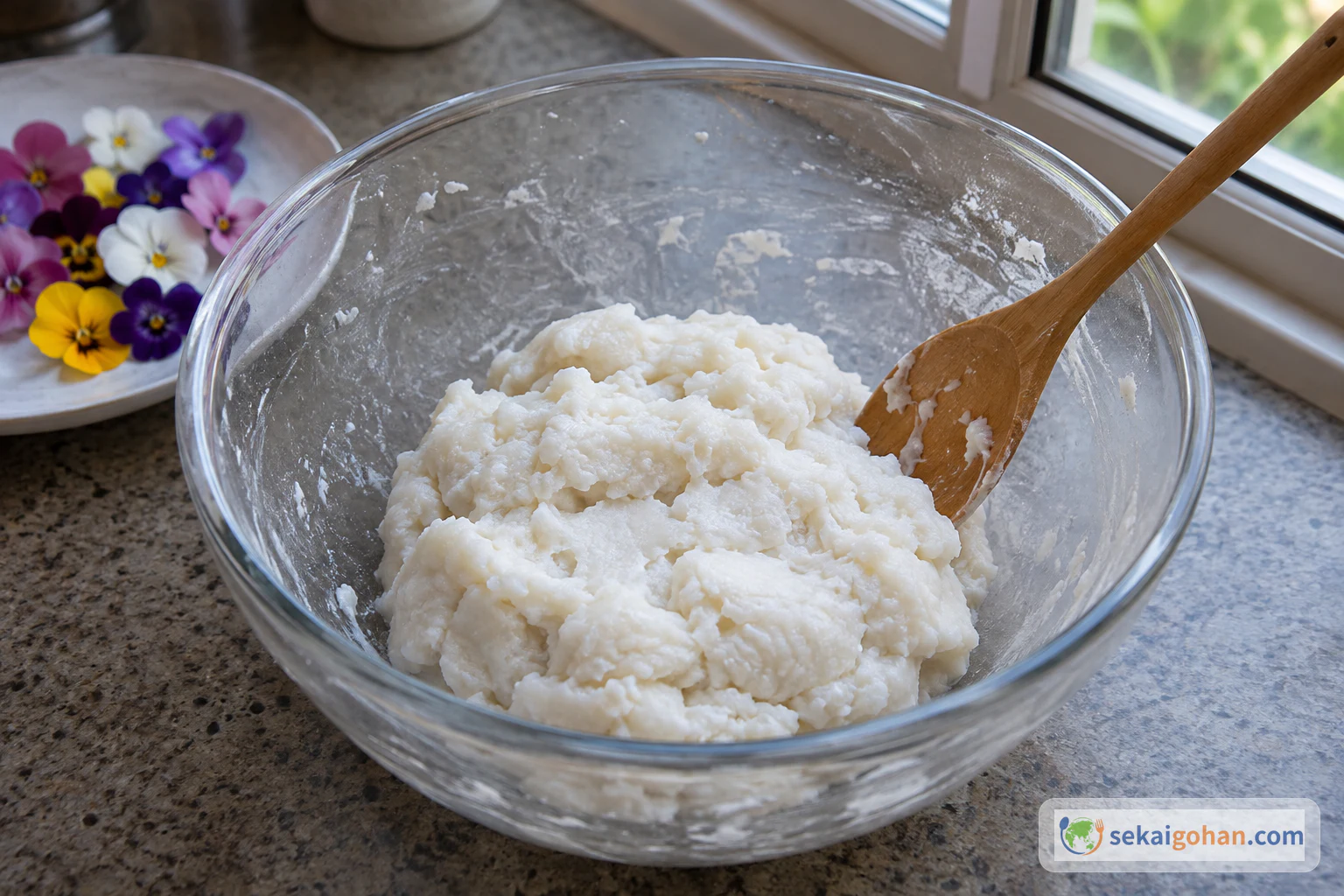
When the dough has roughly come together, leave it in the bowl until it is cool enough to handle with your hands.

Roughly mixed white rice dough resting in the bowl with the wooden spoon
Wait until the dough is comfortable to touch before kneading
STEP 33 / 8

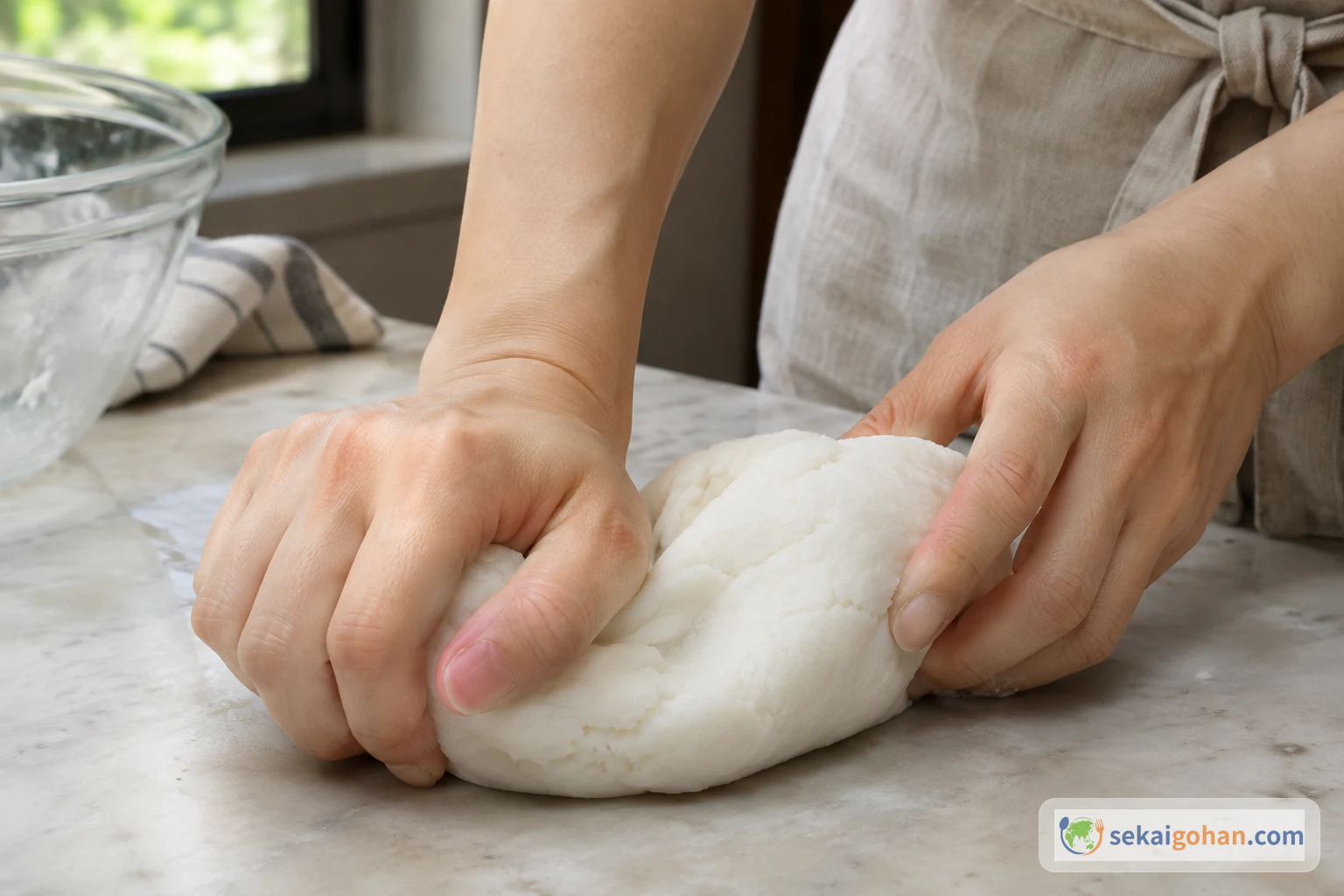
Knead, divide into 10 and keep covered

Two hands kneading cooled white rice dough into a smooth mass
Knead only until the dough is smooth

Knead the cooled dough for 1–2 minutes, until smooth.

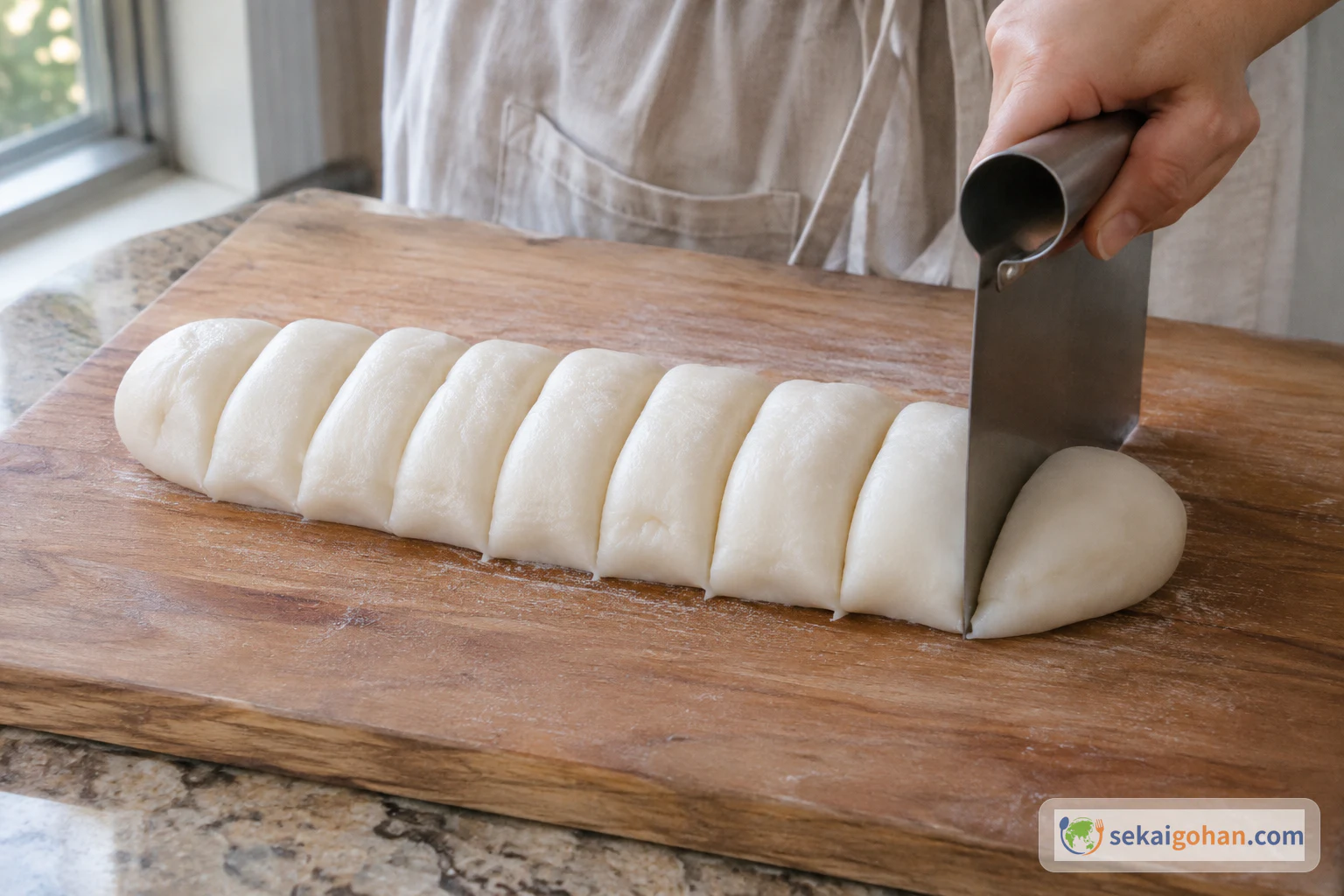
Divide the dough into 10 equal pieces.

A bench scraper cutting white rice dough into portions
Cut the dough into ten even pieces

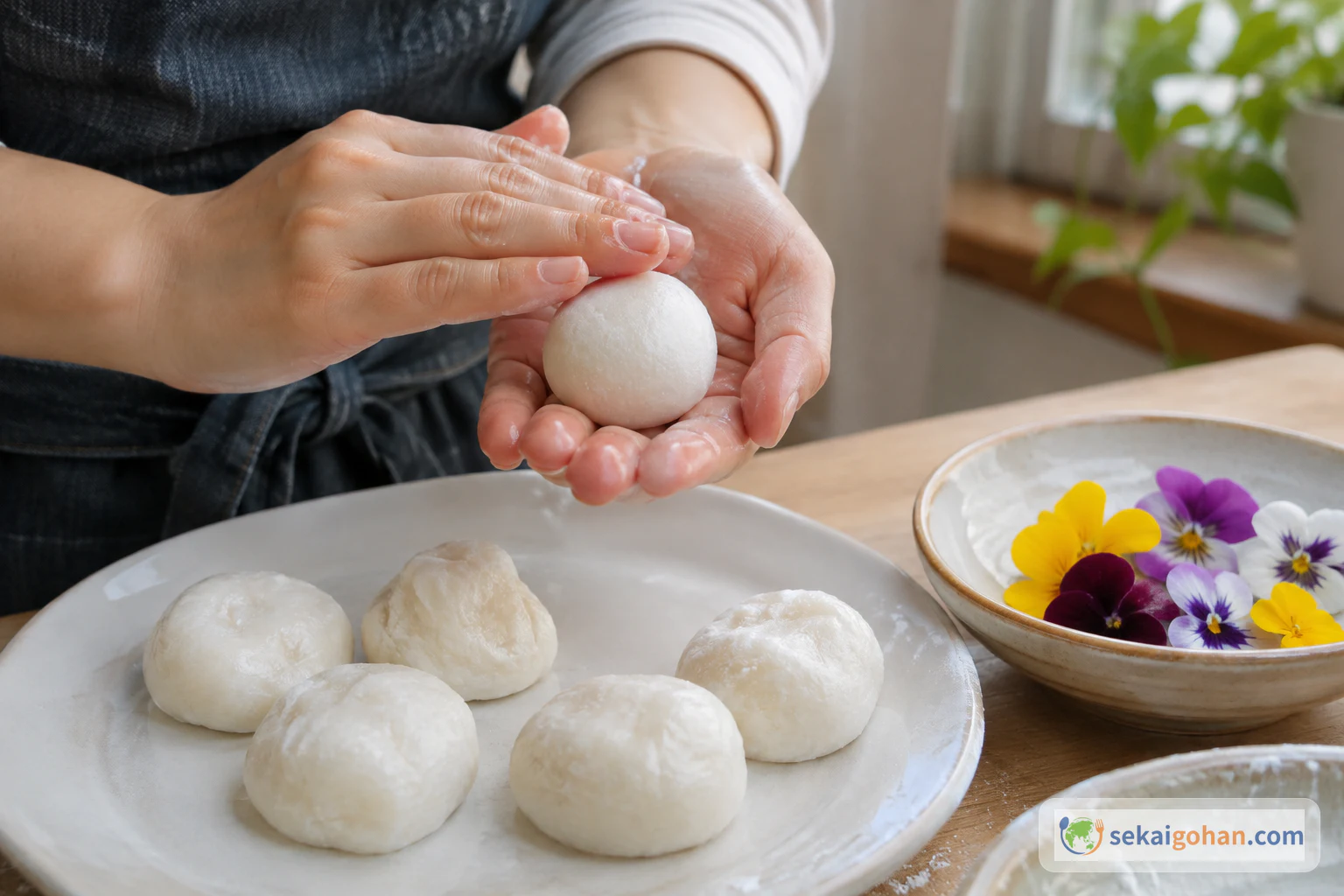
Roll each piece into a ball.

Hands rolling one portion of rice dough into a smooth ball
Roll each piece smooth between your palms

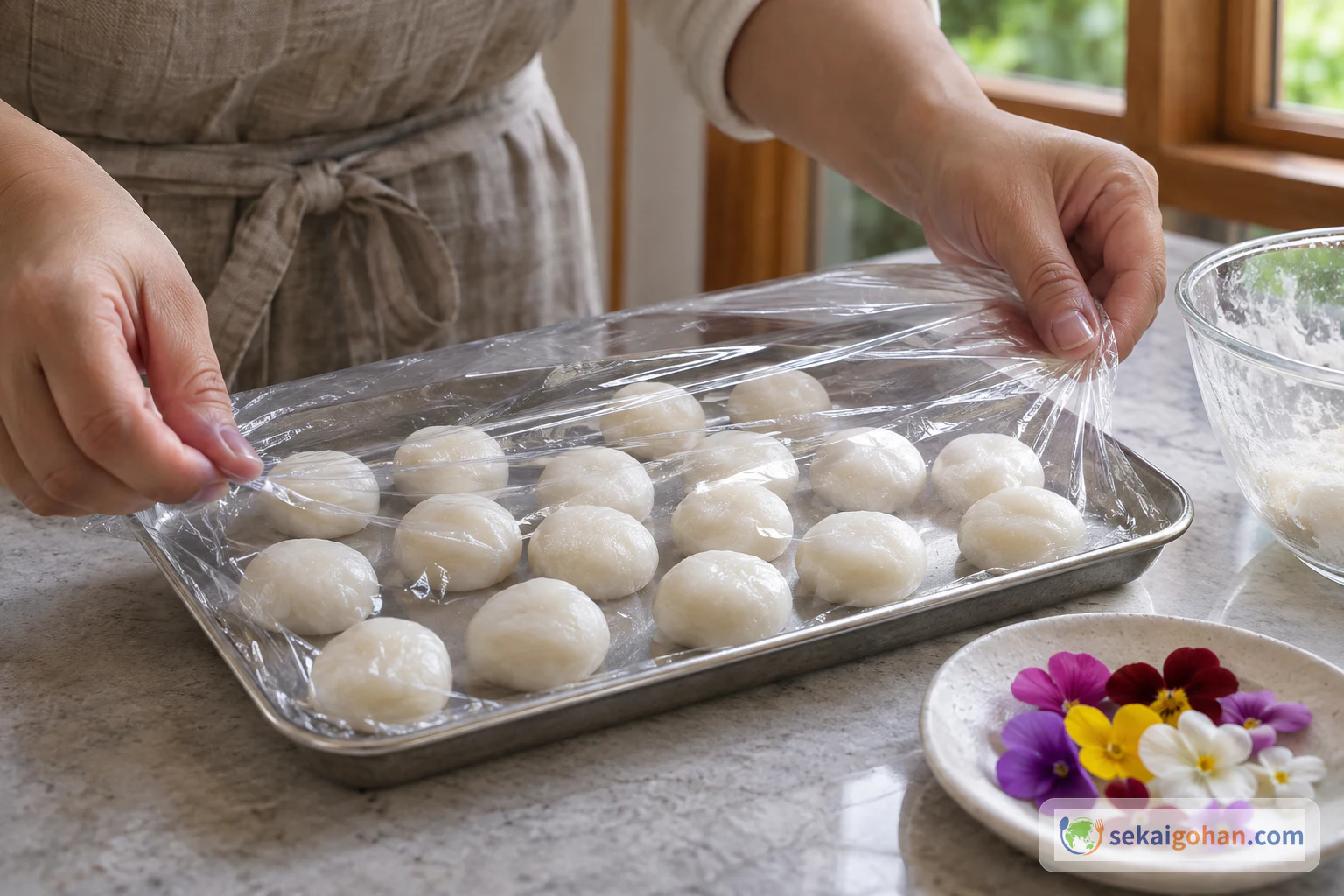
Cover the balls with plastic wrap so they do not dry out.

Clear plastic wrap laid over small white dough balls
Keep the balls covered while you work
STEP 44 / 8

Press the balls into discs

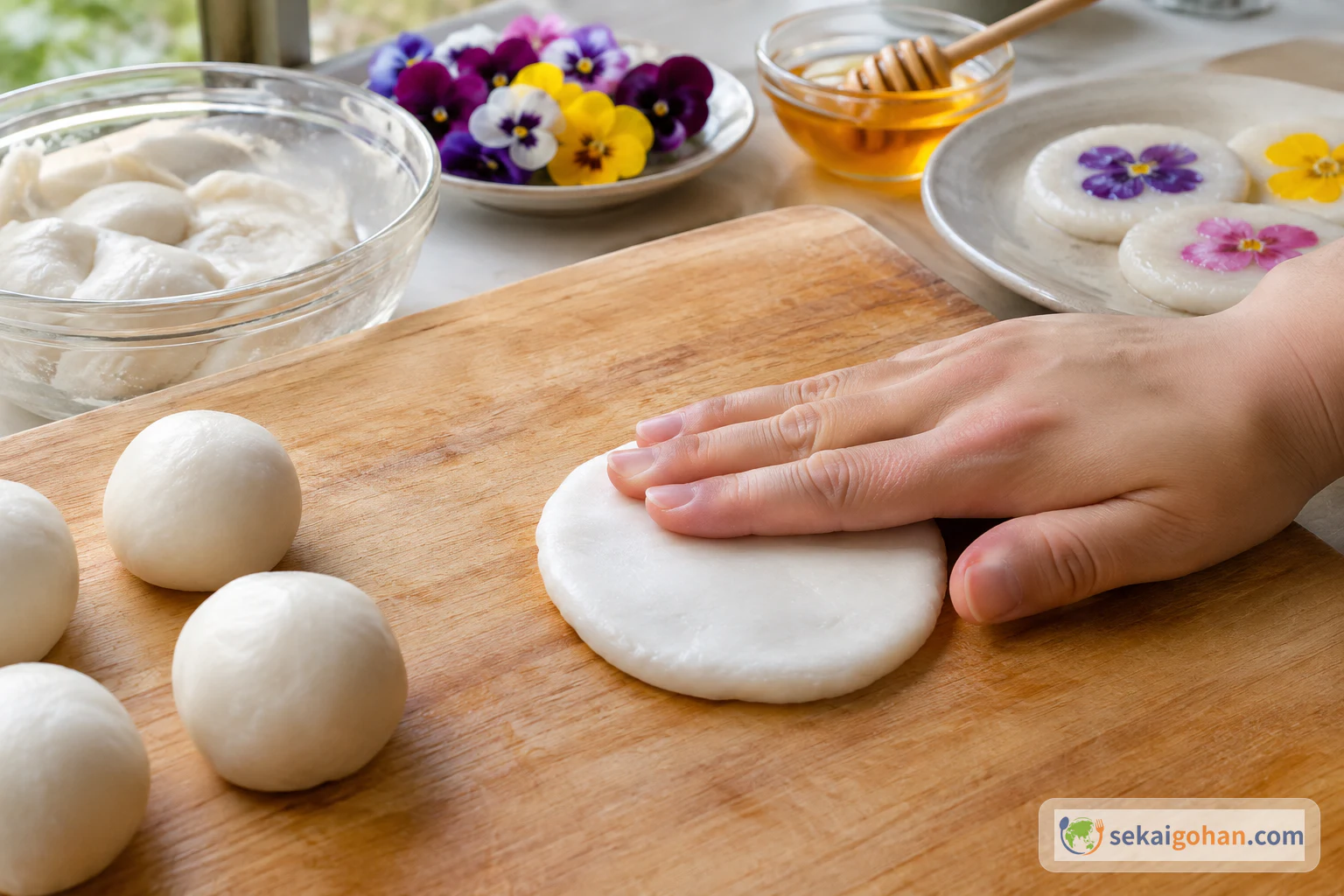
A hand pressing a white dough ball into a flat round disc on a board
Press each ball to a disc about 6–7 cm across

Take out one ball at a time and press it into a flat round about 3 inches (6–7 cm) across. Keep the remaining balls covered. Do not add flowers at this point.

STEP 55 / 8

Heat the oil, then turn the heat to low

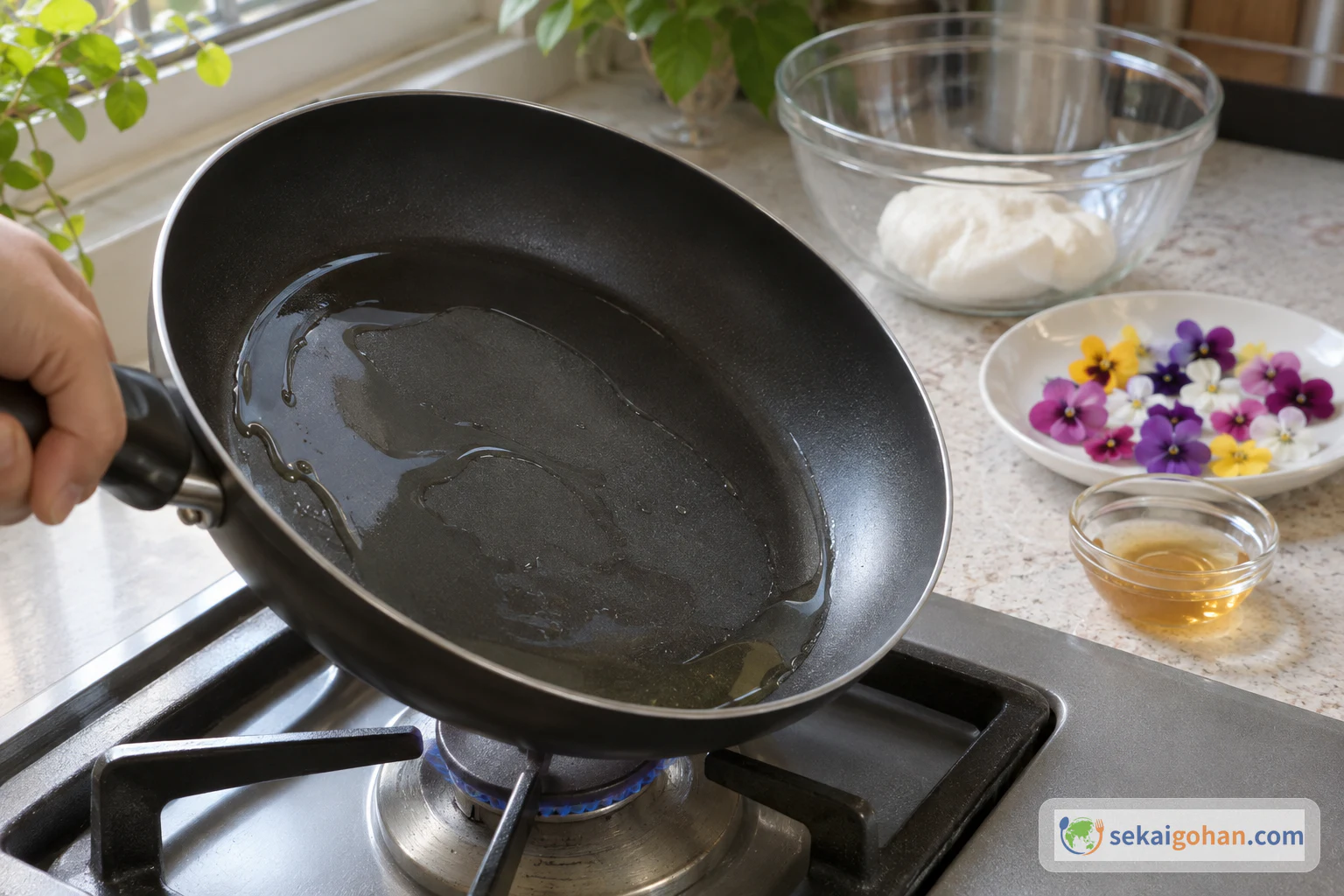
A nonstick skillet tilted to spread vegetable oil across the empty pan
Swirl the oil over the whole base of the pan

Heat a large nonstick skillet over medium heat. Add 2–3 tbsp vegetable oil and tilt the pan so the oil covers the base.

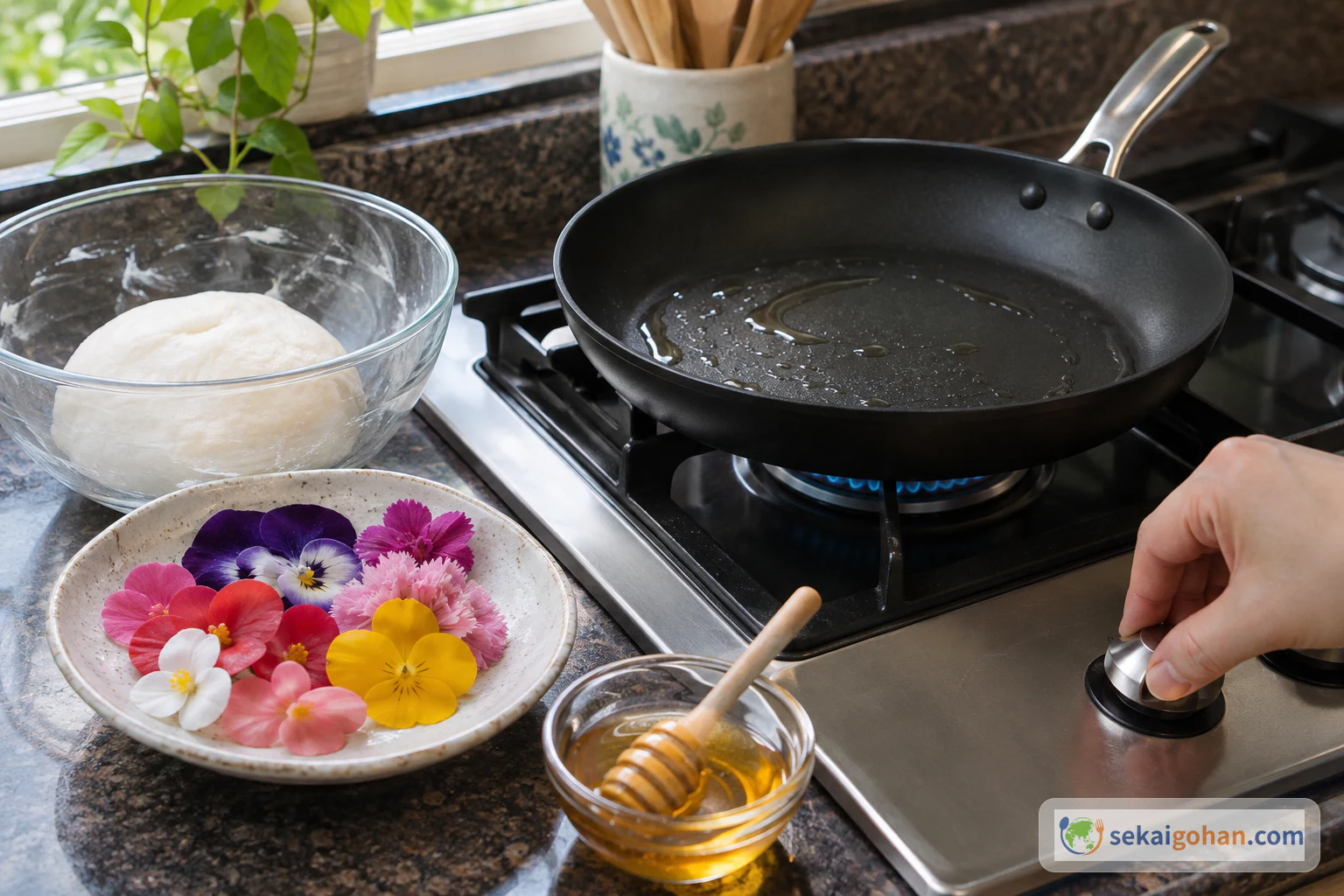
When the oil is warm, turn the heat down to low.

A hand turning the stove control down beneath an empty oiled skillet
Lower the heat before any dough goes in
STEP 66 / 8

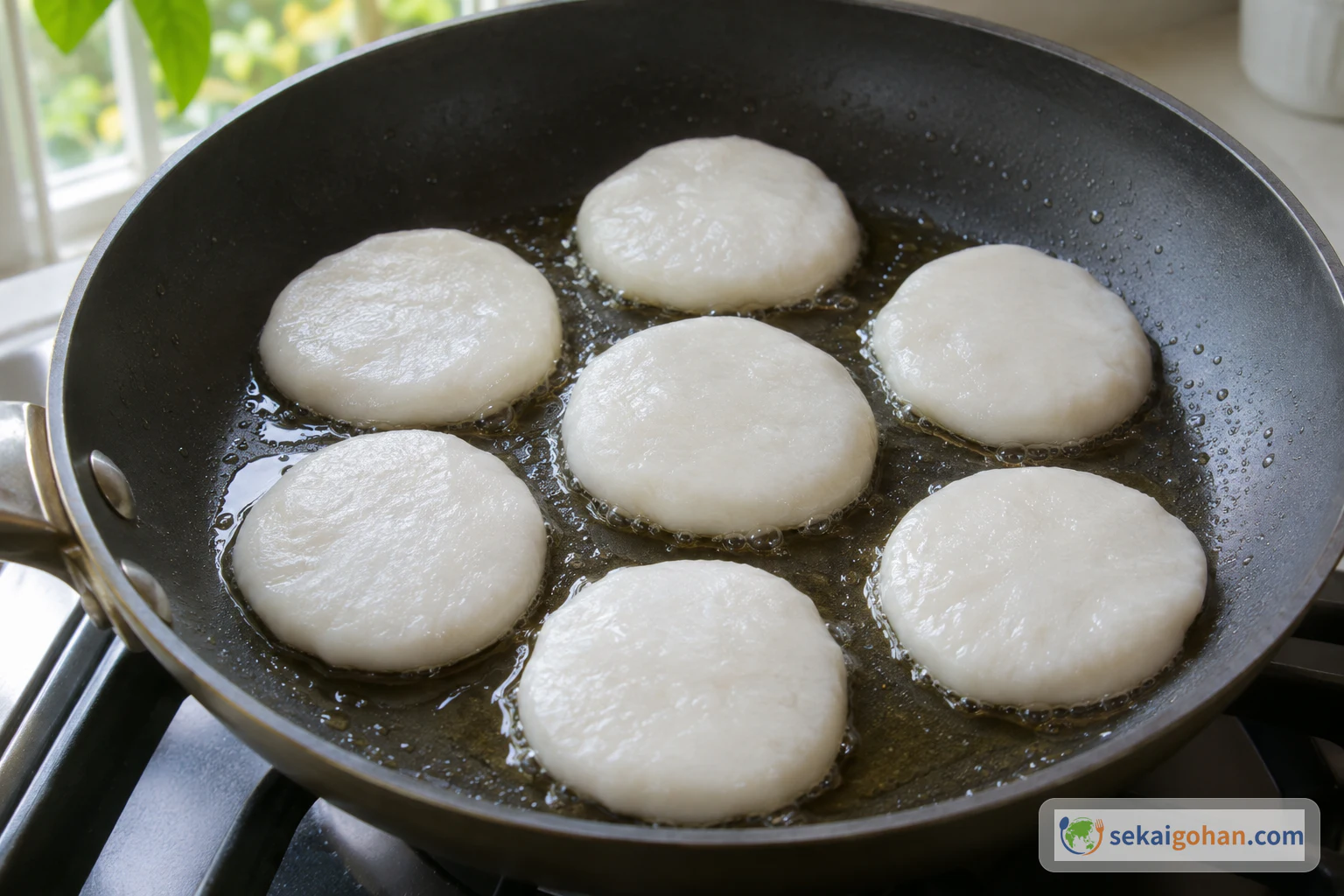
Cook the plain discs on both sides, keeping them white

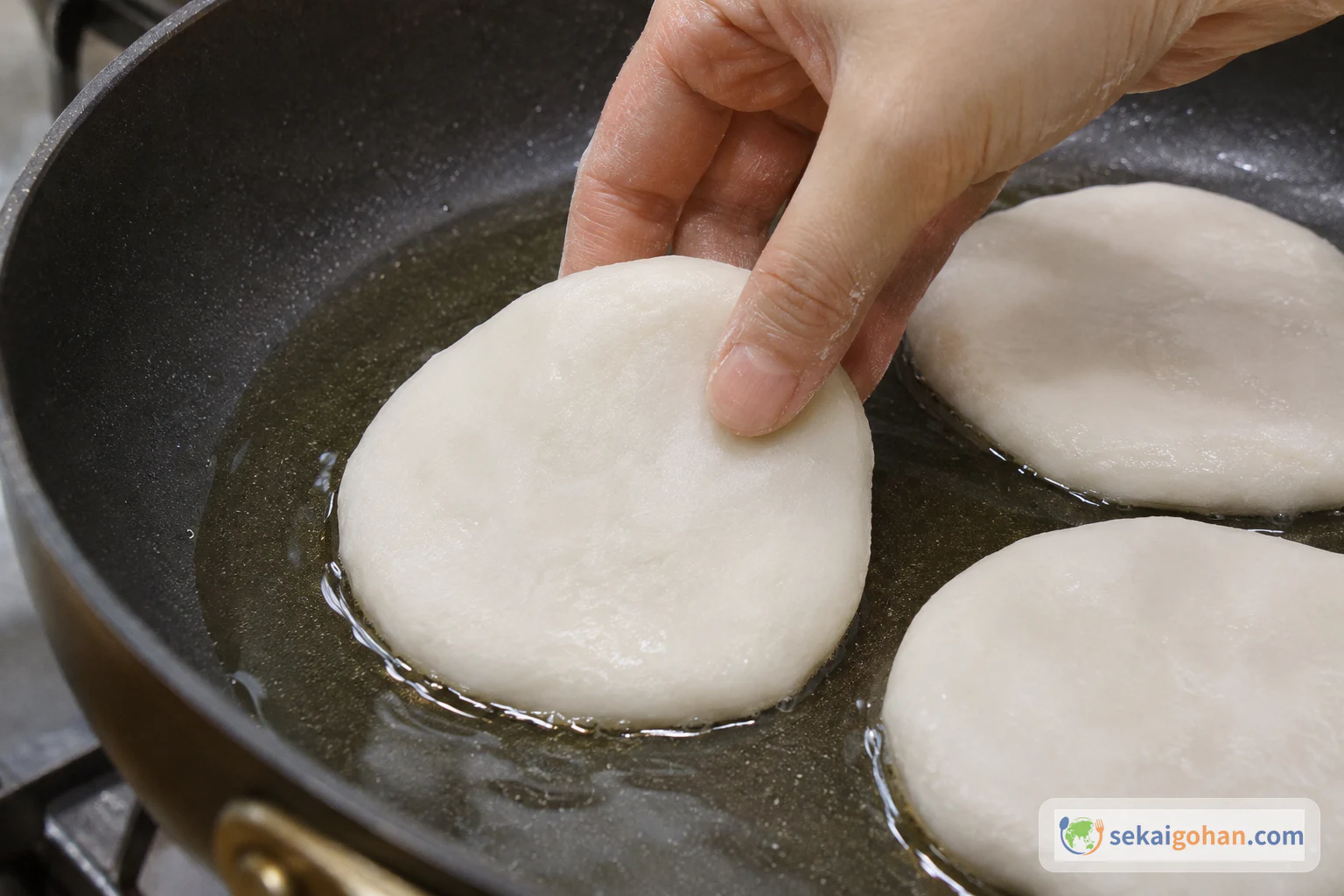
A hand placing a plain raw white rice disc into the oiled skillet
The discs go in plain, with no flowers

Lay the plain raw discs in the pan.

Cook over low heat for a few minutes, until the bottoms are slightly crisp. Keep the heat low so the cakes stay white rather than browning.

Plain white rice discs cooking on their first side in shallow oil
Low heat keeps the surface white

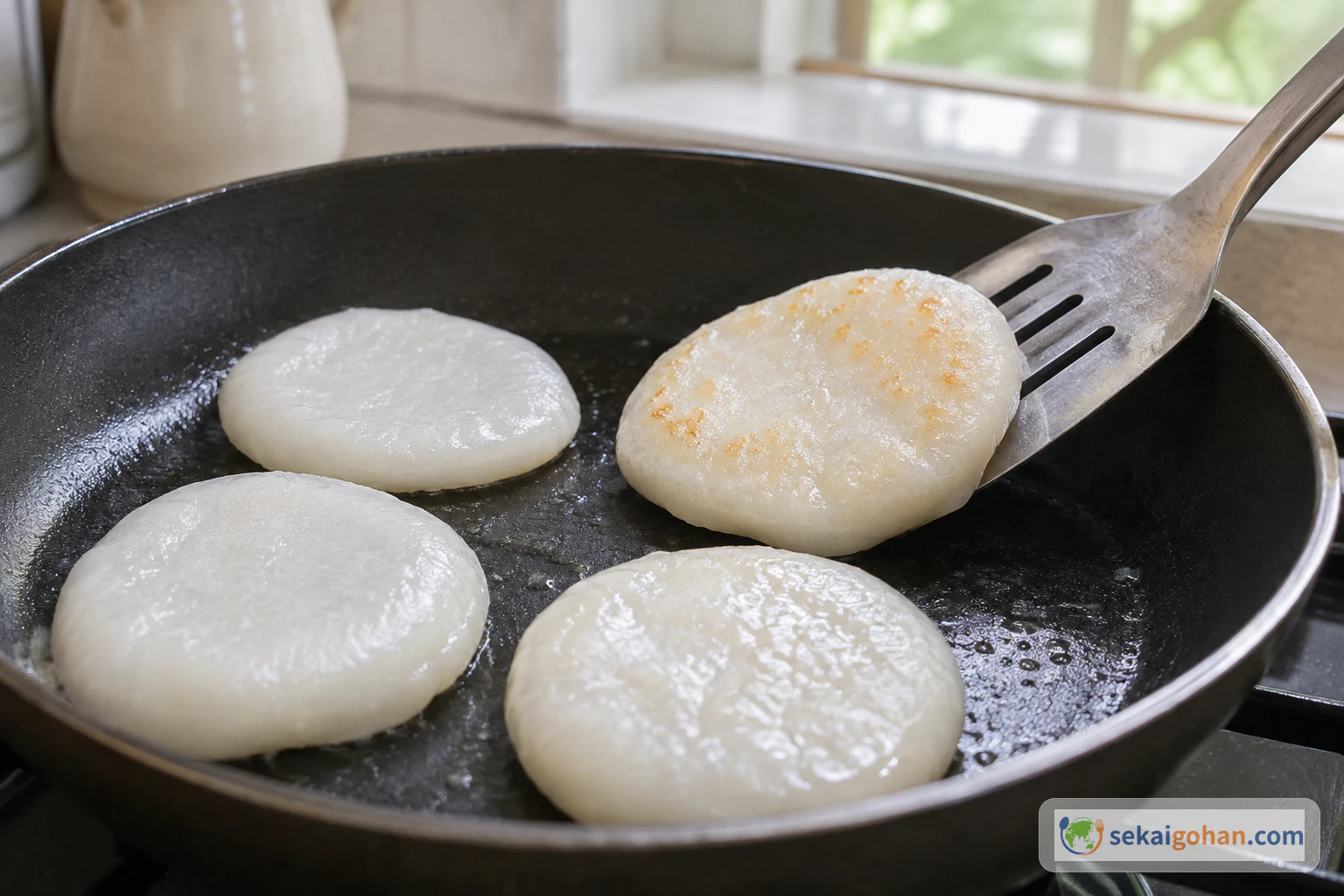
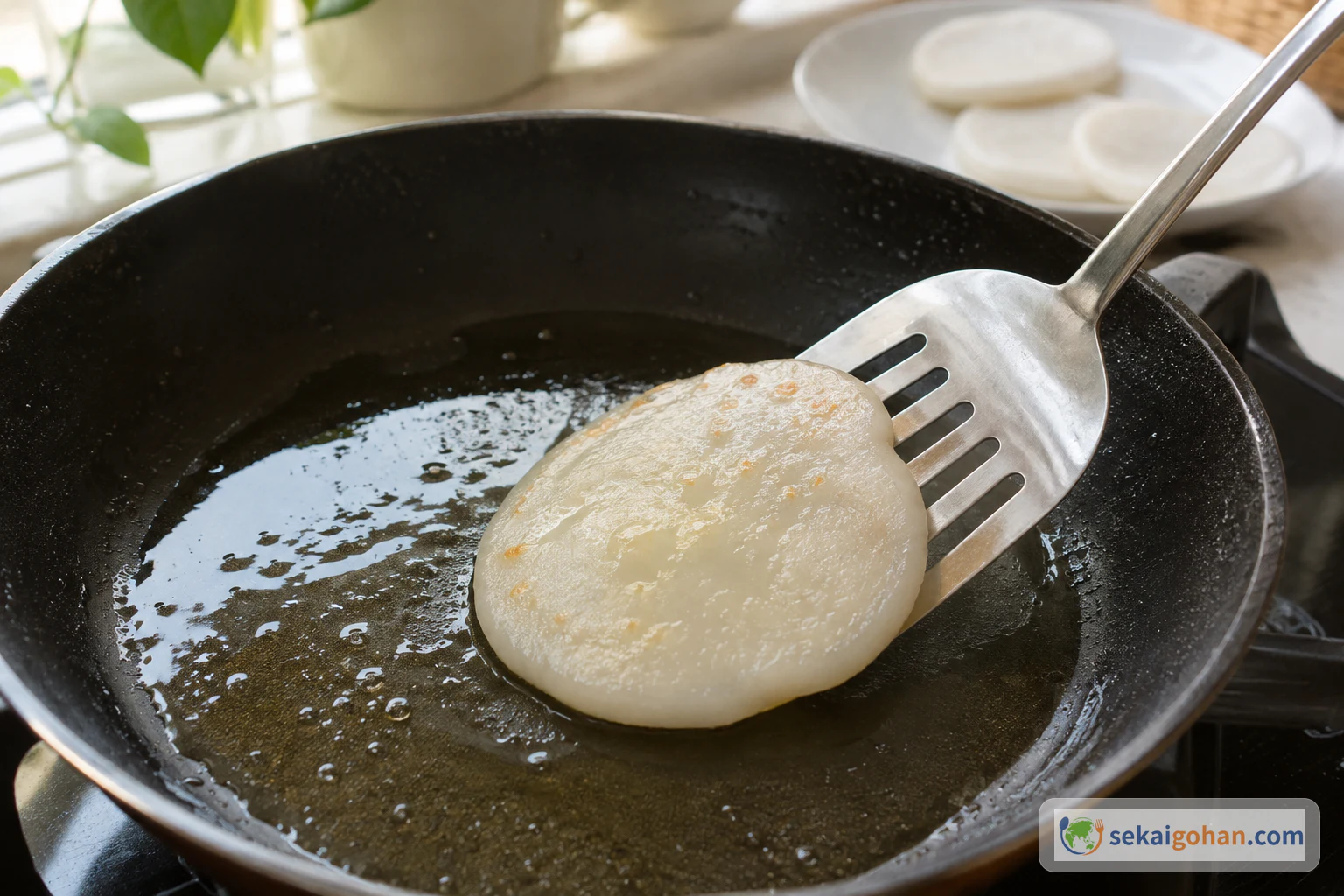
Turn each disc over.

A spatula turning a plain disc to show a slightly crisp, pale golden underside
Turn when the bottom is just slightly crisp

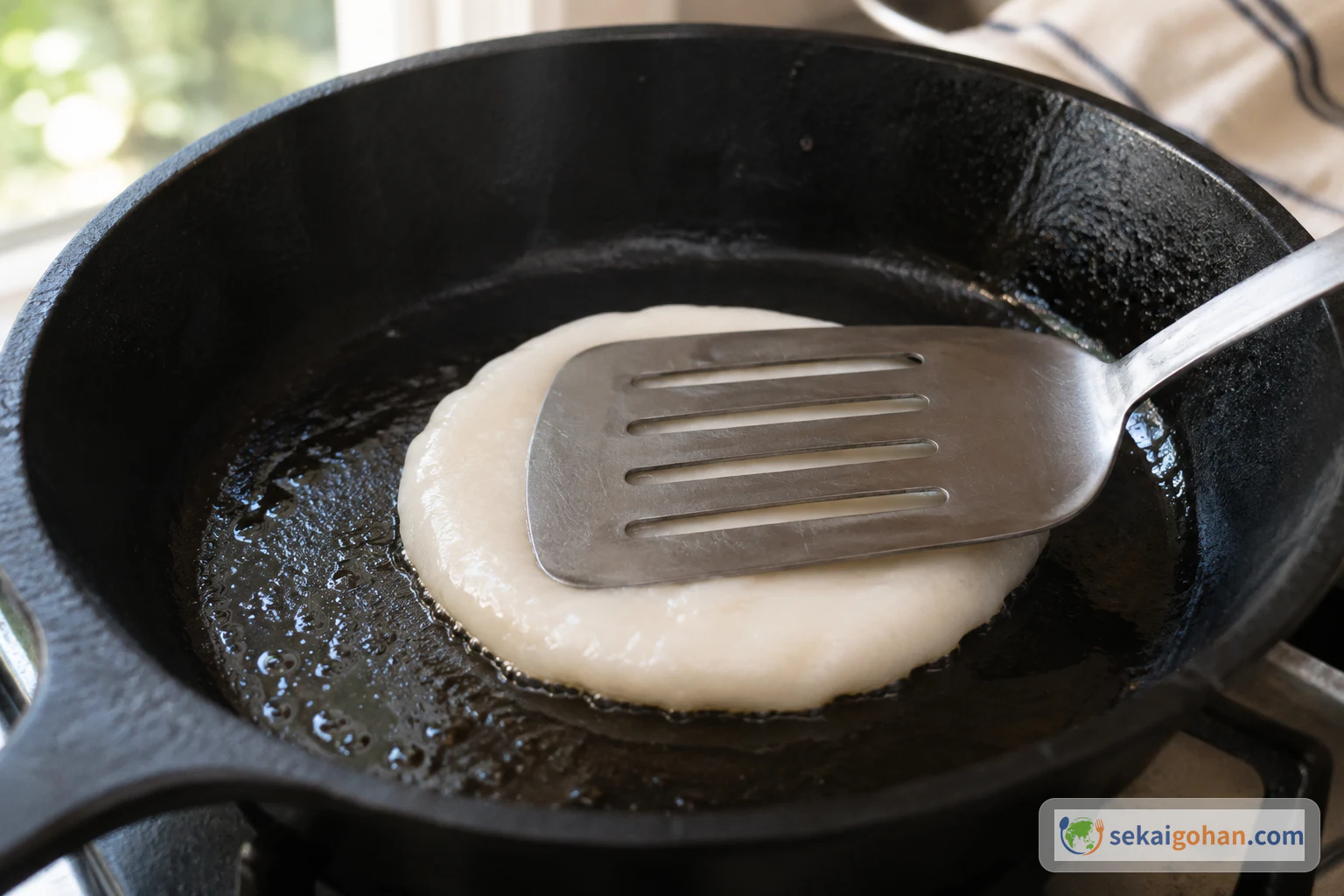
Press the turned disc flat with the spatula.

A spatula pressing a turned white rice disc flatter in the skillet
Flatten each disc gently after turning

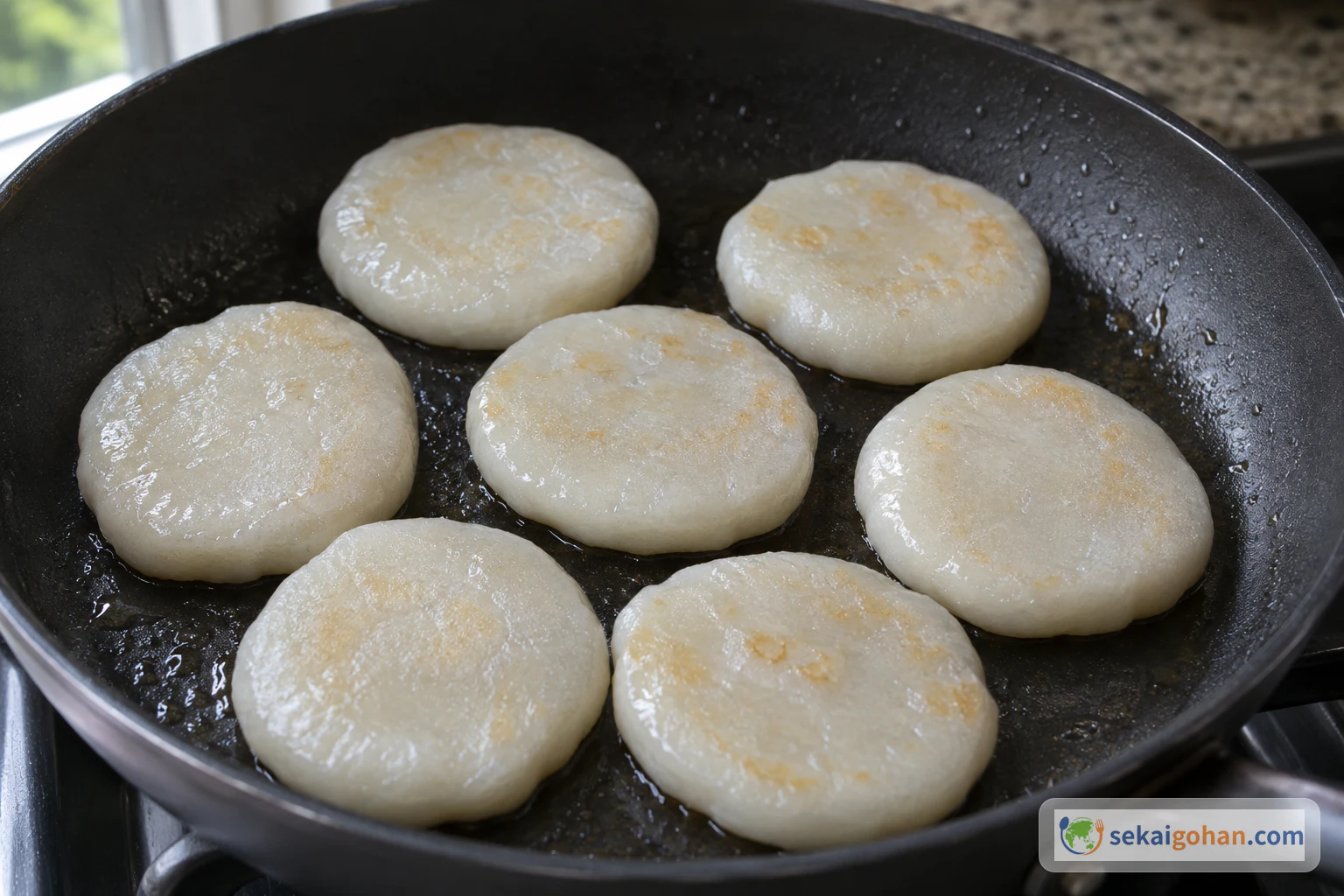
Cook for a few more minutes on the second side, still over low heat, until the dough is cooked through.

White rice discs cooking on their second side over low heat
Only faint pale patches; the cakes stay white

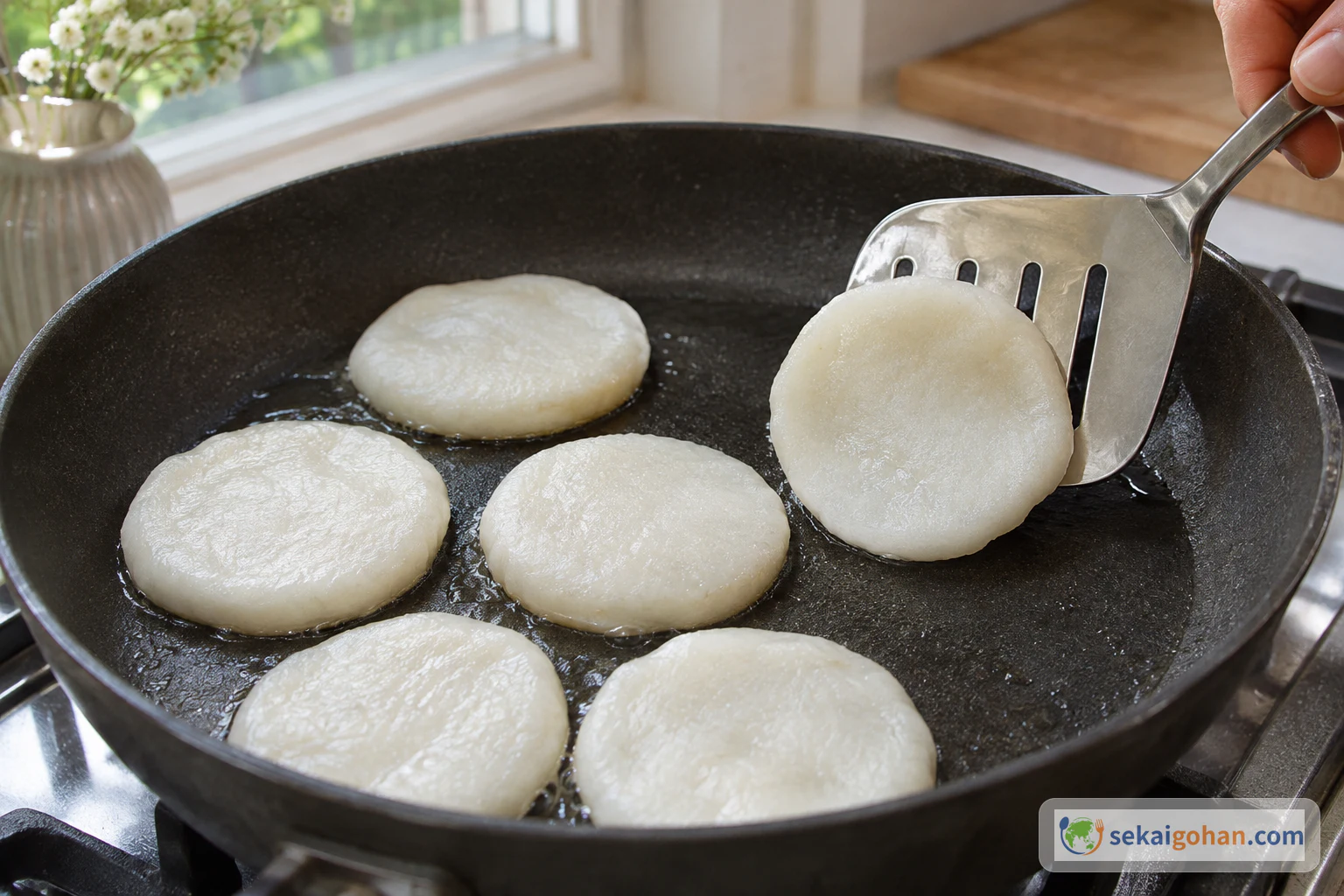
Turn the discs over once more.

A spatula flipping a cooked plain white disc again
Turn once more before any flowers go on
STEP 77 / 8

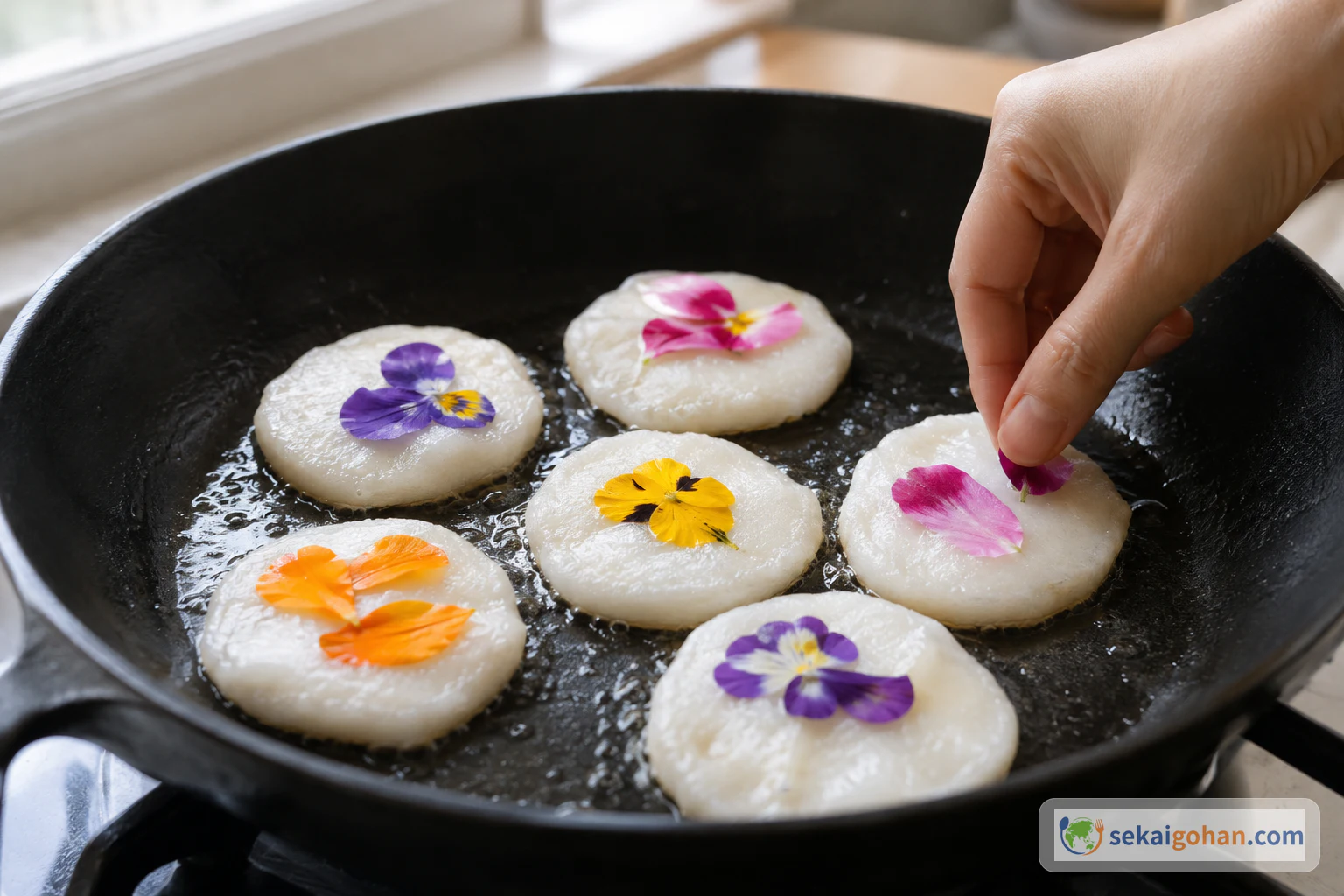
Put the flowers on and press them in for one second

A hand placing edible flower petals flat on top of a cooked white rice cake in the pan
Lay the flowers on the upward-facing side

Place edible flowers on the top surface of each cake.

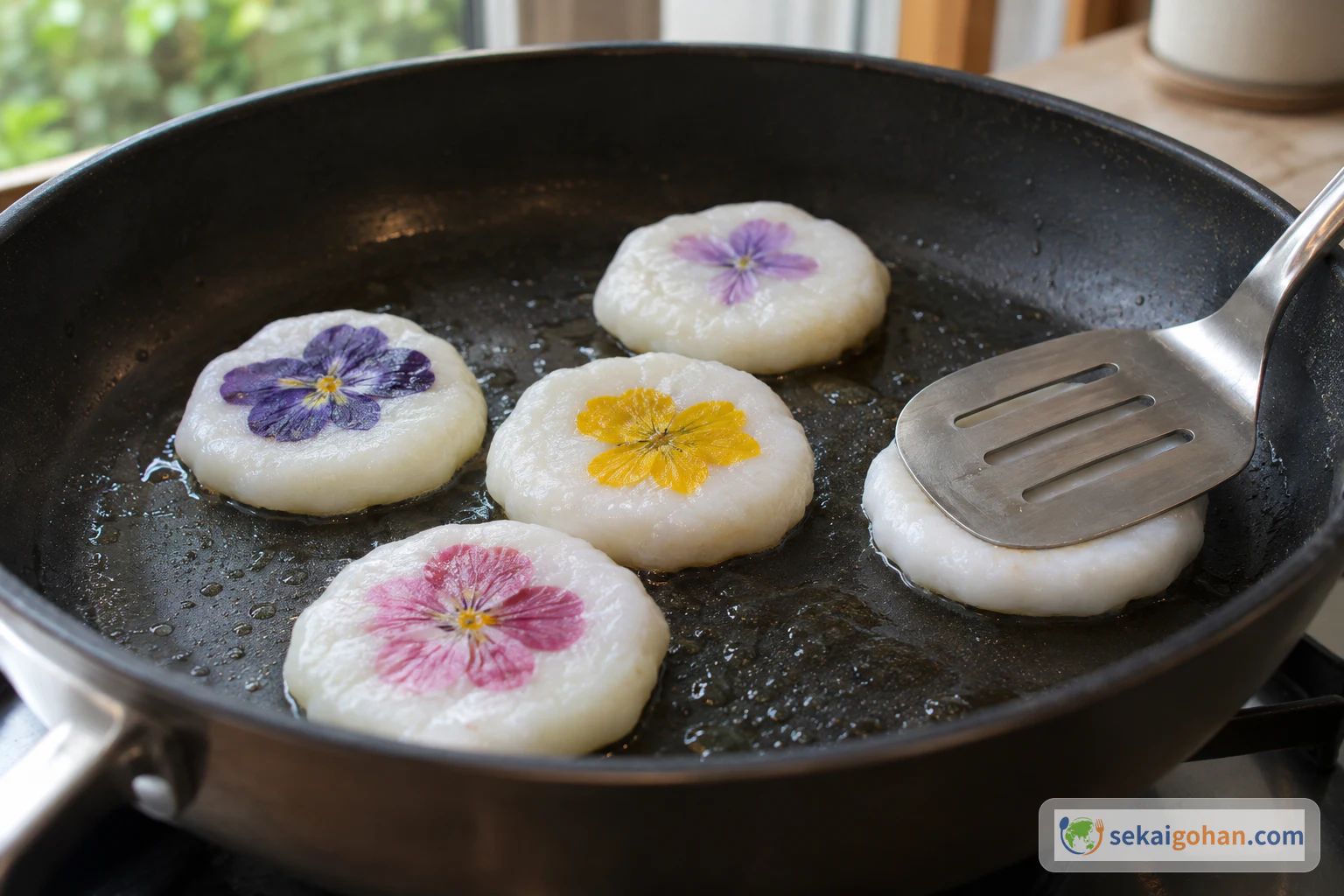
Turn each cake so the flower side faces down onto the pan.

A spatula turning a rice cake so the flower side faces the pan, leaving a plain white top
Flower side down; the top now shows plain white

Press the cake with the spatula for one second to fix the flowers in place.

A spatula briefly pressing a rice cake flower side down against the pan
One second of pressure fixes the flowers

Lift each cake onto a serving plate with the flower side up.

A spatula moving a finished hwajeon onto a plate with the flower facing up
Plate the cakes flower side up
STEP 88 / 8

Drizzle with honey and serve

A spoon drizzling a thin thread of honey over flower-topped white rice cakes
Just a thin thread of honey over the top

Drizzle a little honey over the cakes. Do not give honey to babies under one year old.

Serve with tea, as a sweet or a light snack.

A plate of flower-topped hwajeon with a light honey sheen beside a cup of tea
Tea on the side is optional; it is not part of the cakes
0 / 0
Ingredients

Ingredients

1 / 1

Ingredients

Ingredient Amount Role
Glutinous rice flour, also sold as sweet rice flour (찹쌀가루) 1 cup The dough
Kosher salt (코셔 소금) 1/4 tsp Mixed into the flour first
Hot boiling water (끓는 물) 1/2 cup Added a little at a time to bring the dough together
Edible flowers (식용 꽃) as needed Pressed onto the top of each cake
Vegetable oil (식물성 기름) 2–3 tbsp Coats the skillet
Honey (꿀) to taste Drizzled over the finished cakes
0 / 0

Hwajeon (화전, 花煎) looks like a tiny flower painting on a white disc: a small round of rice dough, cooked in a little oil, with petals pressed onto one face. It is a Korean spring sweet, and because the dough is glutinous rice, each cake bites soft and chewy rather than cakey. This home-style version makes ten cakes about 3 inches (6–7 cm) across, finished with honey and served with tea. For more dishes from the same table, see South Korea.

Hwajeon and the Korean Spring Custom

Hwajeon belongs to spring. On the third day of the third lunar month, when the azaleas were in bloom, people went out, picked the blossoms, and cooked flower cakes with them. The custom goes back to the Goryeo period. The flower changes with the season, and pear blossoms, roses and chrysanthemums all appear on hwajeon. Traditionally the cakes are dipped in honey or sprinkled with sugar.

In English you will sometimes see hwajeon called a "pan-fried sweet rice cake" or a "pancake." The second name is misleading. There is no batter here. The base is glutinous rice flour mixed with boiling water and kneaded into a dough, then shaped by hand.

Hwajeon is made differently from place to place. Around Iksan, a cake of similar shape called seopjeon has soju in the dough. Palace-kitchen versions roll the dough about 0.25 inch (5 mm) thick, cut it out with molds and deep-fry it. In a regional "Chrysanthemum Pancake," the flowers face up, the cake is never flipped, and oil is spooned over the top to cook it. The home style below is gentler. The plain discs cook on both sides over low heat, and the flowers are pressed on face down at the very end.

Ingredients: Six Items for 10 Cakes
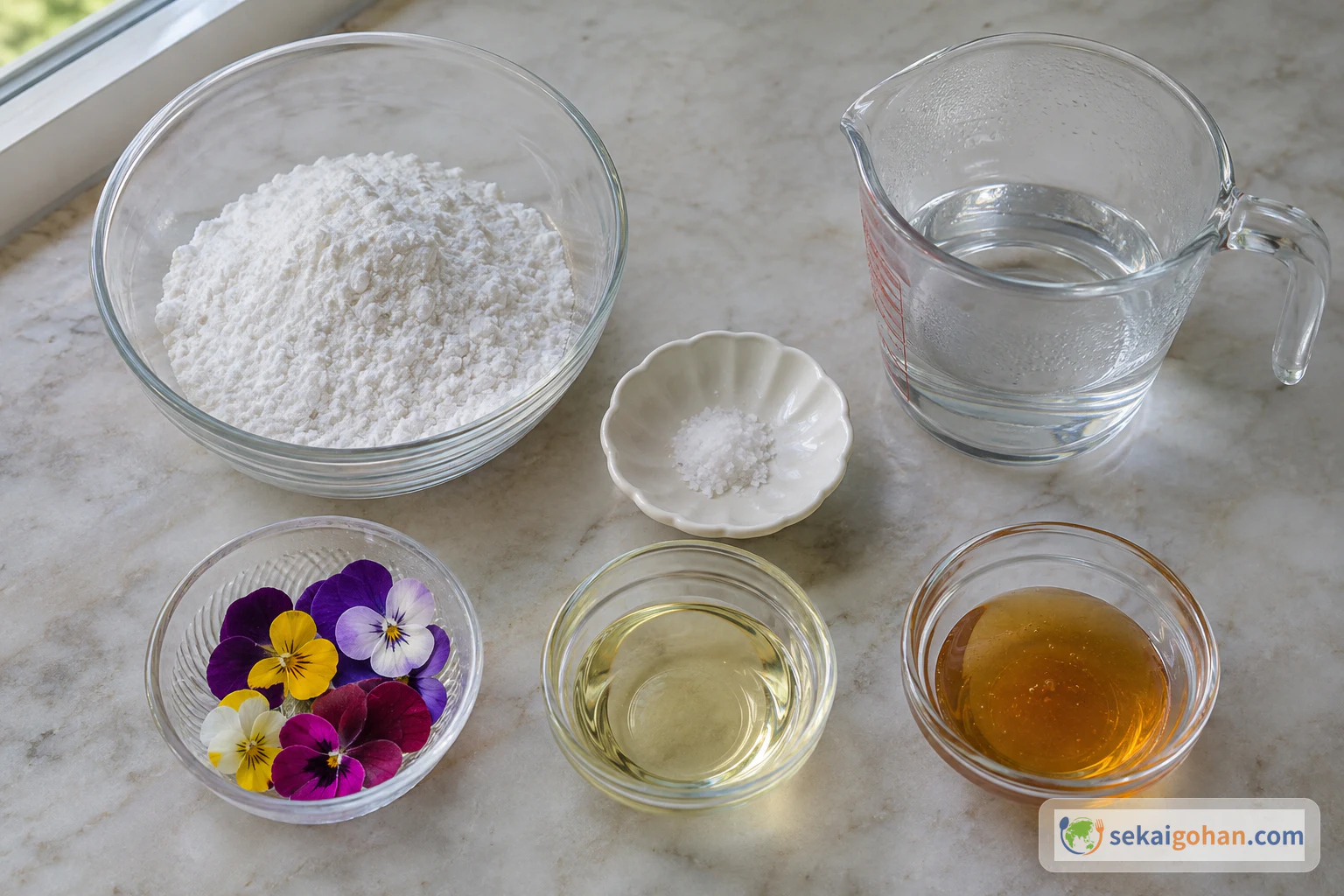
Glutinous rice flour, salt, hot water, edible flowers, vegetable oil and honey laid out separately
Six items: the dough, the oil for the pan, the flowers on top and honey to finish

The dough makes 10 cakes, each pressed to 3 inches (6–7 cm) across. Use enough flowers to decorate the top of all ten.

Equipment

  • Kettle or pot for boiling water
  • Mixing bowl
  • Wooden spoon
  • US measuring cup and measuring spoons
  • Plastic wrap or another cover for the dough balls
  • Large nonstick skillet
  • Spatula
  • Serving plate

Choosing the Flour, Salt and Flowers for Hwajeon

Glutinous rice flour is the whole texture. Look for "glutinous rice flour" or "sweet rice flour" on the label. Ordinary rice flour is a different product and won't give you the same chew.

Salt. Kosher salt has a different grain from many table salts, so if you use another salt, the saltiness will shift. Adjust with care.

Flowers: only food-grade, known flowers

Use only flowers sold commercially as edible, where the package tells you the flower type and that it is meant for eating. Do not use garden flowers, roadside or wild flowers, or ornamental cut flowers. If you cannot identify a flower with certainty, do not use it. A flower's look is not proof of its type or safety. If you have reacted to particular flowers or pollen before, avoid those flowers. You can also serve the cakes plain, without flowers.

Honey and babies

Do not give honey, or food containing honey, to babies under one year old. This applies even when the food has been cooked.

Rice is the main allergen to note in the dough. If honey doesn't suit your table, homemade syrup works as the finish instead.

Method: Two Cooks, Then the Flower

Before you start

The heat stays low once the oil is warm, so the cakes stay white. Flowers go on only after both sides of the plain disc have cooked. They never go on raw dough, and they end up on one face only.

Fixing Hwajeon Problems in the Bowl and the Pan

Problem Likely cause What to do
The dough is too hot to knead Kneading started before the dough cooled Leave it in the bowl and use the wooden spoon until you can handle it comfortably
Balls or discs dry out or crack at the edges They were left uncovered Keep the balls under plastic wrap and take out one at a time to press
The cakes are browning deeply The heat is too high Turn the heat to low. Aim for white cakes with only a slightly crisp bottom
The flowers do not stay on The flower side was not pressed against the pan Turn the cake flower side down and press for one second with the spatula
Flowers have ended up on both faces, or on raw dough Flowers went on too early Add flowers only after both plain sides are cooked and the disc has been turned a second time

Serving and Varying Hwajeon

Eat hwajeon freshly made, while the dough is still soft. Serve the cakes with tea as a sweet, or on their own as a light snack. If you want them less sweet, use a smaller drizzle of honey; the dough stays the same either way.

You can play with color, too. Seasonal flowers vary in Korea, and at home you can mix whatever shades you like, as long as every one is a commercially sold, food-grade edible flower.

Frequently Asked Questions

Can I use regular rice flour instead of glutinous rice flour?

No. Use glutinous (sweet) rice flour, because the chewy texture comes from it.

Can I use flowers from my garden, or azaleas like in the old custom?

No. The azalea gathering is cultural history, not a guide to foraging. Use only flowers sold commercially as edible, with the flower type and food use stated. Garden, wild and ornamental flowers are out.

What if I can't find edible flowers?

Cooks traditionally arrange leaves, manna lichen (a lichen, not a mushroom) or jujubes into flower shapes instead. That is a different decoration style, though. You can also simply serve the cakes plain with honey.
Sources

  • Maangchi, "Pan-fried sweet rice cakes with edible flowers (Hwajeon)." Used for every ingredient, amount and step in this recipe: the 10 cakes, the 6–7 cm discs, the heat levels, pressing the flowers on for one second, and serving with honey or homemade syrup and tea. https://www.maangchi.com/recipe/hwajeon
  • Korea Tourism Organization (VISITKOREA), "Pan-Fried Flower Rice Cake (화전 / Hwajeon)." Used for the definition of the dish and the third-day-of-the-third-lunar-month azalea custom. Also used for the seasonal flowers, the non-flower decorations (leaves, manna lichen, jujubes), honey or sugar as finishes, and seopjeon with soju around Iksan. https://english.visitkorea.or.kr/svc/contents/contentsView.do?vcontsId=182049
  • Academy of Korean Studies, "화전," Encyclopedia of Korean Culture (한국민족문화대백과사전). Used for the definition and the spring azalea outing, which the encyclopedia dates to the Goryeo period. Also used for the palace-kitchen method of rolling, cutting with molds and deep-frying, and for honey or sugar as finishes. https://encykorea.aks.ac.kr/Article/E0064862
  • Korean Traditional Knowledge Portal / Rural Development Administration data, "hwa Jeon (Chrysanthemum Pancake)." Used only to show that a recorded traditional version cooks the cakes flower side up, without flipping, with oil spooned over the top. Its amounts are not used in this recipe. https://koreantk.com/ktkp2014/food/food-view.view?foodCd=TF10003329&tempLang=en