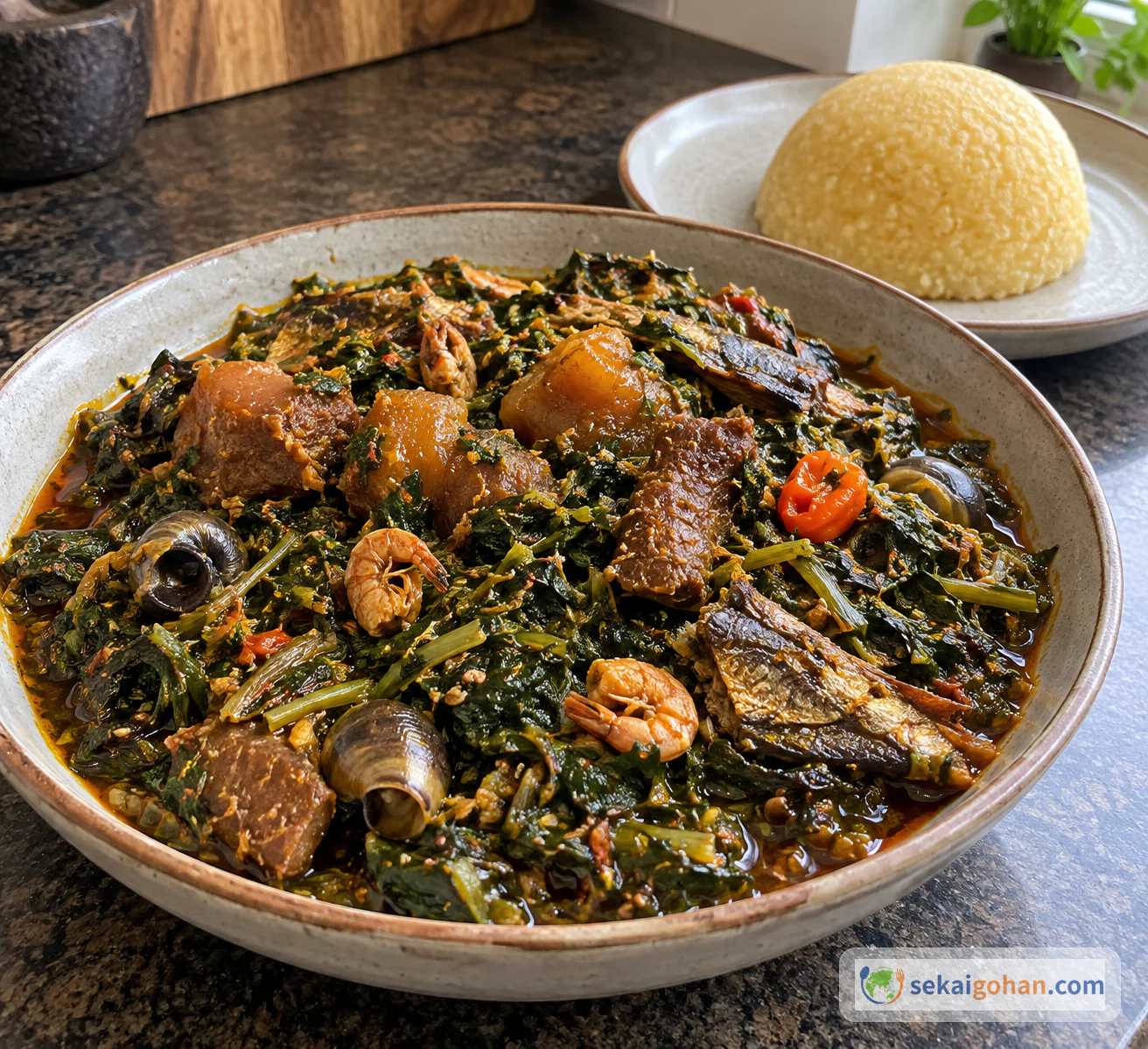
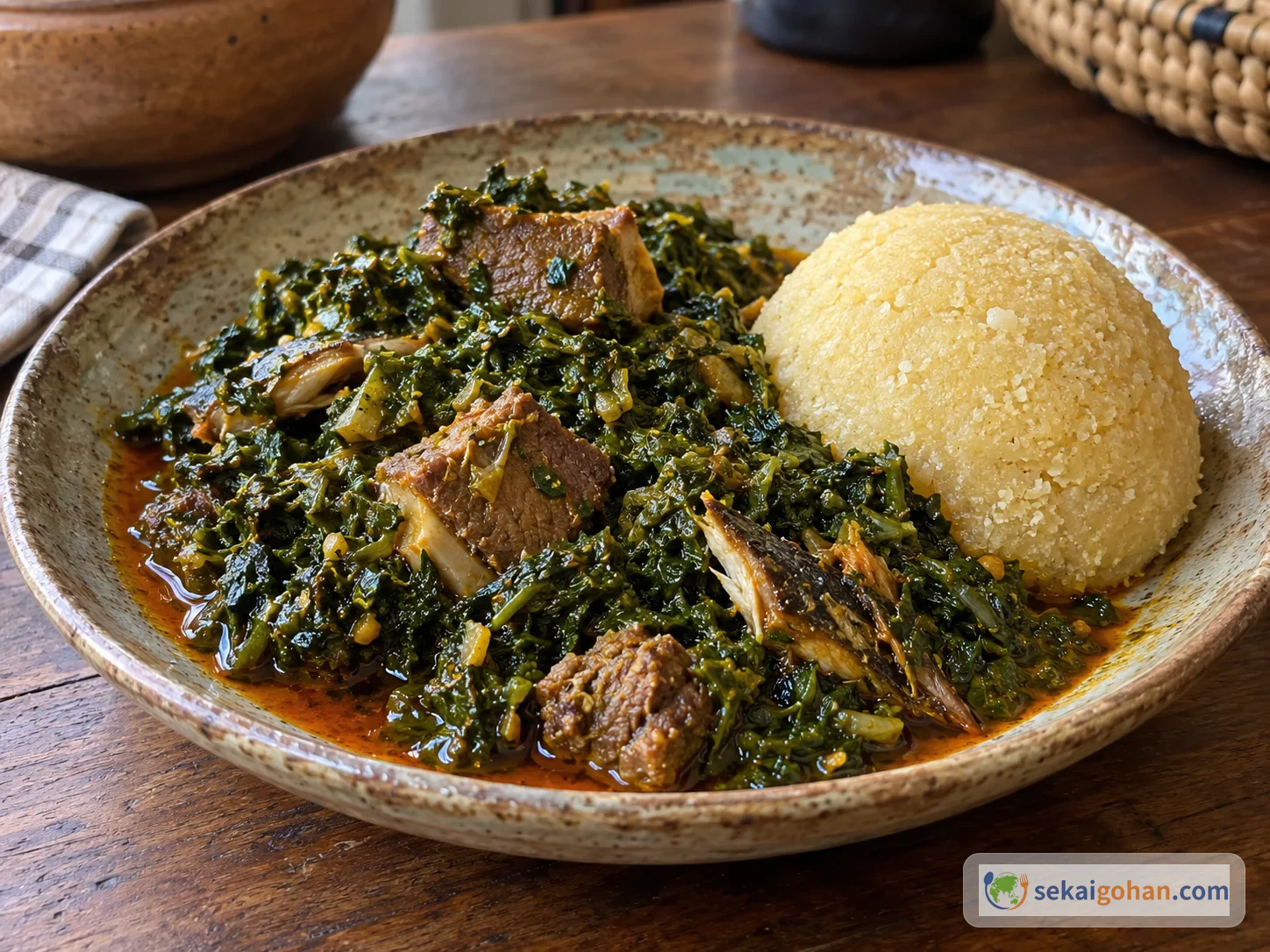
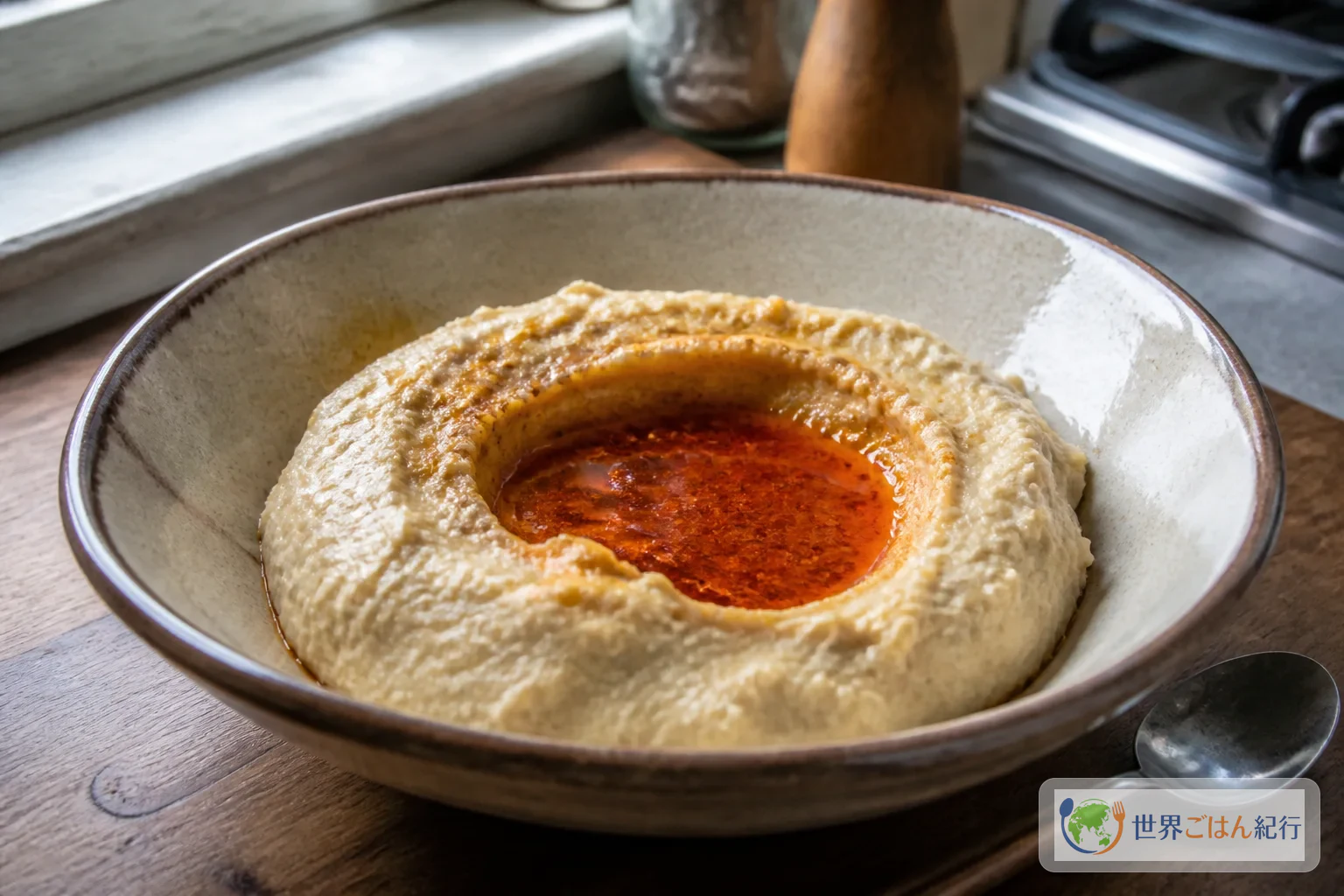
The moment you lift the lid, the nutty scent of red palm oil and the green bite of chile rise together in the steam. Inside, white yam has been breaking down little by little, drinking up the red broth until it turns into a heavy, glossy porridge. This is asaro (Àsàró), a yam porridge from Yoruba tables in southwestern Nigeria: savory, gently smoky from the fish, warm with chile, and filling enough to be a whole meal.
What asaro is
In English, asaro also goes by Nigerian yam porridge or yam pottage. The name suggests congee, but it is quite different from Japanese rice porridge. The star is white yam, not rice. Big pieces of yam simmer with chile, tomato, onion, red palm oil, and crayfish powder or smoked fish, and then get broken down only halfway. It is neither a thin soup nor a full mash. When you can run a wooden spoon through the pot and it leaves a trail, you have asaro.
If jollof rice is Nigeria's red rice of celebration, asaro is the red pot of everyday cooking. Like egusi soup and abacha, it relies on palm oil, the umami of seafood, and the push of chile. The yam is what turns it into a full plate, and one pot gives you lunch with no rice to cook.
Ingredients (serves 4)

This serves 4 as a staple. Halve it for a light side dish. If you can get imported yam, use it. If not, mix Chinese yam and taro to get close to the texture.
This recipe uses fish and dried shrimp. If you have a shellfish allergy, do not use the crayfish powder; substitute bonito flake powder or kombu stock. Scotch bonnet is fiercely hot even in small amounts, so the first time start with 1/4 or a little bottled hot sauce and adjust.
Three things are worth tracking down: red palm oil, which sets the aroma of asaro; dried shrimp powder, which stands in for crayfish powder; and Scotch bonnet-style heat, which adds chile aroma. The long yam, taro, onion, tomato and greens are easy to find at an ordinary grocery store. Gather the "pillars of aroma" first, then look for imported yam, so shopping doesn't stall.
| Priority | What to buy | Role in the dish | Where to land if you substitute |
|---|---|---|---|
| Top | Red palm oil | The oil that supports the red color, nutty aroma and the mild sweetness of yam | Rice bran oil and paprika only get close in looks. The aroma is different, so add a little more seafood |
| High | Crayfish (dried shrimp) powder | Dry seafood umami close to crayfish powder | Bonito flake powder can support it, but it tends to taste Japanese-stock-like |
| High | Scotch bonnet-style sauce | Adds aroma and heat at the table without making the whole pot fiercely hot | Habanero sauce works, but products that are very sour or salty should be used a little at a time |
| Can wait | Imported white yam | The crumbly main texture closest to the local dish | Mix Chinese yam and taro and mash less |
Red palm oil does more than turn the dish red. The moment it goes in the pot, a nutty aroma rises and pulls the mild sweetness of the yam toward Nigerian cooking. A little crayfish powder adds stock, which is insurance when smoked fish is hard to find. Scotch bonnet-style sauce is most useful when people at the table like different levels of heat. Don't make the whole pot fiercely hot; add the aroma and heat only on the adults' plates.
If you don't want to end your shopping with asaro, red palm oil and dried shrimp powder also carry over to egusi soup. Chile aroma also suits the finish of jollof rice. Scotch bonnet sauce, though, differs in saltiness and sourness from brand to brand, so add it at the plate rather than in the pot to keep the flavor from breaking. Shopping this way, what is left over from asaro spreads easily across a Nigerian table.
| Leftover ingredient | A dish to use it in next | Rough guide |
|---|---|---|
| Red palm oil | Egusi soup, abacha | Use in small amounts as a cooking or dressing oil. The aroma is strong, so start with 1 tbsp |
| Dried shrimp powder | Egusi soup, seafood stews, a hidden seasoning in miso soup | From 1/2 tsp for unsalted products. Too much pushes the dried-goods smell forward |
| Scotch bonnet-style sauce | Jollof rice, suya, grilled fish | Don't mix into the pot; add a few drops at the plate. With very sour products, go easy on the lemon |
Seen this way, shopping for asaro is not a one-time special purchase but the foundation for cooking Nigerian food. Enjoy imported yam when you happen to find it. Keep red palm oil, seafood powder and chile aroma on hand as your staples. Once you have them, shopping gets much lighter the next time you make a similar pot.
Choosing yam and other ingredients for asaro
The yam is what makes most cooks outside Nigeria hesitate. Nigerian white yam is nothing like sweet potato or potato. It is less sweet, and when simmered it turns crumbly without getting too sticky. If you can't find imported yam, mix Chinese yam (nagaimo) with taro. The pair gets closer than Chinese yam alone, since Chinese yam is light and taro is sticky. Add red palm oil and crayfish powder for the aroma, and you have a good home version.
Keep the aroma of red palm oil, a base of chile and onion, the umami of crayfish powder or smoked fish, and yam that is not completely mashed. If you swap the red palm oil for ordinary vegetable oil, both the color and the core of the aroma thin out.
Method
Asaro looks like "just simmering," but the size you cut the yam, the amount of water and how much you mash change the result. Make the red sauce, let the yam absorb it, and at the end break it down just a little to set the thickness.
Ingredients to keep and substitutes in a home kitchen

The most important thing when substituting for asaro is what you replace the yam with. Sweet potato brings its sweetness to the front, so it is a poor substitute the first time. Made with potato alone, it leans toward potato stew. Chinese yam is mild and easy to use, but it has a lot of water and breaks down easily. Taro turns sticky, so mixed with Chinese yam it's easier to land at "crumbles softly but doesn't get too paste-like."
Getting close to the thickness served in Yoruba homes
The easiest asaro to eat leaves lumps when scooped with a spoon, with a little red sauce spreading on the bottom of the plate. The name 'yam porridge' makes you picture something thin, but in home cooking it sits between a staple and a stew. If the corners of the yam all disappear in the pot, it feels monotonous as you eat. On the other hand, if the lumps stay hard, the sauce and yam feel like separate dishes.
Judging by the trail of the wooden spoon reduces failures. If tracing the bottom parts the red sauce for a moment and it slowly closes back in two or three seconds, the thickness is right. If it closes back at once like water, remove the lid and reduce a few minutes over medium-low heat. If it is so firm that the trail stays and doesn't move, add hot water 2 tbsp at a time to loosen it.
| State of the pot | Cause | How to fix |
|---|---|---|
| Thin and not clinging to the yam | Too much water, or too little yam mashed | Take off the lid and reduce over medium-low heat, mashing a little more yam |
| Paste-like and too heavy | Chinese yam mashed too much, or too much taro | Add hot water in small amounts and stir from the bottom without breaking up the fish and greens |
| Aroma is weak | Too little red palm oil and crayfish powder | Before turning off the heat, stir in 1 tsp red palm oil and 1/2 tsp dried shrimp powder |
| Local ingredient | Substitute in a home kitchen | Why keep it |
|---|---|---|
| White yam | Imported yam, Chinese yam plus taro | Mild sweetness, breaks down but leaves lumps |
| Crayfish powder | Dried shrimp powder | Adds dry seafood umami |
| Smoked fish | Grilled mackerel, grilled salmon, unsalted-style dried fish | Smoke and fish aroma cut the monotony |
| Red palm oil | Red palm oil | Gives a nutty aroma, not only color |
| Ugu leaves | Spinach, komatsuna | Adds a green bitterness and color at the end |
On your first shopping trip, buy red palm oil and dried shrimp powder before you look for imported yam. Chinese yam and taro can bring the texture close, but without the oil and the aroma of dry seafood, it becomes something closer to a tomato-stewed starchy root. If you do find white yam at an African grocery store, use it. Just get to know the aroma of red palm oil first, before buying one heavy, large piece; that makes adjusting next time easier.
When making it with Chinese yam and taro, managing moisture before it goes in the pot also matters. If Chinese yam soaks in water too long after cutting, the surface gets watery and the sauce thins when you break it down. Soak only enough to prevent browning, then drain in a strainer and leave about 5 minutes to remove surface water before it goes in the pot. Frozen taro also works, but don't put it in frozen; half-thaw it and shake off the frost on the surface to keep the thickness steady.
If you substitute rice bran oil for red palm oil, treat the result as a different dish. Adding 1 tsp paprika to 2 tbsp rice bran oil gets you close in red color, but not the aroma of palm oil. If you really dislike the substitute, cut back on the oil and add a little more dried shrimp powder and fish to build up the umami.
You can make it without fish, but with fish it gets the depth that makes it Nigerian cooking. Unlike the grilled aroma of suya, in asaro the dry fragrance of smoked fish and dried shrimp powder holds up the yam, which has little sweetness. Fish bones are hard to eat, so check the fish carefully with your fingers before it goes in the pot.
Serving and storing asaro
Serving and pairing

Asaro is best warm, straight from the pot. Serve it in bowls and, if you like, add fried plantain, a boiled egg, or grilled fish to round it out as a complete meal. For more heat, put Scotch bonnet sauce in a small dish at the table and let each person add their own instead of spicing the whole pot. That works well for a family.
When asaro shares the table with other Nigerian dishes, make your portion a little smaller to leave room for the bean and leafy-vegetable dishes. The red palm oil aroma is strong, so skip rich fried foods alongside it. Something sour, some greens, and something grilled will keep you from tiring of it.
| How to build the table | Pair with | Good for |
|---|---|---|
| Eat as one dish | Grilled fish, boiled egg, a little greens | Weekday lunch, dinner with no rice cooked |
| Widen toward Nigeria | Akara, egusi soup | Weekend days with several dishes on the table |
| Split the heat | Mild pot, Scotch bonnet sauce at the table | Meals with children or anyone who dislikes heat |
| Lighten the aroma | Lemon, pickled onion, boiled greens | Days when the red palm oil feels strong |
To explore further, try asaro next to jollof rice. Both use tomato and chile, but in jollof the rice grains soak up the sauce, while in asaro the yam breaks down into it. For a bean dish, akara makes a good contrast, and egusi soup is a rich soup of leafy vegetables and seeds.
Storage and reheating
Asaro keeps in the refrigerator until the next day. Let it cool slightly, then divide it into shallow containers before chilling. Overnight it tightens up and becomes quite firm, which is normal.
To reheat, move it to a pot, add 3 to 4 tbsp water or stock, and bring it back slowly over low heat for about 8 minutes. In a microwave, heat at 600 W for 2 minutes, stir once, then heat 1 more minute. It should be hot through the center and turn sticky again when you stir it with a wooden spoon.
Don't freeze it. The Chinese yam and taro lose moisture and turn grainy after thawing. If you have to keep leftovers longer, freeze only the fully mashed part and add water when reheating to bring it back toward a potage, accepting that the lumps will be gone.
Frequently asked questions
Can I make asaro with potatoes?
You can, but it will taste less like asaro. Potato has a different sweetness and starch, and once broken down it drifts toward potato stew. If you go this route, use 1.25 lb (600 g) potato and 10.5 oz (300 g) taro and mash less.
Is red palm oil essential?
Nearly. Paprika can supply the color, but the toasty aroma of red palm oil is hard to replace. The first time, start with 2 tbsp instead of 3 and adjust next time if the aroma feels too strong.
Won't I have red palm oil and dried shrimp powder left over?
You will, but both carry over easily. Use them as they are in egusi soup, and red palm oil also works as a dressing oil for abacha. Unsalted dried shrimp powder can go into miso soup or stir-fries in small amounts. For asaro, choose one with a strong seafood aroma; it comes closer to the local crayfish powder.
Can I make asaro that isn't spicy?
Yes. Use 1/4 Scotch bonnet with the seeds and pith removed, and increase the red bell pepper. Leaving out the chile entirely can push the red palm oil and fish aroma too far forward, though. For children, make the whole pot mild and add hot sauce only to the adults' plates.
Does it work without fish?
It does, though the flavor is shallower. If you avoid fish, add just ½ cup (100 ml) of dried shiitake soaking liquid and back it up with bonito flake powder or kombu stock. For a vegan version, also leave out the dried shrimp powder and sauté the red palm oil and onion a little more carefully to build aroma.
How far ahead can I prepare it?
Only the pepper base can be made the day before. Refrigerate it for one day and check the smell before using. Cut yam browns quickly, so cut it on the day you cook; if you must cut it ahead, soak it in water, refrigerate it, and use it within half a day.