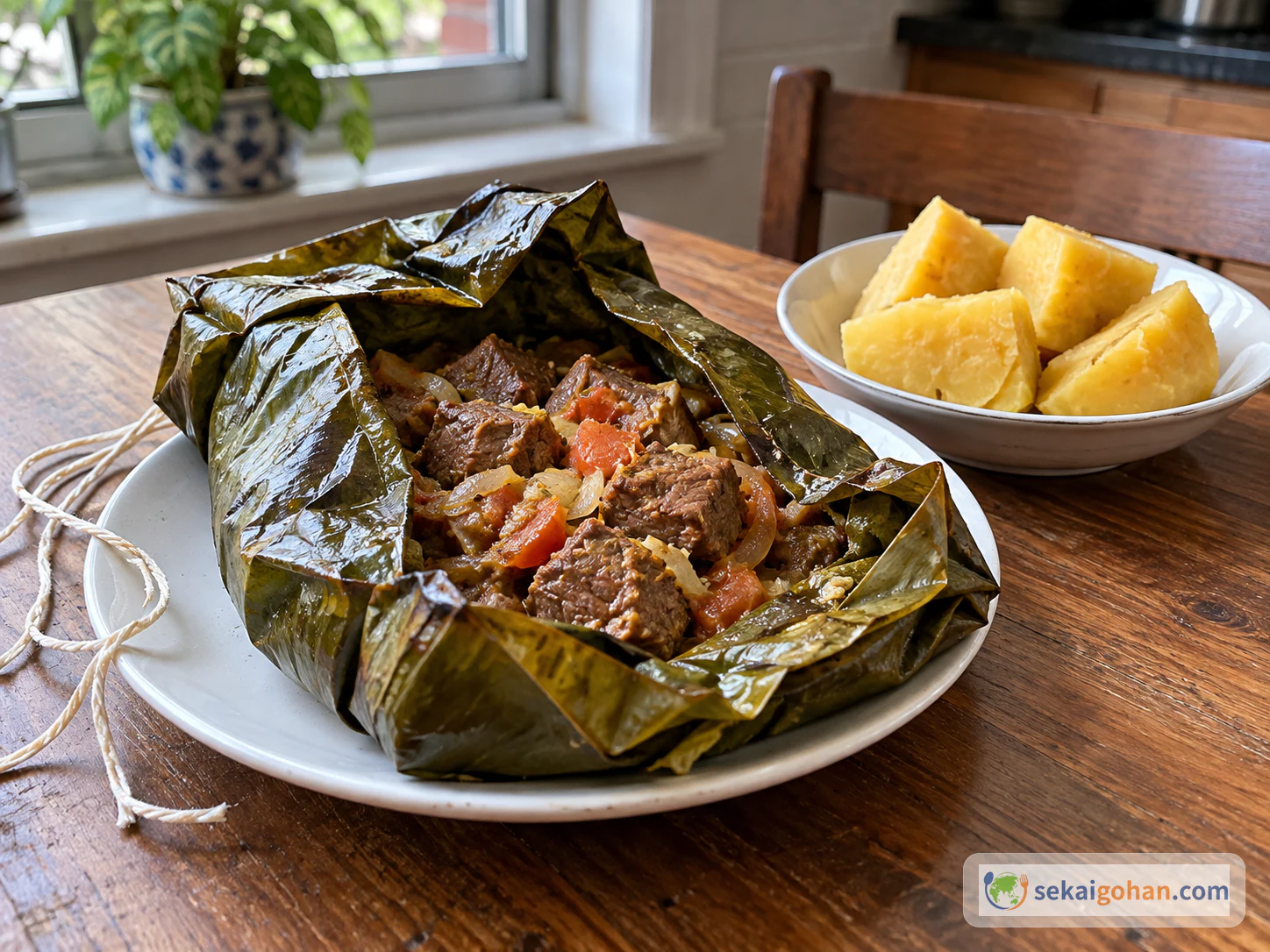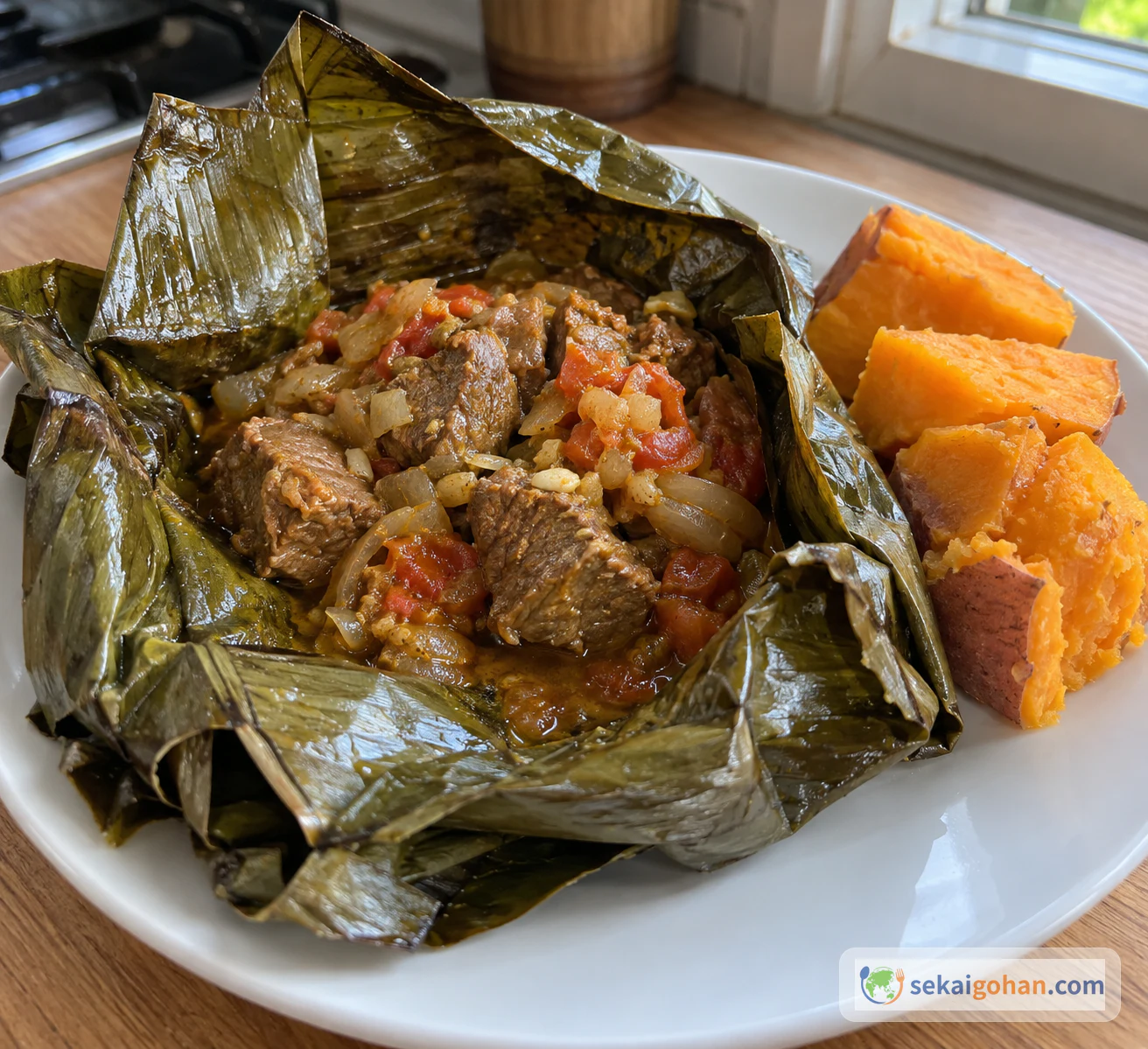
An opened leaf parcel on a plate showing cubed beef in the steaming juices of tomato and onion, with steamed sweet potato served alongside, in natural light
Serves3 medium-size parcels (mpombo)
CuisineUgandan

Beef Luwombo: Ugandan Beef Steamed in Banana-Leaf Parcels (Luwombo lwe Nyama)

How to make beef luwombo, the Buganda dish of beef roasted dry, cubed, wrapped with tomato, onion, garlic and curry powder in young banana leaves, and steamed for about an hour. Covers softening the leaves, building a steaming platform from the leaf stalks, reading the source amounts honestly, checking doneness safely, and serving with steamed sweet potato.

Cooking flow

Cooking steps

STEP 11 / 7

Roast the beef until dry

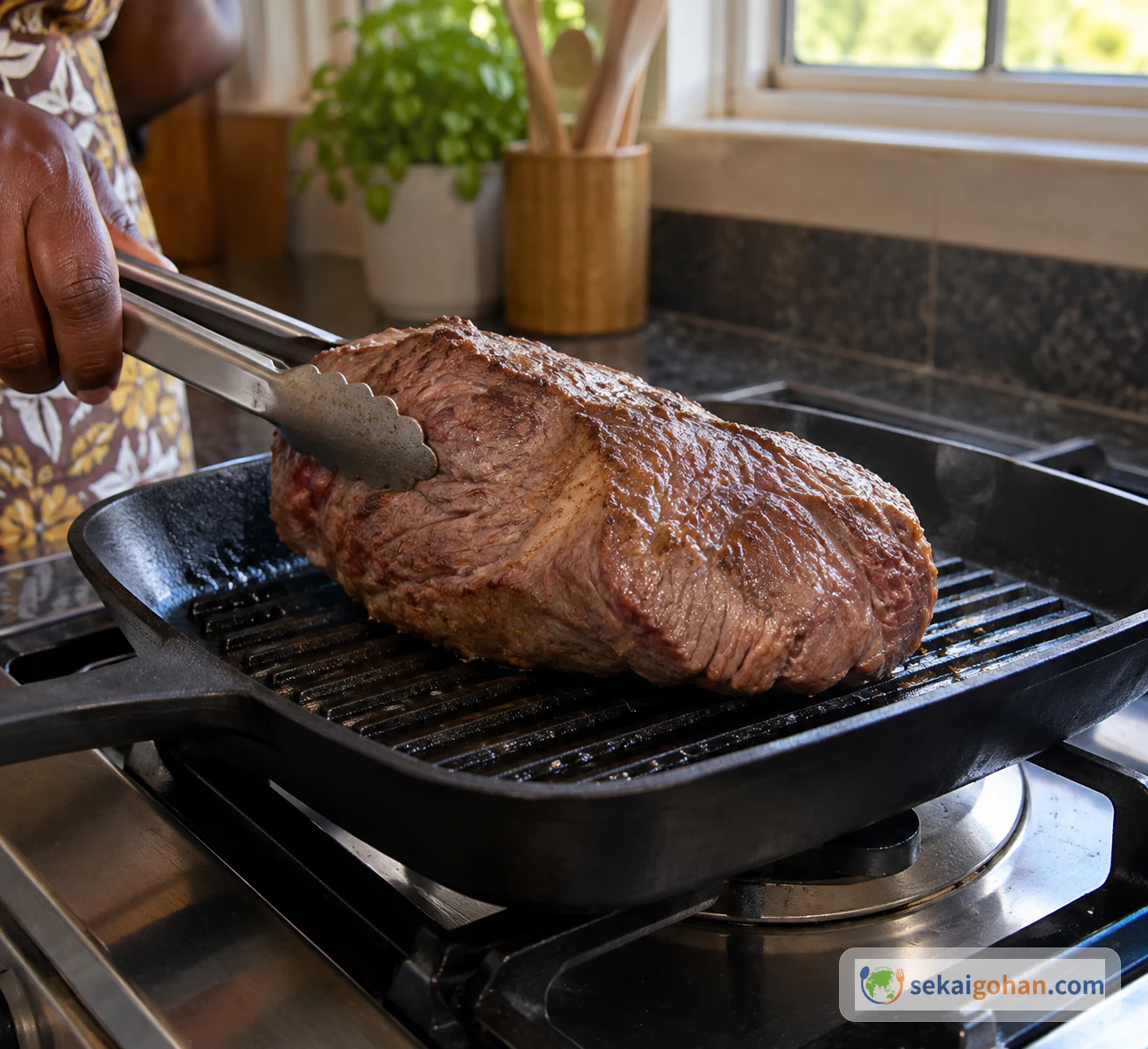
A piece of beef roasting on a grill pan until its surface is dry, with no oil or sauce, before cubing
Roast the beef in one piece until dry, without oil or sauce

Roast the 1 lb (500 g) of beef in one piece until it is very dry on the outside, for example on a grill pan or grill rack without oil. Keep it free of sauce or vegetables at this stage.

Some cooks grill the meat lightly over charcoal and smoke the leaves over a fire. A home grill pan does not reproduce that smoky aroma. Think of this step as roasting the beef dry, not recreating charcoal smoke.

STEP 22 / 7

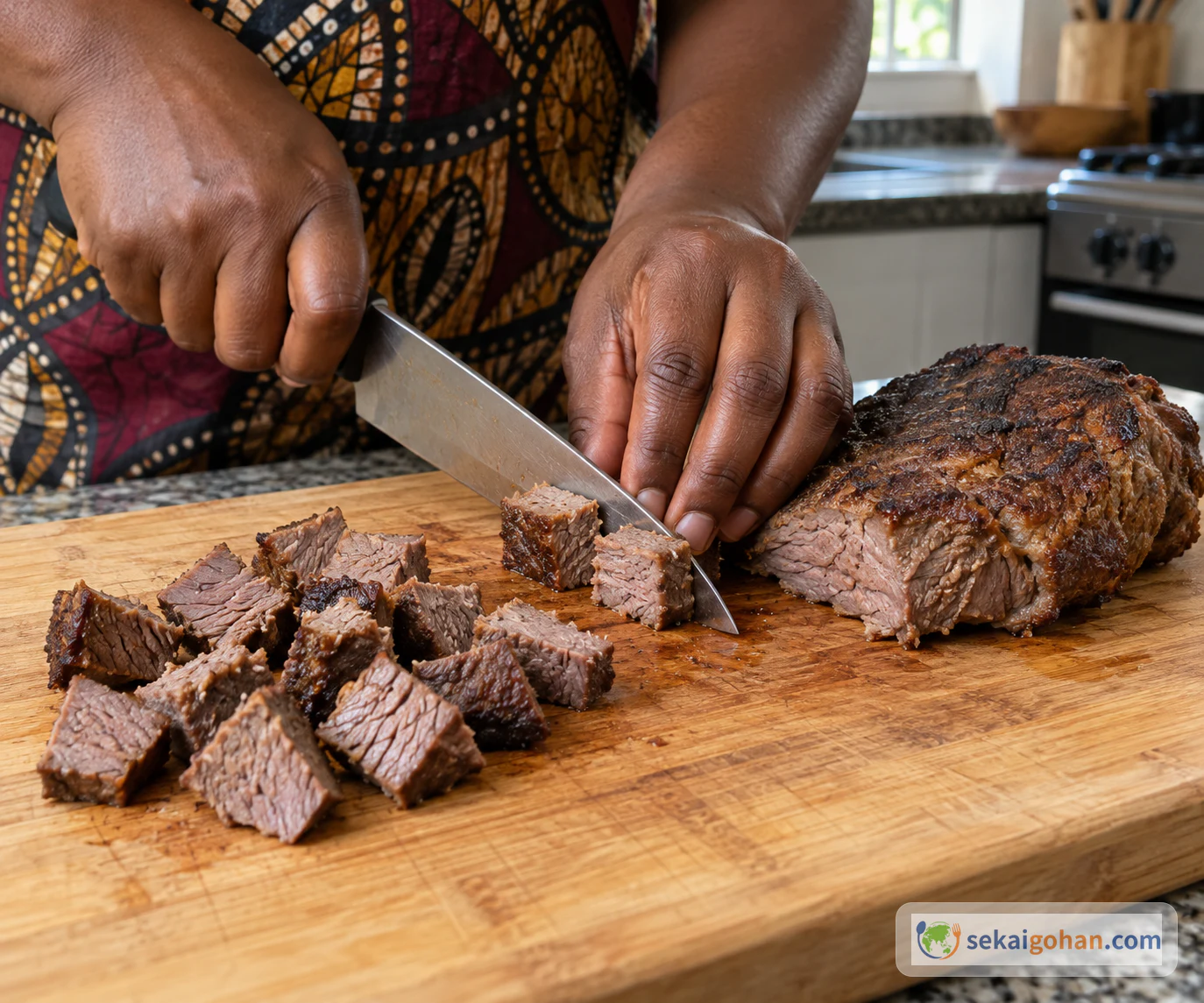
Cut the roasted beef into cubes

Roasted beef being cut into bite-size cubes on a cutting board
Bite-size cubes are an editorial example; the source does not set a size

Move the roasted beef to a clean cutting board and cut it into bite-size cubes, easy to eat from the parcel. Use a clean board and knife for this step, and keep them separate from anything that has touched raw meat.

STEP 33 / 7

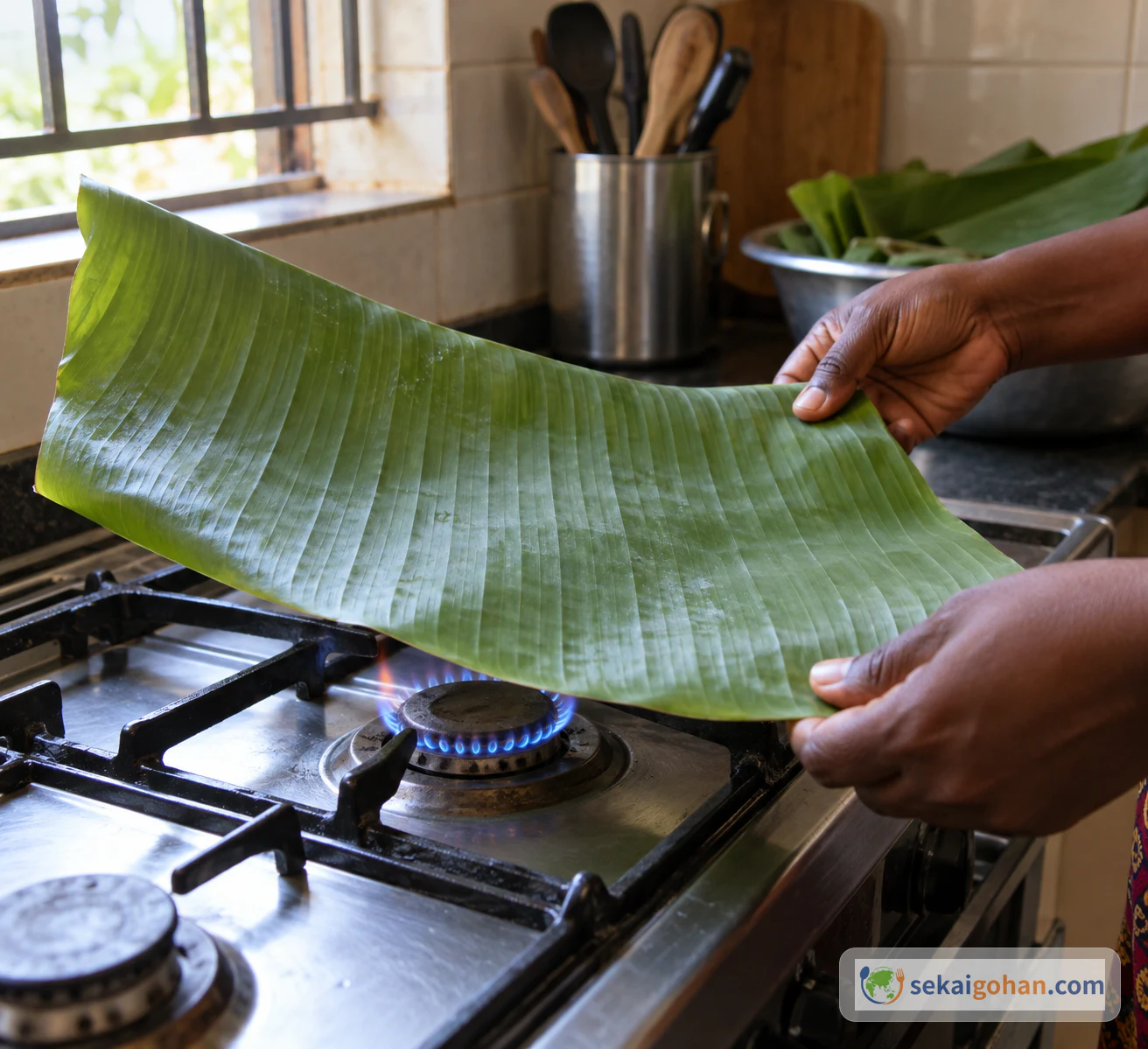
Soften the leaves over a flame

A young banana leaf with its stalk and midrib removed, passed over a low gas flame for a few seconds to soften without burning
Warm the leaf just until it bends; stop before it scorches

Cut away the leaf stalk and the thick central midrib from each banana leaf, and keep these pieces for step 5. Pass the leaf blade over an open flame for a few seconds until it turns supple. The goal is not to char the leaf. Softening it helps it fold without cracking.

STEP 44 / 7

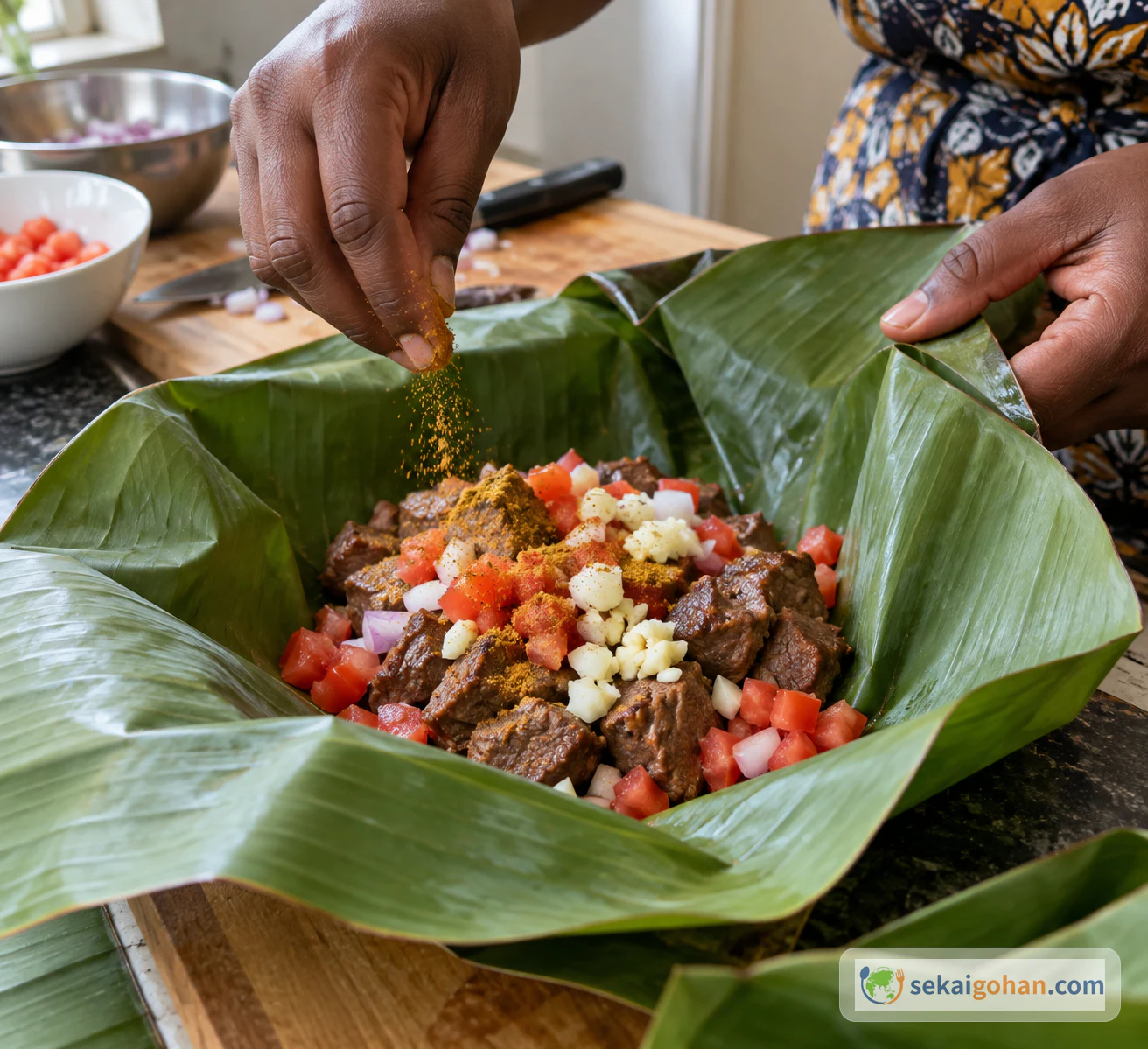
Fill and tie the parcels

Banana leaves shaped into a cup holding beef, finely chopped tomato, onion and garlic, and a modest amount of curry powder
Layer the leaves into a cup, then add the beef, vegetables, curry powder and a little salt

Layer the softened leaves in a bowl to form a cup. Add the cubed beef, then the finely chopped tomato, onion and garlic, then the curry powder, and finally a sparing amount of salt. Divide the filling among three parcels.

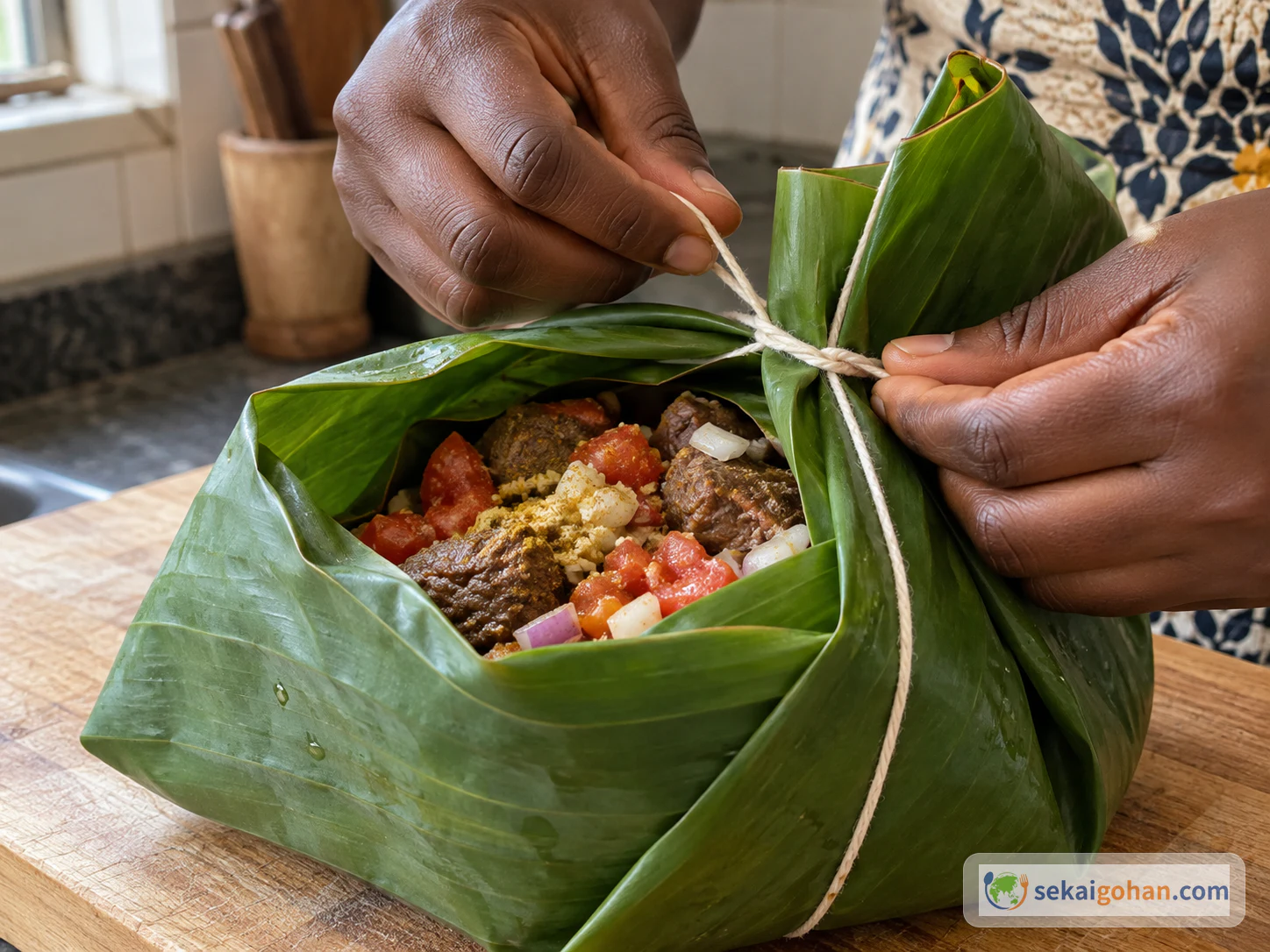
Gather the edges of the leaves up over the filling and tie them firmly with food-grade kitchen twine. The aim is a closed parcel that holds its juices.

The edges of the banana leaf gathered and tied with white food-grade kitchen twine to make a parcel that holds its juices
Tie the gathered leaf edges firmly so the juices stay inside
STEP 55 / 7

Set up the pot as a steamer

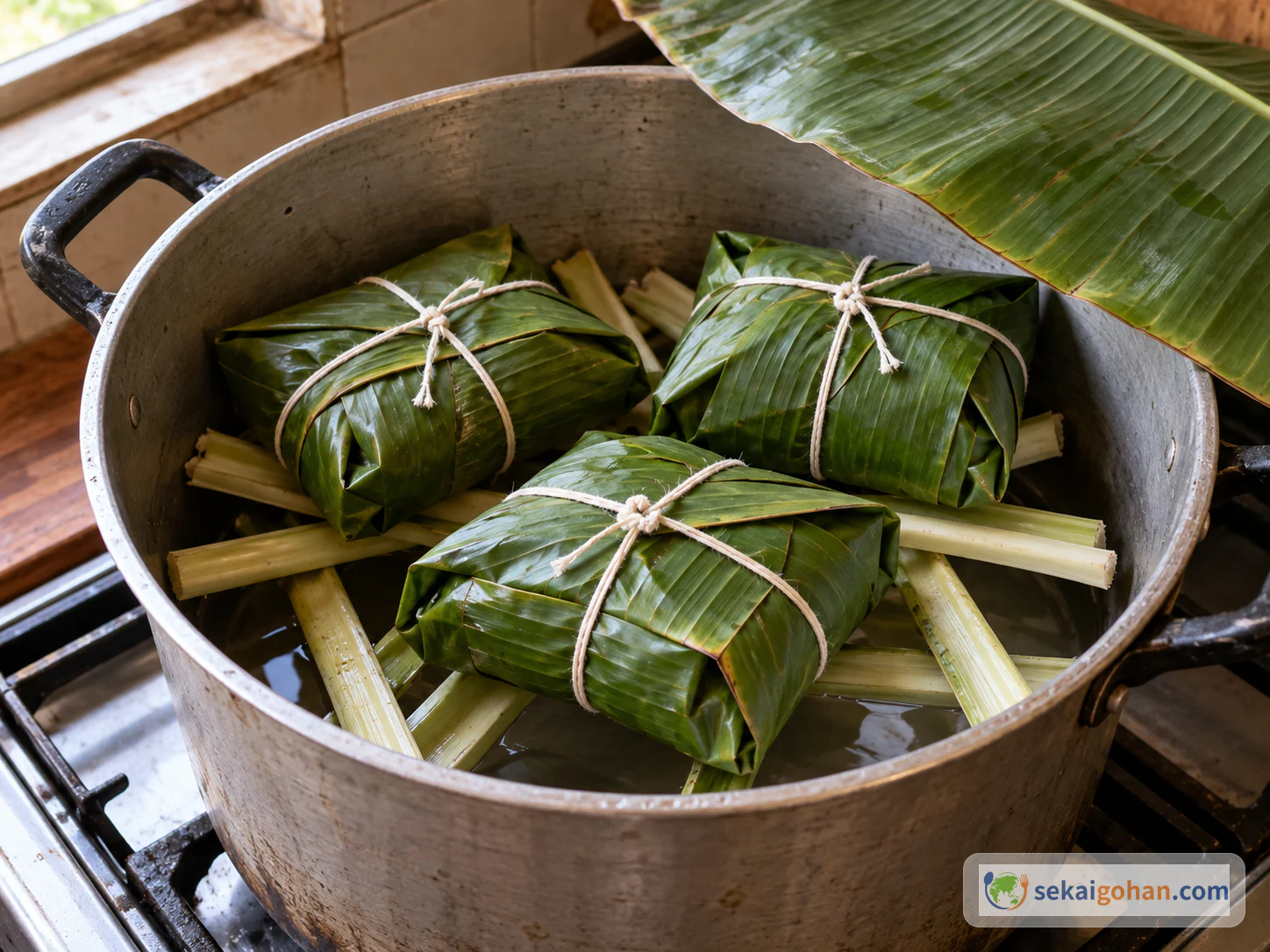
Three parcels tied with white twine resting on a crisscross platform of banana-leaf stalks and midribs, above the water in the pot
The leaf stalks become a platform that keeps the parcels above the water

Pour water into the bottom of a deep pot. Lay the leaf stalks and midribs you cut away in step 3 across the bottom as a platform, so the parcels sit clear of the water. A steaming rack does the same job. Place the parcels on top and make sure none of them touch the water. Cover them with fresh leaves, then put the lid on.

STEP 66 / 7

Steam for about an hour, then check the center

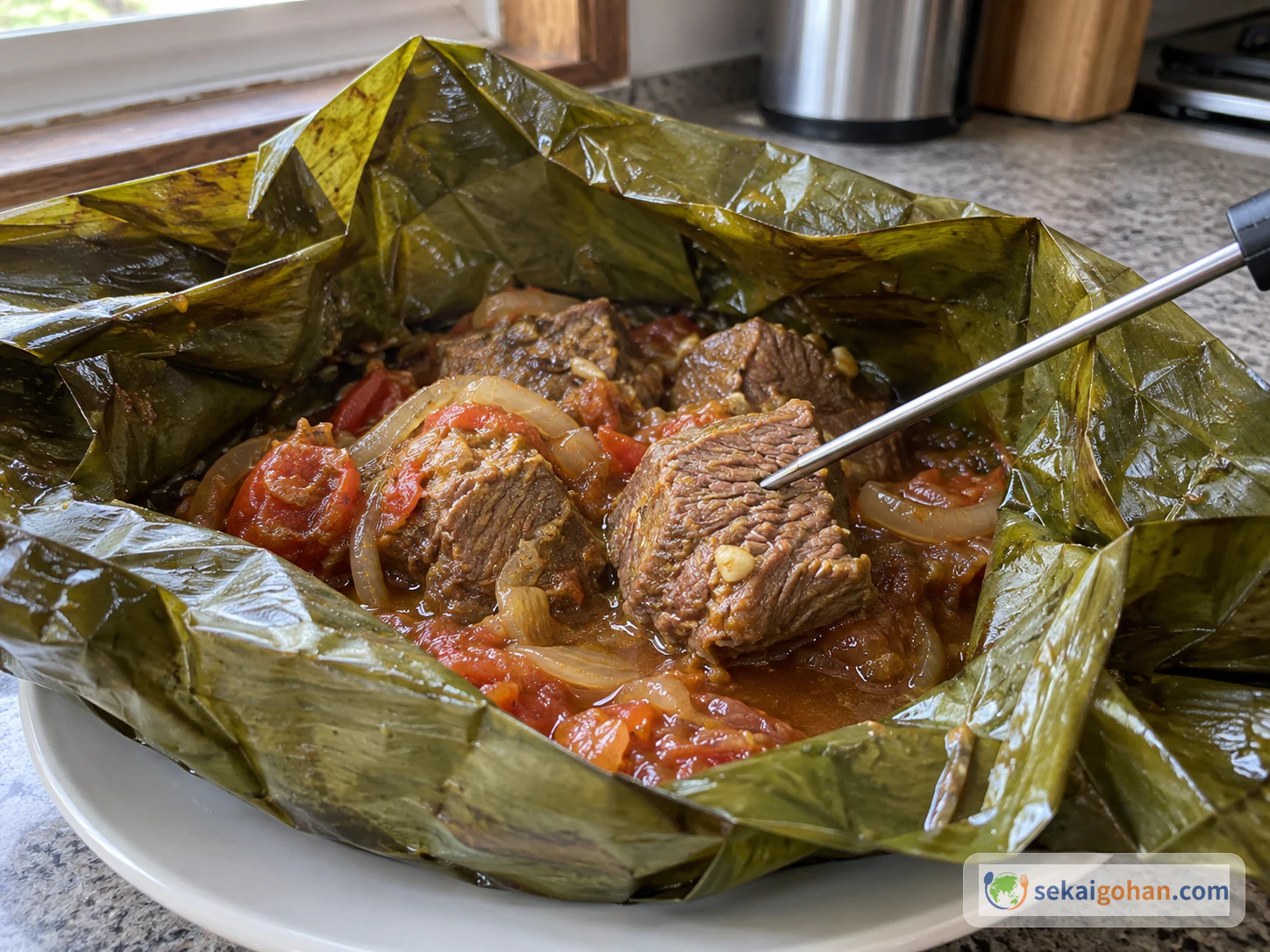
An opened parcel after about an hour of steaming, showing beef and vegetable juices, with a clean thermometer probe in the center of a piece of beef
Confirm the heat at the center of the beef with a thermometer, not by appearance or time alone

Steam for about an hour. During that time, check the water level and top it up as needed so the pot never boils dry. Do not add so much that the parcels sit in water.

At the end, open one parcel and push a clean thermometer into the center of a piece of beef. The center must reach 167°F (75°C) for at least 1 minute. Browning, the color of the juices, or the one-hour mark alone do not confirm this. If the beef has not reached that point, close the parcel again, keep steaming, and check again. A tougher cut also needs more time to turn tender. There is no fixed extra time, so keep checking.

Once heating is confirmed, taste the juices and adjust the salt if needed.

STEP 77 / 7

Serve in the leaf

STEP 7

Set each parcel on a plate and open it at the table. Serve cooked, unseasoned steamed sweet potato in a separate dish alongside.

0 / 0
Ingredients

Ingredients

1 / 1

Ingredients

Ingredient Amount Role
Beef 1 lb (500 g) The filling. Roasted until dry, then cubed
Young banana leaves as needed (enough for 3 parcels) The wrapper. How many you need depends on leaf size. Use food-grade leaves
Tomatoes 3 Finely chopped. They form the juices inside the parcel
Onion 1 Finely chopped
Garlic (garlic clove) 1 clove Finely chopped
Curry powder 2 tsp Seasoning, added with the vegetables
Salt to taste (editorial setting; not measured) Add sparingly when wrapping. Adjust if needed once heating is confirmed
Cooked, unseasoned steamed sweet potato as needed, served separately The staple served alongside
0 / 0

When you untie the string and fold back the banana leaf, the steam rises with it, and the juices of tomato and onion are pooled around the cubes of beef. Luwombo (also written Oluwombo) is a Buganda way of cooking: the filling is wrapped in banana leaves and steamed, so each parcel holds its own steam instead of simmering in a shared pot. In this beef version, the meat is roasted very dry and cubed, then wrapped with chopped tomato, onion, garlic and curry powder. As it steams, the vegetables give up their juices and the beef drinks them in. For more of the country's food, see the Uganda page.

What Beef Luwombo Is

Luwombo is a Buganda method of steaming food wrapped in leaves, and it is known across central Uganda. It is a technique rather than one fixed list of ingredients. The filling can be red or white meat, vegetables, groundnuts or mushrooms, and the parcels are served with matooke or other staples. Fillings vary from cook to cook, but smoked leaves, salt and water are the constants.

That smoky aroma matters. One cook lightly grills the meat and smokes Ndiizi banana leaves over a fire, and individual parcels are preferred over oversized packets. At home, keep to the shape of the dish: dry-roasted beef, a tied leaf parcel, and the steam kept inside it.

The best-known home version uses chicken and a rich peanut sauce, with different ingredients and a different method. For that one, see luwombo with chicken.

Names and spelling

You will see Luwombo, Oluwombo and Luwombo lwe Nyama, which is the beef version. The individual leaf parcels are called mpombo. Searching for these spellings alongside "beef luwombo" makes local recipes easier to find.

Ingredients (3 medium-size parcels)
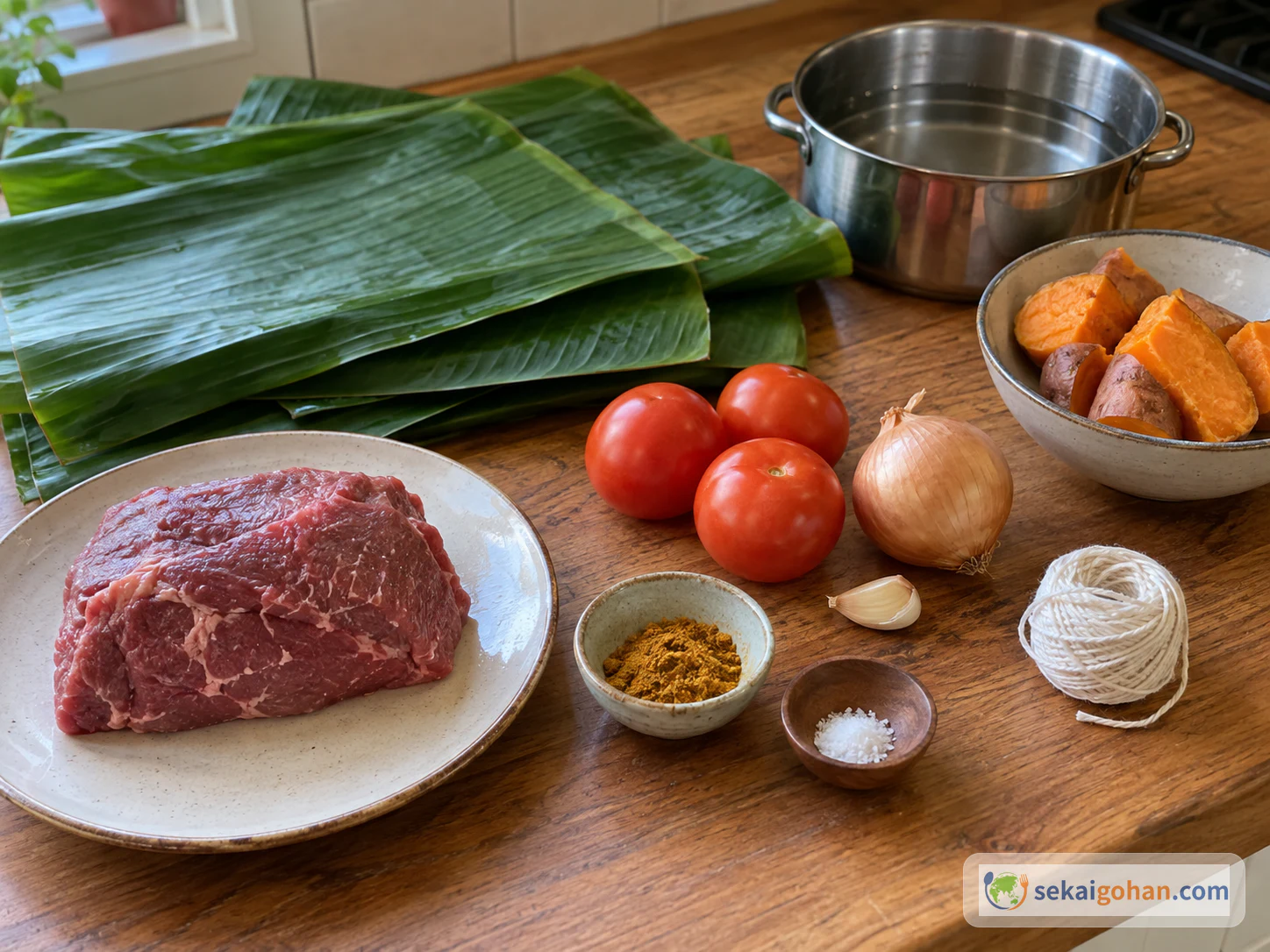
Beef, young banana leaves, three tomatoes, one onion, one garlic clove and curry powder set out separately, with no peanut paste or other vegetables
The adopted ingredients only: beef, leaves, tomato, onion, garlic, curry powder, and a modest pinch of salt

This makes 3 medium-size parcels (mpombo).

Equipment

  • A grill pan or grill rack for roasting the beef
  • A clean cutting board and knife
  • An open flame, such as a gas burner, for softening the leaves
  • A bowl to shape the leaves into a cup while filling
  • Food-grade cotton kitchen twine, used in place of banana fiber
  • A deep pot with a lid, plus a steaming rack if you prefer one to the leaf-stalk platform
  • Water for the bottom of the pot and for topping up, as needed
  • A clean food thermometer

Choosing Ingredients for Beef Luwombo

About the salt

Do not use 3.5 oz (100 g) of salt. Here, salt is "to taste": add it sparingly when you wrap the parcels. Adjust at the table only after the beef has been confirmed safely heated.

Beef. A stewing piece is a good choice. Tougher cuts take longer to steam, so allow for that.

Curry powder. Use 2 tsp, or adjust it to your taste.

Banana leaves. Outside Uganda, frozen banana leaves are the practical choice. Choose food-grade leaves, and thaw and prepare them according to the product's instructions. Tie the parcels with banana fiber or food-grade cotton kitchen twine.

Labels and allergens

Check the ingredient and allergen labeling on the beef you buy and on store-bought curry powder. Blends vary from product to product.

Method: Roast Dry, Wrap, Steam Above the Water

Before you start

The steaming time of about an hour is approximate. It is not proof that the beef is tender or safely cooked. Judge doneness by checking the center of the meat with a thermometer at step 6.

Beef Luwombo Troubleshooting

Problem Likely cause What to do
The leaf cracks while folding Not softened enough, or the stalk and midrib were left on Pass it over the flame for a few more seconds and remove the thick midrib. Layer a second leaf over any tear
Juices leak out Loose tie, or a split in the leaf Tie the gathered edges more firmly, and layer the leaves in the bowl before filling
A parcel is sitting in water Too much water, or the platform is too low Lift the parcel back onto the stalks or rack and pour off the excess water
The pot is close to boiling dry Water was not topped up during the hour Add water as needed, staying below the platform
The beef has not reached temperature, or is still tough Thick or tough cut, large parcel Rewrap and keep steaming, checking again with the thermometer. There is no fixed extra time
The flavor is flat Salt was kept deliberately light Once heating is confirmed, add salt a little at a time

Serving and Varying Beef Luwombo

Beef luwombo served in its opened leaf on a plate, with steamed sweet potato on the side
Serve the parcel in its leaf, with plain steamed sweet potato in a separate dish

Bring the parcels to the table and open them on the plate, with the staple served separately. This recipe pairs the beef with plain steamed sweet potato, but steamed green bananas, cassava and yam suit it just as well. For green bananas, see matooke.

The same leaf-and-steam method works with other fillings, such as white meat, vegetables, groundnuts or mushrooms, though each is its own recipe with its own balance. If you want the peanut-sauce version, go to luwombo with chicken.

Frequently Asked Questions

How is this different from chicken luwombo?

Here the beef is roasted dry, cubed and steamed with tomato, onion, garlic and curry powder, and there is no peanut sauce. The chicken version is a home recipe built around chicken and a peanut sauce.

What can I use instead of banana leaves?

Frozen, food-grade banana leaves are the practical choice outside Uganda. Any other wrapper changes both the aroma and the way the parcel folds and holds its juices.

Is one hour of steaming always enough?

Not always. The hour is approximate and guarantees neither tenderness nor safe heating. Check the center of the beef with a clean thermometer, aiming for 167°F (75°C) for at least 1 minute, and keep steaming if it is not there yet.

How do I handle leftovers?

Divide leftovers into shallow containers, cool them quickly, and refrigerate them. Reheat until the food reaches about 167°F (75°C) or above.

Sources