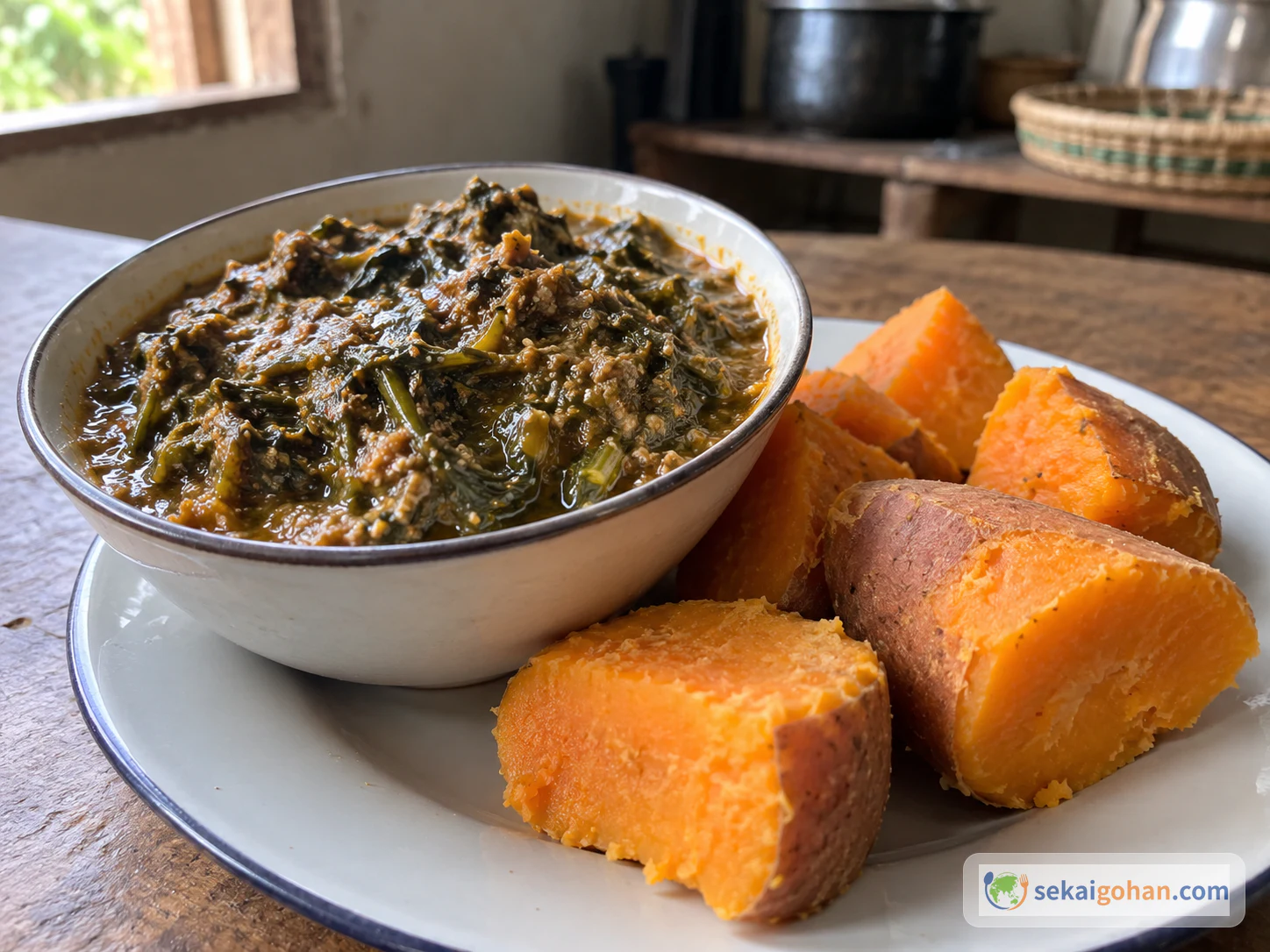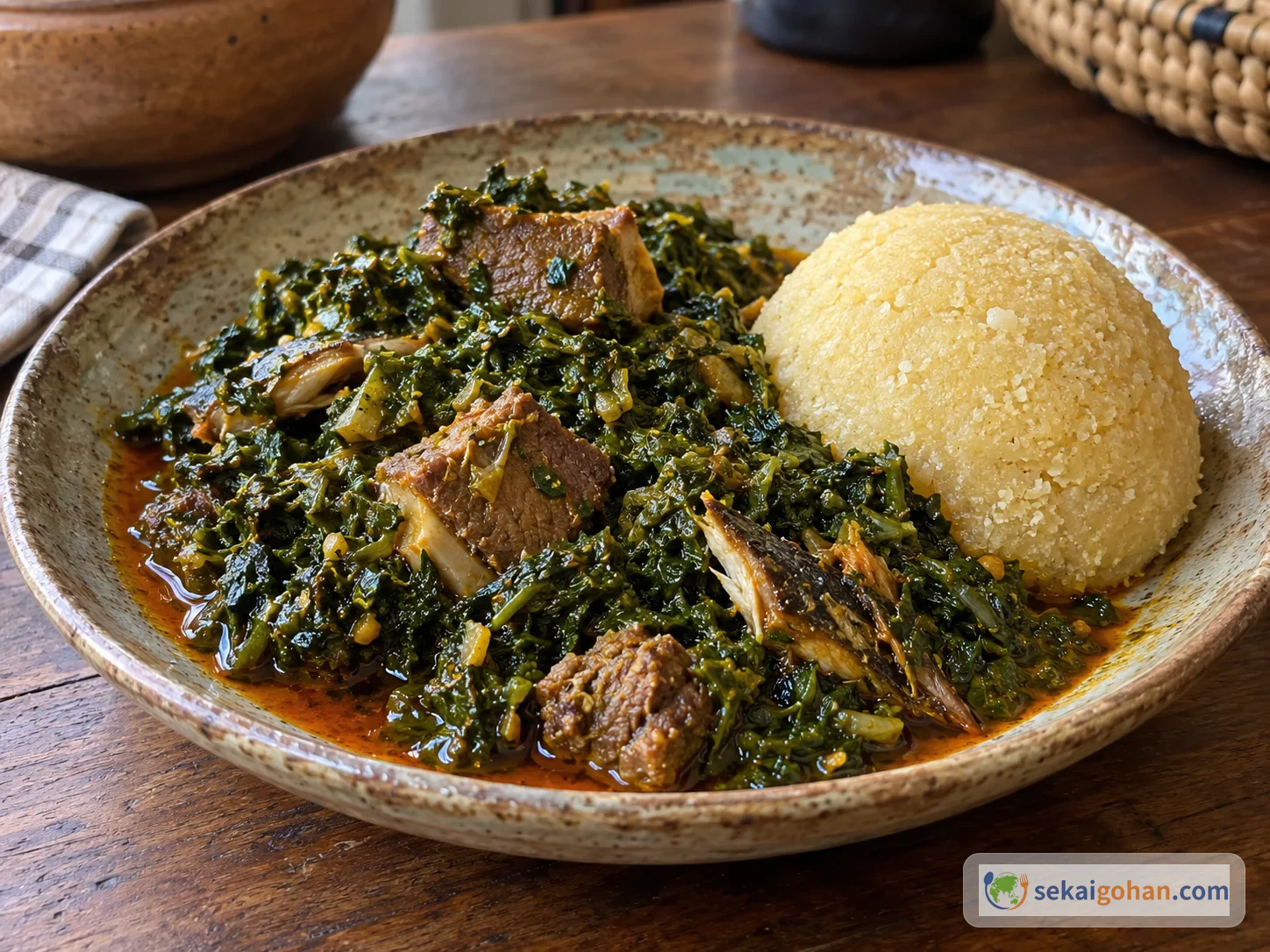
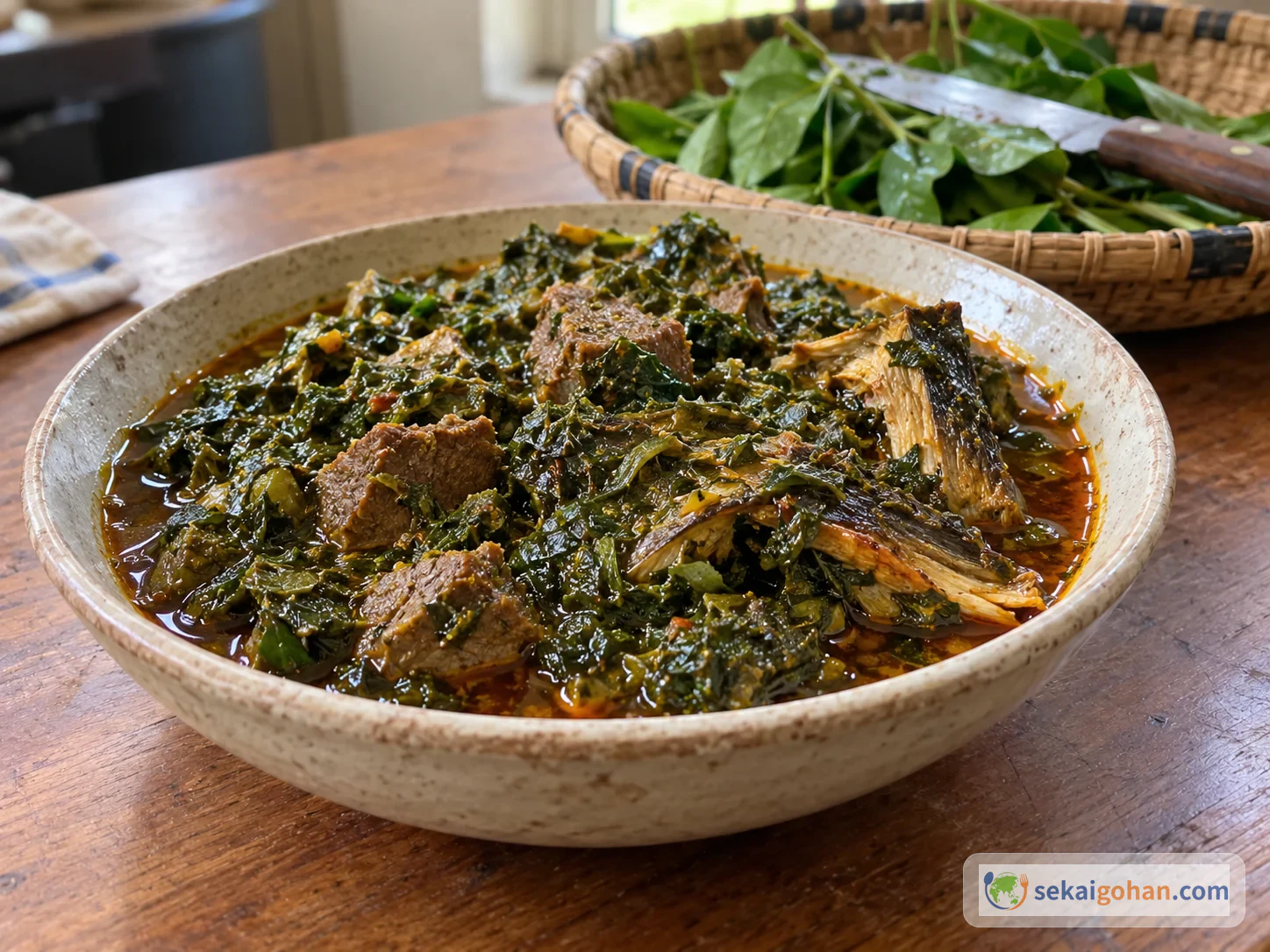
Steam rises from the pot, carrying the green scent of shredded leaves. Red palm oil shines on the surface, and underneath, a stock of meat, dried fish and dried crayfish has cooked down thick. This is afang soup, tied to the Efik people and to Nigeria's Akwa Ibom and Cross River states. It's built on afang (okazi) leaves and waterleaf, red palm oil, and layers of meat, dried fish and dried crayfish. Its depth comes from the way a deep, red-oil broth takes up the aroma of the leaves.

About Afang Soup and the Afang Leaf
The names can be confusing when you search. The plant Gnetum africanum is called okazi or ukazi in Igbo-speaking areas and afang among the Efik, so afang and okazi are both names of the leaf. The dishes differ, though. The okazi soup of Imo and Abia states adds thinly sliced okazi to egusi soup, while southern Nigerian afang soup makes the leaves the star.
Gnetum africanum is a wild evergreen climber that grows in Nigeria's tropical rainforest. Cooks shred the leaves finely and add them to soups and stews. The name shifts with the border: afang and ukasi in Nigeria, eru and okoko in Cameroon, and koko in the Central African Republic, Gabon and the Democratic Republic of the Congo. The leaves are traded in local markets across West and Central Africa, and they support people who depend on the forest.
Ingredients (serves 4): Leaves as the Star, a Small Amount of Broth
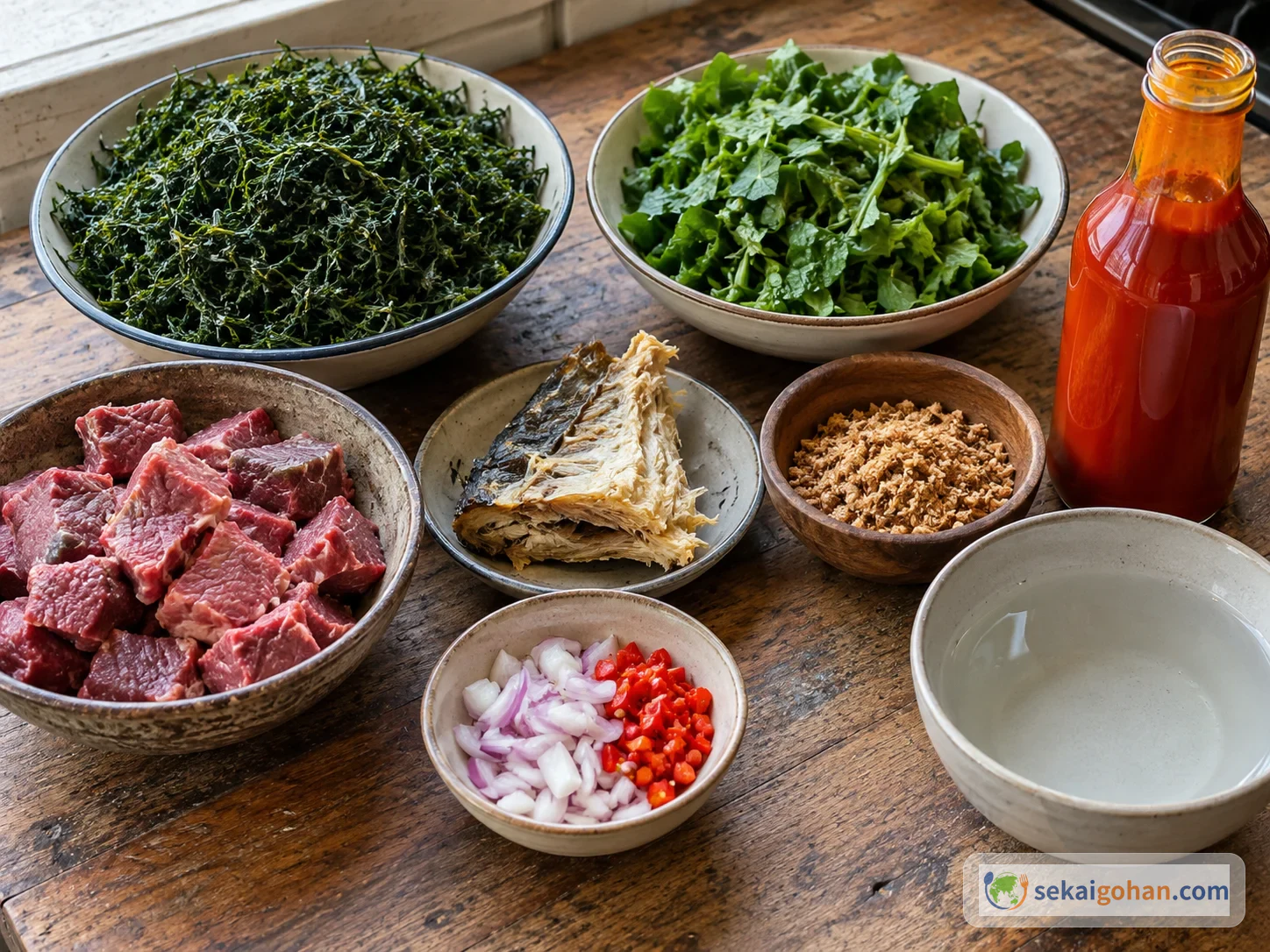
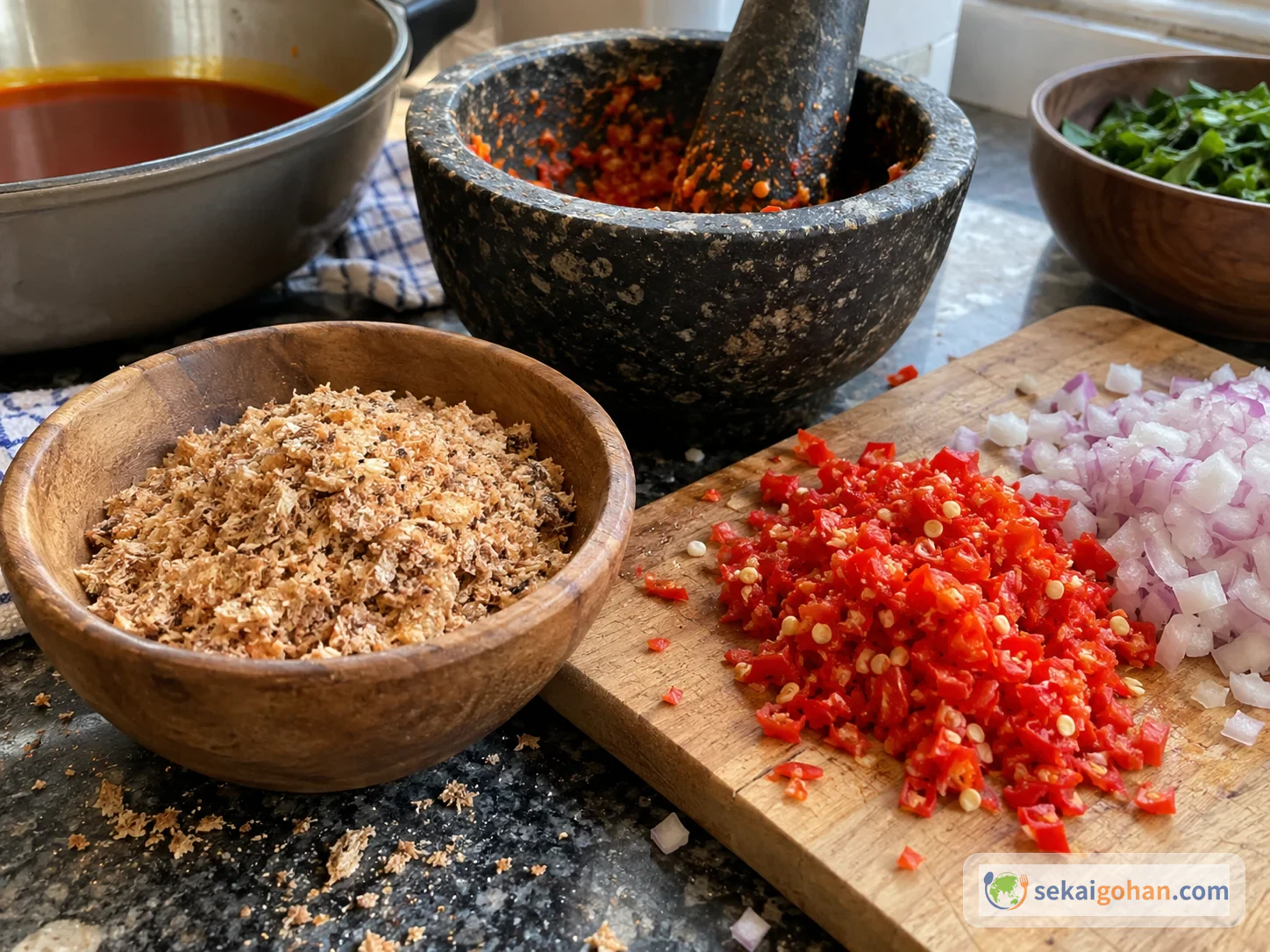
This recipe starts from 14 oz (400g) afang/okazi leaves, 9 oz (250g) waterleaf, 20 to 25 cl red palm oil and 2 tbsp dried crayfish, plus meat, kanda, dried fish, salt, chili and a stock cube. The standard version lists okazi, ugu, waterleaf, Cameroon pepper, stockfish, crayfish, red palm oil, beef, periwinkle, onion and ogiri. The recipe below combines the two into amounts for four. Secure 14 oz (400g) of leaves first. Don't add much water at the start. Adjust to an amount where the bottom of the pot doesn't dry out, even after the leaves wilt.
This recipe uses fish, shrimp, sea snails and beef. If you have a crustacean, seafood or beef allergy, check the allergen information on the labels. Don't use the same knives and cutting boards for raw meat and seafood and for cooked food. Cook until the center of the food reaches 75°C (167°F) for at least 1 minute. When serving children, older people or anyone not feeling well, remove small bones and shell fragments and make sure it is thoroughly cooked.
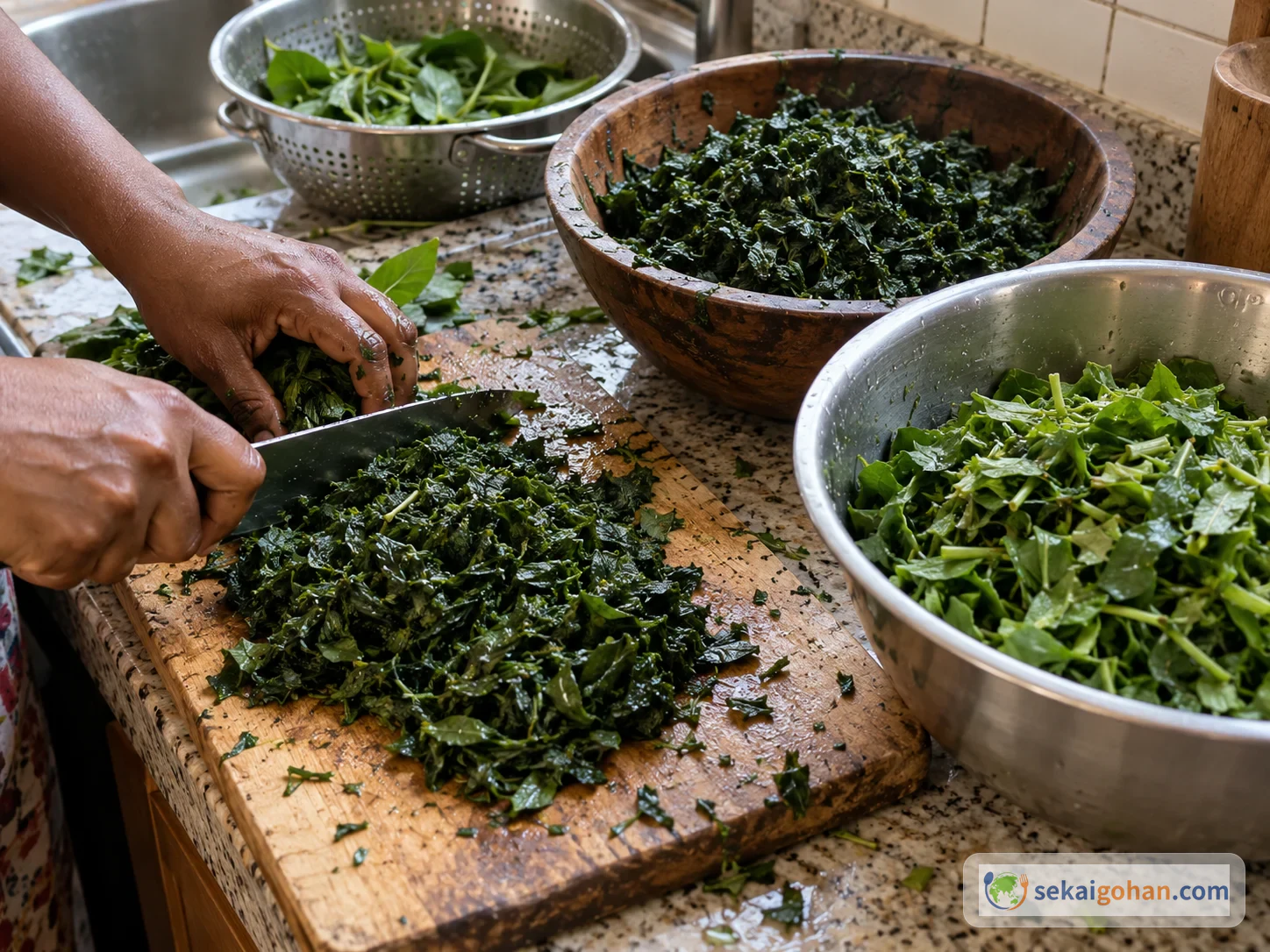
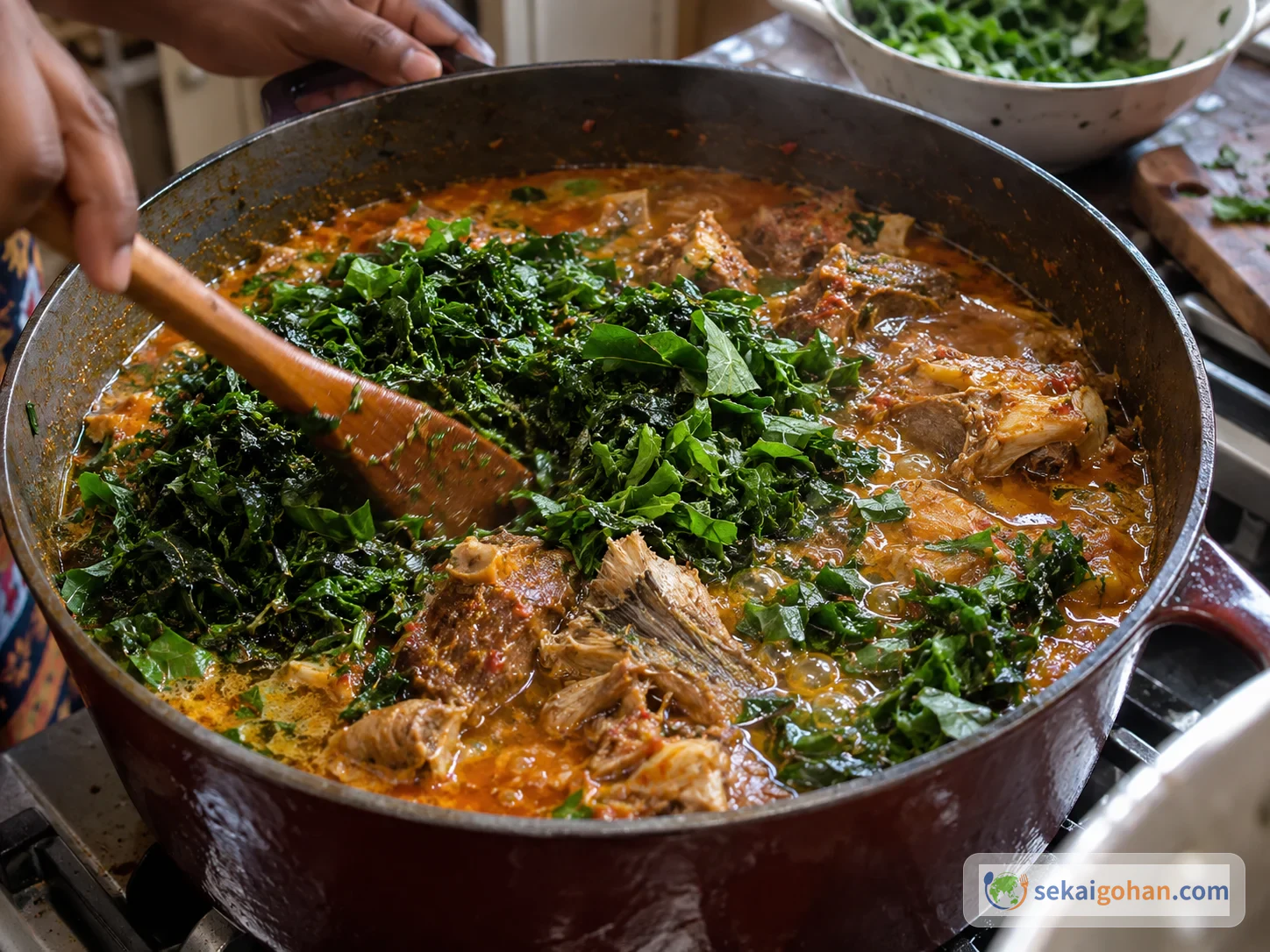
Shred fresh okazi (afang) finely, or blend it with a small amount of water. Rehydrate dried leaves as the label says, and don't use the soaking liquid as the pot's water. Aim for leaves that keep their fibers and cling to the wooden spoon as fine ribbons, not a paste. Make it fine, but not a complete paste.
Choosing Ingredients and Substitutes for Afang Soup
Afang leaves
The afang (okazi) leaf is the heart of this dish, so look for it first. Red palm oil alone doesn't make afang soup. Dried leaves are the easiest to find, and the bag will give the rehydration instructions and net contents. Harvesting by pulling the plant up by the roots damages its regeneration, so read the label and choose accordingly.
Search by the leaf name, not the dish name: Afang, Okazi, Ukazi or Gnetum africanum, or eru and okoko for Cameroonian products. Check the origin and net contents on the label before you buy.
Red palm oil
Red palm oil gives the soup its color and earthy aroma. When you buy, check for an edible label, and look at the capacity, ingredient list, storage method, price and stock.
It's worth buying if you plan to keep cooking West African palm oil dishes like egusi and banga, or if the color and aroma of the plate matter most to you. If you won't use up the bottle, or you dislike the aroma of red oil, pass. Rice bran oil and similar oils can't reproduce that color and aroma, and the less red oil you use, the more the local character fades. If you're happy to call the result a different leafy-green stew, that's a fair choice too.
Seafood and substitutes
Choose dried crayfish, stockfish, shrimp and periwinkles to suit your family's allergies and what you can easily buy; there's no need to collect everything. What you change is the periphery; what you keep are the leaves and the oil. Swap out the afang/okazi leaves or the red palm oil and you have a different leafy-green stew.
For waterleaf, lamb's lettuce is a good substitute, and spinach works if that's hard to find, though moisture, stickiness and aroma will shift. Periwinkle, kanda and ogiri can be left out, at some cost to texture, aroma and saltiness. Cameroon pepper is very hot at the standard amount, so start with 2 to 5g chili and add more later.
| What to change | Closer to authentic | A realistic choice elsewhere | What changes |
|---|---|---|---|
| Waterleaf | 9 oz (250g) waterleaf | 9 oz (250g) lamb's lettuce, or 9 oz (250g) spinach | Moisture, stickiness, green aroma |
| Form of the afang | Fresh leaves, shredded | Dried afang/okazi rehydrated as labeled | Firmness depends on rehydration. Follow the bag |
| Seafood savoriness | Stockfish, dried fish, crayfish | 2.5 oz (70g) hard dried fish and 2 tbsp dried shrimp | Strength of aroma and saltiness. Check the small bones |
| Shellfish texture | 2.75 oz (80g) periwinkle | Omit | The mouthfeel gets lighter. Leave it out if you have a shellfish allergy |
| Fermented aroma | 15g ogiri | Omit | Less depth of aroma. The pot works fine without it the first time |
| Staple | Eba, semolina fufu, cassava fufu, amala, yam | White rice, mixed-grain rice | The texture and way of scooping change |
Method: Watch the Fineness of the Leaves and How the Broth Reduces
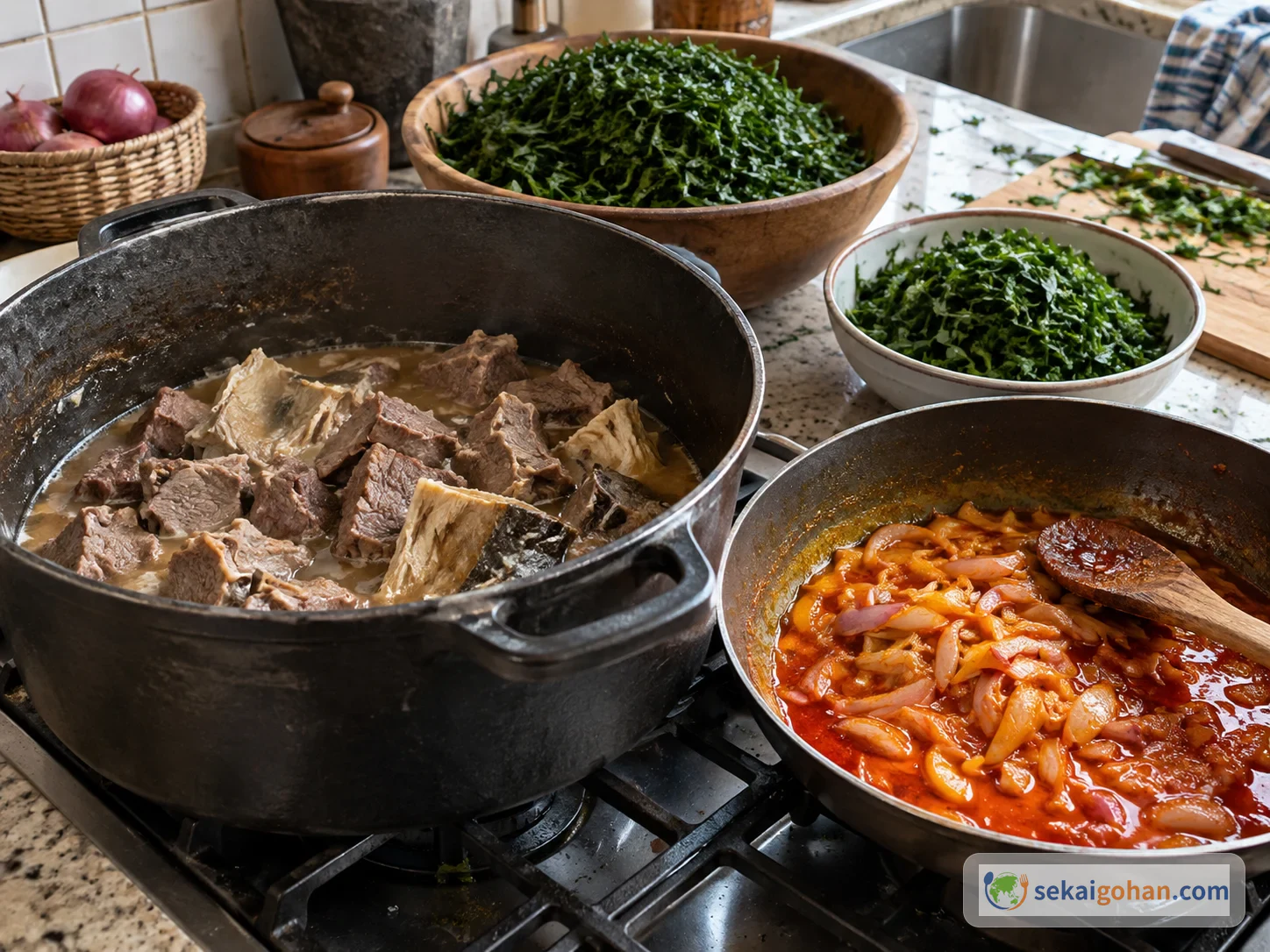
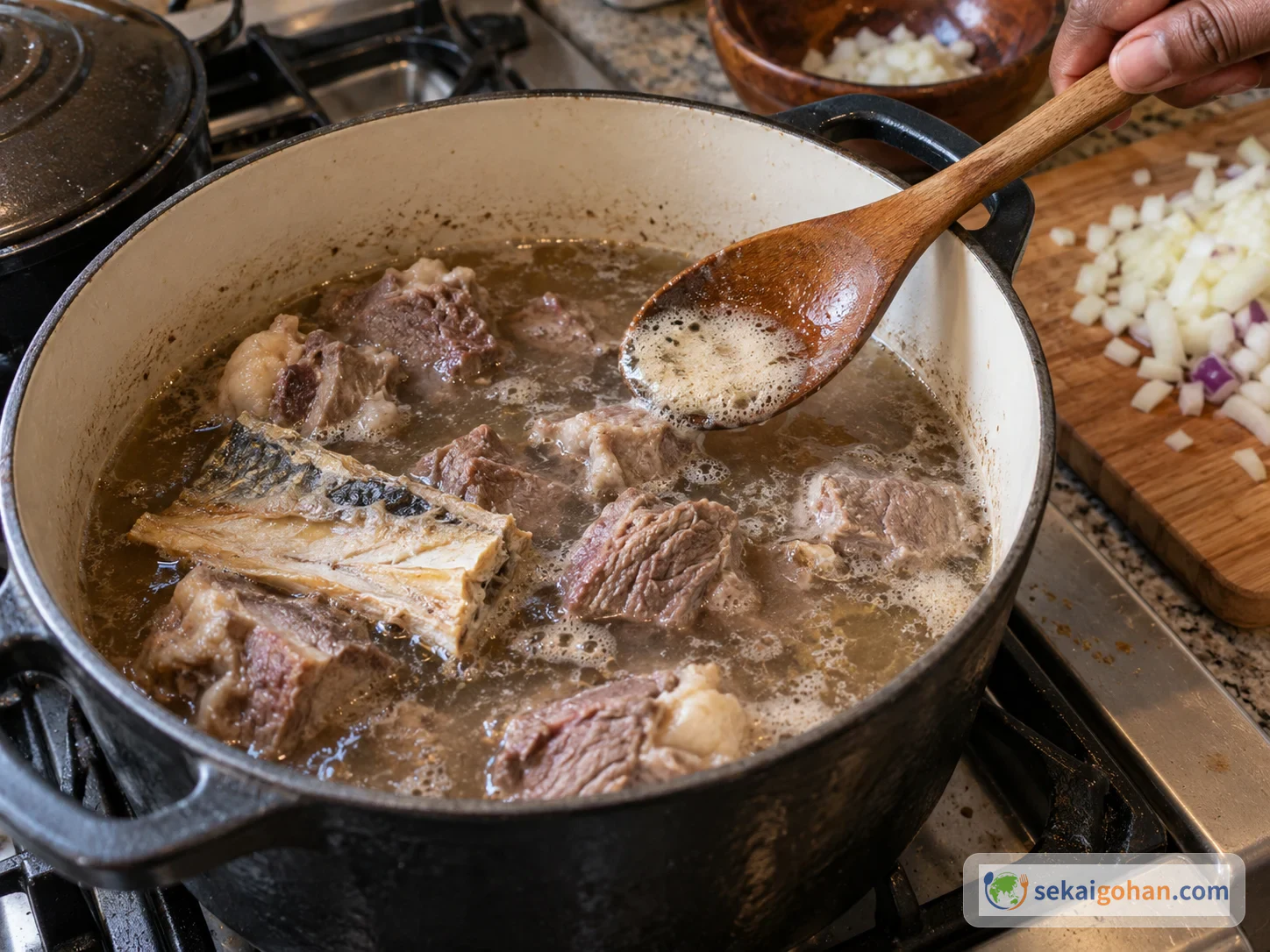
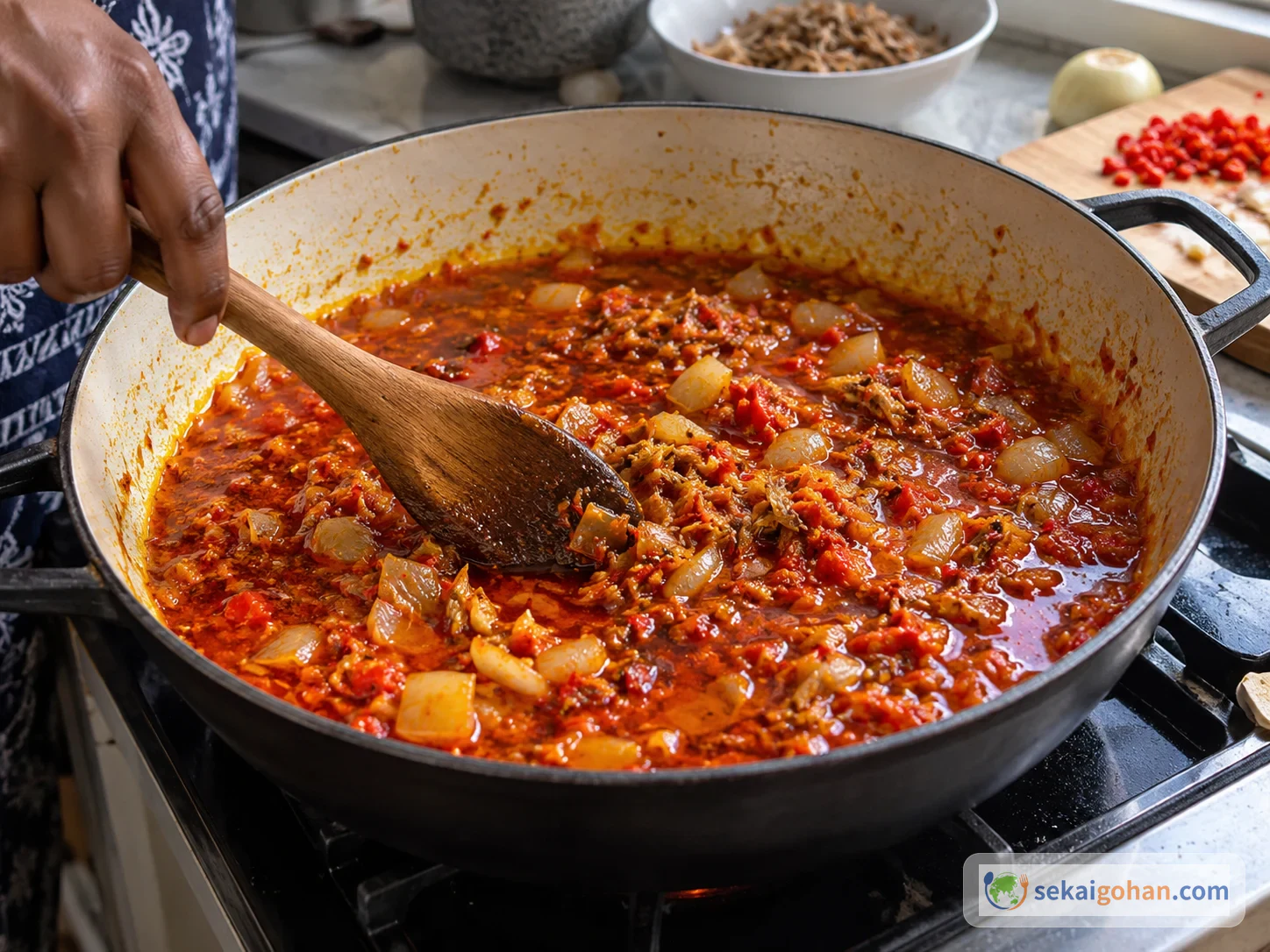
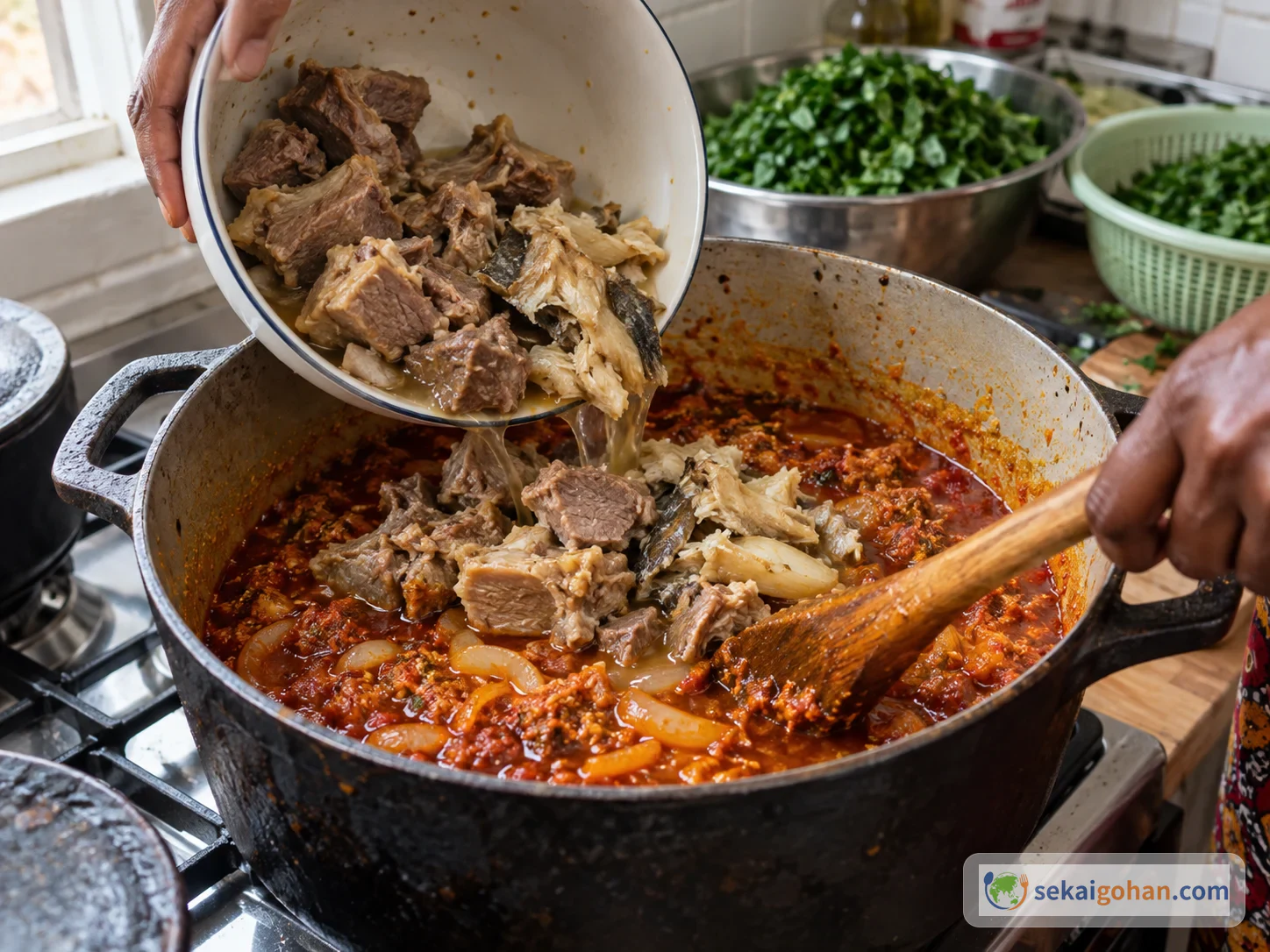
The local recipe goes like this: simmer beef and kanda in a small amount of water, add dried fish, add red palm oil, dried crayfish and chili, then add the leaves and periwinkles once it boils, adjust the salt and simmer about 5 minutes. The steps below split this into four stages to make it easy in an ordinary pot: pre-simmering, aromatic oil, seafood and leaves. Judge the heat by the fineness of the bubbles, the aroma, the color of the leaves, the trail of the wooden spoon and how much broth remains, not only by thermometer readings. Don't rush on high heat, and let the leaves stand up at the end.
Fixing Common Afang Soup Problems
If the pot seems off, look at it and trace the cause. Scorching happens when the red palm oil is heated until it smokes, or when moisture is driven off over high heat after the leaves go in. A watery broth comes from the moisture in waterleaf or spinach, and hard leaves mean the afang was cut thick or the dried leaves weren't rehydrated enough. Heavy oil means too much red palm oil for too little broth.
A fishy aroma that's too strong comes from stacking up dried fish, stockfish and dried shrimp. Don't try to hide it with aromatics; next time, halve the seafood and keep the meat stock and leaves the same. If the taste is thin, reduce the broth first, then add salt 1/4 tsp at a time. Remember: don't stir a scorched bottom, and take off the lid when the broth is thin, and you won't panic.
| Condition | How to tell | How to fix it |
|---|---|---|
| The bottom of the pot scorched | A bitter smell, a black film on the bottom | Move only the upper part to another pot and restore the thickness with 3.5 tbsp (50ml) boiling water. Don't scrape the bottom |
| The broth is watery | The trail of the wooden spoon disappears at once | Take off the lid and cook 3 to 5 minutes over medium-low heat. Stop before the leaves fall apart |
| The leaves are hard | The afang fibers are hard to bite through | Add 3.5 tbsp (50ml) boiling water and check at 2-minute intervals over low heat |
| Oil floats on the surface | A thick layer of red oil remains | Add boiling water 1 tbsp at a time and stir, slightly increasing the broth |
| The seafood aroma is strong | Only the aroma of dried fish stands out | Add no more seafood, and adjust with a little hot water while keeping the leaves and beef |
| Too salty | The dried fish, dried shrimp and cube stacked up | Add a little unsalted broth, and if you can add leaves, disperse the salt with shredded leaves |
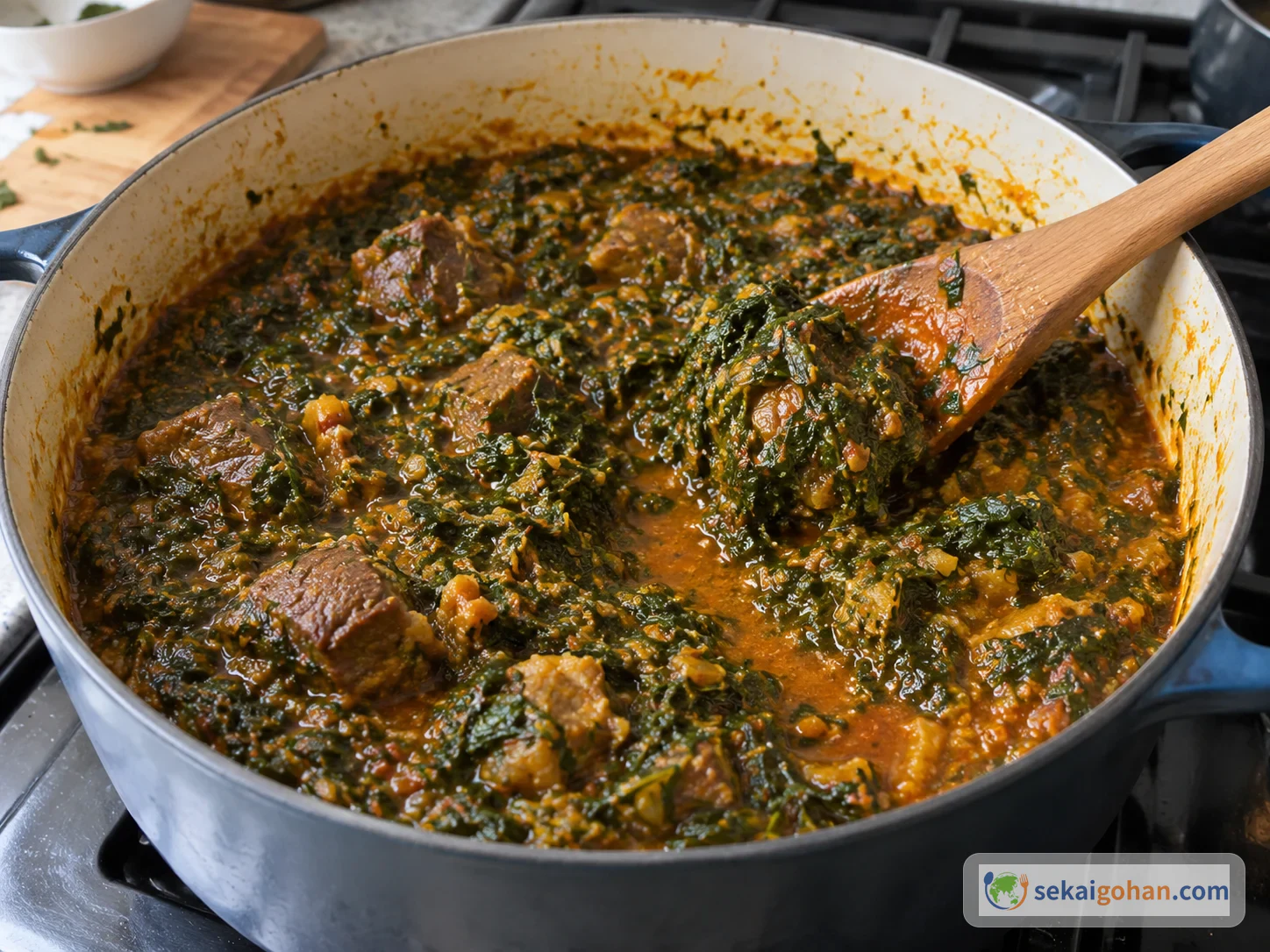
Judge when to turn off the heat by color, thickness and aroma. The red-orange oil and deep green leaves should still be bright, not darkened. The broth shouldn't run off the spoon like water; it should make a short ribbon as it falls back into the pot. And the green aroma of the leaves should come through, rather than the palm oil or dried fish on their own. If one of these is off, don't extend the simmer: the longer it cooks, the more the color and aroma of the leaves fade.
Serving Afang Soup with Staples
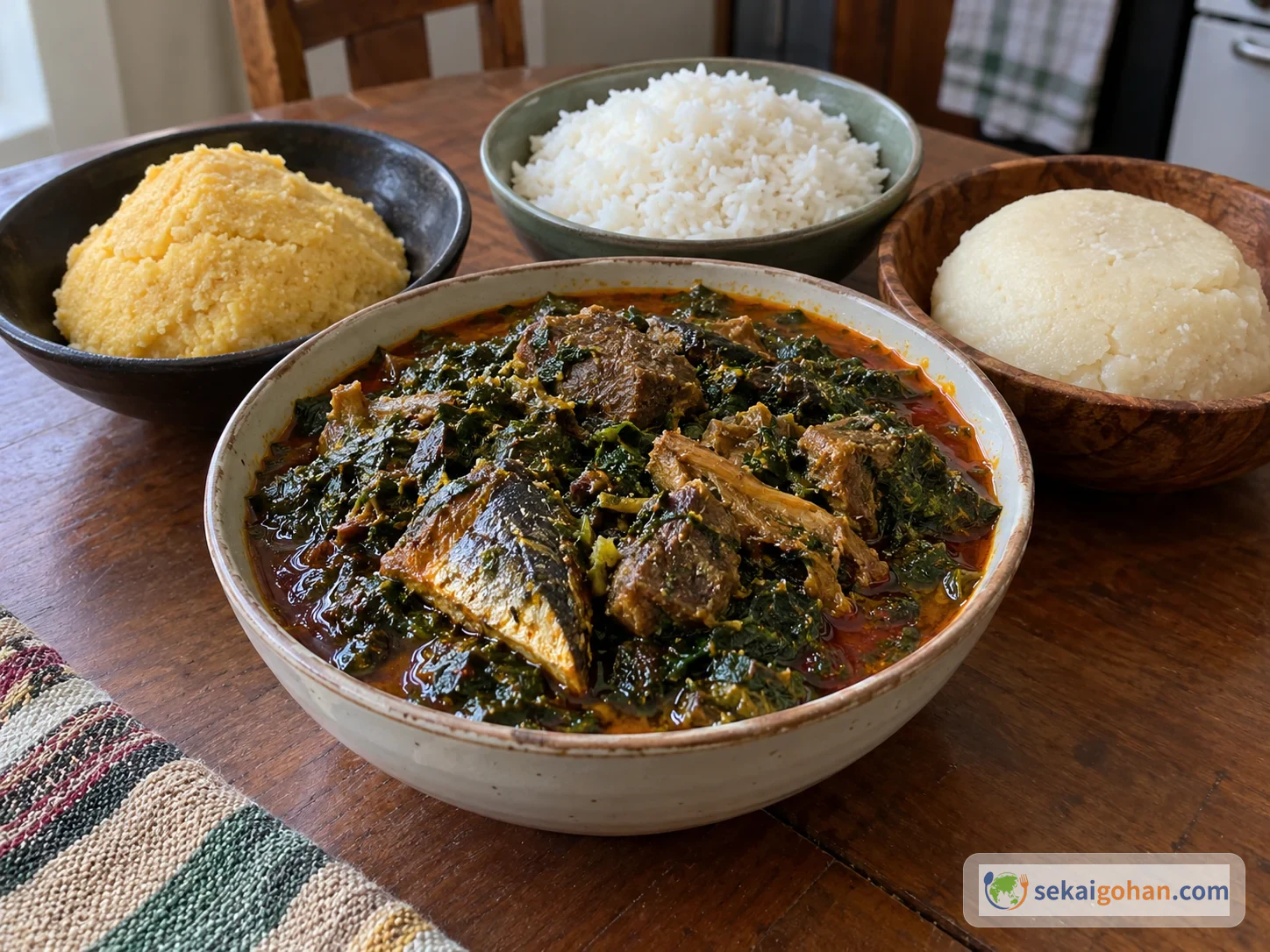
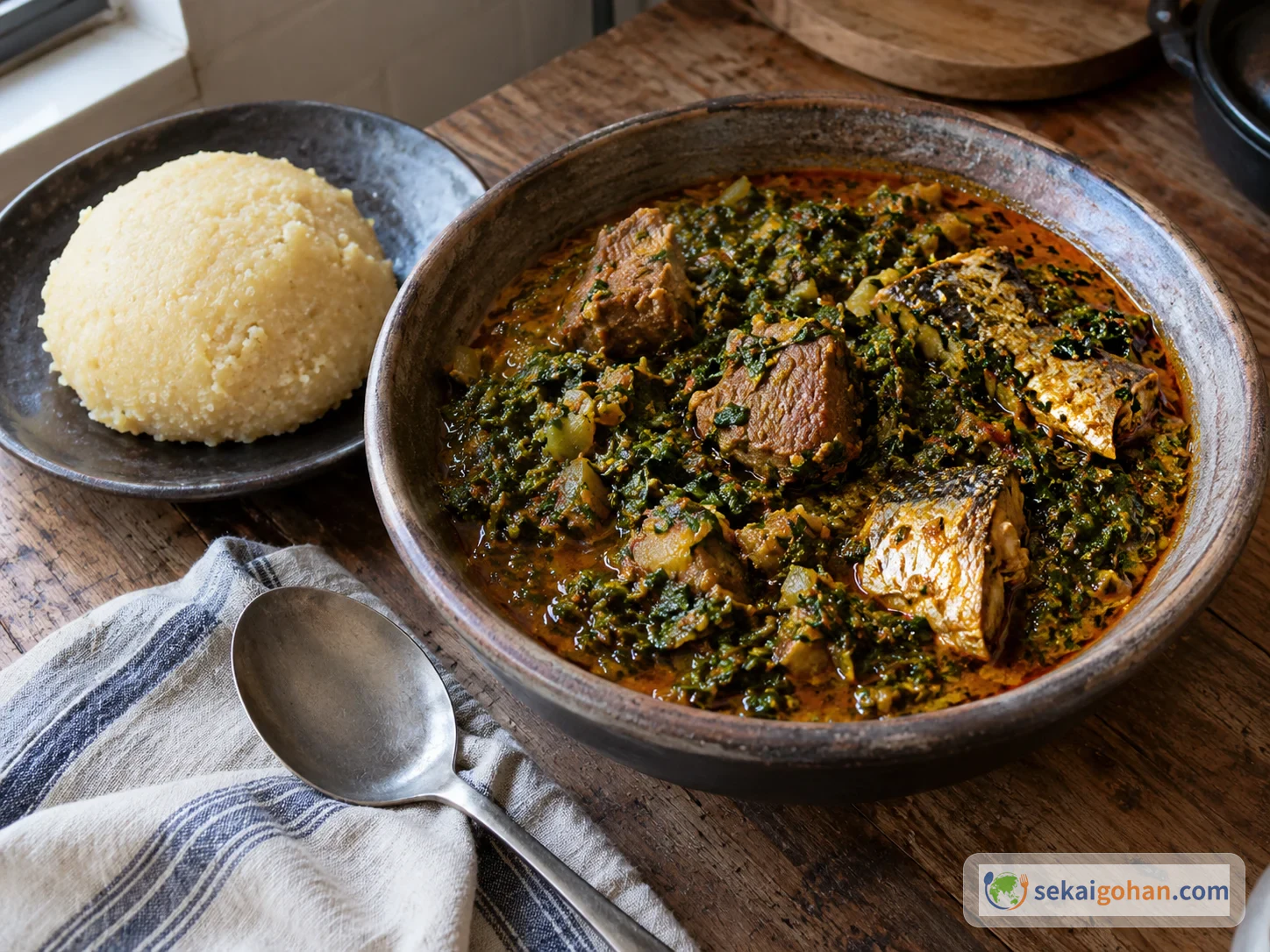
At a southern Nigerian table, soup always comes with a staple. Cassava flour, rice, cocoyam, potato, yam and plantain all appear alongside soups and stews, and afang soup is eaten with garri (eba), semolina fufu, amala, cassava fufu and pounded yam. The staple is what takes up the thick broth, so afang is completed not as a soup alone but together with the staple, and that tells you how thick the pot should be.
Eba or fufu is closest to the local style. Plain white rice works well for a weeknight, when you'd rather not gather eba or fufu. Either way, aim for a thickness you can scoop up.
The nutrition values for this recipe are the batch for four divided into four equal portions. They change with the product, the amount of oil, the cut of beef, the staple and the salt.
To see how afang compares with its neighbors, these are good next reads:
- Egusi soup: another dish that uses okazi, thickened with seeds
- Banga soup: another southern Nigerian palm oil soup
- Fufu: the texture and method of the staple that scoops up thick soup
Storage and Frequently Asked Questions
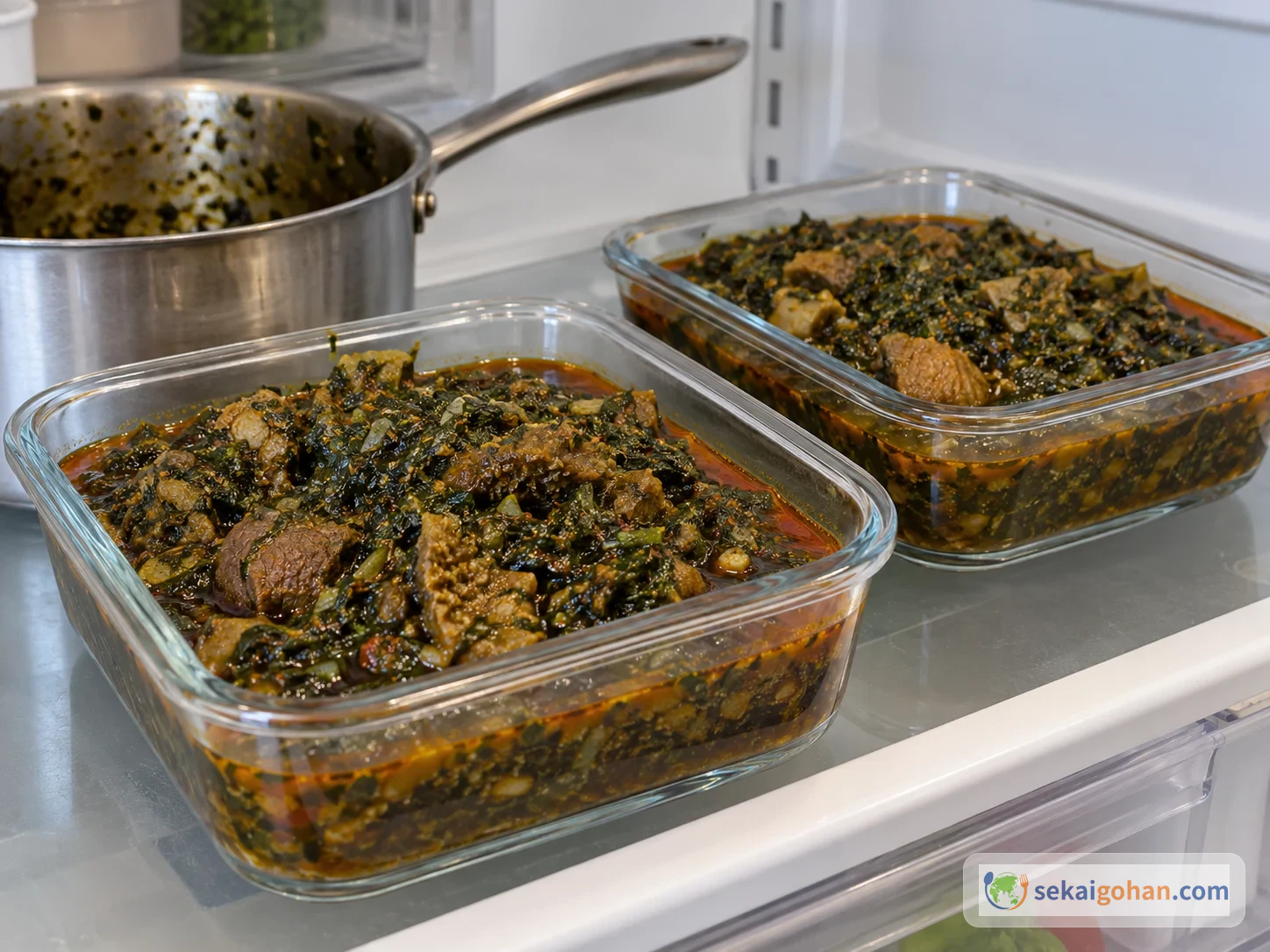
How do I refrigerate and reheat it?
Once the heat is off, divide the soup into shallow containers and refrigerate it rather than leaving it at room temperature or in the pot. How long it keeps depends on how quickly it cooled, so follow the product labels, and if the smell or appearance is off, throw it out without tasting. The broth thickens overnight. Warm it over low heat, adding 1 to 2 tbsp boiling water at a time and stirring, and reheat thoroughly to at least 167°F (75°C) at the center.
Is the dried afang/okazi the same amount as fresh leaves?
Don't convert 14 oz (400g) of fresh leaves to a dried weight. Follow the rehydration method and time on the bag, check the firmness, and rehydrate longer if the leaves are still hard. Discard the soaking liquid rather than using it as the pot's water.
Can I substitute spinach alone for waterleaf?
Yes, though lamb's lettuce is the closer match. Spinach carries more moisture and less stickiness than waterleaf, so add the 1¾ cups (400ml) of water gradually while watching the pot. As long as the afang/okazi leaves and red palm oil stay, the dish keeps its backbone.
What if I can't find periwinkles?
Leave them out. You lose the shellfish texture, but the pot still works with leaves, meat, seafood stock and red palm oil. Skip them entirely if anyone has a sea snail or crustacean allergy. Check for shell fragments and small bones, and remove them when serving children and older people.
Can I make it with the red palm oil cut to ½ cup (150ml)?
You can, but that's below the local recipe's 20 to 25 cl, so the color, aroma and cohesion of the broth weaken. Switching to a neutral oil such as rice bran oil gives you a different dish, a leafy-green stew with afang. If you'll cook several West African dishes, a small bottle of red palm oil is worth buying.