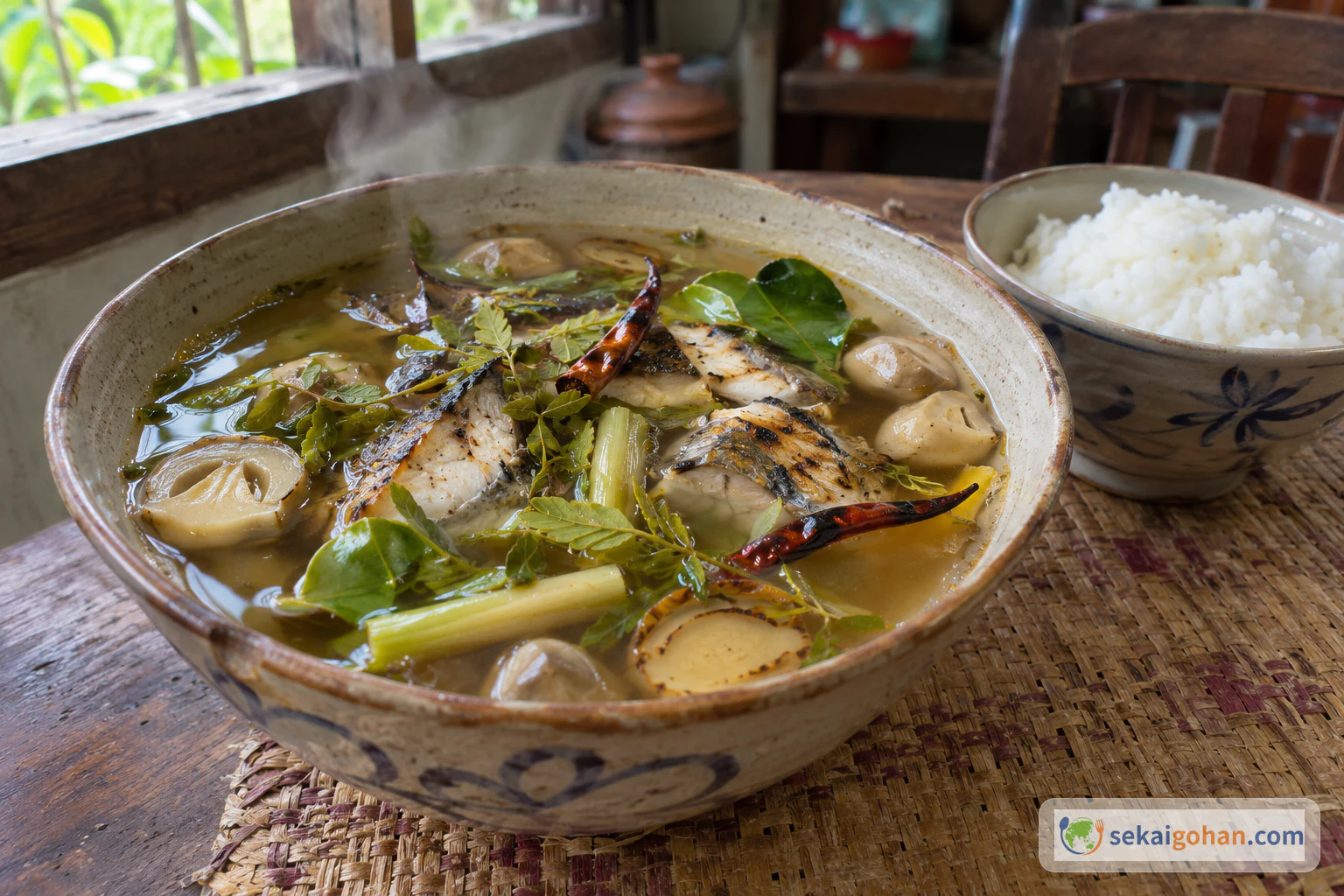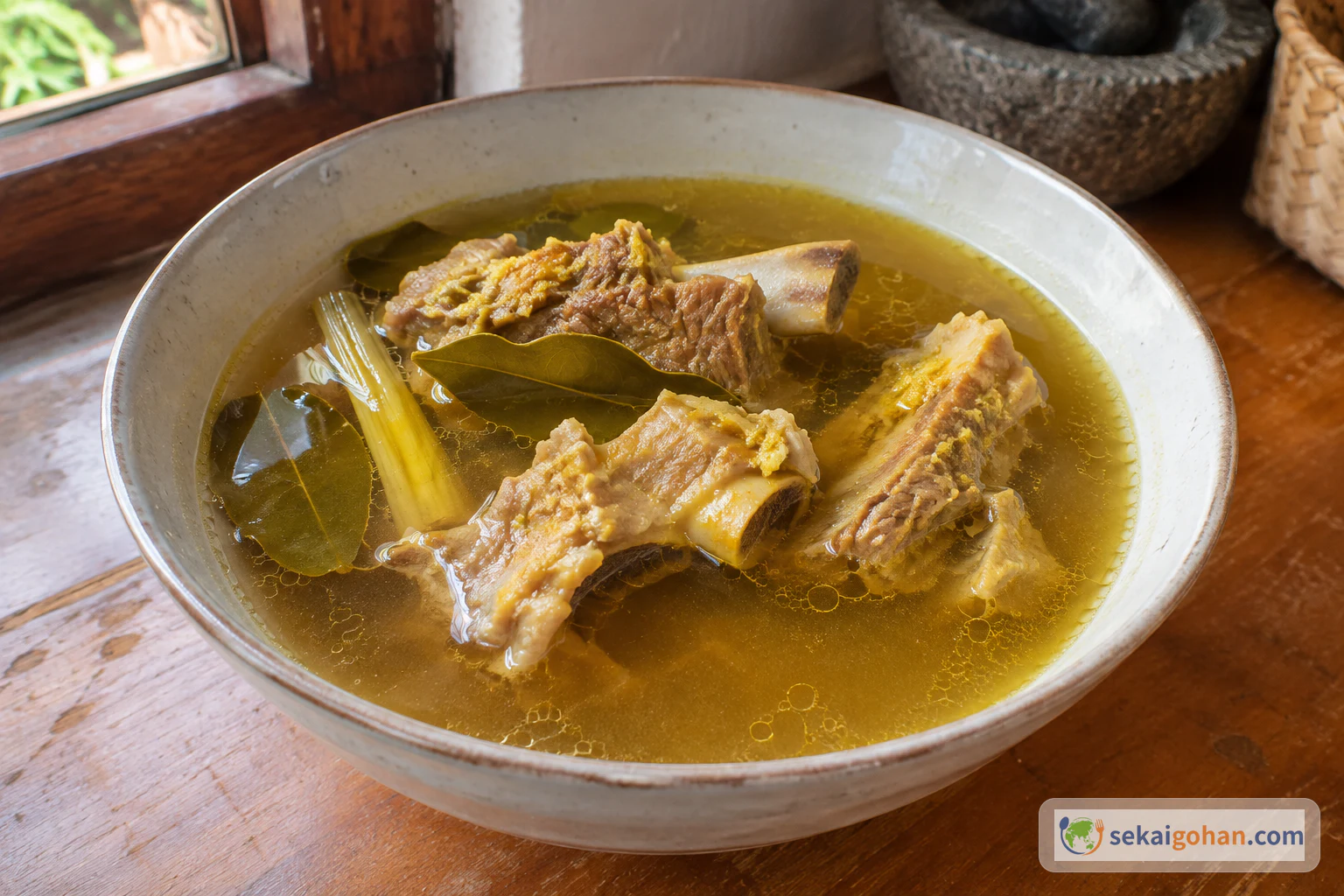
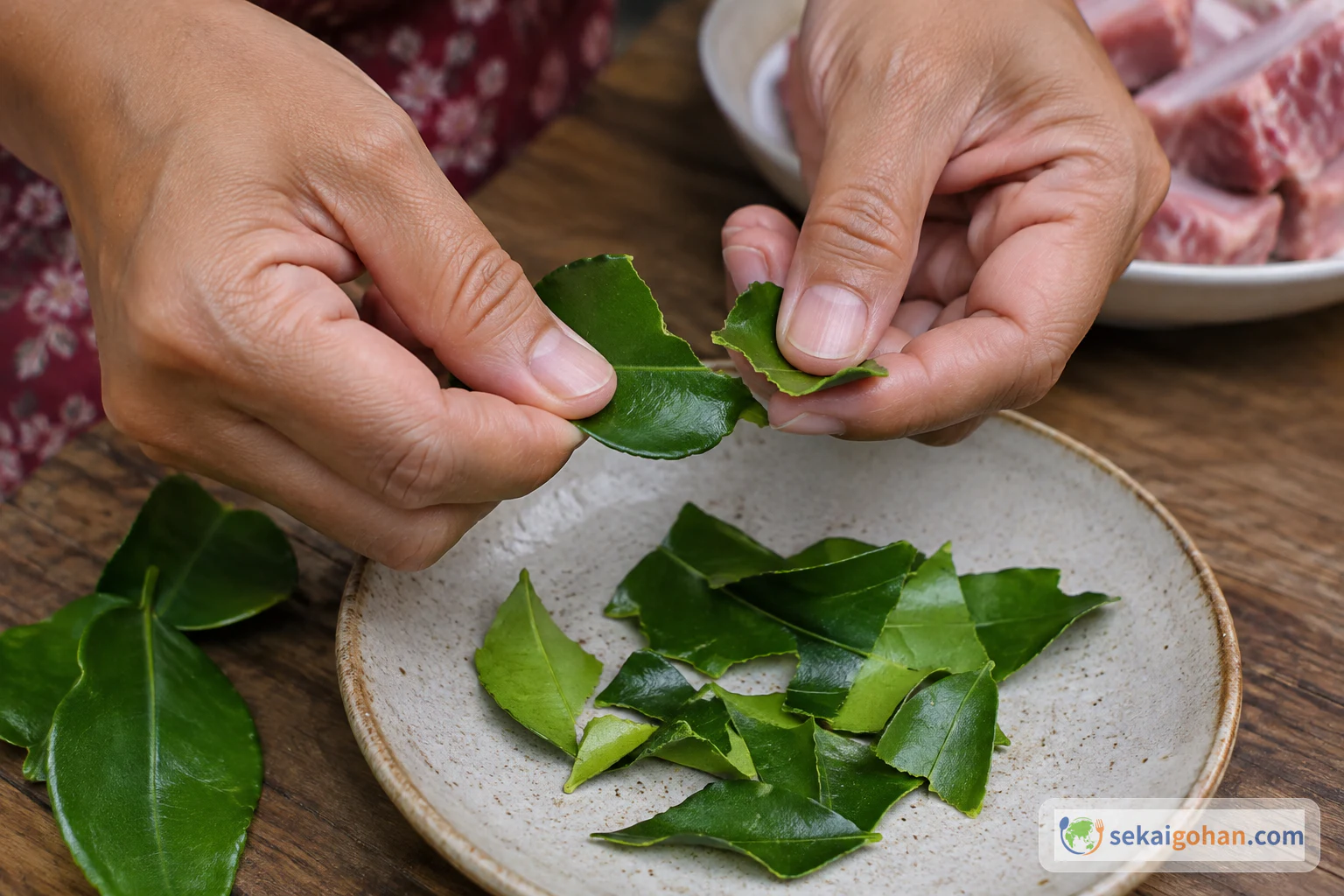
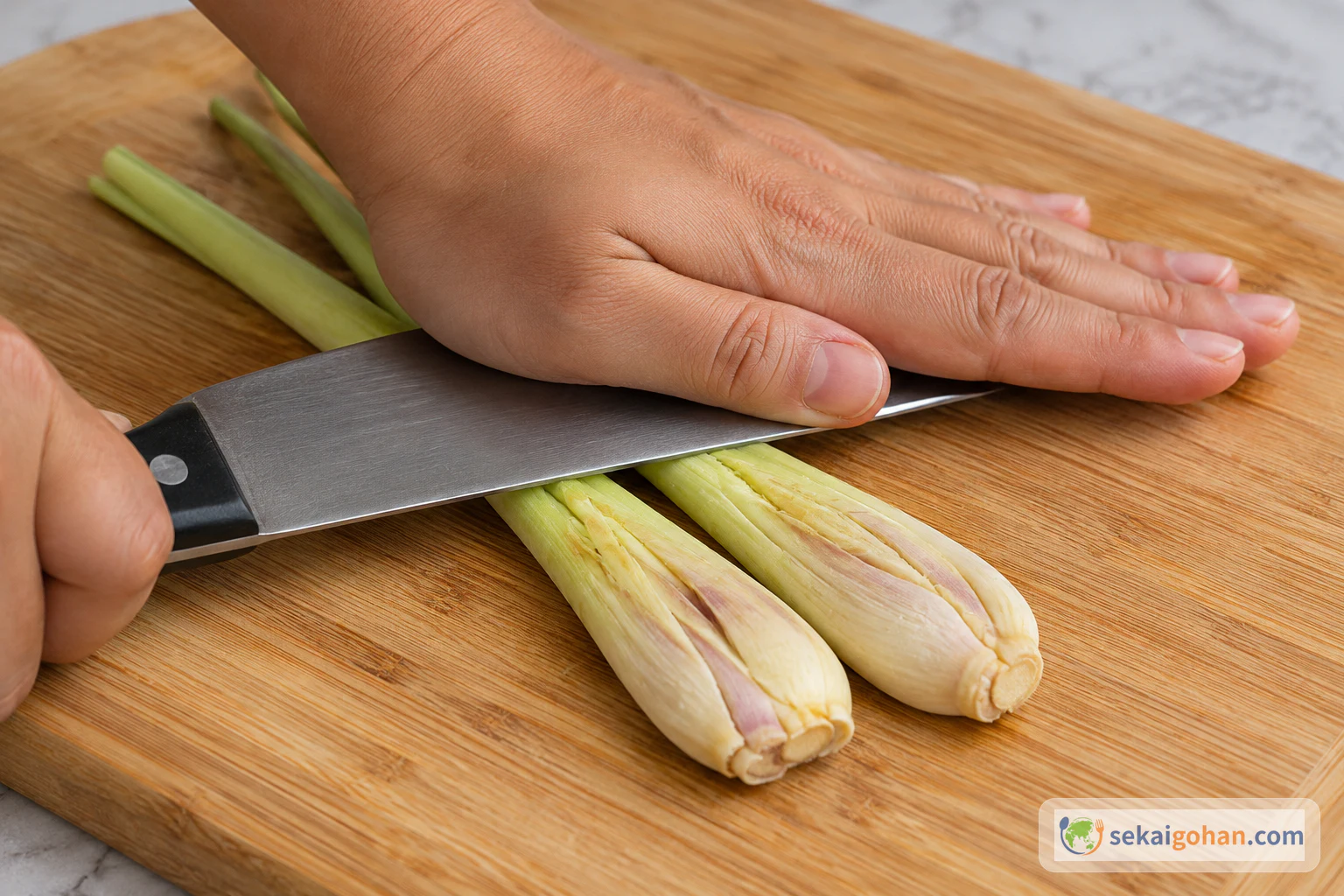
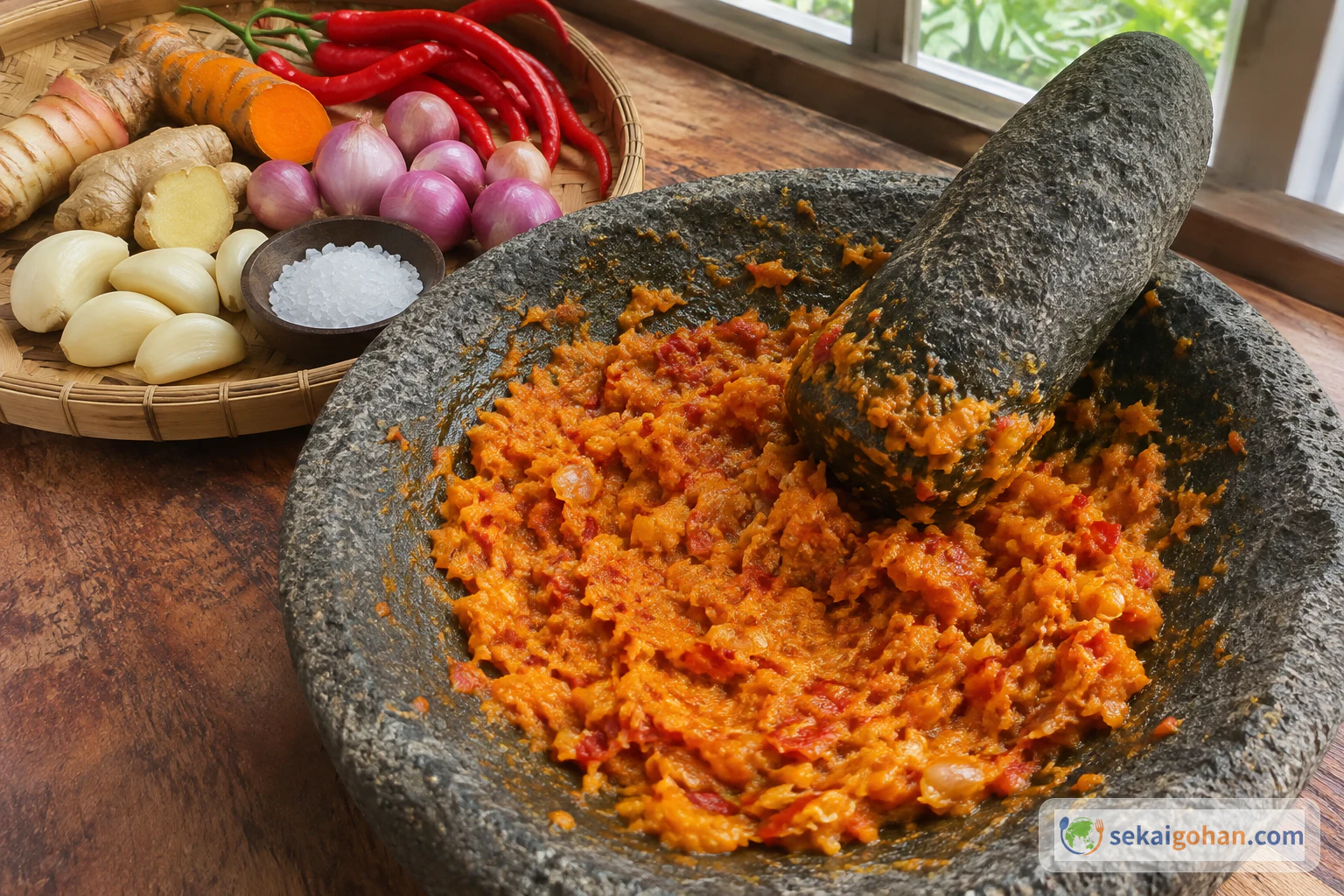
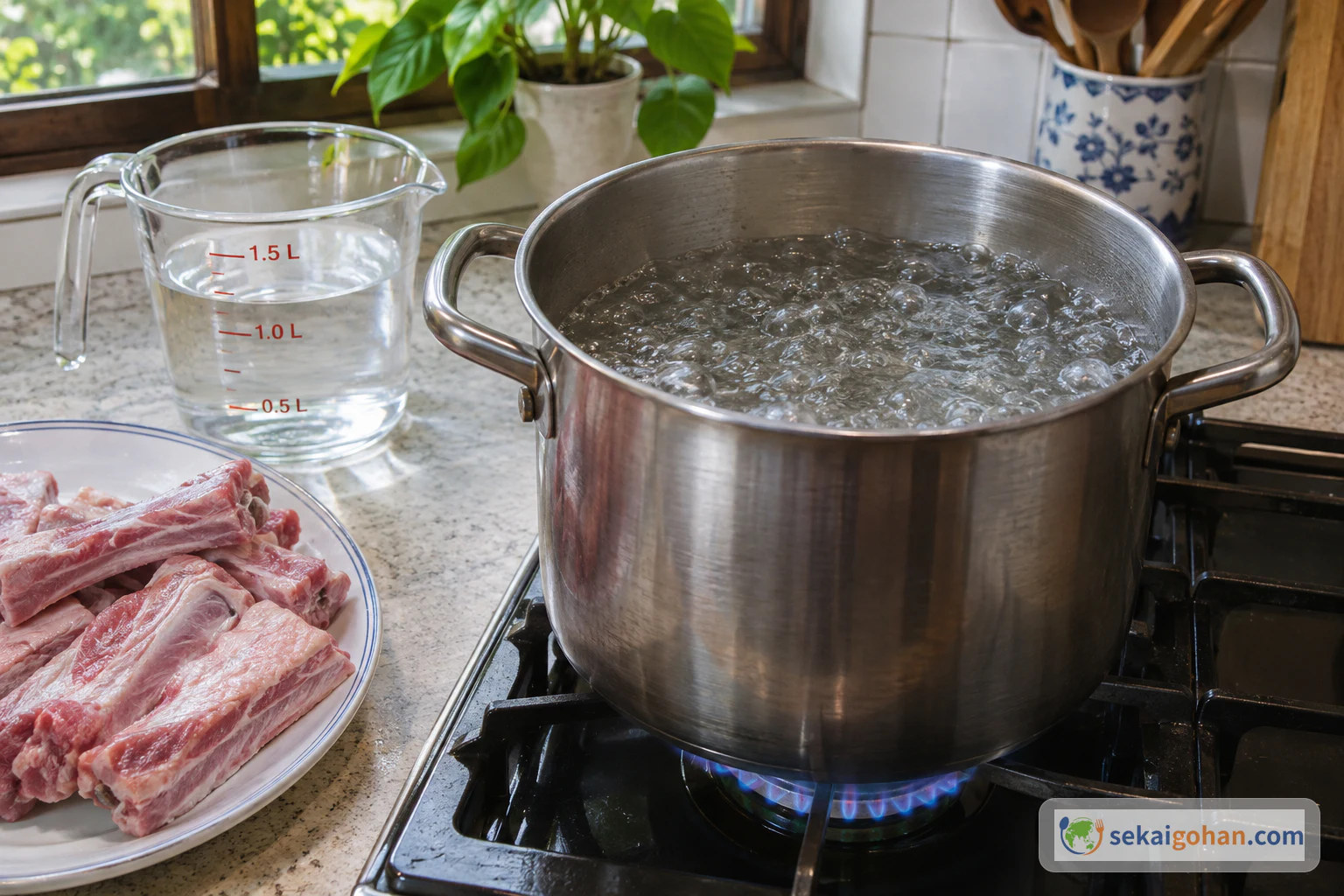
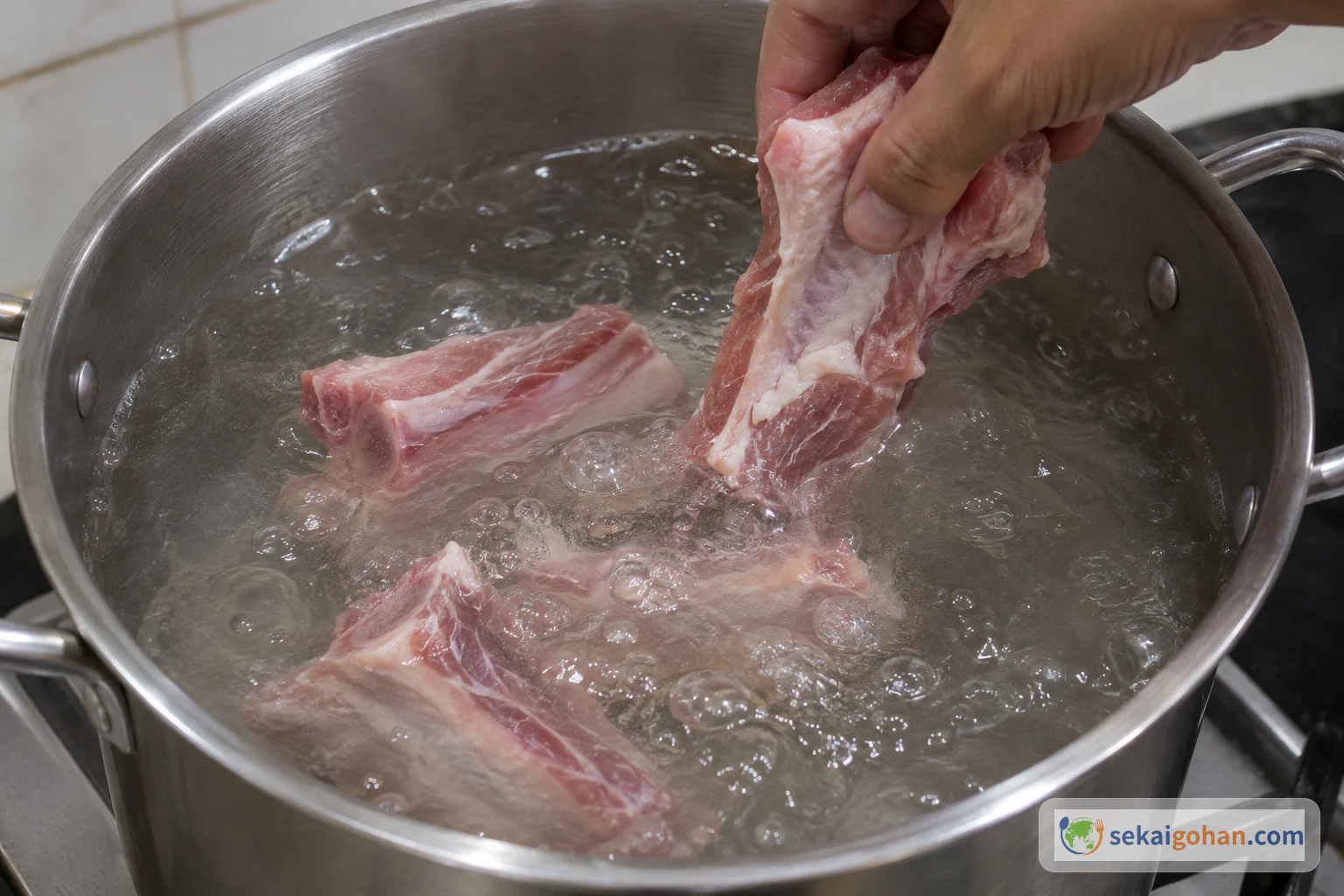
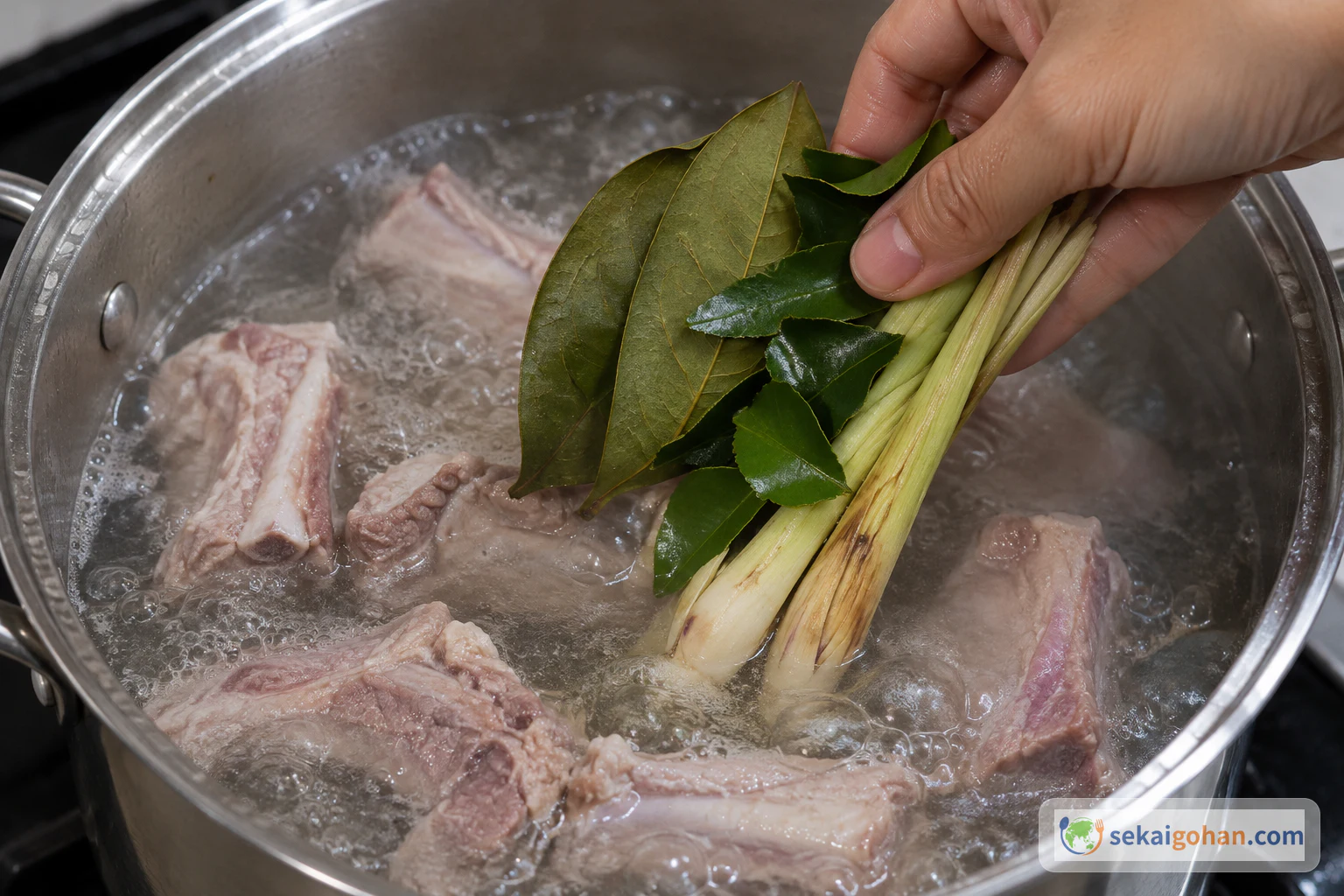
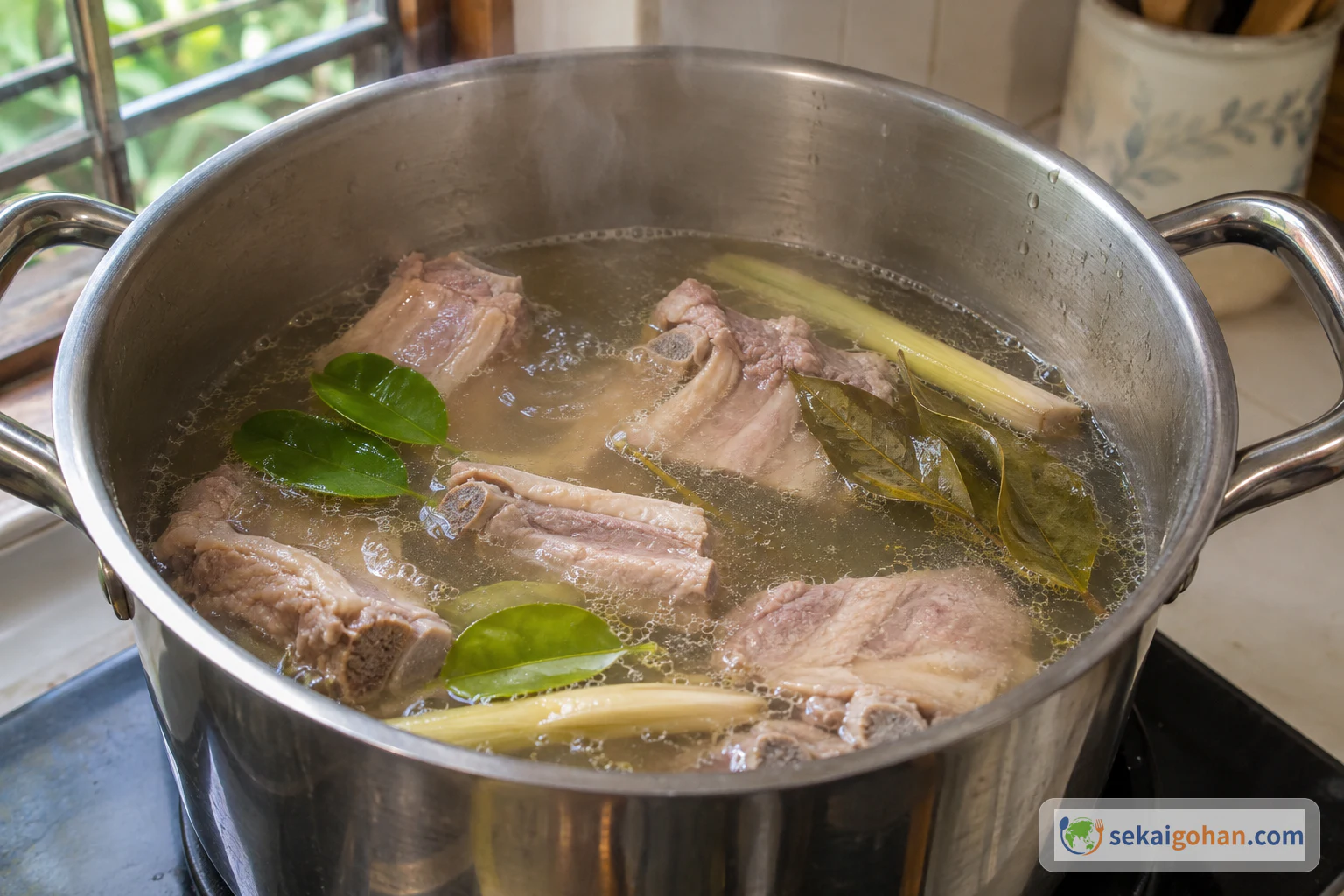
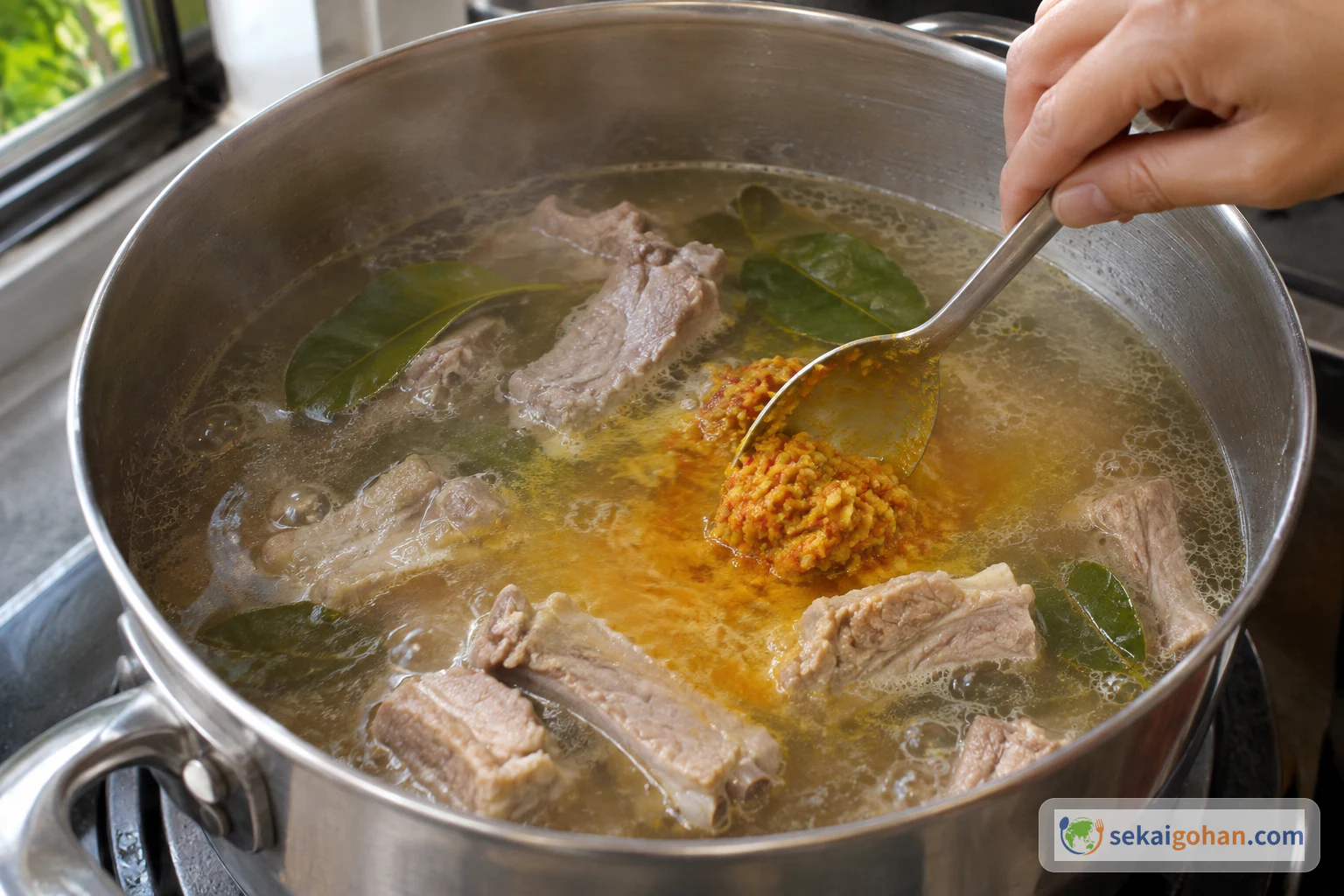
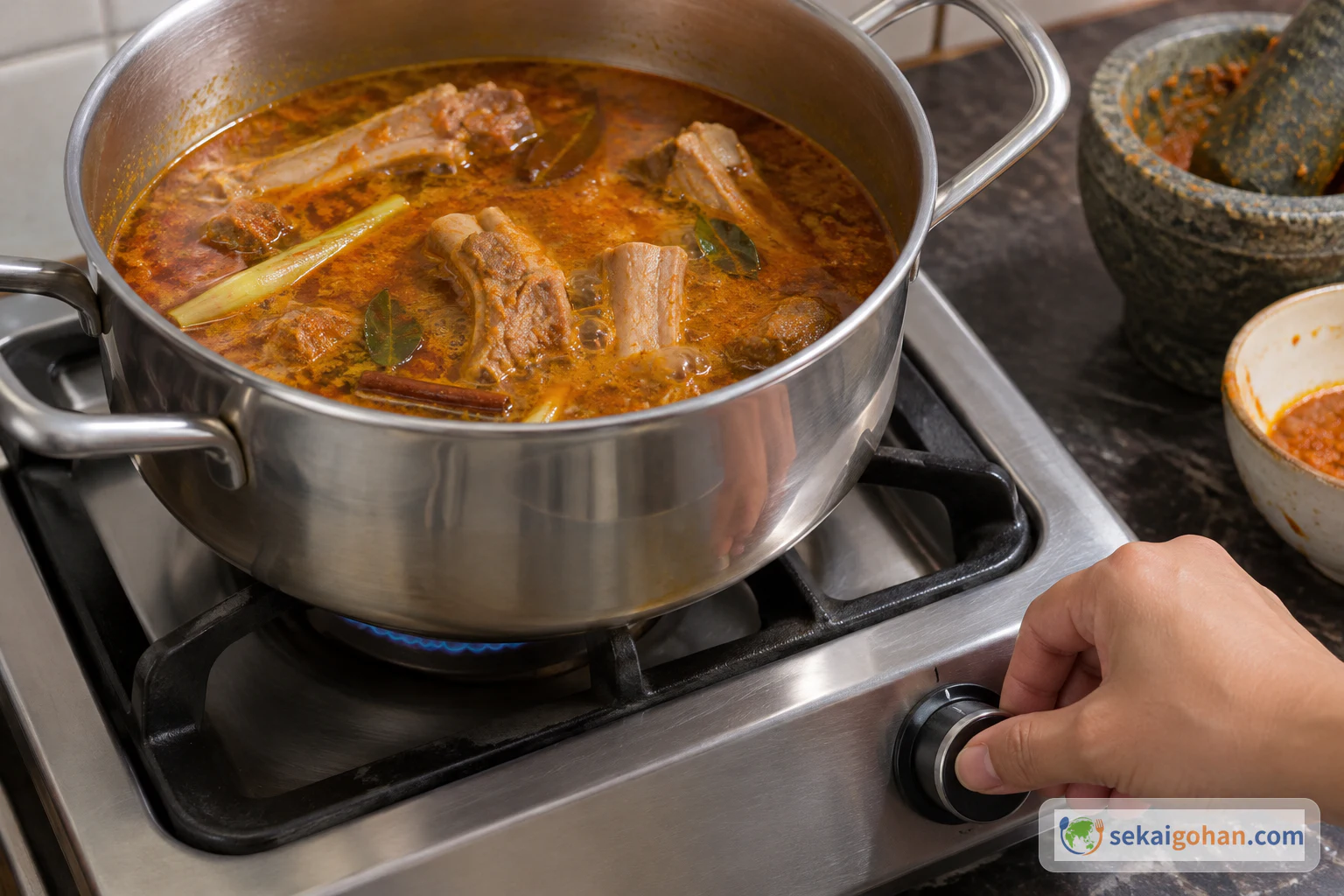
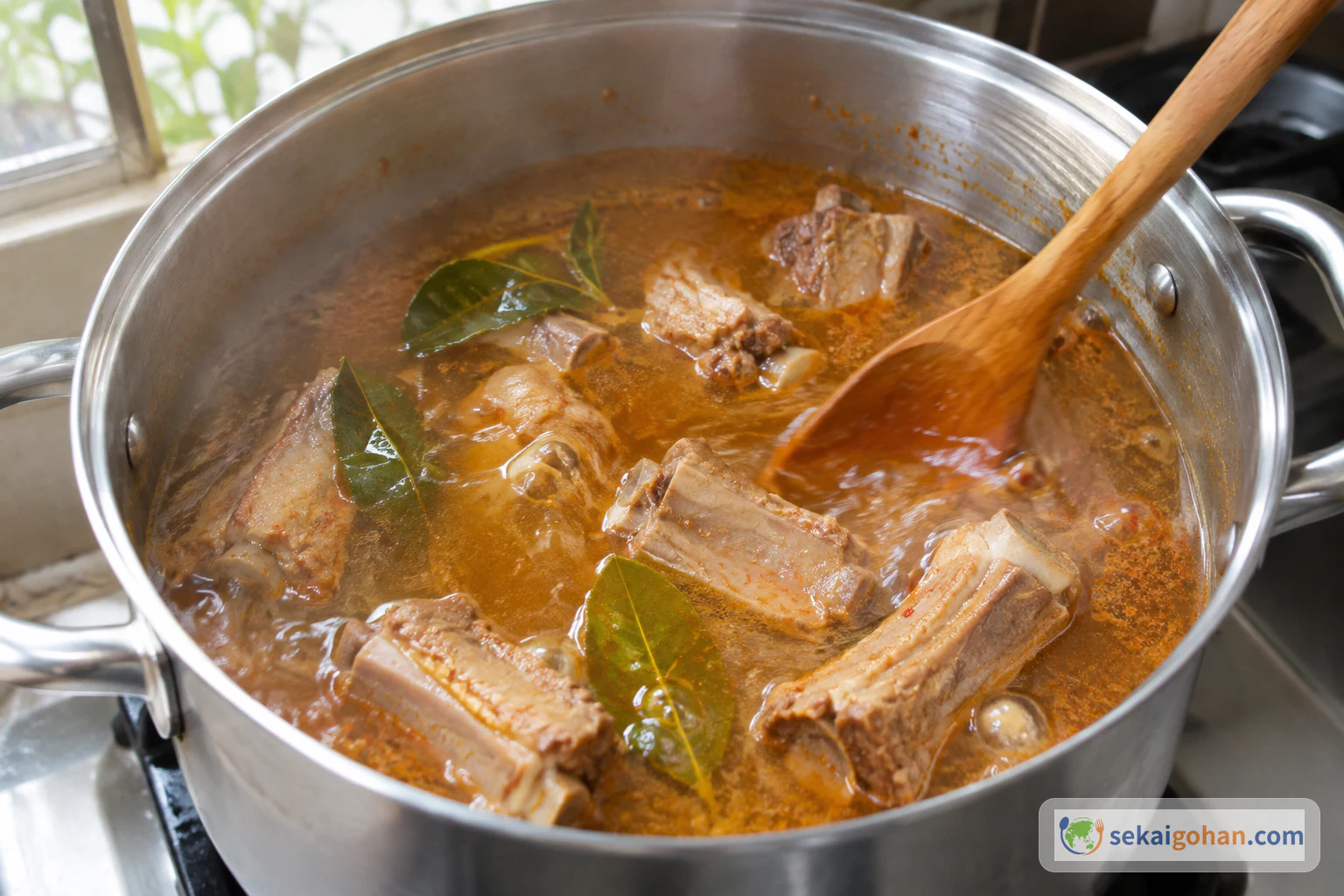
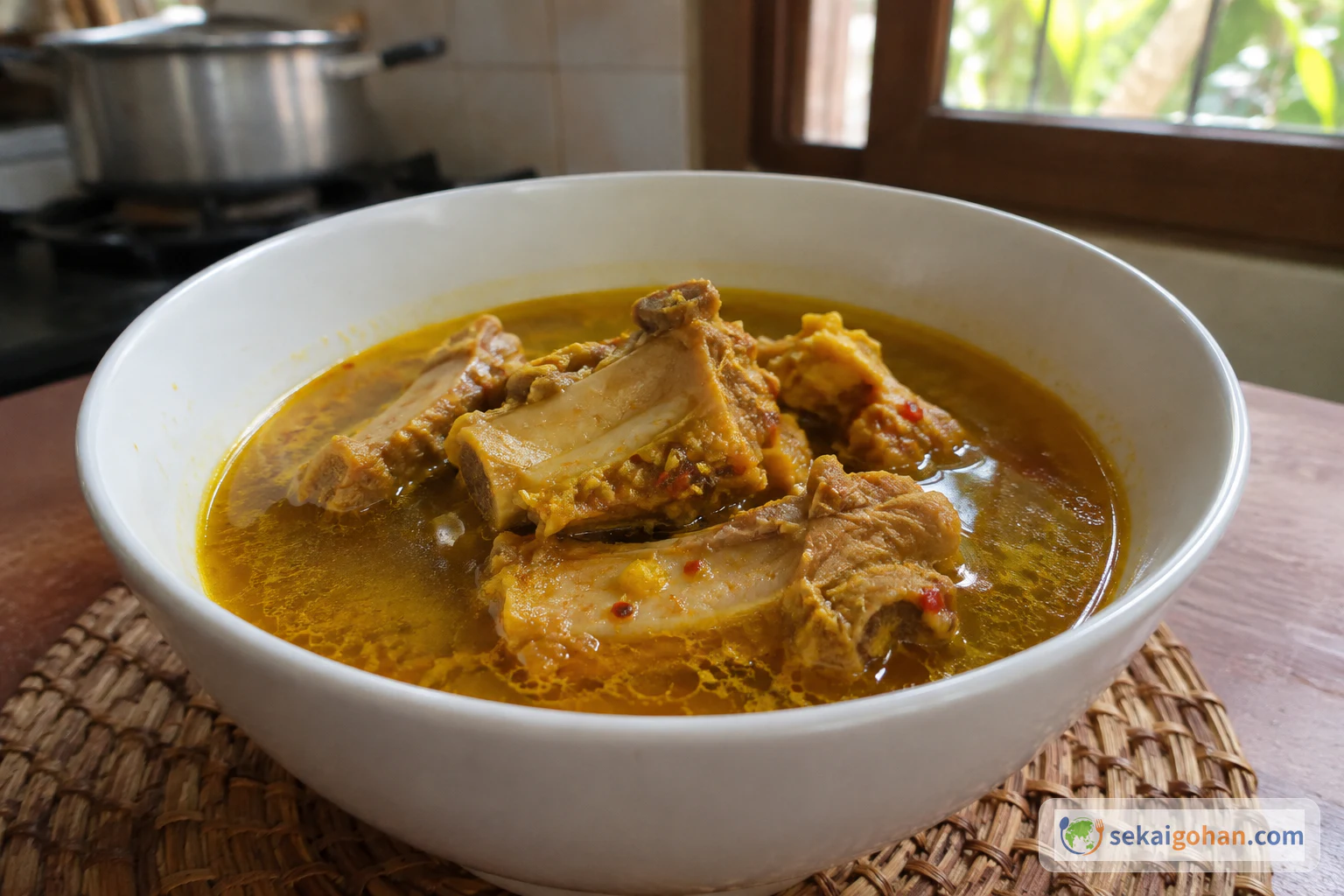
Bone-in pork ribs, a handful of whole leaves, a stalk of lemongrass and one freshly ground paste of roots, shallots and chilies are all that go into this pot. There's no oil, no stock and no vegetables. The ribs cook in plain water with torn lime leaves, Indonesian bay leaves and bruised lemongrass, then simmer on low heat with a paste of garlic, shallots, turmeric, galangal, curly red chilies, salt and ginger. The flavor comes straight from the ribs and the aromatics. Kuah Balung is a traditional Balinese side dish, and Balung appears among the Balinese dishes made for Galungan.
About Kuah Balung
Iga babi simply means "pork ribs" in Indonesian, and Bali has more than one way of cooking them. Balung means pork ribs or bones with some meat still on them, simmered in broth until tender. Many versions are seasoned with basa genep, and some add vegetables such as jackfruit, beans or fern. This Kuah Balung is plainer: the leaves, the lemongrass and a single ground paste. A separate Kuah Balung made with young jackfruit is its own dish.
This is a broth-centered pork-rib dish, not a grilled or glazed one. A contemporary dish sold as "Iga Babi Bali" goes another way entirely. The ribs get a dry rub and a slow roast in the oven, then a sweet umami glaze, a turn under the broiler and a finish of sesame brittle and cilantro. Balinese babi guling, a whole roast pig, is another separate dish. To see where this soup fits among the country's other dishes, start from the Indonesia page.
Ingredients for Kuah Balung
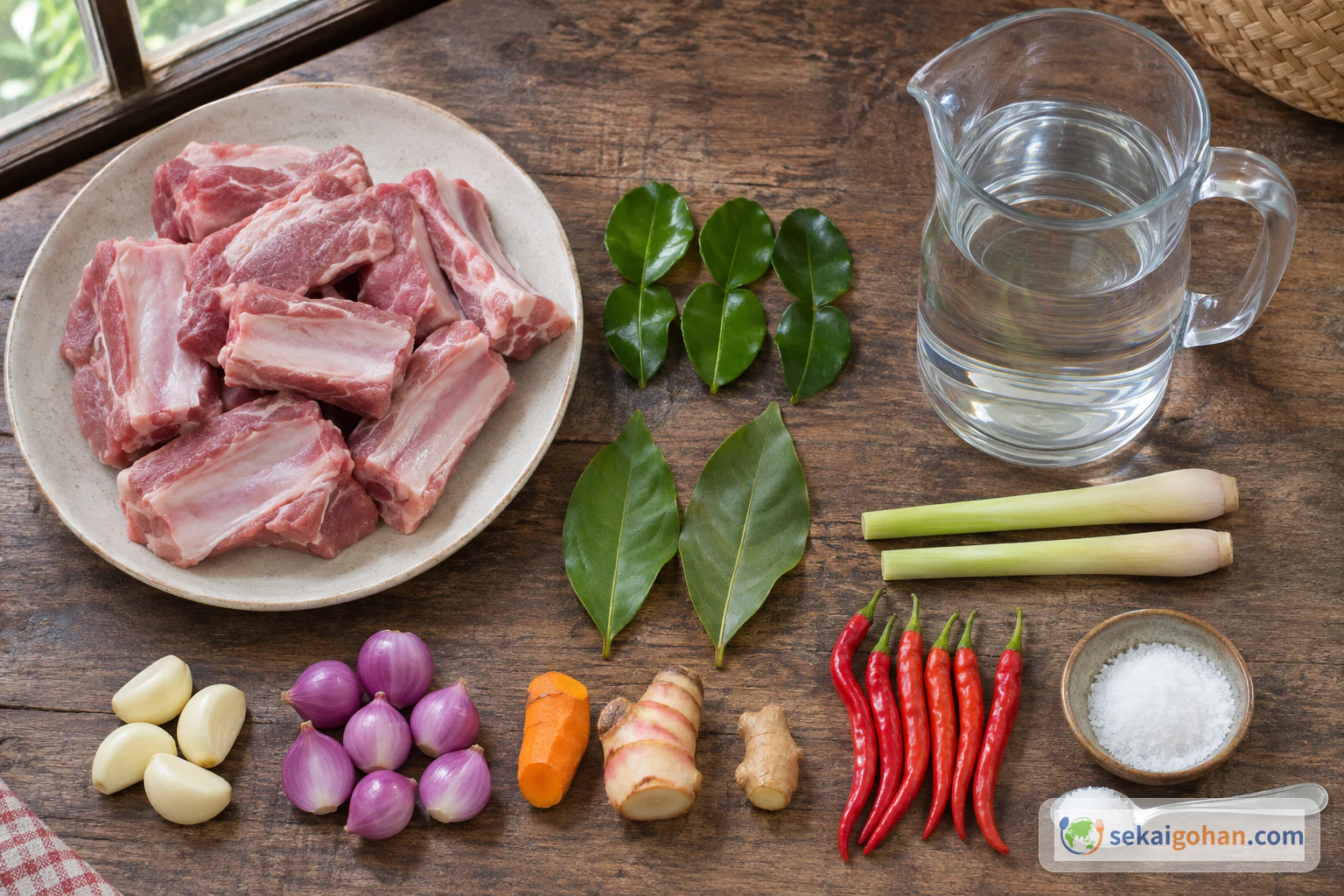
The ingredients fall into two groups. The ribs, leaves, lemongrass and water go into the pot first. The remaining seven ingredients are ground together into one paste.
There is no oil, stock, sugar, vegetable or garnish in this recipe.
Choosing Ingredients for Kuah Balung
Most of the soup's aroma comes from the Indonesian leaves and roots, so any substitute will change the flavor.
- Pork ribs: Ask a butcher for bone-in pork spare ribs cut into pieces. Stick with pork rather than beef.
- Daun jeruk (kaffir lime leaves): Frozen leaves work if they're sold as the same leaf. Nothing else replaces them. Without them the soup loses its citrus-leaf aroma, and bay leaf won't fill the gap.
- Daun salam (Indonesian bay leaves): These are a different leaf from European bay. Look for salam at an Indonesian grocer. Nothing matches it exactly, and leaving it out changes the aroma.
- Lemongrass: Southeast Asian groceries sell it fresh or frozen. Ginger alone won't give the same result.
- Shallots: Use Indonesian shallots. Small red onions can stand in, but they're larger and sweeter. Make the recipe as written once before you adjust to taste.
- Fresh turmeric: Use the fresh root. If you use powdered turmeric, expect the color and aroma to change.
- Galangal: Asian groceries sell it fresh or frozen. Ginger is a poor swap because it lacks galangal's sharper, piney, citrus character.
- Curly red chilies: Red chilies vary a lot in heat, so look for six medium red chilies of a similar kind. Taking out the seeds lowers the heat but changes the result. Bird's-eye chilies are a different thing altogether.
- Salt: The recipe uses 2 teaspoons. Pass more at the table if you like.
The first method sentence says iga sapi (beef ribs), but the ingredient list says iga babi (pork ribs). Use pork. Use 2 teaspoons of salt.
Equipment
- A sturdy pot large enough for 0.25 tsp (1,500 ml) of water and the ribs
- A mortar and pestle or a small blender for the paste
- A knife and cutting board
- A food thermometer
- A wooden spoon and a ladle
- Bowls for serving
Method: Cook the Ribs First, Then Let the Paste Work In
Judge each stage by the state of the ribs and the broth, and use a thermometer for doneness. Grind the spices with a mortar and pestle or a small blender. Do not add water or oil to the paste.
Heat the center of the meat to 167°F (75°C) and hold it there for at least 1 minute. Keep raw meat away from cooked and ready-to-eat foods. Tender meat and a good color do not show the ribs are safe. Check the temperature with a thermometer.
Kuah Balung Troubleshooting
| Condition | What is going on | What to do |
|---|---|---|
| Ribs are still tough | Bone-in ribs vary by cut | Keep simmering gently and check again rather than going by the clock |
| Ribs feel tender | Tenderness is a texture cue only | Check that the center of the thickest piece has reached 167°F (75°C) for at least 1 minute |
| Broth seems thin or the seasoning seems strong | Broth consistency and seasoning need assessment | For a first try, keep the listed water and paste amounts and make changes next time |
| Too salty or not salty enough | Salt crystals vary in size | Keep the 2 teaspoons for the first pot and add more at the table if you want it |
| Too hot | Curly red chilies vary in size and heat | Next time, choose milder chilies of a similar size or remove some seeds, knowing this changes the result |
| Aroma seems flat or "off" | Missing leaves, or bay leaf, ginger or powdered turmeric used as substitutes | Look for the Indonesian leaves and fresh roots at an Asian grocer next time |
Serving and Variations
Serve Kuah Balung warm. The cut makes the biggest difference from one pot to the next. Ribs with more meat on the bone give a meatier bowl, and the ratio of meat to bone also changes how long they take to turn tender. The chilies come next: six curly red chilies is the formula, but the same count can taste quite different from batch to batch.
Frequently Asked Questions
What if I can't find daun jeruk or daun salam?
You can leave them out, but the soup will lose that citrus-leaf or salam aroma, and European bay leaf won't stand in for daun salam. Frozen daun jeruk works if it's sold as the same leaf.
How long should it simmer?
Simmer until the ribs are tender. Then use a thermometer to confirm that the center of the thickest piece reaches 167°F (75°C) for at least 1 minute. Oven-roasting times for ribs don't apply to this stovetop soup.
Why pork, when the method mentions beef?
The ingredient list says pork ribs, and the method mentions beef ribs once. Use pork, as the ingredient list and the name iga babi both indicate.