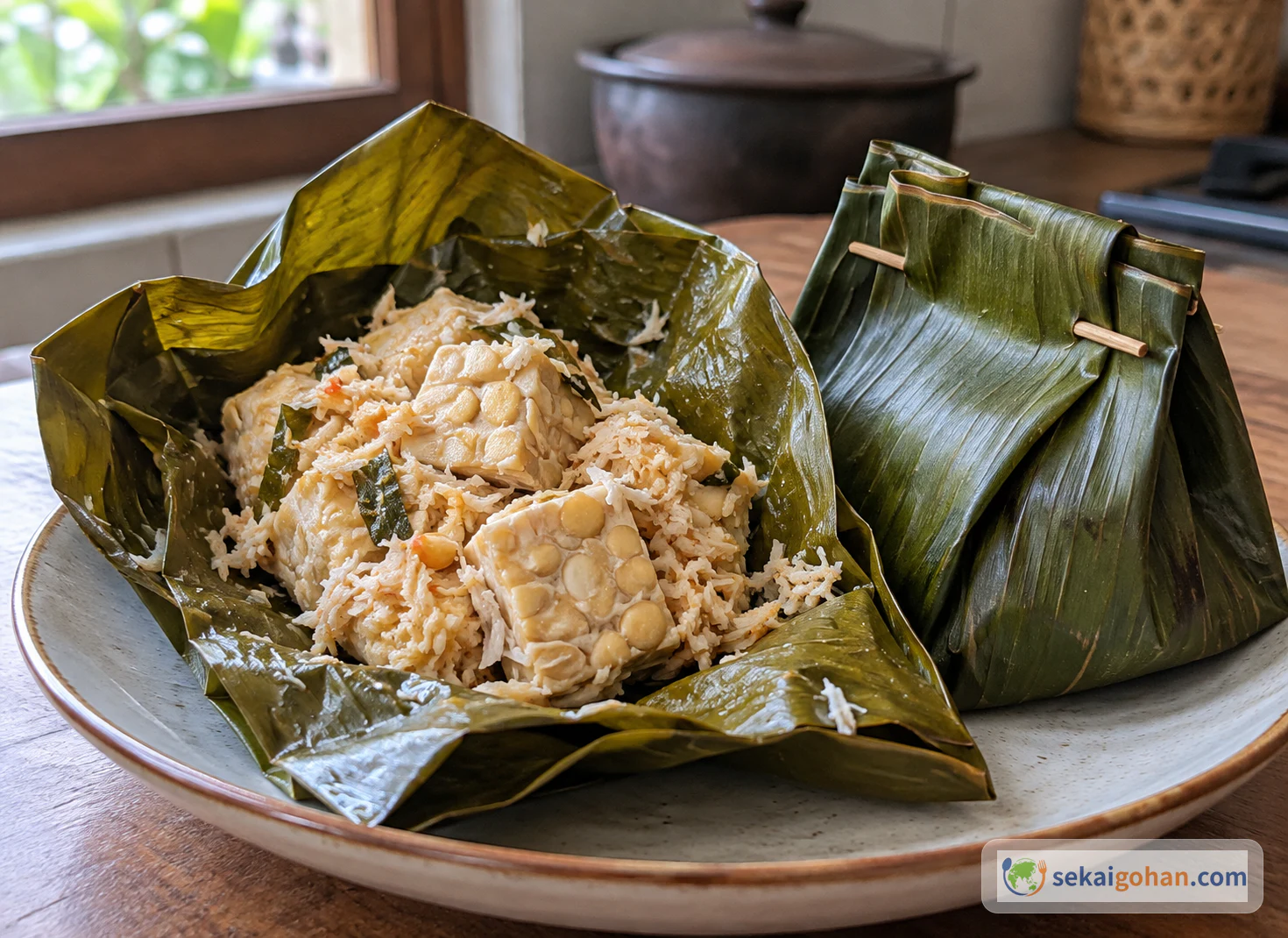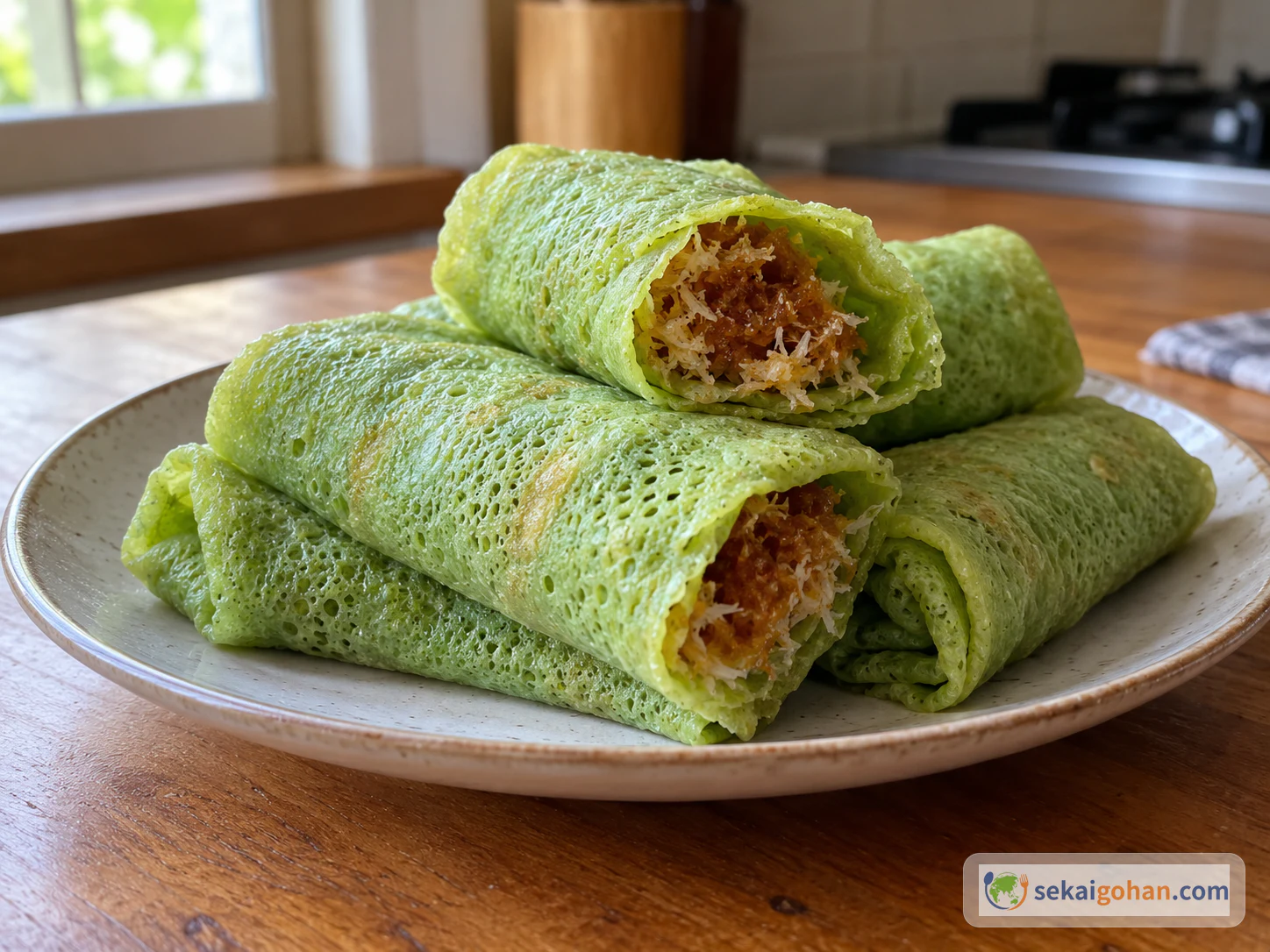
Dadar gulung: pandan crepes rolled around a grated coconut filling
CuisineIndonesian

Dadar Gulung: Indonesian Pandan Crepes Rolled Around Coconut and Gula Merah

How to make dadar gulung, the Indonesian rolled crepe with a pandan-green skin and a sweet filling of grated coconut and gula merah. Follows one Cookpad Indonesia recipe step by step: a pandan extract from fresh leaves, a thin crepe cooked until the surface is dry, and a filling cooked down but not dried out. Also explains which values the recipe leaves open, such as yield, cooking time, and fold shape.

Level: Intermediate

Cooking flow

Cooking steps

STEP 11 / 7

Make the coconut filling

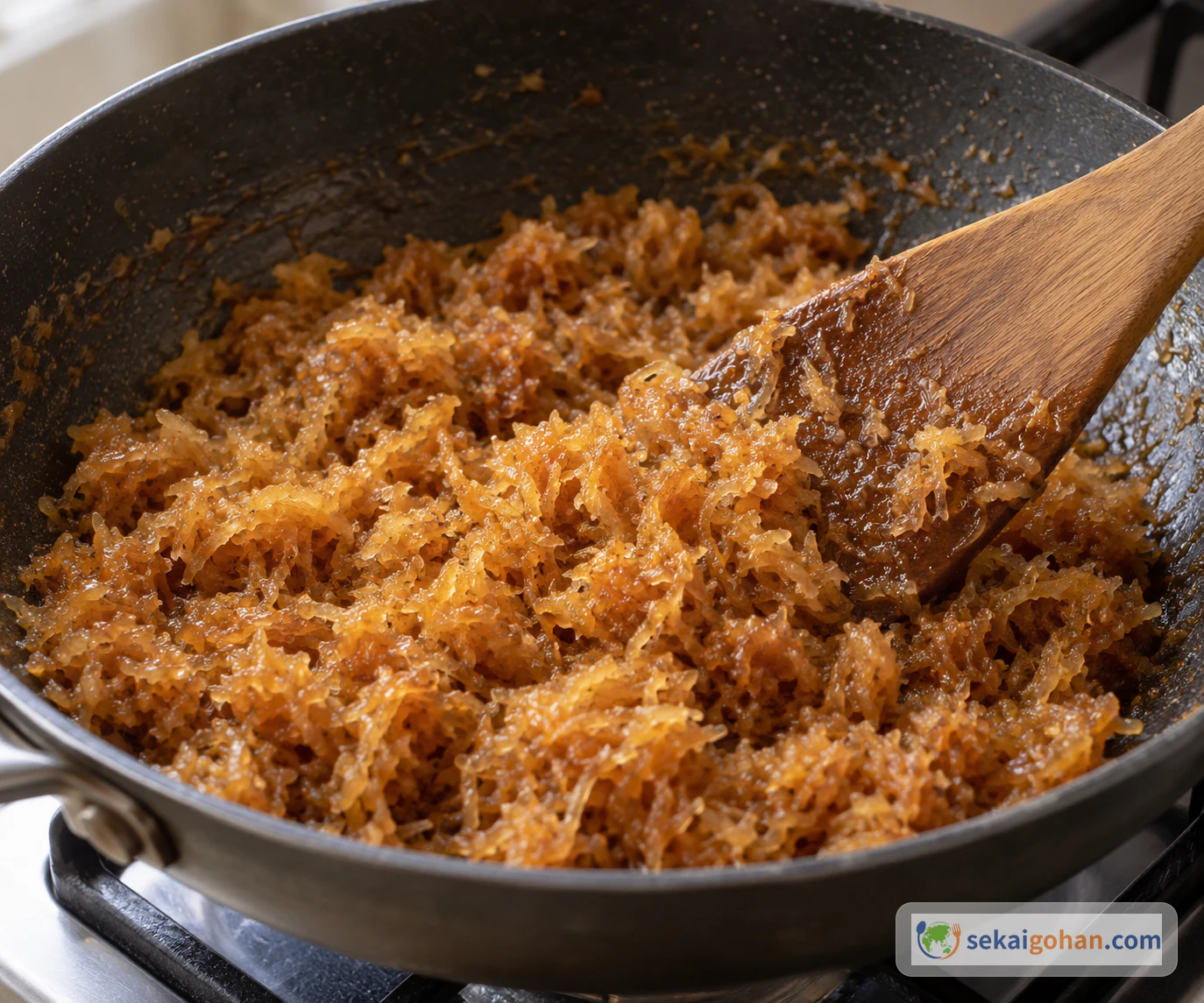
Stirring the grated coconut filling as the liquid reduces
The filling should stay moist and cohesive, not dry

Put the ½ cup (100 ml) of filling water, 7 oz (200 g) gula merah, 0.5 sdt salt and the 3 filling pandan leaves into a small saucepan. Heat until the sugar has dissolved, then pour the syrup through a sieve into a clean pan, leaving the pandan leaves behind in the sieve. Add the 12.5 oz (350 g) grated coconut and cook while stirring until the coconut has absorbed the syrup and the liquid has reduced. Stop before the filling dries out completely: it should still look moist and hold together.

STEP 22 / 7

Cool the filling

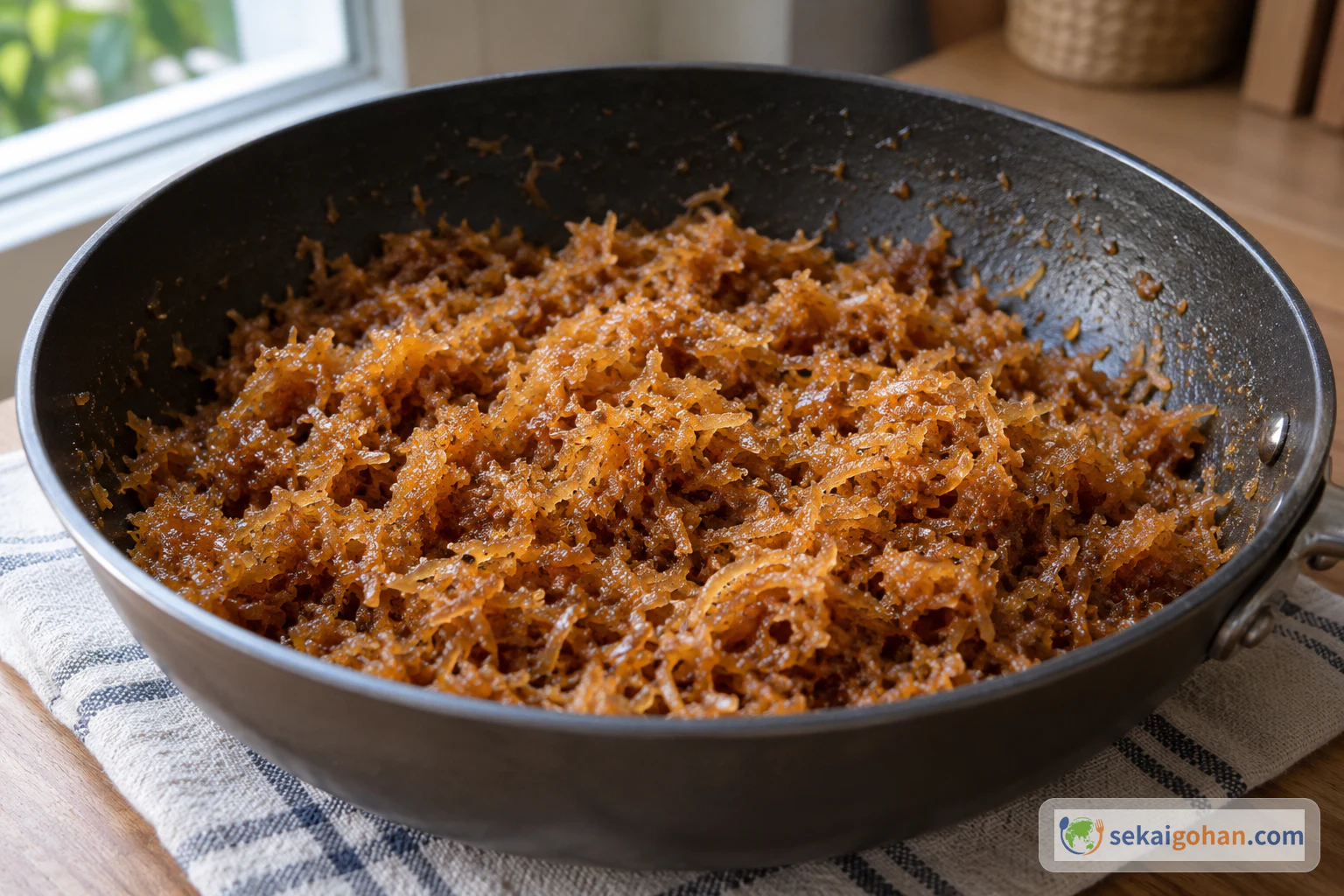
The coconut filling cooling in its pan off the heat
Let the filling cool fully before it goes onto the crepes

Turn off the heat, move the pan off the burner and let the filling cool. Leave it until it is fully cool, since it goes onto the crepes only once both are cool.

STEP 33 / 7

Blend and strain the pandan extract

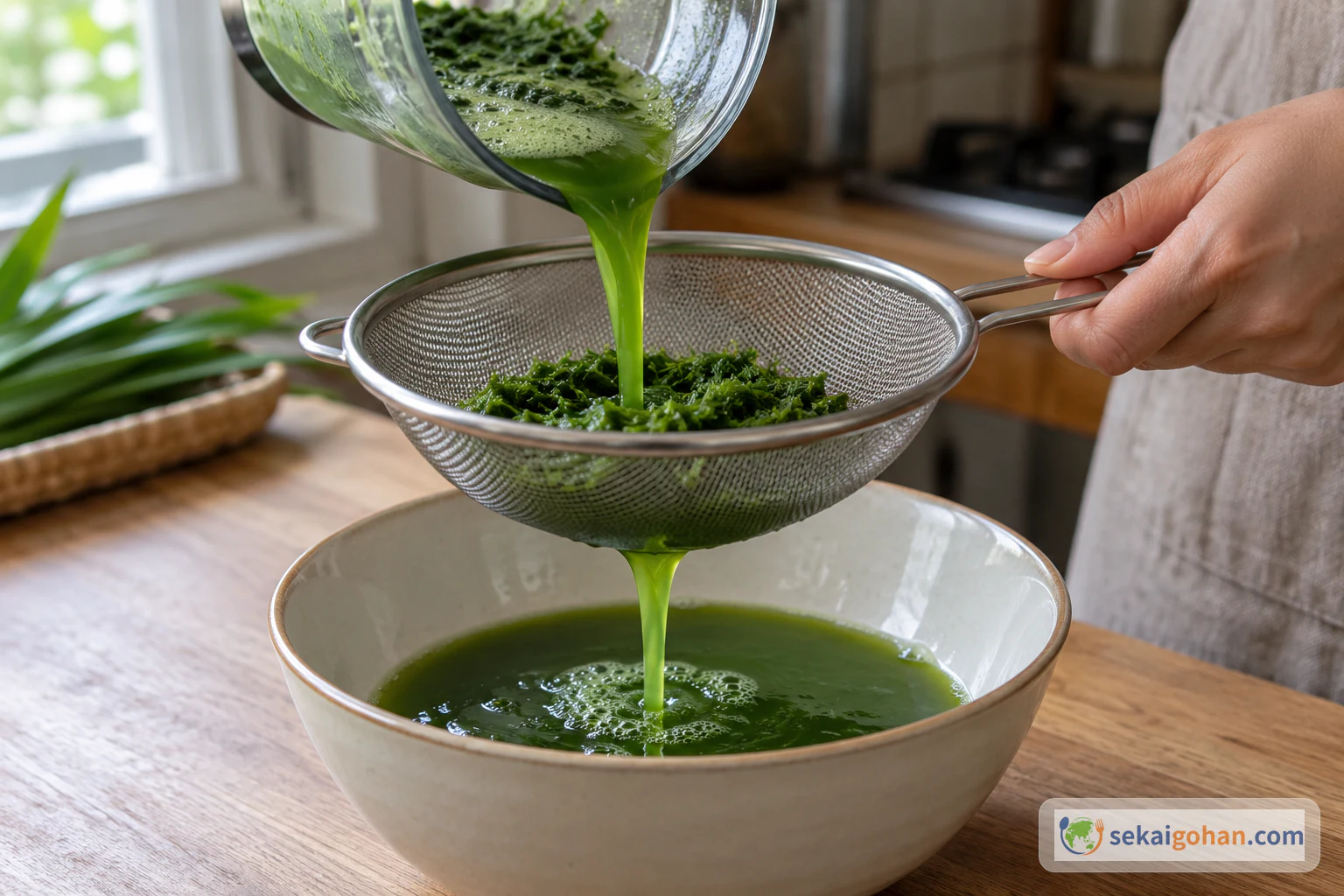
Straining the blended pandan liquid into a bowl
The leaf fibers stay in the sieve; the green extract goes into the bowl

Put the 15 skin pandan leaves and the 2½ cups (600 ml) skin water into a blender. Blend until the water turns green. Strain the blended liquid through a sieve into a bowl, catching the leaf fibers. Use the extract as it comes and do not add more water.

STEP 44 / 7

Mix the wet mixture

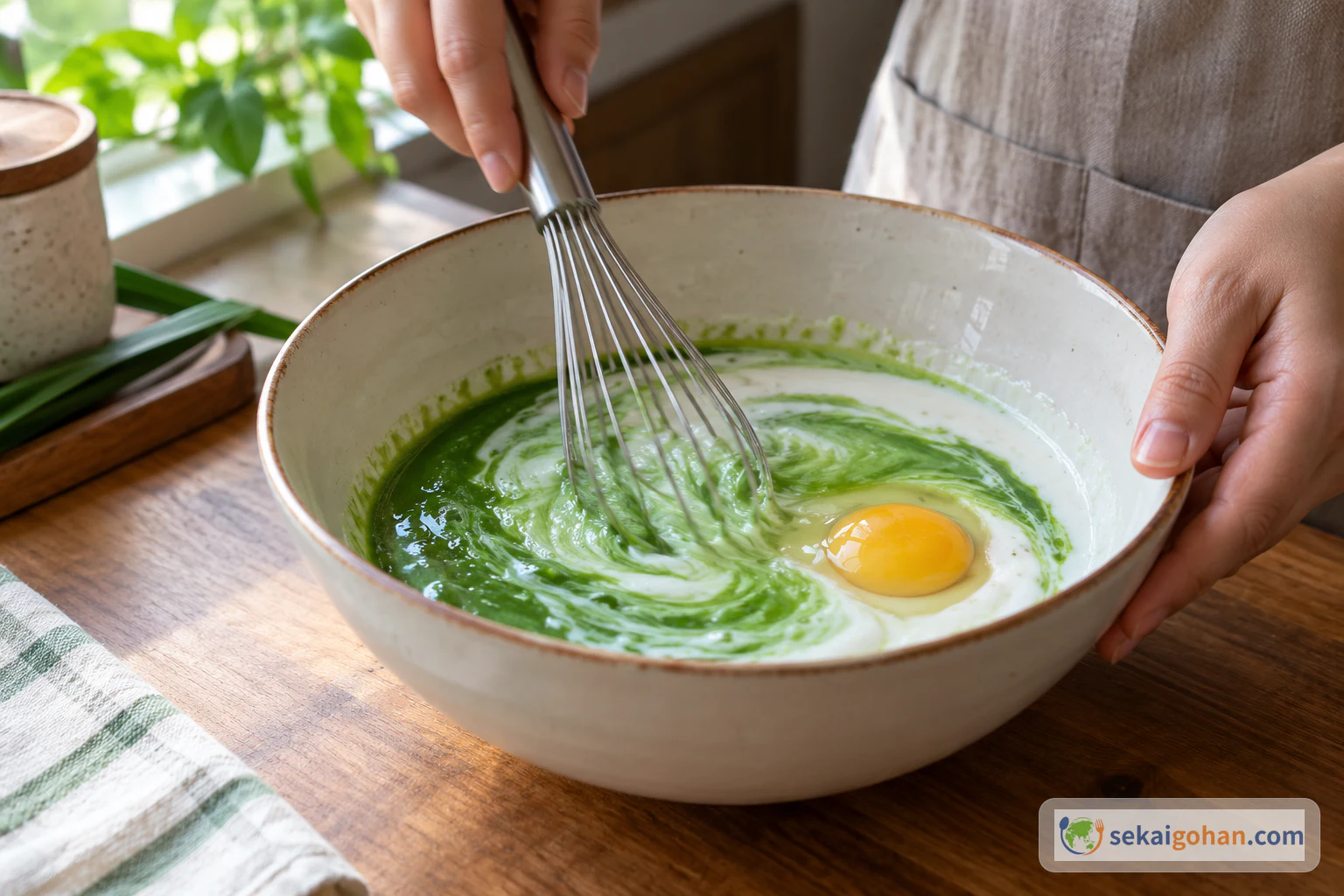
Whisking the pandan extract with instant coconut milk and a whole egg
The wet mixture for the batter: pandan extract, coconut milk and egg

Add the ½ cup (100 ml) instant coconut milk and the whole egg to the pandan extract. Whisk together until combined, then set this wet mixture aside.

STEP 55 / 7

Make the batter

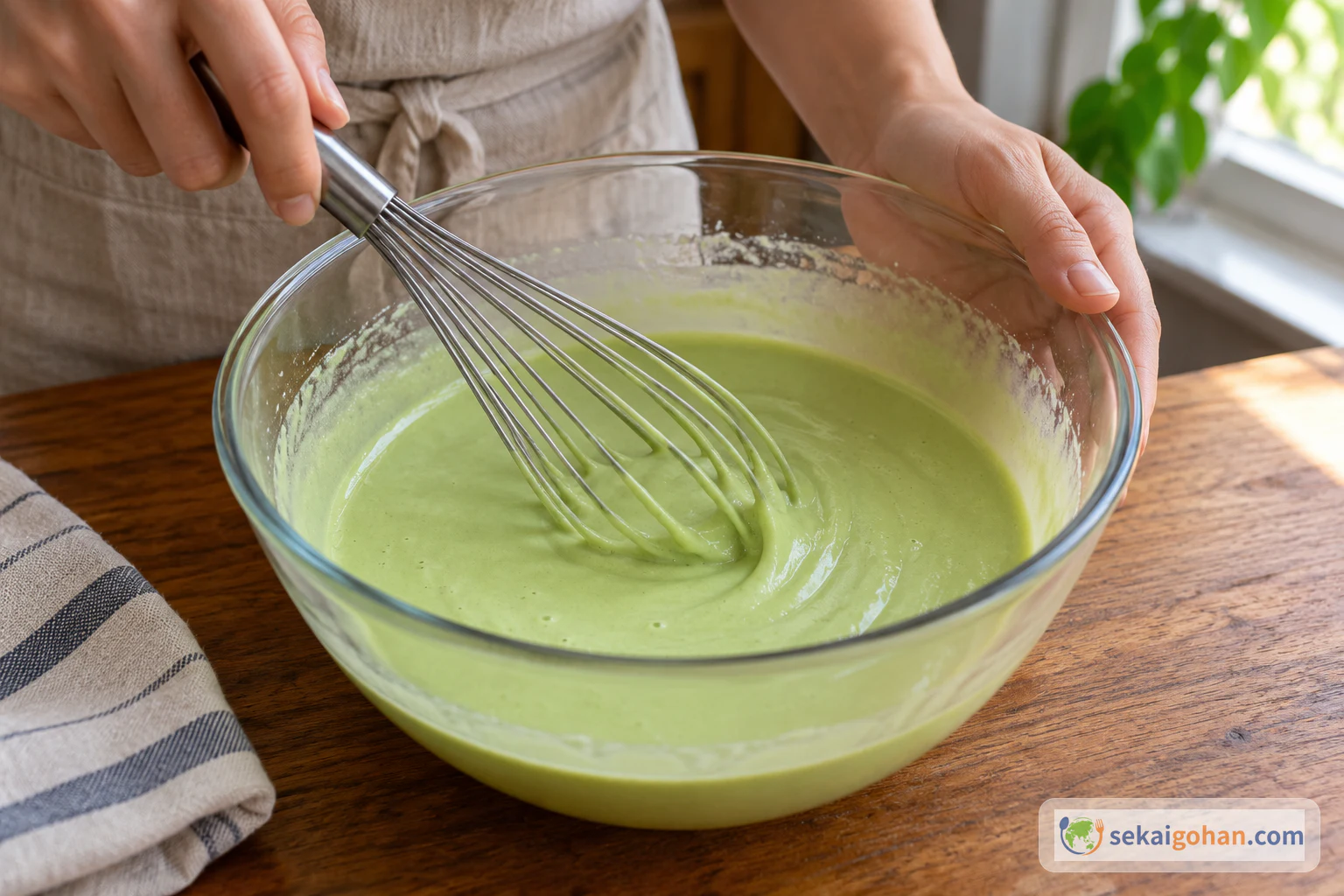
Whisking the pandan batter until smooth
A smooth batter with no large lumps

In a dry bowl, whisk together the 9 oz (250 g) wheat flour, 2 sdm tapioca flour and a pinch of salt. Pour the green wet mixture into the flour mixture and whisk until the batter is smooth with no large lumps. If lumps remain, pass the batter through a sieve into a clean bowl; if it is already smooth, skip the sieving.

STEP 66 / 7

Cook the crepes

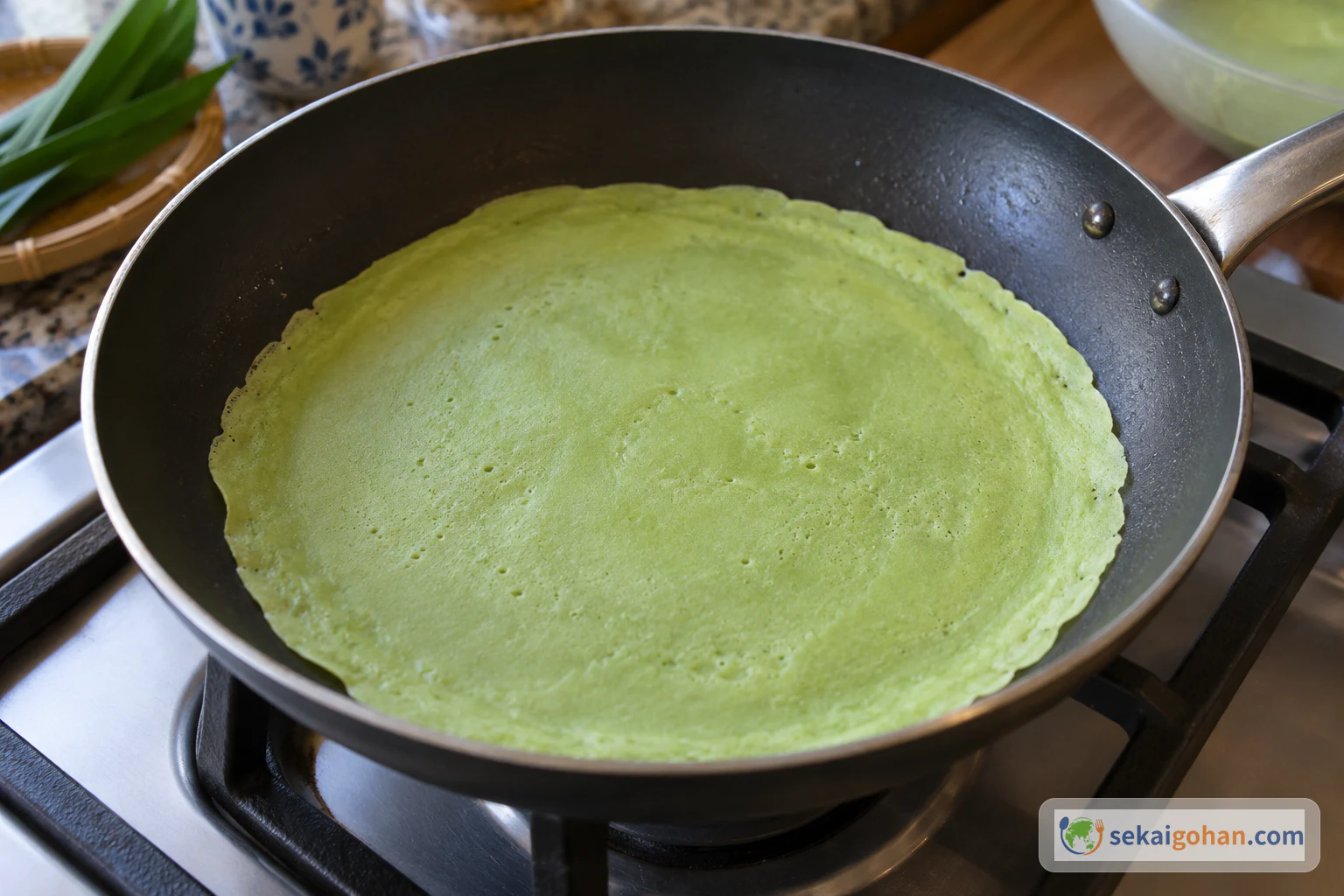
A thin pandan crepe cooking until the surface is dry
Cook until the top looks dry

Heat an empty frying pan on the stove, then brush a thin layer of oil over the pan. Pour in one ladle of batter and tilt and rotate the pan so it spreads into a thin layer. Cook until the top surface looks dry, then lift the crepe out onto a plate to cool. Repeat the oiling, pouring, spreading and cooking with the remaining batter.

STEP 77 / 7

Fill, fold and roll

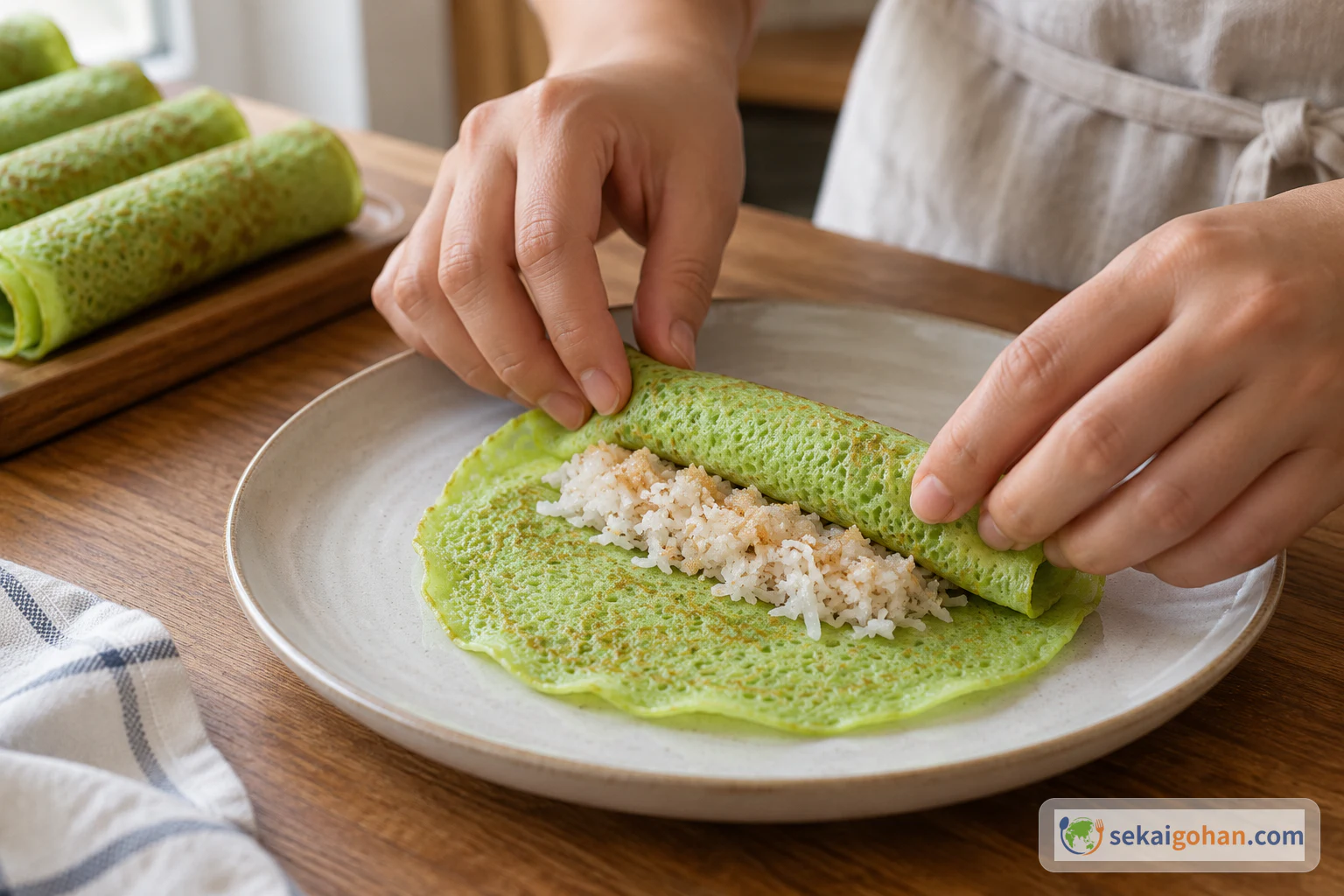
Rolling the filled pandan crepe into a cylinder, one simple way to roll
A simple cylinder, one ordinary finish

Place some of the cooled coconut filling on a cooled crepe. Fold the edge of the crepe over the filling, then roll the crepe around the filling into a cylinder to finish. Repeat with the remaining crepes and filling.

0 / 0
Ingredients

Ingredients

1 / 1

Ingredients

Ingredient Amount Role
Medium-protein wheat flour (tepung terigu protein sedang), for the skin 9 oz (250 g) The body of the crepe
Tapioca flour, for the skin 2 sdm (Indonesian tablespoons) Mixed with the wheat flour for the batter
Pandan leaves, for the skin 15 leaves Blended with the skin water for color and aroma
Water, for the skin 2½ cups (600 ml) Blended with the 15 pandan leaves to make the extract
Instant coconut milk, for the skin ½ cup (100 ml) Mixed into the pandan extract
Egg, for the skin 1, whole Mixed into the pandan extract
Salt, for the skin a pinch Seasons the batter
Oil, for the pan a little Brushed thinly over the pan before each crepe
Grated coconut (kelapa parut), for the filling 12.5 oz (350 g) The body of the filling
Gula merah, for the filling 7 oz (200 g) Sweetens the filling
Water, for the filling ½ cup (100 ml) Dissolves the gula merah into a syrup
Pandan leaves, for the filling 3 leaves Flavors the syrup
Salt, for the filling 0.5 sdt (Indonesian teaspoon) Balances the sweetness
0 / 0

A ladle of pale green batter goes into a lightly oiled pan. Tilt the pan so it runs into a thin round, cook it until the top looks dry, and lift it out to cool. In another pan, grated coconut simmers in a syrup of gula merah, salt and pandan until most of the liquid is gone. Once both have cooled, the coconut goes onto the crepe, and the crepe is folded and rolled around it. That's dadar gulung, a sweet Indonesian snack of fragrant pandan skin wrapped around moist, caramel-dark coconut.

About Dadar Gulung

In Indonesian, dadar means the thin crepe and gulung means rolling. The dish is a green pandan crepe wrapped around a sweet coconut filling, and that pairing is what identifies it wherever it's made, even though recipes vary from cook to cook.

The names overlap across the region. The same rolled crepe is called Kuih Dadar, Kuih Ketayap, Kuih Gulung and Dadar Gulung. In Indonesia it's Dadar Gulung, and in Malaysia it's Kuih Ketayap. In Japanese the name is written ダダル・グルン, and you'll also see ダダール・グルン and ダダールグルン.

In Yogyakarta, dadar gulung is known as a snack chosen for gatherings. For more dishes from the same country, see Indonesia.

Ingredients: Skin and Filling, Kept Apart
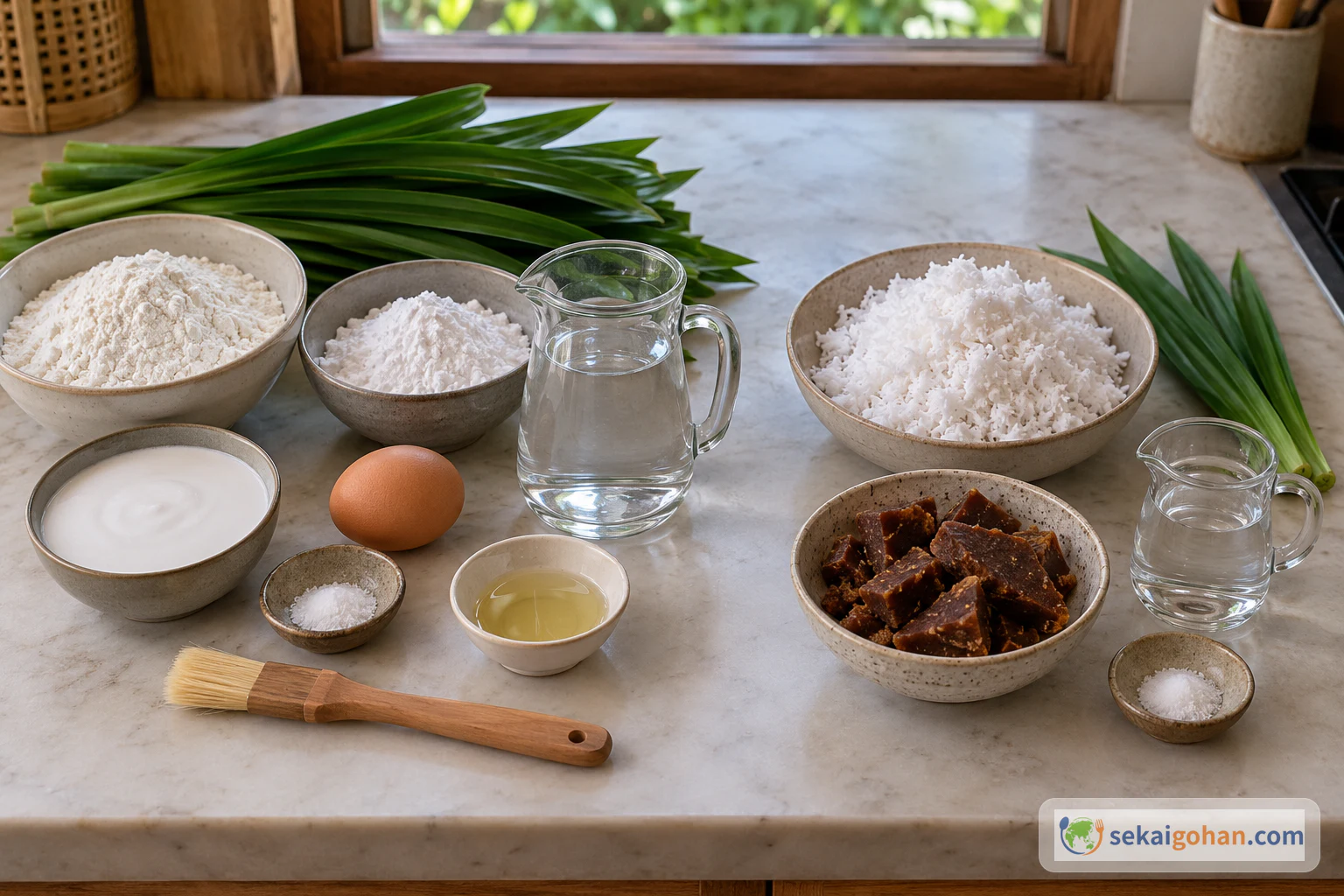
Dadar gulung ingredients divided into a group for the skin and a group for the filling
Set out the skin ingredients and the filling ingredients as two separate groups, each with its own water and pandan leaves

Keep the two waters in separate vessels and the two bundles of pandan leaves in separate piles before you start. The filling has no egg and no coconut milk, and the batter has no added oil.

Allergens

This dish contains wheat flour, egg and coconut. Check these against the needs of anyone you are cooking for.

Equipment

  • Small saucepan, for the filling syrup
  • A second clean pan, to receive the strained syrup and cook the filling
  • Fine-mesh sieve
  • Wooden spatula
  • Blender
  • Mixing bowls
  • Whisk
  • Frying pan
  • Small brush, for oiling the pan
  • Ladle
  • Flat spatula, for lifting the crepes
  • Plate, for cooling the crepes

Choosing Coconut, Gula Merah and Pandan for Dadar Gulung

Grated coconut. The filling is made with grated coconut (kelapa parut), which stays moist as it soaks up the syrup. Desiccated coconut is not an equal swap.

Gula merah. The name means "red sugar" in Indonesian. Gula melaka, gula kelapa, gula aren and ordinary dark brown sugar can't be treated as automatic stand-ins; change the sugar, or the coconut, and you're making a different recipe.

Pandan. The skin's green color and aroma come from fresh leaves blended with water. Some recipes add a little pandan paste when the color comes out pale, but here the fresh-leaf extract does all the work.

Pandan is used twice, and each use has its own amount. The 15 leaves are blended with 2½ cups (600 ml) of water for the skin; the 3 leaves are simmered in the filling syrup with ½ cup (100 ml) of water and then strained out. Keep these pairs apart from the start. It's the main thing to watch in this dish.

Method: Filling First, Then Extract, Batter and Crepes

Order of work

Make the filling first so it has time to cool while you make the extract, batter and crepes. The skin and the filling should both be cool before you assemble the rolls.

Dadar Gulung Troubleshooting

Problem Likely cause What to do
The batter seems too thin The 2½ cups (600 ml) was used twice, or water was added after straining Use the 2½ cups (600 ml) once, in the blender with the 15 leaves, and don't top up the extract
The filling is dry and crumbly It was cooked until all the liquid was gone Take it off the heat while it's still moist and holds together
The batter has lumps Flour didn't fully mix in Whisk until smooth, and pass it through a sieve if lumps remain
The pandan flavor seems mixed up The skin and filling leaves were swapped or combined Keep the 15 leaves for the skin and the 3 for the filling in separate piles
The crepe tears when rolling, or the filling makes it soggy The skin or filling was still warm Let both cool before assembling

Cook each crepe on one side only, just until the top looks dry, with no flipping or browning. Watch the surface rather than the clock.

Dadar Gulung Variations

Other recipes for the same rolled crepe take different routes. A Malaysian-style Kuih Dadar fills the crepe with 5.5 oz (150 g) gula melaka and 5.5 oz (150 g) desiccated coconut, and mixes sugar into the batter. A recipe from Yogyakarta suggests gula kelapa as a swap. If one of these appeals, cook it as its own recipe rather than borrowing parts of it here.

Frequently Asked Questions

How many rolls does this make?

Divide the filling evenly among the crepes so each roll is the same size.

Is there a set way to fold it?

Fold the edge over the filling, then roll it up. The fold in step 7 is one simple way to do it.
Sources

  • Vlia Cooking (@Vlia_3219177), "DADAR GULUNG PANDAN Cemilan Jadul Enak, Lembut,Legit Manis," Cookpad Indonesia. The recipe followed in this article: its ingredient list for the skin and filling and its written method. This includes cooking and straining the filling, blending and straining fresh pandan, mixing the batter and straining it if needed, cooking on a thinly oiled pan until the surface is dry, cooling, and folding and rolling. https://cookpad.com/id/resep/16284559
  • Tashcakes!, "Kuih Dadar Recipe (Kuih Ketayap / Kuih Gulung / Dadar Gulung)." Lists Kuih Dadar, Kuih Ketayap, Kuih Gulung and Dadar Gulung as overlapping regional names, and gives a separate Malaysian-style recipe (gula melaka, desiccated coconut) used here only for comparison. https://www.tashcakes.com/2022/05/kuih-dadar-recipe-kuih-ketayap-kuih.html
  • Andhita Reharrizky (edited by Atang Basuki), "Resep Dadar Gulung Isi Kelapa Lezat dan Mudah," RRI Yogyakarta / KBRN. A regional article describing dadar gulung as a snack for gatherings. It also gives its own recipe with a gula kelapa swap, noted here only as a comparison. https://rri.co.id/yogyakarta/kuliner/1169593/resep-dadar-gulung-isi-kelapa-lezat-dan-mudah
  • Hj. Tintin Purnama Sari (@tintinpurnama), "Kuih Ketayap Inti Kelapa Gula Merah (Dadar Gulung)," Cookpad Indonesia. A separate post noting the names Dadar Gulung in Indonesia and Kuih Ketayap in Malaysia, with a green crepe and a grated coconut and gula merah filling. https://cookpad.com/id/resep/24288818
  • 介護老人保健施設まなべ, "インドネシアのおやつ." A short Japanese-language introduction using the spelling ダダール・グルン and describing pandan, a thin skin, a coconut and sugar filling, and rolling. https://www.rouken-manabe.jp/news/211/
  • バリ島旅行のみかた, "ダダールグルンとは?" A Japanese-language description using the spelling ダダールグルン, describing a pandan-colored thin skin, a coconut and sugar filling, and a rolled shape. https://bali-no-mikata.com/word/ta/dadargulung