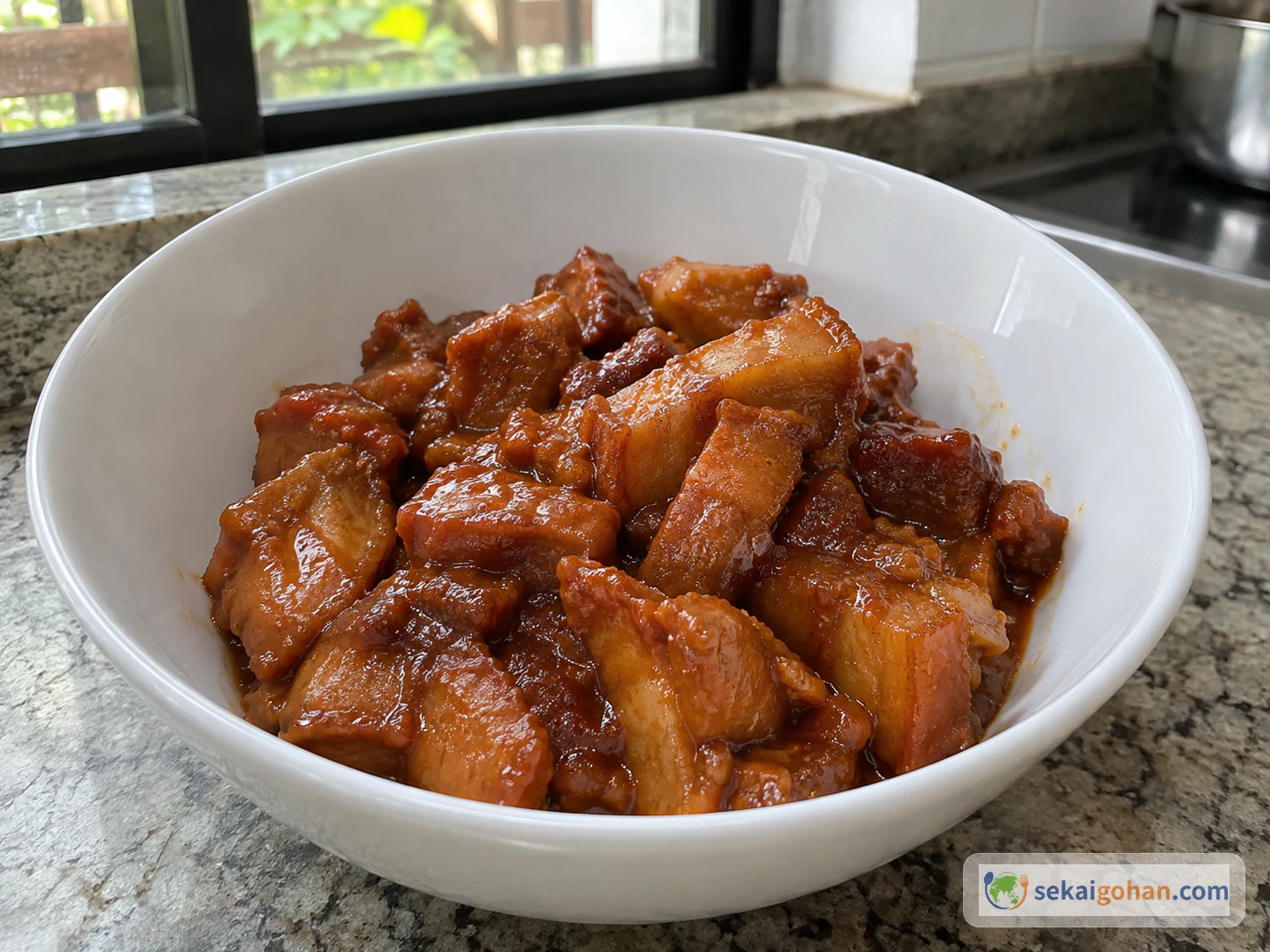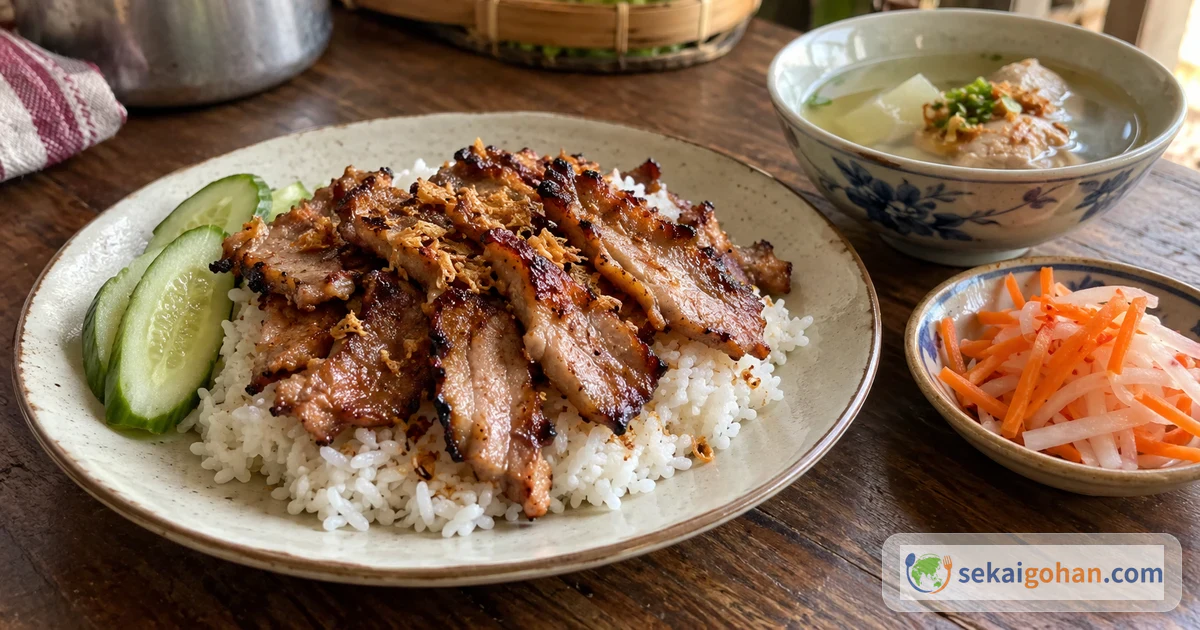
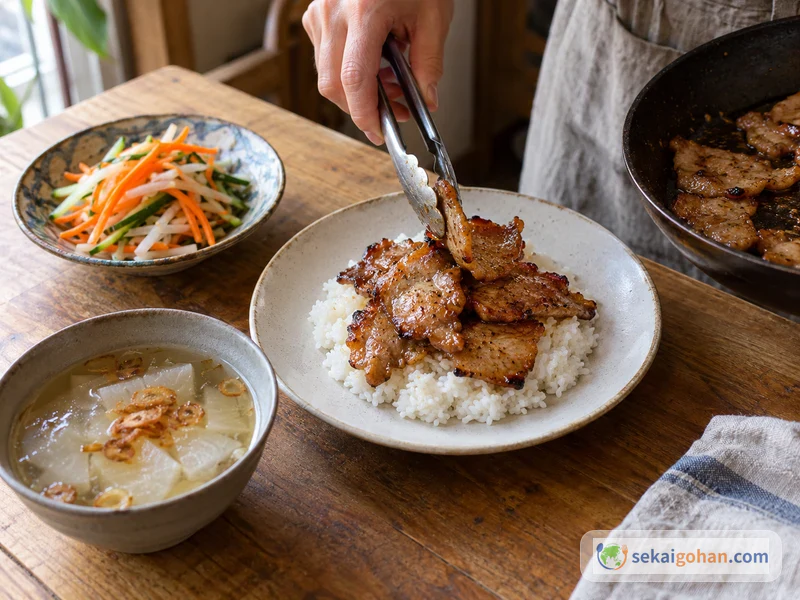
Before the dawn is fully up, charcoal is already glowing red on a street corner and thin slices of sweet-marinated pork are laid out on the grill. Each time fat drips onto the coals, white smoke rises, and the smell of burnt sugar and garlic drifts across the road. Rice goes on a plate with the grilled pork on top, a pinch of sweet-sour pickles goes beside it, and a small bowl of soup comes alongside. This is bai sach chrouk (pork and rice), the plate Cambodians start the day with: sweet-salty pork caramelized over charcoal, cut by sharp pickles and a sip of hot broth.
Bai sach chrouk, Cambodia's breakfast plate
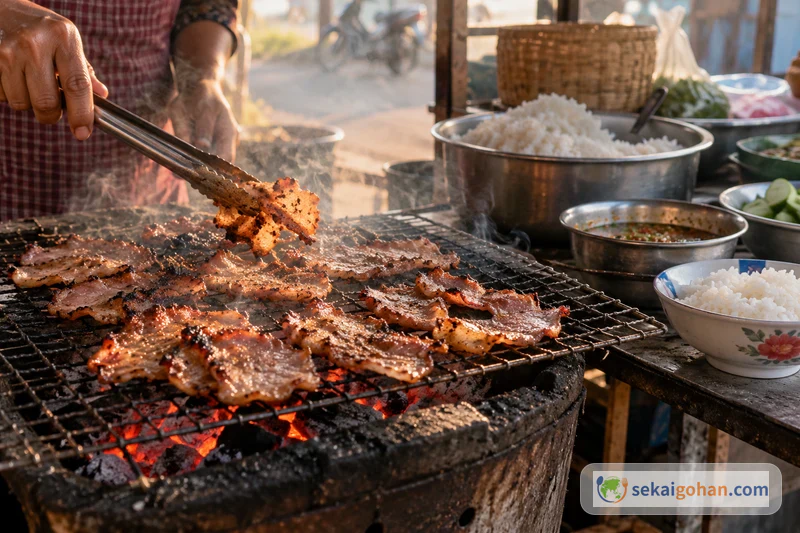
In Khmer it is written បាយសាច់ជ្រូក, which simply means "rice and pork." The name is plain, but this is one of the best-loved breakfasts in Cambodia, and in the capital, Phnom Penh, it is sold on corner after corner. Cambodians are early risers, so after 8 a.m. you hardly see anyone making it or eating it. Stalls light the grill at daybreak, sell out during the morning, and close.
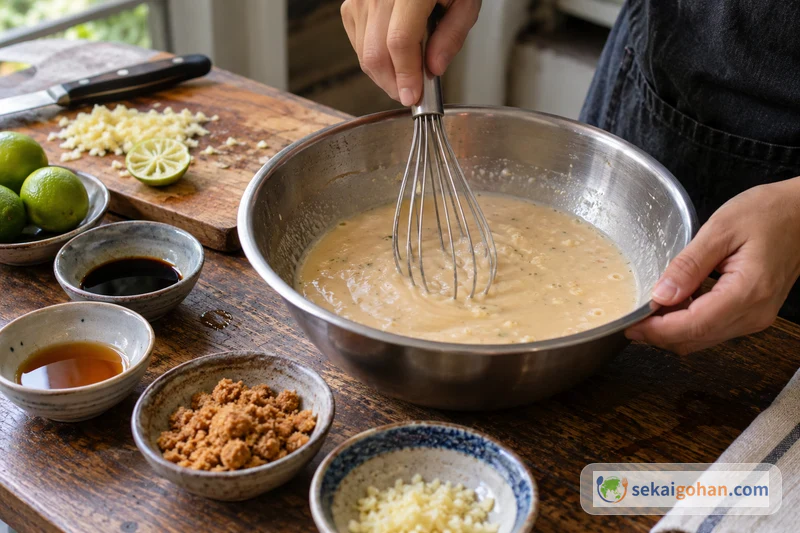
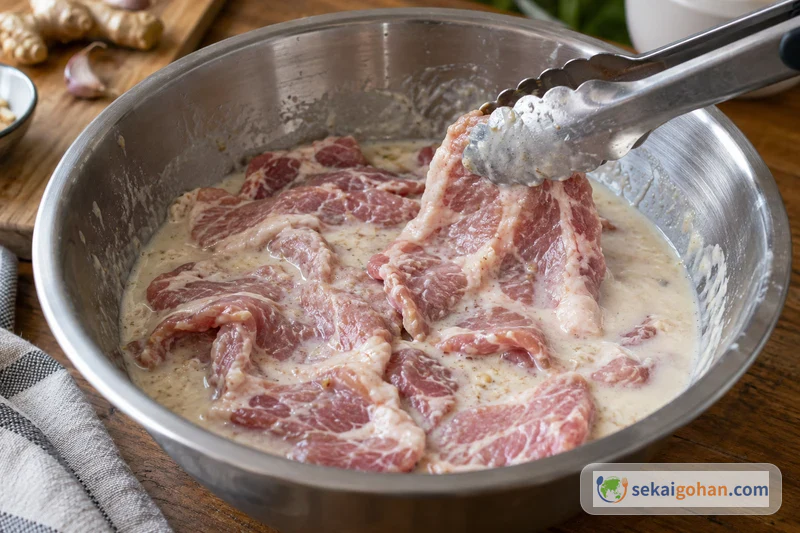
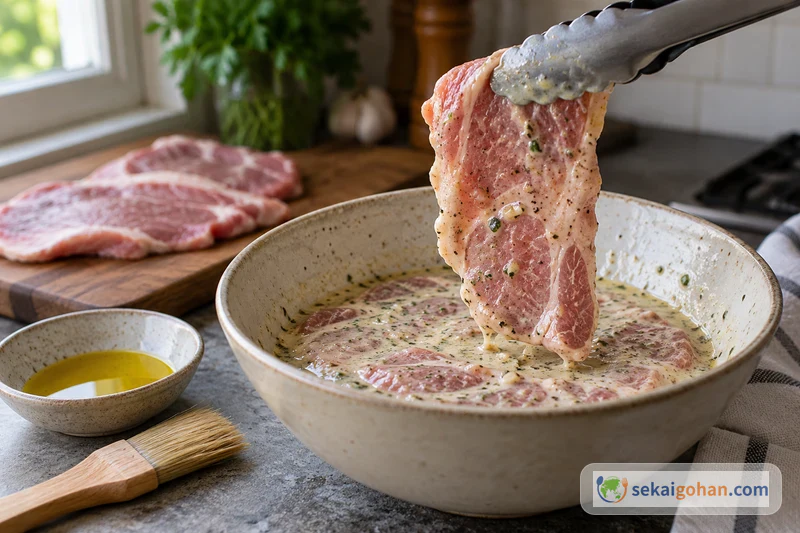
Each stall's marinade is a little different. The base is the sweet-salty pairing of soy sauce and palm sugar. Some stalls add coconut milk, and others push the fish sauce and garlic hard. Every stall cuts the pork thin and grills it well over charcoal until the sugar caramelizes and shines, while coconut milk and pork fat drip onto the coals and send up smoke that gives the meat a toasty flavor.
The rice at the stalls is often short-grained broken rice. It's a holdover from the days when cheap rice was used, and its tender mouthfeel has become part of the dish.
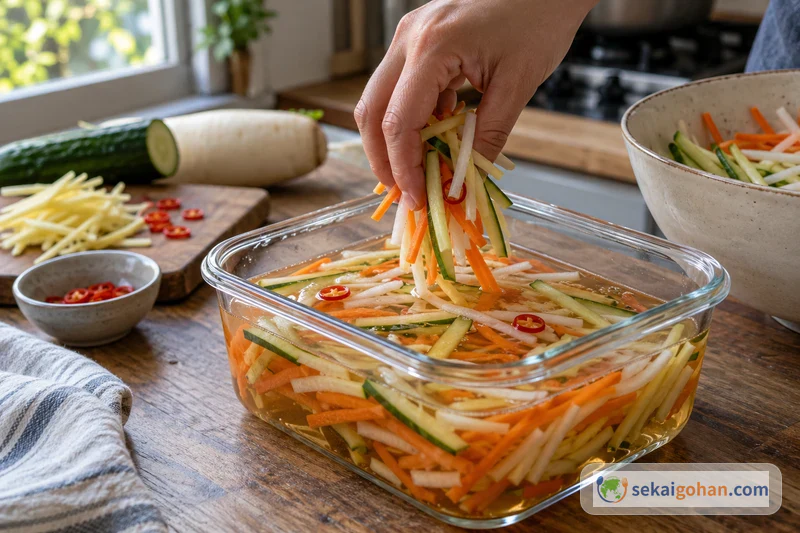
The sides matter as much as the pork. The small dish of pickles is cucumber, carrot, and daikon in a sweet-sour brine, and its acidity resets your palate after the sweetness and fat of the meat. Some stalls serve a sharply sour pickle of shredded green mango with fish mint, an herb from the lizard-tail family. The soup is usually a clear chicken broth with daikon and fried onion floating in it, and sometimes it's borrowed from the noodle stall next door, which is very much a street-stall touch.
Ingredients (serves 4)
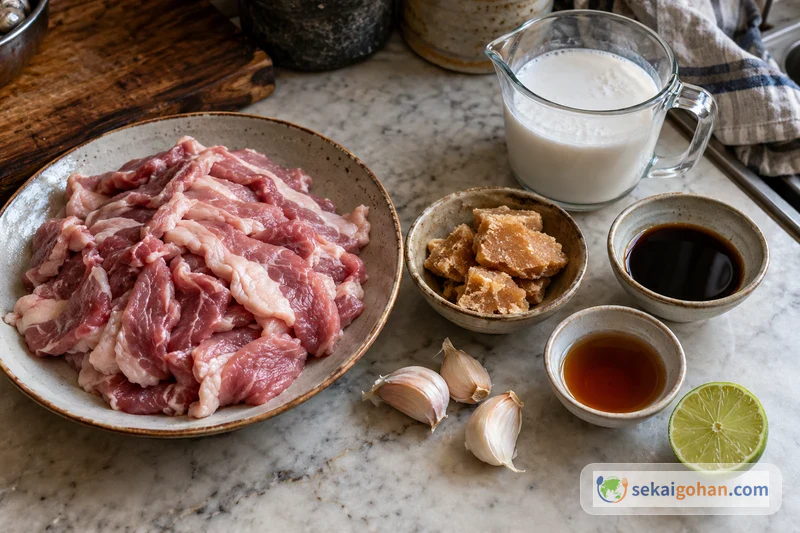
The amounts of pork and marinade are scaled from 6 servings to 4 servings at home, assuming 5.5 oz (150 g) of pork per person, so that everything is used up.
This dish contains soy and wheat (soy sauce) and fish (fish sauce). Coconut milk comes from coconut. The red chili in the pickles makes it much hotter if the seeds go in, so leave it out if children will eat it.
Choosing pork, palm sugar, and rice
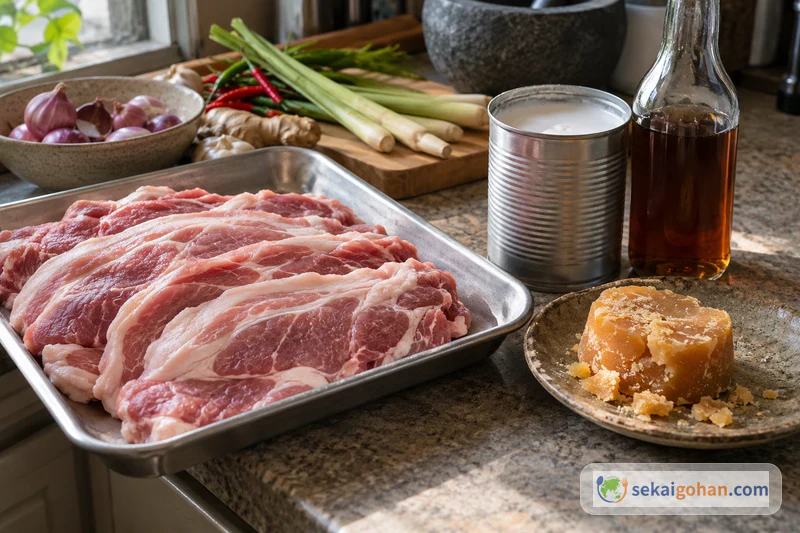
Use pork neck if you can find it. Pork shoulder has a moderate amount of fat and a similar texture, so it's a good stand-in. Cut it about 0.25 inch (5 mm) thick. If it's as thin as hot-pot slices, the meat shrinks and toughens as it cooks; at over 0.5 inches (1 cm), the sweetness of the marinade doesn't reach the center.
Palm sugar is often sold in blocks. Shave it with the back of a knife or grate it coarsely before measuring so it dissolves more easily into the marinade. If you can't find it, use the same weight of light brown sugar or muscovado, and choose a rich brown sugar to get closer to the sweetness of the stalls. White granulated sugar also works, but you lose the richness of palm sugar and the sweetness tastes cleaner.
Canned coconut milk is the easiest option. The solid fat floats to the top of the can, so stir it well before measuring. For fish sauce, use a Thai-style one, which is now easy to find in the international aisle of most supermarkets. Thai jasmine rice has an aroma close to the broken rice at the stalls, though ordinary white rice goes well with it too.
How to make bai sach chrouk
Both the pickles and the pork are prepared the night before. Allow about 40 minutes of prep and about 20 minutes to grill and plate, but because the pork marinates in the refrigerator overnight (about 12 hours), count about 13 hours in all. In the morning you only warm the rice and grill the meat to put the table together.
Do not eat pork raw. Cook pork until the center changes color and reaches 167°F (75°C) for at least 1 minute. Even with thin slices, do not judge by the browning alone; cut into the thickest part and check the color inside. If you have a cooking thermometer, measuring the center temperature is more reliable.
Because the marinade has a lot of sugar, scorched residue builds up on the pan surface. Before grilling the second and later batches, wipe off the char with paper towels. Leaving char on and cooking the next batch transfers bitterness.
Grilling bai sach chrouk at home
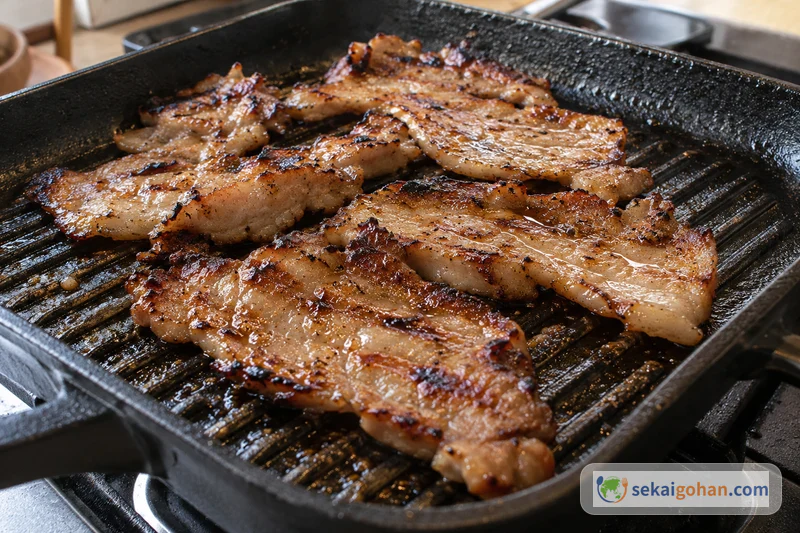
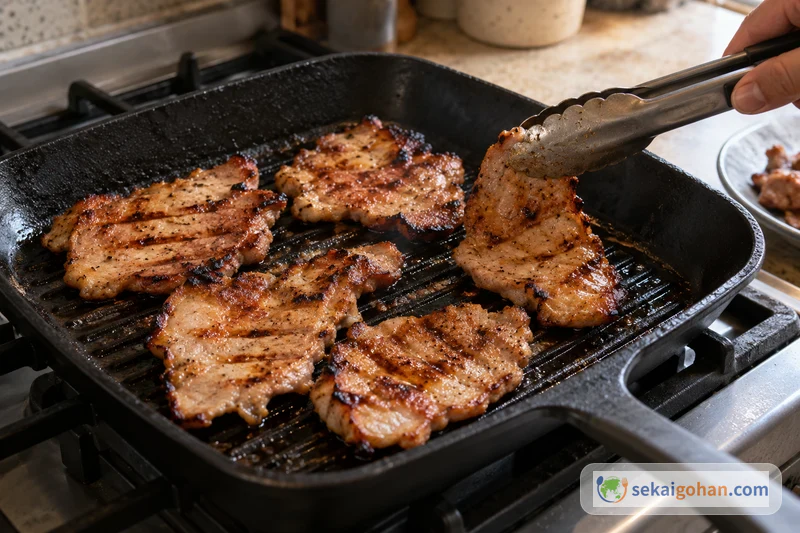
Without charcoal, a grill pan or a heavy skillet still does a very good job. The marinade is rich with sugar and coconut milk, though, so high heat all at once scorches the surface before the inside cooks. Stay at a strong medium heat and turn the meat once the underside has taken on color.
The biggest difference between a stall grill and a home skillet is where the fat goes. On a grate, the dripping fat turns to smoke on the charcoal and sends its aroma back into the meat. In a skillet, the fat pools around the meat, which ends up shallow-frying instead of grilling. The ridges of a grill pan keep the meat out of the fat, so the surface dries and grills toasty. If you're using a skillet, blot up the pooled fat with paper towels now and then.
You want scorched streaks here and there and a deep amber color overall. When the coconut milk in the marinade chars, it smells sweet and toasty, but push it too far and it turns bitter. At the stalls the pork is cooked until quite dry. It isn't meant to be moist and tender like Japanese ginger pork. A little chew is what you want, because that's what makes it work with the rice and pickles.
You can also cook it under a broiler. Line the rack with aluminum foil to keep the marinade from dripping and smoking. Lay the slices on the foil without overlapping and, over medium heat, give each side 4 to 5 minutes, turning while watching the color.
Serving, variations, and storage
How to eat bai sach chrouk
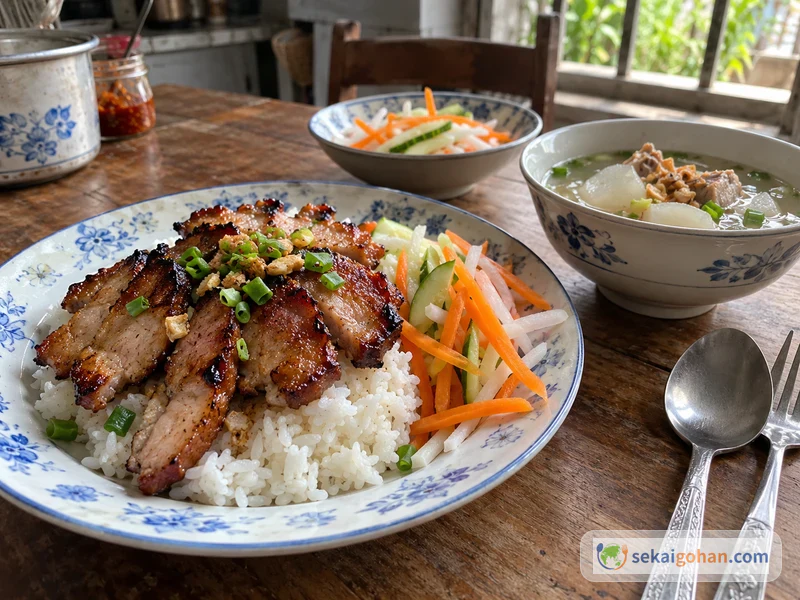
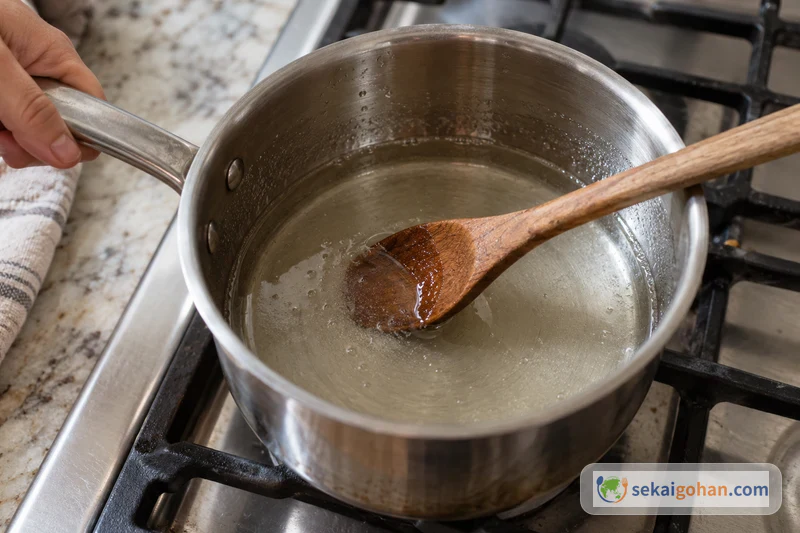
Take a bite of pork, then a bite of rice, with the sour pickles and the warm soup in between. Going back and forth like this keeps the sweet meat from getting tiresome before you finish. Some stalls spoon about 2 tablespoons of marinade over the grilled meat or add chopped pork. If you want to do the same at home, pour the marinade into a small pot and boil it hard for at least 1 minute so it's cooked before you use it.
For a toasty finish, toast fine desiccated coconut in a skillet over low heat for 2 to 3 minutes until pale golden and scatter it on top. You can also put fish sauce with chili, or a dipping sauce of pepper and lime, on the table. If you have palm sugar and fish sauce left over, they also go into two other Cambodian home dishes: lok lak (in Japanese), cubes of beef stir-fried until sweet and savory, and amok (in Japanese), fish steamed in coconut milk.
Chicken and green mango variations
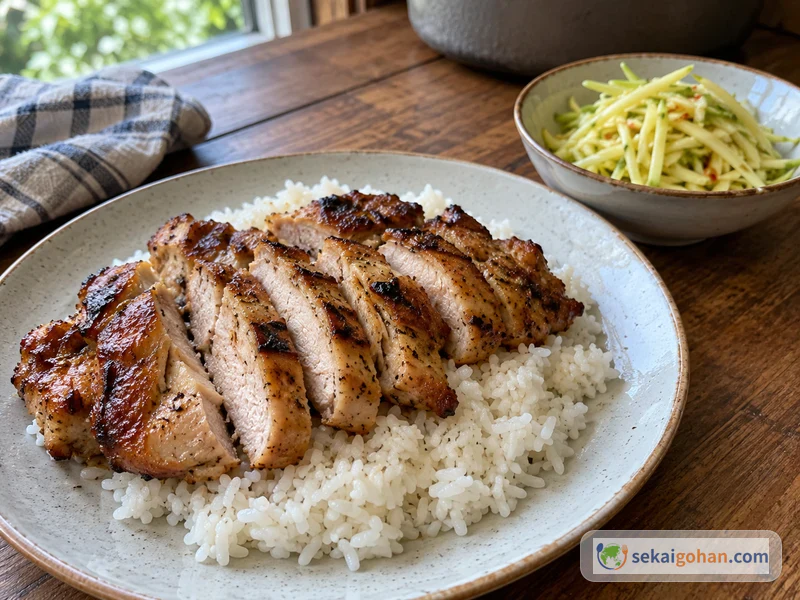
Some stalls also serve "chicken and rice," with grilled chicken in place of the pork, and the same marinade suits chicken thigh well. Remove the skin, open the thigh out to about 0.5 inches (1 cm) thick, and marinate it in the same sauce. Grill about 5 minutes a side, a little longer than pork, until it's cooked through to the center and the juices run clear.
For the shredded green mango pickle some stalls serve, unripe mango can be hard to find. Thinly sliced green apple left in the same sweet-sour brine for about 30 minutes makes a side with similar acidity and crunch.
Packing it for lunch
For a packed lunch, let the grilled pork cool completely before laying it over the rice, and squeeze the pickles well and pack them in a separate container. Because of the sugar in the marinade, the meat doesn't stiffen as it cools, so it tastes good even cold.
Frequently asked questions
What if I do not have time to marinate overnight?
Marinate for at least 3 hours, or overnight if you can. If you're short on time, slice the meat thinner than 0.25 inch (5 mm) so the flavor gets in faster.
How long do the pickles keep?
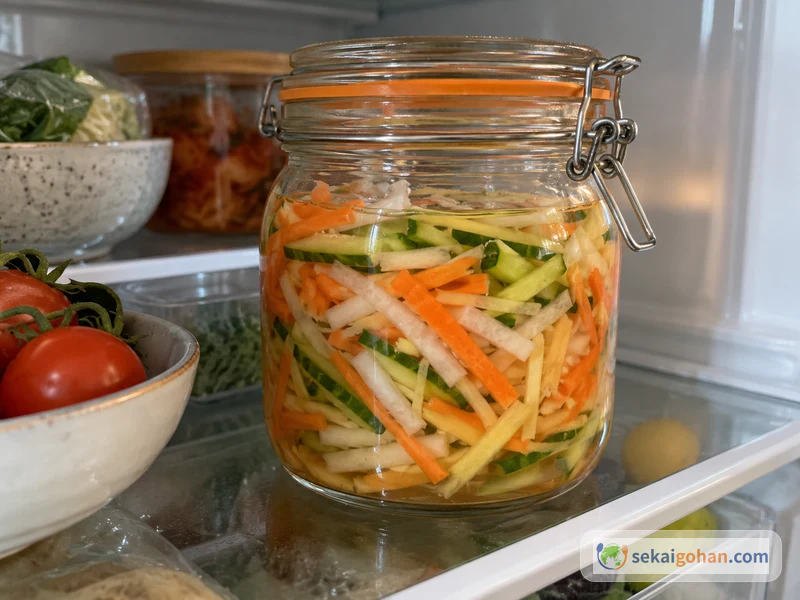
In a sterilized jar in the refrigerator, the pickles keep for 6 weeks. Always take them out with clean chopsticks, and throw them away if the smell or color changes.
Can I make the grilled pork ahead?
Let the grilled pork cool a little, refrigerate it, and eat it by the next day. To reheat, cook it again in a skillet until it's hot all the way through. Raw pork sitting in the marinade should also stay refrigerated and be grilled by the next day.
Do I have to serve the soup?
The soup is optional, though the stalls often serve it. For a quick version, dissolve chicken bouillon in hot water and float some daikon or scallions in it. That's plenty for a morning table.