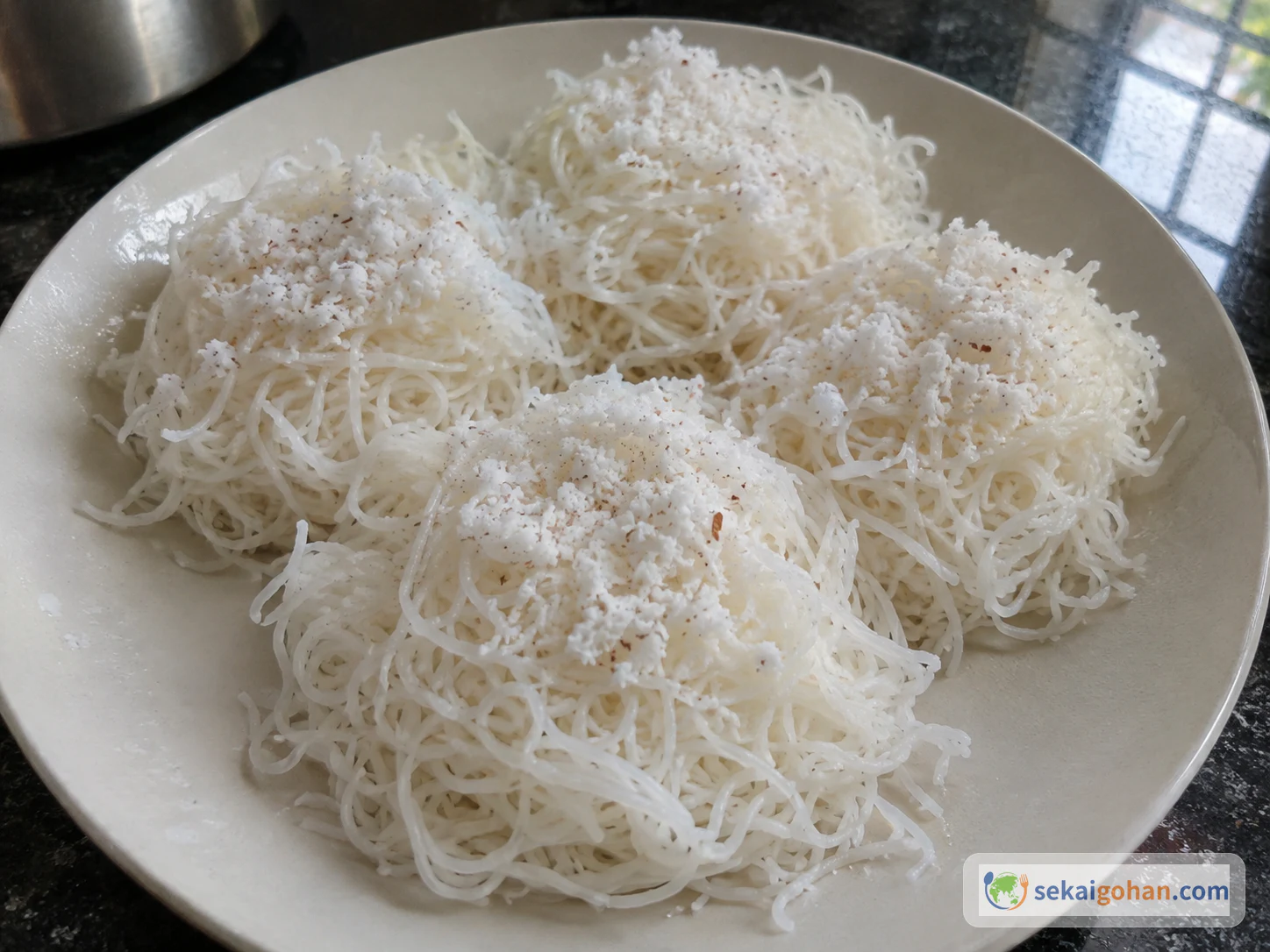
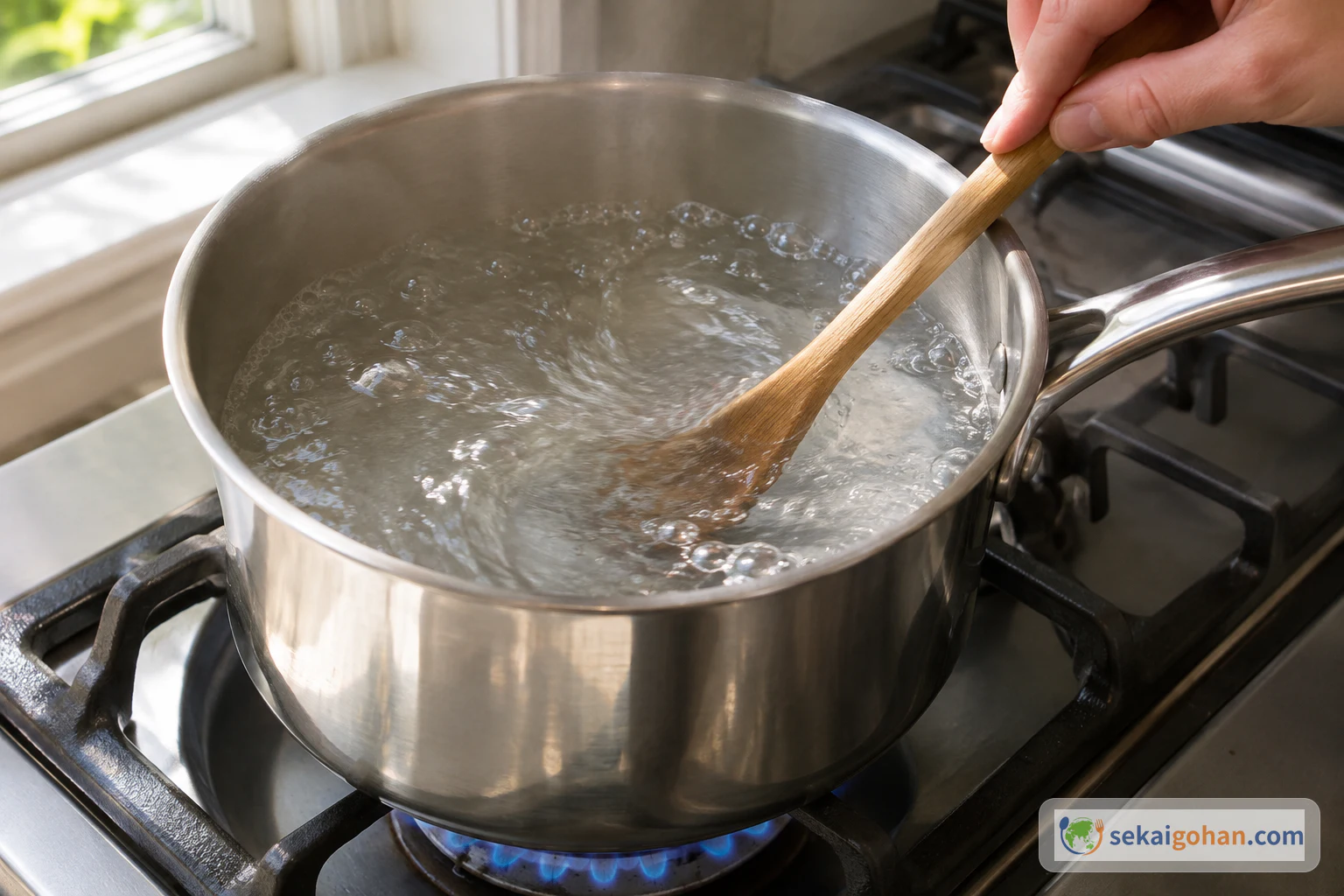
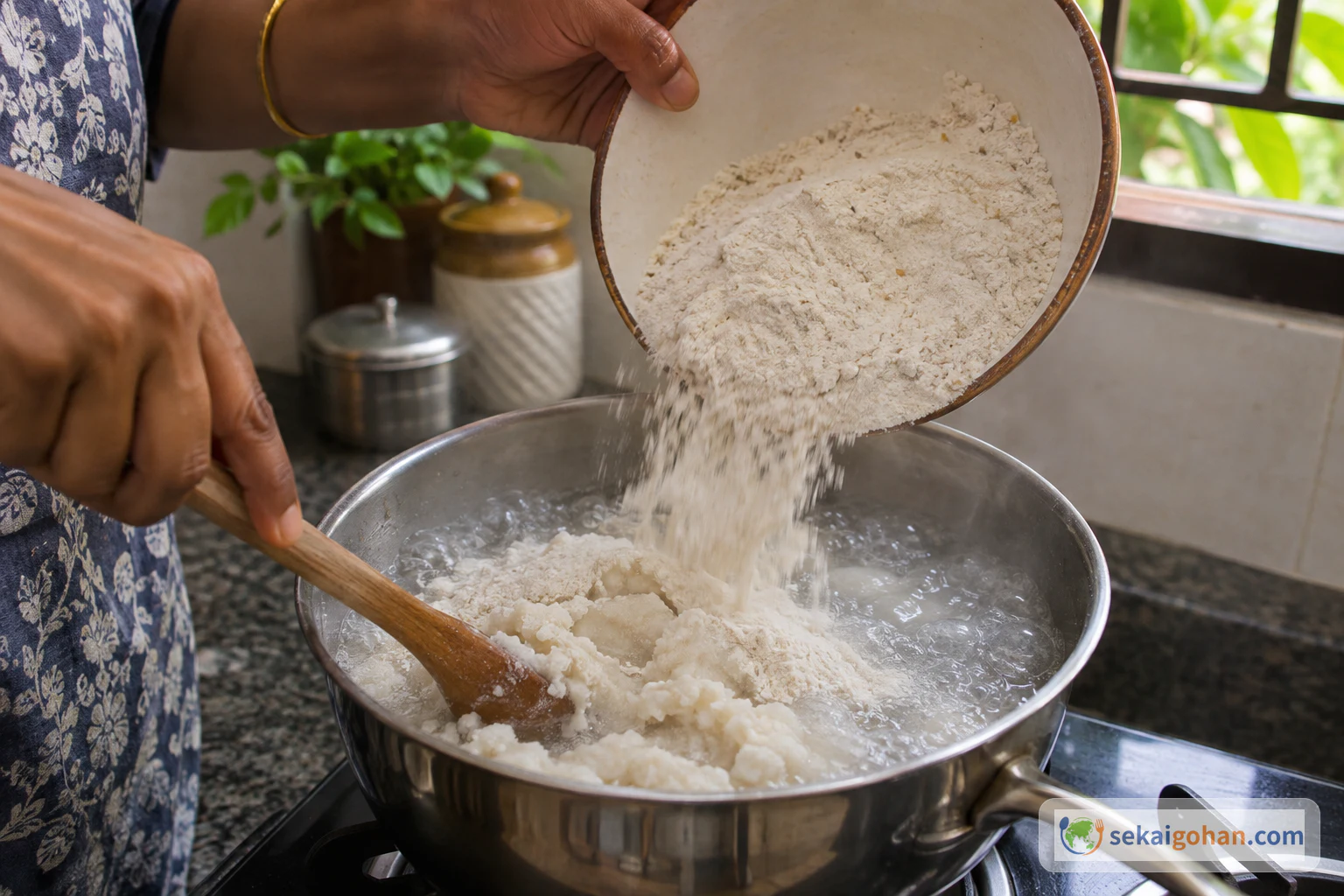
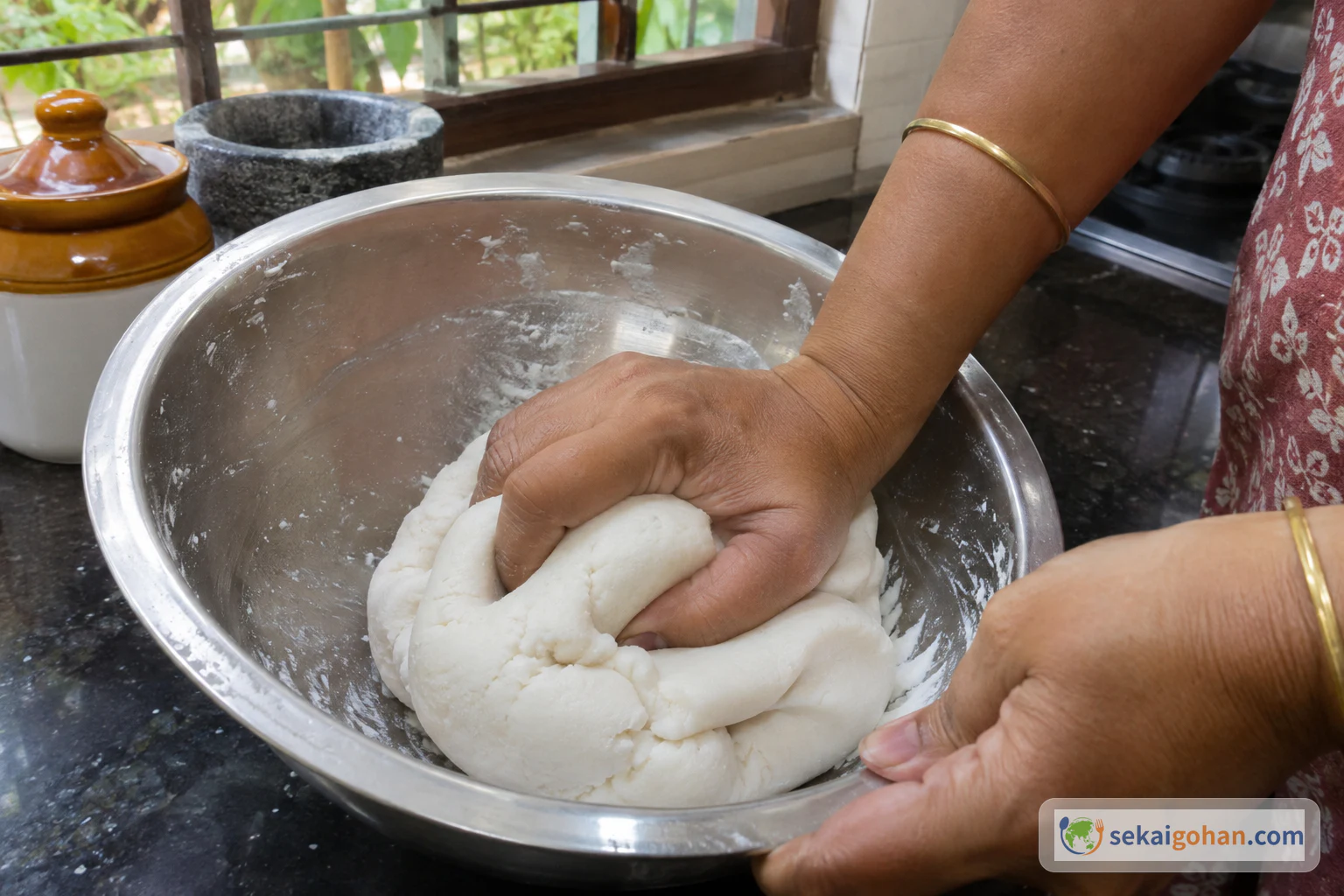
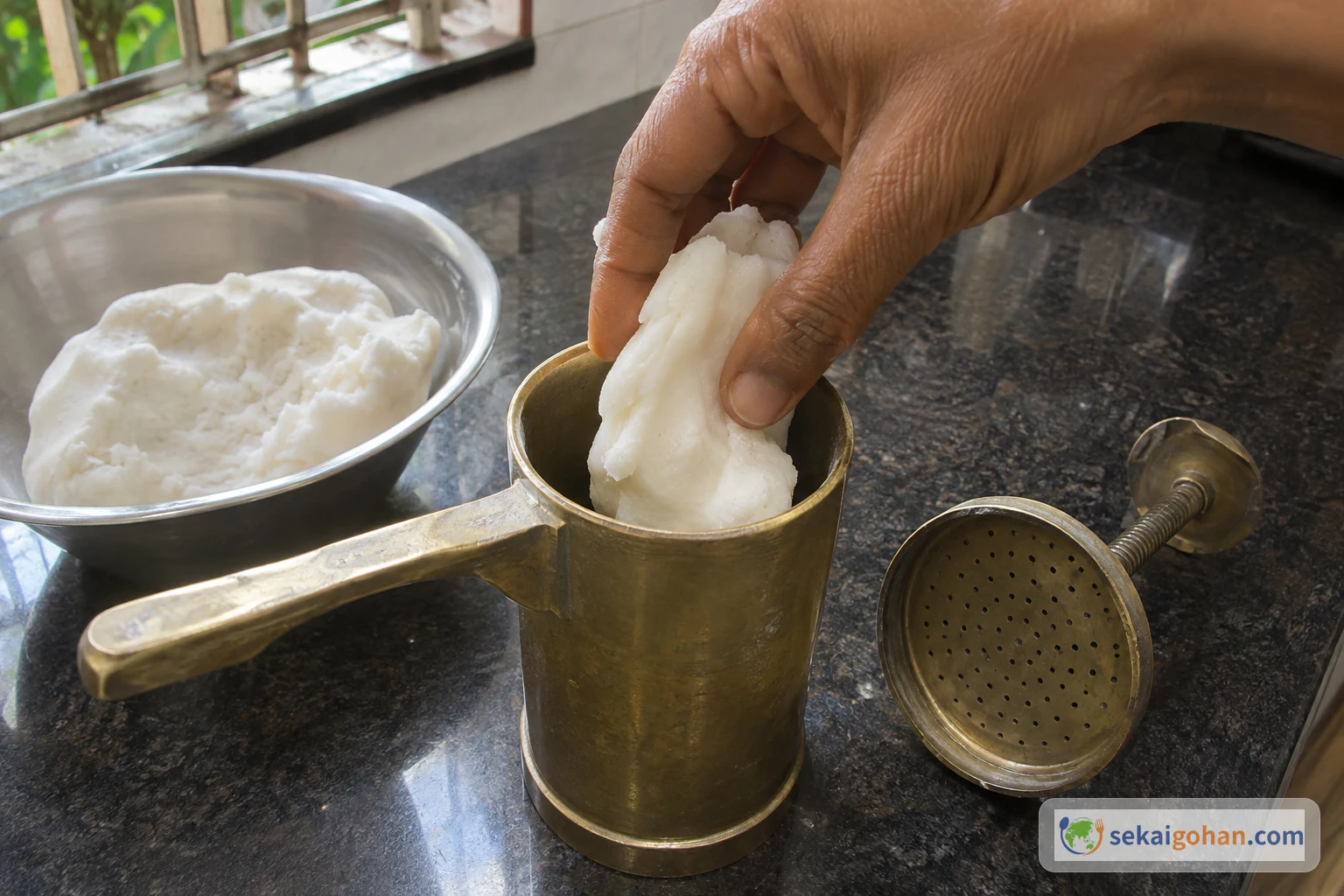
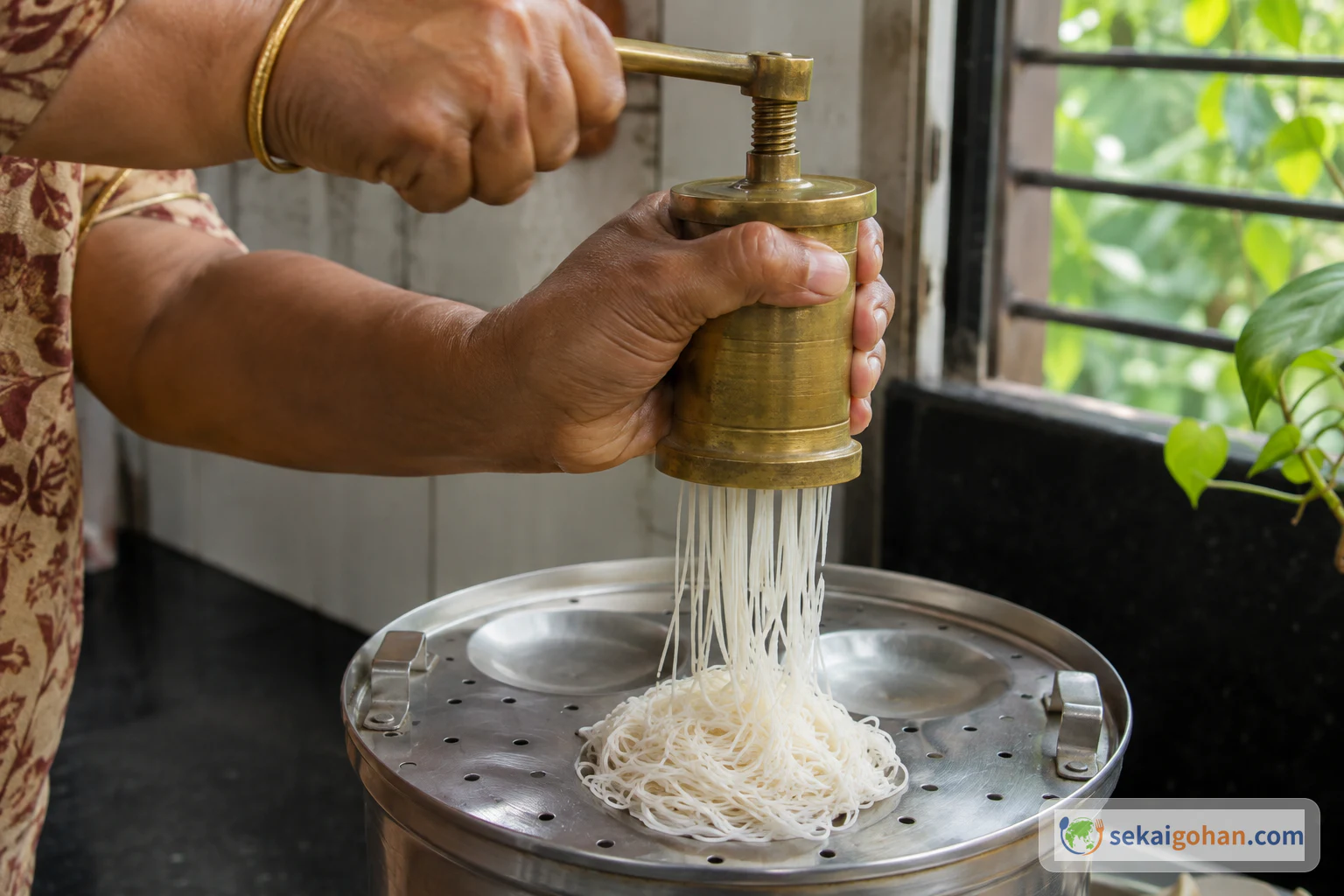
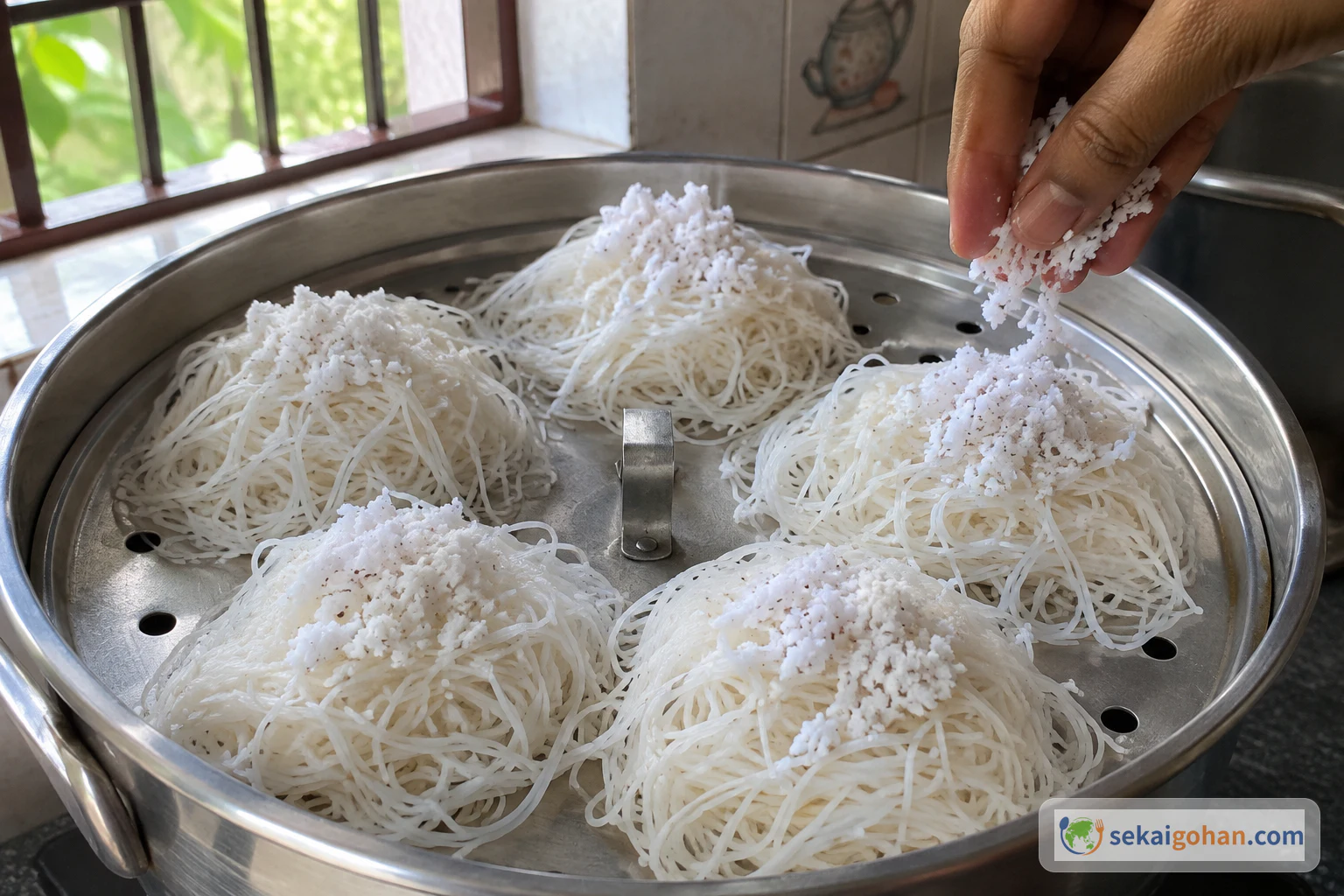
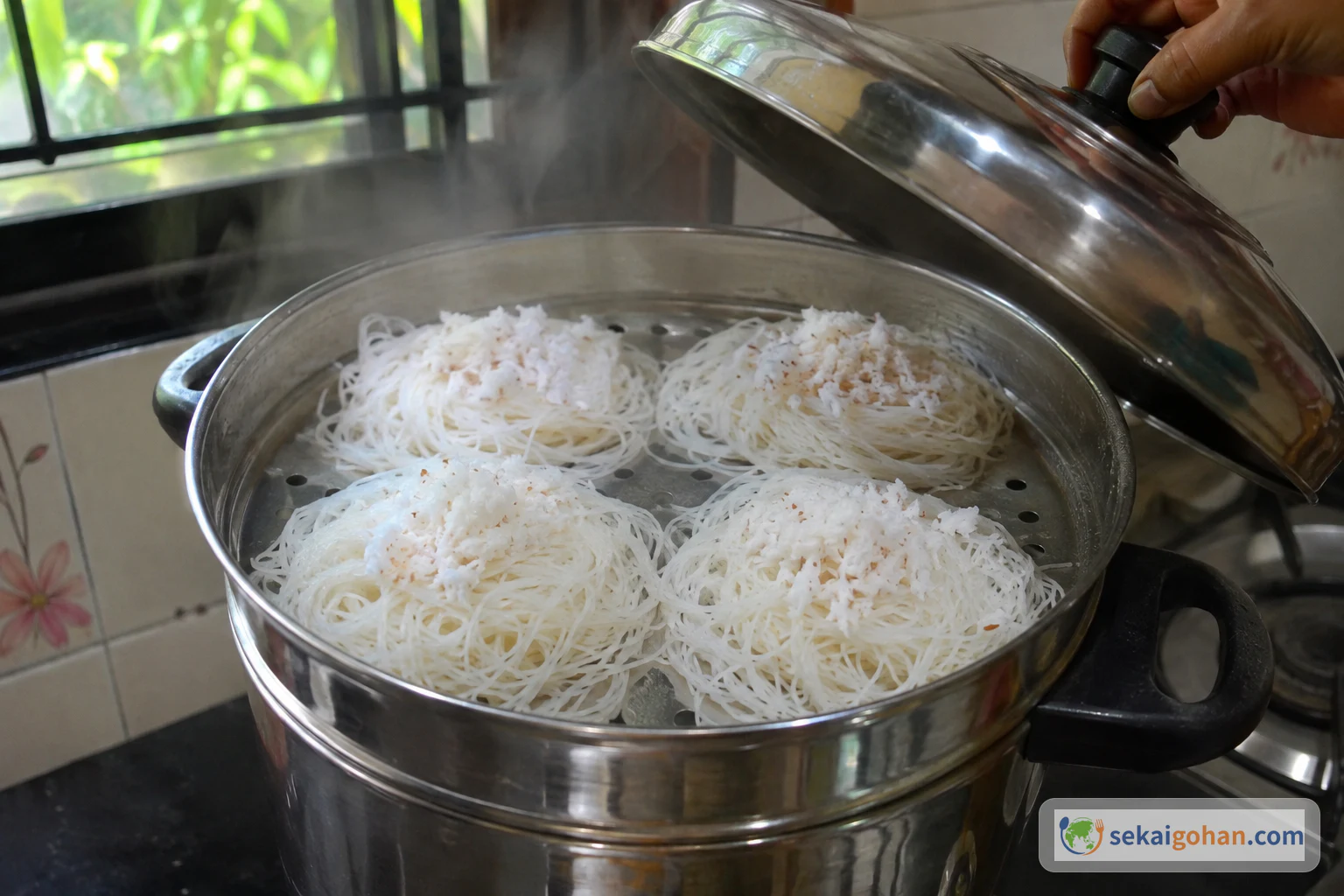
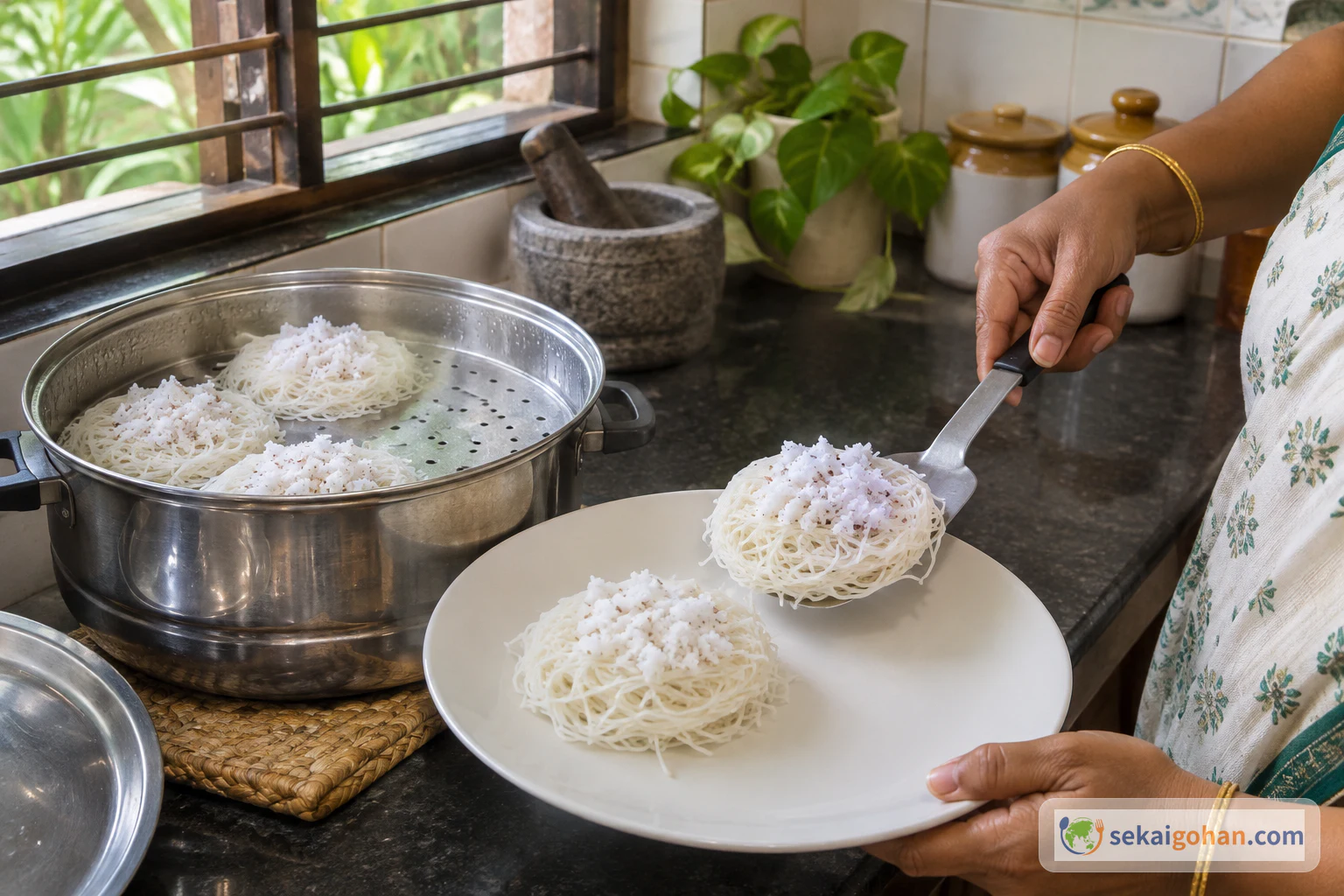
A soft, warm dough goes into a hand press. As you turn it, fine white strands fall through the small holes of the disc and gather on a steaming mould, and a little grated coconut goes on top before the whole thing steams for 5–10 minutes. This is idiyappam, also called nool puttu, a breakfast dish from Kerala. The dough is nothing more than roasted rice powder stirred into salted water as it starts to boil, and there's no oil anywhere in it.
Idiyappam in Kerala and Beyond
Idiyappam is a steamed breakfast dish, and that pressing step is what sets it apart. You don't get separate grains of rice, as in a bowl of plain rice, and you don't get a flat griddled bread. You get loose, delicate nests of rice strands.
Other South Indian and Sri Lankan rice dishes sound similar but are made differently. Idli comes from a fermented batter, dosa is griddled, and Sri Lankan hoppers are cooked in a pan. The closest relative is the Sri Lankan string hopper, or idiappa: nests of red or white roasted rice flour and water, pressed through a sieve-like tool and steamed for morning and evening meals. It belongs to the same family of pressed, steamed rice strands, but it's its own dish.
For more dishes from the country, see our India page.
Ingredients: Roasted Rice Powder and Grated Coconut
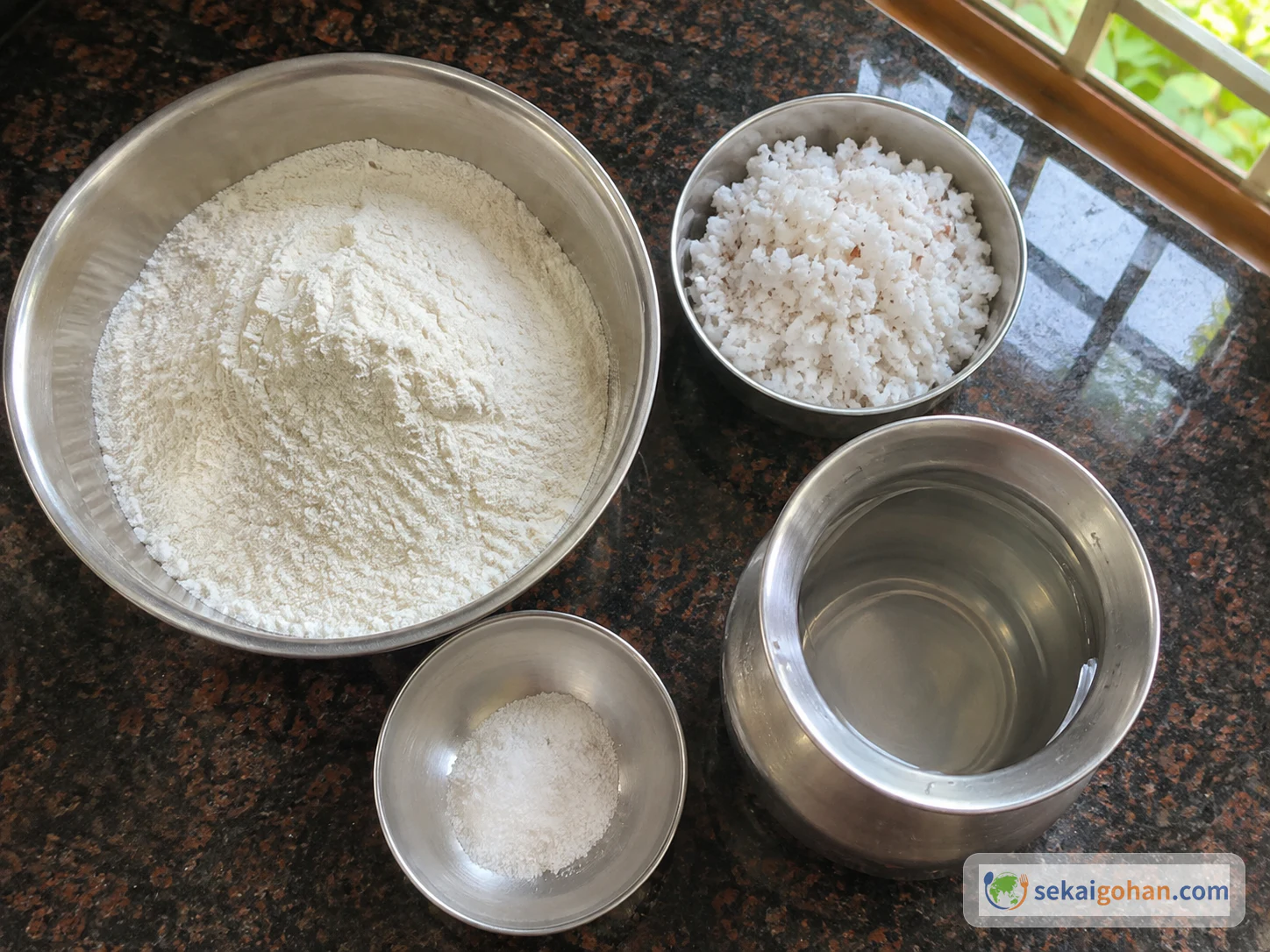
This dough contains no oil, and the mould isn't oiled either.
Equipment
- Saucepan
- Wooden spoon or spatula
- Mixing bowl for kneading
- Idiyappam press (Sevanazhi) with a fine perforated disc
- Steaming moulds or a perforated steaming tray
- Steamer with a lid
- Flat spatula for lifting the steamed strands
Choosing Rice Powder and Coconut for Idiyappam
Rice flour. Look for roasted rice powder sold for idiyappam. Plain raw rice flour and Japanese joshinko behave differently and won't work as a cup-for-cup swap.
Coconut. Use freshly grated coconut. Coconut milk is a different ingredient altogether and can't serve as a topping, and dried coconut flakes aren't a good stand-in either.
The press. A Sevanazhi is made for this job, and its fine disc is what shapes the strands.
There are no set amounts for the water and salt, so judge the water by how the dough feels: soft enough to knead and press.
This dish contains coconut. Check the labels on your rice powder and coconut products for allergen and cross-contact information, especially if you buy a packaged flour or a ready-grated product.
Idiyappam Troubleshooting
Most problems come down to how wet or dry the dough is. Change one thing at a time, in small amounts.
| Problem | Possible cause | What to try |
|---|---|---|
| The dough is too hot to knead | It hasn't cooled enough | Keep working it with a spoon and wait until it is comfortable to touch |
| The press is very hard to turn | The dough is too stiff, or the chamber is too full | Take some dough out. If it is still hard to turn, knead in a little hot water |
| The strands break as they come out | The dough is too dry | Return it to the bowl and knead in a little hot water |
| The dough is sticky or the strands clump | The dough is too wet | Knead in a little more roasted rice powder |
| The coconut has disappeared into the dough | It was mixed in too early | Next time, keep the dough plain and add the coconut after pressing |
Serving Idiyappam and Variations
In Kerala homes, idiyappam is often paired with egg roast. Some recipes that serve it this way make the strands a little differently, with rice flour, warm water, salt, oil and more coconut, and they put the coconut in the mould before the strands are pressed. Treat that as its own recipe rather than mixing its ratios into this one.
You'll also find instant idiyappam mixes in shops. They're a processed product, made industrially rather than the way it's done at home.
Frequently Asked Questions
How much water and salt should I use?
Add salt to taste, and add water until the dough is soft enough to knead and press.
What size is the cup?
Any cup works, as long as you use the same one for the rice powder and the coconut so the 2 cups to 1/2 cup ratio stays the same.
How many servings does this make?
The number of nests depends on how large you press them.
Should I oil the press or the mould?
No. This recipe uses no oil in the dough or the mould. Some other versions do, including the egg roast version above.
How do I know it is done?
Steam for 5–10 minutes, then check the strands.
How should I store leftovers?
Refrigerate leftovers promptly after they cool.