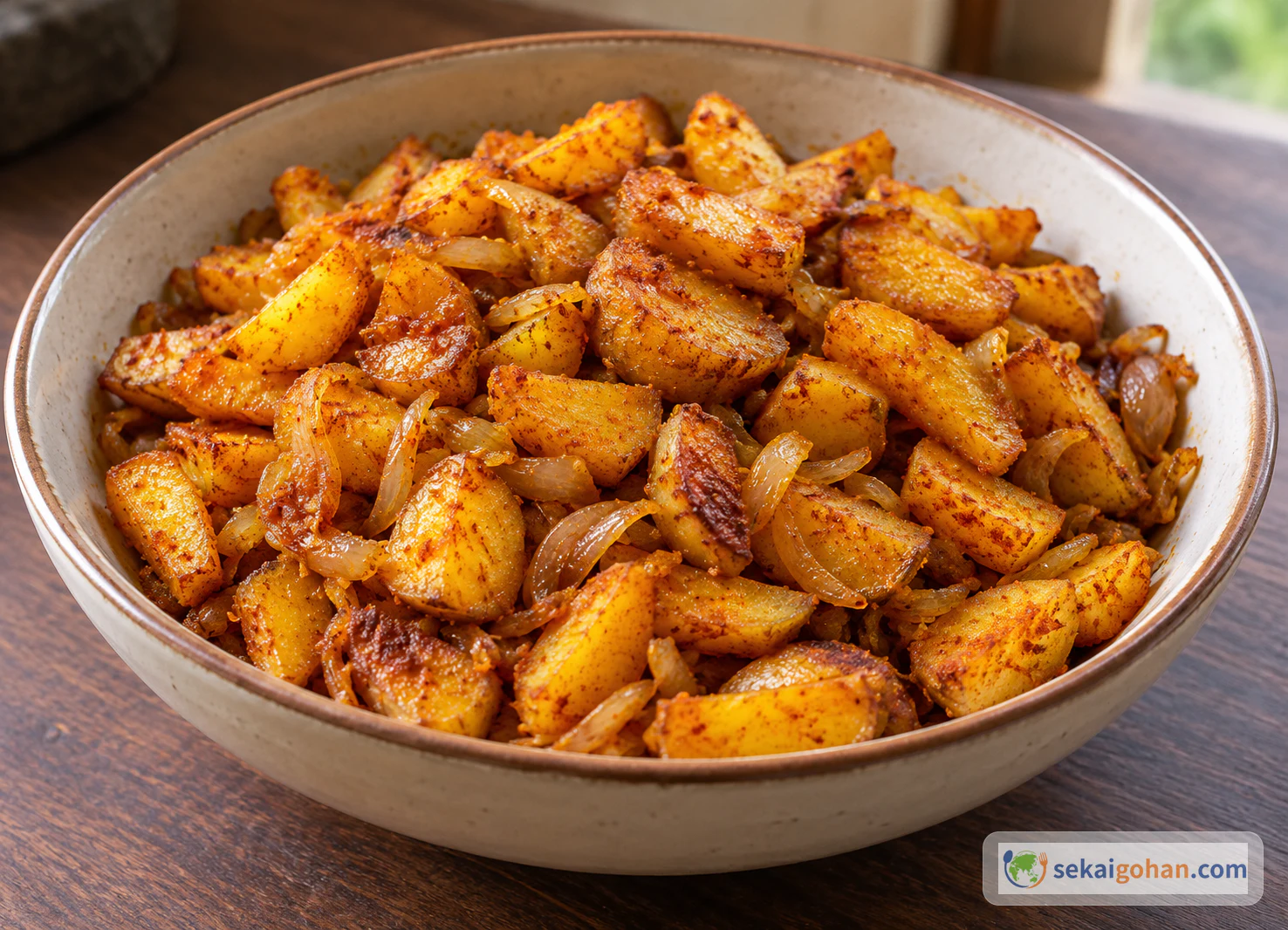
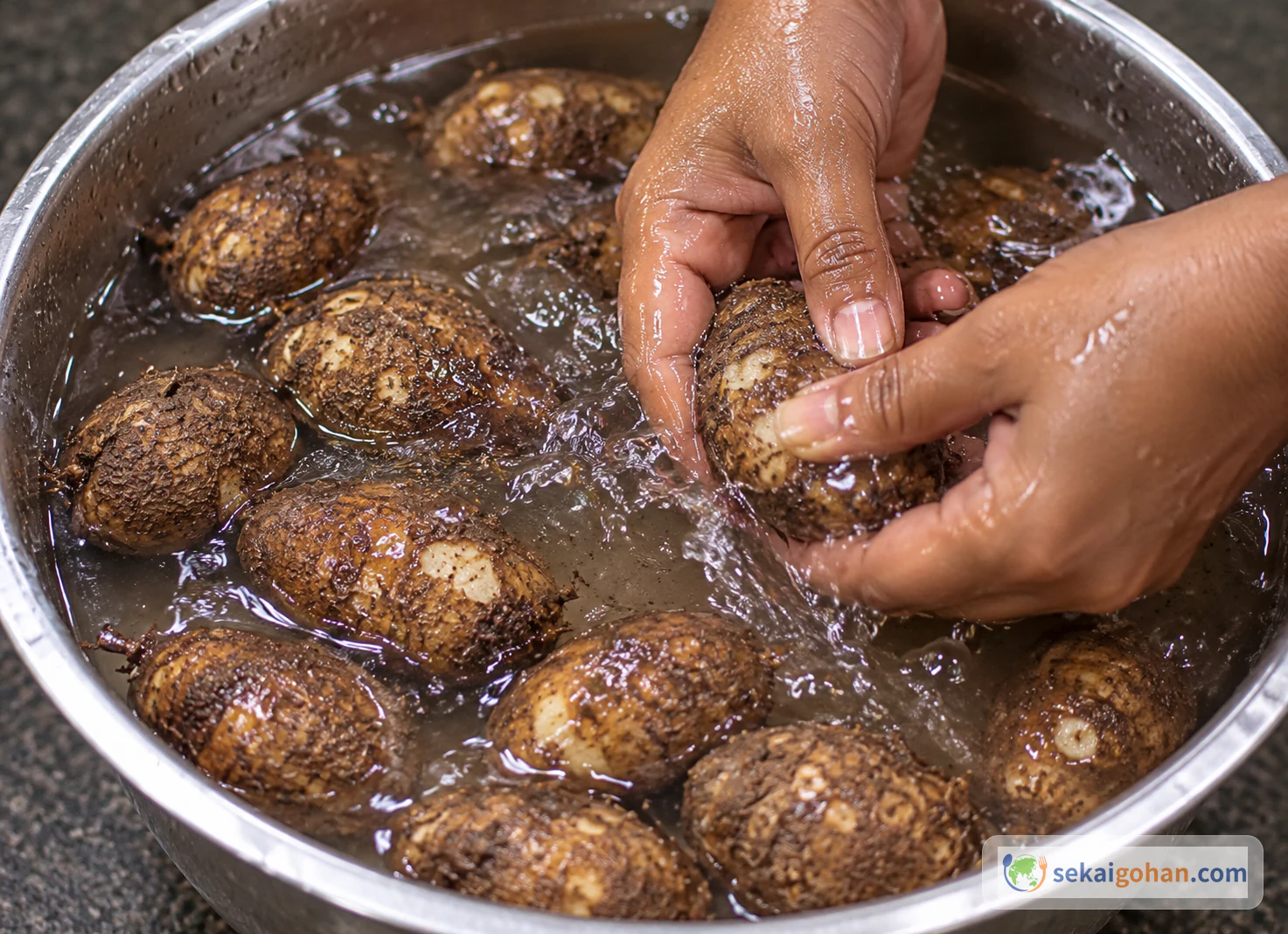
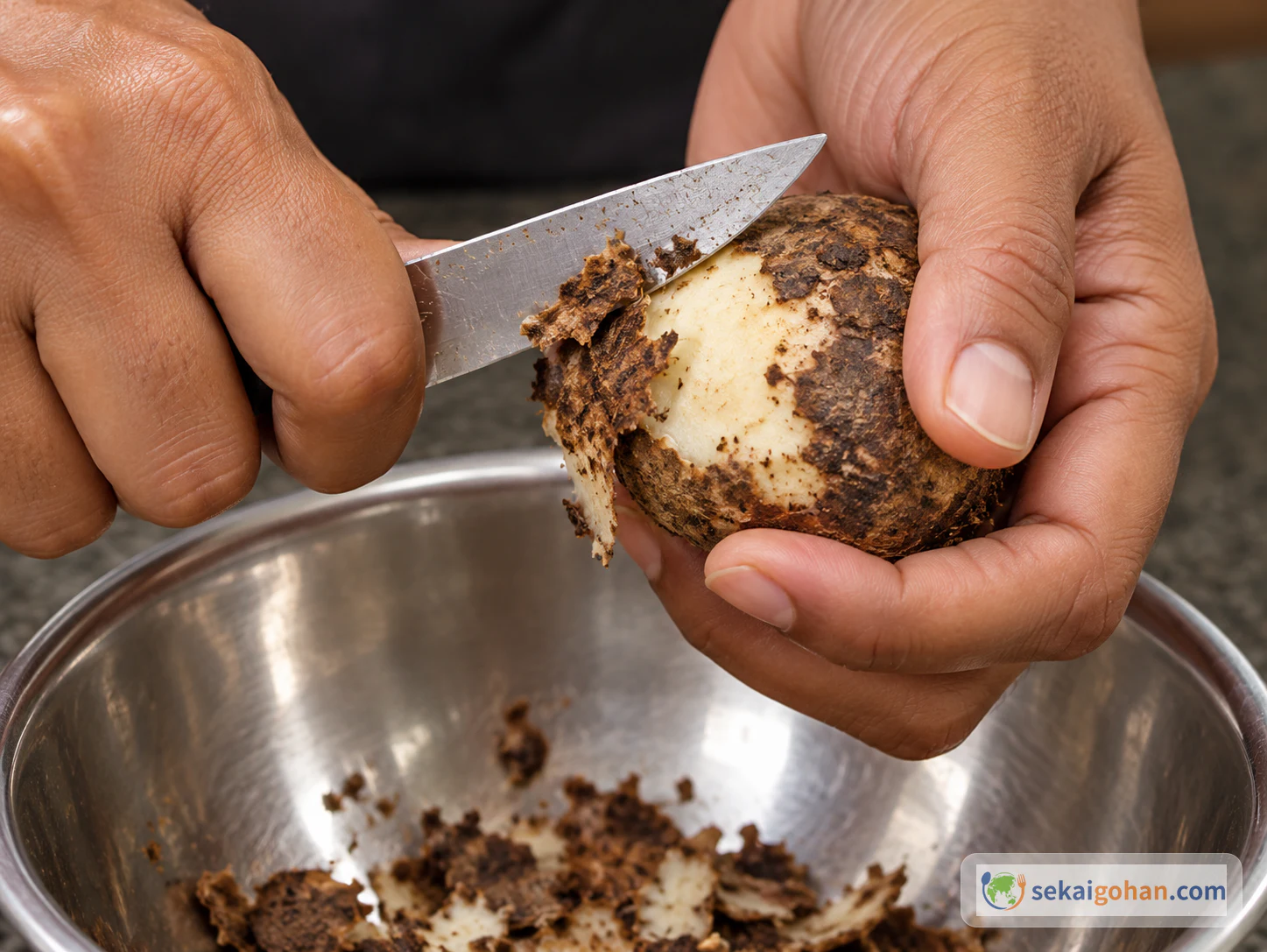
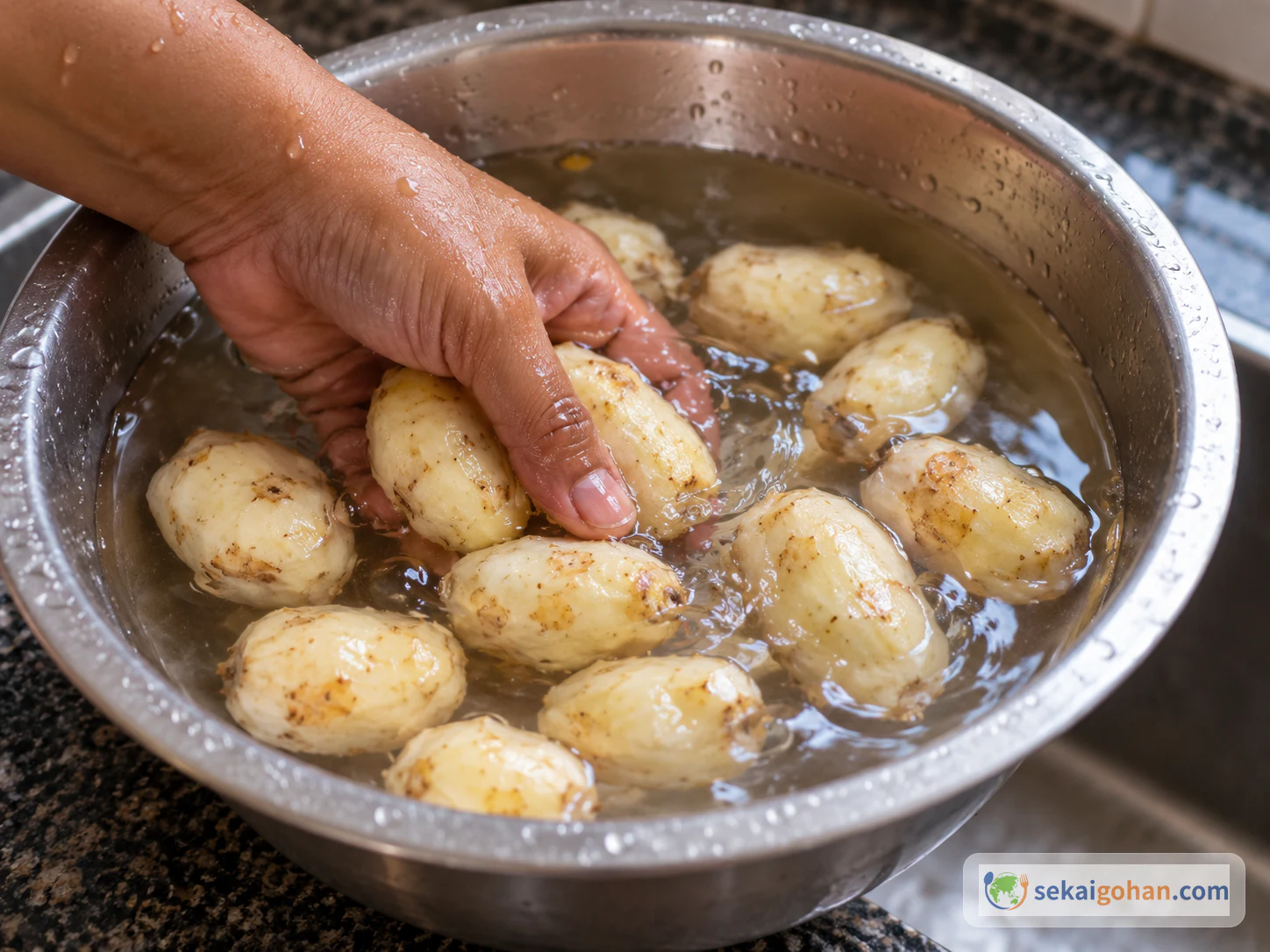
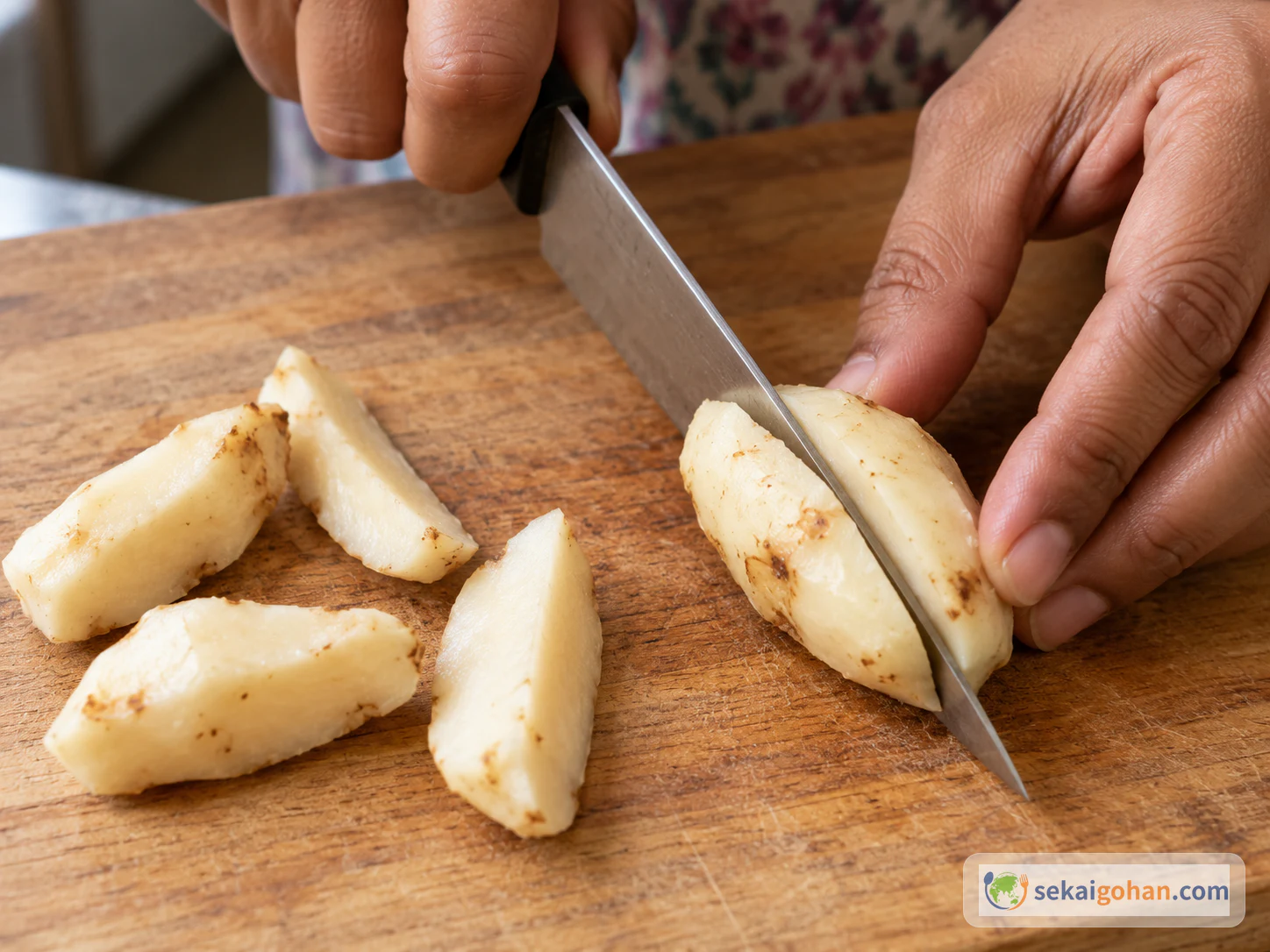
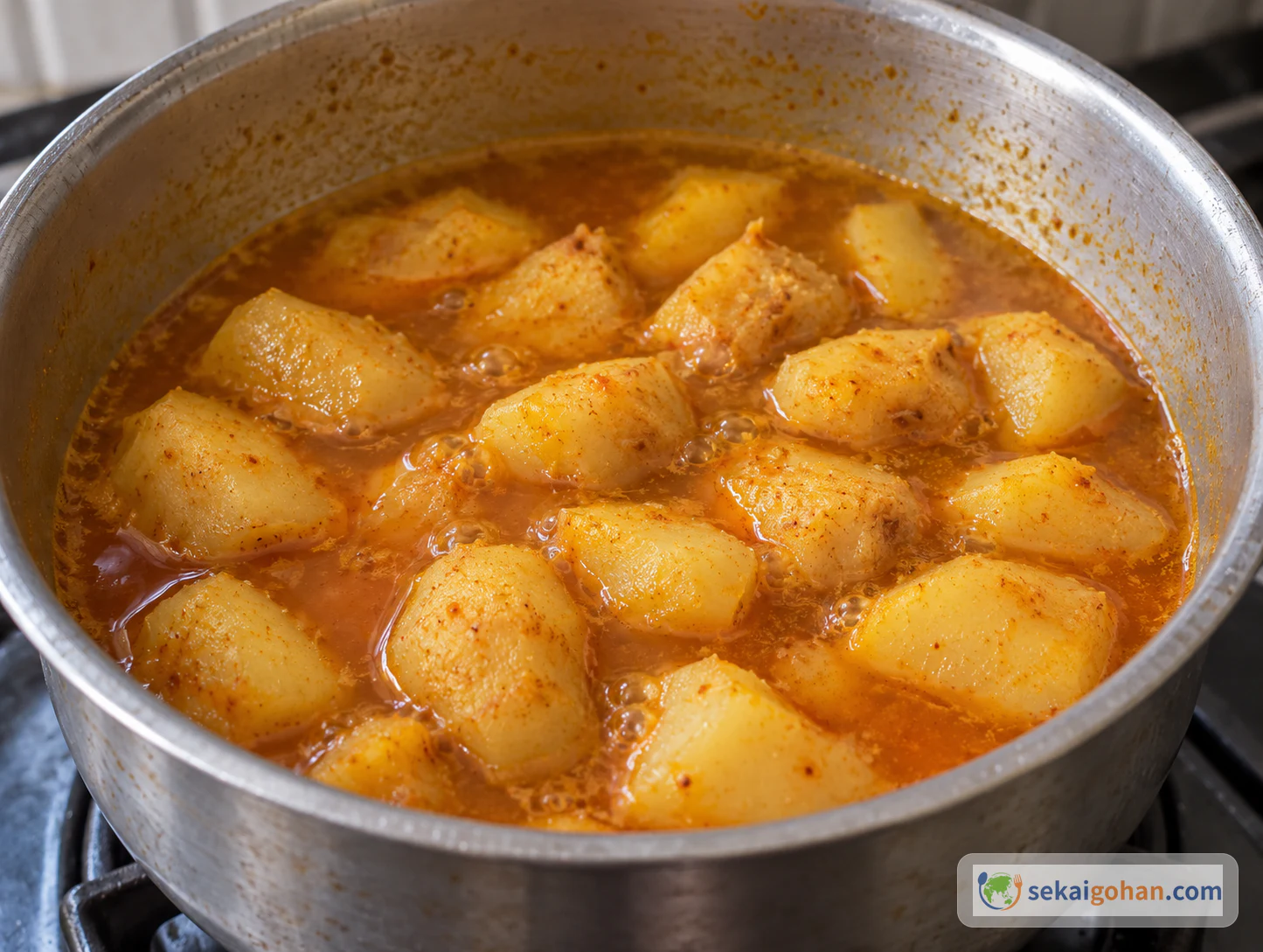
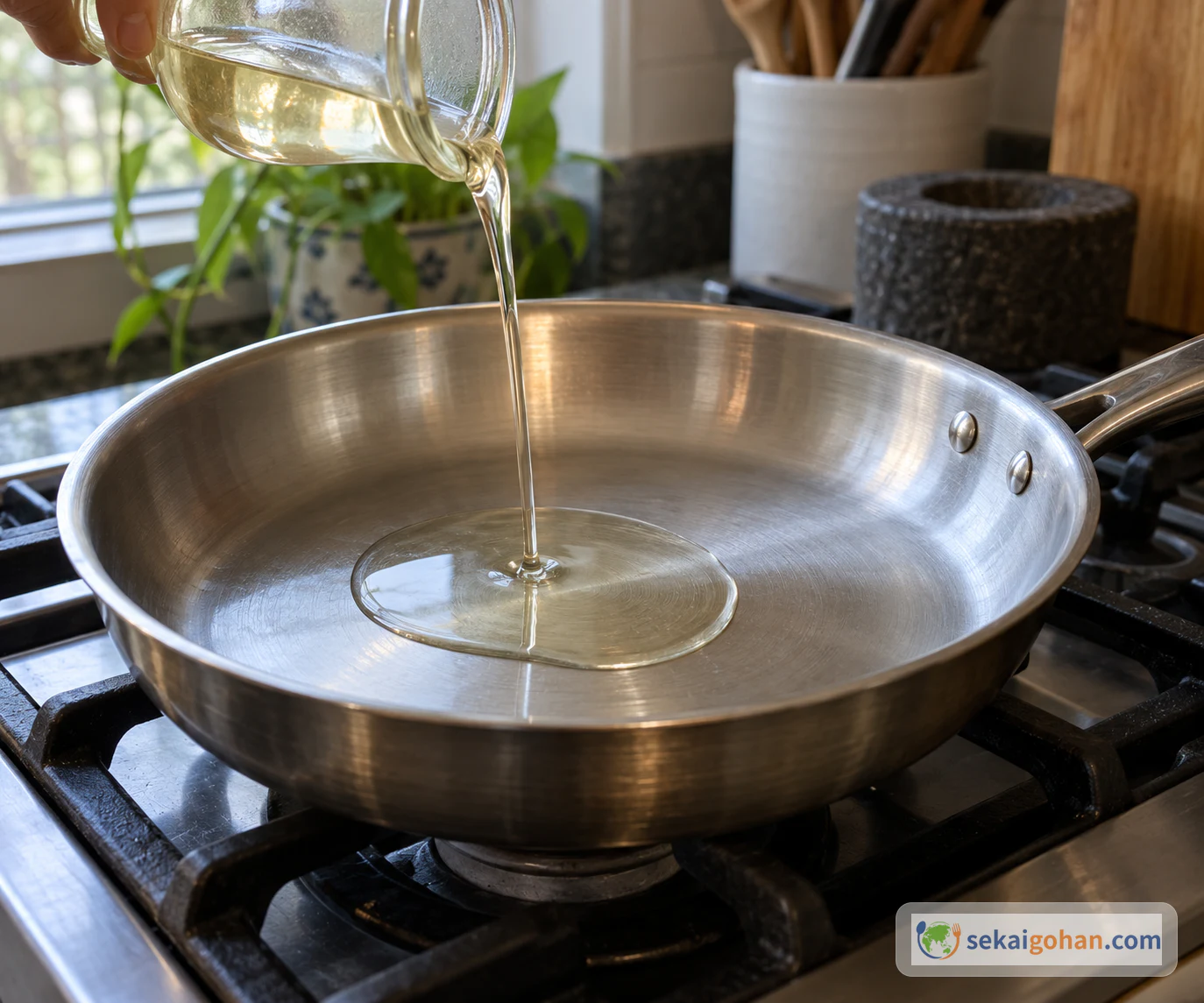
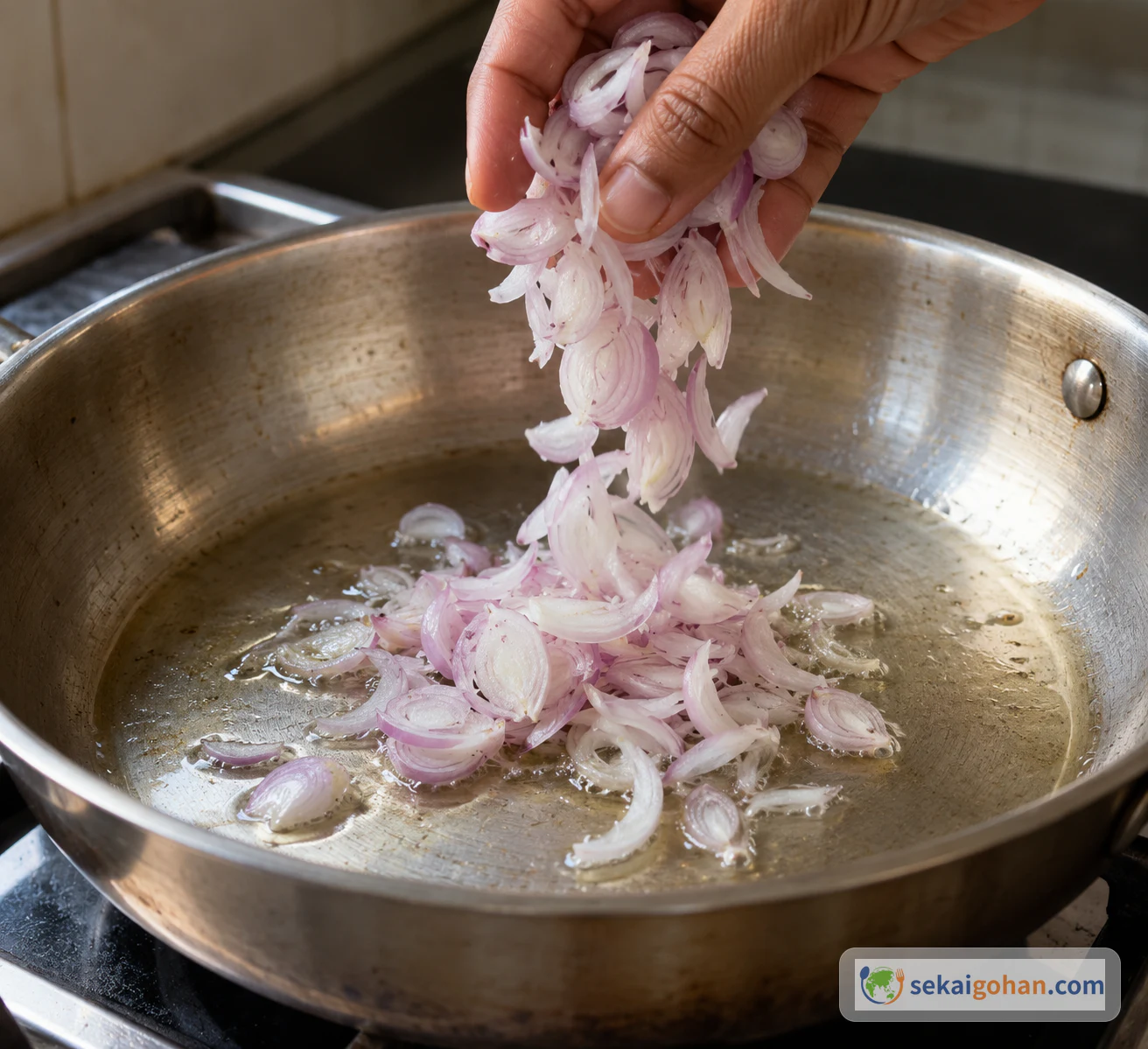
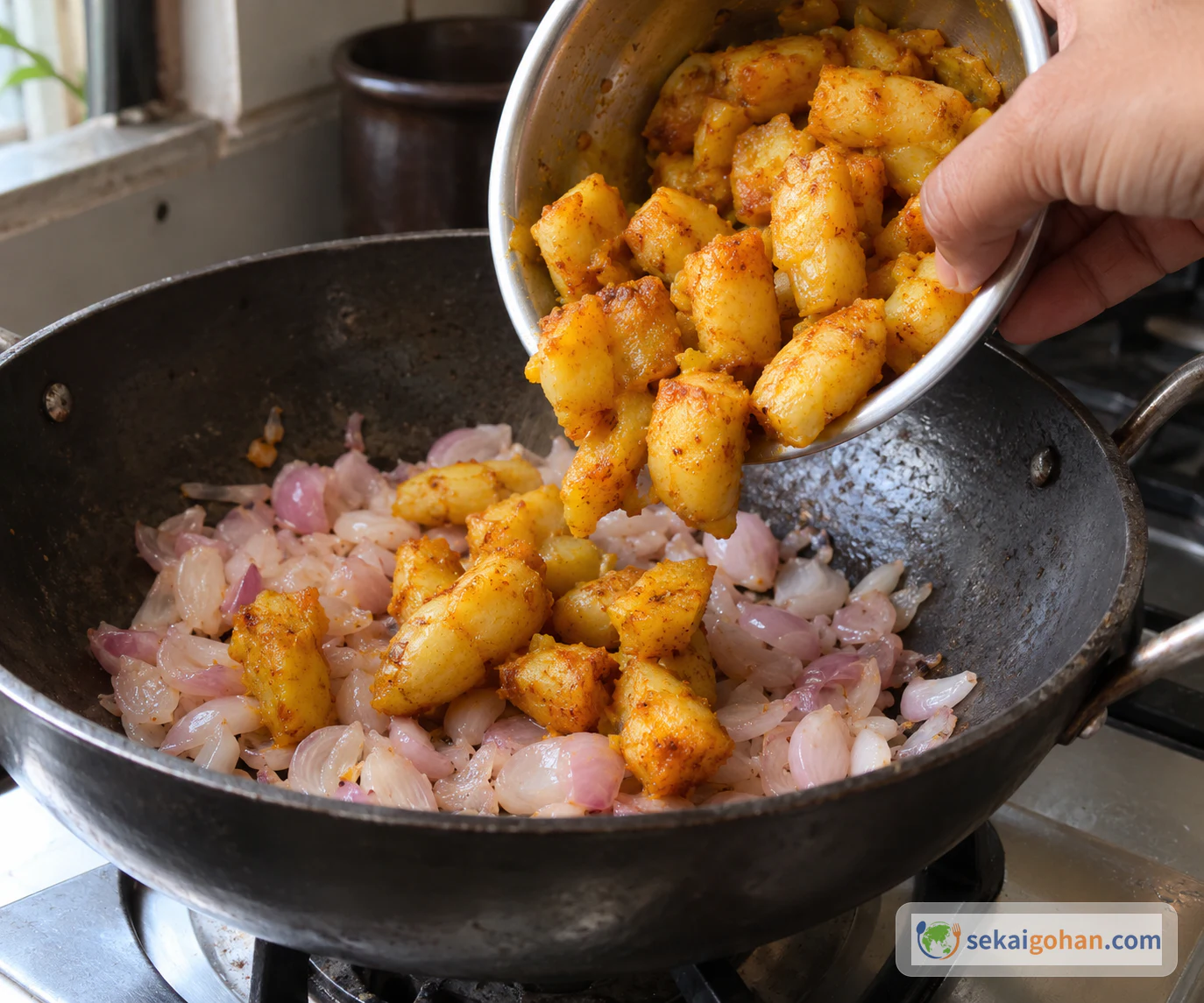
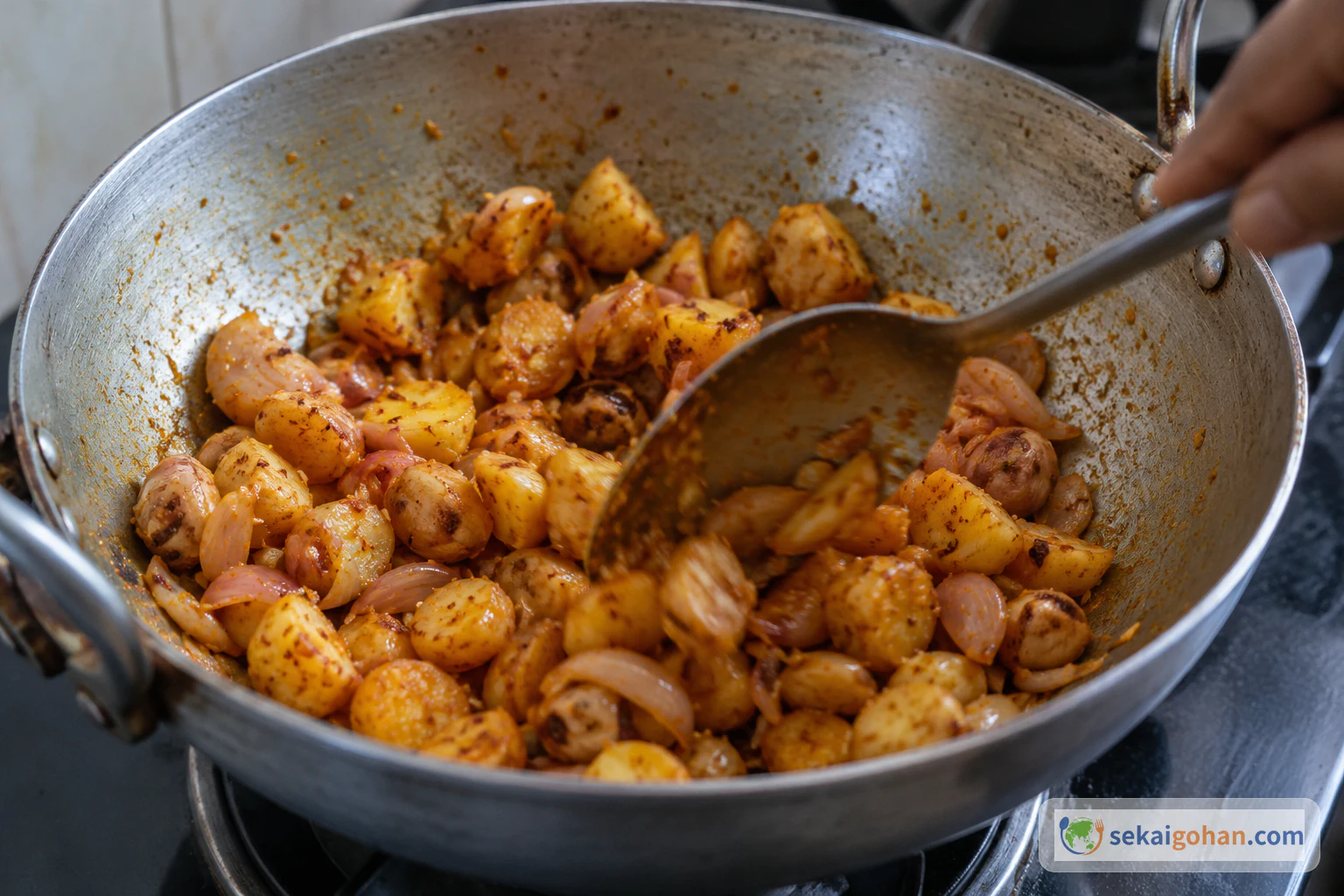
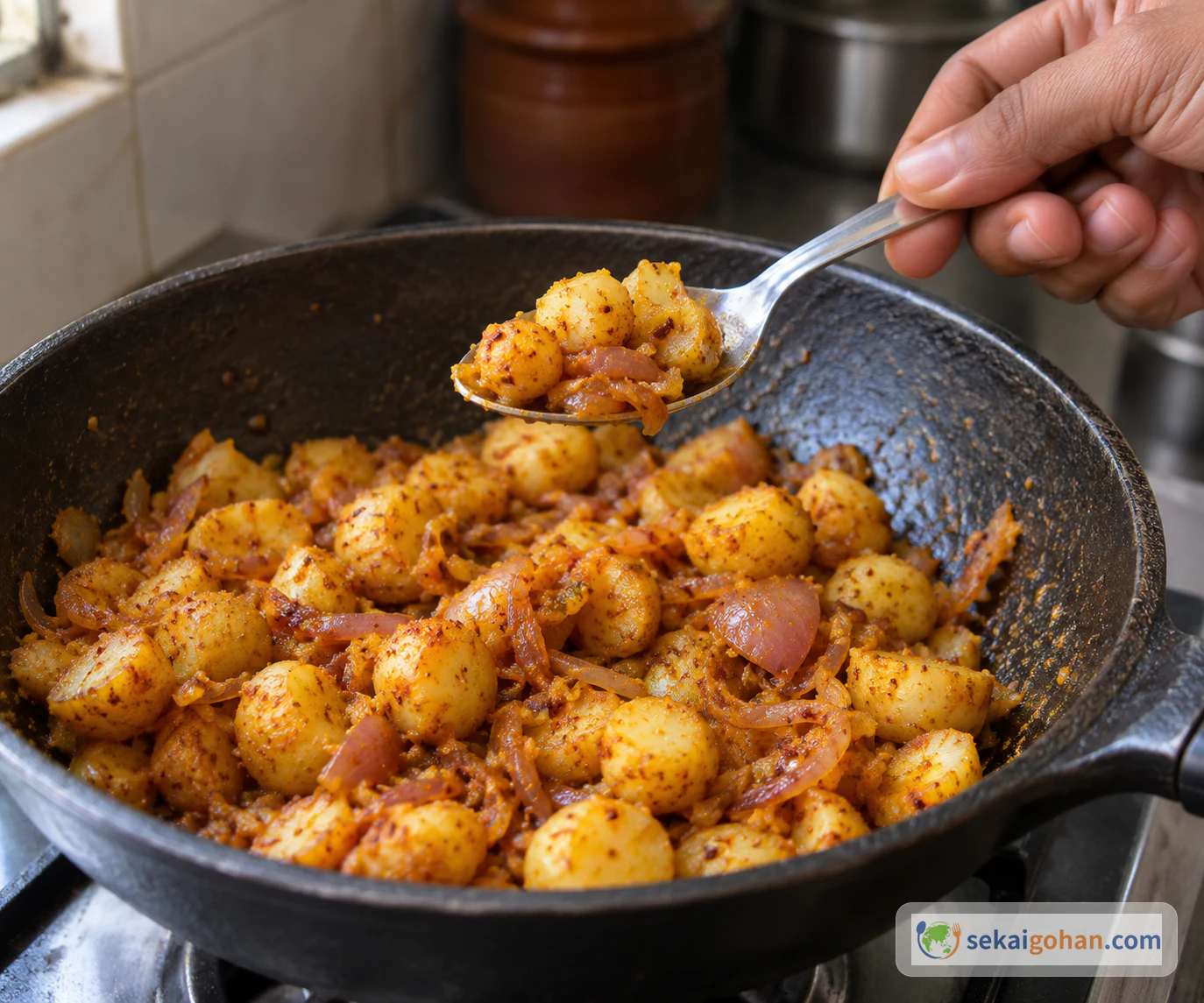
Rough-skinned tubers get washed, scraped and washed again, cut lengthwise and simmered with salt, turmeric and chilly powder until soft. Then they go into a pan where thinly sliced shallots have just touched hot coconut oil. Koorkka Mezhukkupuratti is a Kerala vegetarian stir-fry built from that short list, and the turmeric and chilly powder in the cooking water turn the tubers yellow to red. It's soft and simple, and it's made to be eaten with rice.
Koorkka Mezhukkupuratti in Kerala Home Cooking
The catalog name "country potato fry" can mislead you. The tuber here is Koorka, sold in English as Chinese potato. It is a different plant from both the ordinary potato and the yam, and the method is written for Koorka itself. The dish is cooked in two stages. First the tuber simmers in seasoned water until it is fully soft, and then it gets a short stir-fry with shallots in coconut oil.
In English the dish is called Koorkka Mezhukkupuratti/Chinese Potato Stir-fry. In Malayalam script the dish name is written കൂർക്ക മെഴുക്കുപുരട്ടി. You will also see the tuber spelled Koorka or Koorkka, and the Malayalam name Koorkakizhangu.
For more dishes from across the country, see India.
Ingredients: Serves 4
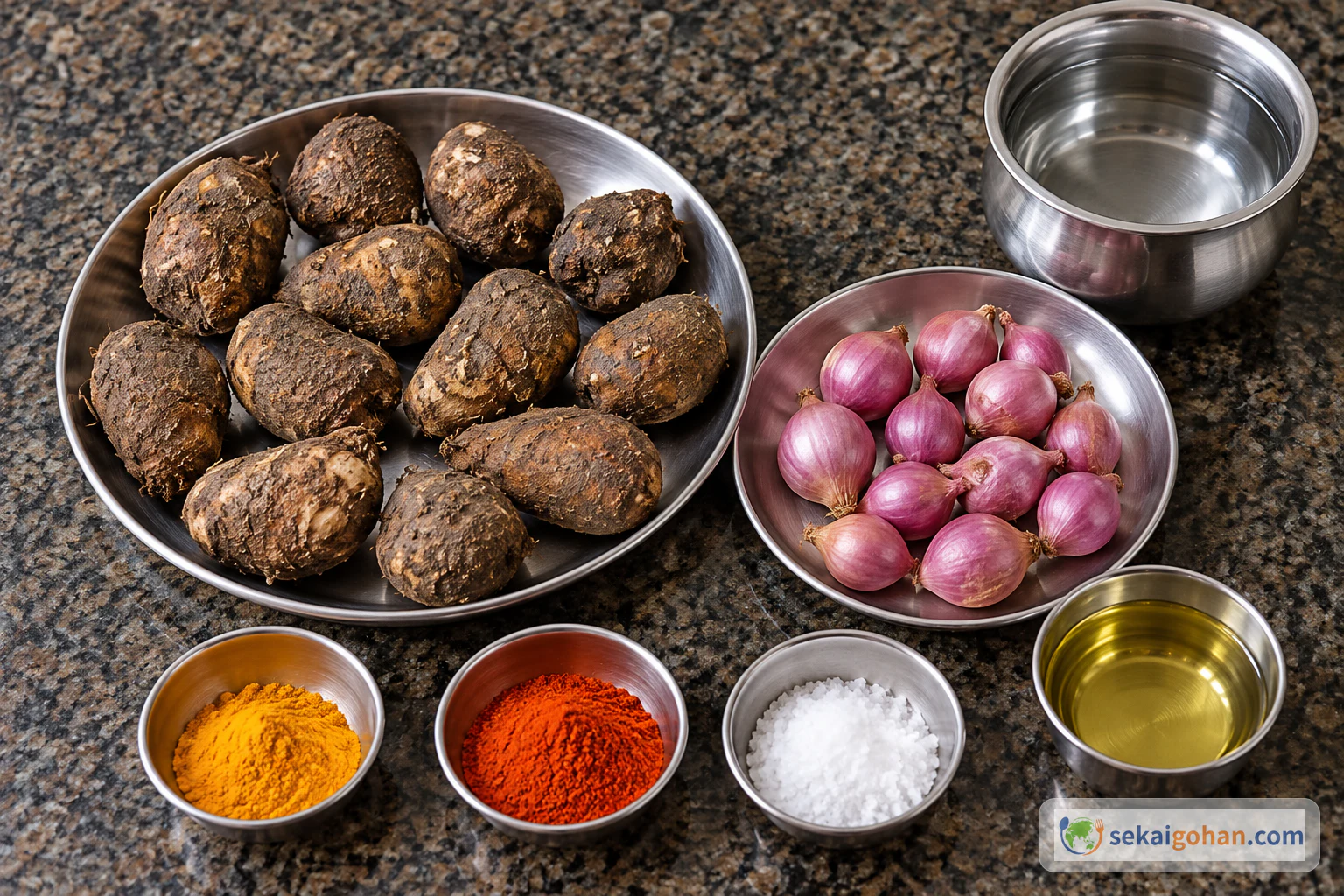
Use water as needed for precooking.
Serve with rice.
Equipment
- A bowl of water for washing the tubers
- Something to scrape the skin with
- A knife and cutting board
- A pot for precooking
- A pan for heating the coconut oil and stir-frying
- A spoon for tasting
Choosing Koorka
Look for the tuber by name: Koorka, Koorkka, Koorkakizhangu or Chinese potato. Botanically it is Plectranthus rotundifolius (Poir.) Spreng., in the family Lamiaceae, a plant grown for its edible tubers. Buy Koorka itself rather than swapping in another tuber, because the cooking times and texture here depend on it.
Method: Wash, Scrape, Precook, Then a Short Stir-Fry
Fry the shallots for "a few seconds" and stir-fry for "a few minutes"; judge the rest by what you see.
Getting the Texture and Seasoning Right
The recipe gives a count of tubers (10–12) but no size, so softness is your guide. Cut the pieces lengthwise to 1.5 inches long, then precook them in enough water until they are fully cooked and soft. The recipe doesn't set a time, heat level or lid, so test a piece rather than watching the clock.
The pan stage moves quickly. The shallots need only a few seconds in the hot coconut oil before the cooked Koorka goes in, and then the whole thing gets a few minutes of stir-frying. Salt goes in to taste twice, once in the precooking water and again at the end, so taste in step 10 before you switch off the heat. For heat from the chili, use 1–1.5 tsp chilly powder "or as required."
Serving Koorkka Mezhukkupuratti and a Spicier Variation
Serve the stir-fry with rice.
Another version, Koorka Mezhukupuratti (Upperi) | Chinese Potato Stir Fry, builds more flavor into the pan. It uses 14 oz (400 g) Koorka with 7–8 large shallots and serves 4–5, adding garlic, coconut pieces, dried red chilli, chilli powder, garam masala, mustard, curry leaves and 2–3 tbsp oil. With fresh Koorka, pressure-cook it to two whistles and drain off the excess water. For a crisper finish, cook on high heat for 2–3 minutes, or adjust the oil if you want a softer result.
Frequently Asked Questions
Is "Chinese potato" the same as an ordinary potato?
No. Chinese potato is Plectranthus rotundifolius, in the family Lamiaceae, and its Malayalam names include Koorka and Koorkakizhangu. It is a different plant from both the ordinary potato and the yam.
How long should I precook the Koorka?
There is no set time. Cook the pieces in enough water with salt, turmeric and chilly powder until they are fully cooked and soft.
Why are the pieces cut to 1.5 inches?
That is the length of the lengthwise pieces. It is a length, not a thickness.
What heat should I use for the stir-fry?
No heat is specified. Sauté the shallots for a few seconds, then stir-fry with the cooked Koorka for a few minutes.