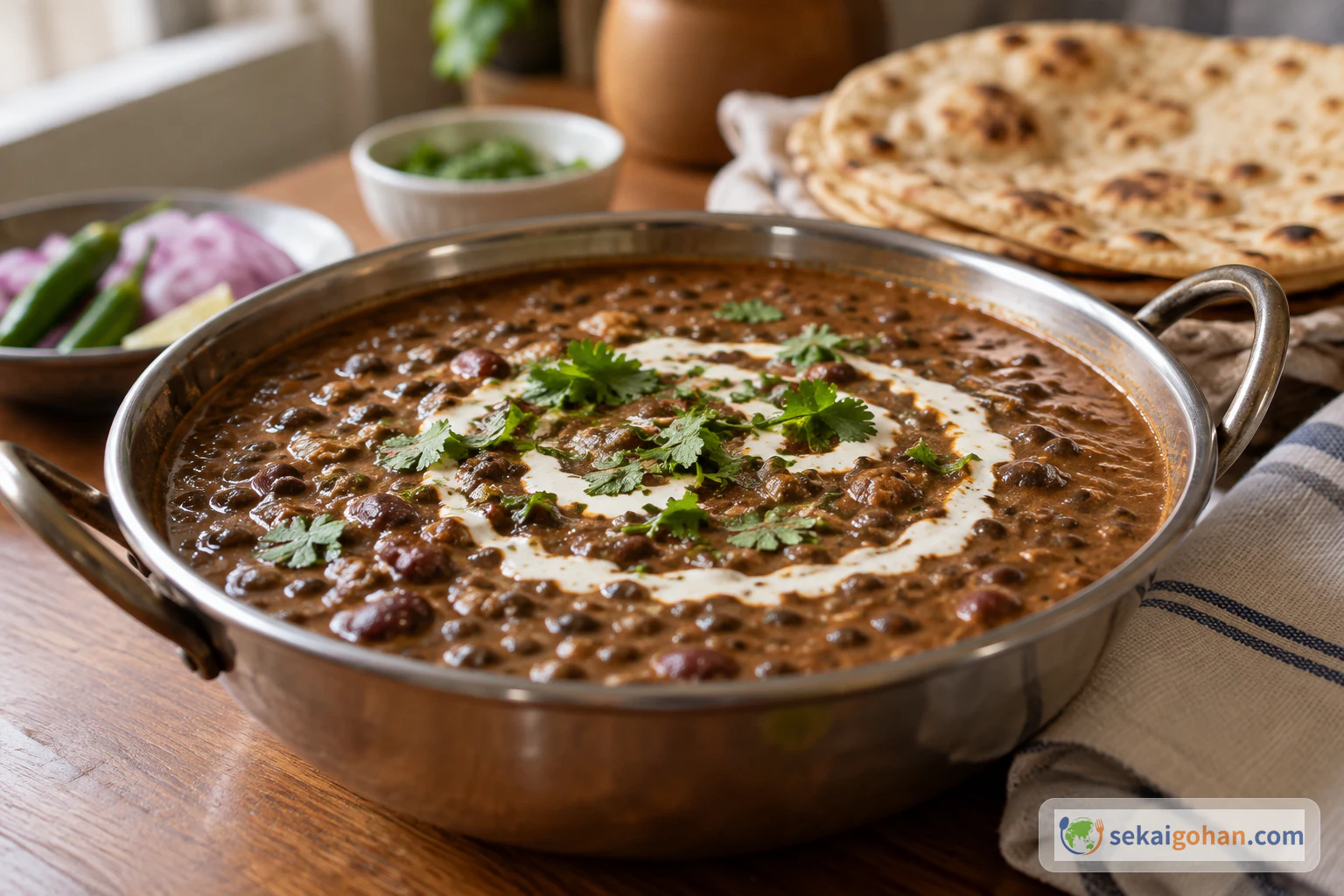
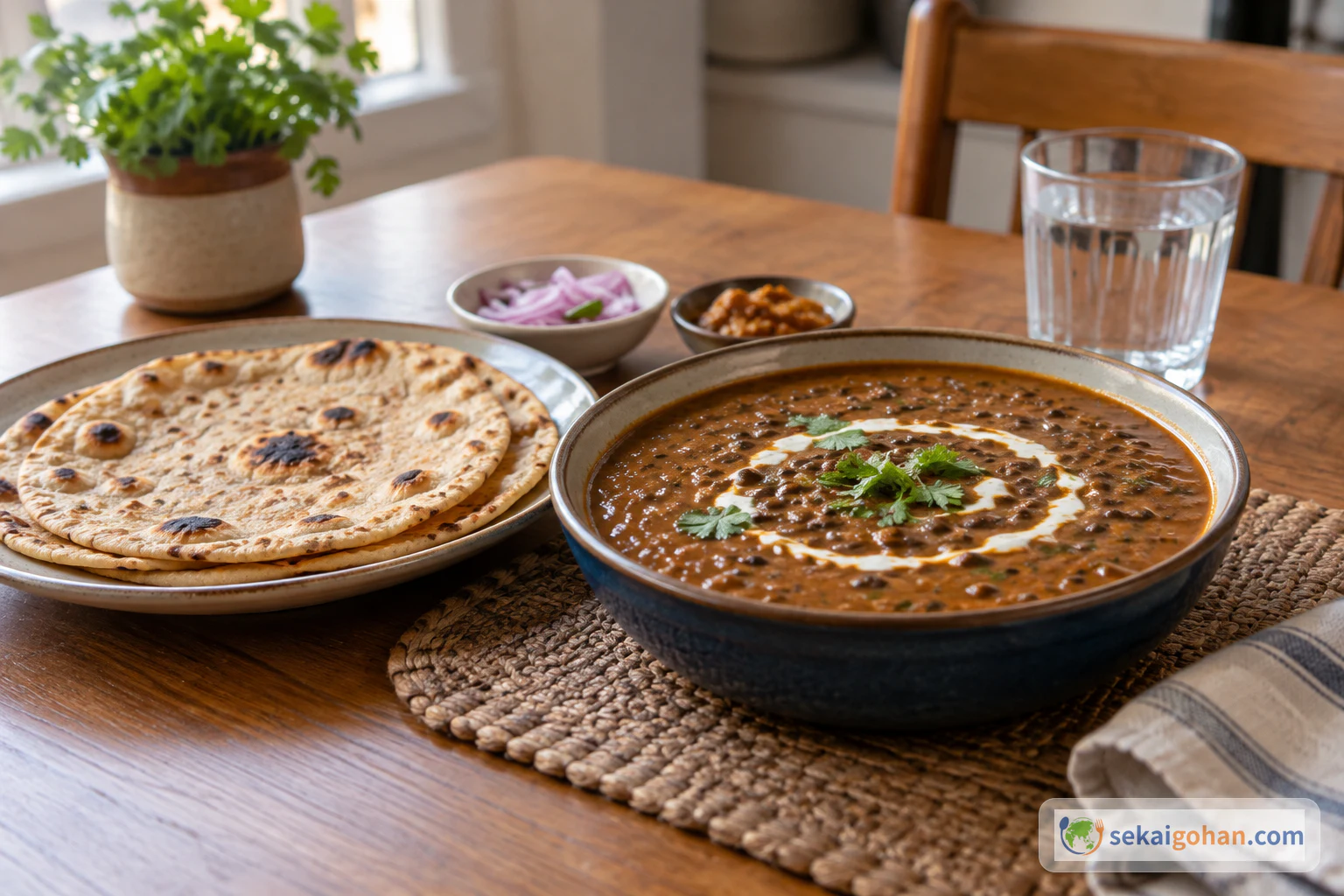
A rich dal makhani of black urad and rajma in a shallow metal bowl, finished with a thin swirl of cream and fresh coriander on the table
Serves2 servings
CuisineIndian (Punjabi)

Dal Makhani: Punjabi Whole Black Urad and Rajma Simmered with Butter (दाल मखनी)

How to make dal makhani, the Punjabi-style dish of whole black urad and a little rajma cooked soft and simmered with tomato, butter and spices. Covers overnight soaking, the separate boil red kidney beans need, judging doneness after pressure cooking, choosing beans, fixing common problems, and the restaurant stories behind the dish.

Cooking flow

Cooking steps

STEP 11 / 7

Soak the black urad and rajma separately overnight

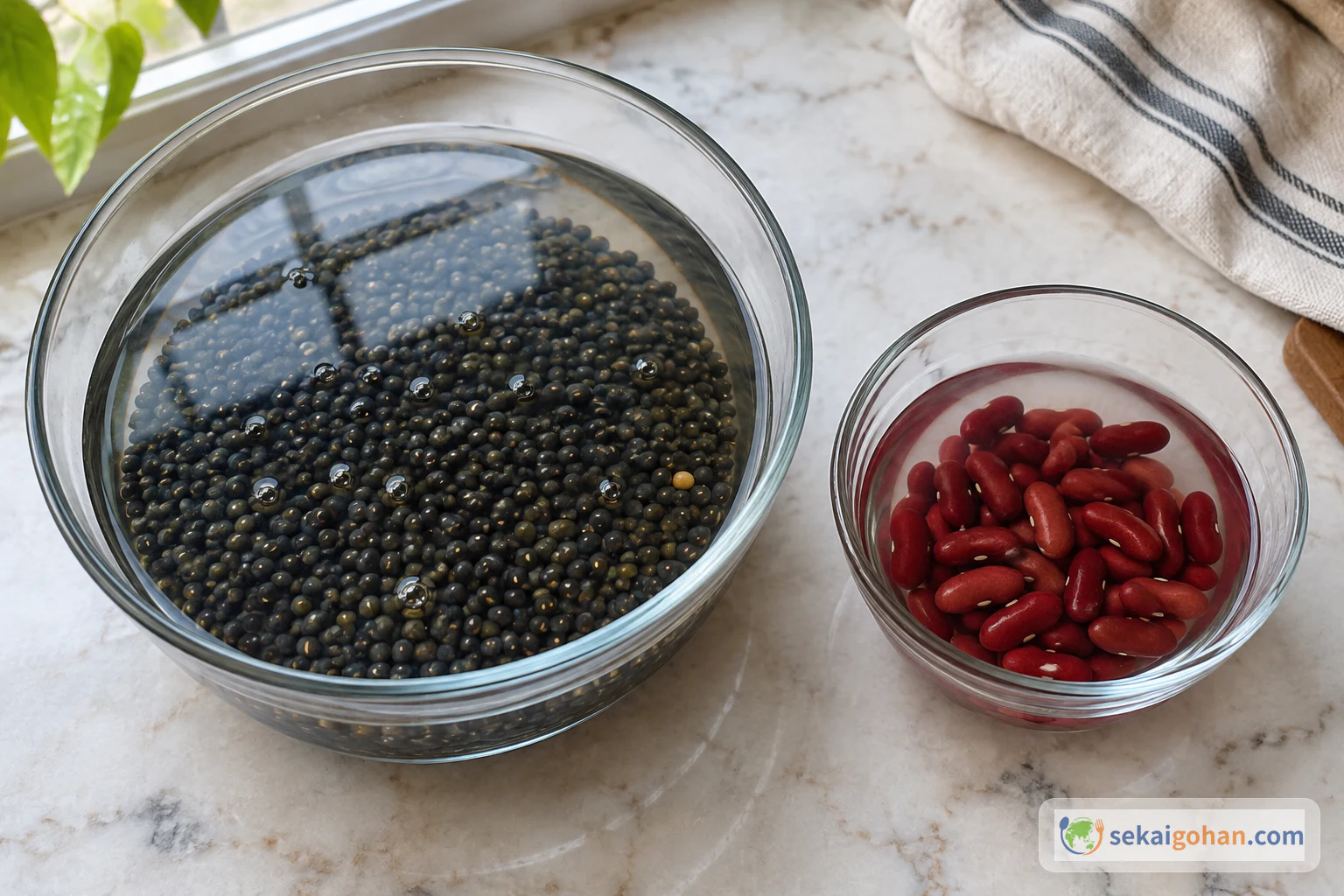
Black urad and a small amount of rajma soaking overnight in separate bowls
Soak the two kinds of beans in separate bowls so the rajma can be boiled on its own

Rinse the whole black urad and the rajma, then put them in separate bowls. Cover the urad with plenty of water, and the rajma with water 2–3 times its volume. Leave them to soak from the night before.

The aim is for water to reach the center of every bean. Keep the two kinds apart, because the rajma needs its own boil before it meets the urad. When you are ready to cook, discard both soaking waters.

STEP 22 / 7

Boil the rajma separately, then pressure cook all the beans

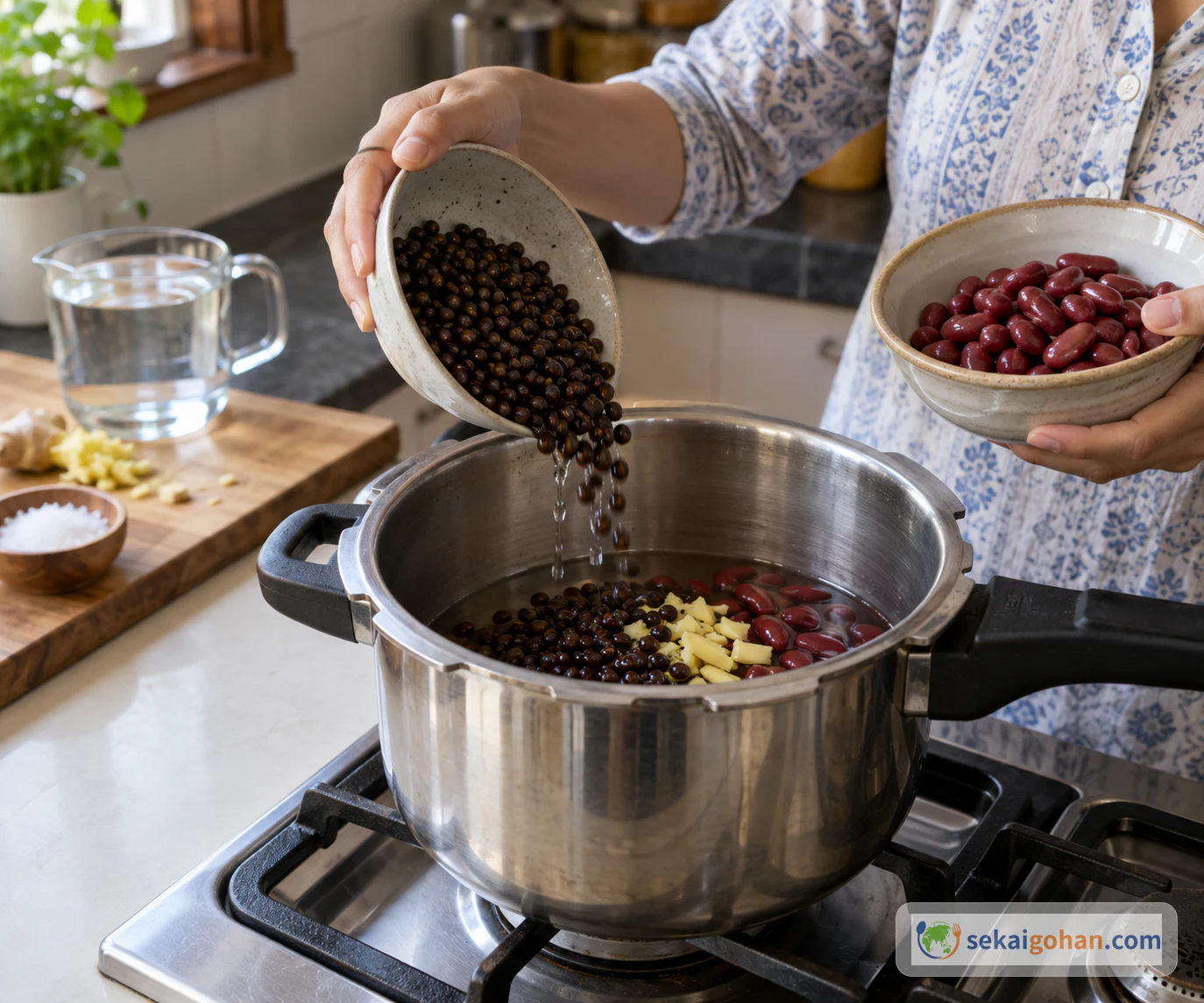
Soaked black urad and separately boiled rajma going into a pressure cooker before cooking
Add the pre-boiled rajma to the urad, then cook according to your cooker's instructions

Put the drained rajma in an ordinary pot with fresh water and bring it to a vigorous boil. Keep it boiling hard for at least 10 minutes, or longer if the bag says so.

Lift the boiled rajma out of its pot and put it in the pressure cooker with the drained urad. Add the water, salt, half the red chilli powder and half the chopped ginger. Use about 3 cups of water at this stage, but the rajma has already soaked up some during its boil, so top up if needed. Make sure there is enough liquid to keep the beans from scorching.

Beans swell and foam under pressure. Follow your cooker's instructions for the maximum amount of legumes, the water level, pressurizing and releasing pressure. Once the cooking is done and the pressure has fully released as the manufacturer directs, open the lid. Take out a few beans with a clean spoon and press them. If any rajma or urad still has a hard core, cook again according to your cooker's instructions and check again. Never serve red kidney beans that are not fully cooked.

STEP 33 / 7

Bloom the cumin and cook the aromatics

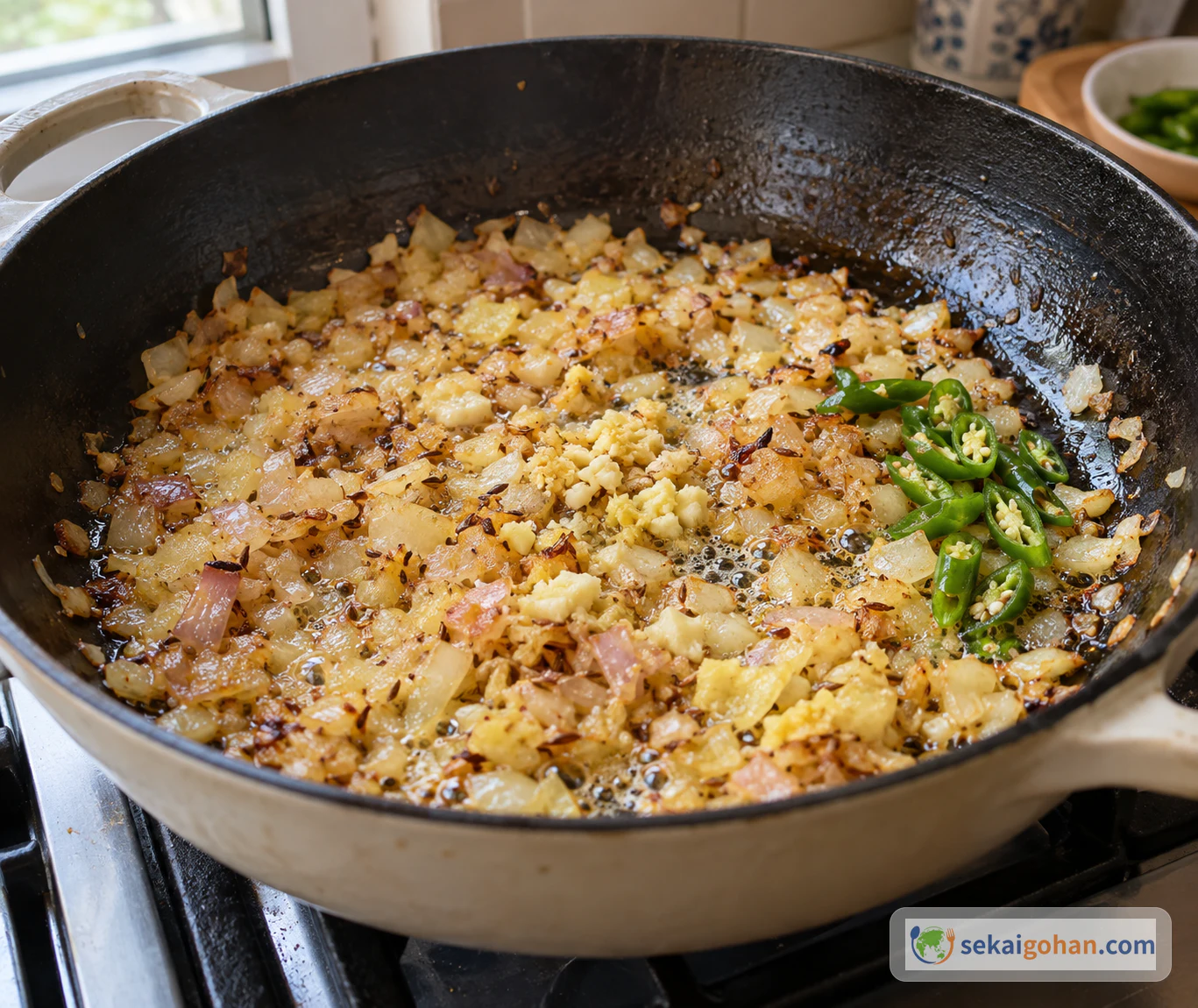
Cumin blooming in oil and butter while onion and aromatics sauté
Cook the onion to golden over medium heat without letting it scorch

In a heavy pan, warm the butter and oil together. Add the cumin seeds and heat until they darken slightly and smell fragrant. Add the remaining ginger, the garlic and the onion. Cook over medium heat until the onion turns golden brown.

Keep the heat at medium. If the onion or garlic scorches, it turns bitter, and that bitterness carries through the whole dal.

STEP 44 / 7

Cook the tomato down to a paste

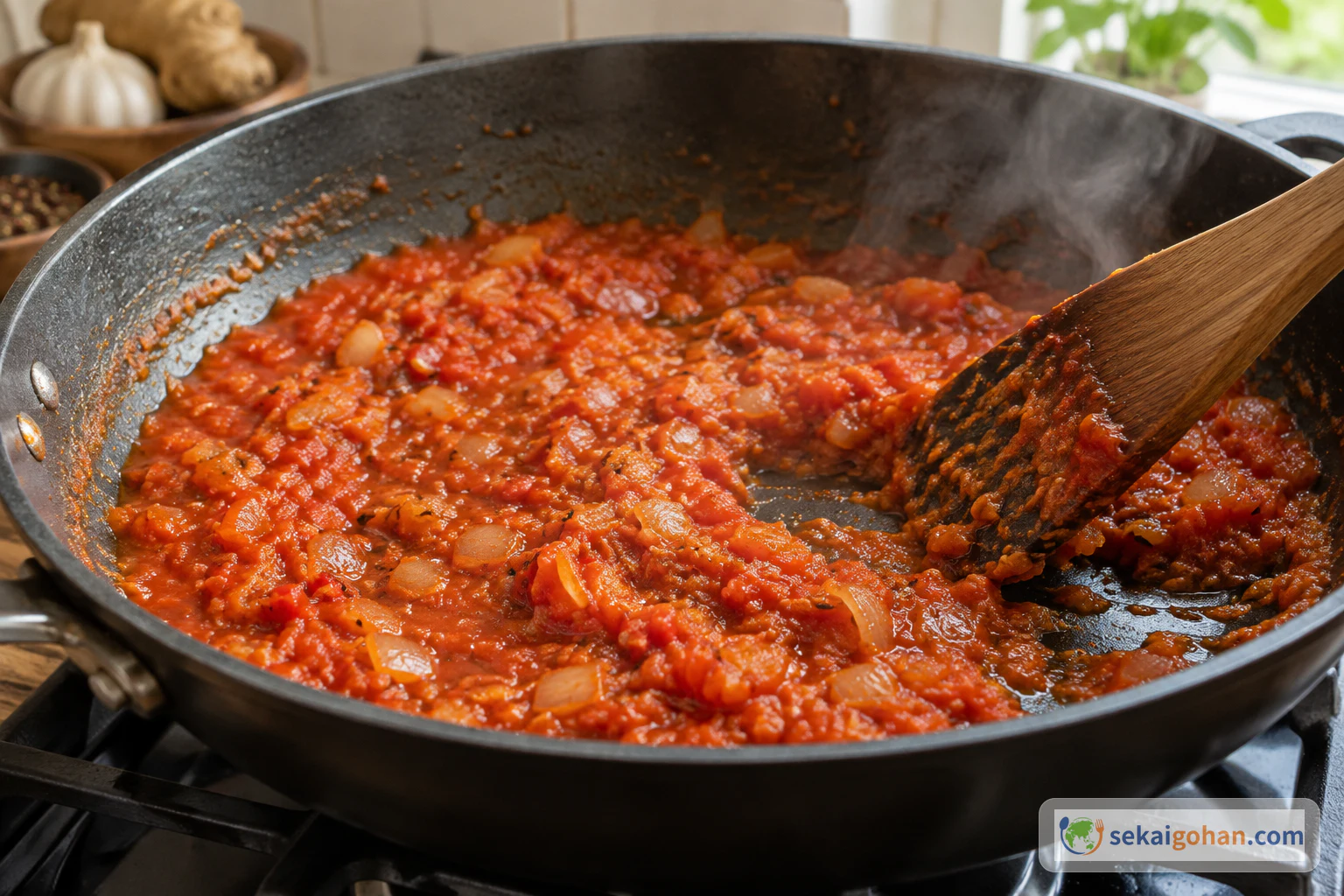
Tomato purée added and the aromatic base cooking down in the pan
Cook until the tomato turns from watery to a cohesive paste

Add the slit green chillies, the tomato purée and the remaining red chilli powder. Keep cooking and stirring until the tomato is no longer watery and raw, and has reduced to a thick paste.

Oil separating at the edges of the paste is a good sign. What matters most is that the raw, watery stage has passed. Cooking the tomato down here prevents a sharp acidity later.

STEP 55 / 7

Add the cooked beans and their liquid

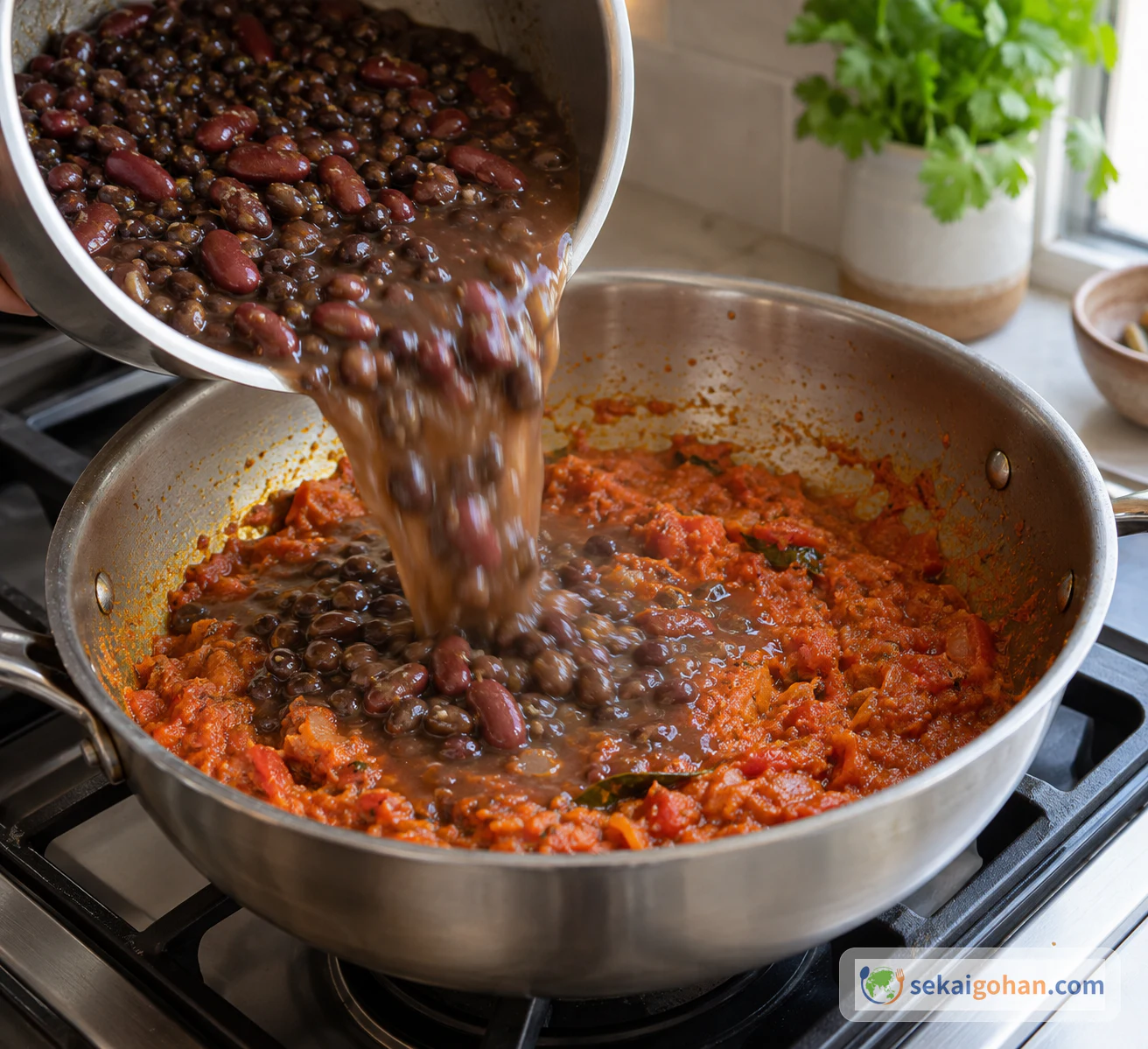
Soft black urad and rajma poured into the tomato base with their cooking liquid
Add the beans along with their cooking liquid so the masala loosens into the dal

Pour the soft-cooked beans into the masala together with their cooking liquid. Stir in the garam masala and adjust the salt.

STEP 66 / 7

Simmer low until the dal thickens

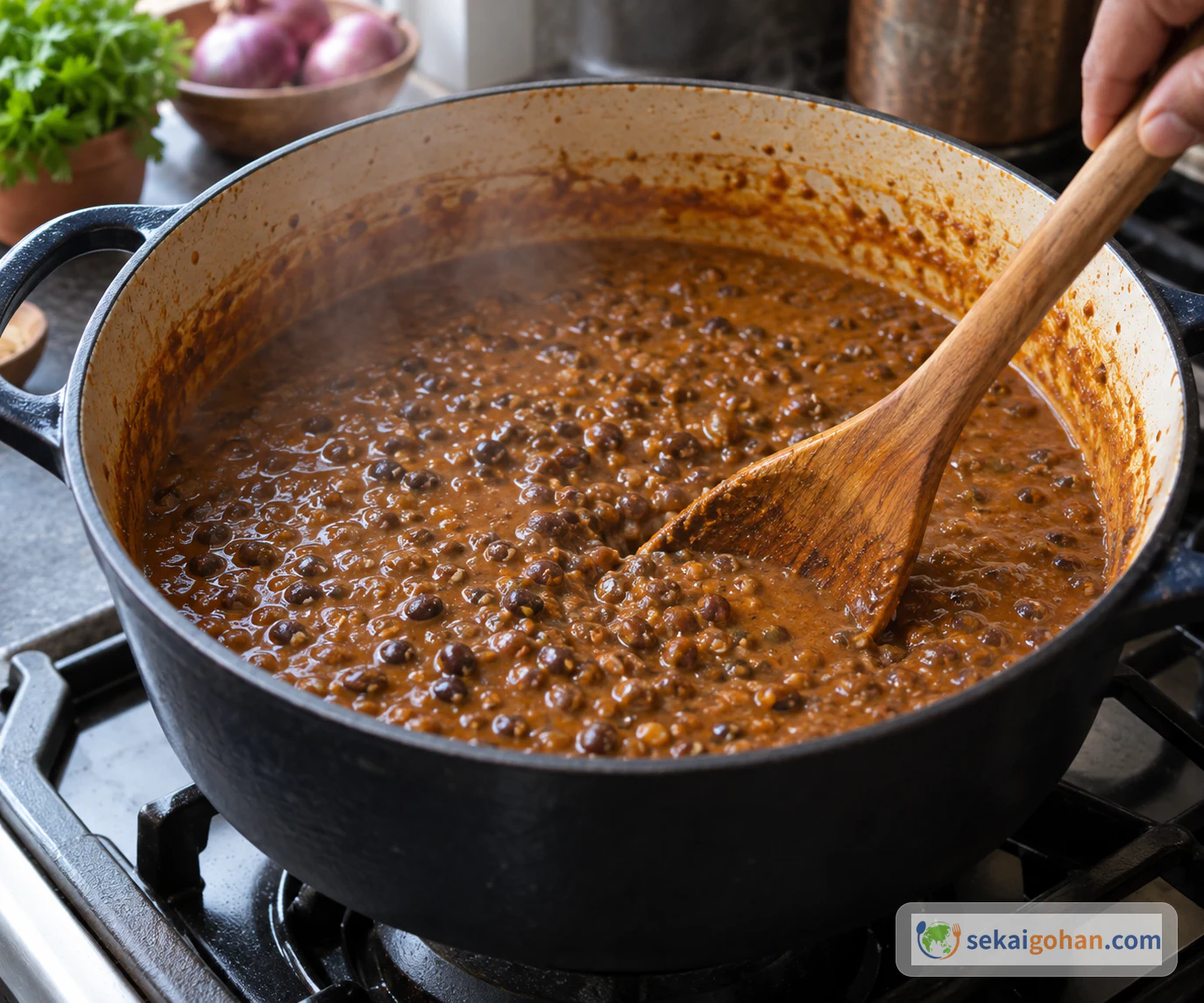
Dal makhani simmering on low heat as the beans start to break down and thicken the sauce
Stir the bottom of the pan while it simmers, and let some beans break down into the sauce

Simmer over low heat, stirring the bottom of the pan so nothing sticks. Keep going until the beans soften further and the liquid turns thick and creamy. Judge by texture rather than the clock.

If the dal gets too thick, add a little hot water. If it is thin, take the lid off and let it reduce.

STEP 77 / 7

Finish with cream and coriander

Finished dal makhani served with roti on an Indian-style table
A small swirl of cream and some coriander are enough to finish it

While the dal is hot, swirl a little cream over the top and scatter with fresh coriander. Serve with rice, naan or roti.

0 / 0
Ingredients

Ingredients

1 / 2

Beans

Ingredient Amount Role and notes
Whole black gram (sabut urad), skin on 1/2 cup The main bean. Gives the dark color, texture and body
Red kidney beans (rajma), dried 2 tbsp A small supporting amount of bean flavor and bite
Water for soaking the urad Plenty Soak in its own bowl overnight; discard before cooking
Water for soaking the rajma 2–3 times the volume of the beans Soak in a separate bowl from the night before; discard before boiling
Fresh water for boiling the rajma Enough to cover well For the separate vigorous boil in an ordinary pot
Water for pressure cooking 3 cups Adjust to the beans and your cooker's instructions; add hot water if it threatens to catch
Salt To taste Some with the beans, adjusted again later
Red chilli powder 1 tsp Heat and color. Half with the beans, half in the masala
Fresh ginger 2 inch piece Chopped. Half with the beans, half in the masala
2 / 2

Masala and finish

Ingredient Amount Role and notes
Butter 3 tbsp The dairy richness of makhani
Oil 1 tbsp For blooming the cumin with the butter
Cumin seeds 1 tsp Whole seeds, bloomed in fat
Garlic 6 cloves Chopped
Onion 1 large Finely chopped
Green chillies 2 Slit; adjust to taste
Tomatoes 2 medium Ripe, puréed
Garam masala 1 tsp Aroma toward the end
Cream A little, to finish Swirled on top
Fresh coriander A little To garnish
0 / 0

The beans go into water the night before. By morning the small black urad have swelled and the few red rajma beside them have softened their skins, so the real work can begin. Once tender, the beans go back into a pan of cumin, onion and tomato and simmer slowly. Some keep their shape and some break down into the sauce, until you have a dark, butter-scented dal to put at the center of the table.

Dal makhani is a Punjabi dish built on whole black gram with its skin on, with butter for depth. Its richness comes from patient simmering, and piling on cream won't replace that. The spicing is the easy part. The hard part is getting every bean soft all the way through. The red kidney beans also need a separate hard boil for safety before they go into the pressure cooker. You judge doneness by pressing a bean with a spoon, not by counting whistles.

About Dal Makhani

The main bean is whole black gram (sabut urad, also written sabuturad), with a small amount of red kidney beans (rajma) alongside. The name points to makhan, butter.

Most accounts trace the dish to Delhi in 1947. That year the restaurant Moti Mahal opened in Daryaganj. Kundan Lal Jaggi, from a Punjabi family in Peshawar, was among its founders and had moved to Delhi after the 1947 Partition. A regular customer suggested cooking urad dal slowly with tomato and butter as a vegetarian option, and the dish became a staple of North Indian restaurants.

It grew out of maa ki dal, made from black lentils, tomato, white butter, herbs and spices slow-cooked overnight.

Ingredients for 2 Servings: Whole Black Urad First
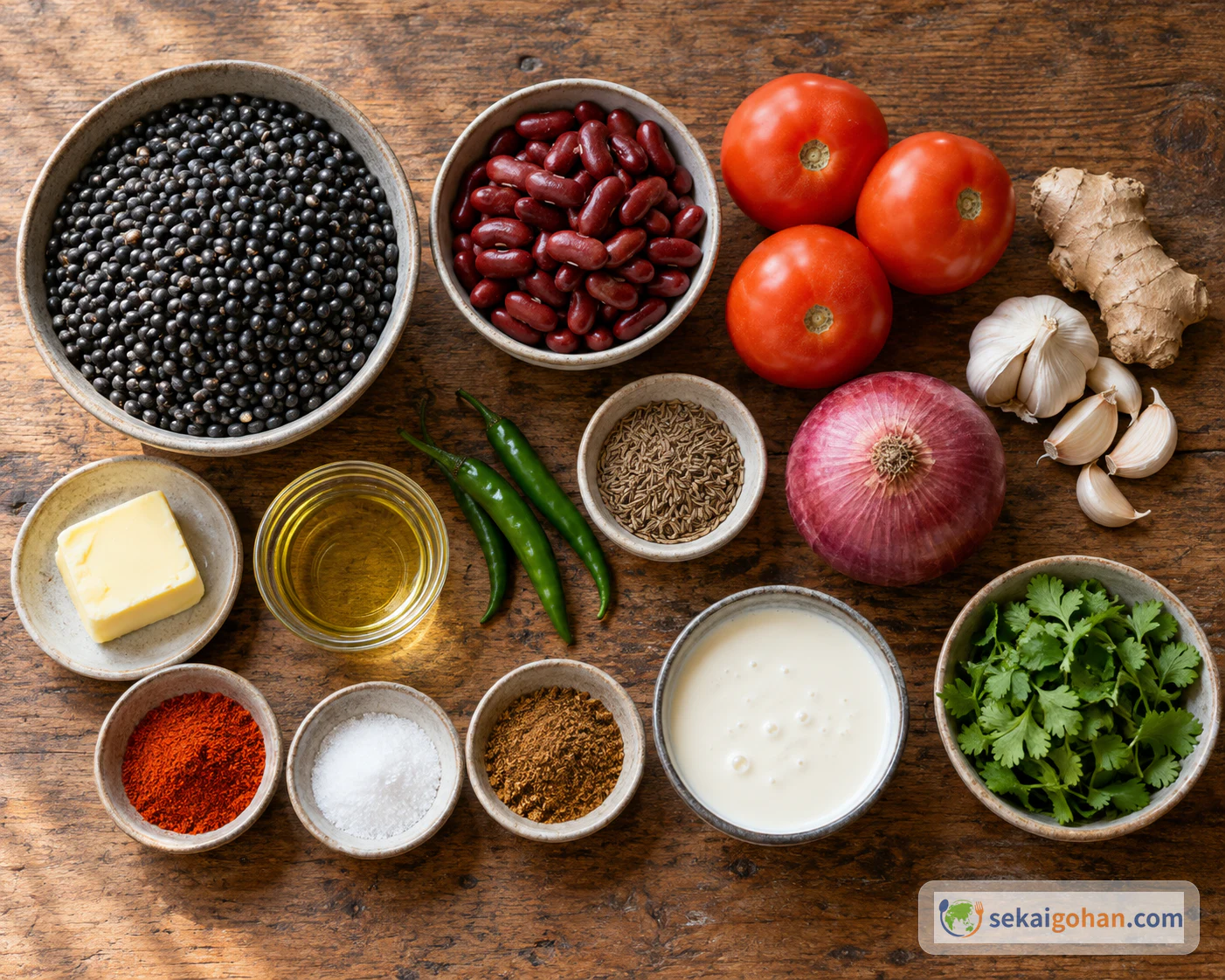
Dried whole black urad, rajma, tomatoes, ginger, garlic, onion, cumin and butter laid out separately
Keep the black urad and the small amount of rajma in separate bowls from the start

Use the same cup and spoons throughout so the proportions stay consistent.

Food safety for dried red kidney beans

Soak dried red kidney beans for at least 5 hours in water 2–3 times their volume, discard that water, and boil them vigorously in fresh water for at least 10 minutes. In this recipe the rajma soaks from the night before and gets that boil in a separate ordinary pot before joining the urad in the pressure cooker. If your bag of beans gives longer preparation instructions, follow the bag. The 10-minute boil alone does not make the beans soft, so keep cooking until there is no hard core. Do not cook dried rajma only by gentle simmering or in a slow cooker. Do not taste undercooked beans to check whether they are safe.

Equipment

  • Two bowls for soaking the urad and rajma separately
  • An ordinary pot for boiling the rajma
  • A pressure cooker, used according to its manufacturer's instructions
  • A heavy pan and a wooden spatula for the masala and the long simmer
  • Measuring cup and spoons
  • A clean spoon for pressing beans to check doneness

Choosing Beans and Substitutes for Dal Makhani

Black urad. Look for whole black urad, skin on, sold as sabut urad or whole urad at Indian grocers or online. Split, skinned urad and ordinary lentils will still make a dal, but not this one. The color, the bite and the way the dal thickens all change.

Rajma. These are dried red kidney beans. Canned rajma has already been heated during canning, but you can't swap it in for the same volume of dried beans, because the soaking, the pressure cooking and the liquid all change.

Chilli. The recipe uses Indian red chilli powder. Cayenne and other chilli powders vary in heat, so start with less. You can also adjust the green chillies to taste.

Ginger. Chop the whole piece, then divide it in half. One half goes in with the beans and the other into the masala.

Butter and cream. If you use unsalted butter, adjust the salt separately. Ghee changes both the aroma and the moisture. A little fresh cream works for the finish, while plant-based creams change the flavor.

Tomatoes. Ripe fresh tomatoes are puréed for the base. Canned tomatoes differ in acidity and moisture.

Coriander. If you dislike it, leave it out. The finished dish will smell a little different.

Method: From Overnight Soak to a Slow Butter Simmer

Doneness over whistles

Pressure cook for "3 whistles" or until the rajma is completely soft. Cookers differ, so use the whistle count only as a rough guide. Follow your cooker's instructions, release the pressure fully, and judge by pressing a bean.

Fixing Dal Makhani Problems

Safety comes first. Release the pressure the way your cooker's instructions say, and make sure every bean is fully cooked.

What you notice Likely cause What to do
Beans still have a hard core Old beans, too little soaking, not enough cooking Press a few with a spoon after cooking. If any are hard, cook again following your pressure cooker's instructions. Never judge rajma by tasting it undercooked
The bottom catches, or the dal feels heavy A thick simmer sticks to the pan easily Keep the heat low, stir the bottom often, and add a little hot water
The acidity stands out The tomato went in with the beans before it was cooked down Next time, cook the tomato to a paste before adding the beans. Reduce the tomato properly instead of masking the acidity with salt, butter or cream

Dal Makhani Variations, Allergies and Storage

Ways to change it at home

Change the red chilli powder and green chillies to suit whoever's eating, and start low if you're using a different chilli powder. For a lighter finish, hold back on the cream and let the butter carry the richness. Very ripe tomatoes give a gentler base. Using more or less rajma also changes the dish.

A restaurant-style dal makhani and an everyday home pot are different things. Either one is worth cooking, as long as you know which you're making.

Allergies and storage

Dal makhani contains dairy in both the butter and the cream. For a milk allergy, you need to replace the butter as well as drop the cream, and the flavor will change. The dish is built on legumes, so anyone with a legume allergy should take care. Check the labels on packaged spices and other products.

Cool leftovers quickly, refrigerate them promptly, and reheat them until piping hot all the way through.

Frequently Asked Questions

Can I make it without a pressure cooker?

You can cook the beans in a heavy pot, but this recipe gives no time for that method. Whatever pot you use, boil the rajma vigorously on its own first, and never cook dried rajma only by gentle simmering or in a slow cooker. Keep cooking until no bean has a hard core.

Can I leave out the rajma?

Yes. Rajma is only a small supporting amount in this version, so you can omit it, though the result is a different version of the dish.

Does it need cream?

No. The cream is just a small finishing swirl. Butter is the core of the makhani richness, so a version with less cream that keeps the butter still holds its character.
Sources

  • Ranveer Brar, "Easy Dal Makhani दाल मखनी Recipe." The Punjabi cuisine classification, the two-serving ingredient list and amounts, overnight soaking, pressure cooking until the rajma is soft, the cumin, aromatics and tomato masala, the low simmer, and the cream and coriander finish. Cup and spoon sizes, and the cooker's pressure and time, are not specified. https://ranveerbrar.com/recipes/dal-makhani/
  • The Indian Express, "The legend of Daal Makhani." Moti Mahal's opening in Daryaganj in 1947 with founders including Kundan Lal Jaggi, the reported story that a regular suggested slow-cooking urad dal with tomato and butter, and the dish becoming a North Indian restaurant staple. A retelling of a restaurant story, not independent proof of invention. https://indianexpress.com/article/lifestyle/food-wine/the-legend-of-daal-makhani-moti-mahal-daryaganj-6197058/
  • Daryaganj restaurant (official site), "Daryaganj Legacy." The restaurant family's account of Kundan Lal Jaggi's Punjabi family in Peshawar and move to Delhi after the 1947 Partition, the dish growing out of maa ki dal slow-cooked overnight, and the link between the name and makhan. Presented as the restaurant's own version. https://www.daryaganj.com/about-daryaganj-legacy
  • Health Canada, "Lectins in Dry Legumes." Soaking dried red kidney beans for at least 5 hours, discarding the water, and boiling vigorously in fresh water for at least 10 minutes; slow cookers not being suitable; canned beans being heat-treated. It does not cover cooking times for black urad or pressure cooker settings. https://www.canada.ca/en/health-canada/services/food-nutrition/food-safety/chemical-contaminants/natural-toxins/lectins-legumes.html