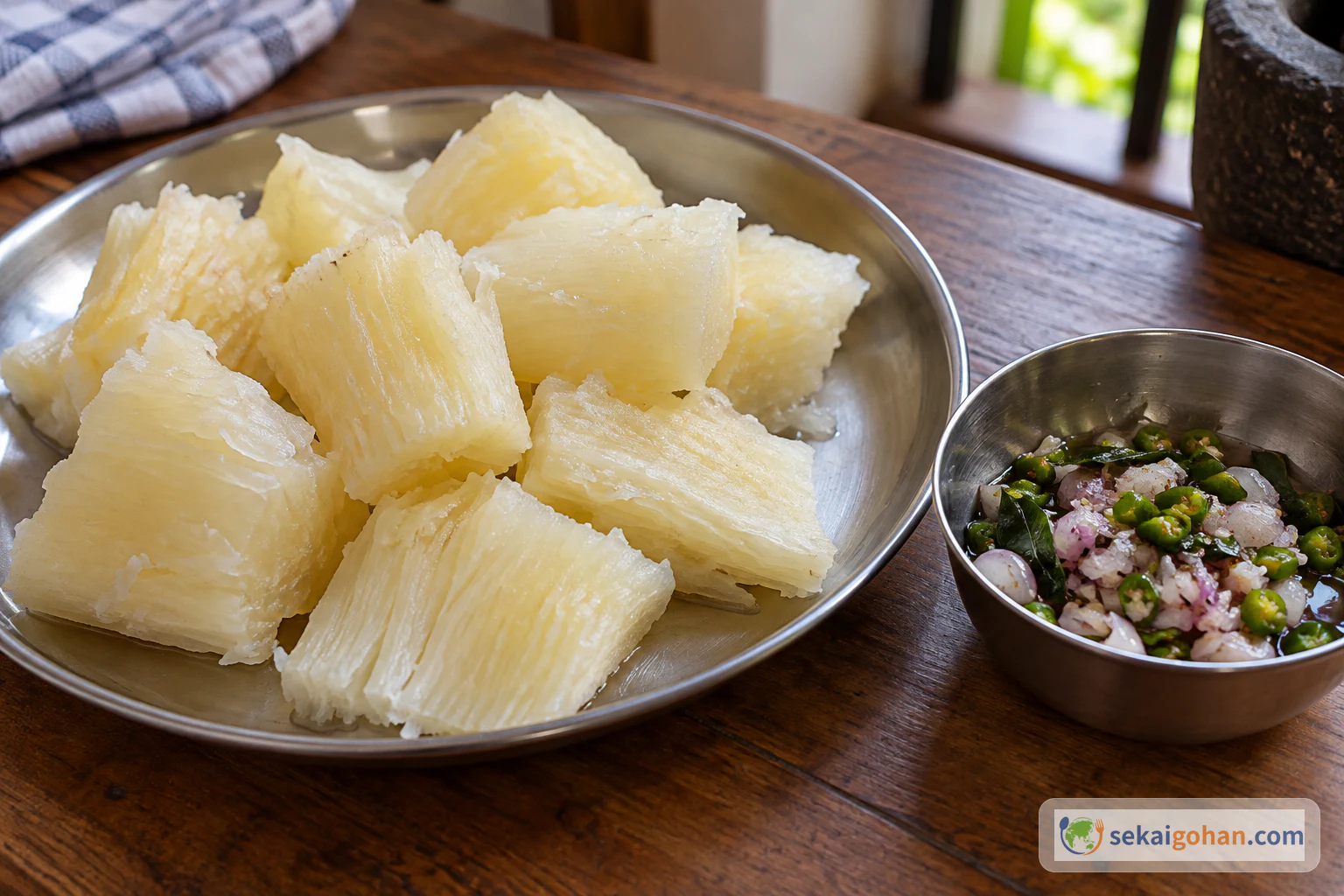
Soft boiled Kerala-style cassava root served with a coarse green chile chutney
Serves4 servings
CuisineIndian (Kerala)

Kappa Puzhungiyathu: Kerala Boiled Cassava with Kanthari Chile Dip

How to make kappa puzhungiyathu, the Kerala way of boiling fresh cassava root in two changes of water until very soft, served with kanthari mulaku chammanthi, a coarse raw dip of chiles, shallots, curry leaves and coconut oil. Covers choosing safe, food-grade sweet cassava, peeling, the two-stage boil, judging tenderness, substitutions, serving and how it differs from tapioca pearls.

Cooking flow

Cooking steps

STEP 11 / 7

Start with the right cassava

STEP 1

Use two large fresh cassava roots sold as edible sweet cassava for direct cooking. They should be firm and intact. Set aside any root whose type is unknown. Do not taste the raw flesh at any point.

STEP 22 / 7

Peel completely and cut into large, long pieces

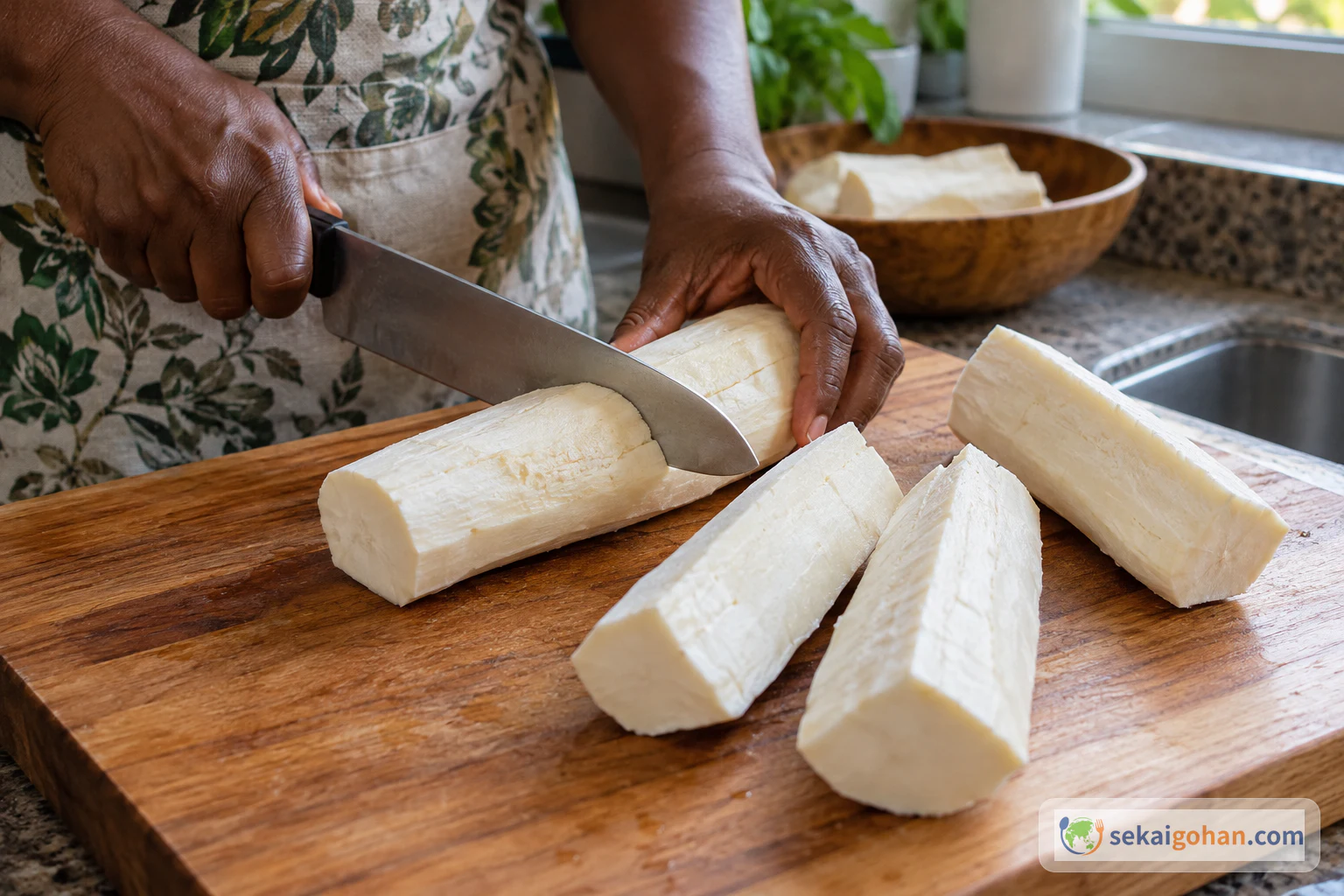
Peeling the thick skin off cassava and cutting the root into four or five large, long pieces
Peel off all of the brown skin and cut the white root into substantial pieces, not small dice

Wash the roots and cut off both ends. Peel away the thick outer skin completely, including any thin layer still clinging to the white flesh. Cut each root into four or five large, long pieces. If you see a tough, fibrous strand running through the center of a piece, remove it.

STEP 33 / 7

Bring to a boil once and pour off the water

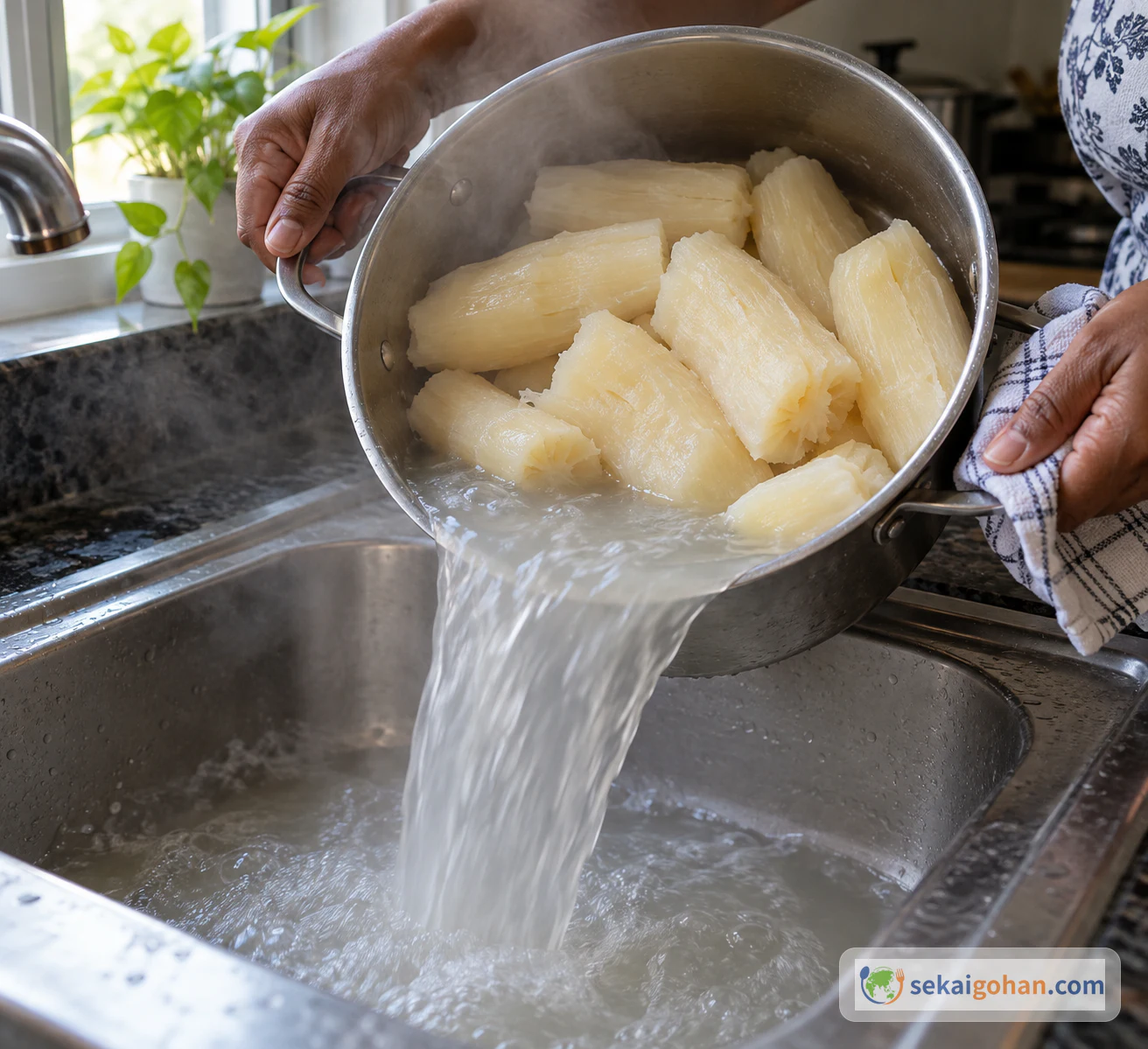
Cassava started in water, with the first cooking water poured away once it boils
Pour the first water straight down the sink; it is not kept for anything

Put the pieces in a pot, cover them with water and bring to a boil. Add no seasoning yet. As soon as the water boils, drain it off into the sink and discard it. Keep the cassava in the pot.

STEP 44 / 7

Refill with fresh water, season and cook until very soft

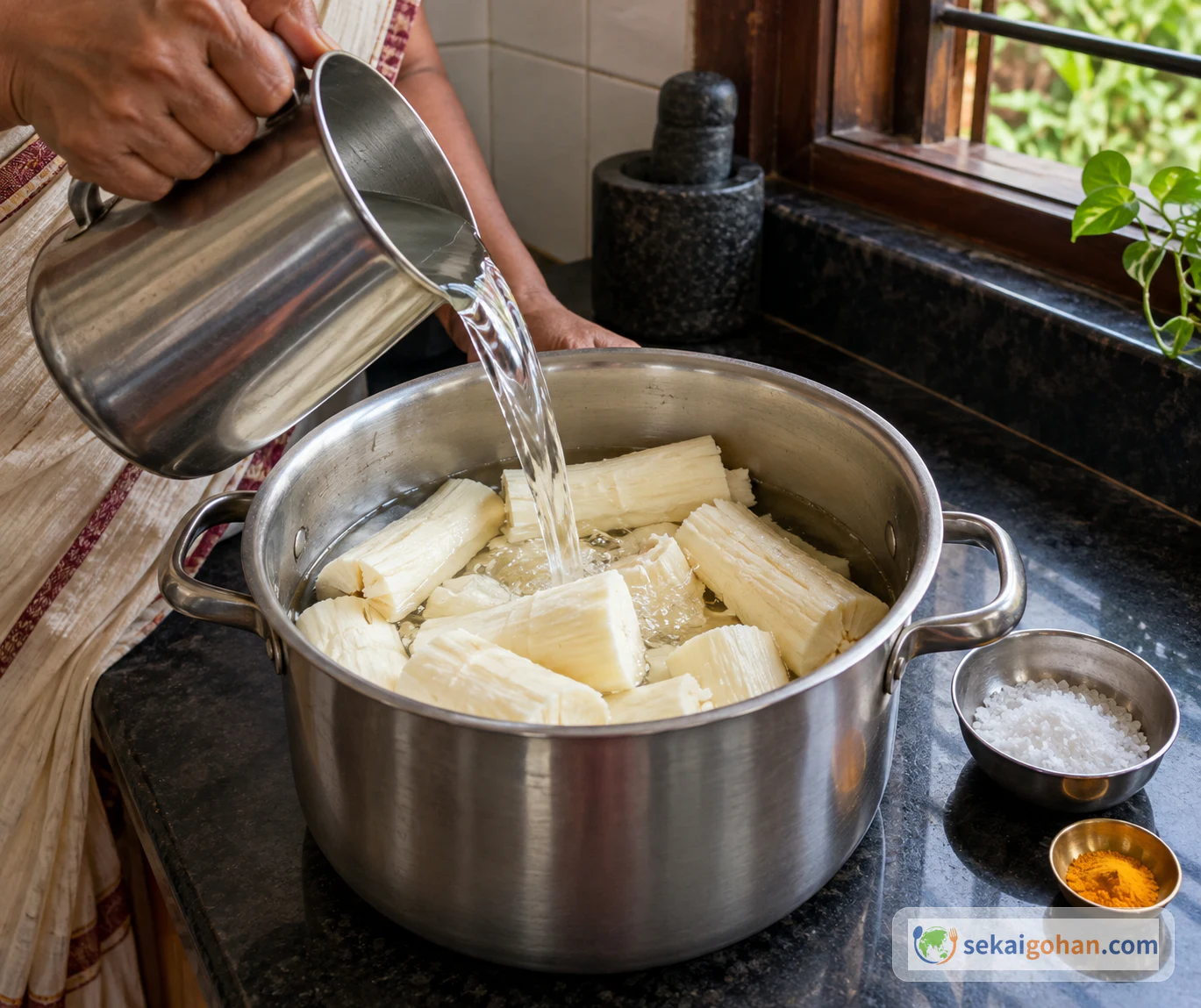
Fresh water poured into the pot of cassava, with salt and a small optional pinch of turmeric ready to add
Season only this second, fresh water

Pour in fresh water, about the same amount as before, so the pieces are covered again. Add salt to taste and a pinch of turmeric if using.

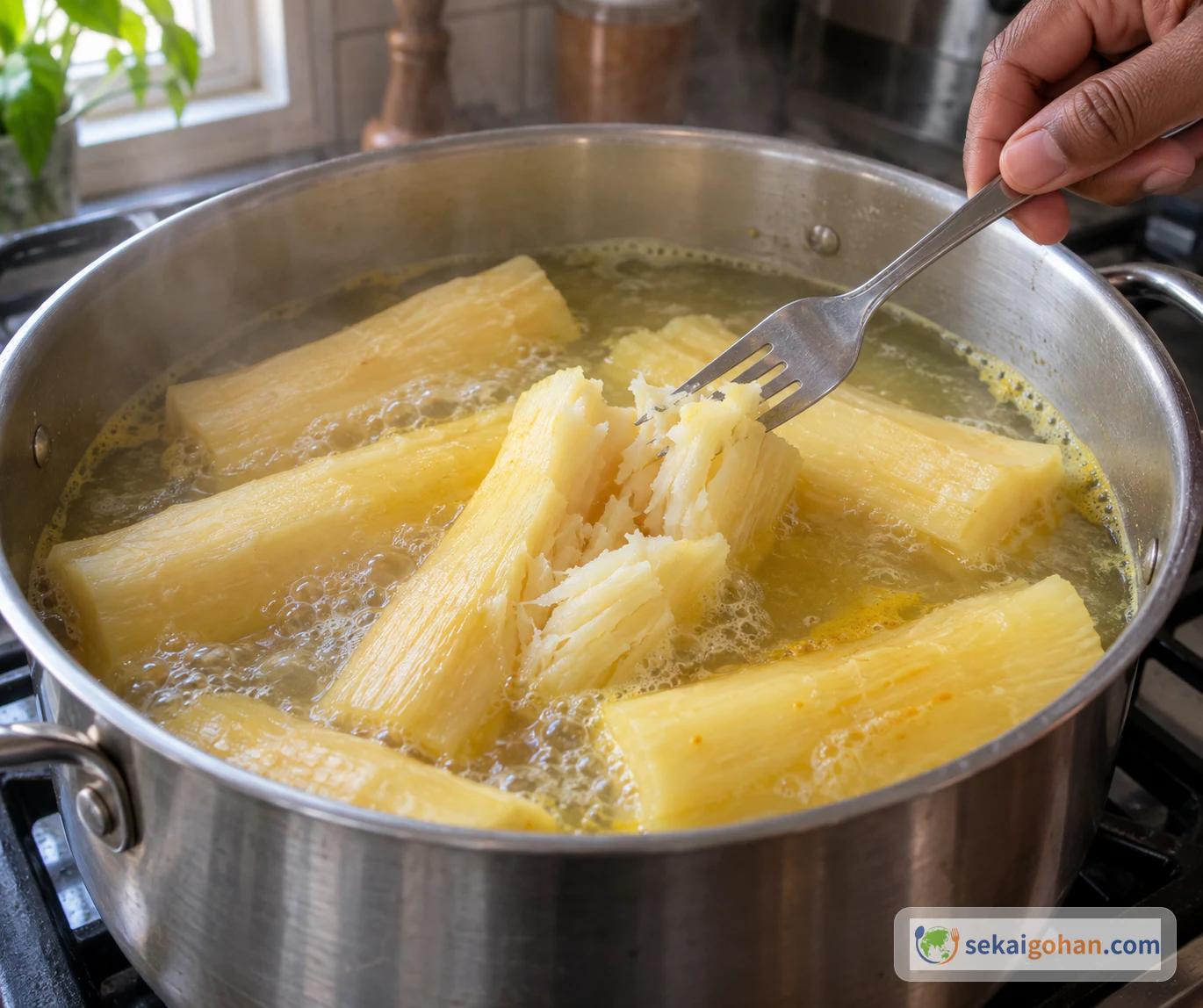
Bring back to a boil and cook for 10–15 minutes, until the cassava is very soft. A fork should slide in easily, and the piece should start to break apart. Larger or older roots may need longer. If any piece is still firm in the center, keep cooking and check again.

Second boil: white cassava pieces soft enough to fall apart when tested with a fork
Judge by tenderness, not the clock: the piece should yield and begin to separate
STEP 55 / 7

Drain all the water and plate

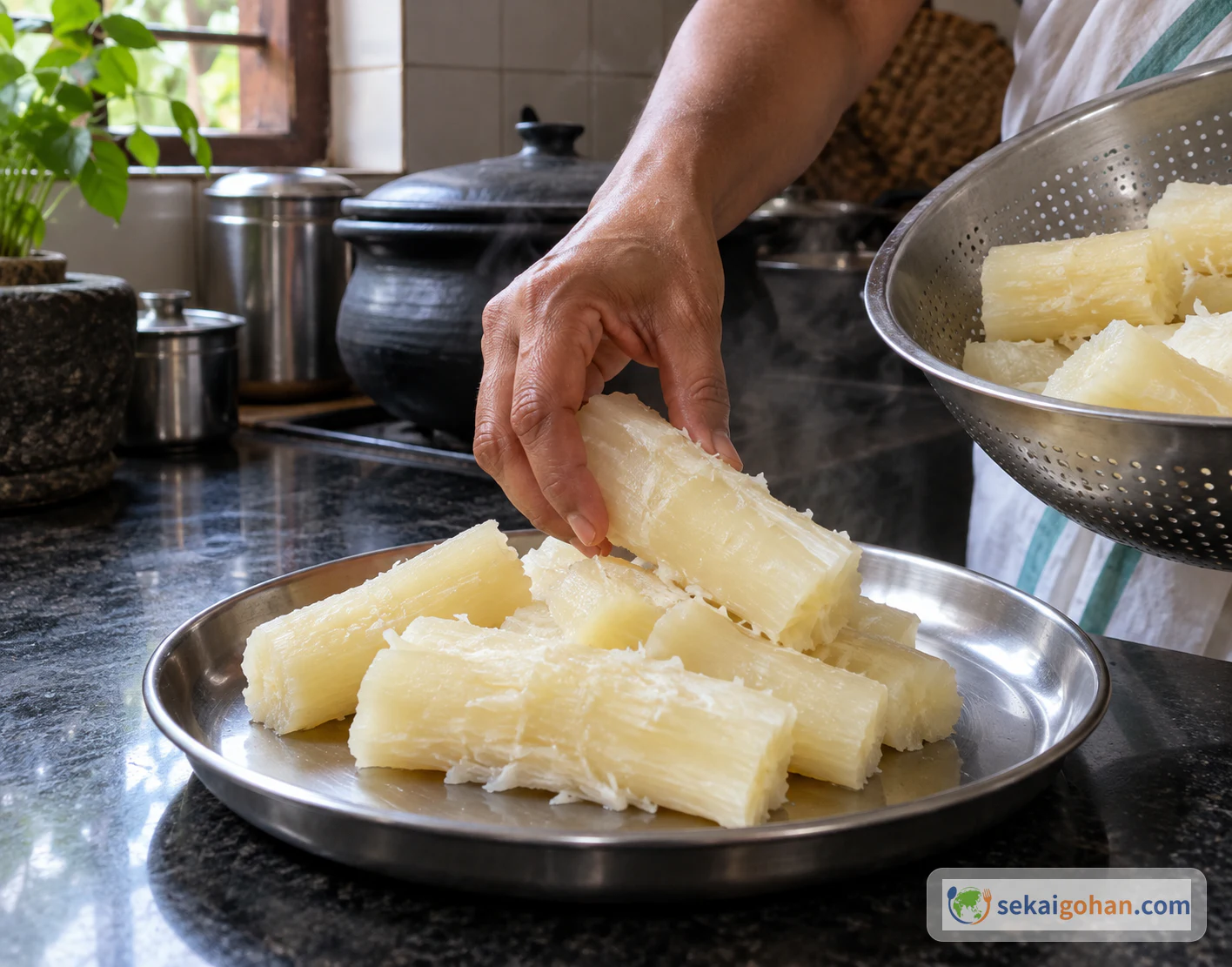
Draining the tender boiled cassava and placing the pieces on a plate
Drained, steaming pieces with no pool of water on the plate

Drain the cassava well and discard the cooking water. Don't leave the pieces sitting in liquid. Transfer the hot pieces to a serving plate.

STEP 66 / 7

Crush the chile dip

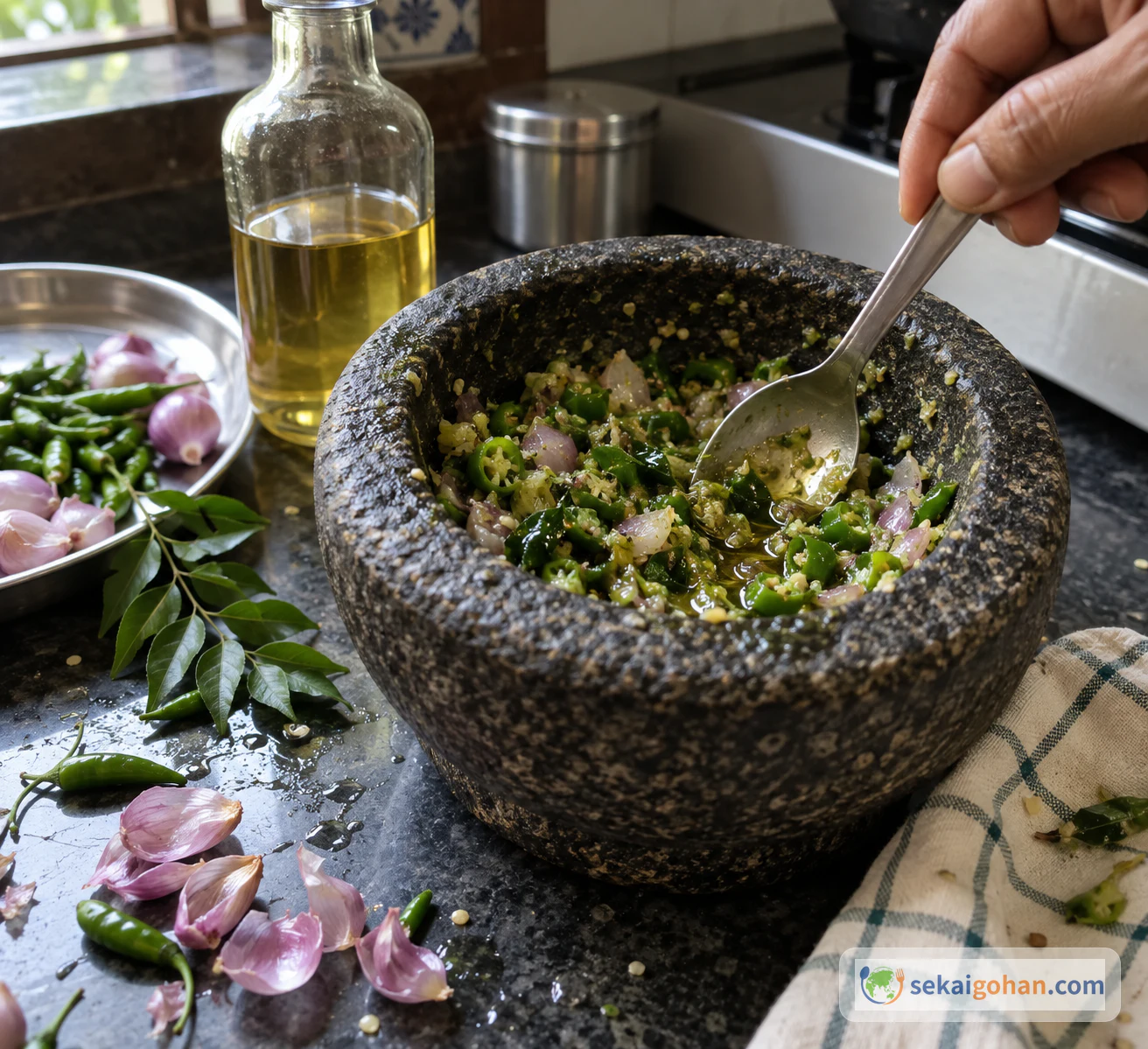
Green chiles, shallots and curry leaves coarsely crushed in a stone mortar with coconut oil being mixed in
Coarse and glossy with coconut oil, not a puree

Put the 15 chiles, 10 shallots and a few curry leaves in a mortar and crush them with the pestle into a coarse, moist paste. You can also pulse them briefly in a food processor. Stop while the mixture is still rough; don't blend it smooth. Transfer to a bowl, add 3 tbsp coconut oil and salt to taste, and mix. If your chiles are very hot, use fewer and add more to taste.

STEP 77 / 7

Serve hot with the dip

STEP 7

Serve the hot cassava with the chile dip on the side, so each person can take as much heat as they like. Fish curry or meat can join the table if you have them, cooked separately.

0 / 0
Ingredients

Ingredients

1 / 1

Ingredients

Ingredient Amount Role
Fresh cassava root, food-grade sweet cassava (kappa) 2 large The main dish. Peeled completely and boiled until very soft
Salt to taste Seasons the second cooking water
Turmeric powder a pinch, optional A faint color in the second cooking water
Water as needed Enough to cover the pieces, for the first boil and again for the second boil
Bird's-eye chiles (kanthari mulaku) or green chiles (pachamulaku) 15 Fresh heat. Use fewer if your chiles are very hot
Small shallots (kunjulli) 10 Sharpness and a little sweetness
Curry leaves a few Aroma
Coconut oil 3 tbsp Stirred in raw to bind the dip and add fragrance
Salt to taste Added after crushing
0 / 0

On a Kerala table, a plate of boiled cassava can be the whole point of a meal: soft white chunks, still steaming, next to a small bowl of something green, hot and salty. That plate is kappa puzhungiyathu, cassava root boiled until it is very soft and pale, then drained completely. The root stays mild and starchy. All the heat and fragrance come from the dip beside it, kanthari mulaku chammanthi, a coarse, uncooked mix of fresh chile, shallot, curry leaf and coconut oil.

Kappa Puzhungiyathu in Kerala
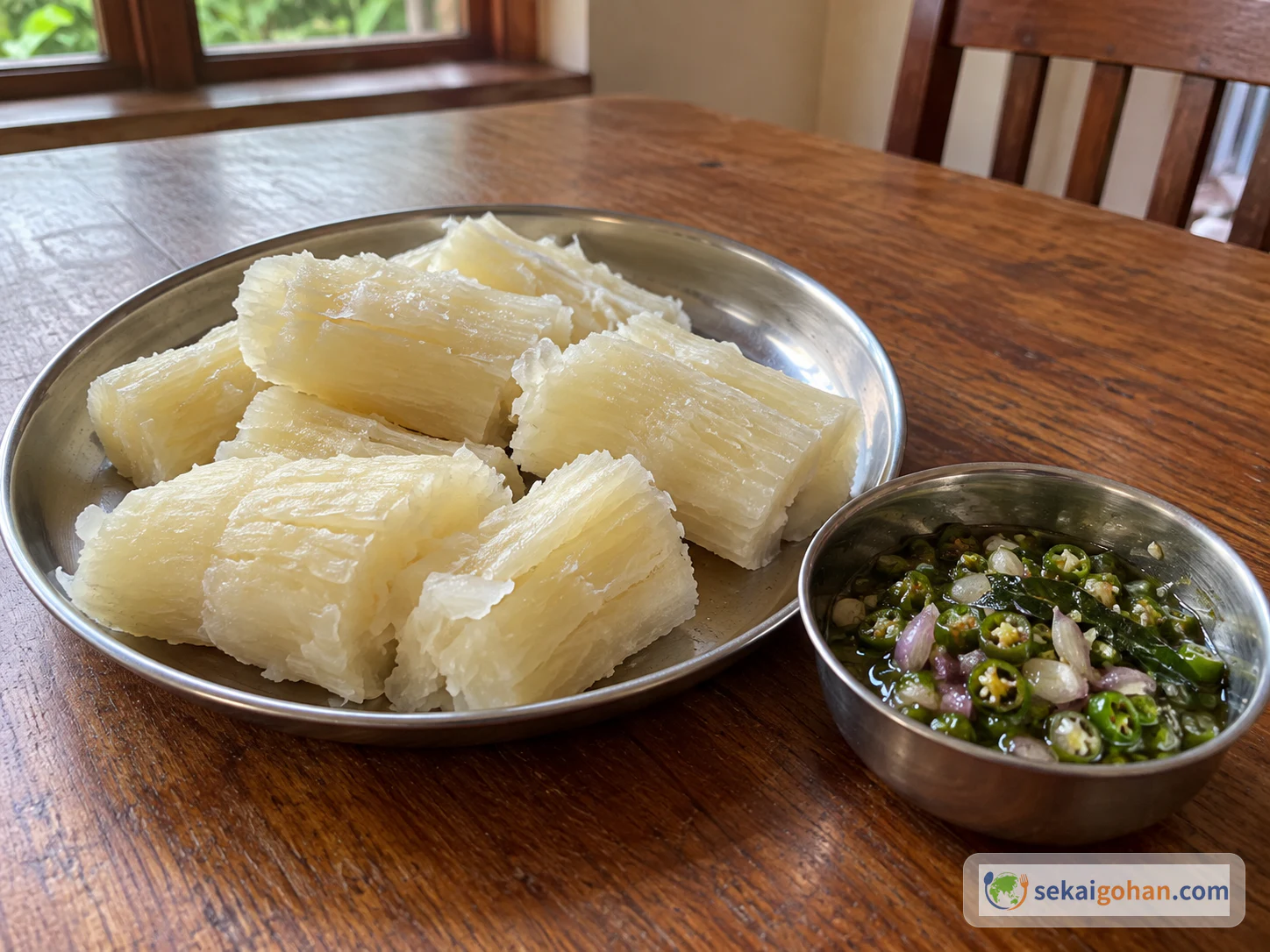
A table with Kerala-style boiled cassava and a bowl of green chile chutney
Boiled cassava as the main dish, with the raw chile dip in its own bowl

In Malayalam, the cassava root is called kappa (കപ്പ), and puzhungiyathu means this boiled preparation. It shows up at breakfast, as an evening snack or at dinner, usually with Kerala fish curry, a kanthari chile dip or an onion dip. Fish curry or meat on the side makes a fuller meal, though the chile dip alone completes the plate. If you serve fish curry, make it separately and set it beside the cassava, which stays plain and drained.

Cassava is grown across southern peninsular India, and in Kerala its cultivation helped address food shortages among lower-income people. This home version keeps the root simple. The cassava is boiled once and that water is poured away, then the pieces cook in fresh water with salt and an optional pinch of turmeric until very soft. The chammanthi is just crushed chiles, shallots and curry leaves loosened with coconut oil and salt, and it stays raw and coarse.

Here "tapioca" means the fresh cassava root, not tapioca pearls, tapioca starch or cassava flour. The dish also differs from kappa puzhukku, where the cassava is mashed, and from kappa biriyani, where it is cooked with meat. Tapioca thoran and upmav are separate dishes again. For more dishes from the same country, see the India page.

Kerala cooks don't all boil cassava the same way. Chenda Muriyan uses 1/2 kg tapioca cut lengthwise into 3-inch pieces, cooked with salt, a pinch of turmeric and enough water. The water is strained off after a while, and the pieces cook until done. It comes with a curd chutney: 2 green chillies, 1/2-inch ginger, one sprig of curry leaf and salt, ground and stirred into 1/2 cup curd.

Ingredients: Boiled Cassava and Kanthari Chile Dip
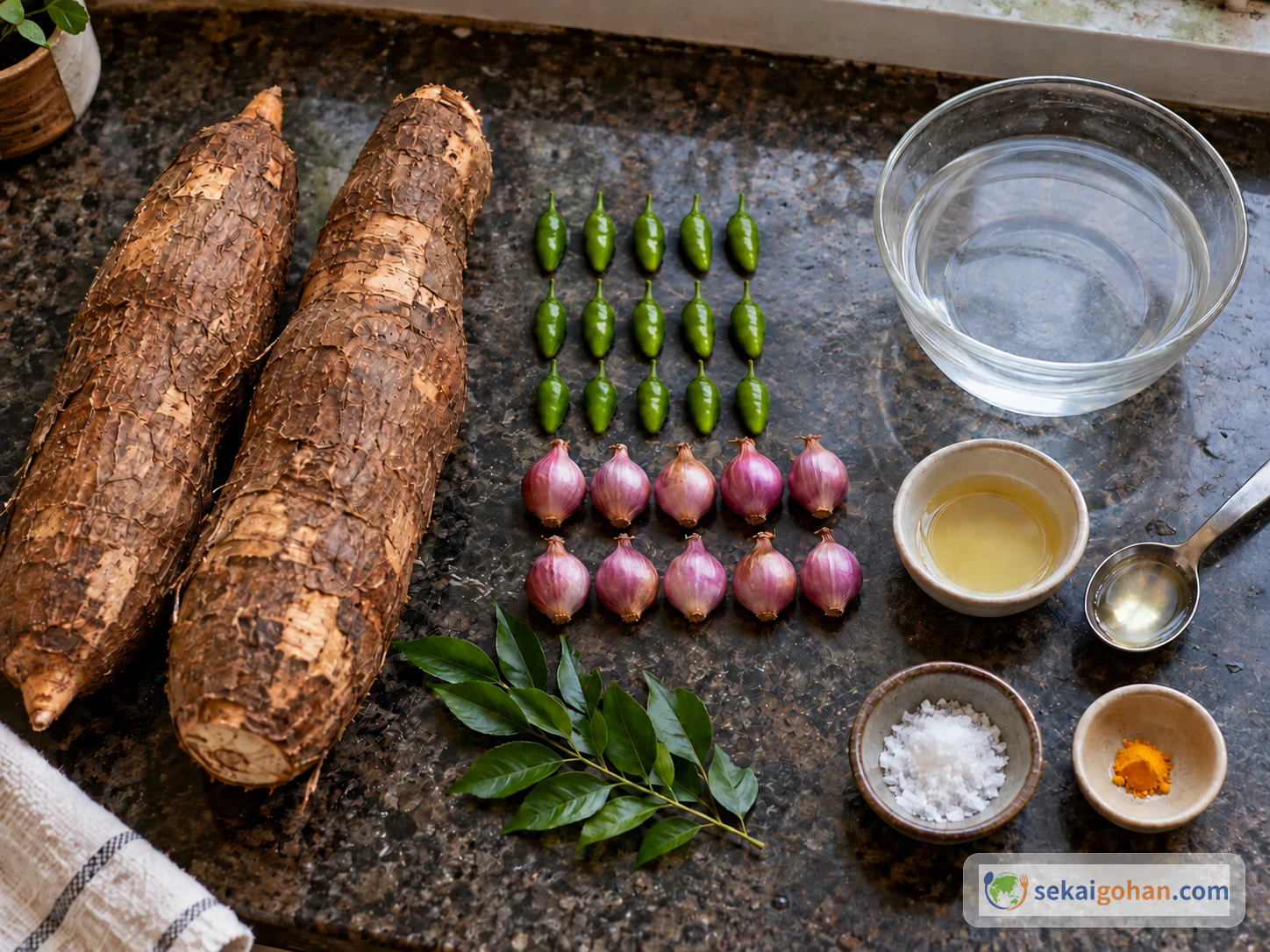
Two fresh cassava roots with green chiles, shallots, curry leaves, coconut oil, salt, turmeric and water
Whole fresh cassava roots, not tapioca pearls or powder, with the dip ingredients beside them

The cassava (serves 4) and the dip (serves 6) are two separate batches, so don't scale one to match the other.

Equipment

  • Sturdy knife and cutting board
  • Deep pot large enough to cover the cassava pieces with water
  • Colander
  • Fork or skewer for checking tenderness
  • Mortar and pestle, or a small food processor
  • Small bowl for the dip
  • Serving plate

Choosing Cassava, Chiles and Substitutes

Cassava root. Buy fresh roots that are firm, intact and clearly sold as edible sweet cassava for cooking. Look for labels such as yuca, cassava or tapioca root at Latin American, African, South Asian or Southeast Asian grocers. Pick two large roots rather than weighing out a target.

Frozen cassava. If fresh root is hard to find, packaged frozen cassava is a practical fallback, as long as the package identifies it as food-grade and gives cooking directions. Follow those directions rather than the timing here, and expect a different texture.

Chiles. Kanthari is a small, very hot bird's-eye chile. Ordinary fresh green chiles work in its place, but heat and aroma vary widely between varieties, so taste a sliver first and start with fewer than 15 if they are fiery. Mild peppers such as shishito won't give the same character.

Shallots and curry leaves. Small Asian shallots are the first choice; a small red onion can stand in, though it is less sharp and less sweet. Fresh or frozen curry leaves have the most aroma, and dried leaves are a weaker fallback.

If you can't make the dip. Serve the boiled cassava plainly, or with a Kerala fish curry made from its own recipe, rather than improvising a substitute dip.

Cassava safety and allergens

Cassava roots can contain cyanogenic compounds, so preparation matters. Sweet cassava is prepared safely by peeling and thorough cooking. Bitter cassava needs much more extensive processing than this simple boil provides, so use only cassava sold as food-grade sweet cassava for direct cooking, and skip any root that is unlabeled or of unknown type. Never taste cassava raw. Peel it completely, cook it until very soft all the way through, and discard both cooking waters; never use them in chutney, curry or anything else.

Coconut oil is used in the dip. If you are cooking for someone who avoids coconut, tell them, and check the labels of packaged ingredients for cross-contact. Optional pairings such as fish curry may contain fish or other allergens.

Troubleshooting Boiled Cassava and Chile Dip

Problem Likely cause What to do
Pieces still firm in the center Large or older roots; pieces cut very thick Keep boiling and test again with a fork. Serve only when every piece is very soft all the way through
Some pieces soft, others firm Uneven piece sizes Take out the soft pieces and keep cooking the rest
Cooking water looks cloudy or starchy Normal starch released from the root Discard it as in the method. Never keep or reuse either cooking water
Thin skin left on the pieces Peeling stopped at the brown outer layer Peel away every bit of remaining skin before boiling
You don't know what kind of root it is It may not be sweet cassava Stop and don't eat it. Buy cassava clearly sold as food-grade sweet cassava for cooking
Dip is a smooth paste Over-processed Next time, crush by hand or pulse in short bursts. It still tastes good, just less textured
Dip is too hot Very hot chiles Serve it in small amounts. Next time, start with fewer chiles
Dip tastes flat Not enough salt Add salt a little at a time and mix again

Frequently Asked Questions

Why is it boiled twice?

The cassava comes to a boil, that water is drained, and then it cooks again in fresh water and is drained once more. Both waters get discarded. The double boil does not make every cassava safe, and it is no replacement for choosing the right kind of root.

How long does the second boil take?

About 10–15 minutes, but plan around the root rather than the clock. Larger roots can take longer, so keep going until every piece is very soft all the way through.
Sources

  • Sangeetha, "Kappa Puzhungiyathu with Kanthari Mulaku Chammanthi," Kothiyavunu.com. Kerala boiled cassava as a named dish; the recipe amounts, serving counts and sequence (peel, cut into 4–5 pieces, boil, drain, refill with water, salt and optional turmeric, cook 10–15 minutes until very soft, drain); the kanthari chile dip; meal contexts and pairings; and the listed preparation and cooking times. https://www.kothiyavunu.com/2011/11/kappa-puzhungiyathu-with-kanthari/
  • Kerala Agricultural University, Centre for e-Learning, "Tapioca (Manihot esculenta)." Cassava cultivation in southern peninsular India, its role in addressing food shortages among lower-income people in Kerala, and boiled cassava eaten with fish curry or meat. https://www.celkau.in/crops/tuber/tapioca/about.php
  • Government of Kerala, Kerala Calling, March 2008, "Ethnic Food—Tapioca," recipe by Indu Narayan. The Chenda Muriyan boiled tapioca preparation with curd chutney, and other tapioca preparations including thoran and upmav. https://document.kerala.gov.in/Porteddata/extensionpdf/documents/10180/db575fac-02f1-41b8-8e4e-556380ee5e91.pdf
  • Western Pacific Surveillance and Response Journal / WHO Regional Office for the Western Pacific, "Cassava food poisoning, Santa Cruz, Davao del Sur, Philippines, October 2015." Cyanogenic compounds in cassava and the distinction between sweet cassava, prepared by peeling and thorough cooking, and bitter cassava, which requires more extensive processing. https://ojs.wpro.who.int/ojs/index.php/wpsar/article/download/539/851?inline=1