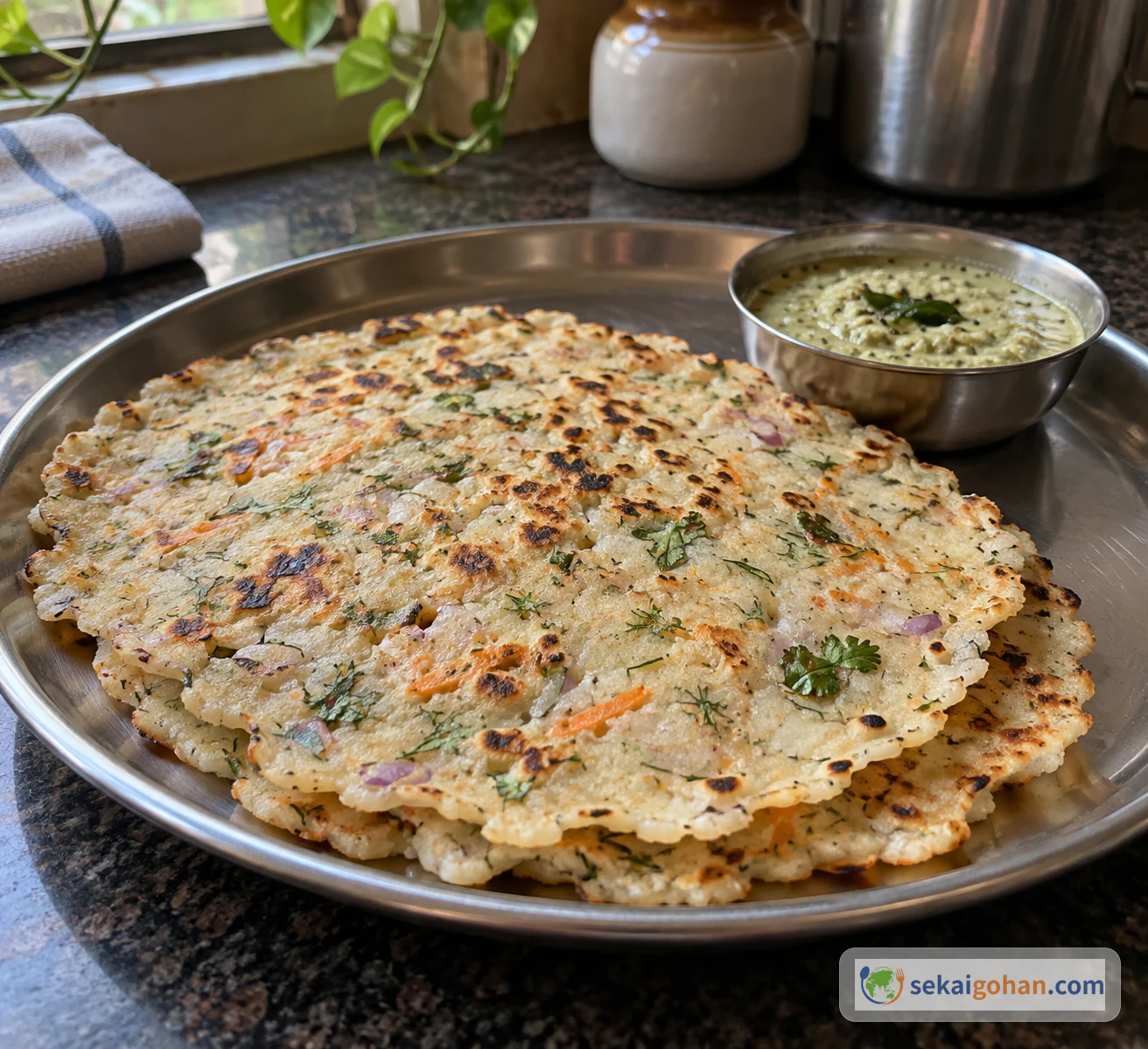
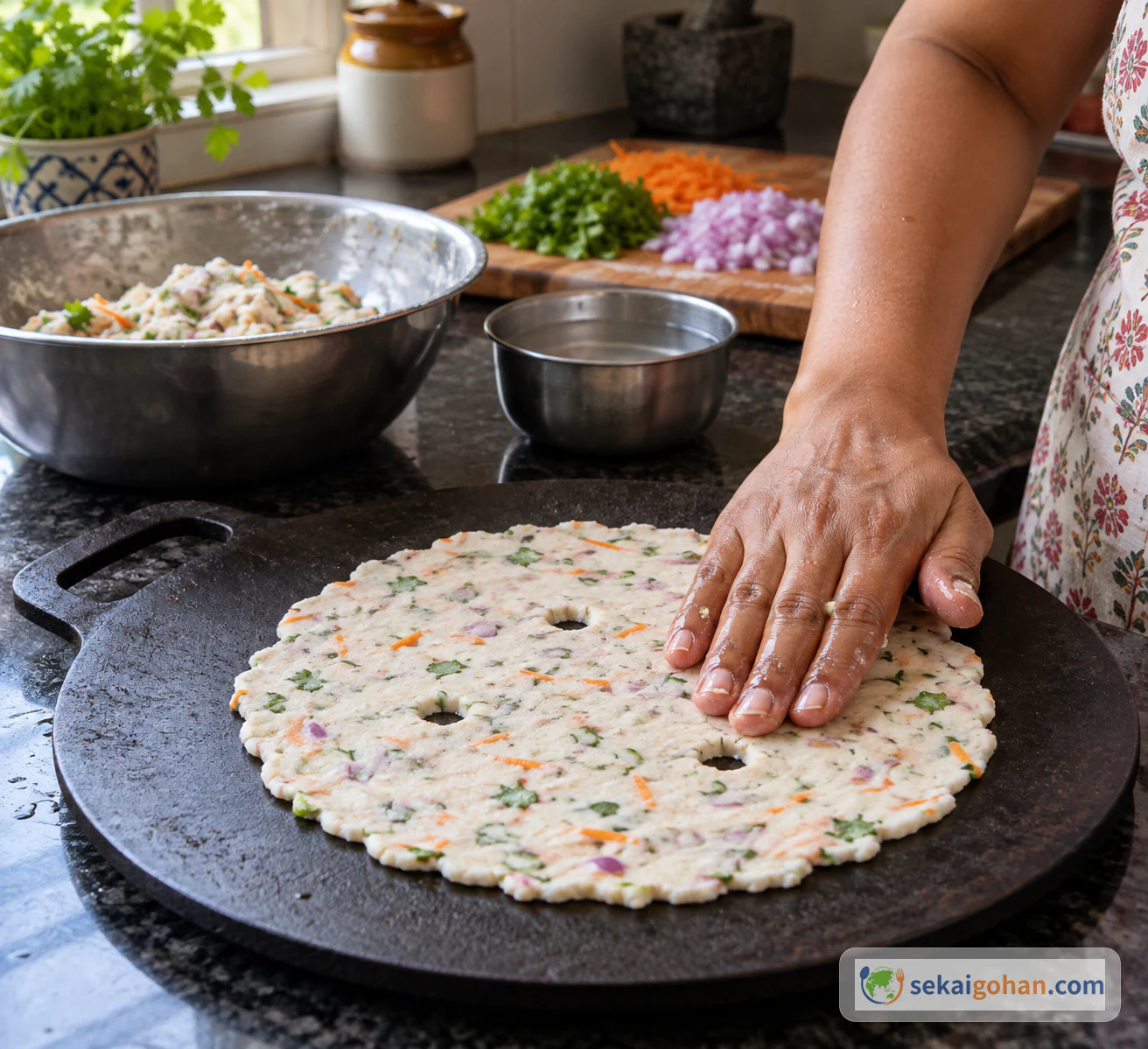
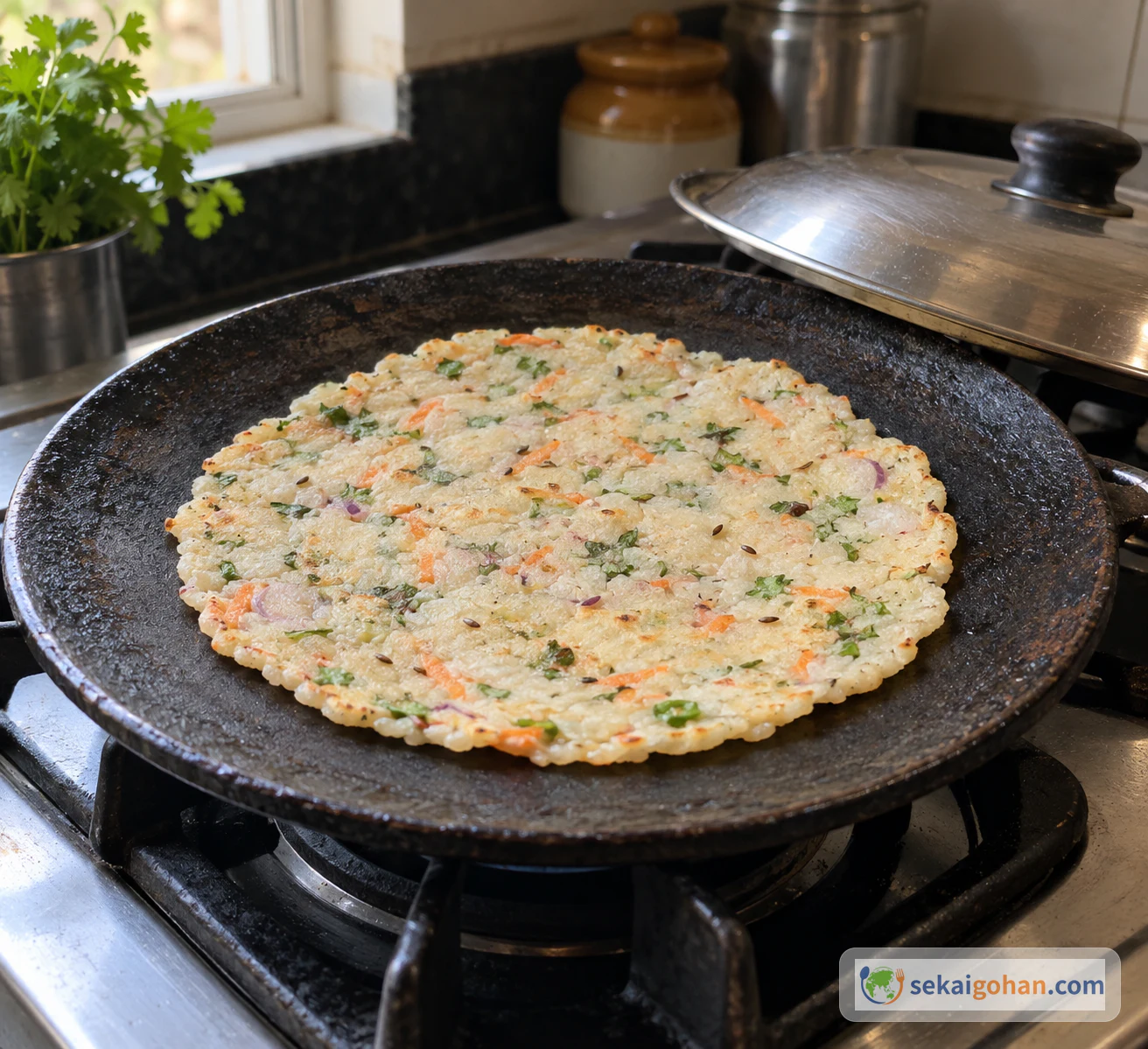
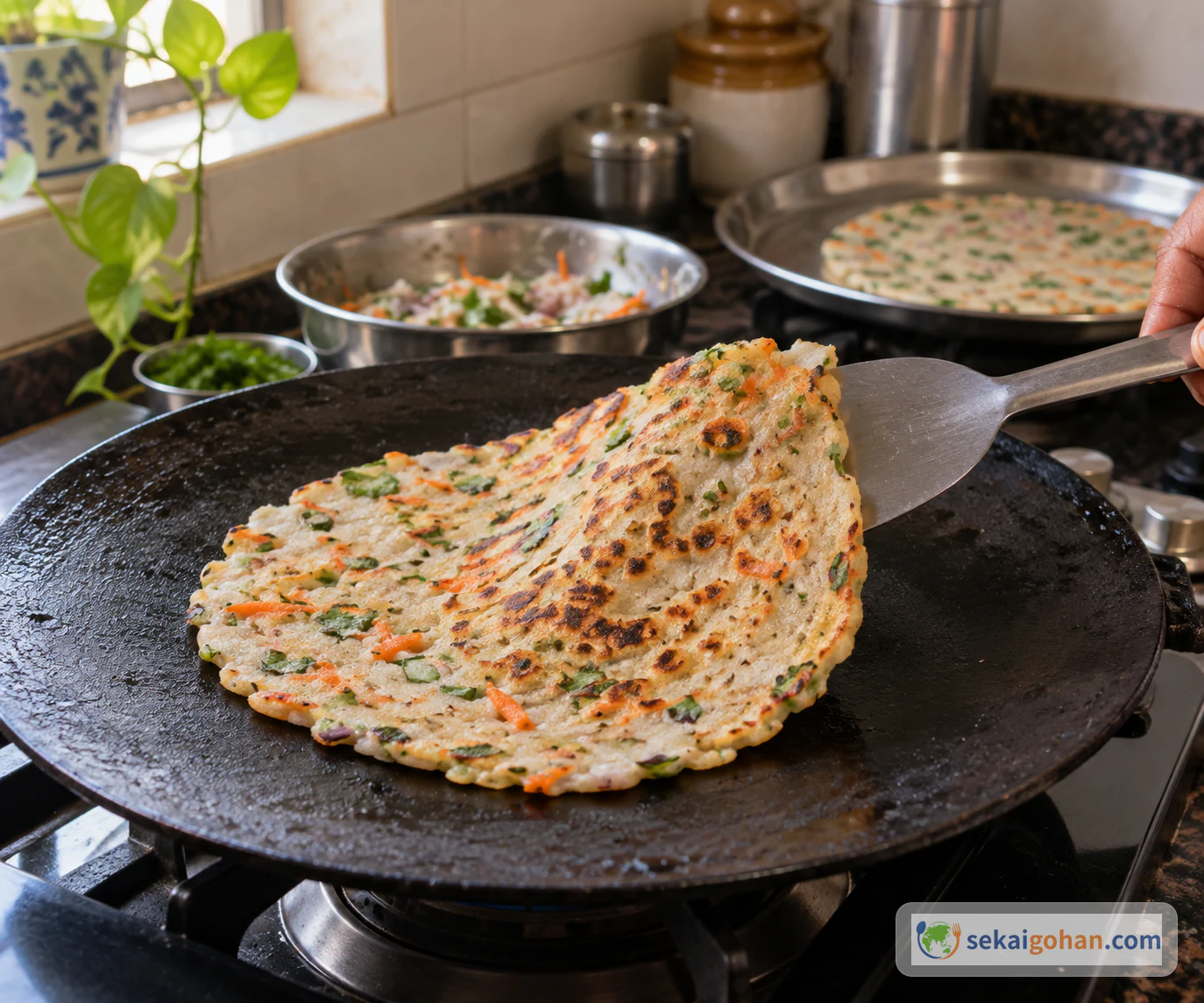
A ball of pale dough goes onto a flat iron pan, and damp fingertips push it out into a thin round, with bits of onion, green chilli and herbs showing all through it. Under a lid over medium heat, the wet sheen on the surface slowly fades while brown spots form underneath. Turn it, let the second side toast, and get it to the table while it's still hot. That is akki rotti, a rice-flour flatbread from Karnataka in southern India. It is studded with vegetables and herbs, smells of dill and coconut, and is eaten hot with chutney or pickles.
About Akki Rotti
Akki means rice, and the bread is made from rice flour instead of wheat. Rice flour has no gluten, so it doesn't stretch, and most home cooks wonder how the dough holds together at all. Two things make it work: the texture of the dough, which should be soft and slightly sticky, and spreading it on a pan that hasn't been heated yet. The common version here is mixed with vegetables and herbs and cooked on both sides on a tawa.
Akki Rotti Across Karnataka
The same name covers a lot of different kitchens. Some cooks spread the dough on a banana leaf before it goes onto the tawa, with dill for aroma. Others make a looser dough with hot water, spread it in a warmed skillet and cook it under a lid. Some home versions from the Bengaluru and Mysuru area add avarekayi (field beans) or yogurt. Plain rice rotti, without vegetables, is a separate bread, and so is the version where the dough is first cooked with hot water in a separate pot.
In Kodagu (Coorg), rice is central to the Kodava table, and akki roti and otti are eaten at breakfast and alongside curries. That belongs to a wider rice-based food culture, though, and isn't the thin, vegetable-studded bread made here. For more of the country's dishes, see India.
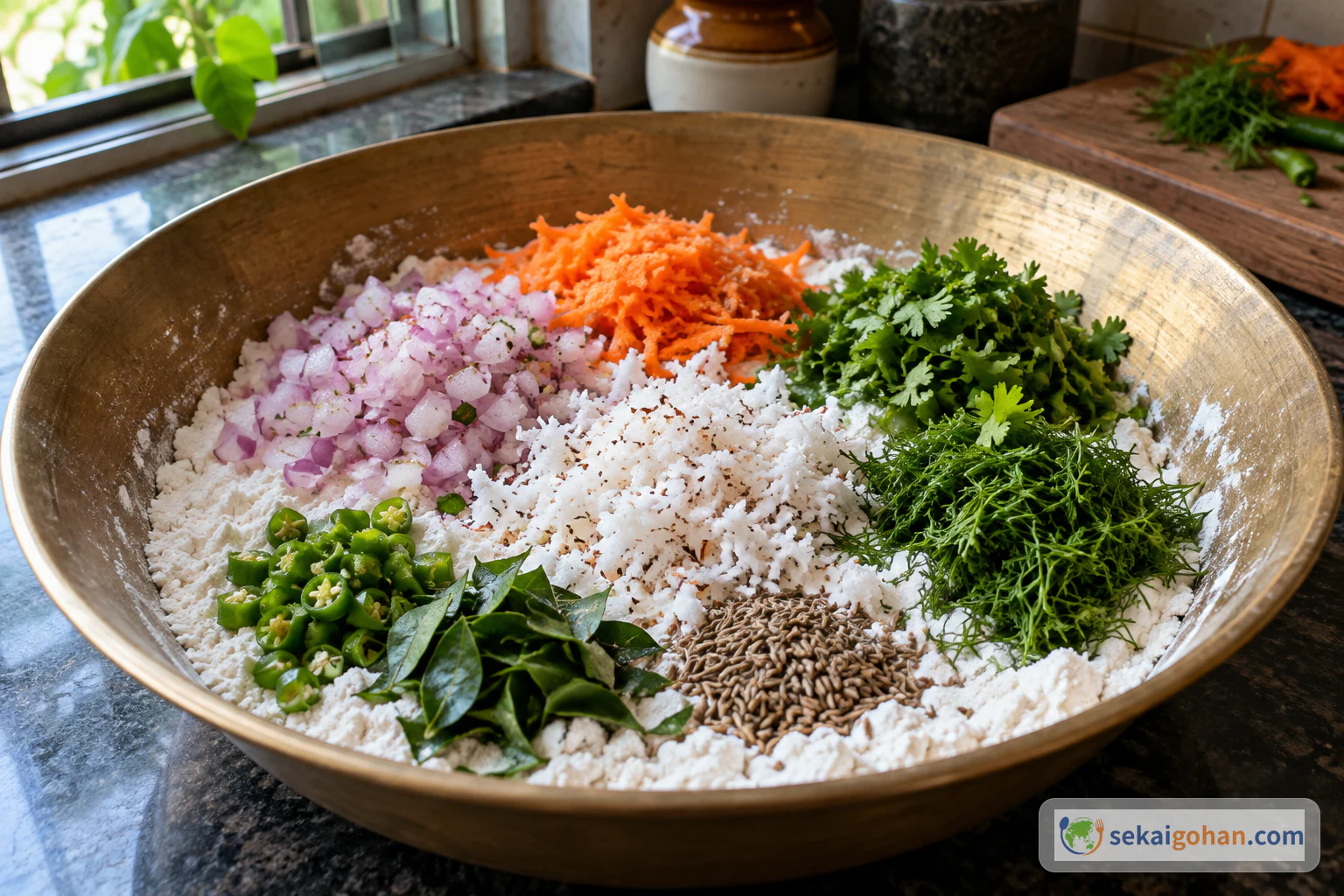
Ingredients: Vegetable-and-Herb Version
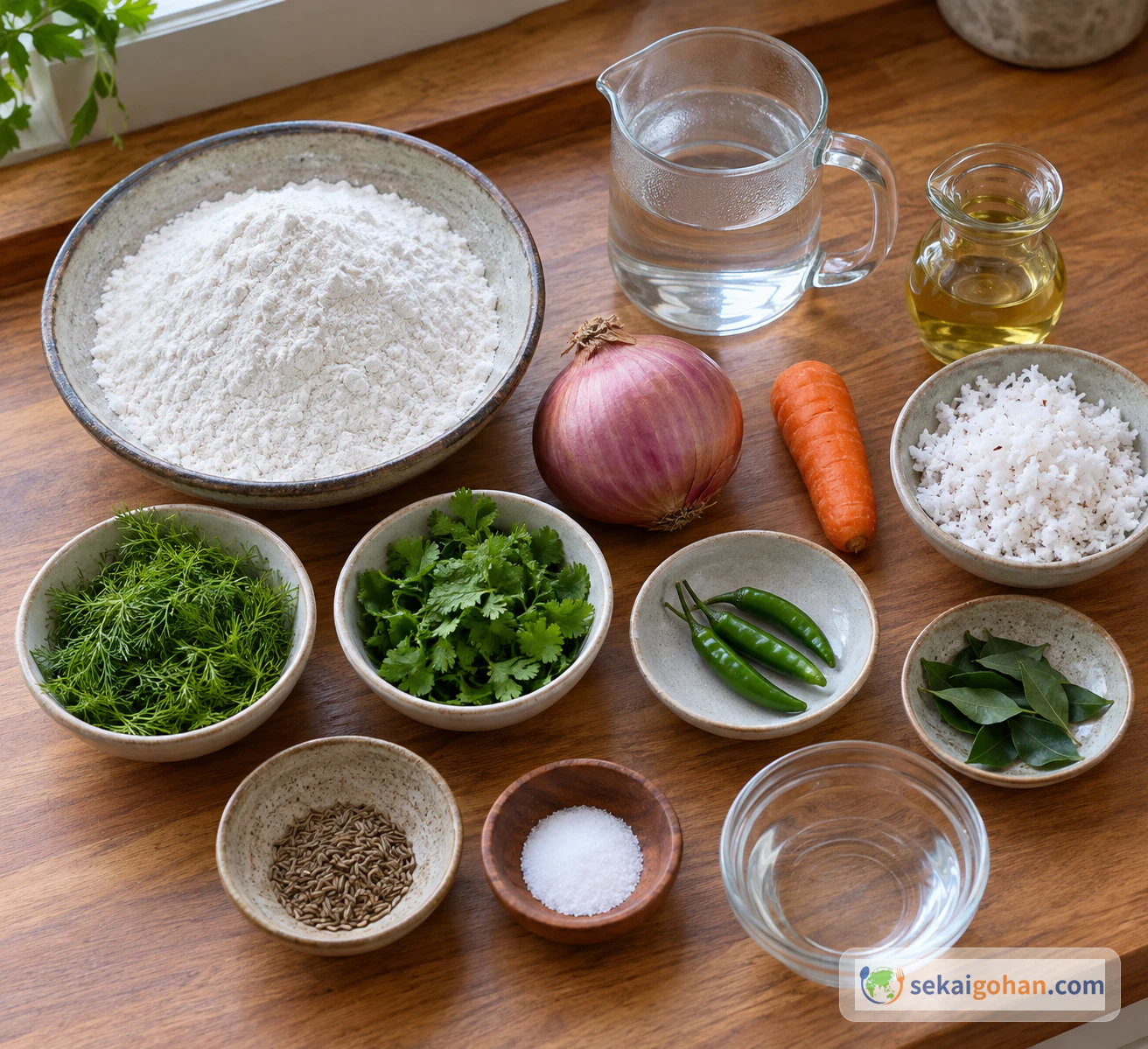
This recipe serves 3. The number of rotti depends on how large you portion each ball.
Use 1/4 cup of dill, or coriander leaves in its place, and a separate 1/4 cup of coriander leaves. These are two separate measures.
On the oil: have the 4 tbsp ready and use it both for greasing the pan and for the drops that go into the holes. The 1/2 tbsp per rotti comes out of the 4 tbsp, not on top of it.
1 cup = 240 ml, 1 tbsp = 15 ml and 1 tsp = 5 ml.
Serve with ready-made chutney, as much as you like.
Equipment
- A wide bowl for mixing
- A wooden spatula
- A tawa (flat iron griddle) or a flat-bottomed frying pan
- A lid that covers the tawa or pan
- A thin spatula for loosening and turning
- A second pan of a similar kind, if you want to swap pans while the first cools (optional)
Choosing Ingredients for Akki Rotti
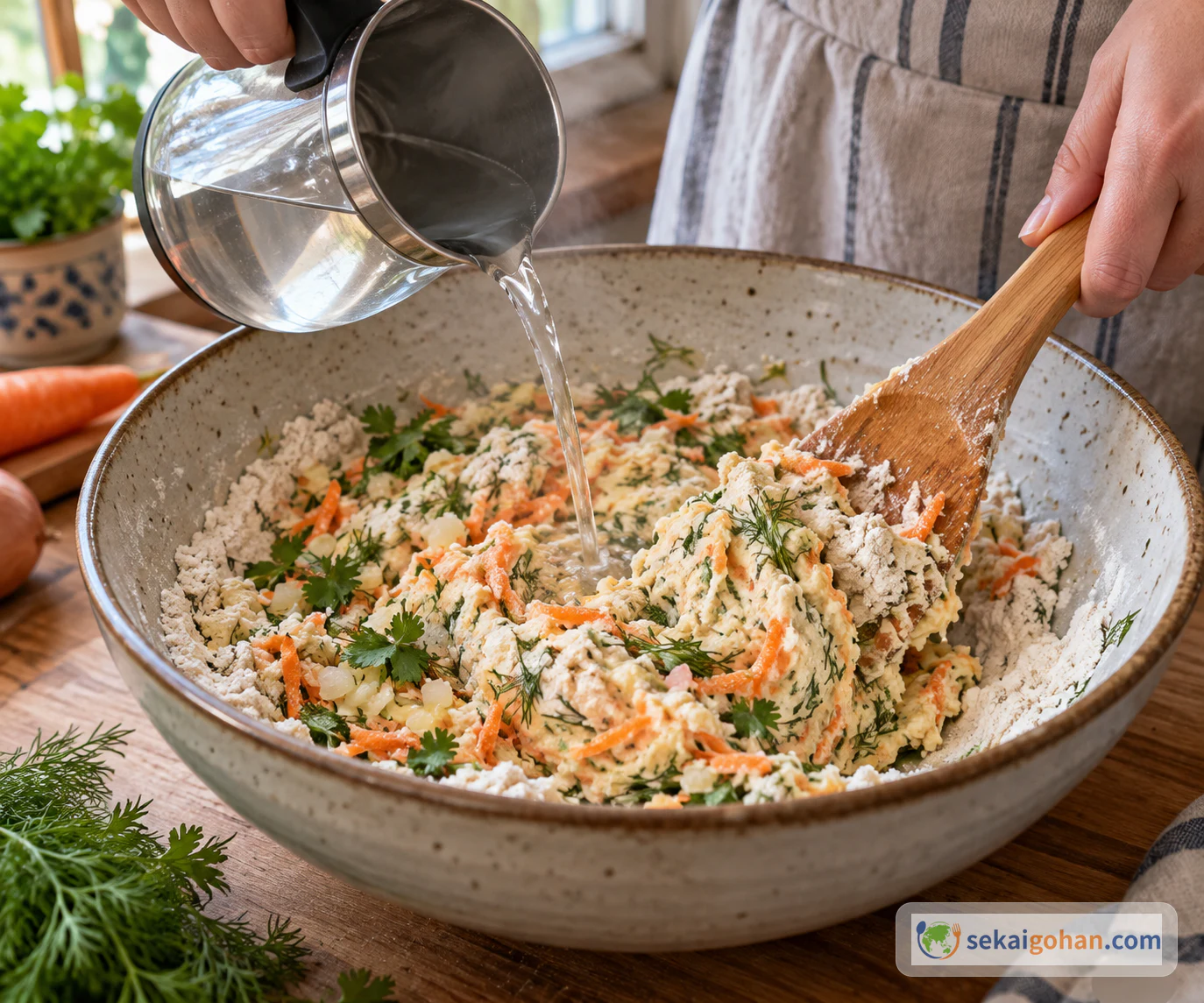
Rice flour. Use fine rice flour as the base. You can use ordinary supermarket rice flour, but brands differ in grind and in how much water they absorb. Treat the water amount as a starting point, add the hot water gradually, and stop when the dough feels soft and slightly sticky.
Dill or coriander. Dill, called sabbasige soppu, gives the bread its grassy aroma. If you can't find it, use coriander leaves or leave it out. The bread will smell different, not wrong.
Carrot. Carrot is optional. Without it the dough has less sweetness and less moisture, and if you swap in another root vegetable, the dough will take a different amount of water.
Coconut. Use freshly grated coconut. Dried coconut changes both the texture and the moisture, so it doesn't swap in directly.
Curry leaves and cumin. If you can't find curry leaves, leave them out, because no other herb stands in for their aroma. Use whole cumin seeds, since ground cumin releases its aroma differently.
Coconut oil and chillies. Coconut oil adds to the aroma. A neutral oil works for cooking but changes the flavor. Adjust the green chillies up or down to suit your taste for heat.
Pan. A tawa's broad, flat surface makes it easy to spread a round, but an ordinary frying pan works too.
The ingredient list contains no cashews or peanuts, but it does contain coconut. Check the labels on your rice flour and on any ready-made chutney you serve, since allergen labeling for coconut differs by product and country.
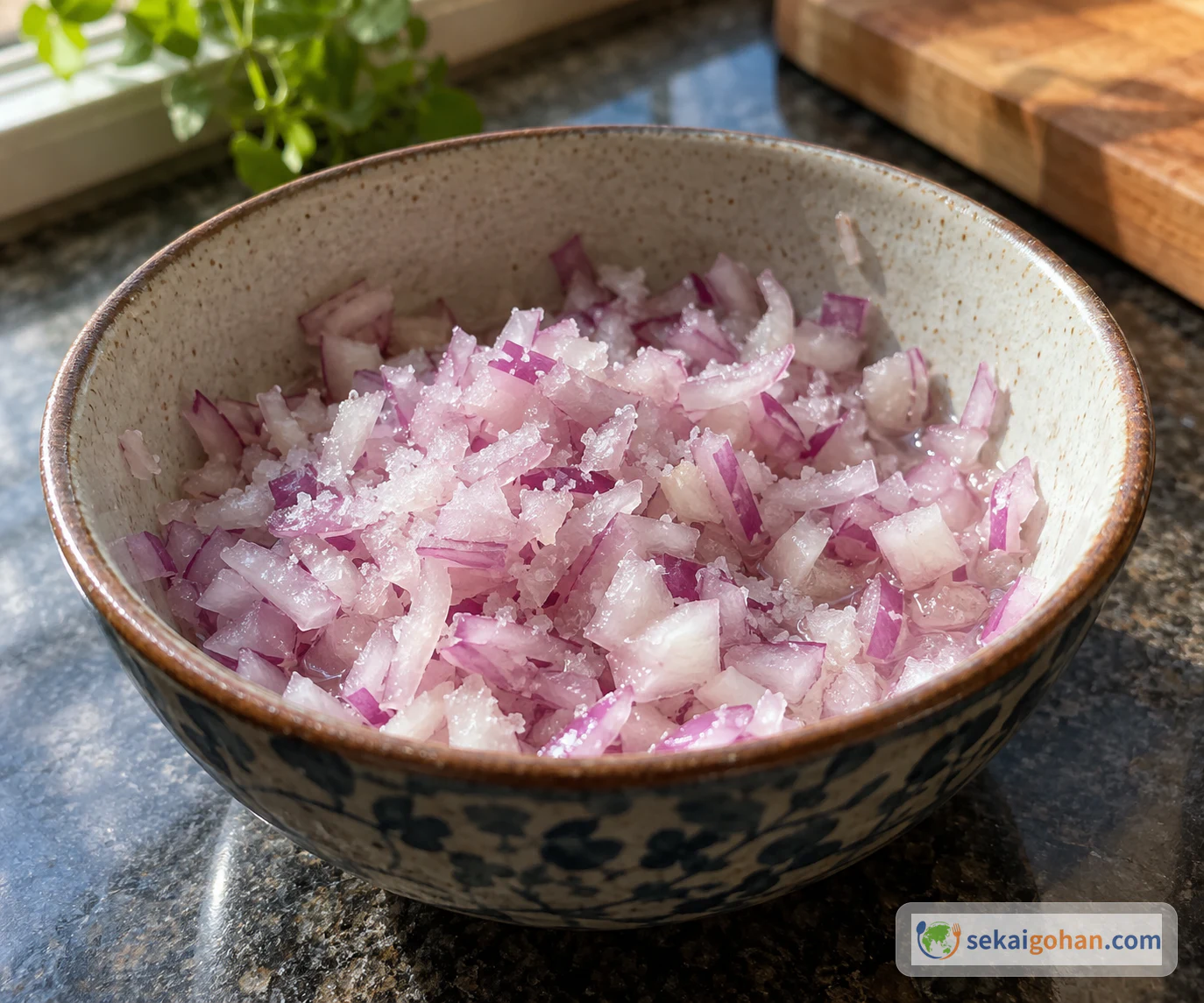
Method: From Salted Onion to a Toasted Round
Cook about 4 minutes covered and about 2 minutes on the second side. Make the rotti one at a time, letting the pan cool between them; the recipe's total time is 25 minutes. Thickness and heat change the timing, so move on when you see the signs described in each step.
Fixing Akki Rotti Problems
Judge each stage by how the dough and the bread look, not only by the clock. Most problems come from the dough's water content, the heat, or a pan that's still warm from the last rotti. Let the pan cool between rounds.
| Problem | Likely cause | What to do |
|---|---|---|
| The edges crack as you spread the dough | The dough is too firm; your rice flour may absorb more water | Add hot water a little at a time and mix again |
| The dough sticks and won't come off the pan | Too much water, or the tawa wasn't cool enough when you shaped | Don't keep adding flour while shaping; use less water next time and make sure the pan is cold |
| It browns quickly but stays damp inside | The heat is probably too high | Return to medium heat and keep the lid on until the surface loses its sheen |
| It breaks when you turn it | Moved before the underside had set | Wait for brown spots underneath, and loosen the edge with the spatula first |
Serving and Storing Akki Rotti
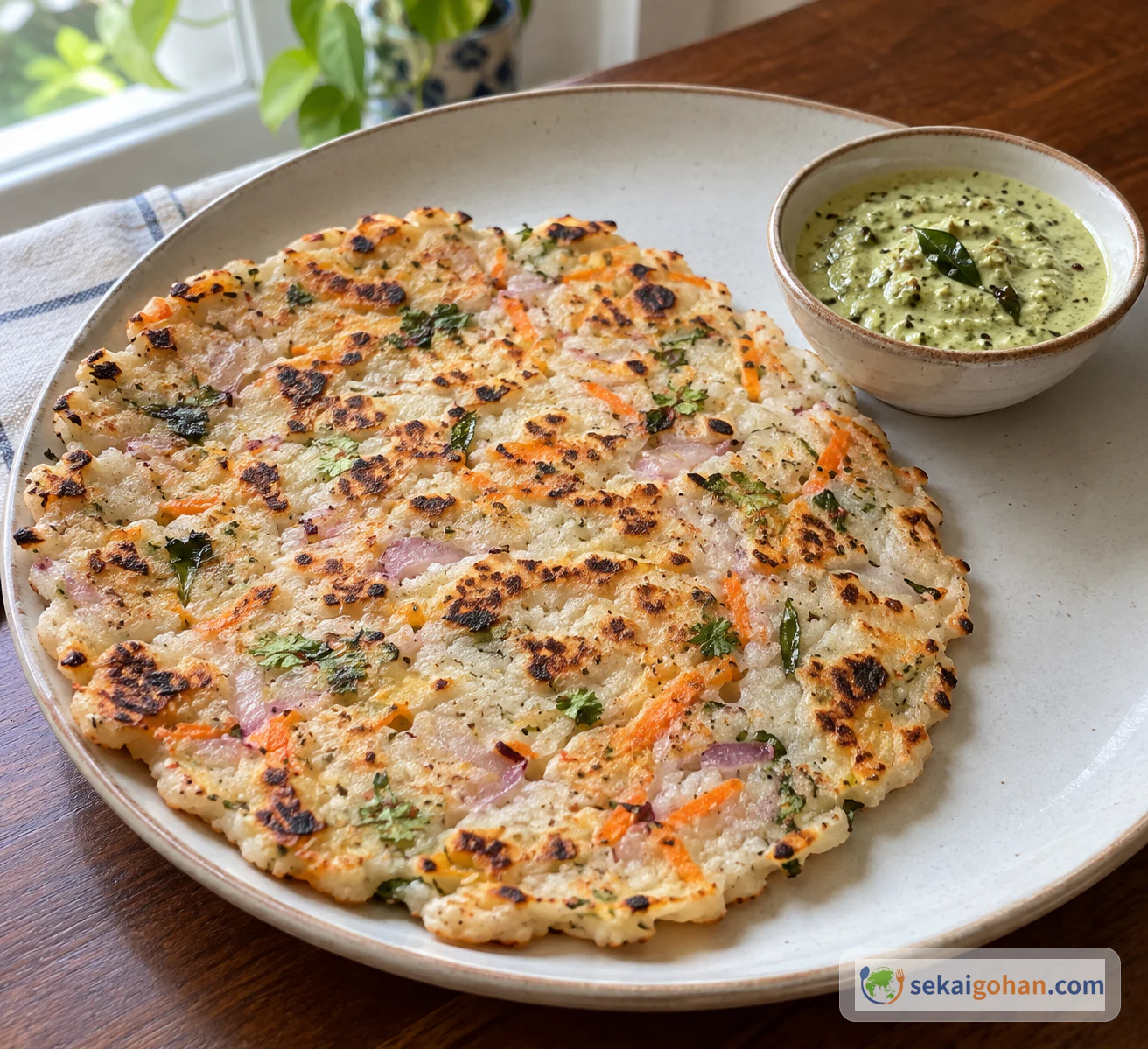
Akki rotti is best eaten straight off the pan, hot, with chutney or pickles. A ready-made chutney is all you need alongside.
If you have leftovers, divide them into shallow containers, cool them quickly, and refrigerate them covered. Reheat them thoroughly, to 167°F (75°C) or above.
Frequently Asked Questions
Why does the pan have to start cold?
So you can spread the dough with your fingers without burning them. You shape the dough on the cold tawa, and only then does the covered pan go over medium heat.
Does the water have to be boiling?
The recipe calls for hot water, not water straight off the boil. Start mixing with a wooden spatula, and switch to your hands once the dough is cool enough to touch.
How many rotti does this make?
The recipe serves 3. How many rotti you get depends on how big you make each ball and each round.