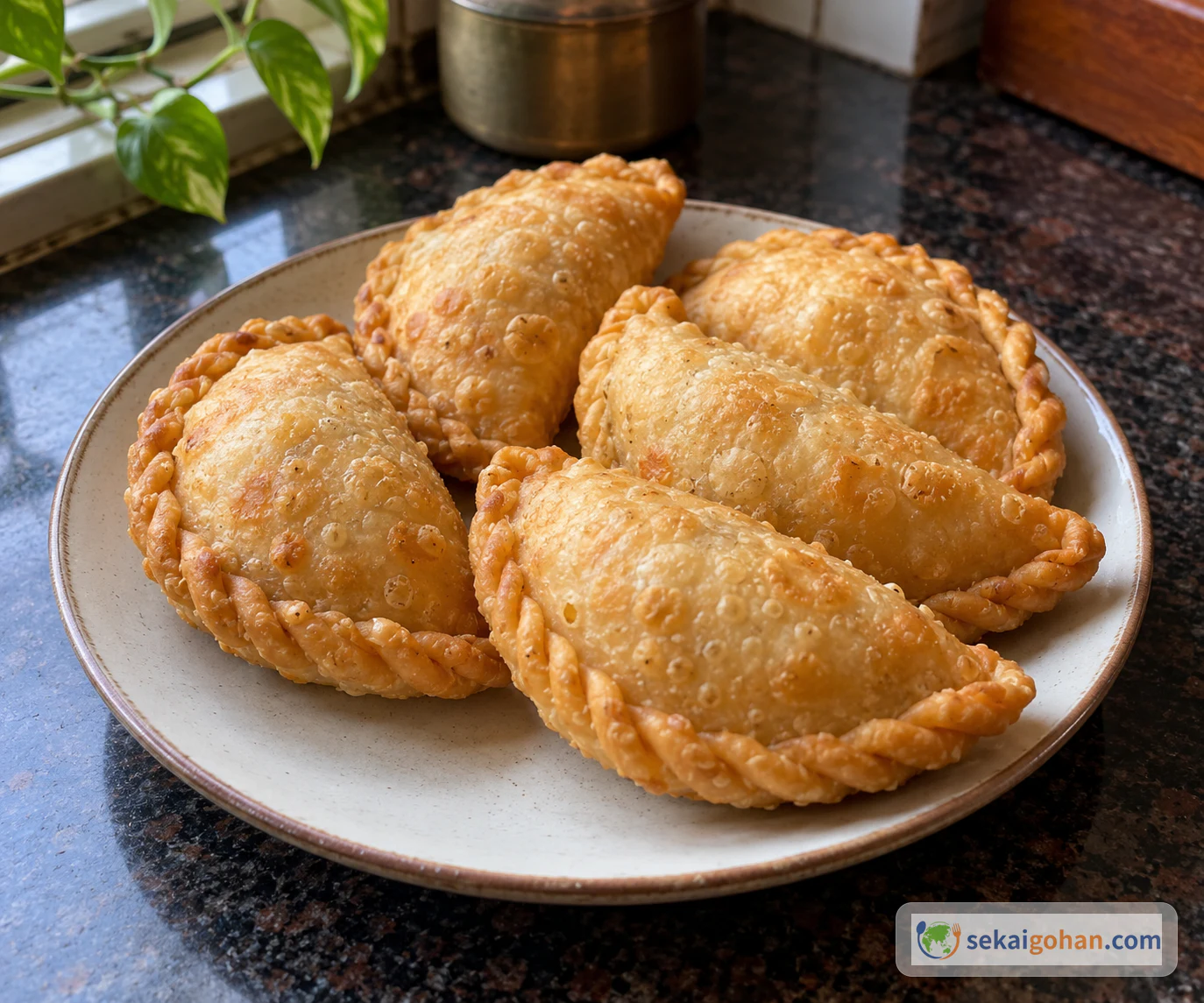
North Indian gujiya filled with khoya and nuts, sealed with hand-pleated edges and deep-fried
ServesAbout 12 gujiya
CuisineIndian (North Indian)

Gujia (Gujiya): North Indian Khoya-Filled Half-Moon Pastries for Holi

How to make gujia (gujiya), the North Indian Holi sweet of thin wheat pastry folded around khoya, sugar, nuts, raisins and cardamom, then hand-pleated and deep-fried. Covers a firm dough, cooling the filling before mixing, sealing the half-moon, reading the oil with a test piece, storage boundaries, and how gujiya differs from Karanji, Nevri and Pedakiya.

Level: Intermediate

Cooking flow

Cooking steps

STEP 11 / 8

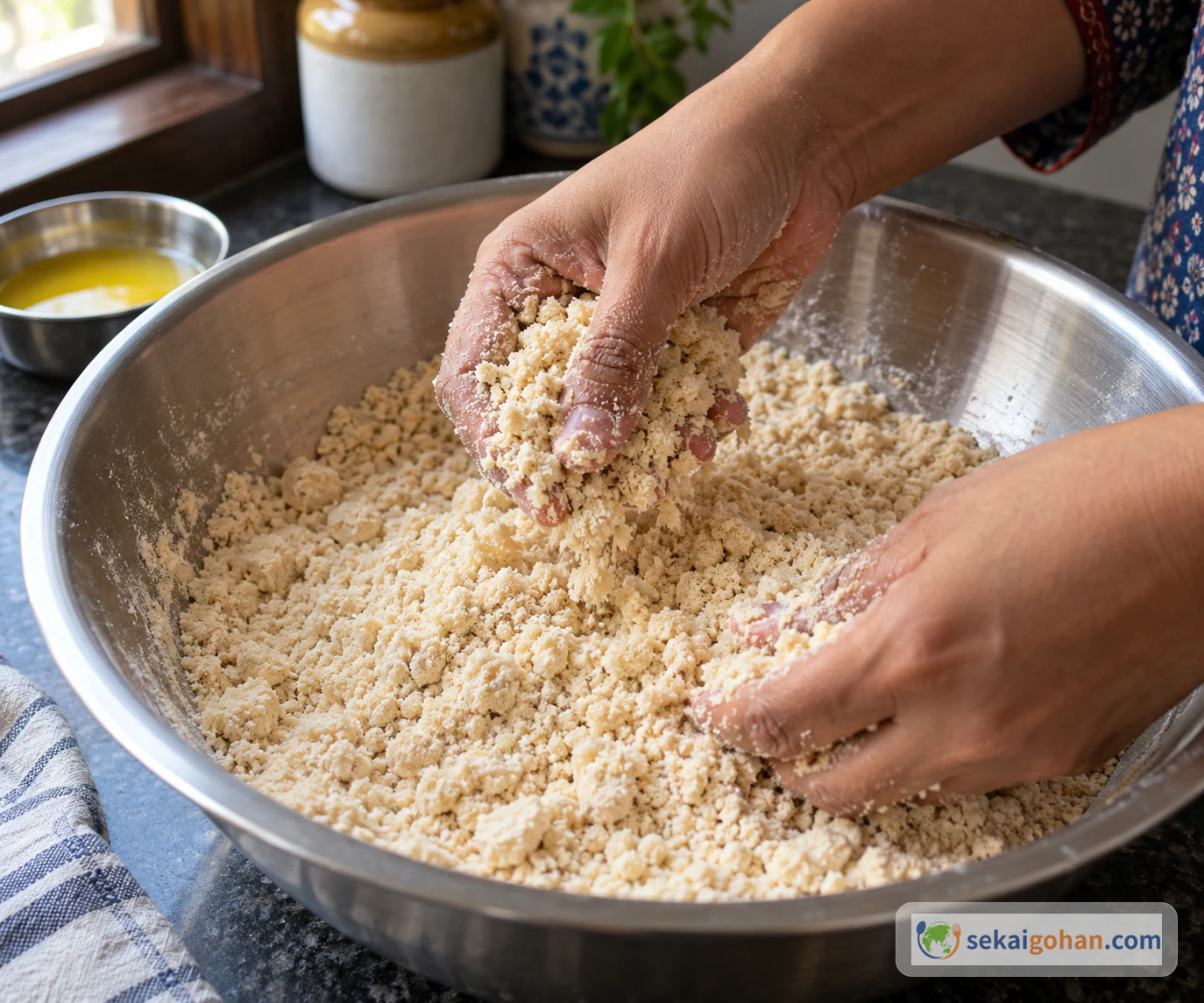
Rub warm ghee into the flour

Rubbing warm melted ghee and salt into whole-wheat and all-purpose flour until it looks like breadcrumbs
Mix with a spoon, then finish with your fingertips

Combine 1 cup (120 g) whole-wheat flour, 1 cup (125 g) all-purpose flour and 1/4 tsp salt in a bowl. Pour in 2 tbsp warm melted ghee. Mix with a spoon first, then rub it in with your fingertips until the mixture looks like breadcrumbs.

STEP 22 / 8

Knead a firm dough and rest it

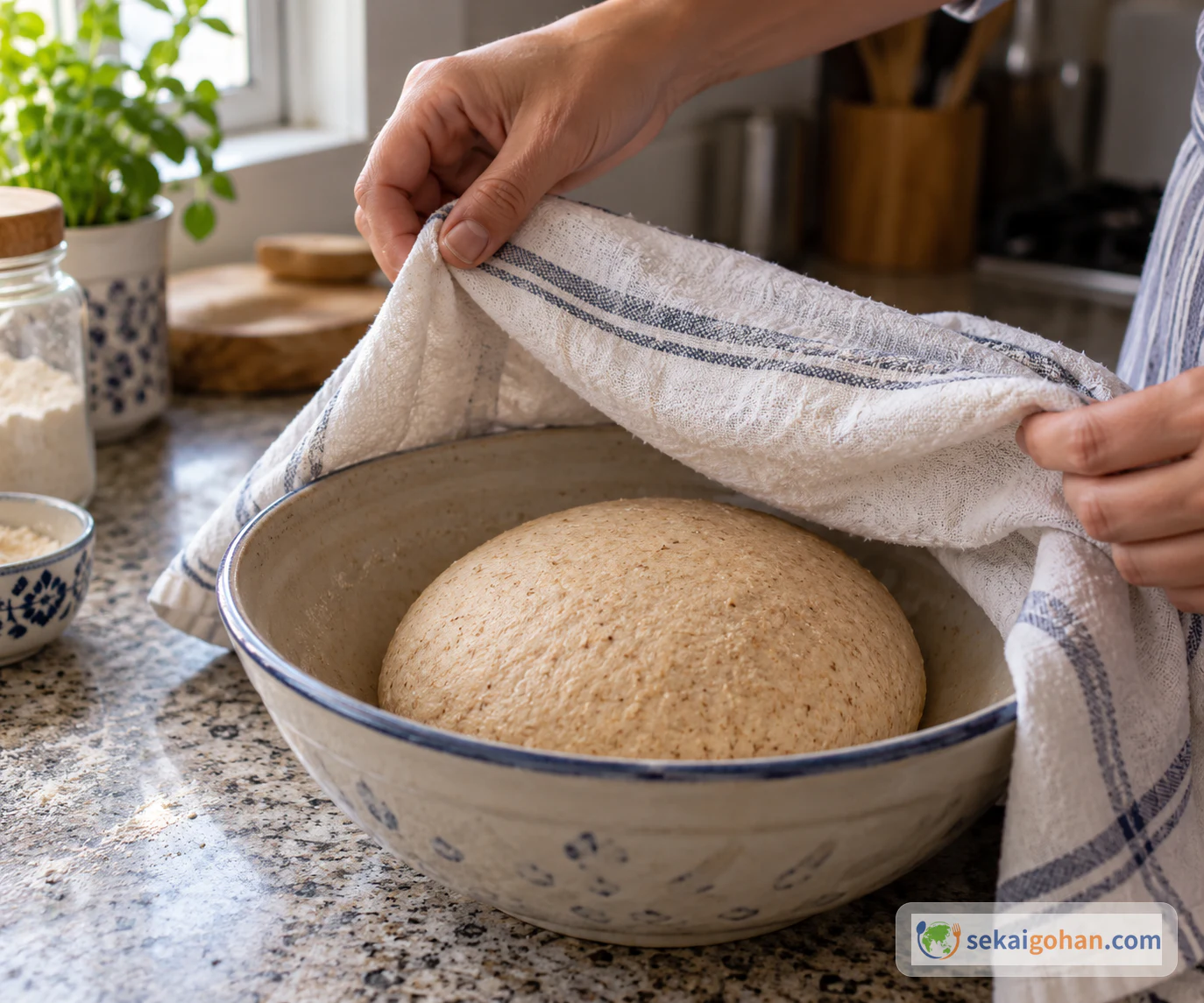
Firm gujiya dough, kneaded with water added a little at a time, resting under a damp cloth
A firm, tight dough rests under a damp cloth

Add water a little at a time, within 1/3–1/2 cup, and knead to a firm, tight dough. Do not pour in all the water at once; flours differ in how much they take. Cover with a damp cloth and rest for 30 minutes.

STEP 33 / 8

Cook the khoya and cool it completely

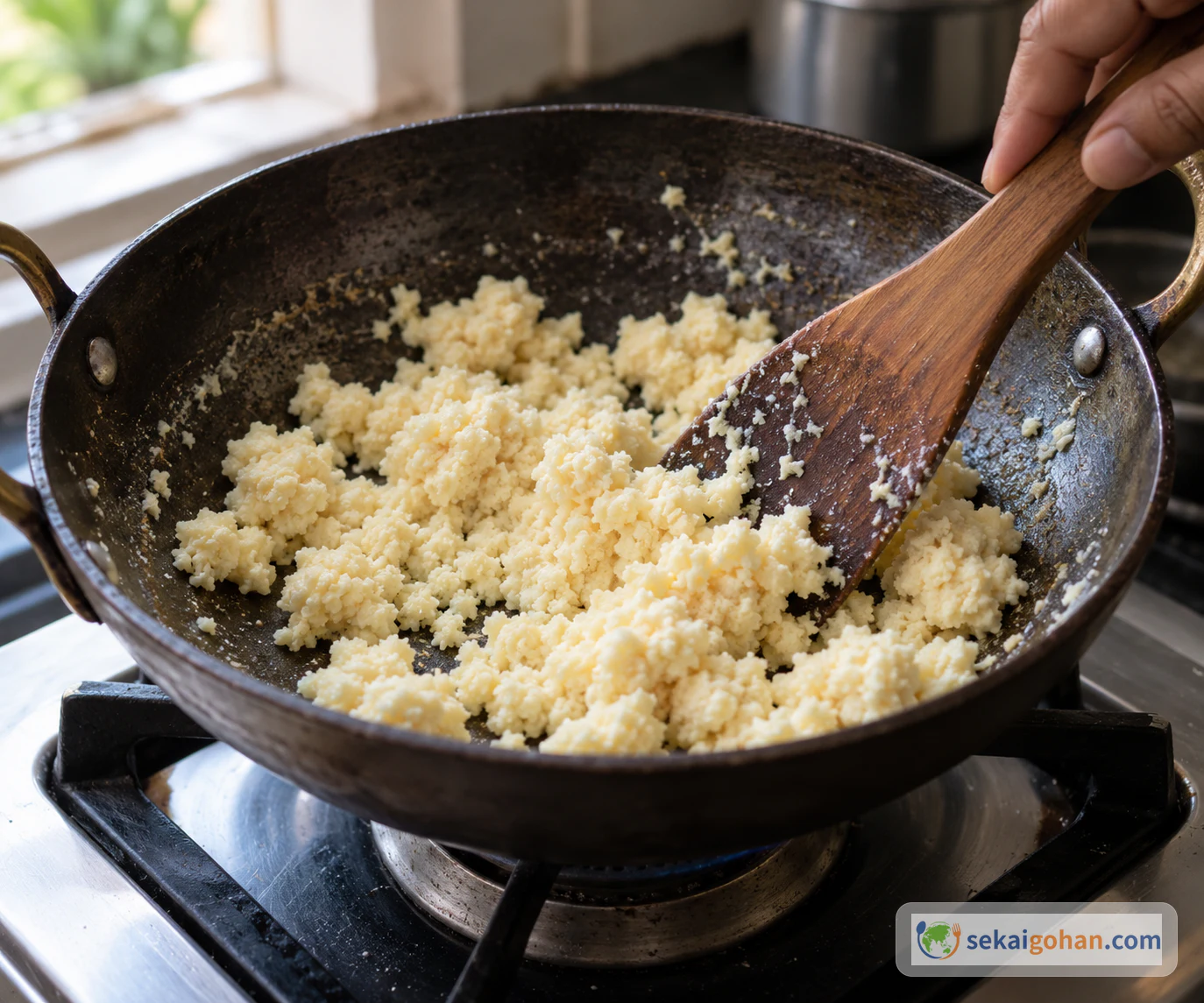
Stirring khoya over low heat in a pan with a little melted ghee until it begins to gather
Only khoya and ghee go in the pan; stop when it starts to gather

Crumble or grate the khoya. Melt 1/2 tbsp ghee in a small heavy pan over low heat, add the khoya and stir constantly. When the khoya begins to gather together, turn off the heat. Let it cool completely.

STEP 44 / 8

Mix the filling

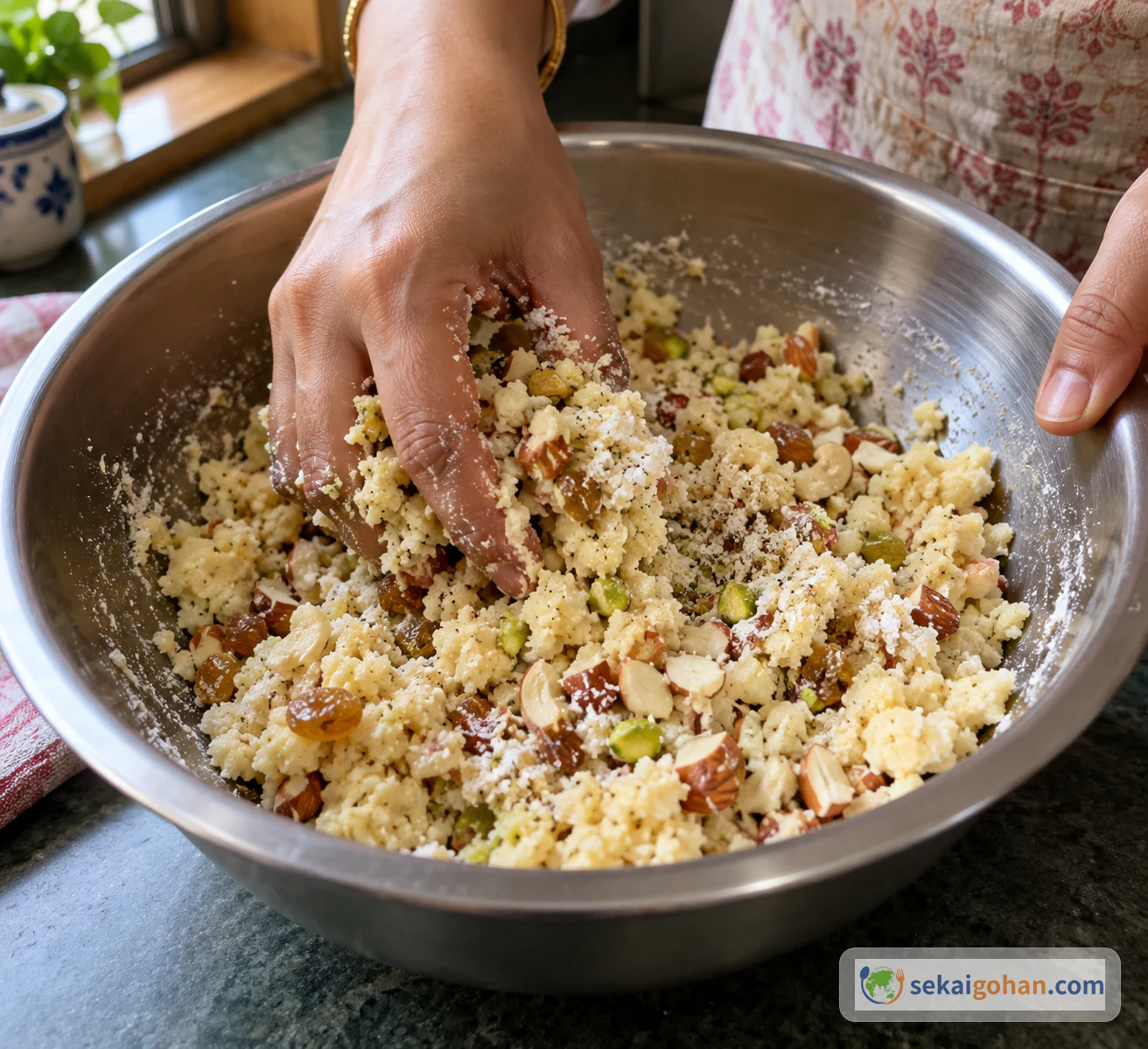
Mixing powdered sugar, chopped almonds, cashews, pistachios, raisins and cardamom into cooled khoya
Sugar and nuts go in only after the khoya is cool

To the cooled khoya, add 1/3 cup powdered sugar, the chopped almonds, cashews and pistachios, 1/2 tbsp chopped raisins and 1/2 tsp cardamom powder. Mix well.

STEP 55 / 8

Roll out the circles

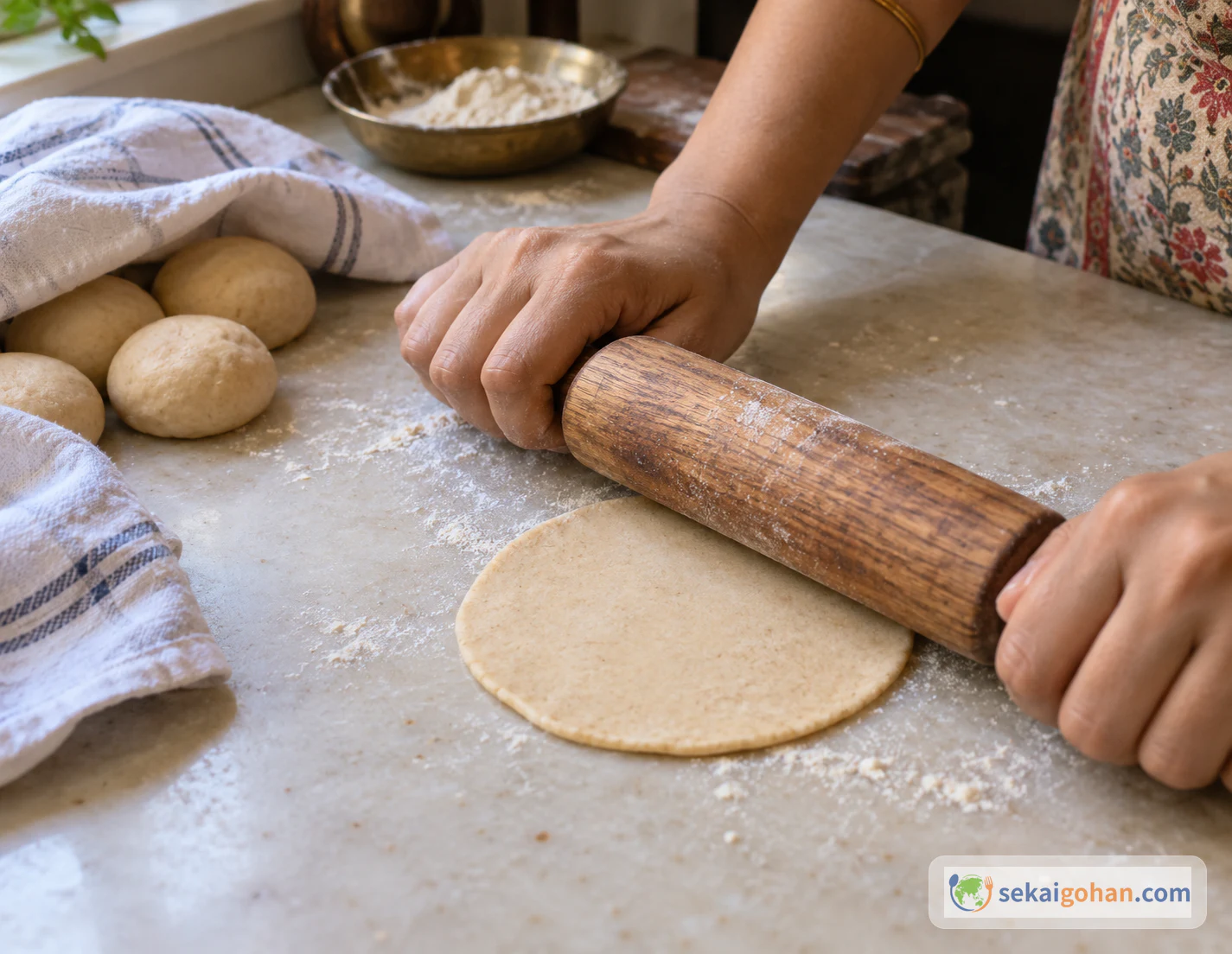
Rolling equal balls of dough into circles 4–5 inches across
Keep the waiting dough balls covered

Divide the dough into equal portions and shape them into balls. Keep the balls covered with a damp cloth while you work. Roll each ball into a circle 4–5 inches across, dusting the board with a little flour only if needed.

STEP 66 / 8

Fill, fold and pleat

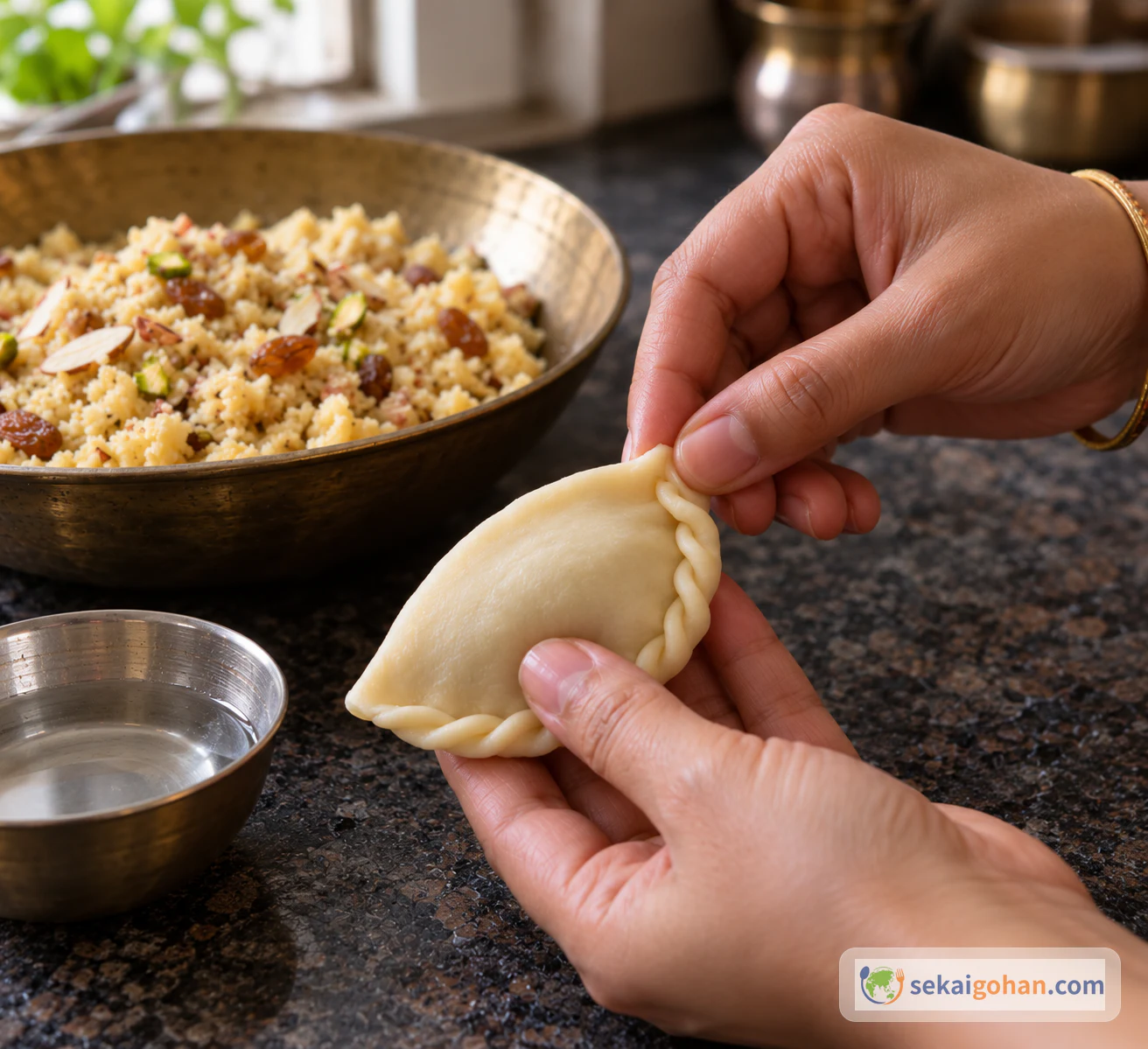
Placing a little khoya filling on one side of a pastry circle, folding it into a half-moon and pleating the edge
A clean edge seals better; pleat all the way to the end

Wet the edge of a circle with a little water. Place 1–1.5 tbsp filling on one half, keeping the filling away from the edge. Fold into a half-moon, press firmly to seal, then pleat the edge by hand all the way along. Keep shaped gujiya and waiting circles covered with a damp cloth so they do not dry out.

STEP 77 / 8

Test the oil and fry over medium heat

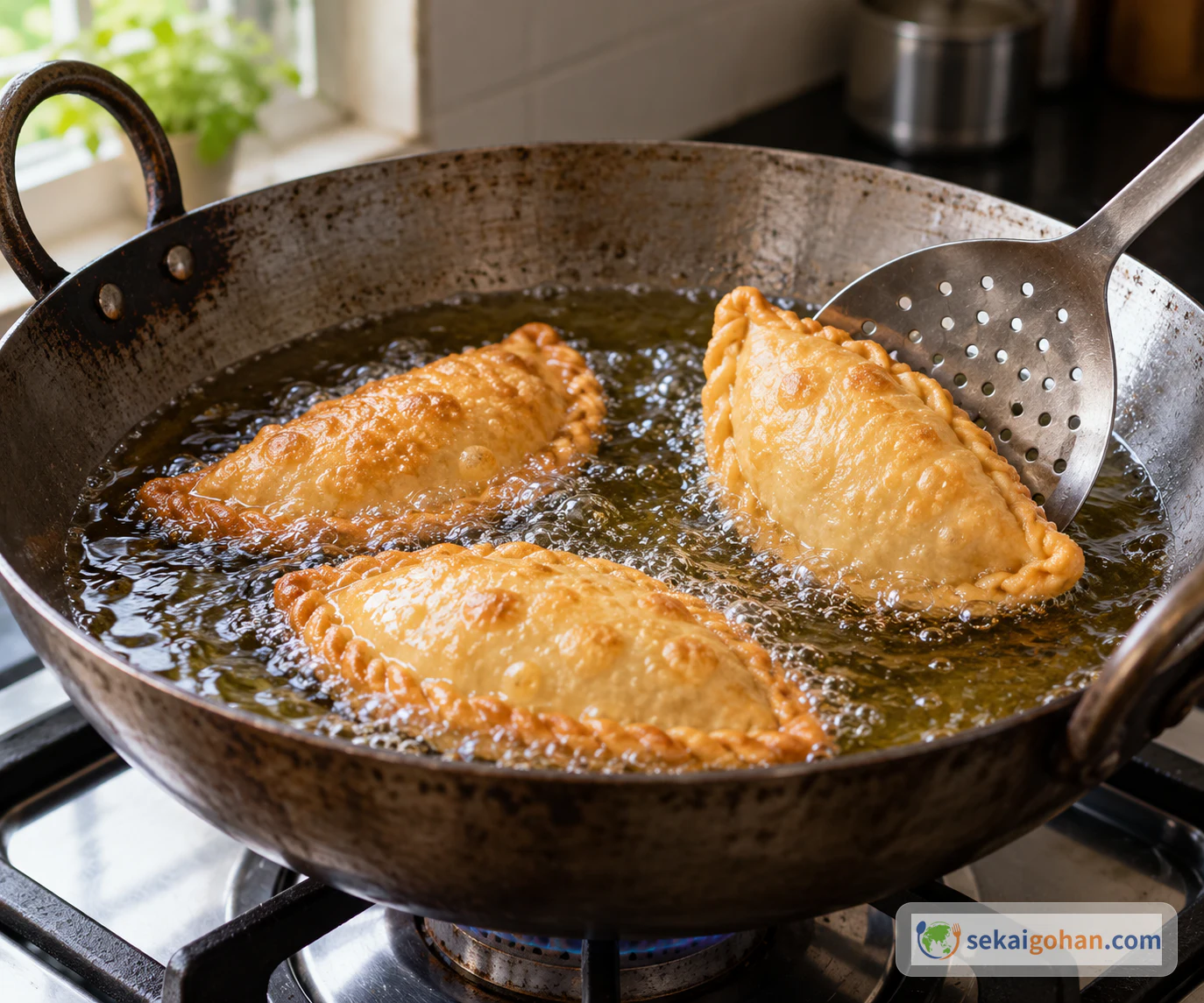
Frying gujiya 2–3 at a time in oil in a kadai over medium heat, turning until golden
Fry a few at a time and turn them for even color

Heat oil for deep frying in a deep heavy pot or kadai over medium heat. Drop in a small piece of dough: if it stays at the bottom, the oil is too cold; if it shoots up at once, it is too hot; if it rises gradually, the oil is ready. Fry 2–3 gujiya at a time, turning them, until golden.

STEP 88 / 8

Drain and cool completely

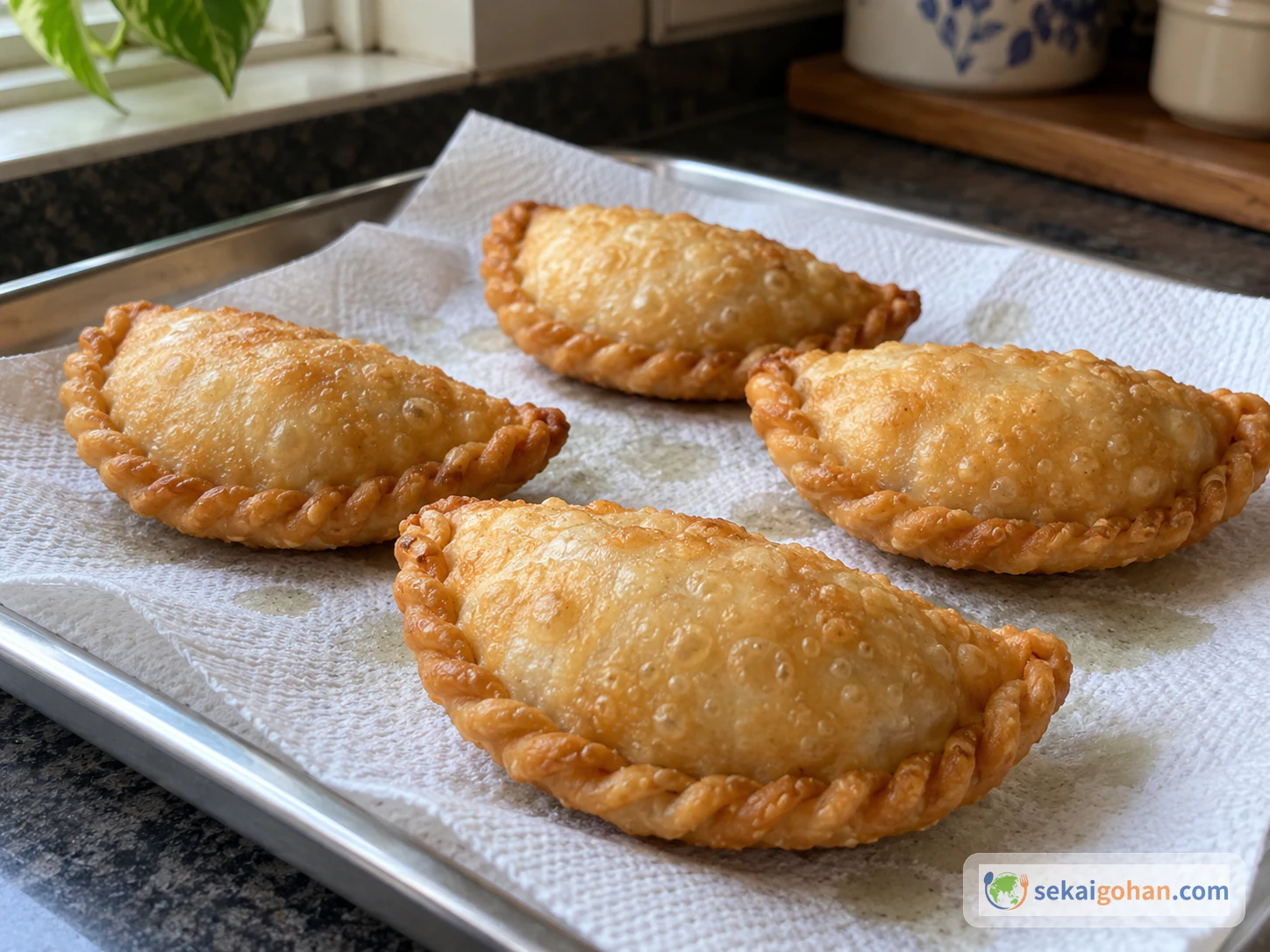
Fried gujiya draining on kitchen paper and cooling
Cool completely before storing

Lift the gujiya onto kitchen paper to drain and let them cool completely. Once cool, store them in an airtight container.

0 / 0
Ingredients

Ingredients

1 / 1

Ingredients

Ingredient Amount Role
Whole-wheat flour 1 cup (120 g) Dough: half of the flour
All-purpose flour (maida) 1 cup (125 g) Dough: the other half of the flour
Salt 1/4 tsp Dough: seasoning
Ghee, warm and melted 2 tbsp Dough: rubbed into the flour
Water 1/3–1/2 cup, or as needed Dough: added a little at a time to a firm dough
Khoya (mawa) 1 cup, tightly packed (200–220 g) Filling: the cooked milk-solid base
Ghee 1/2 tbsp Filling: for cooking the khoya over low heat
Almonds 10, chopped Filling: chopped nuts
Cashews 10, chopped Filling: chopped nuts
Pistachios 10, chopped Filling: chopped nuts
Raisins 1/2 tbsp, chopped Filling: added to the khoya
Powdered sugar 1/3 cup Filling: sweetness, added after the khoya cools
Green cardamom powder 1/2 tsp Filling: seasoning
Oil As needed For deep frying
Water A little For wetting the edges to seal
Flour A little For dusting the rolling board
0 / 0

When Holi comes around in North India, gujiya are among the sweets families make for the festival. Each one is a small half-moon of firm, thin wheat pastry, sealed tight and pleated by hand around khoya (also called mawa), sugar, chopped nuts, raisins and cardamom. They come out of the oil golden and plain, with no syrup and no glaze. This version is deep-fried, with a dough of half whole-wheat and half all-purpose flour, and it makes 12.

Nutrition values have not been calculated.

About Gujiya

The heart of a gujiya is its filling of cooked milk solids, sweetened and studded with nuts, raisins and cardamom. The pleated edge does real work. It keeps that filling locked inside the pastry while it fries.

Folded, filled pastries turn up all over India, each with its own name and stuffing. Gujarat has Ghughra, Maharashtra has Karanji, Goa has Nevri and Andhra Pradesh has Kajjikayalu. Goa's Nevri is a coconut and jaggery sweet, and Maharashtra's Karanji centers on coconut, milk and poppy seeds, so they look like gujiya but are separate sweets.

Bihar calls the dish Gujjiya, with Pedakiya as the local name, and makes it two ways: with khoya (mewa), or with coconut and rava (semolina). Only the khoya kind matches the recipe here. For more dishes from the same country, see Indian recipes on Sekai Gohan.

Ingredients: Dough and Khoya Filling (About 12 Gujiya)
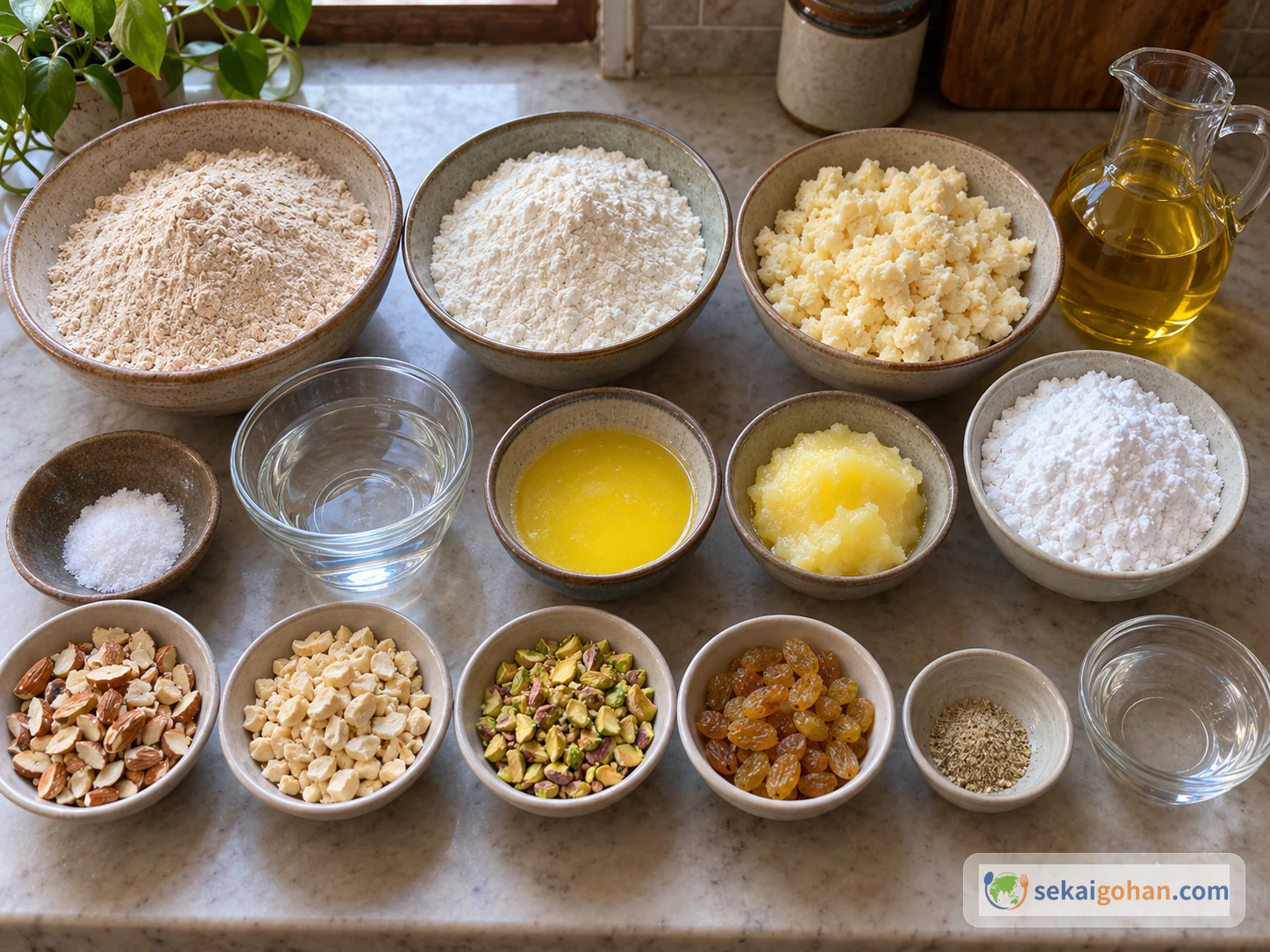
Ingredients for gujiya: whole-wheat and all-purpose flour, ghee, salt and water for the dough, and khoya, sugar, nuts, raisins, cardamom and frying oil
The dough ghee and the filling ghee are measured separately

Keep the dough ghee and the filling ghee apart; they go in at different steps.

Equipment

  • Mixing bowl and spoon
  • Clean kitchen cloth, lightly dampened
  • Small heavy pan for the khoya
  • Rolling board and rolling pin
  • Small bowl of water
  • Deep heavy pot or kadai for deep frying
  • Tray lined with kitchen paper
  • Airtight container

Choosing Ingredients for Gujiya

Khoya / mawa. This is the base of the filling, and Indian grocers sell it under either name. Milk powder and condensed milk behave differently and need their own filling method, so they aren't a simple swap.

Flour. The dough is half whole-wheat, half all-purpose. Doughs made entirely with one flour work on a different formula (see the variations below).

Frying fat. Fry in plain oil rather than ghee.

Allergens. Gujiya contain wheat, milk (khoya and ghee) and tree nuts (almonds, cashews, pistachios). Check the labels on khoya and other packaged items before you buy.

Method: Dough, Filling, Shaping, Frying

Order of work

Make the dough first and let it rest; cook and cool the khoya during the rest. Shape only once the filling is completely cool.

Common Gujiya Problems and Fixes

Problem Likely cause What to do
Gujiya burst open in the oil Too much filling, or filling on the edge Use 1–1.5 tbsp filling, keep the edge clean, press firmly and pleat all the way to the end
Dough is soft and hard to shape Water added too fast Add water a little at a time and aim for a firm, tight dough
Circles crack or edges won't stick Dough or wrappers dried out Keep dough balls, circles and shaped gujiya under a damp cloth
Gujiya are oily or fall apart Oil too cold Test with a small piece of dough; wait until it rises gradually
Outside browns fast, pastry inside underdone Oil too hot Keep to medium heat and test again before the next batch
Filling turns runny or sugary Sugar and nuts added while the khoya was hot Cool the cooked khoya completely before mixing in the rest

Serving, Storing and Gujiya Variations
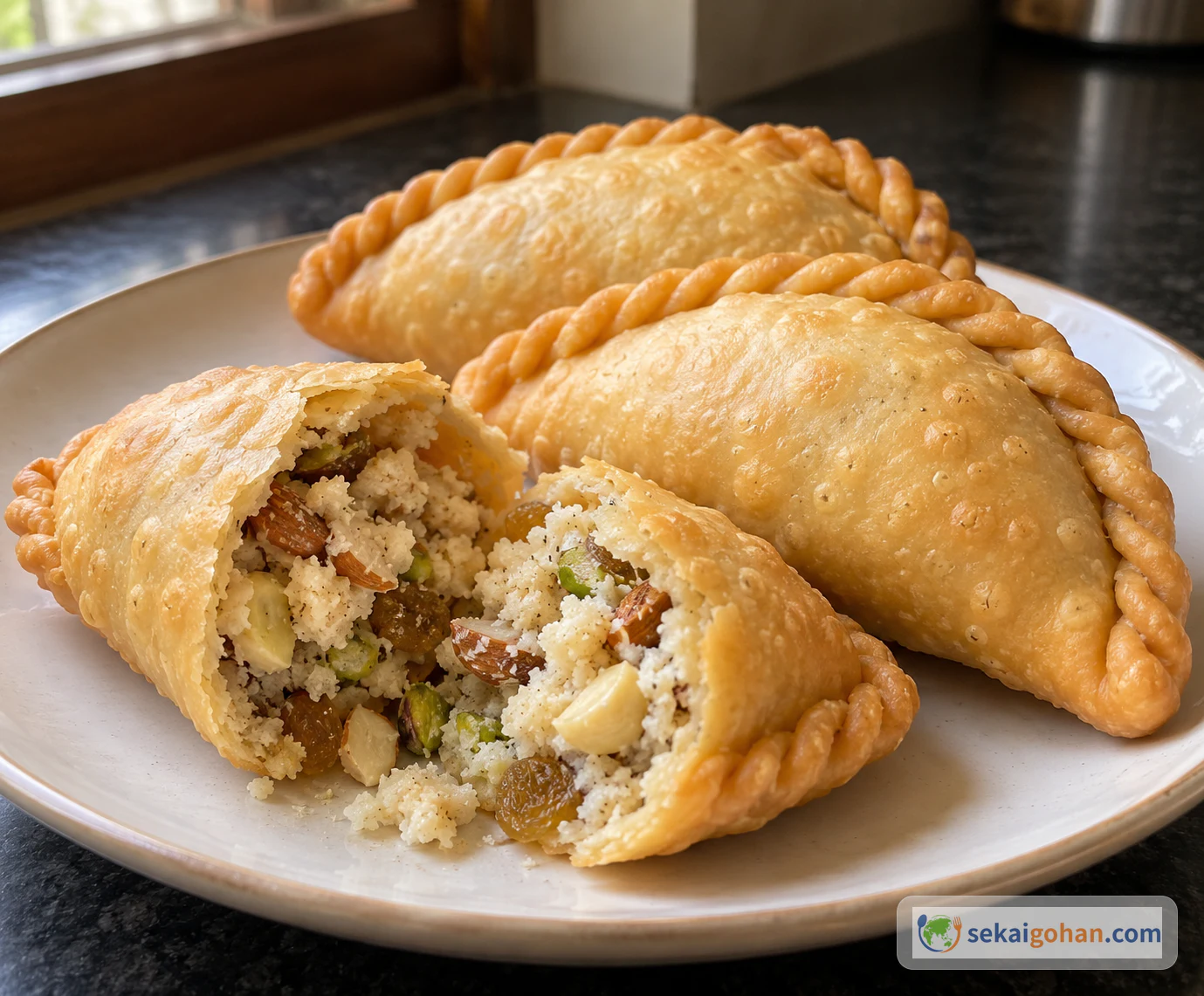
A small plate of half-moon gujiya, one broken open to show the khoya and nut filling
Served plain: no syrup, no glaze

Let the gujiya cool, then serve them just as they are, plain and golden, without syrup or glaze.

Once they're completely cool, gujiya keep airtight at room temperature for a few hours. Refrigerate the rest in a covered, airtight container for 1–2 days. Get them into the fridge promptly: within 2 hours, or within 1 hour above 90°F (about 32.2°C). Keep the refrigerator at or below 40°F (4°C).

Gujiya come in other forms too. Some cooks bake them in the oven and trim the edges with a pastry cutter. Others make the dough entirely with whole-wheat or all-purpose flour, or deep-fry a refined-flour pastry and finish it in sugar syrup. Each of these follows its own formula.

Frequently Asked Questions

Are Gujia and Gujiya different dishes?

No, only the spelling differs. You'll see Gujia, Gujiya, Gujjia and Gujjiya, and they all name the same North Indian khoya pastry.

Can I replace khoya with milk powder?

Not directly. A milk-powder filling is its own recipe, with different amounts and a different method.

What temperature should the oil be?

Use medium heat and test with a small piece of dough. It should rise gradually, not sit at the bottom or shoot straight up.

How long does it take?

Allow 45 minutes to prepare, 30 minutes to cook and 1 hour 15 minutes in total, including the 30-minute dough rest.

Sources