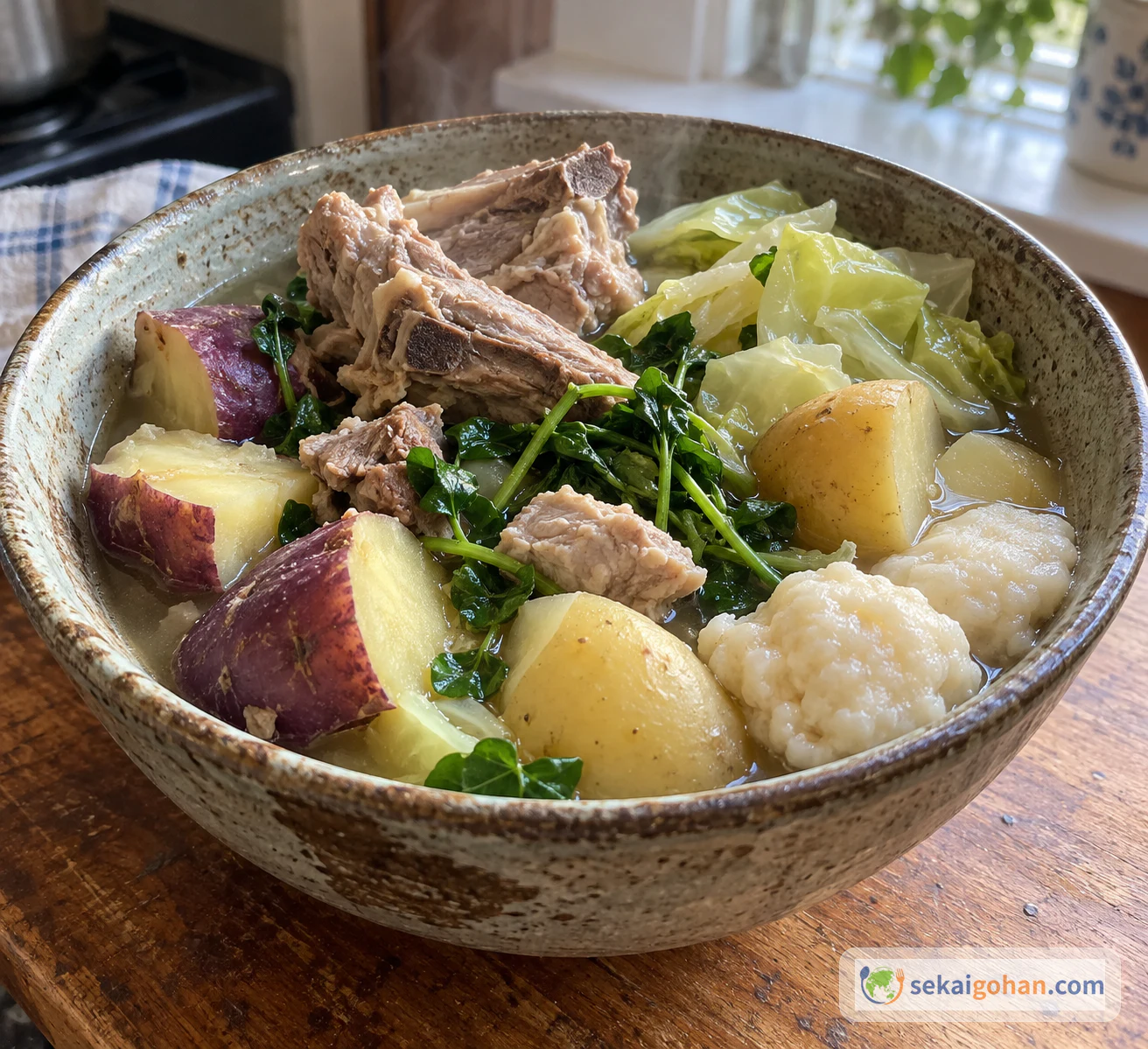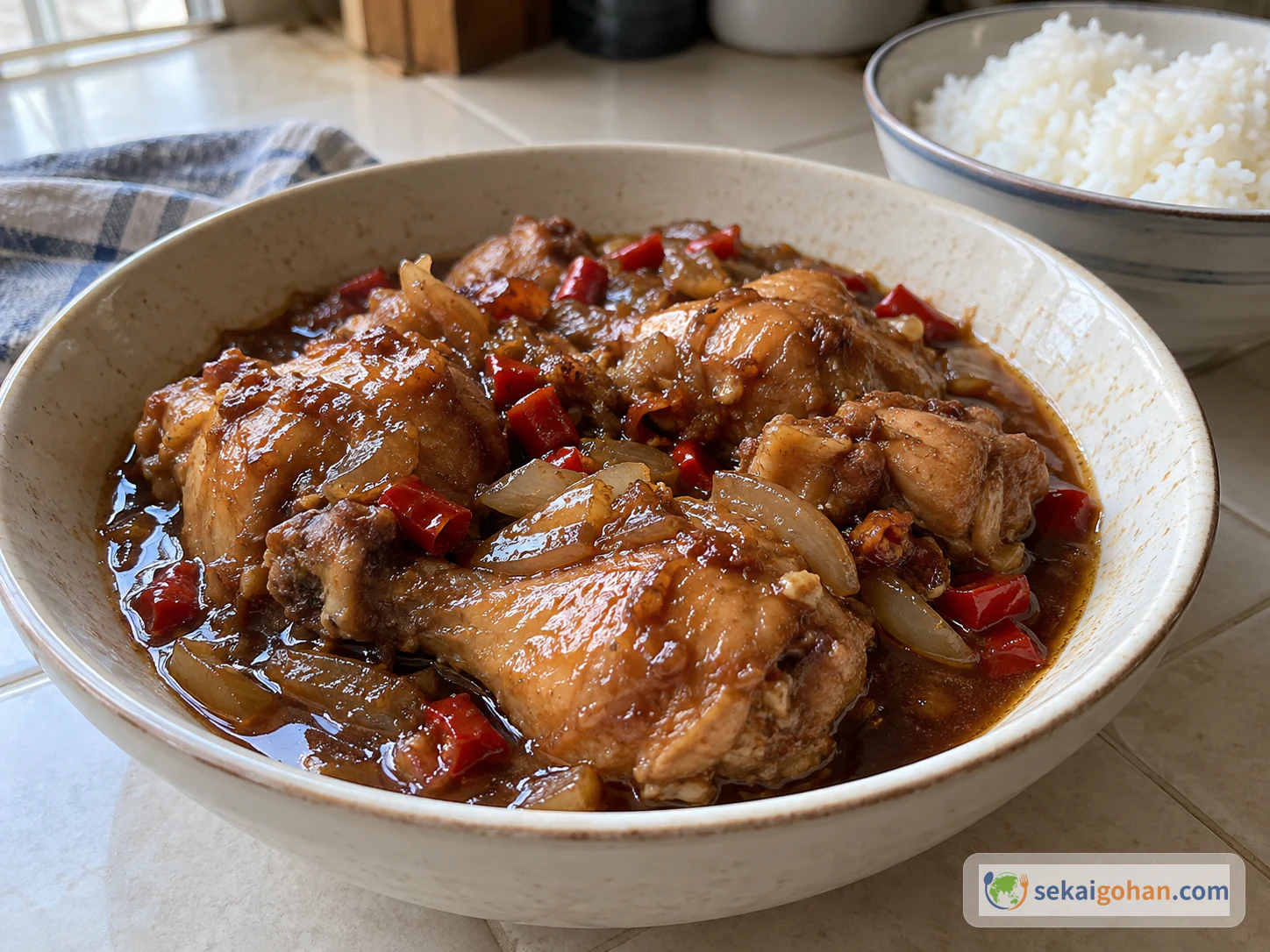
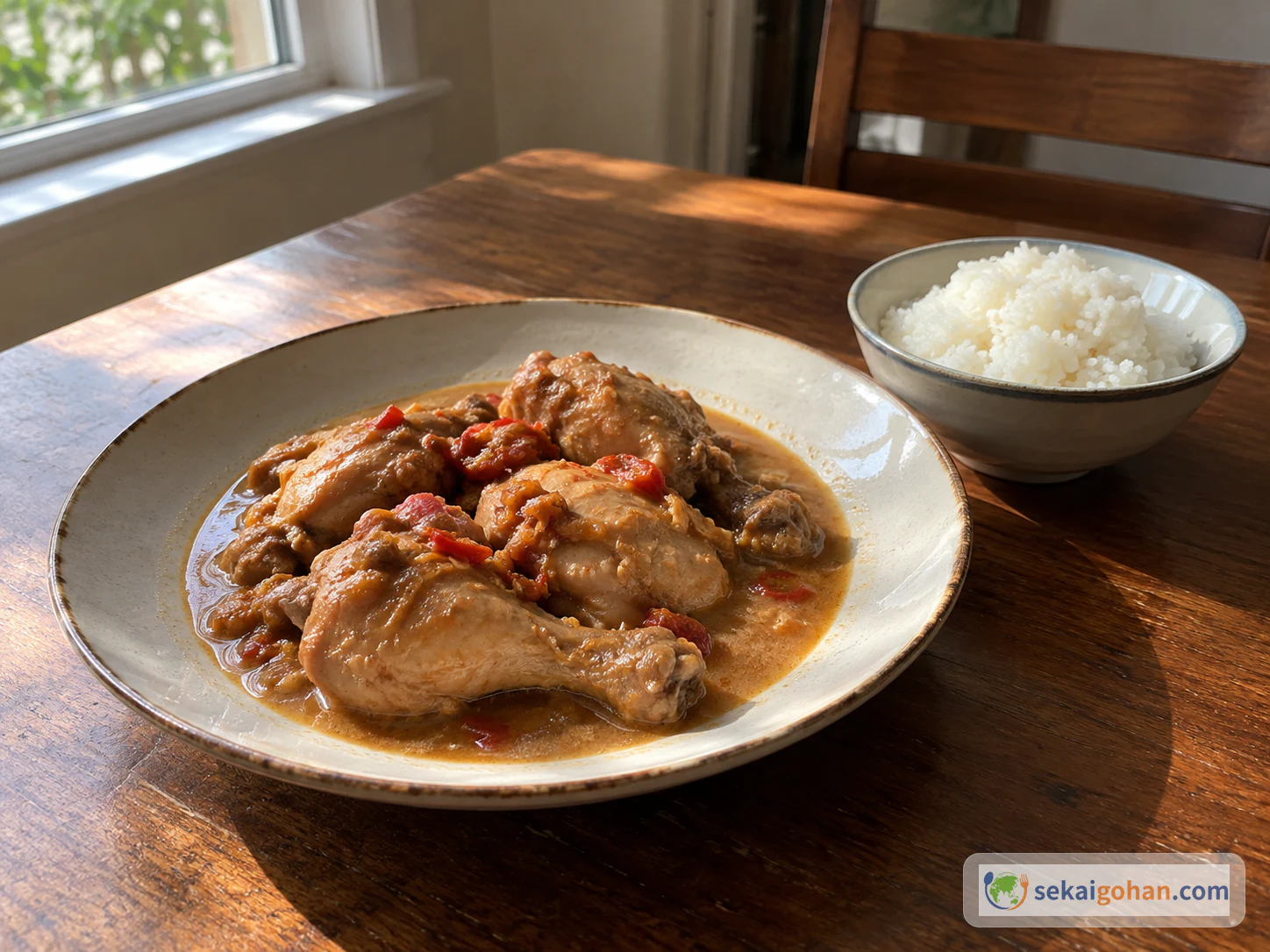
When the lid comes off the pot, the sharp smell of vinegar rises first, then the heat of red chili and the steam of bone-in chicken that has simmered slowly in a dark soy-vinegar broth. Kadun pika is a Chamorro dish from the Mariana Islands: chicken stewed in vinegar, soy sauce and red chilies. The vinegar's sourness, the soy sauce's saltiness and the chili's heat all cook into the meat, and a little coconut milk stirred in at the end softens their edges.
You will see the name written Kadun pika, Kadon pika and Kådun pika; they all refer to the same dish. Kadon means stew and pika means spicy.
Kadun Pika on Rota and Guam
On Rota in the Northern Mariana Islands, kadun pika, a spicy chicken stew, is one of the island's Chamorro dishes, part of a food culture shaped by several influences. On Guam it is a popular local dish, and every household decides for itself how many chilies go into the pot.
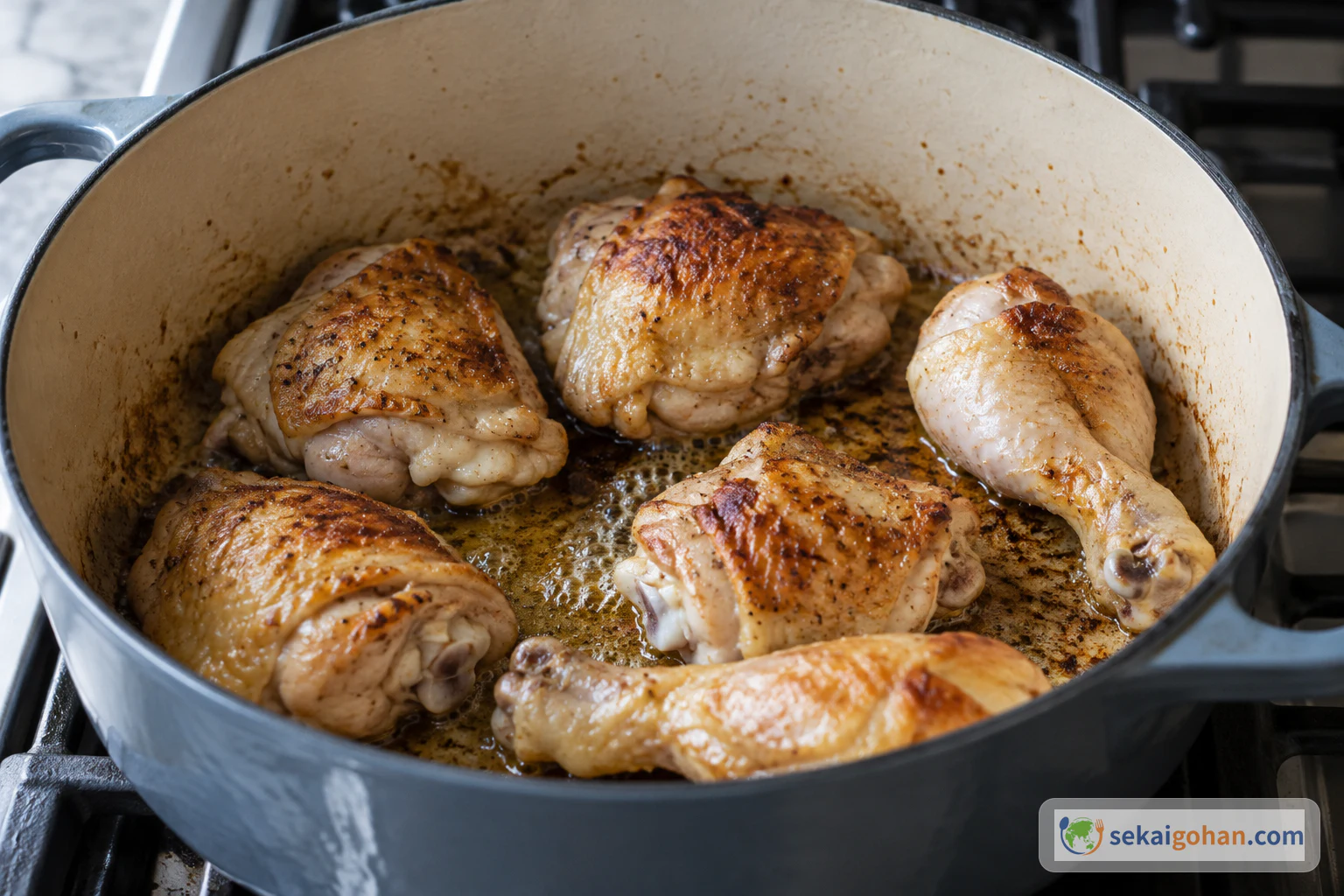
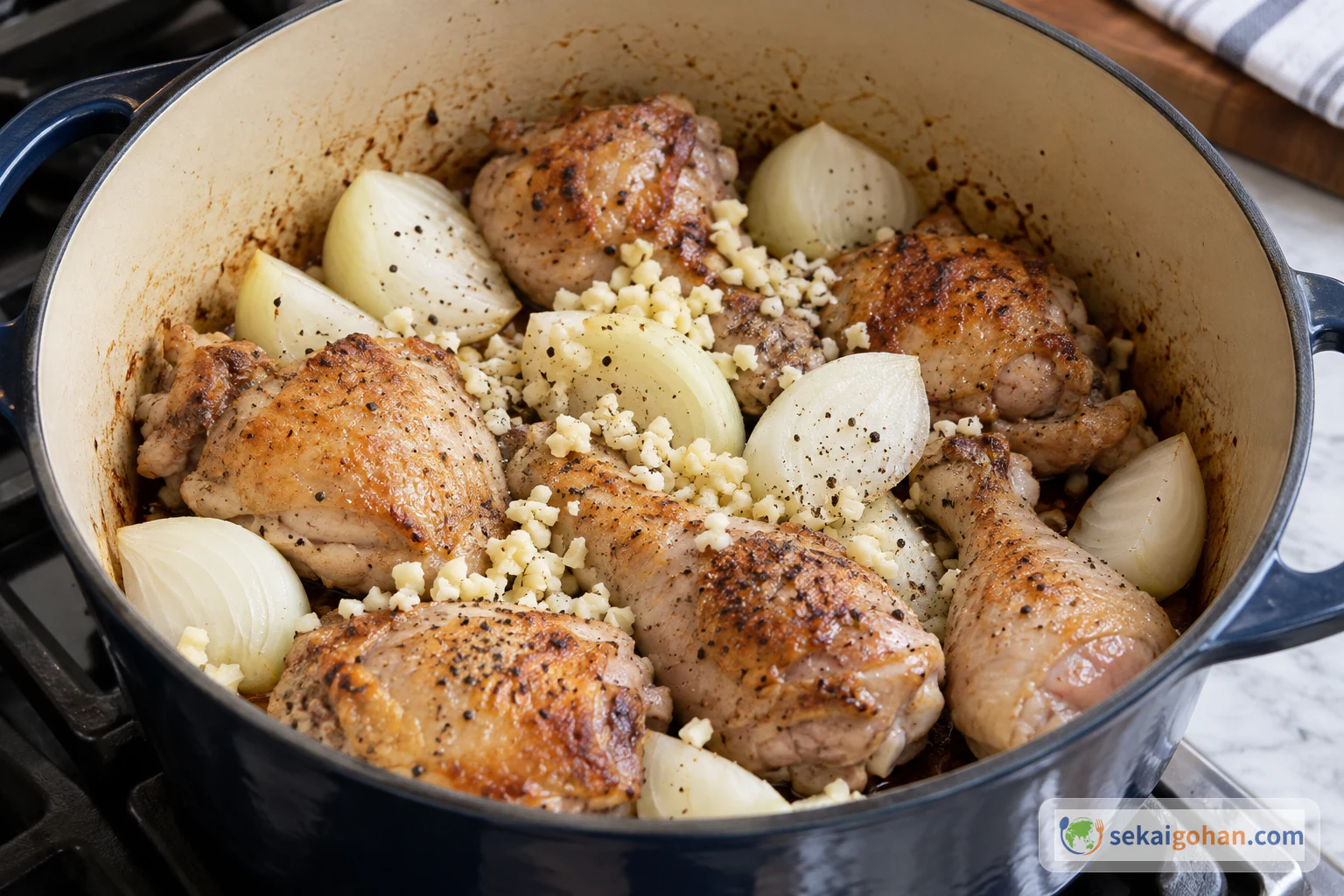
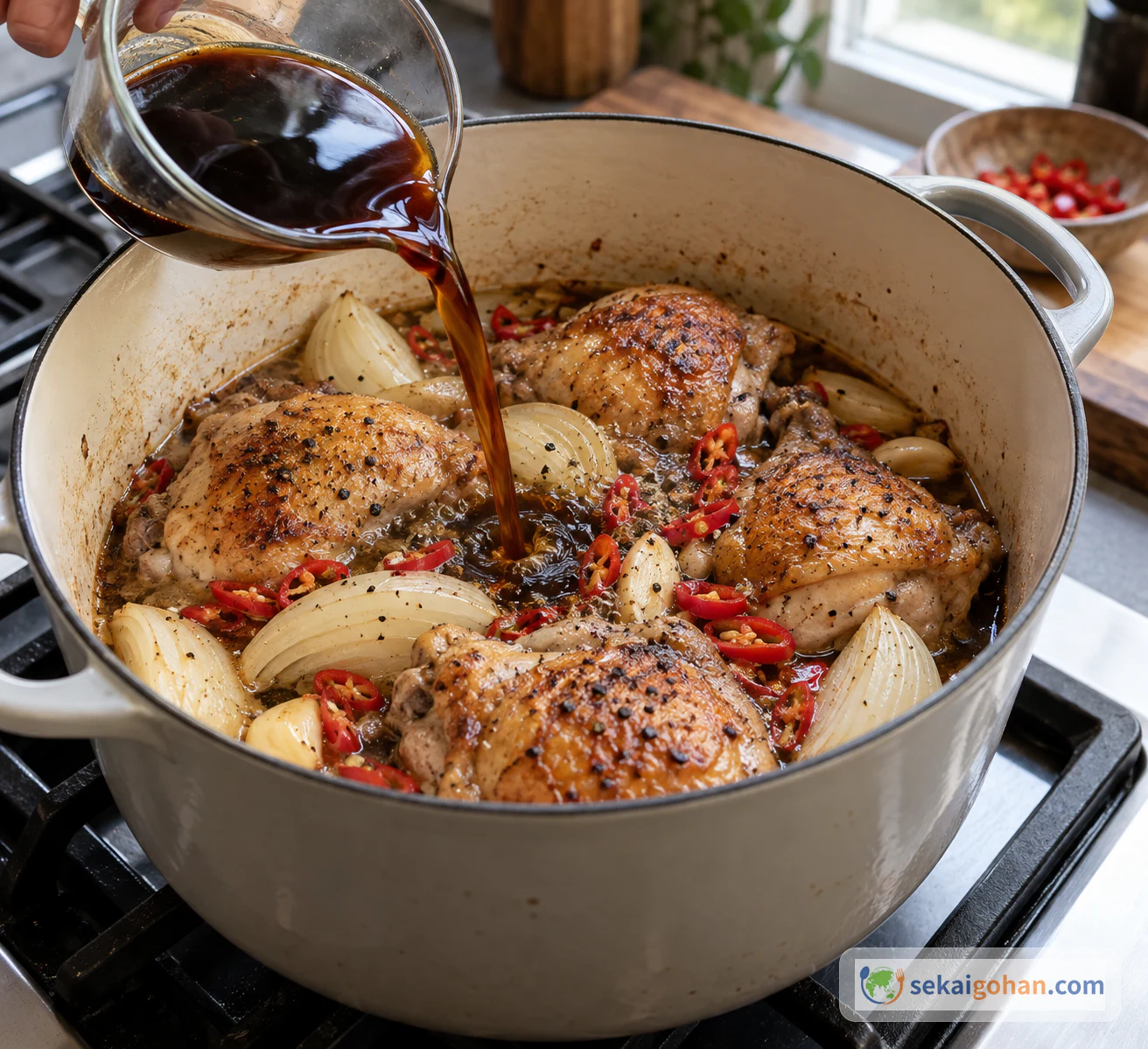
This version is a Guam home recipe. Bone-in chicken pieces are browned in oil, simmered low and slow with onion, garlic, black pepper, vinegar and soy sauce, then finished off the heat with coconut milk. Family recipes vary most in how much coconut milk they use and how hot they make it. A few of those versions appear under variations below.
Ingredients: Bone-In Chicken, Vinegar, Soy Sauce and 2–4 Red Chilies
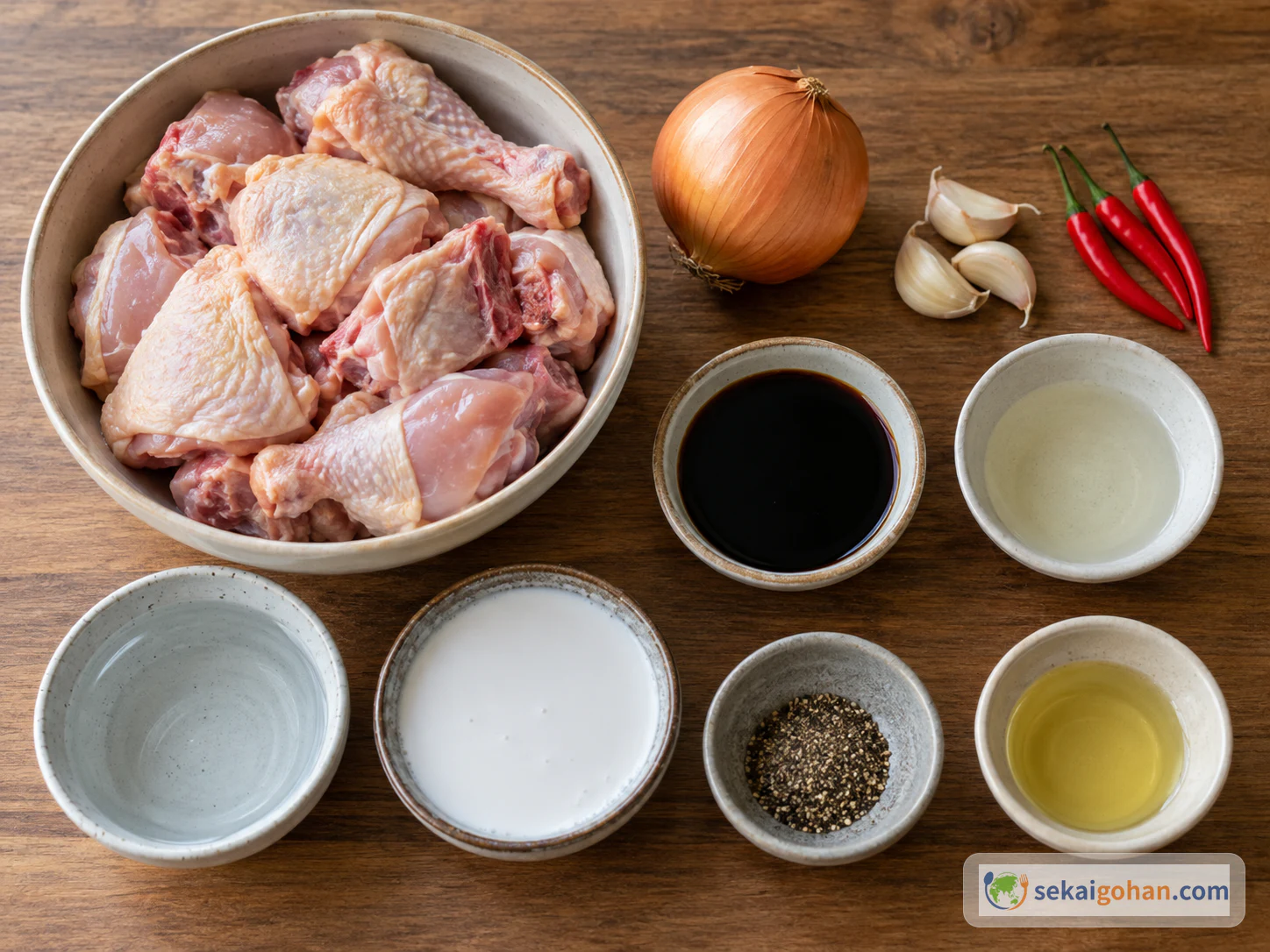
These amounts serve 2–3. 1 cup = 240ml, 1 tbsp = 15ml and 1 tsp = 5ml.
Equipment
- A heavy pot with a lid
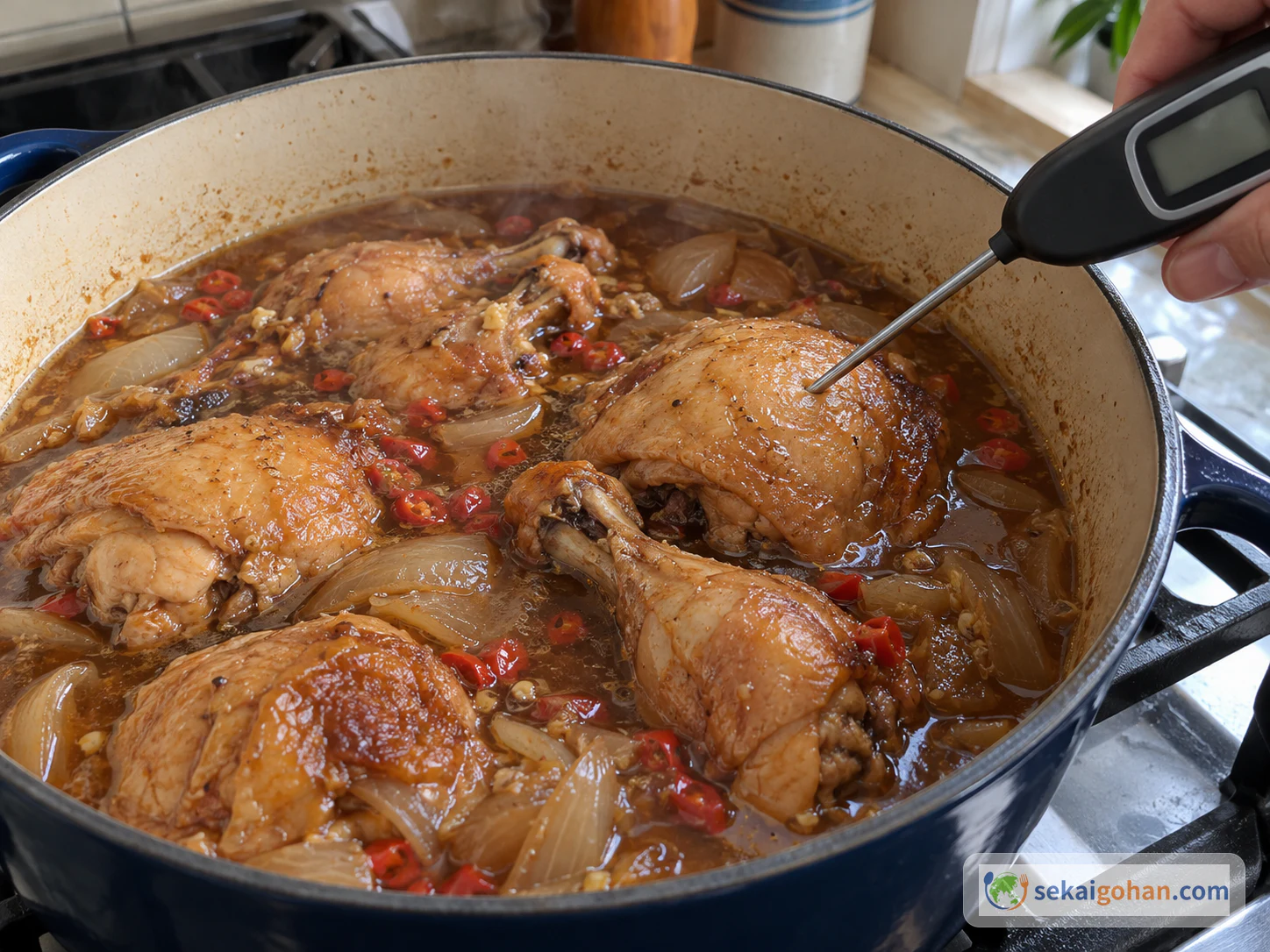
- A food thermometer (instant-read type)
- A cutting board and knife for the chilies, onion and garlic
- A trivet or heat-proof surface for setting the pot off the heat
Choosing Ingredients for Kadun Pika
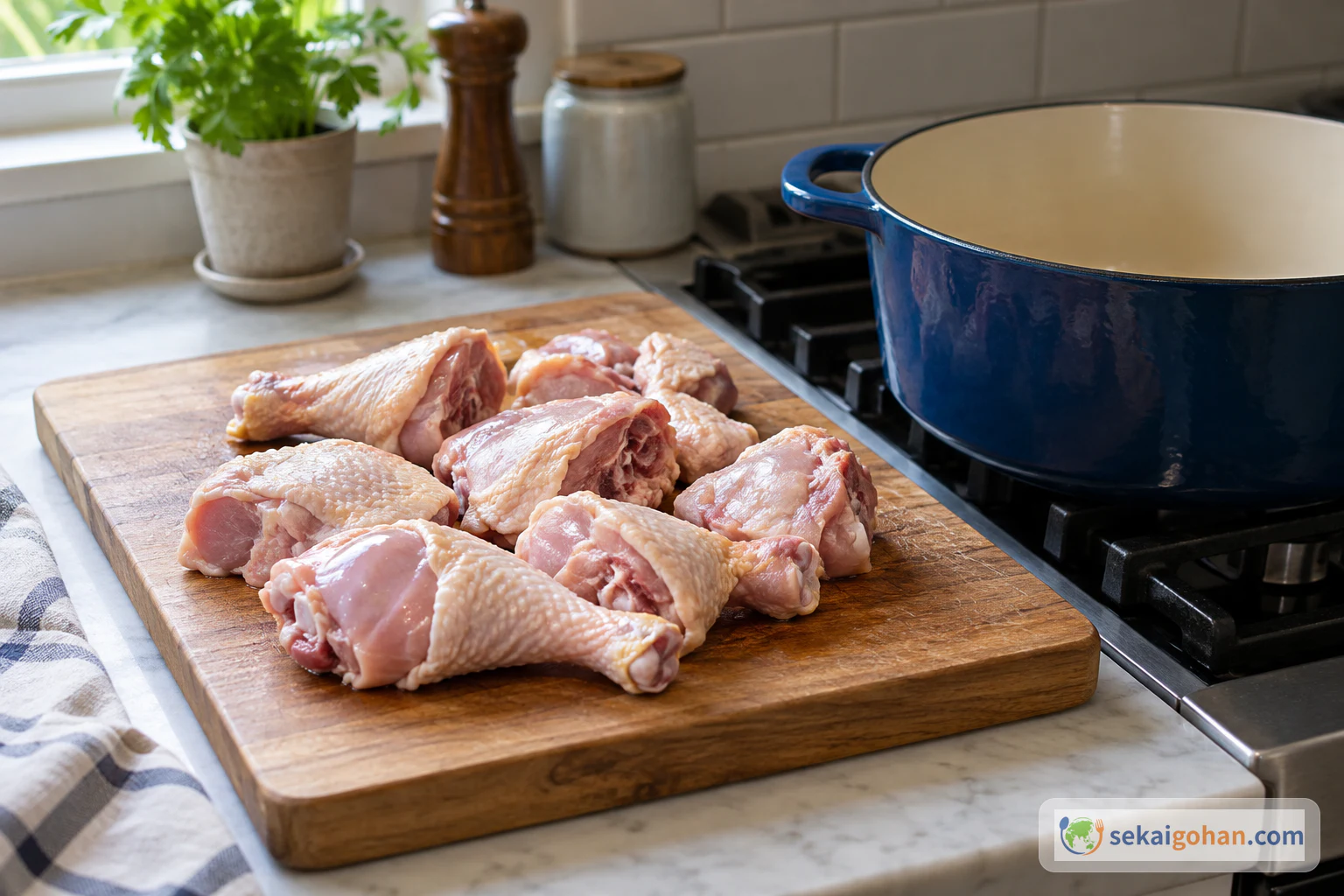
Chicken. The recipe calls for a whole chicken cut into bone-in pieces about 2 inches (5 cm) square. Chopping through bones at home can be awkward and risky, so it's easier and safer to buy chicken already cut into bone-in pieces or ask the butcher to do it.
Vinegar. A plain, everyday vinegar works best. Vinegars with strong fruit or rice aromas will shift the overall scent of the pot.
Soy sauce. Use reduced-sodium soy sauce; regular soy sauce makes the stew noticeably saltier. Brands differ, so keep the amount the same the first time and adjust on your next batch once you know how your soy sauce tastes.
Red chilies. Fresh red chilies are chopped and go in with the braising liquid. Their heat varies a great deal by variety and even from one chili to the next, so start at the low end, with 2 chilies.
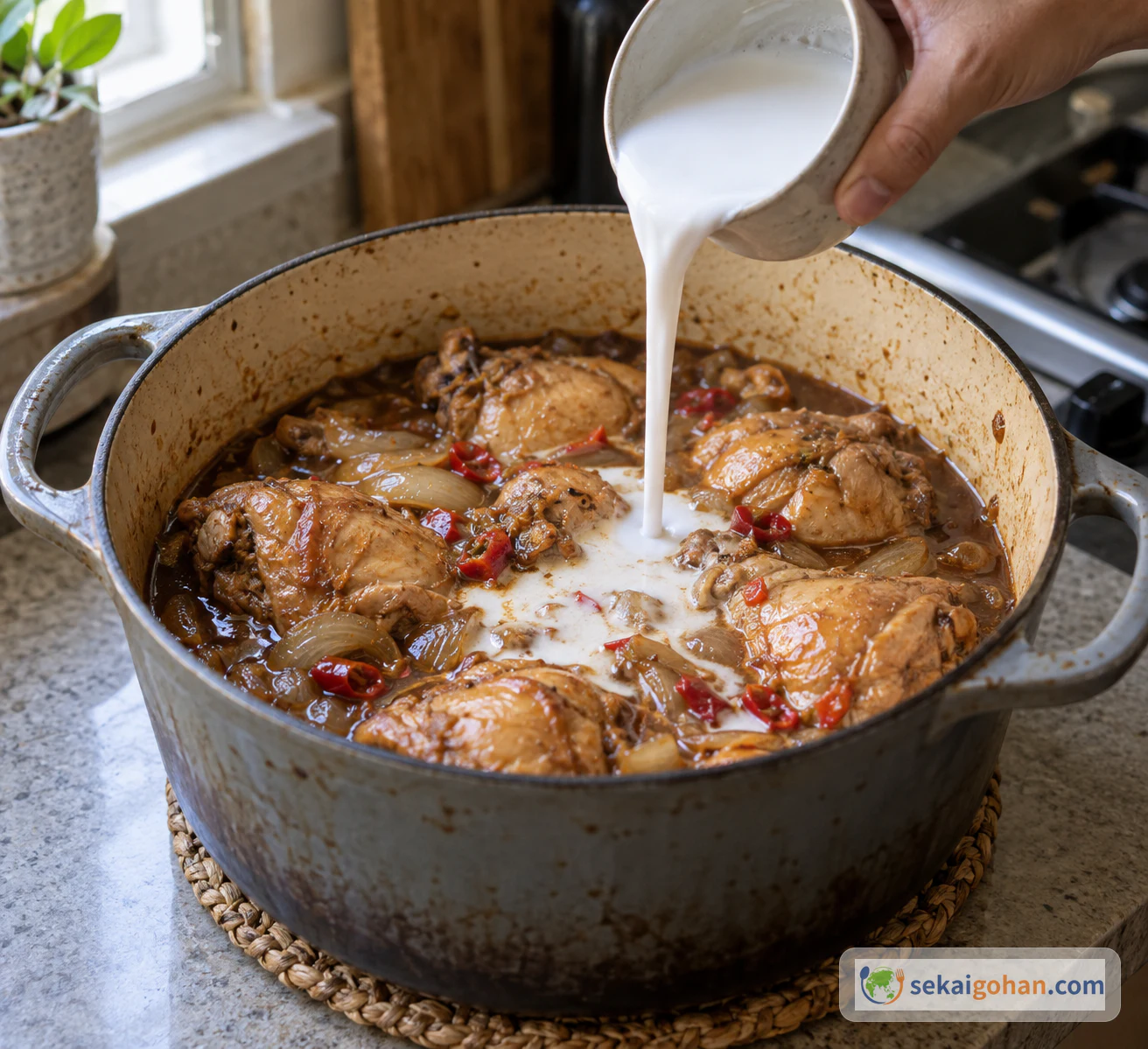
Coconut milk. Use unsweetened canned or cartoned coconut milk, never a sweetened coconut drink.
Soy sauce products often contain soy and wheat, and coconut milk is also used here. Check the labels of the products you buy.
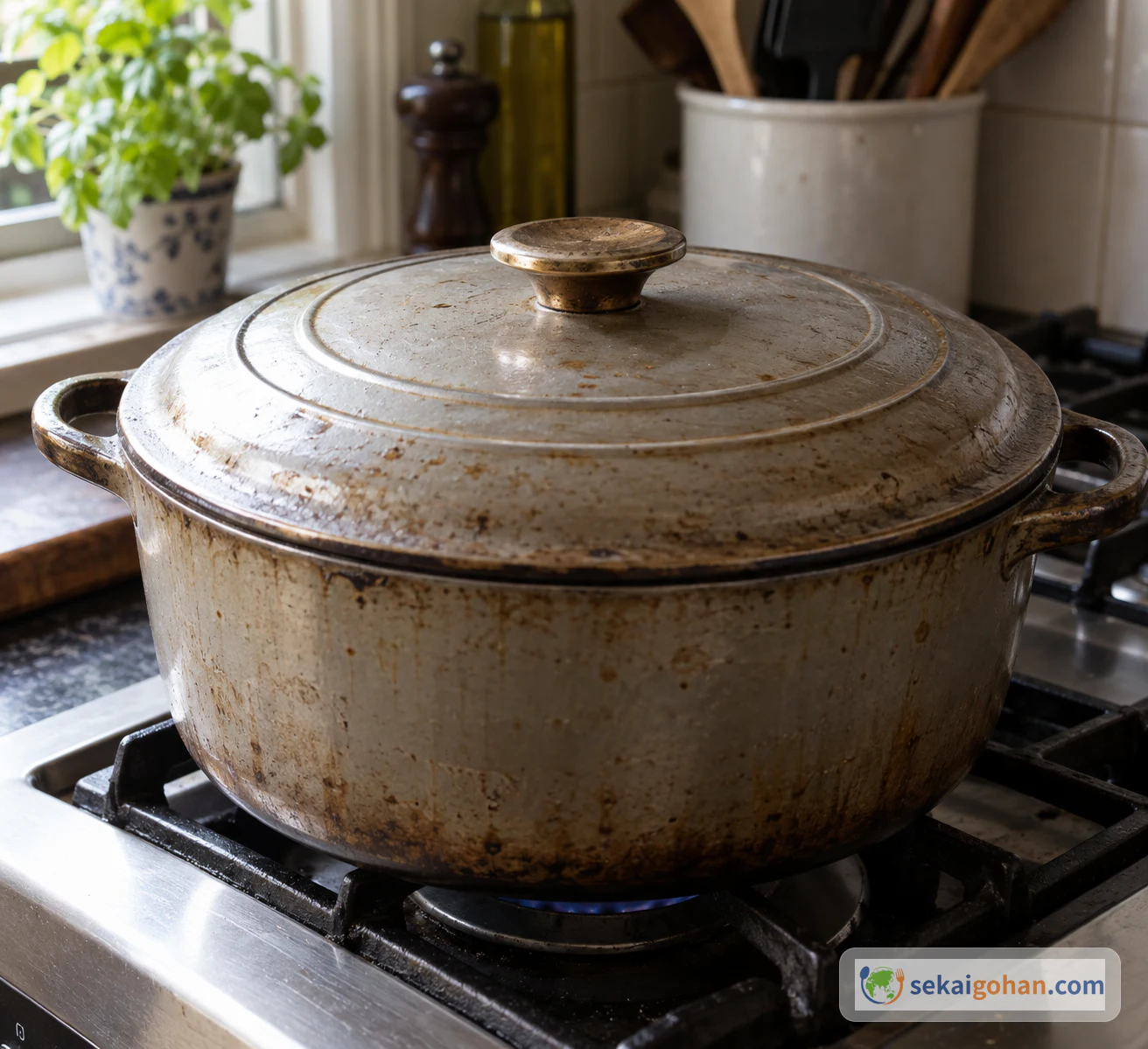
Method: Brown, Simmer Covered, Check the Center, Finish Off the Heat
Keep raw chicken and its juices away from cooked food and anything eaten without further cooking. Treat the one-hour simmer as a guide, and decide doneness with a thermometer in step 5.
Troubleshooting Kadun Pika
Most problems with this stew come down to heat, salt or chilies, and nearly all of them are easy to fix the next time. Judge doneness by the temperature at the center of the meat rather than by the clock.
| Problem | Likely cause | What to do |
|---|---|---|
| The bottom of the pot starts to scorch | Heat too high, or the liquid has reduced | Lower the heat, keep the lid on and check the liquid. If you add water, add only a little at a time |
| Too salty | Soy sauce brands vary, especially regular versus reduced-sodium | Serve with more white rice this time; next time use reduced-sodium soy sauce or adjust the amount |
| Too spicy | Chili variety, size or how finely it was chopped | Next time start with 2 chilies, the low end of the range |
| Center hasn't reached 167°F (75°C) for 1 minute | Thick pieces, or heat too low | Keep cooking with the lid on and measure the thickest piece again |
| Tastes sweet | Sweetened coconut product used | Use unsweetened coconut milk next time |
If you want more heat, add extra chilies with the liquid in step 4 rather than after the heat is off.
Serving, Storing and Varying Kadun Pika
Serve kadun pika with warm white rice to soak up the dark, tangy broth. For leftovers, divide the stew into shallow, clean containers, cool it quickly and refrigerate. Reheat it thoroughly before serving.
Variations
- Milder heat: use 2 chilies, the low end of the range.
- More coconut milk: a 1985 Guam cookbook version uses 1 cup of coconut milk, makes donne' (chili) optional and adds a step for skimming fat from the cooking liquid. Cook it as a recipe in its own right rather than changing one amount here.
- Hotter, with Tabasco: another family version uses 2 tbsp Tabasco and 8 Thai chilies and is served with white rice. It's a different recipe, not an adjustment to this one.
More Pacific Island Dishes
- Hineksa' aga'ga', the red rice of Guam's Chamorro table
- Kokoda, a Fijian fish dish
- Lovo, cooking in a Fijian earth oven
- Palusami, a Samoan coconut dish
Frequently Asked Questions
Is coconut milk essential?
In this Guam home version it's part of the dish: 1/2 cup, stirred in after the heat is turned off. Other family recipes use more, up to 1 cup.
How do I know when it's done?
After about an hour of covered simmering over low heat, check the center of the thickest piece with a thermometer. It should hold 167°F (75°C) for at least 1 minute.