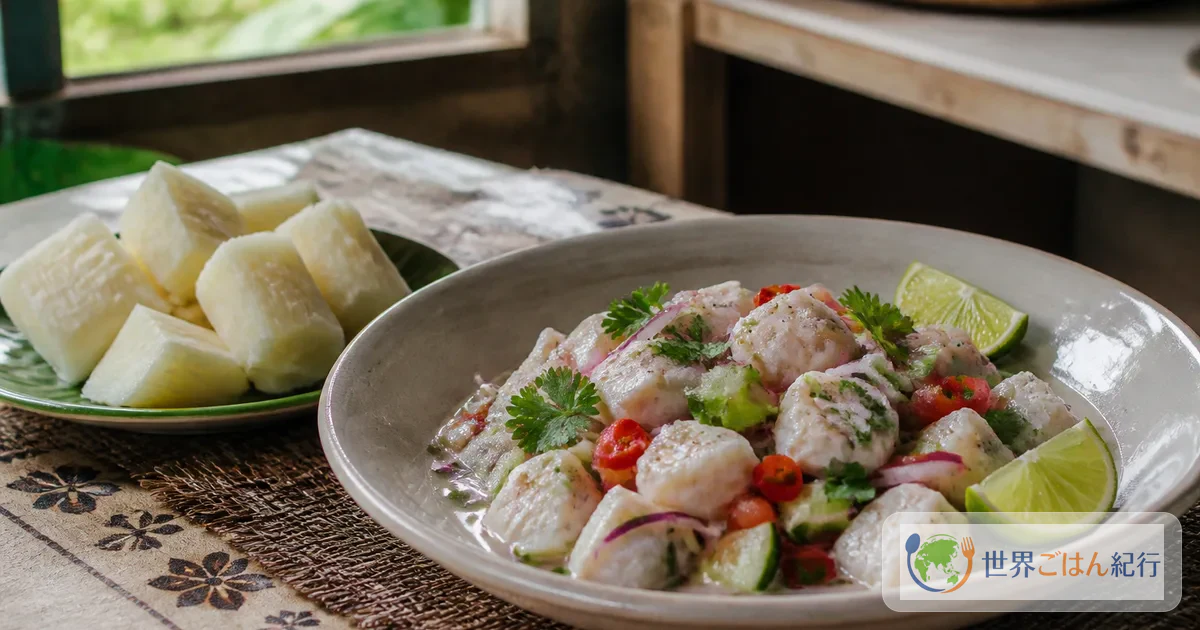
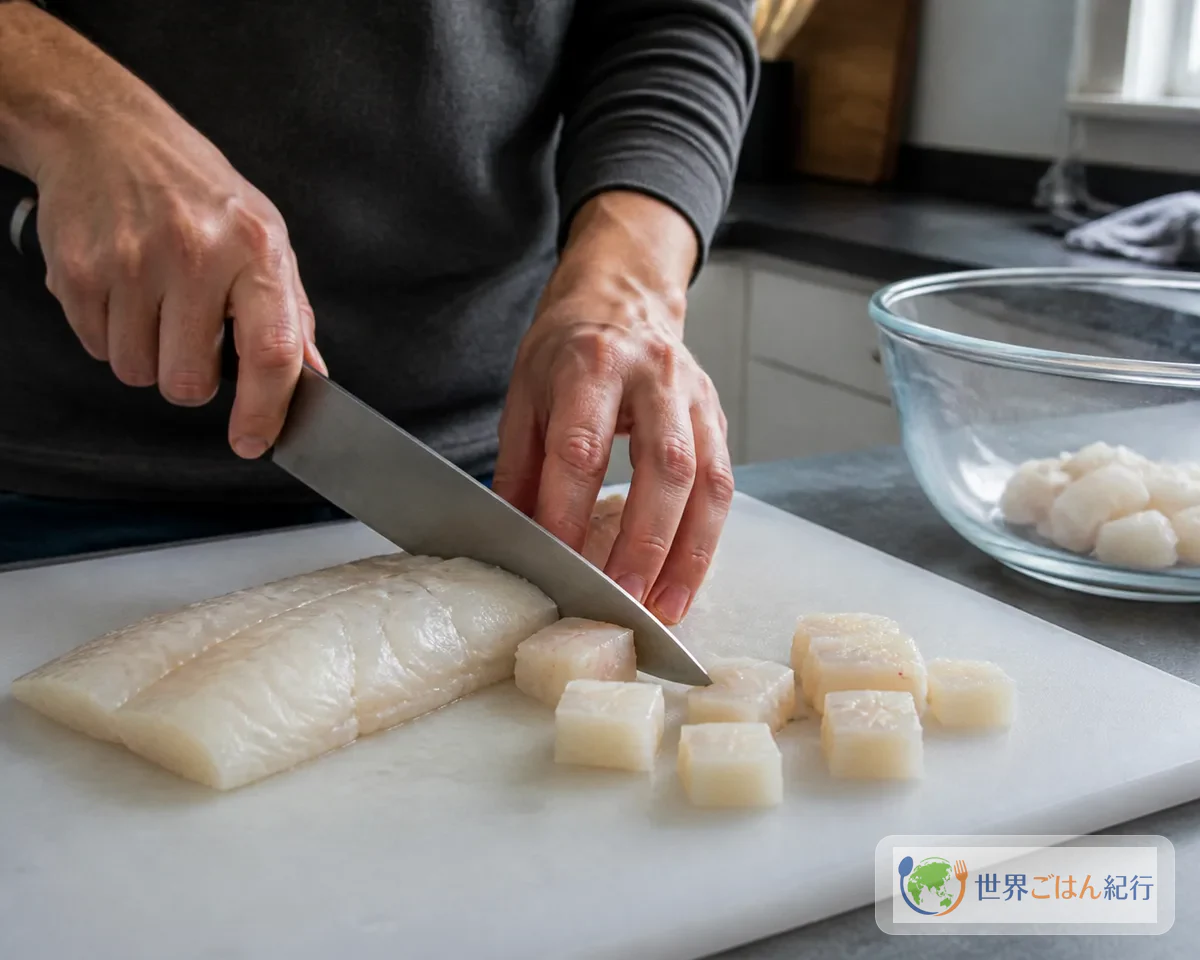
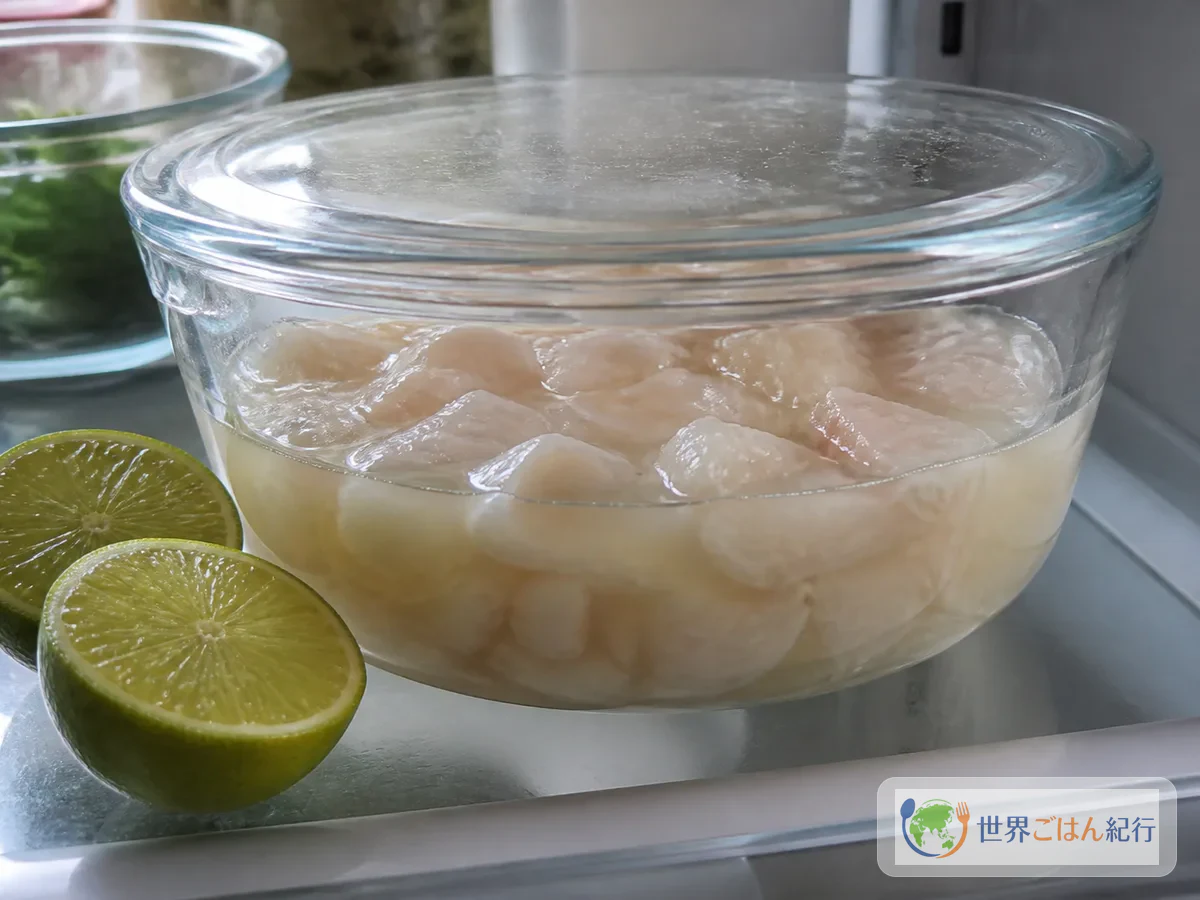
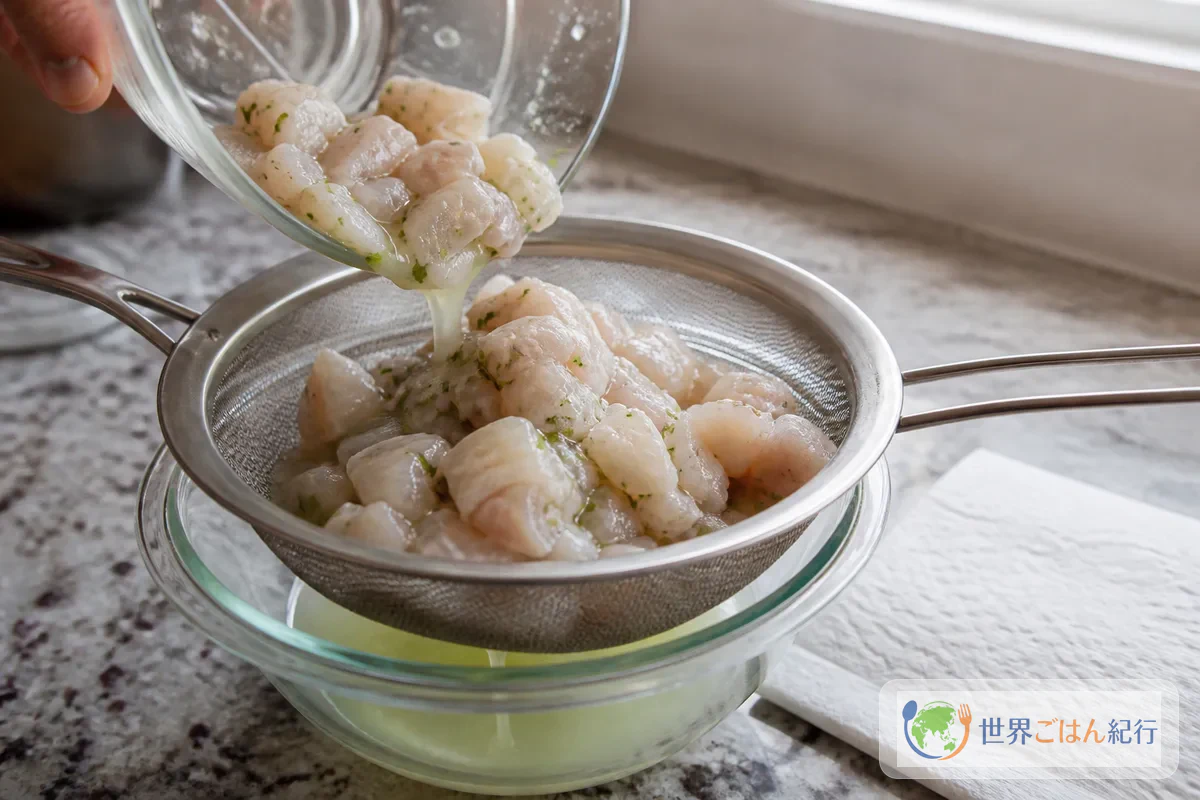
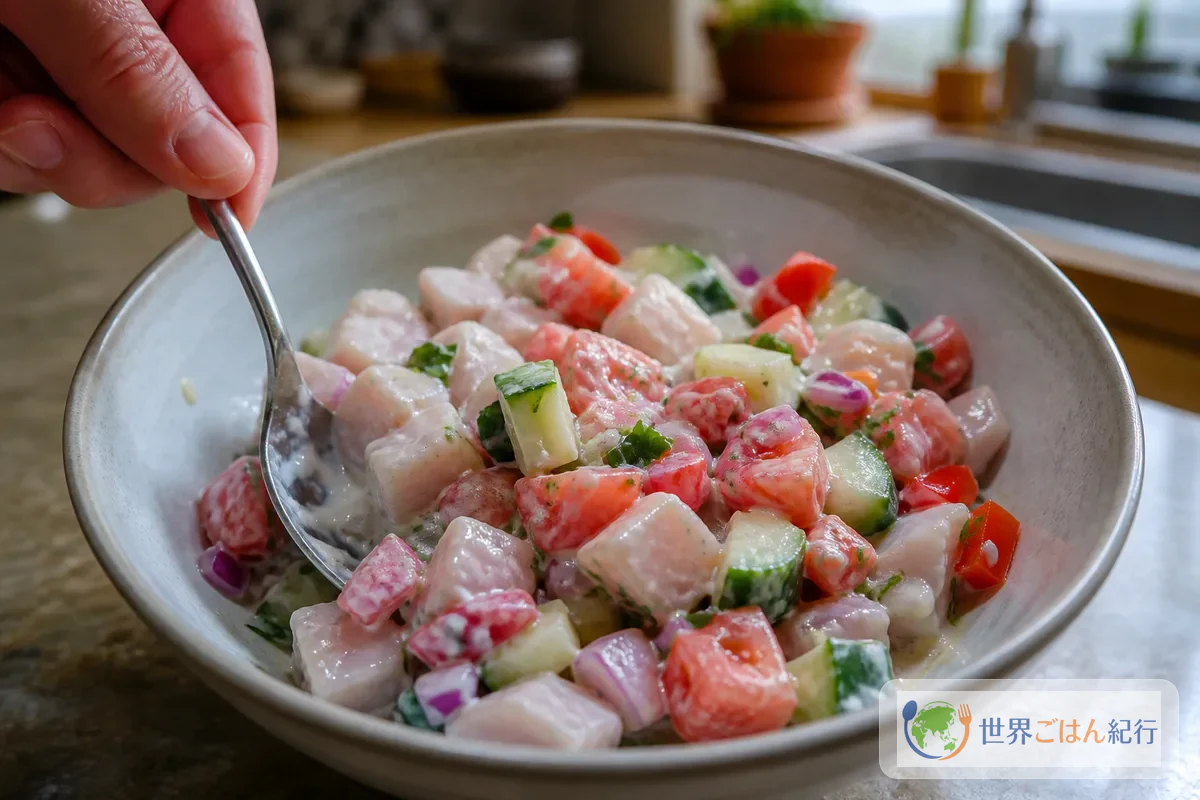
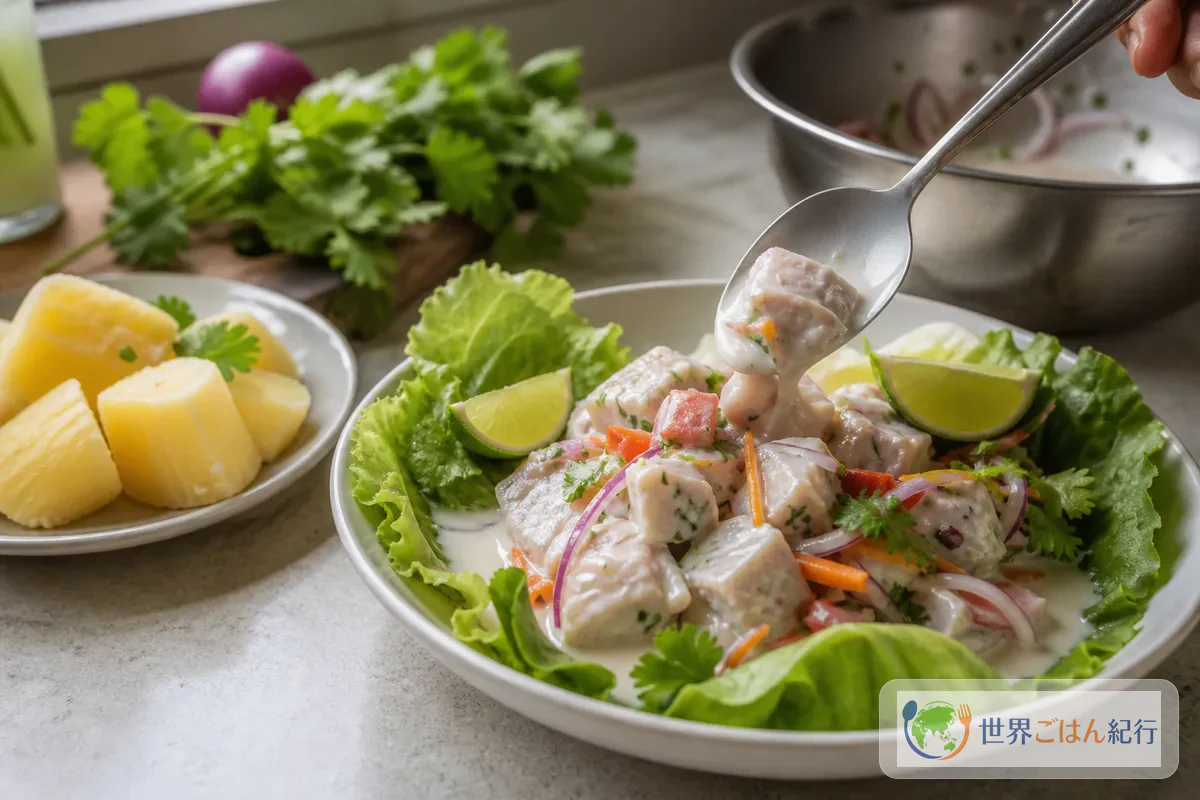
Cut the fish into 0.5-inch (1.5 cm) cubes, sink them in lime juice, and watch the translucent flesh slowly turn white. Once the white reaches the center, drain off the juice and fold the fish into coconut milk with chopped tomato and cucumber. The first bite is cold fish coated in white miti, and then the chili heat comes up behind it.
This is kokoda, Fiji's marinated fish dish, pronounced close to "kokonda." White fish cured in citrus, then dressed with coconut cream and vegetables, it is bright, sour, and rich at once, the sea and the coconut palm in a single bowl.
Kokoda on the Fijian Table
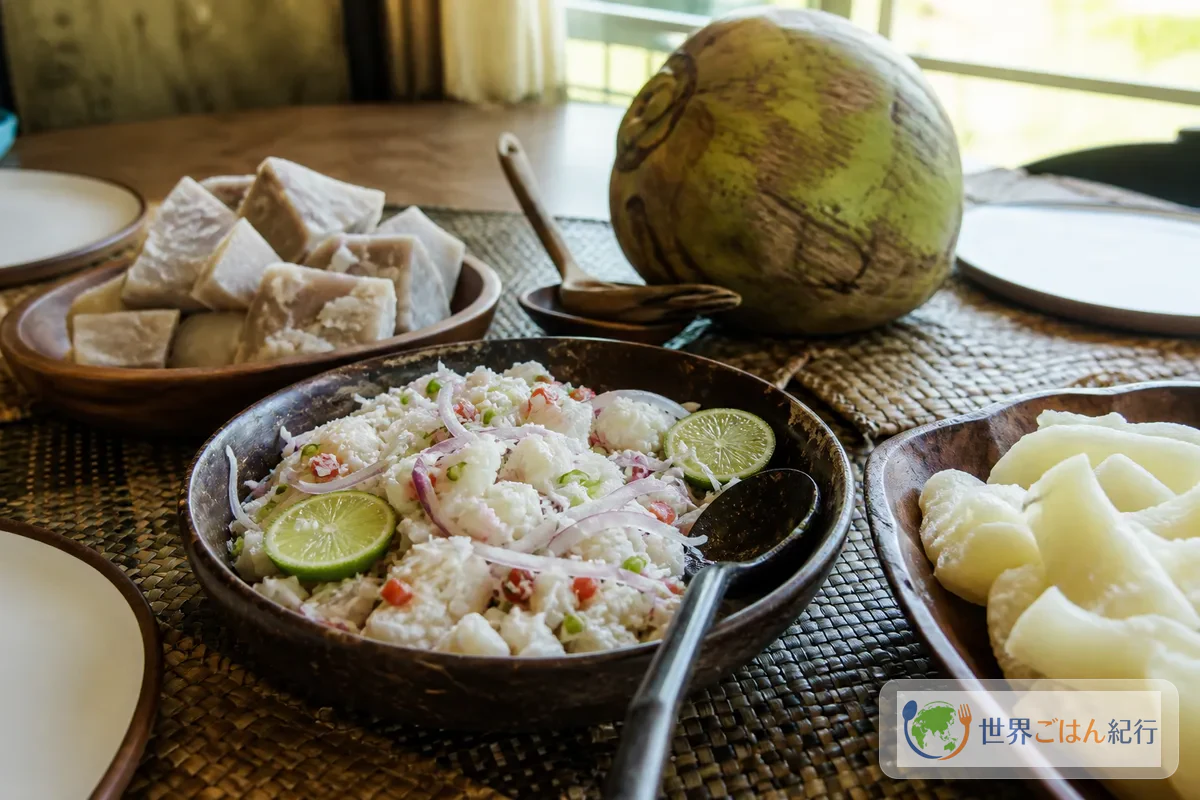
Fiji's traditional diet pairs locally caught seafood with root crops such as cassava and taro. Kokoda puts the fish front and center, but it makes the most sense as part of that meal, where what comes from the sea and what grows on the island share the same table. Every household makes it a little differently, depending on the fish and ingredients at hand.
Raw fish is only one way to make it. There are versions with fish and cassava, cooked octopus, clams, chicken, or taro leaves. "Kokoda ceviche" cures the fish in lime, and the cooked versions belong to the same family; the pairing of sourness and coconut simply follows whatever seafood or garden produce is around.
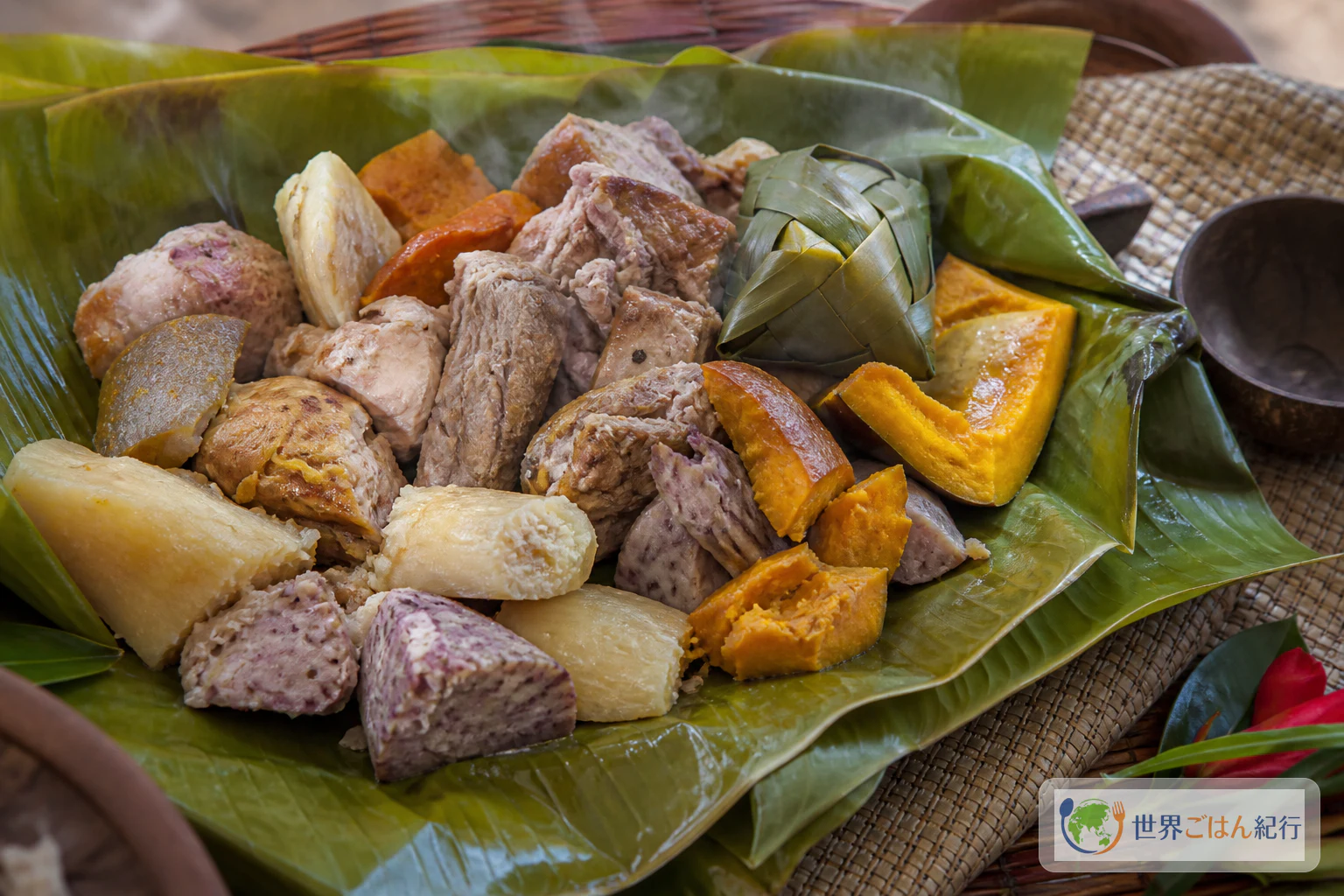
Kokoda also looks different next to its neighbors. Try it alongside Fiji's Lovo, where root vegetables and meat are wrapped in leaves and cooked to an earthy aroma, or Samoa's Palusami, made with taro leaves and coconut. Watching fish, root vegetables, leaves, and coconut trade roles from dish to dish is a good way to see how the islands differ.
At home, aim for balance: the sweetness of white fish, the sharpness of lime, the roundness of coconut, and the crunch of onion and chili, each in its place. It doesn't have to match a Fijian version exactly.
Ingredients (serves 4)
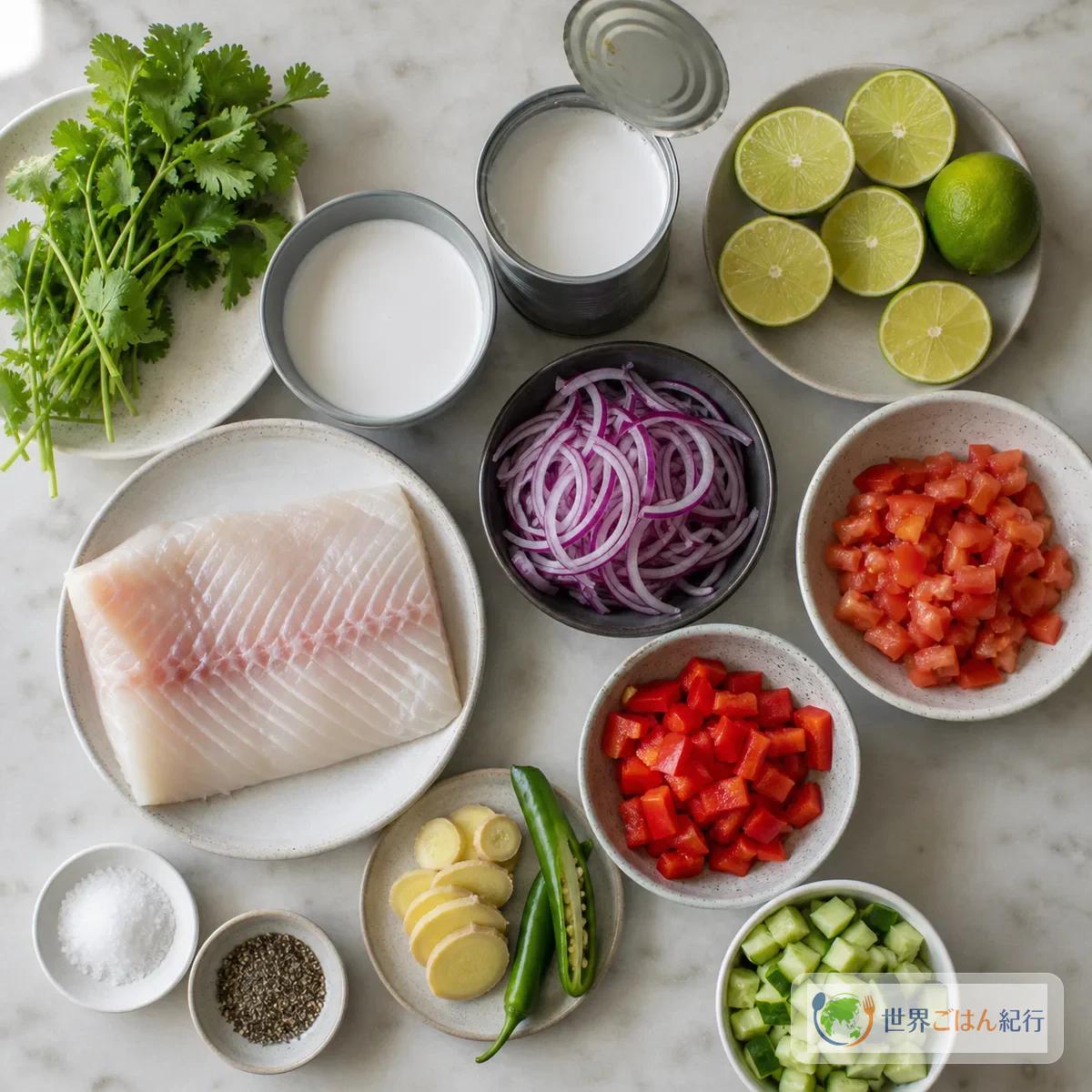
Eat raw kokoda the same day you make it. Choose a lean white fish with few bones. Sea bream, flounder, or sea bass labeled for raw consumption are easy to work with. Don't use fillets sold for cooking raw just because they look fresh.
Use enough lime juice to cover the fish. The amount depends on the thickness of the fish and the shape of the bowl, so start with the 1 cup (240 ml) in the table and add 1.5 tbsp (20 ml) at a time only if it falls short. If you hold back juice and soak only part of the fish, it won't turn white evenly.
When choosing canned coconut milk, pick an unsweetened type made mainly of coconut and water, and look for a can around 1¾ cups (400 ml). This recipe uses ¾ cup (200 ml). If you can use the rest in Lovo, the Fijian earth-oven dish or a Southeast Asian stew, a larger can makes sense. If you are making it just once, look for a small can at an import grocery and skip sweet beverage products.
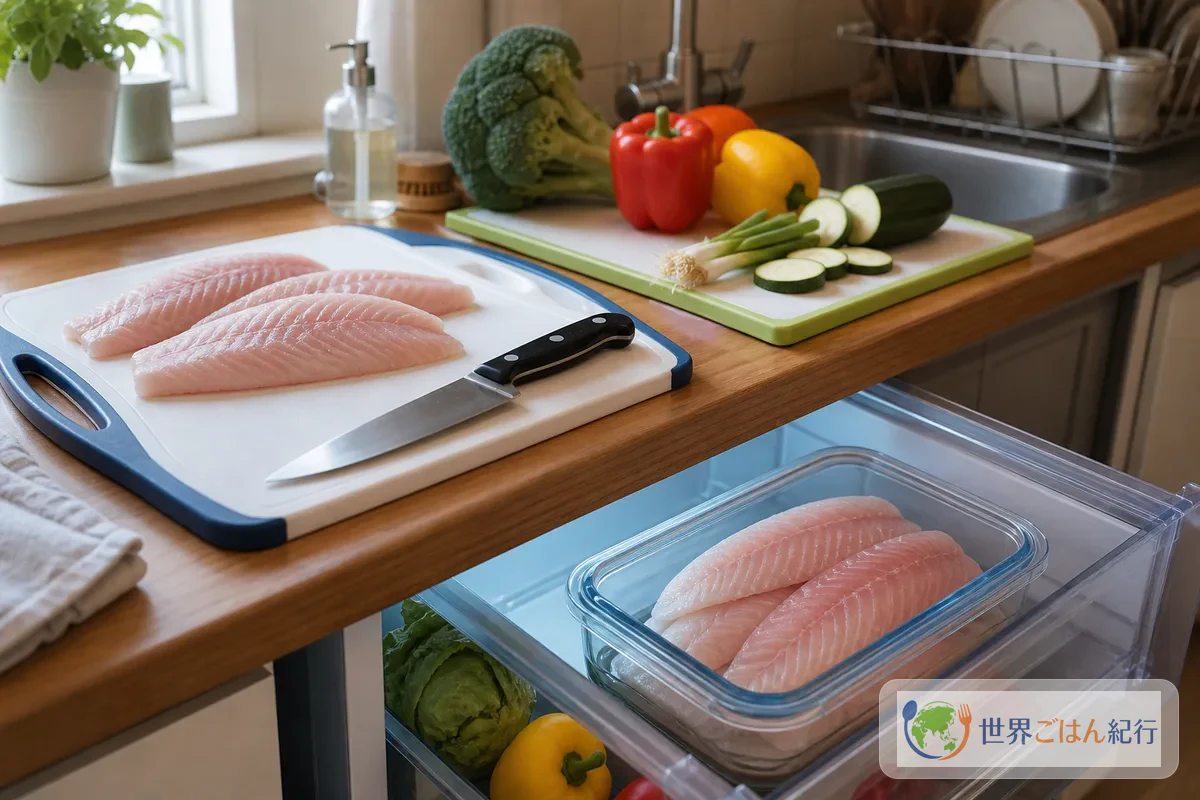
Keep the cutting board and knife for cutting the fish separate from those for vegetables, or wash them with detergent right after use. Cut in an order that keeps the fish's juices from touching lettuce or tomato, and keep the time at room temperature short. For pregnant women, children, older adults, and people with weakened immune function, choose the cooked version that uses no raw fish.
Choosing Fish and Coconut Milk for Kokoda
Your first decision is whether to eat the fish raw. If you can buy fish labeled for raw consumption from a trusted seller and keep it refrigerated, make raw kokoda. If there's no label, you can't confirm the freezing history, or anyone at the table has reason to avoid raw fish, cook the fish, let it cool, and make a "kokoda-style" dish with the same lime, coconut, and vegetables.
Ordinary vinegar, acids such as lemon, salt, and soy sauce do not kill Anisakis larvae. For fish eaten raw, check for a 'for raw consumption' label, freshness, and visual condition, and ask the seller about the freezing history to guard against parasites. If in doubt, cook the fish.
In Fiji, coconut milk is called "miti." It's made by grating fresh coconut and squeezing out the liquid, and it is thick but light in aroma, so the onion and salt come through clearly. Unsweetened canned coconut milk works well. Thin beverage-type coconut milk lacks the body to coat the fish and vegetables.
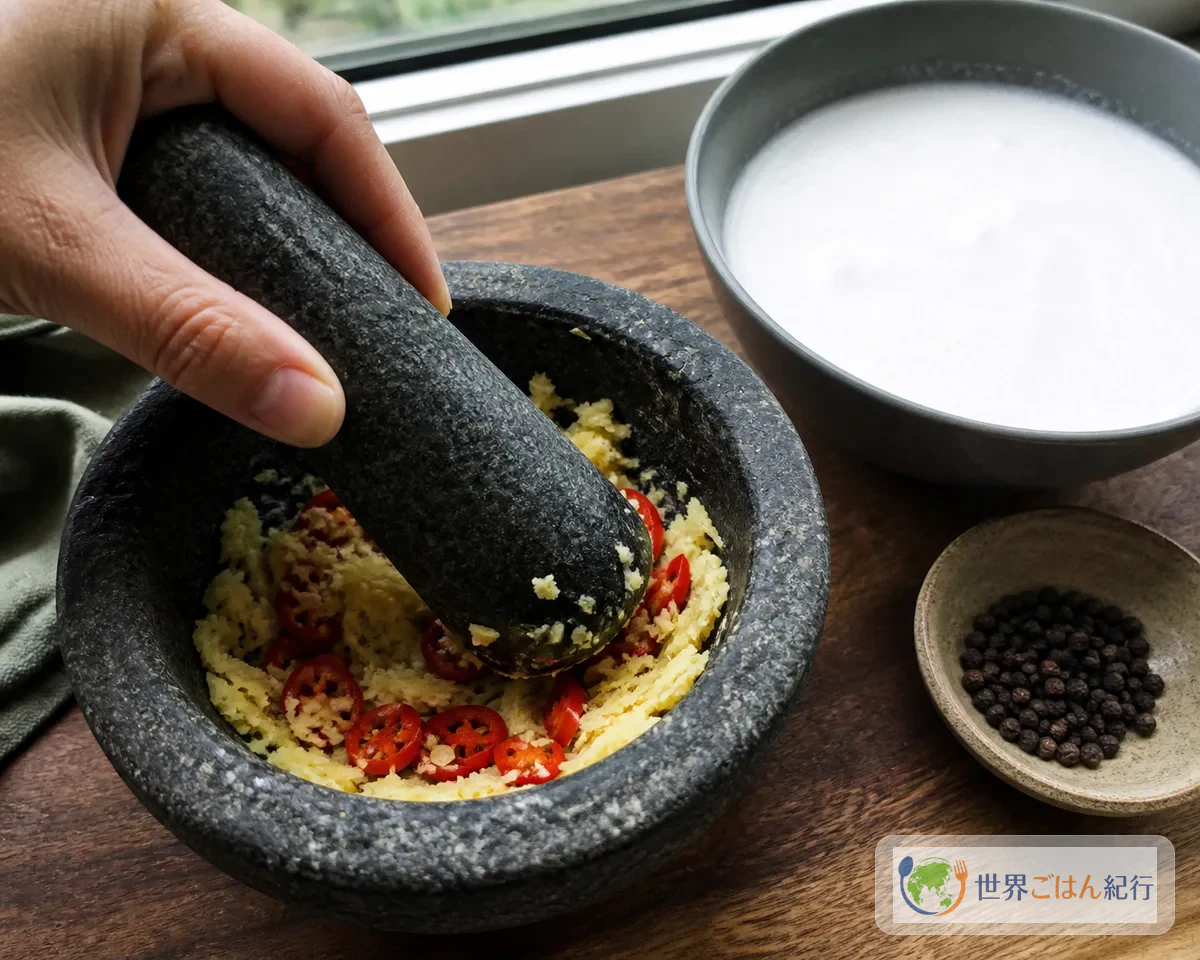
As for tools, a knife is enough for chopping the ginger. A sturdy mortar is worth buying if you cook other dishes that call for crushing herbs and chilies.
Method | Check the Fish and Combine the Miti Last
Before you start, set out a glass or ceramic bowl, a cutting board for fish, a fine sieve, and paper towels. A metal bowl works, but glass or ceramic is easier because the sourness is easy to check. Clear a spot in the refrigerator first so the fish doesn't wait at room temperature.
Fixing Kokoda That Is Too Sour, Too Thin, or Too Firm
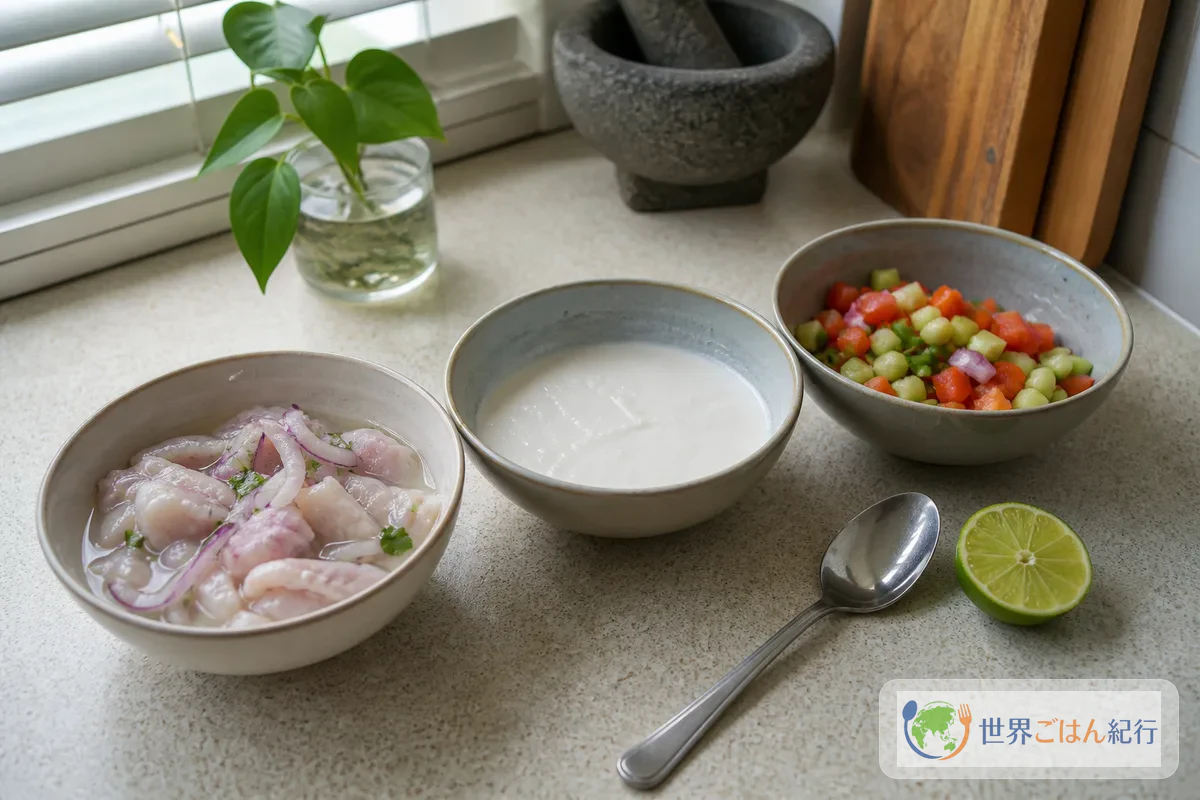
Kokoda all goes into one bowl, but if it goes wrong, resist fixing everything at once or the flavor blurs. Separate the fish, miti, and vegetables for a moment and find where the water or sourness has built up. Most problems are avoided by draining the juice at the right moment and adding the miti just before eating.
The sourness is sharp
If it's still too sour after draining, add miti 1 tbsp at a time rather than sugar. For 1 lb (500 g) fish, keep the addition to 3.5 tbsp (50 ml); beyond that, the sweet coconut aroma covers the fish. If you'd rather add vegetables, use cucumber or onion 20 g to 1 oz (30 g) at a time instead of tomato, which softens the sourness while keeping the crunch.
The miti is thin
The usual causes are beverage coconut milk, watery vegetables, or juice that wasn't fully drained from the fish. Return the fish to the sieve for 5 minutes and pour off the water in the bottom of the bowl. Then add thick coconut cream 2 tbsp (30 ml) at a time, turning gently so the corners of the fish don't break, and fix the thickness before adjusting the salt.
The fish is firm and chalky
Too long in the acid firms the surface and pushes the sourness ahead of the fish's sweetness. Once the fish has gone firm, there's no going back, so add a little more miti and eat it with cucumber and onion. Next time, check at 1 hour and drain the juice as soon as the white reaches the center.
The coconut milk turned grainy
This happens when the dish is over-chilled in the refrigerator or sits a long time in a cold bowl. Don't leave it at room temperature to fix it; instead, take it out of the refrigerator 15 minutes before eating and stir gently with a clean spoon. If the separated oil won't come back together, don't store the rest, and serve only what you can finish on the spot.
Serving, Storing, and Cooked Versions of Kokoda
Serving kokoda
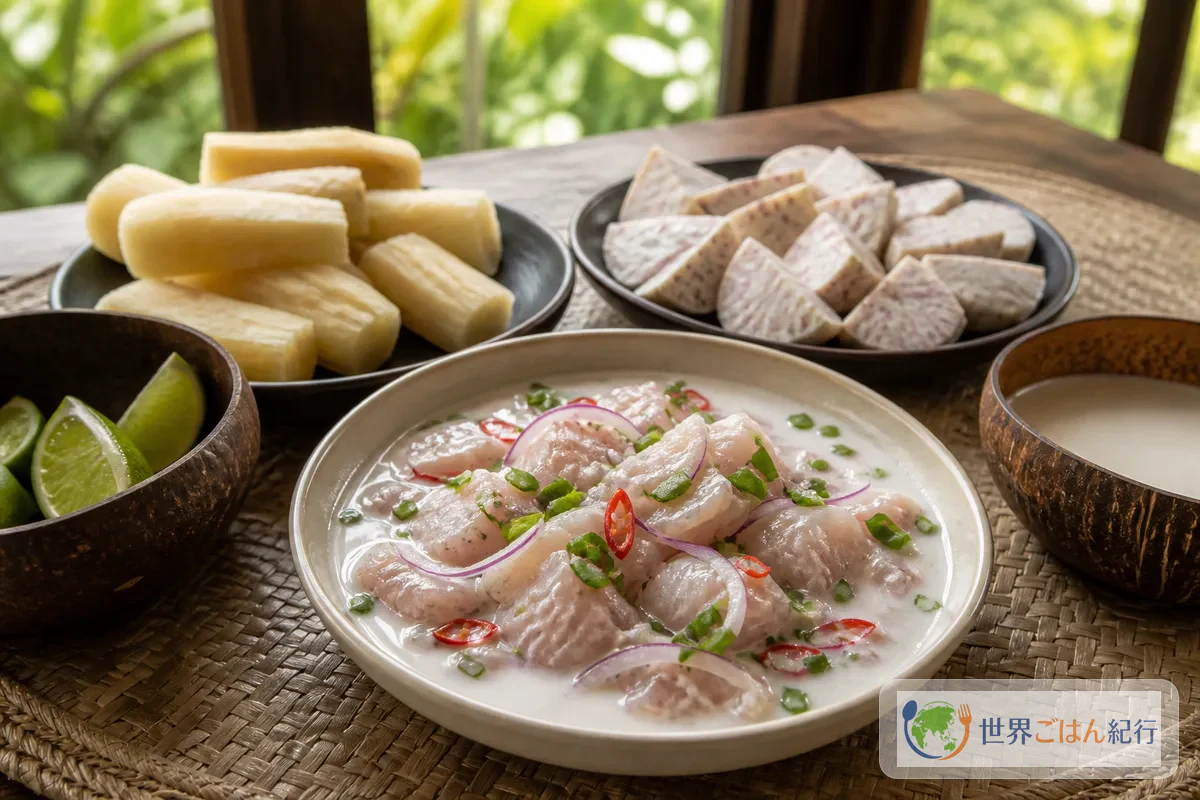
Kokoda is often served in a coconut shell or on lettuce, though a shallow glass dish does the job at home. Piled high in a deep bowl, only the fish at the bottom sits in the miti, and water from the vegetables tends to pool. Choose a plate where the fish and vegetables spread out in one layer, and squeeze the lime over last.
Cassava or taro on the side lets the sweetness of the root vegetable catch the sourness of the fish. Keep them on a separate plate rather than mixing them in, so the texture of the fish and the fluffiness of the roots don't clash. If the roots are warm, bring them out once the steam settles.
Storing kokoda
Raw-fish kokoda isn't a make-ahead dish. Keep it refrigerated from the moment the fish goes into the juice, and once the miti and vegetables are combined, finish it at that meal. Leftovers don't belong in tomorrow's lunchbox, especially if they've turned watery as the fish juice spread into the vegetables, and anything that sat at room temperature for a long time shouldn't go back in the fridge. If you use frozen fish, thaw it in the refrigerator still sealed, and don't refreeze it.
Kokoda-style versions with cooked fish
If you can't get fish for raw eating, you can still make the dish. Cook the fish thoroughly through the center in a pot, let it cool, and combine it with lime, miti, and vegetables. It isn't Fiji's raw-fish kokoda, but it keeps the same pairing of sourness and coconut.
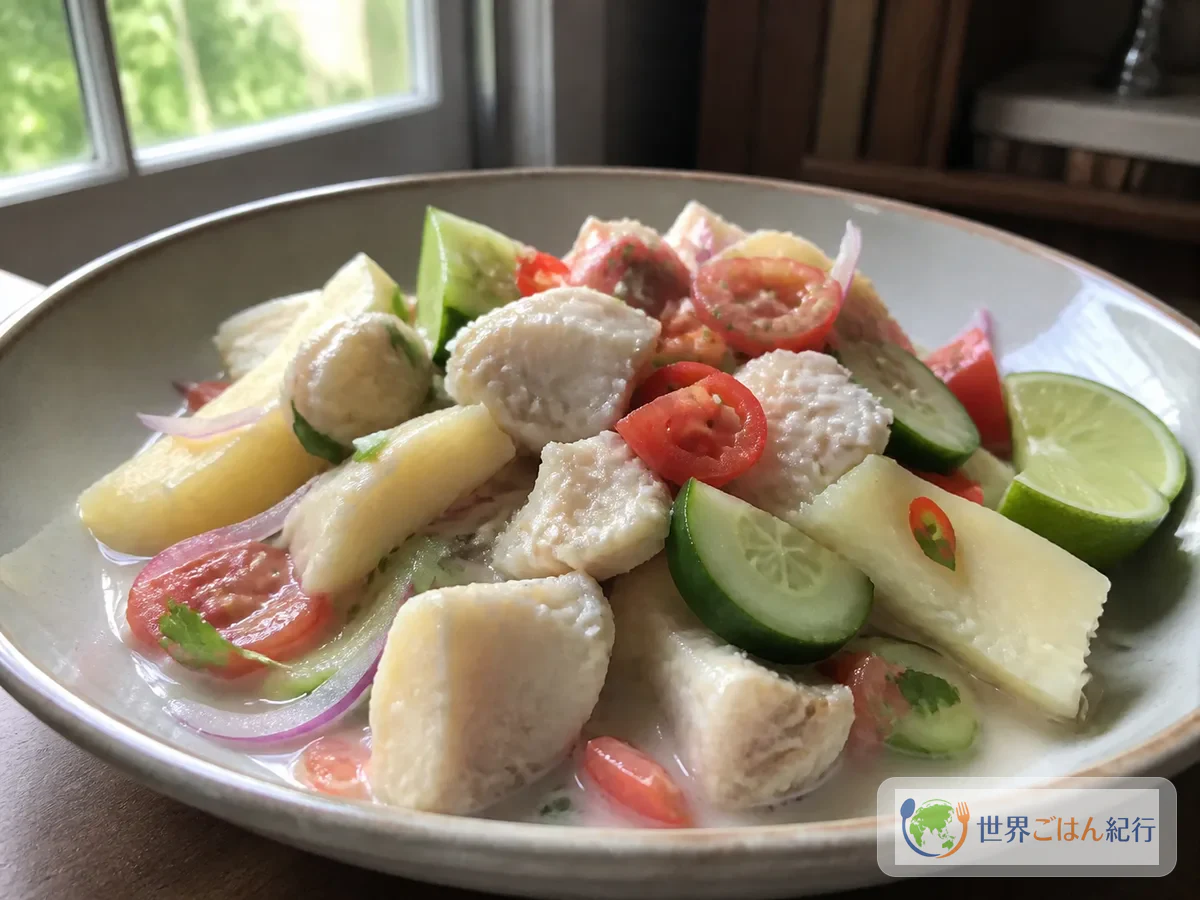
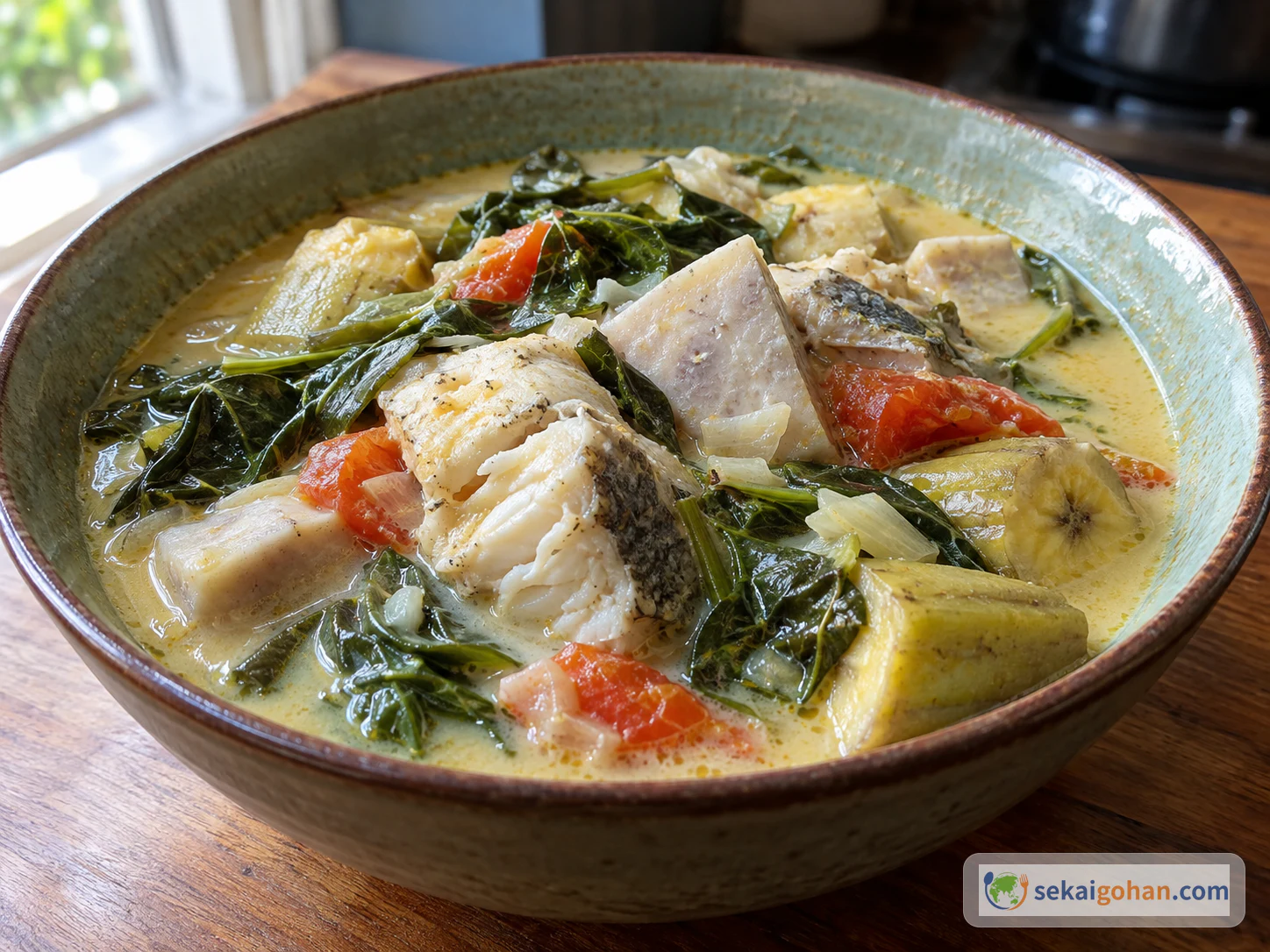
For a fish and cassava version, combine grilled fish, boiled cassava, spinach, chili, and coconut milk. You lose the texture of raw fish, but the fluffy sweetness of the root comes in and the dish becomes almost a staple. Peel the cassava, remove the hard center, and boil it until soft before using.
Octopus and shellfish should be cooked thoroughly first and added to the coconut milk once cool; lime alone won't make raw shellfish safe. Because heating conditions vary by ingredient, follow the label and handling instructions for each product.
For a vegetable version, combine cooked taro leaves with coconut milk, cucumber, and chili. Taro leaves can't be eaten raw, so use leaves sold as food, cook them thoroughly as the label directs, and never substitute leaves from ornamental plants.
If raw kokoda and a cooked version share the table, keep the bowls, cutting boards, knives, and serving spoons separate. Raw fish juices on the cooked ingredients would undo the whole point of cooking them.
FAQ
If lime turns the fish white, is it safe to eat?
No. The white color comes from the fish's protein changing in the acid; it doesn't mean parasites such as Anisakis have been killed. Use fish labeled for raw consumption, ask the seller about the freezing history, and if you have any doubt, make the version with thoroughly cooked fish.
Are coconut milk and coconut cream the same?
No. Cream has more fat and is thicker, so using the full ¾ cup (200 ml) in the table can make the dish heavy. If you use cream, start with ½ cup (150 ml) and stop when it lightly coats the fish. Avoid sweetened or flavored coconut beverages.
Can I use fish that was frozen for sashimi?
Yes, if the seller sells it as fish for raw consumption and you can confirm the freezing period and temperature. A short freeze in a home freezer can't be counted on for parasite control. Thaw it in the refrigerator, wipe off the moisture, and make the kokoda that same day.