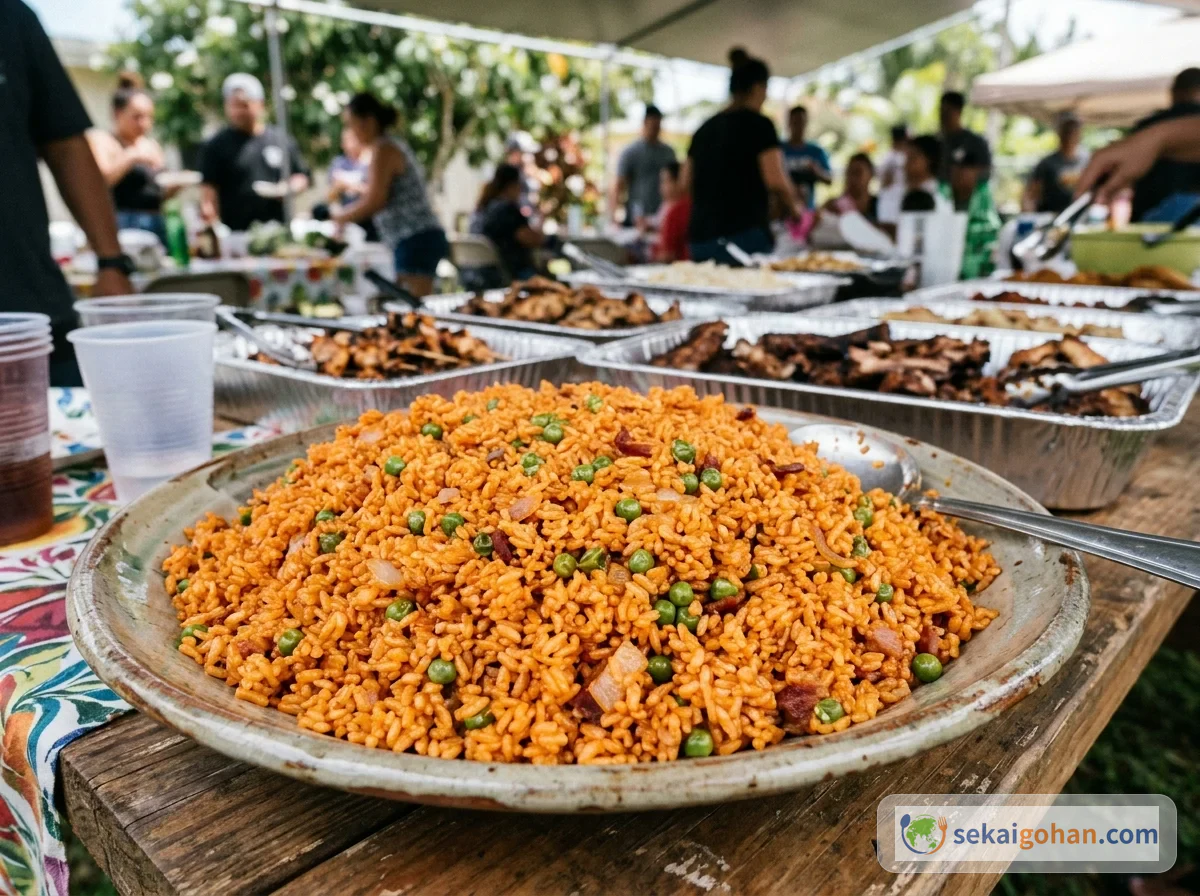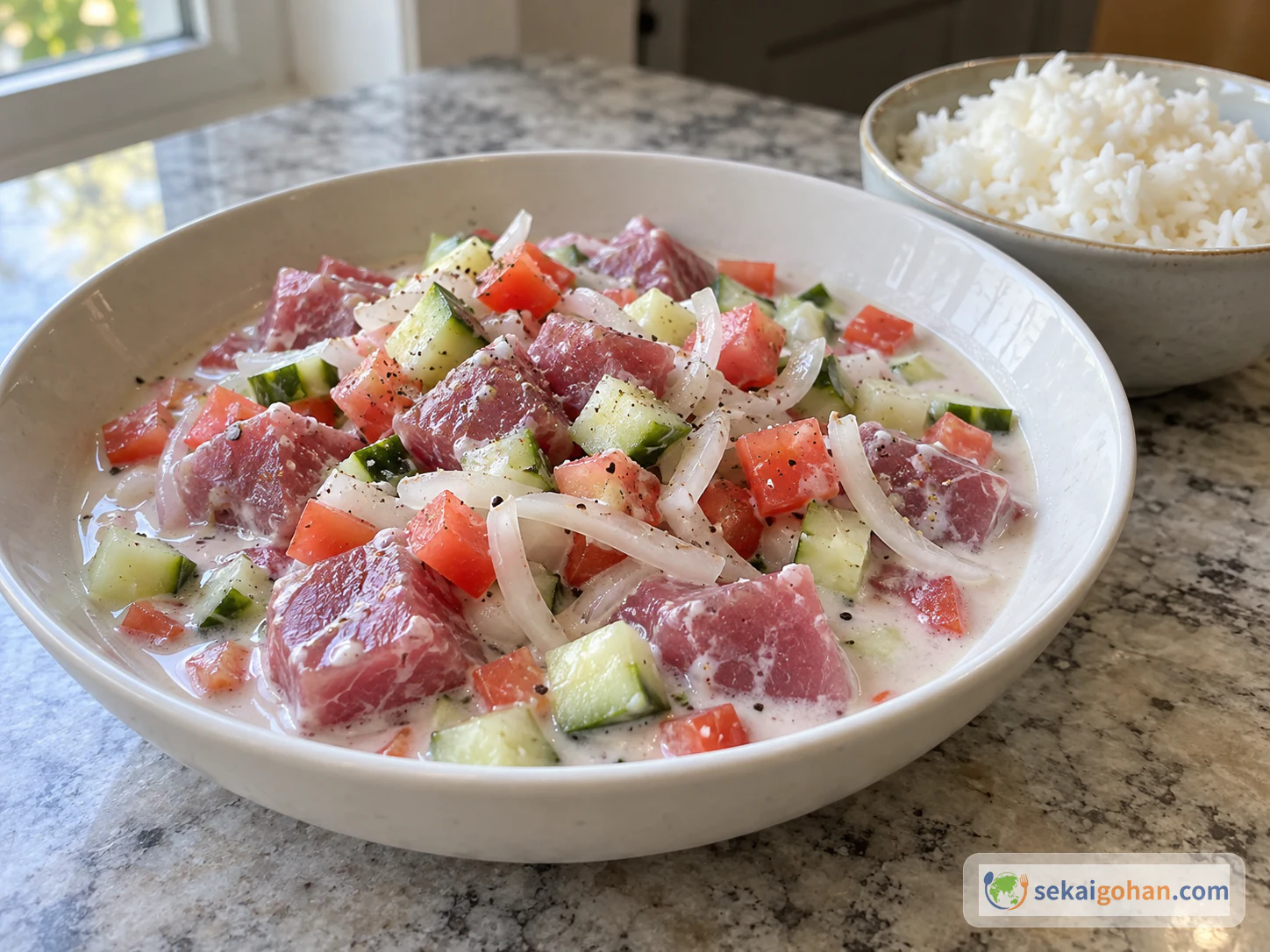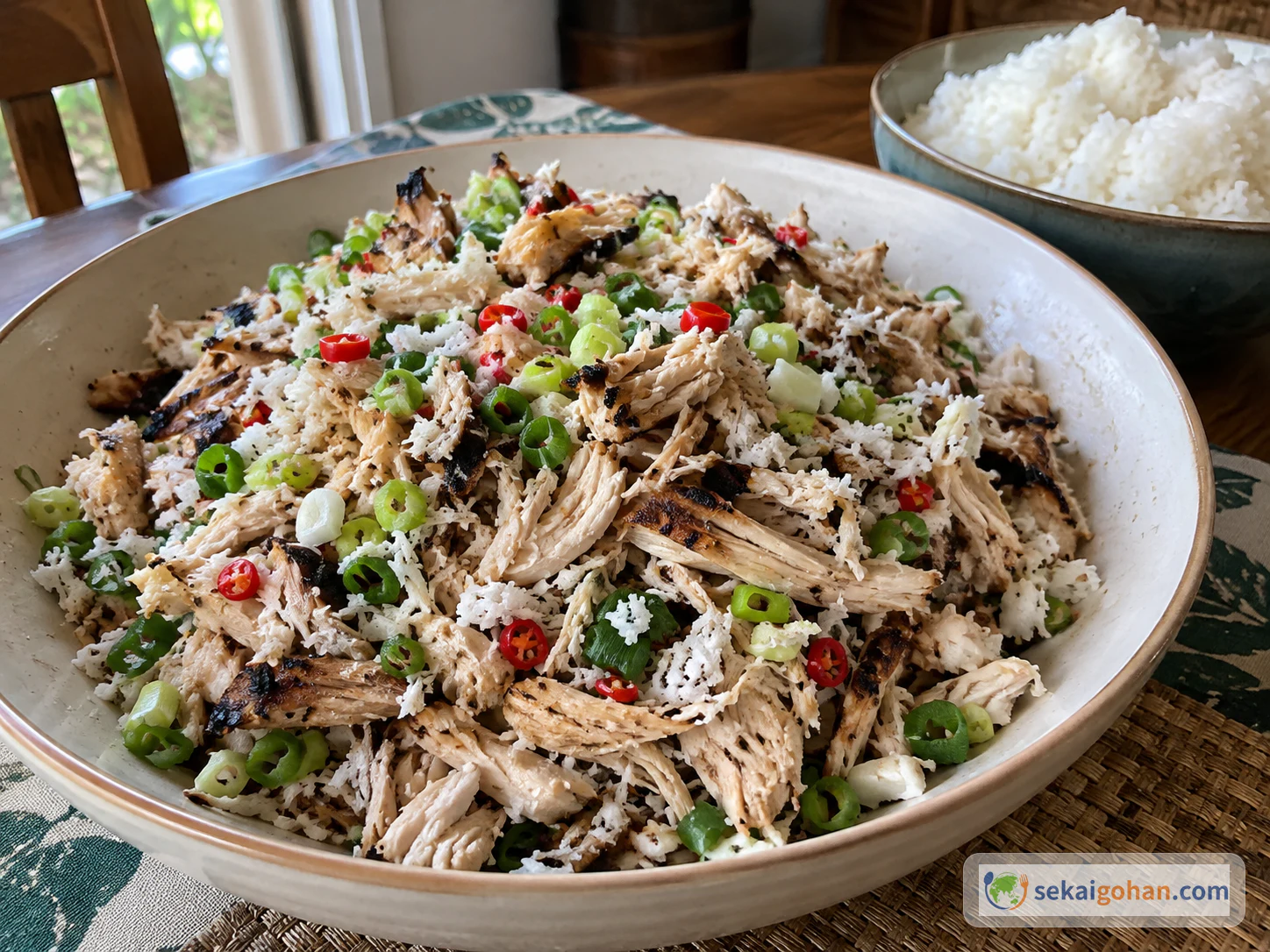
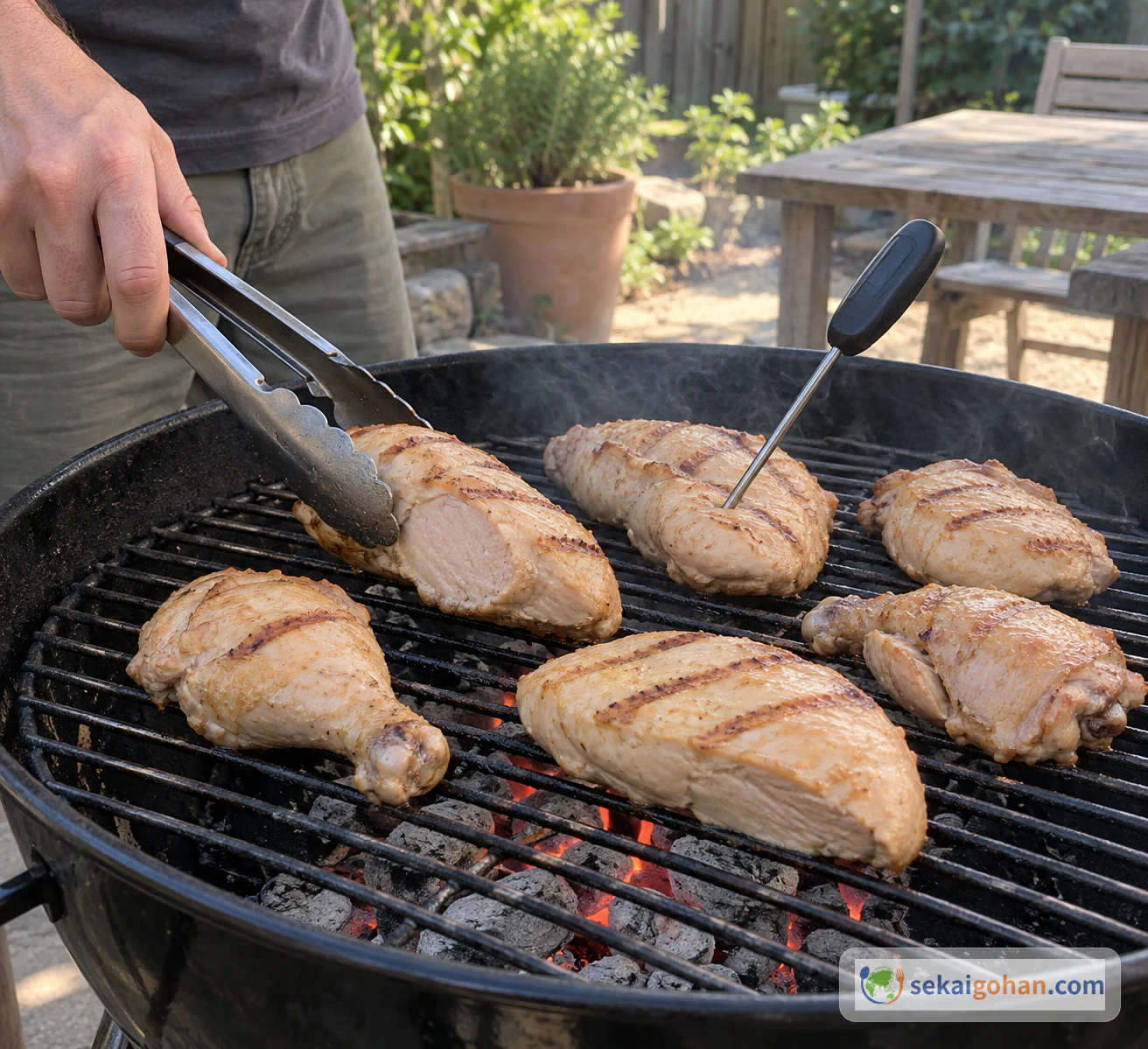
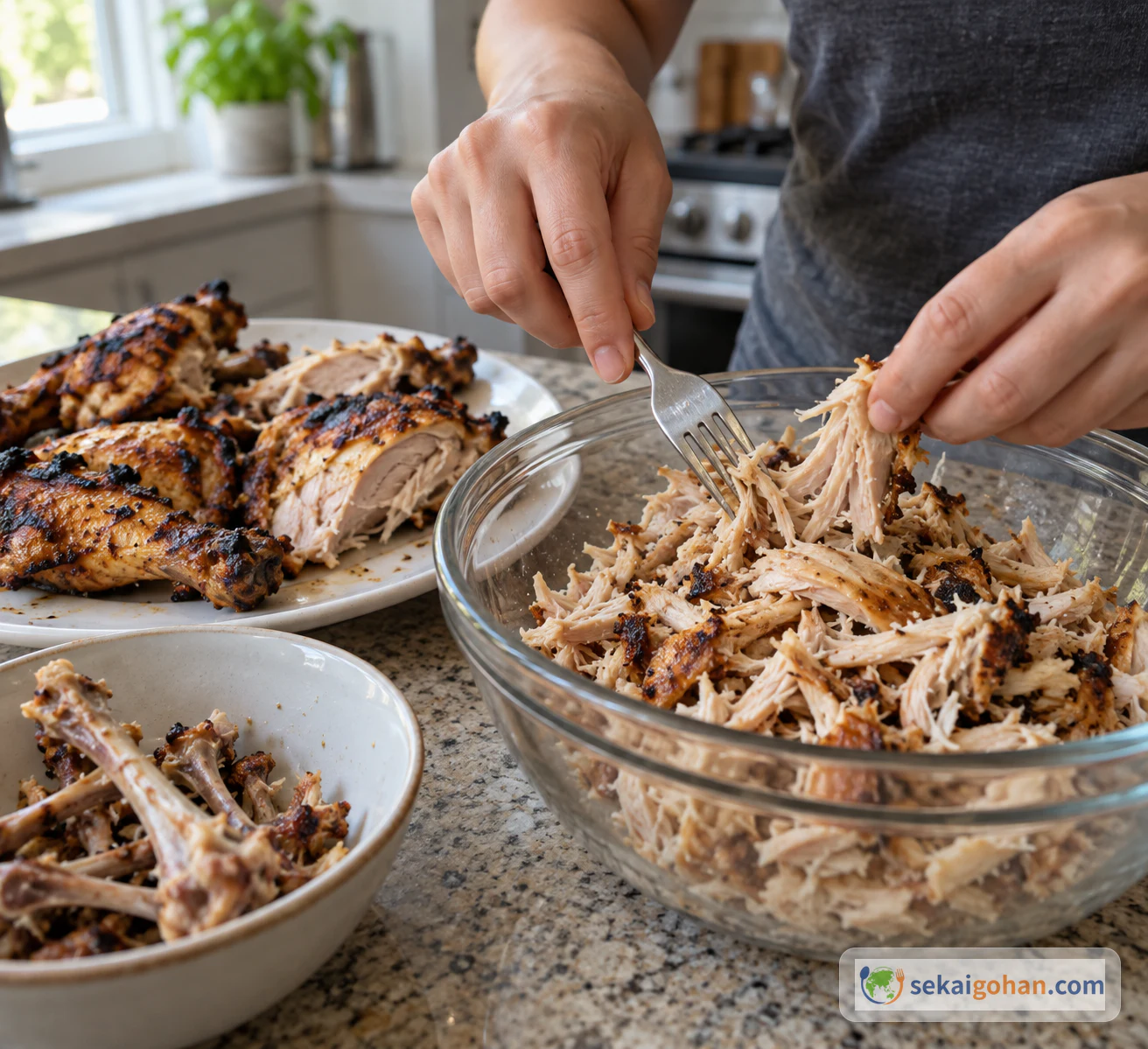
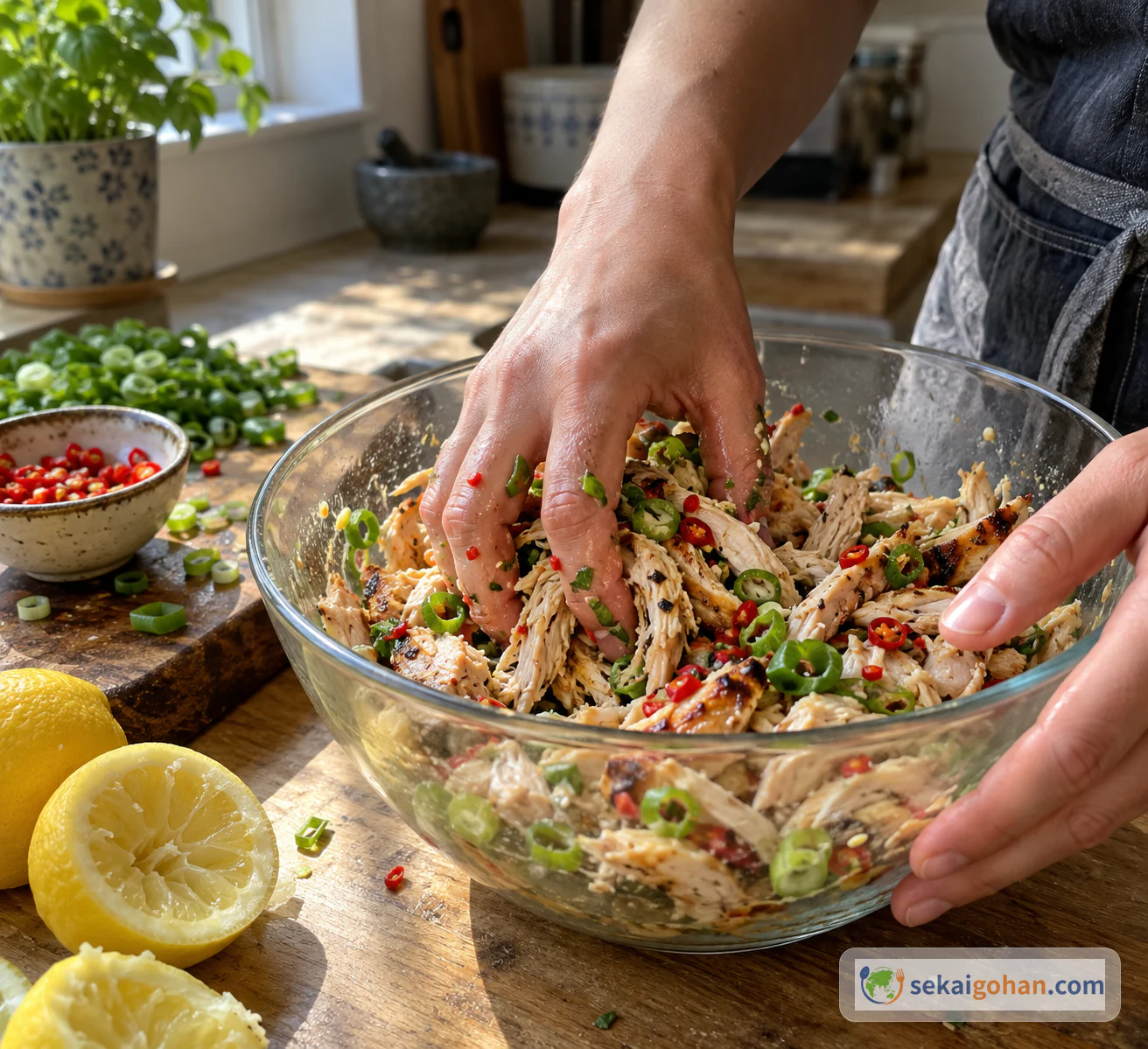
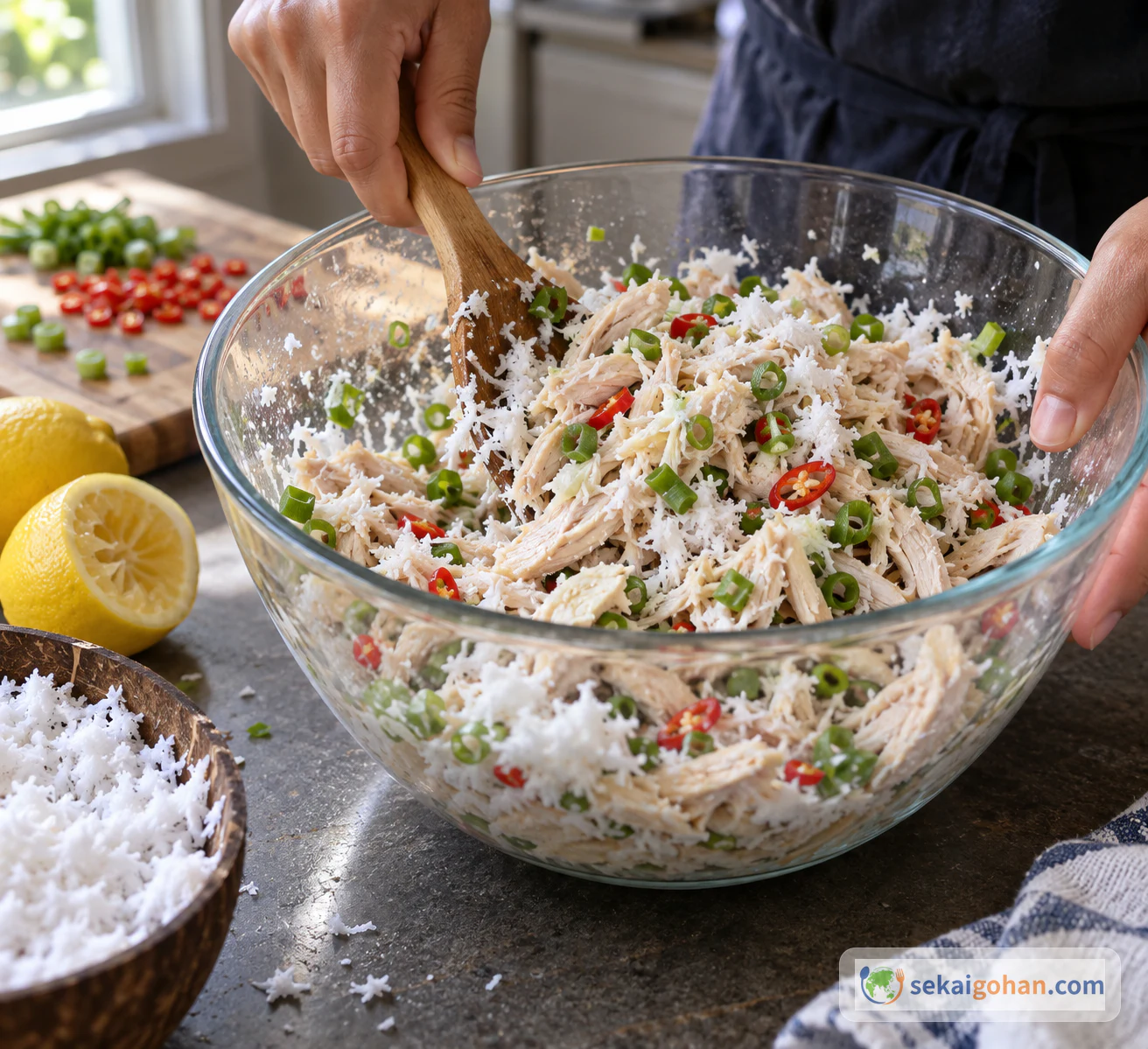
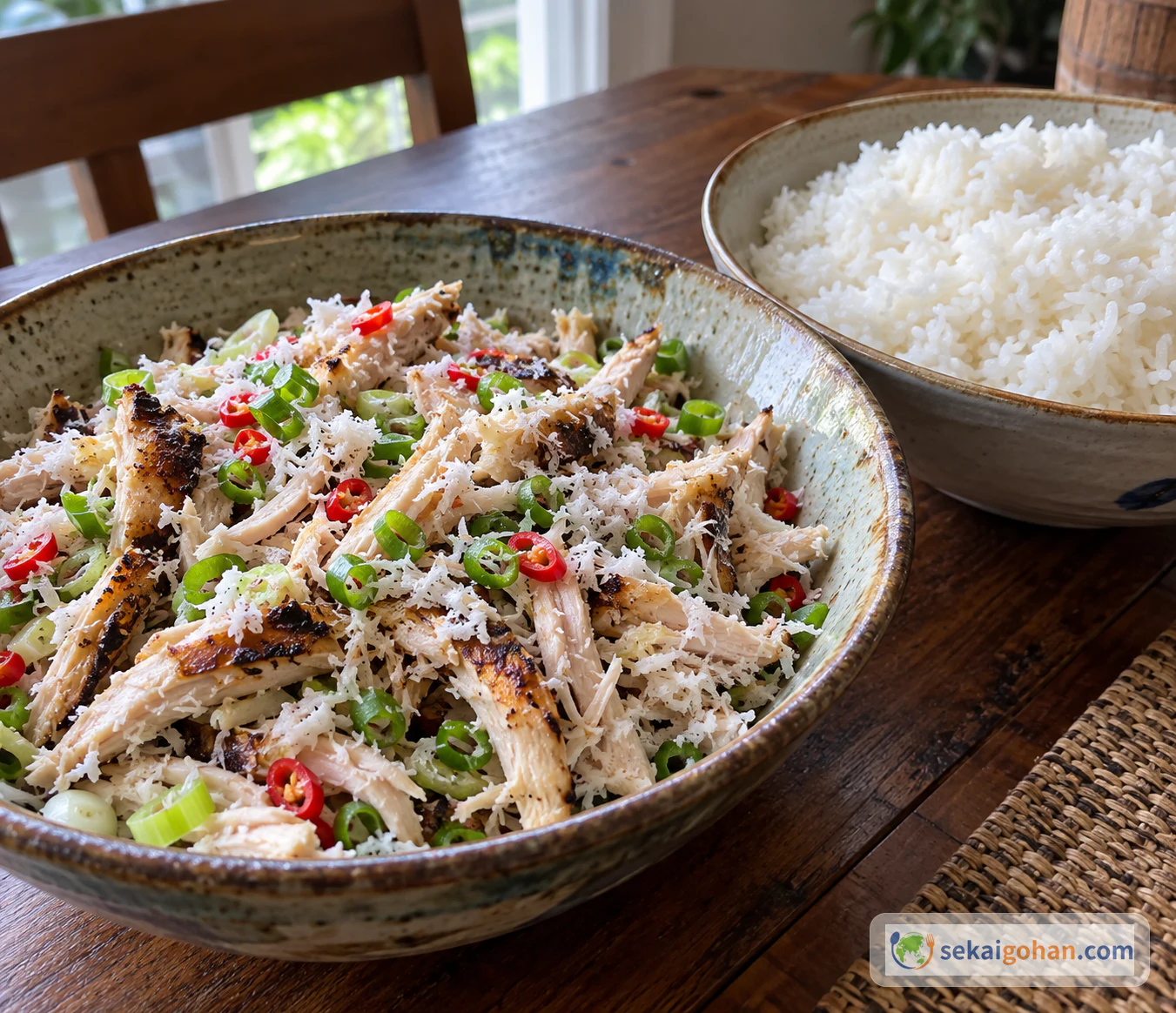
On Guam, kelaguen shows up wherever people gather. The chicken version, kelaguen månnok, is charcoal-grilled chicken shredded fine and tossed with plenty of fresh lemon juice, salt, scallions, hot chile and grated coconut. The result is smoky, sharp and soft all at once. You'll find it at barbecues, weddings, fiestas and baptisms. One rule comes before everything else: the lemon juice adds flavor; it does not cook the chicken. The chicken must be fully cooked before it ever meets the citrus.
About Chicken Kelaguen
Kelaguen is a CHamoru way of dressing chopped protein with citrus, coconut and chile. It's common across the region and turns up outside fiestas too. Cooks make it with fish, beef, venison or even Spam as well as chicken. The CHamoru name for the chicken version is kelaguen månnok, also spelled Kelaguen Mannok, so search under both spellings when you're looking for more recipes. You can find more of the island's dishes under food from Guam.
Every kitchen on Guam changes the citrus, the coconut or the chicken a little, so two recipes rarely match exactly. Some cooks leave out the coconut, some start from rotisserie chicken, and some use lemon powder instead of fresh juice. This version grills one whole bird over charcoal and uses fresh lemon juice. Then you fold in just enough unsweetened coconut to keep it moist and fluffy, not soupy.
Ingredients: One Whole Chicken, Dressed with Lemon, Scallion, Chile and Coconut
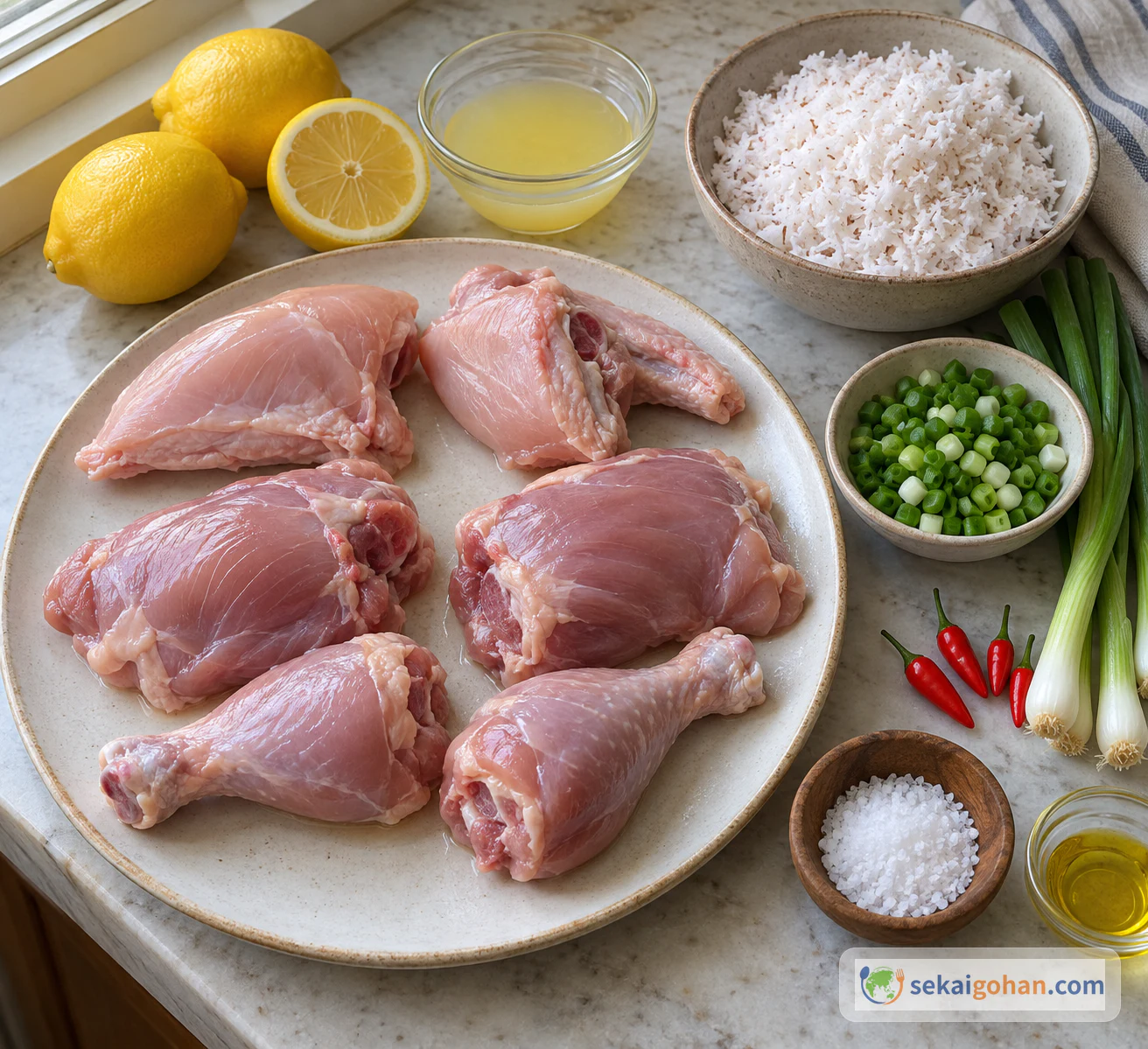
One bird gives about 5 cups of shredded meat. The 4½ lb is the weight of the whole chicken, not the weight of boneless cooked meat.
Equipment
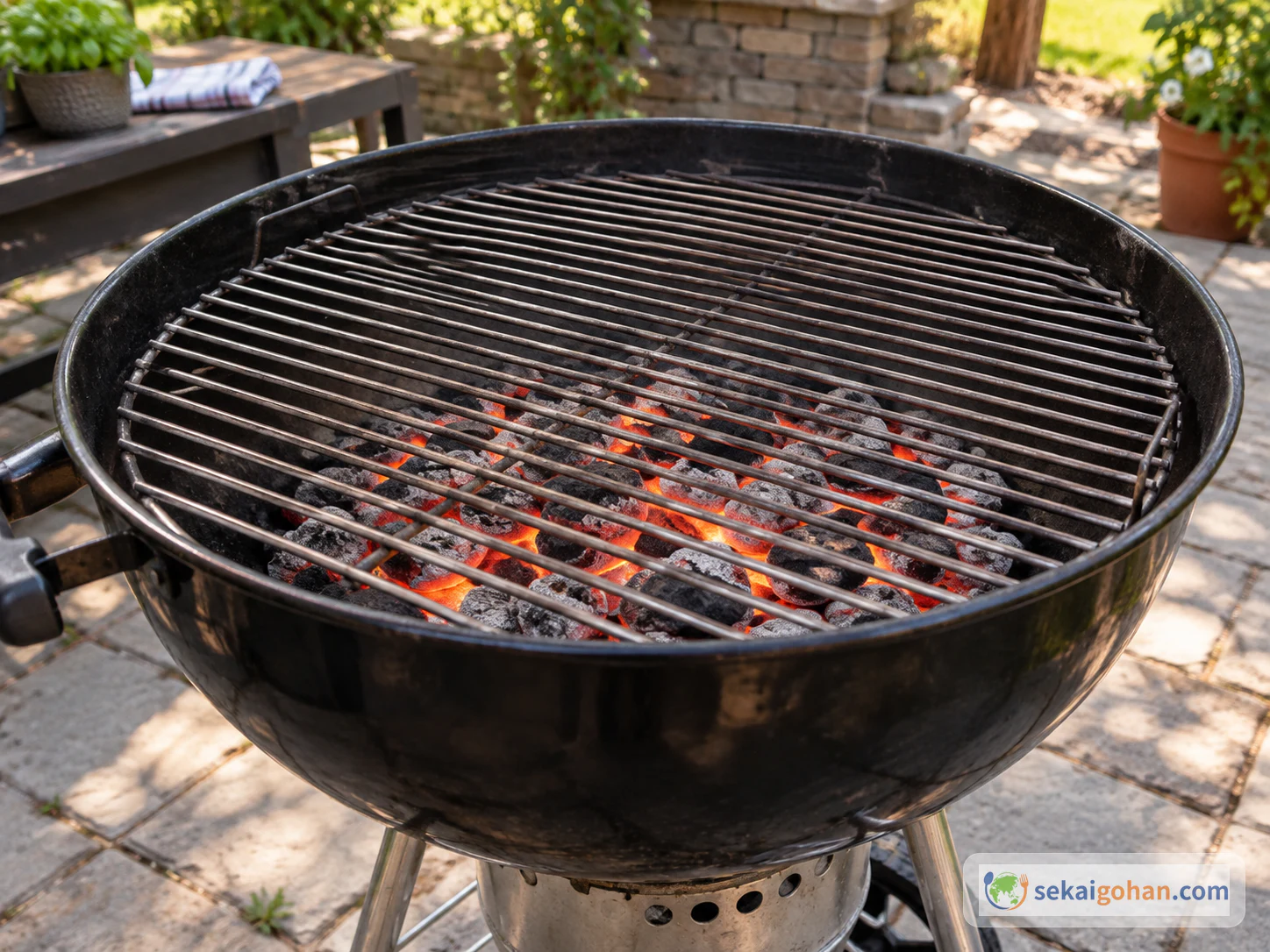
- Charcoal grill
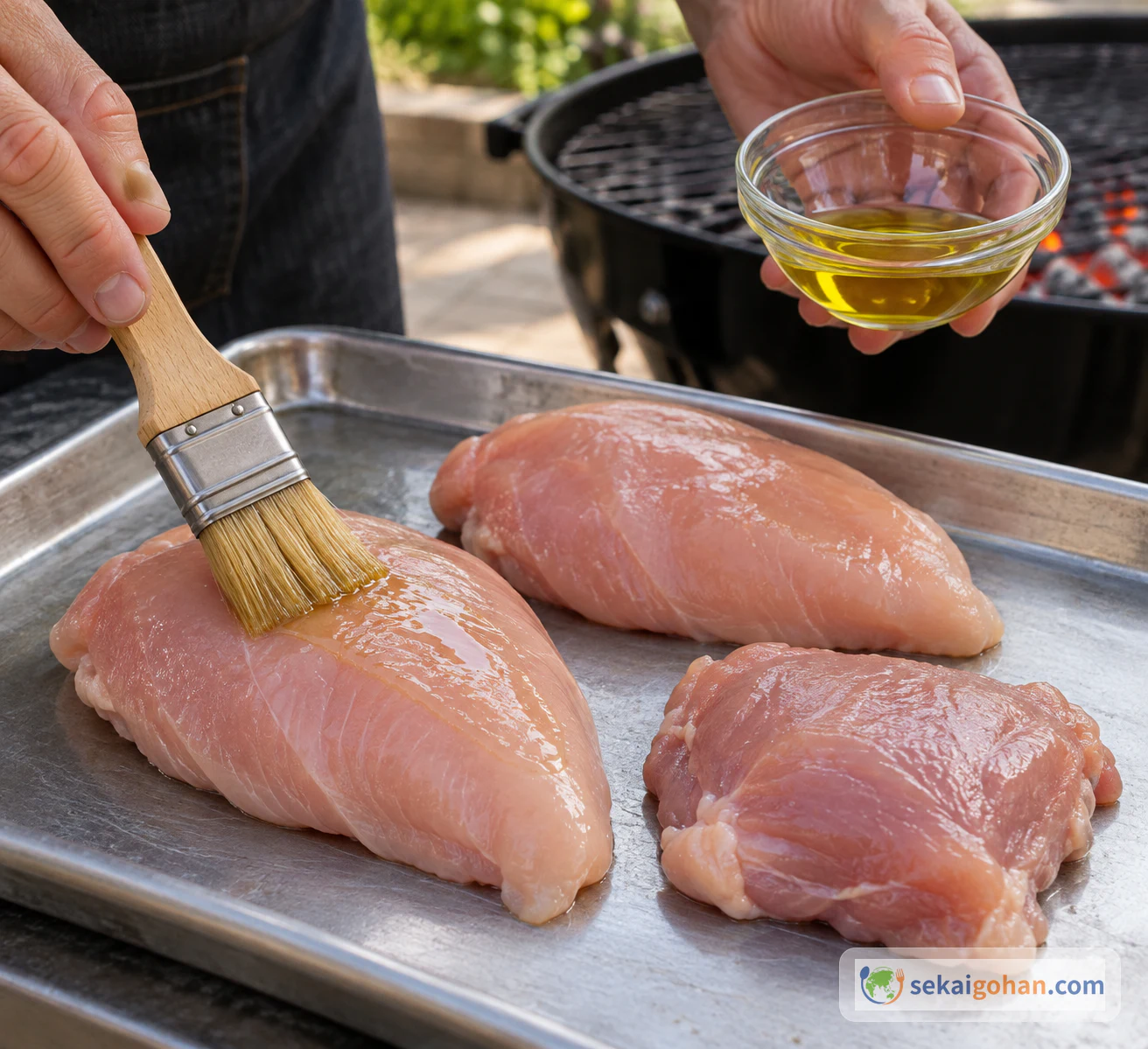
- Tray or plate and tongs for the raw chicken
- A separate clean plate and clean tongs for the cooked chicken
- Pastry brush (if using the oil)
- Food thermometer
- Knife and cutting board
- Large non-reactive bowl, such as glass
- Container with a lid, or plastic wrap, for chilling
Choosing Ingredients for Chicken Kelaguen
Coconut. Freshly grated coconut is best, and frozen, thawed coconut works well too. Dried unsweetened coconut holds a different amount of moisture, so you can't swap it cup for cup. Add it a little at a time and judge by how moist the mixture looks. Skip sweetened baking coconut, because it makes the dish sweet when it shouldn't be.
Salt. Kosher salt flake size varies by brand, so the same spoonful can taste saltier or milder. If your salt is finer, start with less and taste as you go.
Citrus. This recipe uses fresh lemon juice only, and kelaguen made with all lemon juice is the more sour style. Some home recipes use lemon China or calamansi in their own amounts, and those don't swap one-for-one here.
Chiles. Bird's-eye chiles vary in heat from one to the next, so remove the seeds. If you want it milder, see the variations below.
Handle raw chicken with its own tray and tongs, and use separate clean ones once it's cooked. Don't put cooked meat back on the plate that held raw chicken. Citrus juice does not make chicken safe to eat. This dish contains coconut.
Method: Grill, Shred, Dress, Chill
Judge the chicken by how well it is cooked, not by the clock. Judge the coconut by how the mixture looks, not by using up the full amount.
Chicken Kelaguen Troubleshooting
| Problem | Likely cause | What to do |
|---|---|---|
| The kelaguen is soupy | Juice from the chicken and the lemon varies from batch to batch | Fold in coconut ¼ cup at a time, staying within the 2 cups total. Let the coconut alone soak up the liquid |
| It feels heavy or dry with coconut | All the coconut went in at once | Next time, start at 1½ cups and add more only as needed. Add dried coconut in even smaller amounts, since it absorbs liquid differently |
| It's too sour | A full cup of lemon juice is sharp by design | Keep the 1 cup for this batch. Next time, adjust the juice a little at a time, tasting as you go. Balancing it with sugar or water isn't the fix |
| It's too hot | Chiles vary in heat | Next time, use fewer chiles and be sure to remove the seeds (see variations) |
| You're unsure the chicken is done | Time, color and char can't tell you | Check the thickest part, away from the bone, with a thermometer. Put underdone pieces back on the grill with clean tongs. Never rely on the lemon juice |
Serving and Varying Chicken Kelaguen
Serve kelaguen with warm white rice or warm CHamoru titiyas. If you're sensitive to heat, eat a bite with a little rice to judge the balance.
Variations
Each of these changes the flavor or texture, so think of it as its own version, not a small tweak to the base recipe.
- Milder heat. The main recipe uses 4 chiles, seeded. If you use fewer, the lemon comes through more strongly.
- No coconut. Some home versions on Guam leave the coconut out. You lose the soft, creamy texture and sweet coconut aroma, and the lemon tastes sharper.
- Dried unsweetened coconut. Add it in small amounts and stop once the mixture looks moist and fluffy.
- Rotisserie chicken when charcoal isn't practical. You lose the charcoal flavor and will need to adjust for moisture. Store-bought chicken is already salted, so taste before you add the full teaspoon.
Recipes made with lemon powder use their own proportions, so follow one of those rather than mixing the powder into this fresh-juice version.
Frequently Asked Questions
Can lemon juice "cook" raw chicken for kelaguen?
No. Grill the chicken until it's fully cooked and confirm it's done before it goes into the bowl. The lemon juice is there for flavor only.
Can I leave out the coconut?
Some home versions do, but the texture changes and there's less coconut aroma. If you keep it, start at 1½ cups and stay within 2 cups.
Can I make it the day before?
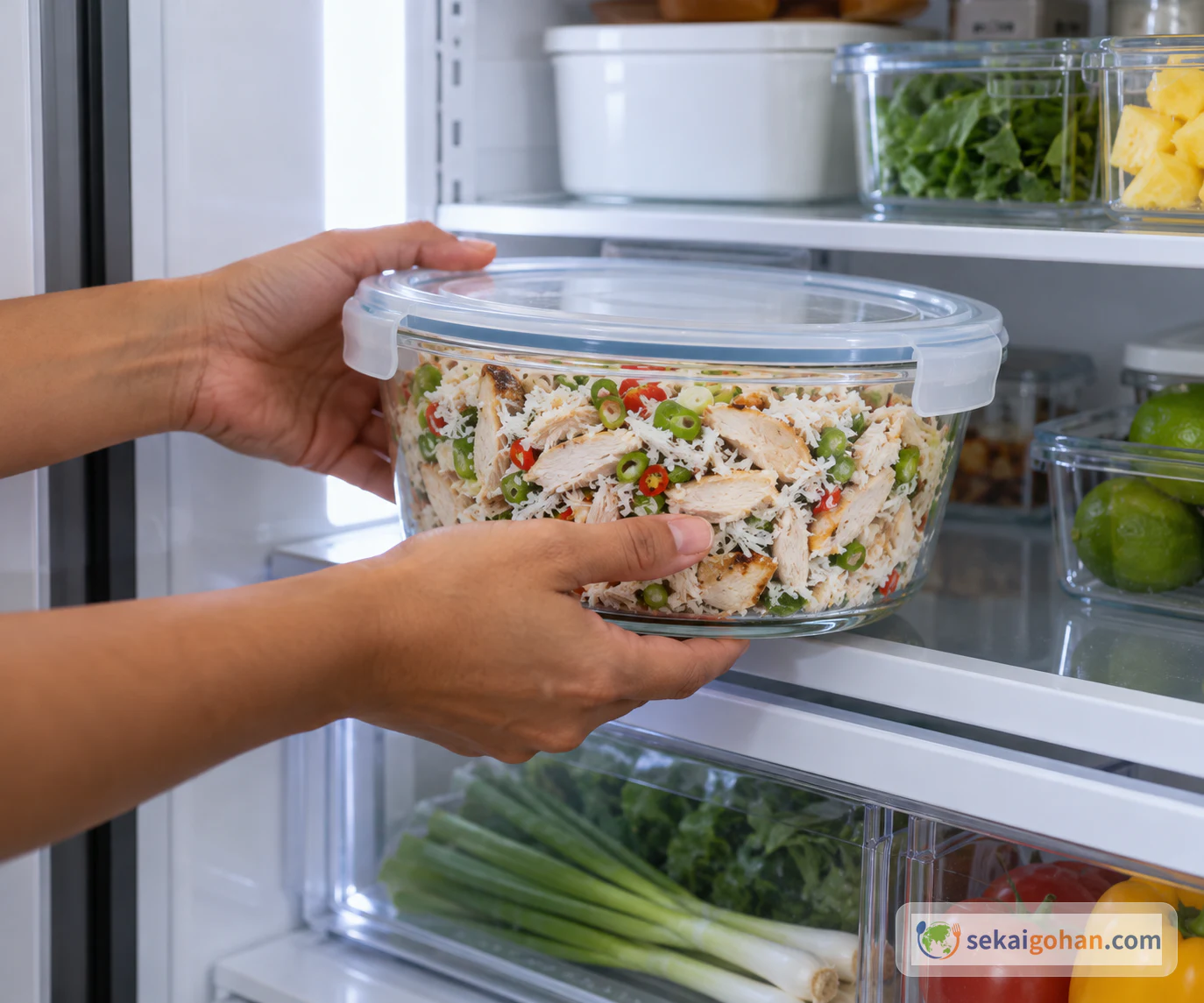
Yes. Keep it covered in the refrigerator for 1 to 24 hours. Leftovers keep up to 3 days in the refrigerator. Take out only what you'll serve and put the rest back promptly.