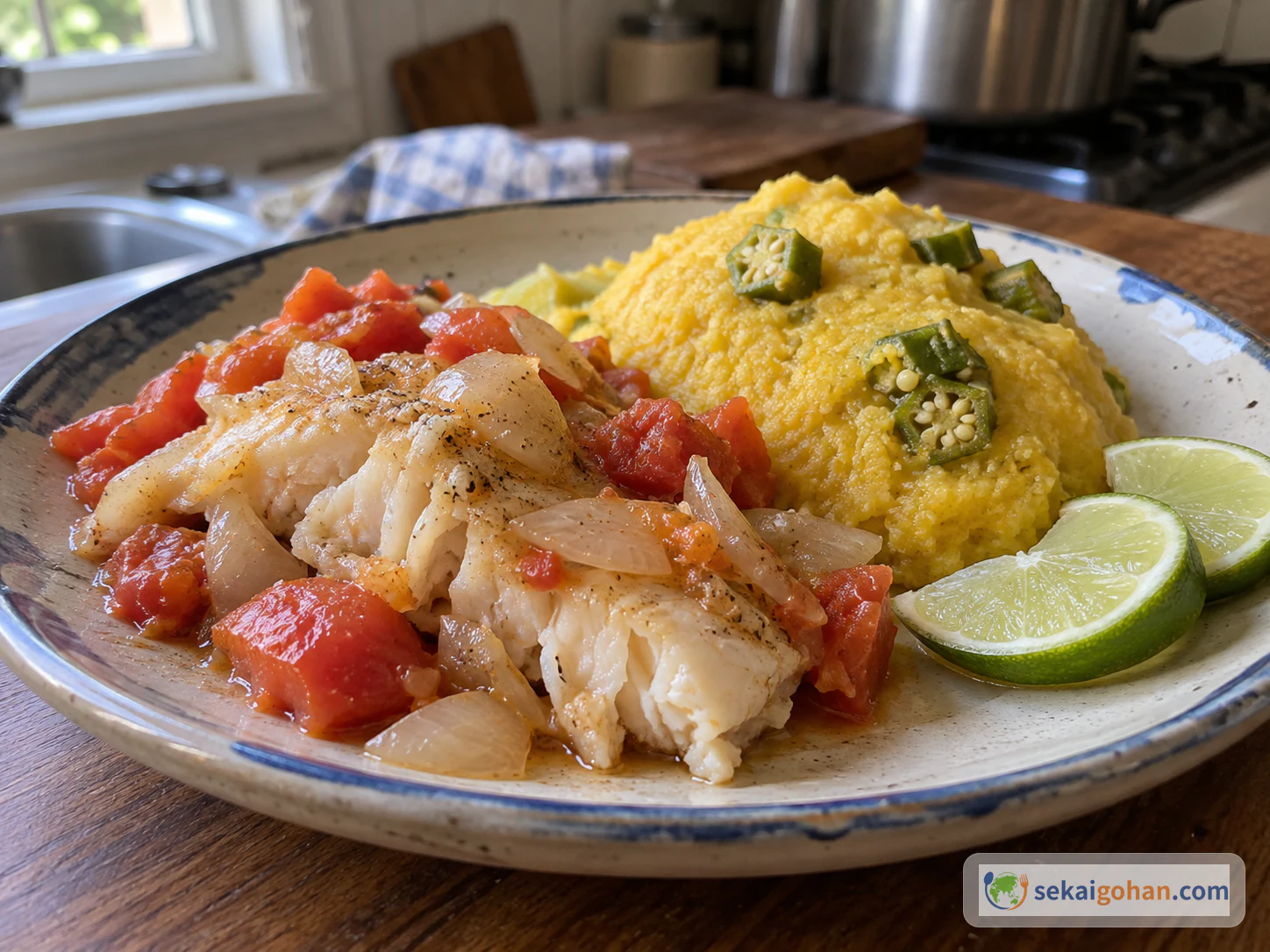
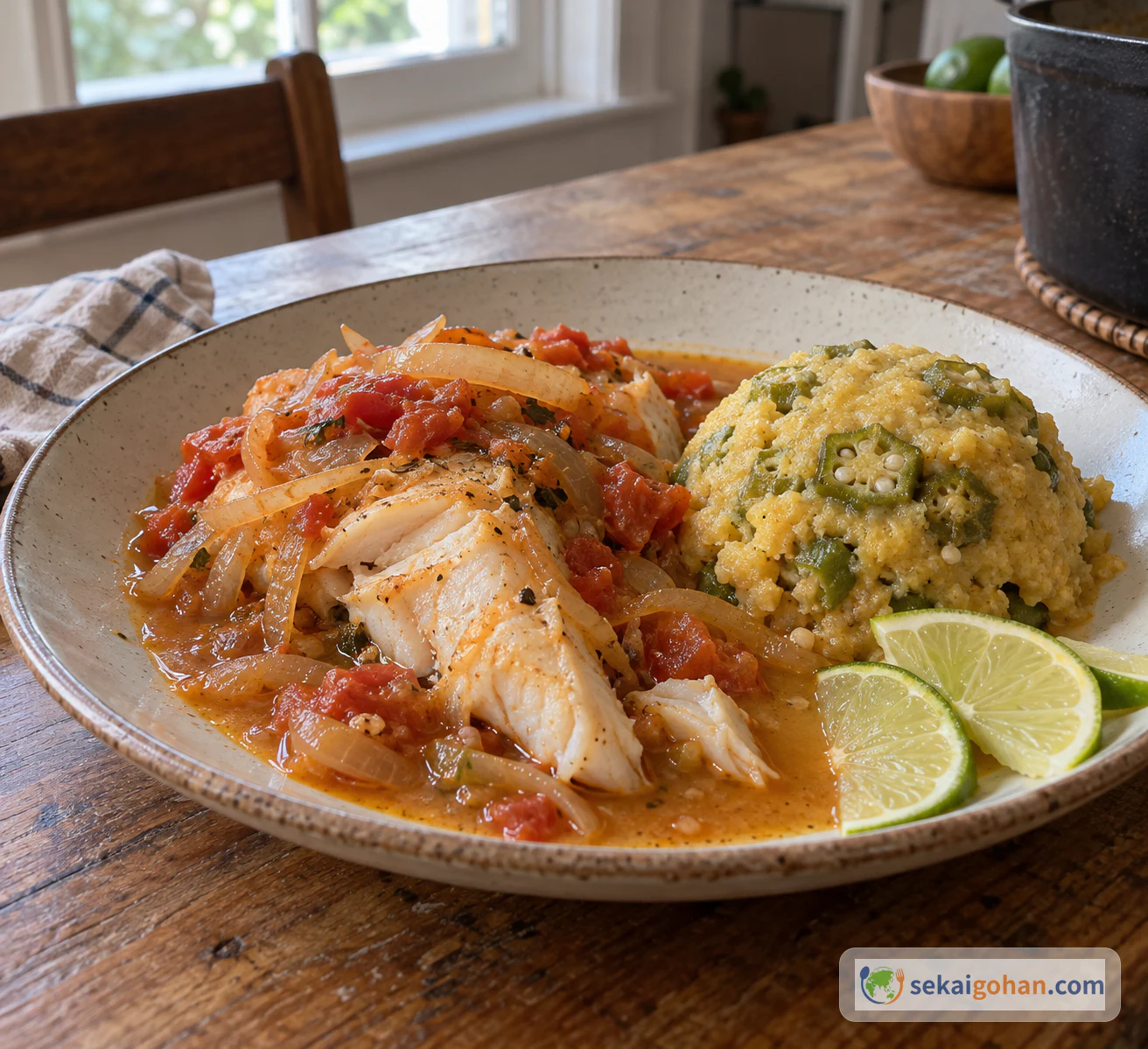
Fish and fungi on a plate: white fish coated in onion and tomato cooking liquid beside okra-studded fungi
CuisineBritish Virgin Islands

Fish and Fungi: British Virgin Islands Simmered Fish with Okra Cornmeal

How to make fish and fungi as published in a British Virgin Islands context: firm white fish simmered with onion, tomato, vinegar and citrus, served with fungi, a cornmeal and okra dish with no mushrooms in it. Includes how to judge doneness, choose cornmeal, and read the recipe's two water amounts.

Cooking flow

Cooking steps

STEP 11 / 8

Combine the fish and its seasonings

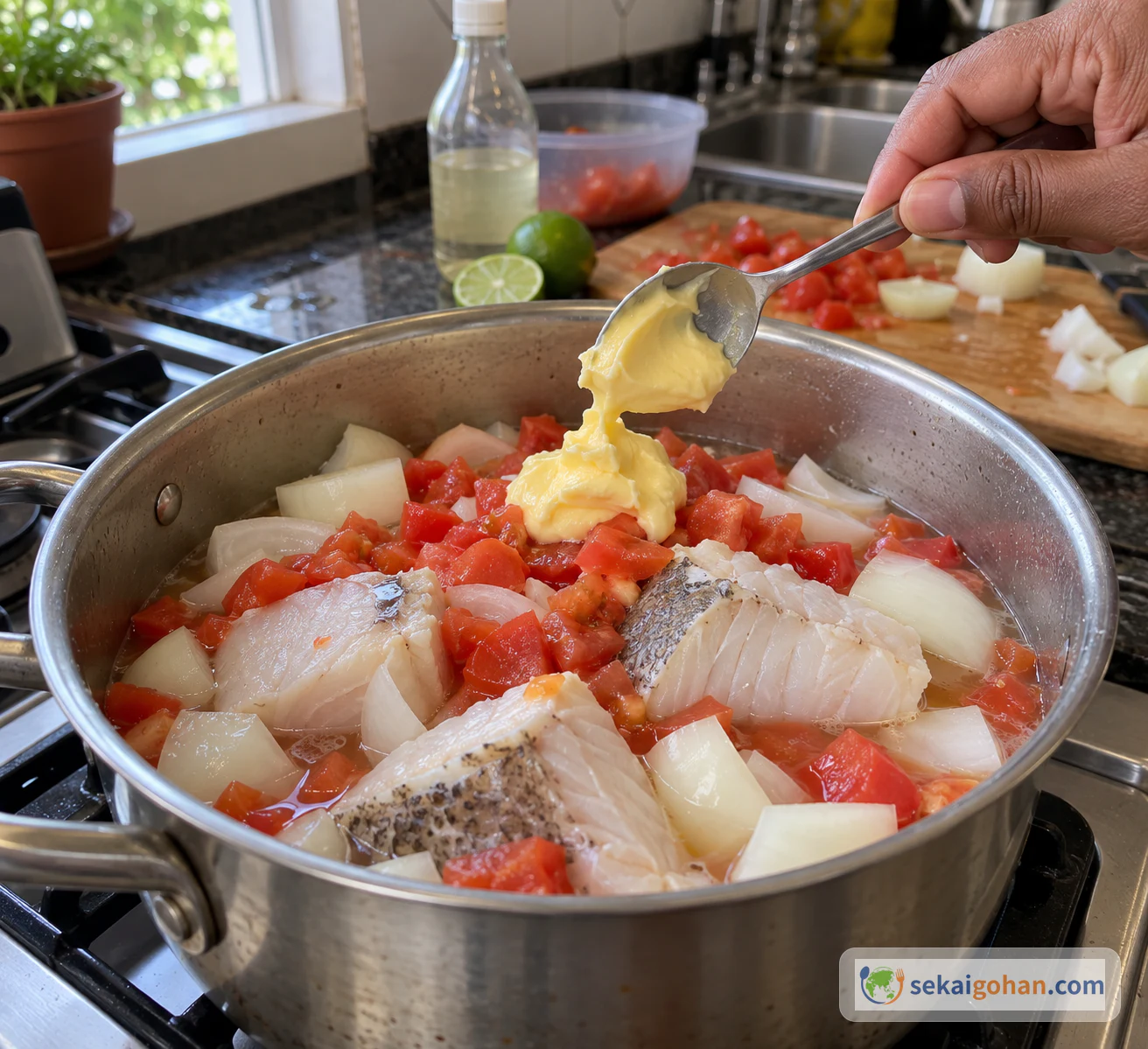
A pot of white fish with onion, tomato, vinegar and citrus juice being combined before simmering
Everything for the fish goes into one pot before the heat goes on

Wash the lime rind well under running water before squeezing or slicing, and set the slices aside for serving. Chop the onion and tomato before you handle the raw fish. Place the fish in the pot and add the Accent seasoning, 1 cup water, margarine, onion, tomato, vinegar and your chosen citrus juice. Wash your hands and any tools that touched the raw fish before using them for anything else.

STEP 22 / 8

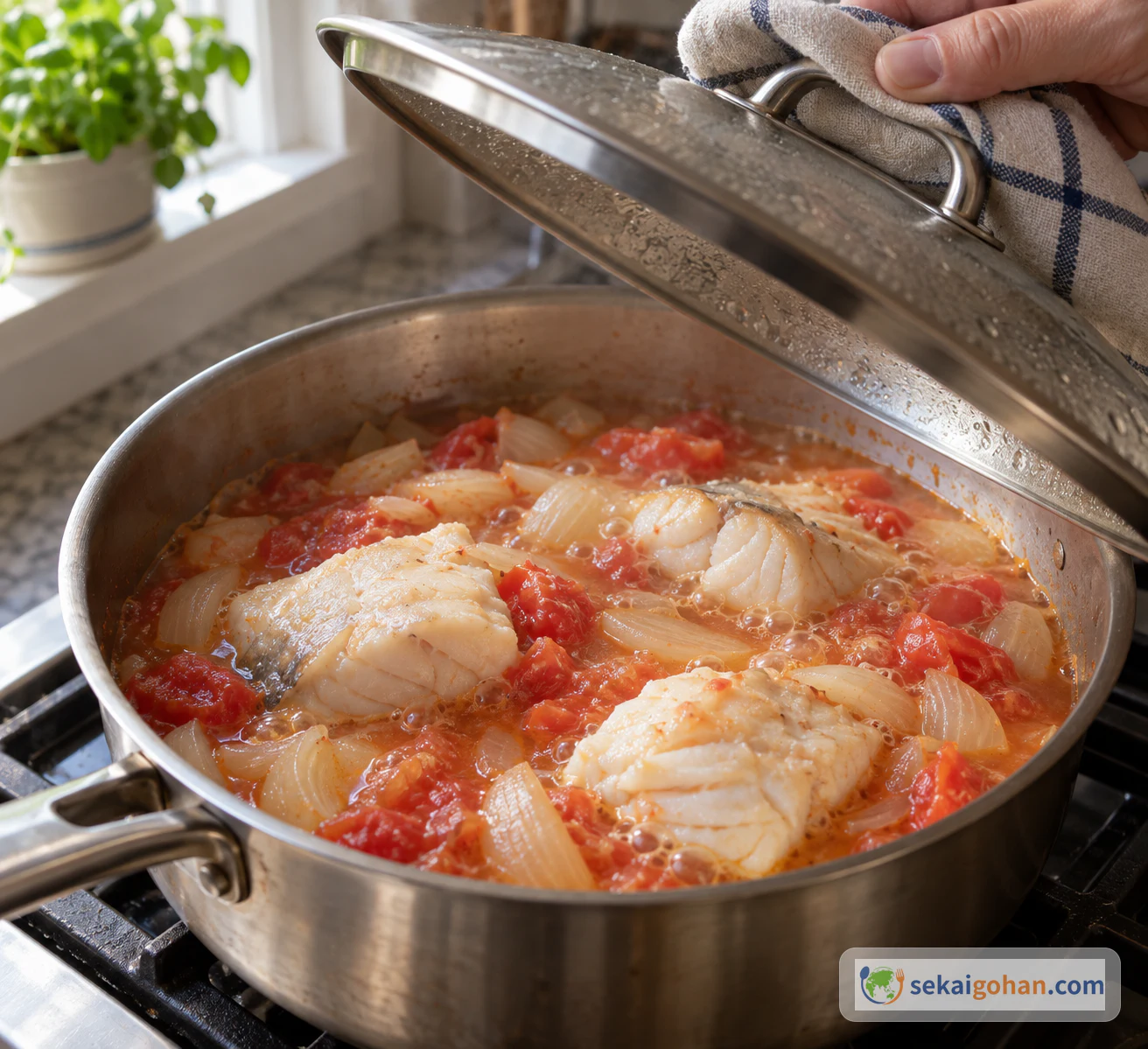
Simmer, covered, until the fish flakes

White fish simmering quietly in a lidded pot with onion and tomato cooking liquid
Small, quiet bubbles under the lid keep the fish pieces in shape

Bring to a boil over high heat. Cover, reduce the heat to low and simmer for 20–30 minutes, until the fish flakes with a fork. Check that the center reaches 145°F (about 63°C) and that the flesh is opaque. Go by temperature and texture, not the clock. Avoid stirring hard so the fish doesn't break apart.

STEP 33 / 8

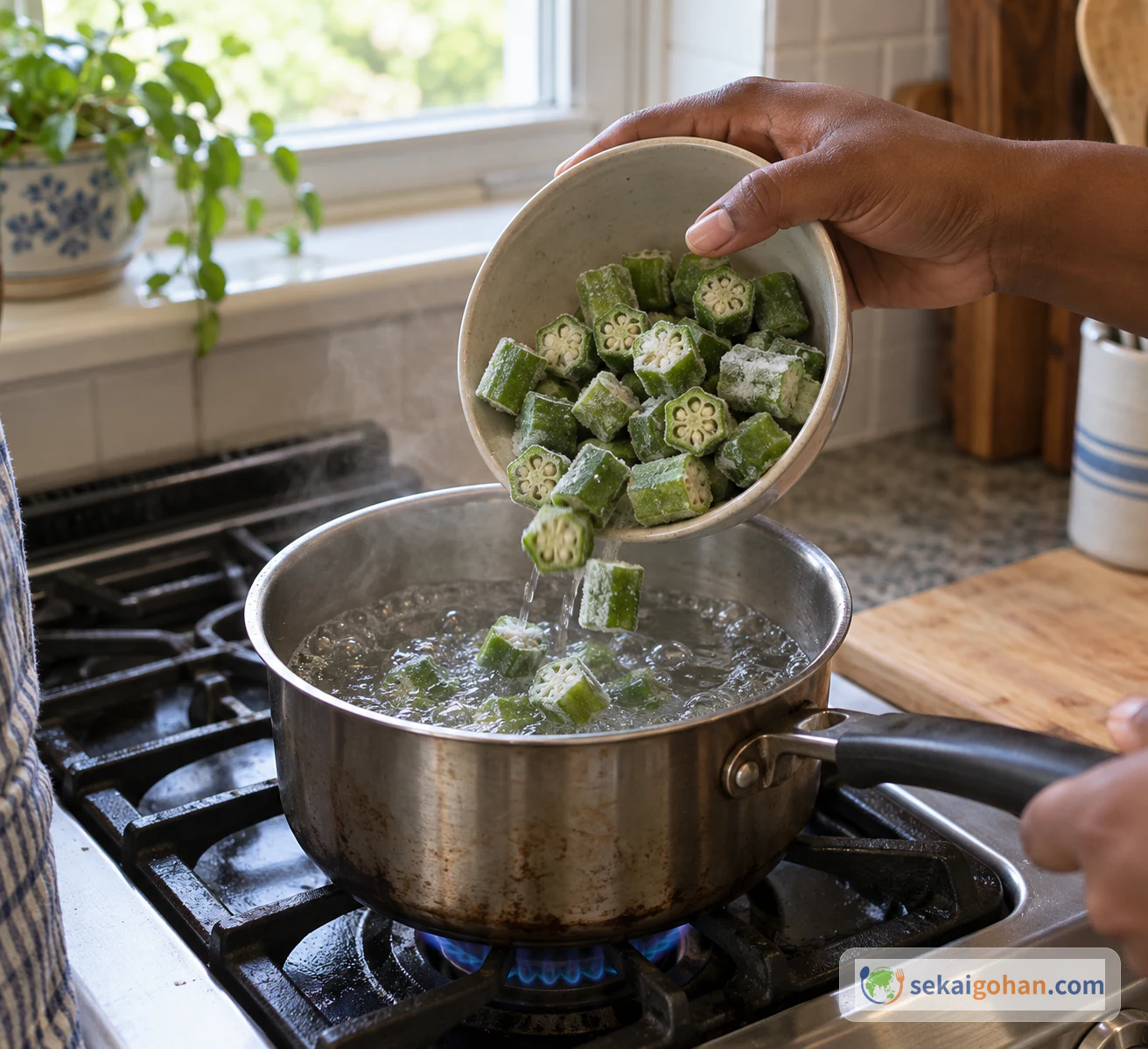
Cook the okra in boiling water

Frozen cut okra going into a pot of boiling water for the fungi
The okra cooks first, before any cornmeal goes in

In a separate pot, bring the 1 1/4 cups water to a boil. Add the frozen cut okra and cook until tender.

STEP 44 / 8

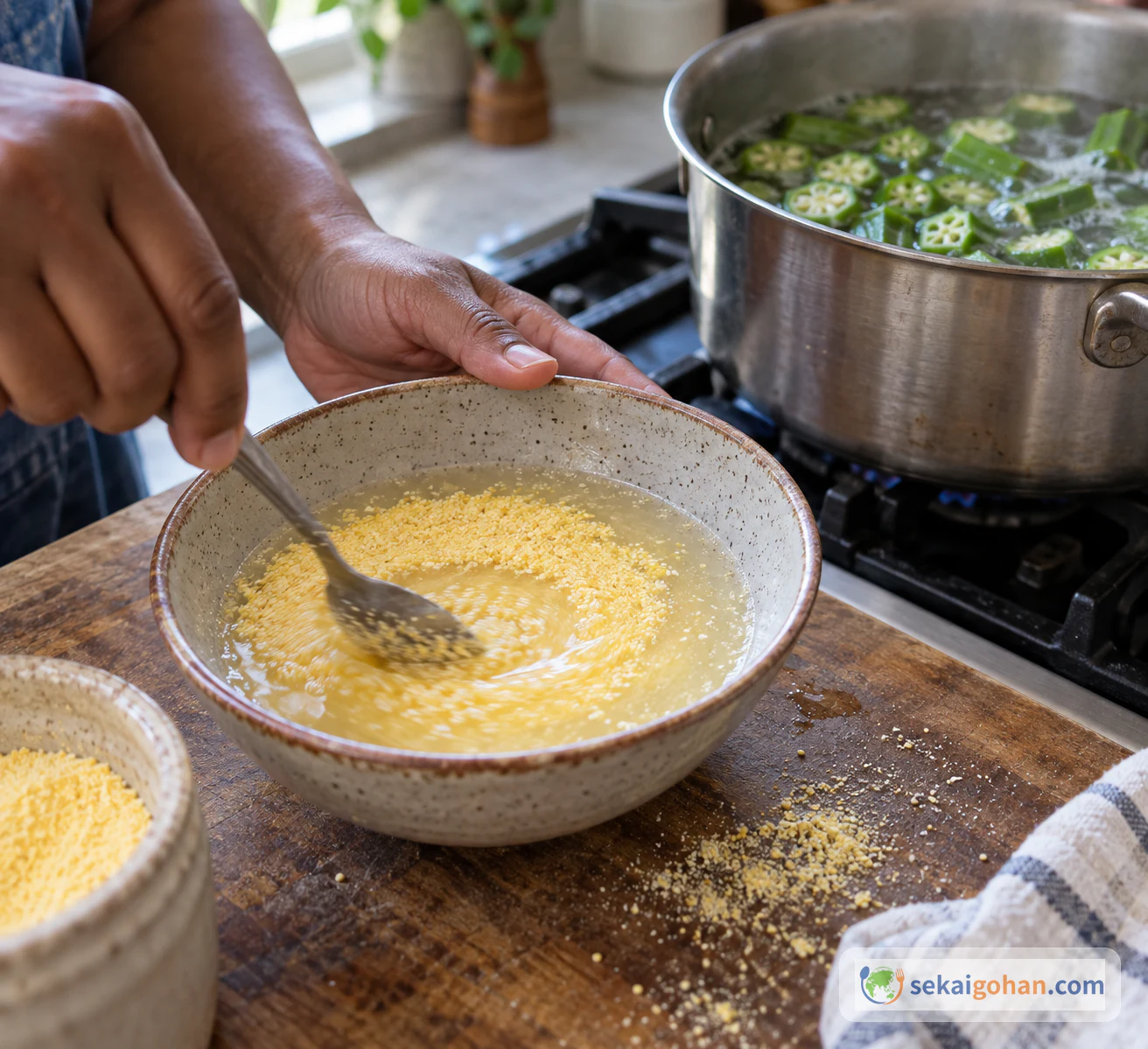
Make the cornmeal slurry

A small bowl of fine yellow cornmeal being stirred smooth with water
A small amount of cornmeal is loosened with water in its own bowl

In a separate bowl, blend 2 tbsp of the cornmeal with about 6 tbsp water until smooth.

STEP 55 / 8

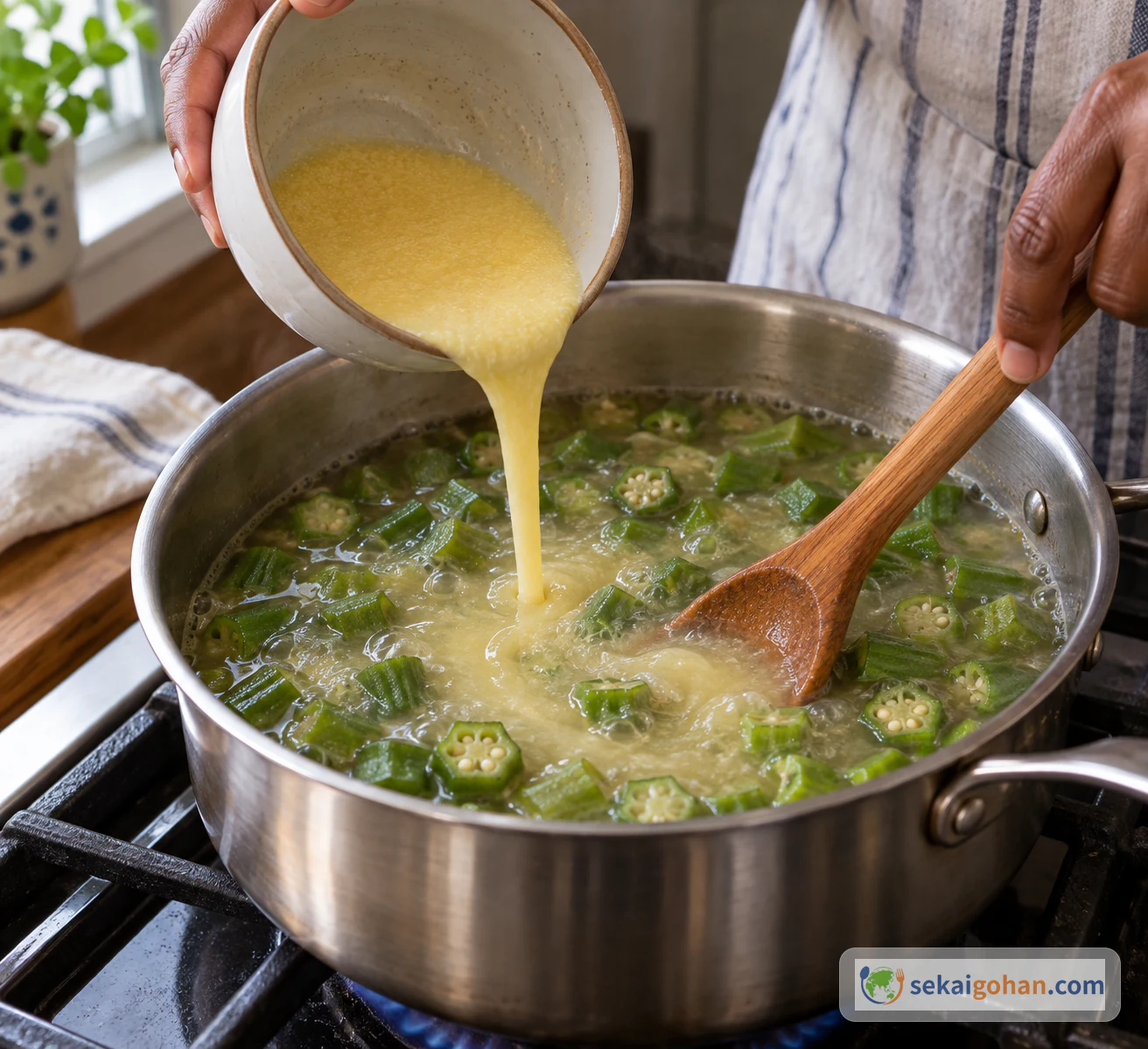
Add the slurry to the okra pot

Cornmeal slurry being poured into the okra pot and stirred
The mixture only begins to thicken at this stage

Pour the slurry into the pot of okra, stirring as it goes in. Cook for 1–2 minutes.

STEP 66 / 8

Add the remaining cornmeal little by little

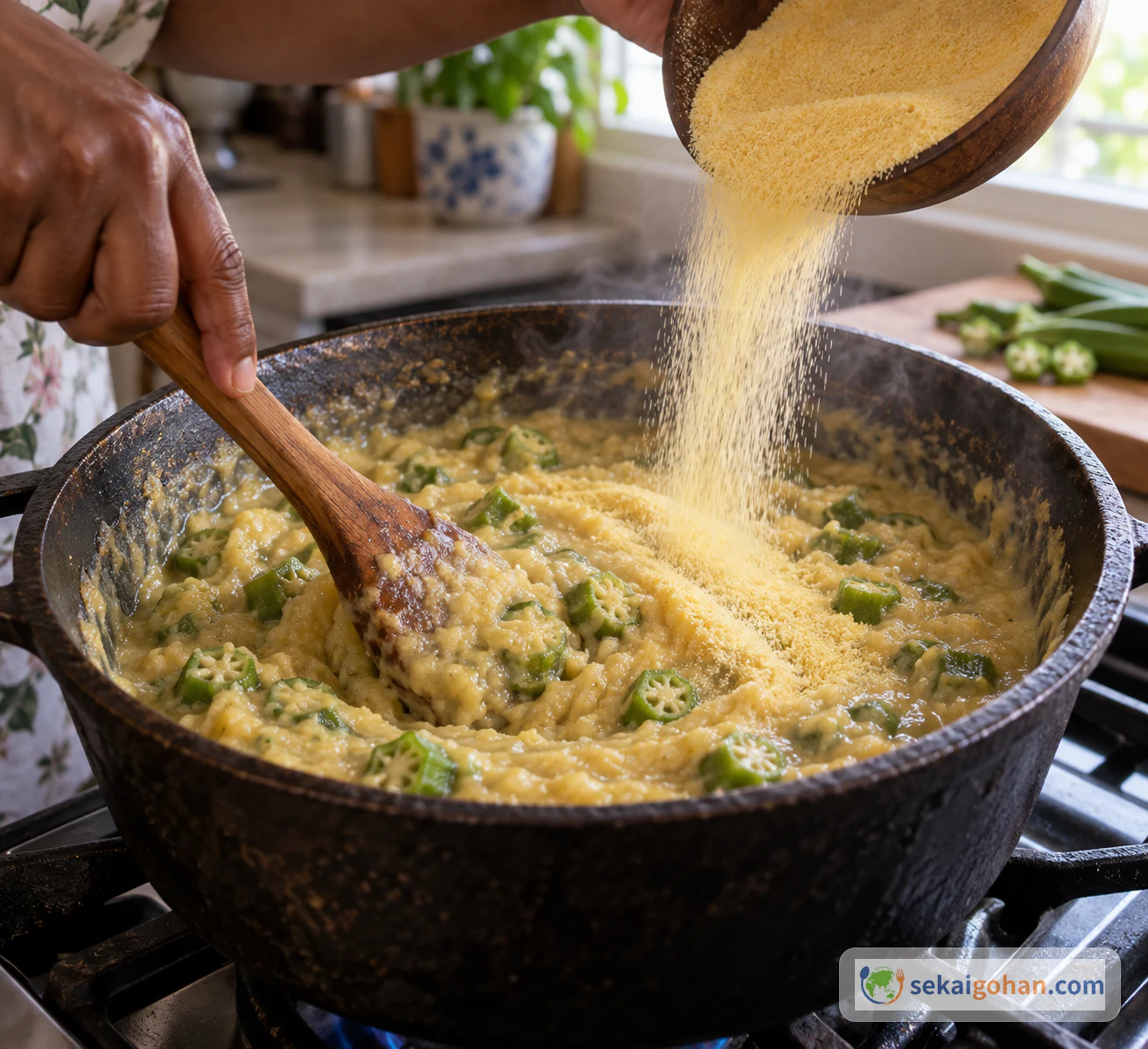
Yellow cornmeal added in a thin stream to the okra pot while being worked with a wooden spoon
Add the cornmeal in a thin stream and keep stirring

Add the rest of the cornmeal slowly, a little at a time, stirring constantly with the wooden spoon.

STEP 77 / 8

Finish with butter, salt and pepper

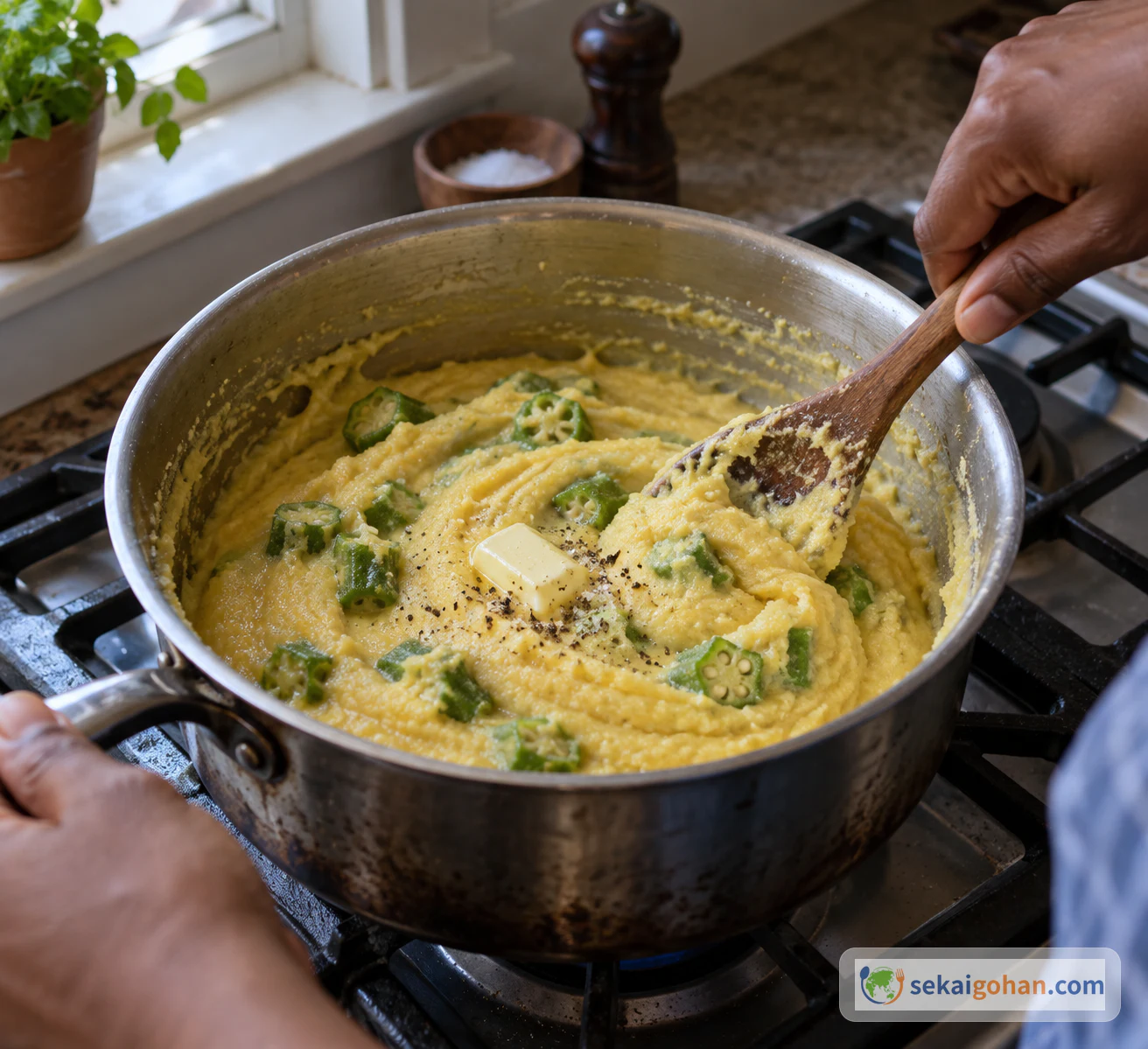
Butter, salt and pepper being stirred into the okra cornmeal
Butter and seasoning go in for the final few minutes

Stir in the butter, salt and pepper, and cook for about 5 minutes more. Turn off the heat when the fungi is thick and no longer tastes powdery.

STEP 88 / 8

Serve the two together

Simmered fish and okra fungi side by side on a table with thin lime slices
Fish, fungi and a few lime slices are all the plate needs

Spoon the hot fungi beside the fish and add the washed lime slices. Use clean hands and clean serving tools.

0 / 0
Ingredients

Ingredients

1 / 2

Fish

Ingredient Amount Role
Firm white fish, cleaned and limed 2 1/4 lb The main part of the dish
Accent seasoning 1/2 tsp Seasons the cooking liquid
Water 1 cup Simmers the fish
Margarine 1 tsp Goes into the cooking liquid
Onion 1 medium Cut into large dice
Tomato 1 small Chopped
Vinegar 1 1/2 tsp Sourness
Lemon juice or lime juice 4 1/2 tsp Citrus sourness; choose one
Lime 1 Sliced, to serve
2 / 2

Fungi

Ingredient Amount Role
Cut okra, frozen 5 oz Cooked in the pot with the cornmeal
Fine yellow cornmeal 3/4 cup The body of the fungi; 2 tbsp goes into the slurry and the rest goes in slowly
Boiling water 1 1/4 cups Cooks the okra in the pot
Water about 6 tbsp Loosens the 2 tbsp cornmeal in a separate bowl
Butter 1 tbsp Stirred in to finish
Salt 1/8 tsp Seasons the fungi
Pepper to taste Seasons the fungi
0 / 0

On one side of the plate, white fish rests in a sour broth with large pieces of onion and chopped tomato. On the other sits a mound of yellow cornmeal dotted with okra, with a few slices of lime alongside. That mound is the fungi, and despite the name, there isn't a mushroom in sight: it's fine yellow cornmeal cooked with okra. Together they make fish and fungi, a British Virgin Islands plate of firm white fish simmered with onion, tomato, vinegar and citrus, served with a sturdy cornmeal side.

About Fish and Fungi

Fish and fungi belongs to the British Virgin Islands, and it is also the national dish of Saint Croix. It's the same dish in both places, with a history that goes back to the period when all the islands were under Danish rule. On the plate, the fungi is the starchy part of the meal, a firm counterpart to the sour cooking liquid of the fish.

Versions vary from kitchen to kitchen. Another Virgin Islands-style recipe also pairs stewed fish with okra-cornmeal fungi, but its amounts differ a lot from the ones here, and it mixes the cornmeal slurry in cold water to avoid lumps.

Ingredients: One Pot for Fish, One for Fungi
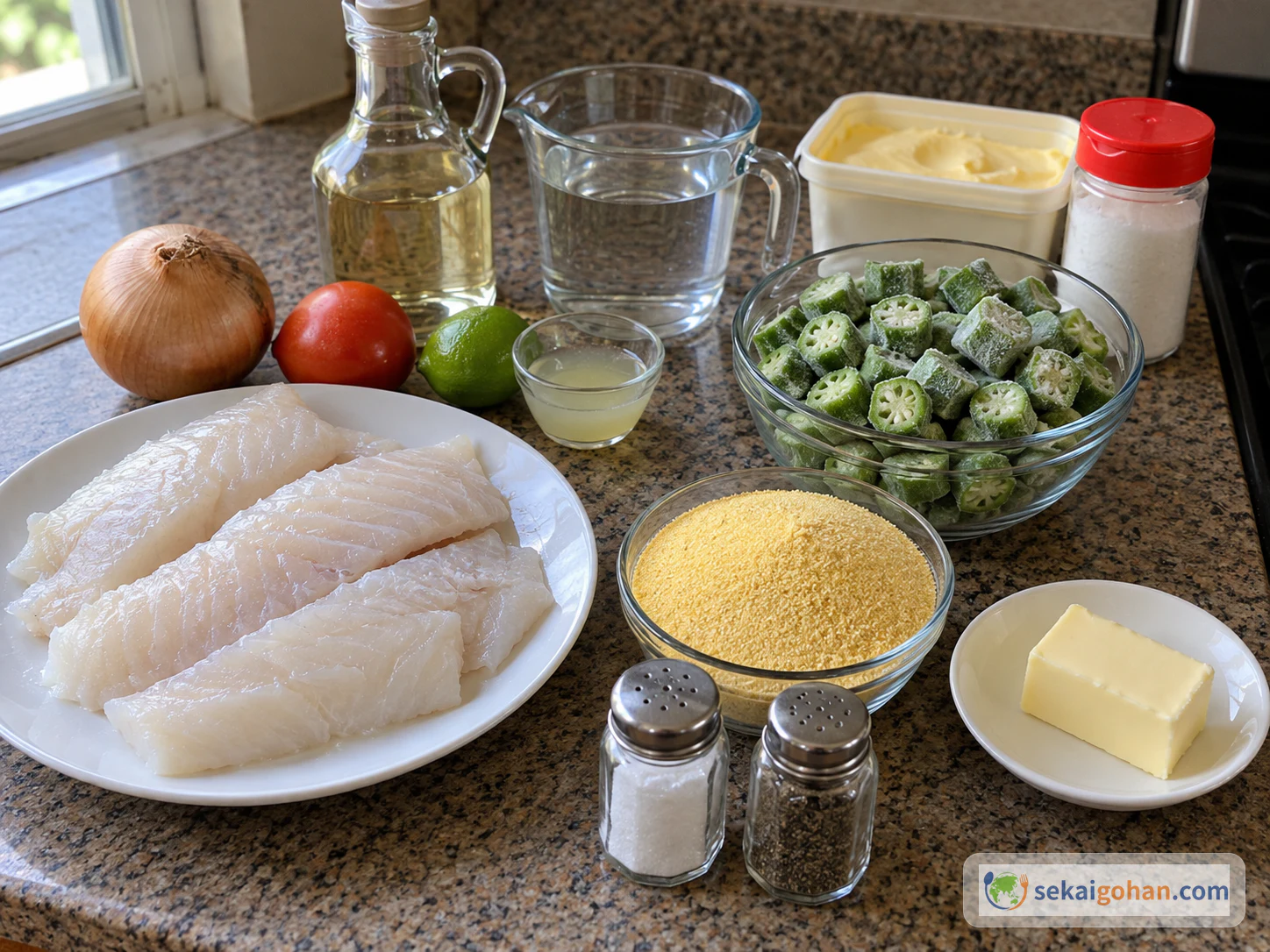
Firm white fish, onion, tomato, lime, vinegar, frozen okra, yellow cornmeal and butter set out on a kitchen counter
The fish ingredients and the fungi ingredients are kept separate
Allergies and raw fish

This dish contains fish and butter. Check the label on your Accent seasoning and margarine for allergens. Keep hands, boards and tools used for raw fish away from cooked food, and from vegetables and citrus for serving, unless they have been washed first.

Equipment

  • Heavy pot with a lid, for simmering the fish
  • Second pot, for the fungi
  • Small bowl, for the slurry
  • Food thermometer, for checking the center of the fish
  • Long-handled wooden spoon, for stirring the fungi

Choosing Ingredients for Fish and Fungi

Cornmeal: Look for fine yellow cornmeal. Coarse polenta meal changes the graininess and the cooking time, so the same times won't apply. Cornstarch and potato starch are not substitutes.

Fish: Any white, firm-fleshed fish works.

Okra: Use frozen cut okra. Fresh okra differs in cut, weight and cooking, so the amounts here won't carry over.

Citrus: Use either lemon juice or lime juice for the 4 1/2 tsp, not both. The sliced lime is separate.

Accent seasoning: The salt goes into the fungi only, and the fish gets its seasoning from the Accent in the cooking liquid. Another seasoning won't taste the same. If you can't find Accent, leave it out and expect a different flavor.

Margarine and butter: The fish uses margarine and the fungi uses butter. Butter in the fish would change the aroma and the saltiness, so treat that swap as your own variation.

Fixing Problems with Fish and Fungi

What you see Likely reason What to do
The time is up, but the fish is below 145°F (about 63°C) or still not opaque Thick pieces, or a low simmer Cover and keep simmering, then check again. Temperature decides, not the clock
The fish is falling apart Too much stirring, or a hard boil Keep the heat low, leave the pot mostly alone, and lift the fish out gently
The cornmeal forms lumps It went in too quickly Add the rest a little at a time and keep stirring
The fungi tastes powdery It needs more cooking Keep stirring over the heat until the raw, powdery taste is gone
The fungi is firmer or looser than you like The cornmeal and water amounts Write down the amounts you used and adjust them next time
The texture and timing are off, even though you followed the steps Coarse cornmeal Use fine yellow cornmeal next time; coarser grinds cook differently

Frequently Asked Questions

Is the 6 tbsp of slurry water part of the 1 1/4 cups?

No. Use 1 1/4 cups of boiling water for the okra, and about 6 tbsp of separate water in a bowl to blend the cornmeal.

What does "limed" fish mean?

"Limed" means the fish is treated with lime. The recipe doesn't say how, so whichever way you prepare the fish, follow the safety notes in the method.

How do I know the fish is cooked?

The fish is done when it flakes with a fork after a covered simmer of 20–30 minutes. Check that the center reaches 145°F (about 63°C) and that the flesh is opaque and separates easily. Use a thermometer as well as the clock.
Sources