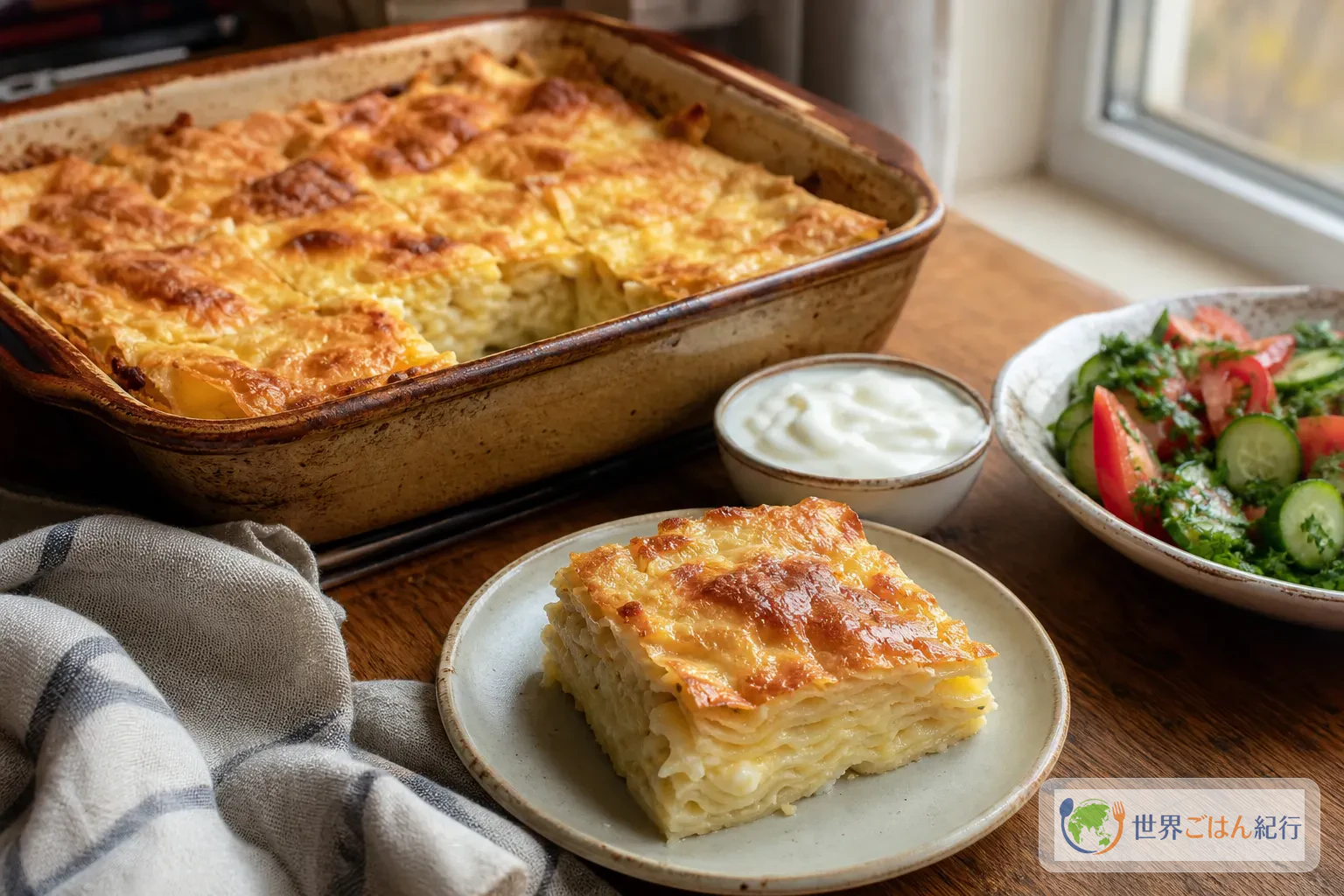
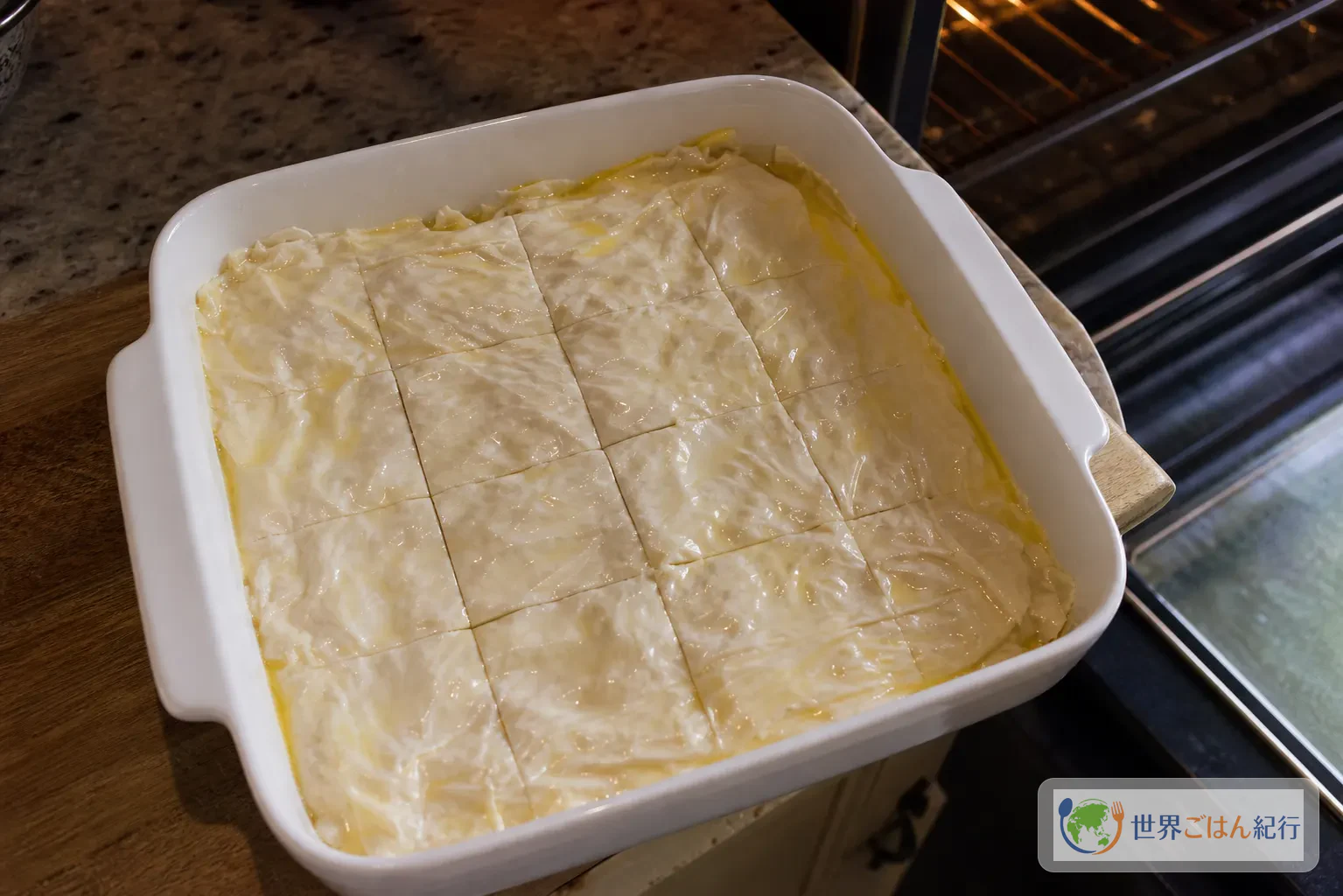
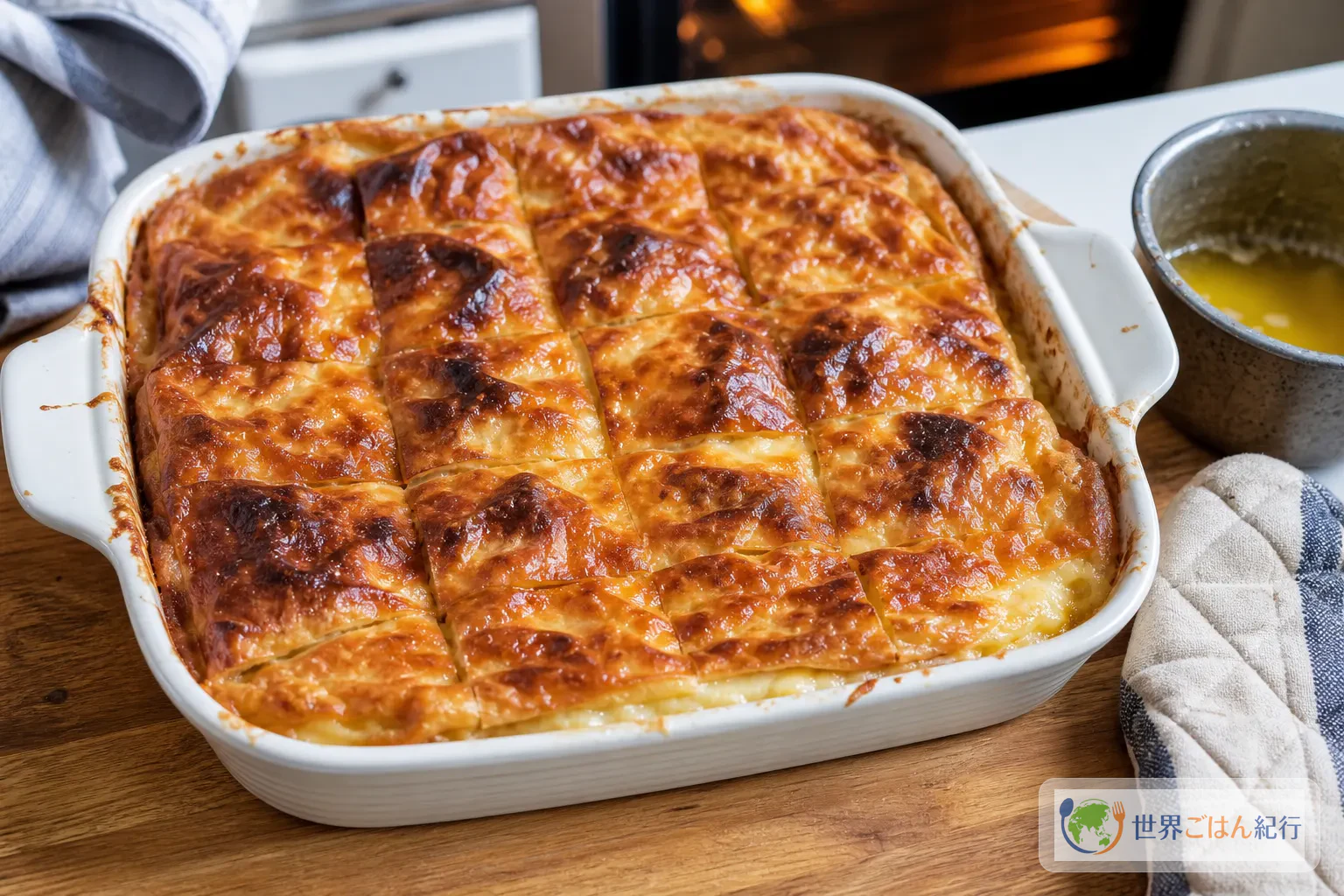
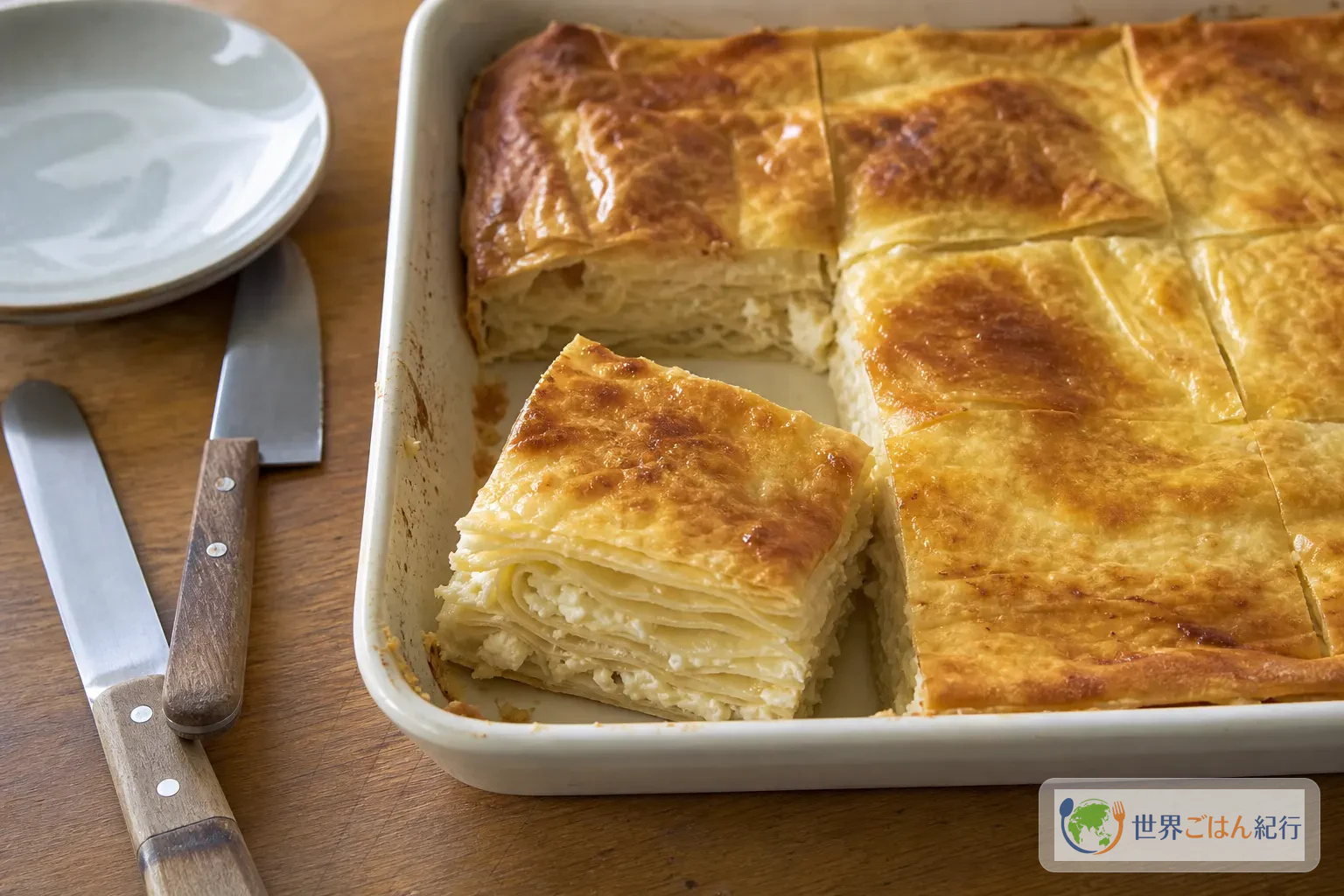
Pull the square dish from the oven and the top has puffed in places, with butter still bubbling finely at the edges. Cut in, and under the toasty surface the boiled dough and cheese lie loosely stacked. It isn't bread and it isn't lasagna, yet it calls up a little of the memory of both.
Achma (აჩმა / achma) is a layered cheese pie much loved in Georgia. Thin sheets of dough are briefly boiled, then baked in many layers with butter and cheese. What wins you over is the salty cheese, the butter and the tenderness of that boiled dough.
About Achma, Georgia's Layered Cheese Pie
Achma is sometimes introduced as a kind of khachapuri, but rather than wrapping cheese in a rounded bread dough, it stacks thin-rolled wheat dough that has been boiled first and brushed with butter between the layers. In the English-speaking world it is sometimes called "Georgian lasagna," though there's no tomato sauce or meat weighing it down.
Boiling the dough once is what gives achma its character. The inside is chewier than a baked-only pie, and the bite is lighter than lasagna. Ideally the surface browns, the edges turn a little crisp, and the center stays moist as cheese and dough blend together.
| Dish compared | What it shares | How it differs |
|---|---|---|
| Khachapuri | A Georgian dish starring cheese | Achma does not wrap; it stacks boiled thin dough |
| Lasagna | Layered and baked | No tomato sauce or meat; eaten with cheese and butter |
| Börek | A regional dish of stacked thin dough | Achma is thicker than phyllo and is boiled midway |
| Gratin | Baked in a square dish and shared | Not a white sauce; salty cheese is the backbone |
Ingredients (serves 4, one 8 inches (20 cm) square pan)
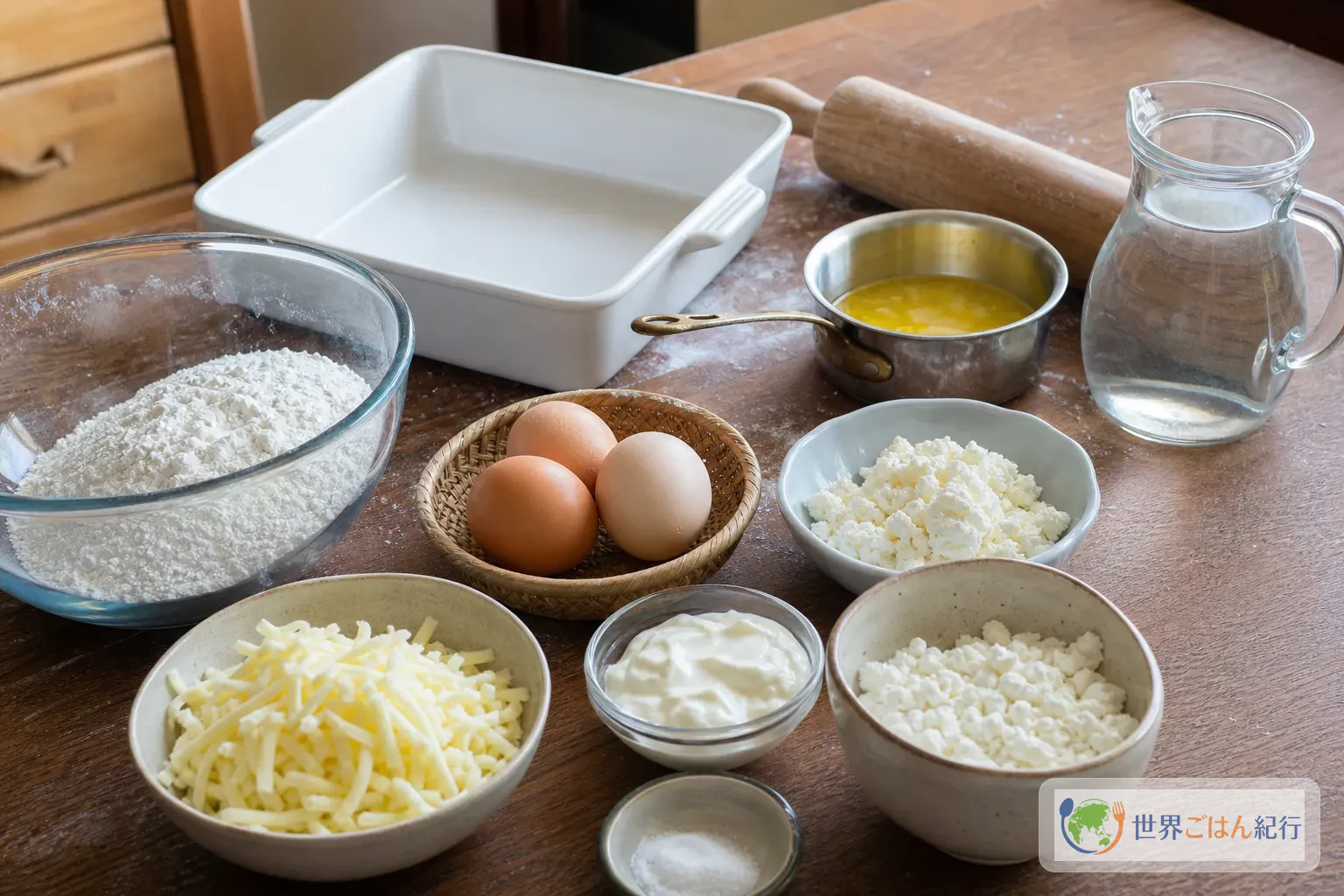
This dish contains wheat, egg, and milk. Feta and mozzarella differ in milk type and saltiness by product. Substituting dairy changes the texture greatly, so if you have an allergy, do not force a substitute and choose another dish.
How to Think About It Without the Local Cheese
Sulguni is a Georgian cheese with stretch and saltiness. Because it is not always available elsewhere, trying to imitate it with a single cheese tends to fail. Low-moisture mozzarella gives stretch, feta saltiness, cottage cheese crumbly milk curds, and yogurt a light tang, making layers that are not too heavy even in a home oven.
If the feta is quite salty, cut it into cubes, soak in water for 10 minutes, and blot with paper towels before using. Conversely, with only mild mozzarella, it bakes up neat but tastes blurry as you go on eating. Build the flavor with the combination of cheeses rather than adding salt afterward, which keeps the layers more even.
Tools Worth Wondering About
For achma, buy tools that let you handle thin dough without tearing it, rather than the cheese. Sulguni and Imeretian cheese are hard to find in many places, but this recipe's blend works with ordinary dairy. A rolling pin that is too short or a pan that is too deep adds strain at every step: rolling, boiling, layering, and baking.
A rolling pin around 12 inches (30 cm) is a convenient length for rolling dough one size larger than a 8 inches (20 cm) square pan. Torn dough can go to the inside, but if it is small and thick from the start, the layers turn heavy after boiling.
A 20 cm square baking dish is the tool for keeping the thickness of the bake even. Too wide and the layers are thin and dry; too deep and only the center stays white and heavy. A shallow square pan about 4 cm high makes it easier to judge extra baking by watching the bubbles at the edge and the jiggle at the center.
A thin instant-read thermometer helps when you check lukewarm water at about 95°F (35°C) or whether the center of the bake is still cold. Achma has no meat, but the same thermometer works for bread dough and baked sweets too, and it shows you the quirks of your home oven.
| Priority | What to prepare | What to look at | Substitute |
|---|---|---|---|
| High | A rolling pin around 12 inches (30 cm) | Long enough to roll dough larger than the square pan | Use a washed wine bottle. It is heavy and hard to get even thickness |
| High | A 8 inches (20 cm) square baking dish | About 1.5 inches (4 cm) high. Too shallow lets butter overflow; too deep makes the center heavy | 7 inches (18 cm) round pan. Allow 5 minutes longer baking |
| Medium | A cooking thermometer | Useful for lukewarm water, the center temperature after baking, and reheating | For water, hot but not painful to a finger; for doneness, watch the bubbles at the edge and the jiggle at the center |
| Medium | A heatproof pastry brush | Brushes butter thinly so layers do not get heavy | Drip a little at a time with a spoon and spread with the back |
For Cheese, Manage Moisture Rather Than Buying More
Instead of hunting for local sulguni, adjust the moisture of the cheese you can buy. Blot low-moisture mozzarella with paper towels after you take it out of the bag. If feta is salty, soak it for only 10 minutes and wipe it dry. If the cottage cheese has a lot of white liquid, let it drain in a tea strainer for 5 minutes to reduce the stickiness at the bottom.
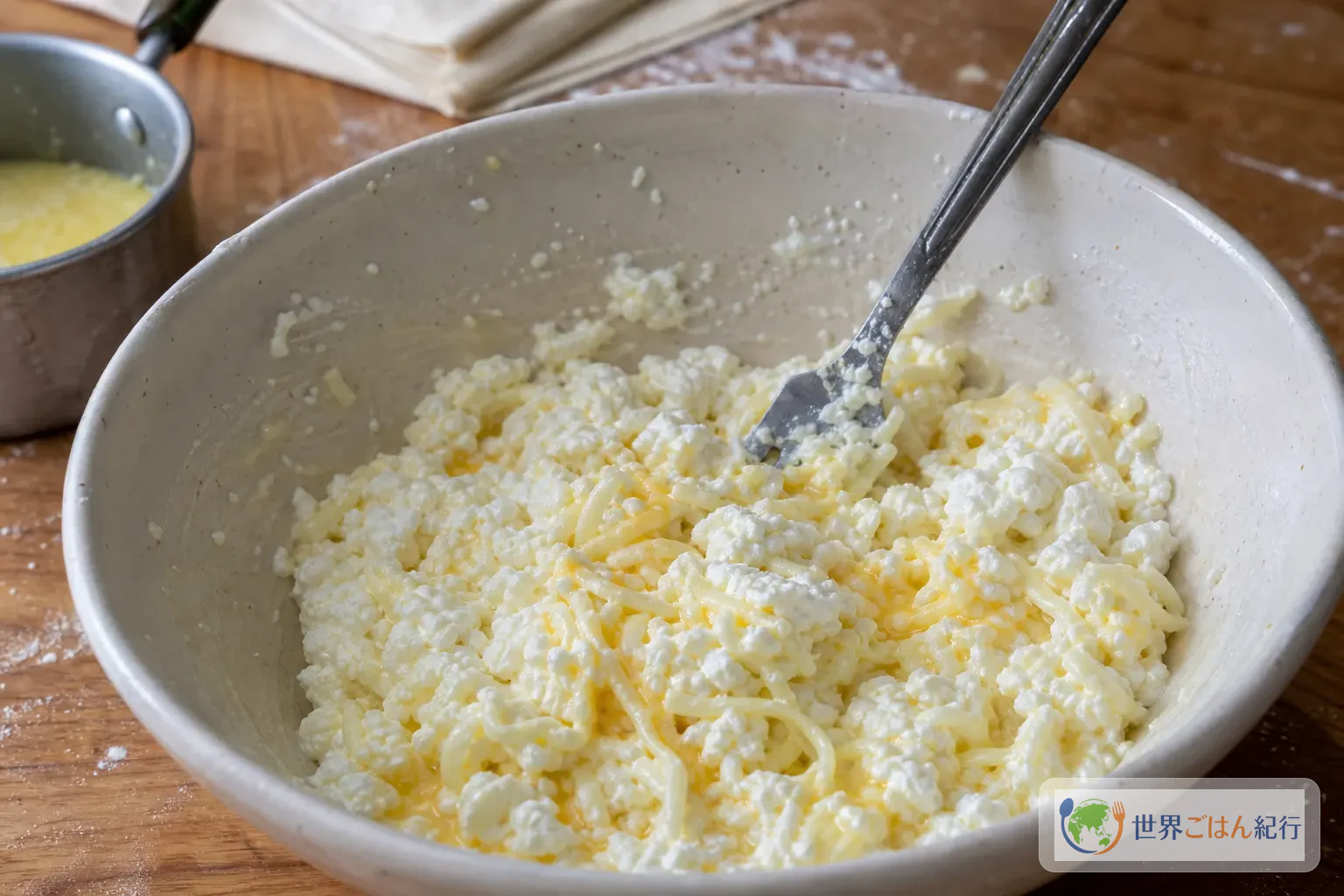
If you mix the cheese into a smooth cream, it runs out between the layers as it bakes. Break it up roughly with a fork and scatter it as a damp crumble, and the layers show when you cut. When shopping, skip the rare cheese. Choose low-moisture mozzarella, add a little salty cheese, and don't overdo the yogurt. There will be fewer failures that way.
Choosing Cheese for Achma
Outside Georgia, sulguni and Imeretian cheese are hard to get. Low-moisture mozzarella, feta, cottage cheese and a little yogurt each cover part of the job: stretch, saltiness, crumbliness and tang. Using only feta makes the pie salty, and using only mozzarella flattens the taste, so a small amount of several cheeses gives the steadiest result at home.
All of these are easy to find at an ordinary grocery store. The tools for handling thin dough and the baking pan matter more than tracking down the original cheeses.
Method: Stack Boiled Dough and Bake
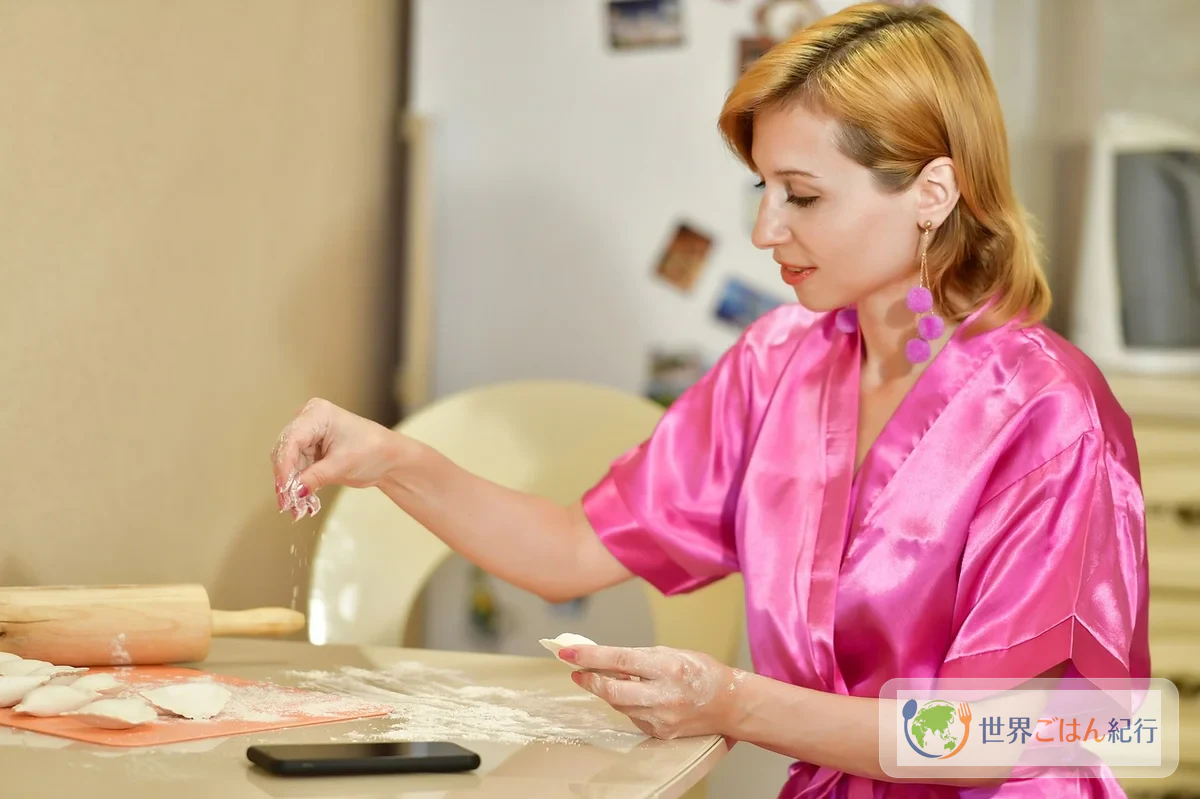
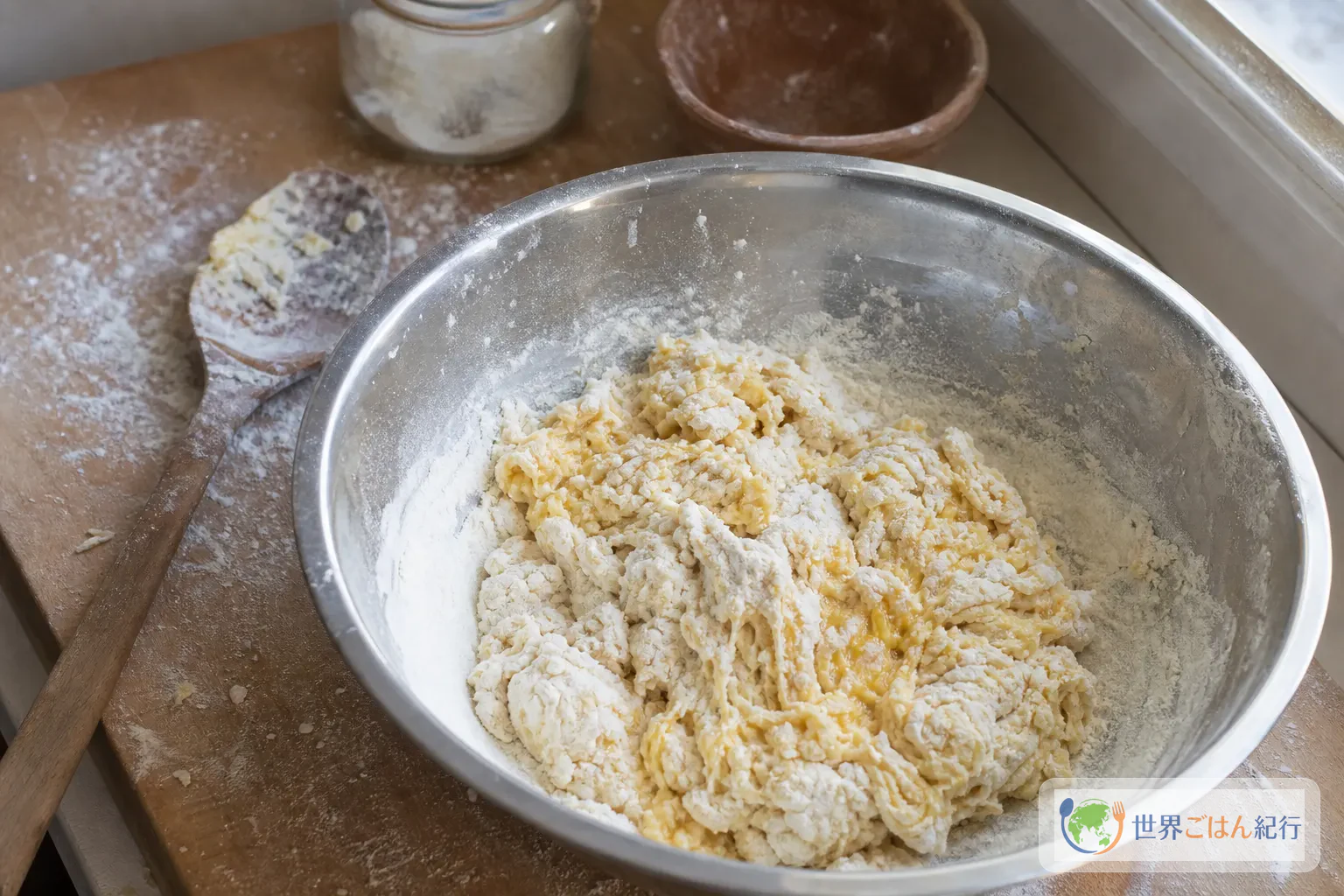
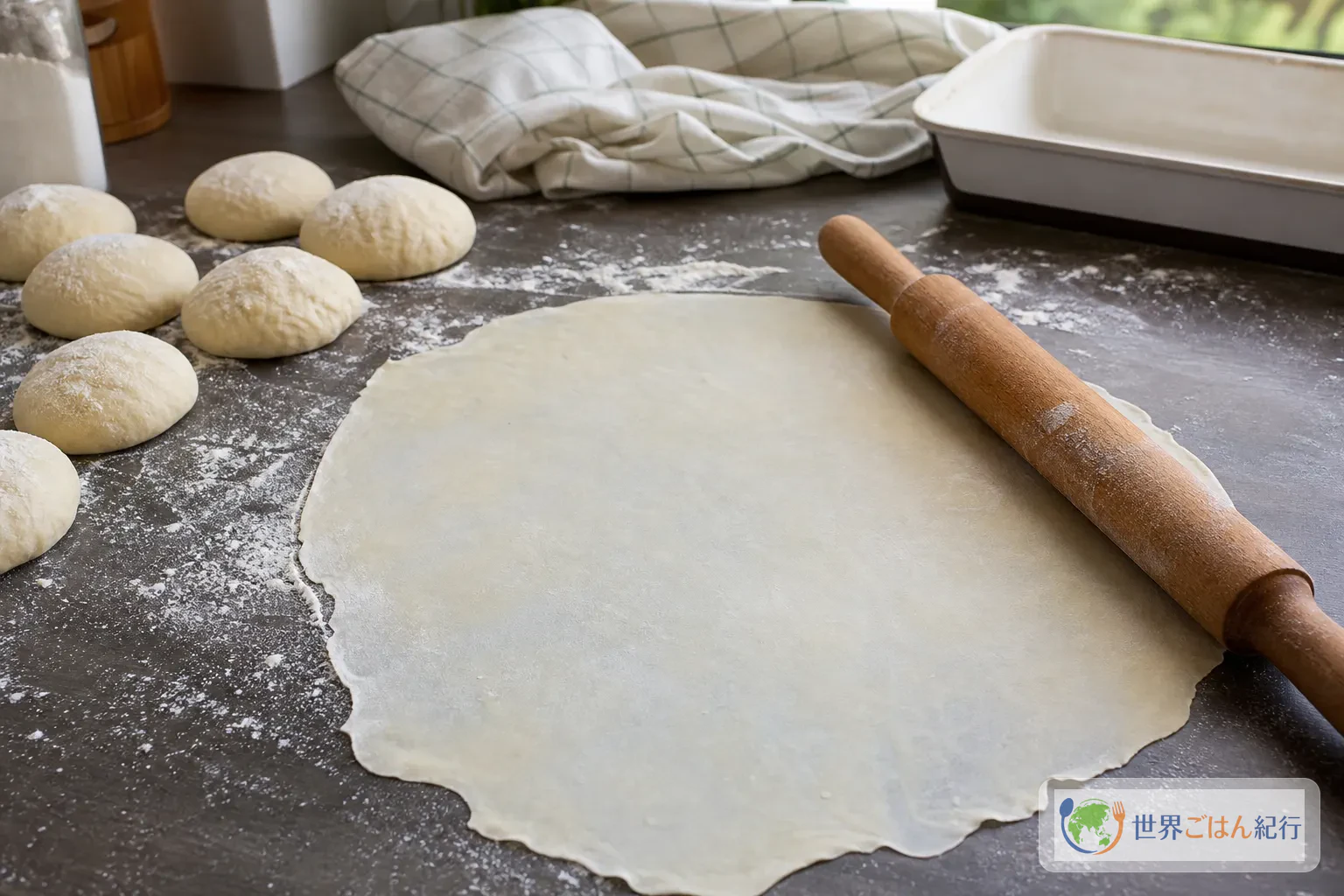
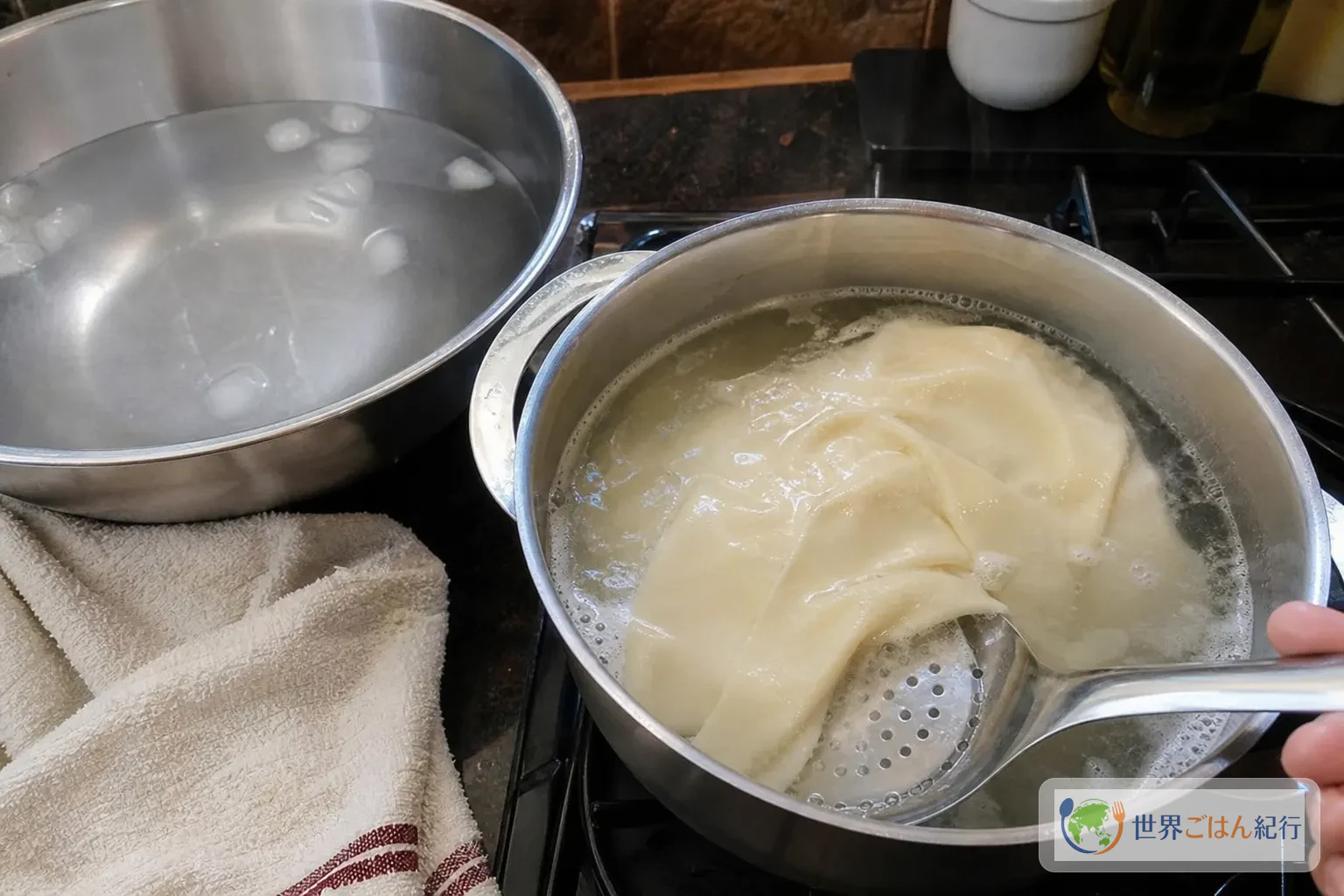
Knead the dough fairly stiff, rest it, and roll it thin. Not every sheet needs to be perfect. Keep only the two outside sheets large, and send torn dough to the inner layers.
Achma Failures and Fixes
Because the ingredients are simple, problems with achma show up in the dough, the moisture, the saltiness and the baking time. Home ovens often run unevenly inside, so judge doneness by the color together with the bubbles at the edge and the jiggle at the center.
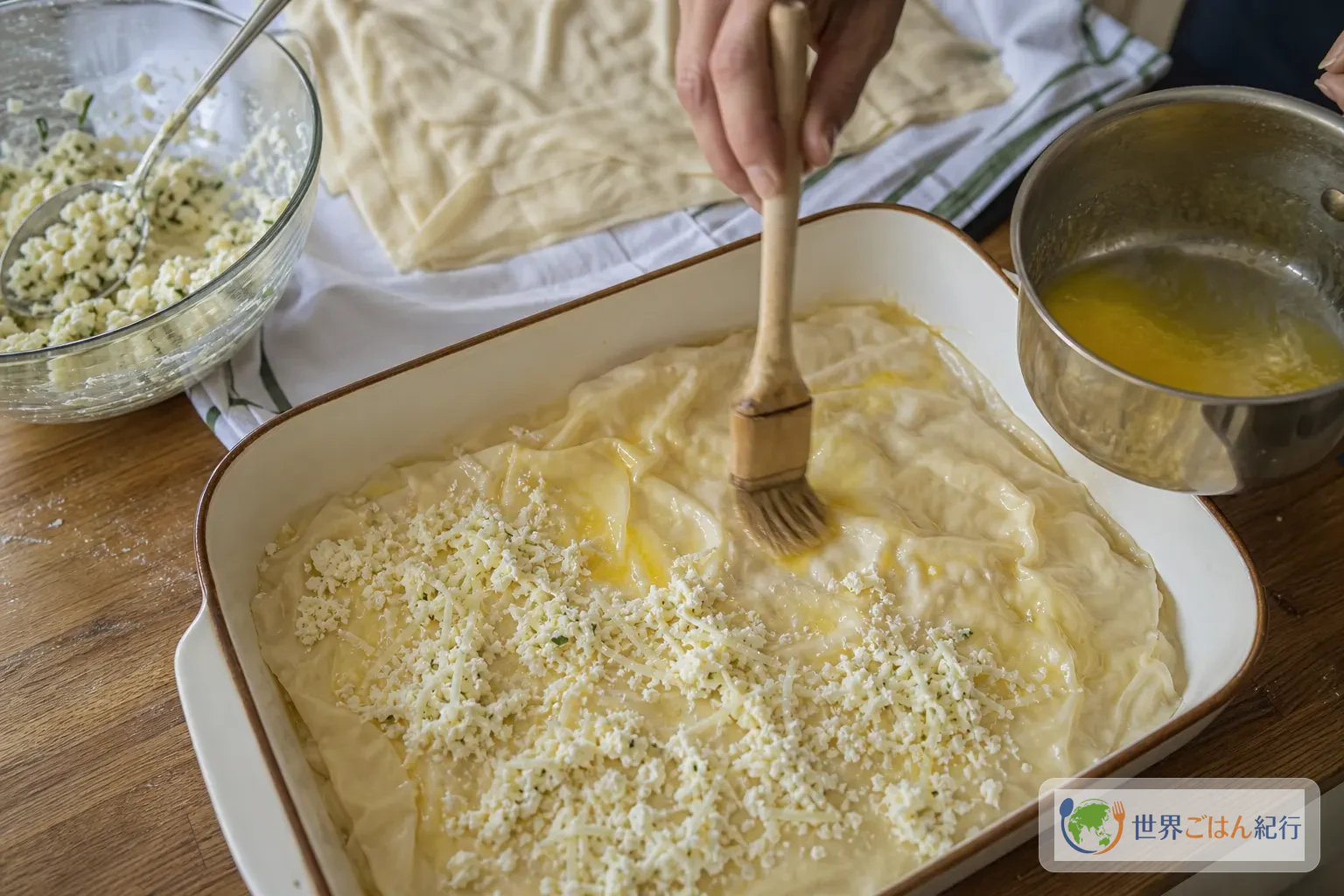
Two things trip people up most at home: panicking when dough rolled very thin tears, and adding too much moisture to the cheese. Watery cheese pools at the bottom and makes the bake heavy. Torn dough, on the other hand, is fine. As long as the top and bottom sheets are large, the inner ones can tear, and their wrinkles hold the cheese and butter and give the bake its layered texture.
| Condition | Cause | Immediate response | Adjustment next time |
|---|---|---|---|
| Watery bottom | Cheese has too much moisture, or boiled dough was not drained enough | Bake 5 to 8 minutes more at 350°F (180°C) | Drain the cottage cheese on paper for 5 minutes |
| Only the surface scorches | Top heat is strong, or the pan is too close to the top | Tent with foil and move down to the middle rack | Bake longer at 350°F (180°C) |
| Tough layers | Dough boiled too long, or rested too little | Serve with yogurt before eating | Boil 30 seconds and rest 40 minutes |
| Too salty | Feta is very salty | Eat with a salad or bean dish | Soak the feta in water and reduce to 2.5 oz (70 g) |
| Collapses when cut | Rest time was short | Leave it in the pan 10 more minutes | Score before baking and rest 15 minutes |
Serving and Storing Achma
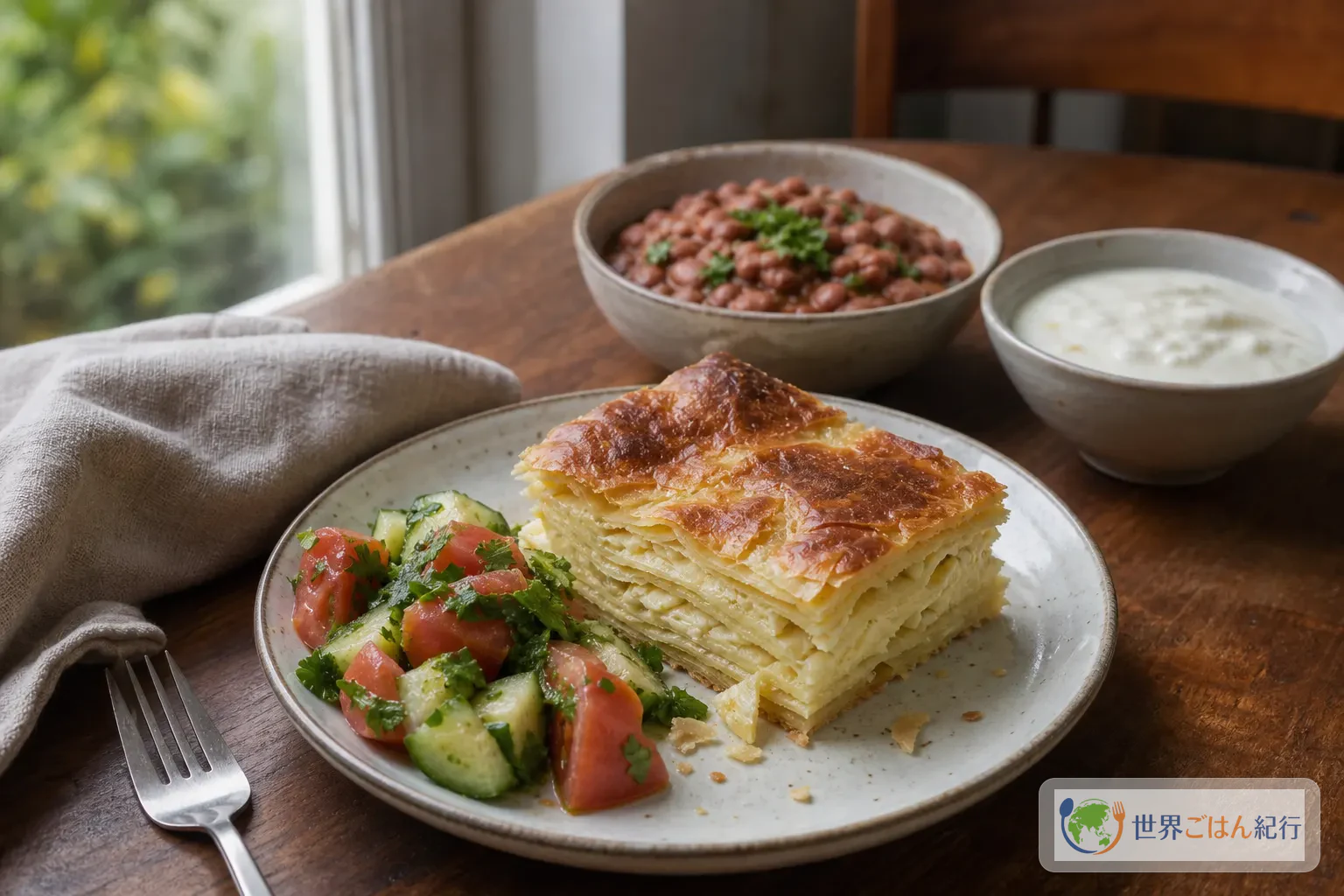
Achma is easiest to cut, and its cheese smells best, about 15 minutes after baking. Rather than eating it in big bites piping hot, let it settle a little, then serve it with something sour or a bean dish so the richness doesn't tire you.
Pairing Achma
For a Georgian table, set it beside the bean dish lobio (in Japanese), the walnut-sauce satsivi (in Japanese) and juicy khinkali, so the meal has more than cheese to lean on. For more Georgian aroma, sprinkle a little Svan salt over roasted vegetables or salad.
| Occasion | What to pair | Why |
|---|---|---|
| Light lunch | Salad of cucumber, tomato, and herbs | Moisture and sourness catch the weight of dairy |
| A Georgian-style table | Lobio (in Japanese), pickles, herbs | Beans and sourness support a cheese dish |
| Starter for guests | Small cut achma, yogurt, red wine | Layers remain even when cold and it is easy to portion |
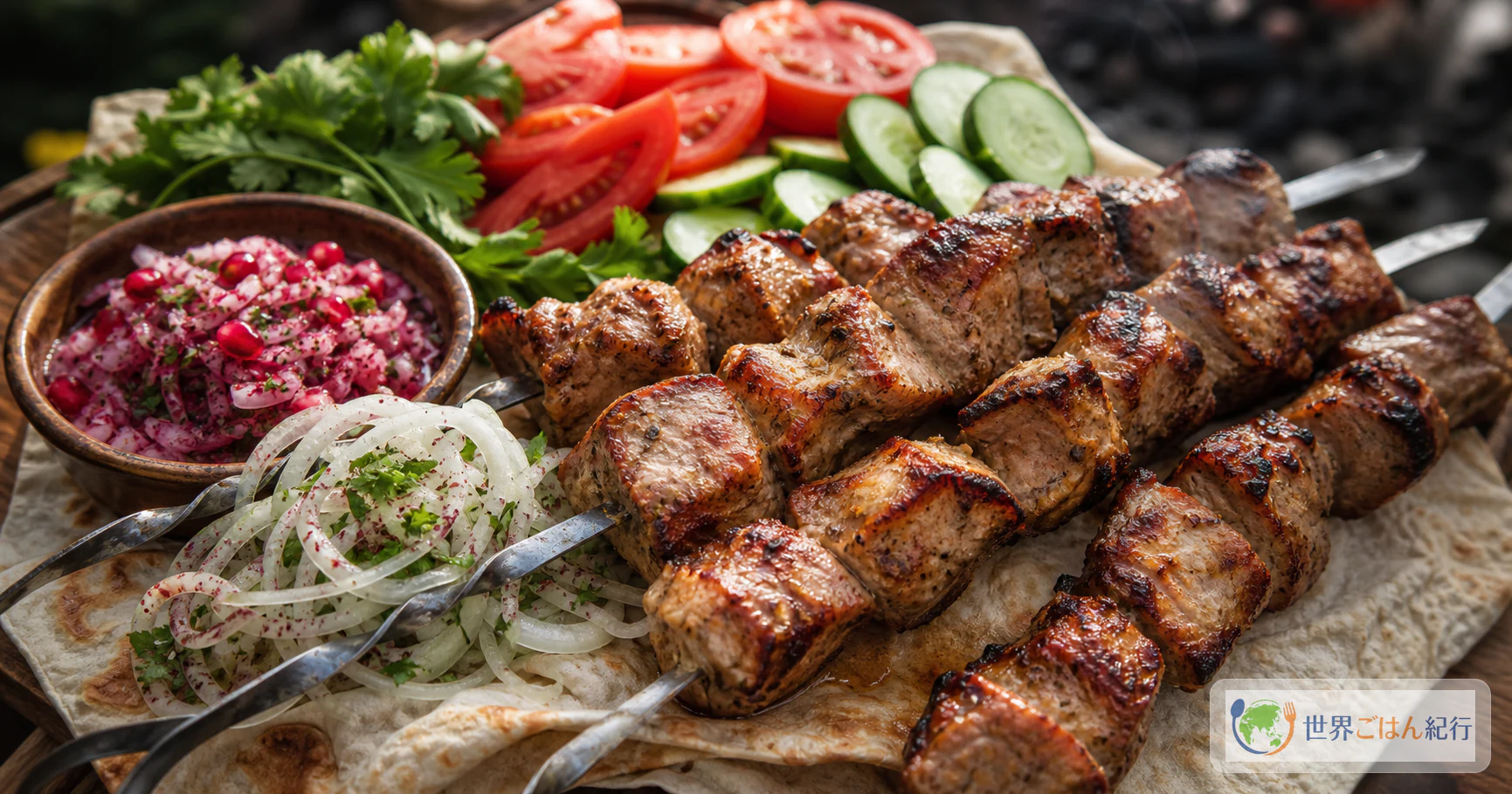
| A meat day | Shashlik, roasted vegetables | The layers of cheese and bread catch the fat of skewered meat |
Storing and Reheating Achma
Let it cool slightly, wrap each piece in plastic wrap and keep it in a container in the refrigerator. To reheat, warm it in a 350°F (180°C) toaster oven for 8 minutes, or microwave at 600 W for 40 seconds and then toast for 3 minutes. The inside softens and the surface turns toasty again.
To freeze, wrap each piece individually. Without thawing, microwave at 600 W for 1 minute 30 seconds, remove the foil and toast for 5 minutes. Freezing costs the layers a little of their spring, so frozen achma suits everyday breakfasts and snacks better than guests.
FAQ
Can I substitute store-bought lasagna sheets?
On a busy day you can, but you'll lose some of achma's characteristic wrinkles and softness. Boil dried lasagna sheets 1 minute less than the package time and stack them with more butter. Since the sheets are thick, use slightly less cheese and bake at 350°F (180°C) for 35 to 40 minutes to keep it from getting heavy.
Does phyllo get closer?
Phyllo is thin and convenient, but the texture drifts toward baklava and börek. Achma's dough is thin with the chewiness that boiling gives, so make the dough by hand the first time. If you do use phyllo, skip the boiling, brush each sheet with butter as you stack, and shorten the baking time.
Can I prepare it the day before?
Yes. Once it's layered, press plastic wrap against the surface and leave it overnight in the refrigerator. Bring it to room temperature 30 minutes before baking, brush the top with a little more melted butter, and bake at 375°F (190°C) for about 40 minutes. Baked straight from cold, the center heats slowly and only the top colors.
Can I make it without an oven?
A skillet gets you close if you keep the layers modest in height. Stack about 4 layers in a 9.5 inches (24 cm) skillet, cover, and cook 18 minutes over low heat, then flip and cook 8 minutes over low heat. It scorches easily, so line the bottom with parchment and use less butter. For tall, solid layers in a square pan, the oven is steadier.