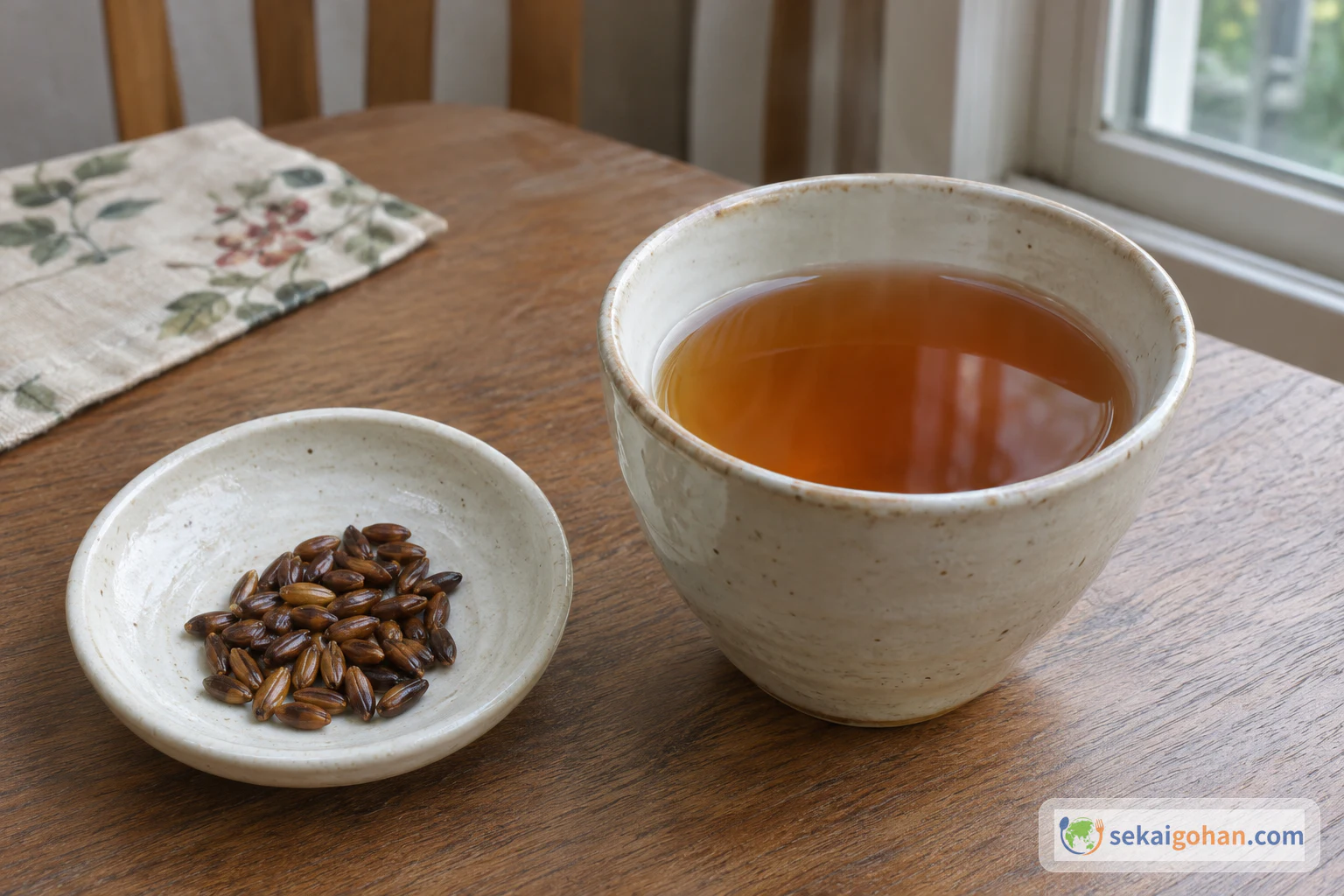
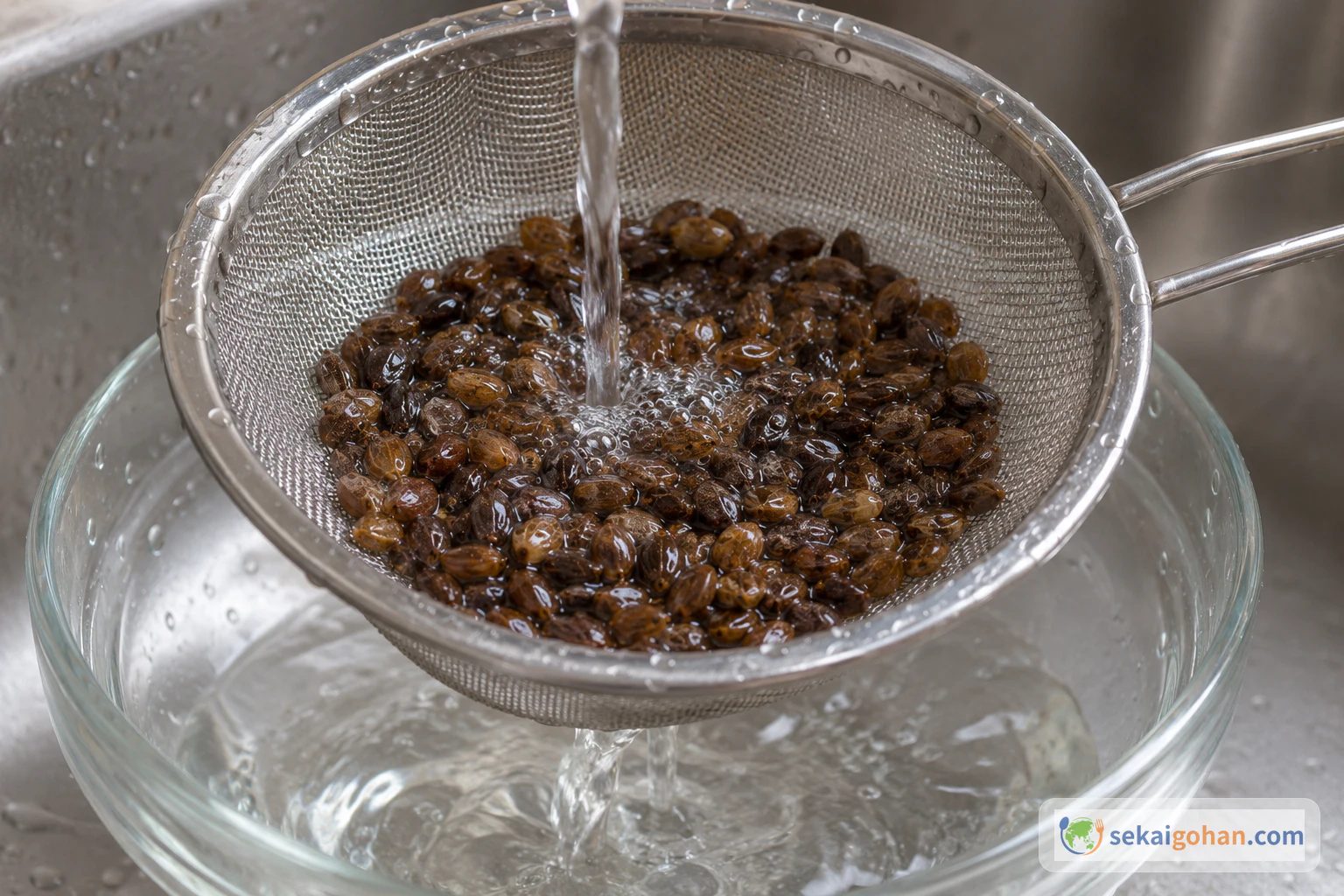
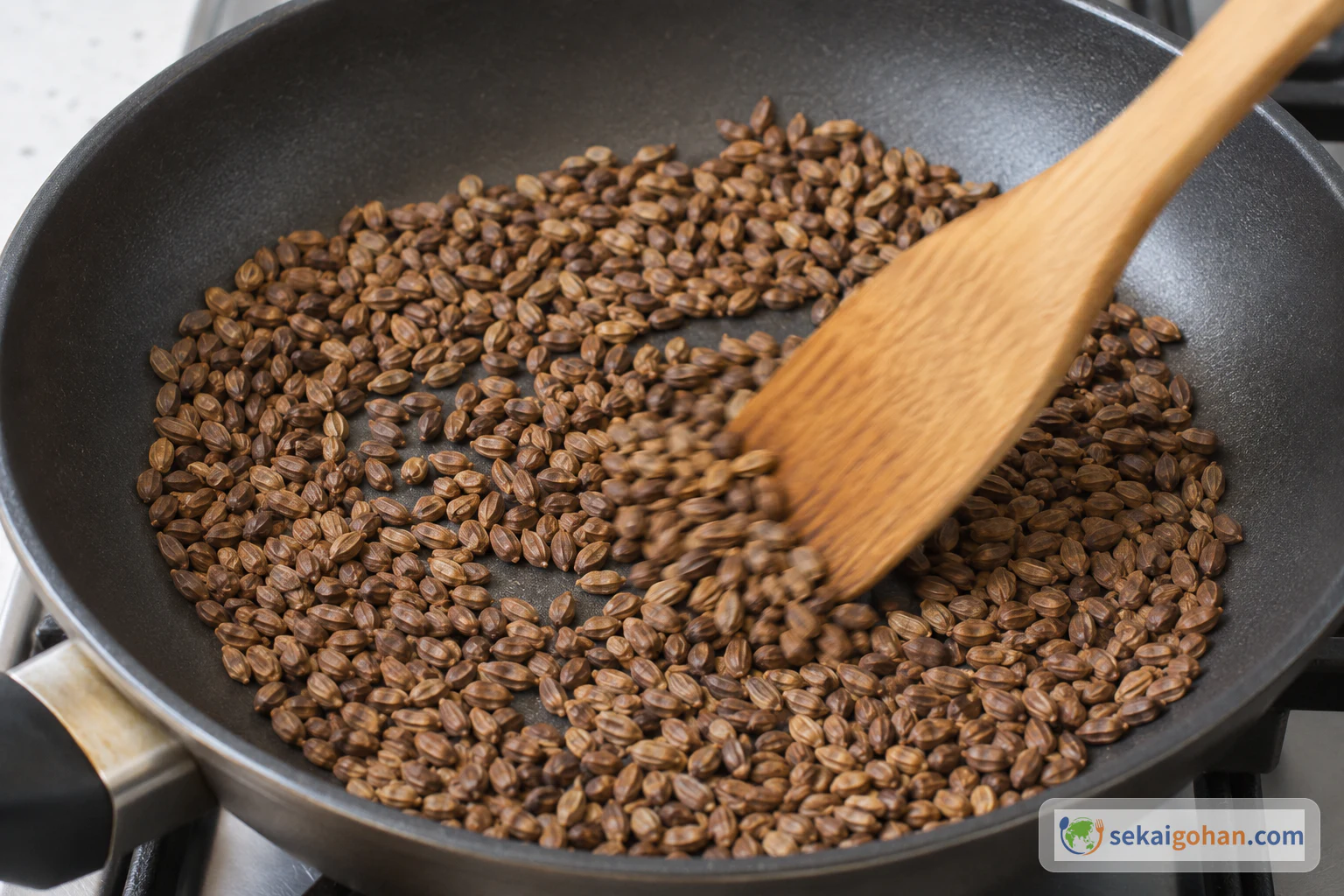
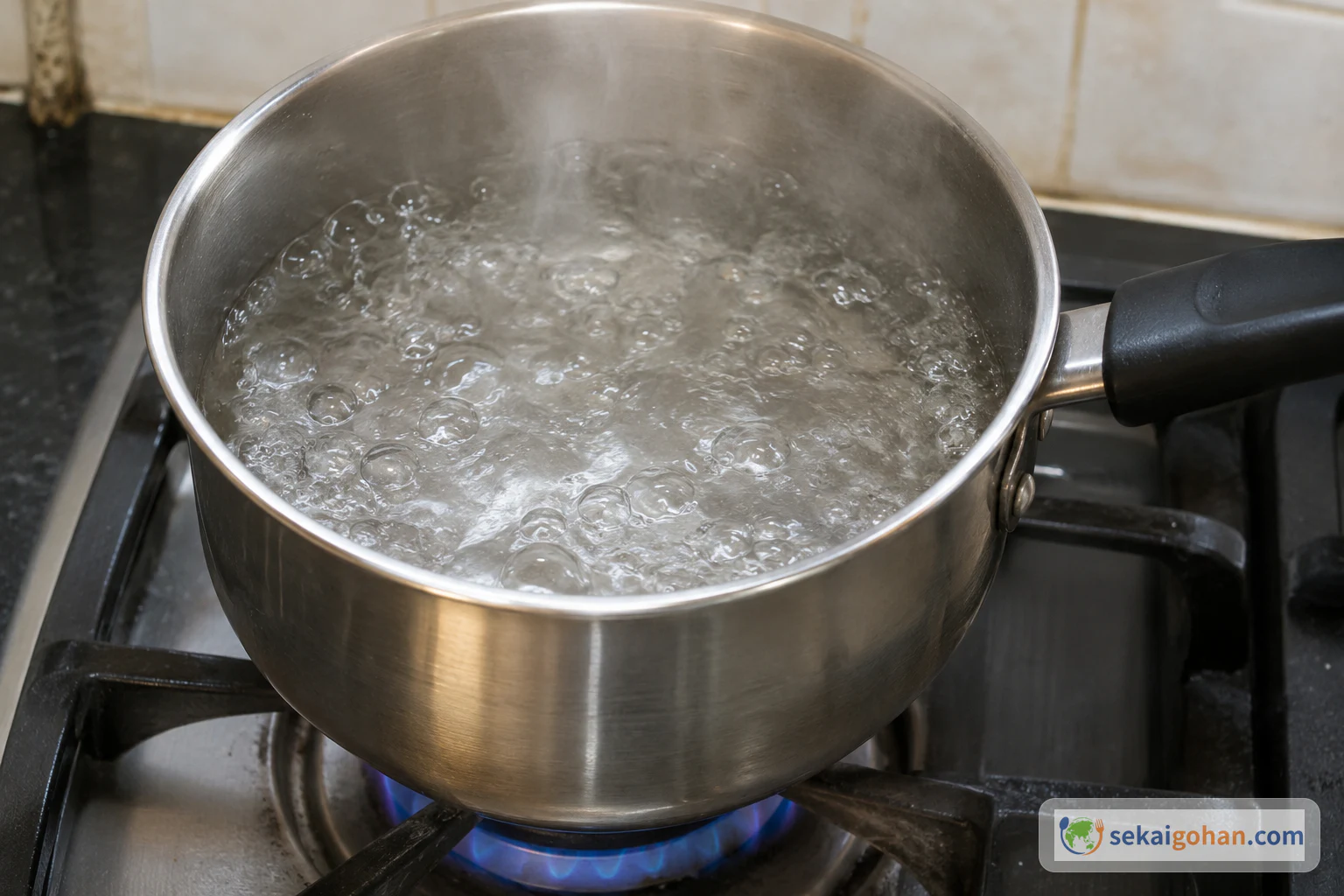
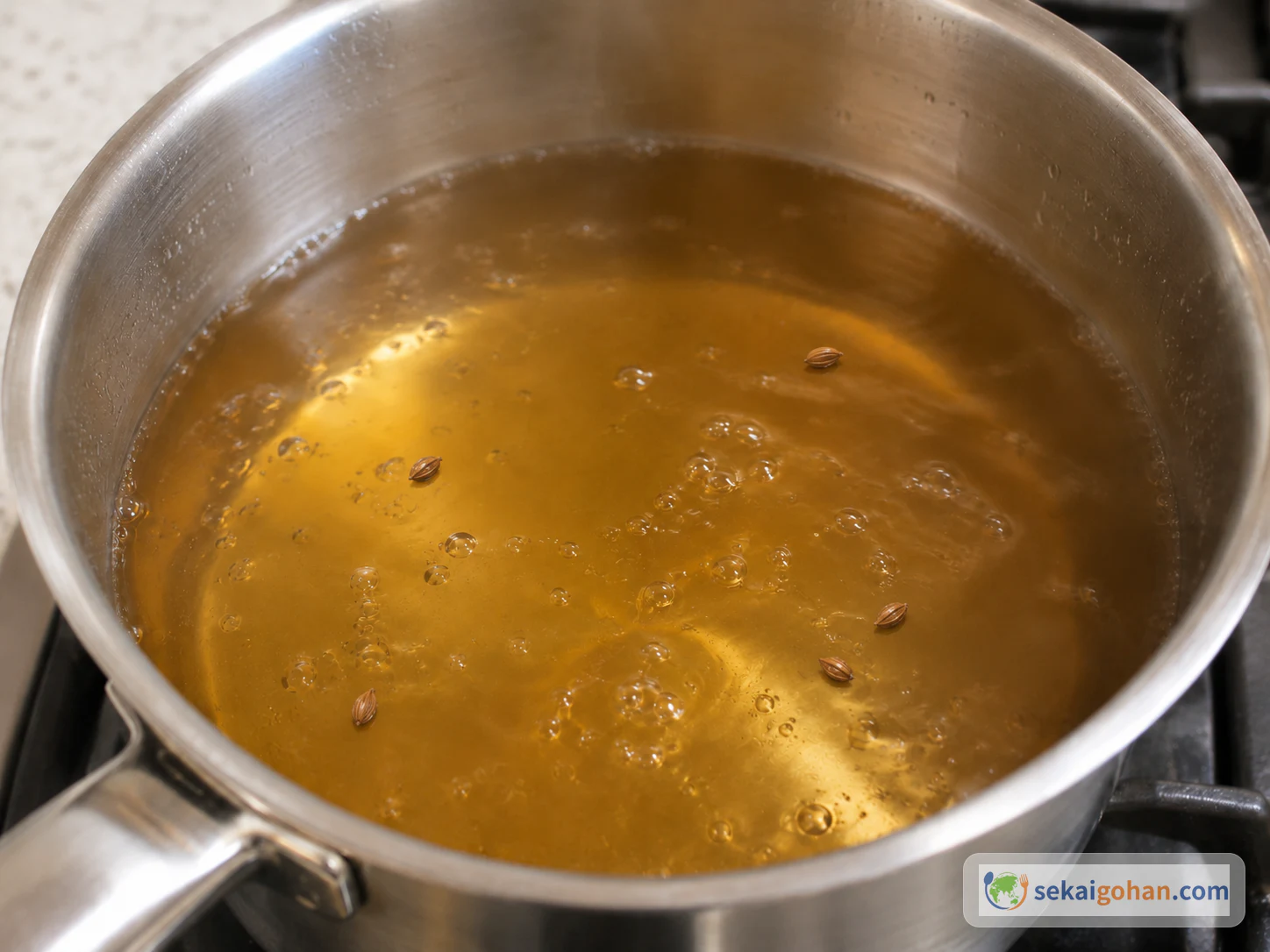
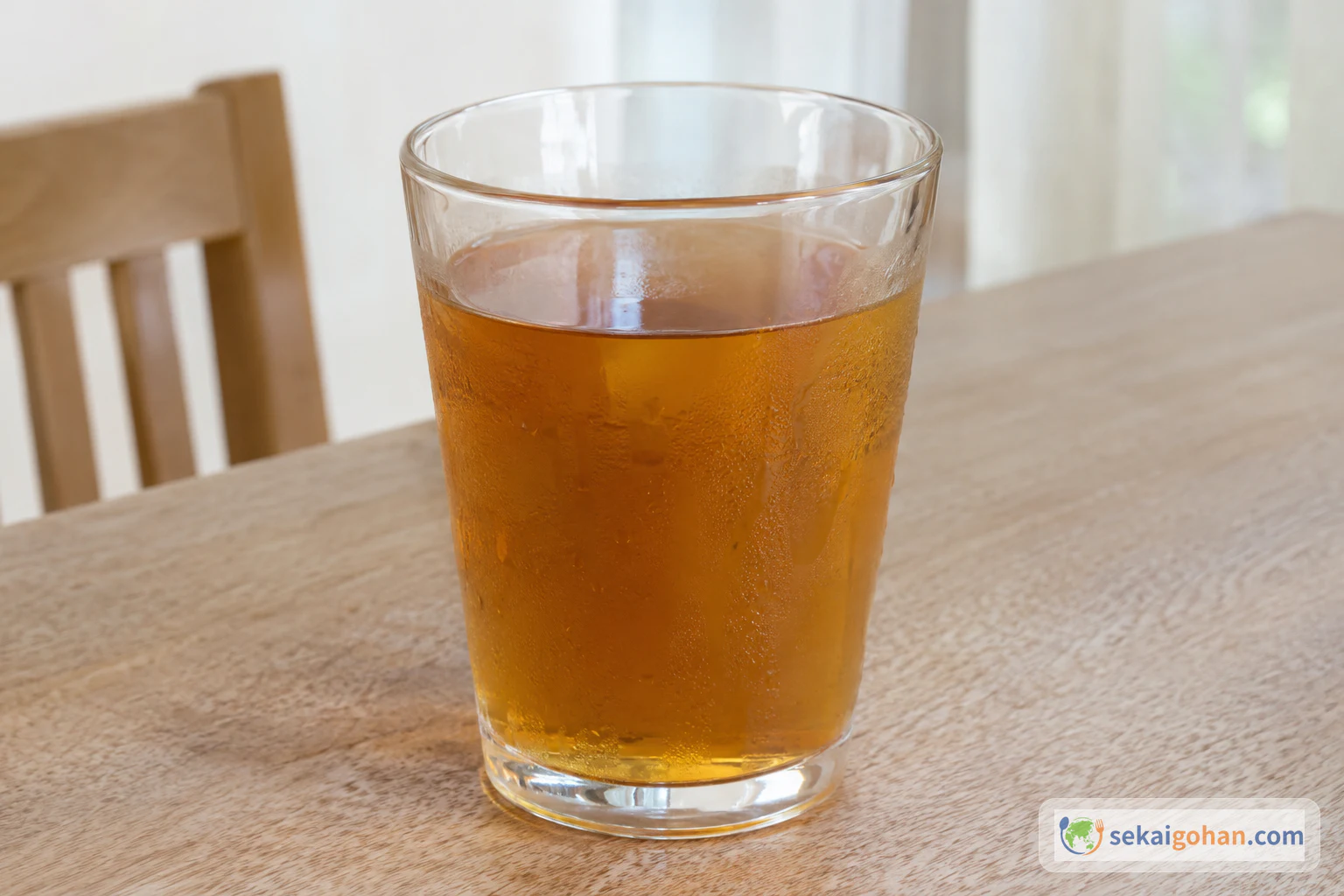
Set the small brown seeds in a dry pan over medium heat and keep them moving. Before long they start popping, one after another, quickly, and that sound is your cue. Gyeolmyeongja-cha (결명자차) is a Korean tea made from just two ingredients, gyeolmyeongja seeds and water. The seeds are washed, roasted and briefly simmered. It brews up red, with a mild roasted flavor and a slight bitterness. Drink it warm, or let it cool and drink it cold. For more dishes and drinks from the same country, see South Korea.
About Gyeolmyeongja-cha and Its Seeds
Gyeolmyeongja (決明子 in Chinese and Japanese characters) is a seed. Koreans brew it the way they brew barley tea (보리차). In Korean the tea is 결명자차, usually romanized as gyeolmyeongja-cha, though you may also see "gyulmyungja cha."
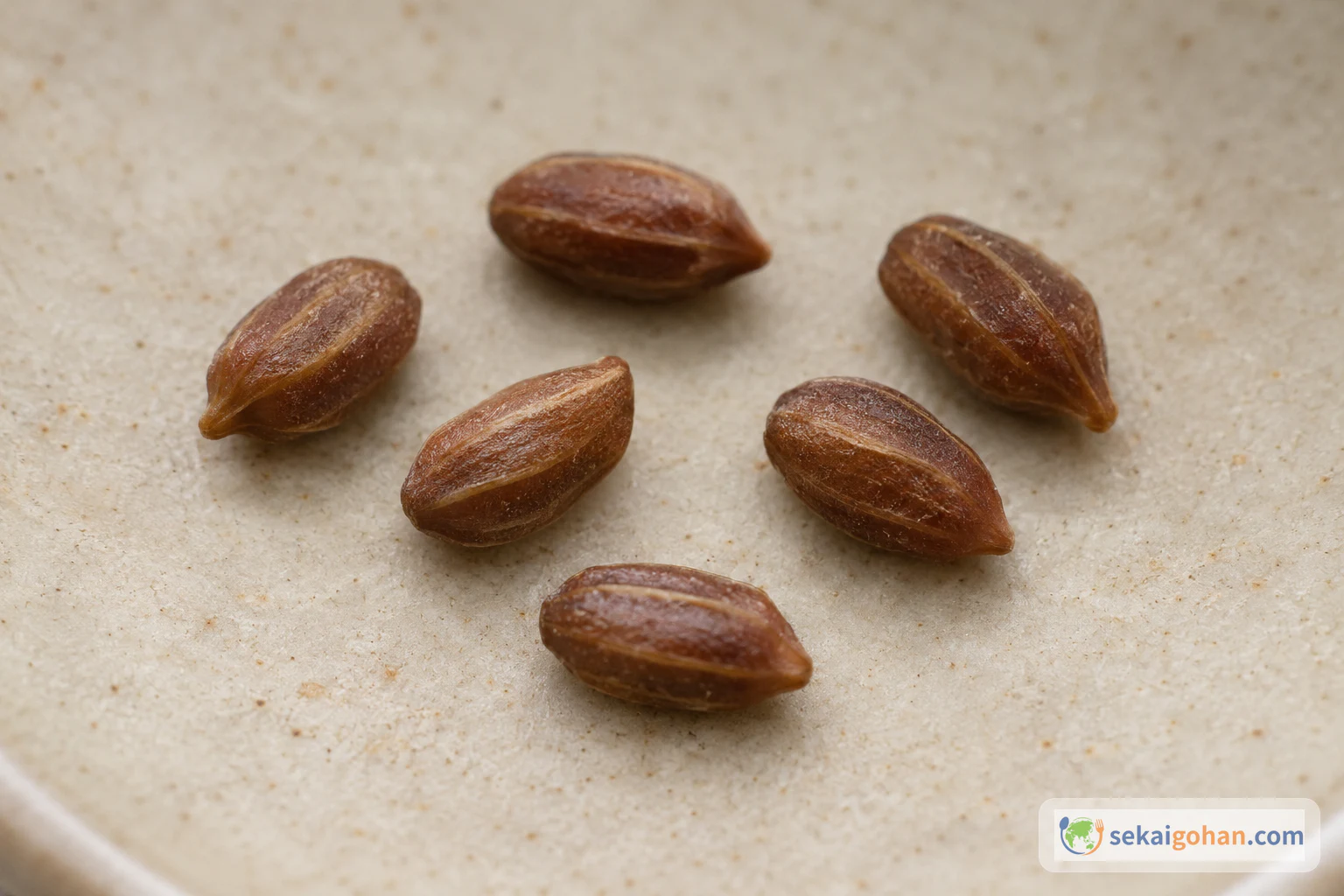
The "cassia" in cassia seed tea is not cinnamon. In English the word easily brings cinnamon to mind, but the two come from different plant families and different parts of the plant:
- Cassia Seed is the seed of Cassia obtusifolia or Cassia tora, in the legume family (Leguminosae).
- Cinnamon Bark is the bark of Cinnamomum cassia, in the laurel family (Lauraceae).
So the rule in the kitchen is simple. Use the seeds, and leave cinnamon sticks and bark out of the pot.
Ingredients: Seeds and Water
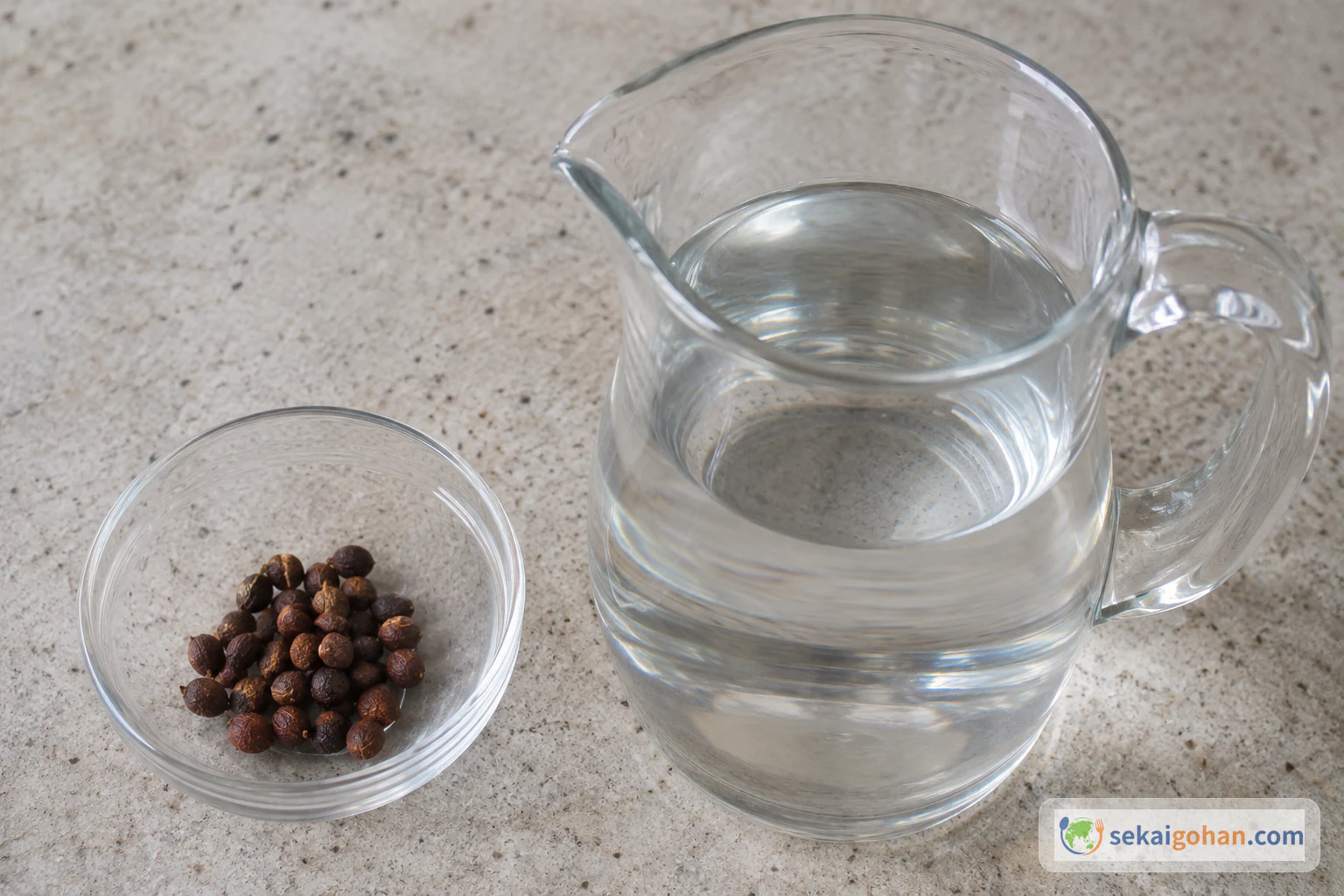
Choosing Gyeolmyeongja Seeds
Look for whole, unroasted seeds. Korean and Chinese grocery stores carry them. In English they're often labeled "cassia seed," so it helps to search with the Korean name too. Pre-roasted whole seeds are also sold, but this recipe starts from raw seeds, which you wash and dry before roasting.
Choose seeds labeled as food or for tea. Do not use foraged plants or medicinal extracts.
Equipment
- Frying pan
- Pot
- Measuring spoons
Method: Wash, Roast Until Popping, Simmer Briefly
The roasting step is judged by sound. When the seeds start popping quickly and steadily, keep going for about 2 more minutes and then stop.
Getting the Roast Right
Roasting shapes nearly everything in the cup. Depending on how far you take it, the tea can show sweetness, astringency, tartness and bitterness, along with aromas that recall roasted coffee or roasted barley. Roasting makes the tea more pleasant up to a point. If you push it too far, bitterness and a burnt smell take over.
| What you notice | Likely reason | What to try next time |
|---|---|---|
| Bitter or burnt-smelling tea | The seeds were roasted too far | Stop about 2 minutes after the rapid popping begins |
| No popping yet | The seeds haven't reached the cue | Keep stirring over medium heat until the popping becomes rapid |
| Tea looks lighter than expected | Shades vary | Light amber to brown is normal; use the 4–5 minute simmer as your reference |
| Tea tastes bitter after changing the recipe | More seed or a longer simmer | Stick to 2 tsp and the 4–5 minute simmer |
Serving Gyeolmyeongja-cha and Other Ways to Brew It
The simplest way is warm, straight after brewing. For a cold drink, brew it the same way and let it cool. This is cooled brewed tea, not seeds steeped in cold water. The tea can also be reboiled, though there's no set amount of water, time or number of rounds for a second brew.
If you'd rather treat it like barley tea, use 10–15 g of roasted seed per 1 L of water, bring it to a boil, then simmer over low heat for about 20 minutes. That's a separate method with its own ratio and time, so don't mix it with the 2 tsp, 4-cup version. The tea is unsweetened. If you like it sweeter, sugar or honey is your own addition.
Frequently Asked Questions
Can I use pre-roasted seeds?
Yes, but the amounts and times here assume you roast the seeds yourself. With a pre-roasted product, follow its label instead.
Is cold gyeolmyeongja-cha a cold brew?
No. The seeds are simmered first, and the tea is then left to cool and drunk cold.
Do I roast the seeds in oil?
No. Roast them in a dry pan.
Do I need to strain the tea?
There's no straining step, but strain it if you prefer.