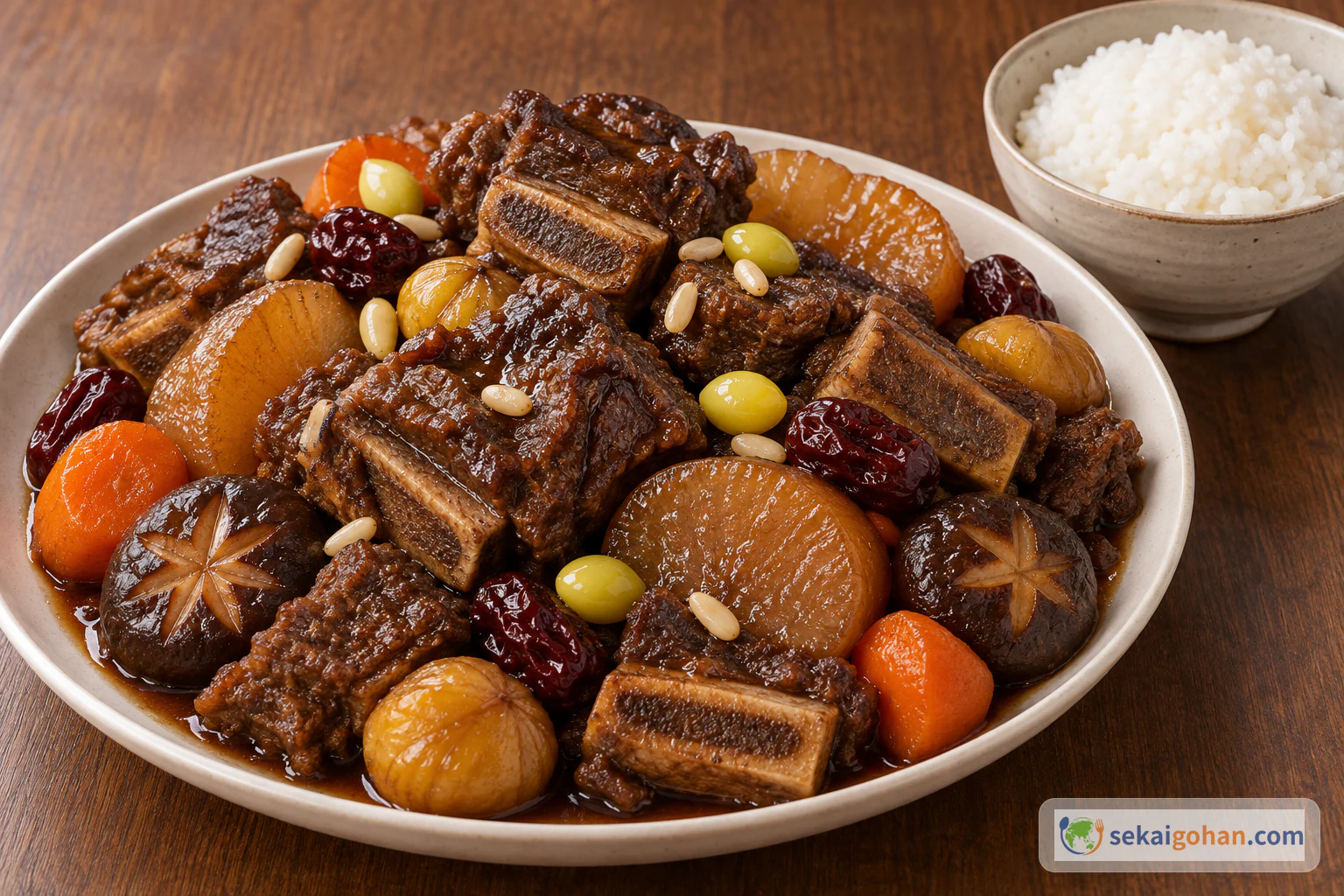
Galbi-jjim: bone-in beef short ribs, radish, carrots and shiitake braised in a glossy sauce
Serves4 servings
CuisineKorean

Galbi-jjim: Korean Braised Beef Short Ribs (갈비찜)

How to make galbi-jjim (갈비찜), Korean braised beef short ribs, following Maangchi's written stovetop recipe: soaking and blanching the ribs, a sauce built on shiitake soaking liquid, soy sauce and mirim, rounded radish and carrots, and a final glaze. Covers the long soaking stages, tenderness checks, optional chestnuts, jujubes and garnishes, food-safety notes, and the dish's place at Korean holiday tables.

Cooking flow

Cooking steps

STEP 11 / 13

Soak the shiitake

STEP 1

Wash the 4 dried shiitake mushrooms. Soak them in 2½ cups cold water for 3–4 hours or overnight, until soft.

STEP 22 / 13

Make the seasoning sauce

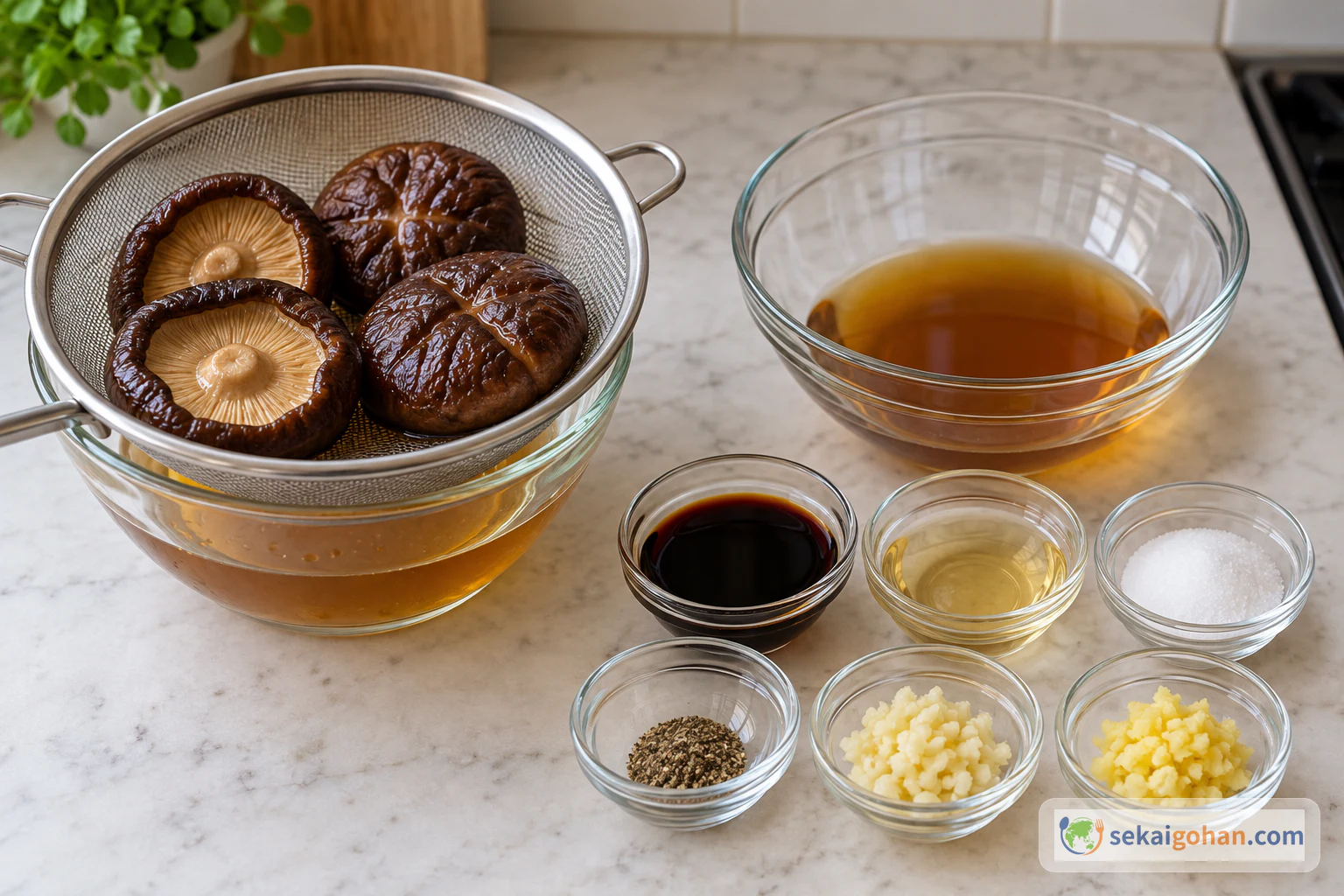
Rehydrated dried shiitake draining over their soaking liquid, with the measured liquid and seasonings ready to mix
Measure 2 cups of the soaking liquid, then mix in the seasonings

Drain the mushrooms over a bowl to catch the liquid. Measure 2 cups of the soaking liquid. If you are short, top it up with cold water to reach 2 cups. Discard any remaining liquid. Add the soy sauce, mirim, white sugar, black pepper, minced garlic and minced ginger, and mix.

STEP 33 / 13

Prepare the mushrooms, radish and carrots

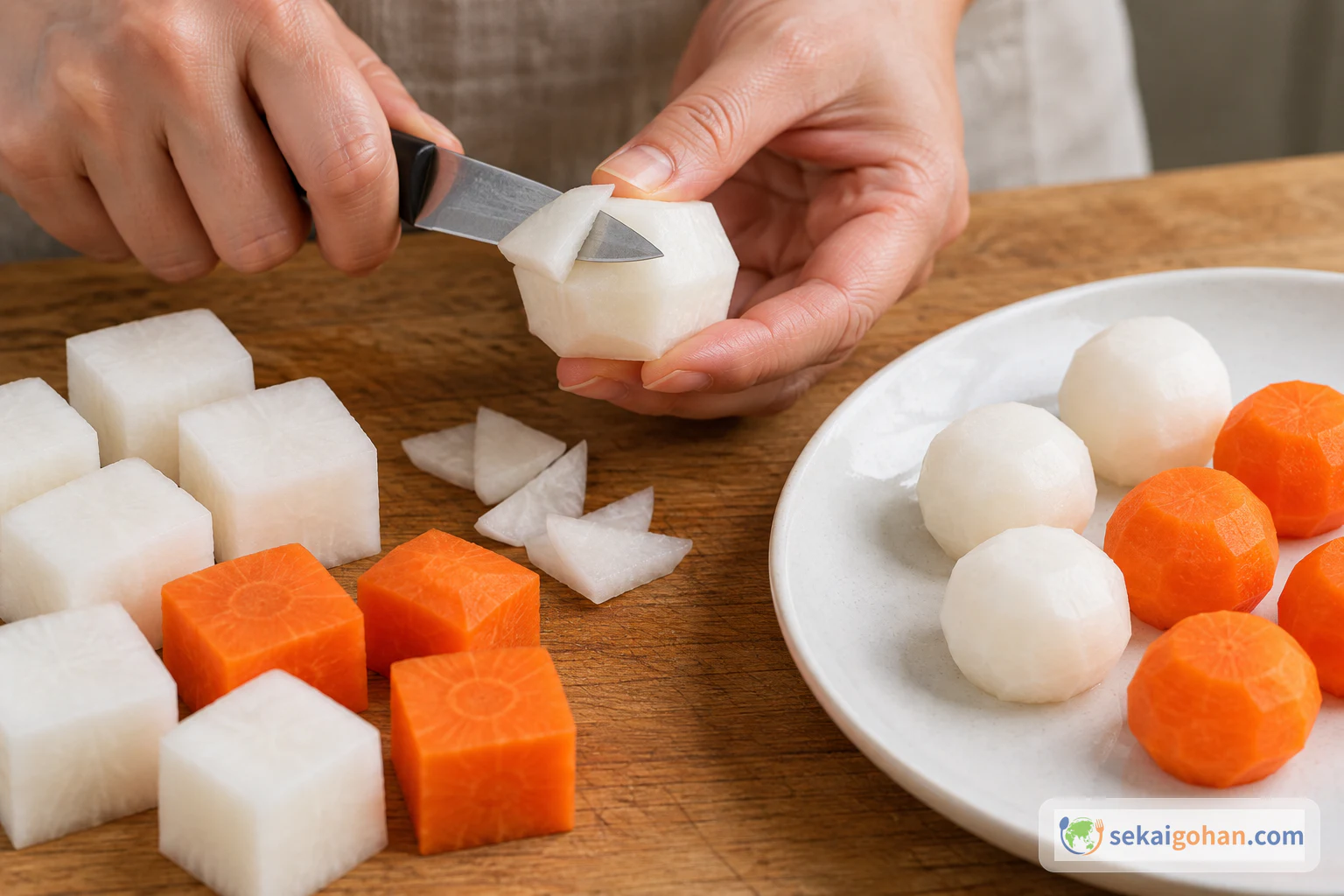
Rounding cubes of radish and carrot into ball shapes
Trim the corners of each cube into a rounded piece about 1 inch across

Remove the mushroom stems and save them for another use. Cut each cap into quarters. Cut the radish and carrots into 1½-inch cubes. Trim off the edges to round each cube into a ball about 1 inch across. Make 10–12 pieces of each.

STEP 44 / 13

Rinse and soak the short ribs

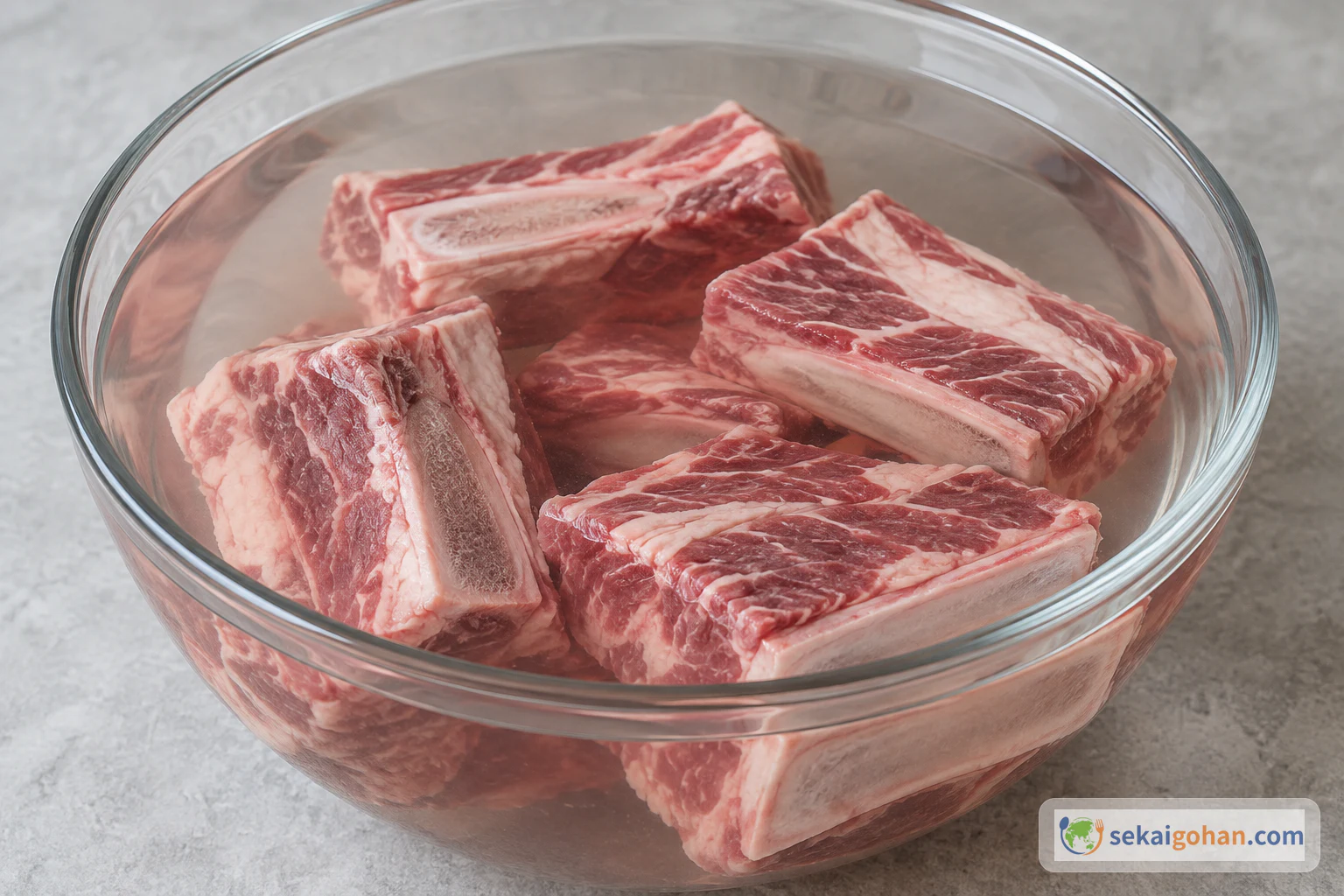
Bone-in beef short ribs soaking in cold water
Soak the ribs in cold water, changing it a couple of times

Rinse the short ribs. Soak them in cold water for 30 minutes to 1 hour, changing the water a couple of times.

STEP 55 / 13

Blanch the ribs for 5 minutes

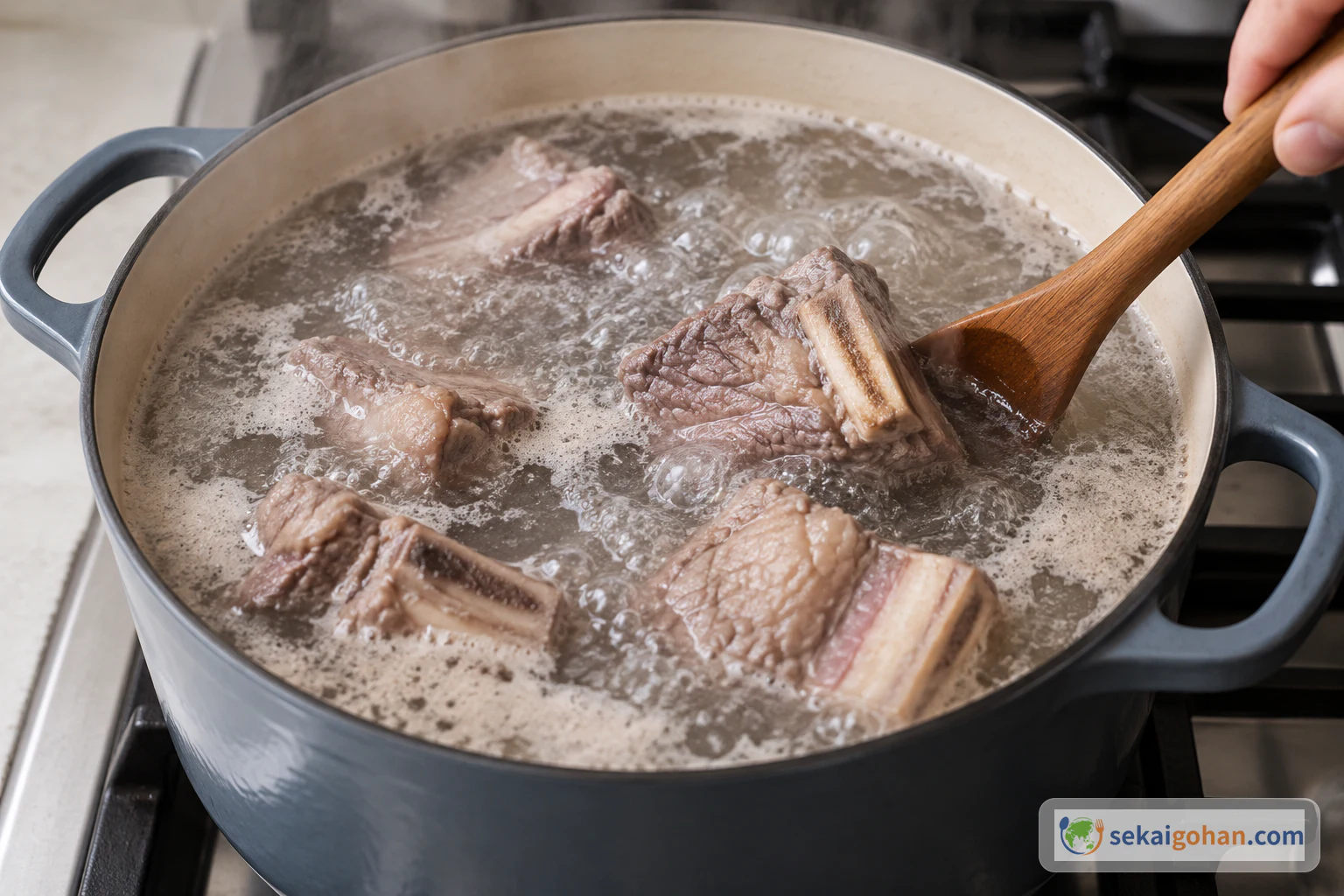
Beef short ribs blanching in a pot of boiling water
Blanch the ribs for 5 minutes, stirring a few times

Fill a large, heavy pot halfway with water and bring it to a boil over medium-high heat. Drain the ribs and rinse them again. Add them to the boiling water and blanch for 5 minutes, stirring a few times.

STEP 66 / 13

Rinse the ribs and wash the pot

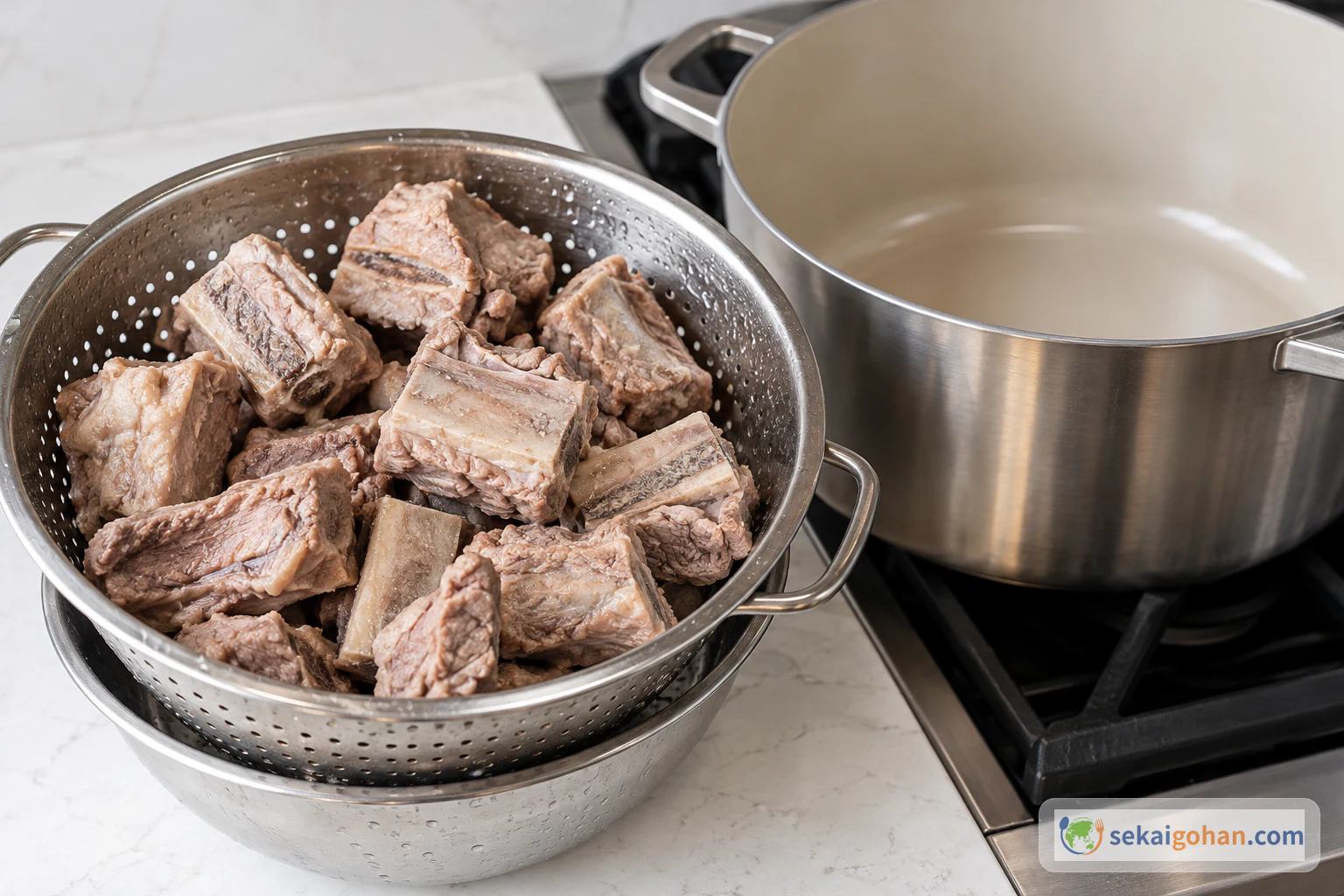
Blanched, rinsed short ribs draining in a colander beside a clean heavy pot
Rinse the blanched ribs and wash the pot before the ribs go back in

Drain the ribs and rinse them thoroughly with cold water. Wash the pot well with soapy water.

STEP 77 / 13

Braise the ribs in the sauce for 20 minutes

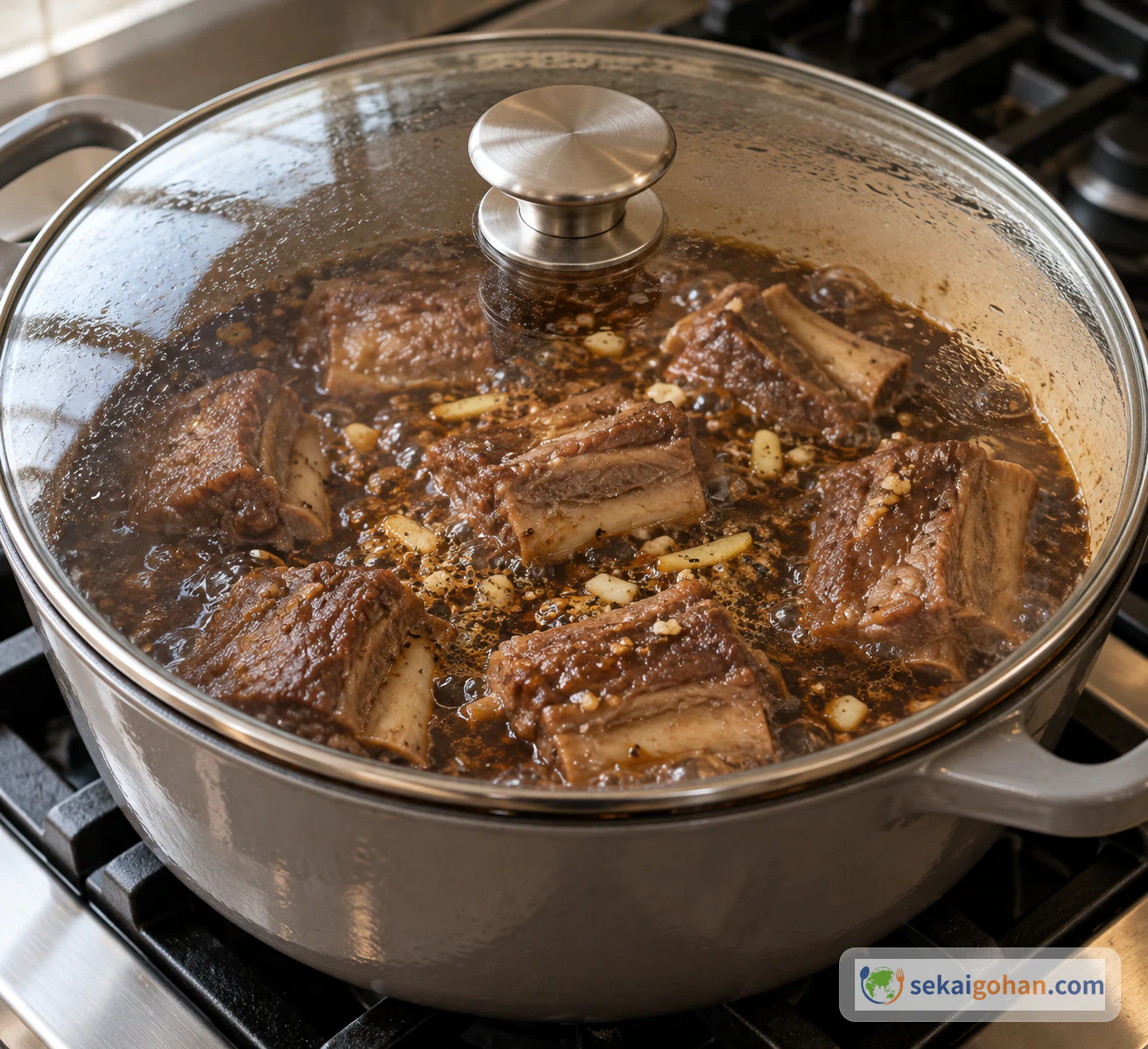
Short ribs braising in the seasoning sauce under a lid
Cover and cook over medium-high heat for 20 minutes

Return the ribs to the clean pot and add the seasoning sauce. Cover and cook over medium-high heat for 20 minutes.

STEP 88 / 13

Add the mushrooms, chestnuts and root vegetables

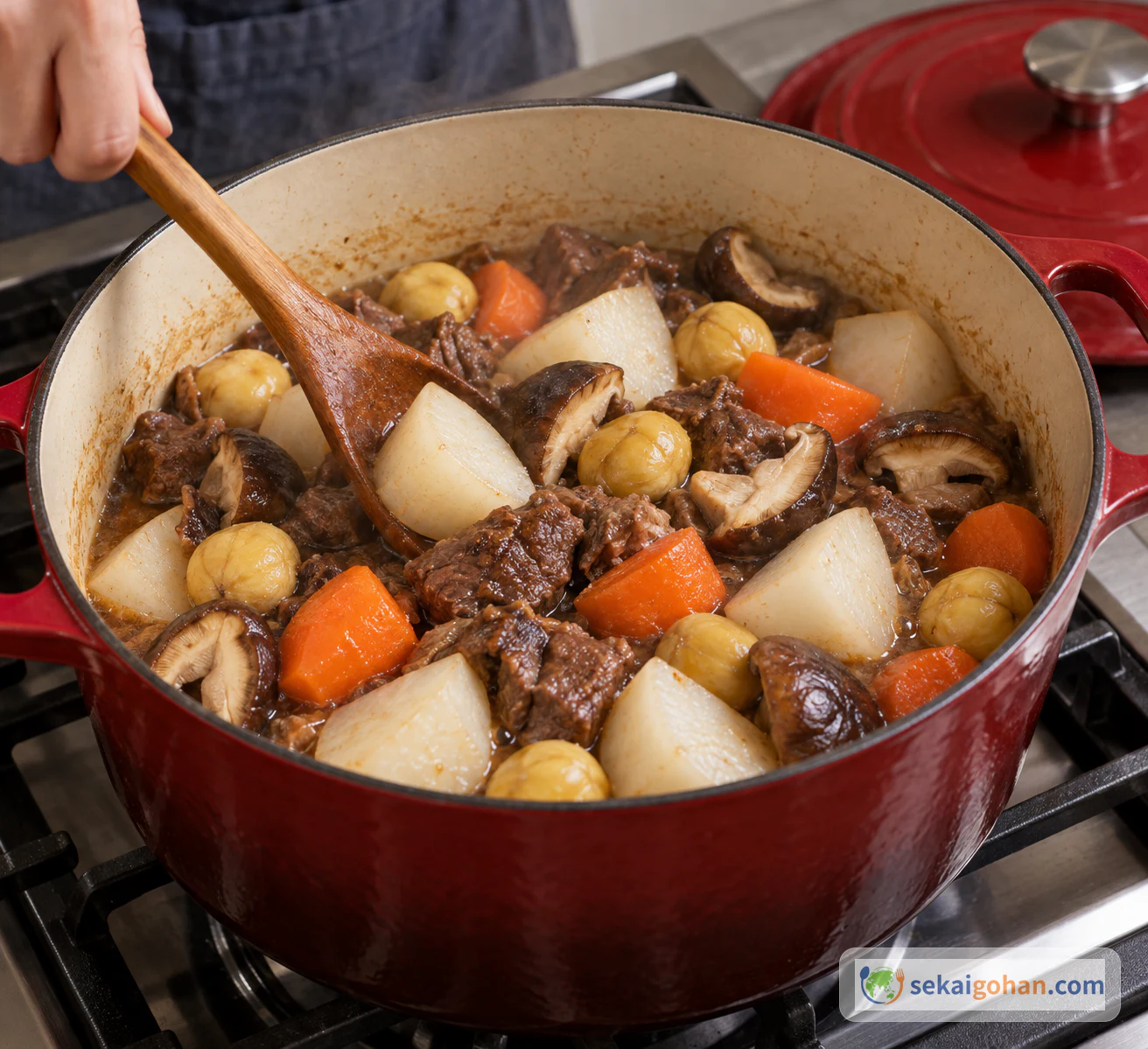
Stirring shiitake, chestnuts, radish and carrots into the braised ribs
Add the shiitake, chestnuts, radish and carrots, then braise covered over low heat

Add the quartered shiitake, chestnuts, radish and carrots. Cover, reduce the heat to low, and cook for 1 hour, stirring occasionally.

STEP 99 / 13

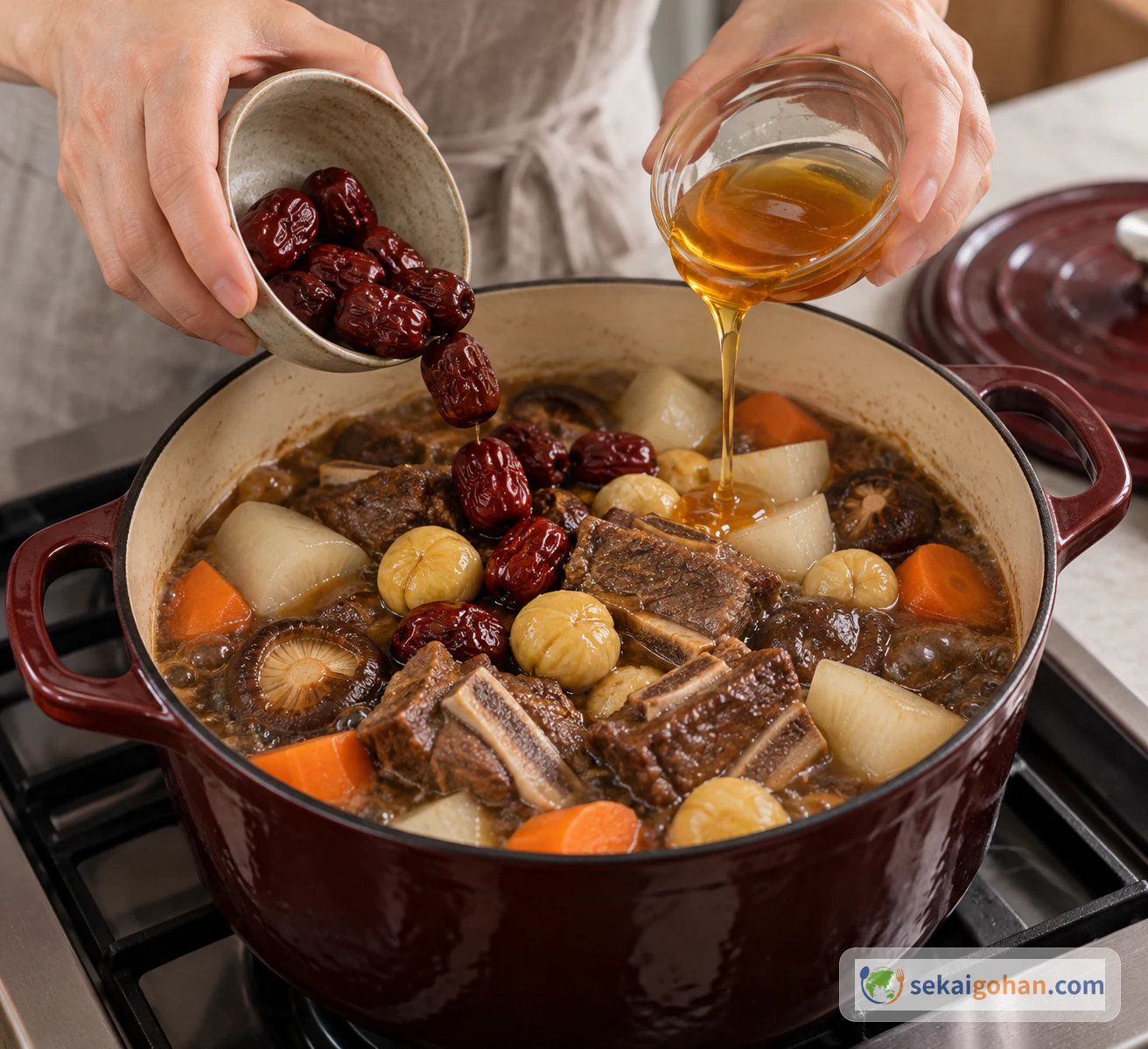
Add the jujubes and rice syrup

Adding dried jujubes and rice syrup to the braising pot
Add the jujubes and rice syrup, then cover and simmer

Add the jujubes and rice syrup. Cover and simmer for another 10 minutes, or until the meat is almost falling off the bone. Thicker ribs take longer.

STEP 1010 / 13

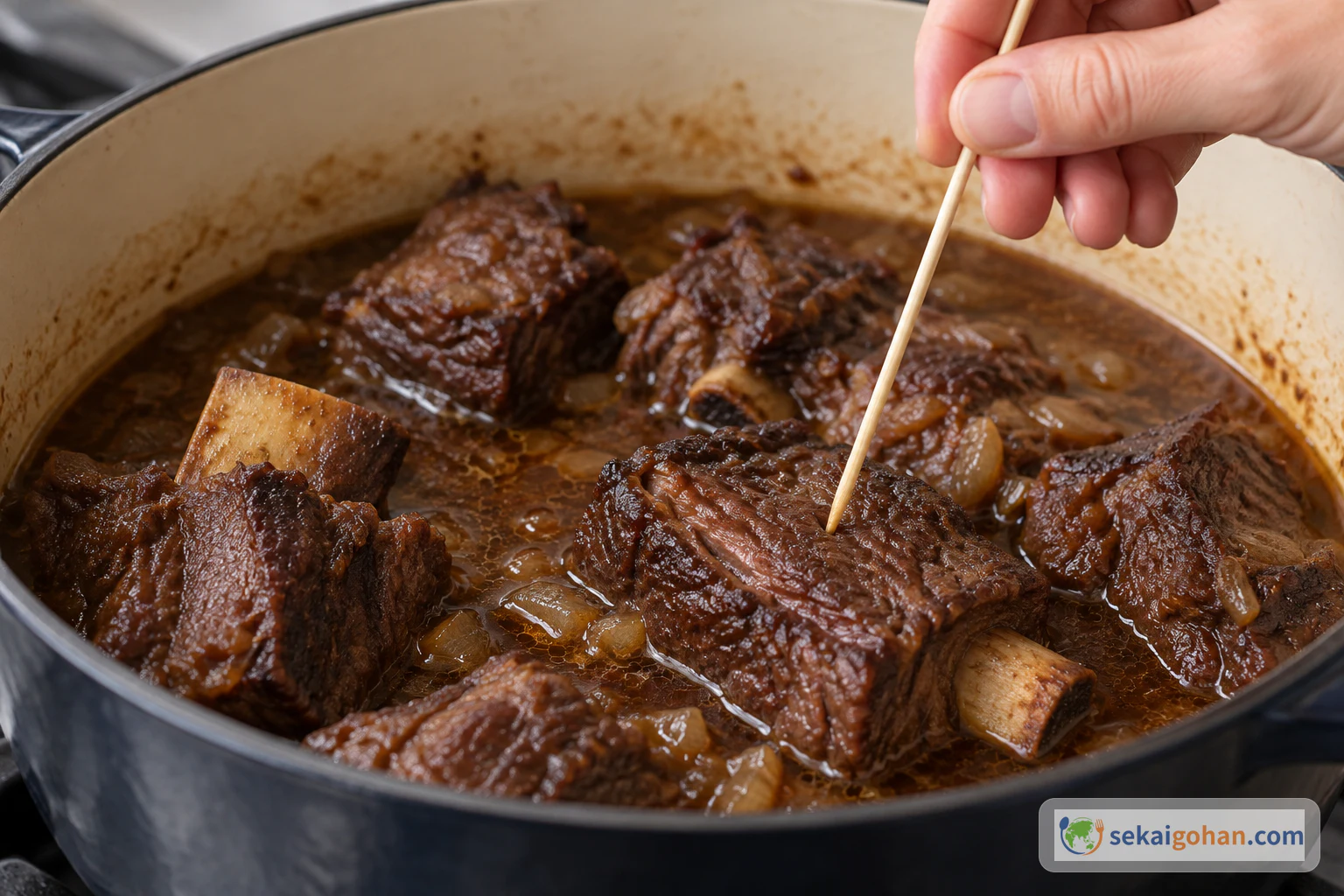
Check tenderness with a wooden skewer

A wooden skewer inserted into a braised short rib to check tenderness
If the skewer does not pass through easily, add water and keep cooking

Insert a wooden skewer into the meat. If it does not pass through easily, add about 1 cup water and cook for 15–30 minutes longer, depending on how thick the ribs are. The skewer checks tenderness only, not whether the meat has reached a safe temperature.

STEP 1111 / 13

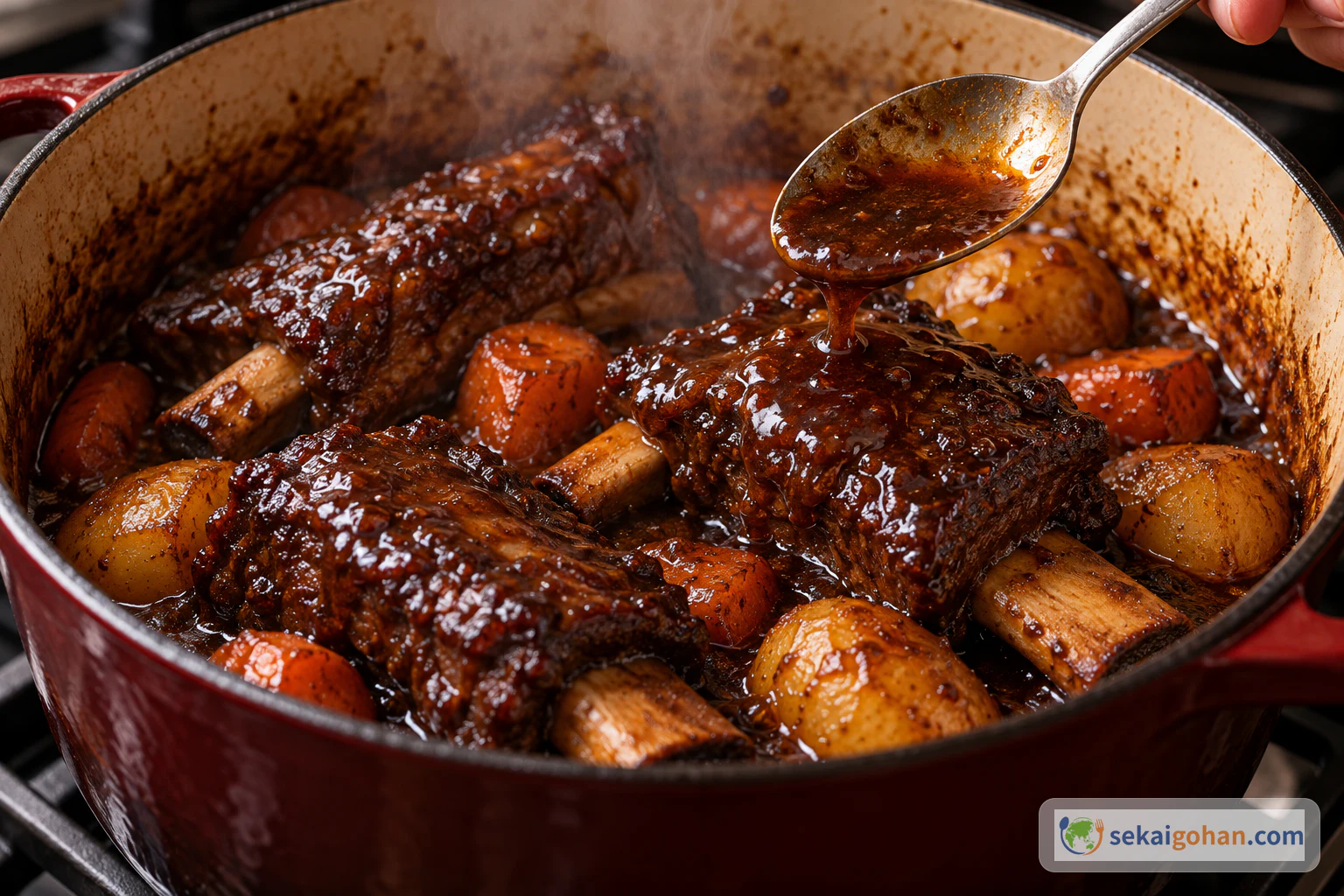
Glaze over high heat

Spooning the reduced sauce over the ribs and vegetables over high heat
Spoon the sauce over the meat and vegetables until most of it has reduced and they shine

Raise the heat to high. For a few minutes, spoon the remaining broth from the pot over the meat and vegetables, until most of the sauce has reduced and everything is glazed.

STEP 1212 / 13

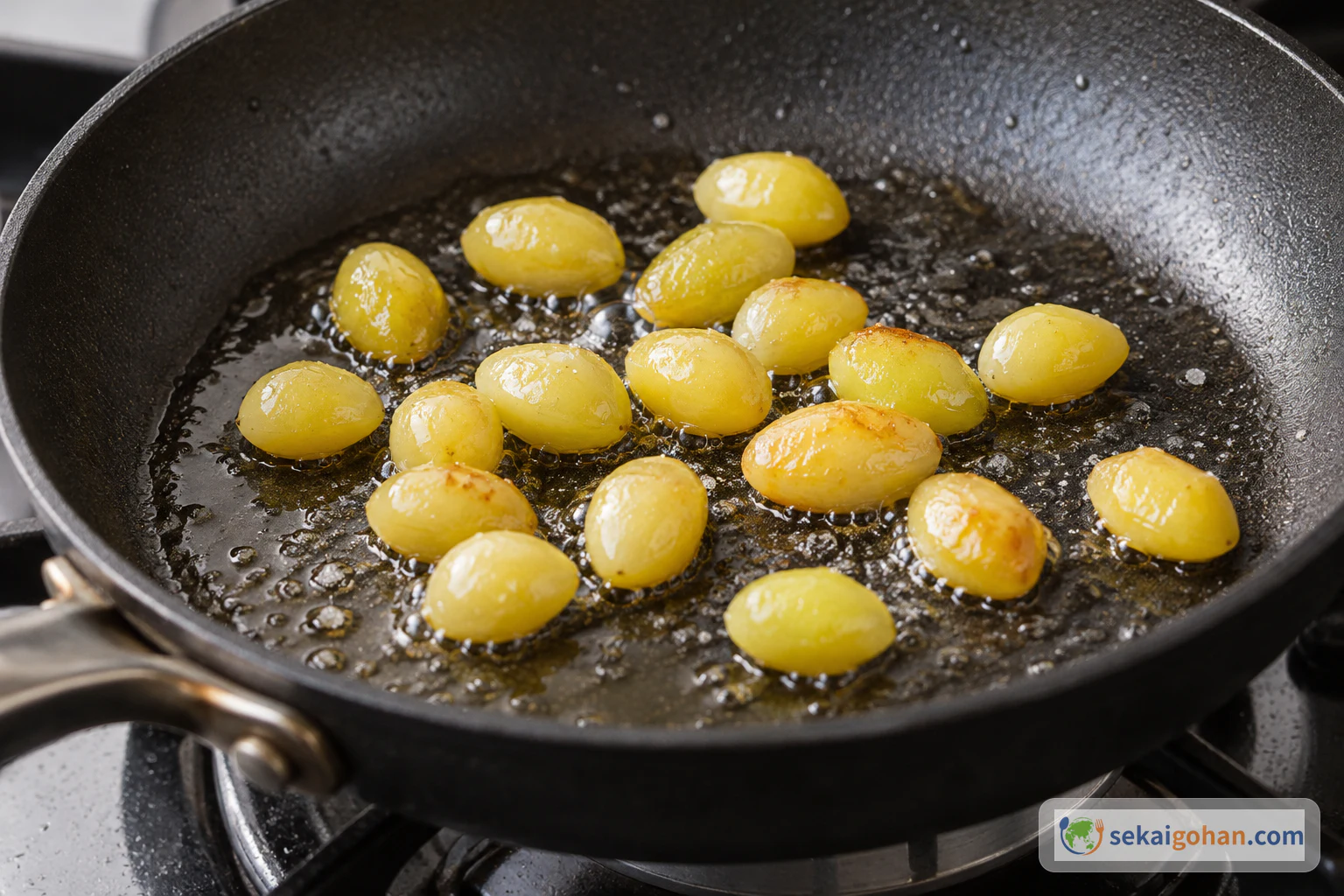
Optional: cook the ginkgo garnish

Optional ginkgo nuts frying in a small skillet with oil
Fry the shelled ginkgo until the skins loosen

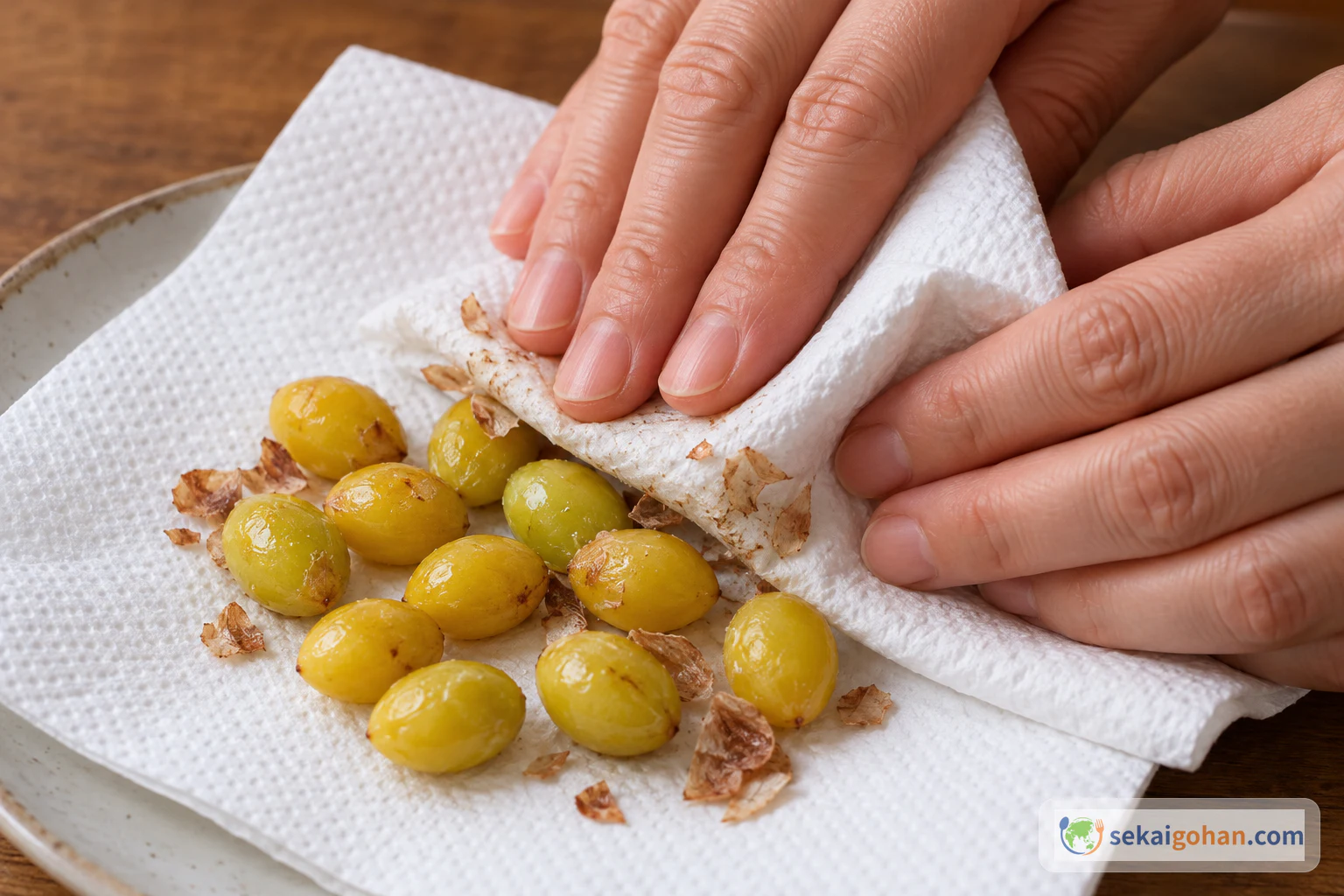
Heat about 2 teaspoons vegetable oil in a small skillet over medium-high heat. Add the shelled ginkgo nuts and a little salt, and stir until the skins loosen and the nuts turn golden or bright green.

Move the ginkgo onto paper towels and gently rub off the loosened skins.

Rubbing the loosened skins off cooked ginkgo nuts on paper towels
Rub off the loosened skins on paper towels
STEP 1313 / 13

Plate and serve with rice

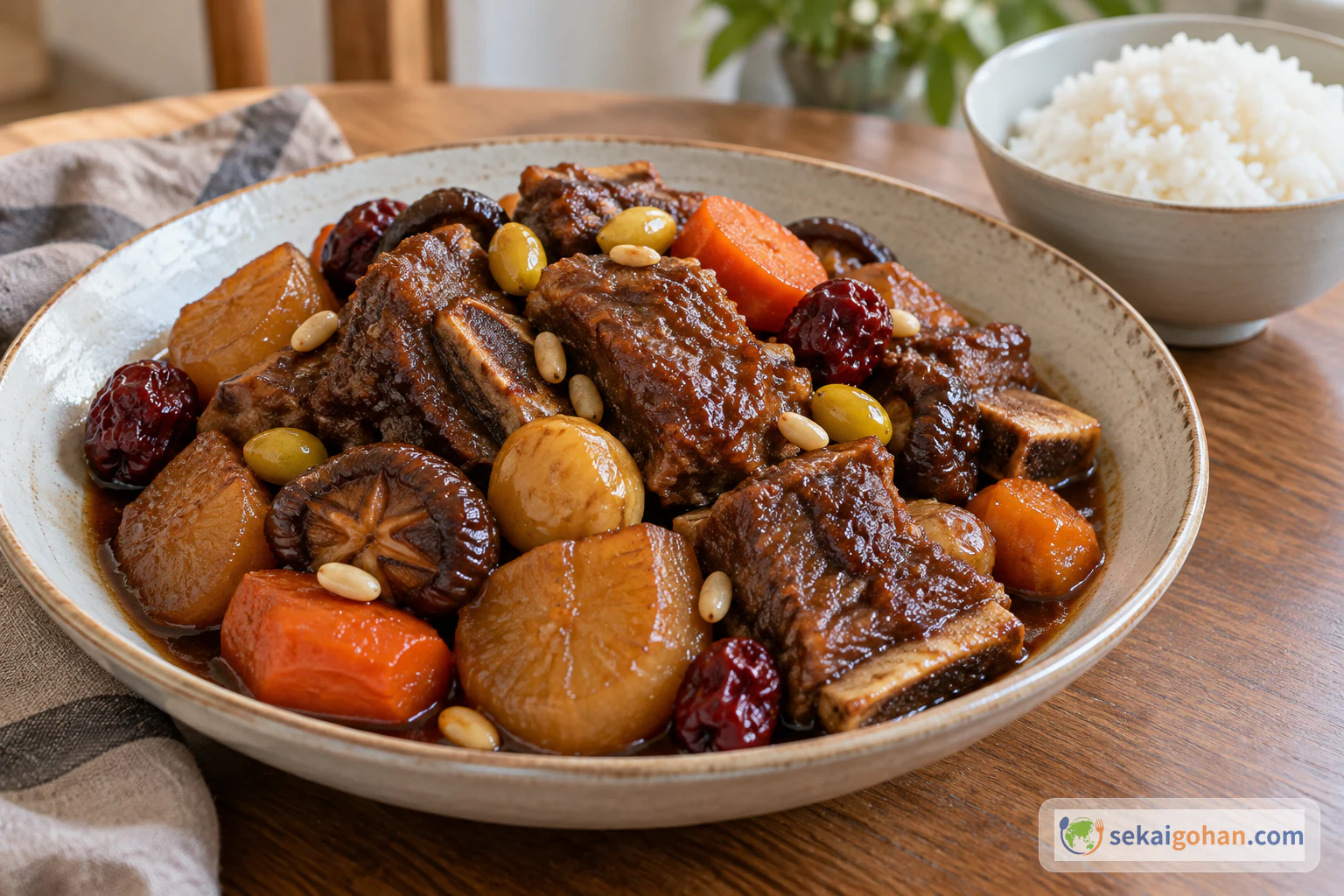
Galbi-jjim on a platter with optional pine nuts and ginkgo, served beside a bowl of rice
Serve on a platter, garnished if you like, with rice alongside

Transfer the ribs and vegetables to a large platter. If you are using them, scatter the pine nuts and cooked ginkgo on top. Serve with rice.

0 / 0
Ingredients

Ingredients

1 / 1

Ingredients

Ingredient Amount Role
Dried shiitake mushrooms, washed 4 Soaked until soft; their soaking liquid becomes the base of the sauce
Cold water (for soaking the mushrooms) 2½ cups Soaking liquid for the shiitake
Cold water (to top up the soaking liquid) as needed Only if less than 2 cups of soaking liquid remains
Soy sauce ⅓ cup Seasoning sauce
Mirim (aka mirin) ½ cup Seasoning sauce
White sugar ¼ cup Seasoning sauce
Ground black pepper ½ teaspoon Seasoning sauce
Garlic cloves, minced 8 Seasoning sauce
Peeled ginger, minced 1 teaspoon Seasoning sauce
Korean radish, peeled 1 medium (8–12 ounces) Cut and rounded into 10–12 balls
Carrots, large and thick, peeled 2 Cut and rounded into 10–12 balls
Beef short ribs, with lots of meat attached 2 pounds (8 pieces) The main ingredient
Cold water (for soaking the ribs) as needed Changed a couple of times during the soak
Water (for blanching) enough to fill a large pot halfway For the 5-minute blanch
Peeled frozen chestnuts 12 Optional; braised with the vegetables
Large dried jujubes, pitted 8 Optional; added near the end
Rice syrup 2 tablespoons Added with the jujubes
Water (only if the ribs need more time) about 1 cup For extra braising
Pine nuts, tips removed 12 Optional garnish
Frozen ginkgo nuts, shelled 12 Optional garnish, cooked before serving
Vegetable oil about 2 teaspoons For the ginkgo garnish only
Salt a little For the ginkgo garnish only
Steamed rice as needed To serve

The chestnuts and jujubes are optional, and you can leave out either one. The vegetable oil and salt are used only for the optional ginkgo garnish, not in the braise.

0 / 0

Bone-in beef short ribs simmer in a heavy pot with shiitake soaking liquid, soy sauce, mirim, sugar, garlic and ginger. Partway through, rounded pieces of radish and carrot, quartered shiitake caps and chestnuts join them, and near the end come dried jujubes and rice syrup. For the last few minutes you turn the heat to high and keep spooning the sauce over the meat and vegetables until most of it has cooked away and everything shines. This is galbi-jjim (갈비찜), Korean braised beef ribs. The recipe is made on the stovetop and serves 4.

Galbi-jjim at the Korean Table

Holidays and High-End Food

Galbi-jjim is a dish for special days: Chuseok (the autumn harvest holiday), Seollal (Lunar New Year) and family birthdays. It works just as well on an ordinary weekend, so it's a special-occasion dish you can actually make at home. For more Korean dishes, see the South Korea recipe collection.

Galbijjim (갈비찜) means braised pieces of beef ribs, though pork ribs can also be used. At Chuseok it sometimes took the place of chicken jjim. Ribs cost more than lean meat, so the dish was counted among high-end foods and served in a covered bowl.

Galbi-jjim and the Royal Court

People often link galbi-jjim to Korea's royal court, but the records don't back this up. The 1795 Wonhaeng Eulmyo Jeongni Uigwe records the meals of an eight-day royal journey involving King Jeongjo, Lady Hyegyeong and Hwaseong. It covers a feast and everyday meals, including a royal lunch of fish dumplings on the way back. Court meals used seasonal and local ingredients, and jjim appears among the court food categories, but galbi-jjim is not on the 1795 menu.

Planning the Day

Cooking takes about 2 hours in total, but two soaks come first. The shiitake need 3–4 hours or overnight, and the ribs need 30 minutes to 1 hour in cold water. Plan around the mushrooms: they take the longest, and their soaking liquid is the base of the sauce.

Ingredients: 4 Servings, Built Around 2 Pounds of Short Ribs
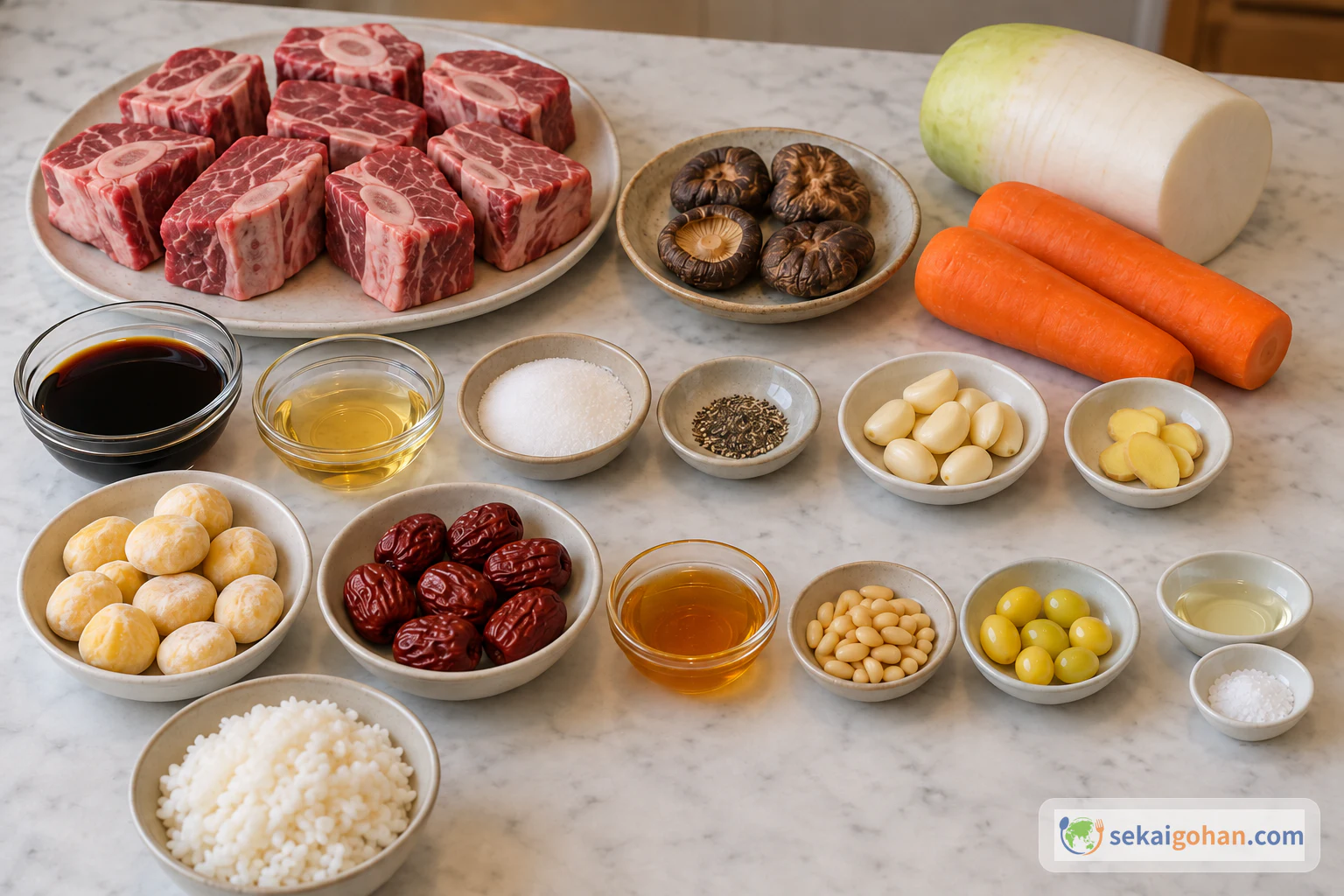
Bone-in beef short ribs, shiitake, root vegetables, peeled frozen chestnuts and dried jujubes, with the oil and salt for the ginkgo garnish set apart from the braising ingredients
The braising ingredients, with the ginkgo garnish's oil and salt kept separate

Equipment

  • Bowls for soaking the mushrooms and the ribs
  • A strainer for draining the mushrooms over a bowl
  • A cup measure and measuring spoons
  • Cutting board and knife, plus a small paring knife for rounding the vegetables
  • A large, heavy pot with a lid
  • A colander
  • A spoon for stirring and basting
  • A wooden skewer
  • A small skillet and paper towels (only for the ginkgo garnish)
  • A large serving platter

Choosing Ingredients for Galbi-jjim

  • Radish: Use Korean radish. Daikon works too; cut and round it the same way.
  • Mirim: Mirim (also written mirin) is used, and water can stand in for it. Japanese mirin, mirin-style seasonings and cooking sake are different products.
  • Sugar: Use white sugar. Brown sugar or Swerve are options.
  • Chestnuts and jujubes: Peeled frozen chestnuts are used, and fresh chestnuts work too. You can leave out the chestnuts, the jujubes or both.
  • Rice syrup: Use rice syrup, not honey or another syrup.

Galbi-jjim Troubleshooting

Situation What to do
Less than 2 cups of shiitake soaking liquid Top up with cold water to 2 cups.
The skewer doesn't pass through the meat easily Add about 1 cup water and cook 15–30 minutes longer. Thicker ribs need the longer end of that range.
The meat is still not almost falling off the bone after the jujubes go in Keep simmering covered past the 10 minutes until it is.
The sauce is still thin at the end Keep the heat on high and spoon the broth over the meat and vegetables for a few minutes, until most of it has reduced and everything looks glazed.

Serving and Leftovers

Put the pot or platter in the middle of the table with side dishes and serve it with rice. The pine nut and ginkgo garnish is optional. This is a stovetop recipe, and no times are given for a pressure cooker, oven or slow cooker.

Handling raw meat and leftovers

The following points come from Japan's Ministry of Health, Labour and Welfare (MHLW) home food-safety guidance. They are not part of the recipe.

  • Keep raw meat juices away from salads and cooked foods. Clean your hands and any equipment that touched raw meat. This includes the water and splashes from the rinsing, soaking and blanching stages.
  • For foods that need cooking, heat the center to 167°F (75°C) and keep it there for at least 1 minute.
  • Don't leave prepared food at room temperature for long. Cool leftovers quickly in shallow containers. Reheat them thoroughly, to 167°F (75°C) or higher.

Rinsing the raw ribs is part of the method, but it doesn't make the meat safe. Keep the ribs in cold water the whole time they soak. Reheat leftovers covered, over low heat.

Frequently Asked Questions

Does the skewer test mean the meat is safely cooked?

No. The skewer test and meat that is almost falling off the bone tell you it's tender, not that it has reached a safe temperature. For food that needs cooking, heat the center to 167°F (75°C) and hold it there for at least 1 minute.

How should I handle leftovers?

Cool them quickly in shallow containers and don't leave them at room temperature for long. When you reheat them, bring them to 167°F (75°C) or higher all the way through.
Sources

  • Maangchi, "Braised beef short ribs (Galbi-jjim: 갈비찜)." First posted 2008-09-10; page updated 2026-10-04. The sole basis for the ingredients, amounts, method order, heat levels, times, tenderness cues and ingredient options. Also the source for the author's description of the dish as made for Chuseok, Seollal and family birthdays as well as on weekends, and her serving suggestion with rice. https://www.maangchi.com/recipe/galbi-jjim
  • Academy of Korean Studies, Encyclopedia of Korean Culture, "갈비찜" (entry by Jung Sun-ja, written 1995, updated 2023). The scholar's account of galbijjim as braised beef rib pieces (pork ribs also possible), its occasional use at Chuseok in place of chicken jjim, its status as a high-end dish because ribs cost more than lean meat, and serving in a covered bowl. https://encykorea.aks.ac.kr/Article/E0000650
  • National Institute of Korean History, "Korean Royal Cuisine." The distinction between ordinary court meals and ceremonial banquets, and the 1795 Uigwe's record of meals during an eight-day royal journey. It does not show galbijjim on that menu. https://contents.history.go.kr/play/view.do?levelId=tz_b44
  • Korea Tourism Organization (VISITKOREA), "Royal Cuisine." Joseon court cuisine as recorded in feast documents, including the 1795 Uigwe, and court food categories including jjim. It does not establish galbijjim in that record. https://english1.visitkorea.or.kr/enu/FOD/FO_ENG_2_3.jsp
  • Japan Ministry of Health, Labour and Welfare, "家庭での食中毒予防" (Preventing food poisoning at home). General guidance on keeping raw meat juices away from other foods, cleaning hands and equipment, the 75°C-for-1-minute heating benchmark, and cooling and reheating leftovers. It does not give a storage period for this dish. https://www.mhlw.go.jp/stf/seisakunitsuite/bunya/kenkou_iryou/shokuhin/syokuchu/01_00008.html