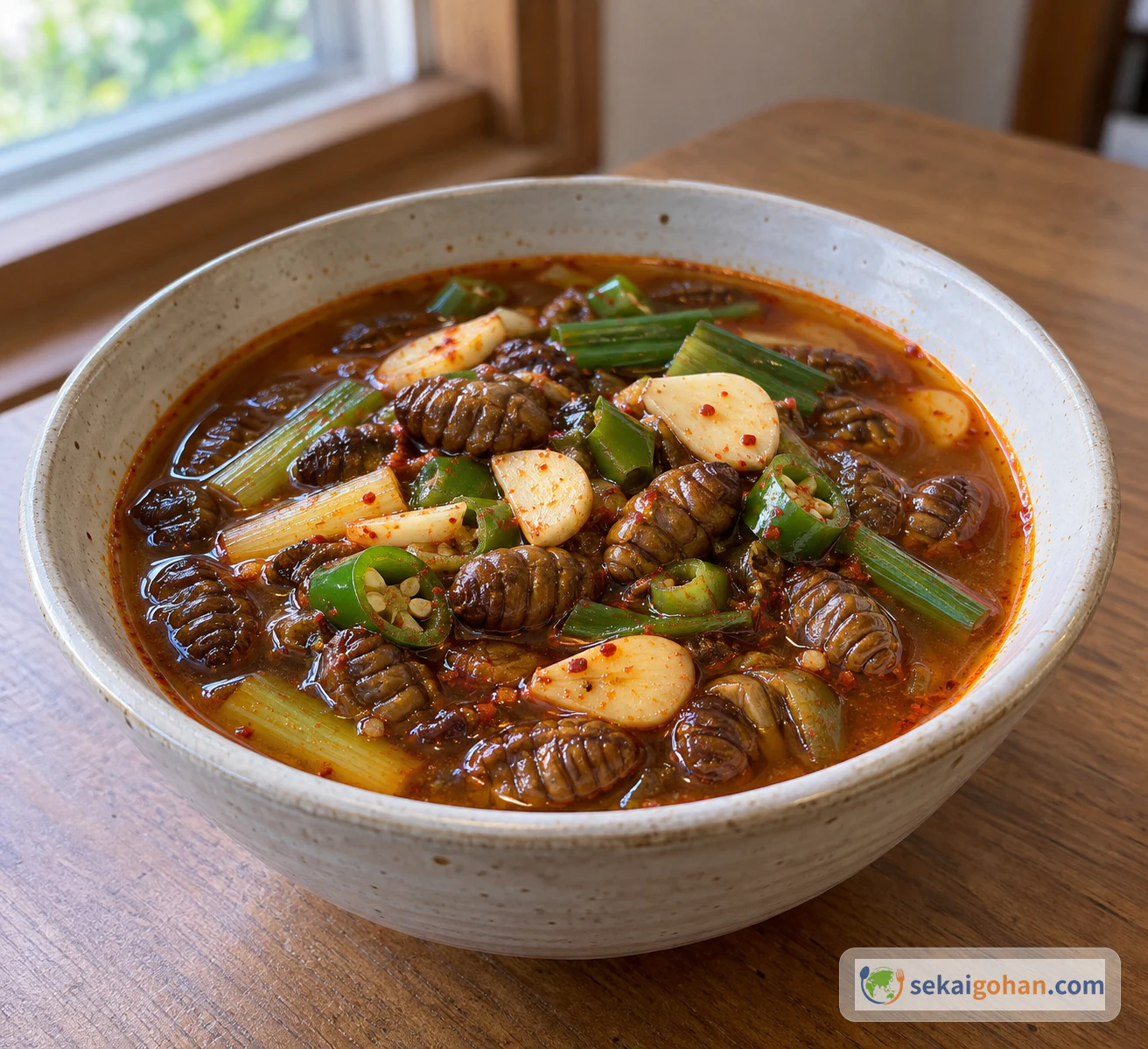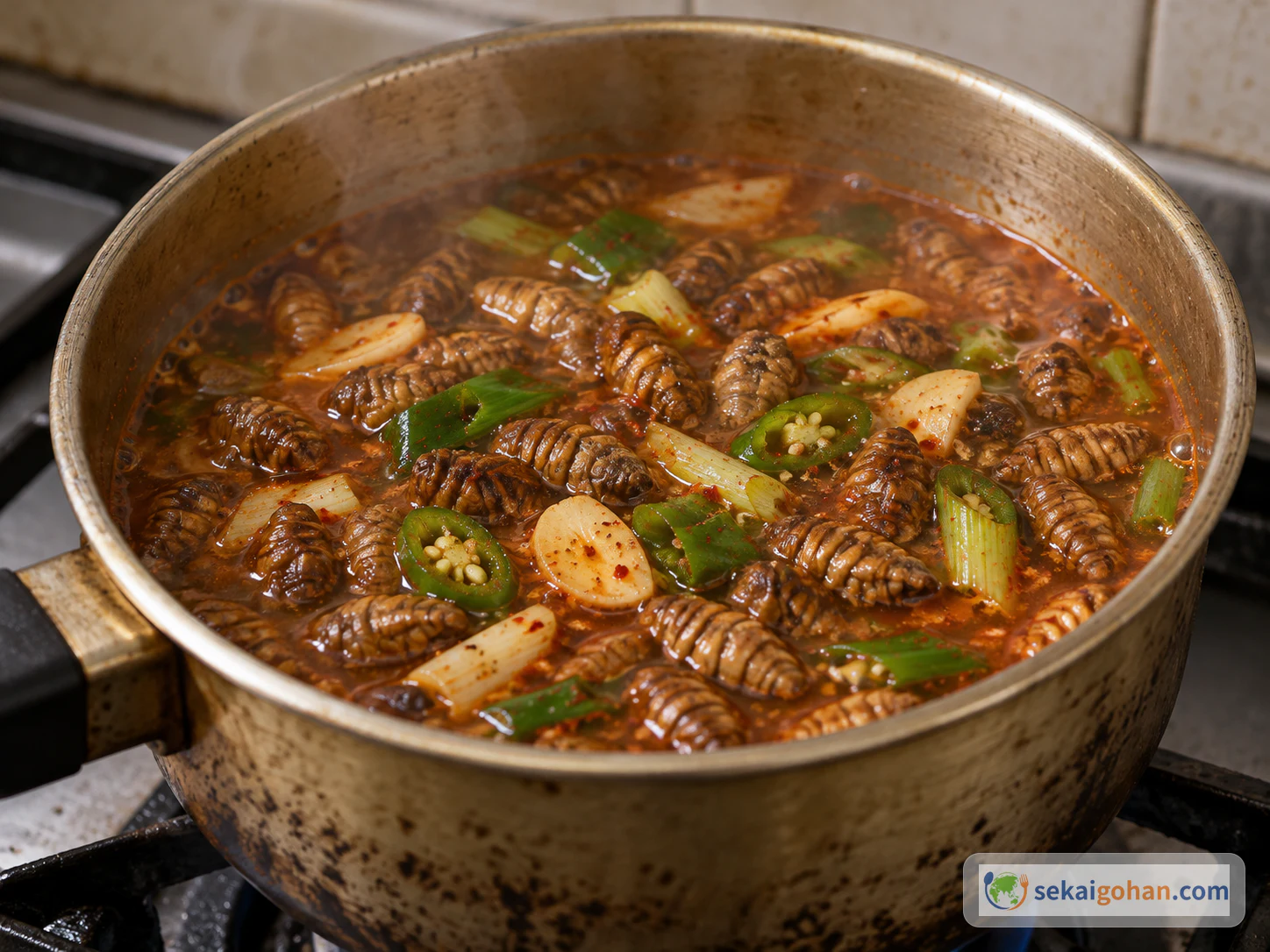
Beondegi-tang in a small pot: silkworm pupae, red broth, sliced garlic, scallion and Cheongyang chili
Serves2 servings
CuisineKorean

Beondegi-tang: Spicy Korean Silkworm Pupa Soup Made from a Can (번데기탕)

How to make beondegi-tang (번데기탕), a quick, spicy Korean soup of canned silkworm pupae with sliced garlic, gochugaru, scallion and Cheongyang chili. Follows one home cook's written recipe for 2, with the exact order of additions, how much can liquid goes back in, what the 150g on the can means, and allergy notes to read before you eat.

Level: Beginner

Cooking flow

Cooking steps

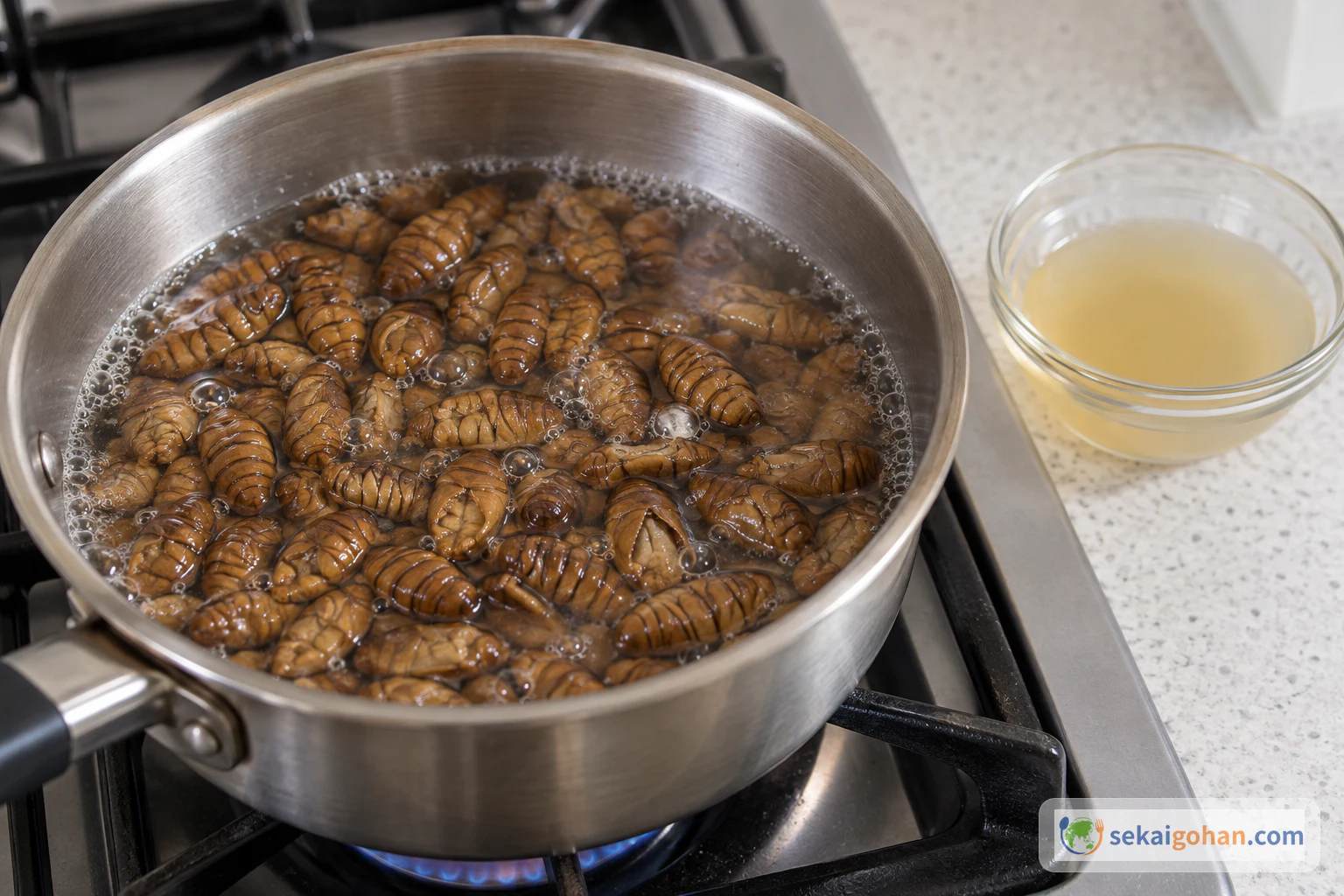
STEP 11 / 4

Drain the pupae, keep the liquid, and bring them to a boil in water

Silkworm pupae, drained with the can liquid set aside, starting to cook in a pan with 1 cup of water
The reserved can liquid waits on the side; only water goes in now

Open the can and tip the pupae into a sieve set over a bowl. Don't throw the can liquid away: set it aside, because 2 tbsp of it goes back into the pot later. Put the drained pupae and 1 cup of water in a medium pan and bring it to a boil.

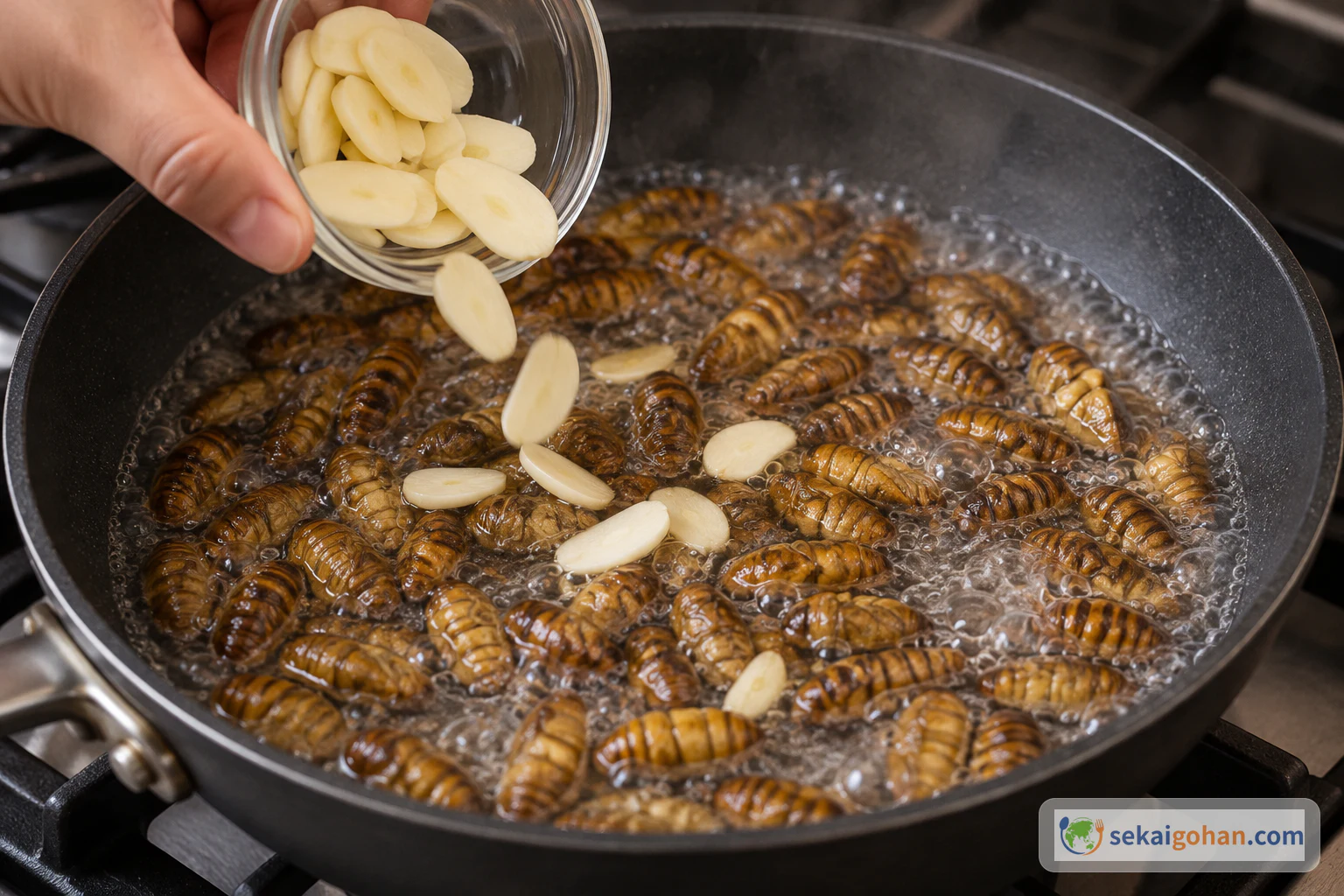
STEP 22 / 4

Add the sliced garlic once it boils

Sliced garlic added to the boiling pan of silkworm pupae
Sliced garlic goes in on its own, before any seasoning

When the water is boiling, add 3 tbsp of sliced garlic and keep it cooking.

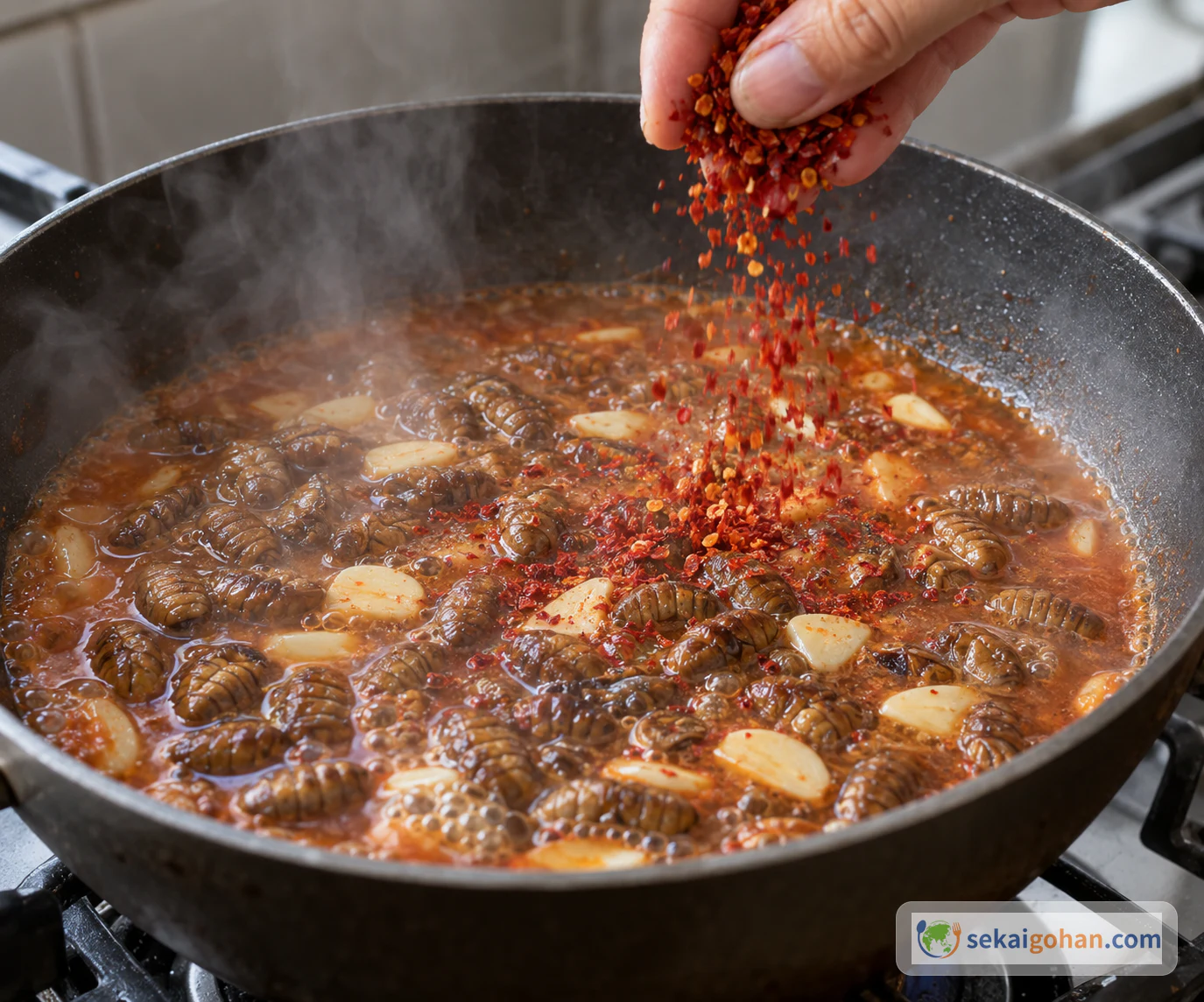
STEP 33 / 4

Add 2 tbsp of can liquid, then the chili powder

Korean chili powder (1 tbsp) sprinkled into the pan after the 2 tbsp of can liquid
Can liquid first, then the chili powder

Pour in 2 tbsp of the reserved can liquid. Then add 1 tbsp of gochugaru and keep simmering.

STEP 44 / 4

Add scallion, cooking wine and Cheongyang chili; finish with pepper

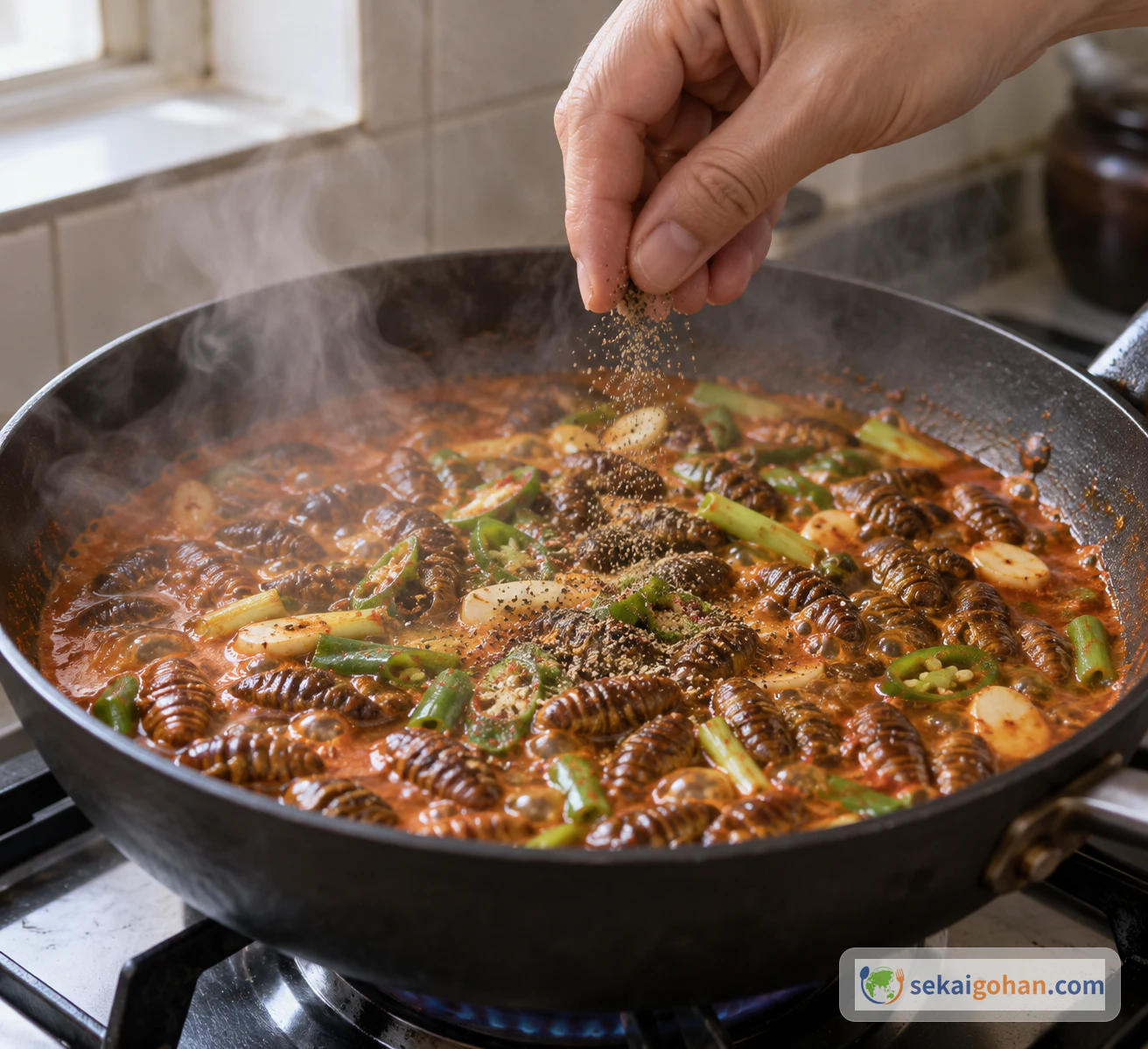
Finishing with black pepper over the pan with scallion, Cheongyang chili and cooking wine
Black pepper is the very last thing to go in

Add 2 tbsp of frozen scallion. Next add 1 tbsp of matsul and 1 tbsp of frozen Cheongyang chili and let it cook. Finish with a light shake of ground black pepper.

0 / 0
Ingredients

Ingredients

1 / 1

Ingredients

Ingredient Amount Role
Canned silkworm pupae (번데기, beondegi) 1 can (150g) The main ingredient. 150g is the can's listed amount, not a drained weight
Water (물) 1 cup (1컵) The cooking liquid the pupae simmer in
Sliced garlic (편마늘, pyeon-maneul) 3 tbsp Added once the pot boils. Sliced, not minced
Reserved can liquid (번데기캔 국물) 2 tbsp Strained off the can at the start; only 2 tbsp goes back in
Korean chili powder (고춧가루, gochugaru) 1 tbsp Color and heat for the broth
Scallion (대파, daepa), frozen 2 tbsp Added after the chili powder. Used frozen
Korean cooking wine (맛술, matsul) 1 tbsp Added together with the Cheongyang chili
Cheongyang chili (청양고추), frozen 1 tbsp Green chili heat. Used frozen
Ground black pepper (후춧가루) A light shake (톡톡) Sprinkled on at the very end
0 / 0

Open a can of silkworm pupae, add sliced garlic, chili and a little water, and fifteen minutes later you have a small pot of red, sharply spicy broth. This is beondegi-tang (번데기탕), a kalkalhan (sharply spicy) version that serves as a super-speedy drinking snack for a rainy day. Beondegi (번데기) are silkworm pupae. Koreans have eaten them, along with grasshoppers, as food, most often as a steamed snack. This recipe simmers them in a garlicky chili broth instead, and it serves 2.

Beondegi and Beondegi-tang

Steamed beondegi is the traditional snack. Beondegi-tang starts from the canned product, which you simmer in a small amount of water with garlic, chili and scallion. The result is a soup-style dish that is easy to make at home. For more dishes from the country, see our South Korea page.

Name and spelling

번데기 is romanized as beondegi; 번데기탕 is beondegi-tang, where tang marks a soup. Searching with the Korean spelling helps when you are looking for canned pupae at a Korean grocer.

Ingredients (Serves 2)
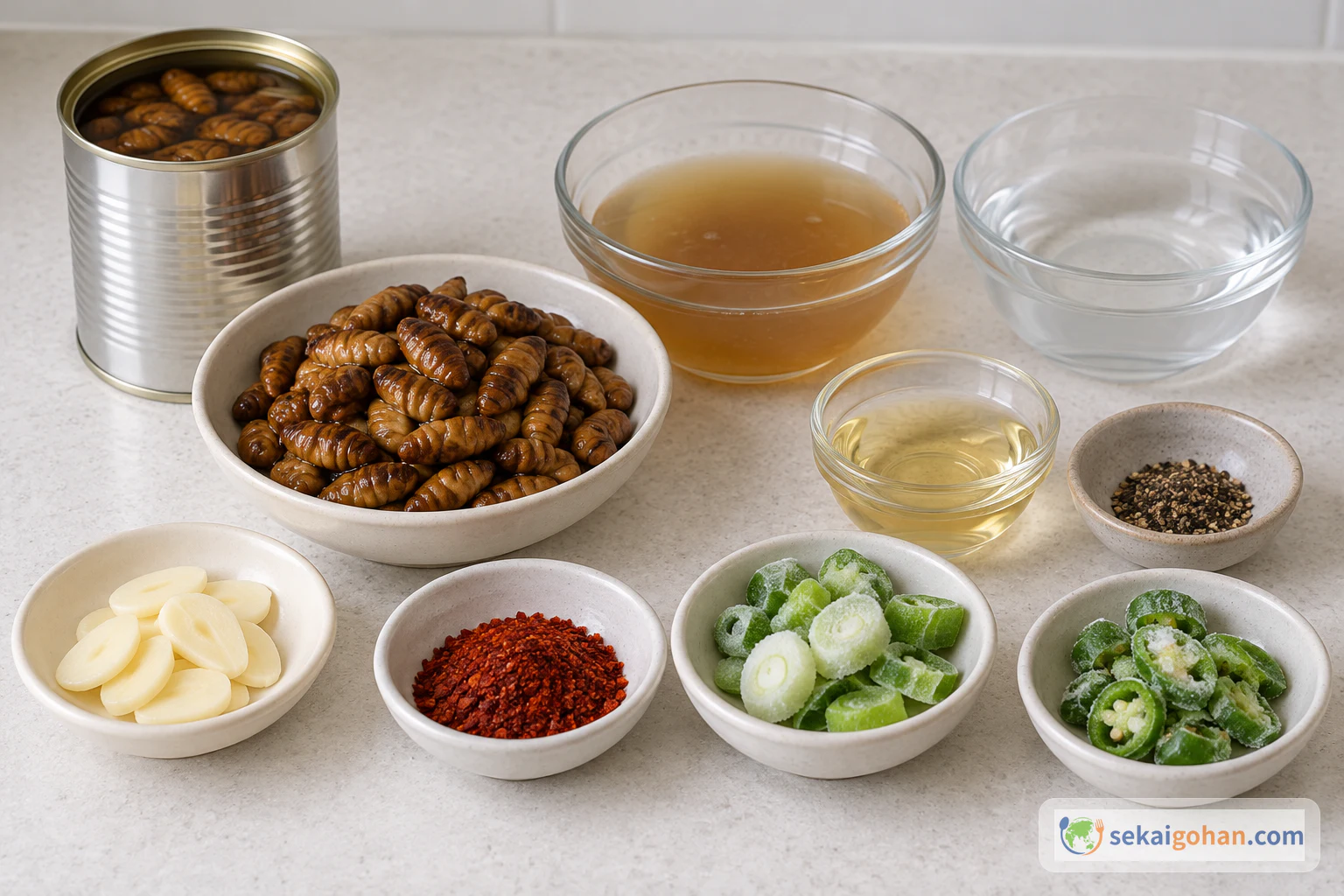
Ingredients for beondegi-tang: a can of silkworm pupae, reserved can liquid, water, sliced garlic, chili powder, chopped scallion, Cheongyang chili, cooking wine and black pepper
Keep the reserved can liquid separate from the plain water

Here 1T (one tablespoon) is 1 tbsp (15 ml).

The recipe contains no onion, no soy sauce and no cooking oil, and it does not call for extra salt.

Equipment

  • Sieve or strainer
  • Small dish or bowl for the reserved can liquid
  • Medium pan
  • Measuring spoons
  • A cup for the water

Choosing Ingredients for Beondegi-tang

Picking up a plain can in a grocery aisle
Look for canned silkworm pupae at a Korean or import grocer

Canned silkworm pupae. Look for 번데기 통조림 (canned beondegi) at Korean or import grocers. Contents, net weight and ingredients vary from product to product, so read each can's own ingredient and allergen labeling before you buy.

Allergy note

Silkworm pupae contain potential allergens, and reactions need attention. Allergy evaluation is limited, and most of the evidence comes from case reports. Possible cross-reactivity is still being studied. If you have had an allergy to silkworm pupae or related foods, don't try this on your own judgment. Always check the ingredient and allergen labels on the can before you buy.

The cup of water. Cup sizes vary: a standard cup is 200ml, a paper cup 180ml.

Gochugaru. Use Korean chili powder here, not gochujang.

Cheongyang chili. This is a specific Korean green chili. A different green chili won't give quite the same heat at the same amount.

Matsul. 맛술 is Korean cooking wine, and it is distinct from Japanese mirin.

Scallion and chili. Both can go into the pot straight from frozen.

Method: Four Stages, in Order

How the steps are grouped

The eight short steps are grouped into four stages. The order of anything that goes into the pot stays the same. Watch for the boil rather than a clock.

Common Mistakes with Beondegi-tang
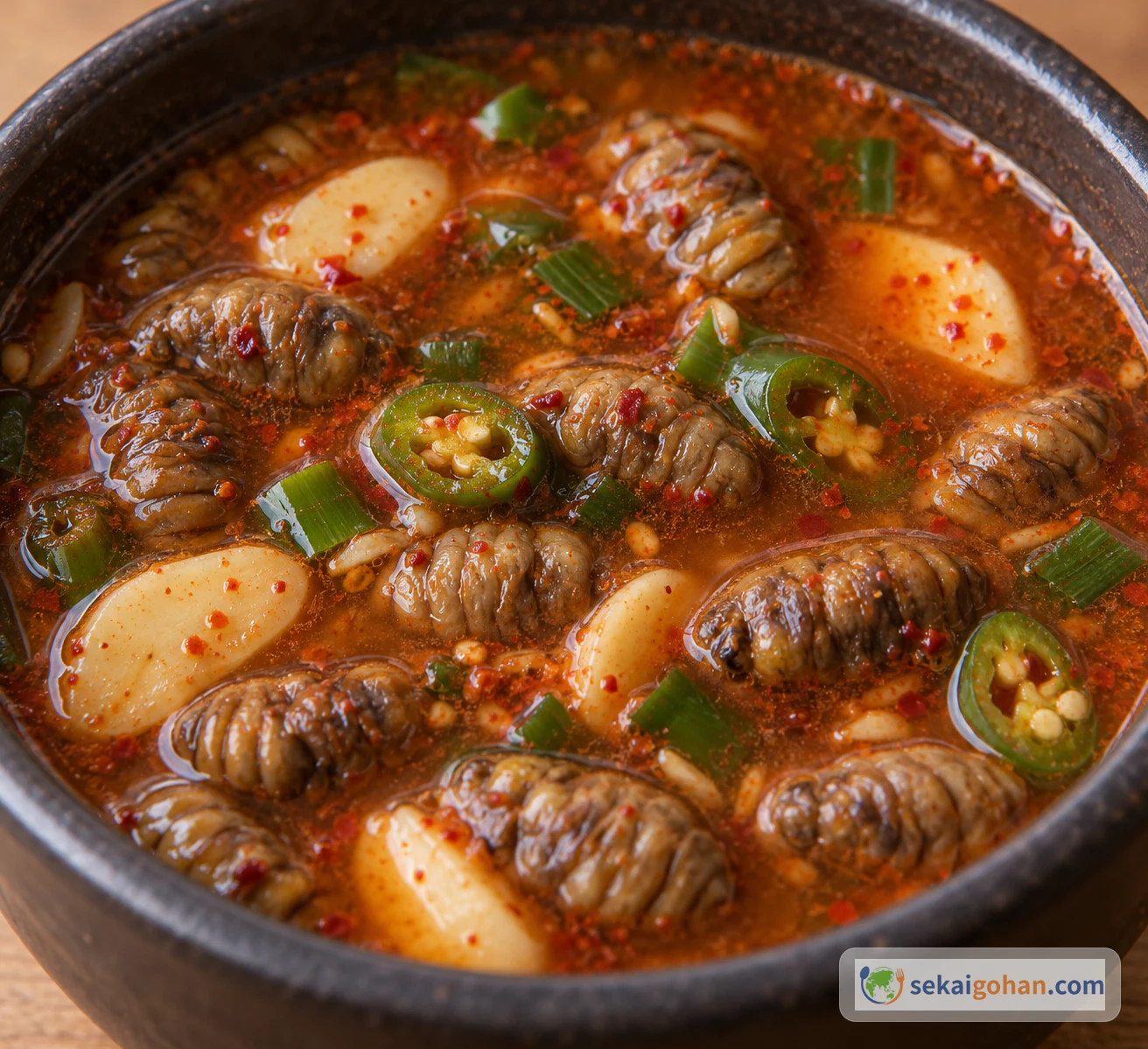
Close-up of silkworm pupae coated in red chili-powder broth with sliced garlic and scallion
Pupae, sliced garlic and scallion in the chili-red broth

With a recipe this short, most mistakes come from changing a quantity or an ingredient rather than from technique.

Mix-up What the recipe actually says What to do
Pouring in all the can liquid Only 2 tbsp of the reserved liquid goes back in Measure 2 tbsp and leave the rest out
Using minced garlic The recipe uses sliced garlic (편마늘) Slice it
Adding everything at once Garlic, can liquid, chili powder, scallion, wine with chili, then pepper Add them in that order

Serving Beondegi-tang

Beondegi-tang with silkworm pupae, sliced garlic, scallion and Cheongyang chili served in a small bowl
A modest bowl with no extra garnish

Beondegi-tang is a drinking snack (술안주, sul-anju), best on a rainy day. Ladle the pupae and their red broth into small bowls and serve.

Frequently Asked Questions

Is the 5.5 oz (150 g) the drained weight?

No. 5.5 oz (150 g) is the amount listed for the can. No drained weight is given, so use one can.

How much black pepper?

Use a light shake (톡톡), with no measured amount. Sprinkle it on at the end.

I'm worried about allergies. What should I know?

Silkworm pupae contain potential allergens, and research on reactions, including cross-reactivity, is still limited. Read the can's label, and if you have a related allergy, don't try it on your own judgment.
Sources

  • 고흐의연인, "캔 요리) 칼칼한 번데기 탕 만드는 법/비 오는 날 먹는 술안주♥초스피드 번데기 탕 만드는 법," 10000recipe, published 2022-07-21, updated 2022-07-22. The recipe followed in this article: ingredients and amounts, the 2-servings and 15-minute listing, the eight-step written order, returning 2 tbsp of can liquid, and the site's measurement guide. https://www.10000recipe.com/recipe/6984016
  • Lee Jihae, "Edible insect sector to promote public health, boost economic growth," Korea.net (Ministry of Culture, Sports and Tourism, Republic of Korea), 2019-08-23. Cultural context: beondegi (steamed pupae) as a traditional snack in Korea, and the eating of pupae and grasshoppers. https://www.korea.net/NewsFocus/Culture/view?articleId=174522&pageIndex=1
  • Xuli Wu, Kan He, Tanja Cirkovic Velickovic and Zhigang Liu, "Nutritional, functional, and allergenic properties of silkworm pupae," Food Science & Nutrition, 2021. Potential silkworm-pupae allergens, the limited and largely case-report-based allergy research, and open questions about cross-reactivity. https://pmc.ncbi.nlm.nih.gov/articles/PMC8358373/