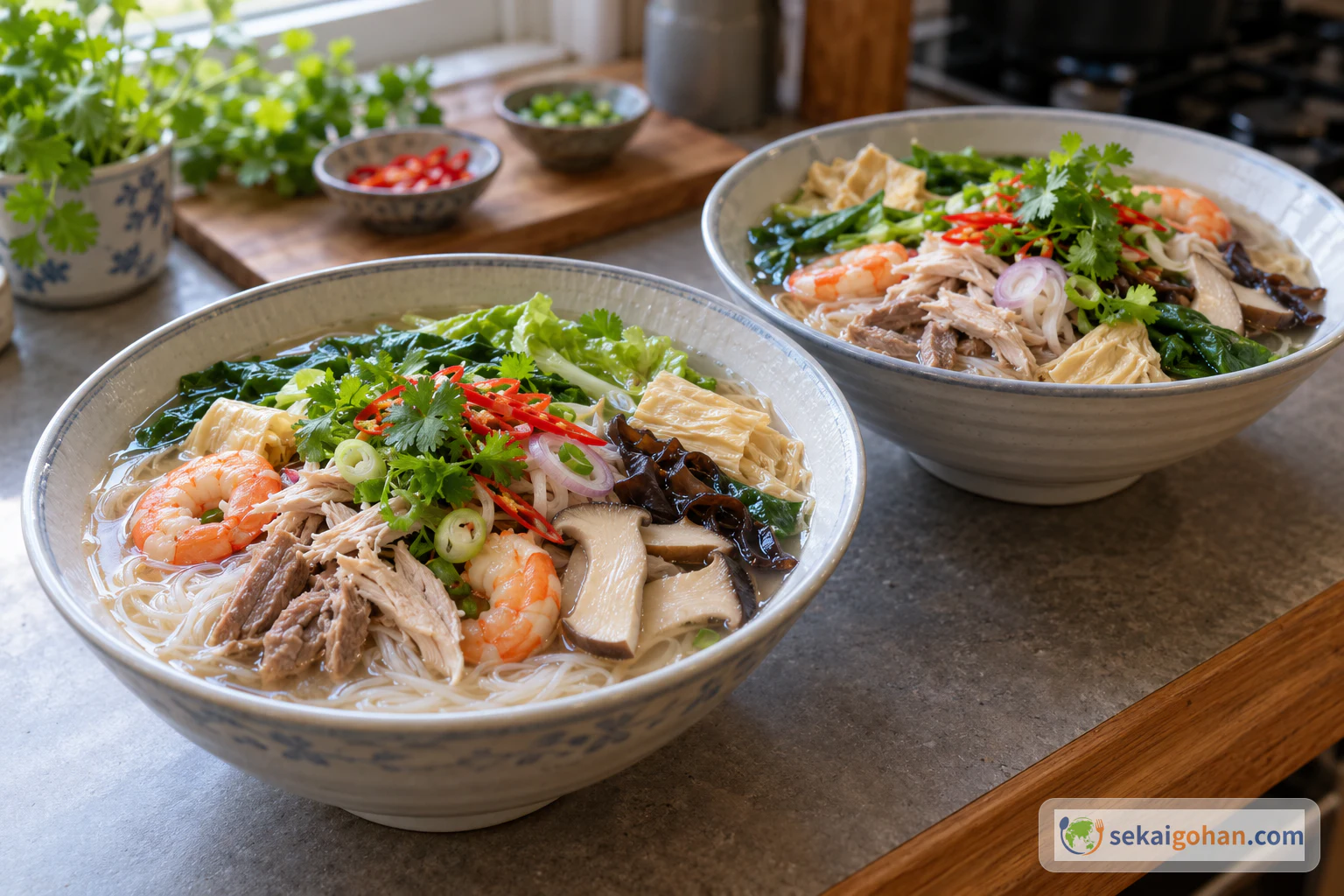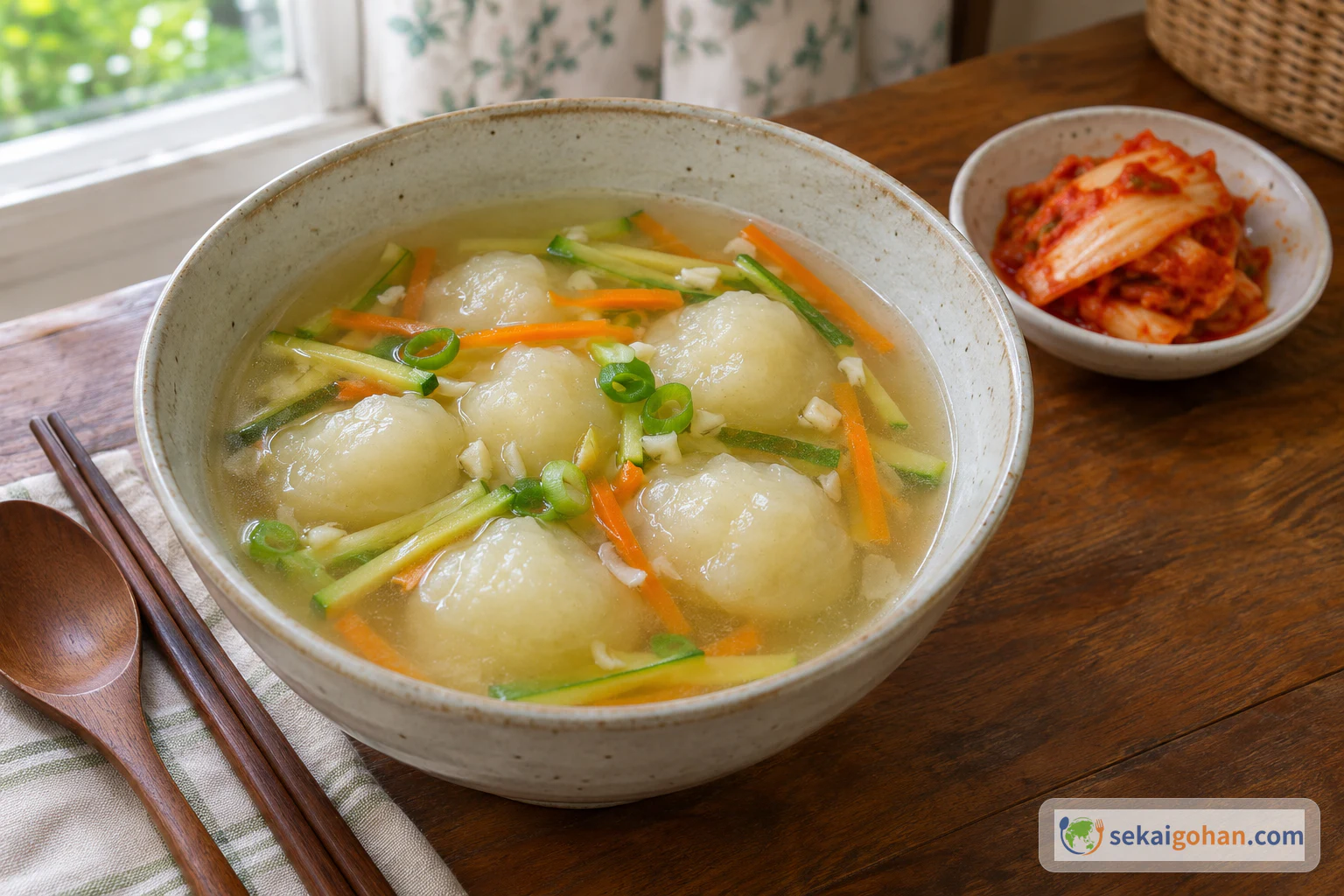
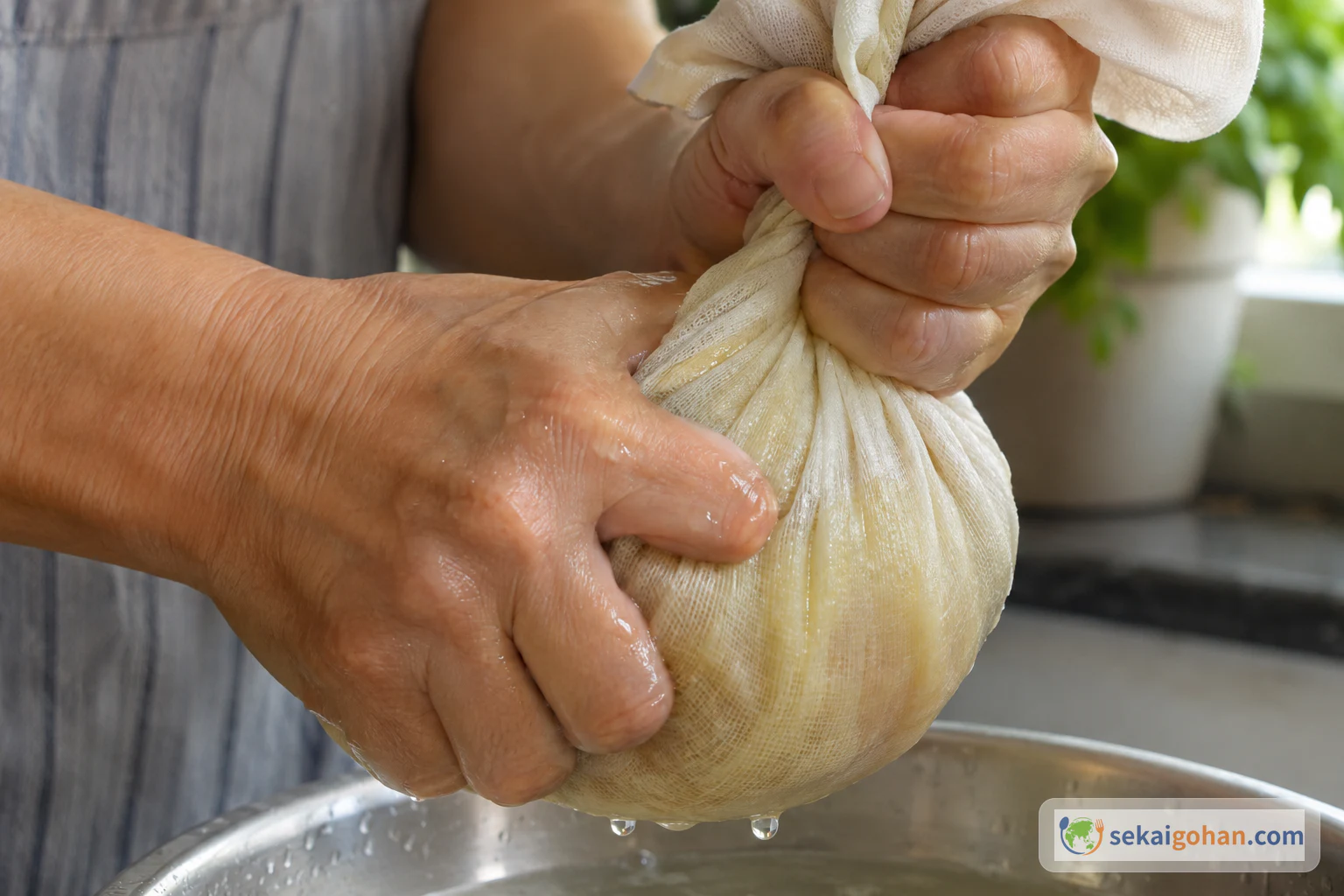
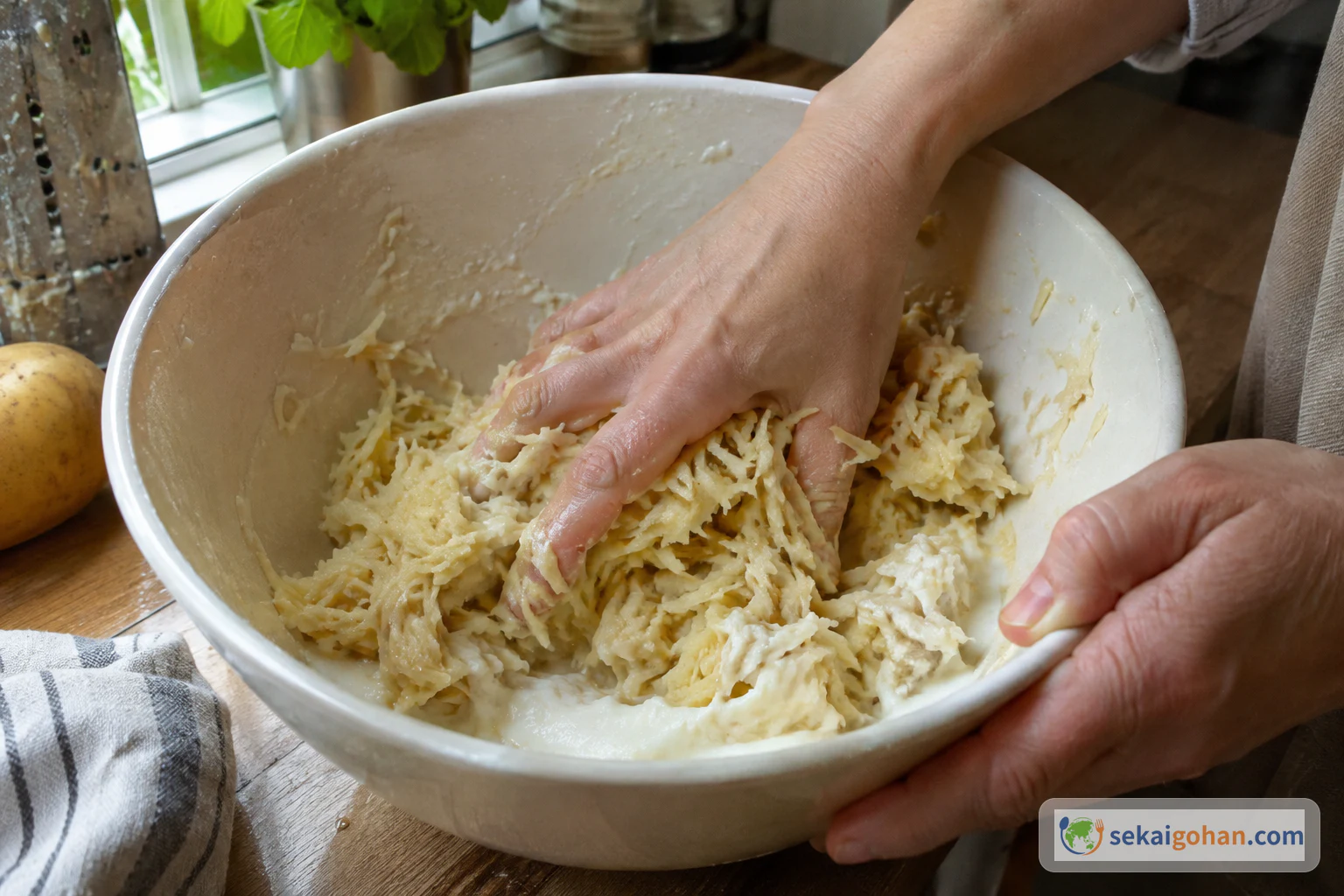
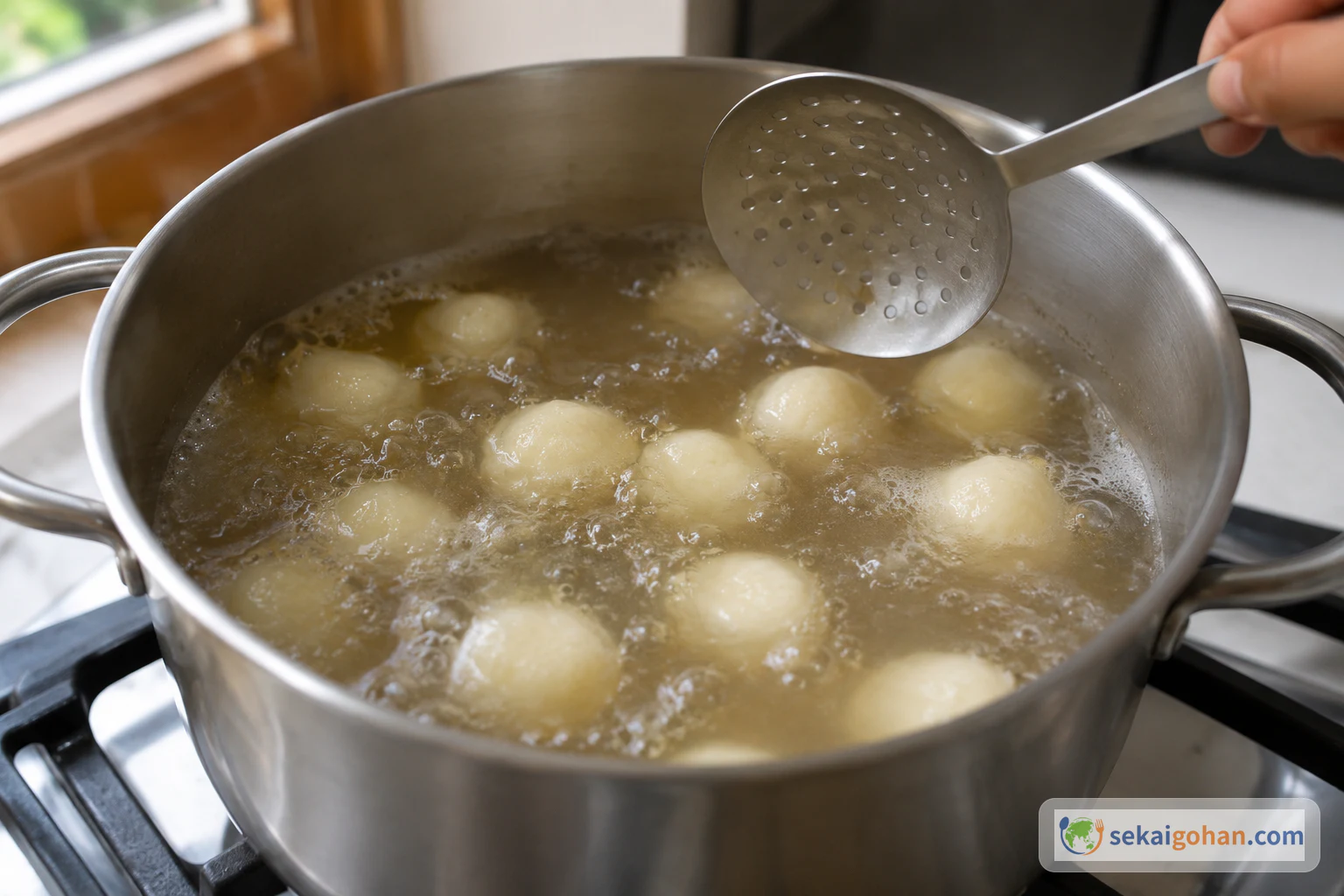
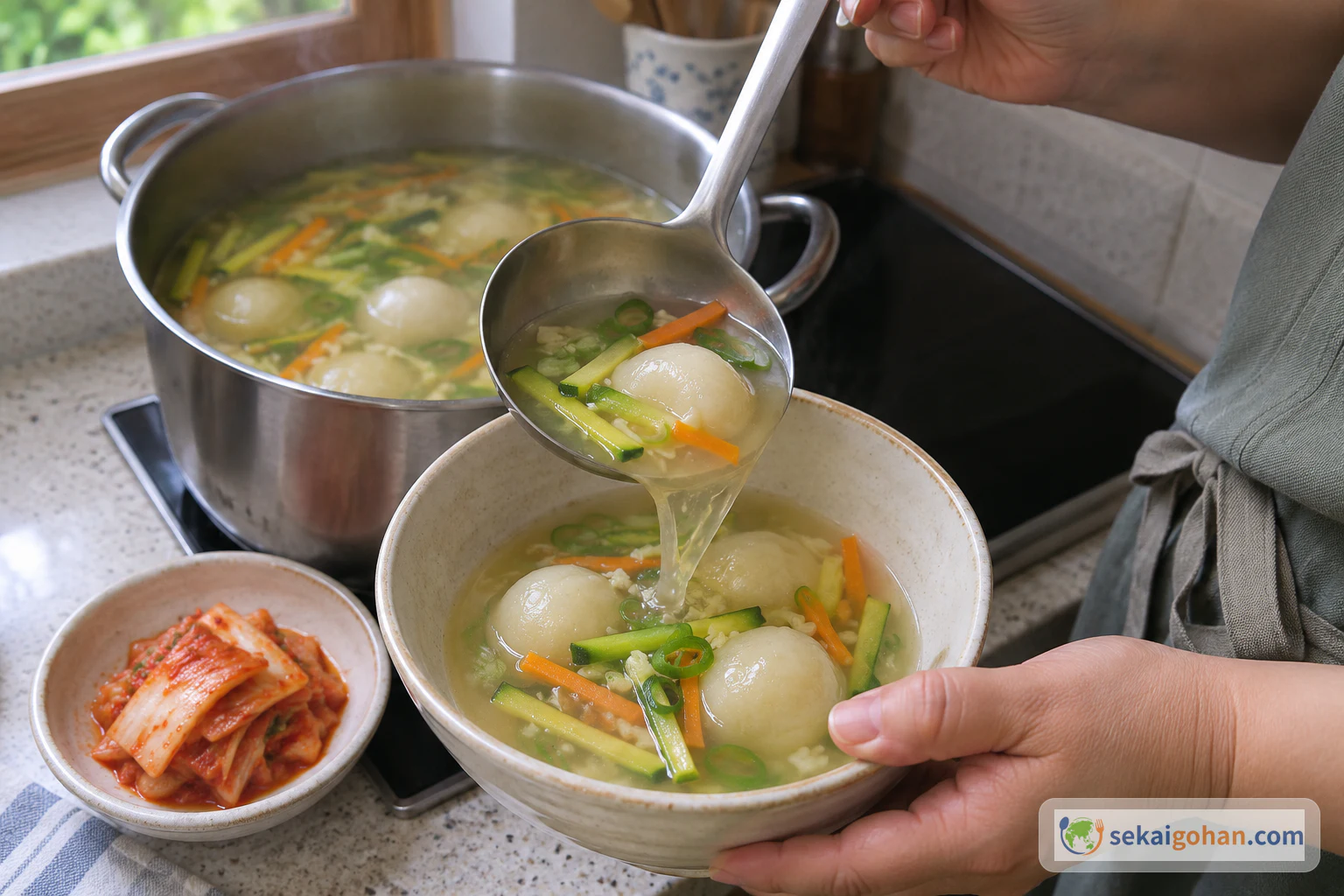
Raw potatoes are grated, wrapped in a cloth and twisted hard over a bowl. The liquid that runs out is kept, and after a short rest a white layer of starch sinks to the bottom under a layer of brownish water. You pour off the water and work the starch back into the squeezed potato, and that's the whole dough: potato, a little salt, and the potato's own starch, rolled into small balls and simmered in stock. This is gamja-ongsimi, a potato dumpling soup from South Korea. Here the stock is made with dried anchovies, dried kelp, radish and onion.
Gamja-ongsimi in Gangwon
Gamja-ongsimi is a regional food of Gangwon, especially Jeongseon and Yeongwol. Potatoes served as a relief food there when rice was scarce, and grating them and recovering the starch that settles out is how the dumplings came to be. No single place or year of origin has been established, and some regional forms are flatter or larger than the small balls made here.
The broth changes from place to place. A version from Seonheung-ri, Geundeok-myeon, Samcheok-gun, recorded in 1997 and entered in 2010, boils the potato balls in beef-bone broth with different accompaniments. Another uses a soybean-paste broth with the potato balls, zucchini, red chili and sesame salt. The anchovy-kelp stock is lighter than either and lets the potato come through.
Ingredients (Serves 2 to 3)
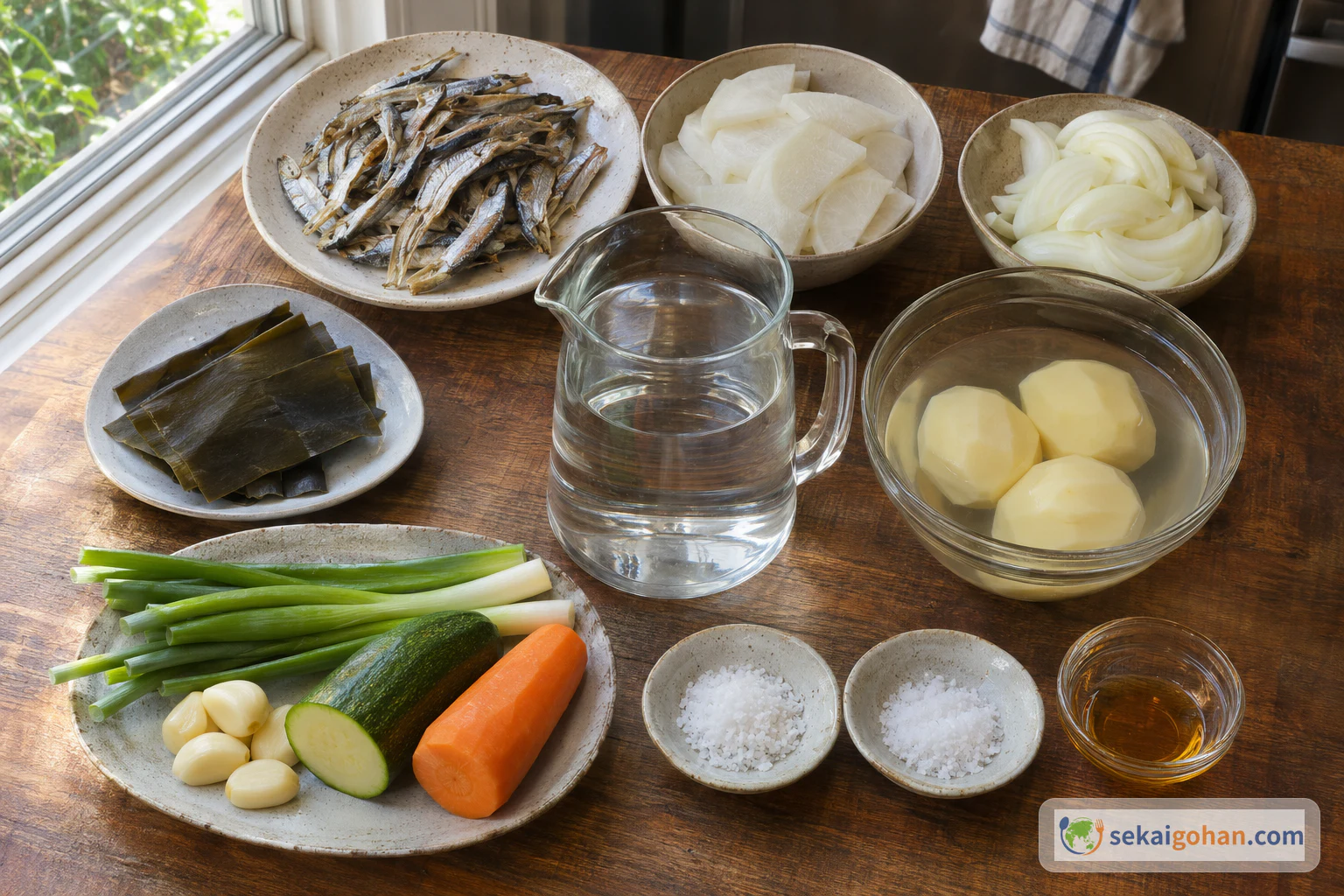
There are two separate salt amounts: one for the stock and one for the dumpling dough. Keep them apart. No starch powder or flour goes into the dumplings; the starch comes from the potatoes themselves. Kimchi can be served on the side in its own dish rather than stirred into the soup.
Equipment
- A pot with a lid
- A sieve and a bowl for straining the stock
- A hand grater
- A cotton cloth
- A large empty bowl to catch the squeezed potato liquid
- A large bowl of cold water
- A spoon, a ladle and serving bowls
Choosing Ingredients for Gamja-ongsimi
- Dried anchovies: use large ones, and remove the heads and guts before they go into the pot.
- Radish: Korean radish or daikon both work.
- Salt: kosher salt.
- Starch: keep the sediment, and don't replace it with store-bought potato starch or flour. The settled potato starch is the only thing holding the dumplings together.
Method: Stock, Squeeze, Settle, Shape, Simmer
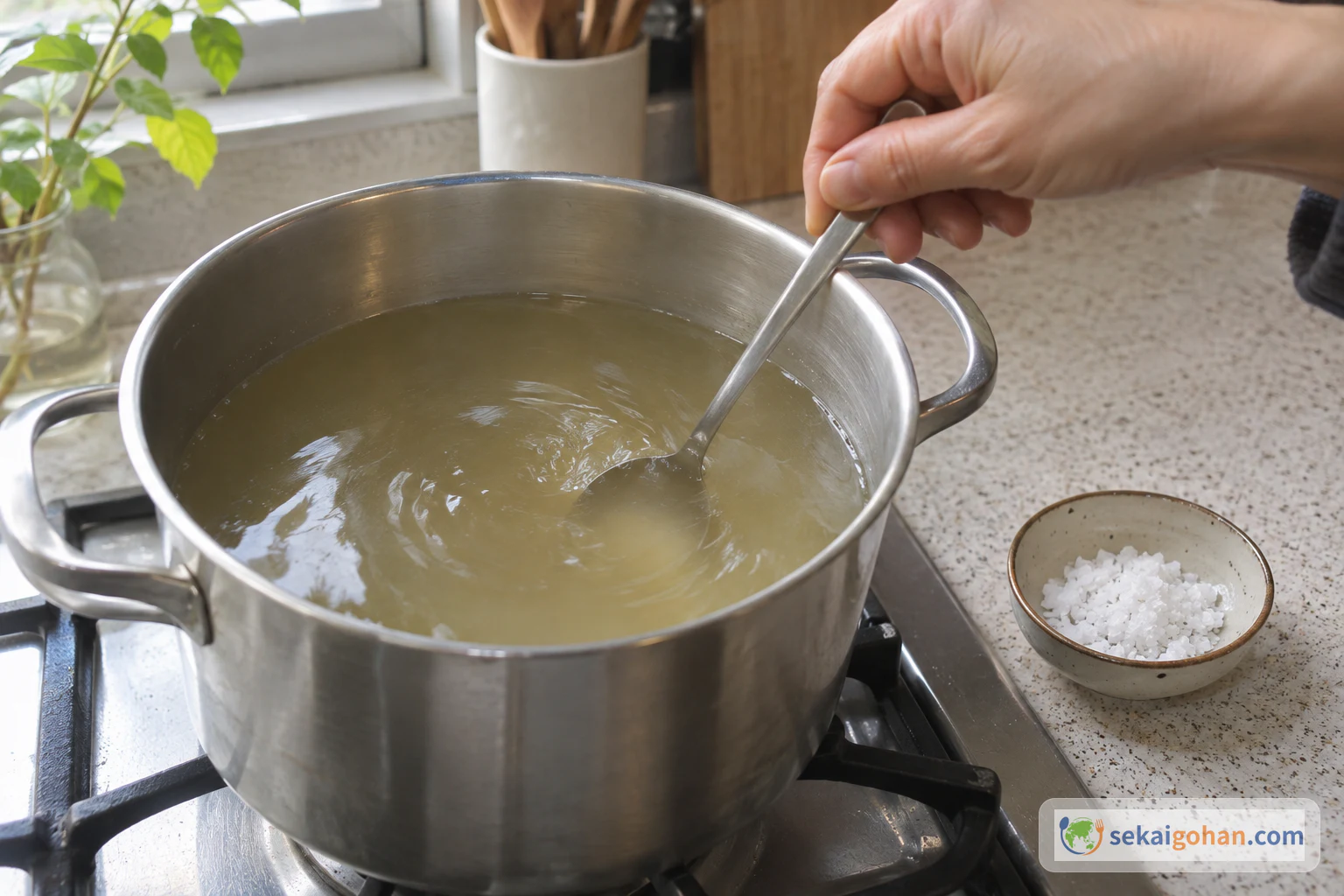
Make the stock first and set it aside salted. The dumpling dough comes next, and the soup comes together quickly once the stock is boiling again.
Gamja-ongsimi Troubleshooting
| What you see | What to do |
|---|---|
| The strained stock is under 4 1/2 cups | Add water to bring it up to 4 1/2 cups |
| The starch hasn't settled into a layer yet | Keep resting the bowl, within the 10 to 15 minutes, until the starch has sunk to the bottom |
| White starch starts to slide out as you pour | Stop and set the bowl upright; you need that starch for the dough |
| The dumplings are still sitting on the bottom | Keep cooking; they're ready to move on when they float |
| Zucchini or carrot cut into rounds | Cut them into thin matchsticks so they cook in the same covered 3 to 4 minutes |
If your dumplings come out hard, ease up on the squeeze next time. The Samcheok record notes that wringing the potato too hard can make them firm.
If the settled starch is poured away with the water, or replaced with something else, you are no longer making this version of the dumplings. Pour gently and keep the white layer in the bowl.
Frequently Asked Questions
How long should the potatoes soak in cold water?
Keep the peeled potatoes in cold water until you're ready to grate them.
How long does it keep?
Serve it right away. This soup is meant to be eaten fresh.