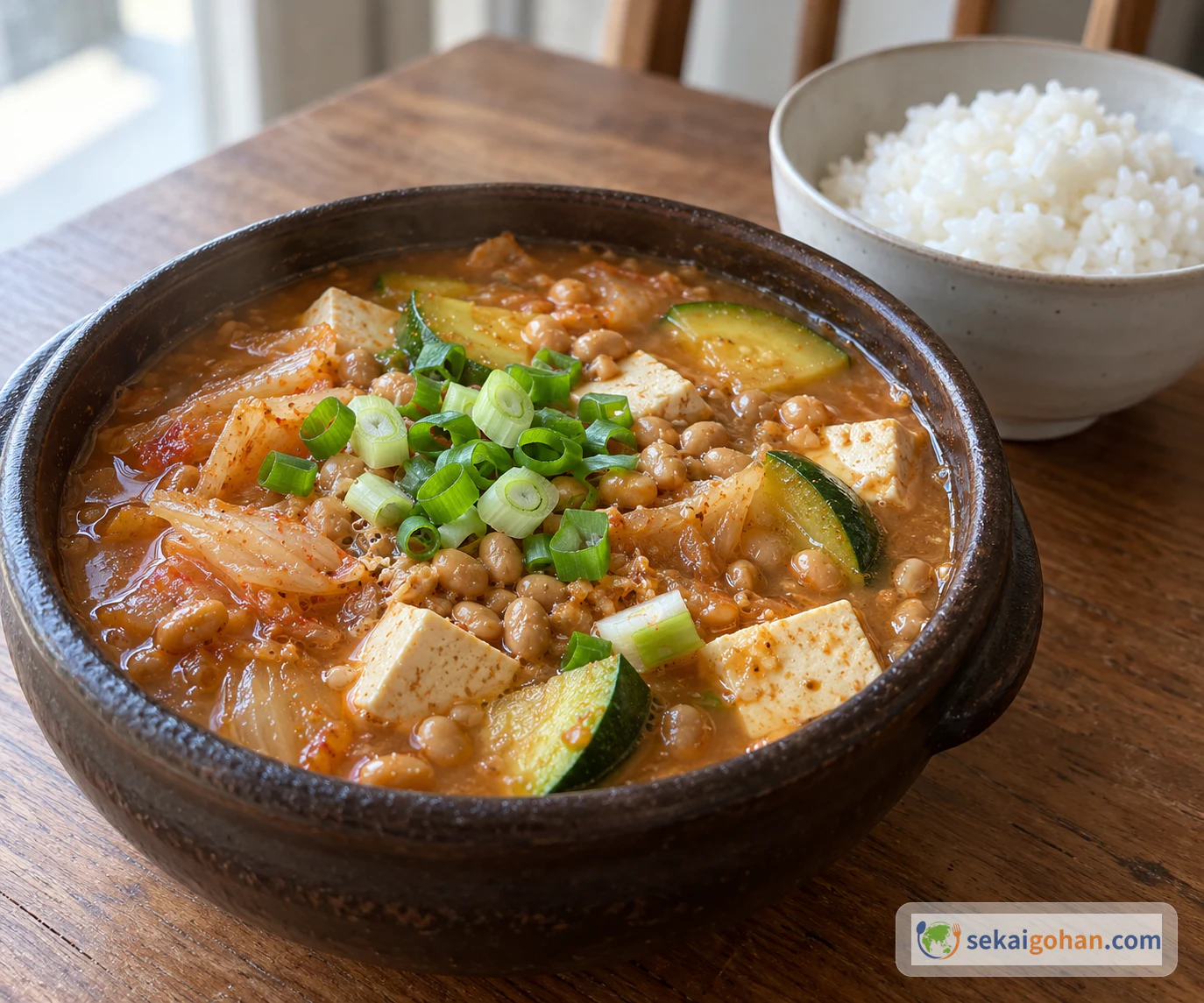
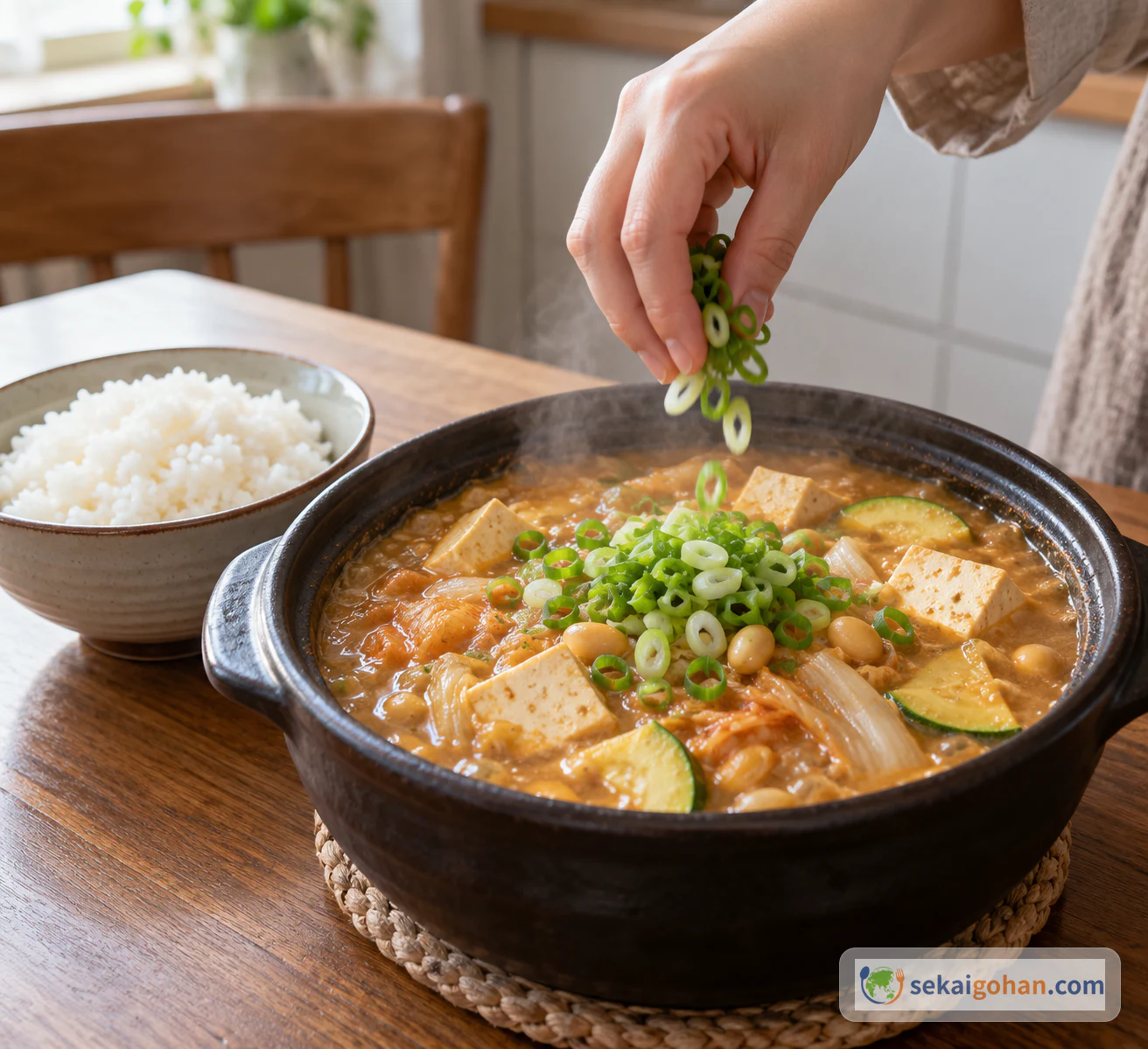
Cheonggukjang jjigae with kimchi, zucchini and tofu visible, scattered with green onion and served with a bowl of steamed rice
CuisineKorean

Cheonggukjang Jjigae: Korean Fermented Soybean Paste Stew with Kimchi and Tofu (청국장찌개)

How to make cheonggukjang jjigae (청국장찌개), the Korean stew built on store-bought cheonggukjang, a fermented soybean paste, with kimchi, zucchini, tofu and an anchovy broth. Covers how to tell the paste from the stew that shares its name, how to find the paste by its Hangul label, six steps from the covered simmer to serving with rice, and other documented versions of the stew.

Cooking flow

Cooking steps

STEP 11 / 6

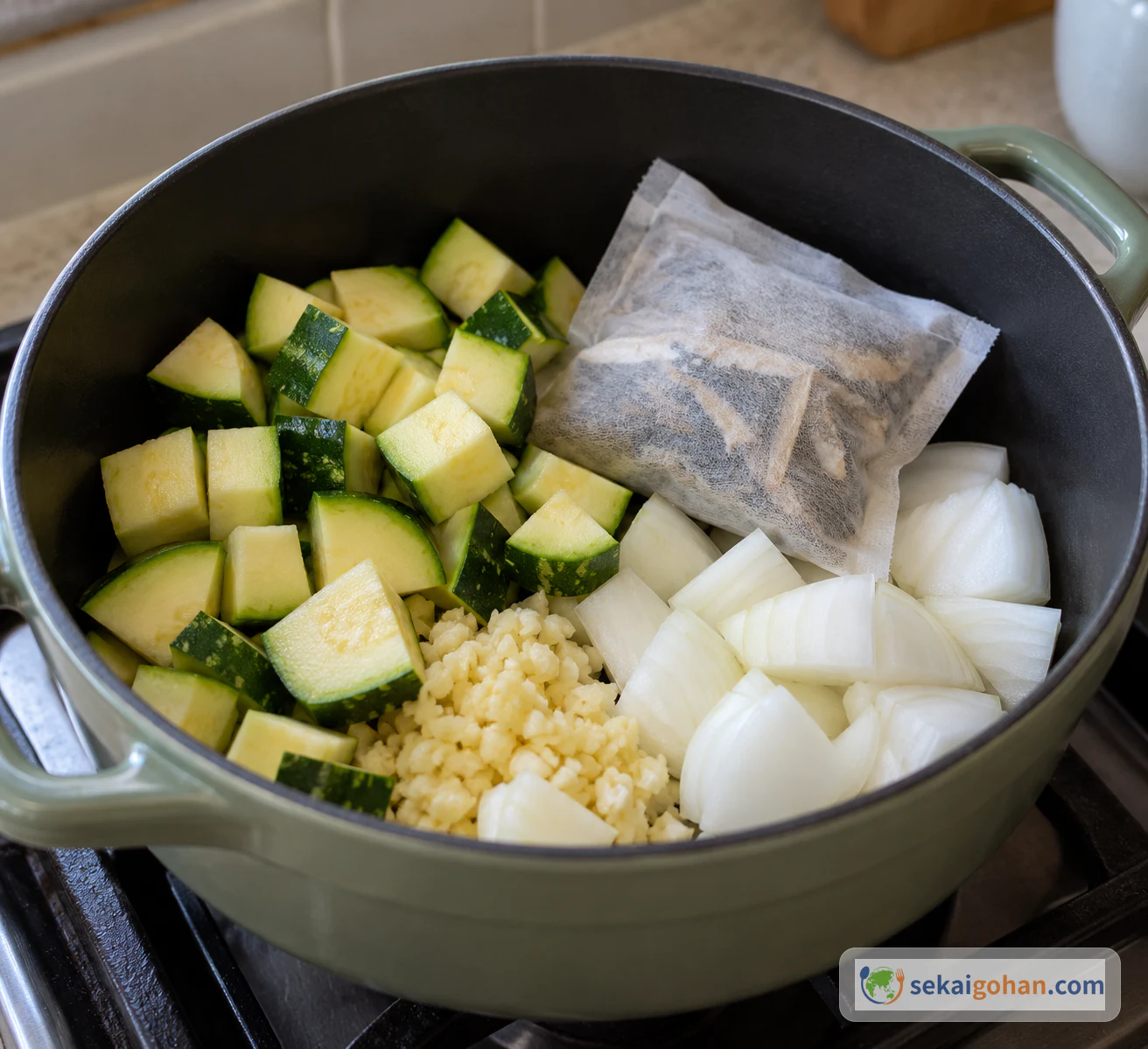
Put the vegetables and the anchovy pouch in a shallow pot

Zucchini, onion and garlic in a shallow pot with the prepared dried anchovies in a closed soup pouch
Vegetables and the anchovy pouch go into the pot before any liquid

Put the diced zucchini, onion chunks and minced garlic in a shallow pot. Remove the heads and guts from the dried anchovies, place them in a soup pouch or soup strainer, and add it to the pot.

STEP 22 / 6

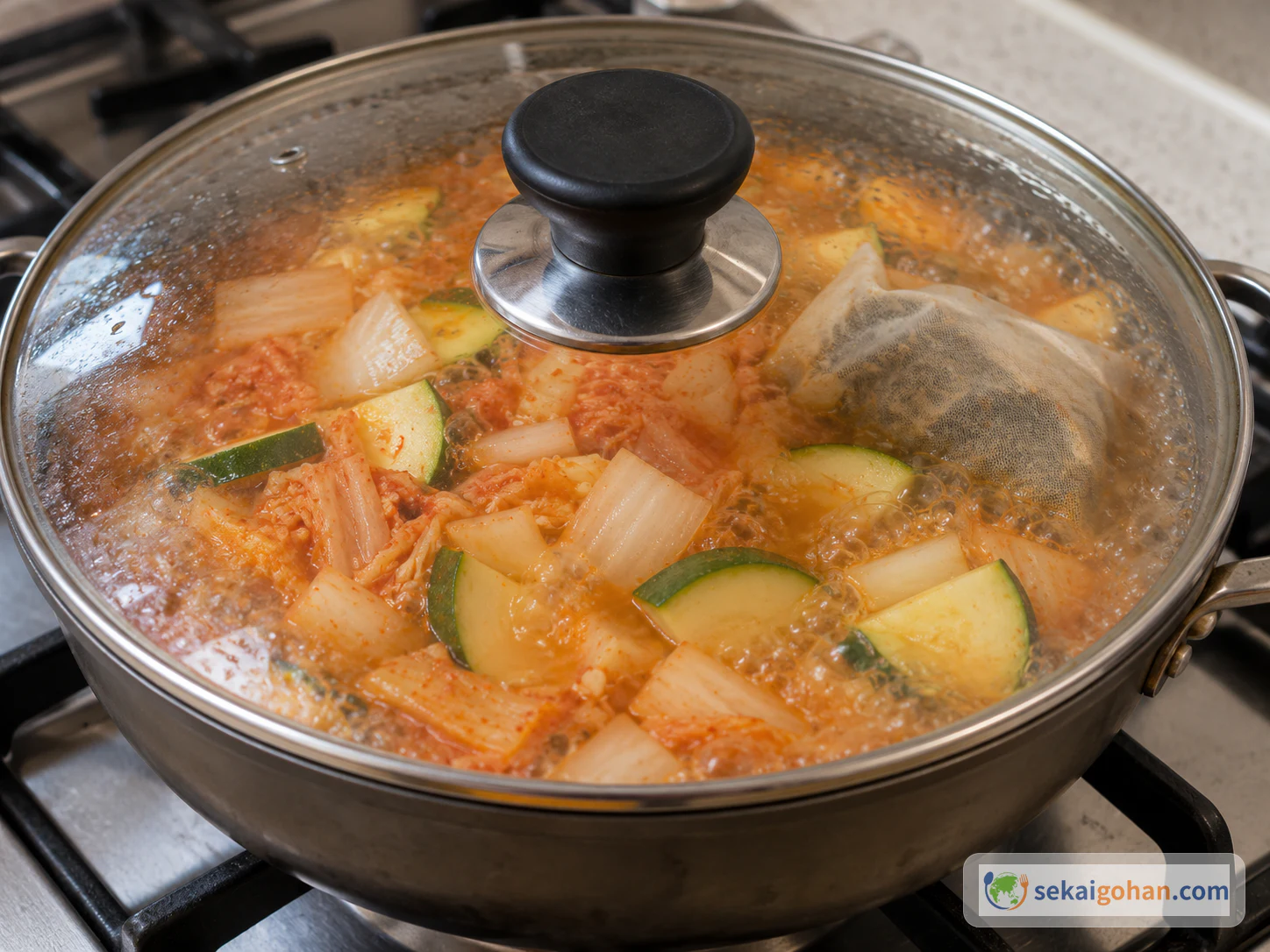
Add the kimchi, brine and water, and cook covered

A shallow pot with kimchi, broth and the anchovy pouch, covered with a glass lid and cooking over medium-high heat
After the liquid goes in, the pot stays covered for the 20-minute simmer

Add the chopped kimchi, 2 tablespoons kimchi brine and 4½ cups water. Cover and cook for 20 minutes over medium-high heat. If the pot starts to boil over, crack the lid slightly.

STEP 33 / 6

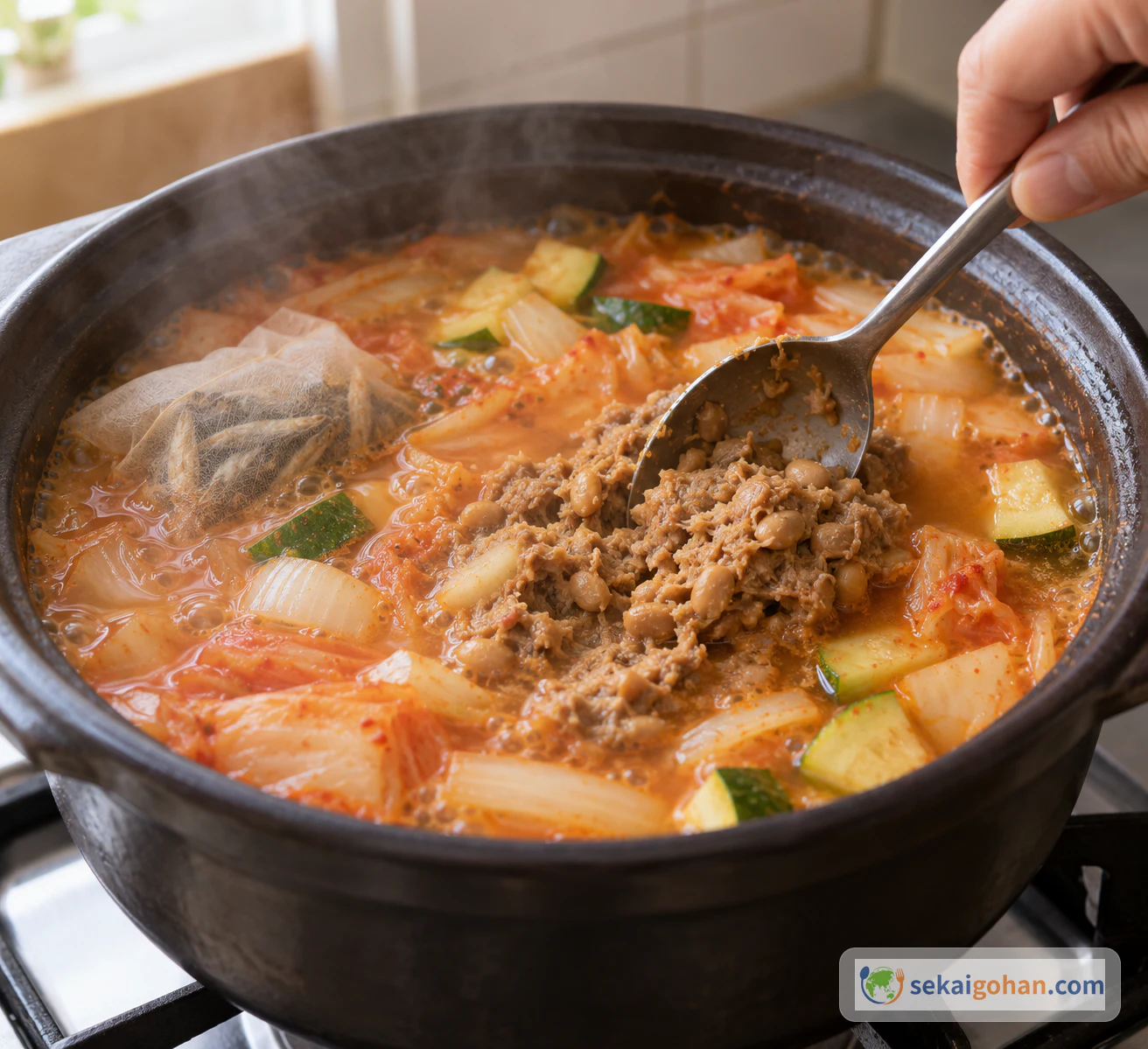
Season with fish sauce, then break up the paste

The fish sauce already stirred into the simmered stew, and a spoon breaking a mound of cheonggukjang paste with whole soybeans into the pot
With the fish sauce already in, the paste is pressed apart in the broth

Add 1 teaspoon fish sauce and stir it in. Then add the cheonggukjang paste and break it up with a spoon in the stew.

STEP 44 / 6

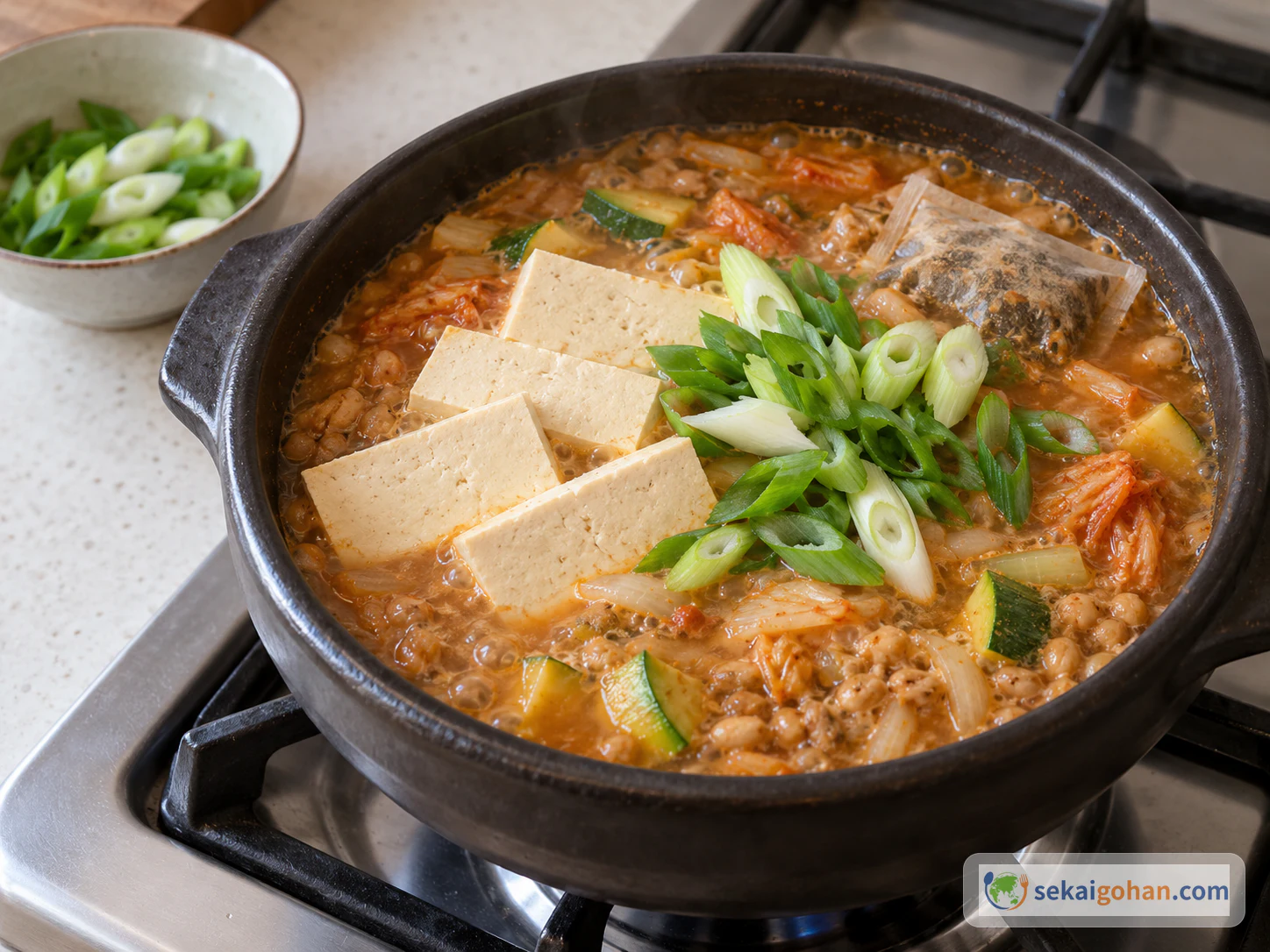
Add the tofu and green onions

Tofu slices and diagonally sliced green onions added to the stew, with more green onions kept in a small bowl for garnish
Keep a little of the green onion back for the finish

Add the tofu slices and the diagonally sliced green onions. Set some of the green onions aside for the garnish.

STEP 55 / 6

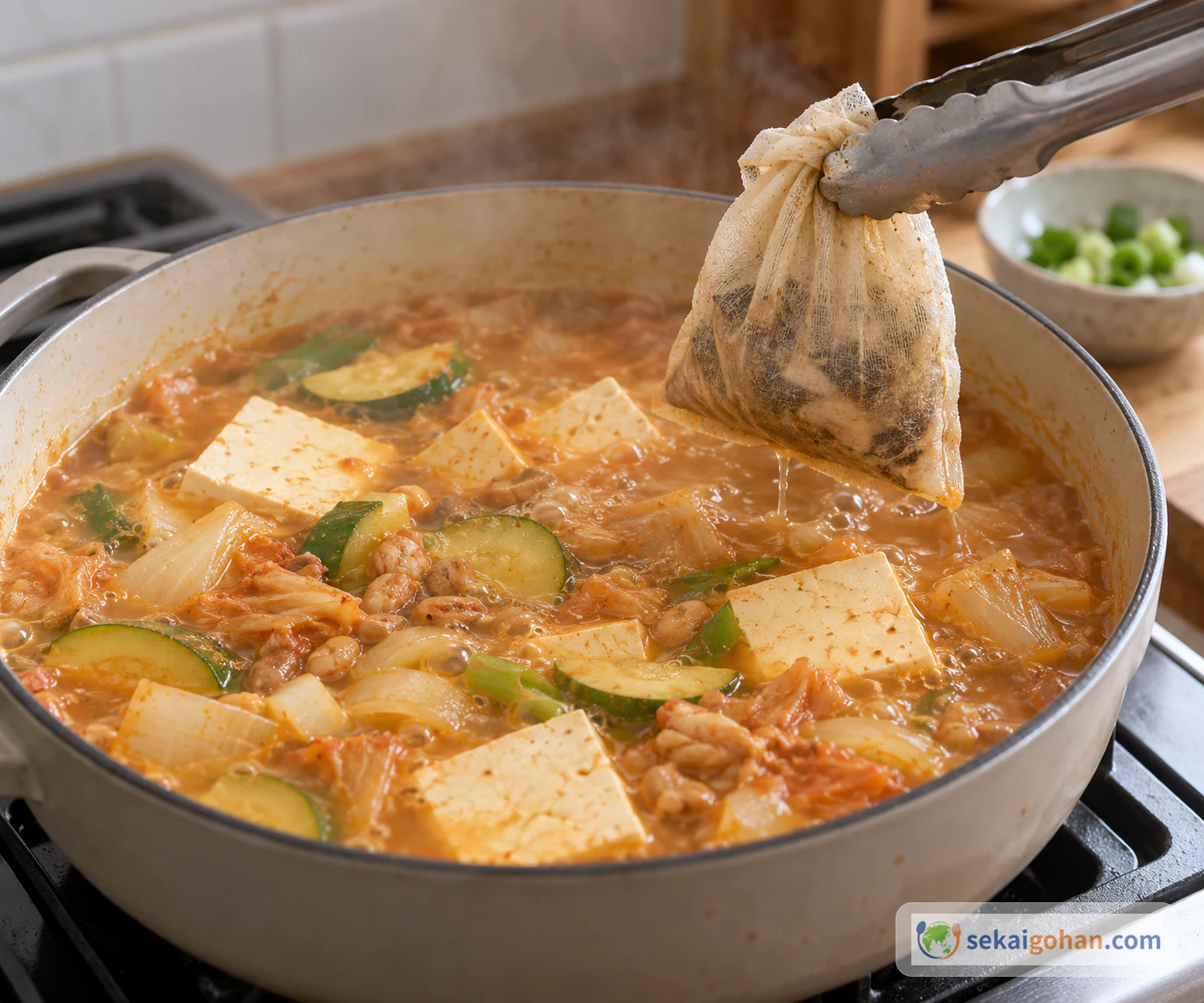
Cook until the tofu is soft, then remove the pouch

Softened tofu in the slightly thickened stew, with the used anchovy pouch being lifted out of the pot
Soft tofu and a slightly thicker broth signal it is time to lift out the pouch

Cook for another 5 to 10 minutes, until the tofu is soft and the broth is a little thick. Take out the anchovy pouch.

STEP 66 / 6

Garnish and serve right away with rice

A hand scattering the reserved green onion over the finished stew, with a bowl of steamed rice beside it
The reserved green onion goes on last, just before serving with rice

Scatter the reserved green onions over the stew and serve right away with rice.

0 / 0
Ingredients

Ingredients

1 / 1

Ingredients

Ingredient Amount Role
Cheonggukjang paste (청국장), Korean fermented soybean paste, store-bought 1 ball (1 cup, 6½ ounces / 185 grams) The body and flavor of the stew. Broken up into the broth in step 3
Zucchini 1 small, cut into ½-inch dice (about 1 cup) Vegetable body of the stew
Onion ½ medium, cut into chunks Sweetness for the broth
Garlic 2 cloves, minced Aroma
Dried anchovies, large 7, heads and guts removed Broth. Placed in a soup pouch or soup strainer
Kimchi 1 cup (about 8 ounces), chopped Sourness and depth
Kimchi brine 2 tablespoons Added with the kimchi
Fish sauce 1 teaspoon Seasoning, stirred in before the paste
Green onions 3 to 4, sliced diagonally Added with the tofu. Keep some for garnish
Tofu 8 ounces, sliced ¼ inch thick Added near the end and cooked until soft
Water 4½ cups Added with the kimchi in step 2
Cooked rice as needed To serve alongside
0 / 0

Picture a winter lunch at a cousin's home in Korea: a pot of stew on the table, rice, and several side dishes around it. Cheonggukjang jjigae (청국장찌개) is that kind of stew, made from a thick fermented soybean paste with whole beans, simmered with kimchi and tofu in anchovy broth. It is eaten hot, in the middle of the meal, next to a bowl of rice. For more dishes from the same country, see South Korea.

Cheonggukjang Paste and Cheonggukjang Stew

The name can cause confusion, because one word covers two things. Cheonggukjang (청국장) is a fermented soybean food: cooked soybeans, fermented and seasoned into a jang. The same word is also used for the stew made from that paste, which is boiled like any jjigae, the Korean family of stews. In English it is sometimes called "Rich Soybean Paste Jjigae."

The stew is generous with solid ingredients, and the broth is neither spicy nor salty. This version uses ready-made paste and settles each choice one way: kimchi brine goes in, fish sauce is used rather than salt, and green onions are used rather than daepa.

Ingredients for Cheonggukjang Jjigae
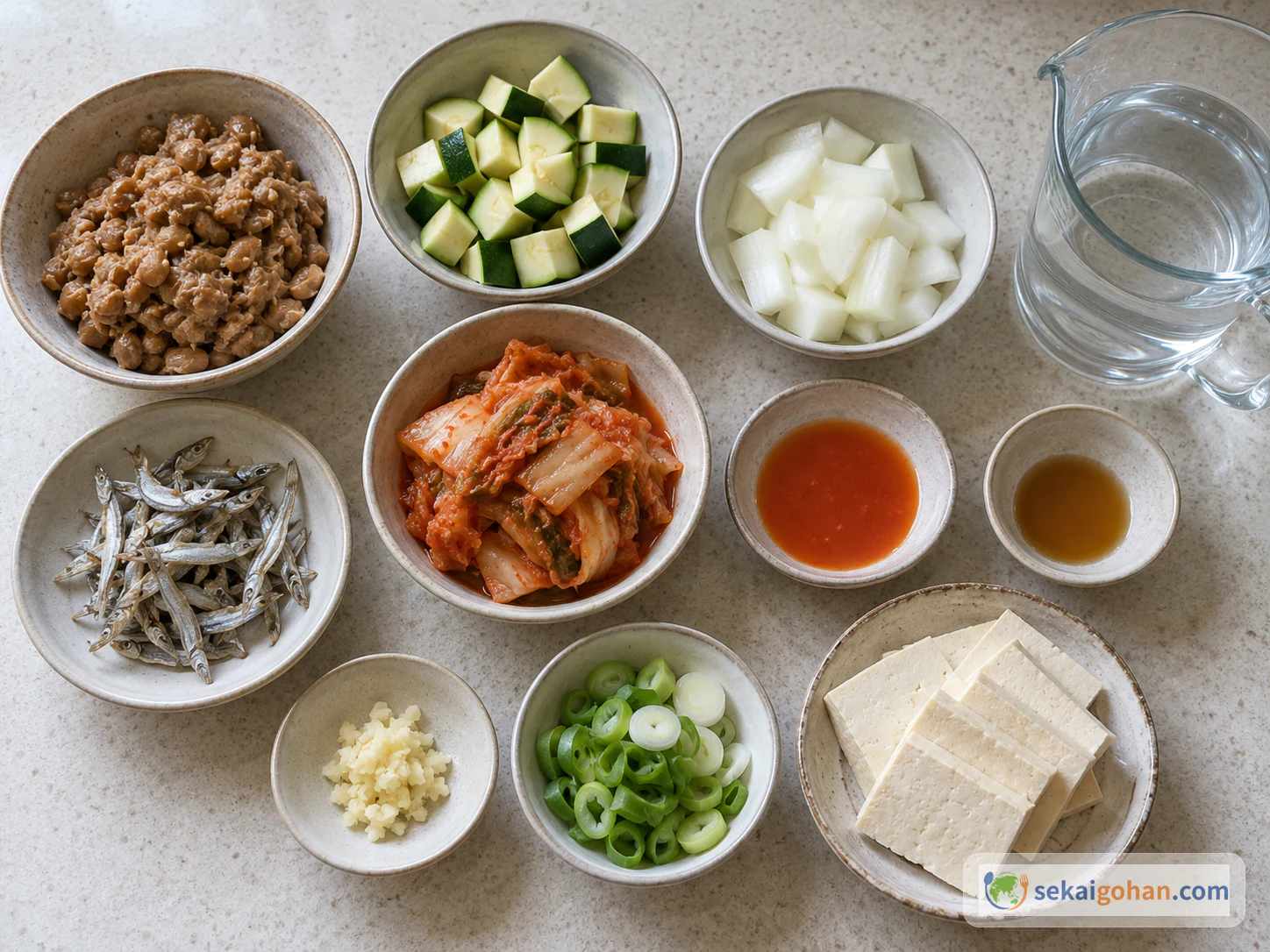
Cheonggukjang paste, zucchini, onion, garlic, dried anchovies, kimchi, kimchi brine, fish sauce, green onions, tofu and water laid out separately
The layout is a visual guide to the ingredients, not a measure of the amounts

Equipment

  • Shallow pot with a lid
  • Soup pouch or soup strainer for the anchovies
  • Spoon for breaking up the paste

Choosing Cheonggukjang Paste and Other Ingredients

Look for the Hangul 청국장 on the package. Some labels say "soybean paste" or "natto" in English, so the Korean word is the clearest sign you have the right product. Large Korean grocery stores are the place to look.

Cheonggukjang is not Japanese natto, and it is not a general soybean paste. Use the Korean paste itself; neither natto nor another soybean paste will give you this stew.

The stew is made with one fixed set of ingredients. Use 2 tablespoons of kimchi brine, 1 teaspoon of fish sauce with no added salt, and 3 to 4 green onions instead of daepa (Korean large green onion). Use one choice from each pair, not both together.

Tofu firmness is up to you. Slice it ¼ inch thick.

Method: From the Covered Simmer to the Table

Two separate cooking times

Cook for 20 minutes covered in step 2, then for 5 to 10 more minutes in step 5. Judge doneness by the tofu and the broth, not by the clock alone.

Common Problems with Cheonggukjang Jjigae

What you see What to do
The covered pot starts to boil over during the 20-minute simmer Crack the lid slightly, as in step 2
The paste stays in one lump Keep pressing and breaking it up with the spoon inside the stew
After 5 minutes the tofu is still firm and the broth is thin Keep cooking, up to the end of the 5 to 10 minutes, until the tofu is soft and the broth is a little thick
No green onion is left for the garnish Next time, set some aside when adding the tofu in step 4
The package doesn't clearly say what the paste is Check for the Hangul 청국장 before buying

Serving Cheonggukjang Jjigae and Regional Versions

The stew is ready when the tofu is soft and the broth has thickened slightly. Bring it to the table right away, with rice and whatever side dishes you have.

Cooks vary the pot. Beef, mushrooms and bean curd are common additions. A Cheongju-area version boils beef seasoned with salt, scallion and garlic together with kimchi in rice-washing water, stirs in the cheonggukjang once it boils, then adds green chili and tofu and finishes with red pepper powder and salt.

Frequently Asked Questions

Can I use salt instead of fish sauce?

Yes, 1 teaspoon of either works. If you use salt, use it in place of the fish sauce, not in addition to it.

Is the kimchi brine necessary?

The 2 tablespoons of kimchi brine are optional, but they are part of this version.

Can I use daepa instead of green onions?

Yes: 1 small daepa replaces the 3 to 4 green onions. Choose one or the other, not both.

Can I add beef, mushrooms or chili?

Yes. Beef and mushrooms are common additions, and the Cheongju-area version uses beef, green chili and red pepper powder.

Can I make the cheonggukjang paste at home?

This recipe starts from store-bought paste from a Korean grocery store, so it has no method for fermenting soybeans at home.
Sources