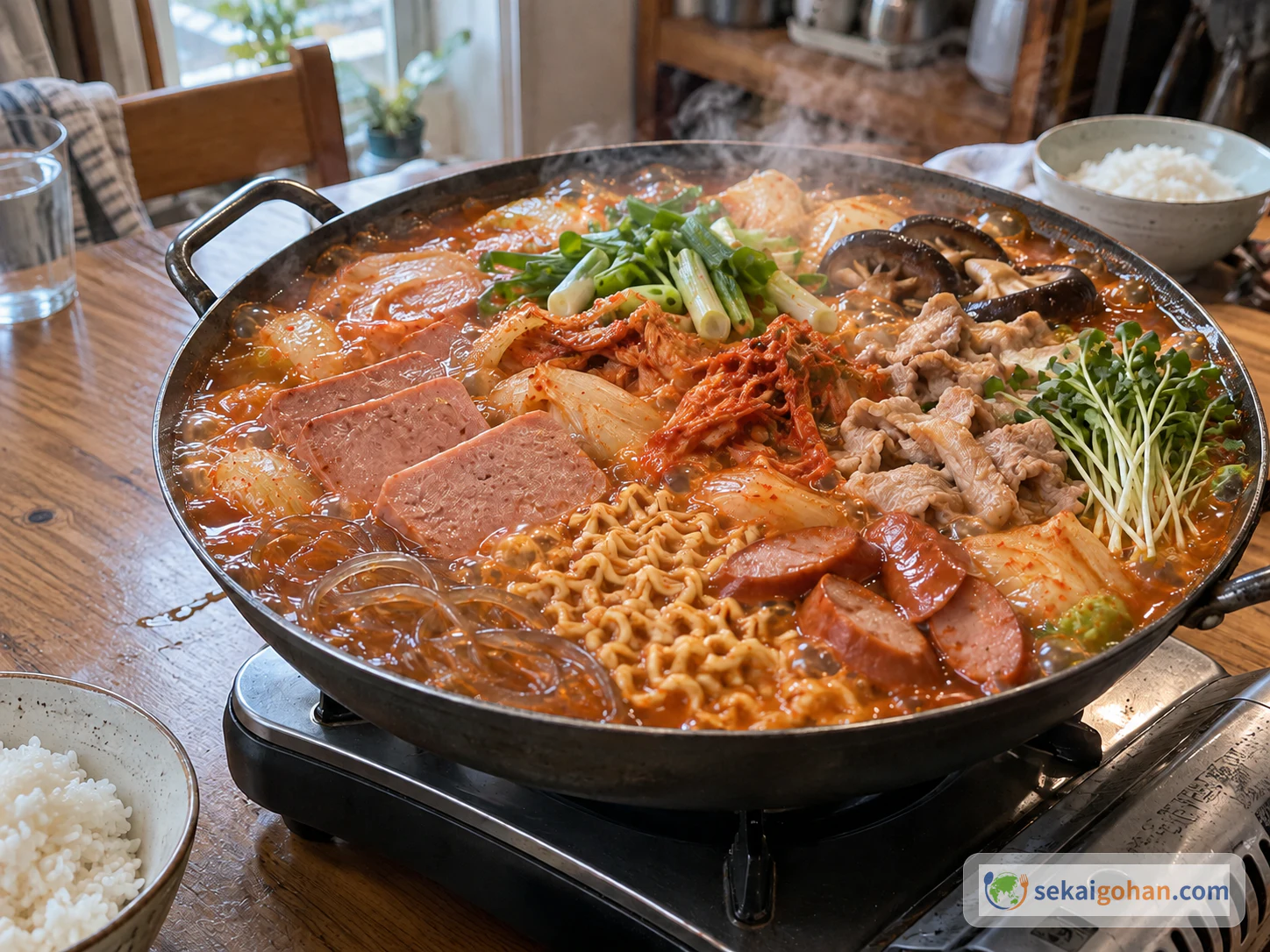
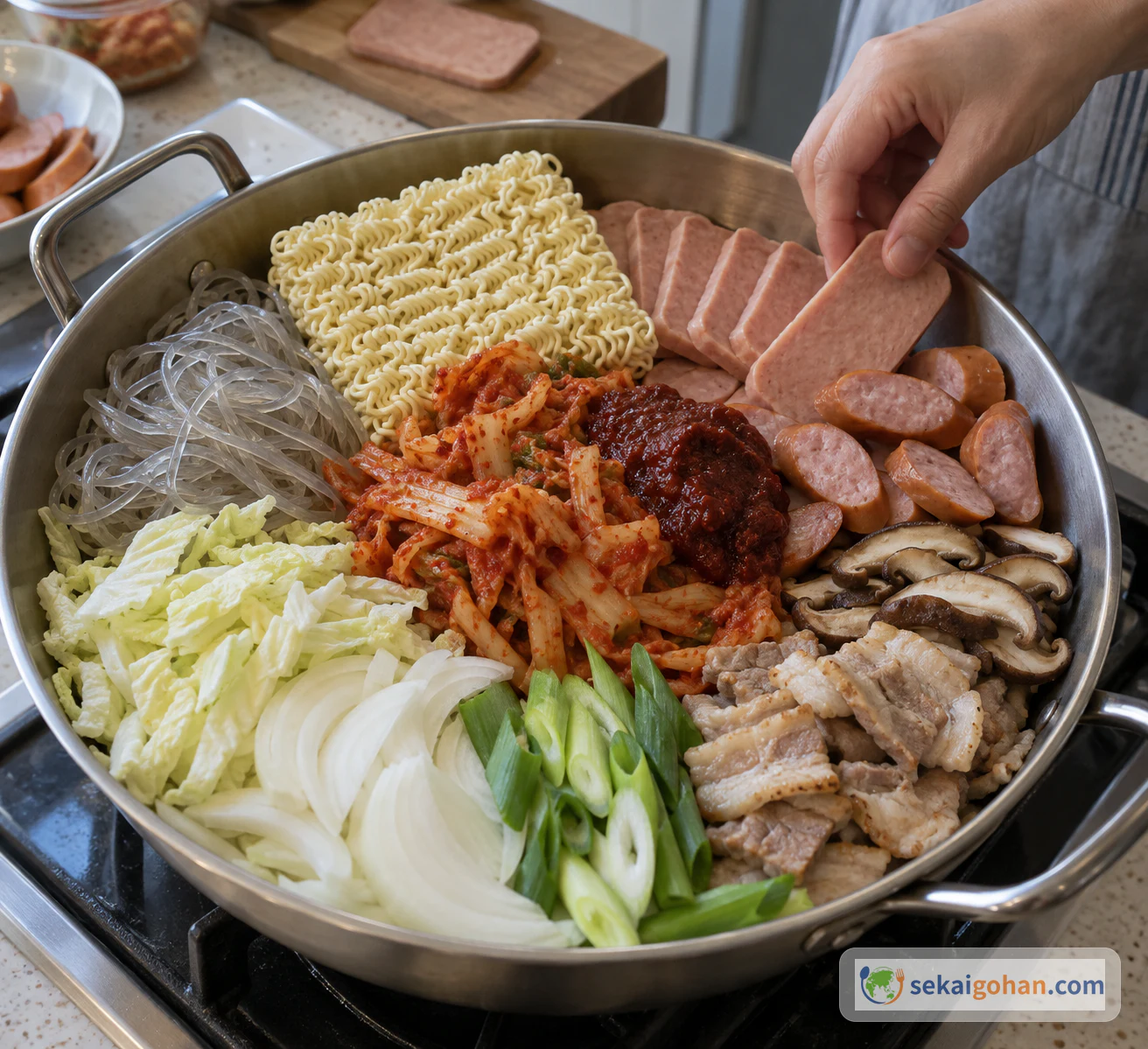
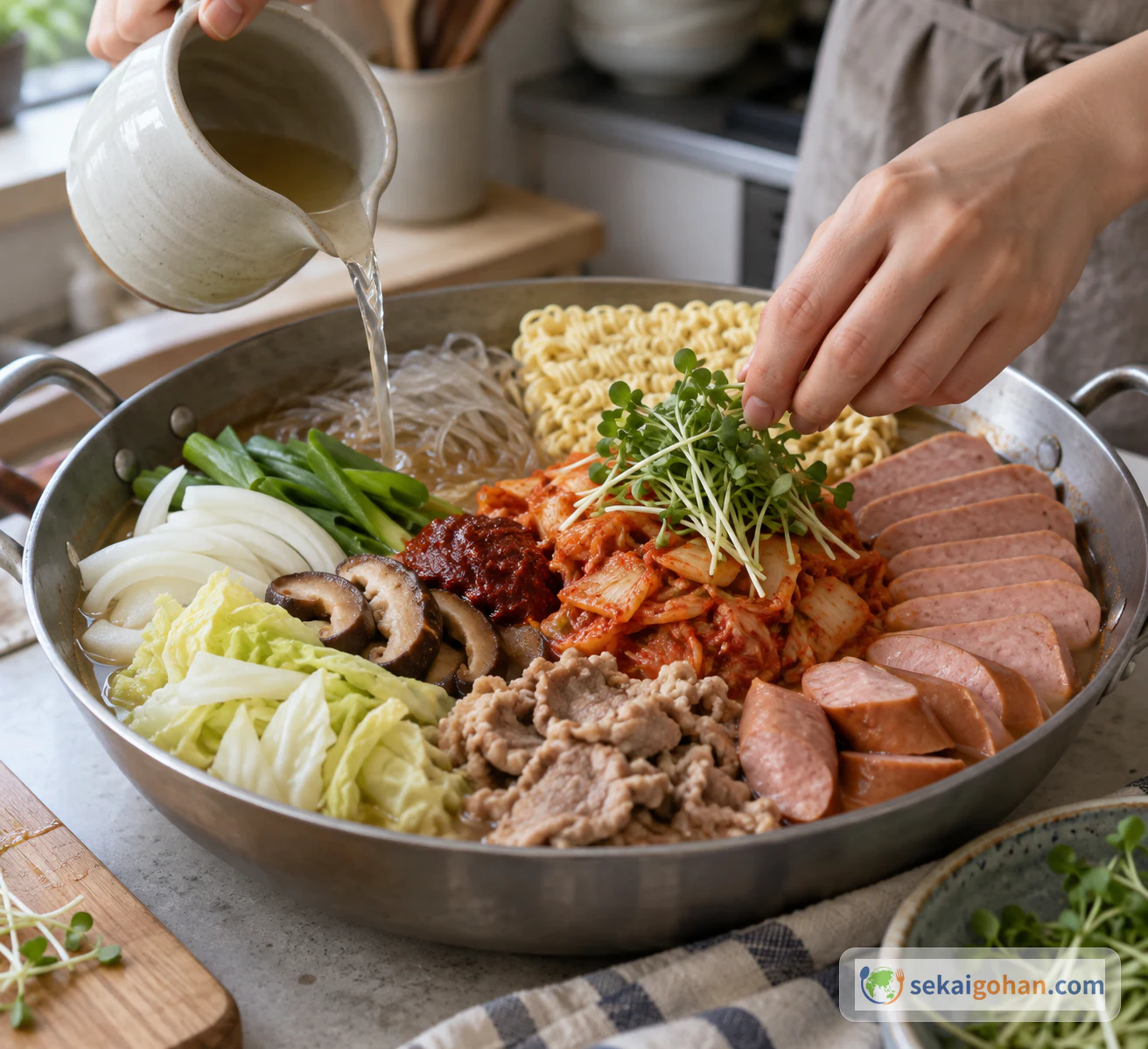
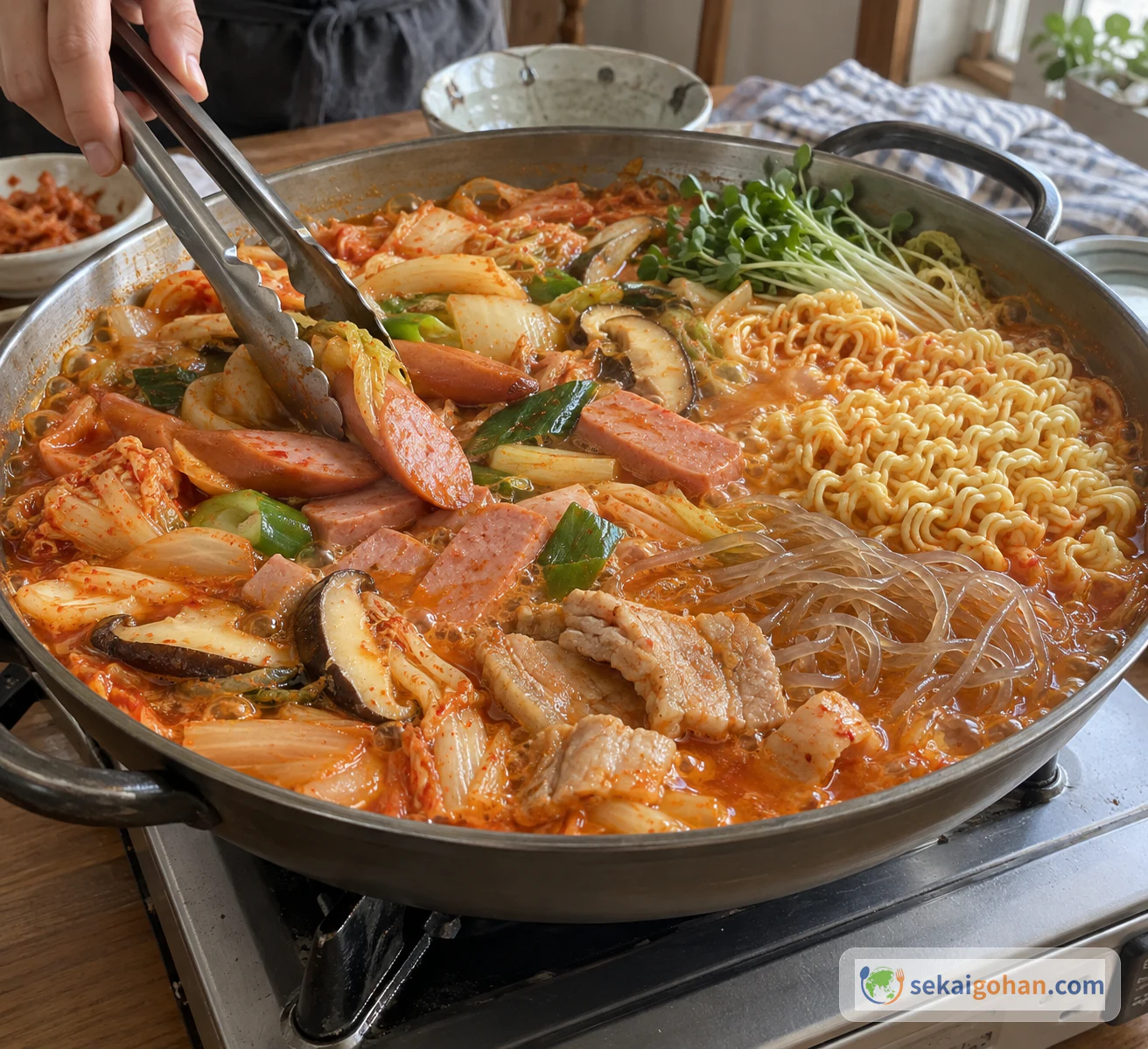
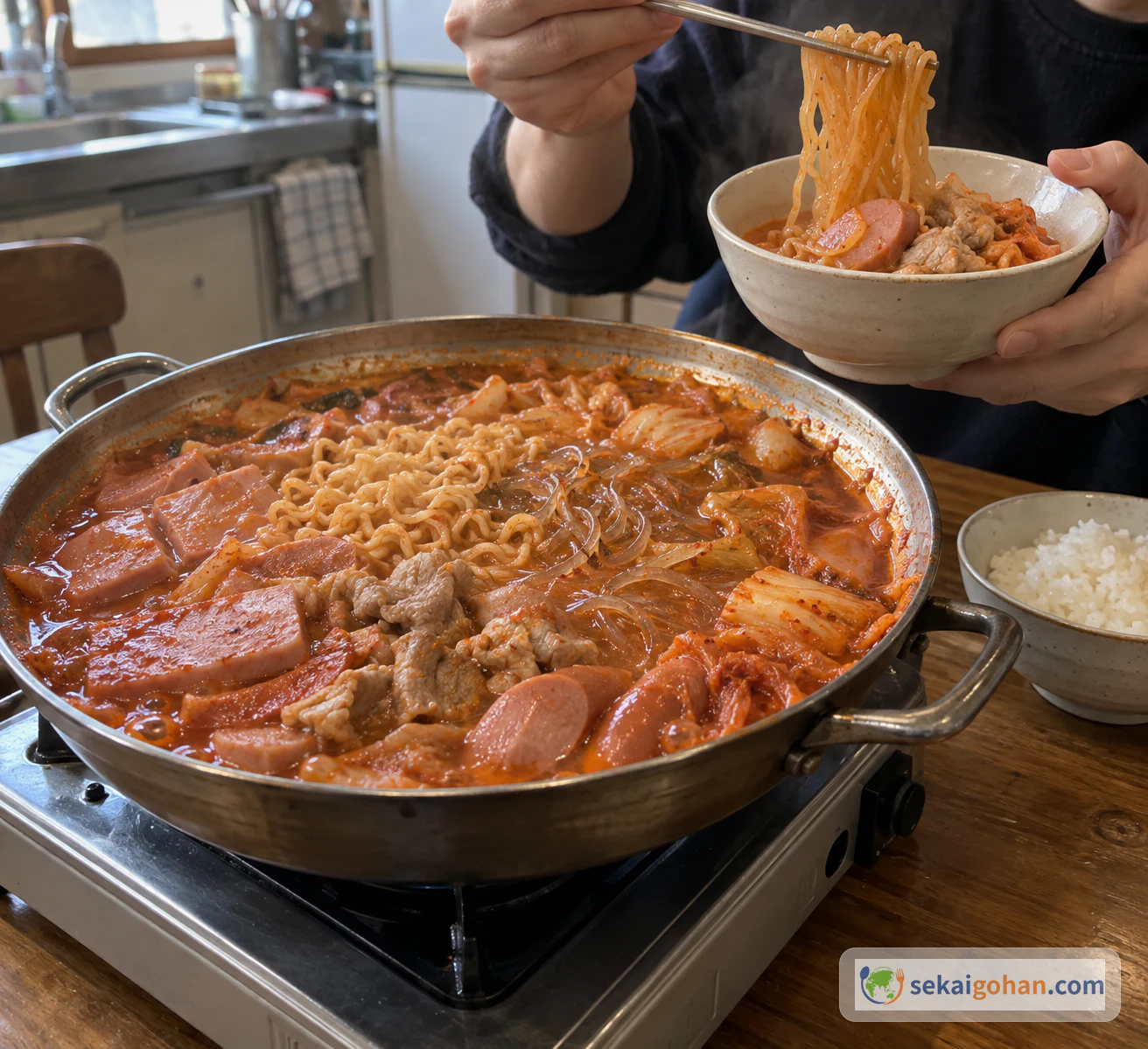
A wide, shallow pot sits on a burner in the middle of the table, with cabbage, onion and pork tucked underneath and kimchi, red chili paste, thin slices of Spam and sausage, a block of ramyeon, translucent sweet potato starch noodles and a handful of radish sprouts piled on top. Once the stock goes in and the pot comes to a boil, everyone reaches in with tongs and serves the softened noodles first, before they go limp. That is budae-jjigae (부대찌개), where the cooking of a Korean kimchi stew meets luncheon meat and sausage in one spicy, savory pot. Outside Korea, three things matter most: a stock of dried anchovies, kelp and dried shiitake; a paste built on gochujang and gochugaru; and processed meats arranged so each ingredient stays distinct. Allow about 1 hour 20 minutes, stock included. For more dishes from the same country, see South Korea.
About Budae-jjigae
Army Base Stew and Kimchi Stew
The name joins budae (부대), a military unit or base, with jjigae (찌개), a Korean stew, which is why it is known in English as Army Base Stew. Kimchi and chili are there, as in kimchi-jjigae, but they share the pot with luncheon meat, sausage, noodles and vegetables, and that combination is what defines it.
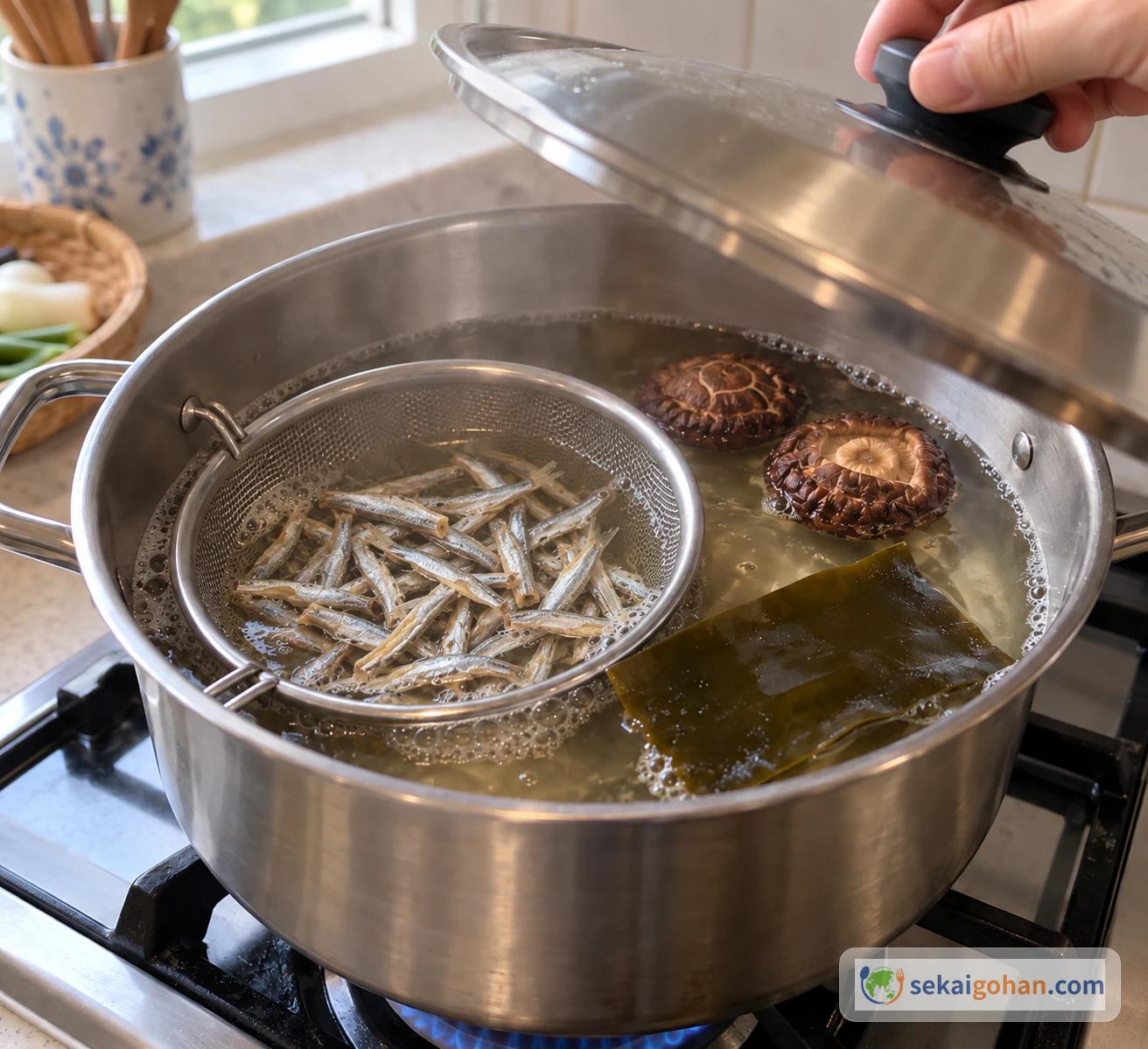
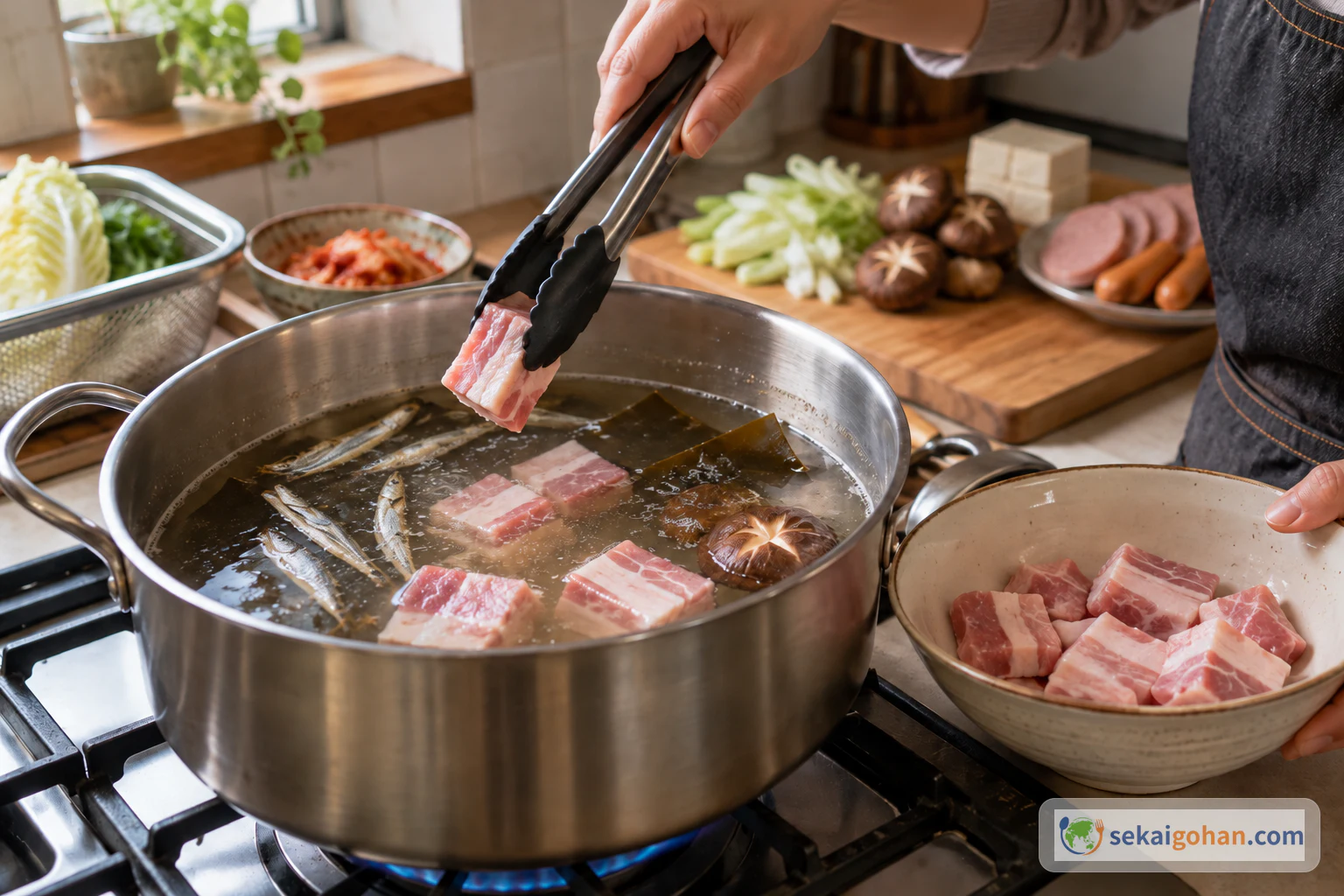
Underneath all of that is a Korean-style stock of dried anchovies, kelp and dried shiitake, with pork simmered in it. Fermented kimchi, garlic, gochujang and gochugaru give the pot its Korean flavor, and the Spam and sausage sit on top of that base.
From Uijeongbu Stir-Fry to Stew
Budae-jjigae is tied to Uijeongbu, a city in Gyeonggi Province that hosted US military camps after the Korean War. Processed meats and canned goods circulated around the bases, and Korean cooks combined them with kimchi and chili seasonings. Specialty restaurants grew around Uijeongbu's Jeil Market in the 1960s, and the street of budae-jjigae restaurants was commemorated in 2008. The origin is debated, and no single person or restaurant is confirmed as the inventor.
The early form was a stir-fry, budae-bokkeum; adding broth turned it into the stew known today. The dish also has ties to Pyeongtaek and Songtan, other places with bases. Today it is eaten throughout South Korea, and each restaurant has its own house kimchi, stock and ingredients, so this home version is one of many.
Ingredients (Serves 4)
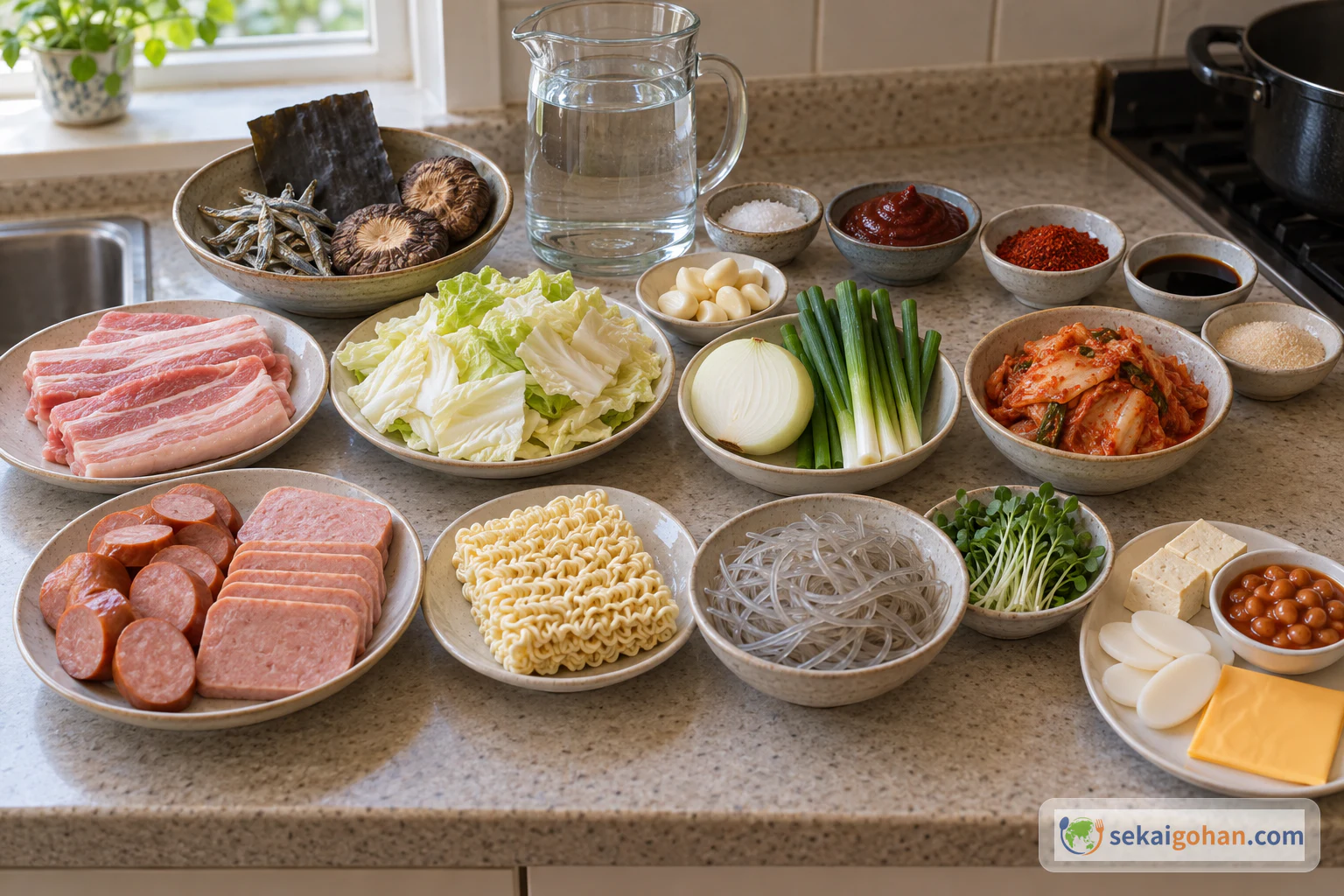
The ingredients fall into four groups: the stock, the spicy paste, the pot, and optional add-ins. You will have more stock than you need at first. Only part of it goes into the pot at the start, and the rest is added as the liquid cooks down.
The meats, kimchi and paste are already salty, so do not add extra salt or soy sauce to the pot. If you want to adjust the seasoning, do it a little at a time once the stew is cooking.
Equipment
- Large pot with a lid, for the stock
- Mesh strainer, or a mesh bag for the anchovies
- Bowls for the strained stock and the cooked pork
- Cutting board and knife
- Small bowl, for mixing the paste
- Shallow pot, 10–12 inches across
- Portable tabletop burner, if you want to cook at the table (a stovetop works too)
- Tongs
- Ladle
Choosing Ingredients for Budae-jjigae
Cup, ounce and spoon measures are US measures; convert them before using Japanese cups or spoons.
Gochugaru and gochujang. Look for these at Korean or Asian grocers under their Korean names. Generic chili powder or other chili flakes change the aroma, the coarseness and the heat.
Dangmyeon. Korean sweet potato starch noodles have their own bite. Glass noodles made from a different starch, or cut to a different thickness, soften differently, so judge doneness by how they feel rather than by a set time.
Kelp and anchovies. Japanese kombu can stand in for the kelp, though it is not quite the same product. Dried anchovies and dried shiitake are sold in Asian groceries and in the dried-goods aisle of many supermarkets. A powdered stock base makes a simpler version without the same aroma.
Sausage, pork and greens. If you cannot find Polish sausage, another sausage can stand in, but its smokiness and saltiness will change the pot. Pork belly and pork shoulder both work. Spinach, watercress or arugula can replace the radish sprouts, each bringing its own flavor and texture.
Soy sauce. Korean soy sauce (ganjang) is the closest match.
How to Make Budae-jjigae
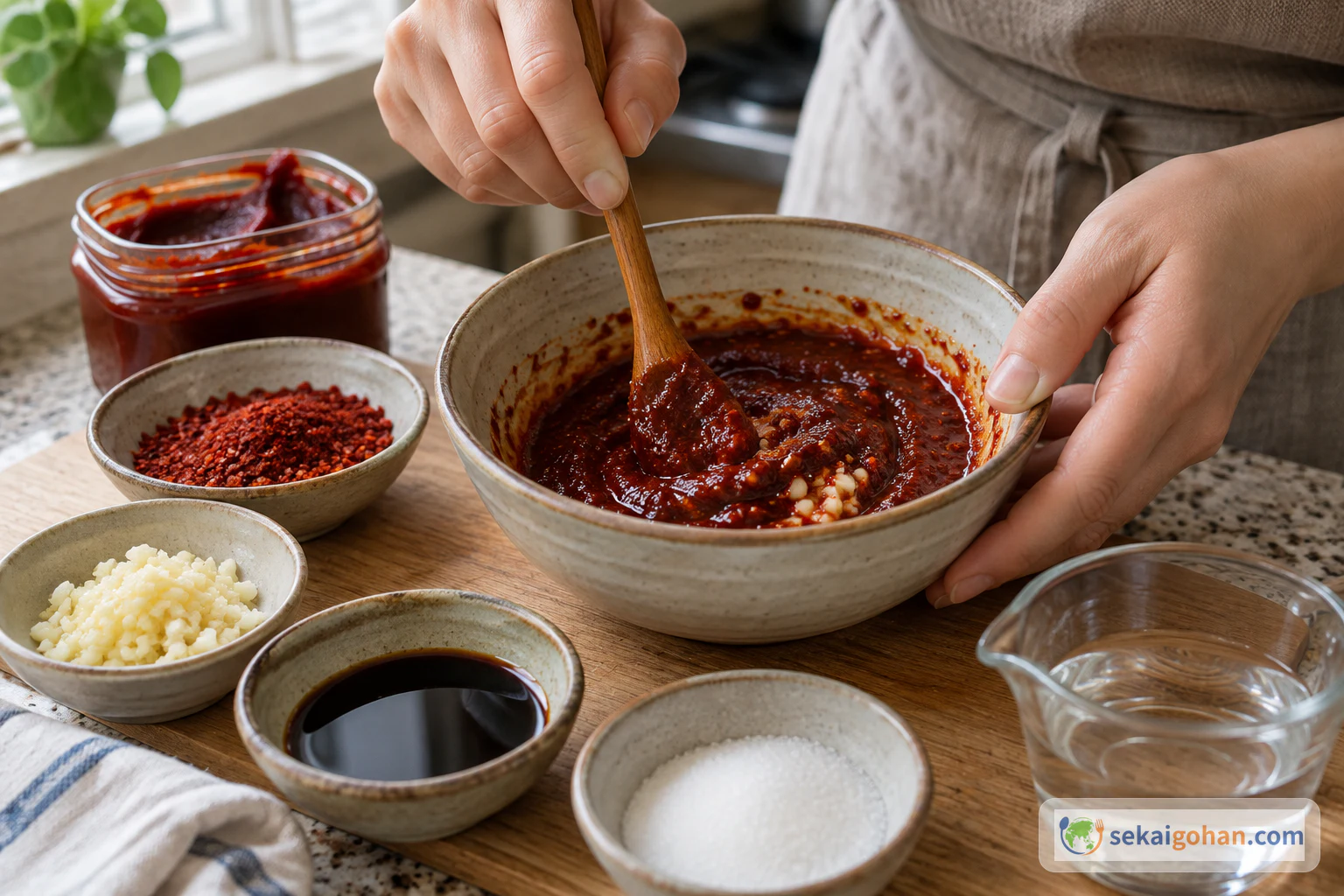
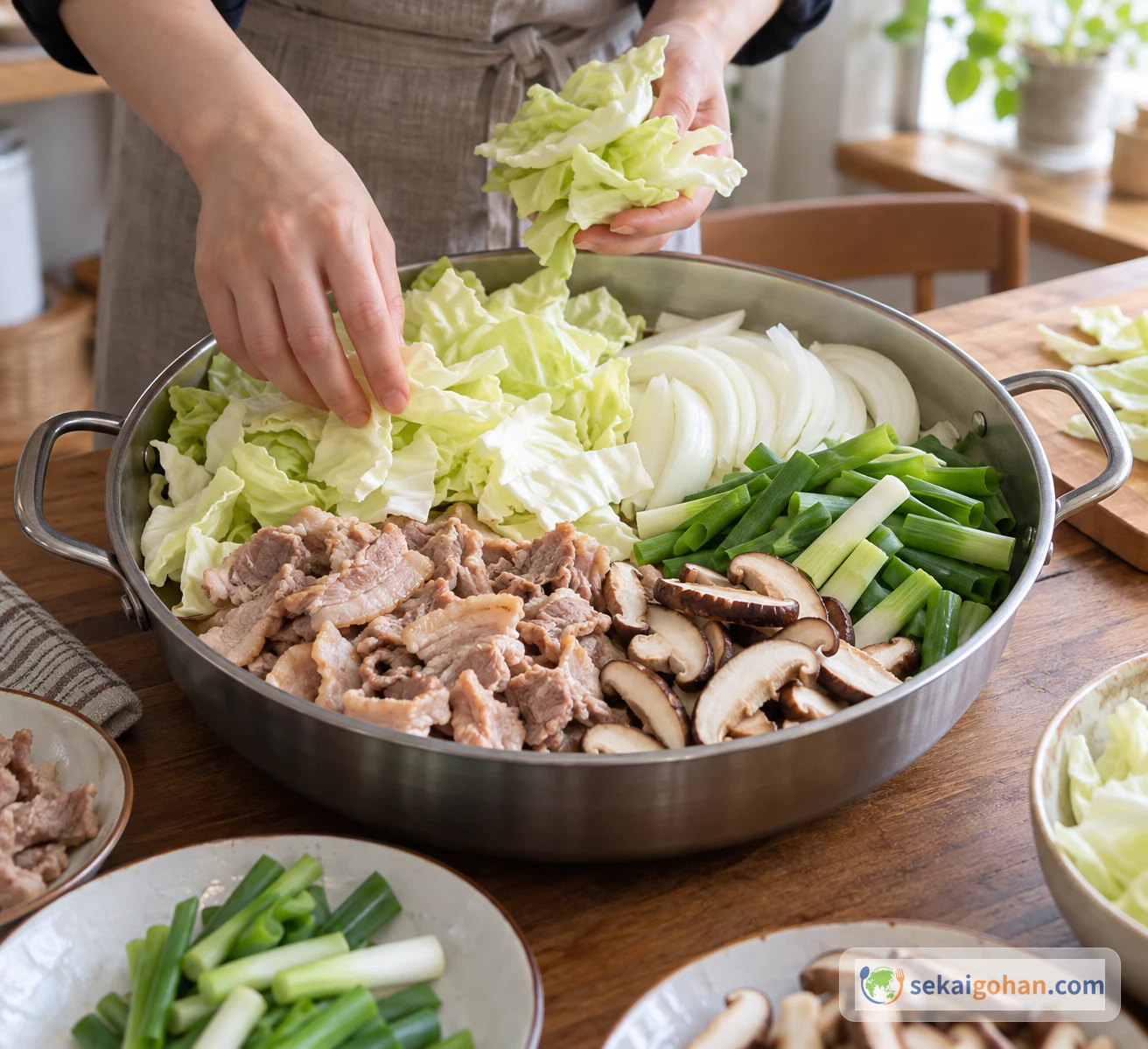
Make the stock and cook the pork in it, mix the paste, then build the shallow pot in layers: vegetables and pork, kimchi and paste, meats and noodles, sprouts and stock. Bring it to a boil, turn everything once, and eat the noodles when they are soft.
Budae-jjigae Tips and Troubleshooting
Make a real stock first, keep the salt in the stock rather than the paste, and eat the noodles as soon as they turn soft. Those three habits hold the dish together.
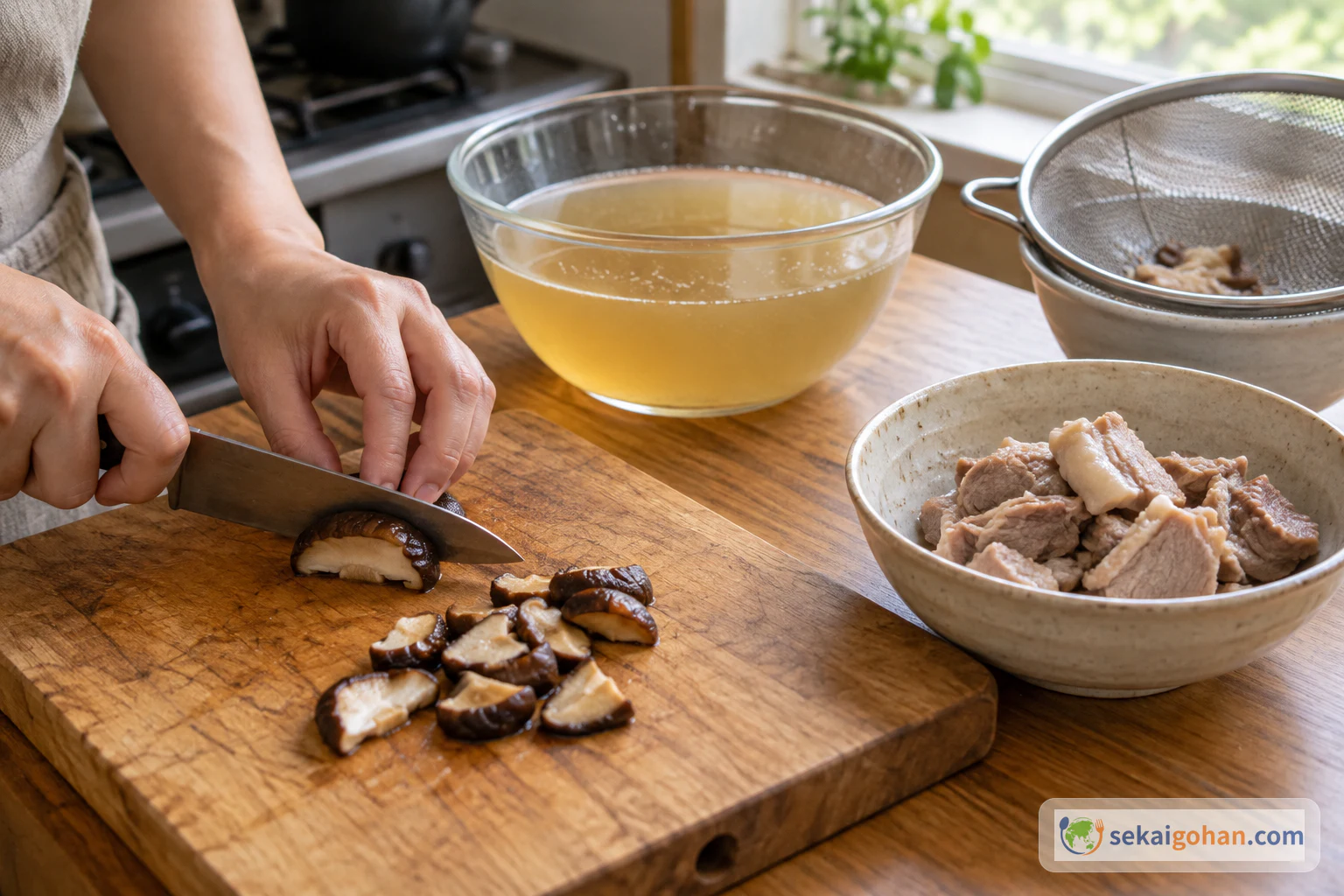
The stock does most of the work here. Anchovies, kelp and dried shiitake give it a savory base, and cooking the pork in that same stock adds richness before the pork goes into the stew.
| Problem | Likely cause | What to do |
|---|---|---|
| The broth tastes thin | A shortcut stock was used | Make the anchovy, kelp and shiitake stock |
| It is turning too salty | Spam, sausage, kimchi and gochujang are all salty, and the liquid has cooked down | Hold off on seasoning and top up with the remaining stock |
| The noodles go limp | They stayed in the boiling pot too long | Serve the noodles as soon as they are soft, then keep cooking the rest of the pot |
| It is too spicy | 2 tablespoons gochugaru is a lot for some eaters | Use less gochugaru next time; the color and aroma will shift too. Sugar or cheese won't cancel the heat |
| The pot gets crowded | Optional add-ins or extra noodles were added | Extra ingredients change the volume and saltiness, so add stock as needed |
Serving and Varying Budae-jjigae
The shallow pot stays in the middle of the table on a tabletop burner and keeps bubbling while everyone serves themselves, which lets each ingredient be eaten at its best. Go for the ramyeon first, before it overcooks. Keep the burner stable and take care with the hot pot and broth.
In the Korean habit of sari (사리), extras such as noodles, rice cakes or dumplings go into the pot as you eat, so the meal turns into a matter of choosing what goes in next. Anything beyond the four-serving recipe will need more stock.
A few add-ins work well:
- Tofu: Add ½ cup sliced tofu along with the processed meats.
- Baked beans: Add ¼ cup canned baked beans.
- Rice cakes: Add 12–16 sliced rice cakes. Timing depends on their shape and thickness, so check that they are soft.
- Cheese: Lay 1 slice of American cheese over the whole pot to melt, or over one portion only.
Frequently Asked Questions
Is Spam essential?
You can use another canned luncheon meat, but brands differ in salt and fat, and the result will move away from this recipe.
Do I use the ramyeon seasoning sachet?
No. Use only the noodles from half a package of instant ramyeon and leave the sachet out.
How long do leftovers keep?
The stew is meant to be eaten as it cooks, because the noodles keep softening in the pot. For leftovers, cool them and refrigerate them promptly, then reheat until piping hot.