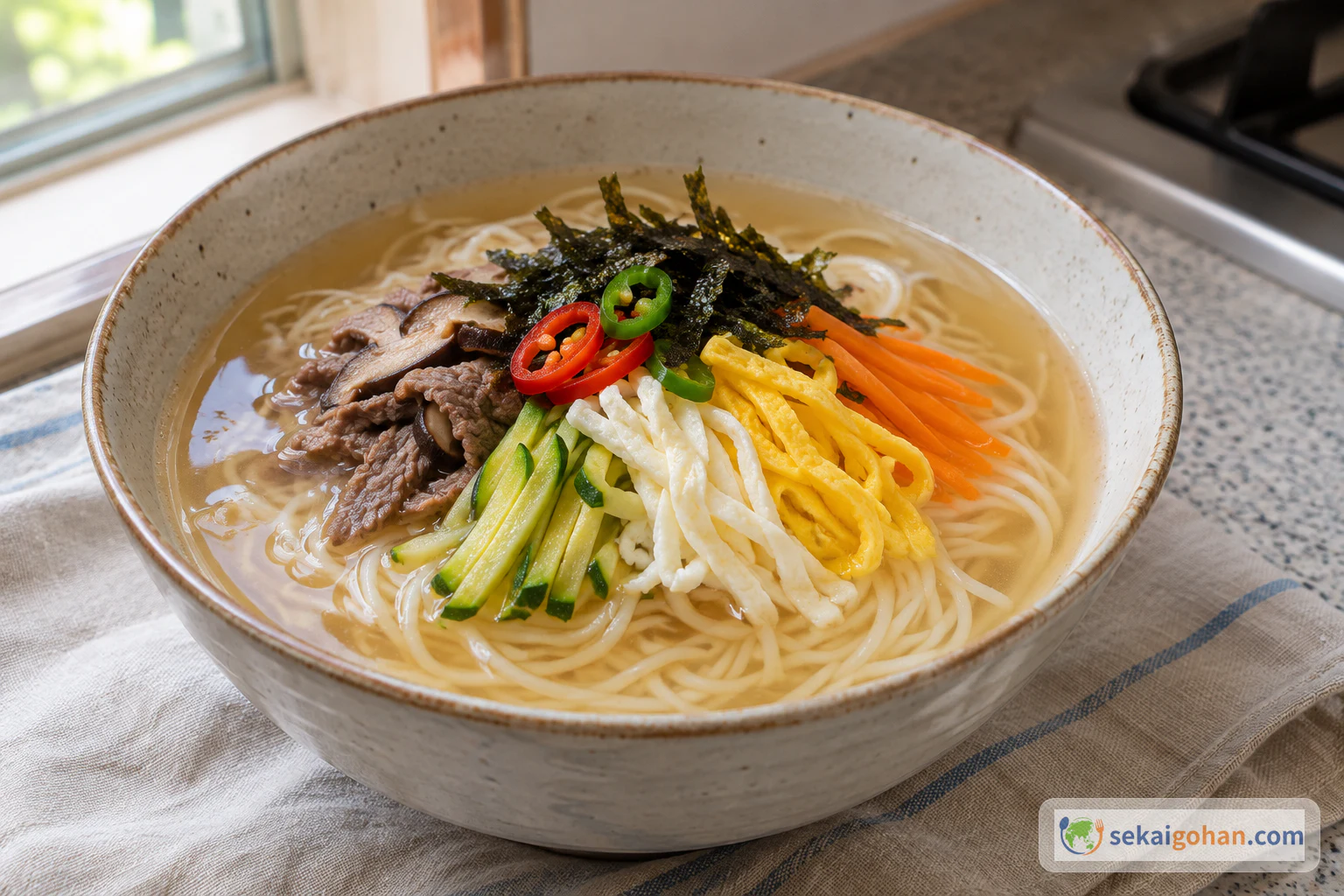
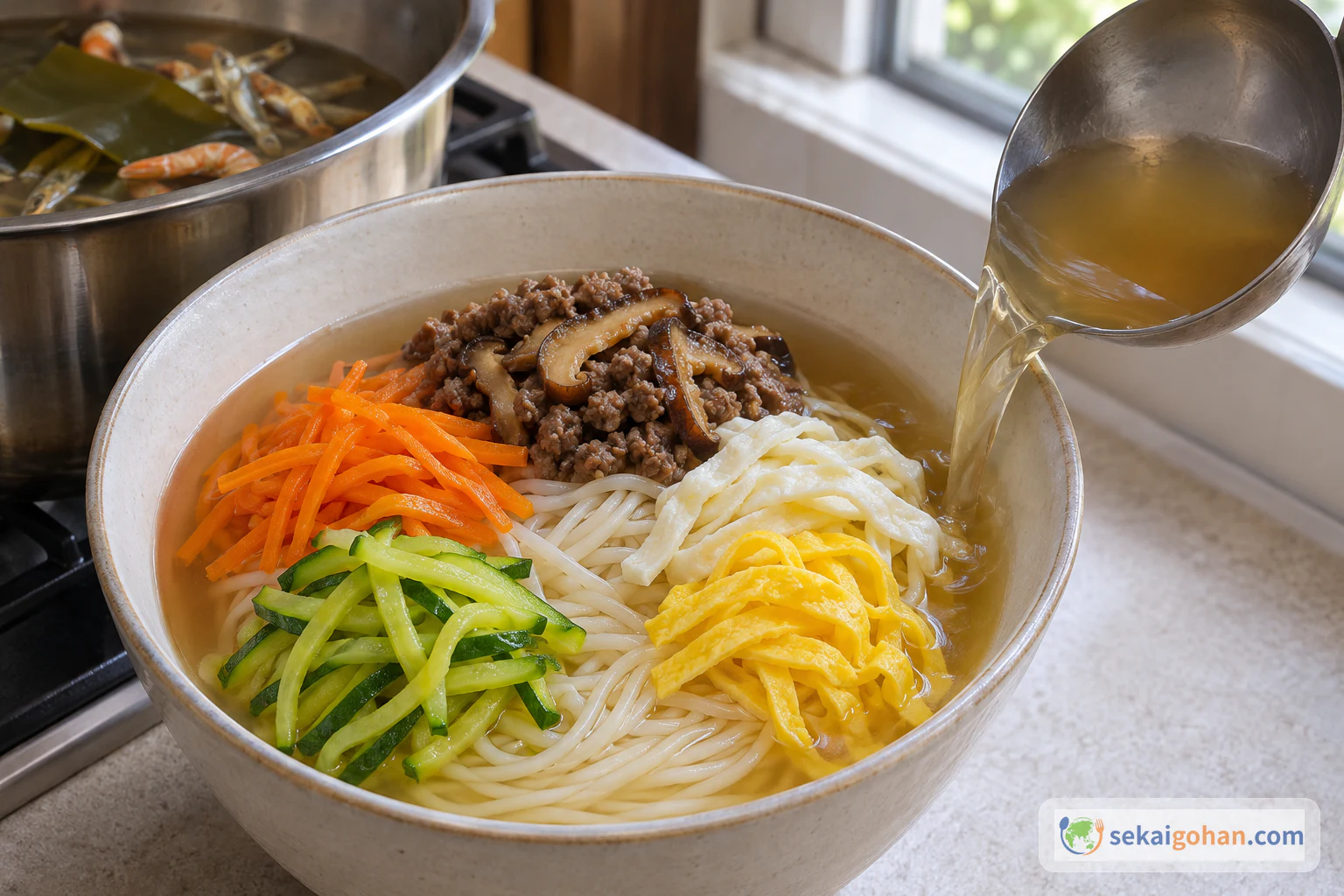
A finished bowl of janchi-guksu with clear anchovy broth and colorful toppings
Serves2 servings
CuisineKorean

Janchi-guksu (잔치국수): Korean Celebration Noodles in Anchovy Broth

How to make janchi-guksu (잔치국수), the Korean noodle soup tied to weddings and celebrations: thin wheat noodles in a clear anchovy, dried shrimp and kelp broth, topped with beef and shiitake, squash, carrot, white and yellow egg ribbons, laver and chilies. Follows KBS WORLD's two-serving recipe step by step, with clear notes on the kelp amount, the different soy sauces, dried shiitake and cooking minced beef safely.

Cooking flow

Cooking steps

STEP 11 / 11

Prepare the broth ingredients

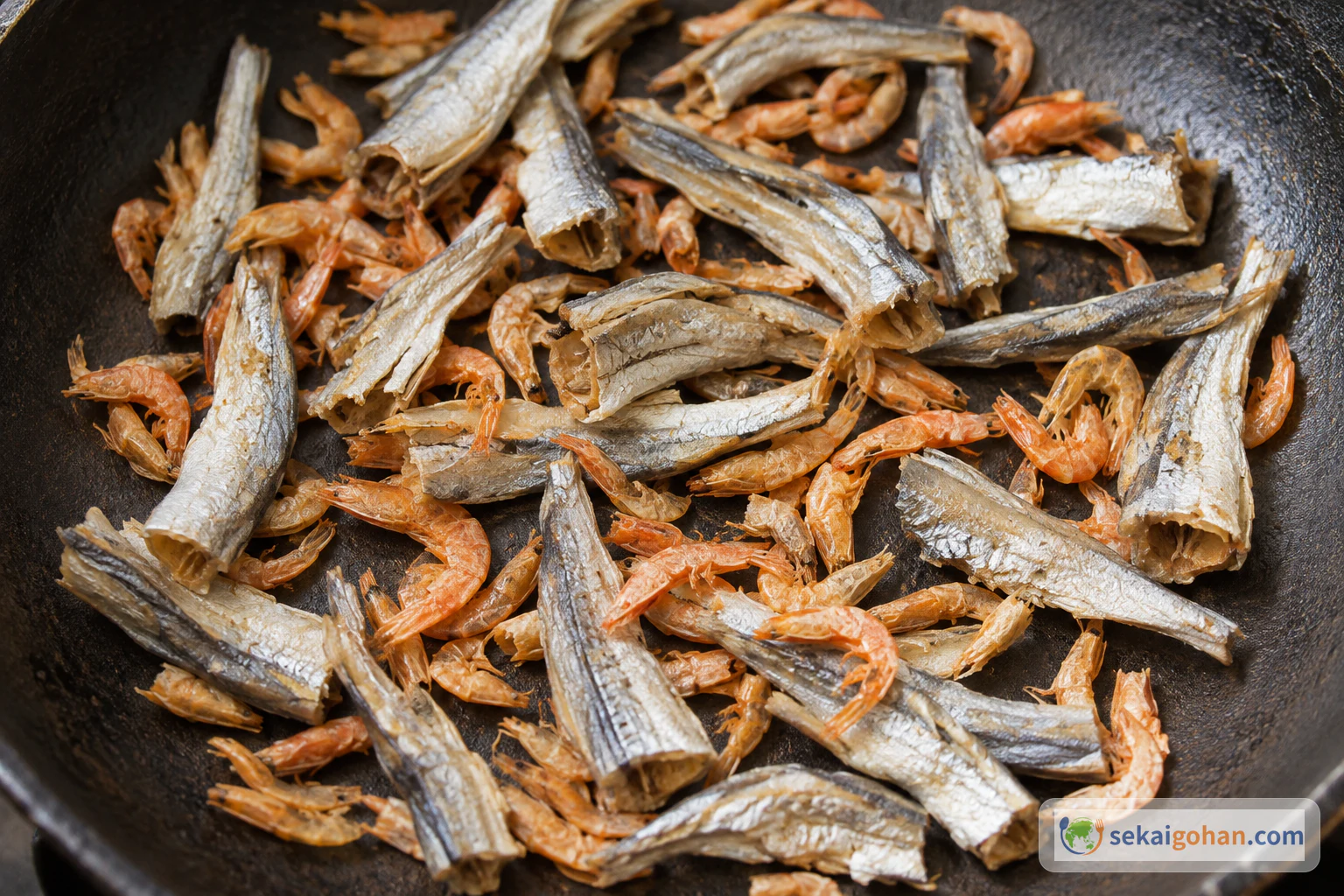
Dry-toasting dried anchovies and dried shrimp in a skillet

Remove the heads and innards from the 1.5 oz (40 g) of dried anchovies. Put the cleaned anchovies and the 20 g of dried shrimp in a dry skillet and toast them briefly. Cut the half onion into large pieces, the 3.5 oz (100 g) of white radish into large chunks about 1 inches (2 cm) thick, and the 1 oz (30 g) of scallion into lengths of about 4 inches (10 cm). Have ready two pieces of kelp, each 2 × 2 inches (5 × 5 cm).

STEP 22 / 11

Simmer the broth

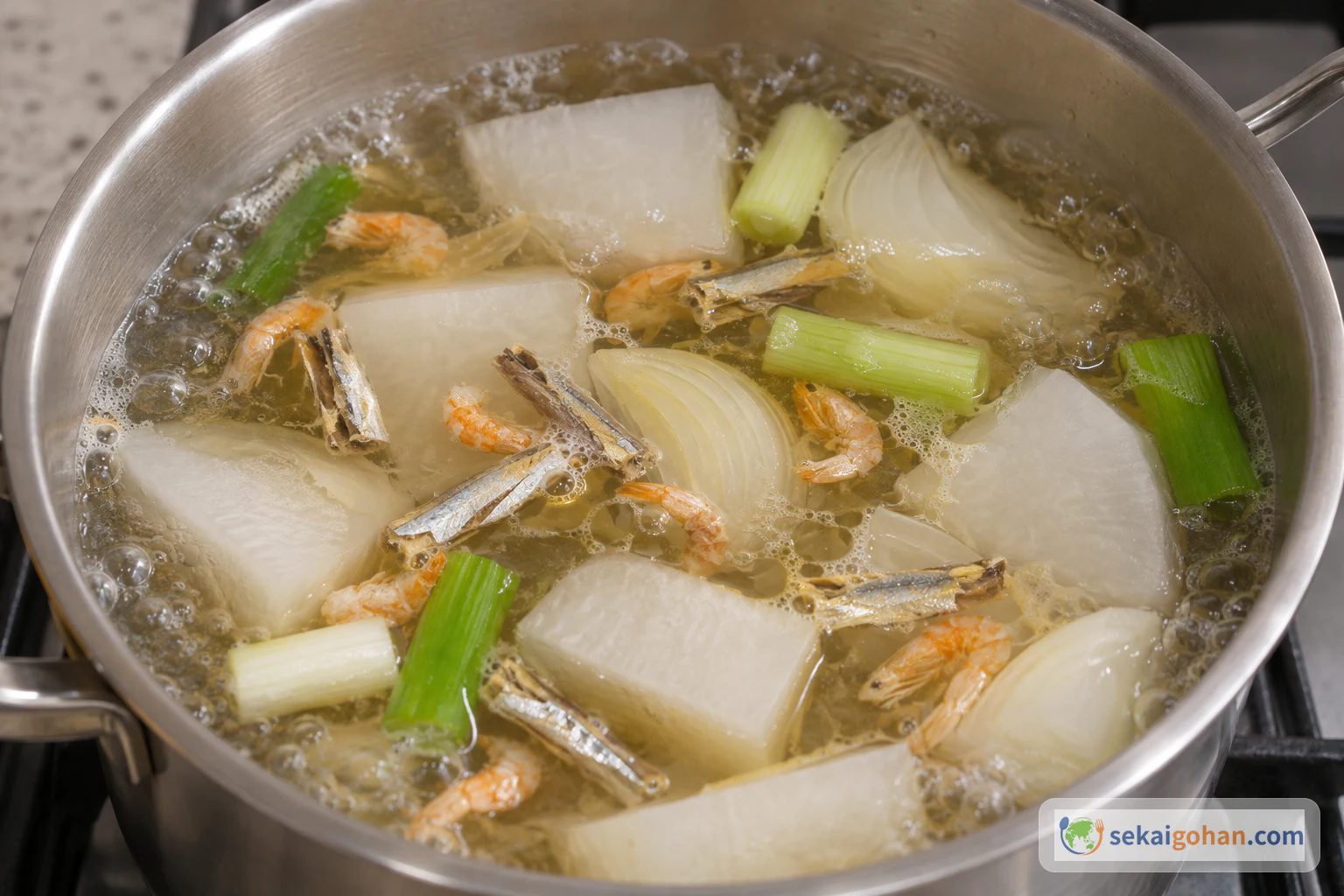
The broth ingredients simmering over medium heat

Bring 1 quarts (1 L) of water to a boil in the broth pot and add the two pieces of kelp. After 5 minutes, lift the kelp out of the pot. Add the toasted anchovies and shrimp, the onion, the radish and the scallion, then simmer over medium heat for about 20 minutes.

STEP 33 / 11

Strain and season the broth

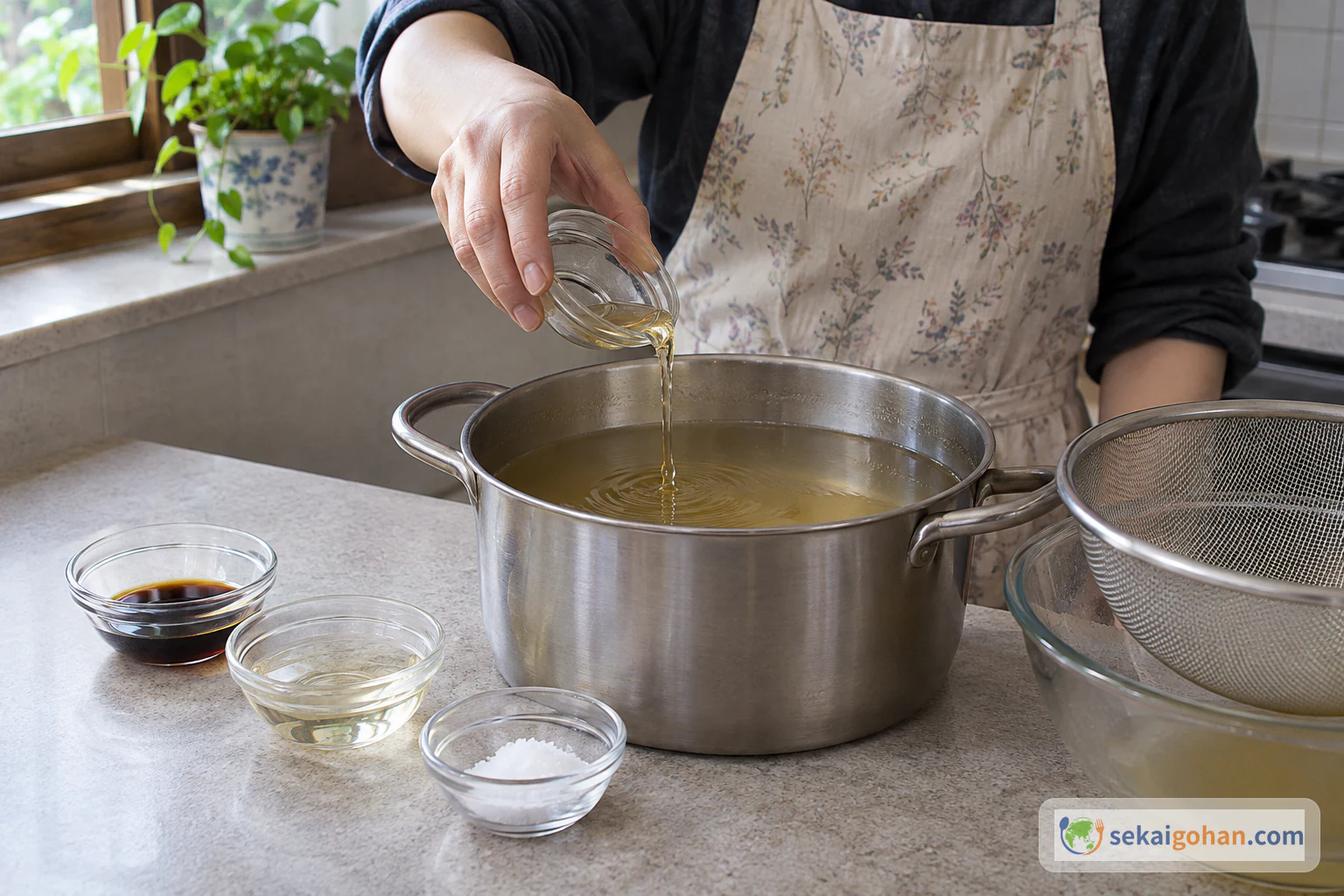
Seasoning the strained broth with clear soy sauce, rice wine and salt

Pour the broth through a sieve into a clean pot and discard the solids. Season the strained broth with 1 tbsp clear soy sauce and 1 tbsp refined rice wine. Add the 1/2 tbsp salt gradually, tasting as you go, and stop when it tastes right. Keep the broth hot for serving.

STEP 44 / 11

Marinate the beef and shiitake

Seasoning minced beef and shiitake with soy sauce, sesame oil, sugar and pepper

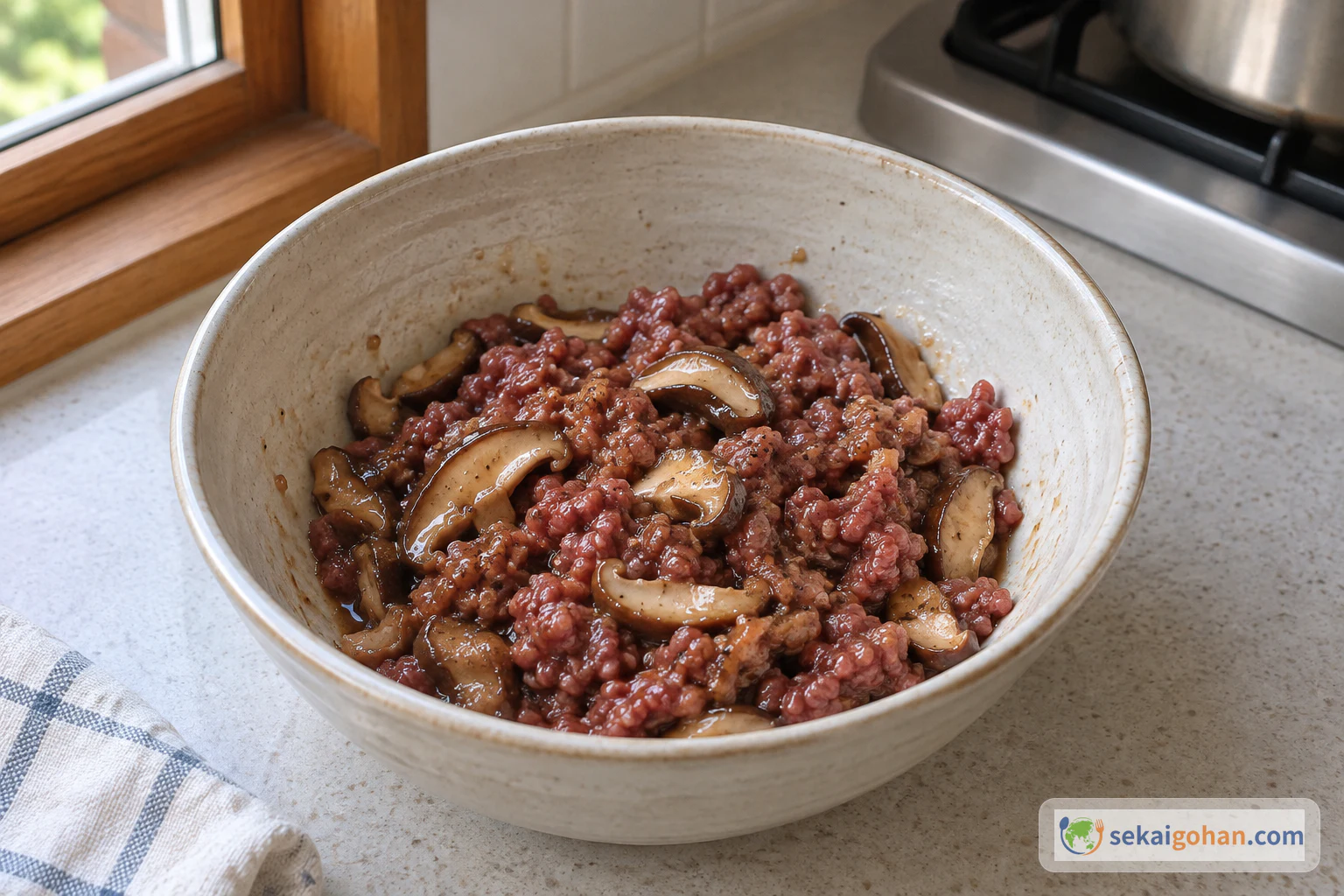
Soak the 2 dried shiitake in water as the package directs, then slice them thinly. In a bowl, mix the 1.75 oz (50 g) minced beef and the sliced shiitake with 1 tbsp soy sauce, 1 tbsp sesame oil, 1/2 tbsp sugar and 1/4 tsp ground pepper.

STEP 55 / 11

Cut and salt the squash and carrot

Sprinkling salt over julienned summer squash

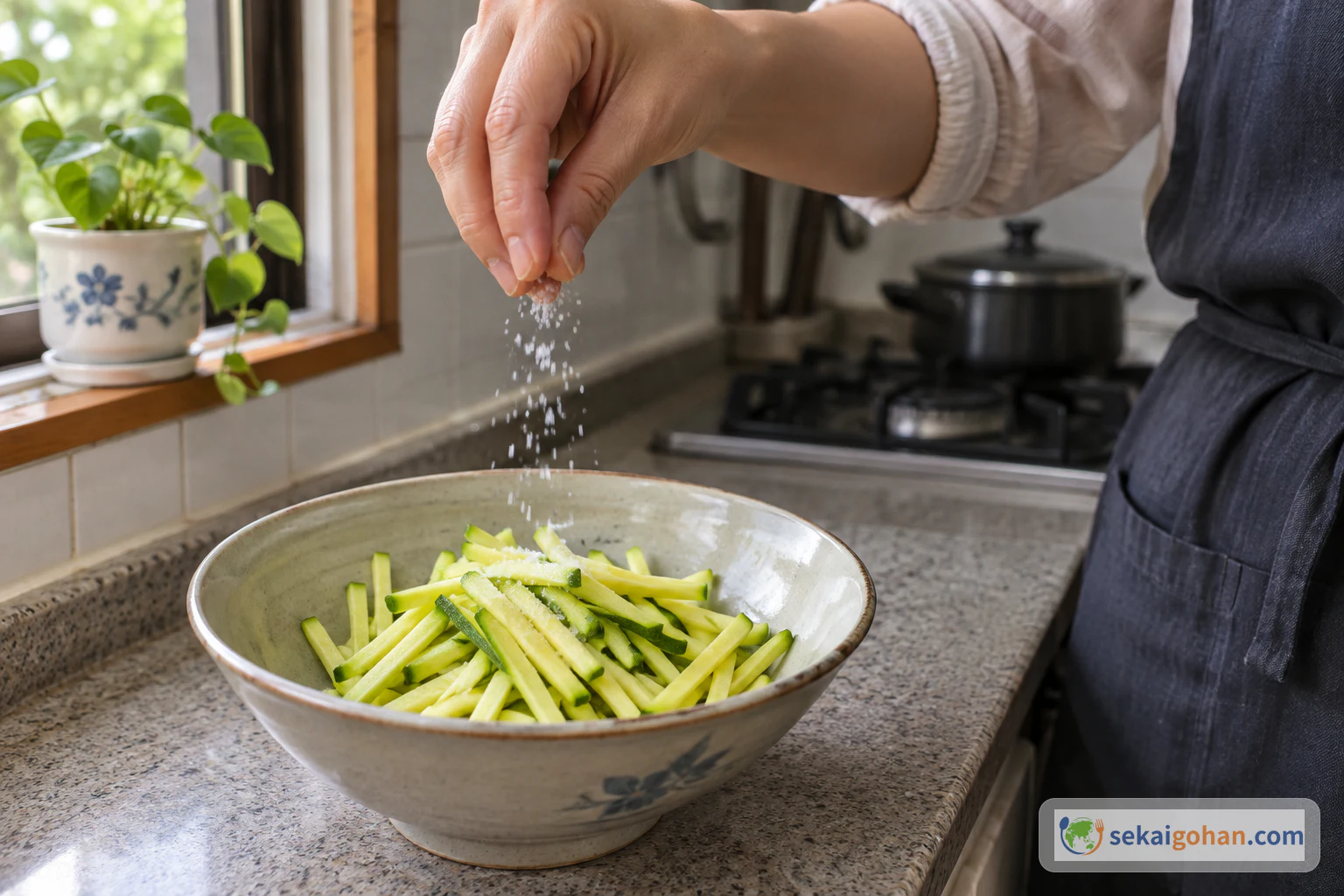
Shave the 1.75 oz (50 g) of summer squash into thin slices, then cut them into thin matchsticks. Do the same with the 10 g of carrot. Sprinkle each with a little of the vegetable salt, in separate bowls, then squeeze the excess liquid out of each until the matchsticks feel limp and fairly dry.

STEP 66 / 11

Make the egg ribbons

Cutting the white and yellow egg sheets into thin strips about 4 cm long

Separate the 2 eggs, putting the whites and the yolks in separate bowls. Pour the whites into a pan and cook them into a thin sheet, then cook the yolks into a separate thin sheet. Cut both sheets into thin strips about 1.5 inches (4 cm) long, keeping the white and yellow strips apart.

STEP 77 / 11

Prepare the garnishes

Slicing red and green chilies into rings

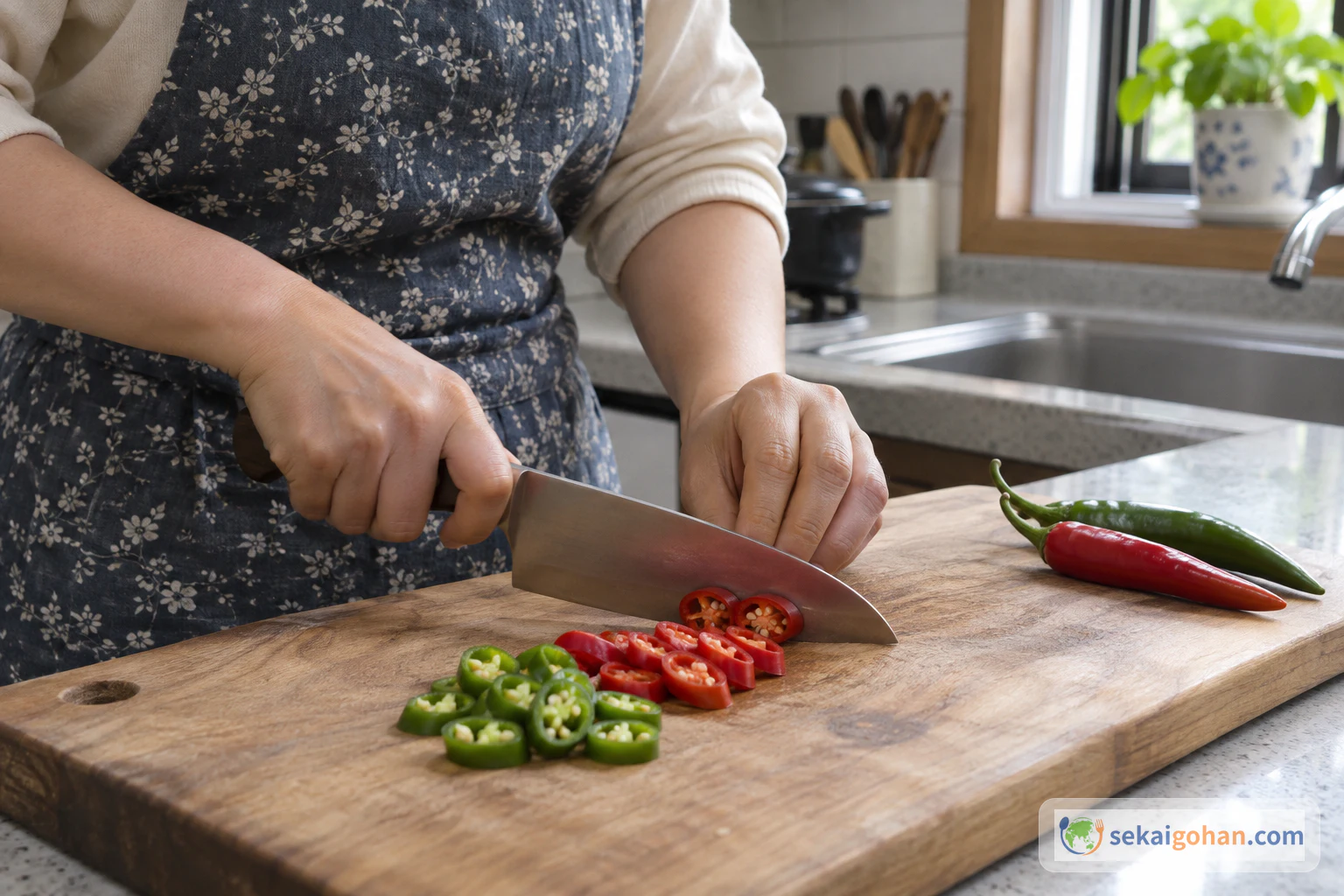
Tear the sheet of toasted laver into small pieces by hand. Slice the red chili and the green chili into rings. Set both aside for the final topping.

STEP 88 / 11

Sauté the vegetables, beef and shiitake

Cooking the marinated beef and shiitake last

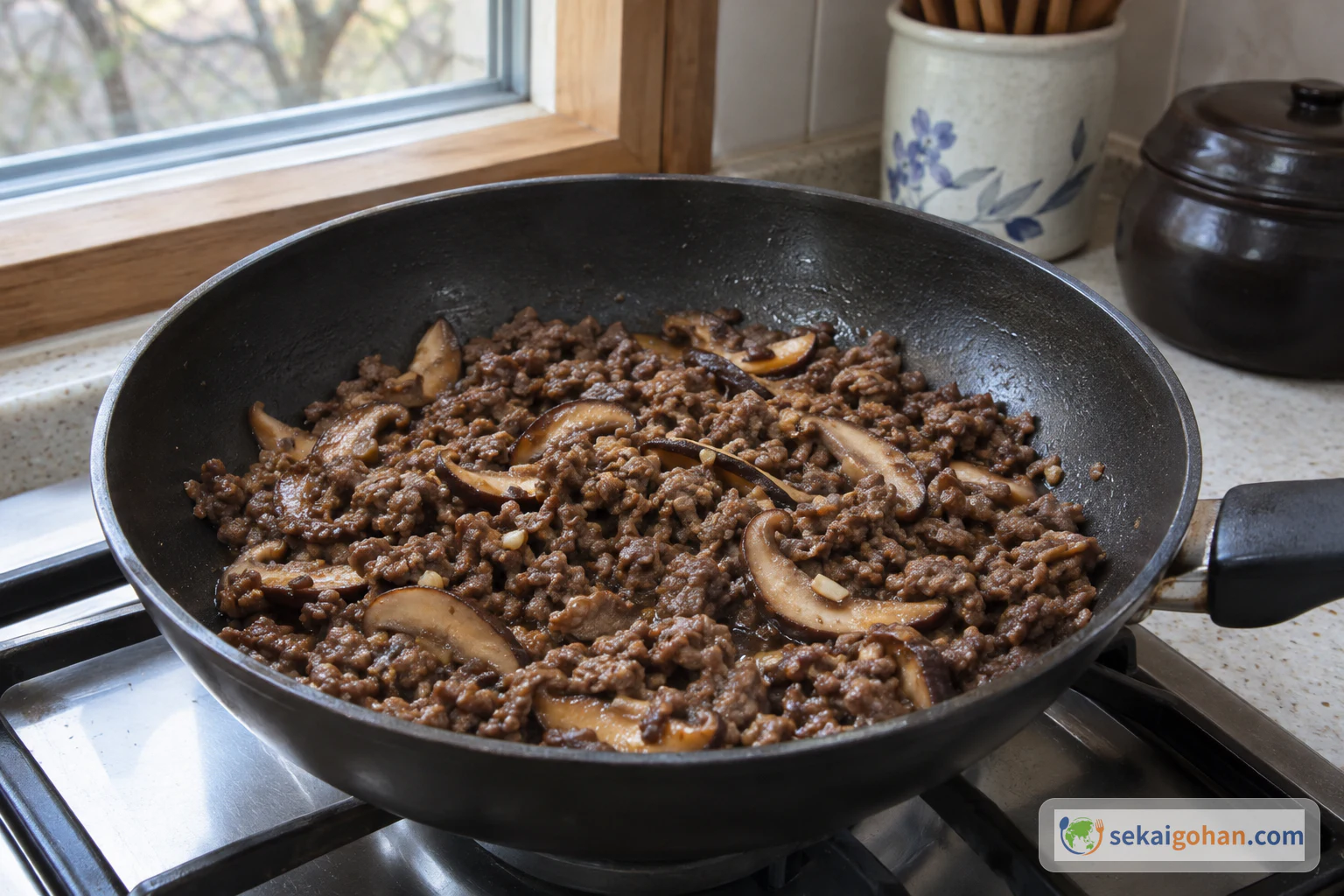
Heat the skillet. Without adding cooking oil, sauté the squash first, using a little of the vegetable salt, sesame oil and pepper, and set it aside. In the same skillet, sauté the carrot the same way and set it aside separately. Add the marinated beef and shiitake without any extra oil and cook through.

STEP 99 / 11

Boil the noodles

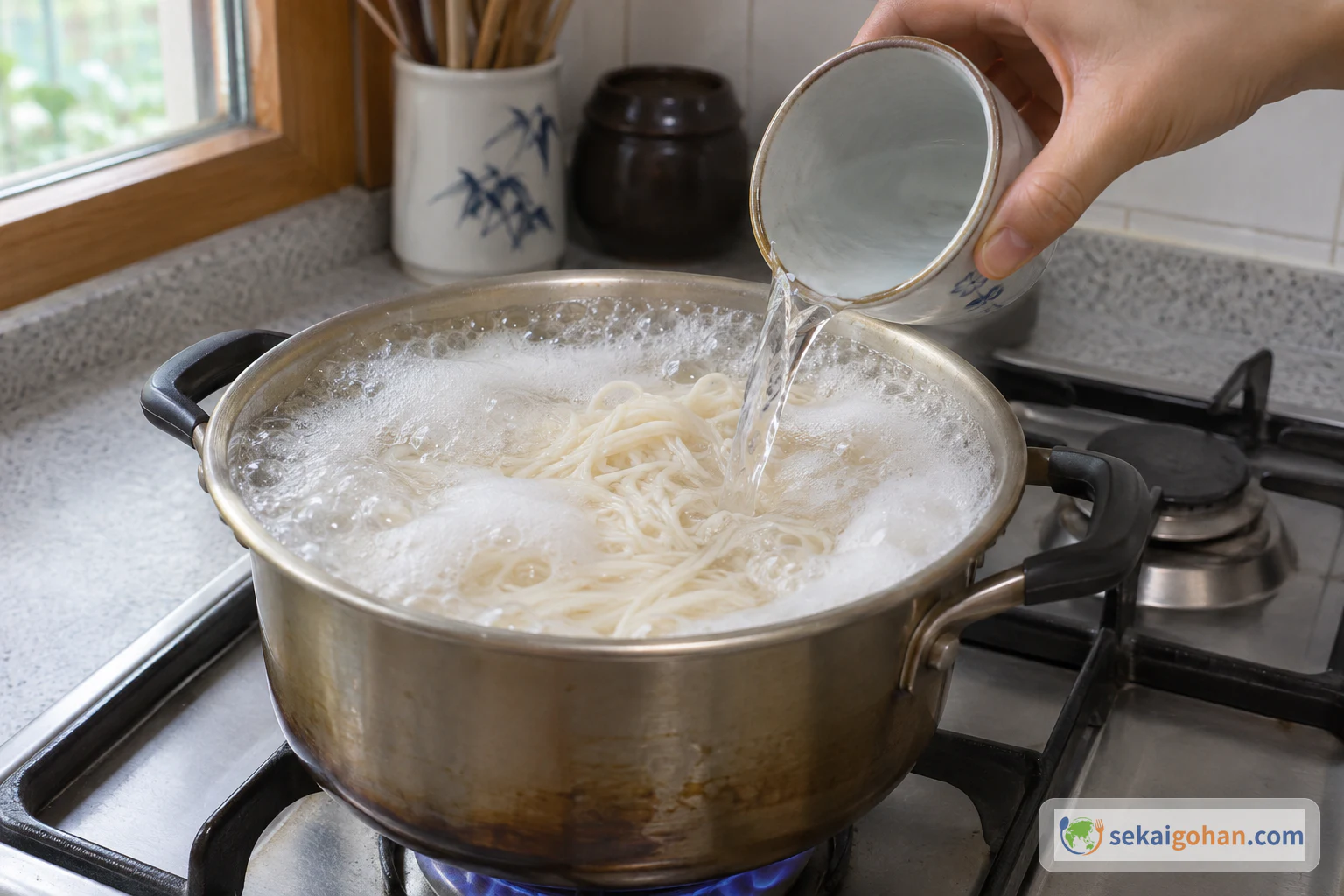
Pouring cold water into the noodle pot as it foams up

Bring a separate pot of water to a boil and add the 5.5 oz (160 g) of dried noodles. Each time the pot foams up and is about to boil over, pour in a little cold water. Do this 3–4 times, and cook the noodles for the time given on the package.

STEP 1010 / 11

Rinse and drain the noodles

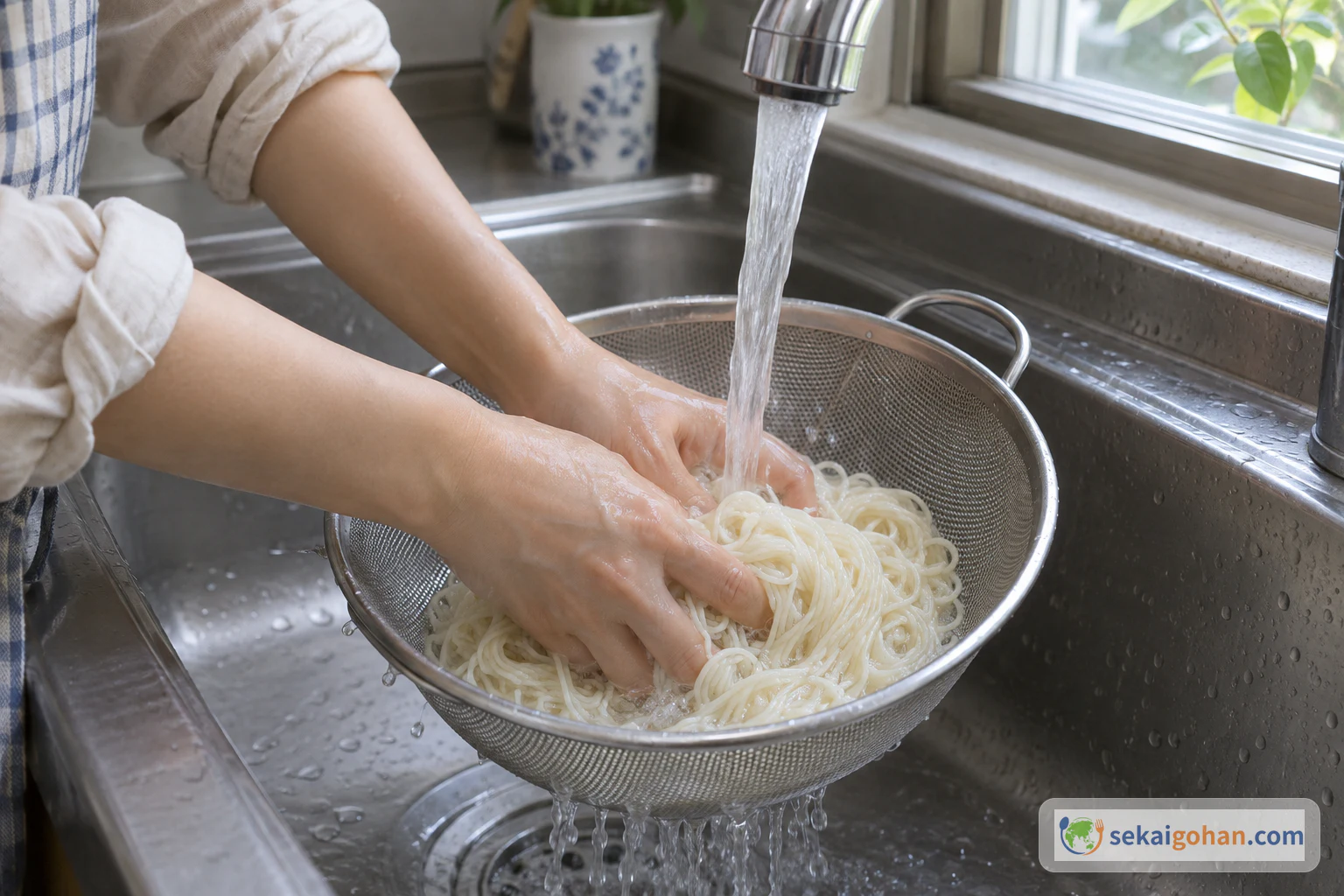
Rubbing the noodles under cold running water

Tip the cooked noodles into a colander. Rinse them under cold water, rubbing them gently with your hands, then let them drain well.

STEP 1111 / 11

Assemble and serve

Pouring hot broth gently down the side of the bowl

Place the noodles in serving bowls. Arrange the beef and shiitake, squash, carrot, and white and yellow egg strips on the noodles in separate piles. Pour the hot broth gently down the side of each bowl. Top with the torn laver and the red and green chili rings, and serve.

0 / 0
Ingredients

Ingredients

1 / 1

Ingredients

Ingredient Amount Role
Dried thin wheat noodles (소면, somyeon) 5.5 oz (160 g) Noodles
Dried anchovies 1.5 oz (40 g) Broth; heads and innards removed
Dried shrimp 20 g Broth
Kelp 2 pieces, 2 × 2 inches (5 × 5 cm) each Broth
Onion 1/2 Broth
White radish 3.5 oz (100 g) Broth
Scallion 1 oz (30 g) Broth
Water 1 quarts (1 L) Broth
Clear soy sauce 1 tbsp Seasoning the strained broth
Refined rice wine 1 tbsp Seasoning the strained broth
Salt 1/2 tbsp Seasoning the strained broth; add gradually, tasting
Minced beef 1.75 oz (50 g) Topping
Dried shiitake mushrooms 2 Topping, cooked with the beef
Soy sauce 1 tbsp Marinade for the beef and shiitake
Sesame oil 1 tbsp Marinade for the beef and shiitake
Sugar 1/2 tbsp Marinade for the beef and shiitake
Ground pepper 1/4 tsp Marinade for the beef and shiitake
Summer squash 1.75 oz (50 g) Topping
Carrot 10 g Topping
Salt 1 tsp For the vegetables; use a little at a time
Sesame oil 1/2 tbsp For the vegetables; use a little at a time
Ground pepper 1 tsp For the vegetables; use a little at a time
Eggs 2 White and yellow egg ribbons
Toasted laver 1 sheet Garnish
Red chili 1 Garnish
Green chili 1 Garnish
0 / 0

A bundle of thin white noodles sits in the bowl, ringed by small, separate piles: brown beef and shiitake, green squash, orange carrot, and two kinds of egg ribbon, one white and one yellow. Hot broth goes in gently down the side so nothing shifts, and torn laver and rings of red and green chili land on top last. This is janchi-guksu (잔치국수), the Korean noodle soup served at weddings and other celebrations. The broth is clear and light, built on dried anchovies, dried shrimp and kelp, and each topping keeps its own color and taste until you stir it all together.

Janchi-guksu at Korean Celebrations

The name says it plainly: janchi is a feast, and this is the bowl that turns up at weddings and other special occasions. Long noodles stand for a wish for long life and lasting happiness, which is why they belong on a celebration table.

That meaning has stayed the same over the years, but the toppings and broth haven't always been the same. What follows is one modern home version of the dish. For more from the same table, see our Korea page.

What this bowl should keep

A clear broth of dried anchovies, dried shrimp and kelp, thin wheat noodles rinsed in cold water, and toppings arranged in separate piles so each color stays distinct until the hot broth goes in.

Ingredients (2 Servings)
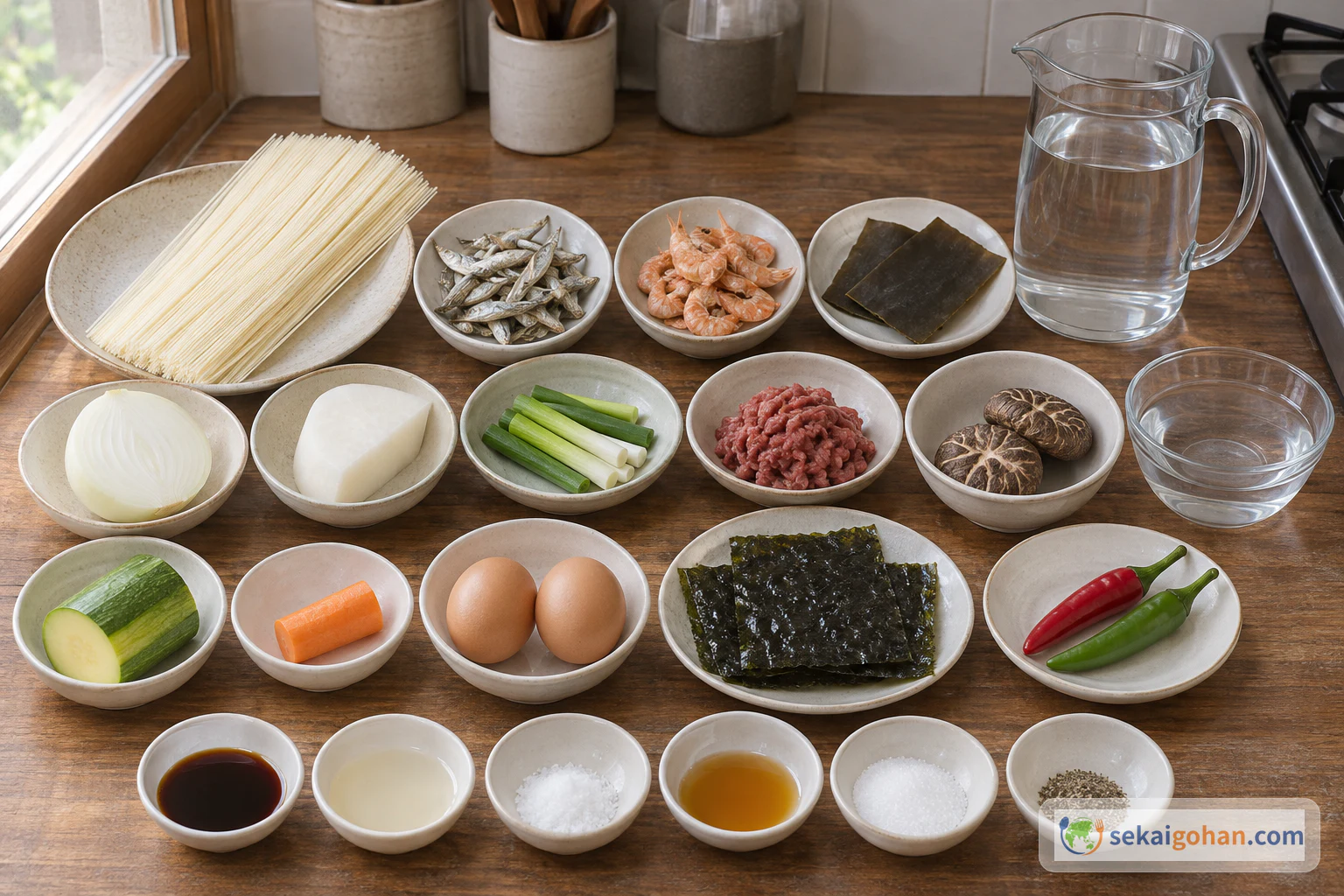
Ingredients for janchi-guksu, including two 5 × 5 cm pieces of kelp

Add the vegetable salt, sesame oil and pepper a little at a time, and stop when the vegetables taste right to you.

Choosing Ingredients for Janchi-guksu

  • Noodles. Korean somyeon are thin dried wheat noodles, and Japanese somen are a close stand-in. Thickness, salt content and cooking time vary by product, so follow the package.
  • Kelp. Use two 2 × 2 inches (5 × 5 cm) pieces.
  • Summer squash. Zucchini is a close substitute.
  • Clear soy sauce for the broth. Korean soup soy sauce (국간장, guk-ganjang) is a good choice. Japanese light soy sauce (usukuchi) is a different product with a different taste, so use it only as a substitute and season by taste. Keep the broth's soy sauce separate from the regular soy sauce used for the beef.
  • Refined rice wine. Japanese sake can stand in. The broth can still contain some alcohol after cooking, so tell anyone who avoids alcohol.
  • Shiitake. Use dried, food-grade shiitake and rehydrate them as the package directs; soaking time differs between products. The soaking liquid isn't used.
  • Chilies. Heat varies by variety and from one pepper to the next.

Equipment

  • A pot for the broth
  • A separate pot for the noodles
  • A skillet
  • A sieve
  • A colander
  • Tongs
  • A ladle
  • A knife and cutting board
  • Small bowls for the separated eggs, the salted vegetables and the marinated beef

Method: Broth, Toppings, Noodles, Then the Bowl

The order of work

Make the broth first, then prepare and cook the toppings, cook and rinse the noodles last, and assemble the bowl with hot broth.

Cooking minced beef

Cook the minced beef until the center reaches 167°F (75°C) and stays there for at least 1 minute. Color alone is not a reliable sign that the meat is done; use a food thermometer if you have one. Wash your hands before cooking and keep boards and utensils used for raw meat clean.

Common Problems with Janchi-guksu

Season the vegetables with the salt, sesame oil and pepper a little at a time while they sauté, and stop as soon as they taste right. You won't need any extra oil in the pan, since the 1 tbsp sesame oil in the beef and shiitake marinade takes care of it.

Situation What to do
The noodle pot foams up toward the rim Pour in a little cold water each time; plan on doing this 3–4 times. Go by the package for the total cooking time
The broth tastes too salty Next time, add the 1/2 tbsp salt gradually and taste as you go; the clear soy sauce adds salt too
The shiitake are still firm Keep soaking as the package directs
The squash or carrot is watery in the bowl Squeeze them firmly after salting, before sautéing
You can't tell if the beef is cooked Check the center with a thermometer rather than going by color (see the FAQ)
The toppings get scattered Pour the broth down the side of the bowl, not over the toppings

Frequently Asked Questions

Why two small pieces of kelp instead of one 4 × 4 inches (10 × 10 cm) sheet?

The ingredient list mentions one 4 × 4 inches (10 × 10 cm) sheet, but the method uses two 2 × 2 inches (5 × 5 cm) pieces. That's 100 cm² versus 50 cm², so the two aren't equivalent. Go with the two small pieces.

How do I know the minced beef is cooked safely?

Heat the meat until the center reaches 167°F (75°C) and stays there for at least 1 minute. Color, whether in the pan or in a photo, can't tell you the internal temperature, so use a food thermometer if you have one.
Sources