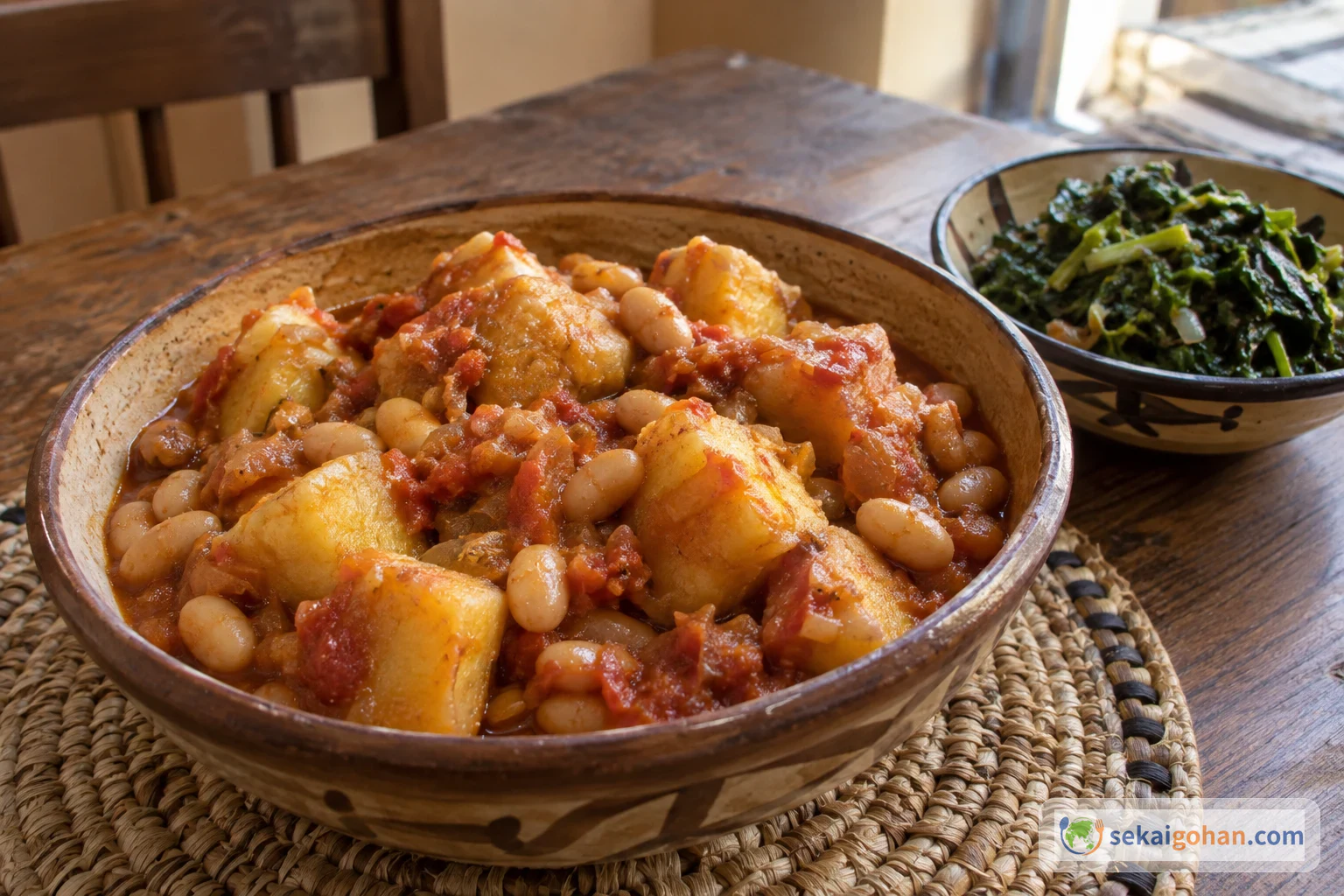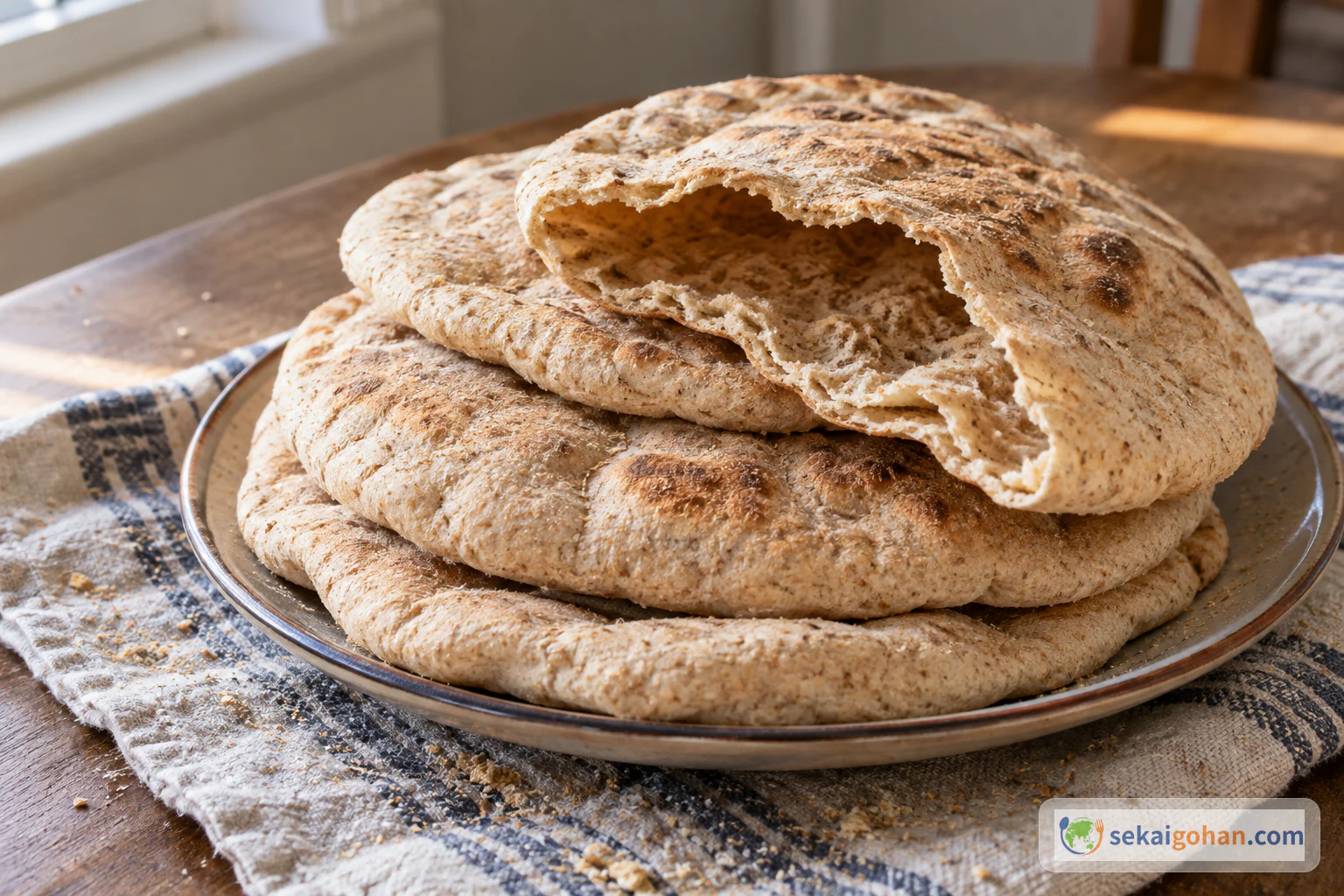
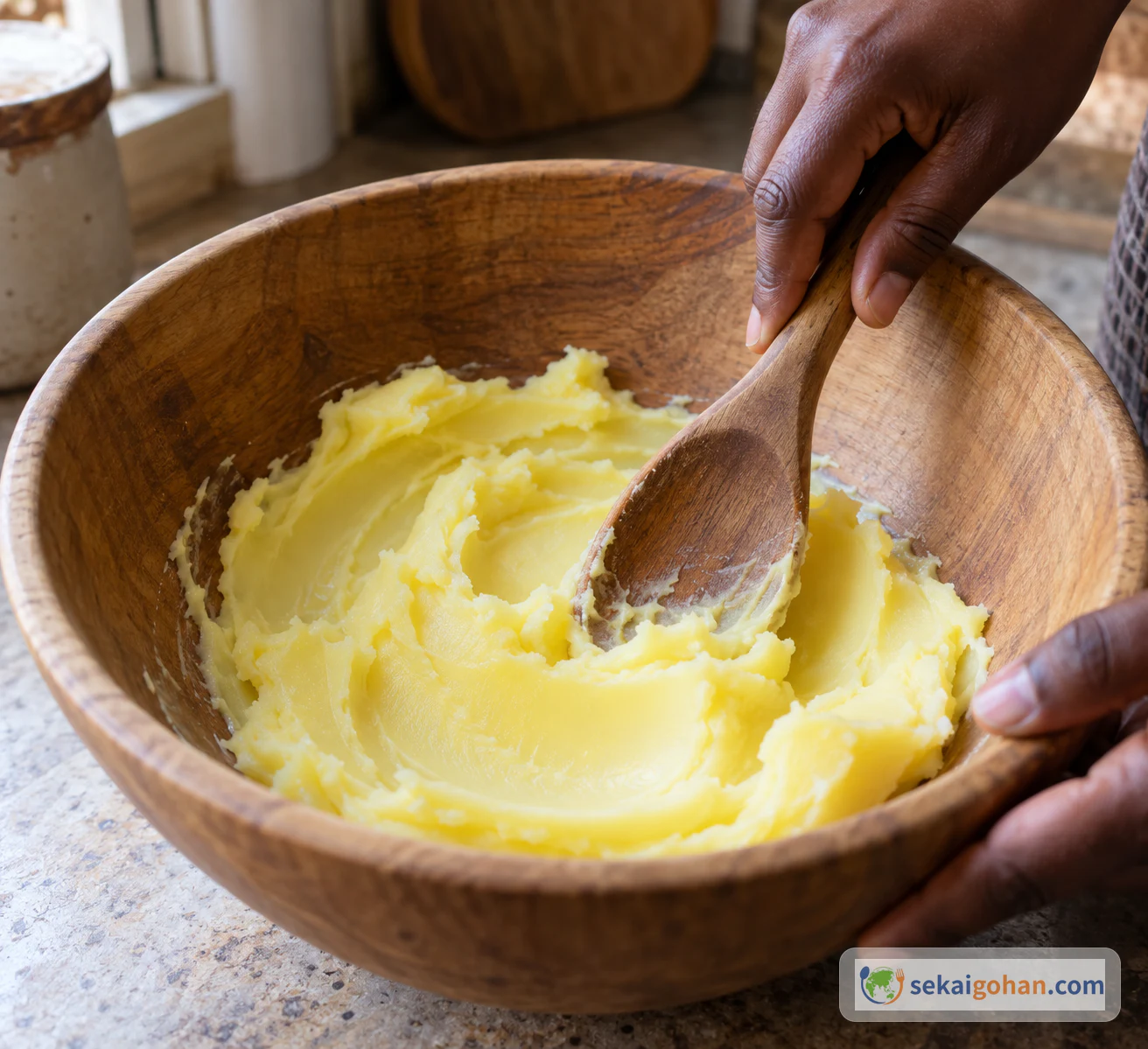
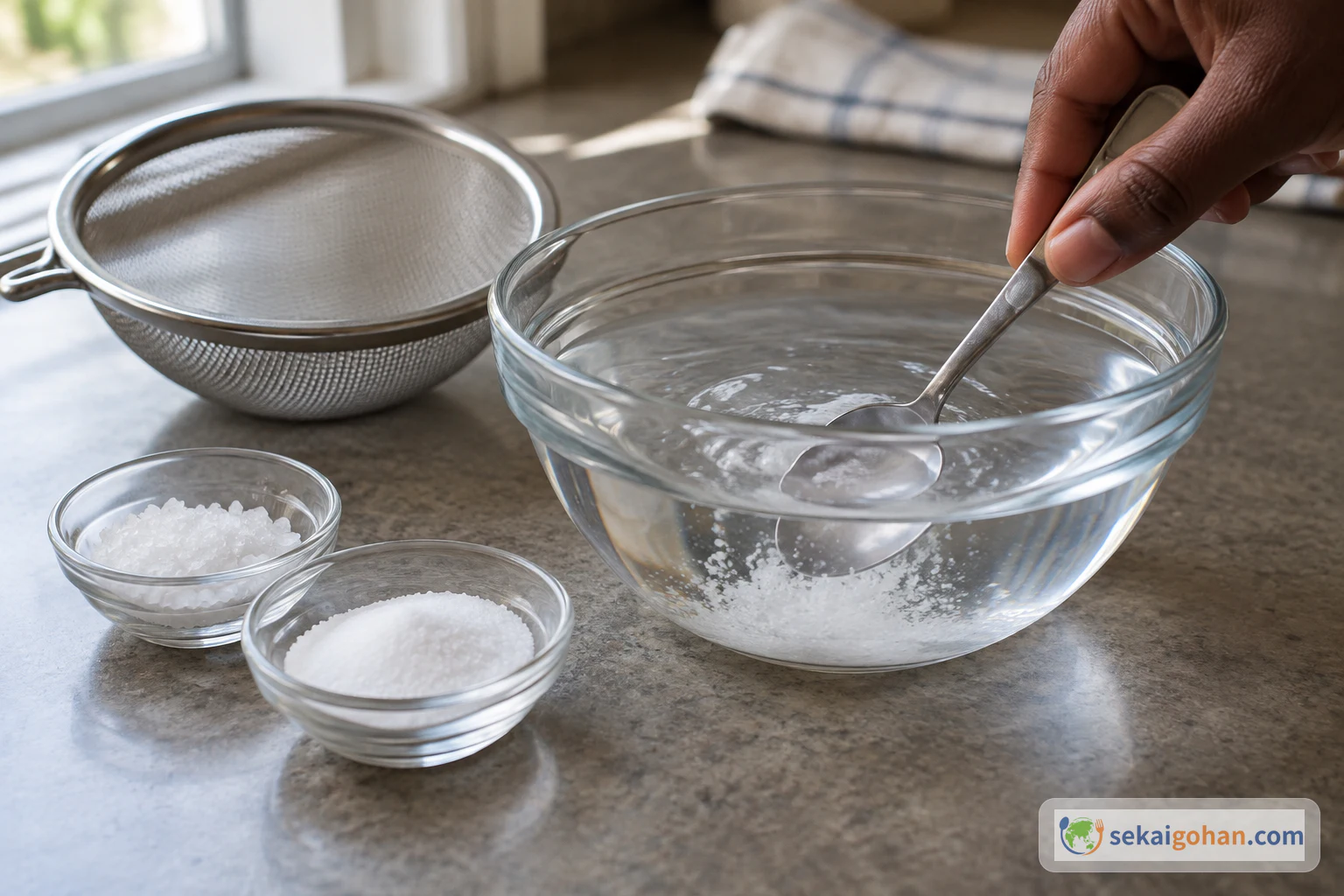
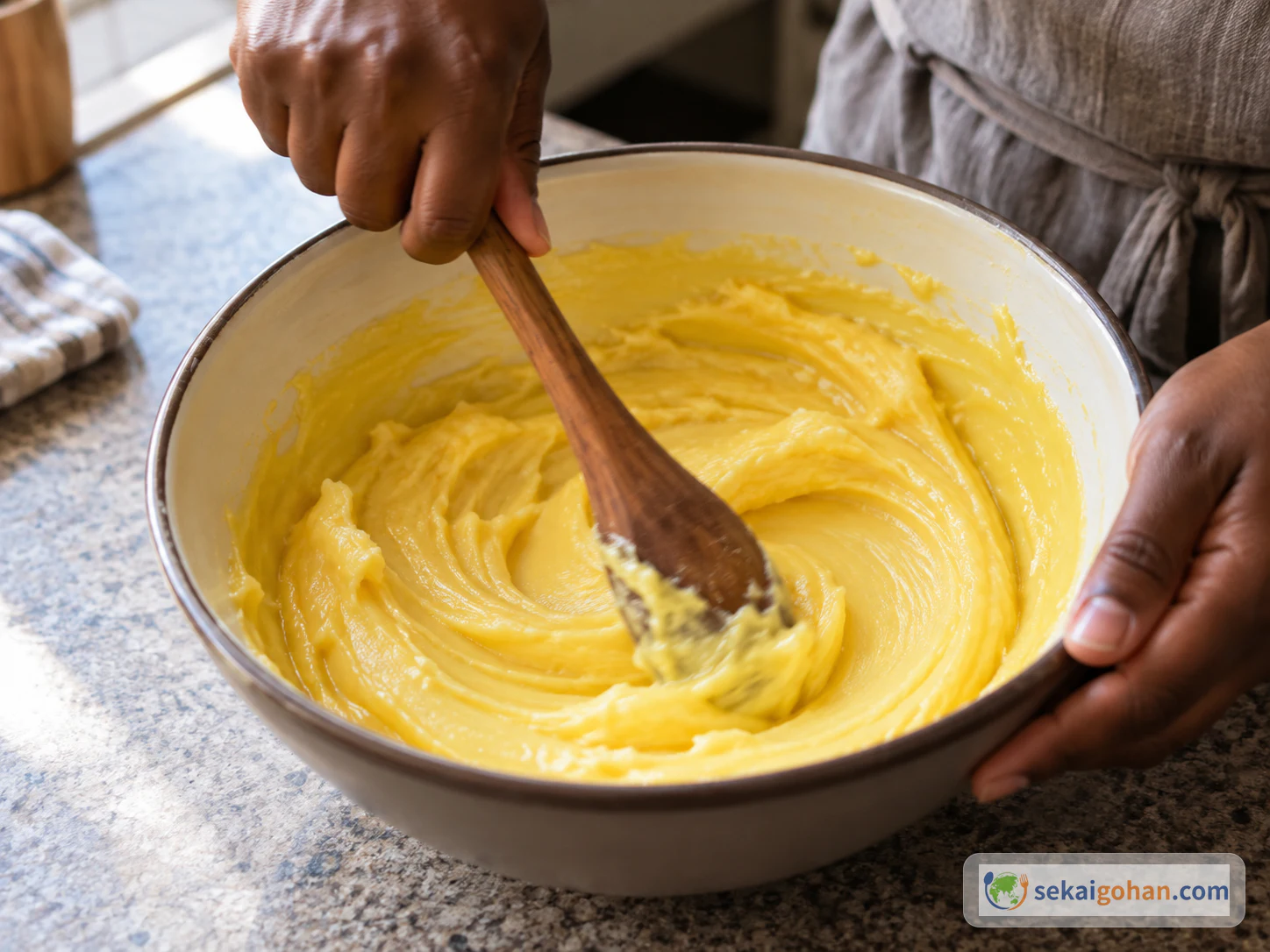
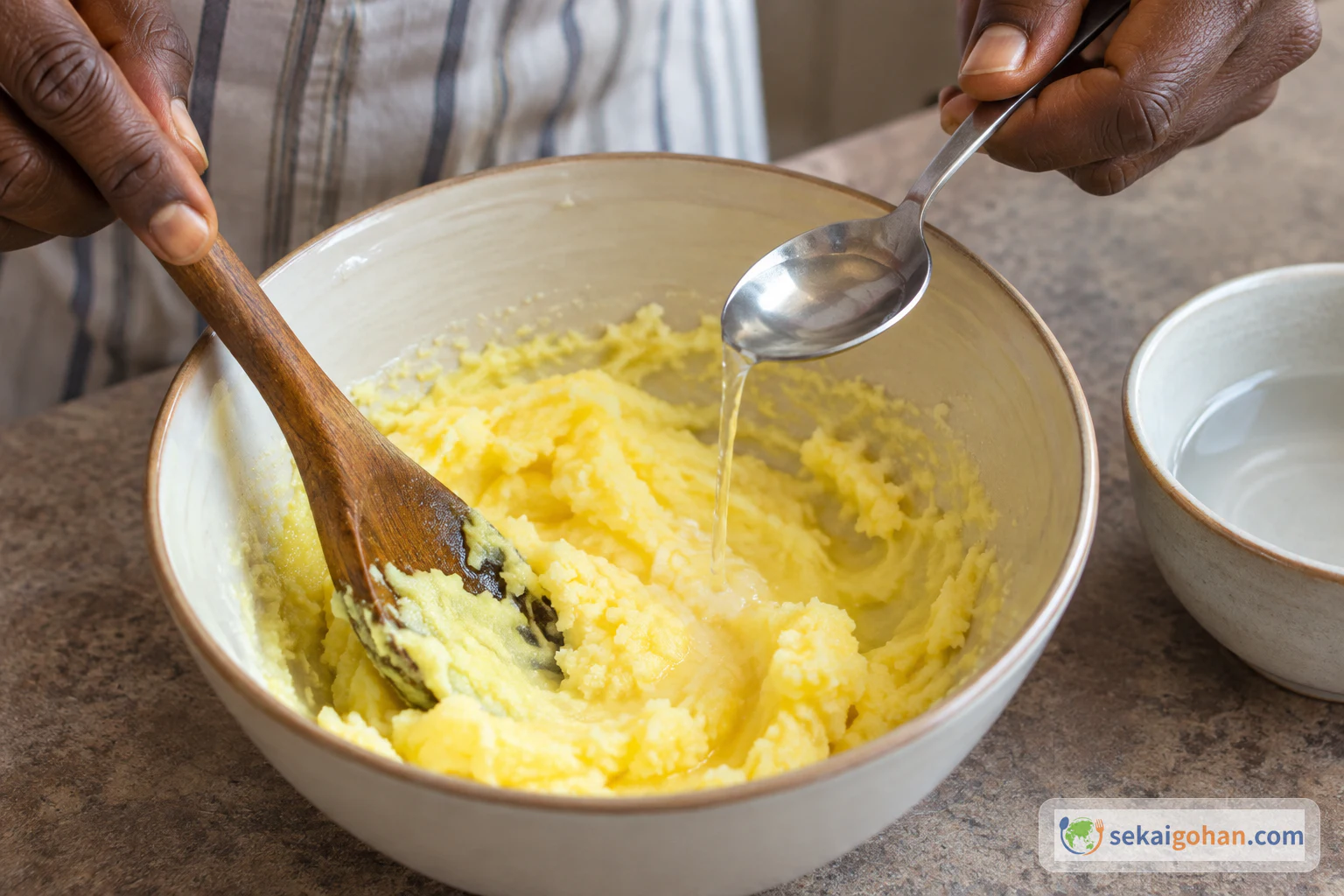
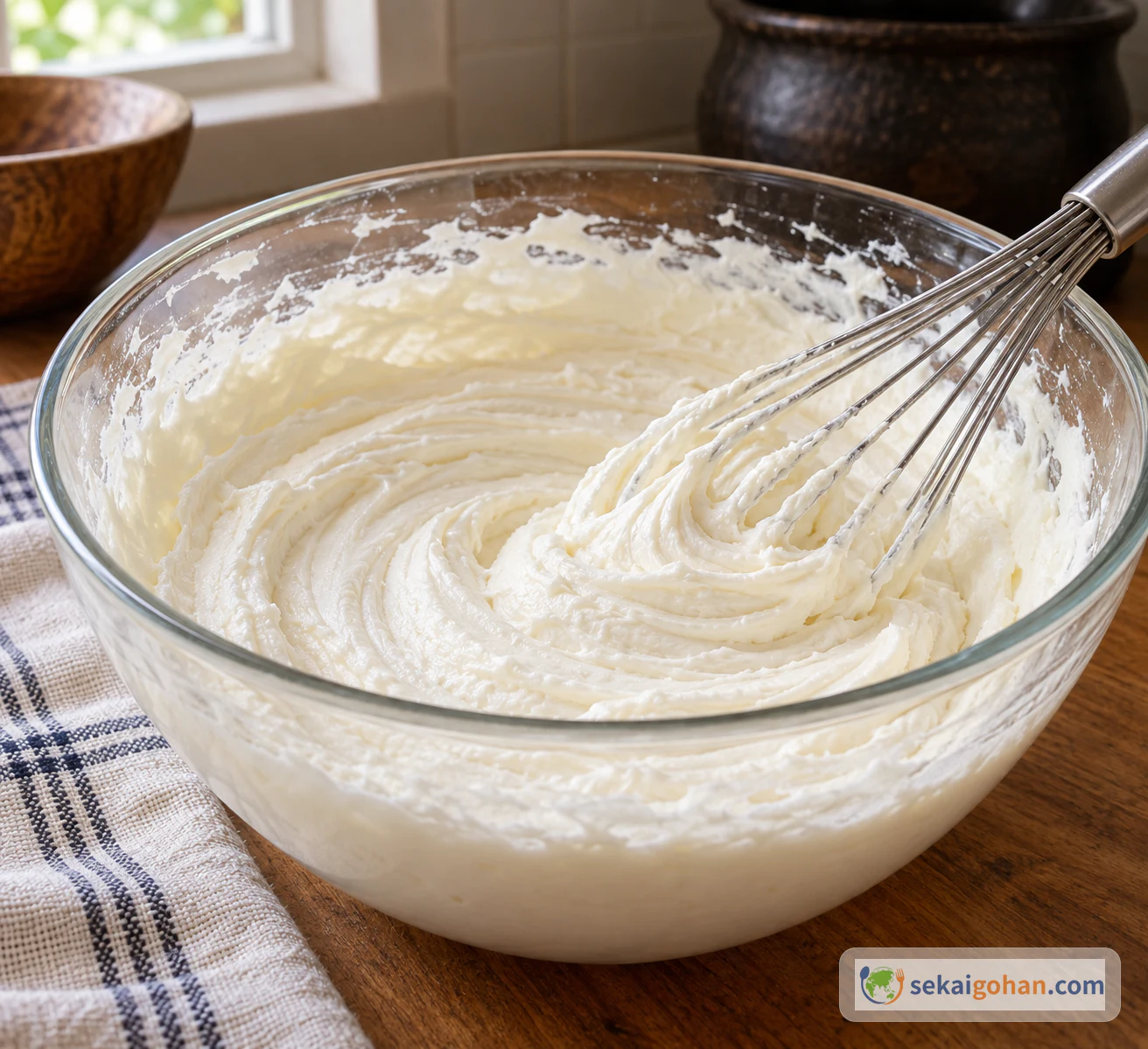
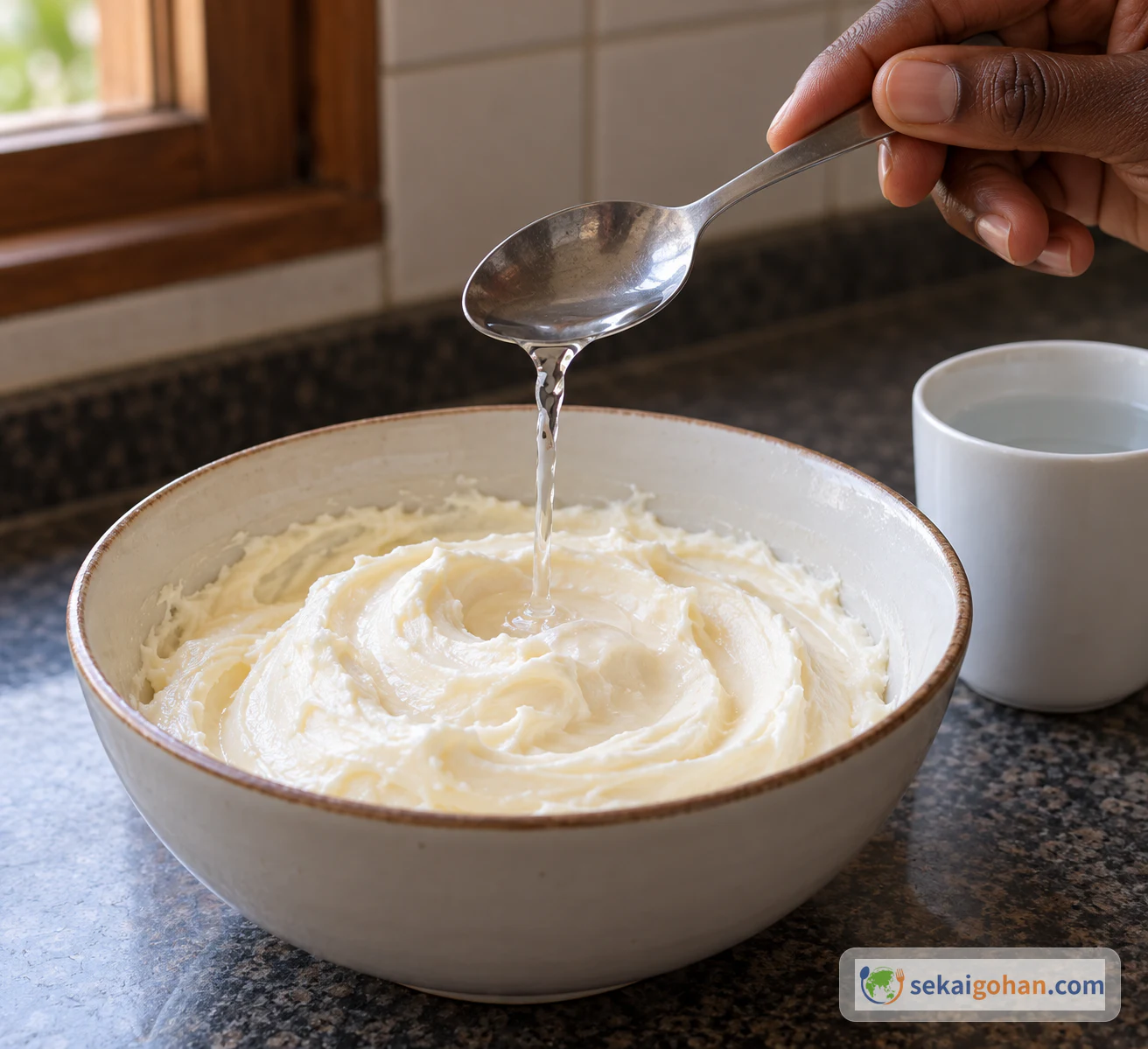
A bowl of pale yellow ghee, a wooden spoon, and a small dish of salted water waiting beside it. A tablespoon of brine goes in, the spoon keeps moving in one direction, and then another tablespoon follows, until the ghee loses its yellow and sits in the bowl as a thick, opaque white cream. That is eshabwe, a cold ghee sauce from Ankole in western Uganda. It needs no heat and nothing beyond ghee, salted water and patient stirring, and it ends up rich, salty and spoonable.
What Eshabwe Is
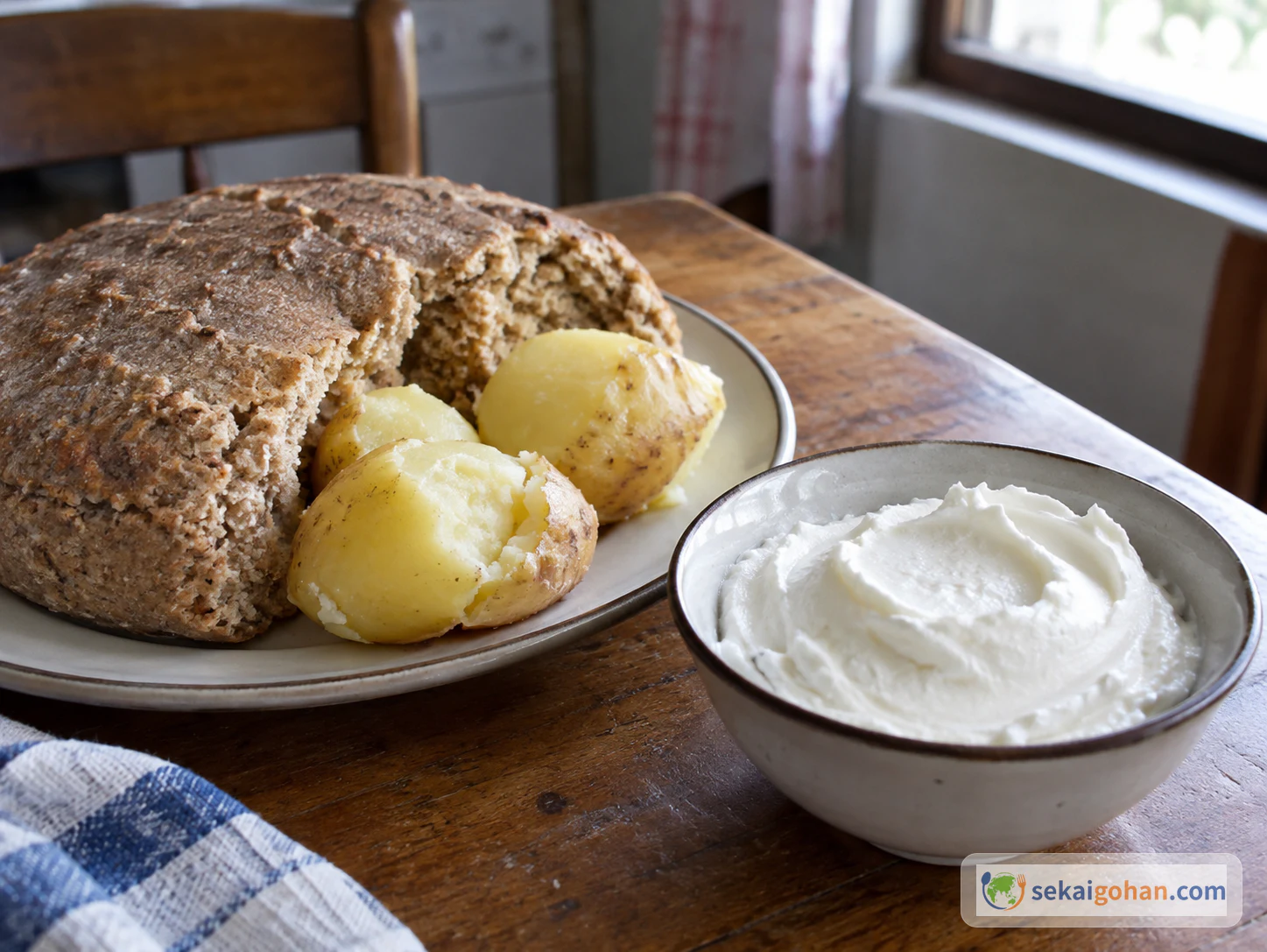
Eshabwe is a cold accompaniment, spooned alongside staples such as millet bread, matooke (steamed, mashed green bananas) and boiled potatoes or sweet potatoes. It is a traditional Ankole dish, made at home and served on special occasions. For more dishes from the same country, see our Uganda page.
The heart of eshabwe is a change in texture, not cooking. The ghee is never heated. It is beaten while salted water is worked in a little at a time, and the mixture turns from pale yellow to white, thickens and grows in volume.
The dish is connected to the traditions of the Bahima. It belongs to the wider milk and ghee culture of the Ankole cattle corridor, where ghee is made at home and used in everyday household cooking.
Ingredients: Four Things, With the Water Used in Two Halves
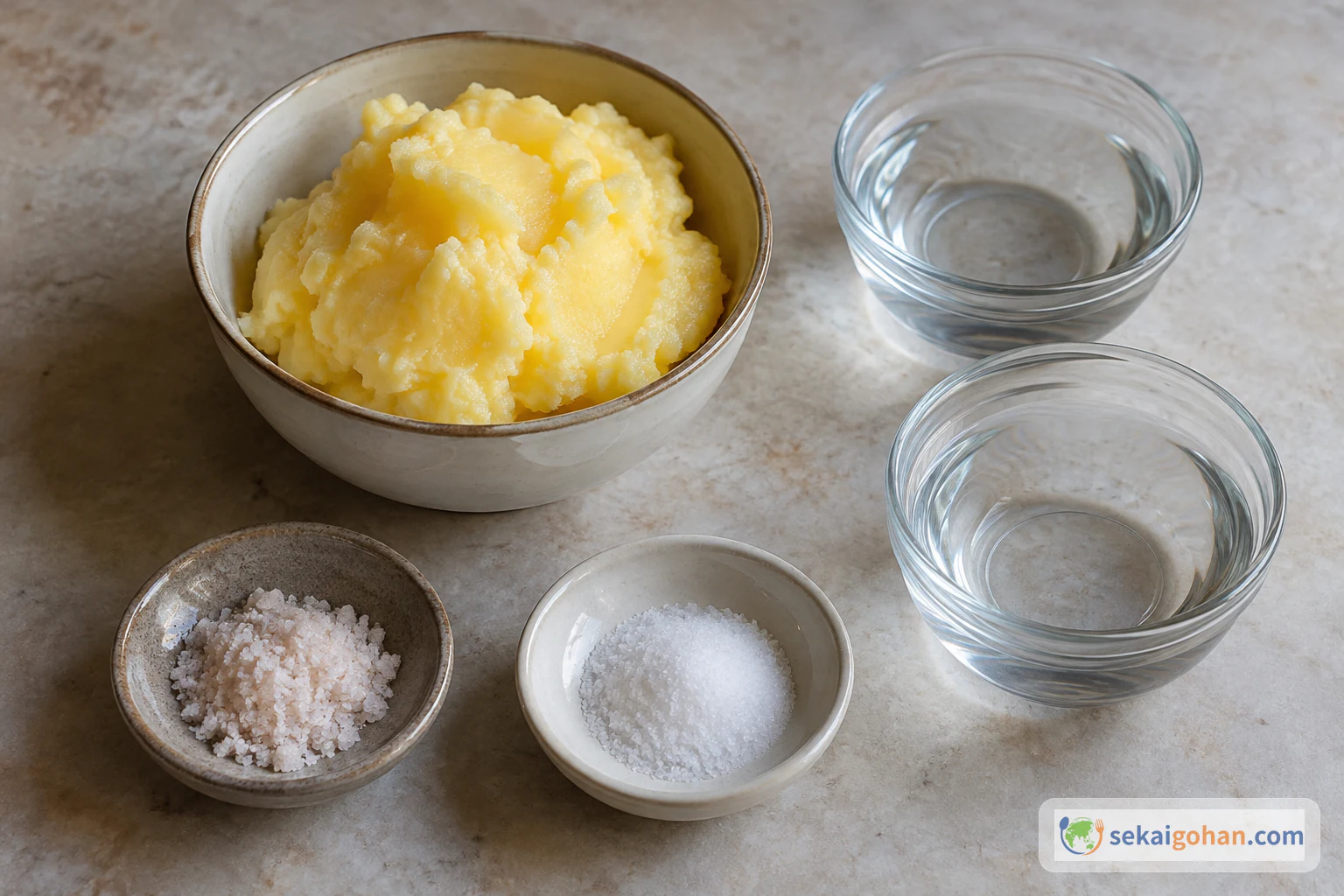
This makes roughly four servings as a side sauce. Boil the water in advance and let it cool until lukewarm, then divide it into two ¼-cup (75 ml) portions: one becomes the brine, and the other is held back for adjusting the consistency at the end. Use only as much of the second portion as you need.
Use unheated ghee and keep everything clean. Use a clean, completely dry bowl and utensils, and boiled water.
Equipment
- A clean, dry mixing bowl
- A wooden masher or wooden spoon
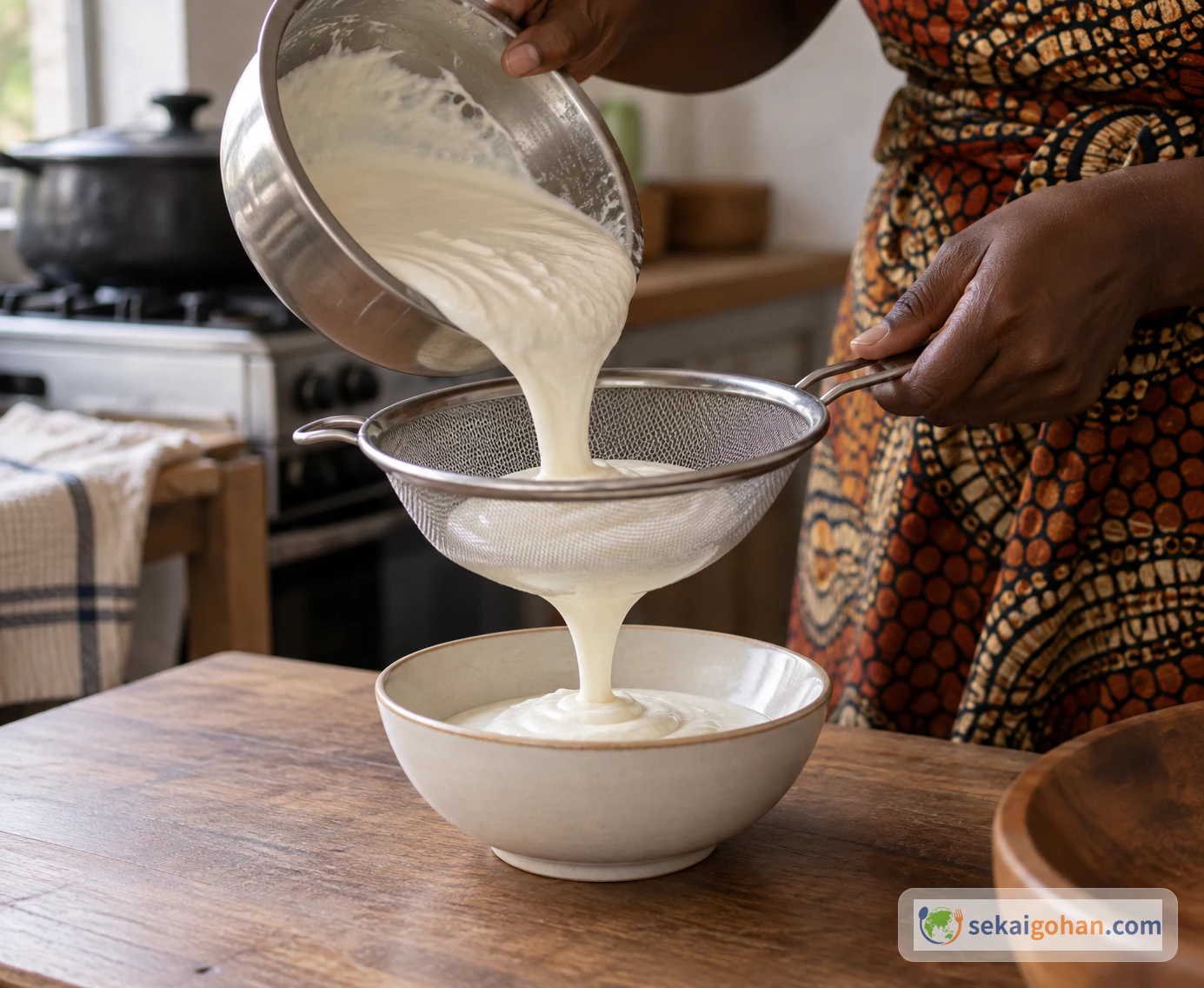
- A fine sieve for straining the brine (or two nylon sieves layered together)
- A clean, fine-mesh strainer for the finished sauce
- Measuring spoons (tablespoon and teaspoon) and a measuring jug
- A pot or kettle for boiling the water
- A small serving bowl
Choosing Ghee and Salt for Eshabwe
Ghee is the one ingredient that decides the dish. Use mature, clean, unsalted ghee that has not been boiled. Store-bought ghee varies by product, so check the label and production information before you buy.
Ordinary butter is not a like-for-like substitute. It still contains water and milk solids, so it behaves differently from unheated ghee under this method.
Powdered rock salt: if you can't find it already powdered, grind rock salt finely yourself. Ordinary table salt works for the table salt.
Method: Spoonful by Spoonful Until It Turns White
Judge each stage by what you see, not the clock: smooth ghee, then a paler and thicker mixture, then a white, creamy sauce roughly twice its starting volume that holds its shape instead of running.
Troubleshooting Eshabwe
Most problems come from rushing the liquid. The habit that matters most is adding the brine and the water by the tablespoon, never in one pour, and working with bowls and spoons that are clean and dry.
| Problem | Likely cause | What to do |
|---|---|---|
| The mixture looks separated | Too much liquid at once, or stirring paused | Add small amounts of brine and the remaining lukewarm water, stirring again after each |
| It isn't turning white | Not enough brine worked in yet | Keep adding brine one tablespoon at a time, stirring in one direction. Judge by color and volume, not the clock |
| It has become runny | Too much of the reserved water went in | Next time, add the reserved water one tablespoon at a time and stop as soon as the sauce holds |
| Bits or residue in the sauce | Visible particles in the ghee or brine | Strain the brine before using it and pass the finished sauce through a clean fine strainer |
| It tastes flat | Not quite enough salt | Taste after it turns white and add a pinch of table salt |
Serving Eshabwe
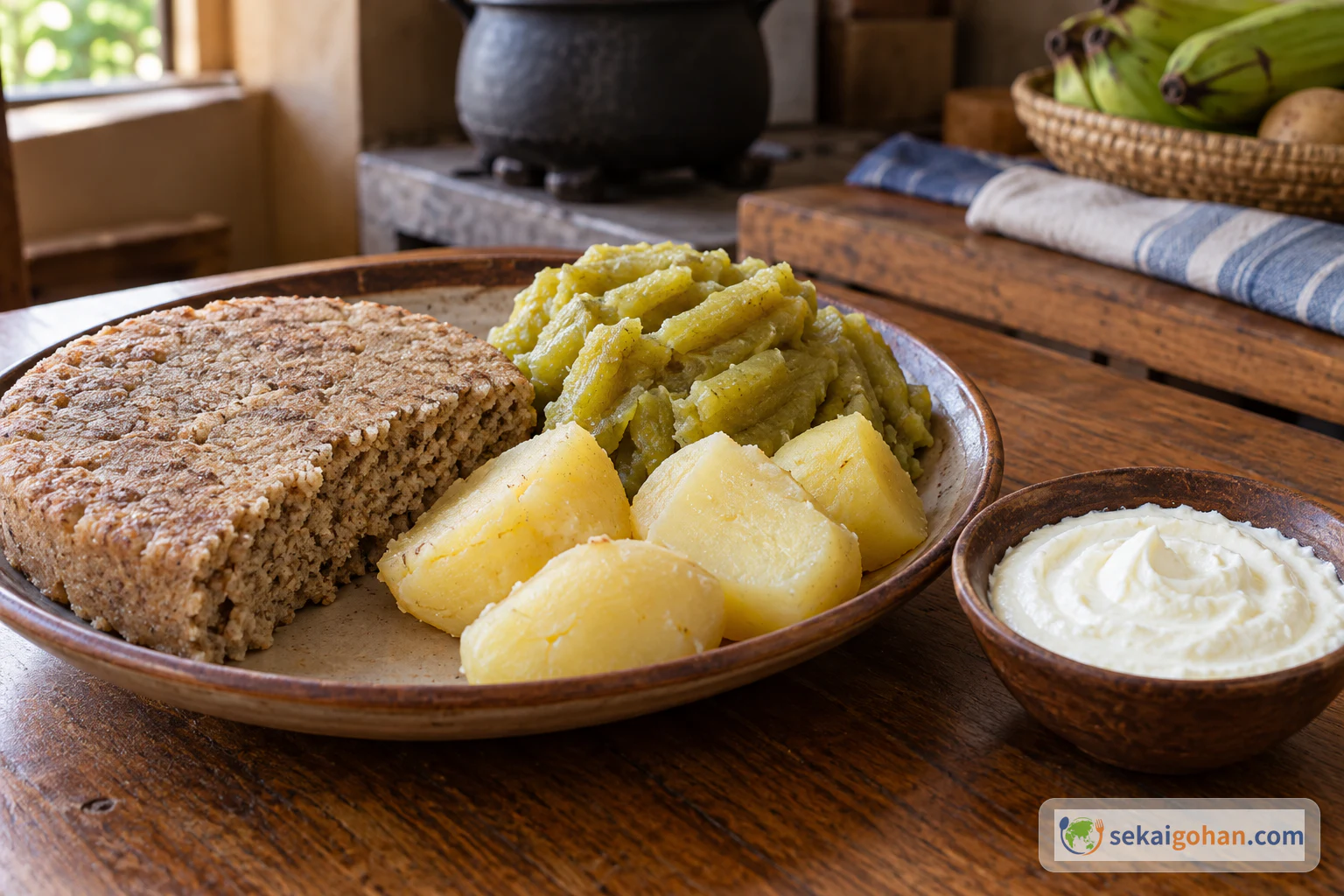
Eshabwe is eaten cold, beside millet bread, boiled potatoes and steamed, mashed matooke; sweet potatoes and posho go with it too, and it turns up at celebrations. Keep the sauce in its own bowl so everyone can take as much as they like with their staple. Smoked meat, beef and maize are also served alongside it.
Frequently Asked Questions
How long does it keep?
We can't give a safe storage period for eshabwe. Make it with clean, dry tools and boiled water.
Why is the water split into two portions?
Half of the water carries the salt into the ghee as brine. The other half is held back to fine-tune the thickness once the sauce has turned white, so use only as much of it as the sauce needs.